
Growing up in Bologna, my family’s kitchen always featured two essential bottles. One held dark green olive oil, which my father brought in large cans from the south and poured over salted bread with near-ceremonial reverence. Beside it stood the most ordinary sunflower oil. My grandmother, who moved from near Lviv, used it to fry potatoes, filling the entire stairwell with an irresistible aroma. No one in our house ever argued about which oil was right or wrong. Each bottle had its own specific purpose.
This childhood contrast stayed with me. Consequently, whenever someone asks me which plant oil is the healthiest, I find myself slightly at a loss. The question sounds perfectly logical, yet a single answer simply does not exist.
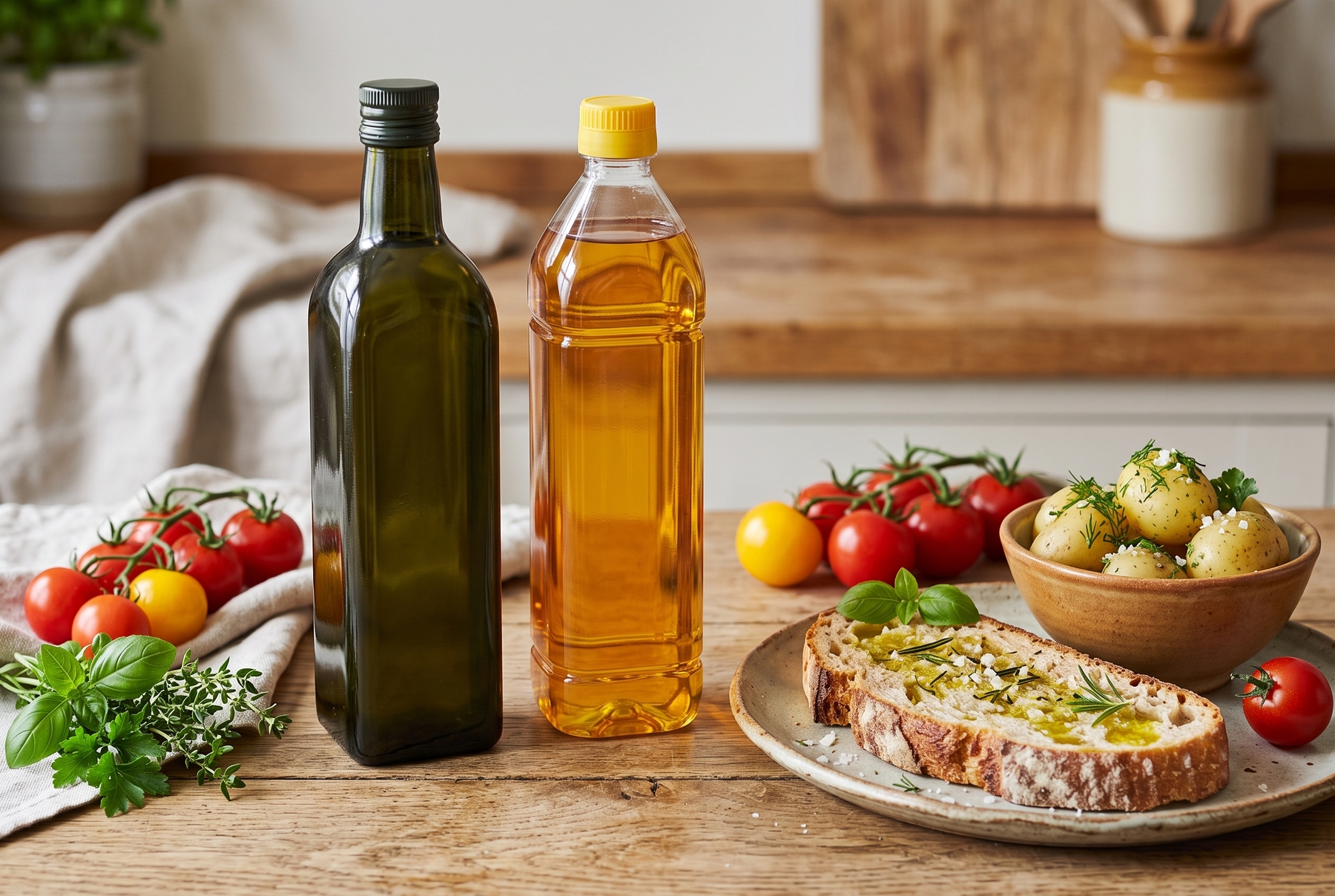
Two classic oils found in any kitchen. Aromatic olive oil in dark glass serves perfectly for salads, while neutral sunflower oil handles frying and baking.
Table of Contents
- Why the "Healthiest" Oil Does Not Exist
- What Really Matters When Choosing Oil
- Refined vs. Unrefined: Moving Beyond Good and Evil
- Temperature and the Skillet: Which Oil Survives the Heat
- Oils for Salads, Grains, and Cold Dishes
- 7 Essential Oils Worth Getting to Know
- How to Navigate the Oil Aisle Without Confusion
- The 4 Enemies of Oil and Proper Storage Techniques
- Cheat Sheet: Matching the Oil to the Task
- How Many Oils Does a Home Kitchen Actually Need?
- What Ultimately Belongs on the Shelf
Why the “Healthiest” Oil Does Not Exist
A single oil cannot be the perfect choice for everything. Olive oil shines in a tomato salad, but it ruins a delicate sponge cake. Sunflower oil is not inherently bad just because it is inexpensive. Furthermore, coconut oil does not magically become healthy just because it comes in an aesthetic jar with the word “superfood” slapped on the label.
Selecting an oil requires considering the task at hand. It depends on the flavor profile of the dish, the temperature of the skillet, the chemical composition, the budget, and how often the bottle is opened. A bottle of expensive exotic oil that sits in the pantry for six months and slowly turns rancid easily loses to a fresh, basic sunflower oil. Here is exactly what you need to know to choose the right plant oil without feeling overwhelmed in the grocery aisle.
What Really Matters When Choosing Oil
Understanding Oil Composition Without the Biochemistry
Every plant oil consists of a blend of fatty acids. There are three main types, and there is no need to count grams. You simply need to understand what they indicate about the oil’s stability and its role in the kitchen.
Saturated fats resist heat remarkably well and barely oxidize. Seed oils contain very few of these, whereas coconut and palm oils are rich in them.
Monounsaturated fats (often referred to as Omega-9) provide balance. They handle moderate heat gracefully and remain stable in the bottle. Olive oil, avocado oil, canola oil, and high-oleic sunflower oil boast high levels of these fats.
Polyunsaturated fats (including Omega-6 and Omega-3) act as the most temperamental components. They offer significant health benefits and are essential for a balanced diet, but they oxidize faster than any other fats. These oils prefer cold environments and despise a scorching hot skillet. Regular sunflower, corn, and grapeseed oils are packed with Omega-6. Omega-3 (in its plant-based form) is most abundant in flaxseed oil.
Memorizing exact percentages serves little purpose. The general rule is that a higher concentration of polyunsaturated fatty acids means the oil tolerates heat poorly and spoils much faster.
How Extraction Methods Alter Flavor and Stability
Unrefined oils undergo minimal processing, typically just the removal of mechanical impurities. This preserves their natural color, the distinct aroma of the raw ingredient, and many compounds that vanish during deep purification. This explains their intense fragrance. However, this also introduces a vulnerability. Many unrefined seed and nut oils possess a lower smoke point and a shorter shelf life. There are exceptions, though. Extra virgin olive oil is unrefined, yet it handles moderate heat beautifully due to its chemical composition and antioxidants, even though cooks usually reserve it for cold dishes to preserve its nuanced flavor.
Refined oil goes through multiple stages of purification. The resulting liquid is light, transparent, and virtually odorless. It enjoys a longer shelf life and tolerates high temperatures with ease. The trade-off is the loss of its original flavor and a portion of its nutritional benefits.
Cold-pressed indicates that the oil was extracted without intense heat, allowing the natural aromas to remain vibrant. Conversely, the term “deodorized” on a label means the scent was intentionally removed to achieve absolute neutrality.
The term “extra virgin” deserves a separate mention. This represents a strict category exclusively for olive oil, complete with internationally recognized standards for acidity and quality. According to industry regulations, sunflower oil cannot legitimately bear this label. Seeing it on a bottle of seed oil is purely a marketing tactic. Additionally, cold pressing does not automatically make an oil suitable for intense searing. In fact, it usually means the exact opposite.
Refined vs. Unrefined: Moving Beyond Good and Evil
Choosing Unrefined Oils for Aroma and Character
Unrefined oil excels in dishes where its scent plays a crucial role. Fragrant sunflower oil elevates a simple vinaigrette or steaming boiled potatoes. Extra virgin olive oil truly blossoms over fresh vegetables, crusty bread, and leafy greens. Asian cuisines often utilize toasted sesame oil in tiny drops, treating it as a bold accent. Meanwhile, flaxseed oil belongs strictly in cold preparations, such as folded into oatmeal, mixed into cottage cheese, or drizzled over salads.
Relying on Refined Oils for Heat Cooking
When the aroma of oil is undesirable, refined oil becomes the ideal choice. It serves as the ultimate base for frying, baking, and creating neutral sauces. Cooks rely on it for searing potato pancakes, frying cutlets, and mixing into homemade mayonnaise, where the pure taste of the ingredients must shine without any seed-like aftertaste. Any dish that requires a delicate, unaltered flavor profile benefits from a completely neutral oil.
A Common Mistake with Aromatic Oils
Misplacing an aromatic oil happens easily. Pouring unrefined sunflower oil into a sponge cake batter infuses the delicate pastry with a heavy sunflower seed aroma. Drenching a dish in a sharply bitter olive oil when a clean fish or bean flavor is desired will overpower the entire meal. Aromatic oil behaves exactly like a spice, and cooks never dump spices by the handful into delicate dishes.
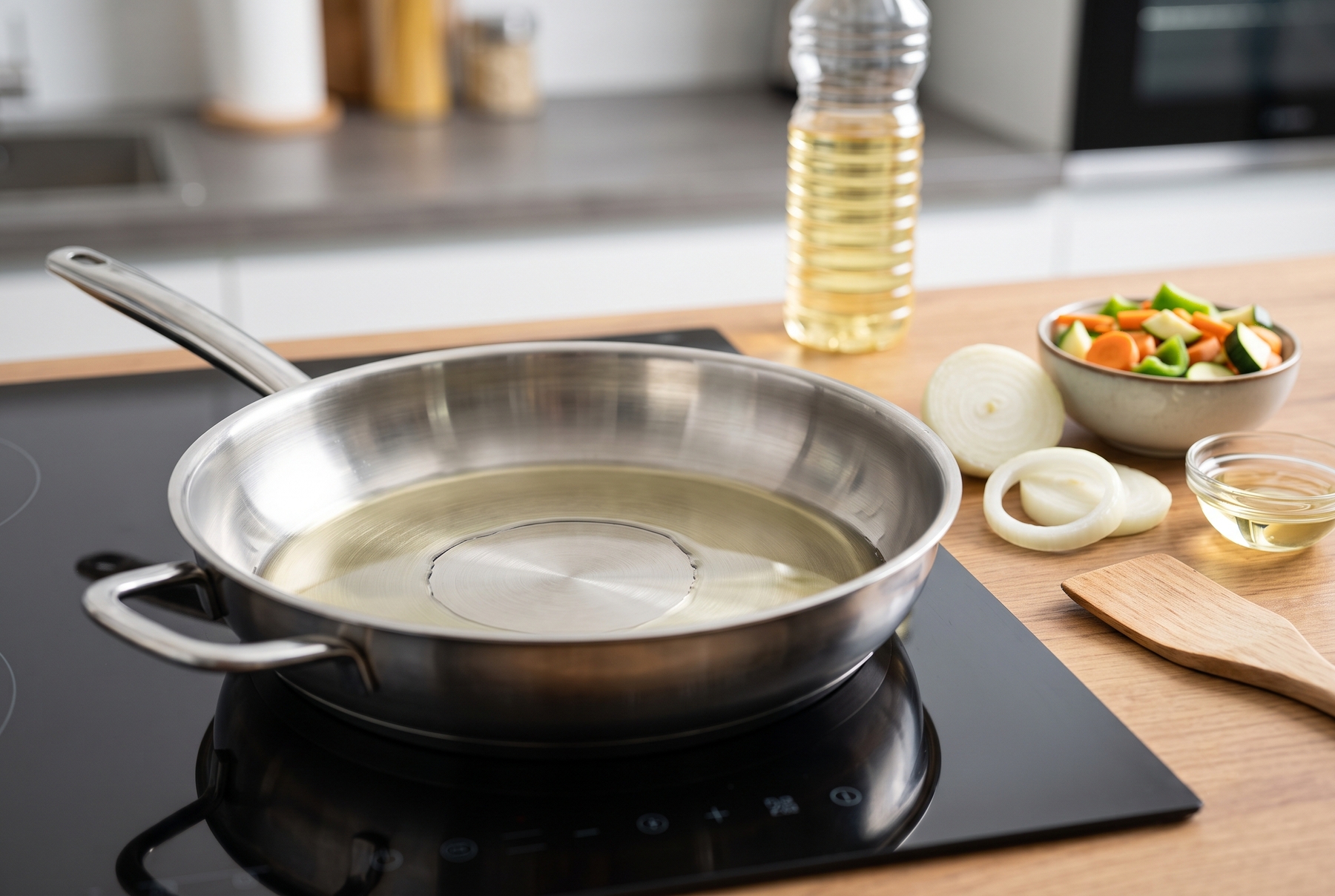
Refined oils with high smoke points work best for high-temperature frying, preventing smoke and preserving the clean taste of the ingredients.
Temperature and the Skillet: Which Oil Survives the Heat
Understanding Smoke Points and Why They Matter
The smoke point indicates the exact temperature at which an oil begins to burn and produce visible smoke. If a bluish haze rises above the skillet, the oil has already overheated. The flavor degrades, the kitchen smells of burning fat, and the dish acquires an acrid bitterness that cannot be masked or removed.
The numbers fluctuate quite a bit. Refined sunflower oil boasts a smoke point around 227–232 °C (440–450 °F), whereas unrefined sunflower oil drops sharply to approximately 107 °C (225 °F). Extra virgin olive oil typically handles temperatures between 160–190 °C (320–375 °F), while refined olive oil reaches significantly higher thresholds. The ultimate champion of heat resistance is refined avocado oil, hovering around 270 °C (520 °F). However, reducing the choice to a single number is misleading. The actual smoke point heavily depends on the degree of purification and can even vary from batch to batch.
Selecting Oils for Fast, High-Heat Frying
Fast frying requires a refined oil, such as sunflower, canola, or refined olive oil. High-oleic sunflower oil and refined avocado oil handle intense heat beautifully. Grapeseed oil works well for quick cooking sessions, but it falls short as a choice for regular high-heat applications. Despite having a high smoke point, its large proportion of polyunsaturated fatty acids causes it to oxidize rapidly under stress.
Choosing Oils for Braising, Sautéing, and Gentle Heating
When cooking over moderate heat, such as sweating onions, softening vegetables, simmering sauces, or slow braising, the options expand significantly. Olive, sunflower, corn, and canola oils all perform admirably here. Since the oil never reaches its smoke point, even the less robust varieties behave gracefully.
Knowing What Never to Overheat
Flaxseed oil, highly aromatic unrefined oils, and delicate nut oils belong strictly in cold preparations or require the absolute gentlest of heat. Overheated oil always signals when it is time to stop. A sharp bitterness, visible smoke, a sticky residue left on the pan, or an unpleasant rancid or fishy odor all indicate that the flavor of the dish is irreparably ruined.
Oils for Salads, Grains, and Cold Dishes
Using Oil as a Seasoning
In cold preparations, salad oil acts less like a cooking fat and more like a distinct flavor accent. Olive oil introduces a pleasant bitterness, while unrefined sunflower oil delivers a dense, roasted seed aroma. Pumpkin seed oil contributes a deep nutty flavor and a striking dark hue. Sesame oil brings an intense spiciness, and flaxseed oil offers a light, grassy note. Essentially, these function as a diverse set of liquid seasonings.
Creating Successful Pairings
Aromatic sunflower oil pairs effortlessly with boiled potatoes, roasted beets, and fermented cabbage (sauerkraut). Olive oil shines when drizzled over tomatoes, fresh herbs, fish, and legumes. Dark toasted sesame oil complements noodles, cucumbers, cabbage, and soy sauce perfectly. Pumpkin seed oil elevates puréed soups, savory cheese spreads, and hearty salads.
Learning How to Avoid Over-Seasoning
Intense oils require a light hand, much like salt. A smart approach involves using a neutral base, such as refined sunflower oil, and finishing the dish with just a few drops of the aromatic oil. This technique ensures the dish gains a beautiful fragrance without drowning in a heavy, overpowering taste.
7 Essential Oils Worth Getting to Know
Sunflower Oil
This remains the most accessible and familiar oil in many households. It comes in a neutral refined version for cooking and a fragrant unrefined version for salads and grains. High-oleic sunflower oil stands in a league of its own. Breeders specifically developed it to have higher monounsaturated fat content, making it far more stable and heat-resistant than standard varieties. Producers clearly mark this distinction on the label.
Olive Oil
Cooks reach for extra virgin olive oil for its flavor, utilizing it in salads, over vegetables, with bread, and for gentle heating. Refined olive oil offers a calmer, more neutral profile, making it suitable for high-temperature cooking. Elevating olive oil to the status of the only “correct” choice is entirely unnecessary. It feels right at home in a Mediterranean dish, but it acts like an absolute stranger in a traditional potato pancake.
Canola (Rapeseed) Oil
Neutral, affordable, and massively underrated. Modern culinary canola oil differs vastly from the versions that sparked past controversies. Extensive selective breeding has rendered those old criticisms obsolete. Its balanced chemical composition makes it a highly versatile option, especially for everyday culinary tasks.
Corn Oil
Another highly accessible and neutral option. It handles high temperatures gracefully, making it ideal for frying and baking. Because it imparts almost no flavor of its own, cooks rarely use it as a finishing seasoning.
Flaxseed Oil
A highly delicate oil strictly reserved for the cold table. It oxidizes incredibly fast and turns rancid quicker than its peers, requiring careful storage and small bottle sizes. It boasts a massive amount of plant-based Omega-3s, serving as a lovely dietary supplement. However, promising miraculous healing effects or a “detox” from a mere spoonful of flaxseed oil is scientifically inaccurate. The body does not work that way.
Sesame Oil
This oil appears in light and dark varieties. Light sesame oil is milder, while the dark version, pressed from toasted seeds, is intensely fragrant. Cooks utilize the dark oil specifically as a powerful aromatic accent. The difference is instantly recognizable by scent. A few drops of dark sesame oil added at the very end completely transform a dish.
Pumpkin Seed, Nut, Grapeseed, and Avocado Oils
These specialty oils justify their presence when a specific flavor profile or a particular culinary task is required. Pumpkin seed and nut oils act as brilliant accents for cold dishes. Grapeseed oil functions perfectly as a neutral base for cold sauces, homemade mayonnaise, and brief, gentle cooking, though it falls short for prolonged frying and repeated heating. Avocado oil withstands the most intense heat of all available oils, but it comes with a hefty price tag. For daily cooking, it acts more as a pleasant luxury than a mandatory kitchen staple.
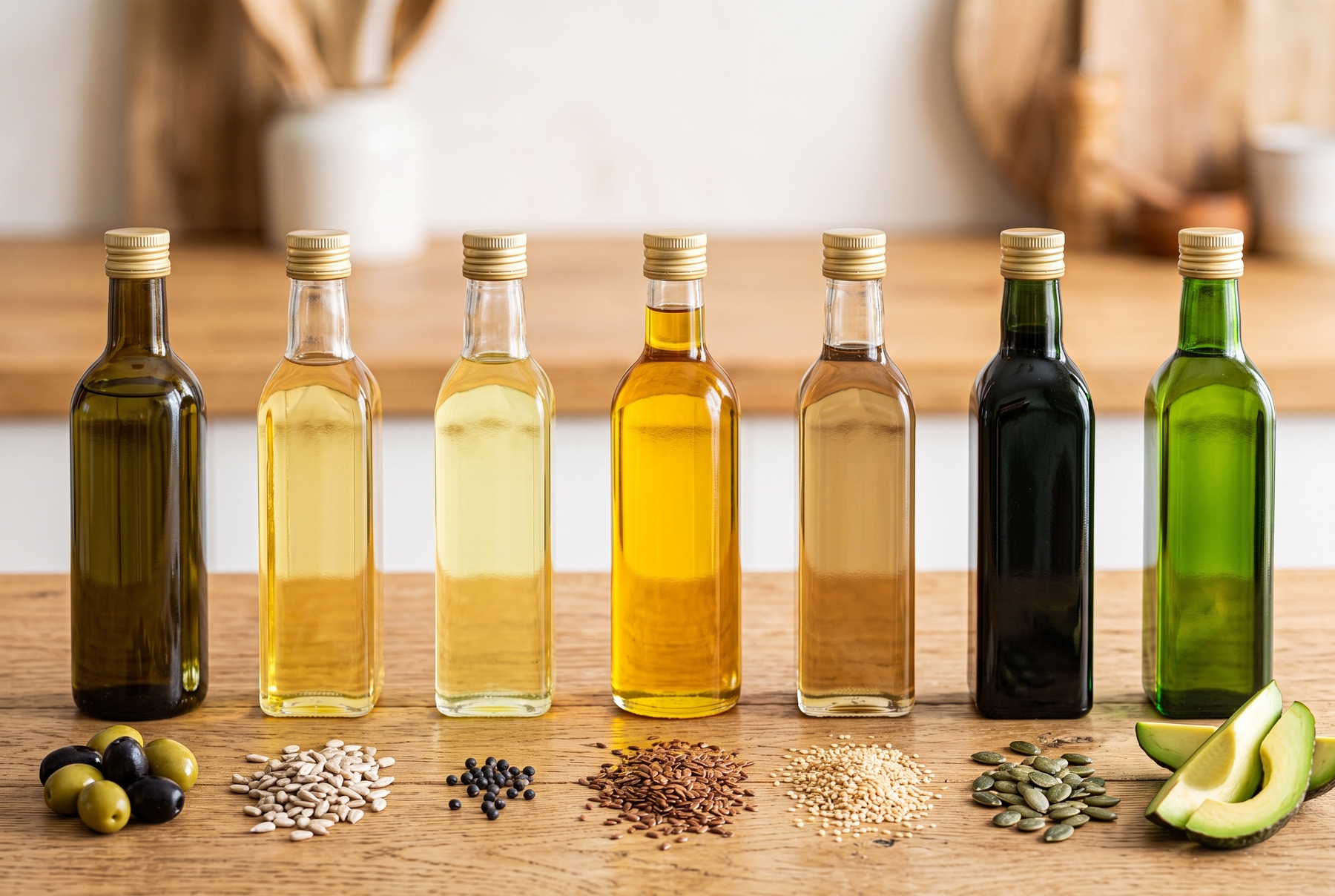
From sunflower to avocado, every plant oil possesses a unique fatty acid composition, flavor profile, and culinary purpose.
How to Navigate the Oil Aisle Without Confusion
Reading Facts Instead of Marketing Promises
Focusing on dry facts yields the best results. The type of oil, whether it is refined or unrefined, the production date, the expiration date, the packaging material, the storage conditions, a pure ingredient list without unnecessary additives, and the intended culinary use—this is exactly where the selection process begins. In many regions, food regulations legally require producers to honestly declare the oil type and its degree of purification (for instance, “unrefined sunflower oil” or “refined deodorized canola oil”). The necessary information always exists on the label; it simply requires looking past the oversized marketing slogans.
Why Dark Bottles Usually Signal Better Quality
Light dramatically accelerates oxidation. Therefore, dark glass protects the oil far more effectively than a transparent bottle sitting on a brightly lit supermarket shelf. This protection is especially crucial for unrefined and delicate oils. When choosing between two oils with identical compositions, the one housed in dark packaging always wins.
Understanding That Price Does Not Equal Health Benefits
An expensive oil is not inherently better for a specific task. A high-quality, fresh sunflower or canola oil makes much more sense for daily cooking than a rare, exotic oil. Purchasing exotic varieties only makes sense for their unique flavor, assuming that flavor will actually be utilized, rather than just buying them for a trendy label.
The 4 Enemies of Oil and Proper Storage Techniques
Light, Oxygen, Heat, and Time
Light, air, heat, and time slowly destroy oil. Rancid oil announces itself with a distinct, unpleasant odor. It often smells like old nuts, oil paint, sometimes fish, or a musty attic. A sharp bitterness overtakes the flavor. If an oil emits this scent, it belongs in the trash. No amount of frying will save it.
Where to Store Different Types of Oils
Everyday refined cooking oils belong in a dark pantry, far away from the heat of the stove. Flaxseed oil and several delicate nut oils typically demand refrigeration. Purchasing a massive jug might seem economically wise, but if the household consumes it slowly, the oil will undoubtedly spoil long before it reaches the bottom.
The Common Mistake Near the Stove
Cooks frequently place a beautiful bottle of oil directly next to the burner for the sake of convenience. Unfortunately, that exact spot, with its constant fluctuations in heat, causes the oil to degrade faster than anywhere else in the kitchen.
Cheat Sheet: Matching the Oil to the Task
- For frying: Refined sunflower, canola, or refined olive oil.
- For salads: Extra virgin olive oil, aromatic unrefined sunflower oil, or flaxseed oil.
- For baking: Neutral refined oils (sunflower, corn, or canola).
- For grains and potatoes: Fragrant unrefined sunflower oil.
- For Asian-inspired dishes: Dark toasted sesame oil, used sparingly.
- For family meals without overpowering aromas: Any neutral refined oil.
- For a bold flavor accent: Pumpkin seed, walnut, or dark sesame oil.
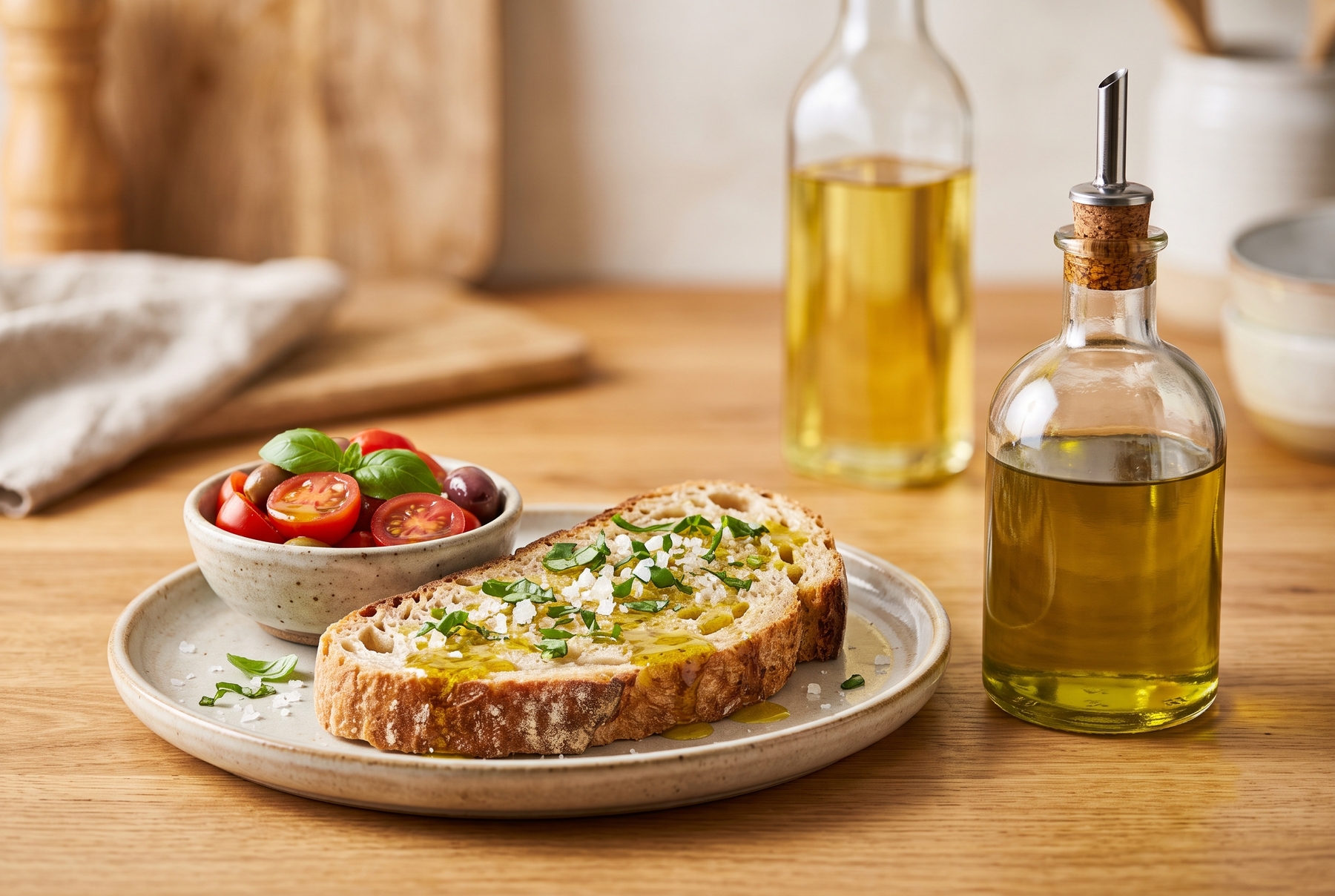
High-quality unrefined oil acts just like a spice. Adding a few drops to fresh bread or a salad completely unlocks the flavor of the dish.
How Many Oils Does a Home Kitchen Actually Need?
Building a Basic Set Without Overcomplicating Things
Covering almost every culinary need requires just three bottles. One neutral refined oil handles the cooking. One aromatic oil dresses the salads. Finally, one accent oil caters to the specific flavor preferences of the family. This trio ensures no one feels limited at the stove.
Expanding the Collection for Diverse Cooking
For those who love experimenting in the kitchen, the collection easily expands. A well-stocked pantry might include extra virgin olive oil, a refined sunflower or canola oil, a fragrant unrefined sunflower oil, and an accent piece like sesame or pumpkin seed oil. Keeping more than five bottles at home usually leads to waste, as the excess bottles will likely turn rancid before they are finished.
Navigating Between “Italian Correctness” and the Familiar Bottle
For a long time, I believed that mature, sophisticated cooking meant choosing strictly between my father’s cherished olive oil and my grandmother’s humble sunflower oil. It turns out that choosing is entirely unnecessary. Every oil simply holds its rightful place. One shines in a specific context, while another excels elsewhere. Olive oil elevates tomatoes, sunflower oil glorifies potatoes, and both are absolutely right.
What Ultimately Belongs on the Shelf
A truly great plant oil is not necessarily the trendiest or the most expensive. It is simply the one that perfectly matches the dish, the cooking temperature, your personal palate, and your actual cooking habits.
In my own home, just like in my childhood, two main bottles stand ready. Dark glass rests in the pantry, safely distanced from the stove. And the irresistible aroma of unrefined sunflower oil over hot potatoes still instantly draws everyone to the table.
0 comments