
Mornings in any coffee shop from Moscow to Novosibirsk start out much the same today: ‘Would you like that with regular, oat, or perhaps banana?’ Five years ago, a carton of coconut milk was seen as a peculiar whim for people carrying yoga mats. Now, it comfortably sits between kefir (a fermented milk drink) and ryazhenka (baked cultured milk). And if you still do not understand why you might need it, that is completely normal. Marketing in this sphere has outpaced common sense by about a decade.

The popularity of plant-based milk owes much to coffee culture: oat and nut milks perfectly complement the taste of espresso.
Table of Contents
What Exactly Is Plant-Based Milk, and Why Did It Appear?
Strictly speaking, ‘milk’ is an inaccurate term. It is an aqueous suspension: nuts, grains, or seeds are ground with water and then strained. The resulting liquid looks like milk and behaves similarly in coffee or oatmeal. That is essentially it.
The first to switch to it were individuals with lactose intolerance, an inability to digest milk sugar usually broken down by the lactase enzyme. Many adults lack this enzyme: in Southeast Asia, the figure reaches 90%, while in Northern Europe, it is around 15–20%. In Russia, it ranges roughly from 15% to 40%, and for many, the symptoms are so mild that they can go for years without linking the bloating after a glass of milk to lactose.
Simultaneously, a wave of allergy sufferers emerged, as cow’s milk protein is one of the most common allergens in children. Vegans and those who simply decided to consume less animal-based food (often colloquially referred to as ‘meat and dairy’) also joined the trend.
Later on, everyone else developed a taste for plant-based milk. This was partly due to coffee culture; oat milk foams beautifully and does not overpower the taste of espresso. Another factor was a general societal shift toward plant-based living, which marketing seized upon and inflated to the proportions of a religion.
Transitioning completely to plant-based milk is unnecessary if you do not have lactose intolerance or an allergy. However, understanding the ingredients is worthwhile, at the very least to avoid paying double for something that takes twenty minutes to prepare at home.
The Ingredients of Plant-Based Milk: How to Choose at the Supermarket
Store-bought and homemade plant-based milks are two fundamentally different products.
Store-bought oat milk is often sweet, even if there is no added sugar on the label. It all comes down to enzymes. During production, these enzymes break down the complex starches of the oat into simple sugars before the milk is even packaged. The grain is effectively ‘pre-digested’; what our stomachs would process slowly, the enzyme accomplishes in a few minutes right in the vat. This explains the sweetish taste. Consequently, homemade milk made from standard rolled oats tastes like wet cardboard unless a date or a teaspoon of honey is incorporated.
Addressing the daunting words on the labels is important. The presence of rapeseed (canola) oil is normal, as it provides the creamy texture that allows oat milk to foam so perfectly for cappuccinos. Guar gum is not a synthetic chemical from a test tube but a natural thickener derived from guar beans. Adding it prevents the milk from separating twenty minutes after opening. Carrageenan is a seaweed extract and stabilizer that sparks endless internet debates; however, European regulators have repeatedly tested it in the quantities used in these products and cleared it every time.
Added sugar is something to actively avoid. This refers not to enzymatic sugars but to straightforward cane sugar or glucose syrup, which manufacturers add to ‘original’ and especially ‘chocolate’ varieties. Reading the ingredient list is crucial: if sugar ranks second or third, the product ceases to be milk in any serious sense and becomes a liquid dessert.
Calcium deserves a separate discussion. Cow’s milk is naturally rich in it, whereas most plant-based alternatives are not. Conscientious manufacturers artificially add calcium, which is a benefit rather than an attempt to hide something. Going fully plant-based means monitoring more than just calcium. Plant-based beverages often fall short in iodine, vitamin B12, and protein, which is an important consideration. Opting for fortified versions or seeking these nutrients elsewhere—such as in tofu, sesame seeds, leafy greens, or canned fish with bones—is highly recommended.
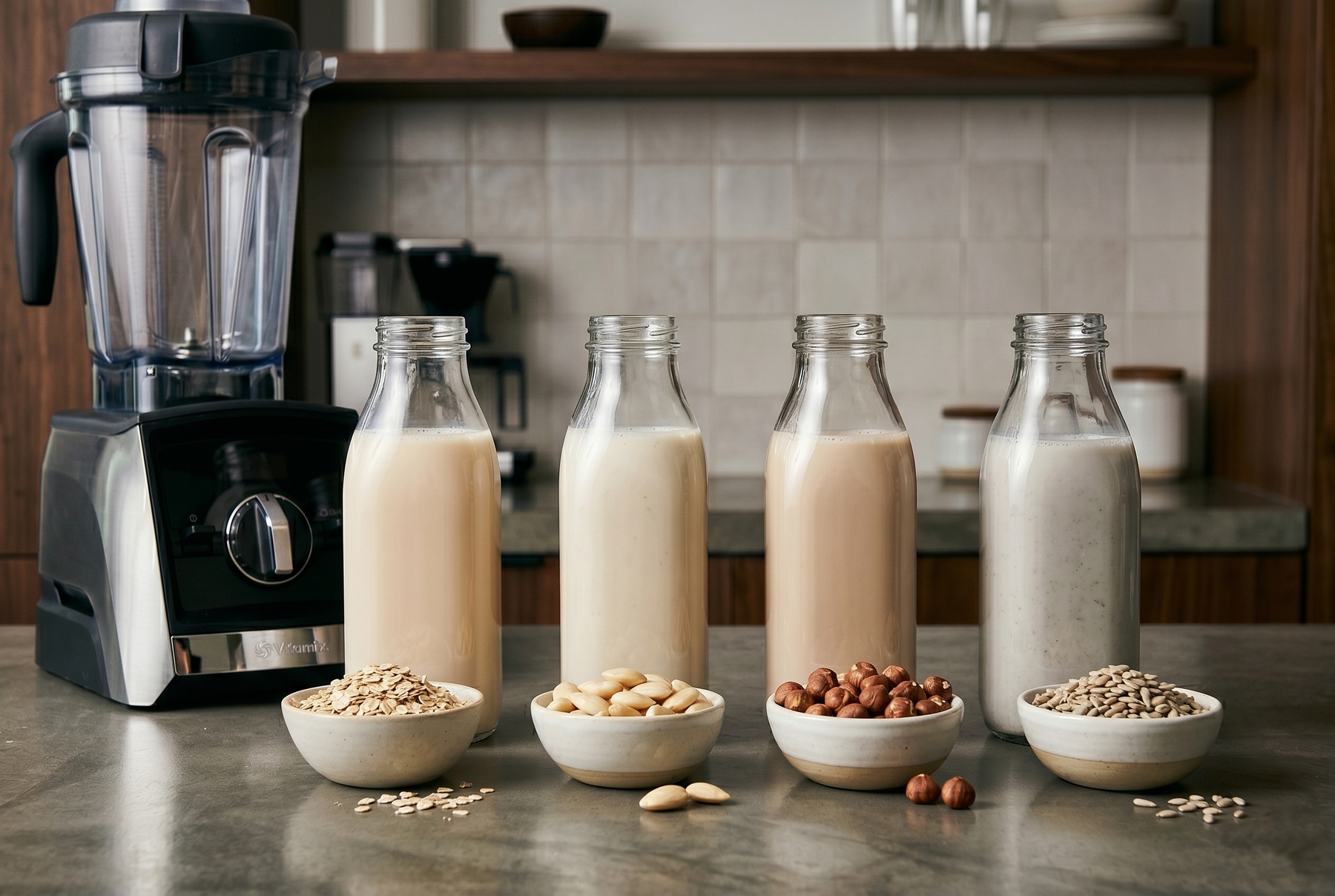
The selection of plant-based milk is vast, ranging from classic oat milk to budget-friendly and creamy sunflower seed milk.
How to Make Plant-Based Milk at Home
The formula works for almost any base: one part main ingredient plus three to four parts water, along with a pinch of coarse salt. Including salt is mandatory, as it enhances the flavor and eliminates the papery aftertaste common in most homemade versions. Using a sweetener is optional; one pitted date, half a teaspoon of maple syrup, or honey works beautifully.
Using cold, almost ice-cold water is vital. This is absolutely critical for oat milk.
Homemade Oat Milk Recipe: Cheap and Fast
The primary fear for beginners is ending up with a slimy paste instead of milk. The culprit is always the same: warm water and over-blending. Warm water and prolonged blending turn the oat starch into glue. Therefore, sticking to ice-cold water and blending for exactly thirty seconds is the best approach.
Handling the leftover pulp requires the same care. Gently squeezing the nut milk bag once, slowly and without force, yields the best results. Wringing it out like wet laundry forces the starch into the milk in a cloudy mass, leaving a thick layer of sediment at the bottom of the mug within half an hour.
The ratio is 100 grams (3.5 oz) of quick-cooking oats to 700–800 ml (24–27 fl oz) of ice-cold water. Skipping the soaking step is necessary; the oats go straight into the blender.
Almond and Hazelnut Milk (Soaking Required)
Soaking nuts for a minimum of four hours, or preferably overnight, is essential. This softens the texture and produces a cleaner flavor. Discarding the soaking water is standard practice, as it can impart a less pleasant taste. Additionally, soaking prevents the blender from struggling like an engine on a steep incline.
Hazelnuts provide a rich, almost smoky nutty aroma that pairs exceptionally well with coffee. Almonds offer a more neutral profile, functioning beautifully in smoothies and baked goods. Cashews do not even require straining; they are so soft that they puree entirely, resulting in thick, almost cream-like milk.
Sunflower Seeds: An Underrated Base
Sunflower seeds cost a fraction of the price of any nut while delivering a dense, creamy texture that no one expects. Soaking them for four to six hours, discarding the water, blending with cold water, and straining yields excellent results. While the distinct sunflower flavor is unavoidable, it goes completely unnoticed in oatmeal or smoothies. In terms of creaminess, it easily rivals store-bought cashew milk, which costs roughly eight times as much.
The ratio calls for 100 grams (3.5 oz) of raw, hulled sunflower seeds to 600–700 ml (20–24 fl oz) of water.
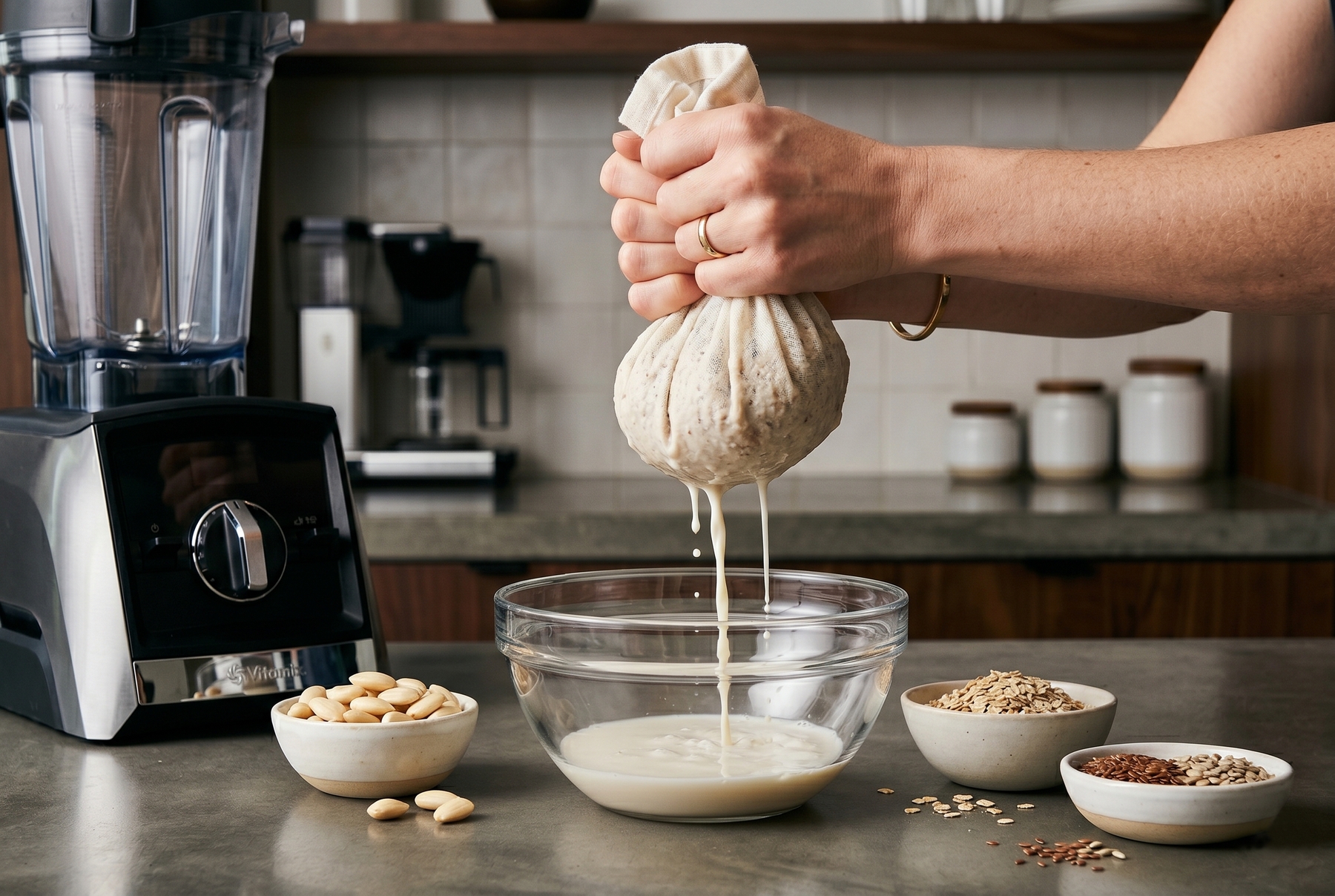
The secret to perfect homemade milk lies in using ice-cold water and carefully squeezing it through a specialized straining bag.
What to Make With Plant-Based Milk Pulp
After straining, a moist, fibrous mass remains in the bag. This is pure fiber with a small amount of protein, making it a shame to throw away.
The leftover oat pulp seamlessly integrates into the dough for syrniki (traditional Eastern European quark pancakes), making them denser and more filling while requiring slightly less flour. Dropping the pulp straight into morning oatmeal as it cooks is another great option, and the difference is barely noticeable.
Almond pulp easily replaces a portion of the flour in baking, such as in muffins, pancakes, or homemade energy bars. It keeps well in the refrigerator for three days and can be frozen for up to a month.
Sunflower seed pulp can rescue dry ground meat for patties. Adding a small amount helps retain moisture, although an excess will cause the sunflower flavor to overpower the dish.
To Make or to Buy?
Buying plant-based milk is perfectly fine. This is especially true when seeking good foam for coffee; homemade milk lacks the stabilizers, oils, and precise formulation needed to froth well. Foam depends on the entire formula—from proteins to viscosity to thermal behavior—which is why ‘barista’ versions are crafted separately with compositions specifically adjusted for stable froth.
Making plant-based milk at home is ideal for smoothies, oatmeal, sauces, and baking. Foam is unnecessary in these applications, while a clean ingredient list and affordability are paramount. A liter of homemade oat milk costs mere pennies. Store-bought ‘barista’ versions are five to six times more expensive.
Purchasing store-bought milk is the best route for perfect foam. For everything else, a blender, a nut milk bag, and ice-cold water are all that is needed.
0 comments