
Every week, a client sends me the exact same question: “I cannot afford salmon every day—does this mean my omega-3 levels are doomed?” Sometimes it sounds like a genuine question. More often, it feels like a self-imposed sentence. The seafood aisle at the supermarket excels at this psychological trick: observing the price tags and checking your wallet often leaves you feeling inadequate about your diet.
Growing up, fish primarily meant canned herring, and it was considered perfectly good food without any caveats. My in-laws from Bologna would look at this can with sheer bewilderment. Ultimately, both culinary traditions nourished people effectively, avoiding deficiencies without relying on weekday salmon.
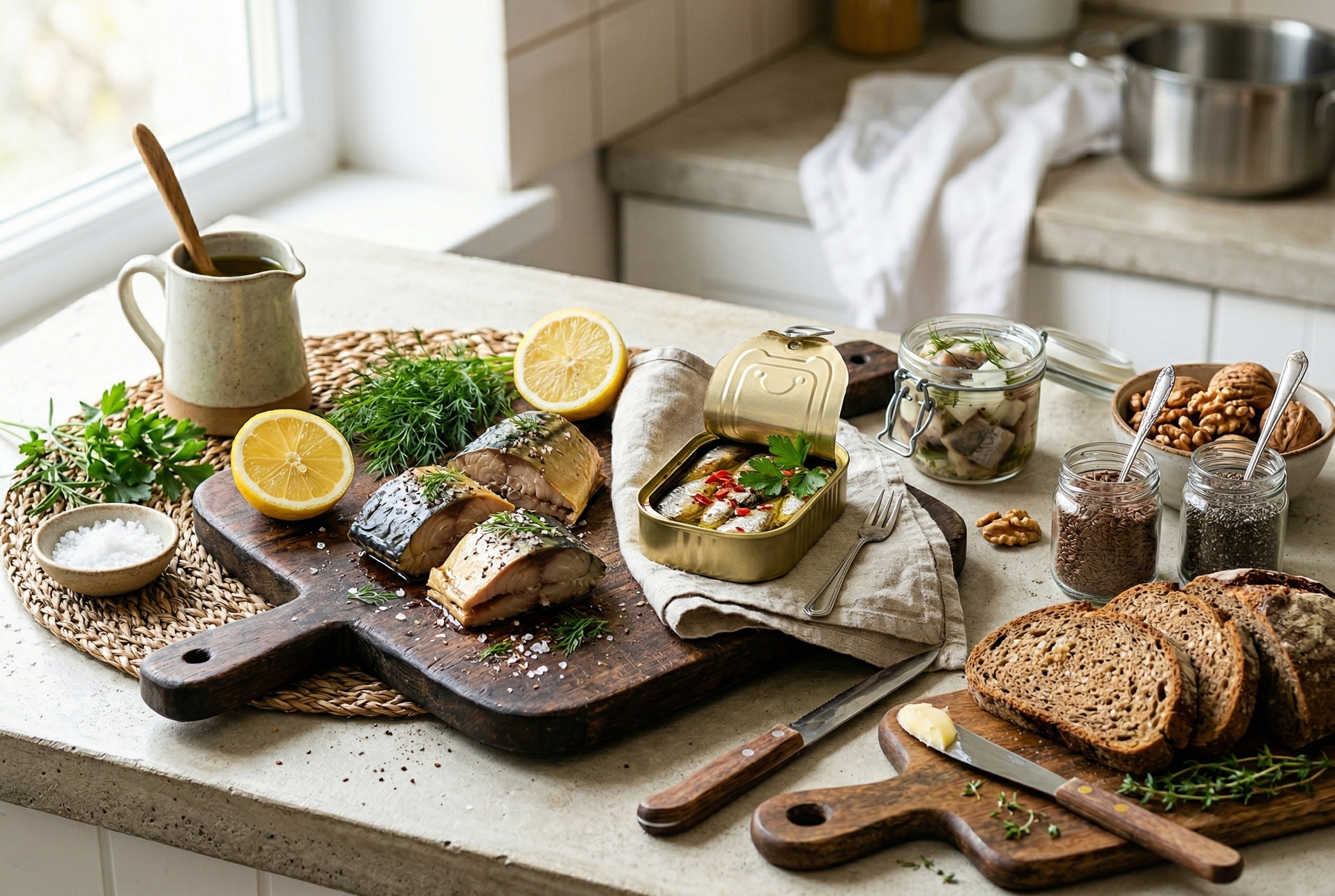
Omega-3s can be found in more than just expensive salmon: herring, mackerel, seeds, and nuts serve as excellent and accessible alternatives.
Table of Contents
Three Letters You Need to Know: EPA, DHA, and ALA
Omega-3 does not represent a single molecule, but rather a family of fatty acids that behave entirely differently in the human body.
EPA (eicosapentaenoic acid) and DHA (docosahexaenoic acid) are marine, animal-based forms. The body readily utilizes them for blood vessels, brain function, and anti-inflammatory processes without requiring any additional conversion.
ALA (alpha-linolenic acid) serves as the plant-based form. It appears in flaxseed, walnuts, and chia. The human body can convert it into EPA and DHA, but it does so with limited efficiency—and the exact conversion rate depends on age, diet, and even genetics. This does not mean plant sources are useless. It simply indicates that marine and plant omega-3s function differently.
Algal oil tells a separate story. If a diet completely excludes fish (due to beliefs or circumstances), this remains the only vegetarian source of ready-made EPA and DHA, rather than ALA. Fish naturally obtain their omega-3s from algae in the wild, so algal oil simply eliminates the middleman.
The table below provides approximate omega-3 content data. Values fluctuate depending on the species, origin, and processing methods. High numbers in plant sources do not equate to marine equivalence, as ALA converts to EPA and DHA with limited efficiency. Source: USDA FoodData Central.
| Product | Type | Omega-3, g / 100 g |
|---|---|---|
| Marine Sources — EPA + DHA | ||
| Atlantic Mackerel | EPA+DHA | 2.5–3.5 |
| Atlantic Herring | EPA+DHA | 1.5–2.5 |
| Atlantic Salmon | EPA+DHA | 1.8–2.5 |
| Rainbow Trout | EPA+DHA | 1.0–1.5 |
| Sardines (canned in oil) | EPA+DHA | 1.0–1.5 |
| Cod Liver (canned) | EPA+DHA | 9.0–12.0 |
| Plant Sources — ALA | ||
| Chia Seeds | ALA | 17–19 |
| Ground Flaxseed | ALA | 16–18 |
| Walnuts | ALA | 6–9 |
| Hemp Seeds | ALA | 5–7 |
Fish We Unfairly Ignore
Herring: The Underappreciated Queen
Regular Atlantic herring contains more omega-3 than many expensive delicacies. It boasts a fatty, dense texture with a distinct flavor profile. Its EPA and DHA content easily rivals that of salmon, though exact figures depend on the catch location and season. Meanwhile, it costs a fraction of the price and sits conveniently near the supermarket checkout.
Right next to it on the same shelf sit sardines and sprats. Sprats in tomato sauce offer a hidden superpower: they cost mere pennies, yet the fish itself is naturally fatty and rich in omega-3. Checking the ingredient list remains crucial, as some brands fill the tin mostly with sauce rather than fish.
Dressed Herring (the traditional Russian layered salad known as “Herring Under a Fur Coat”) carries its own narrative. Nutritionists predictably frown upon it due to the heavy mayonnaise, potatoes, and beets. However, tweaking the recipe by swapping store-bought mayonnaise for a homemade version or Greek yogurt with mustard transforms it into a dish where the herring effectively does its nutritional job. A simple slice of salted herring atop dark rye Borodinsky bread with a ring of red onion sparks a different conversation entirely. It feels brutal, honest, and completely devoid of superfood marketing.
One factor requires consideration: salted herring packs a significant amount of sodium. Those monitoring blood pressure or water retention benefit more from buying it fresh-frozen. Baking it with dill and lemon yields an entirely different character, resulting in a softer flavor without any harshness.
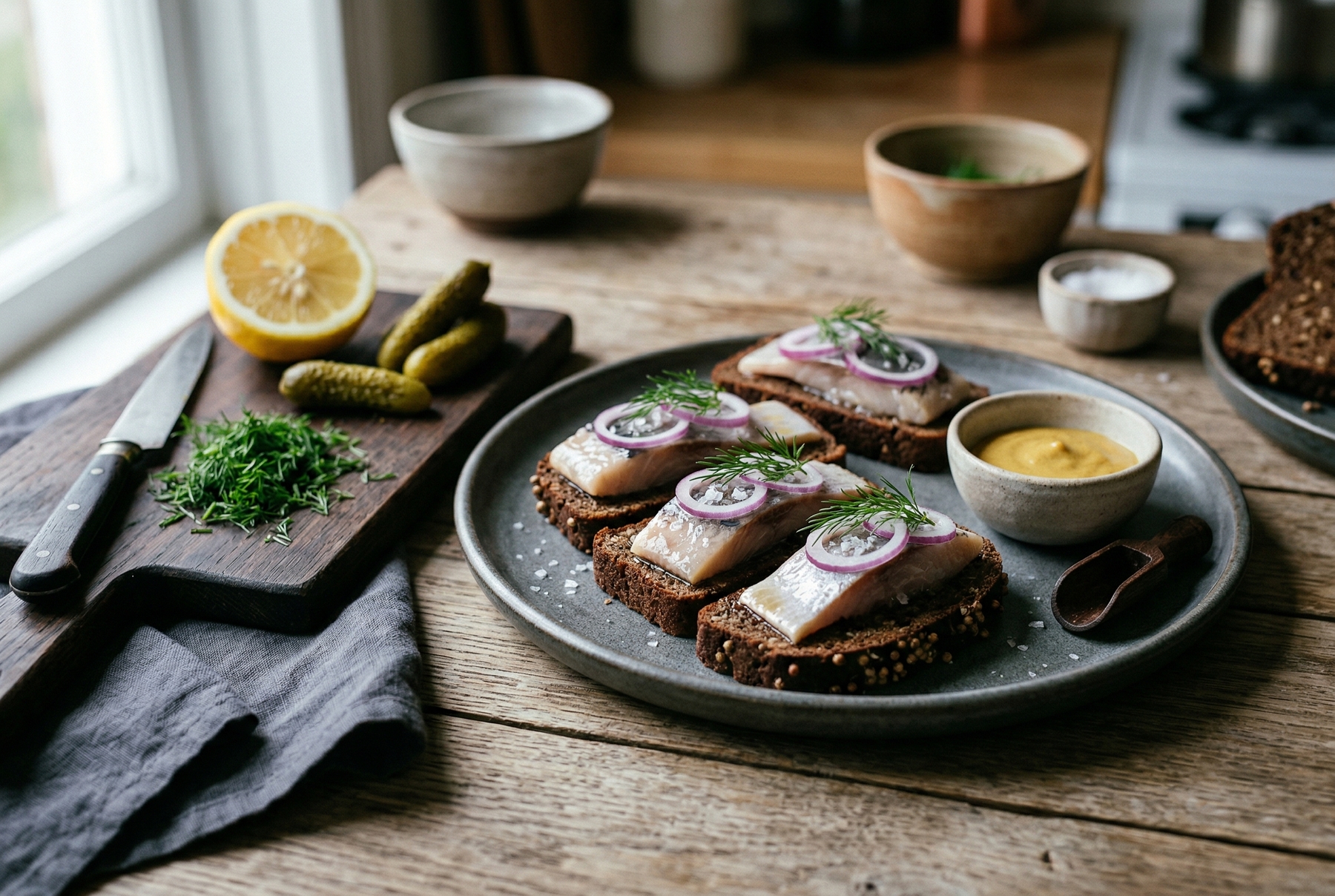
Herring stands as an underestimated superfood. Its content of beneficial EPA and DHA acids makes it quite comparable to salmon.
Mackerel: High Omega, Low Hassle
Mackerel carries a certain reputation. Its aroma when cooked in an open pan is indeed intense, and understanding why some people abandon it after their first attempt is easy. Fortunately, cooking methods exist that eliminate the smell entirely.
Preparing mackerel involves taking fresh or thawed fish, making shallow cuts along the sides, and inserting lemon slices alongside sprigs of thyme or rosemary. Adding olive oil, salt, and black pepper completes the seasoning. Wrapping it tightly in parchment—like a candy wrapper—and placing it on a baking sheet allows the fish to bake at 200°C (400°F) for 20 minutes. Opening the parchment releases the scent of lemon and herbs, while the fishy odor remains trapped inside and never permeates the kitchen.
As a fatty fish, mackerel delivers an excellent omega-3 profile, often standing right alongside salmon, and Atlantic varieties frequently surpass it. It cooks faster and costs less. Avoiding overcooking remains the cardinal rule, as overcooked mackerel inevitably turns into a culinary tragedy.
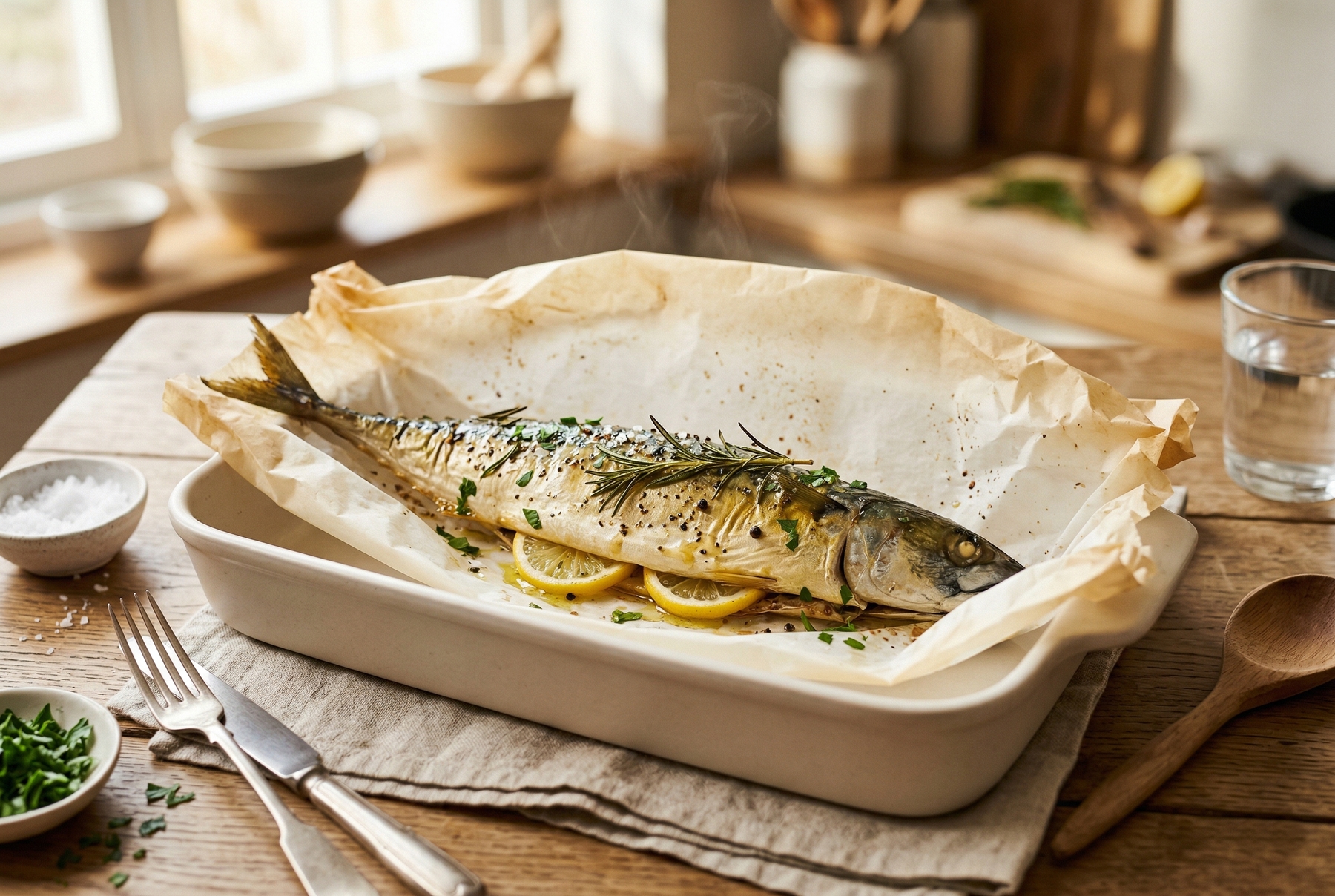
Baking mackerel in parchment helps retain the juiciness of the fish and prevents the spread of its distinct odor.
Canned mackerel in oil also works beautifully. The simpler the ingredients—fish, oil, salt—the easier it is to navigate what exactly you are purchasing.
Trout: Salmon That Won’t Break the Bank
Trout frequently remains in salmon’s shadow, despite their remarkably similar fatty acid profiles. Rainbow trout provides enough EPA and DHA to qualify as an excellent salmon alternative, though exact figures vary based on farming conditions and feed. It cooks effortlessly, offers tender meat, and possesses almost no smell. When seeking a “proper” fish for dinner, trout emerges as a highly logical choice.
Cod Liver: Gold in a Tin Can
Cod liver unjustly remains trapped in Soviet-era nostalgia. Its omega-3 concentration ranks exceptionally high, alongside substantial quantities of fat-soluble vitamins A and D. The former necessitates moderation: vitamin A accumulates in the body, which specifically concerns pregnant women and individuals simultaneously taking vitamin A supplements. Simply put, it stands as an excellent product, but consuming it daily by the can is ill-advised.
The simplest approach involves spreading it on toast. Mashing it with a fork right in its own oil from the tin, adding a splash of lemon juice, capers, or finely chopped cucumber, and finishing with black pepper creates a pâté with real character. It easily outperforms avocado toast in both interest and nutritional value.
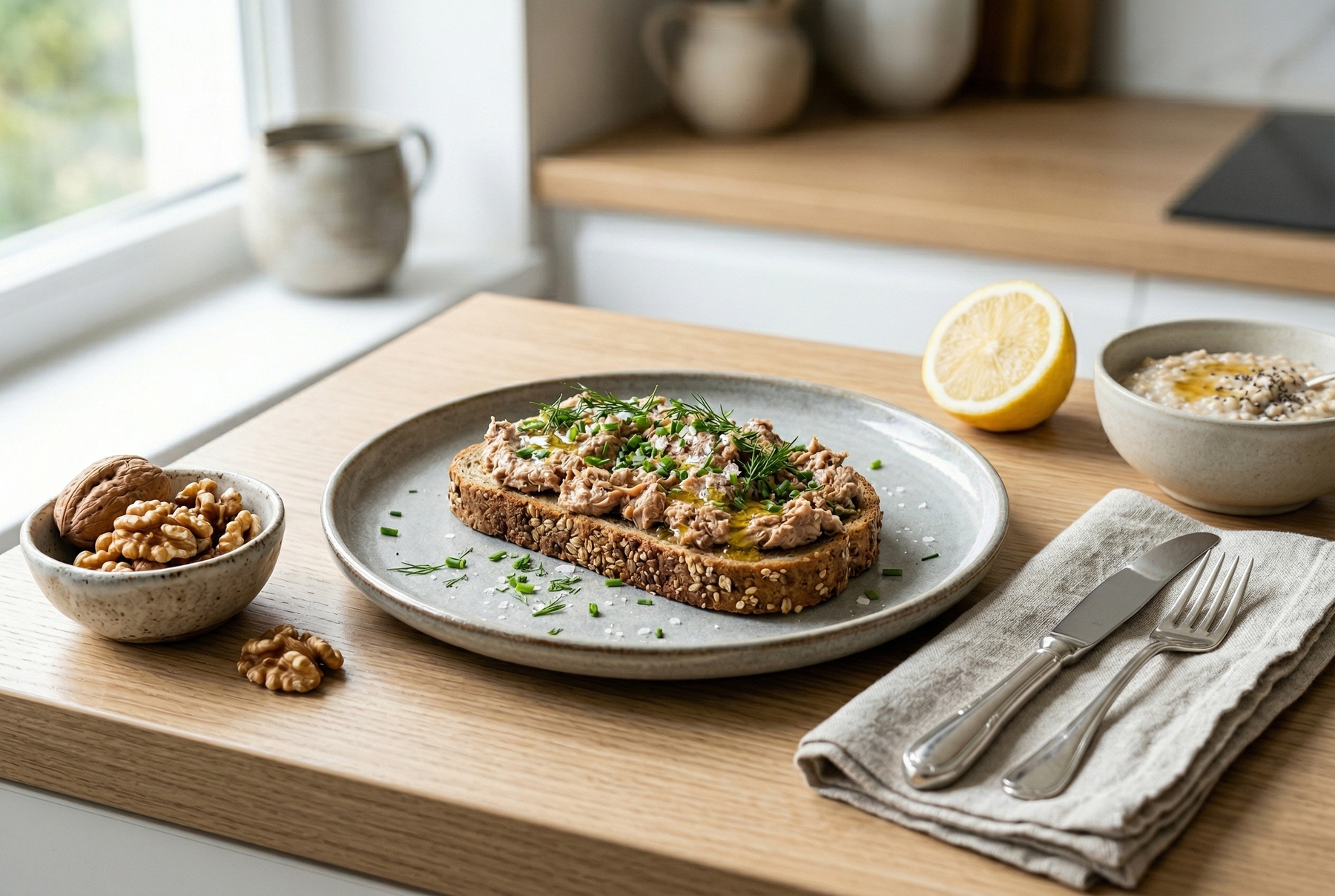
Cod liver acts as a true omega-3 concentrate. Combined with walnuts, it creates a nutritious and beneficial breakfast.
The Plant Base: Nuts and Seeds
Walnuts and Flaxseed
A handful of walnuts (roughly 30 g or 1 oz) provides approximately 2.5 grams of ALA. This serves as a brilliant supplement to fish for those who enjoy eating on the go, bringing added fiber and magnesium to the table. Chewing on a few genuinely aids the body’s nutritional balance.
Flaxseed presents its own unique challenge. Whole flaxseeds digest poorly compared to ground ones: their tough outer shell allows most of the contents to pass straight through the digestive system unreleased. Grinding them just before consumption or storing pre-ground seeds in an airtight container in the refrigerator for no longer than two to three weeks yields the best results. Ground flax oxidizes rapidly, and rancid oils belong in the trash.
Flaxseed oil requires a dark glass bottle, constant refrigeration, and should never touch a hot pan. Using it exclusively cold—in dressings, porridges, or cottage cheese—preserves its integrity. Finishing an open bottle within three to four weeks is optimal. If it develops a bitter taste, discarding it without regret is the only option.
Chia seeds closely mirror flax in their ALA content. Their different shell structure allows ALA to release more efficiently than in whole flax. Soaking them in water or milk transforms them into a gel over a few hours. The specific texture appeals to some and repels others, but for those who enjoy it, it functions as a highly effective option.
Hemp seeds appear less frequently but offer an impressive omega-3 to omega-6 ratio by plant-based standards. While perhaps not a legendary superfood, they seamlessly blend into yogurt.
Your Weekly Cheat Sheet
The advice to consume fatty fish twice a week carries real weight. Mackerel, herring, sardines, sprats, and trout all fit the bill perfectly. A standard portion ranges from 100 to 150 g (3.5 to 5.5 oz). Salmon remains a fantastic option when cravings and budget align. If they do not, it hardly constitutes a disaster.
Incorporating a handful of walnuts as a snack easily fits into any daily routine. Eating them raw or lightly toasted in the oven at 150°C (300°F) for ten minutes removes excess moisture and intensifies their flavor.
Adding a teaspoon of ground flax to porridge, yogurt, or smoothies requires minimal effort. It simply acts as a regular, sensible dietary addition without any extreme measures.
Cod liver toast constitutes the ideal lazy breakfast, provided no vitamin A restrictions apply.
Salmon is wonderful. Yet, if it stretches the grocery budget, there is no need to worry. Sprats and herring accomplish the exact same nutritional task while costing significantly less.
0 comments