
Every summer brings the same familiar scene: people who happily ate hearty borscht and meat cutlets all winter suddenly decide it is time to ‘cleanse,’ ‘detox,’ and survive entirely on watermelon.
The truth is that hot weather does not require any specialized diet. It simply alters your body: your appetite becomes more unpredictable, your thirst grows more persistent, heavy meals feel harder to digest, and your daily routine shifts alongside the longer daylight hours. The goal of summer is not to lose weight rapidly or ‘flush out toxins’ (your liver and kidneys handle that perfectly), but rather to help your body absorb water, minerals, fiber, protein, and energy without feeling overloaded. Adjusting your summer diet to the heat is actually quite simple.
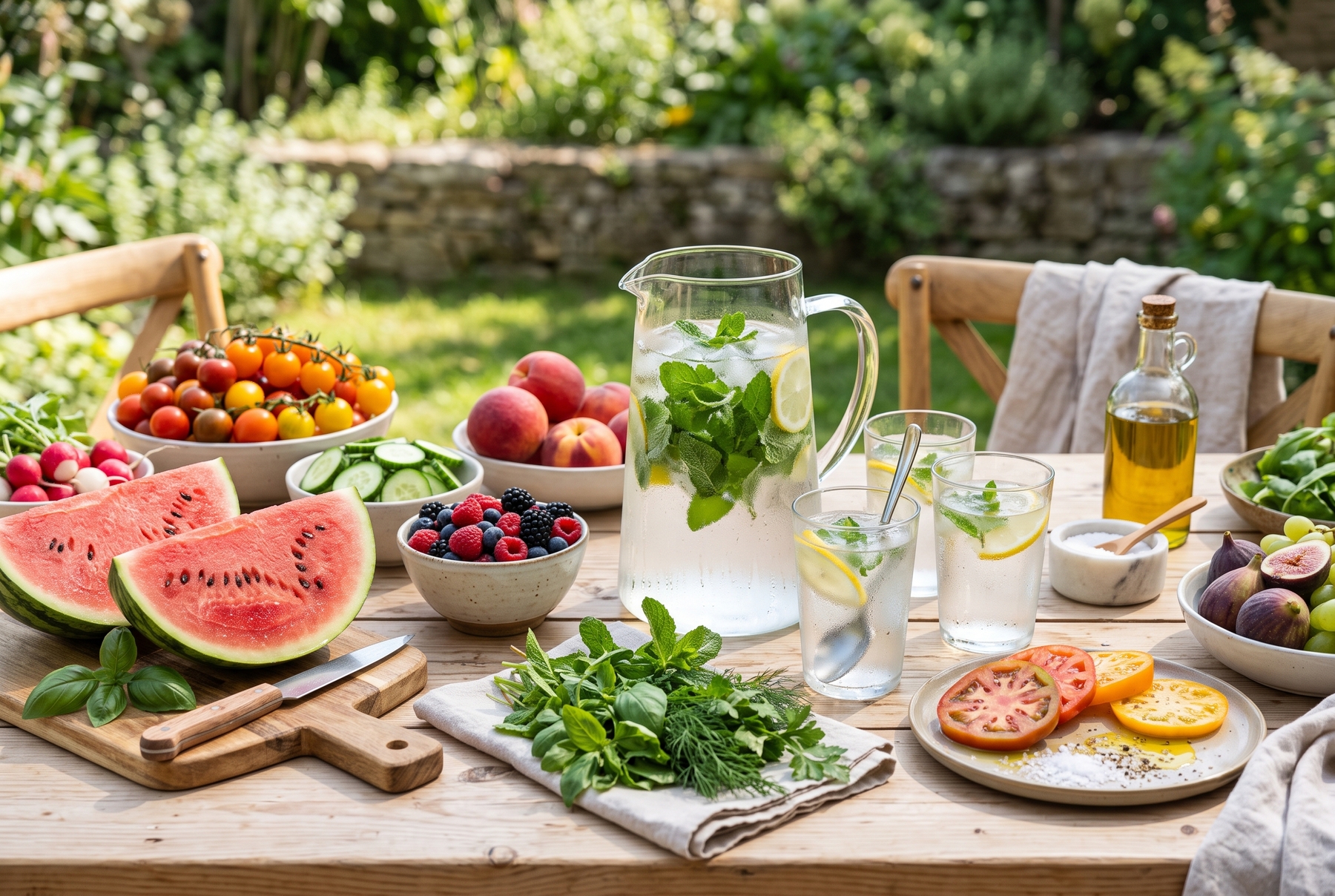
An abundance of juicy fruits, berries, and fresh greens on the summer table helps maintain hydration and makes it easier to handle the heat.
Table of Contents
- The Main Summer Principle: Water Belongs in Your Bowl, Not Just Your Glass
- What to Eat More Often During the Summer Heat
- What to Eat Less of During the Heat
- What to Drink in the Heat: Water, Salt, and Electrolytes
- The Summer Plate: How to Build It Without a Calculator
- Summer Food Storage: Where You Actually Need Strict Rules
- Common Summer Mistakes
- Cheat Sheet: What to Add, Reduce, and Check
The Main Summer Principle: Water Belongs in Your Bowl, Not Just Your Glass
Why Juicy Foods Count as Meals in Summer
Cucumbers consist of about 95 percent water. Watermelons, tomatoes, zucchini, peaches, and berries all share a similar structure: plenty of moisture, a bit of fiber, potassium, organic acids, and a fresh tartness that your body craves almost automatically in the heat. There is no magic or ‘detox’ happening here. We simply get a portion of our daily fluid from food, and during summer, this share can increase significantly.
Fiber gently supports digestion, potassium helps maintain the water-salt balance, and the slight acidity of berries and tomatoes awakens an appetite that the heat often suppresses. I will not promise that cucumbers ‘cure swelling’—they do not. However, a plate piled high with vegetables, fruits, and fresh herbs feels much lighter during the summer. It satisfies both hunger and thirst.
How to Tell if You Need More Juicy Foods
You do not need blood tests for this; taking an honest look at your day is enough. If your snacks consist entirely of dry foods like crackers, sandwiches, and cookies, if vegetables only appear on your plate twice a week, if you constantly crave cold sweets, and if you want to lie down for an hour after a heavy meal, your diet likely lacks freshness and moisture. The everyday rule is simple: your body usually gives you hints long before you figure it out yourself.
What to Eat More Often During the Summer Heat
Vegetables and Herbs: The Foundation of a Summer Diet
During summer, vegetables finally reach reasonable prices and smell like actual produce rather than a refrigerator. Cucumbers, tomatoes, radishes, zucchini, eggplants, young cabbage, bunches of dill, parsley, cilantro, and sorrel fill the markets. It would be strange not to take advantage of this abundance. You can build a lunch without complicated formulas: a large salad plus protein plus grains equals a complete meal. Grilled vegetables with yogurt sauce. Cold soup. A simple vegetable platter alongside any dish acts as an equally important component as grains or meat.
I have a personal trick: I wash and slice vegetables immediately after grocery shopping, then place them in a container right at the front of the refrigerator. Food placed at eye level always gets eaten. Vegetables left in the bottom crisper drawer usually just wilt.
Berries and Fruits: Enjoy Daily, But Not as a Total Replacement
It is easy to overdo it here. Berries and fruits are wonderful, but snacking exclusively on sweets all day often leads to exhaustion and intense hunger by evening. Incorporating them into actual meals works much better. Add berries to your morning cottage cheese or yogurt, enjoy a peach after lunch, or eat watermelon in the evening—just not as your only dinner. Fruits complement a meal rather than replacing it.
Protein in the Heat: Satisfying but Never Heavy
When the heat suppresses your appetite, protein usually drops out of the diet first, which is a mistake. Protein provides satiety, supports your muscles, and prevents your day from dissolving into chaotic snacking. Managing protein in summer remains simple: fish, chicken, turkey, eggs, cottage cheese, natural yogurt without heaps of sugar, lentils, beans, and a bit of cheese. Cold boiled chicken in a salad, a hard-boiled egg in your cold soup, or cottage cheese with berries all provide excellent protein that does not require standing over a hot stove for hours or leave you wanting to collapse on the couch afterward.
Fermented Dairy and Cold Soups: A Summer Classic for Good Reason
Okroshka (a traditional Russian cold soup made with raw vegetables, boiled potatoes, eggs, and meat, typically based on kvass or kefir), svekolnik (cold beet soup), kholodnik, Bulgarian tarator, kefir (a fermented milk drink), and ayran (a savory yogurt-based beverage) exist because our ancestors figured out exactly what to eat when they wanted to stay far away from a hot stove. These dishes are no accident. A cold soup immediately delivers vegetables, hydration, a pleasant tanginess, and protein. The only thing that ruins this idyllic balance is an excess of sausage, mayonnaise, and salt, which turns a light dish into a heavy burden. Keep one crucial caveat in mind: fermented dairy soups and drinks demand careful storage during hot weather. Keep them in the refrigerator, not out on the patio table.
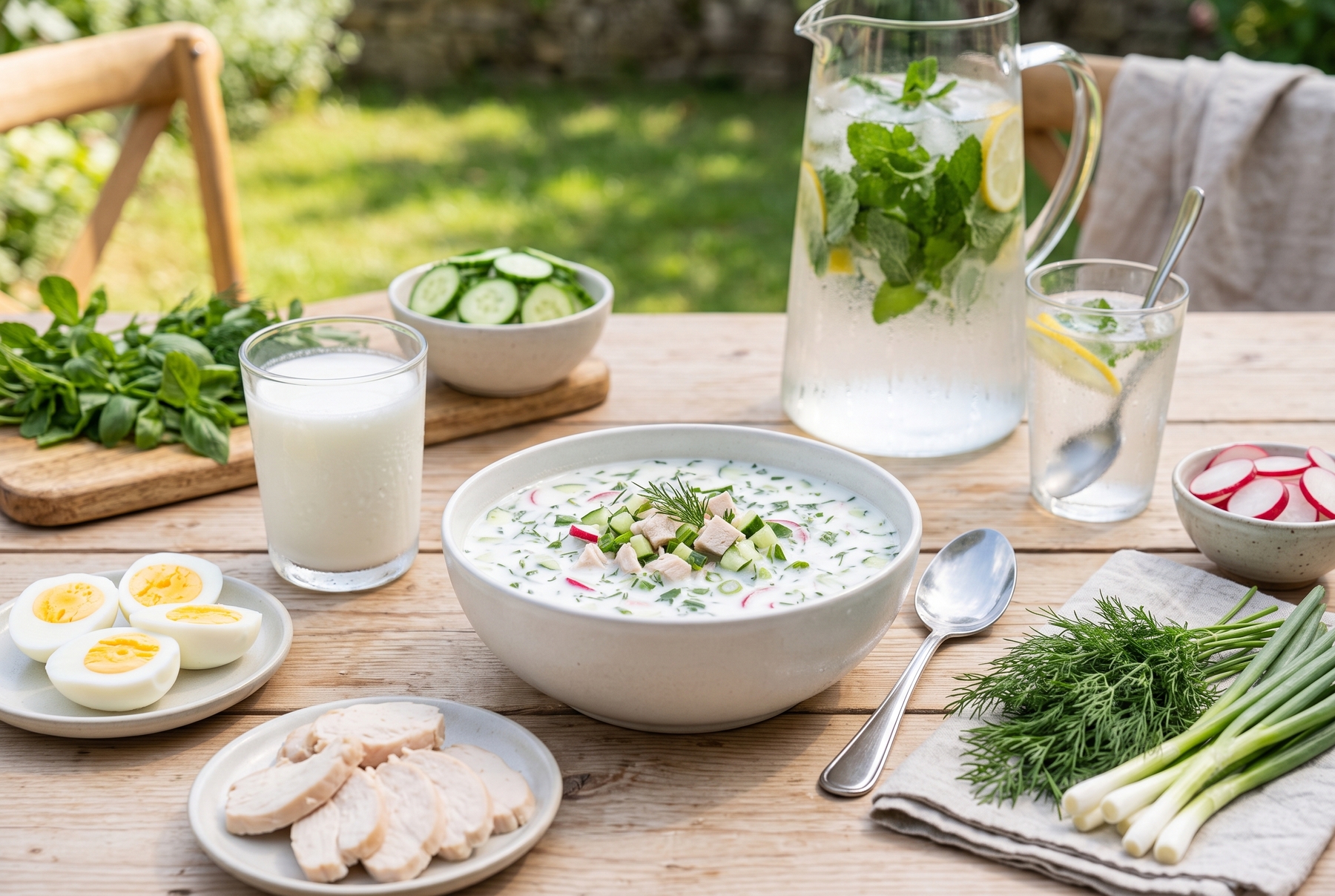
Cold soups, such as okroshka with a fermented dairy base, are perfect for hot days as they combine the freshness of vegetables with the benefits of protein.
What to Eat Less of During the Heat
Fatty fried foods, heavy cream sauces, massive portions of meat, and fast food often feel much heavier in the heat than they do in winter. Your digestive system requires more resources, and your body is already hot. You do not need to cancel your barbecue plans over this. Simply shift the focus: bake or grill the meat instead of frying it in oil, replace heavy mayonnaise with a garlic and herb yogurt sauce, choose a smaller portion of meat, and pile on more vegetables.
Sugary drinks present a completely different issue. Lemonades, packaged juices, sweet iced teas, and milkshakes might seem like the perfect way to quench your thirst, but they actually deliver massive amounts of sugar, leaving you thirsty again just half an hour later. Ice cream serves as a wonderful dessert, but it makes a terrible thirst quencher. Choose gentler alternatives instead: water infused with berries and mint, unsweetened iced tea, or homemade mors (a traditional berry drink), where you control the exact amount of sugar rather than leaving it up to a factory.
Let us discuss alcohol. It can make you feel significantly worse in the heat, and it absolutely does not quench thirst, no matter how tempting that frosted bottle looks. If your evening plans include a glass of wine, ensure you have a glass of water nearby, food on the table, and shade above your head rather than the midday sun.
What to Drink in the Heat: Water, Salt, and Electrolytes
The universal rule of ‘two liters for everyone’ simply does not exist. Your water requirements depend on the temperature, your activity level, how much you sweat, and your individual body. You only need two reliable indicators: thirst (trust it during summer and do not delay drinking) and urine color. A light straw color usually means you are well-hydrated. Important disclaimer: individuals with kidney or heart disease, high blood pressure, or doctor-prescribed fluid and sodium restrictions must follow their physician’s recommendations rather than relying on articles, including this one.
People talk a lot about electrolyte drinks right now, but for most individuals on a standard summer day, regular water and normal food provide more than enough. Our diets supply us with plenty of salt, potassium, and magnesium. Electrolytes become relevant during prolonged physical labor in the heat or intense sports with heavy sweating. You do not need to drink them every day ‘just in case.’
The Summer Plate: How to Build It Without a Calculator
The formula I recommend most frequently requires no math: fill half your plate with vegetables and fresh herbs, one quarter with protein, and the final quarter with grains, potatoes, whole-grain bread, or legumes. Finish it off with a little bit of fat, such as oil in your salad dressing, nuts, or a sauce. You do not need to measure anything. Eyeballing the proportions works perfectly.
Here is how this looks in real life: a salad topped with chicken and bulgur, baked fish paired with new potatoes and vegetables, lentils mixed with tomatoes and cilantro, or cottage cheese and yogurt topped with berries and a handful of nuts for a light meal.
If you completely lose your appetite in the heat, do not force yourself to eat on a strict schedule. Reduce your portion sizes, choose cooler dishes, and shift your heavier meals to the morning or evening when the temperature drops.
Smoothies work wonderfully as a meal as long as you do not turn them into a ‘cleansing’ ritual. Blending a smoothie with yogurt, cottage cheese, or a banana creates a perfectly normal, light meal. However, if your severe loss of appetite persists for a long time and comes with other symptoms like weakness, nausea, or weight loss, this is no longer a seasonal quirk. It is a reason to consult a doctor.
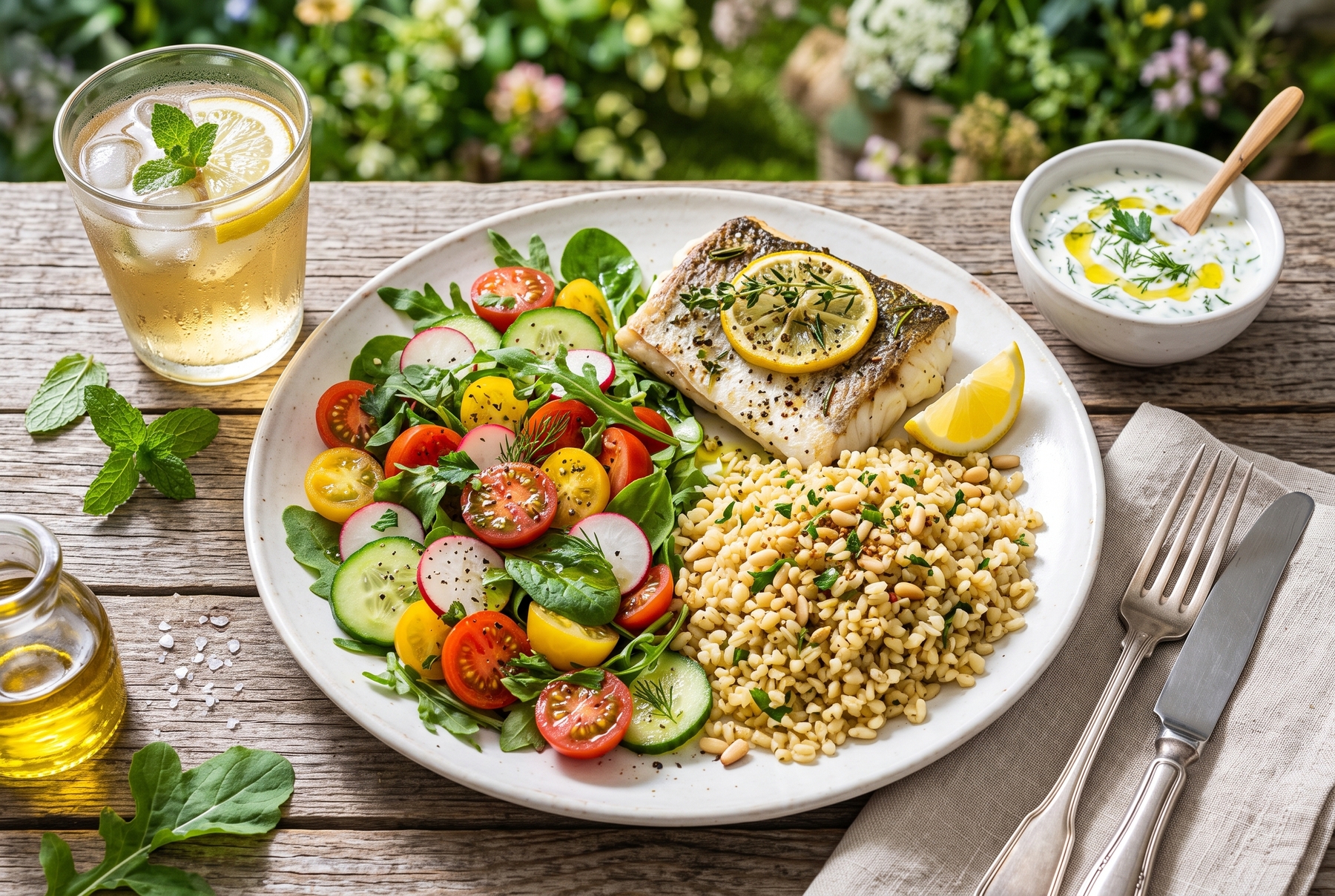
An example of a perfect summer plate: lean protein (baked fish), complex carbohydrates (bulgur), and an abundance of fresh seasonal vegetables with herbs.
Summer Food Storage: Where You Actually Need Strict Rules
During summer, you should pay closer attention to food storage than to calorie counting. The most vulnerable foods in hot weather include dairy products, fish, meat, eggs, prepared salads (especially those with dressing), creamy desserts, and sliced fruits. The general principle of food safety is straightforward: perishable food must not sit out in the warmth for long. The hotter it gets, the shorter your safe window becomes. You have about an hour or two, not until the evening. This makes a quick trip from the grocery store to your house, a properly functioning refrigerator, clean containers, and the habit of putting leftovers away immediately absolutely crucial during summer.
Picnic and Country House Checklist:
- A cooler bag with ice packs is necessary for almost every outdoor trip.
- Transport sauces and dressings separately, combining them with your food right before serving.
- Do not leave prepared dishes sitting in the sun for hours. Bring them out, eat them, and pack them away.
- Exercise extreme caution with mayonnaise-based salads and dairy desserts in the heat.
- If you ever doubt the smell or appearance of a product, do not taste it ‘just in case.’ Throw it away immediately.
Common Summer Mistakes
Surviving All Day on Coffee, Fruits, and Ice Cream. The pattern is familiar: coffee in the morning, sweet cherries in the afternoon, ice cream for a snack, and then extreme exhaustion and hunger hit by 9:00 PM, causing you to sweep through everything in the refrigerator. You do not need to ban anything here. Keep the coffee and the cherries, but add one or two proper meals containing protein and vegetables to your day. The evening binge eating will disappear on its own.
Completely Avoiding Hot Food. Hot does not automatically mean heavy. A light vegetable soup, an omelet, stewed zucchini, or steamed fish all serve as excellent hot dishes that fit perfectly into a summer menu. The ingredients and portion size matter far more than the temperature in the bowl.
Eating Too Much ‘Healthy’ Food. Nuts, cheeses, granola, smoothies, and avocados are fantastic products, but moderation still applies. You do not need to weigh every single spoonful; just remember that a handful of nuts means a handful, not an entire bag consumed while watching a TV show.
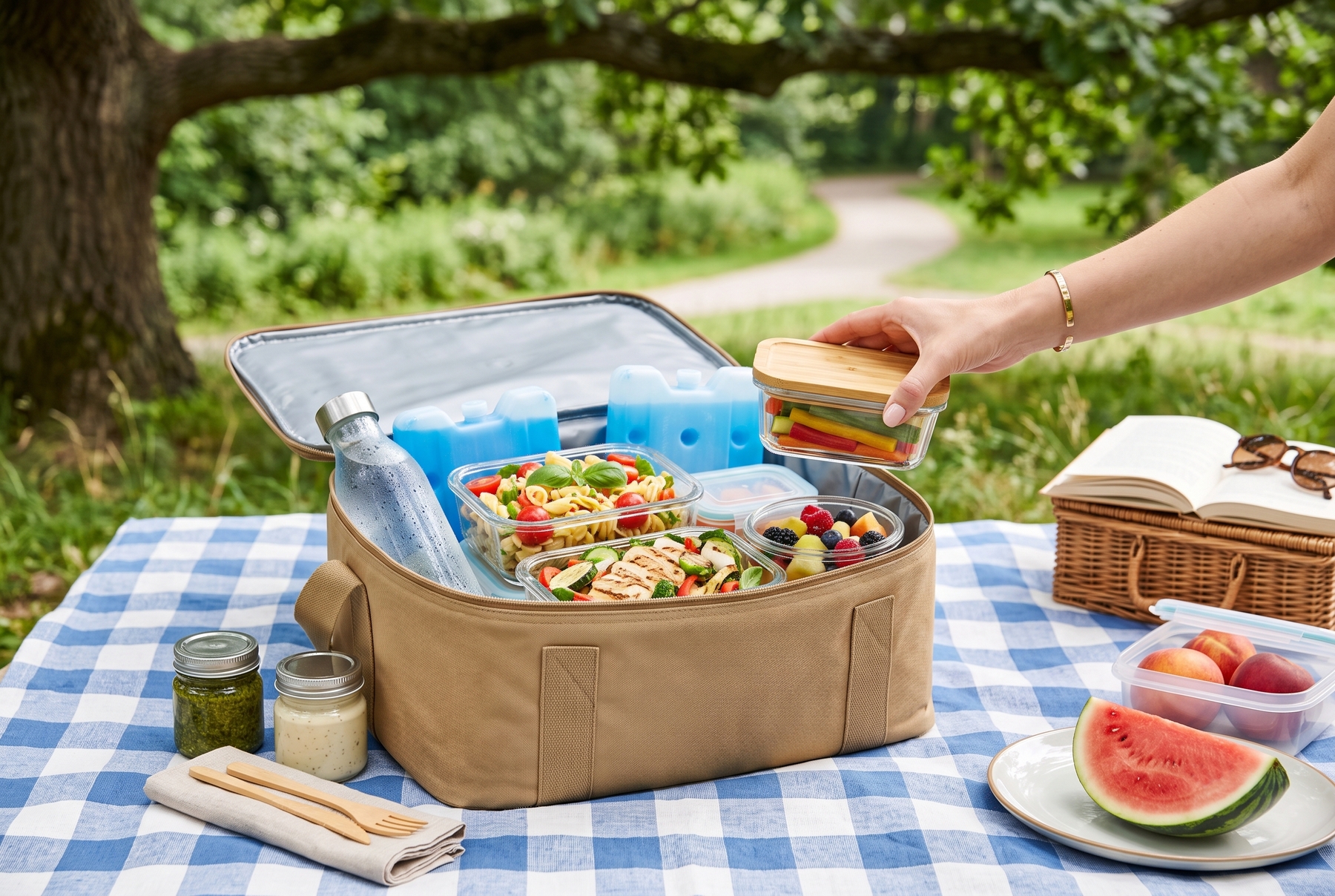
Using a cooler bag with ice packs preserves the freshness and safety of perishable foods outdoors.
Cheat Sheet: What to Add, Reduce, and Check
Eat More Often: Water, vegetables and fresh herbs, berries and seasonal fruits, fish, poultry, cottage cheese and yogurt, legumes, cold soups, and whole grains.
Eat in Moderation: Deep-fried foods, heavy sauces, sugary drinks, alcohol, massive meat portions, and creamy desserts left out in the heat.
Pay Close Attention To: Expiration dates, freshness and smell, coolers and cooler bags, food transportation, and the speed at which you refrigerate leftovers.
You do not need to transform into a flawless wellness guru holding a pitcher of lemon water in one hand and a salad in the other. Simply making your diet a bit juicier, slightly lighter, and significantly safer in terms of storage is enough. Summer will handle the rest naturally. Seasonal vegetables, fresh market berries, and a bowl of cold okroshka on the patio represent one of the year’s greatest pleasures rather than a dietary obligation. That is exactly what you should focus on.
0 comments