
Midday strikes. Twenty browser tabs remain open, of which only three are actually needed, but closing the rest feels impossible. The tea has been sitting for an hour, growing cold with a thin film on top, no longer wanted by anyone. The thought that should have been finalized half an hour ago has slipped away, leaving only a white, quiet fog in the mind. A hand reaches for a packet of cookies.
The brain requires sugar. Everyone knows this.
Stop right there.

A typical simple-carbohydrate snack that provides only a brief energy surge and leads to rapid fatigue.
The brain does indeed run on glucose. This is a fact. However, this fact has birthed a persistent everyday belief: since glucose is needed, one must urgently consume something sweet. A cookie, a chocolate bar, a handful of candy, and everything will supposedly start working again. It will work for about twenty minutes, and then the situation will become worse than before.
The brain requires a predictable supply of energy, not a one-time sugar assault. Sufficient protein is necessary. High-quality fats are essential. Fiber, which the majority of us consistently lack, plays a crucial role. Micronutrients, entirely absent in a piece of candy, are vital. Brain nutrition represents a system that prevents attention and memory from stalling, rather than a miracle pill.
Table of Contents
- Food Does Not Upgrade Your Brain in a Week
- Why Sugar Swings Hinder Thinking
- Protein: Focus Unravels by Lunch Without It
- Fats: Where the Benefit Lies and What Simply Sounds Good
- Greens and Vegetables: The Entire Structure Fails Without Them
- Buckwheat, Lentils, and Beans: Food Unfairly Considered Boring
- What to Give Up for a Clear Head
- Assembling the Plate: No Scales and No Anxiety
- List of Useful Brain Foods: What to Always Keep at Home
- Personal Experience
- The Brain Does Not Need a Diet. It Needs Stability
Food Does Not Upgrade Your Brain in a Week
Why the Topic Easily Turns Into Marketing
Brain nutrition is one of the most convenient niches for sales. Everything thrives here: superfoods for memory, chocolate for intellect, berries against dementia, supplements for concentration, and stacks of books on biohacking. The demand is understandable, as everyone wishes to think faster, tire less, and remember better.
I do not work with this approach. We are not selling hope in a jar.
An honest conversation starts elsewhere. Brain function depends directly on blood circulation, blood sugar levels, inflammation, sleep, physical activity, and overall nutrition. No single lever exists that can be pulled using blueberries or fish oil. A system exists instead.
Which Foods Truly Protect the Brain and Improve Memory
The most researched approach is the MIND diet. This is a hybrid of the Mediterranean diet and the DASH diet for hypertension, created specifically to protect the brain from aging. The foundation of such a diet includes greens, vegetables, berries, nuts, legumes, whole grains, fish, and olive oil.
For a long time, observational studies showed that those who ate exactly this way retained a clear mind longer. However, a major 2023 study proved that this diet does not work miracles compared to a standard healthy menu. Over the three years of the experiment, both groups simply began eating better and reduced their weight, resulting in improved cognitive metrics for everyone.
In other words, good nutrition works on its own. The matter lies not in the name of the diet, but in the simple fact of eating normally.
Stripping away the marketing layer reveals a simple principle: assemble a plate that does not force the brain into survival mode. That is the entire secret.
Why Sugar Swings Hinder Thinking
What Happens After a Pastry and Coffee
Simple carbohydrates, such as cookies, pastries, sweet yogurt with jam, and candies, deliver a sharp spike. The body reacts to this by releasing insulin, causing blood sugar levels to plummet. Drowsiness, irritation, and renewed hunger set in, turning a simple one-hour task into torture.
Everything initially seems manageable after sweet coffee and a pastry. An hour and a half later, the head feels stuffed with cotton.
Complex Carbohydrates: Where to Source Long-Lasting Energy for Brain Work
We face no shortage of these options, as the products are available, inexpensive, and familiar. Buckwheat. Oatmeal. Pearl barley. Rye or whole-grain bread. Brown rice, bulgur, spelt. Lentils, beans, chickpeas, peas. All of these serve as sources of carbohydrates that release energy slowly, without causing a spike.
A condition applies, however: carbohydrates should not arrive alone. They function entirely differently in the company of protein, fat, and fiber. The WHO advises the exact same approach, recommending that carbohydrates be obtained from whole grains, vegetables, and legumes, rather than from candy and fast food.
Sweet yogurt with jam, cookies, and coffee make a poor start for a day of focus. Oatmeal with berries and nuts, accompanied by an egg or a spoonful of cottage cheese, presents a completely different scenario.
Breakfasting solely on sweets pleases the brain initially, but it demands a break an hour later.
Protein: Focus Unravels by Lunch Without It
Why This Works
Protein is often remembered last, as it is neither a superfood for the mind, a rare berry, nor fish oil. Yet, when protein is lacking, a person quickly becomes hungry, begins snacking chaotically on whatever is available, and energy levels fluctuate along with mood, making concentration itself a daunting task.
Protein provides long-lasting satiety. It delivers an enduring feeling of fullness, allowing the mind to remain clear well into the afternoon.
Accessible Brain Foods: What to Grab at a Regular Supermarket
Eggs. Cottage cheese. Plain yogurt without sugar, kefir (a fermented milk drink). Chicken, turkey. Any fish. Beans, lentils, chickpeas. Tofu, for those familiar with it. Liver consumed once a week serves as a good source of iron and B vitamins, though daily consumption is unnecessary.
A Formula for Those Short on Time
A can of beans paired with tuna or a boiled egg, plus greens, oil, and lemon or vinegar. Five minutes is all it takes. This constitutes a proper lunch for the brain, rather than ‘grabbing something while standing by the fridge’. Yesterday’s cold buckwheat mixed with an egg, cucumber, and mustard works just as well. It may not look beautiful, but it is honest food.
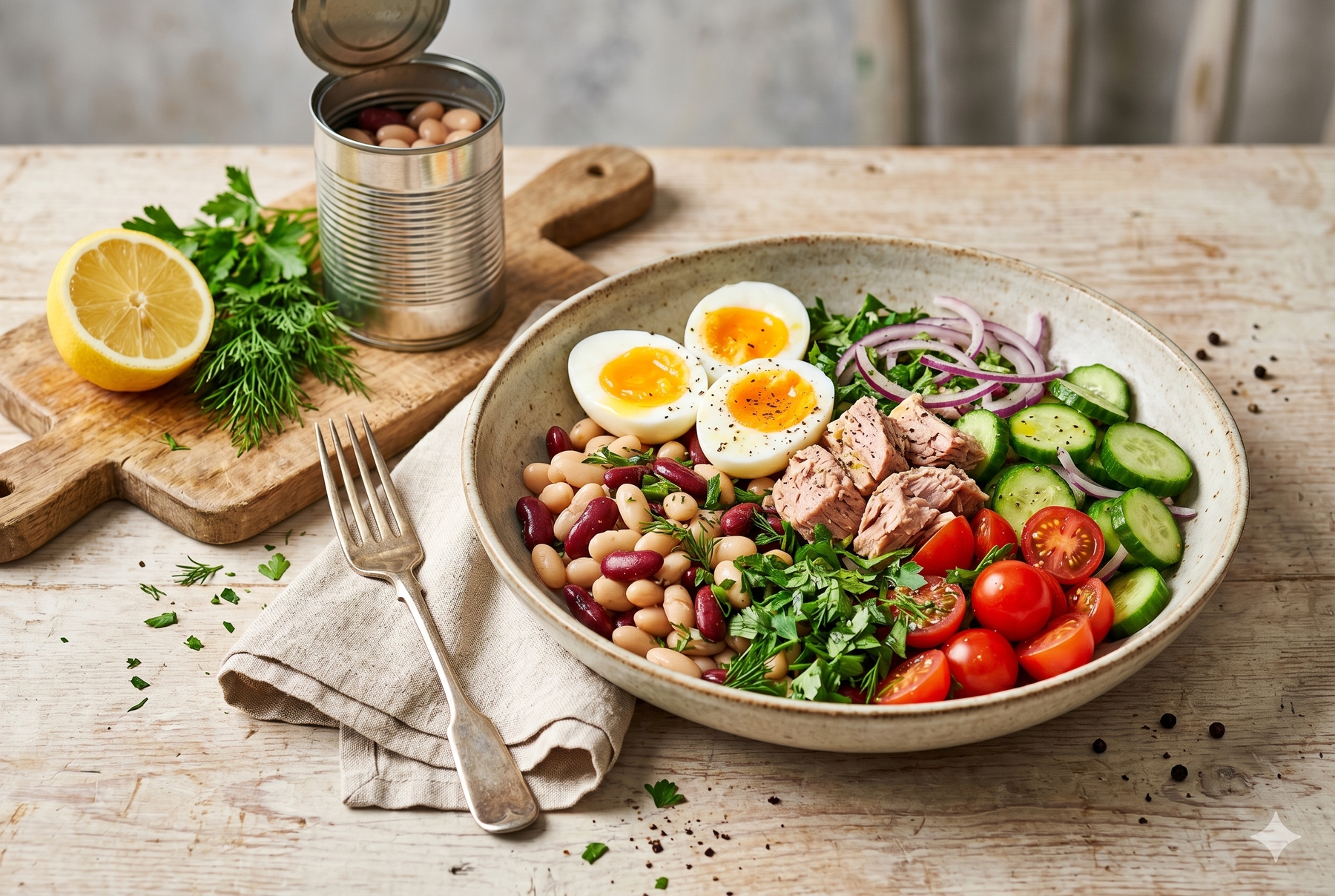
A wholesome lunch high in protein and fiber helps maintain stable energy levels throughout the day.
Fats: Where the Benefit Lies and What Simply Sounds Good
Fatty Fish (Without Overpaying for a Brand)
Fatty fish is one of the few brain foods that scientists praise without reservation. Omega-3 fatty acids protect blood vessels and suppress inflammation, which directly impacts the brain.
Salmon is neither the only nor the mandatory hero here. Mackerel. Herring. Sardines. Pacific sardines. Pink salmon. Trout. All these represent fish with an excellent profile of healthy fats, widely available and often several times cheaper than salmon. Mackerel baked in the oven smells unmistakably sharp and rich, prompting the hand to reach for bread and the plate on its own.
Oils
Olive oil is a solid choice. Making a cult out of it is unnecessary, however. What matters is not the olive oil itself, but the habit of consuming unsaturated fats and relying less on butter, margarine, fried fast food, and puff pastry. The WHO explicitly states that unsaturated fats are preferable to saturated ones, and industrial trans fats have no place in a healthy diet whatsoever.
Nuts and Seeds: A Small Handful, Not a Bowl for a TV Show
Walnuts, almonds, hazelnuts, pumpkin seeds, sunflower seeds, and flaxseed. A handful used as an addition to porridge, salad, or yogurt tells a completely different story regarding calories and satiety compared to a large bag of nuts sitting next to a laptop in the evening.
Greens and Vegetables: The Entire Structure Fails Without Them
Why Greens Are Not Just Plate Garnish
Parsley, dill, spinach, leafy greens, green onions, sorrel, cabbage, and broccoli. All of these can be integrated into everyday cooking with little effort. A handful of spinach goes into scrambled eggs, where it is barely noticeable. Dill goes into buckwheat. Cabbage stewed with carrots serves as a side dish. Green onions mix perfectly into cottage cheese.
This is not a garnish. It provides fiber, folic acid, vitamin C, and many other nutrients absent in chicken or bread.
Berries: Neither Fresh nor Expensive Is Required
Frozen berries serve as a complete alternative. Blackcurrants, blueberries, cherries, raspberries, cranberries, and lingonberries. They are cheaper than fresh ones, store for a long time, and provide the exact same benefits.
Thawed blueberries do not need to look perfect. Their only job is to end up in your porridge or cottage cheese.
A Realistic Goal
Adding a portion of vegetables to every main meal forms a realistic goal. Consistency beats perfection. According to WHO standards, humans require at least 400 grams (14 oz) of vegetables and fruits per day and a minimum of 25 grams (0.9 oz) of fiber. This is not a massive amount: half a plate of vegetables at lunch, an apple for a snack, a handful of berries in porridge, and you are already close.
Buckwheat, Lentils, and Beans: Food Unfairly Considered Boring
True Power Resides in Ordinary Foods
Buckwheat, lentils, beans, peas, oatmeal, and pearl barley arrive without beautiful packaging or massive marketing budgets. Yet, these exact foods provide slow energy, fiber, and plant-based protein, pairing exceptionally well with vegetables, fish, and eggs. Sometimes the most anti-glamorous food delivers more tangible benefits than a powder with a beautiful label sold for a premium price.
How to Avoid Turning This Into a Punishment
Buckwheat with mushrooms and an egg constitutes a perfectly normal dinner. Lentil soup cooked with tomato and smoked paprika smells so good that neighbors start wondering what is happening next door. Beans tossed with vegetables, garlic, and good oil are fantastic. Savory oatmeal made with an egg, hard cheese, and greens sounds strange but tastes completely normal. Pearl barley cooked slowly with onions and broth feels almost like risotto, only ten times cheaper.
For the Lazy: One Base, Various Additions
Cooking grains or legumes for two to three days and keeping them in the refrigerator works perfectly. Changing only the toppings ensures variety: fish, egg, different vegetables, sauce, greens, and spices. The plate looks different every time, while the foundation remains the same.
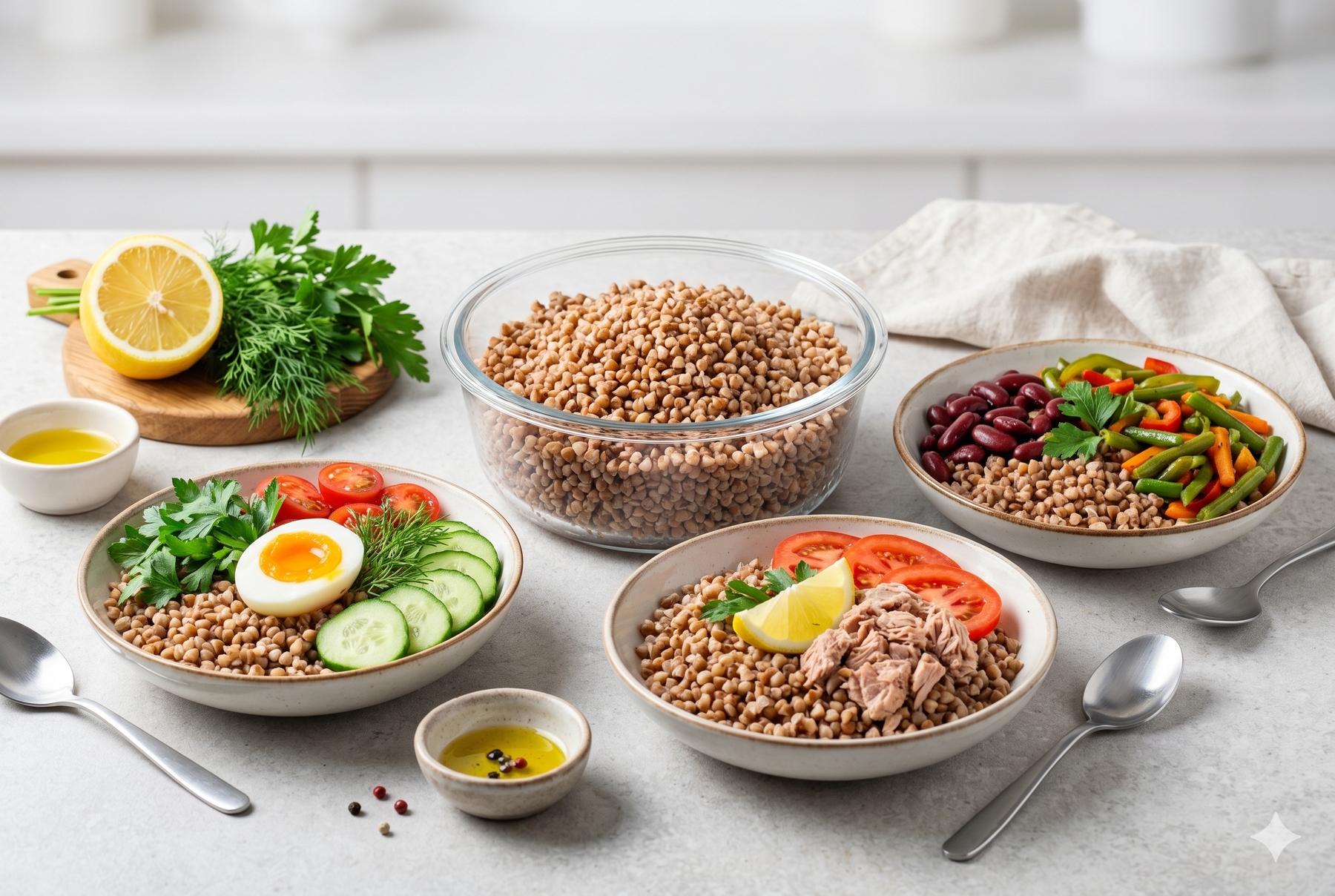
Complex carbohydrates paired with protein represent the finest choice for those valuing mental clarity and satiety.
What to Give Up for a Clear Head
Sweet Drinks and Constant Snacking
A person who drinks sweet coffee all day, chases it with cookies, and then wonders why focus is impossible by three o’clock lives in a state of perpetual energy swings. The body is forced to release insulin again and again, hunger returns rapidly, and the habit of eating sweets to mask fatigue becomes deeply rooted. This is not about permanent bans. It simply requires an understanding of how the mechanism works.
Ultra-Processed Foods
Sausages, sweet pastries, snacks, fast food, and products loaded with salt, sugar, and fats of unknown origin disrupt clarity. If these form the basis of a diet, the brain operates like a bad office Wi-Fi connection: a signal seems to be present, but it constantly freezes.
Alcohol and the Old Myth About a Glass for the Blood Vessels
Considering alcohol a ‘brain food’ is misguided. Even in dietary models where a glass of wine was once mentioned in recommendations, modern science has excluded alcohol due to its harm. Harvard researchers emphasize that a universal safe dose does not exist, as everything depends on genetics and personal health risks.
Assembling the Plate: No Scales and No Anxiety
A simple framework exists that I use myself and share with clients.
Half of the plate: vegetables, greens, berries, or fruits. A quarter: protein, such as fish, eggs, poultry, cottage cheese, or legumes. A quarter: complex carbohydrates, including buckwheat, oatmeal, pearl barley, baked potatoes, or whole-grain bread. Fat is added separately: oil, nuts, seeds, avocado, or fatty fish.
No further rules apply.
For breakfast, excellent options include: oatmeal with berries, nuts, and plain yogurt; buckwheat with an egg and greens; rye bread with cottage cheese or fish and cucumber; an omelet with vegetables and a slice of whole-grain bread.
An energizing lunch that prevents a food coma: lentil soup and salad; fish paired with buckwheat and stewed vegetables; chicken served with pearl barley and cabbage; beans combined with bulgur and tomato sauce.
For dinner, after which the desire to collapse face-first into the sofa vanishes: fish with vegetables; sugar-free cottage cheese mixed with berries and nuts; a warm salad featuring egg and beans; vegetable soup alongside a piece of whole-grain bread.
List of Useful Brain Foods: What to Always Keep at Home
Grains and Bread: buckwheat, oatmeal, pearl barley, brown rice, whole-grain bread.
Protein: eggs, cottage cheese, plain yogurt, chicken, any fish, beans, lentils.
Vegetables and Greens: cabbage, carrots, beets, broccoli, spinach, dill, parsley.
Berries and Fruits: frozen currants, blueberries, cherries; apples, citrus fruits.
Fats: olive oil, nuts, seeds, fatty fish.
Flavor Boosters: lemon, vinegar, mustard, garlic, spices.
Keeping frozen berries, vegetable mixes without sauce, fish, greens, and portions of cooked grains or legumes in the freezer proves highly beneficial.
For deadline emergencies, it is wise to stock a can of beans, sardines or tuna, eggs, instant plain buckwheat without additives, nuts, and natural yogurt.
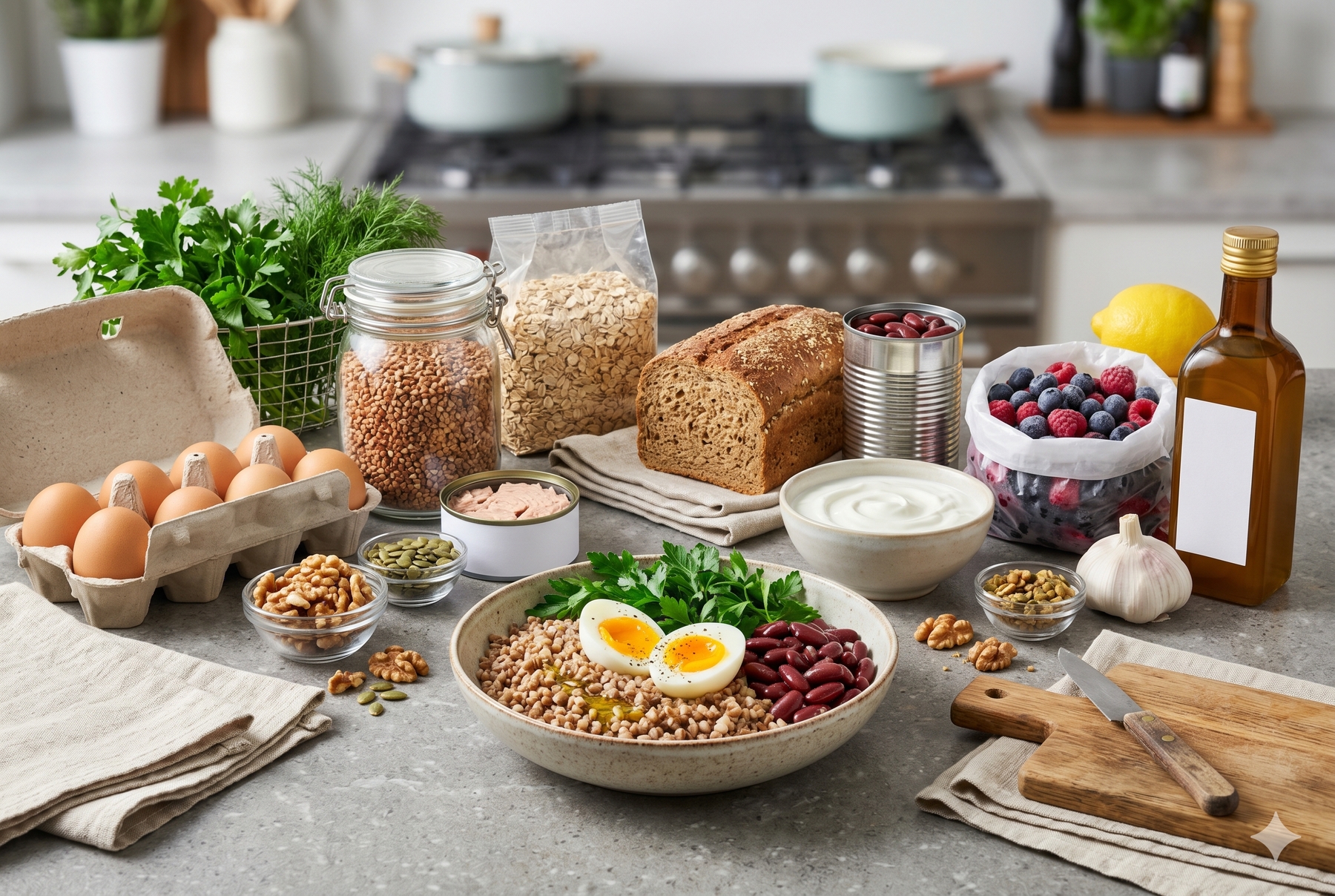
Simple and accessible foods, such as whole grains, legumes, eggs, and berries, form the foundation of the MIND diet.
Personal Experience
My life did not turn upside down after changing my lunch menu. However, at some point, the realization dawned that post-lunch ‘cotton brain’ is neither normal nor inevitable. It does not affect everyone, nor does it happen every day, but rather occurs precisely when lunch was too light, too sweet, or skipped entirely. When a proper lunch featuring protein and grains replaced midday coffee and cookies, the brain fog stopped arriving on schedule. It did not act like a magic pill. It felt more like waking from a good night of sleep: at first, nothing seems unusual, but then you notice that the day has stopped falling apart by four o’clock.
The Brain Does Not Need a Diet. It Needs Stability
Consuming more vegetables, greens, berries, fish, legumes, whole grains, and nuts provides crucial stability. Reducing sugar swings, fast food, trans fats, and chaotic snacking yields noticeable results. Living without scales, calorie tracking apps, and guilt for occasional deviations is entirely possible.
The brain does not require a flawless menu. It simply needs you to stop eating random junk.
0 comments