
Welcome to a delightful and inventive twist on a classic dish: Young Cabbage Schnitzel! If you're looking for a creative way to enjoy seasonal vegetables, this recipe is a true gem. It transforms the humble cabbage into a crispy, golden, and incredibly satisfying meal that can rival its meaty counterpart. Perfect for a light lunch, a hearty side, or a vegetarian main course, this dish is surprisingly simple to make. It's a beloved comfort food in many Eastern European homes, celebrated for its ability to turn a few basic ingredients into something truly special. Let's get cooking and discover the delicious secret of cabbage schnitzel!
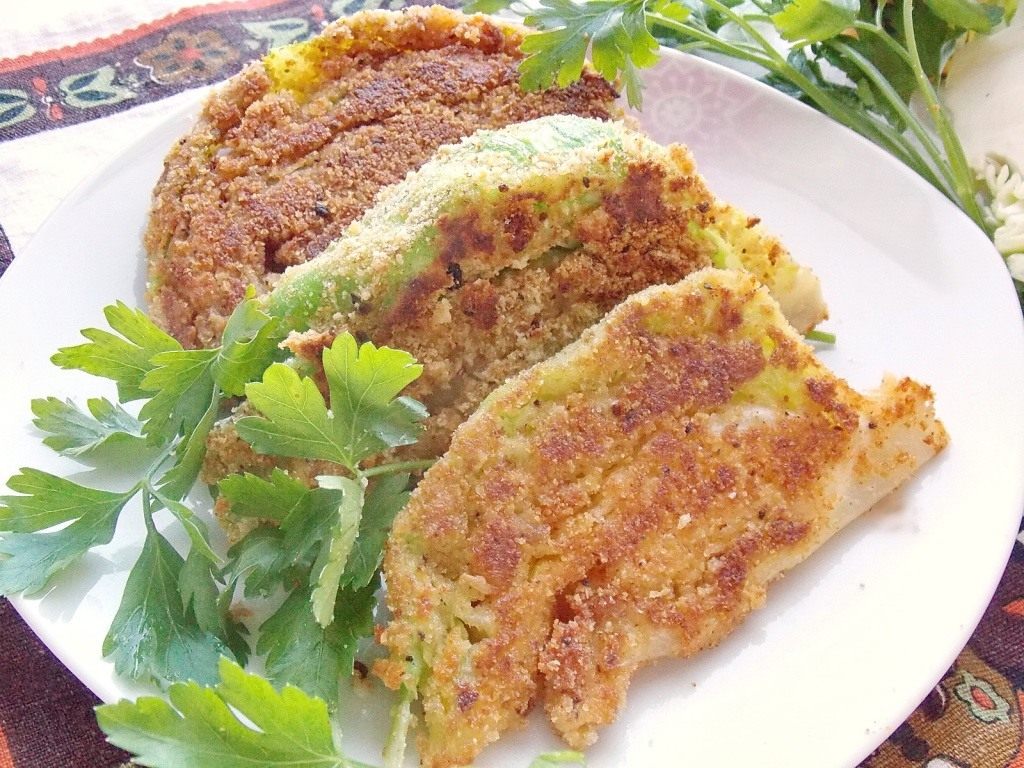
Young Cabbage Schnitzel
Ingredients for Young Cabbage Schnitzel
- half a small head of young cabbage
- 100 g (about 1 cup) breadcrumbs
- 2 eggs
- salt to your taste
- vegetable oil for frying
- cream or smetana (a type of sour cream) for serving
How to Make Young Cabbage Schnitzel
Cabbage schnitzels can be prepared in several ways: as breaded wedges with or without the core, or as stuffed envelopes (where cooked leaves are filled with cheese or ham, similar to golubtsy (stuffed cabbage rolls), and then fried). We prefer the first option — cabbage coated in egg and breadcrumbs. Despite the minimal set of ingredients, the dish turns out absolutely delicious!
Remove a couple of outer leaves from the cabbage, rinse the head, and cut it into wedges about 2 cm (a little less than an inch) thick at the widest part, tapering towards the center. I recommend slicing the cabbage with the core intact — it will hold the leaves together, preventing the schnitzel from falling apart. It’s also more convenient to eat: hold it by the core end (just like a meat schnitzel on the bone), and you don’t have to eat the core itself — it’s tough, and nitrates tend to accumulate there.
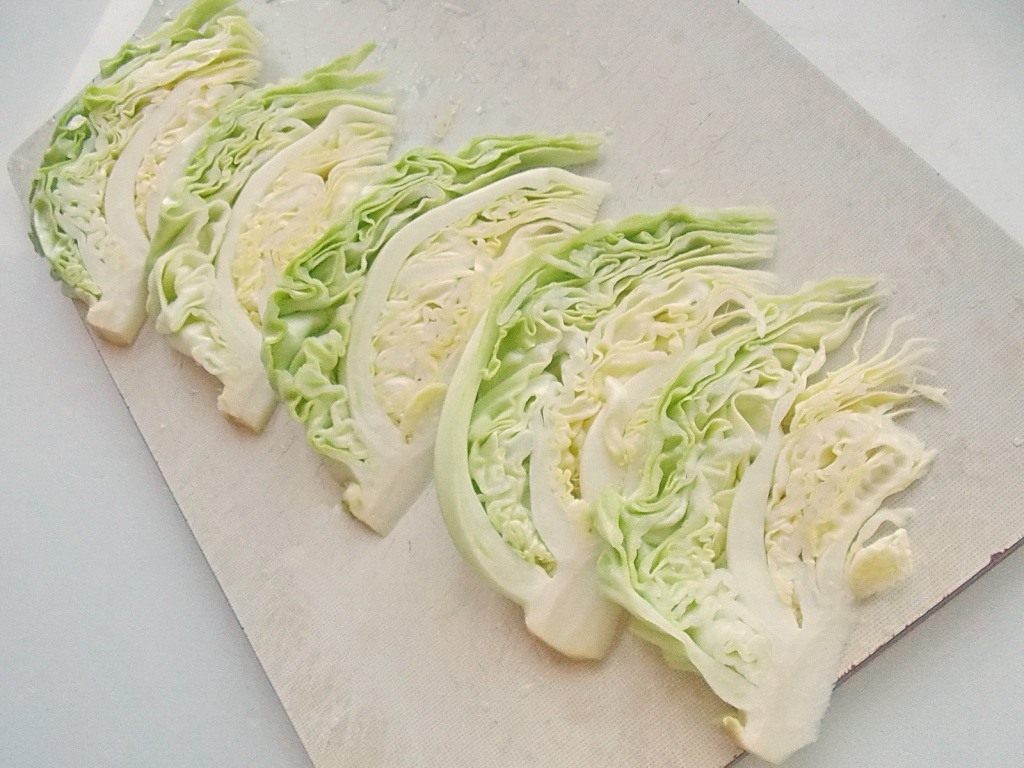
Divide the cabbage head into sections
If the cabbage head is large, you can cut each segment in half. However, the half without the core will likely fall apart into individual leaves. That’s why it’s better to use a small cabbage to keep the schnitzels whole and neat.
Place the cabbage wedges into boiling salted water and cook them. Be careful not to overcook young cabbage, or it will become mushy: 2-3 minutes is plenty. Older cabbage should be boiled a bit longer, up to 5 minutes.
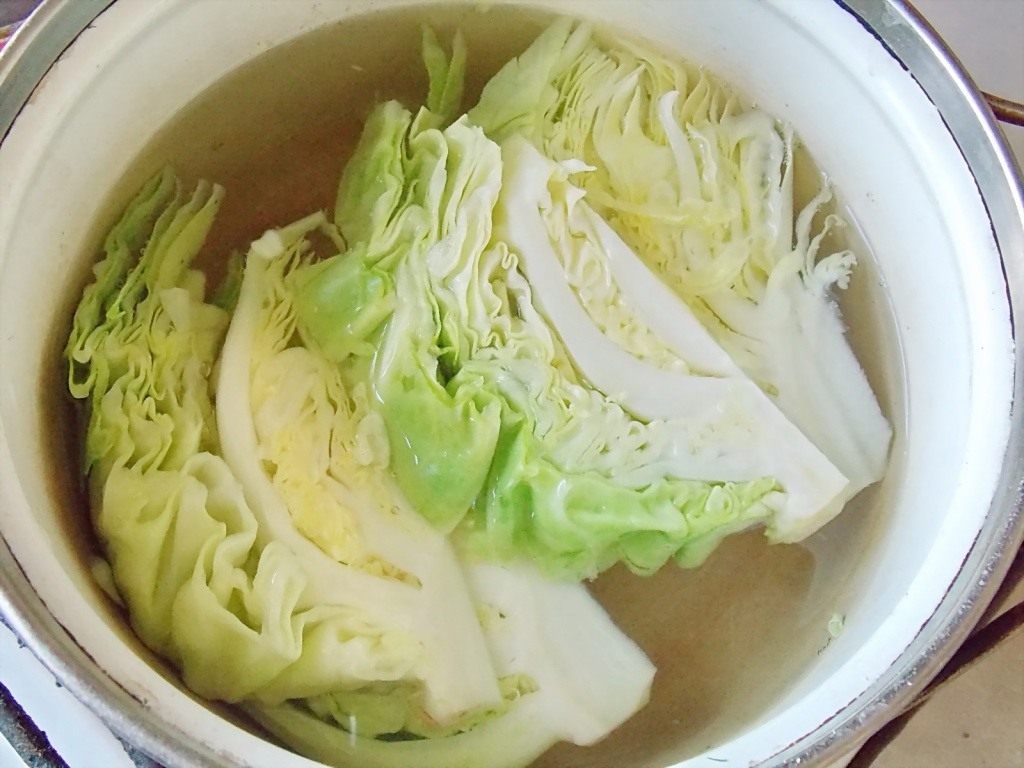
Boil the cabbage
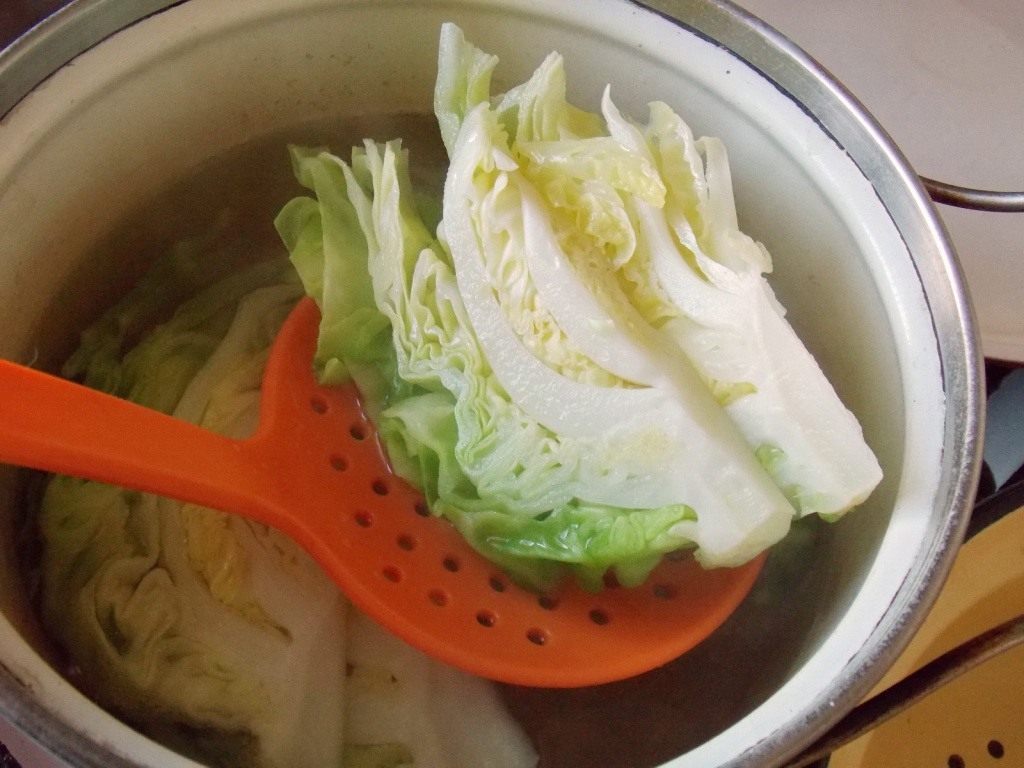
Remove the boiled cabbage from the pot
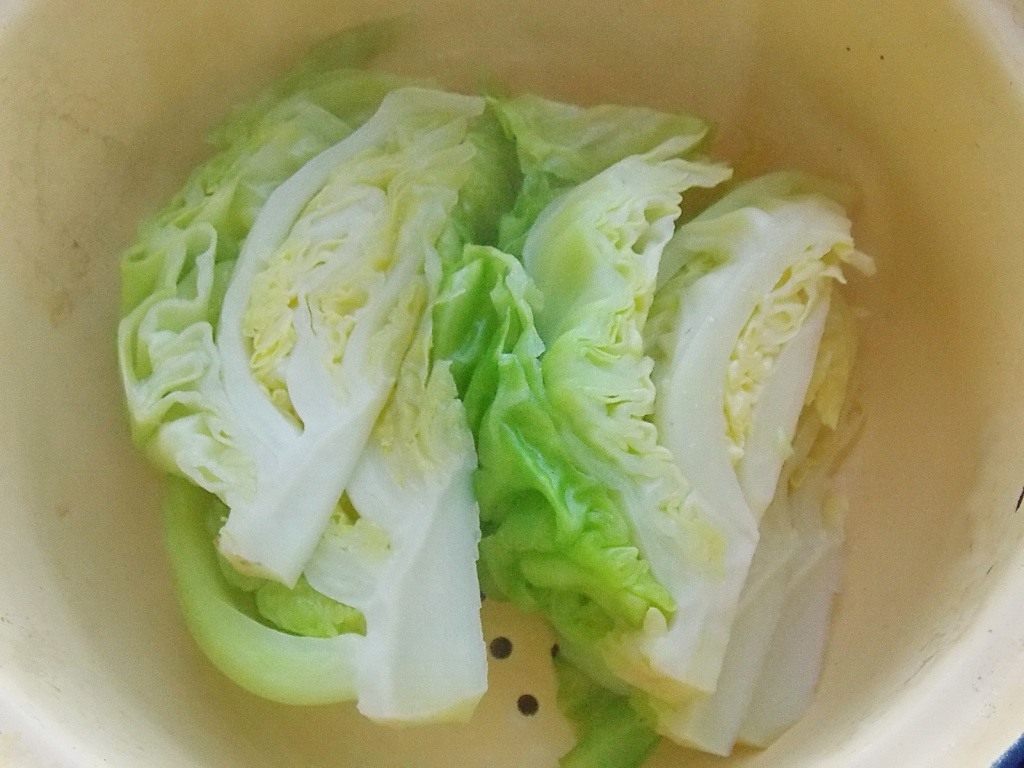
Let the cabbage drain and cool
Once the leaves start to soften, carefully remove the wedges with a slotted spoon and transfer them to a colander to drain. Then, move them to a plate or cutting board to cool down.
Prepare the breading ingredients: in a deep plate, whisk the eggs with a fork and add salt; in a shallow plate, pour the breadcrumbs.
Heat sunflower oil in a frying pan. Dip each cabbage piece on both sides into the whisked egg.
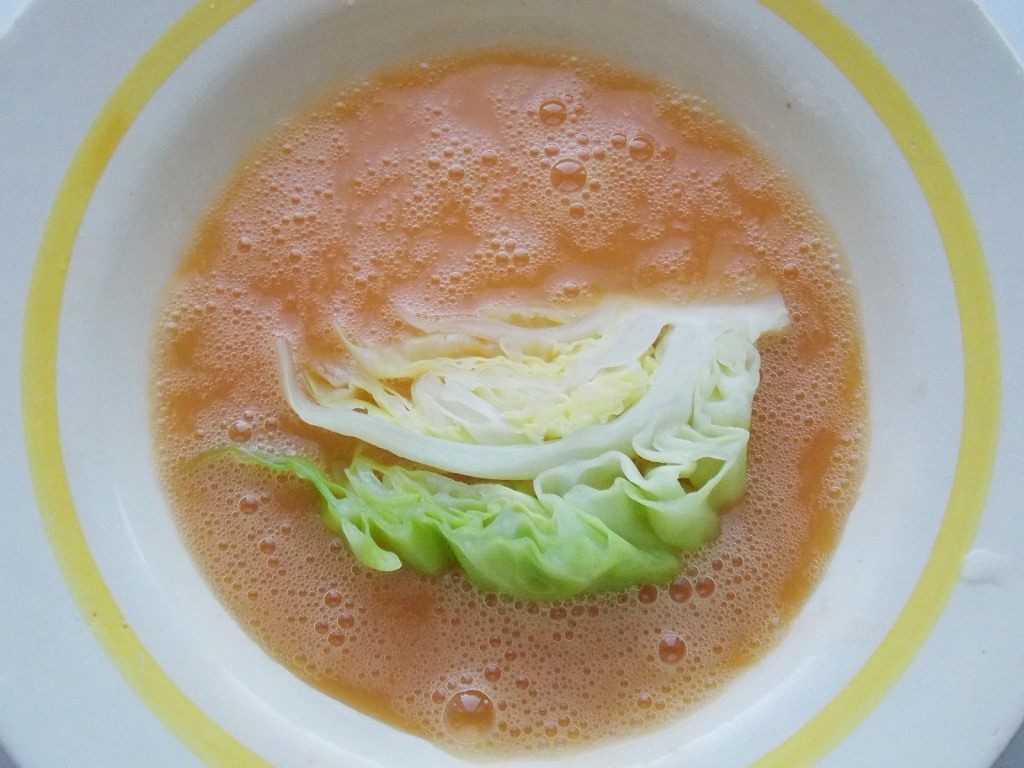
Dip the cabbage in the seasoned egg
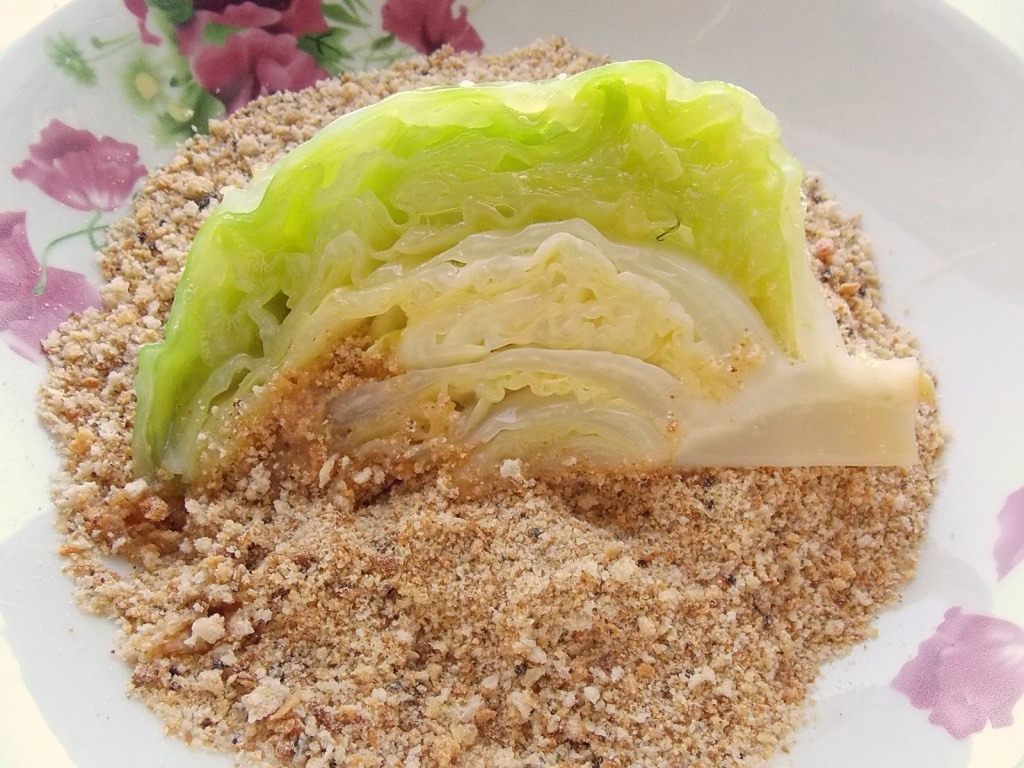
Coat in breadcrumbs
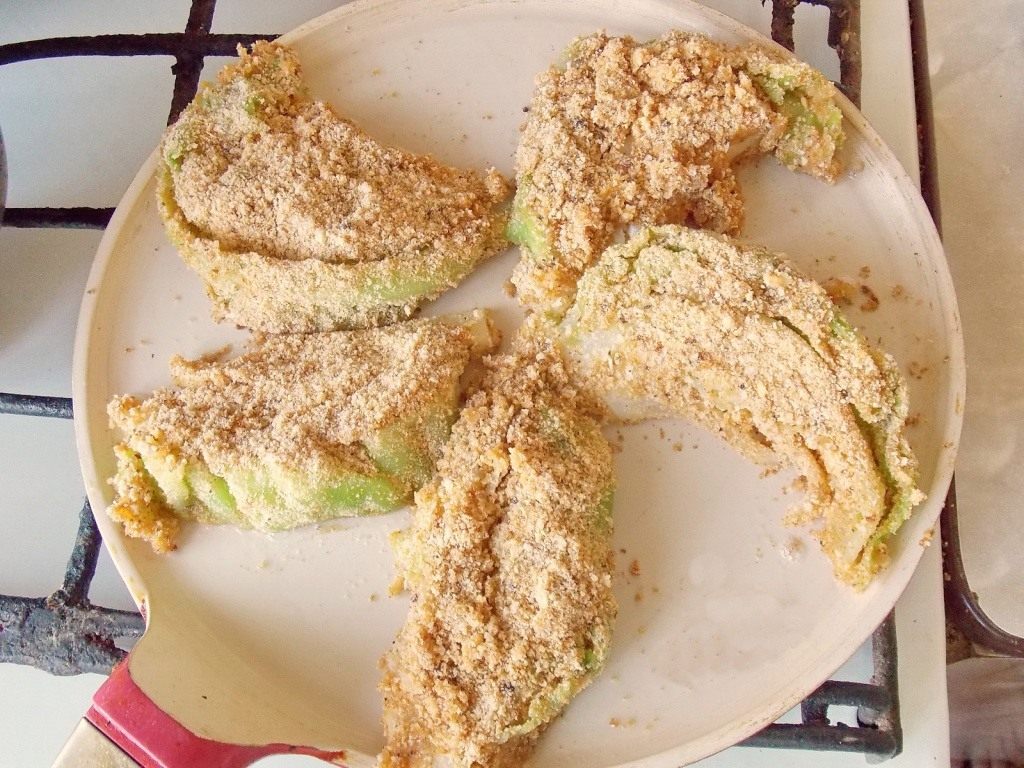
Place on a well-heated frying pan
Then, coat the cabbage in breadcrumbs, also on both sides. You can repeat this process for a double breading, like for Chicken Kiev, which creates a crispier, more substantial crust than a single layer.
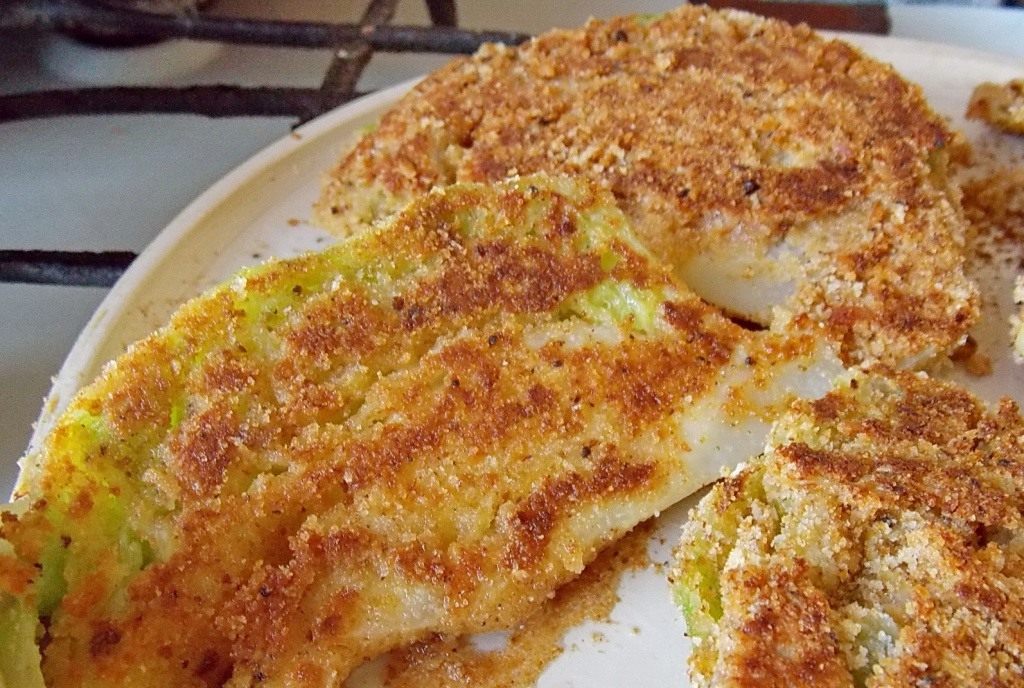
Fry the cabbage on both sides until golden brown
Place the breaded cabbage pieces onto a well-heated pan to sear the crust. Fry for a couple of minutes over medium heat, then use a wide spatula to flip them to the other side and fry for another 2-3 minutes. When the schnitzels are golden brown, remove them and place them on a plate. There’s no need to cook them for a long time — it’s not meat, and the boiled cabbage is already almost done.
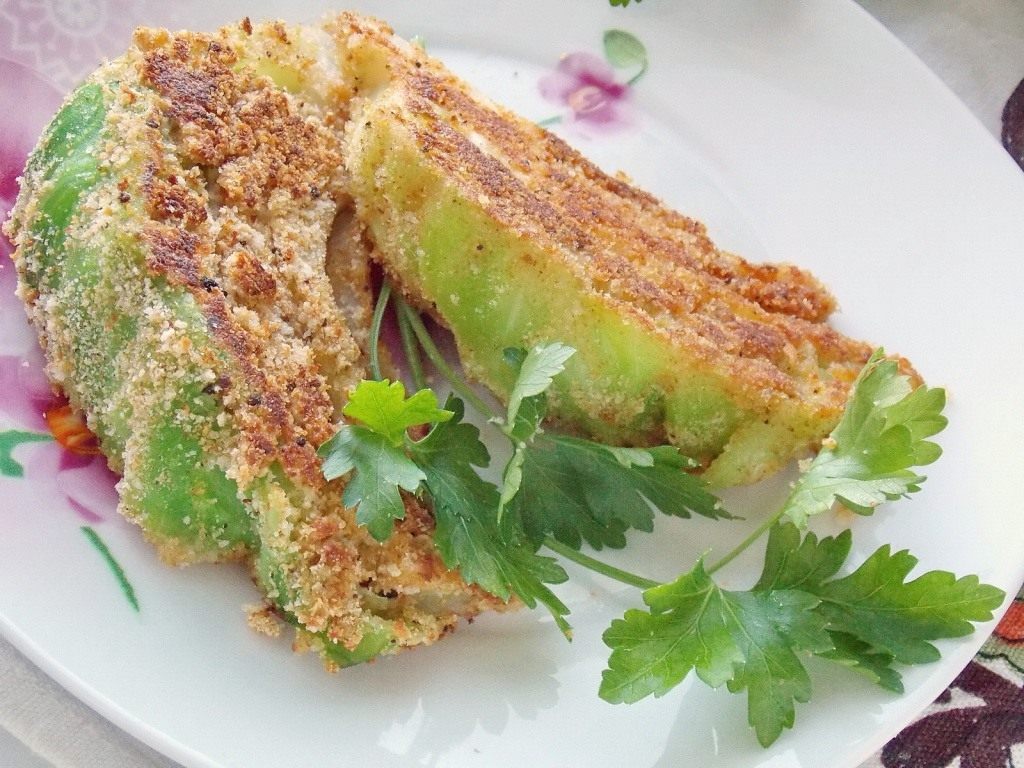
Young Cabbage Schnitzel
And there you have it – beautiful, golden cabbage schnitzels ready to be enjoyed! This dish is wonderfully versatile. Serve it hot with a dollop of sour cream, a creamy yogurt-dill sauce, or a simple squeeze of lemon to brighten the flavors. It pairs perfectly with mashed potatoes or a fresh salad for a complete meal. This recipe is not just food; it's a taste of cozy, home-style cooking that brings warmth and comfort to the table. We hope you and your loved ones enjoy this unique and delicious way to celebrate the simple goodness of cabbage. Happy cooking!
0 comments