
Welcome to a taste of classic Eastern European comfort! Today, we're making Vinegret, a beautiful and beloved beet salad that's a staple in many Russian, Ukrainian, and other regional cuisines. Its name, derived from the French "vinaigrette," hints at its zesty dressing, but the salad itself is a unique creation. Known for its stunning ruby color, courtesy of the beets, Vinegret is a healthy medley of cooked vegetables, tangy pickles, and crisp sauerkraut. It's a dish that's both humble enough for a simple family dinner and festive enough to grace any holiday table. Let's dive into this simple, nutritious, and incredibly flavorful recipe!
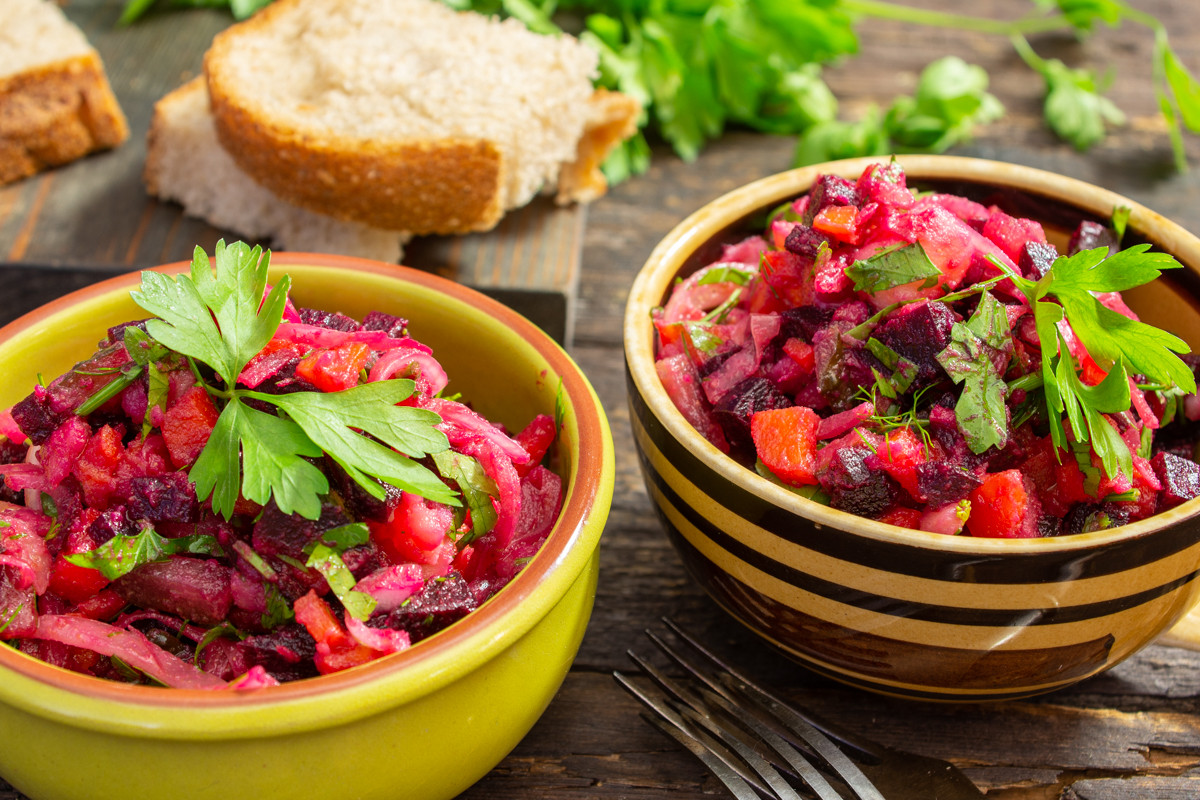
Vinegret with sauerkraut and pickles.
Ingredients for Vinegret with Sauerkraut and Pickles
- 100 g cooked beets
- 100 g potatoes, boiled in their skins
- 100 g cooked carrots
- 50 g kvashenaya kapusta (sauerkraut)
- 50 g kvasheniye ogurtsy (fermented pickles, similar to sour dill pickles)
- 30 g onion
- 2 tablespoons extra virgin olive oil
- 1 teaspoon mustard
- a few sprigs of parsley and dill
- salt, black and red pepper to taste, wine vinegar
How to Make Vinegret with Sauerkraut and Pickles
It’s convenient to start making the vinegret (a classic Eastern European beet salad) with the dressing – this way, you won’t have to dirty another bowl or jar to mix the seasonings. Pour cold-pressed olive oil into a deep bowl. Add mustard, salt to taste, and a pinch of ground red or black pepper to the oil.
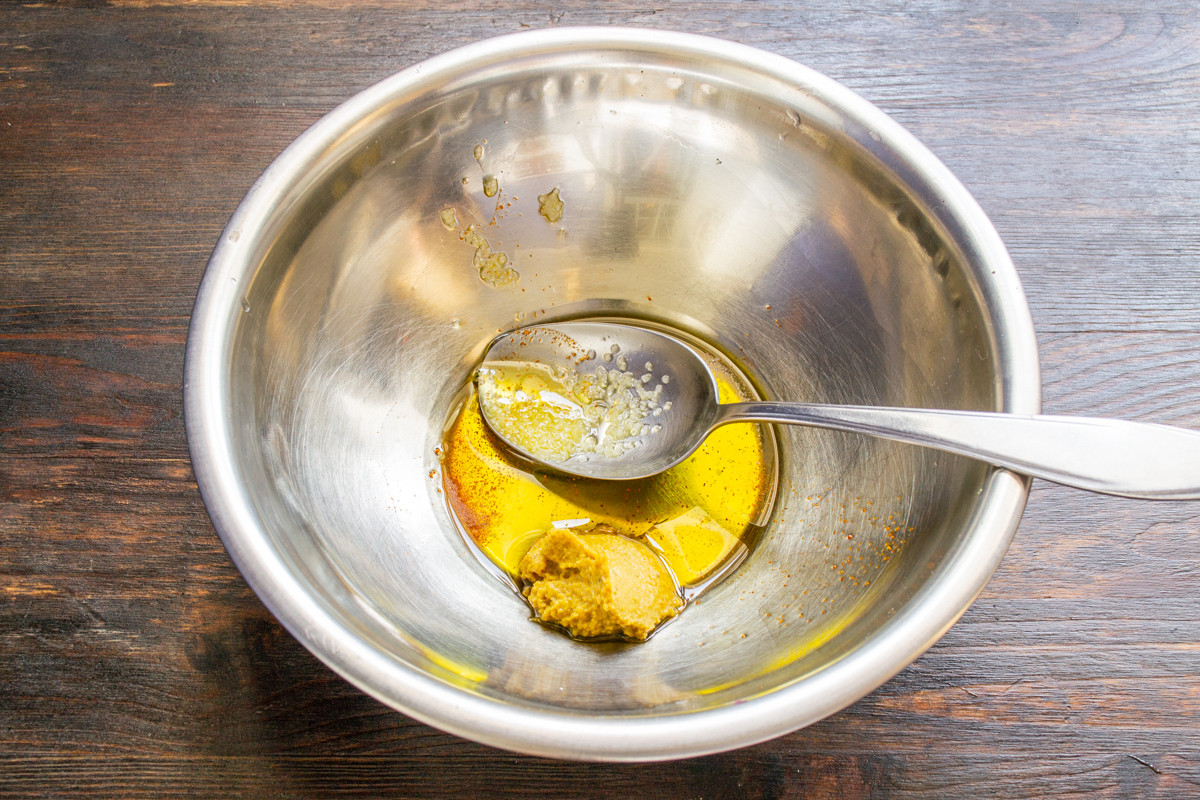
Adding mustard, salt to taste, and a pinch of pepper to the oil.
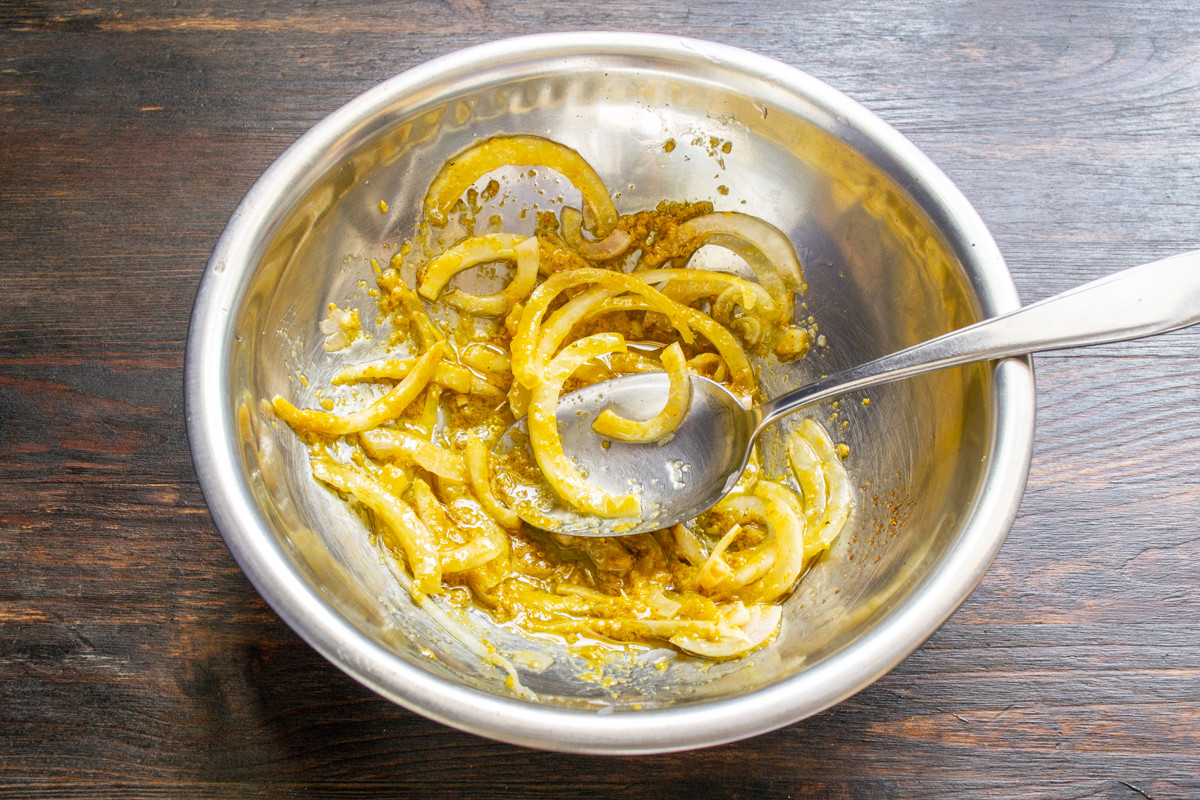
Slicing the onion into thin rings.
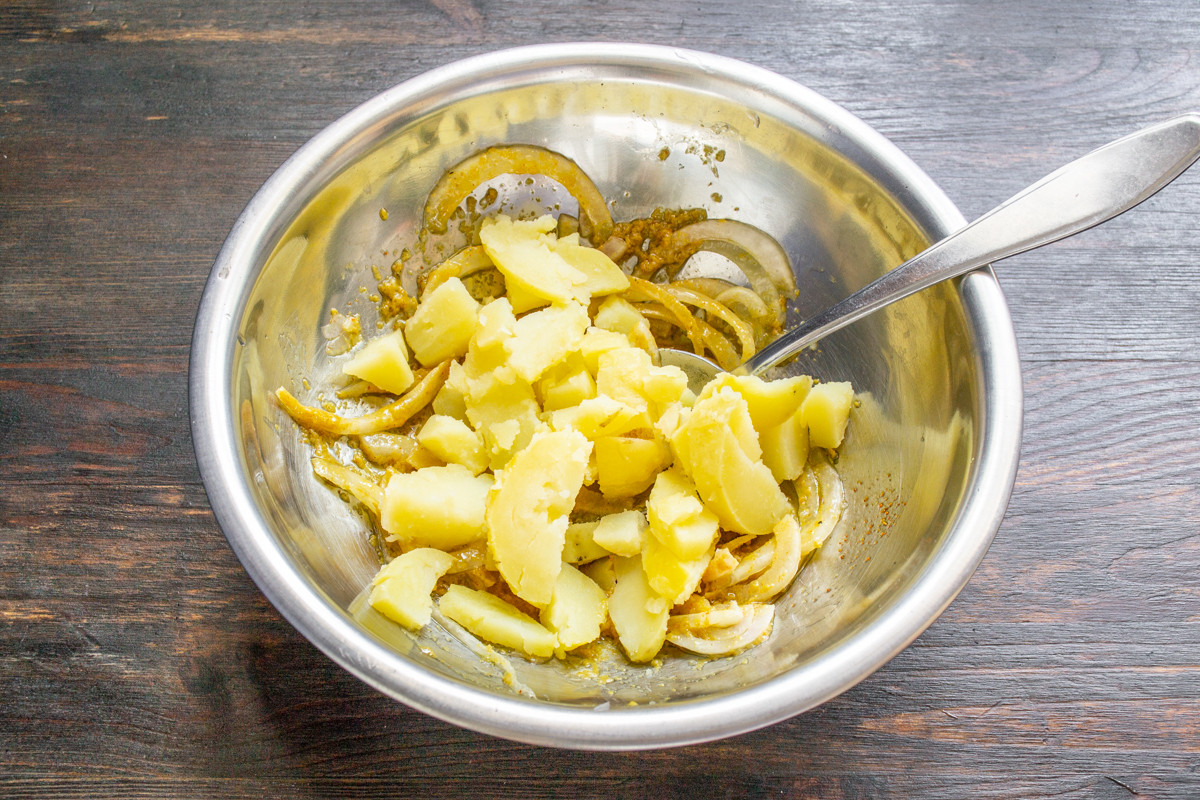
Dicing the potatoes.
If desired, add a tablespoon of wine or apple cider vinegar. Mix the dressing. Slice the onion into thin rings and place it in the bowl. Mix the onion with the seasonings and let it sit for 5 minutes while you chop the other vegetables.
Peel the potatoes that were boiled in their skins. Dice the potatoes. Place the diced potatoes in the bowl. To prevent potatoes from falling apart when boiled in their skins, try adding vinegar to the water (1 tablespoon per 1 liter of water). Potatoes in their skins should be boiled for 20-25 minutes after the water comes to a boil. For vinegret, it’s best to cook vegetables in their skins to retain more vitamins and useful microelements.
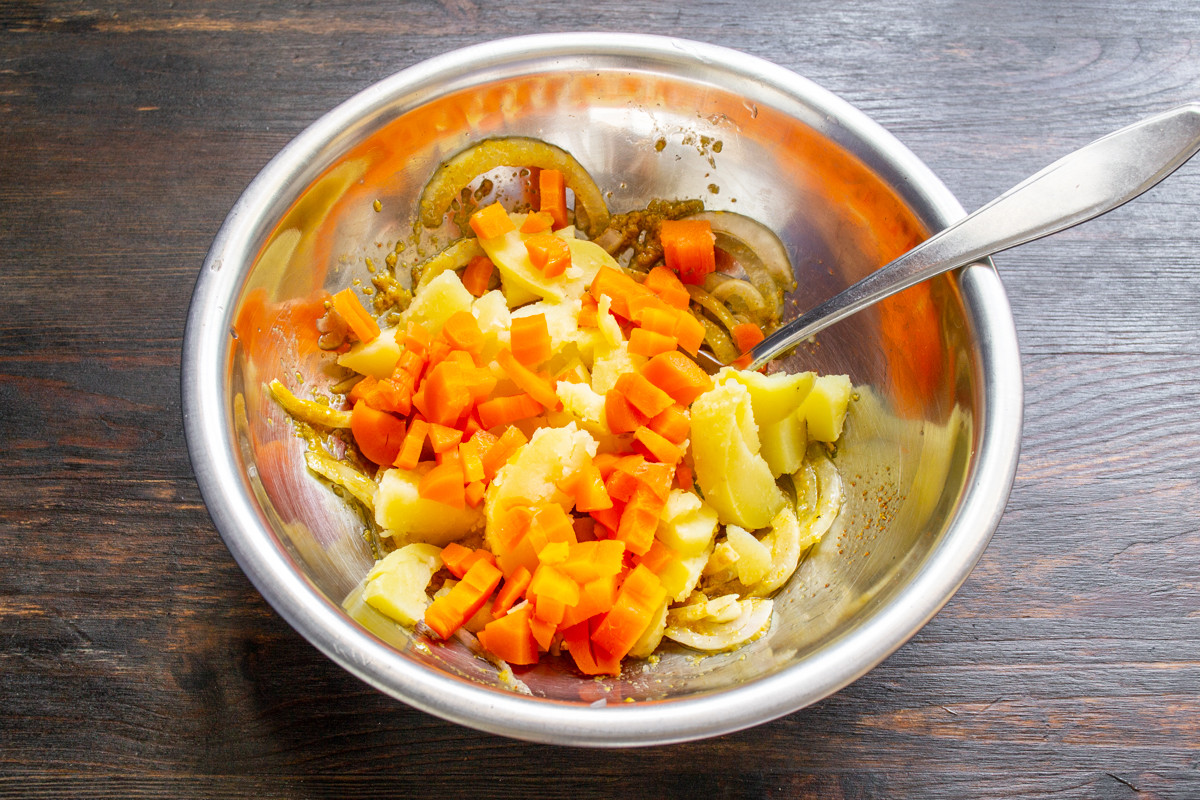
Adding the diced carrots to the vinegret.
Dice the cooked carrots into cubes of the same size as the potatoes. Add the diced carrots to the salad.
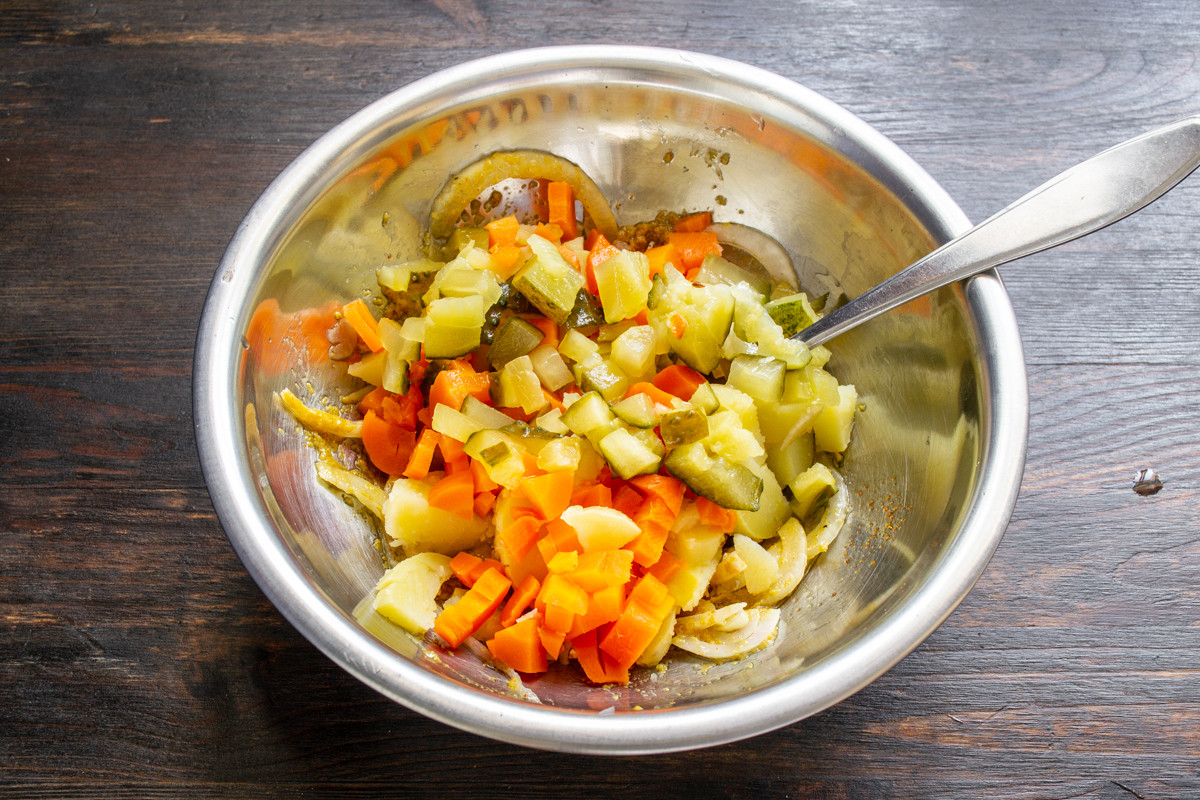
Dicing the fermented pickle into small cubes.
Dice the fermented pickle into small cubes and add it to the bowl after the carrots. You can also use marinated pickles in this recipe.
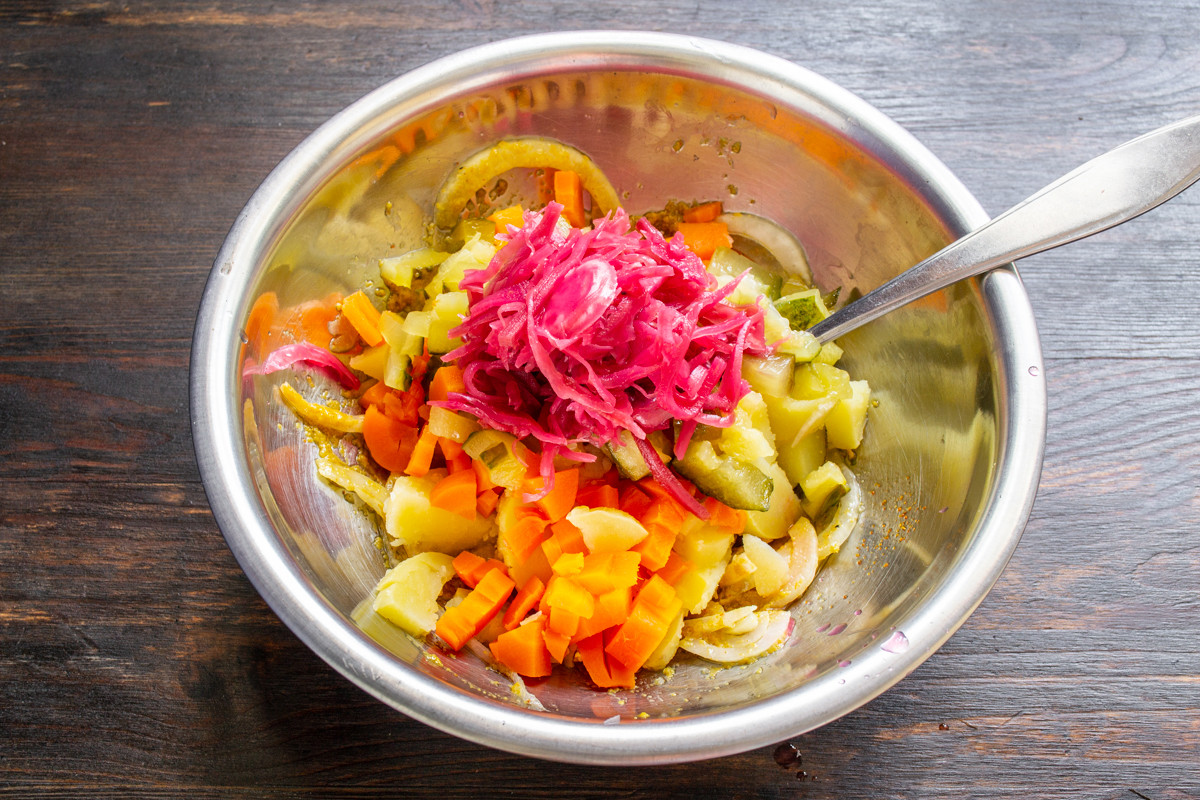
Adding the sauerkraut to the other ingredients.
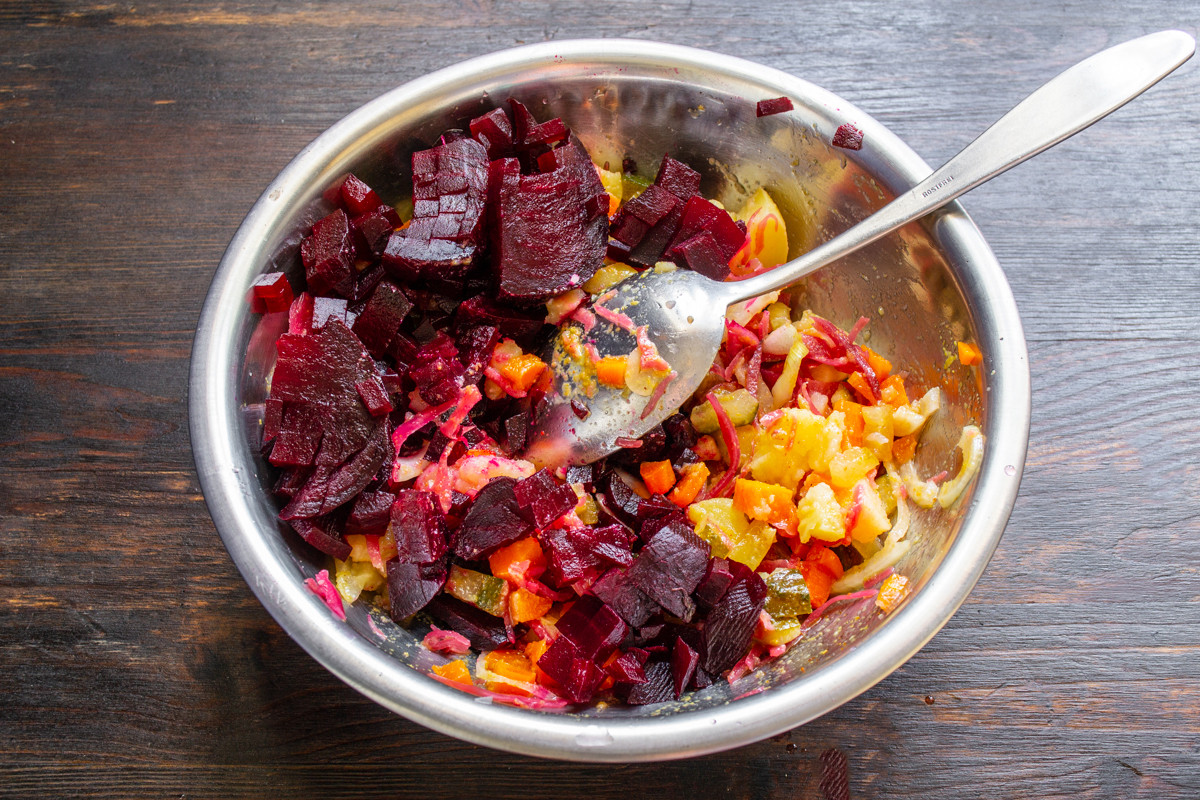
Adding the cooked beets to the vinegret.
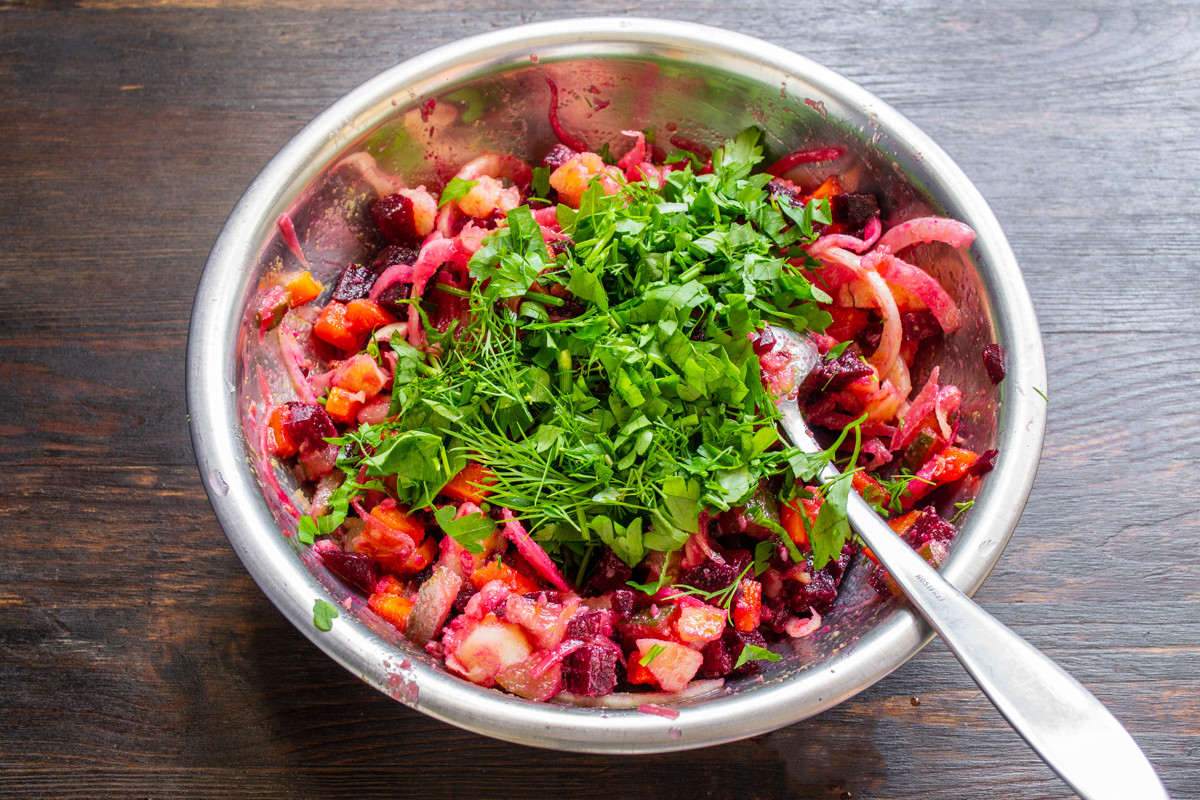
Finely chopping a few sprigs of parsley and dill.
Add the sauerkraut to the other ingredients. This recipe uses fermented red cabbage, which tastes almost identical to white cabbage; the only difference is the color. At this stage, mix the vegetables with the oil dressing to prevent the beets from coloring everything in one shade.
Peel the cooked beets and dice them into small cubes. Add the cooked beets to the salad. Depending on their size, beets will take 1 to 2 hours to cook. Do not trim the tail and top greens, and try to keep the skin intact to prevent the beets from losing their color during boiling. To make the cooked root vegetables easier to peel, place them in cold water for 15 minutes after cooking.
Finely chop a few sprigs of parsley and dill. Add 2 tablespoons of chopped herbs to the salad.
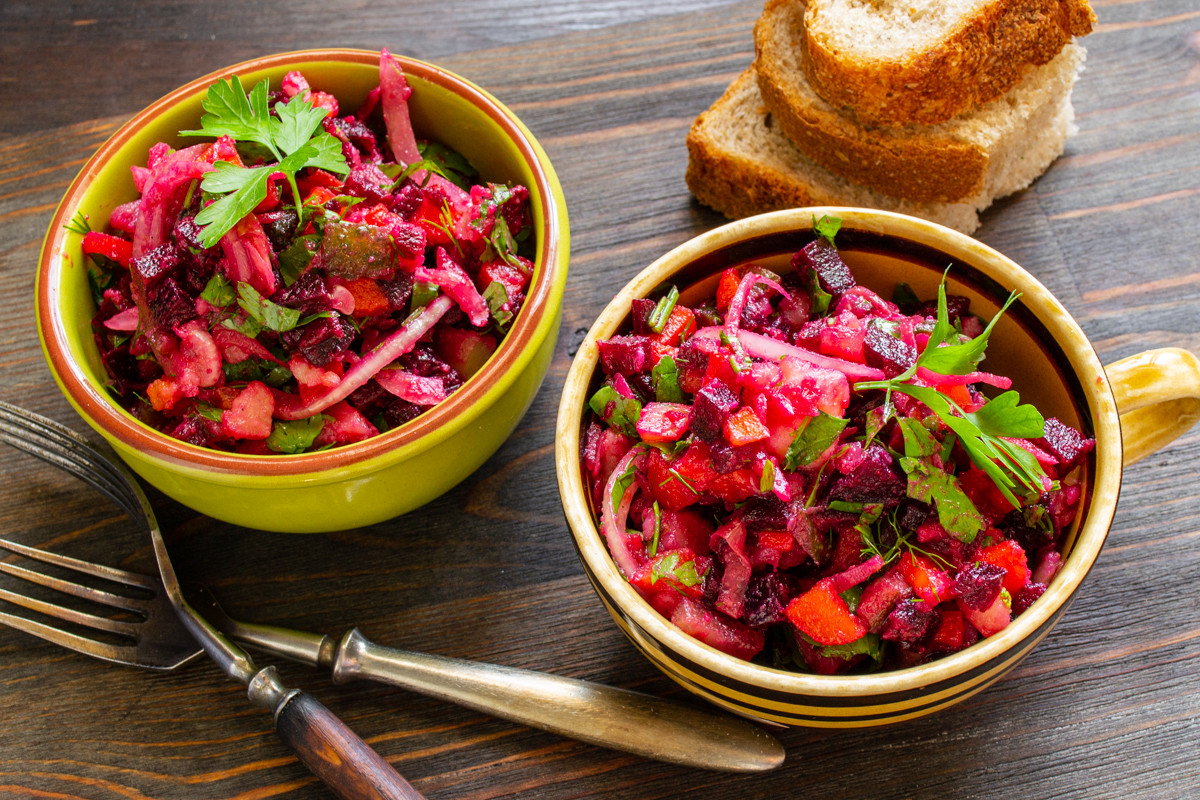
Plating the finished vinegret and serving it.
Mix the vinegret well. You can eat it right away or leave it in the refrigerator for a few hours to let the vegetables soak up the juices. Serve the finished vinegret in bowls.
And there you have it – a bowl full of color, flavor, and tradition! This Vinegret salad is more than just a dish; it's a celebration of simple, wholesome ingredients. It's best served chilled, allowing the flavors to meld together beautifully. For an authentic touch, enjoy it with a slice of dark rye bread. The salad keeps well in the refrigerator for a few days, and many say it tastes even better the next day! We hope you enjoy making and sharing this delightful piece of Eastern European culinary heritage. Bon appétit!
0 comments