
Welcome to a delightful twist on a classic European dish! While schnitzel is traditionally made with meat, this vegetarian version featuring tender young cabbage is a revelation. Popular in Eastern European home cooking, especially during spring and early summer, this recipe transforms a humble vegetable into a star. The cabbage becomes wonderfully tender on the inside while developing a perfectly golden and crispy crust on the outside. It's a simple, satisfying, and budget-friendly meal that will surprise and delight your taste buds.
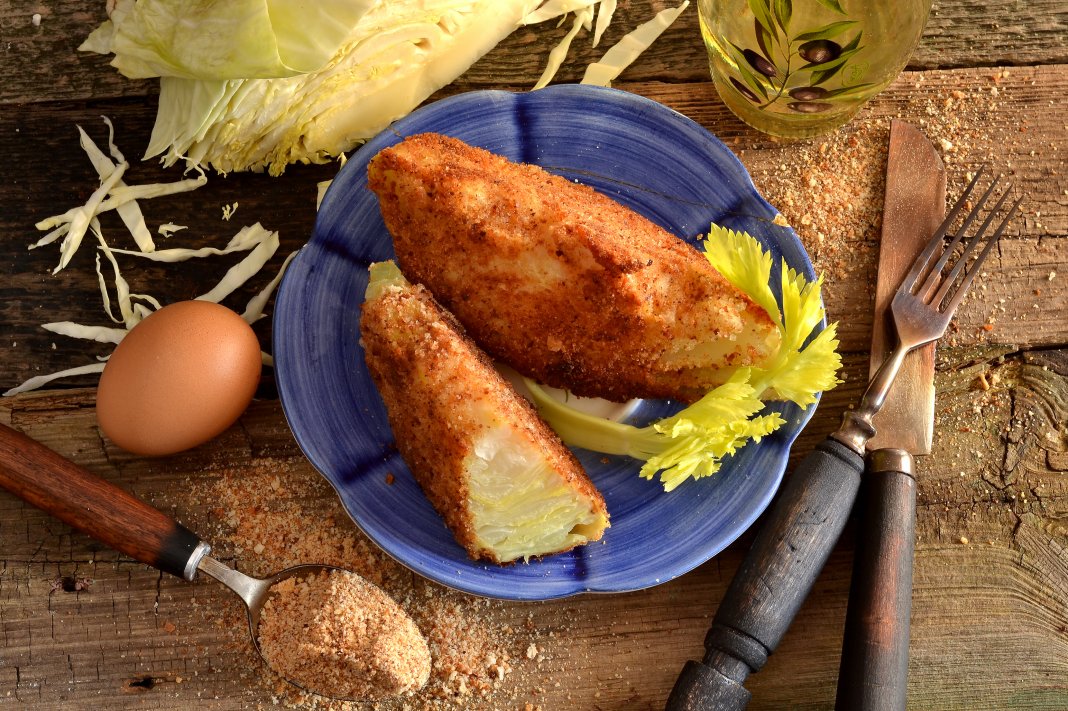
Cabbage schnitzel – vegetarian schnitzel from young cabbage
Ingredients for Vegetarian Young Cabbage Schnitzel
- 1 small head of young cabbage
- 2 eggs
- 50 g wheat flour
- 100 g breadcrumbs
- 50 ml vegetable oil for frying
- salt
How to Make Vegetarian Young Cabbage Schnitzel
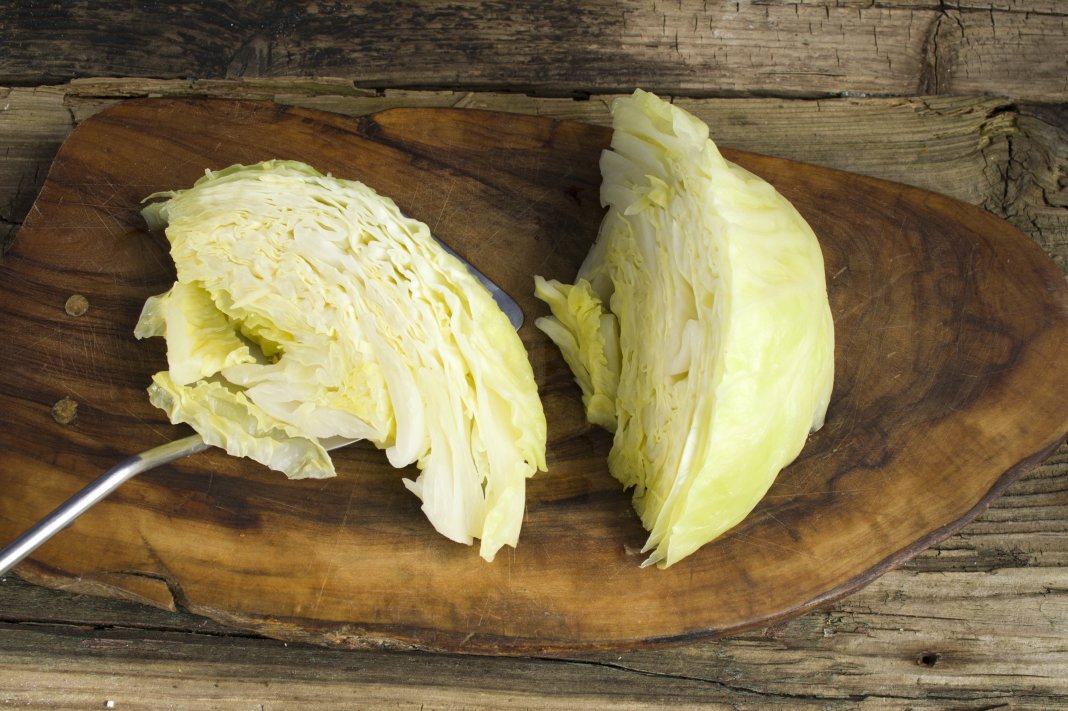
Cut a head of young white cabbage in half. This dish can also be made with mature cabbage, but you’ll need to use individual leaves. A mature cabbage head won’t cook quickly enough, and the dish will lose its special charm.
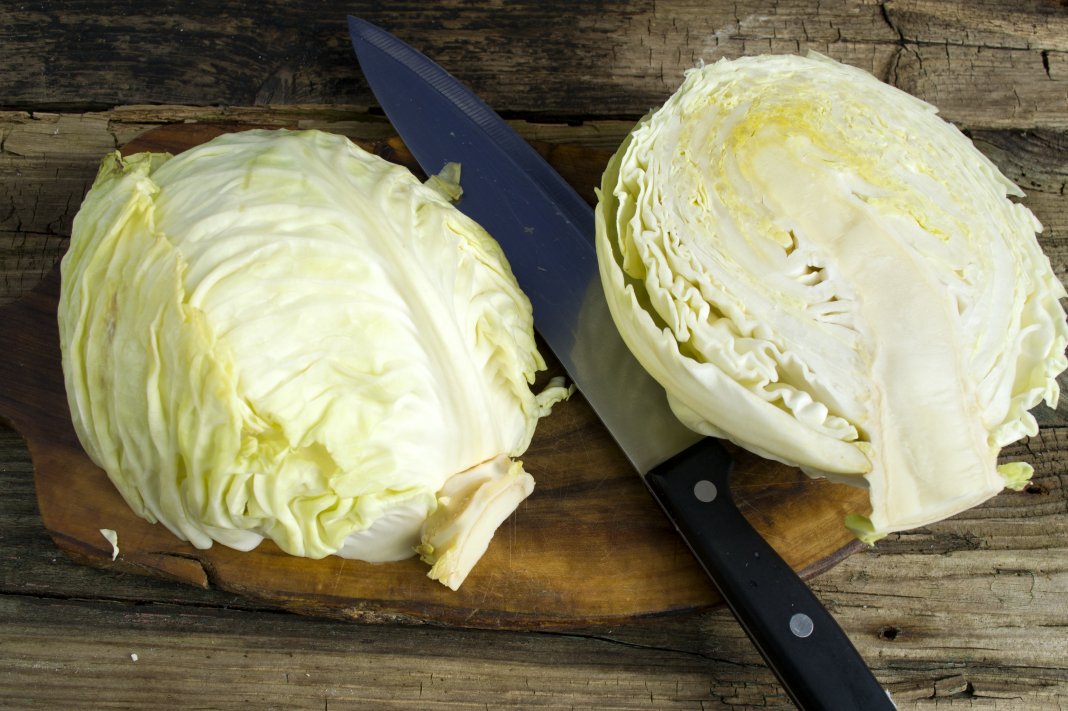
Cutting the head of cabbage in half
Cut the halves in half again, or into three parts, depending on the size. Do not remove the core completely. Try to perform some masterful cutting and leave a thin piece of the core to prevent the cabbage leaves from falling apart during boiling.
In young vegetables, the core is tender and will cook at the same rate as the leaves.
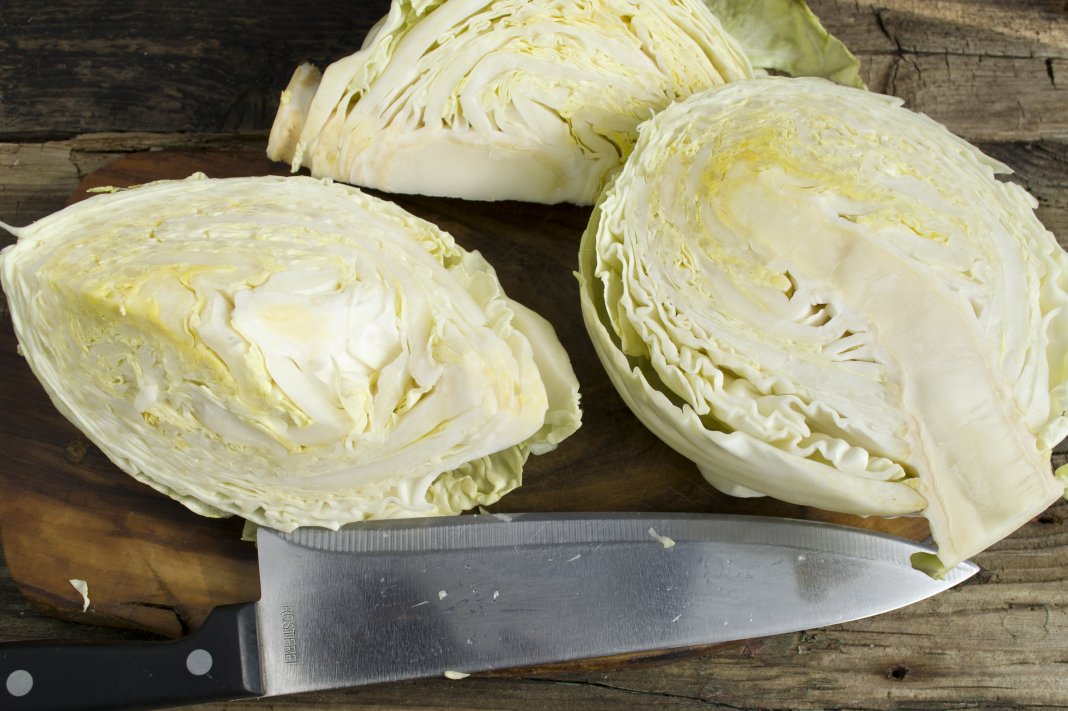
Cutting the cabbage halves
Place the cut pieces into a small pot, add 1-2 teaspoons of table salt, and pour in boiling water to cover them completely.
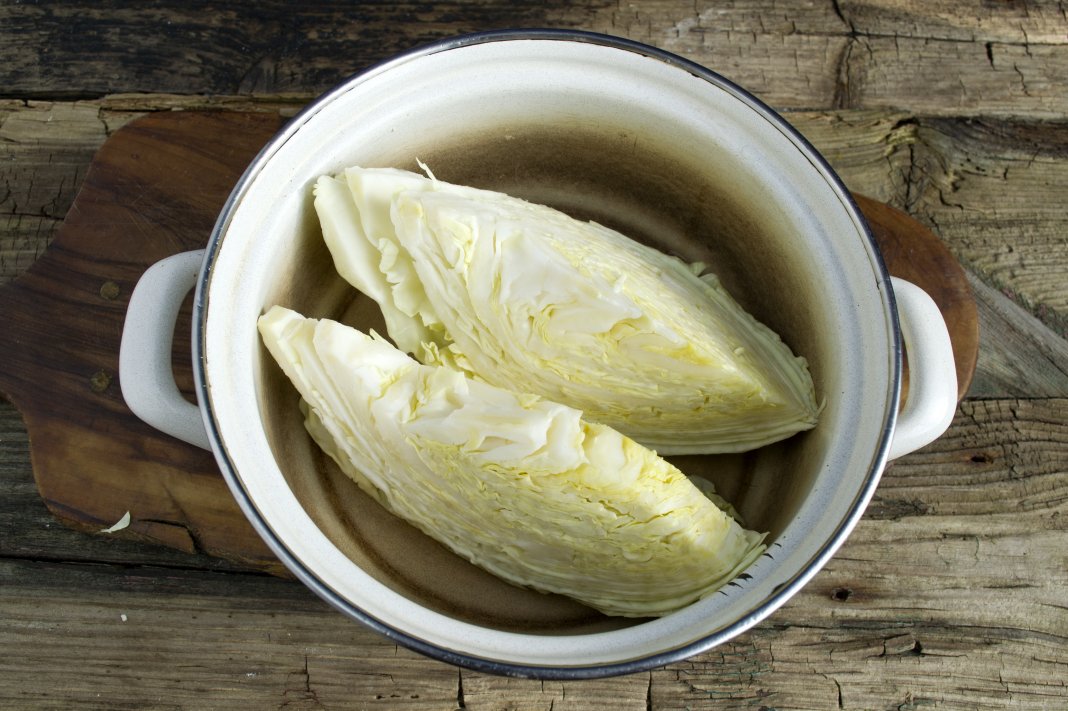
Pouring hot water over the chopped cabbage
Boil for 6-7 minutes over medium heat after the water comes to a boil. Carefully remove the pieces and place them on a sieve or colander to drain the water and let them cool.
Boiling the cabbage
First, coat the cabbage in wheat flour. Any breading process usually starts with this step. If for some reason you don’t want to use flour, you can substitute it with potato or corn starch at this stage.
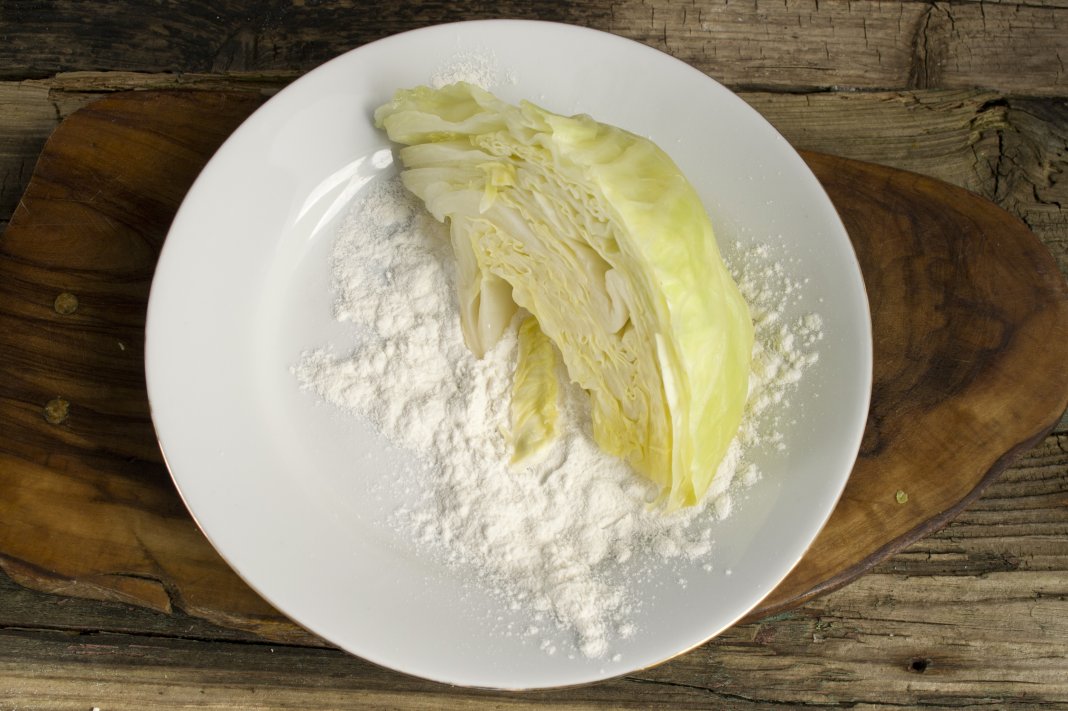
Dredging the boiled cabbage in flour
Mix the raw chicken eggs with a small pinch of salt, whisking with a fork to combine the whites and yolks.
Dip the flour-coated cabbage into the egg mixture.
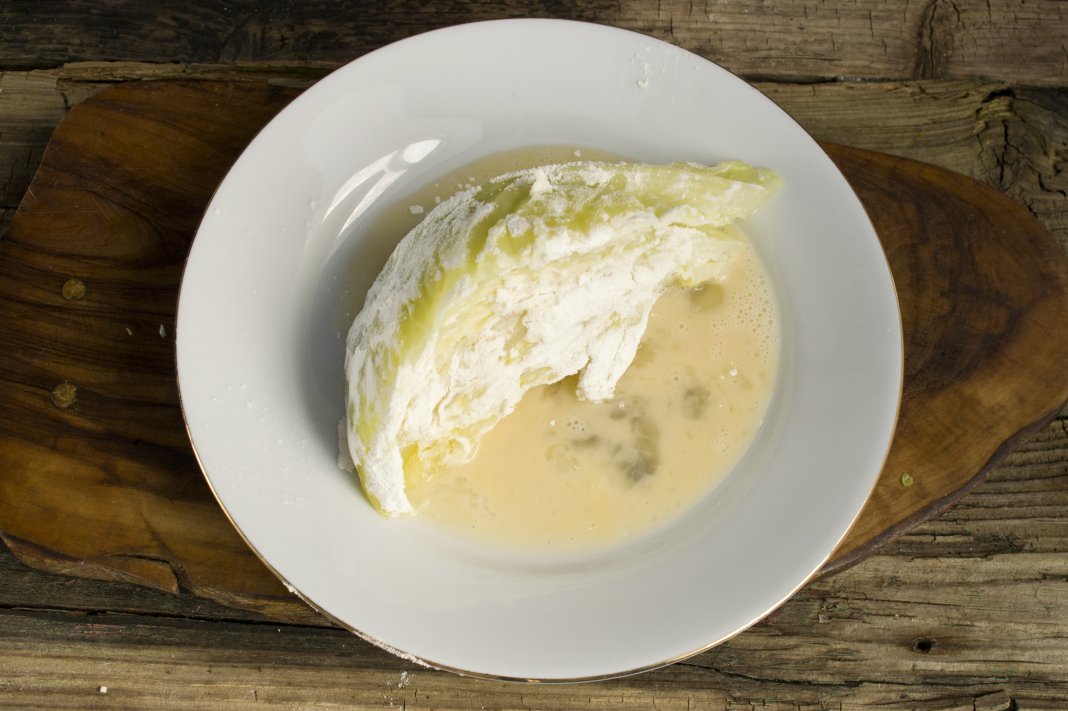
Dipping the cabbage in egg
Next, place the cabbage in breadcrumbs, coating it on all sides so the breadcrumbs completely cover the vegetable. You can make your own breadcrumbs at home in the oven. To do this, cut a loaf of bread into small cubes and dry them in the oven at about 120°C (250°F) until golden. Then, grind the cubes in a food processor.
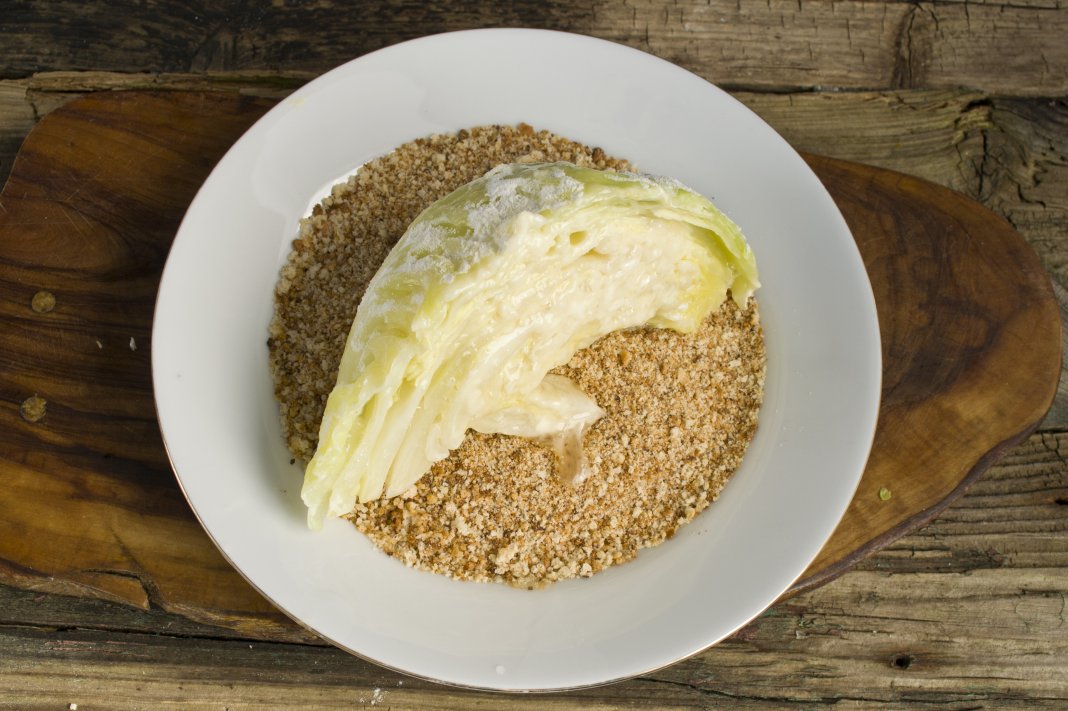
Coating the cabbage in breadcrumbs
In a non-stick or cast-iron skillet, heat 2-3 tablespoons of olive oil. Fry the schnitzels one by one until golden brown on each side. In our case, the cutlet has three sides.
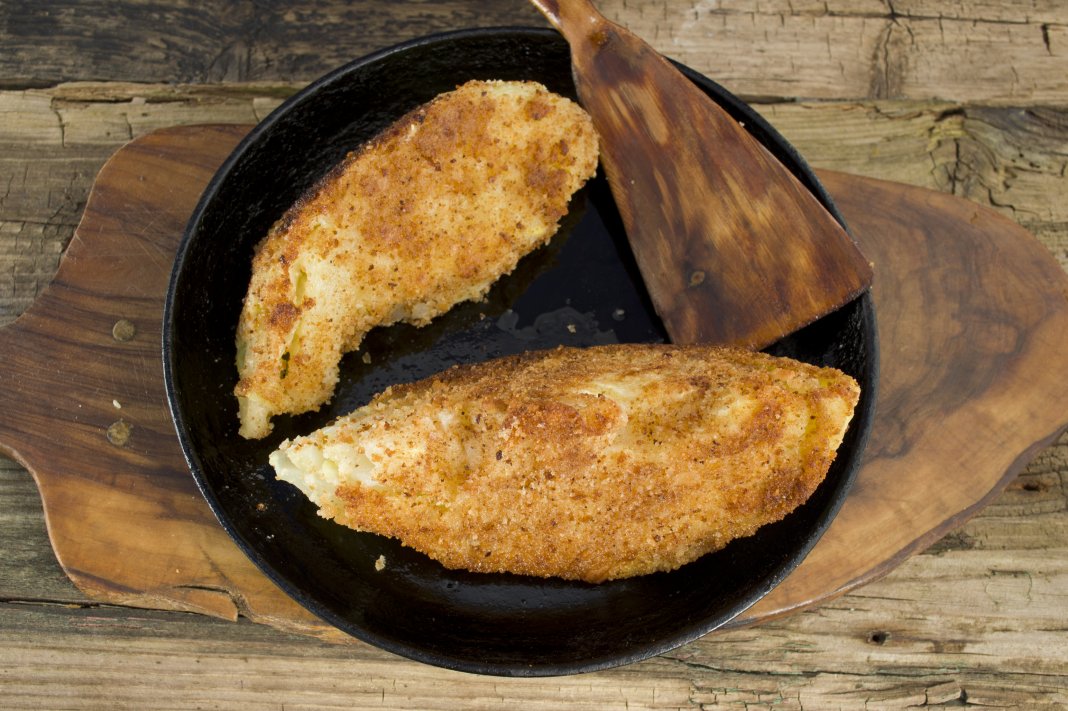
Frying the cabbage schnitzels until golden brown
Serve the schnitzels hot, drizzled with smetana (a type of sour cream) and sprinkled with fresh herbs.
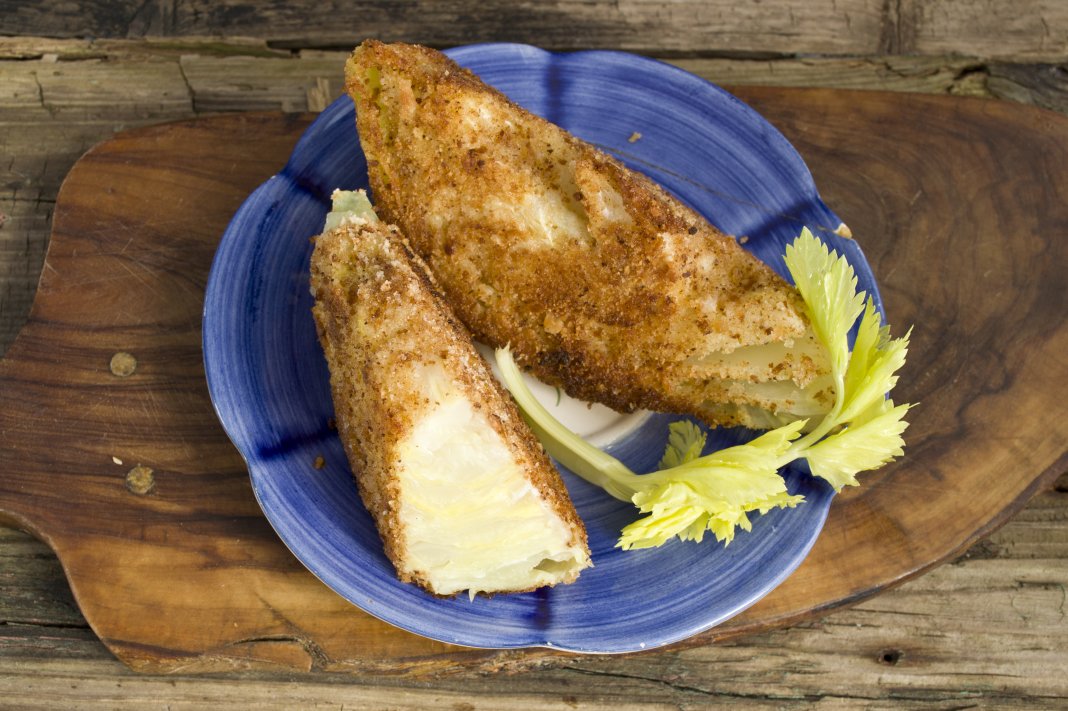
Cabbage schnitzel – vegetarian schnitzel from young cabbage
And there you have it—a wonderfully crispy and flavorful vegetarian schnitzel that's both comforting and unique. Serving it hot with a generous dollop of smetana and a scattering of fresh herbs is the traditional way to enjoy this dish, creating a perfect balance of creamy, savory, and fresh flavors. Don't be afraid to experiment with your own favorite sauces, like a yogurt-dill dip or a zesty tomato sauce. We hope you enjoy this taste of Eastern European comfort food and that it becomes a new favorite in your kitchen!
0 comments