
Upside-Down Pear Tart is an elegant variation of the famous French dessert Tarte Tatin, where the fruit caramelizes directly in the pan beneath a layer of crisp pastry. The secret lies in pairing juicy, firm fruit with warming ginger powder, which adds a noble piquancy to the shortcrust base. When you flip the still-hot pan, the golden syrup soaks into the edges of the crust, creating that legendary glossy finish. The aroma of melted butter and ripe fruit instantly fills the kitchen with warmth, turning the cooking process into a true session of culinary magic.
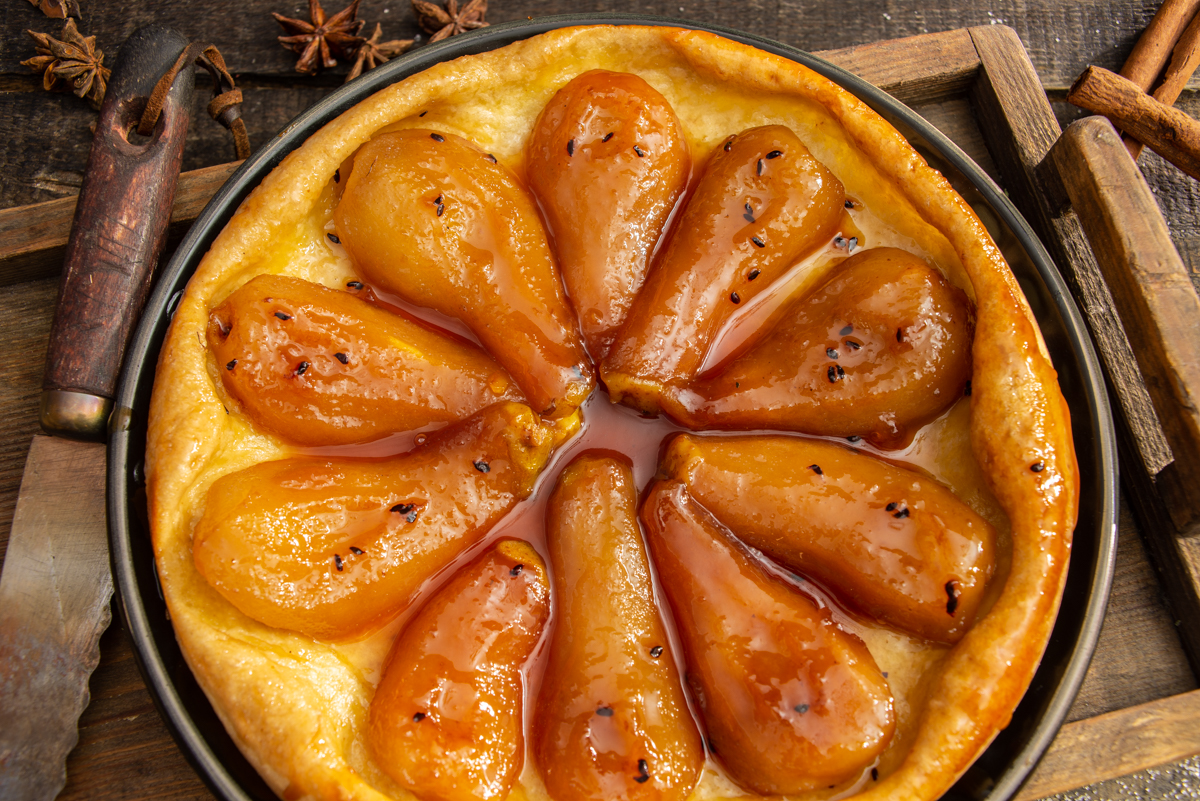
This upside-down pear tart is a true classic. The juicy pears in thick caramel atop a crisp shortcrust pastry will leave no one indifferent.
Ingredients for the Dough
- 120 g wheat flour
- 60 g butter
- 30 g powdered sugar
- 15 g milk
- 1/2 teaspoon ginger powder
- 1/2 chicken egg
Ingredients for the Filling
- 80 g butter
- 5 pears
- 50 g granulated sugar
- 30 g red gooseberry syrup or any fruit syrup
- cinnamon
How to Make the Upside-Down Pear Tart
Let’s make the dough. You can mix the shortcrust pastry by hand or use a food processor, adding ingredients one by one—first dry, then wet. Combine the powdered sugar, wheat flour, and ginger powder.
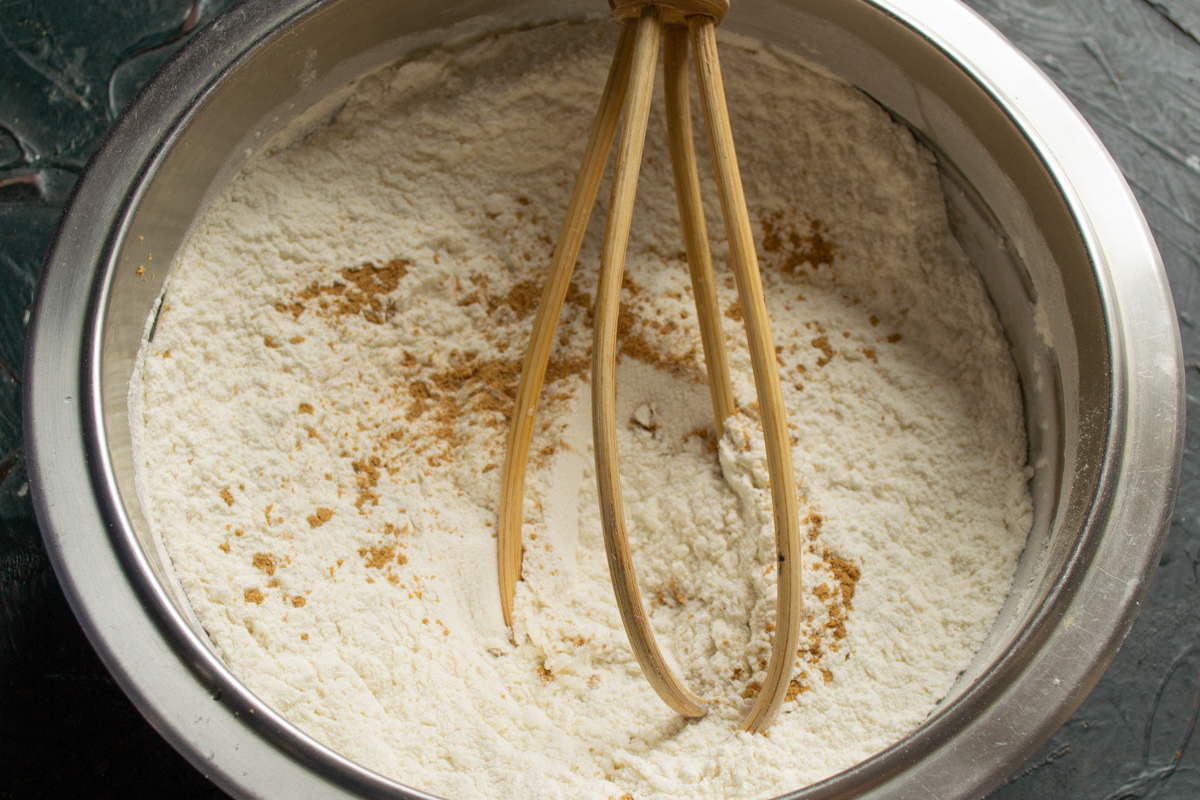
Start with the dry components. The ginger powder will give the dough a lovely warming aroma and a spicy touch.
Add the chilled butter and mix. Crack an egg into a bowl, whisk it with a fork, and measure out half. Add the milk and half of the beaten egg to the dough.
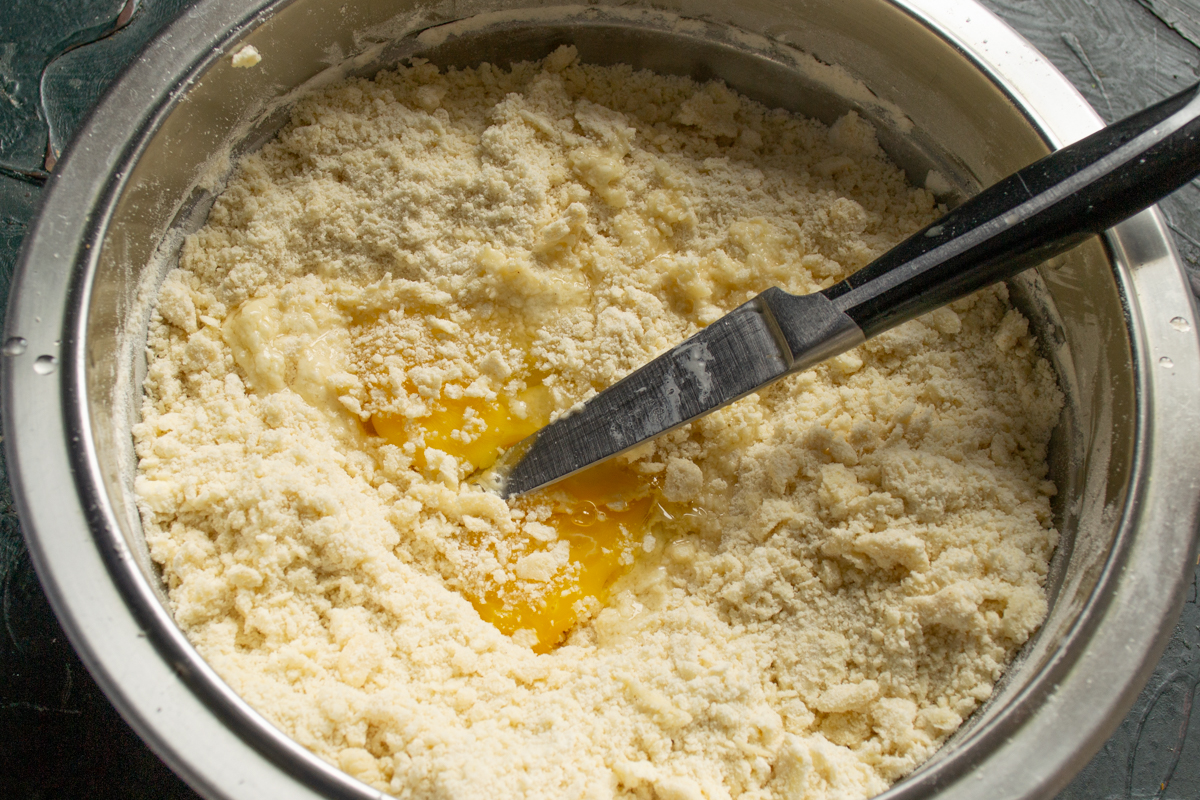
Add the cold butter and egg. It is crucial to use chilled butter to achieve the correct crumbly texture.
Knead the dough quickly; if you overwork shortcrust pastry, it will become tough. Wrap the finished dough in plastic wrap and chill in the refrigerator for 25 minutes.
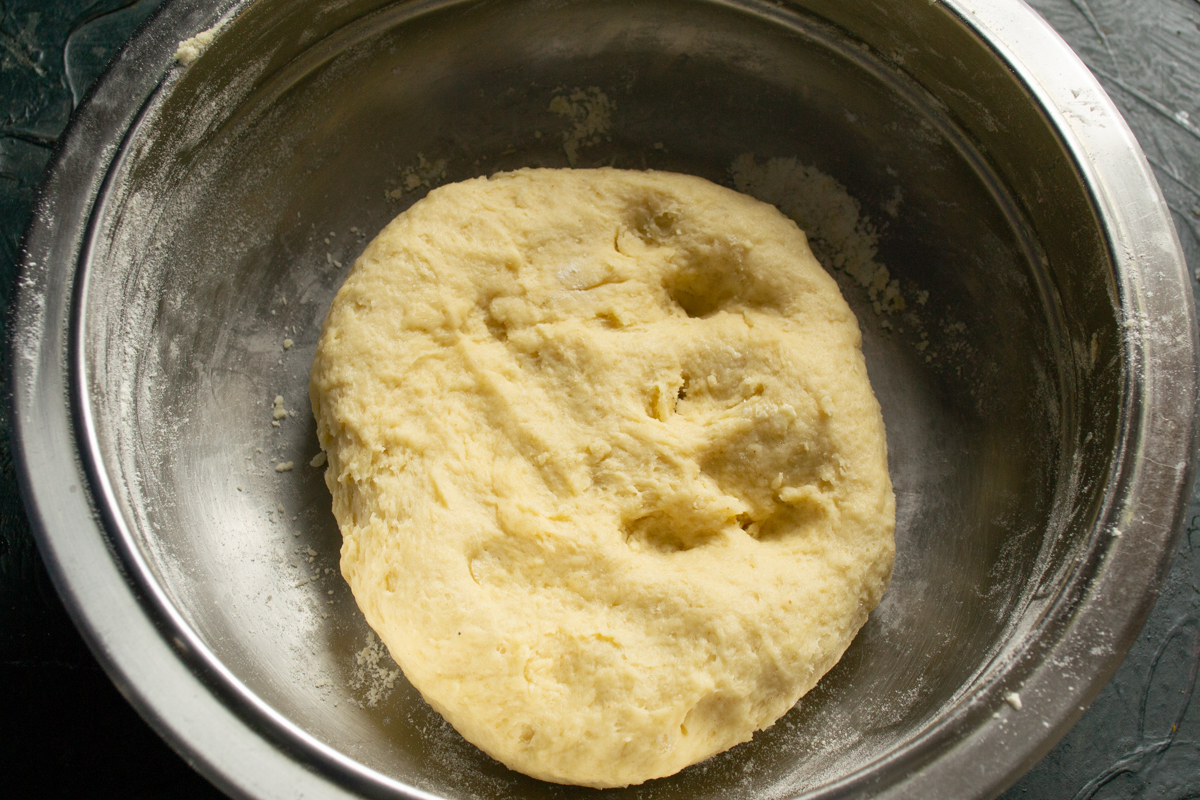
Place the shaped dough in the refrigerator. Resting in the cold will make it more elastic and easier to roll out.
Peel the pears and cut them in half lengthwise.
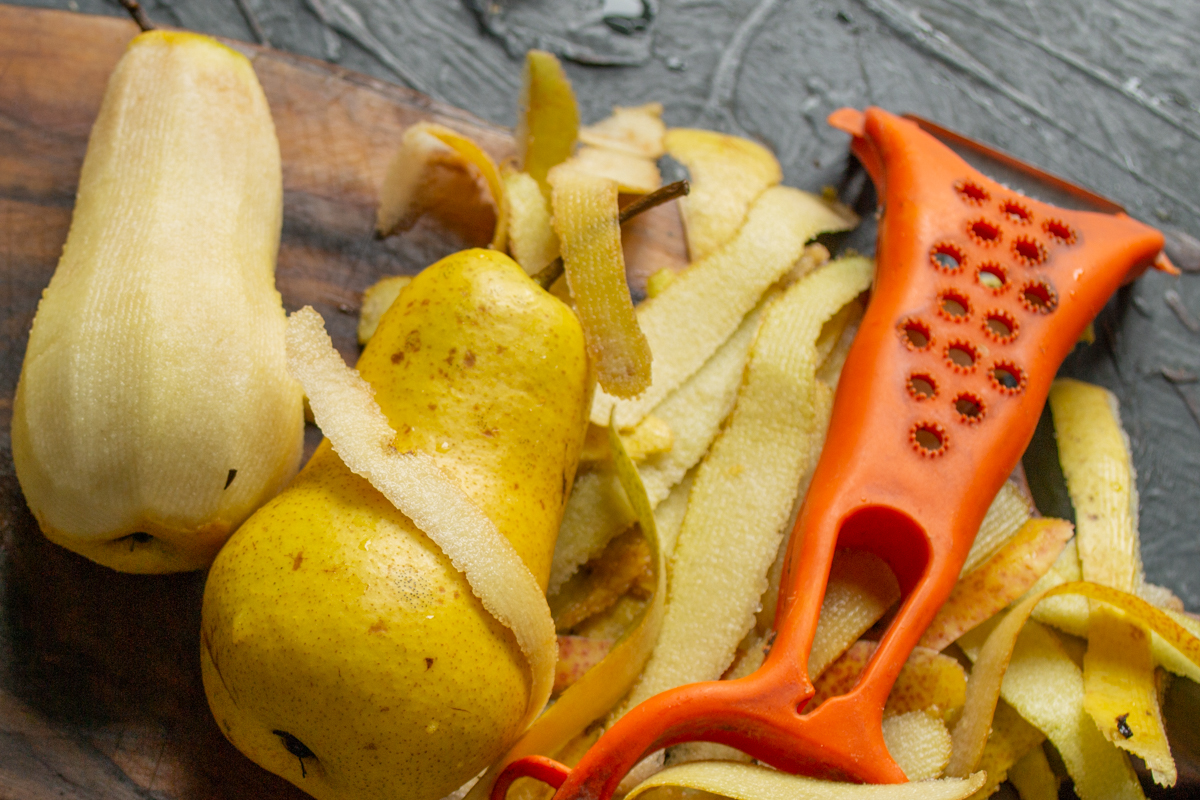
For this tart, it is best to choose firm pear varieties that hold their shape and won't turn into mush during cooking.
Using a small spoon, scoop out the core and seeds from the pear halves.
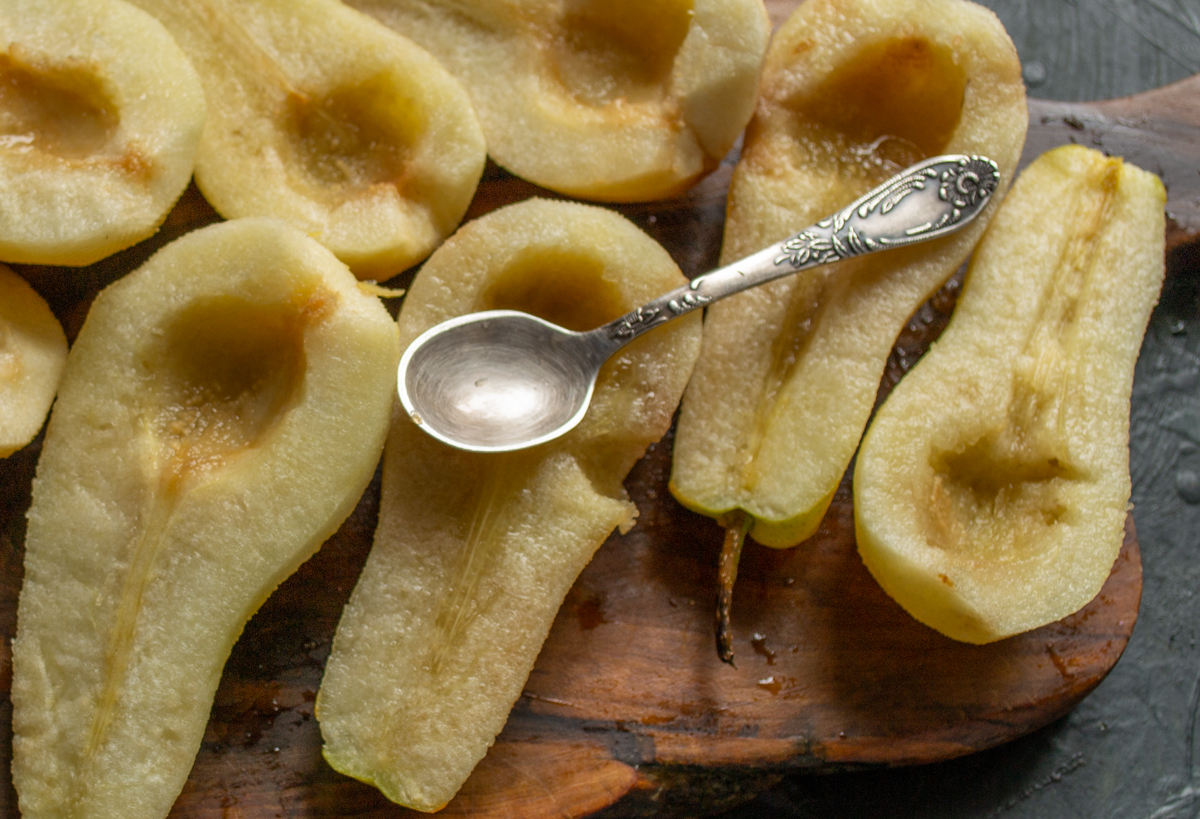
Carefully scoop out the seeds with a spoon so the pear halves look aesthetically pleasing and are easy to eat in the final dessert.
This recipe calls for a 30 cm (12-inch) skillet. I recommend using a heavy-bottomed, non-stick pan to ensure the fruit doesn’t stick. Melt the butter in the skillet, sprinkle in the sugar, and cook for 3 minutes.
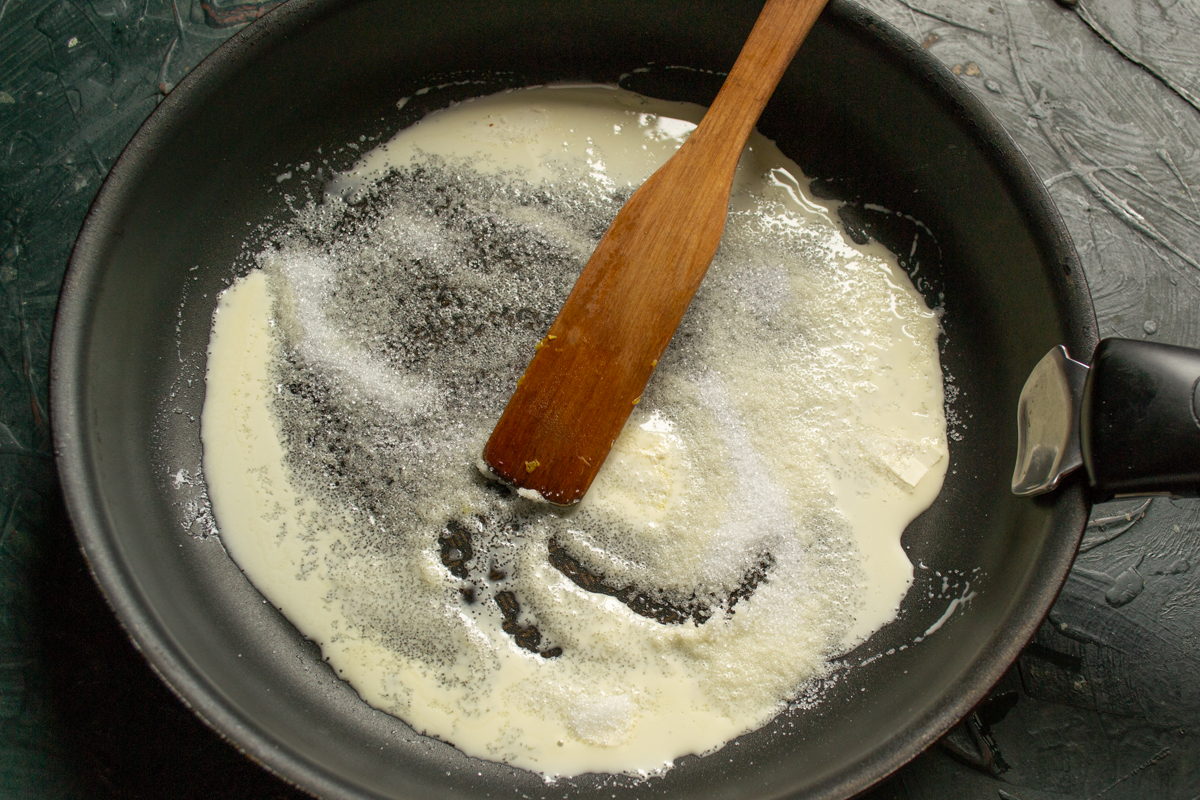
Begin preparing the caramel base. Use a heavy-bottomed skillet for even heat distribution.
Arrange the pears in the pan and pour in the fruit syrup. This recipe uses gooseberry syrup, but feel free to use whatever you have on hand. Cook the pears for 10 minutes, then flip them over.
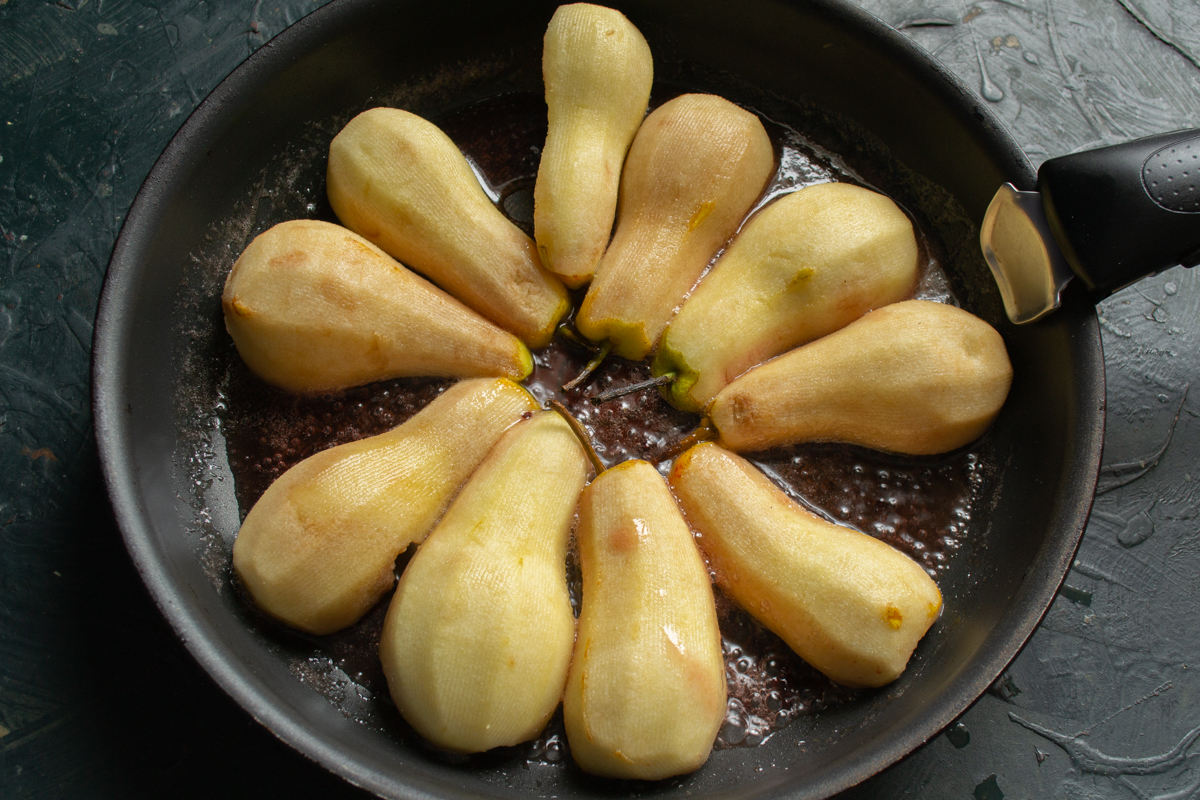
Place the pears into the caramel and add the fruit syrup for a deeper, richer flavor.
Simmer the flipped pears for a few more minutes. Remove the pan from the heat and let the fruit cool almost to room temperature—this makes assembling the tart much easier.
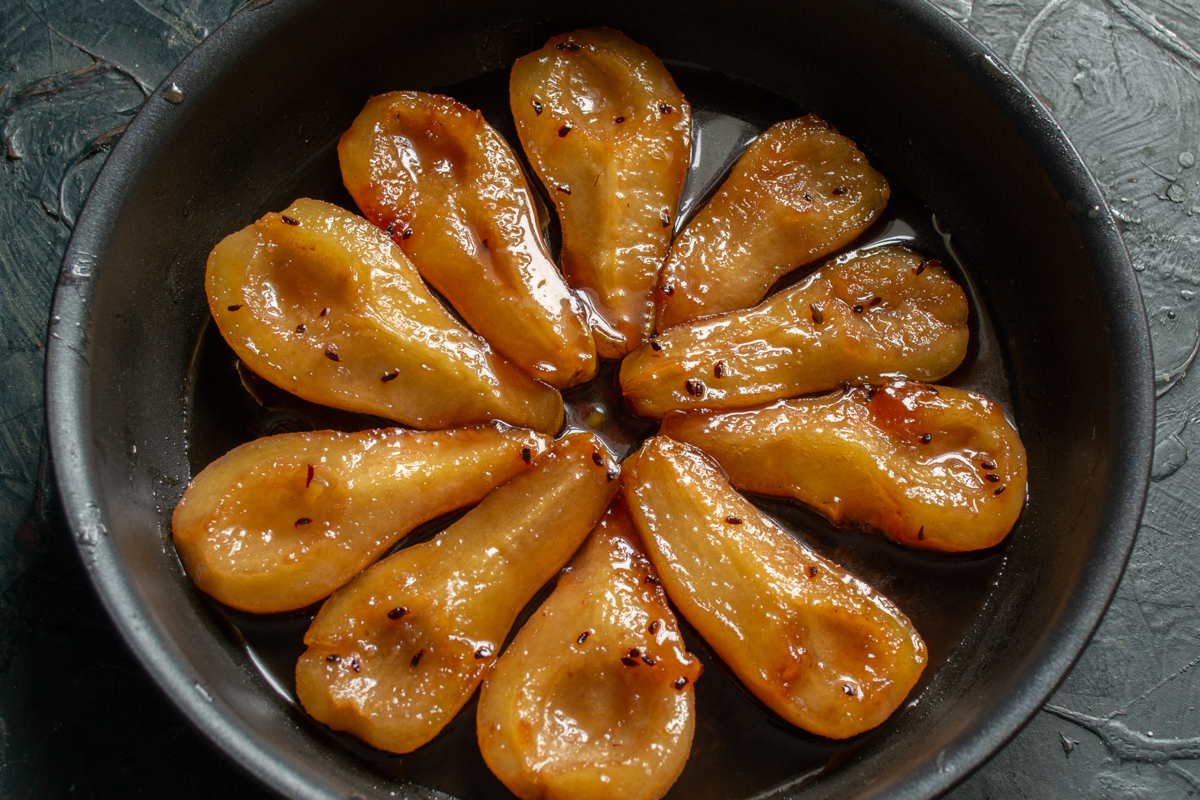
The pears should become tender and fully soak up the caramel. Once done, let them cool down to room temperature.
Roll out the chilled dough on a lightly floured surface. The thickness of the crust should be no more than 3 millimeters (1/8 inch).
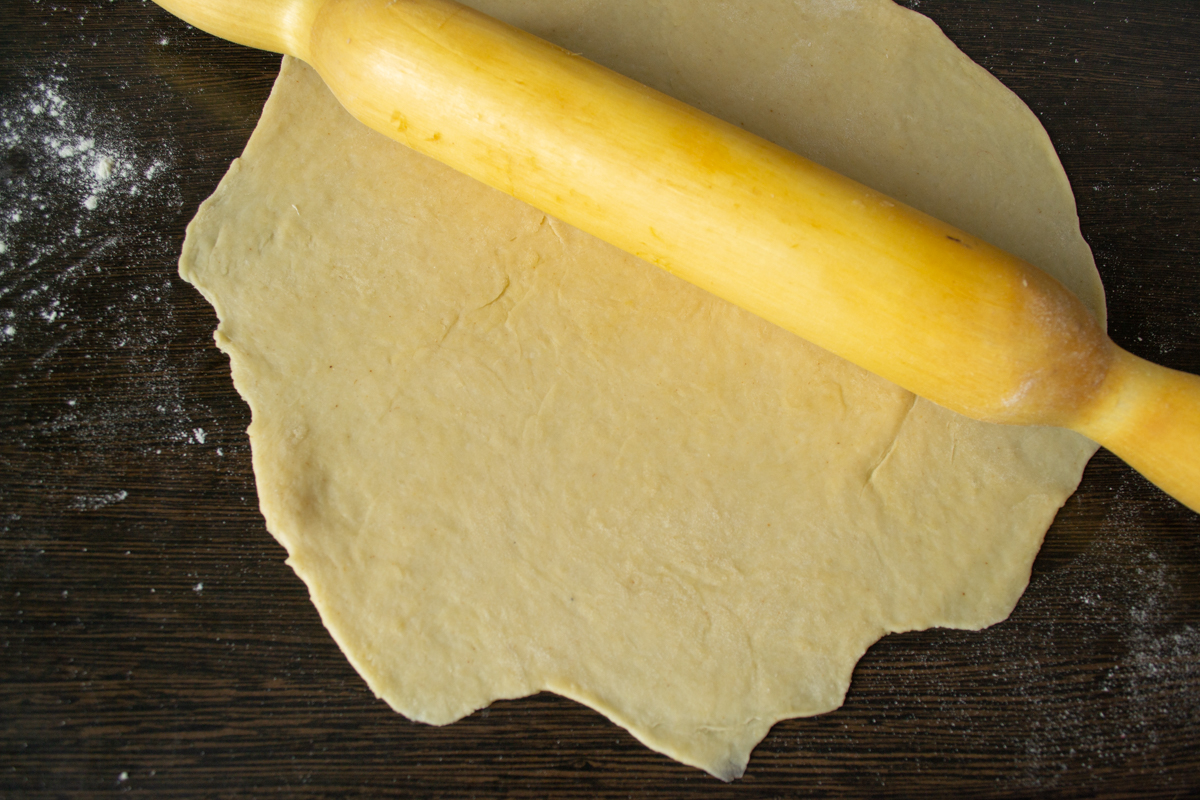
Roll the dough into a thin layer, about 3 mm (1/8 inch) thick. Try to work quickly so the butter in the pastry doesn't start to melt.
Gently roll the dough over your rolling pin and carefully transfer it over the pan of fruit.
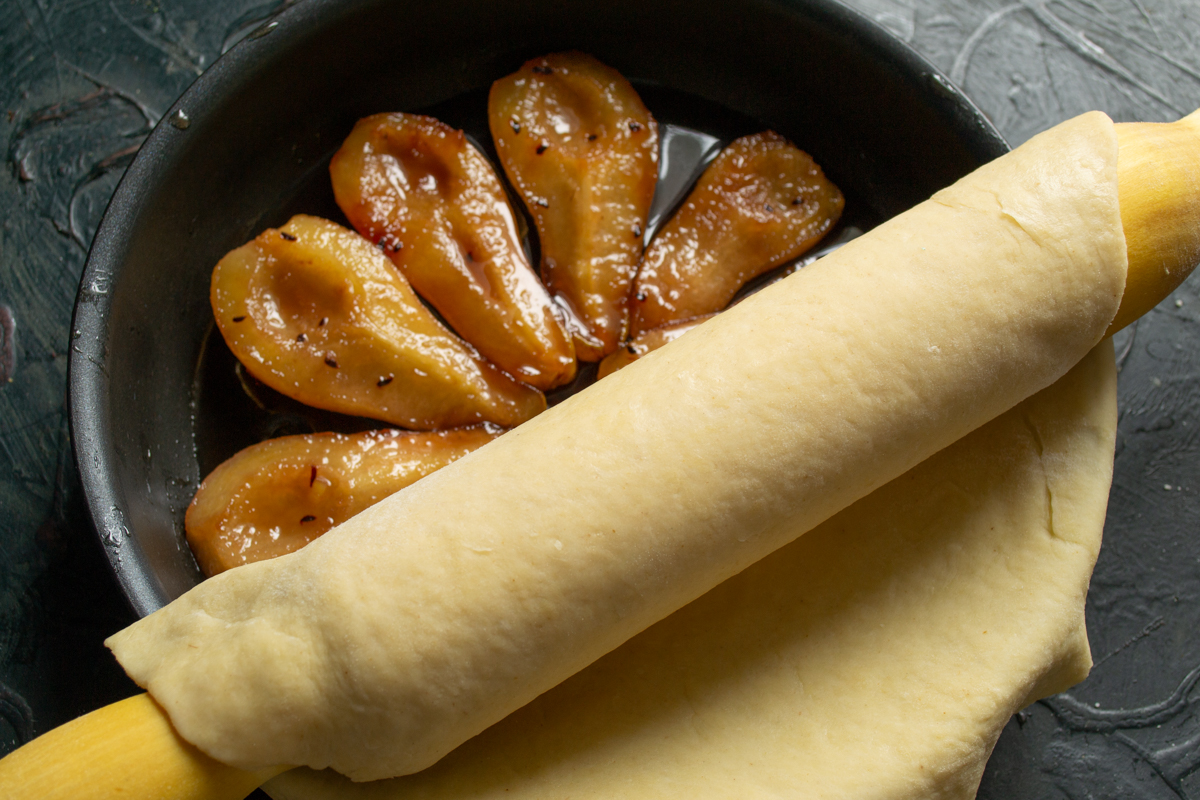
Carefully transfer the sheet of dough over the fruit using a rolling pin—this is the most reliable way to keep the pastry intact.
Tuck the dough snugly around the pears as shown in the picture. You want to create the neatest possible pastry lid.
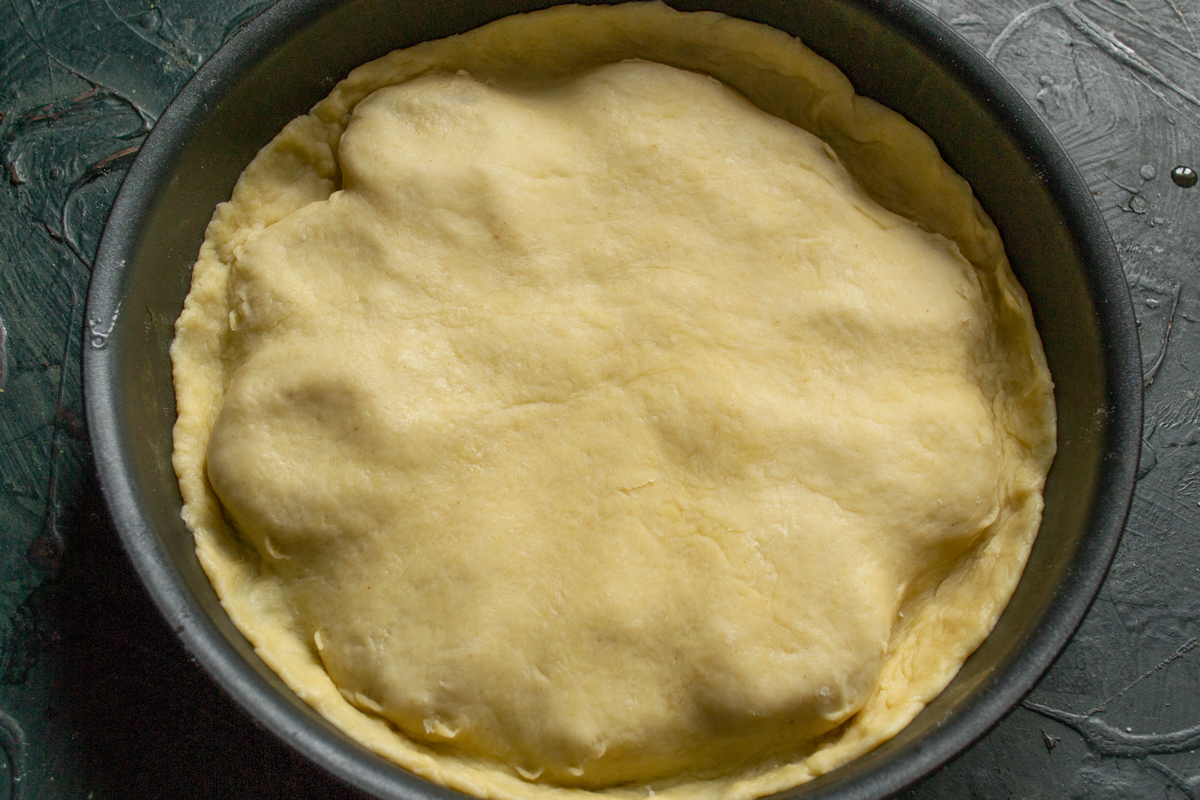
Press the edges of the dough firmly against the sides of the skillet, creating a secure lid that will lock all the juices inside.
Prick the entire surface of the dough frequently with a fork to allow steam to escape during baking.
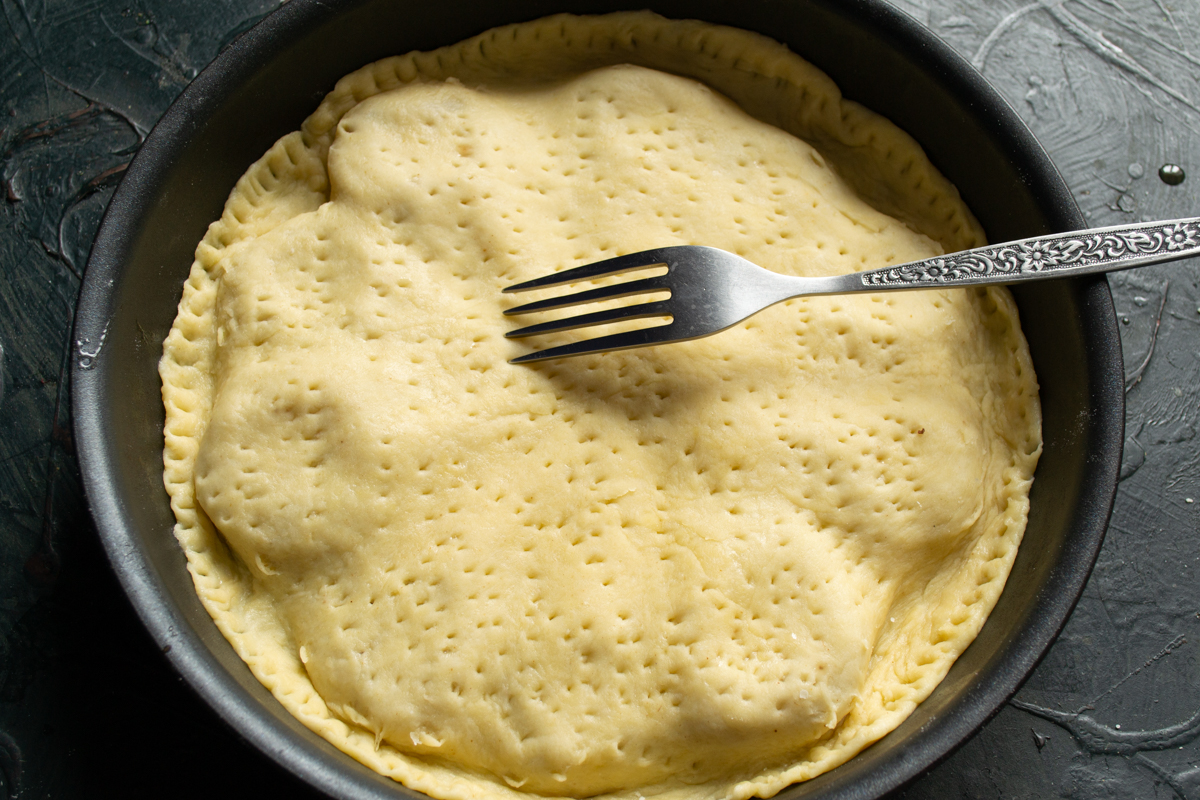
Prick the entire surface frequently with a fork. This allows the steam to escape, keeping the crust even.
Preheat the oven to 180°C (350°F). Place the skillet with the tart into the preheated oven. Bake for about 30 minutes. Keep in mind that exact baking times depend on your specific oven and may vary slightly.
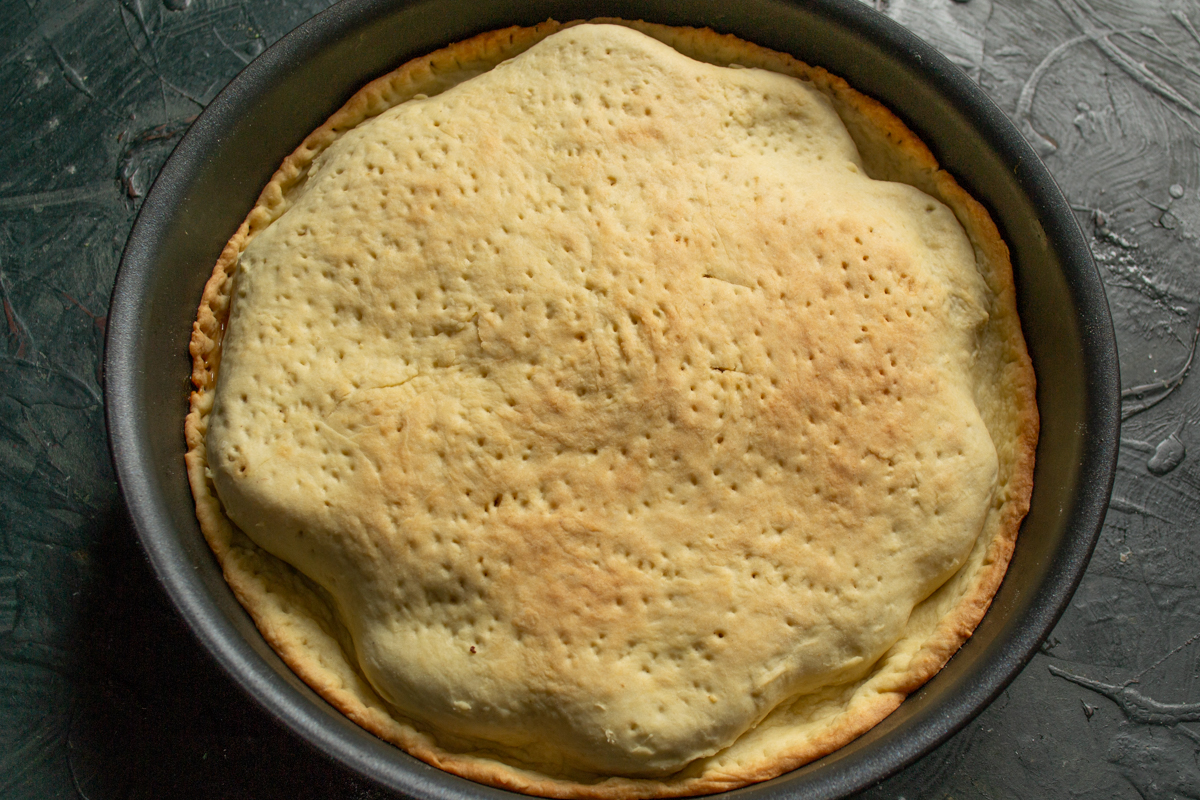
Bake until deeply golden brown. You can tell it's ready by the mouthwatering aroma of caramel and baked pastry.
Remove the finished tart from the oven. Place a large cutting board or a flat plate of appropriate size over the skillet, and carefully invert it. Let the tart cool slightly before serving.
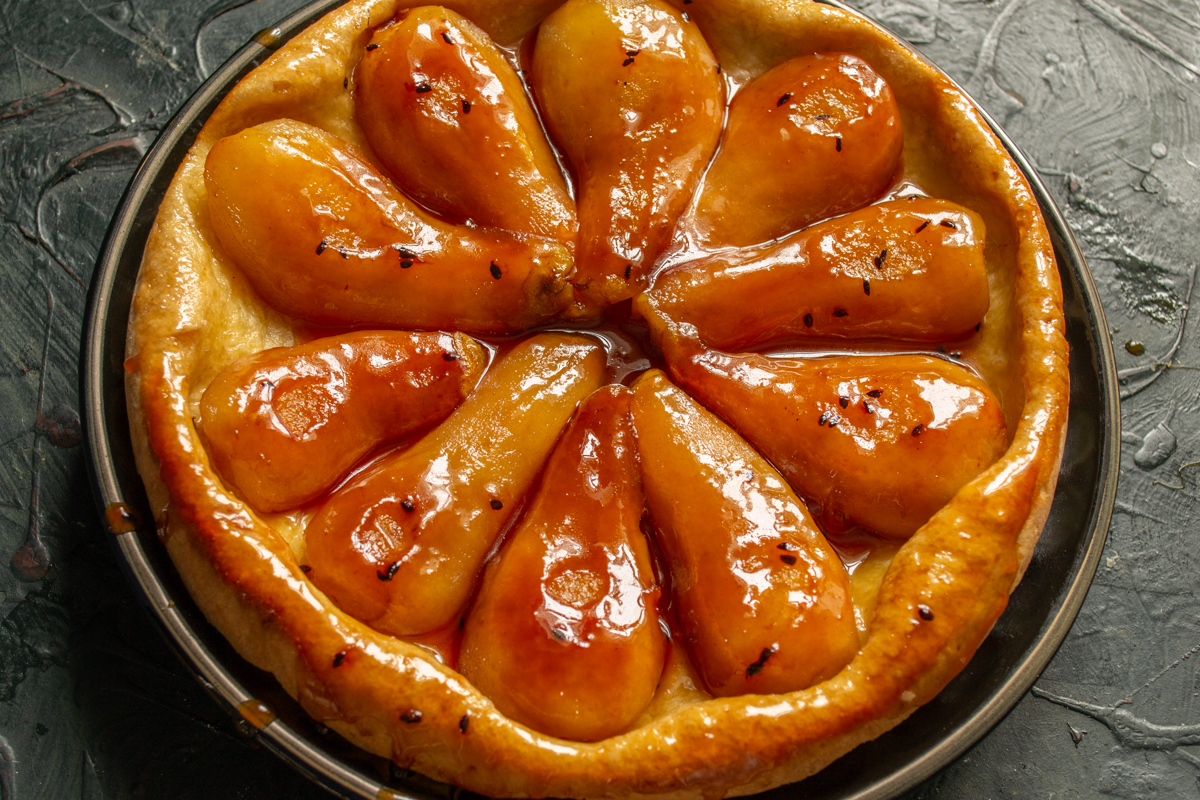
The most thrilling moment—flipping the tart! Do this swiftly and confidently while the caramel is still hot and fluid.
It is best to serve the finished upside-down pear tart slightly warm, while the caramel still retains its luscious, gooey texture. A scoop of vanilla ice cream or a dollop of cold mascarpone makes the perfect accompaniment—the temperature contrast and gentle creaminess highlight the spicy notes of ginger. If you feel like experimenting, try substituting the ginger with ground cardamom or adding a handful of toasted almond slices to the caramel for extra crunch.
Leftover tart keeps perfectly in the refrigerator for up to two days, but you should warm the slices slightly in the oven before serving to restore the original flakiness of the shortcrust pastry. Remember that the upside-down pear tart requires a confident hand when turning it out of the pan: cover the skillet with a plate and invert it in one swift motion before the sauce has a chance to set. This simple yet spectacular technique will give your dessert a flawless appearance, worthy of a Parisian pastry shop window.
0 comments