
Welcome to the world of Lithuanian comfort food with a delightful dish called Švilpikai, or 'whistlers'! These charming potato dumplings earn their name from the whistling sound they supposedly make while baking in the oven. While this recipe uses a pan-frying method, the result is just as delicious. Unlike their Italian cousins, gnocchi, Švilpikai are first pan-fried to a golden crisp and then briefly boiled, giving them a unique texture that's crispy on the outside and wonderfully soft and fluffy on the inside. It's a hearty, satisfying dish perfect for a family dinner and a fantastic way to experience the simple, rustic flavors of Lithuanian cuisine.
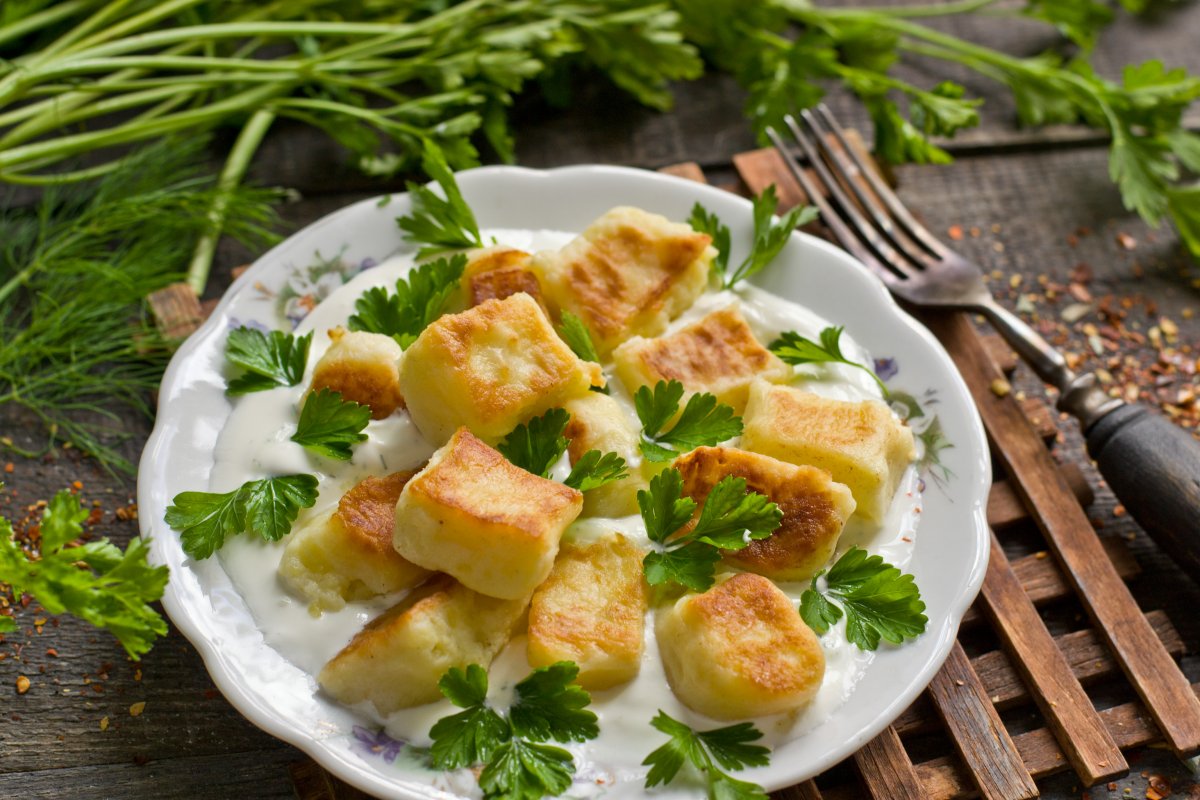
Švilpikai potato dumplings — a traditional Lithuanian dish
For the dumplings:
- 800 g potatoes
- 2 cloves garlic
- 1 chicken egg
- 2 heaping tbsp all-purpose flour
- 25 g butter
- salt, pepper
- fresh herbs for serving
For the sauce:
- 200 g smetana (a type of sour cream)
- 35 g dill
- salt
How to Make Švilpikai Potato Dumplings
Peel the potatoes and cut them into round slices, about a centimeter thick. Peel the garlic and slice it. Add the potatoes and garlic to a pot of boiling water and cook until tender. Sliced potatoes will cook faster than whole ones.
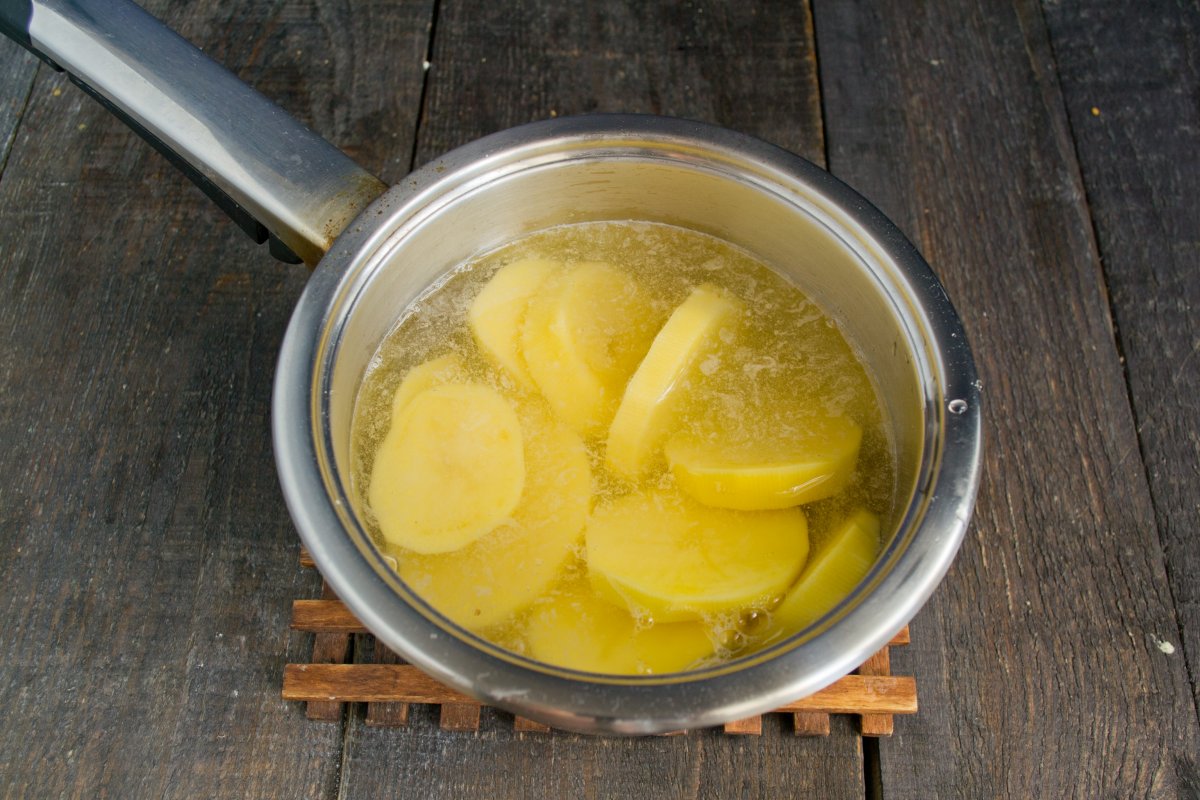
Adding potatoes and garlic to boiling water
Drain the water from the cooked potatoes and mash them with a potato masher until smooth.
Let the mashed potatoes cool slightly, then add the egg, all-purpose flour, and salt. Mix the ingredients together — the dough is ready.
Sprinkle some flour on a board, take 2-3 tablespoons of the potato dough, and roll it into a log. Cut the log into slices about a centimeter wide — you will get small, flat dumplings.
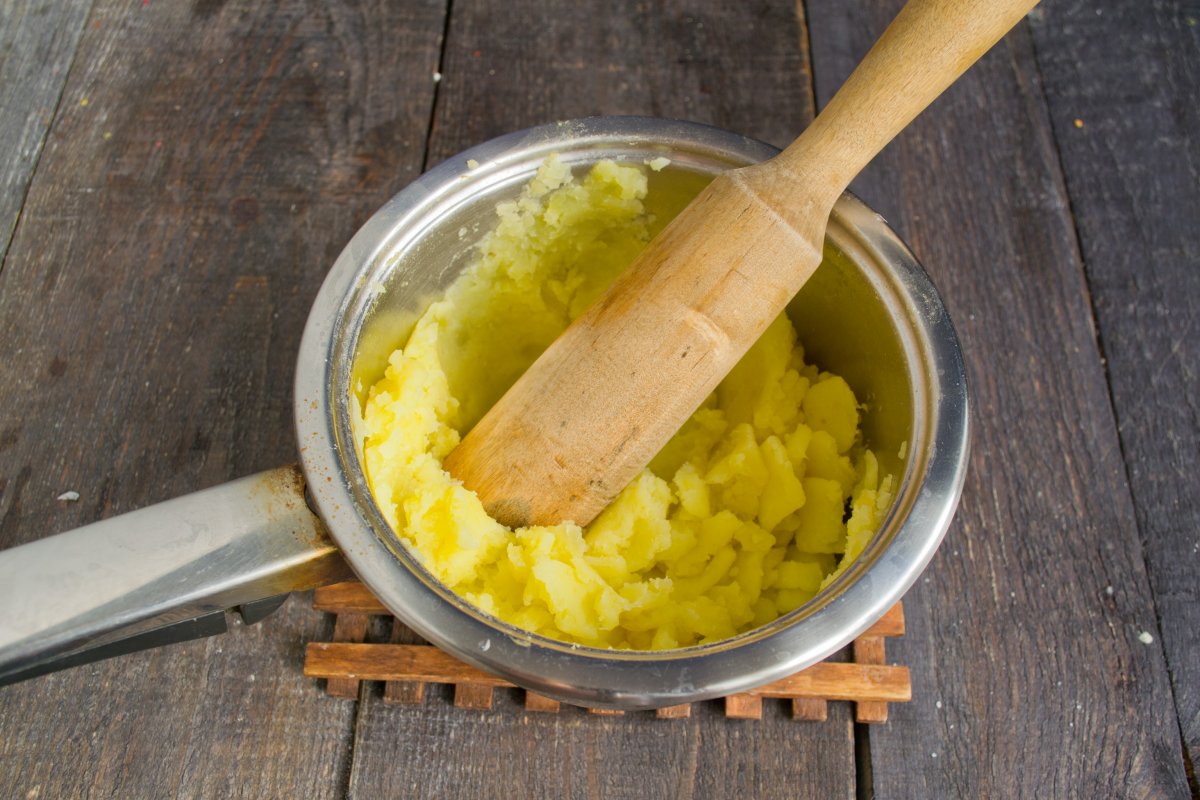
Mashing the potatoes until smooth
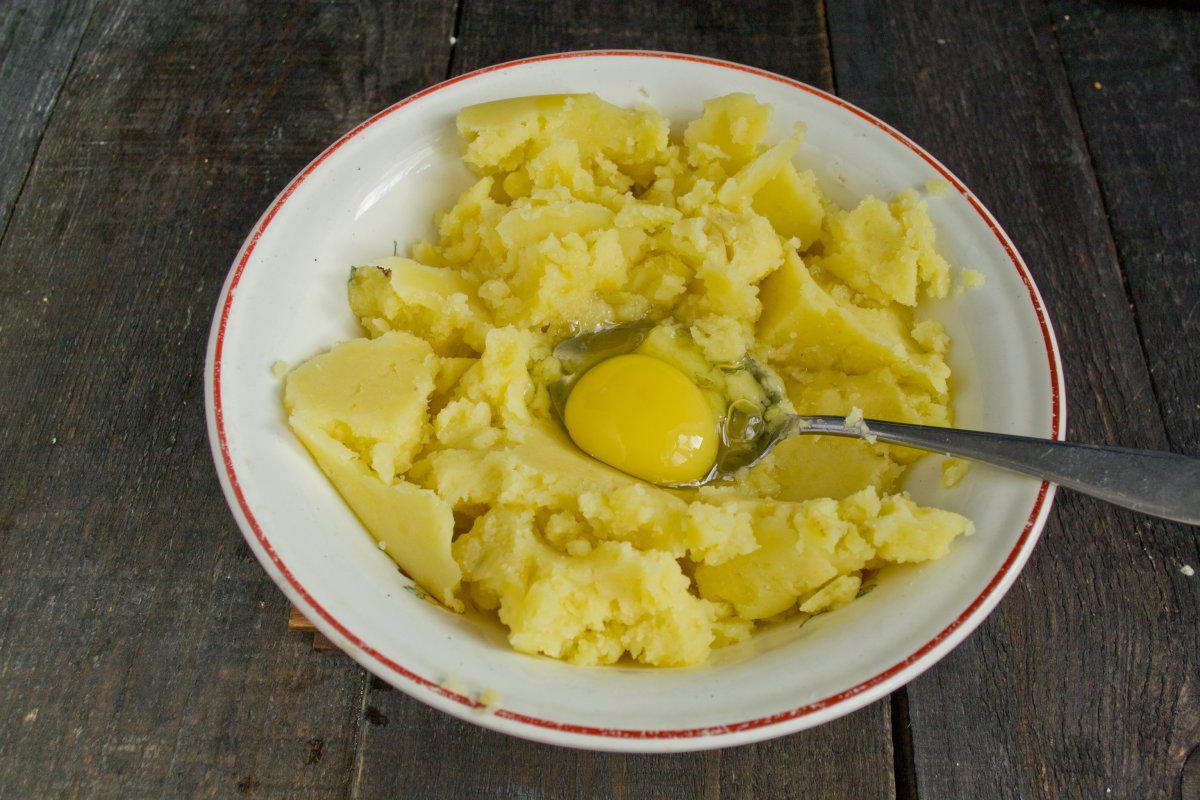
Adding egg, all-purpose flour, and salt
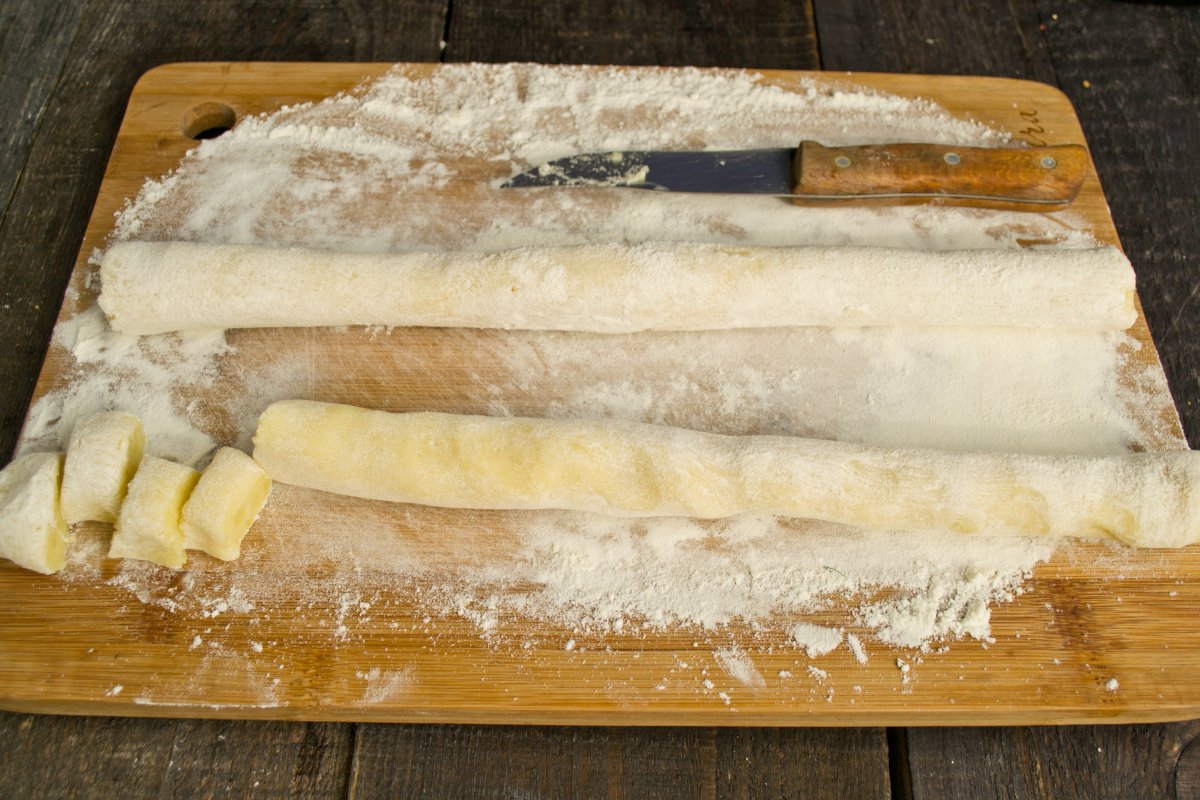
Rolling the dough into a log and cutting it into 1 cm thick pieces
Heat the butter in a pan and quickly pan-fry the dumplings until golden brown. Be gentle, as the dough is very delicate.
When I make gnocchi or varenyky (Eastern European dumplings), I often have to boil them in a colander to keep them intact. With these pan-fried dumplings, no colander is needed!
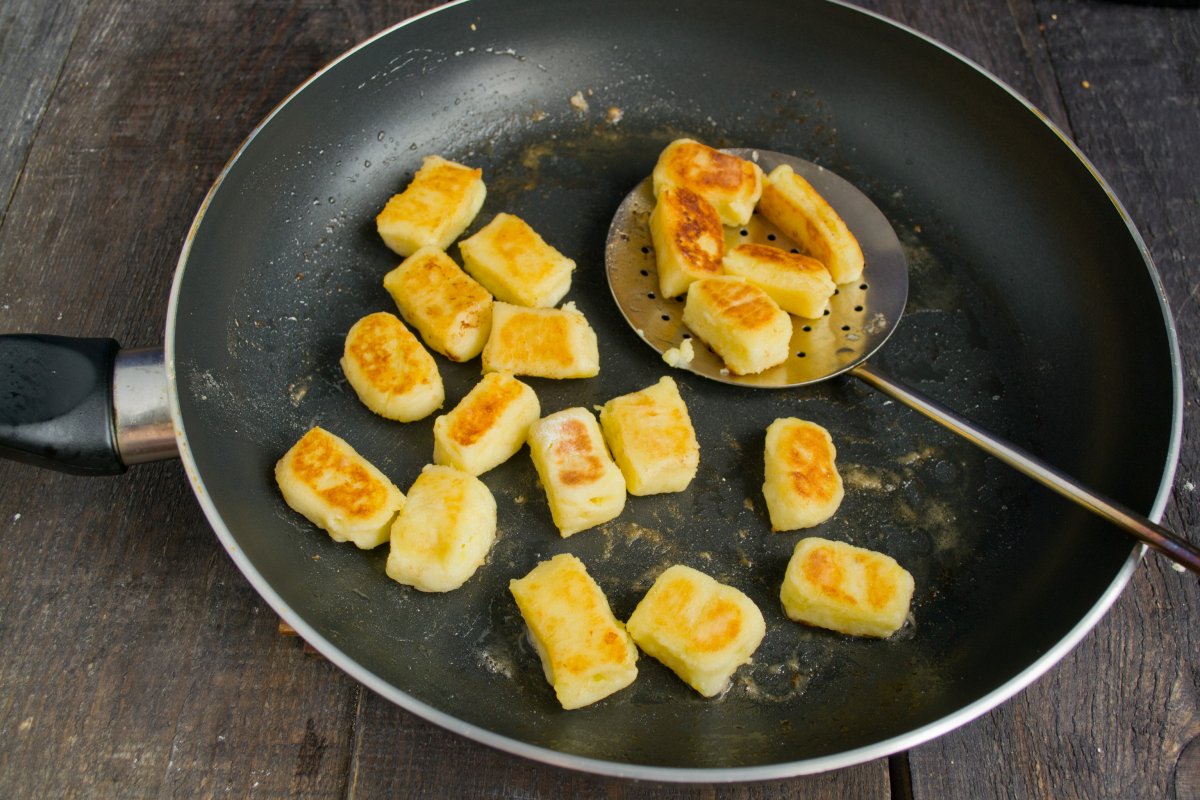
Pan-frying the dumplings until golden brown
Bring 2 liters of water to a boil in a pot and add salt. Using a slotted spoon, transfer the pan-fried potato dumplings into the boiling water and cook for 2 minutes. Remove them immediately and place them on a board.
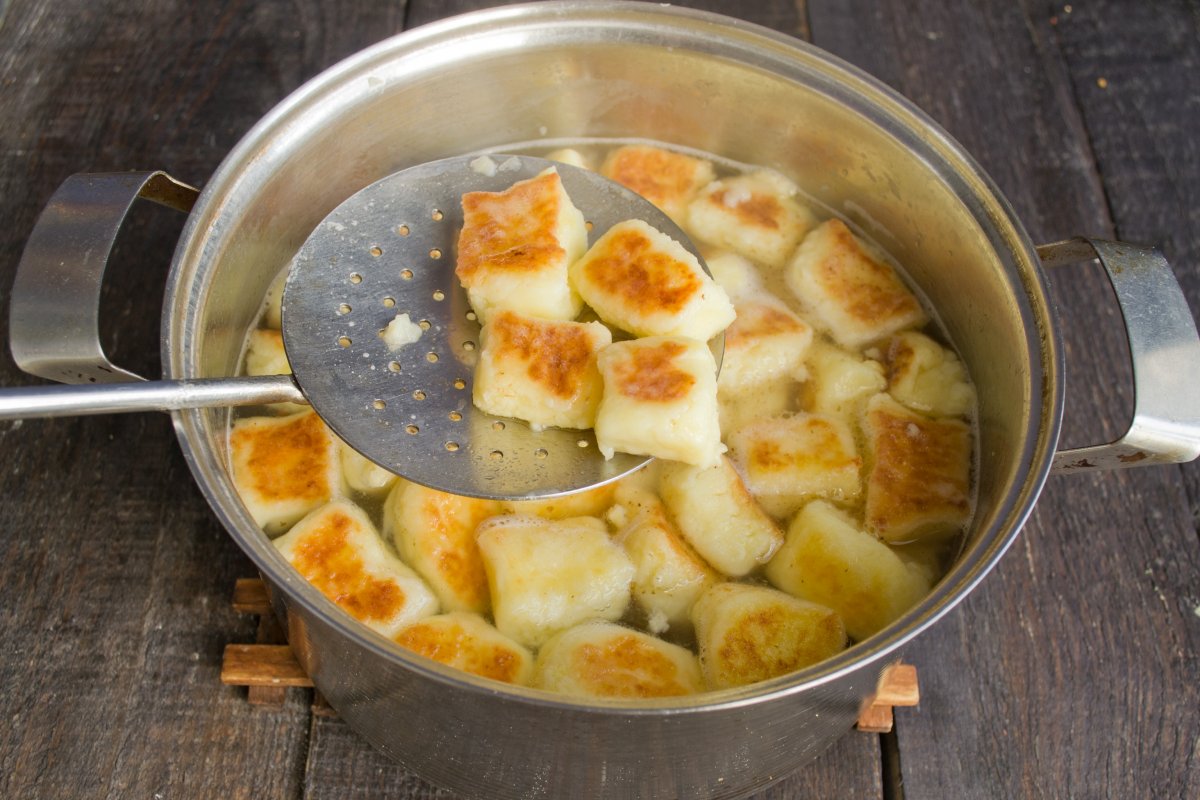
Boiling the potato dumplings for 2 minutes
Finely chop a bunch of fresh dill and sprinkle it with salt. Mash the dill with the salt until it releases its green juice. Mix the mashed dill with smetana (a type of sour cream).
Spread the smetana sauce on a plate.
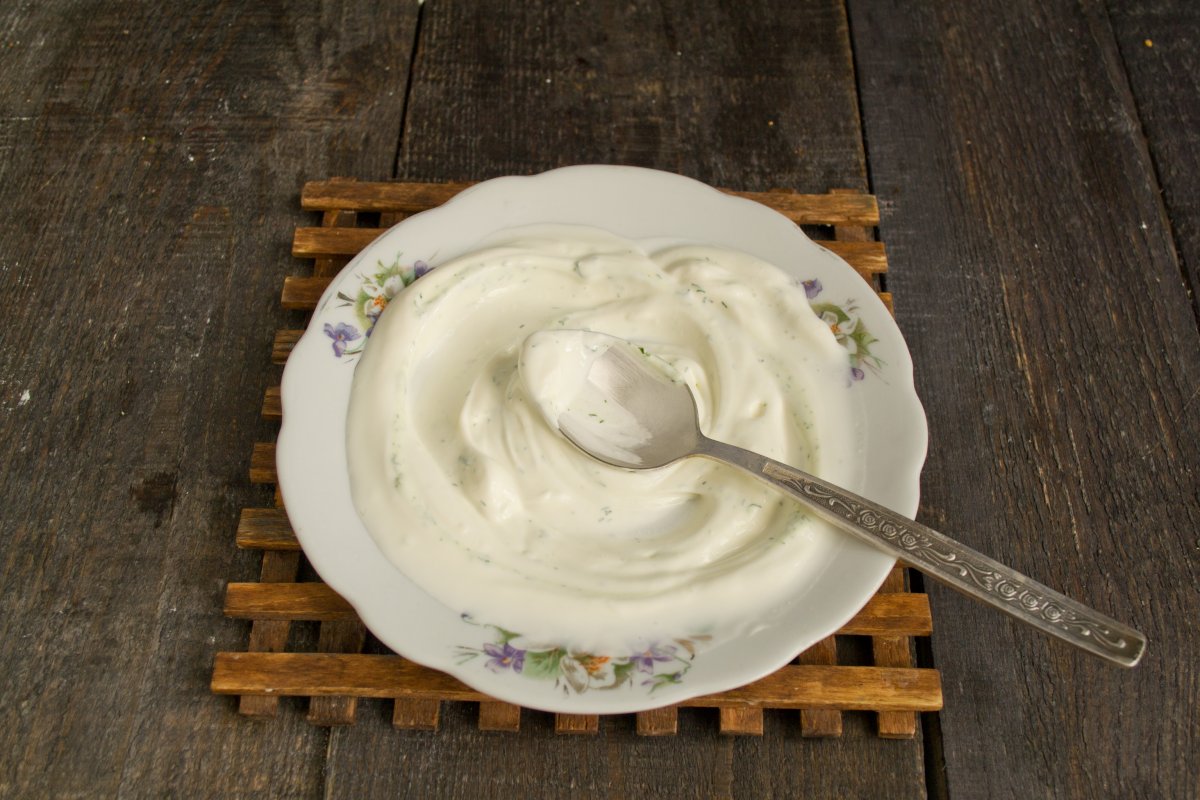
Placing the sour cream sauce on a plate
Place the potato dumplings on top of the smetana sauce, sprinkle with fresh herbs, and serve immediately.
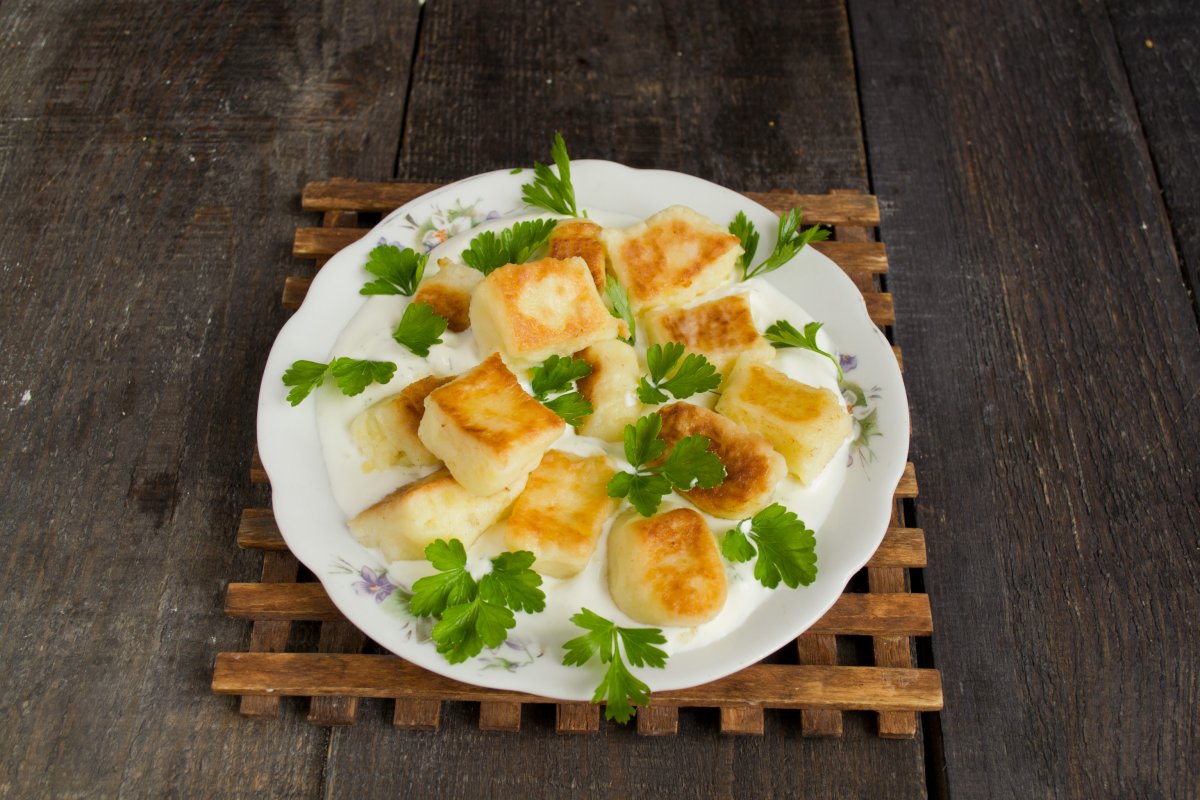
Sprinkle with fresh herbs and serve immediately
And there you have it – a plate of warm, comforting Švilpikai, ready to be enjoyed! This dish is traditionally served with a creamy sauce, but feel free to get creative. A sprinkle of crispy bacon bits or some sautéed mushrooms would also be a fantastic addition. Švilpikai are more than just dumplings; they are a taste of Lithuanian heritage, a simple yet hearty meal that brings warmth to the table. We hope you enjoy making and sharing this wonderful dish with your loved ones. Happy cooking!
0 comments