
In Italian, "pesto" literally means "pounded" or "crushed," a direct nod to the ancient method of grinding ingredients together in a marble mortar. While sweet basil is the traditional foundation, this stinging nettle and walnut pesto proves that wild spring greens are a worthy contender. Young stinging nettle is a true seasonal superfood packed with vitamins K and C; once briefly blanched, it loses its sting completely and develops a mild, earthy flavor reminiscent of spinach. Using an immersion blender creates a velvety emulsion in mere minutes, transforming humble foraged greens into a vibrant, sophisticated culinary sauce.
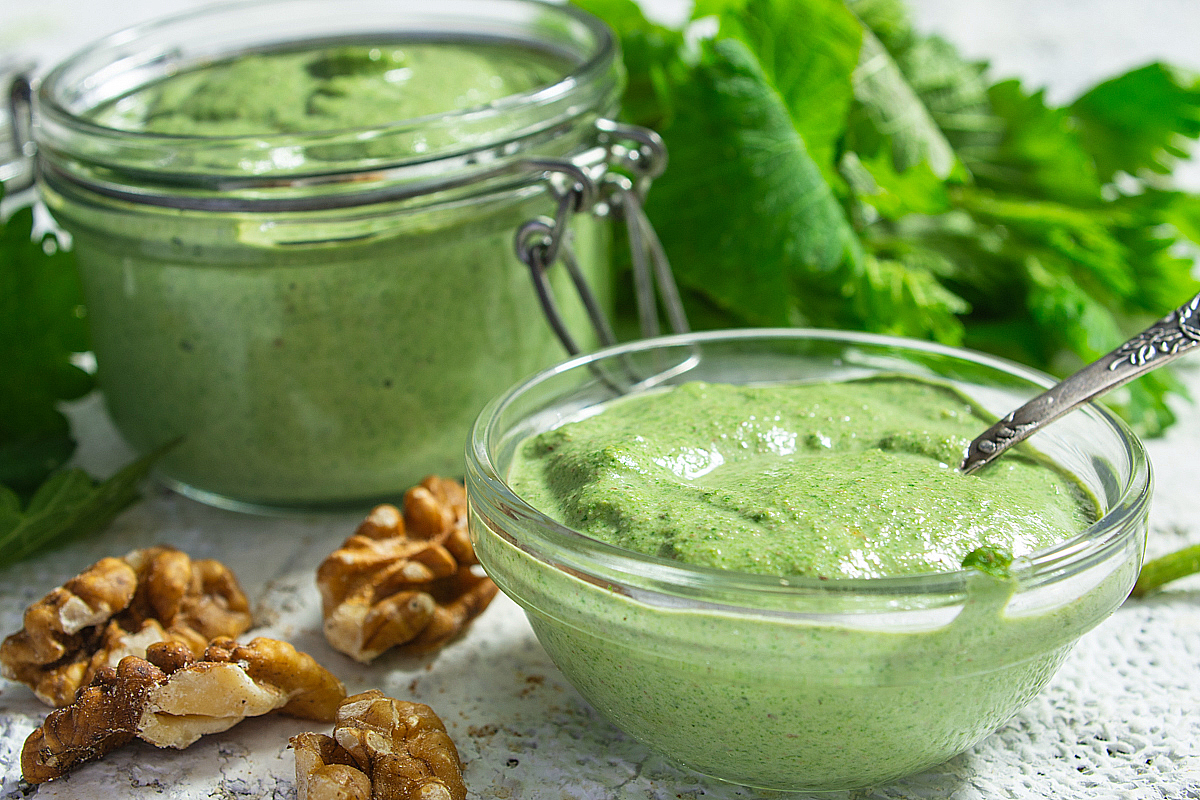
Fragrant and nutritious, young nettle and walnut pesto is a fantastic springtime alternative to classic basil pesto.
Ingredients
- 2 cups young stinging nettle leaves
- 100 g (3.5 oz) walnuts
- 50 ml (3.5 tbsp) extra virgin olive oil
- 50 g (1.75 oz) Parmesan cheese
- salt, to taste
How to Make Stinging Nettle and Walnut Pesto
Stinging nettle may not be as intensely aromatic as fresh basil, but it easily rivals it in both flavor and nutritional value. As the very first wild green to appear in abundance each spring, nettle is a wonderful free gift from nature. Slip on a pair of rubber gloves and strip the tender leaves from the stems. Discard the stems, as they are tough, fibrous, and unsuitable for cooking.
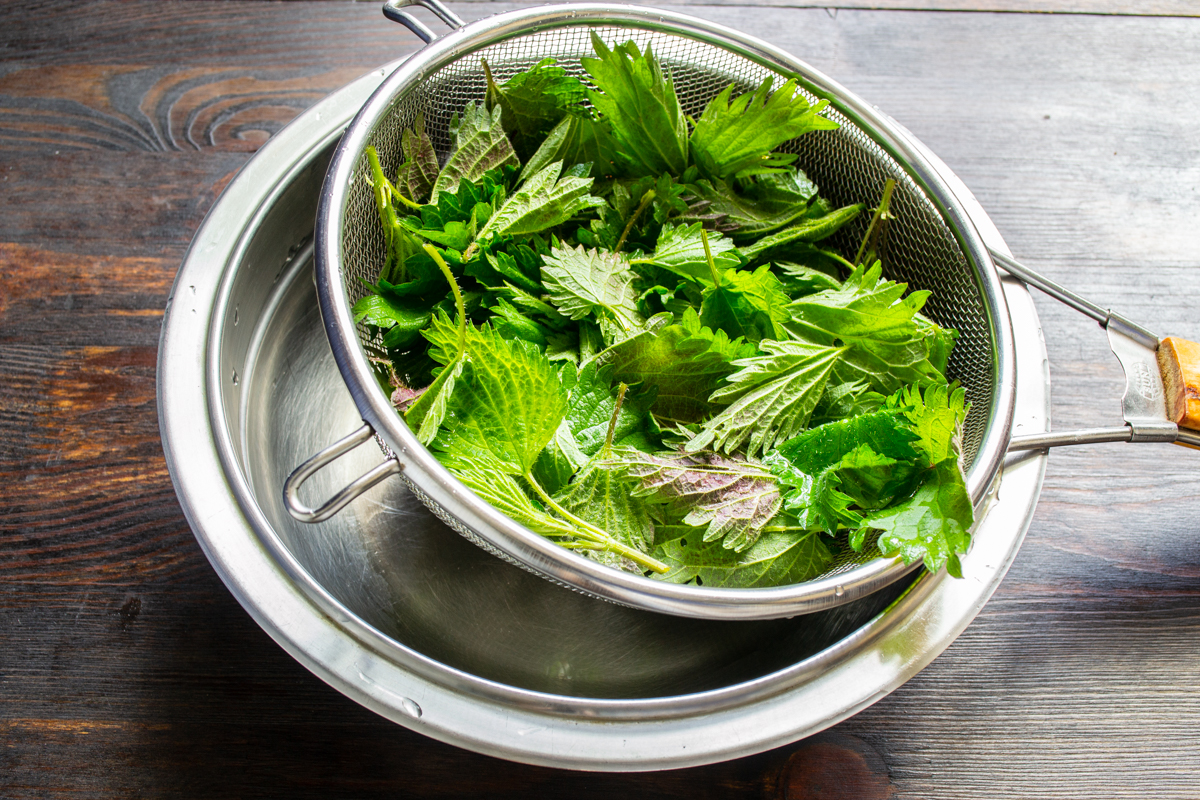
Use only tender young nettle leaves for the pesto, discarding the tough, fibrous stems beforehand.
Pour boiling water over the nettle leaves and let them steep for a few minutes. After this hot bath, the nettles completely lose their sting and become just as tender and mild as spinach.
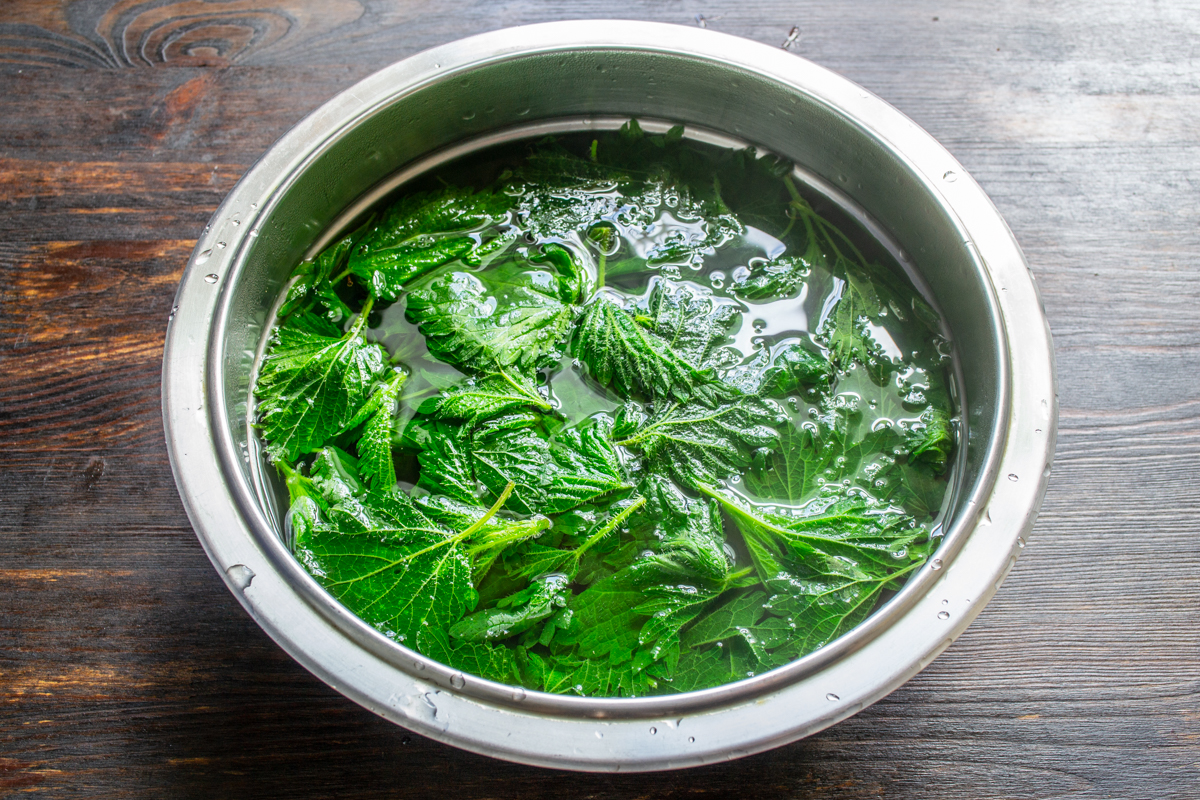
Boiling water neutralizes the plant's sting and leaves the greens tender, vibrant, and easy to blend.
While the nettles are steeping, prepare the nuts. Toast the walnuts briefly in a hot oven to draw out their natural oils and deepen their aroma. Finely chop the nuts with a knife or crush them in a mortar.
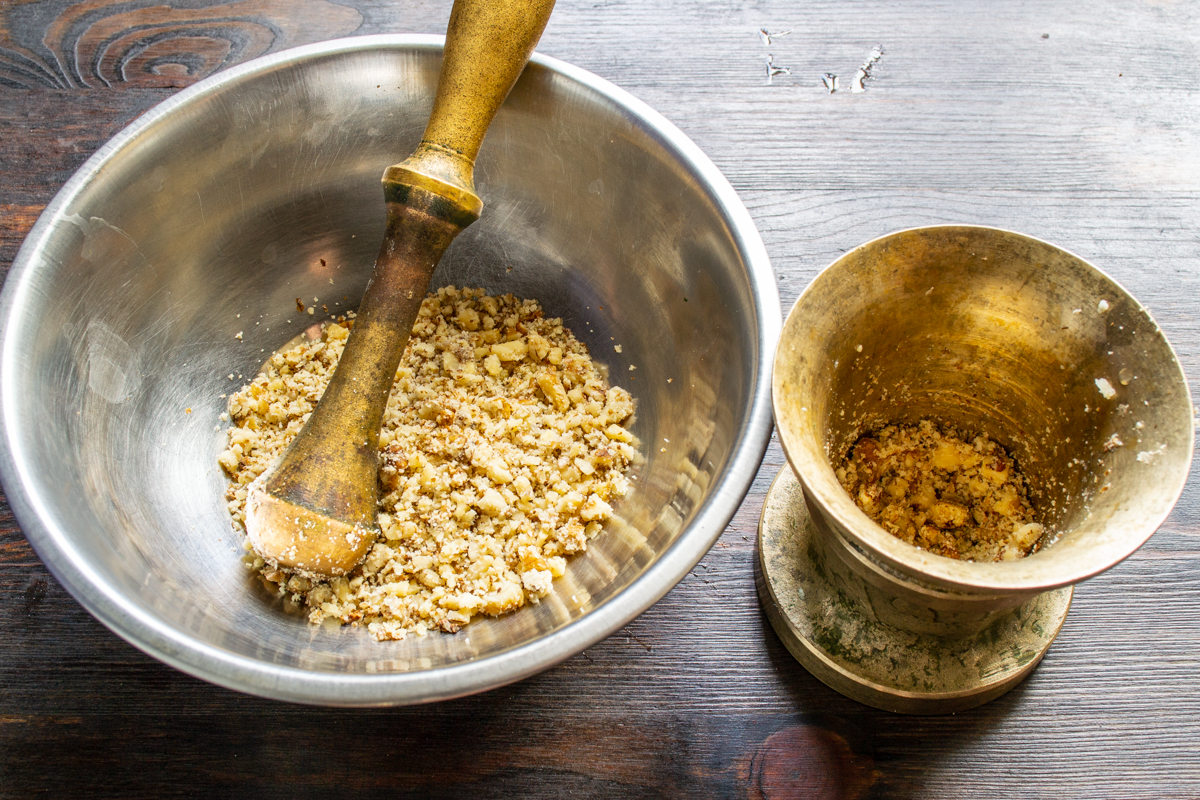
Lightly toast the walnuts in the oven to deepen their nutty aroma and flavor in the finished sauce.
Drain the blanched nettles in a fine-mesh sieve and gently squeeze out the excess liquid. Do not wring them completely dry; leaving a little moisture helps the sauce come together.
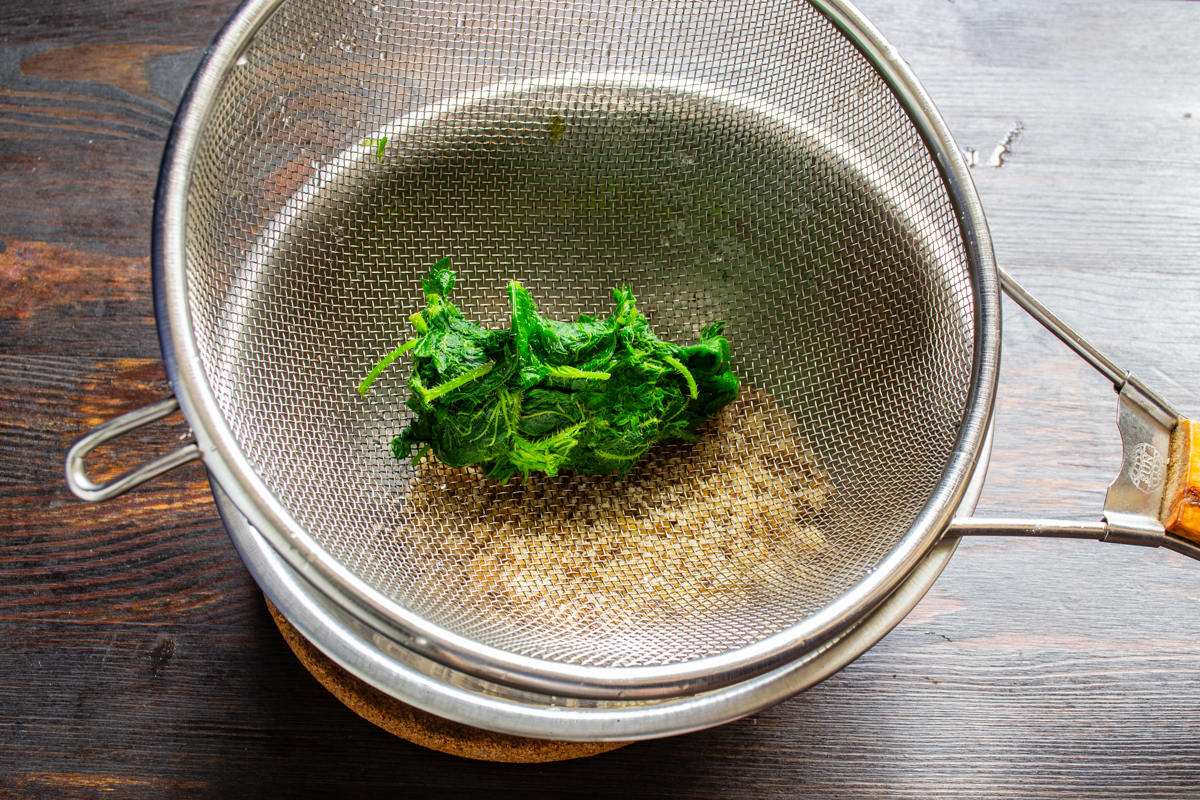
Drain the blanched nettles in a sieve and gently squeeze them, leaving a little moisture for the right texture.
Add the cooled nettles to the crushed walnuts and season with salt to taste. I use sea salt in this recipe, taking the opportunity to add a touch of beneficial minerals to the sauce.
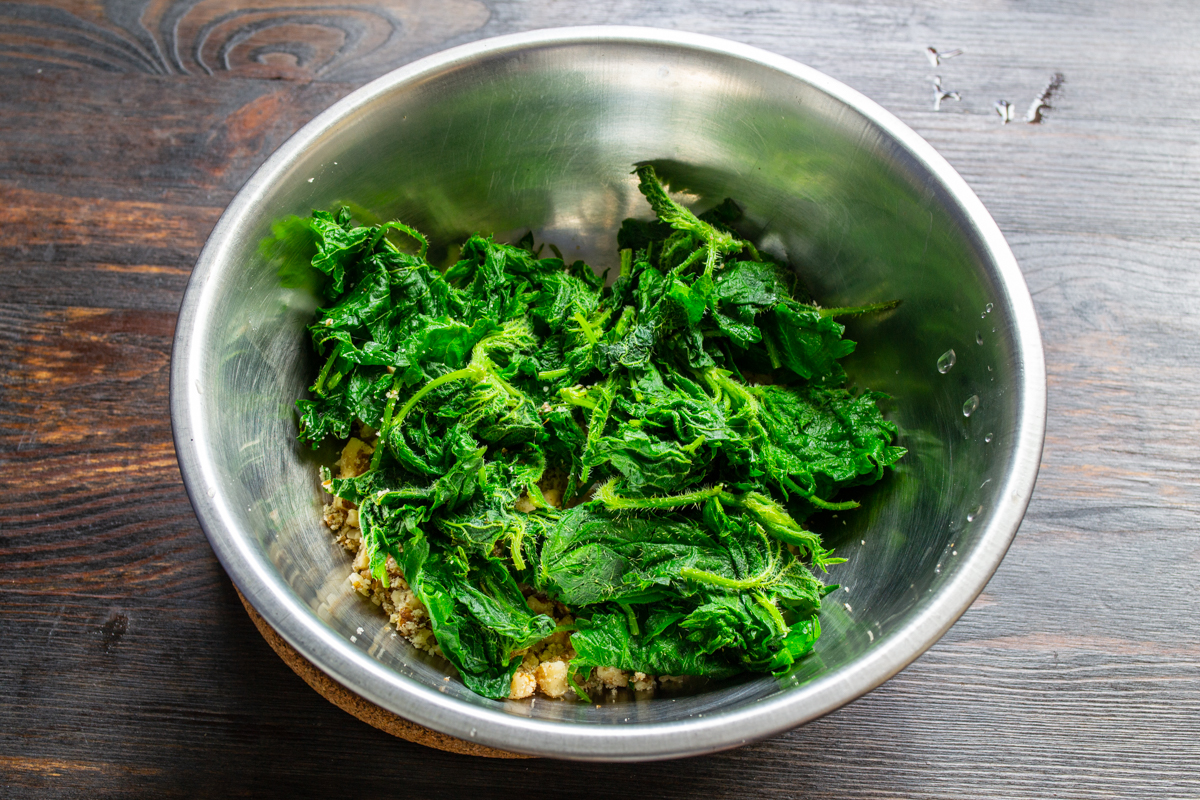
Add the crushed walnuts and mineral-rich sea salt to the cooled nettle leaves.
Pour in a flavorful extra virgin olive oil. Always reach for high-quality oil when making pesto—it makes a world of difference in the final sauce.
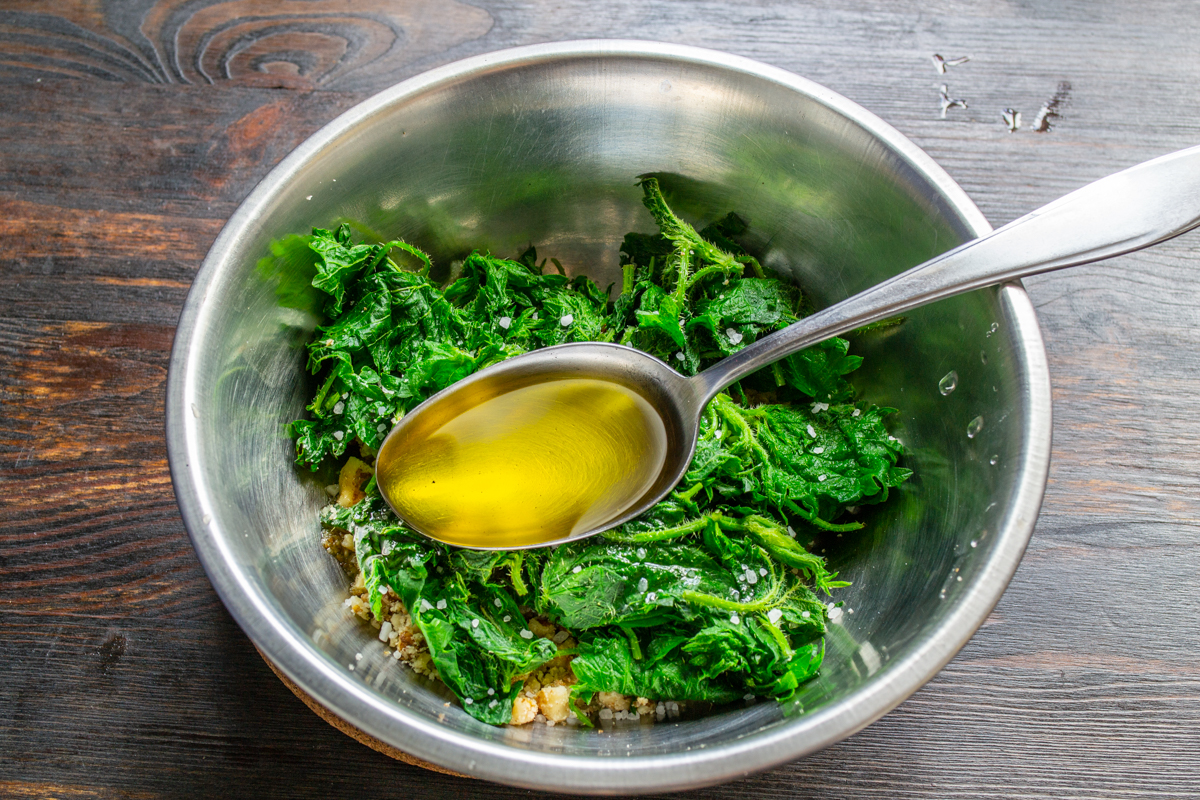
Use high-quality extra virgin olive oil to give the pesto a rich flavor and silky texture.
Add the grated cheese to the rest of the ingredients. Classic pesto calls for Parmesan, but since this is a creative variation, feel free to use any aged hard cheese you like. If desired, add 1–2 cloves of garlic and a tablespoon of freshly squeezed lemon juice at this stage.
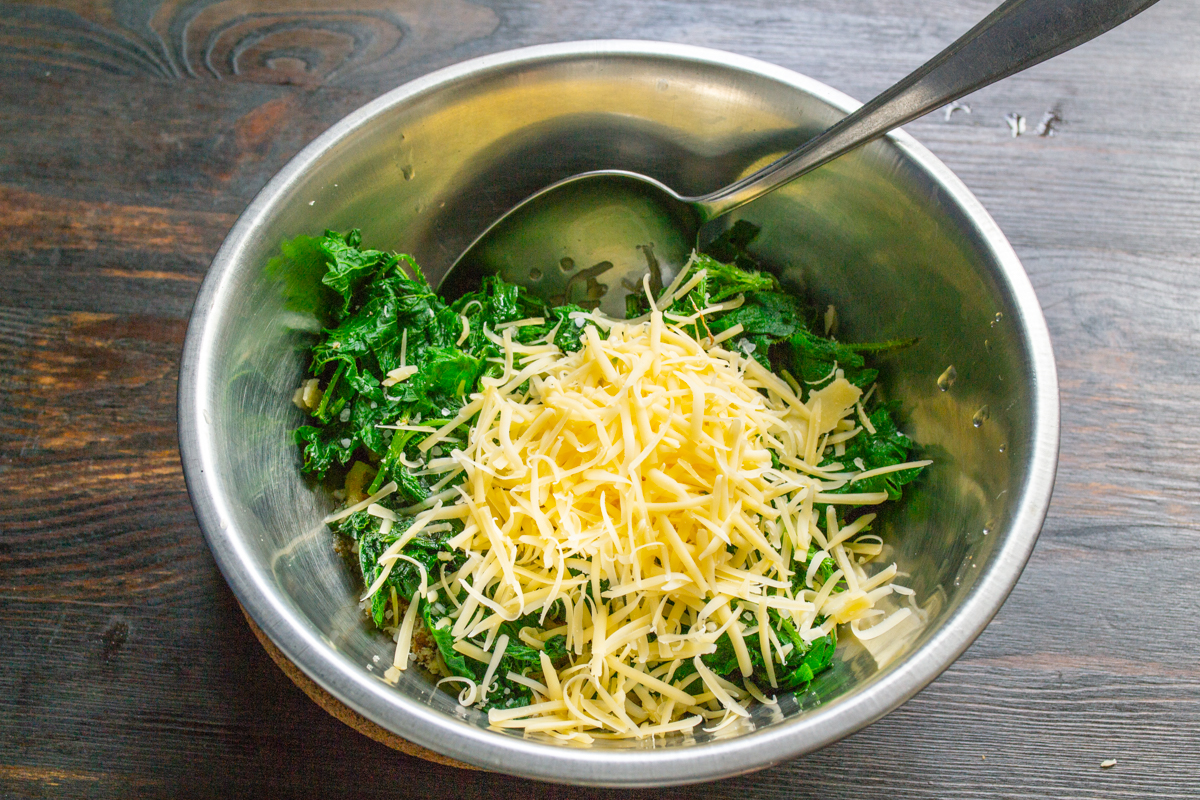
Aged hard cheese adds a savory depth to the sauce. Garlic or lemon juice can also be added at this stage if desired.
Blend the ingredients with an immersion blender until smooth and creamy. If the mixture feels too thick, thin it out with a splash of cold boiled or filtered water until it reaches your preferred consistency. The right texture depends entirely on how you plan to serve it: leave it thick and spreadable for sandwiches, or make it looser to coat pasta.
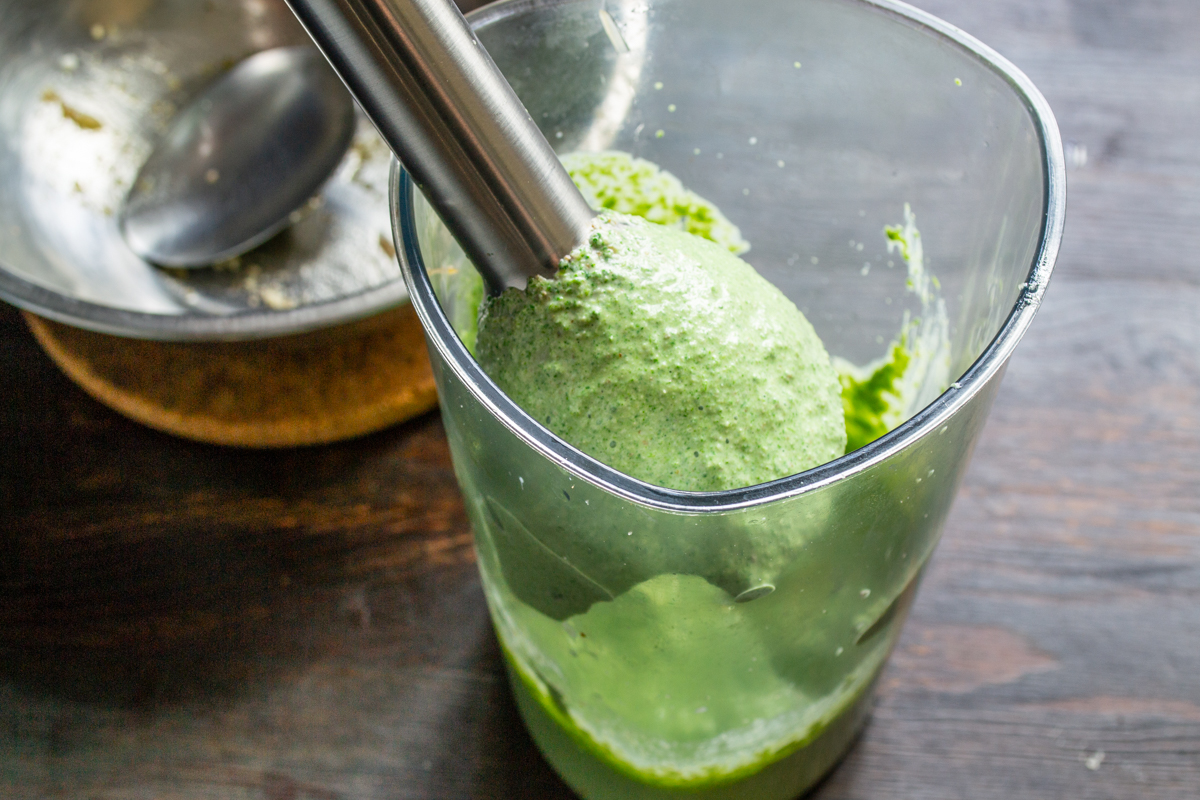
Blend the mixture until smooth and creamy, adjusting the thickness with a splash of water if needed.
Transfer the finished pesto into a clean, dry glass jar. Stored in the refrigerator, this homemade sauce will keep well for 2 to 3 days. For longer storage, portion the pesto into small containers and freeze it.
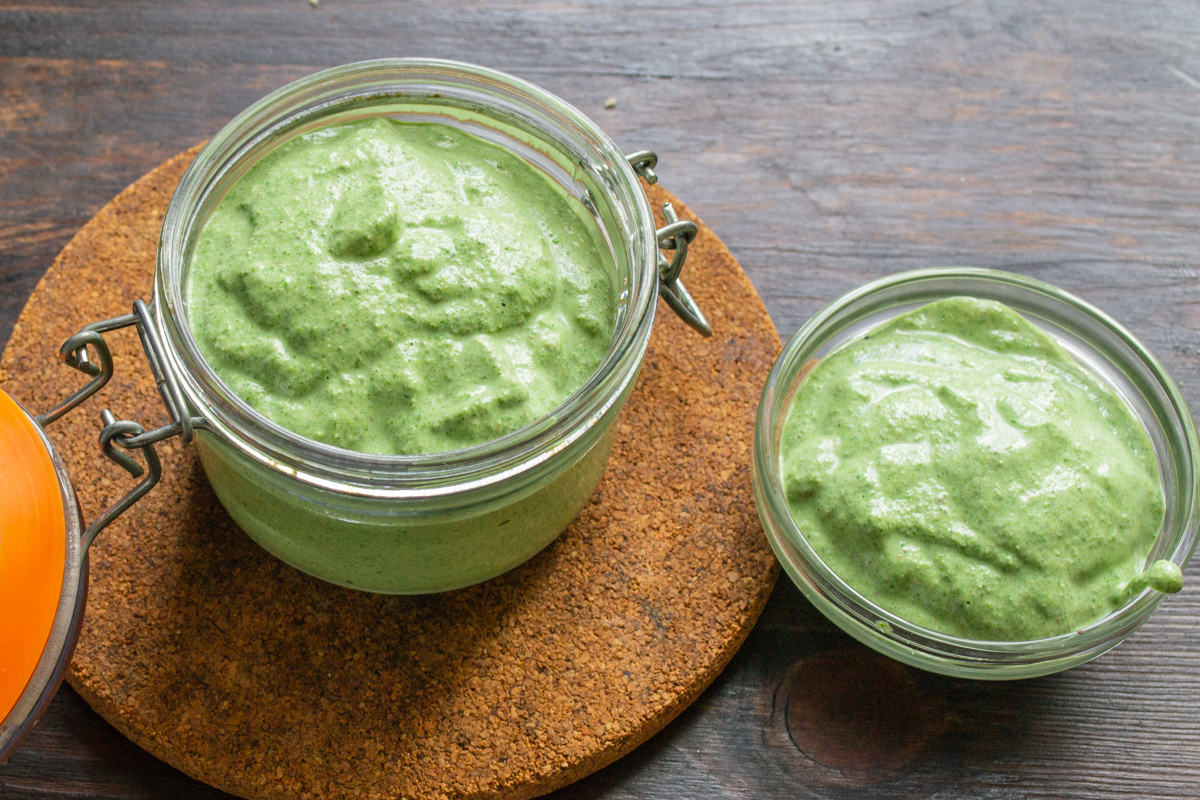
The finished sauce keeps well in the refrigerator for up to 3 days, or can be frozen in small portions for longer storage.
This stinging nettle and walnut pesto is wonderfully versatile at the table. It pairs beautifully with char-grilled vegetables and makes a natural companion for classic Italian pasta. Try spreading it over toasted bruschetta, rolling it into lavash (thin unleavened flatbread) wraps with creamy cheese, or spooning it alongside baked fish and roasted chicken. Even a simple fresh tomato salad comes alive when dressed with a spoonful of this emerald sauce. To keep the flavors balanced, use a good extra virgin olive oil and don't hesitate to adjust the consistency with a splash of water. Transferred to a dry glass jar, the pesto keeps well in the refrigerator for up to three days. If you want to preserve a taste of spring for months to come, spoon the sauce into ice cube trays and freeze—these portioned cubes will become a secret flavor booster for your future soups and hot dishes.
0 comments