
Spicy fermented pickles with carrot greens are a magnificent example of traditional Russian cuisine, where natural fermentation transforms simple vegetables into a true delicacy. Using carrot tops in this recipe isn't just a decorative touch; it's an old-world trick: the natural compounds in the greens help the cucumbers stay incredibly crisp and firm throughout the winter. The combination of hot peppers, fresh garlic, and fragrant dill umbrellas creates a rich flavor profile that penetrates every single pickle. This bulk preparation method in a bucket or large pot is absolutely perfect for preserving your summer harvest, yielding a crunchy snack with that nostalgic, rustic flavor of homemade village preserves.
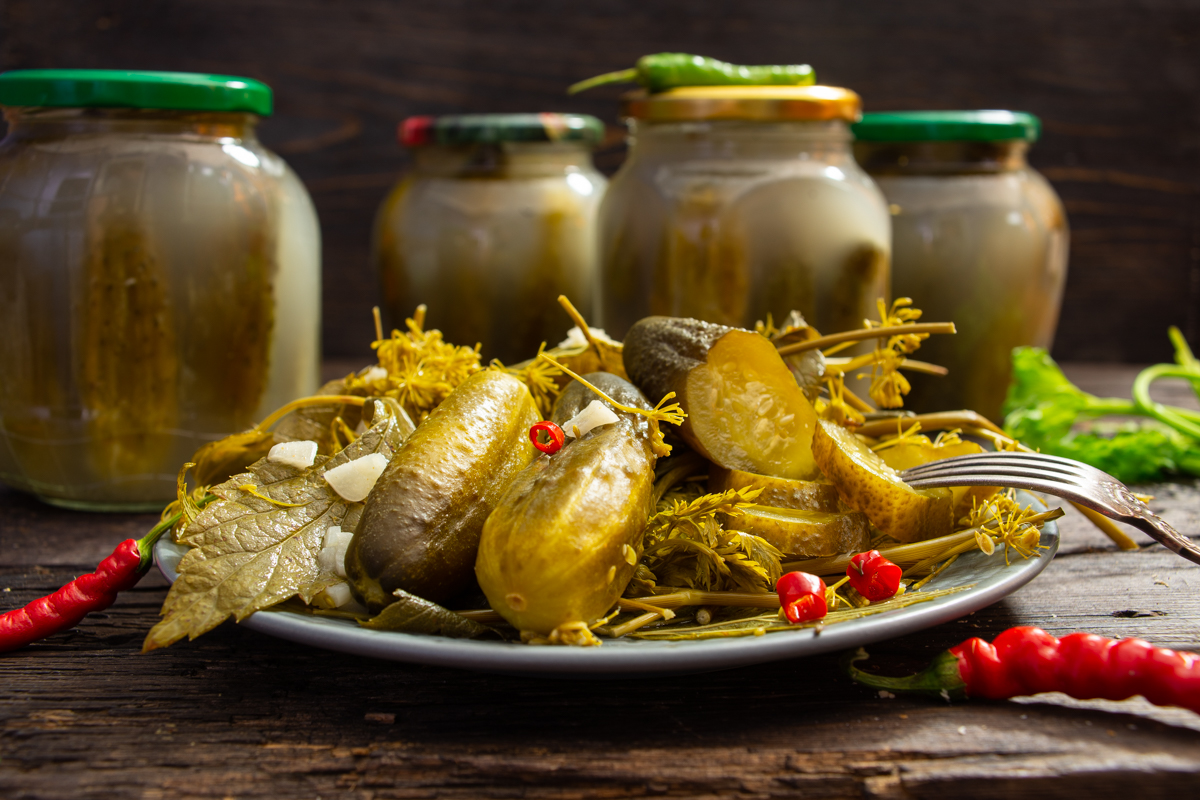
Appetizing homemade fermented pickles prepared using an old recipe with the addition of carrot greens.
Ingredients
- 5 kg (11 lbs) small pickling cucumbers (8-10 cm or 3-4 inches)
- 150 g (5.3 oz) fresh carrot greens
- 2 heads of garlic
- 3-4 hot chili peppers
- Blackcurrant leaves, bay leaves, and dill umbrellas (mature dill flower heads)
- 65 g (2.3 oz) table salt per 1 liter (33.8 fl oz) of filtered water
- 1 tsp ground paprika
How to Make Spicy Fermented Pickles with Carrot Greens
At home, it’s convenient to ferment cucumbers in small containers—3-liter jars, an enameled pot, or a food-grade plastic bucket. Wash your vessel thoroughly and rinse it with boiling water. Scald the blackcurrant leaves and dill umbrellas with boiling water as well. Place a handful of the leaves, 3-4 dill umbrellas, and a few bay leaves at the bottom of your bucket.
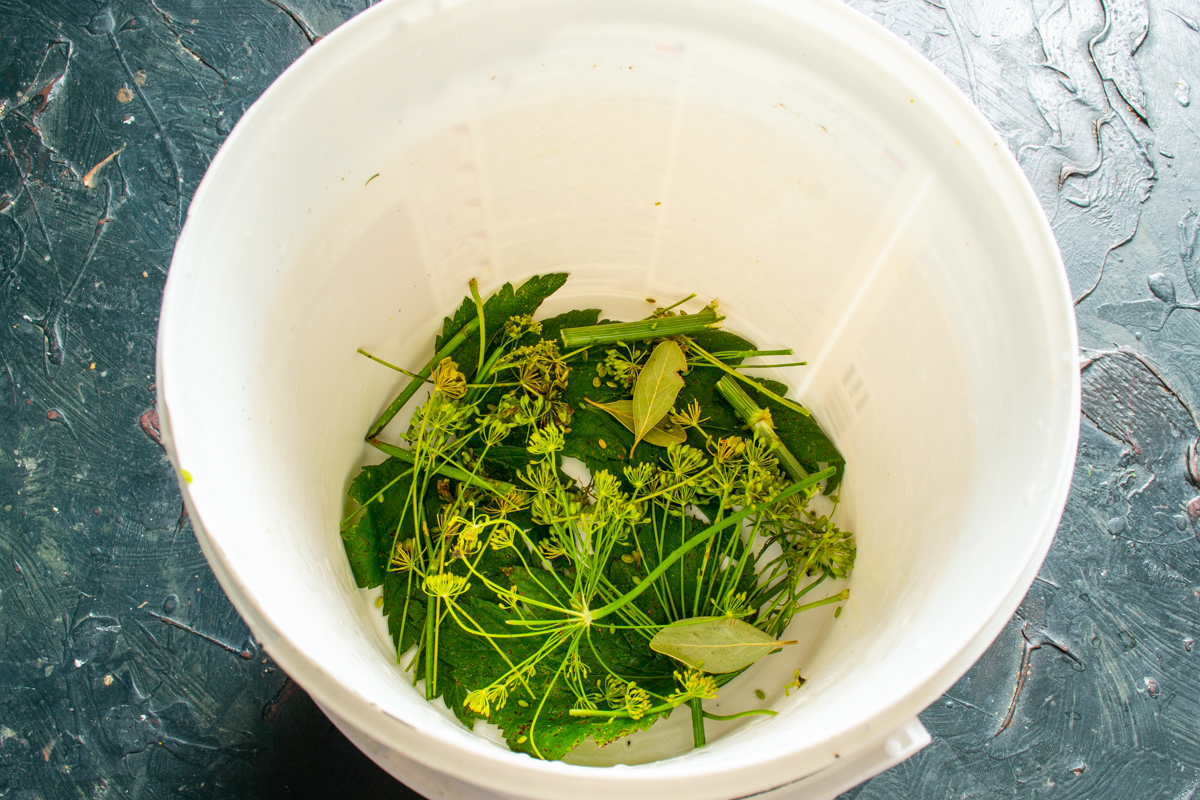
Place fragrant blackcurrant leaves, dill umbrellas, and bay leaves at the bottom of a clean vessel.
Pickle the cucumbers on the same day they are harvested. If that’s not possible, soak the cucumbers in cold filtered water for a few hours. Arrange the first layer of cucumbers tightly in the bucket.
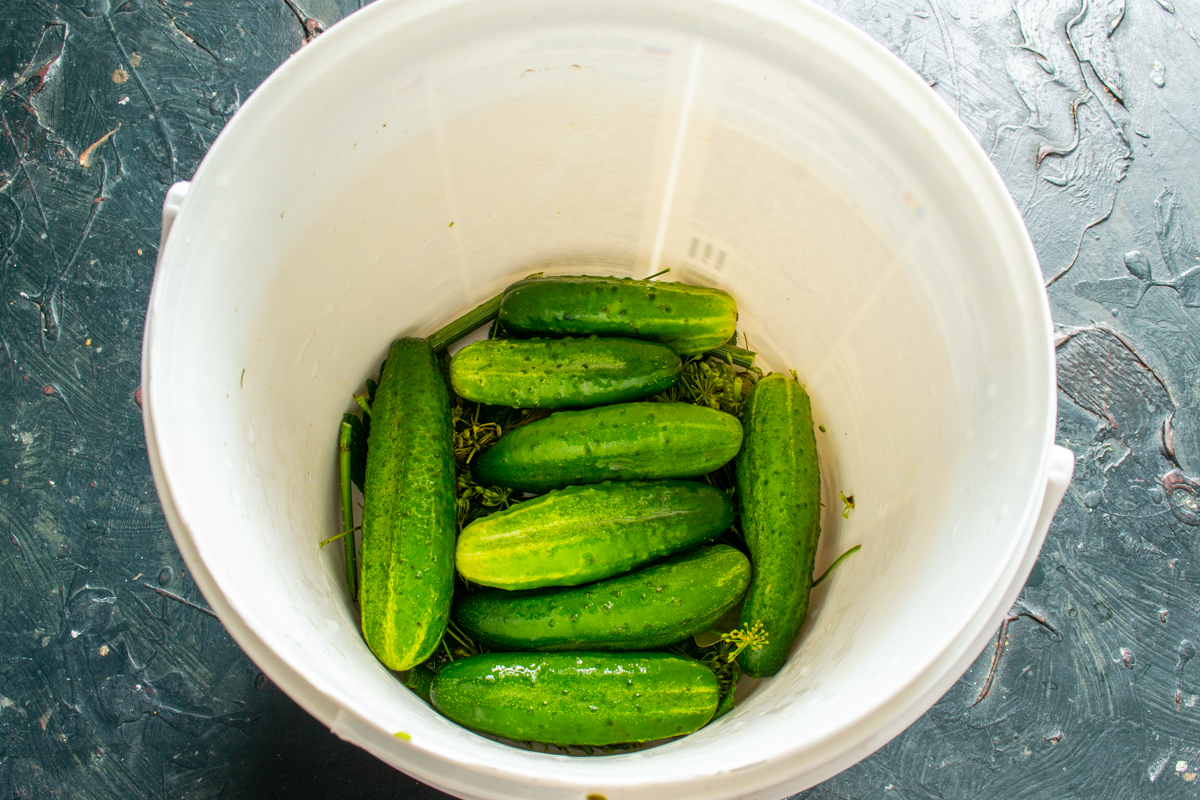
Pack the first layer of prepared cucumbers tightly over the fragrant greens.
Peel the garlic and chop the cloves finely. Slice the hot peppers into rings. Sprinkle a little garlic and pepper over the cucumbers.
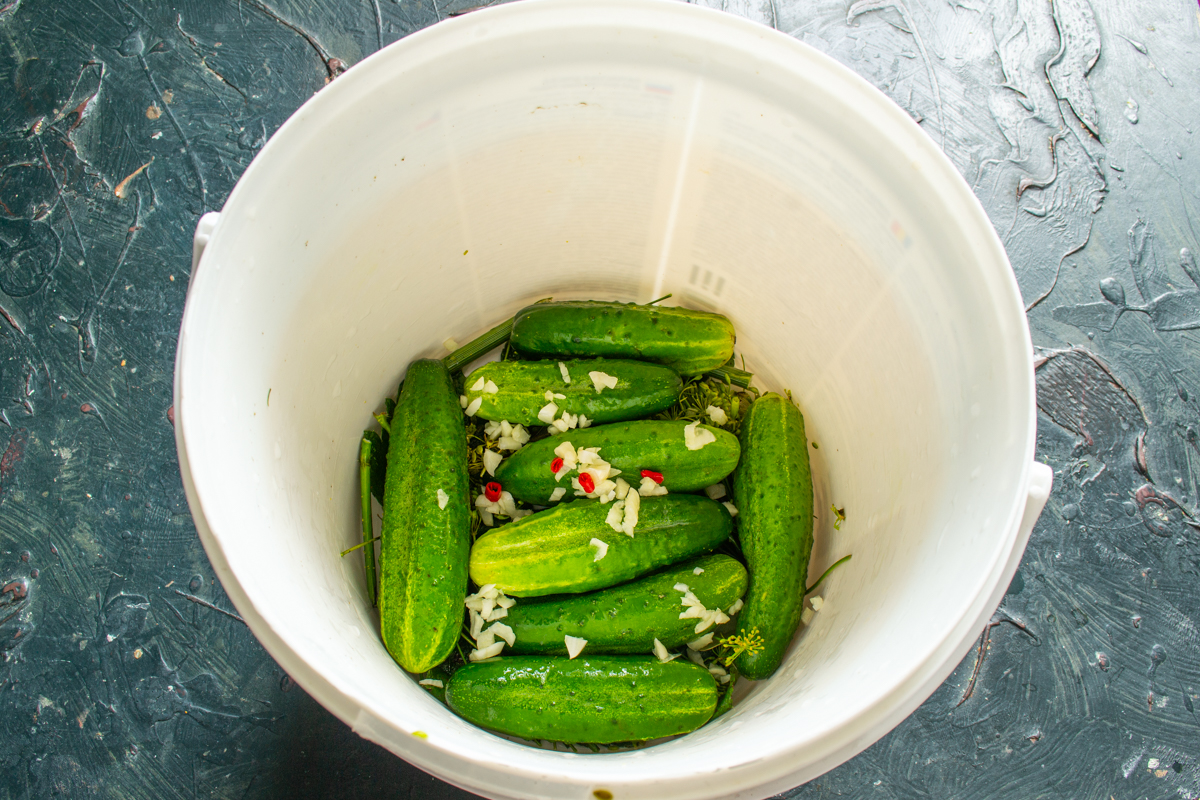
Add finely chopped garlic and rings of hot pepper for a spicy kick.
Wash the carrot greens thoroughly and scald them with boiling water. Place a portion of the greens on top of the cucumbers.
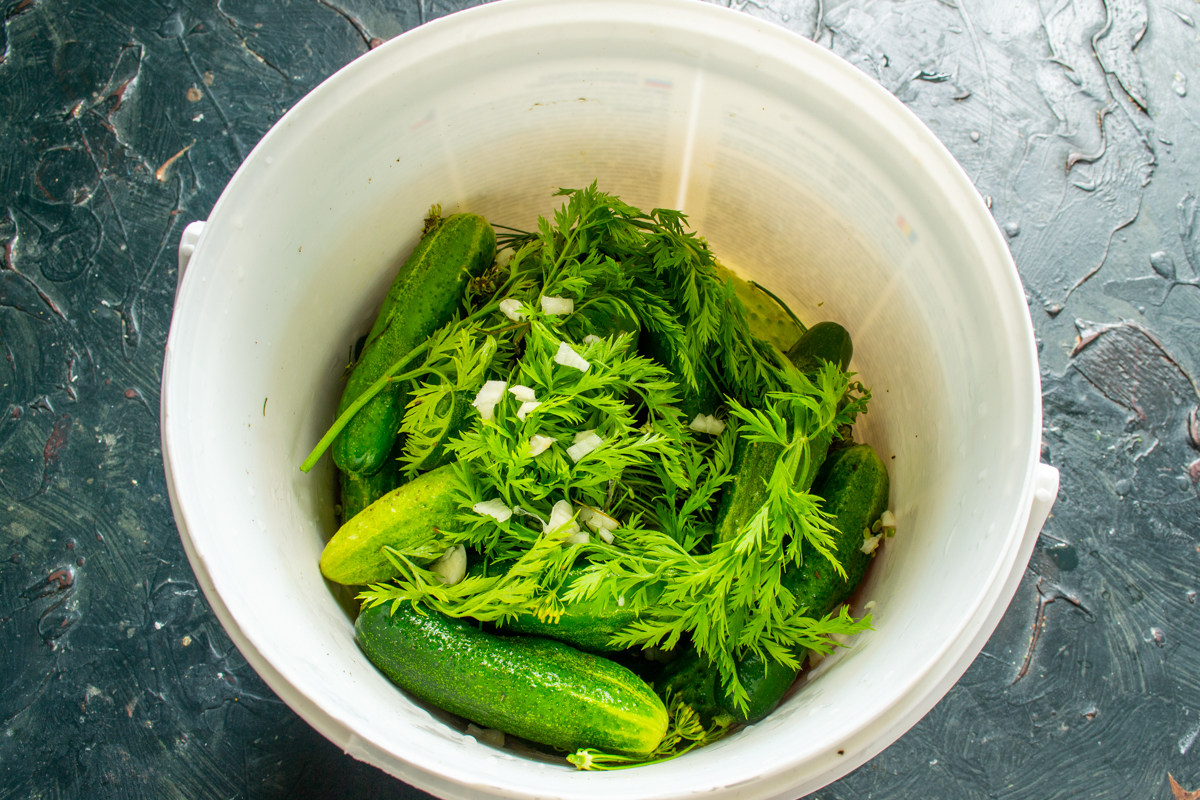
Carrot greens give the brine and cucumbers a unique subtle aroma and distinct flavor.
Alternate layers of cucumbers with carrot greens, garlic, hot peppers, blackcurrant leaves, and dill umbrellas until the bucket is filled, leaving at least 10 centimeters (4 inches) of space at the top.
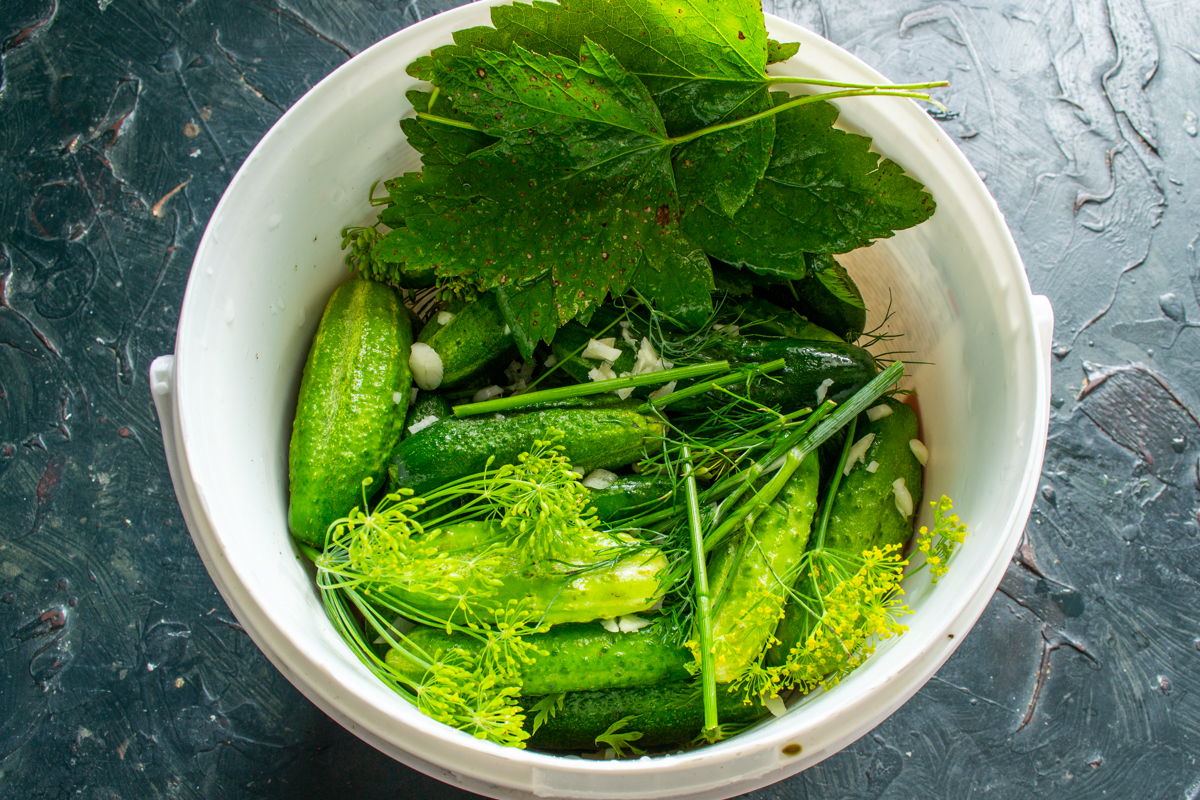
Alternate layers of vegetables and greens until the bucket is filled almost to the very top.
Dissolve table salt in filtered water at a ratio of 65 g (2.3 oz) of salt per 1 liter (33.8 fl oz) of water for small cucumbers. For larger cucumbers, increase the salt to 70-75 g (2.5-2.6 oz) per 1 liter. Pour the cold brine into the bucket over the cucumbers and sprinkle with paprika.
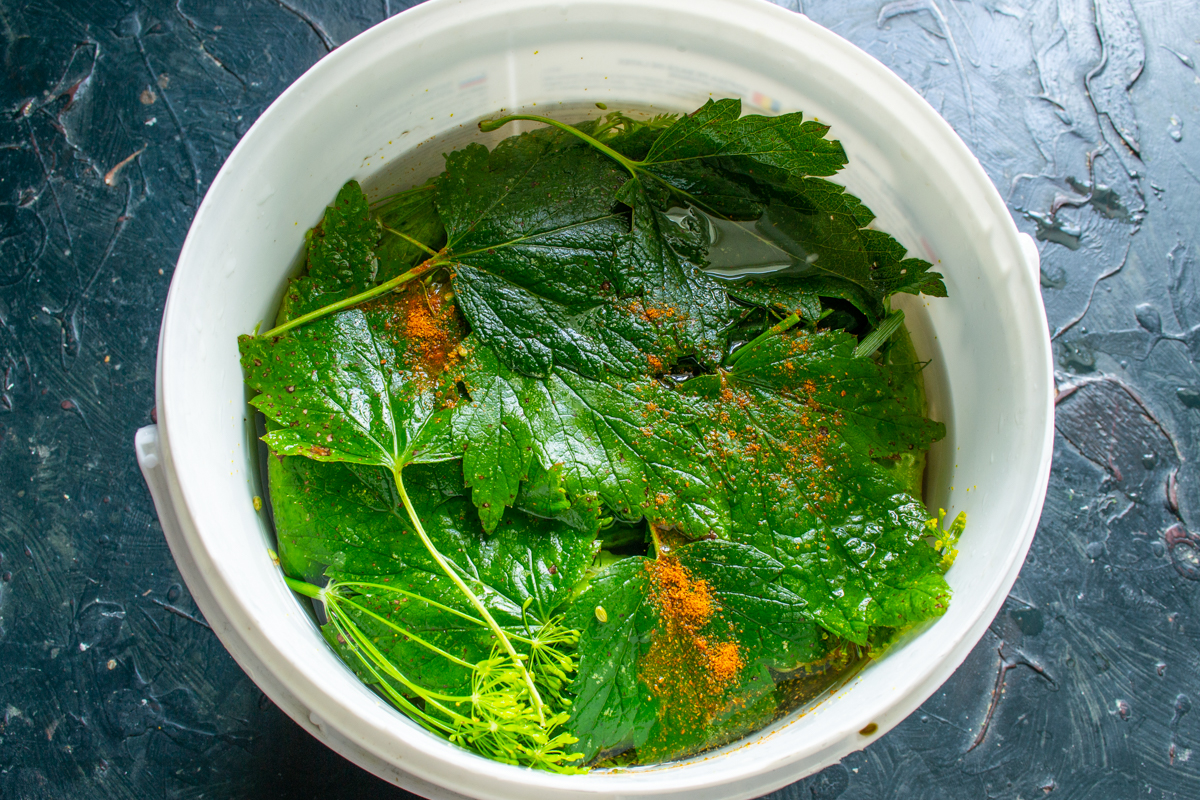
Pour the cold salt brine over the vegetables and add a touch of paprika for color and flavor.
Place a porcelain plate or a wooden disc on top, followed by a heavy weight. Cover the bucket with a clean cloth and leave it at room temperature for 4 to 7 days. Fermentation will begin depending on the room temperature; the warmer it is, the faster the brine will ferment—you’ll notice a foam on the surface and the sharp, savory aroma of fermented vegetables.
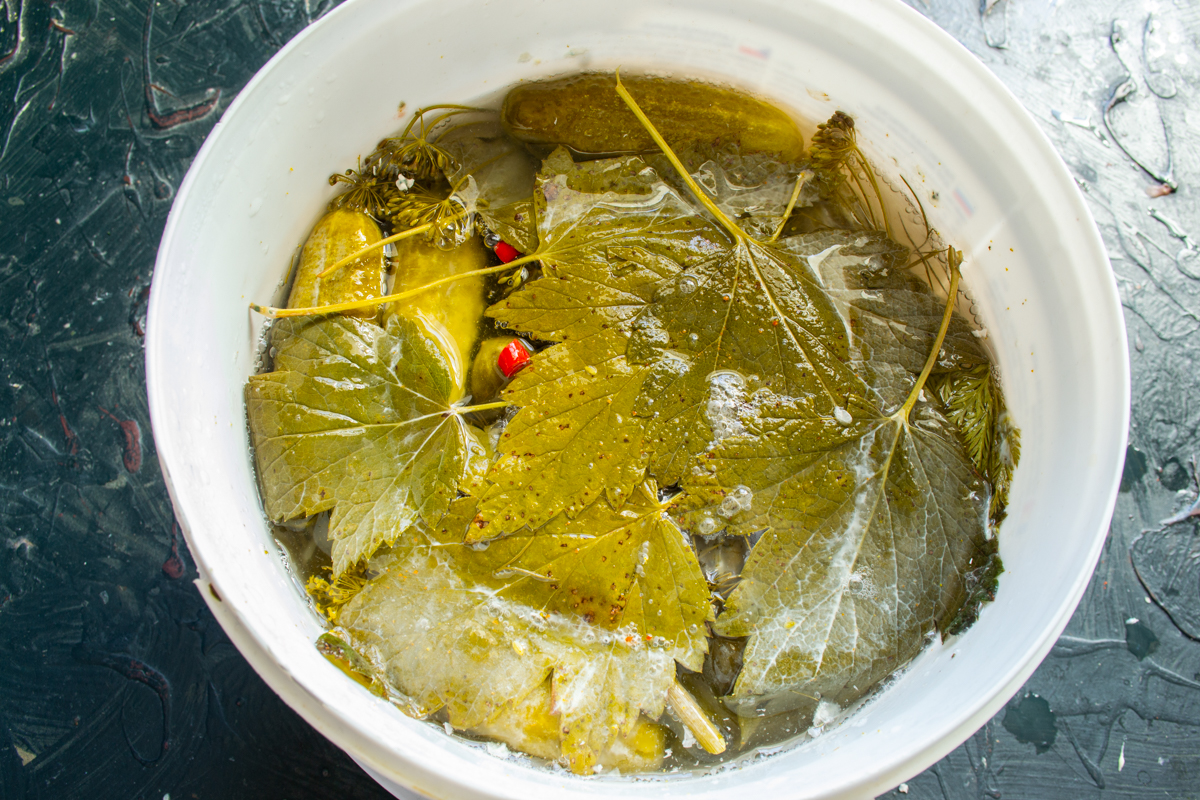
Leave the cucumbers for a few days to ferment. The appearance of a characteristic aroma indicates readiness.
Wash your storage jars thoroughly and dry them in a hot oven for 10 minutes. Remove the pickles from the brine and pack them loosely into the jars.
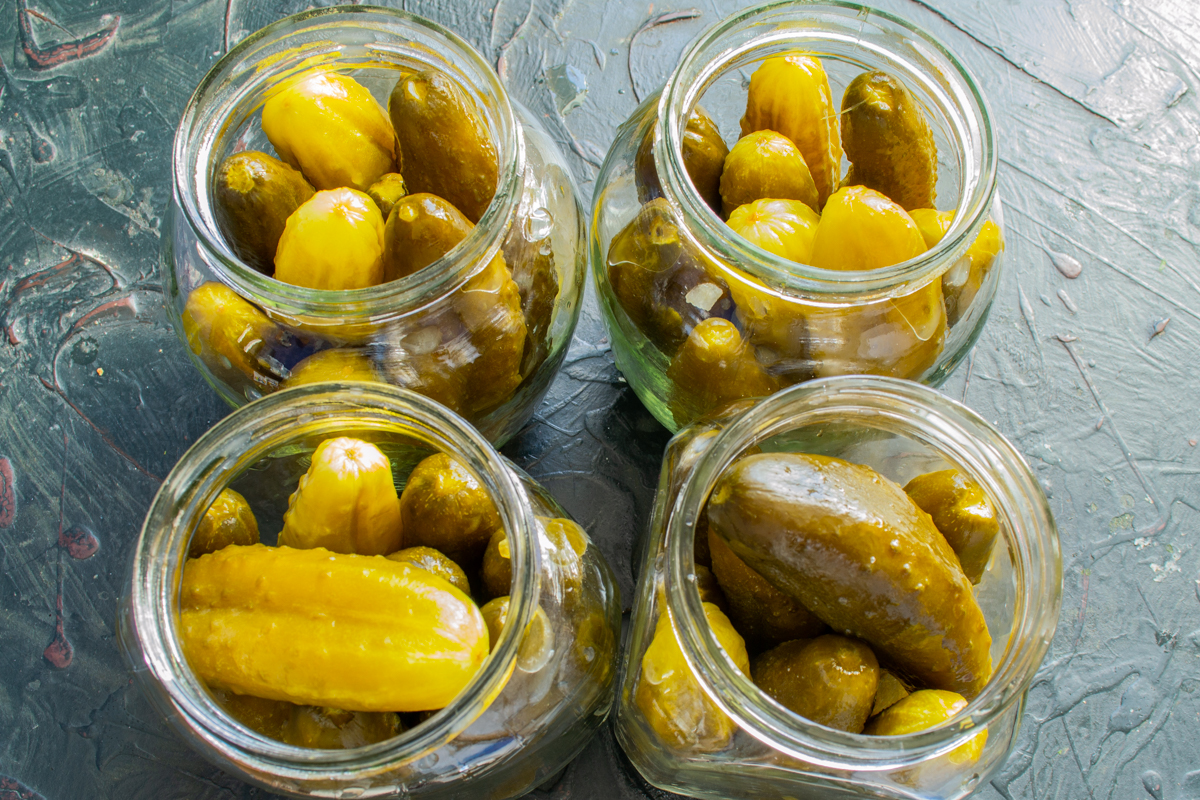
Carefully transfer the finished fermented pickles into sterilized jars for long-term storage.
Strain the brine through a fine sieve to remove the herbs and leaves, leaving the garlic and peppers intact. You might not need all the brine, but don’t rush to throw it away—it is just as tasty and rich in probiotics as the fermented vegetables themselves.
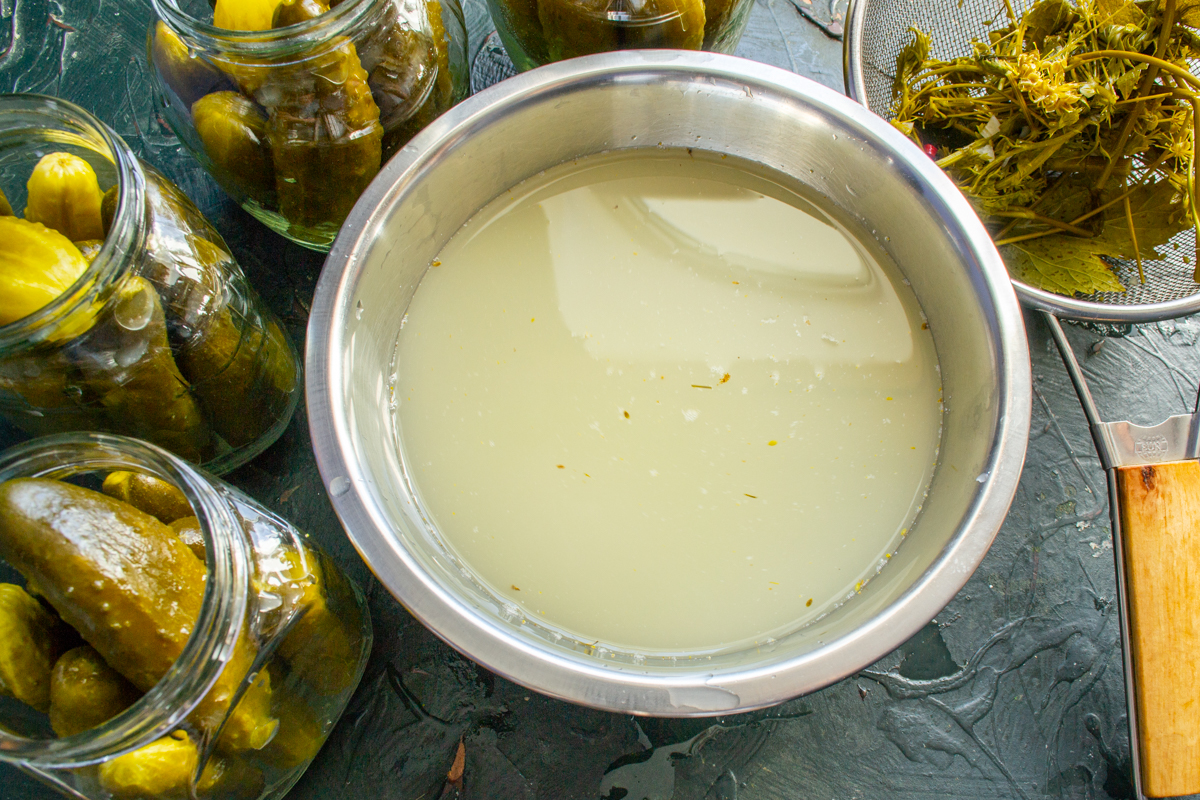
Strain the brine through a fine sieve to remove any excess herbs and leaves.
Pour the strained brine into the jars so the cucumbers are completely submerged. Add the leftover garlic and hot pepper bits to each jar.
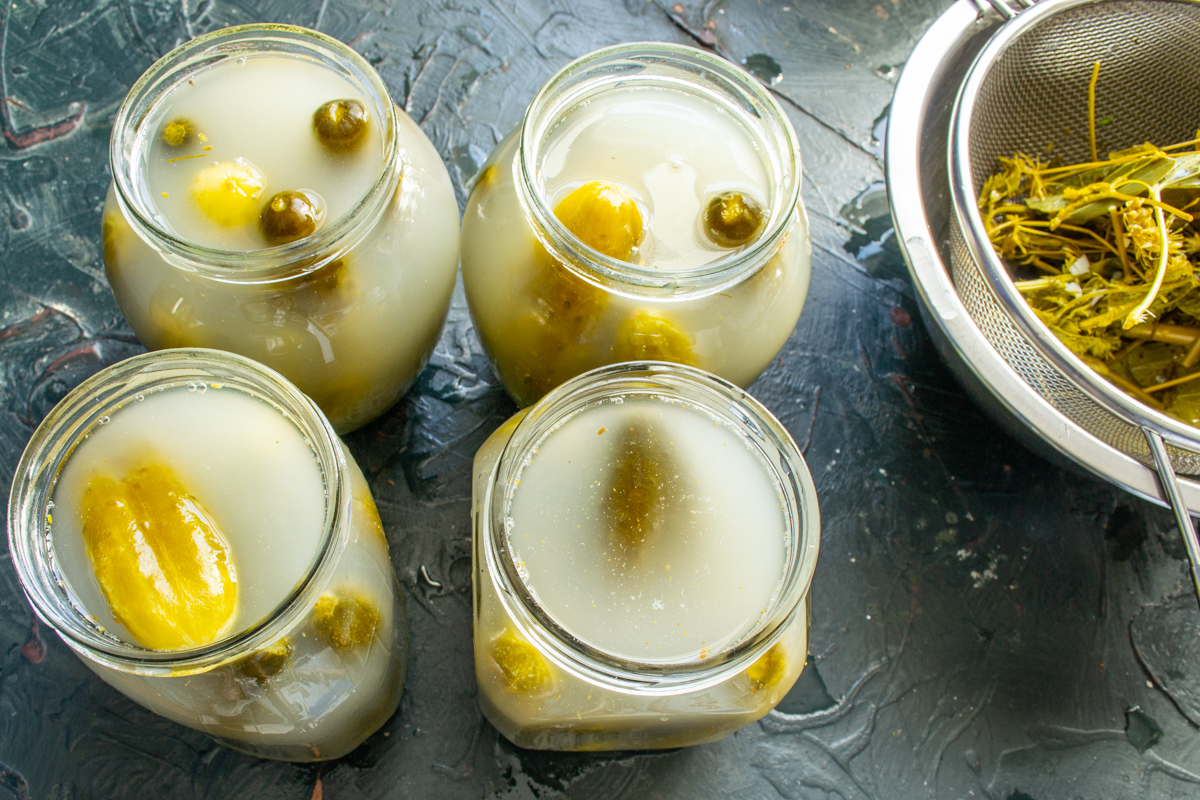
Pour the clean brine over the cucumbers so they are completely submerged in the liquid.
Top each jar with a blackcurrant leaf, seal tightly, and place them on the bottom shelf of your refrigerator. In 25-30 days, your spicy fermented pickles will be perfectly ready. For the impatient ones, I can promise that these pickles are already quite delicious after just one week.
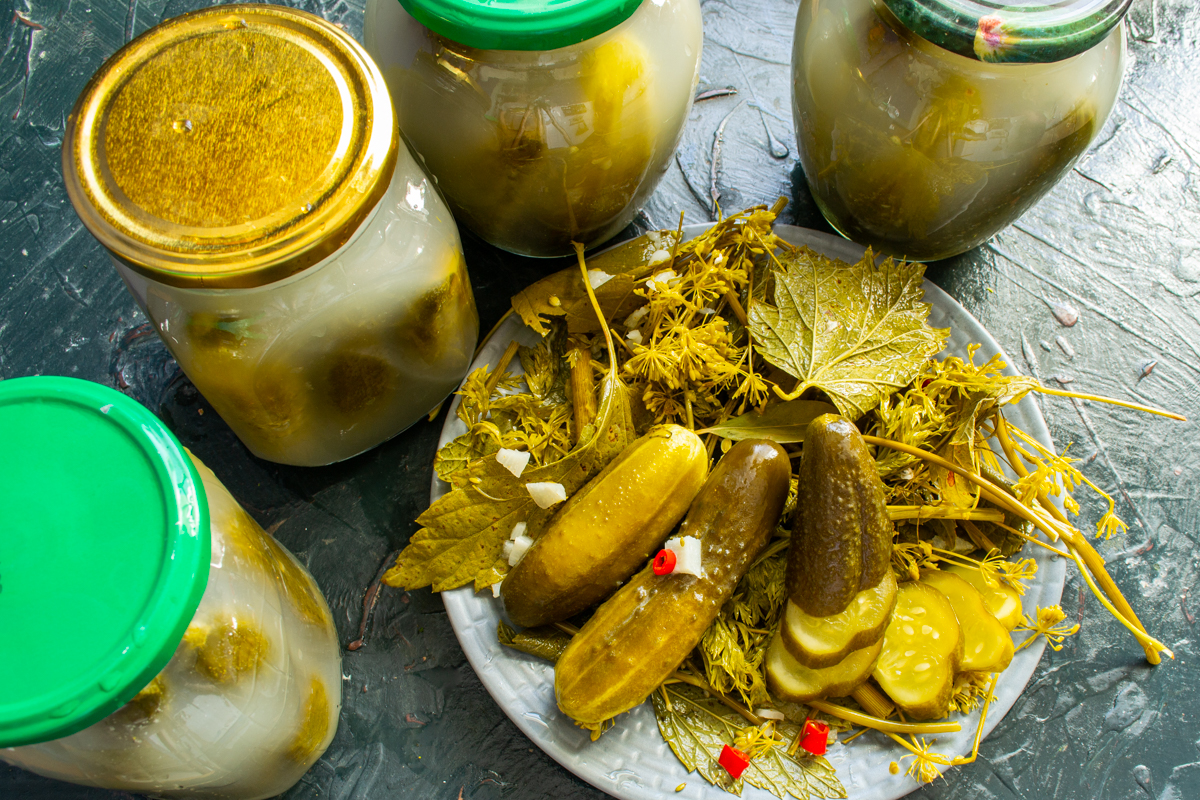
After a month in the refrigerator, the pickles will reach their perfect flavor, but you can taste them even sooner.
These spicy fermented pickles with carrot greens are best served as an accompaniment to hearty main courses. They make the perfect pairing for pan-fried potatoes, roasted pork, or a rich, comforting borsch (beet soup). To maximize their flavor, slice the pickles thinly right before serving, drizzle them with aromatic unrefined sunflower oil, and toss with a little fresh onion. Furthermore, these pickles are absolutely essential for making homemade rassolnik (traditional Russian pickle soup), providing the broth with its signature tangy acidity and firm texture.
To maintain the perfect quality of your pickles, store the jars in a cool place, such as the bottom shelf of your refrigerator or a root cellar. It is crucial to ensure the cucumbers are completely submerged in the brine—this prevents contact with air and preserves their crisp freshness. If you prefer a spicier kick, you can slip an extra clove of garlic or a pinch of dried chili flakes into the jars when packing them. Remember, the natural fermentation process not only makes these pickles remarkably flavorful but also highly beneficial for digestion, turning them into an excellent source of natural probiotics.
0 comments