
Homemade bread from a bread machine is the most delicious loaf you can bake with minimal effort. This sourdough recipe features manka (fine wheat semolina), honey, and olive oil, yielding a firm, golden crust and a springy crumb. The entire process takes about 10 to 12 hours because I store my sourdough starter in the fridge, so it needs time to warm up first. Adding semolina to the dough is an old baker's secret that gives the loaf a lovely golden hue and a pleasant, subtle graininess while making the crumb structure more stable. As this sourdough semolina bread bakes, it fills the house with an unmistakable, cozy aroma—a warm blend of caramelizing honey and fresh grain.
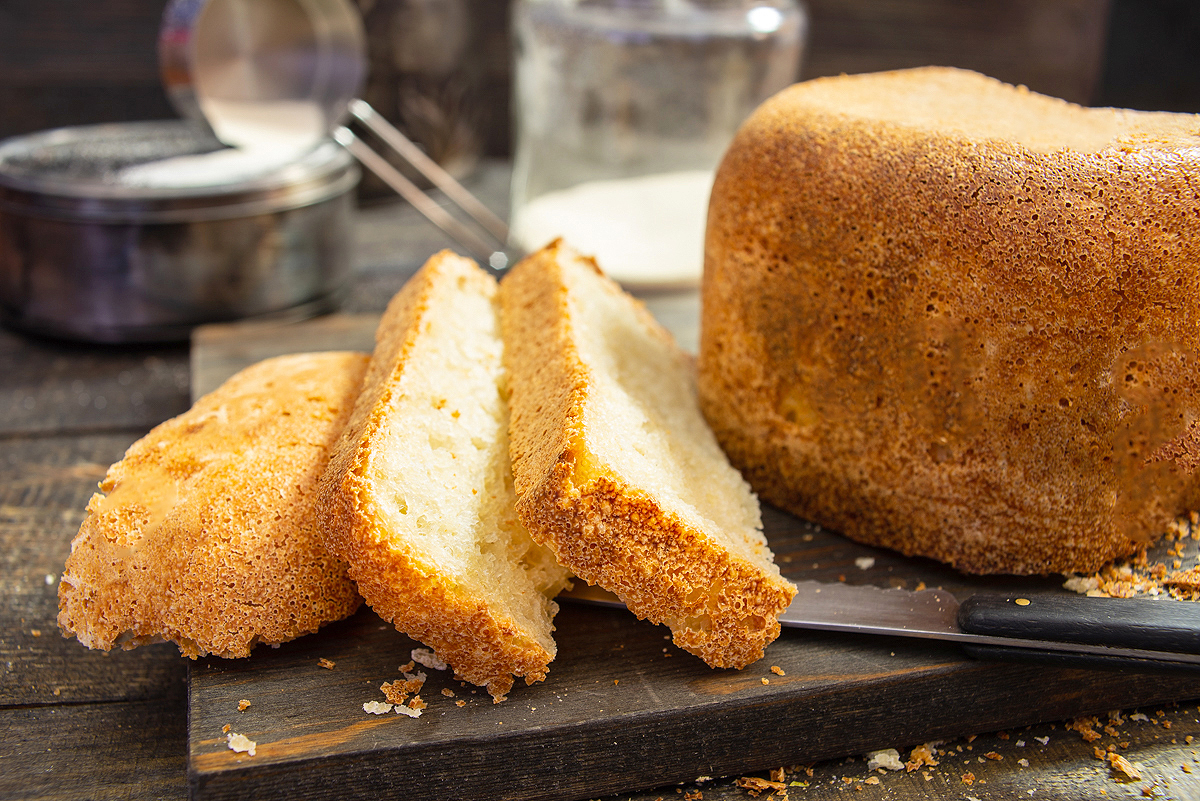
Fragrant homemade bread with semolina, baked with natural sourdough starter in a bread machine.
Ingredients
- 100–120 g (3.5–4.2 oz) sourdough starter
- 100 g (3.5 oz) water
- 130 g (4.6 oz) liquid whey from making tvorog (farmer's cheese), or water
- 250 g (8.8 oz) wheat bread flour
- 100 g (3.5 oz) manka (fine wheat semolina)
- 20 g (1 tbsp) honey
- 15 g (1 tbsp) extra virgin olive oil
- 1 teaspoon coarse sea salt
- active dry yeast (optional, a pinch for the sponge and 1/4 tsp for the dough Look to instructions)
How to Make Sourdough Semolina Bread
Take the sourdough starter out of the refrigerator and let it sit at room temperature for 2 hours to wake up and become active. My starter consists of 50 g of water, 50 g of flour, plus whatever remained on the sides of the jar from the previous batch—about 15 g more.
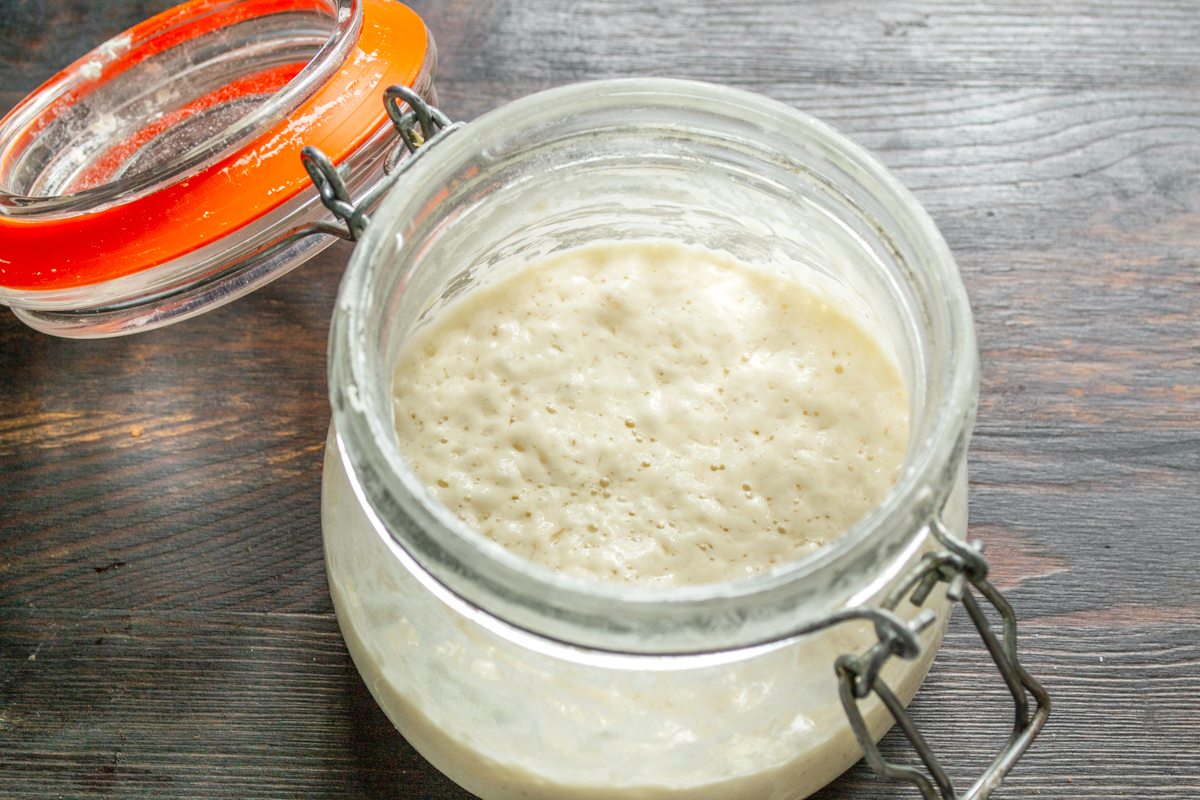
Before mixing the dough, take the sourdough starter out of the fridge and let it activate for two hours.
Transfer the starter to a mixing bowl. Pour in 100 g of settled, filtered water at room temperature.
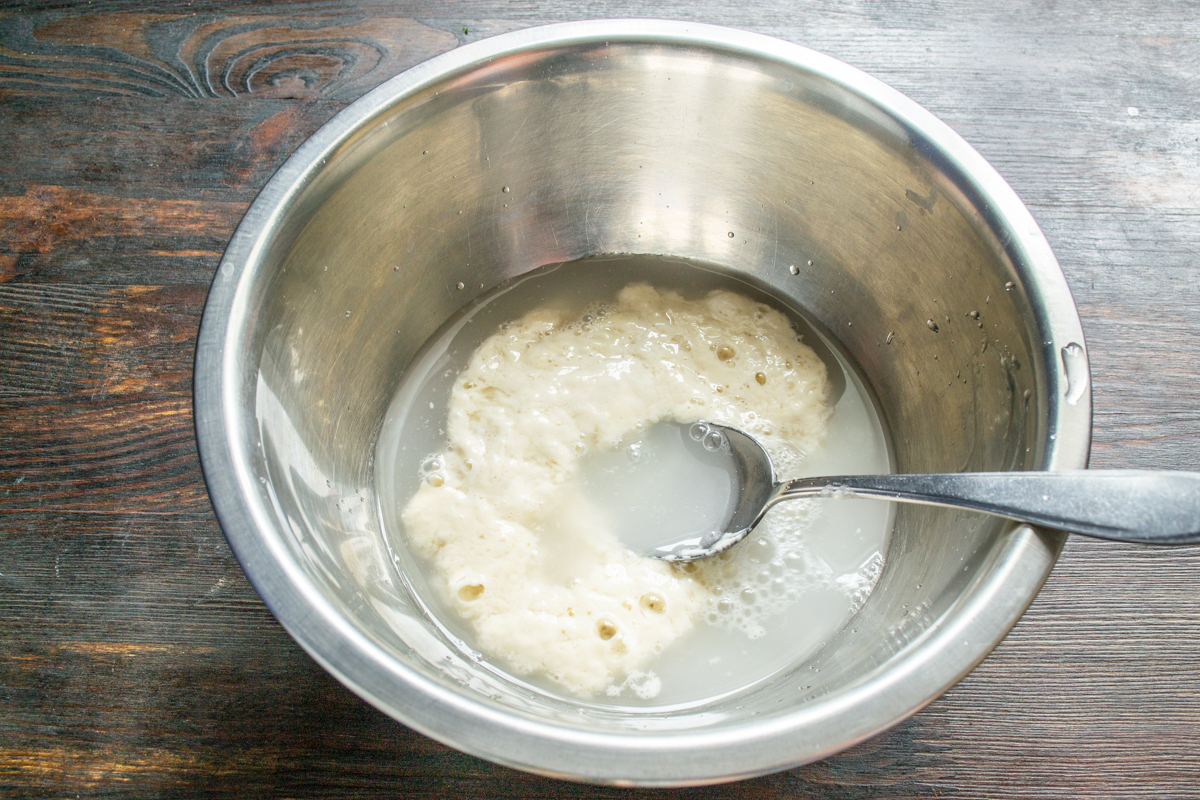
Combine the active starter with room-temperature filtered water to create an even base.
Whisk the water and starter together, then add 100 g of wheat bread flour. At this stage, you can add a tiny pinch of active dry yeast—literally just on the tip of a teaspoon—to help speed up the process.
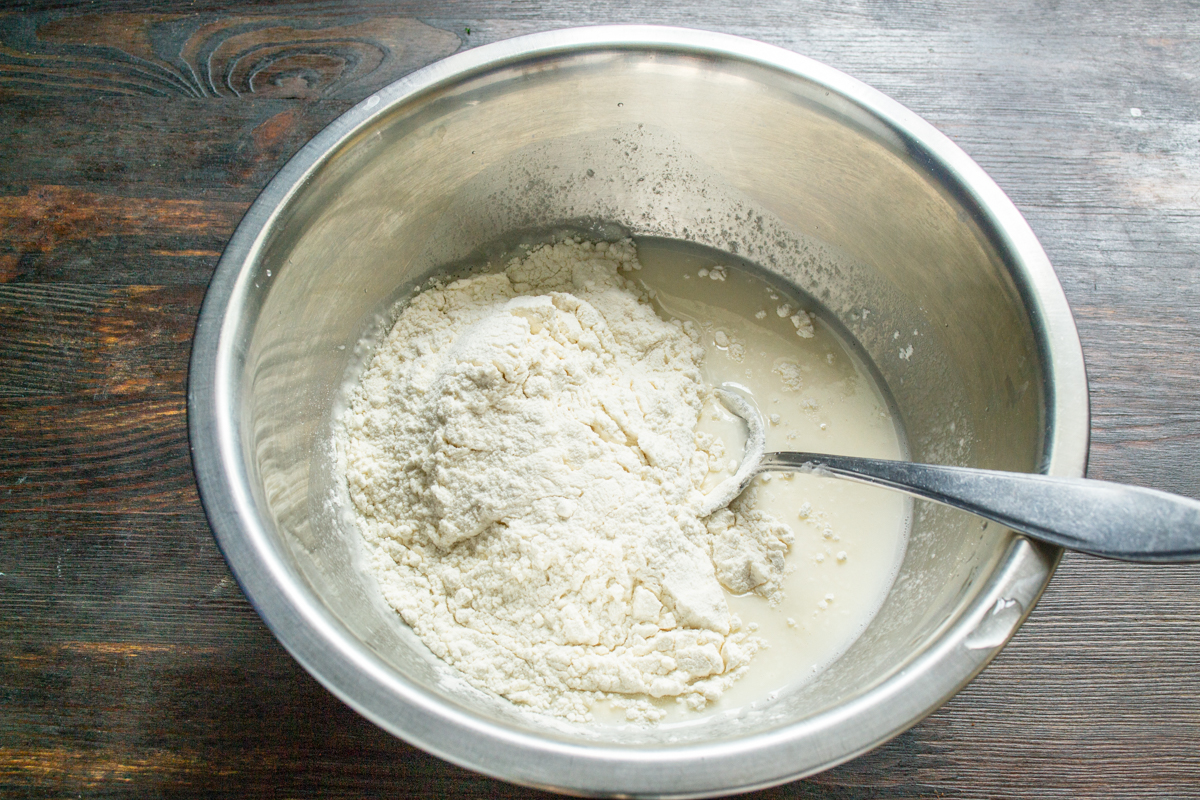
Add the wheat bread flour. At this stage, you can add a tiny pinch of dry yeast for extra stability.
Mix the wet ingredients with the flour until combined. Cover the bowl with plastic wrap and leave it in a warm spot at room temperature for 3–4 hours. Depending on the ambient temperature and the strength of your starter, the timing may vary, so keep an eye on it.
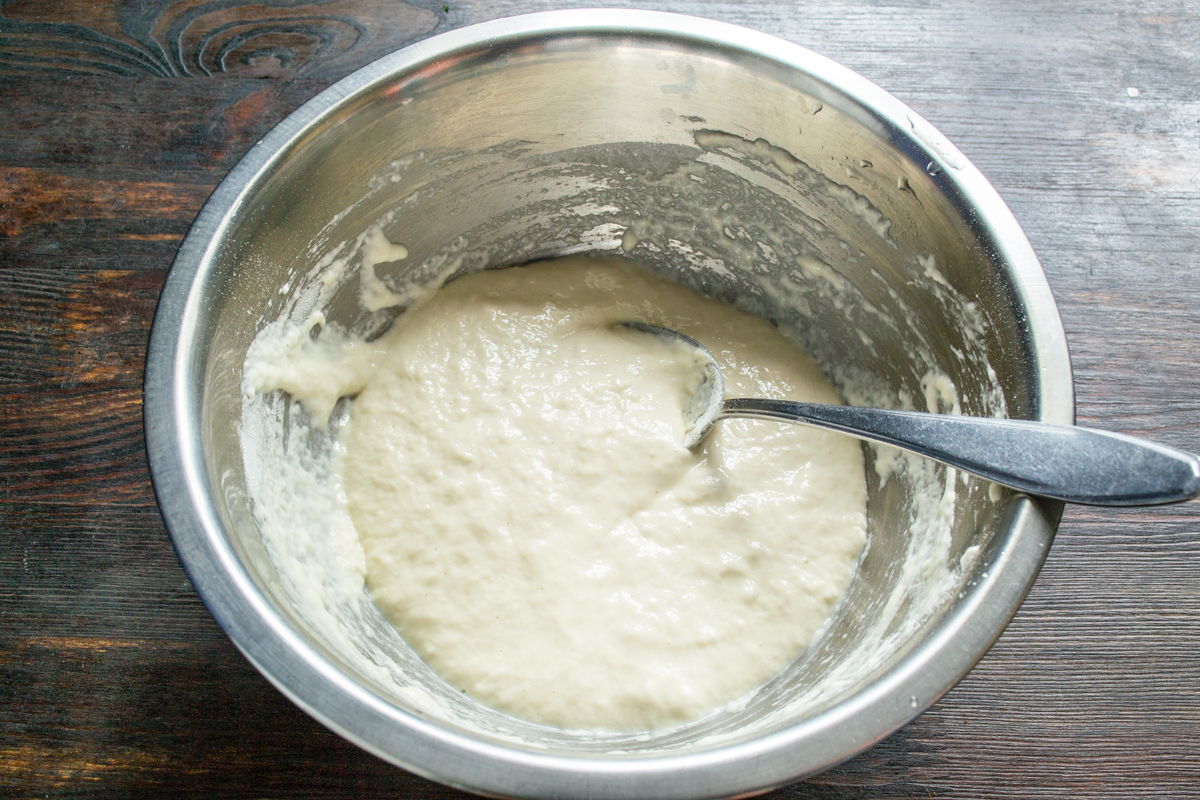
Cover the bowl with plastic wrap and leave it in a warm spot for several hours until the mixture actively rises.
Once the pre-ferment (sponge) is bubbly, risen, and smells wonderfully tangy, you are ready to make the bread.
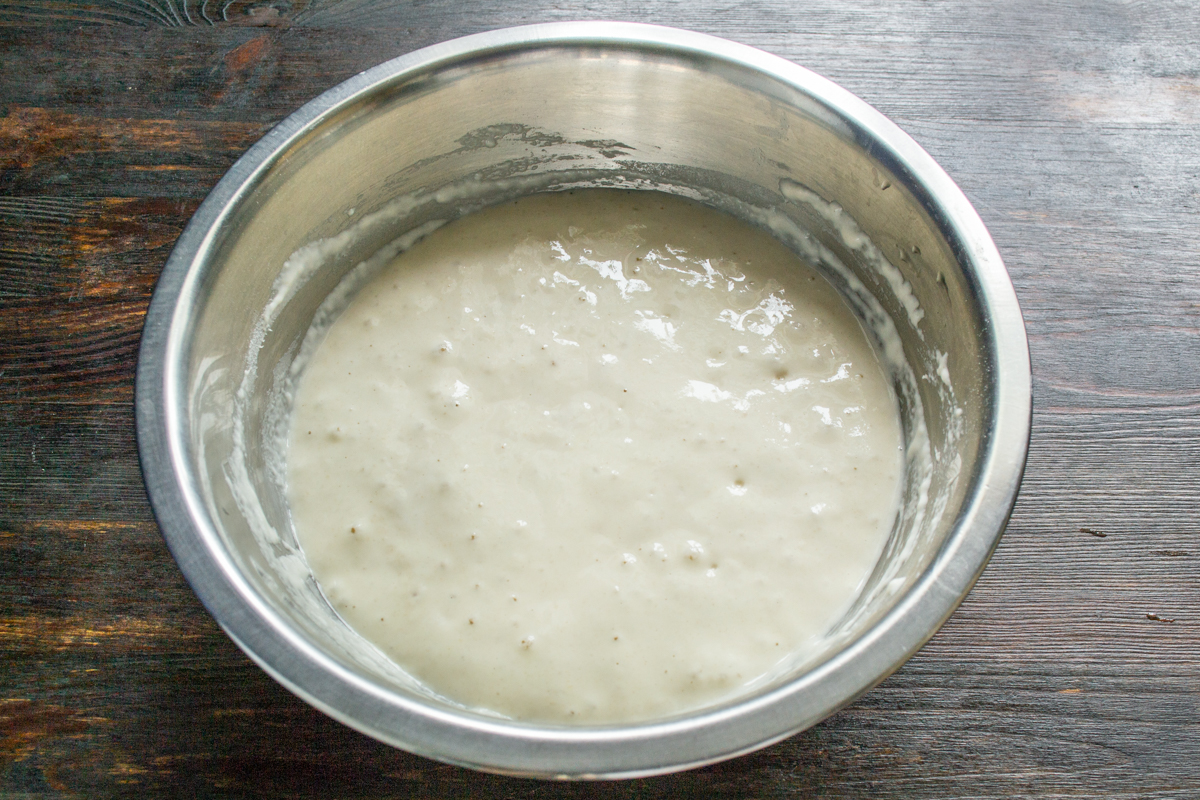
A well-fermented sponge should be airy, porous, and have a pleasant, tangy bread aroma.
Transfer the risen pre-ferment into the bread machine pan.
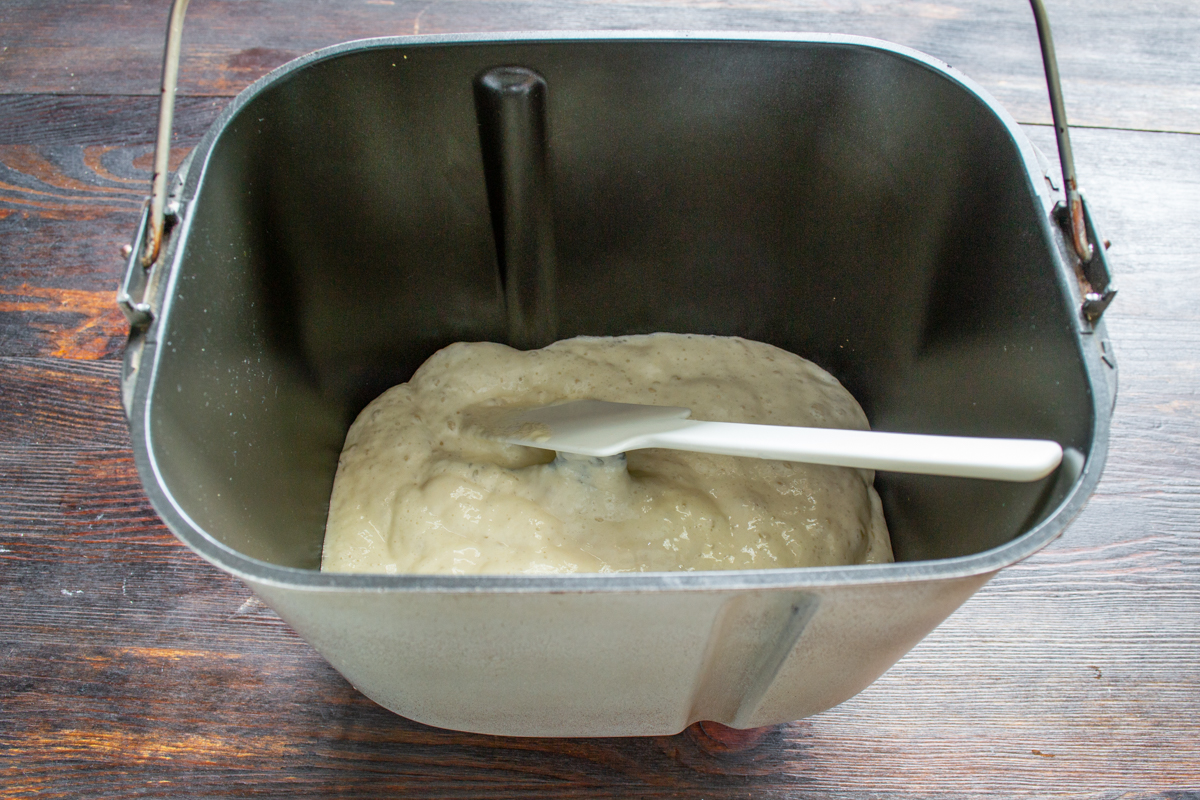
Transfer the bubbly pre-ferment into the bread machine pan—this forms the base for our semolina loaf.
Add the fine wheat semolina.
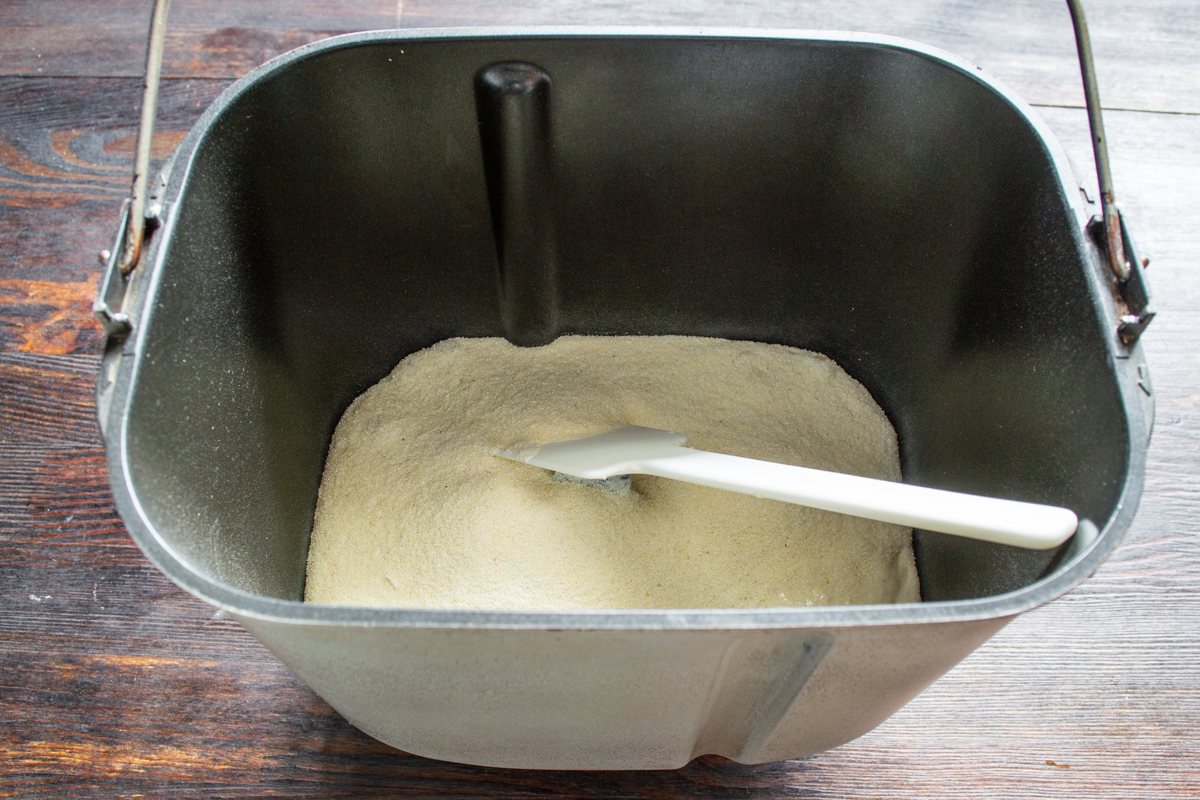
Add the semolina, which gives the bread a fine, even crumb and a lovely golden color.
Add the remaining 150 g of wheat flour and 1 teaspoon of coarse sea salt. Pour in the extra virgin olive oil—its rich flavor and aroma make a noticeably better loaf. Add the honey. If your honey is too thick or crystallized, gently warm it in a water bath before adding it to the pan.
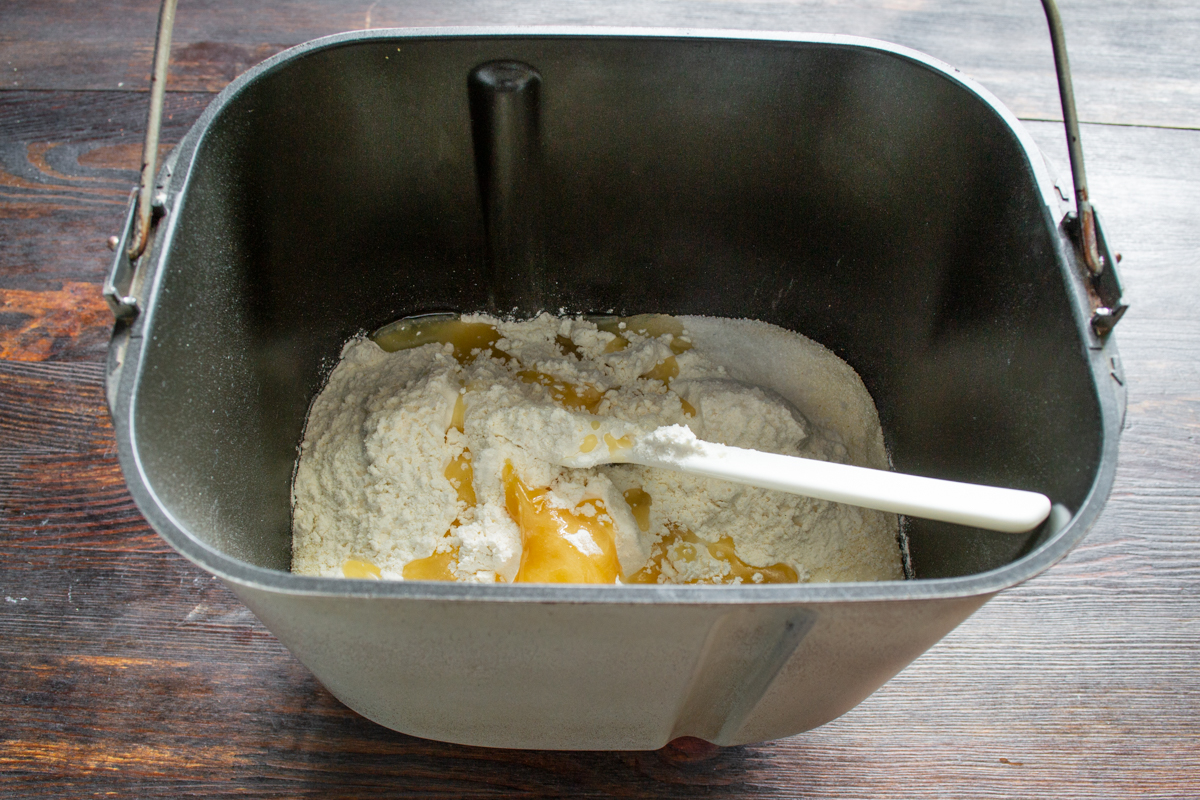
Add the remaining flour, sea salt, good extra virgin olive oil, and a touch of honey for flavor and color.
Pour in the dairy whey. If you don’t have whey on hand, simply use filtered water instead. Since I make homemade tvorog (farmer’s cheese), I always have plenty of liquid whey left over and am constantly looking for good ways to use it.
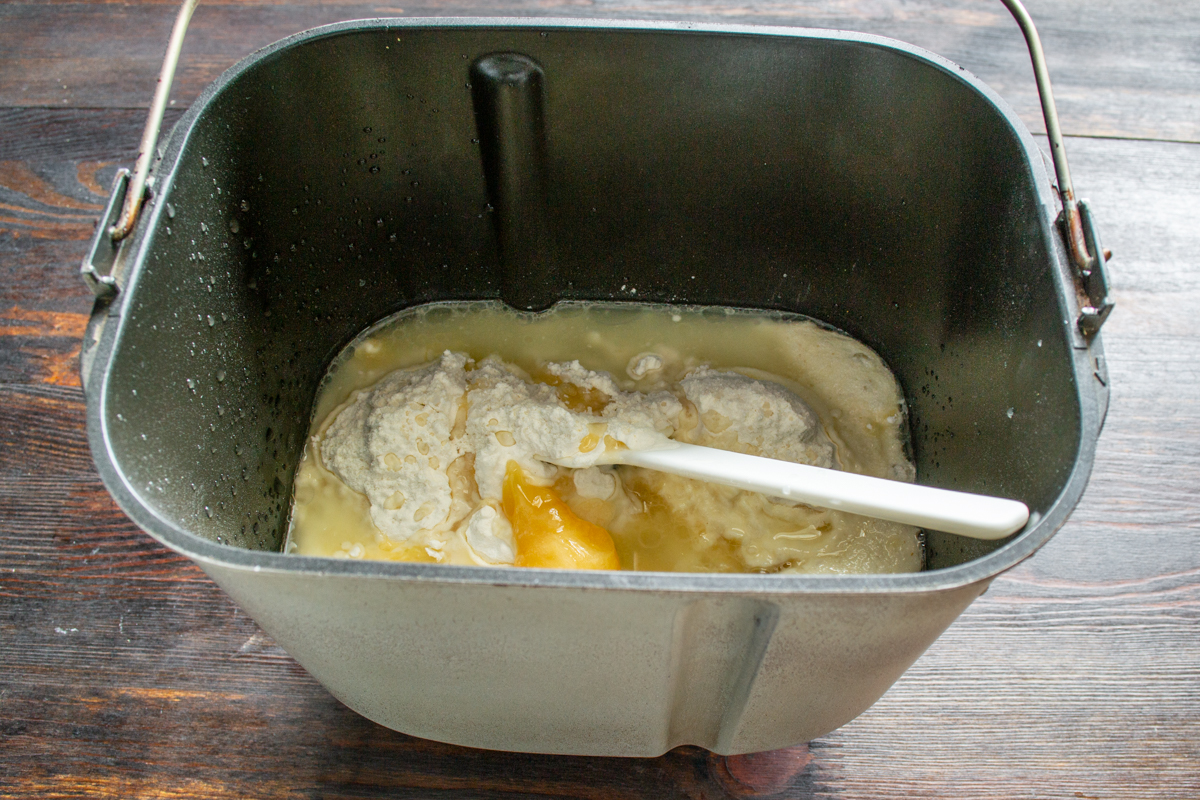
Liquid whey makes the crumb extra tender. If you don't have any on hand, plain water works well too.
Lock the bread pan into the machine. If desired, add about 1/4 teaspoon of active dry yeast to the yeast dispenser. Select the program for low-yeast or sourdough bread, which takes about 5 hours (timing may vary depending on the brand and model of your bread maker). Once the baking cycle finishes, turn off the machine and leave the loaf inside the pan for another 10 minutes if you enjoy a deeply golden, crisp crust.
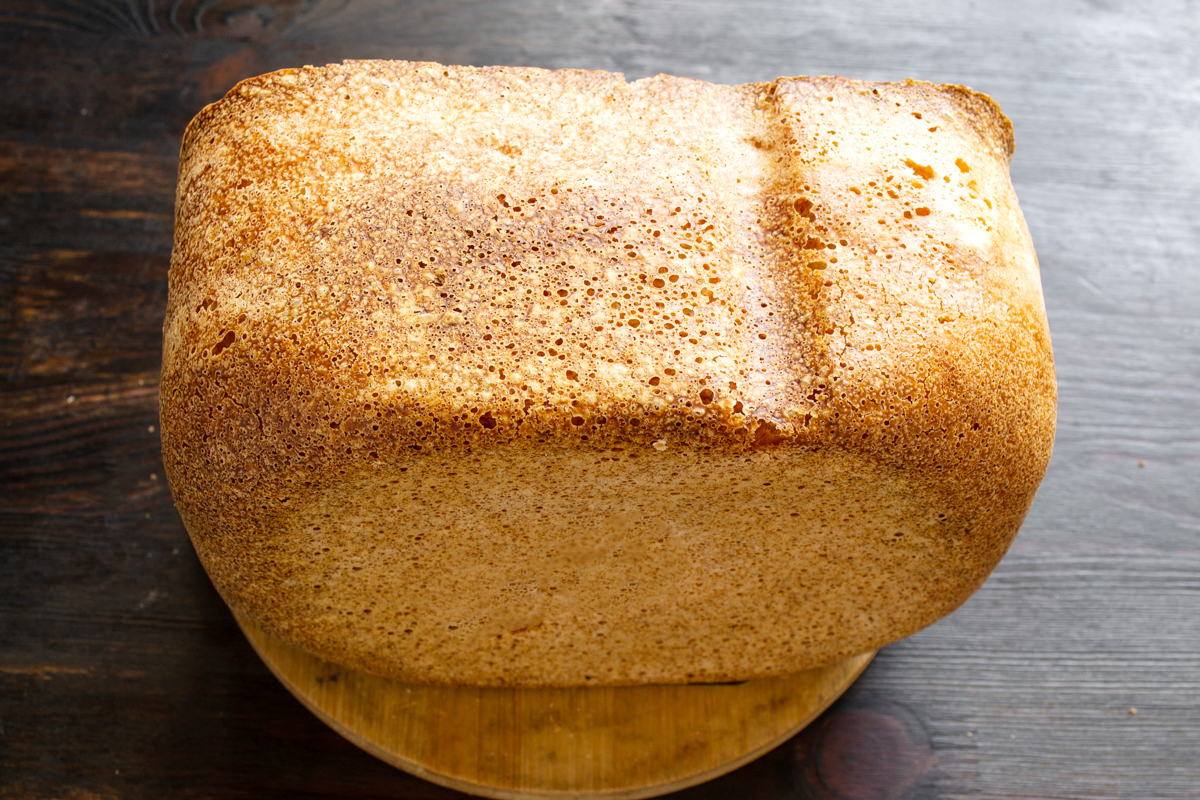
Once the baking cycle ends, leave the loaf in the pan for 10 minutes to develop a crisp crust.
Turn the finished loaf out onto a wire cooling rack, wrap it in a linen towel, and let it cool for several hours. This fragrant, delicious homemade sourdough semolina bread is so good you can eat it like cake, topped with butter and jam. Enjoy!
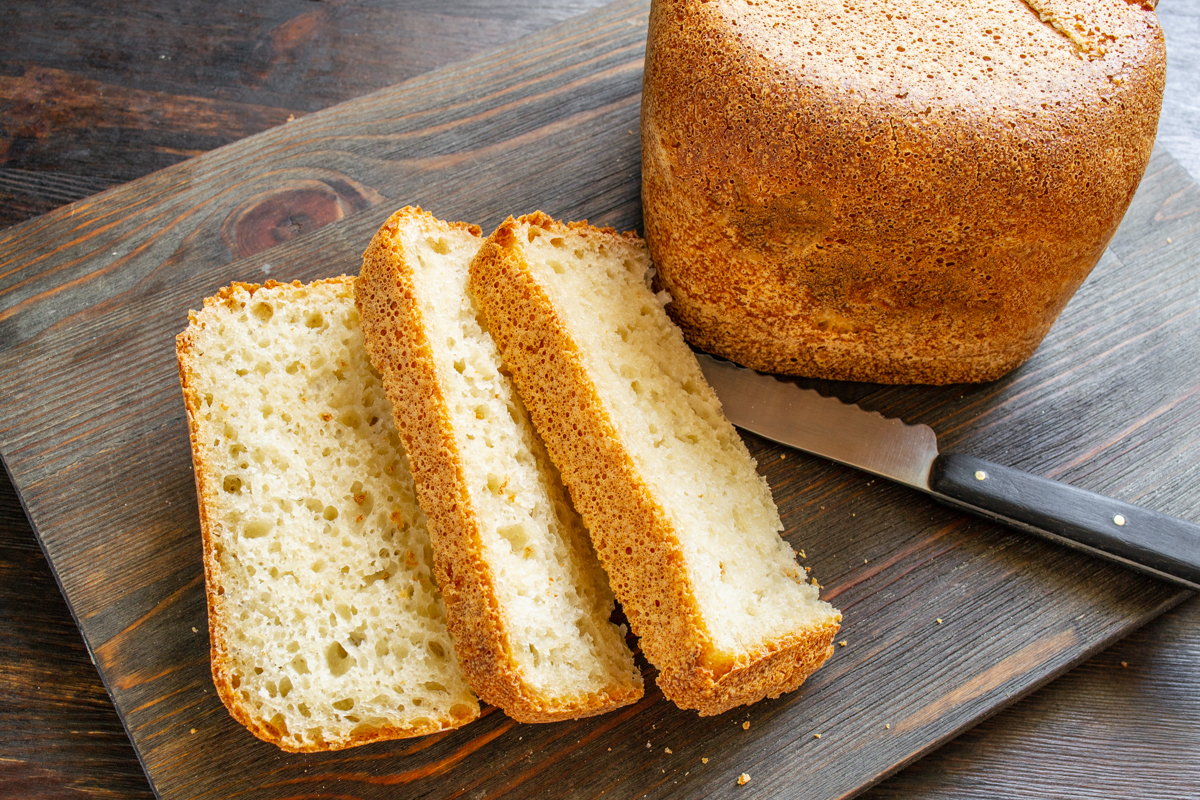
Once completely cooled, the bread develops its full flavor. It is ideal for breakfast with a spread of butter.
This recipe uses both sourdough starter and a touch of commercial yeast. I often combine them for a foolproof result—since you can't easily peek inside the bread machine to check on the fermentation, a tiny bit of yeast acts as a safety net. Try serving this sourdough semolina bread while still slightly warm alongside homemade pâté, or simply dip slices into good extra virgin olive oil seasoned with sea salt and herbs.
To keep the loaf fresh for as long as possible, store it in a paper bag or wrapped in a breathable linen towel. If the bread does dry out after a few days, don't worry—thanks to the semolina in the crumb, it makes phenomenal croutons or a wonderfully textured base for French toast.
0 comments