
Baking the most delicious homemade sourdough rye bread in a standard home oven takes time, but the results exceed all expectations. Rye baking is deeply rooted in culinary tradition, where bread has always been a symbol of prosperity and a baker's true skill. The use of fermented rye malt gives the loaf a noble dark color and that specific, unmistakable aroma. For baking, use an old cast-iron skillet—its thick walls will ensure even heat distribution, mimicking the conditions of a real stone hearth oven and creating an incredible crust.
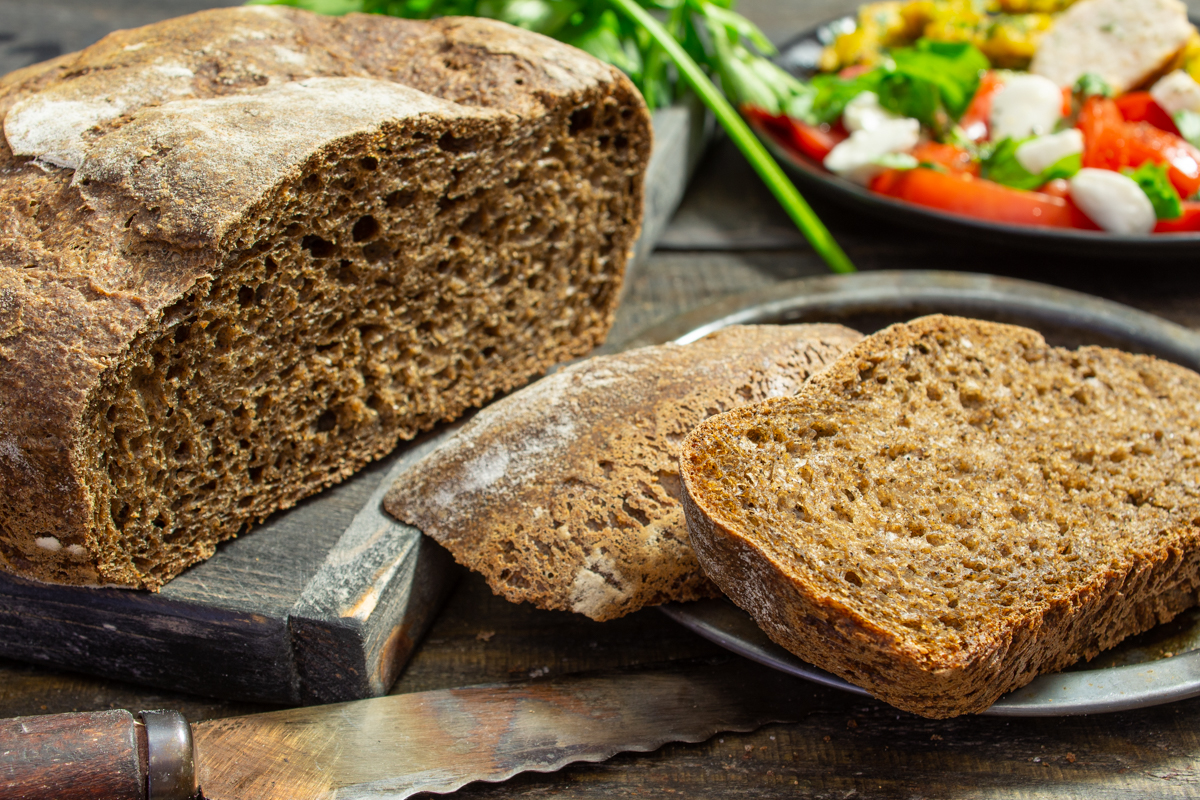
Homemade sourdough rye bread turns out incredibly aromatic, featuring a crusty exterior and an airy, porous crumb.
Ingredients
- 100 g sourdough starter
- 180-200 g filtered water
- 150 g rye flour
- 150 g wheat flour
- 25 g fermented rye malt (red rye malt)
- 25 g unfermented rye malt (white rye malt)
- 15 g vegetable or olive oil
- 5 g salt
- 10 g sugar
- Pinch of active dry yeast (optional)
How to Make Sourdough Rye Bread
Take the sourdough starter out of the fridge and let it sit at room temperature for 2-3 hours. It needs time to warm up and become active. If your kitchen is warm, one hour might be enough. Watch the process closely; once it is full of bubbles and active, you are ready to begin.
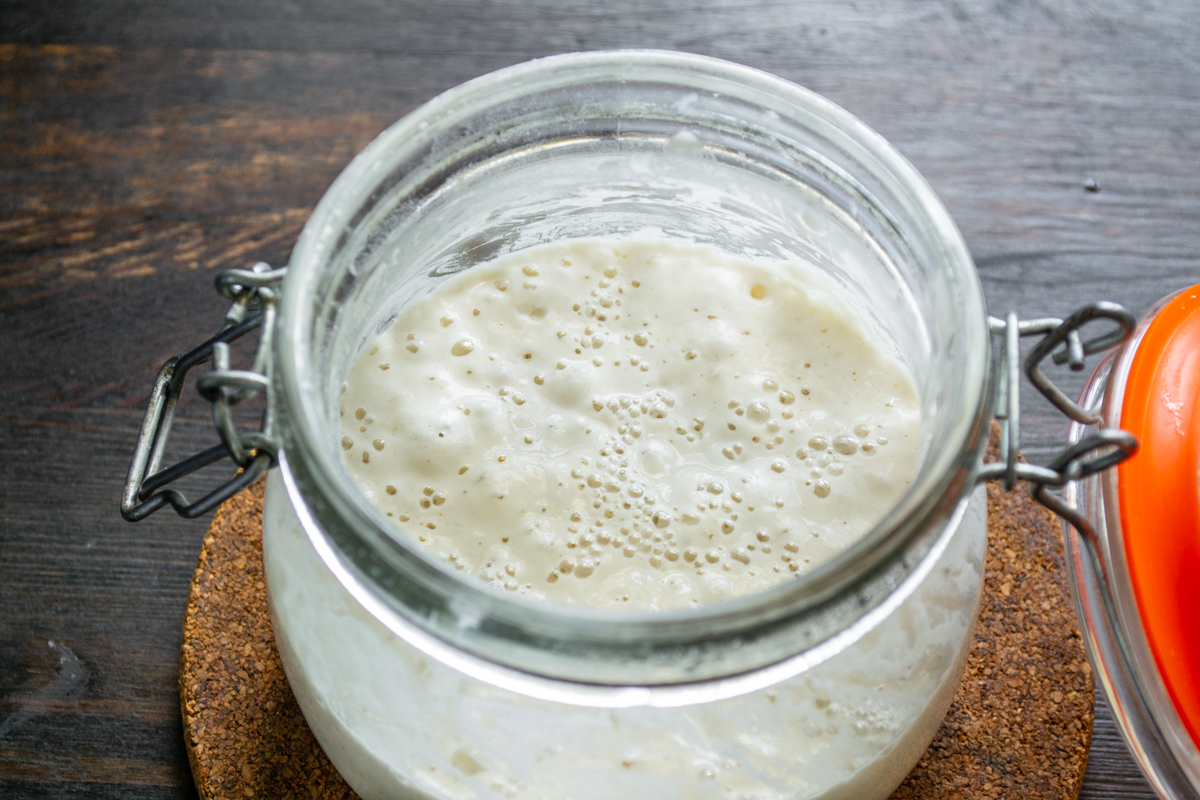
A mature, ready-to-use sourdough starter should be highly active and filled with air bubbles.
Let the filtered water rest to reach room temperature. Place 100 g of starter in a mixing bowl and pour in 100 g of the rested filtered water. Stir well until the starter is completely dissolved.
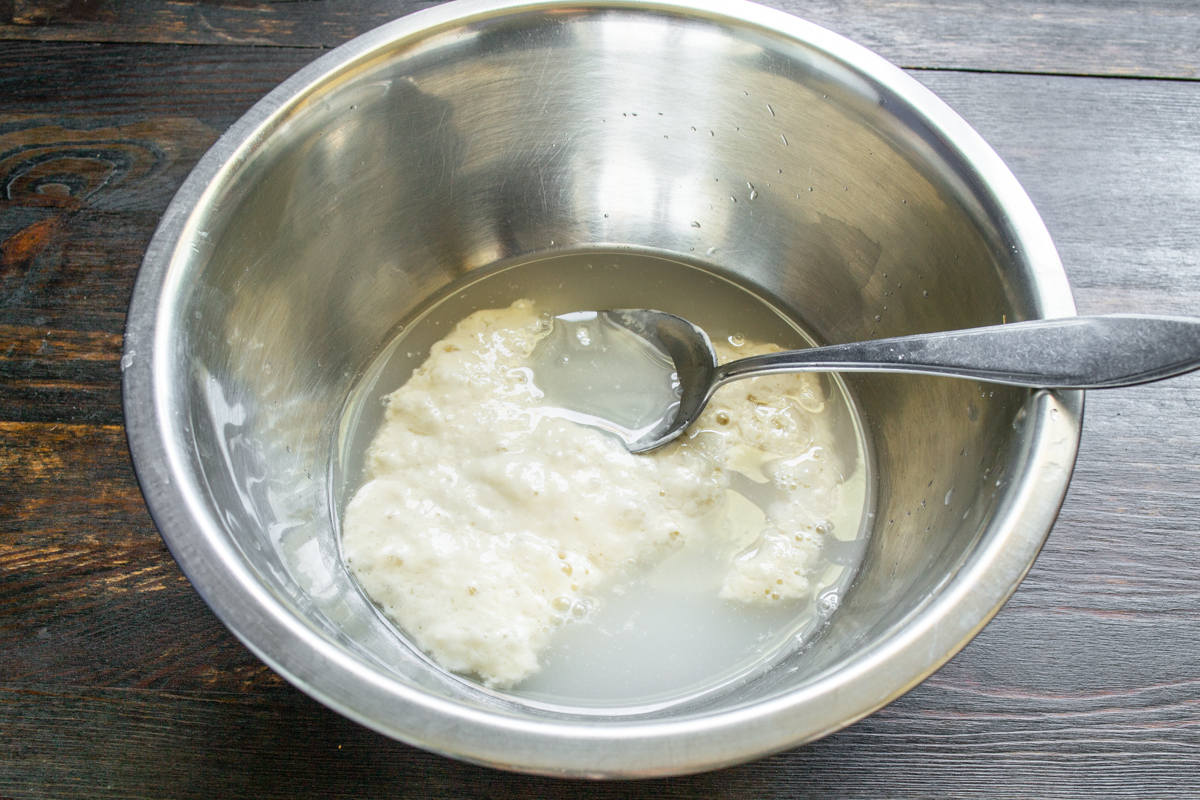
First, dissolve the active starter in room-temperature filtered water until completely smooth.
Add 100 g of wheat flour. We are using equal parts for the levain: 100 g starter, 100 g flour, and 100 g water.
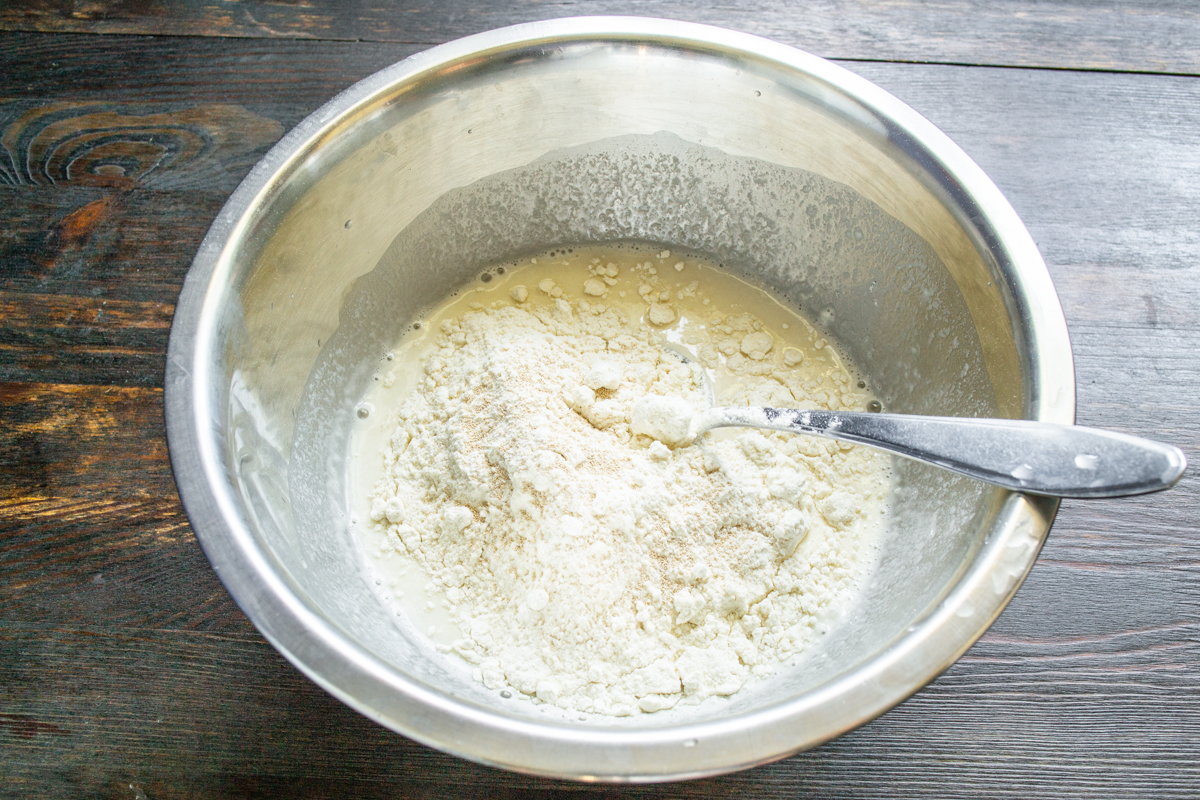
Add the wheat flour to build the foundation of our levain.
Mix thoroughly. Optionally, add just a pinch of active dry yeast on the tip of a knife to speed up the process. Cover the bowl with plastic wrap and let it sit at room temperature for 3 hours.
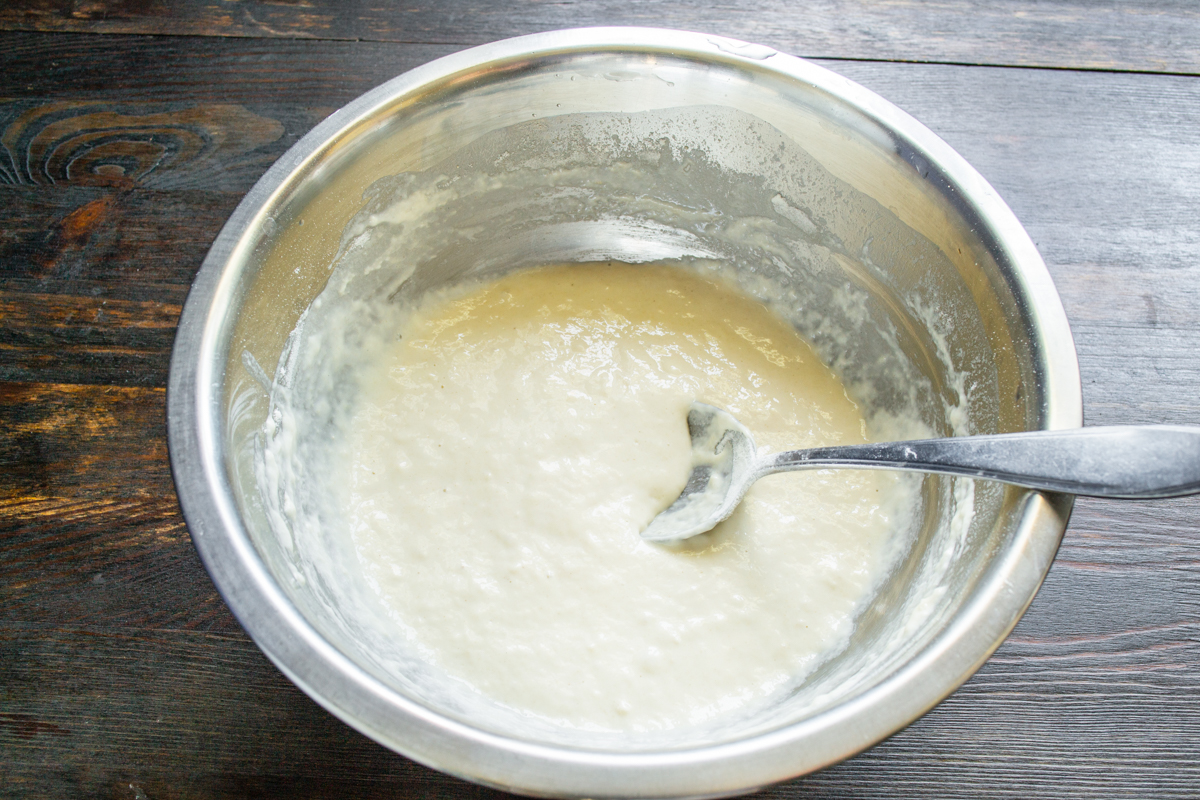
Thoroughly mix the ingredients until you reach the consistency of thick sour cream, then leave it to ferment.
After 3 hours, the levain will come alive, multiplying in volume and becoming bubbly—the fermentation is in full swing.
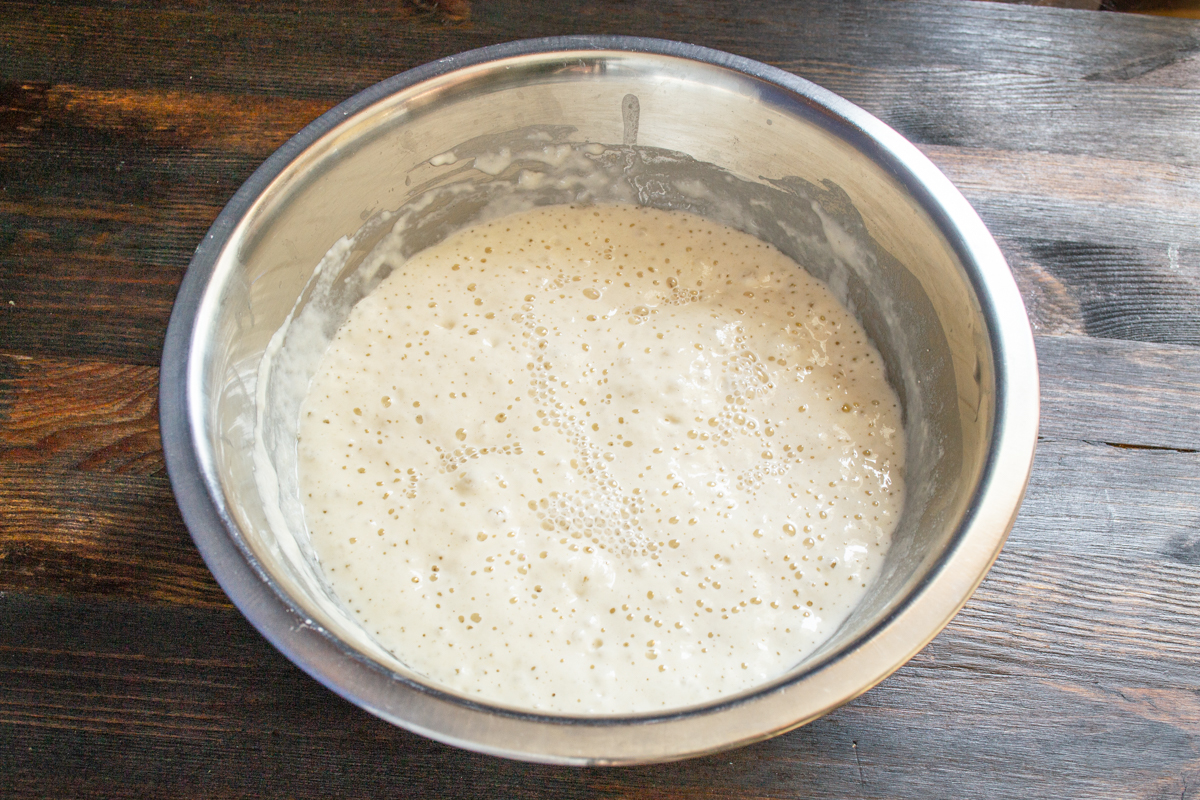
After three hours, the levain will noticeably increase in volume and become covered with bubbles, indicating it is ready.
Combine the remaining dry ingredients: 50 g of wheat flour, 150 g of rye flour, 25 g of fermented rye malt (red rye malt), 25 g of unfermented rye malt (white rye malt), plus the salt and sugar.
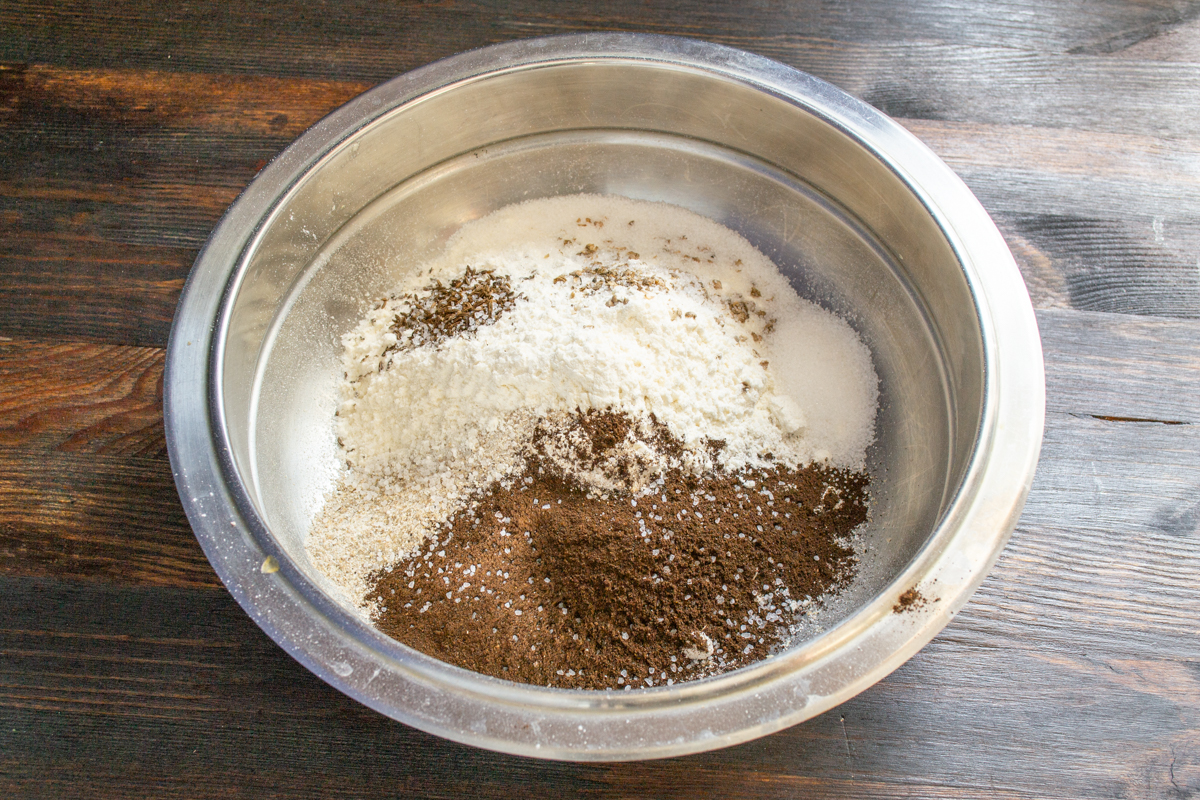
Whisk together the two types of flour, malt, salt, and sugar to build the rich flavor and deep color of the rye bread.
Pour the remaining 80 g of rested filtered water into the bubbly levain, then fold in the mixed dry ingredients.
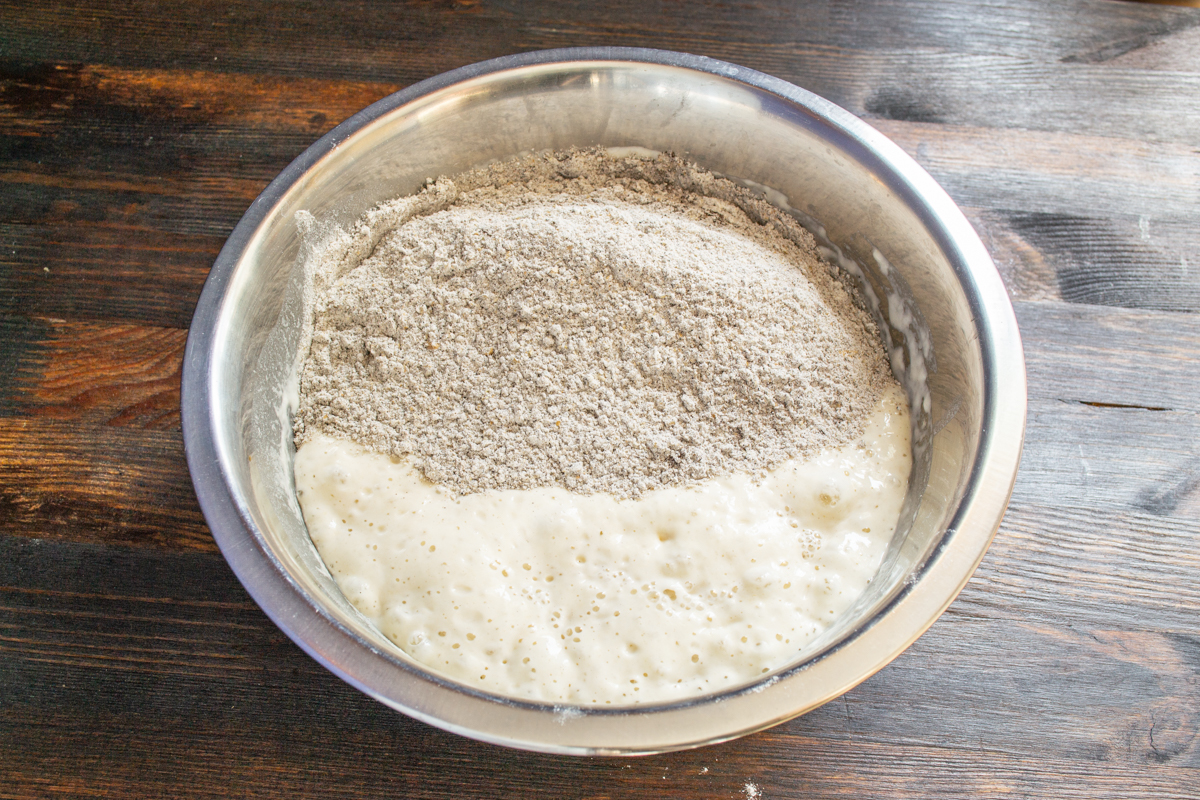
Fold the prepared dry ingredient mixture into the mature levain.
Pour in the vegetable or olive oil. Knead the dough using a spoon, a stand mixer, or by hand—whichever you prefer. I usually mix it with a spoon or spatula; the dough is quite highly hydrated and sticky, making it easy to bring together.
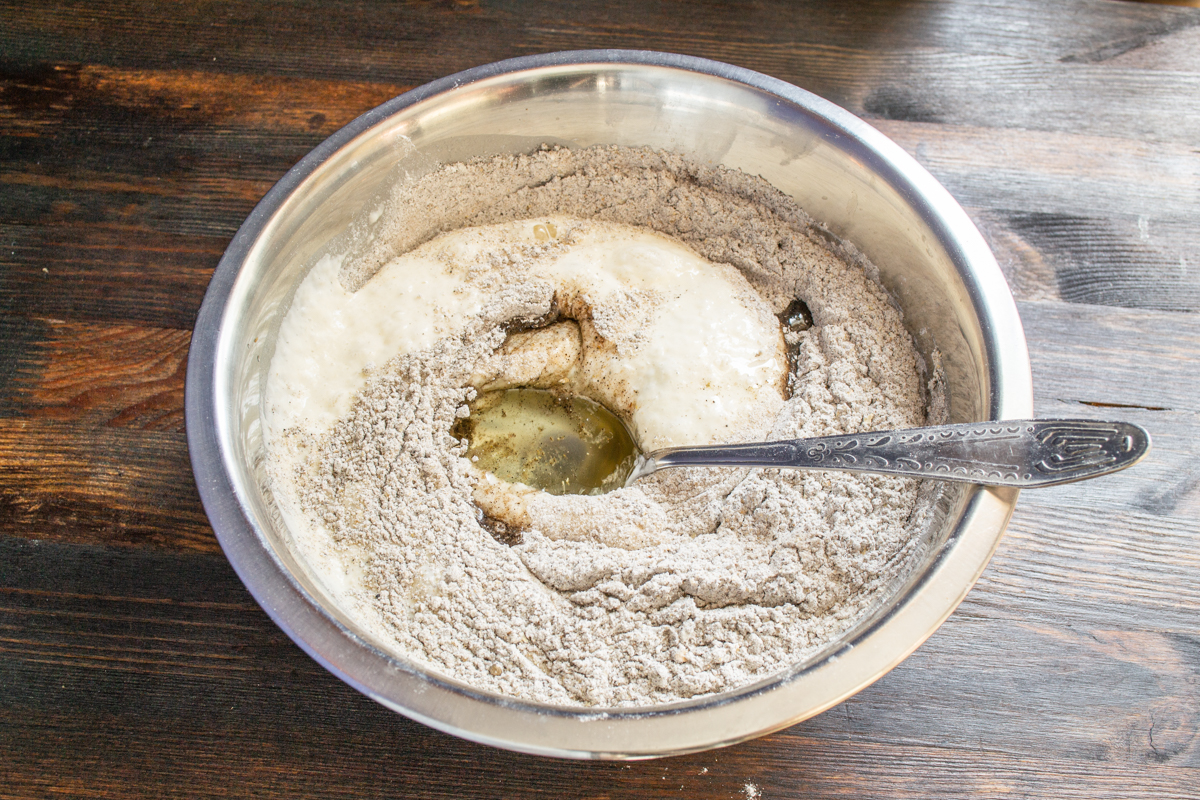
Adding vegetable oil makes the dough much more elastic and easier to mix.
Cover the bowl tightly with plastic wrap. Leave the dough to ferment at room temperature for 3 hours.
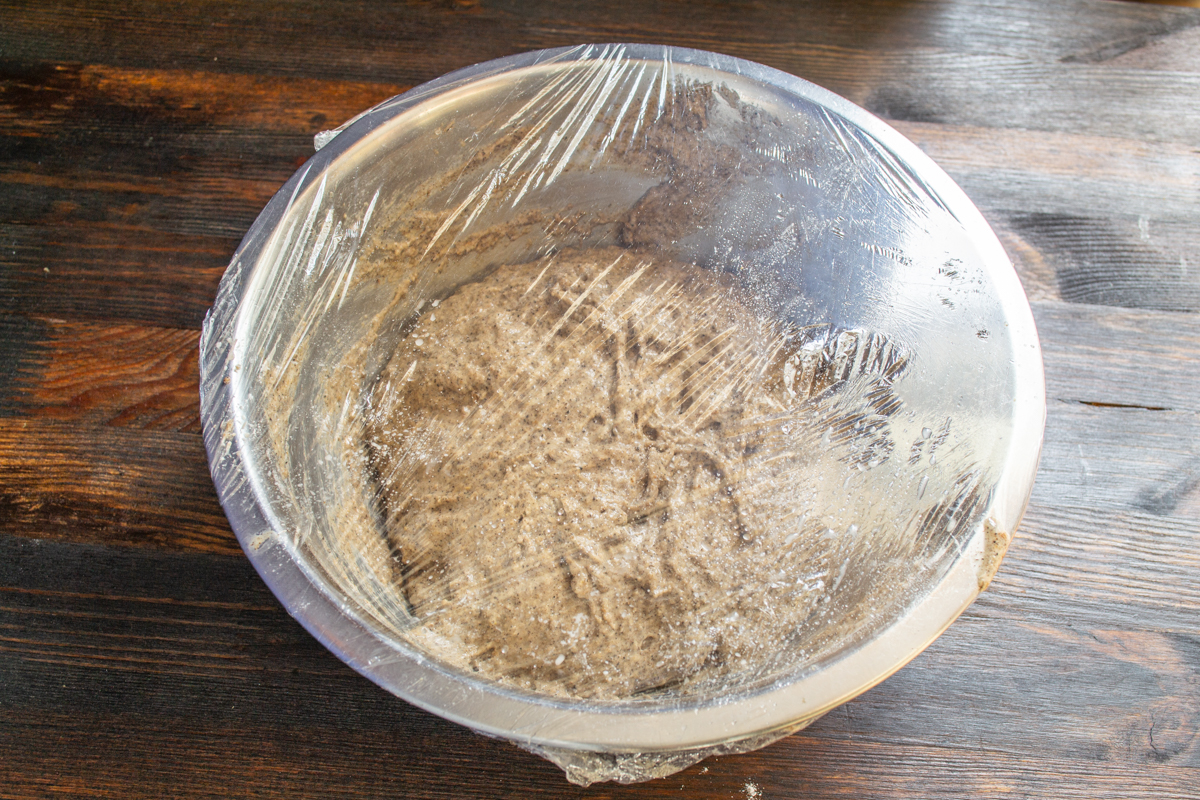
Cover the dough with plastic wrap to prevent it from drying out, and leave it to rise.
After three hours, the dough will rise almost to the edges of the bowl, increasing significantly in volume. If your room temperature is below 22°C (72°F), it may take a little longer.
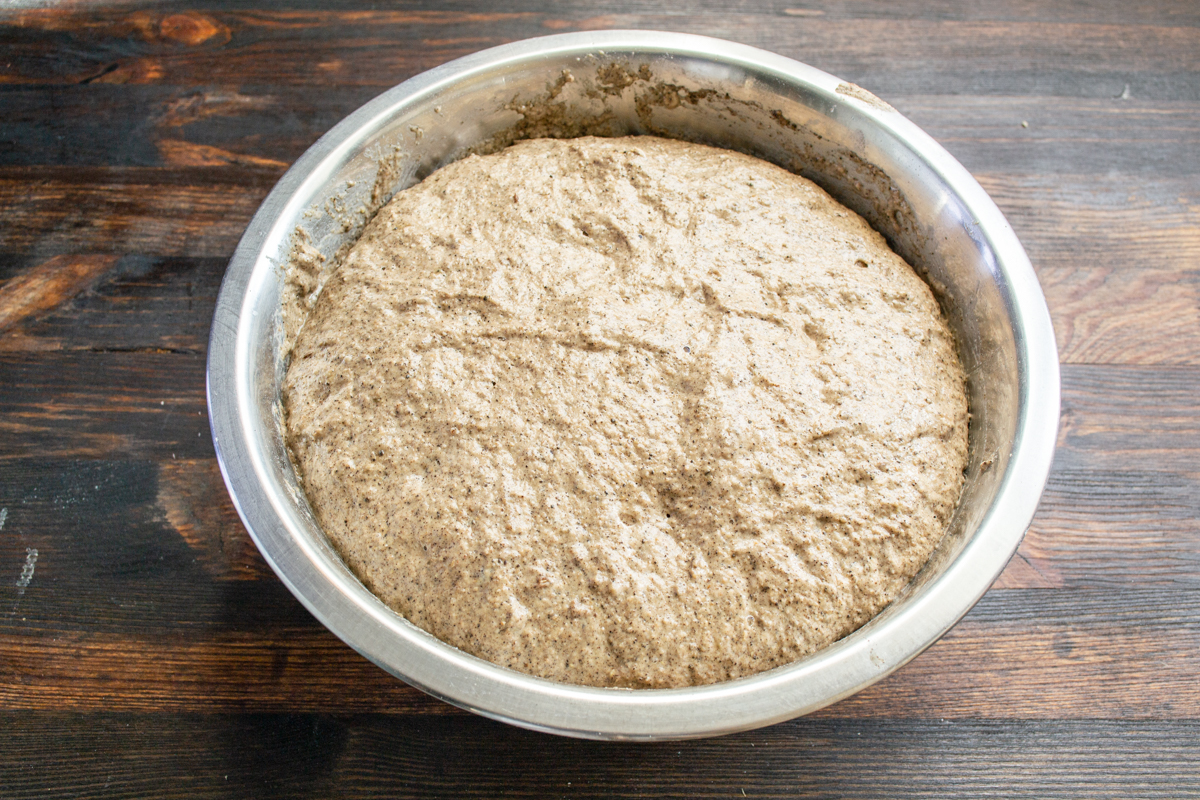
Properly fermented dough should significantly increase in volume and develop a highly porous, airy structure.
Turn the dough out onto a generously floured work surface, and sprinkle a little more flour on top. Gently punch it down and stretch it out. Shape the dough into a boule and place it into a baking pan or a small cast-iron skillet.
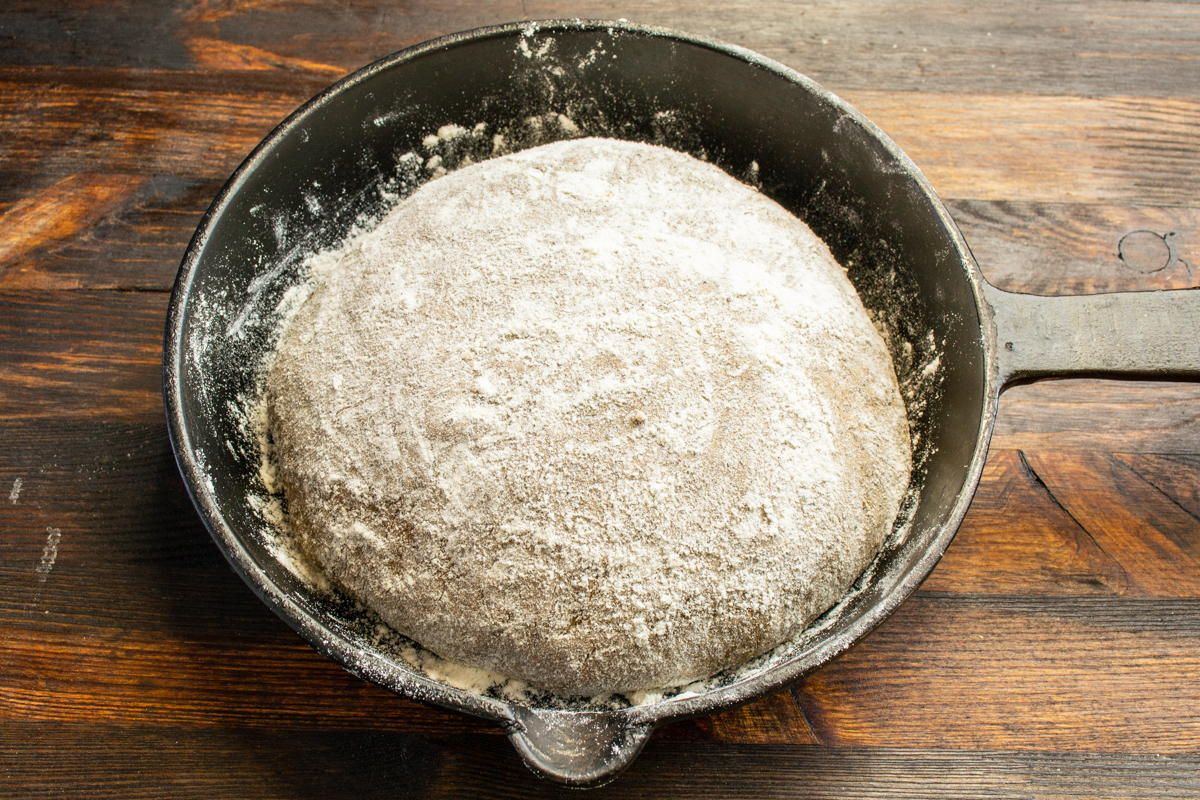
Gently punch down the dough and shape it into a boule, then transfer it to your baking vessel for the final proof.
Cover with a cloth or kitchen towel and transfer to the refrigerator for 10-12 hours. The cold temperature slows down the wild yeast, allowing it to develop flavor. Overnight, the loaf will double or triple in size.
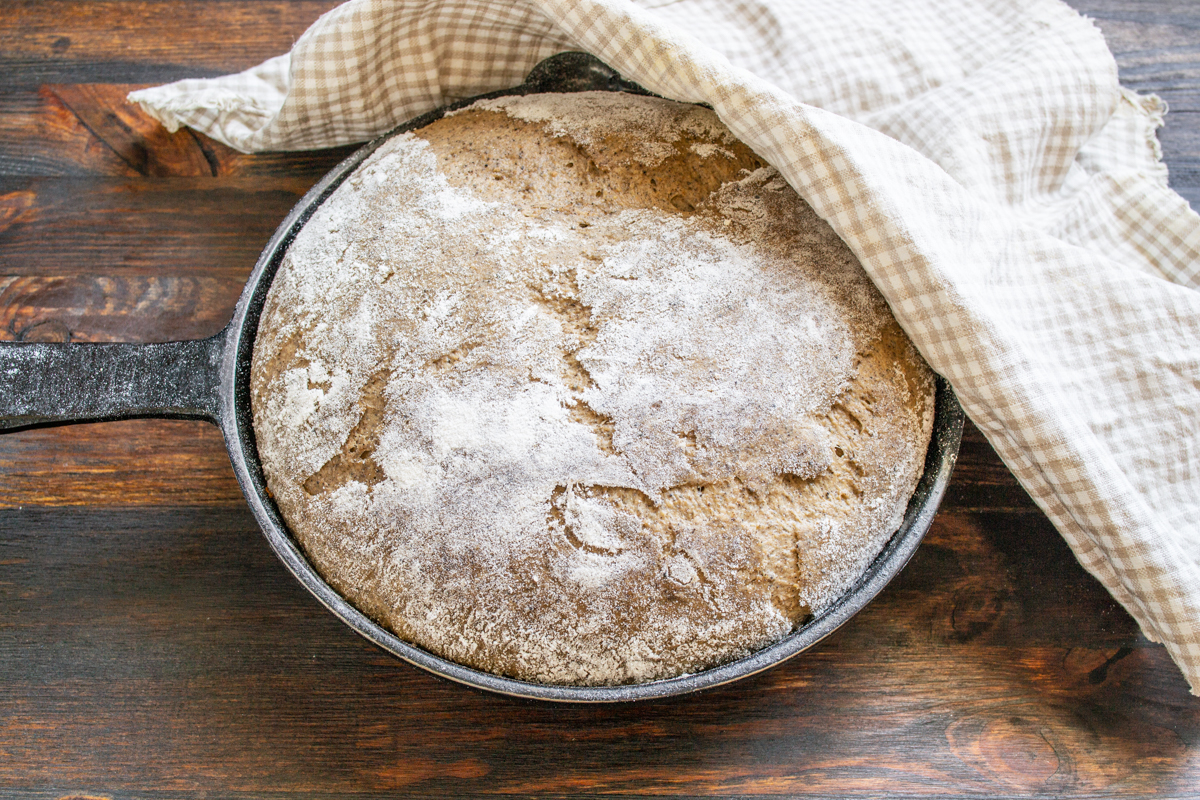
A long, cold proof in the refrigerator allows the bread to develop a much deeper flavor and its signature tangy aroma.
Take the bread out of the fridge 1 hour before baking. Preheat your oven to 200°C (400°F). Using a razor blade or lame, score the top of the loaf from end to end. Mist the walls of the oven with water to create steam, then place the bread into the hot oven.
Bake for 45-50 minutes. You can periodically mist the oven with water to ensure a beautiful, crusty exterior.
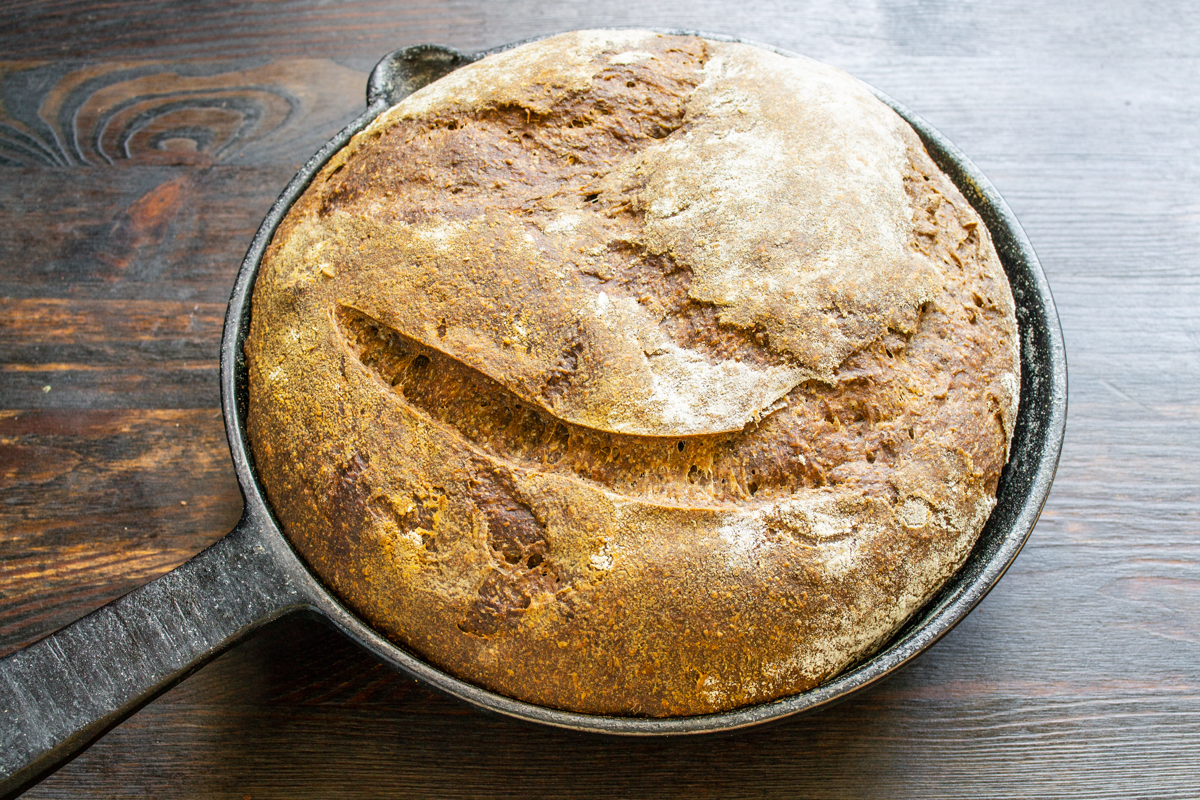
Scoring the surface prevents the crust from tearing unexpectedly, while oven steam makes it incredibly crispy.
It is best to let the baked sourdough rye bread rest on a wire rack until completely cool, wrapped tightly in a linen towel. This allows the moisture inside the crumb to distribute evenly, making the crust beautifully textured and the crumb stable. If you want to experiment, try adding a handful of sunflower seeds, caraway seeds, or crushed coriander to the dough during mixing—these additions traditionally highlight the natural sweetness of the rye malt. Store this artisanal loaf in a paper bag or wrapped in a clean cloth so it can breathe. If the bread gets a bit dry, you can refresh it by lightly misting it with water and popping it into a hot oven for a couple of minutes. Sourdough rye bread pairs perfectly with farm-style cultured butter, lightly salted fish, or serves as a fantastic base for hearty morning sandwiches with vegetables and fresh greens.
0 comments