
Homemade rye crispbread with caraway seeds isn't just a healthy alternative to store-bought snacks; it is a true ode to the traditions of northern bread baking. The combination of coarse whole grain flour, the delicate sweetness of honey, and the aromatic spice of caraway evokes the classic flavor of Borodinsky bread, but in a lighter, crispier format. As they bake, your kitchen will fill with that cozy, rich aroma so closely associated with warmth and a freshly baked loaf. Using whey (the leftover liquid from making tvorog or farmer's cheese) instead of water makes the dough structure more elastic and lends a deep, rounded flavor to the final product.
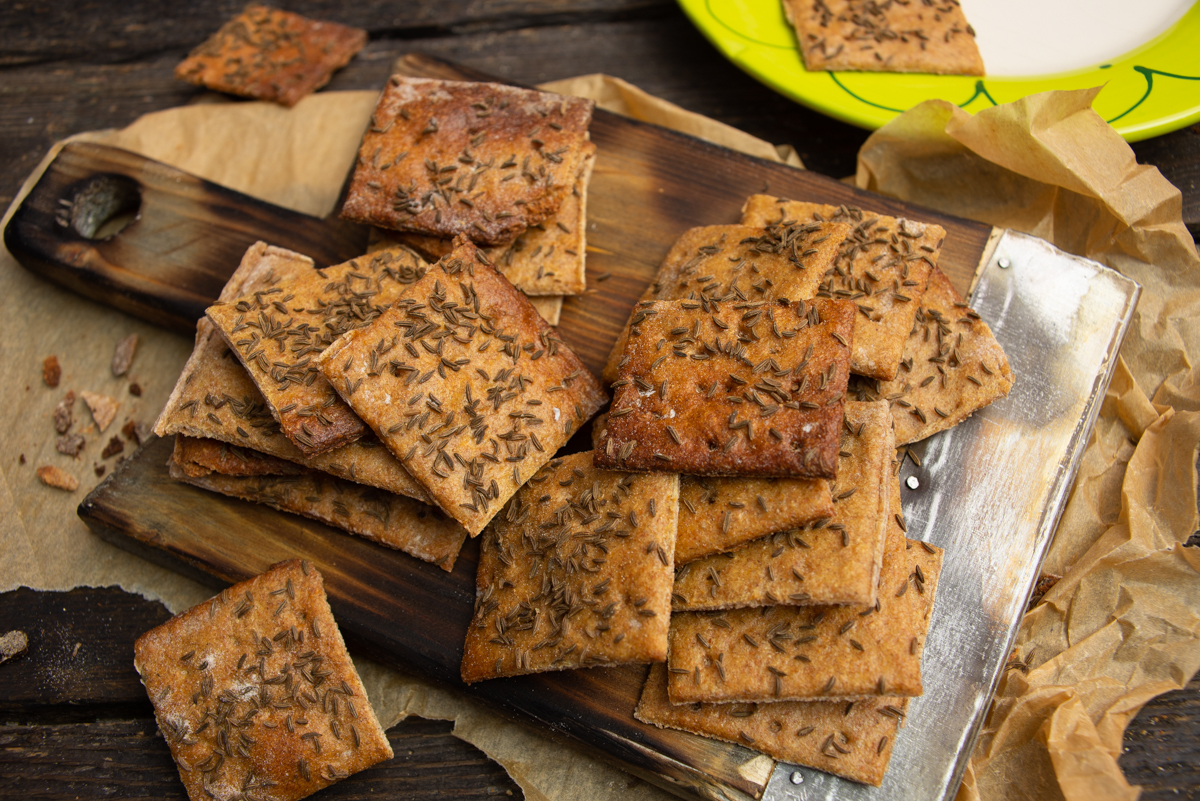
Aromatic homemade rye flatbreads with honey and caraway make an excellent alternative to store-bought snacks.
Ingredients
- 150 g whole grain rye flour
- 50 g first-grade wheat baking flour (bread flour or all-purpose)
- 3/4 teaspoon active dry yeast
- 10 g honey
- 75 ml whey (leftover liquid from making tvorog or farmer's cheese)
- 1 teaspoon sea salt
- 1 chicken egg
- 1 tablespoon caraway seeds
How to Make Rye Crispbread with Caraway Seeds
Mix the honey with the whey (leftover liquid from making tvorog or farmer’s cheese). Add the sea salt and whisk thoroughly until both the honey and salt are fully dissolved.
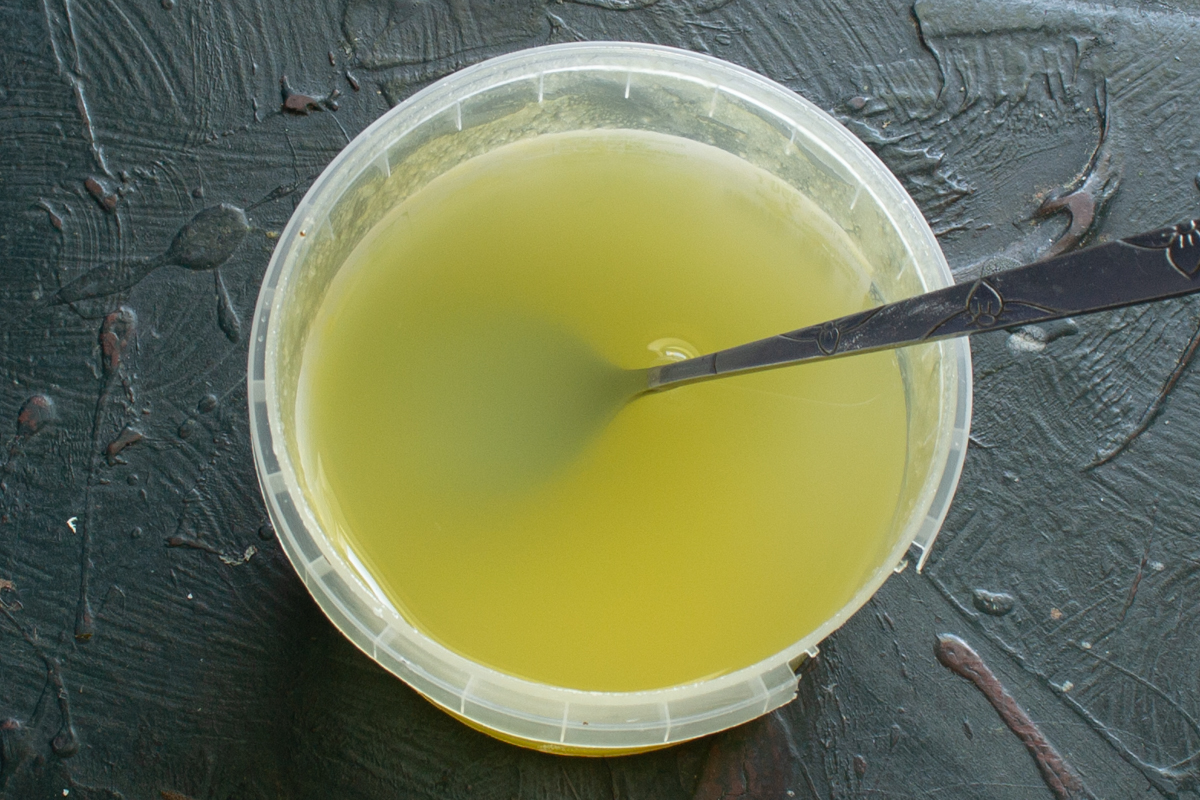
Dissolve the honey and sea salt in the whey until smooth to ensure a perfectly balanced flavor in the dough.
In the bowl of a stand mixer, combine the whole grain rye flour and the first-grade wheat baking flour (bread flour or all-purpose will work). Add the active dry yeast and stir the dry ingredients together with a spoon.
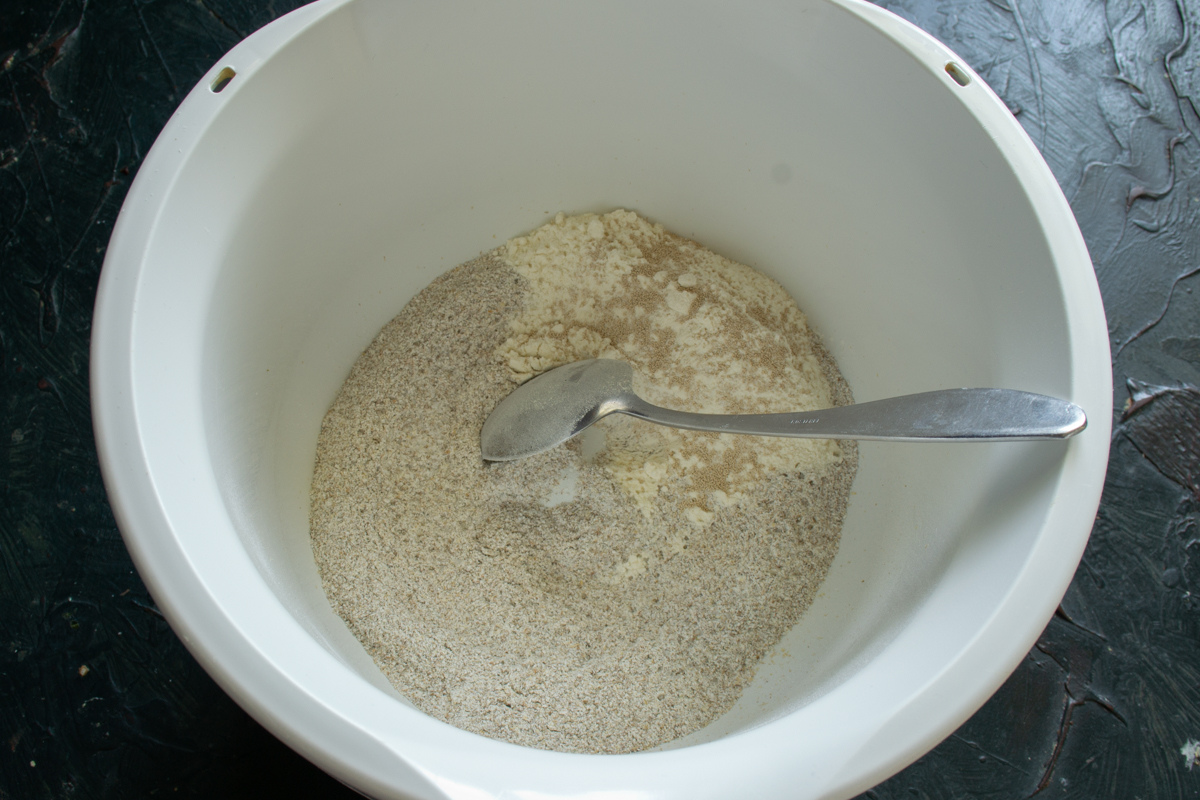
Whisk the whole grain rye flour with the wheat flour and gently stir in the dry yeast.
Pour the liquid mixture into the bowl with the flour. Attach the dough hook.
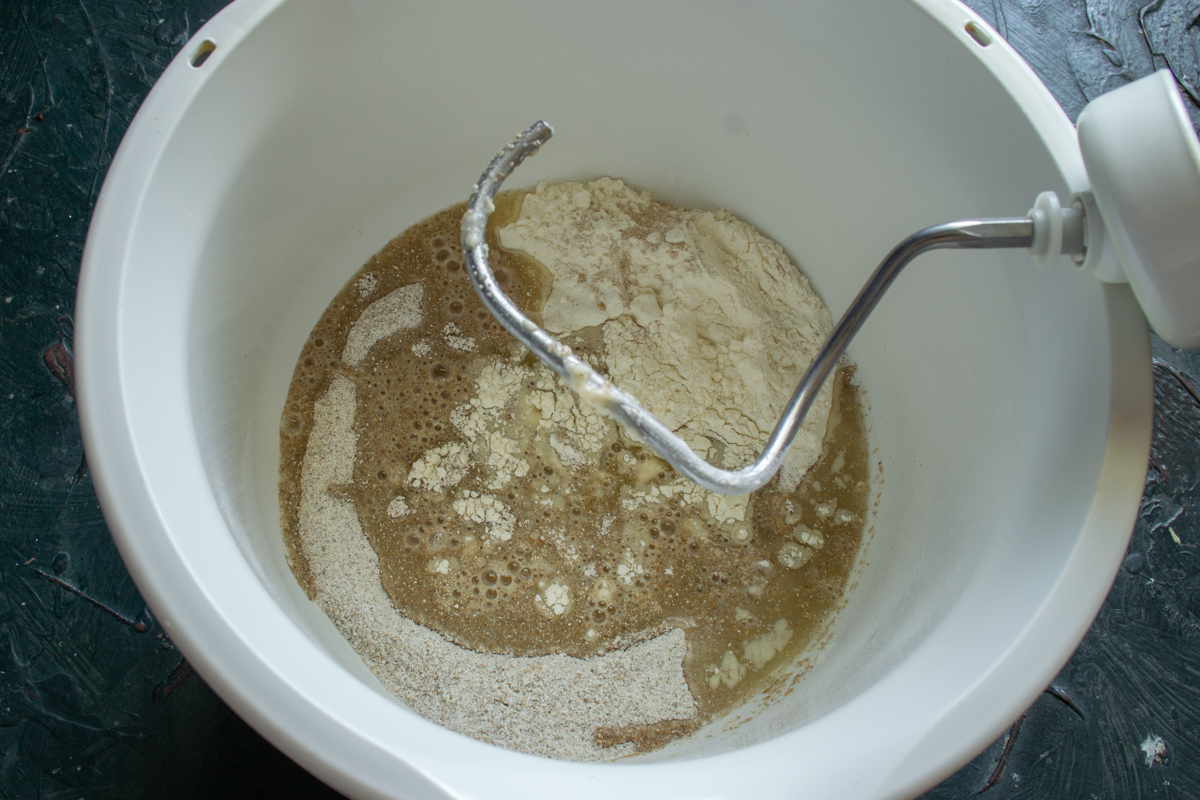
Pour the prepared liquid into the flour and begin kneading the dough using a dough hook attachment.
Knead the dough for about 10 minutes. It will be quite stiff, which is typical for rye dough—it is heavy and sticky. If kneading by hand, it takes the same amount of time; resist the temptation to add more flour, as the stickiness is exactly how it should be.
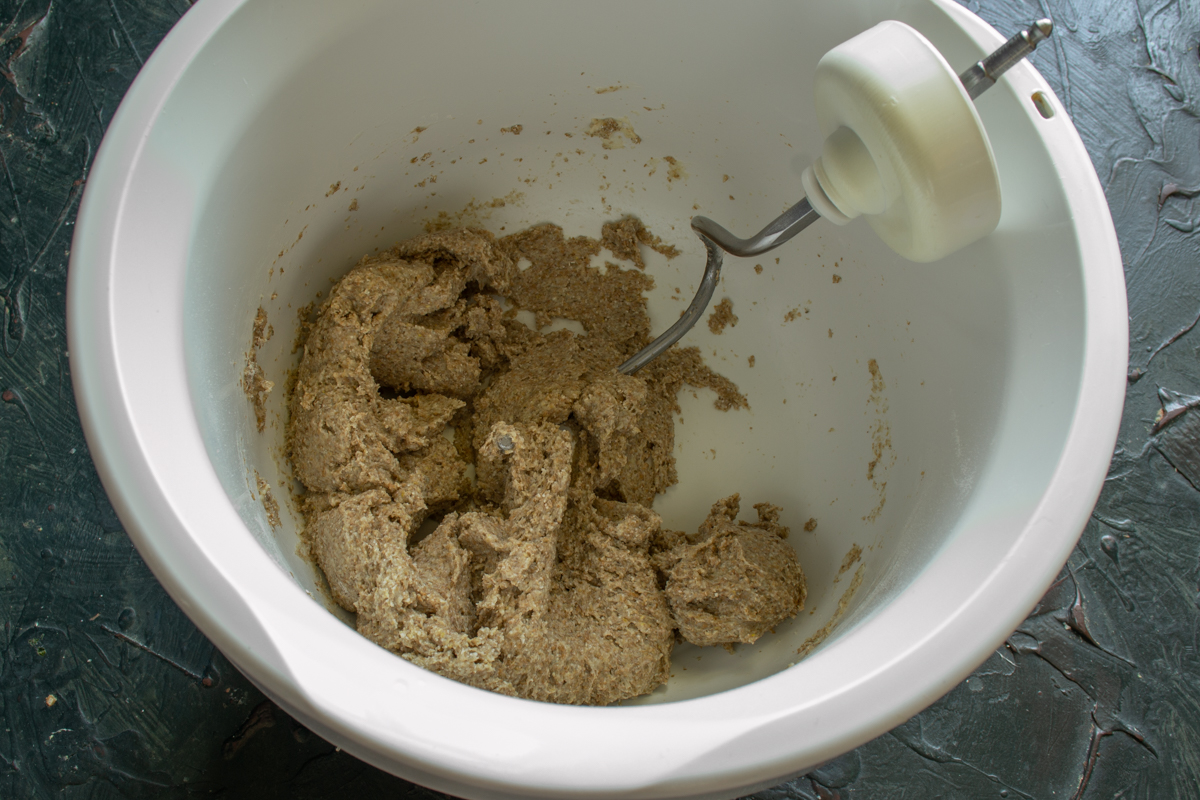
Rye dough should be heavy and sticky—this is its natural consistency, so avoid adding extra flour.
Lightly grease a bowl with vegetable oil and place the dough inside. Cover with plastic wrap and leave in a warm spot for 2 to 3 hours. Afterward, punch down the dough to release the air bubbles.
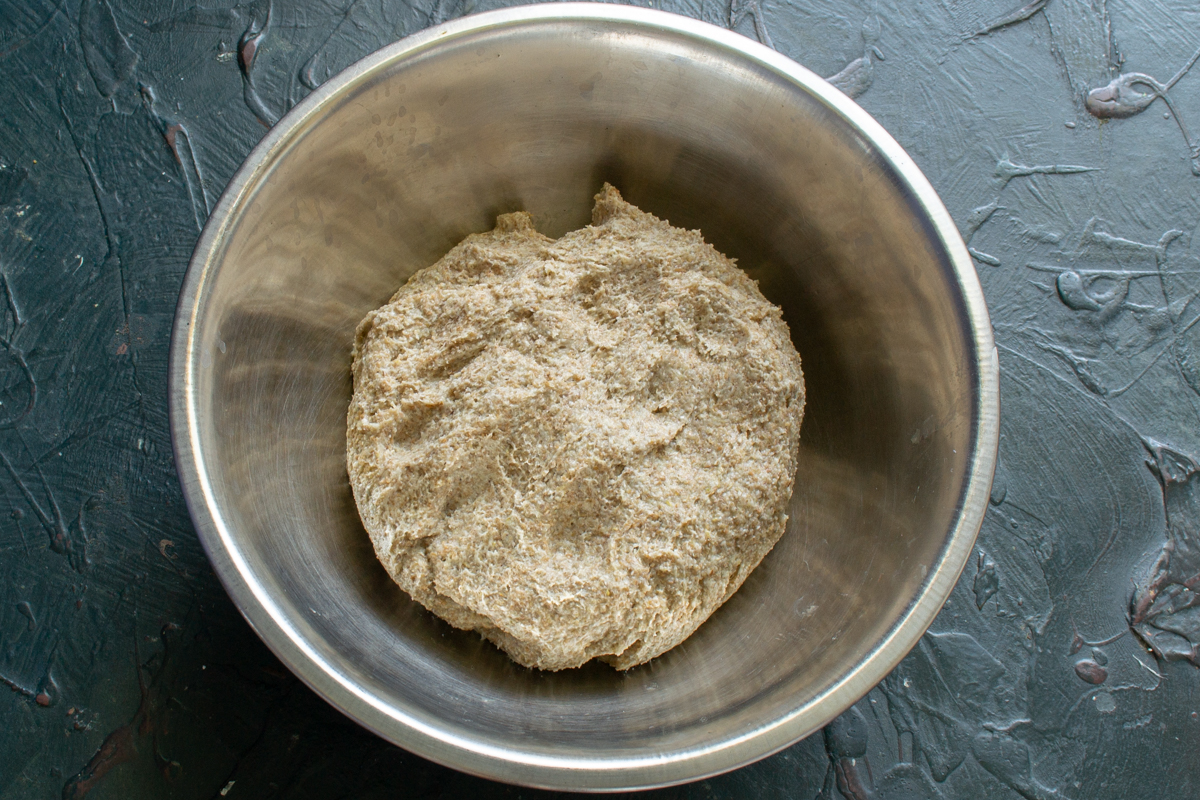
Leave the dough in a warm spot for a few hours so it increases in volume and develops a more porous texture.
Dust your work surface with rye flour. Turn out the dough and lightly dust the top with more flour. Roll it out with a rolling pin into a thin sheet, about 1 millimeter (1/25 inch) thick or just slightly thicker.
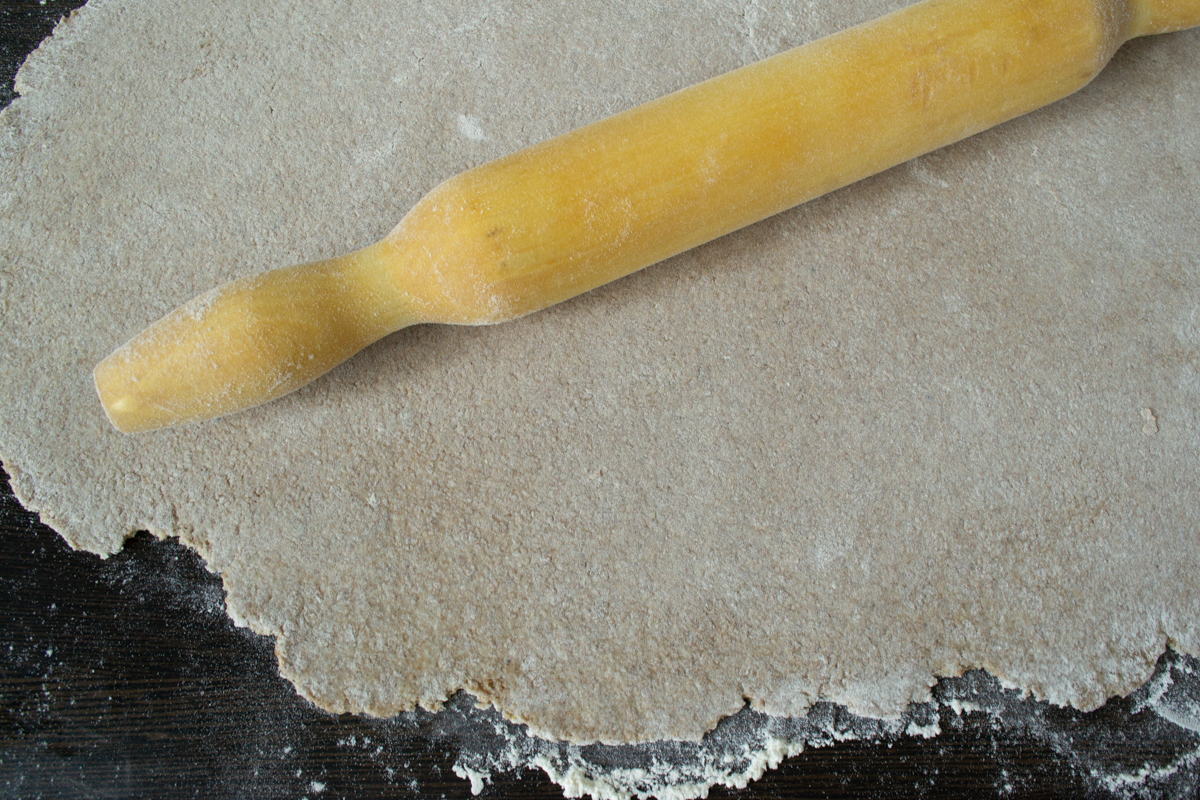
Roll the dough out as thinly as possible, about 1 mm thick, to ensure the resulting crackers are truly crispy.
Line a baking sheet with parchment paper. Gently roll the rolled-out dough onto your rolling pin to easily transfer it to the baking sheet.
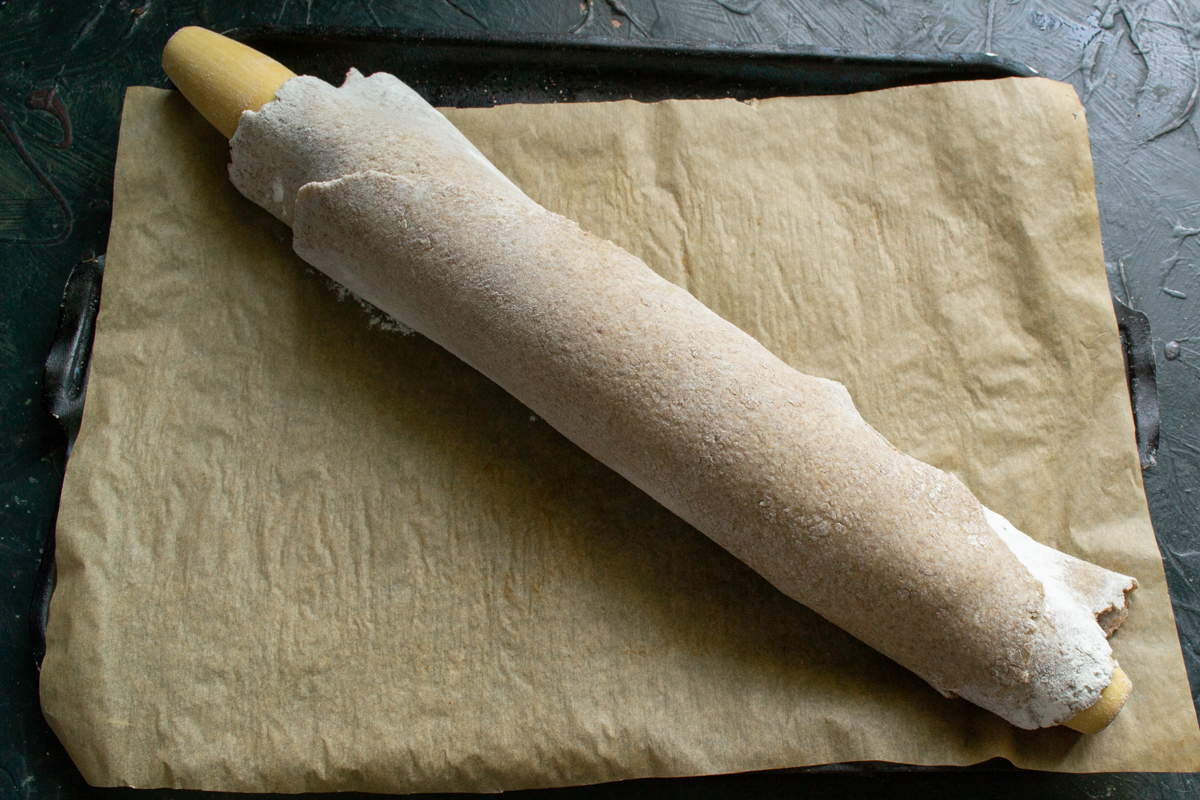
Carefully roll the thin sheet of dough around the rolling pin to transfer it flawlessly to your lined baking sheet.
Using a bench scraper or a wide knife, score the dough into squares or rectangles. You want to cut almost all the way through, but not completely. There is no need to trim the edges; let them hang over the sides of the pan if they must.
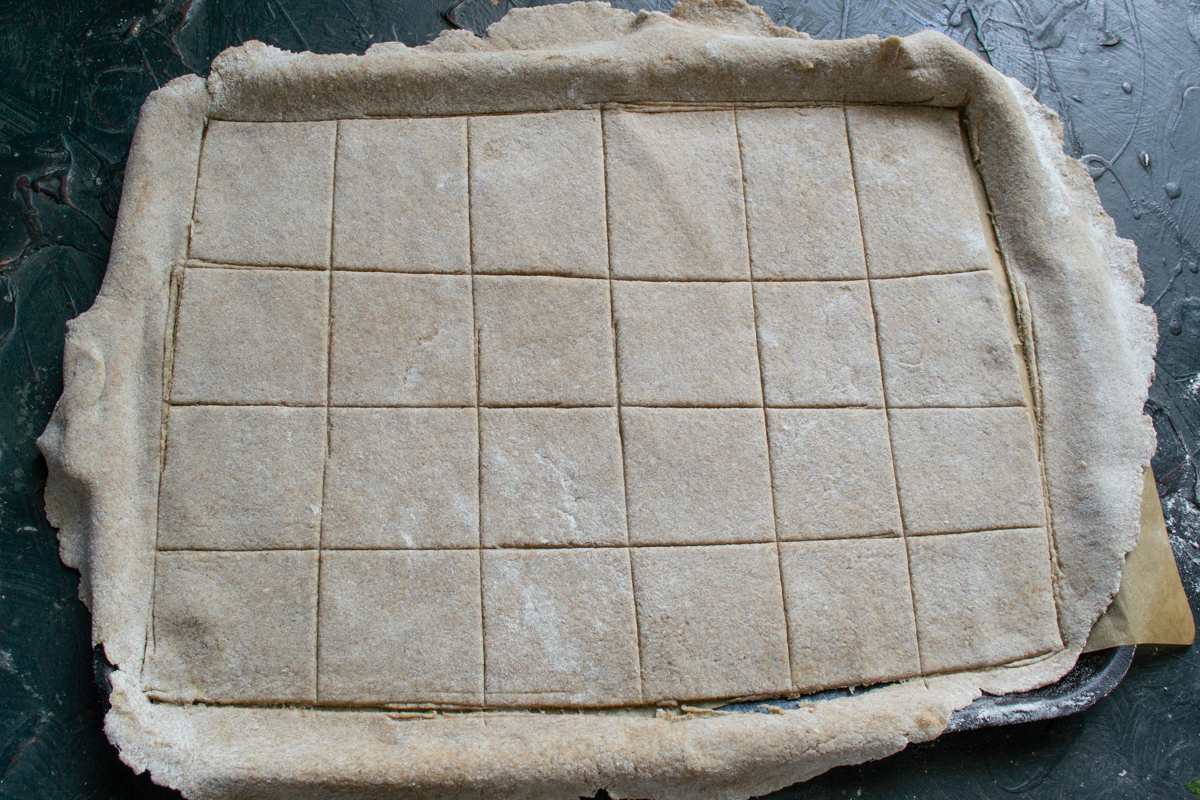
Score the future crispbreads with a bench scraper, cutting almost to the bottom for an easy snap after baking.
Prick the dough all over with a cocktail straw or a bamboo skewer. This allows steam to escape during baking and prevents the crispbread from puffing up.
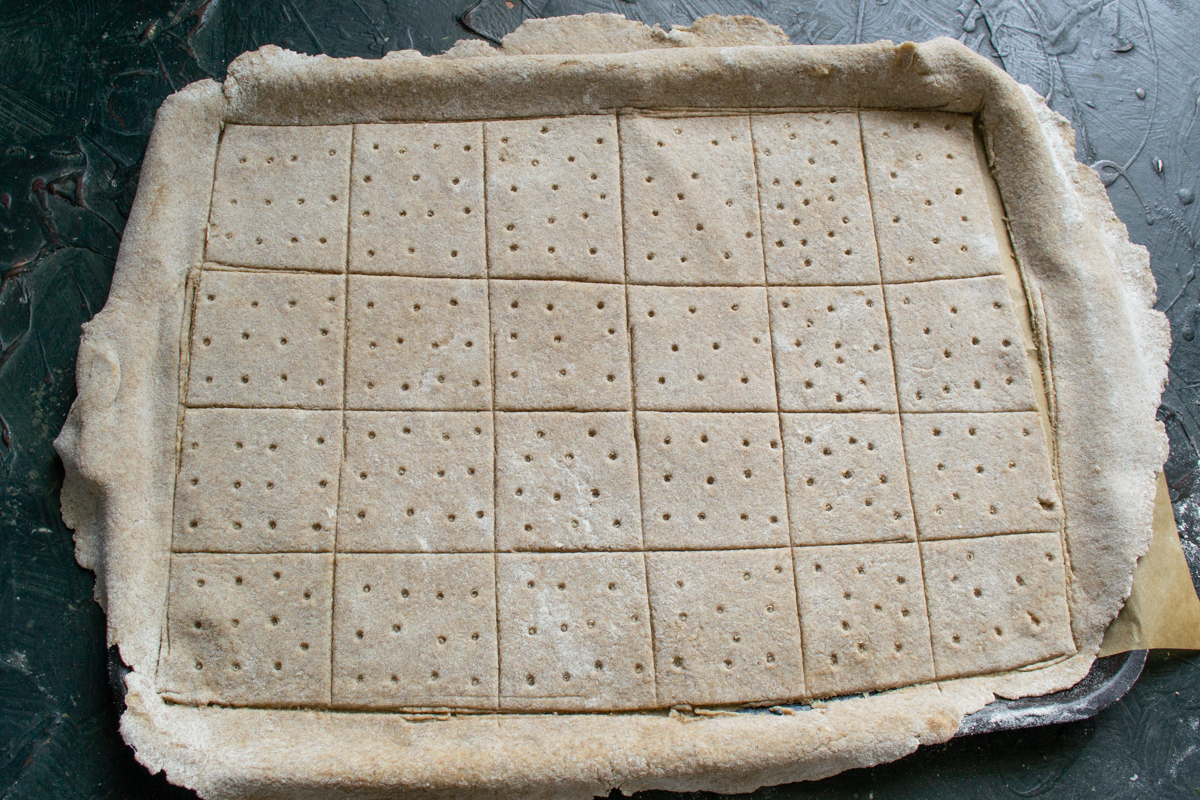
Docking the dough frequently allows steam to escape, preventing the crackers from puffing up in the oven.
Crack the egg into a small bowl and beat it lightly with a fork. Using a silicone pastry brush, apply a thin, even layer of the egg wash over the scored dough.
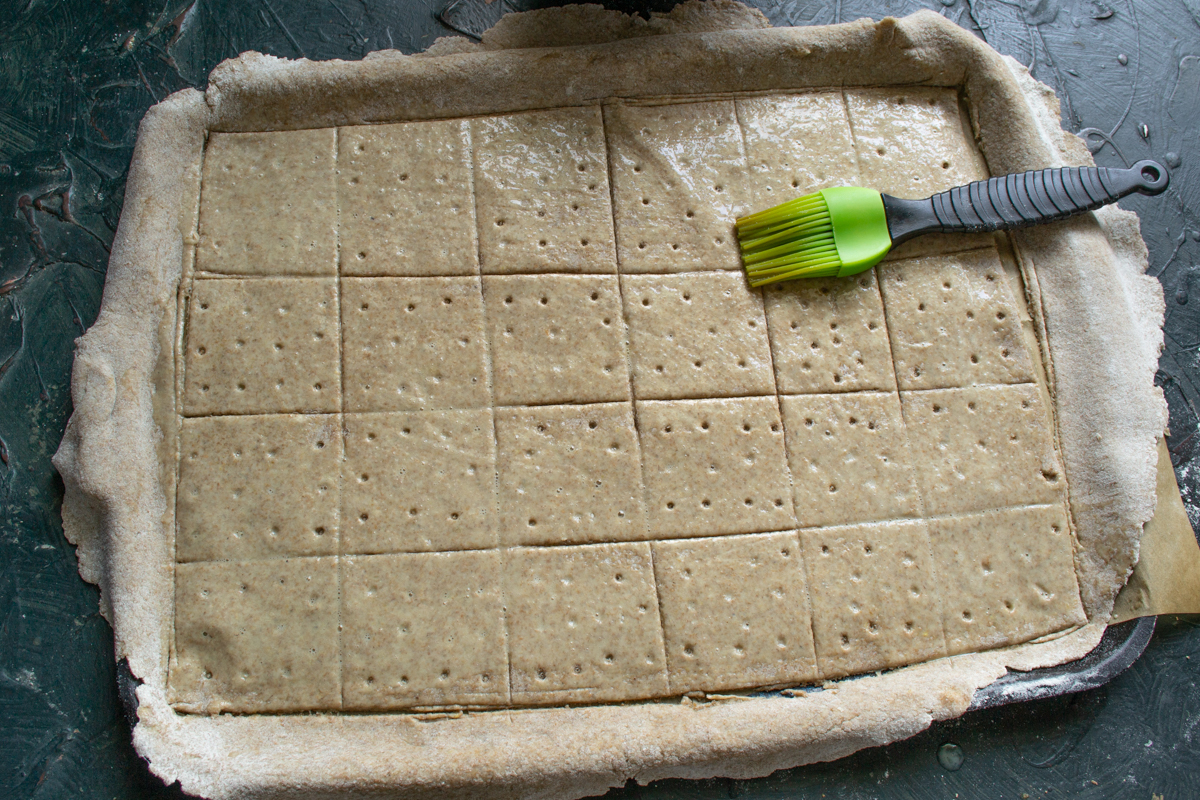
Apply a thin layer of beaten egg to give the crispbreads a glossy finish and help the seeds stick.
Immediately, before the egg wash dries, sprinkle the dough generously with caraway seeds so they adhere perfectly to the surface.
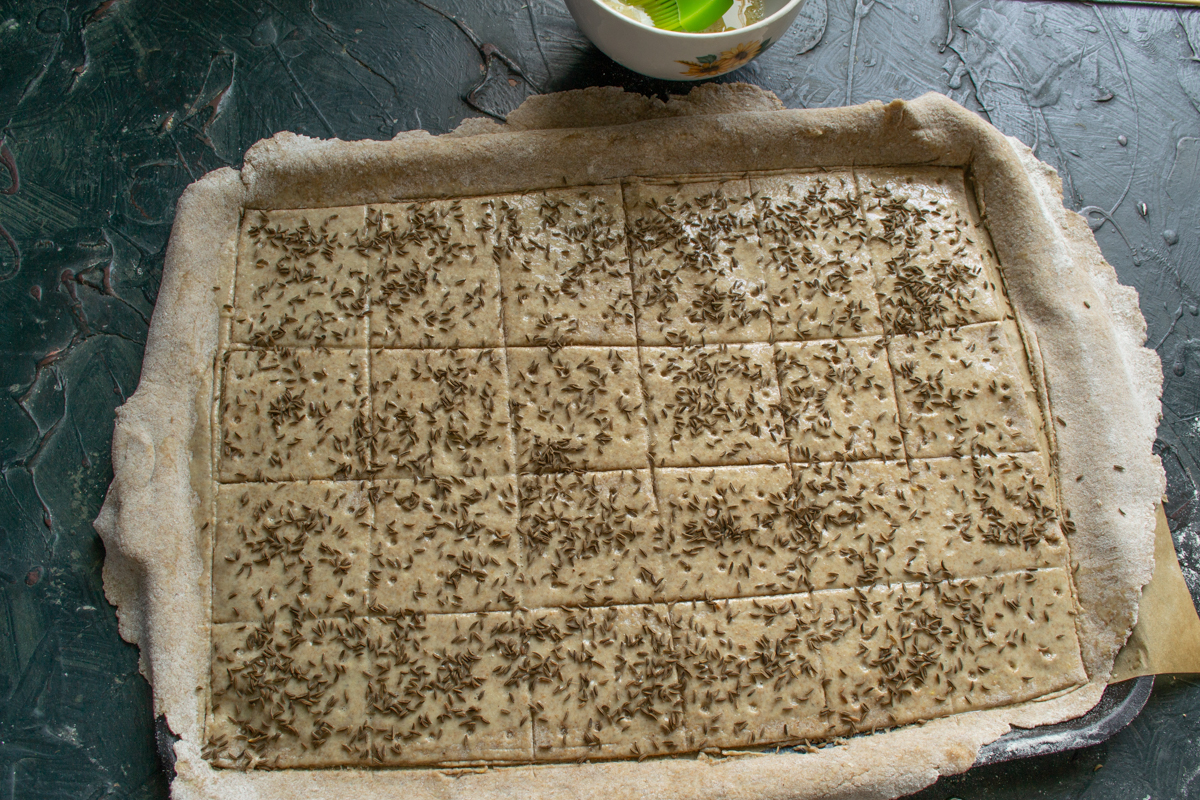
Caraway pairs perfectly with rye flour, lending the crispbread a classic, spiced aroma.
Preheat your oven to 170 degrees Celsius (340 degrees Fahrenheit). Place the baking sheet on the middle rack and bake for 25 minutes, or until deeply golden. Rotate the pan 180 degrees halfway through to ensure even baking.
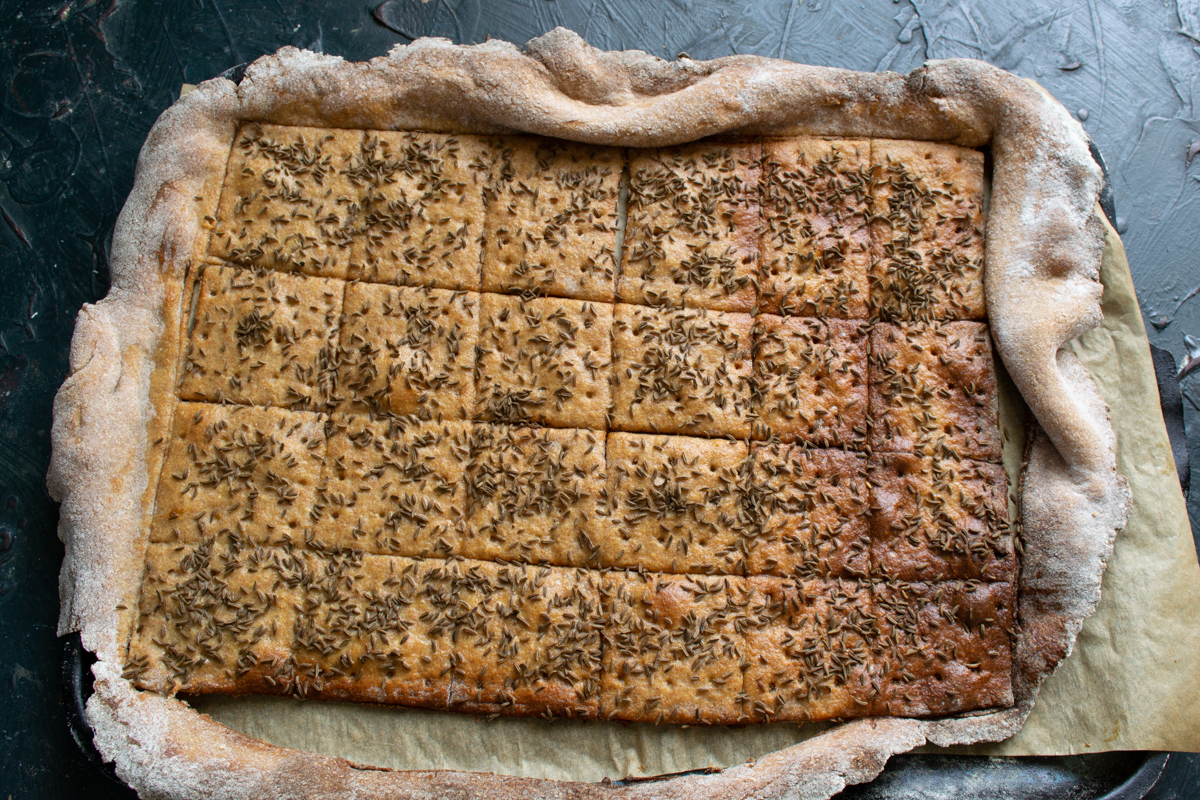
Bake at 170 degrees Celsius until golden, watching carefully for an even bake.
Let the crispbread cool directly on the baking sheet, then snap off any uneven edges. Break the large sheet into individual crackers along the scored lines.
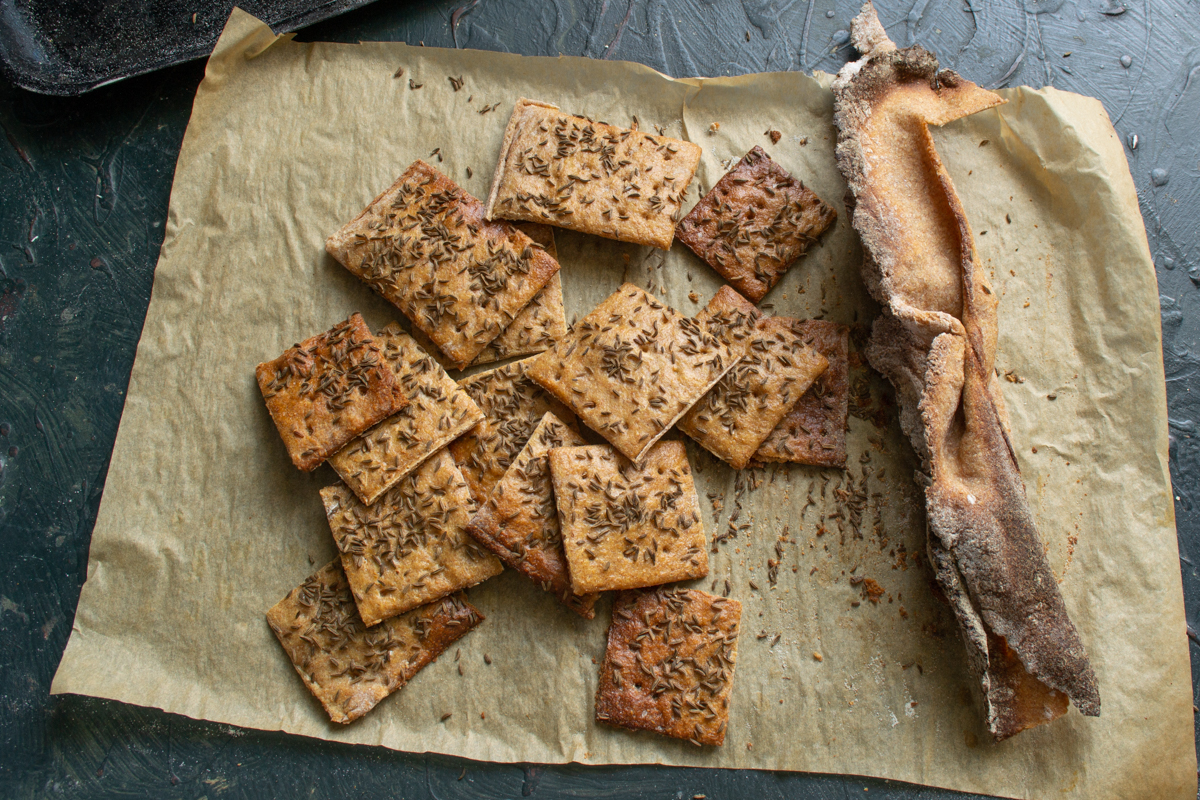
Once cooled, the crispbread easily snaps along the pre-scored lines into neat, perfect squares.
Store your crispy rye and caraway flatbreads in a cookie tin or an airtight box. They keep exceptionally well and, provided it isn’t too humid, will stay perfectly crunchy for a long time.
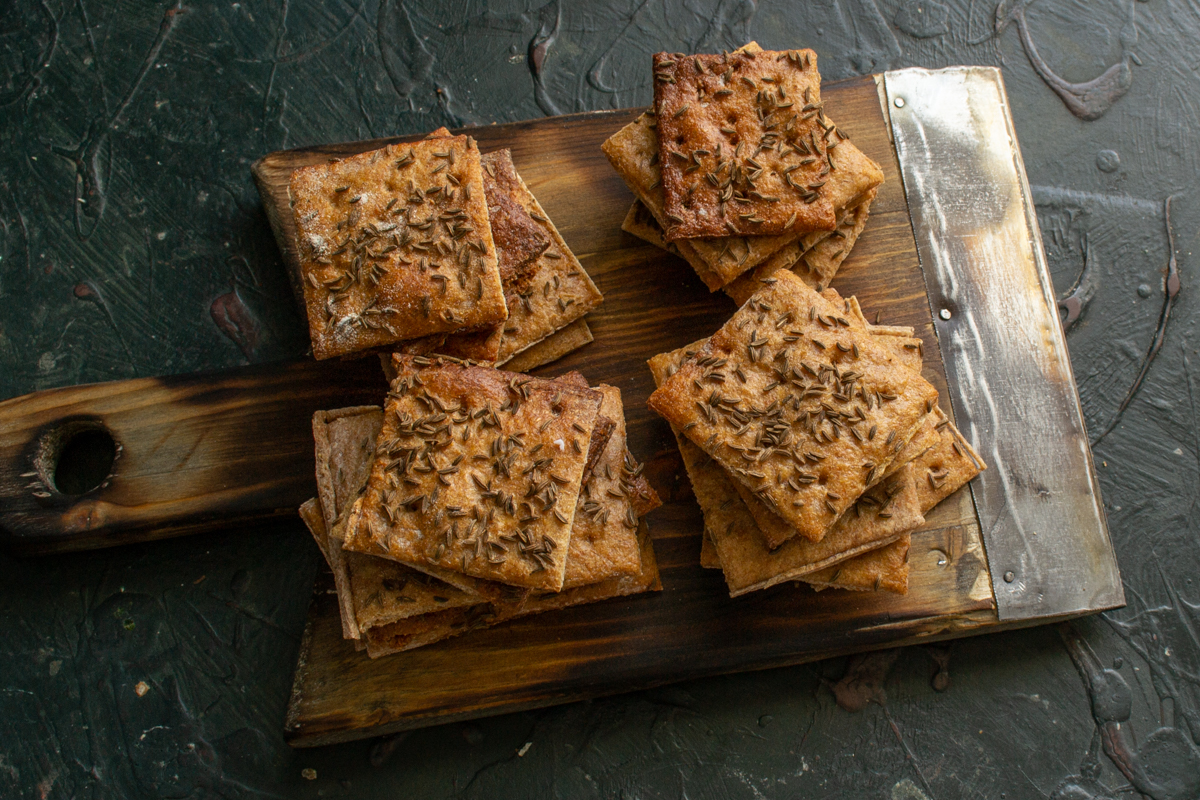
These crackers store beautifully in an airtight container, retaining their satisfying crunch for a long time.
To ensure your rye crispbreads remain flawlessly crunchy, store them in a tightly sealed tin or glass container in a dry place. If they ever lose a bit of their texture due to humidity, simply pop them into a preheated oven for a couple of minutes—this will restore their original snap and refresh the aromatic caraway flavor.
Serve these snacks on their own, or use them as a base for elegant mini-sandwiches. They pair beautifully with soft cream cheese, slices of lightly salted salmon, avocado, or even liver pâté. Feel free to experiment with the toppings: alongside caraway, you can add flaxseeds, sesame seeds, or coarse sea salt to create a brand-new flavor profile for your wholesome snack every single time.
0 comments