
Step into the heart of rustic Eastern European cooking with this soul-warming recipe for Pork Belly with Buckwheat in a Pot. Cooking in clay pots, or 'gorshochki,' is a time-honored tradition that slowly melds flavors together, making meat incredibly tender and grains perfectly fluffy. This dish combines savory pork belly, earthy grechka (buckwheat), and wild chanterelle mushrooms for a truly authentic and comforting meal. It’s the kind of food that feels like a warm hug on a chilly day—simple, hearty, and full of flavor.
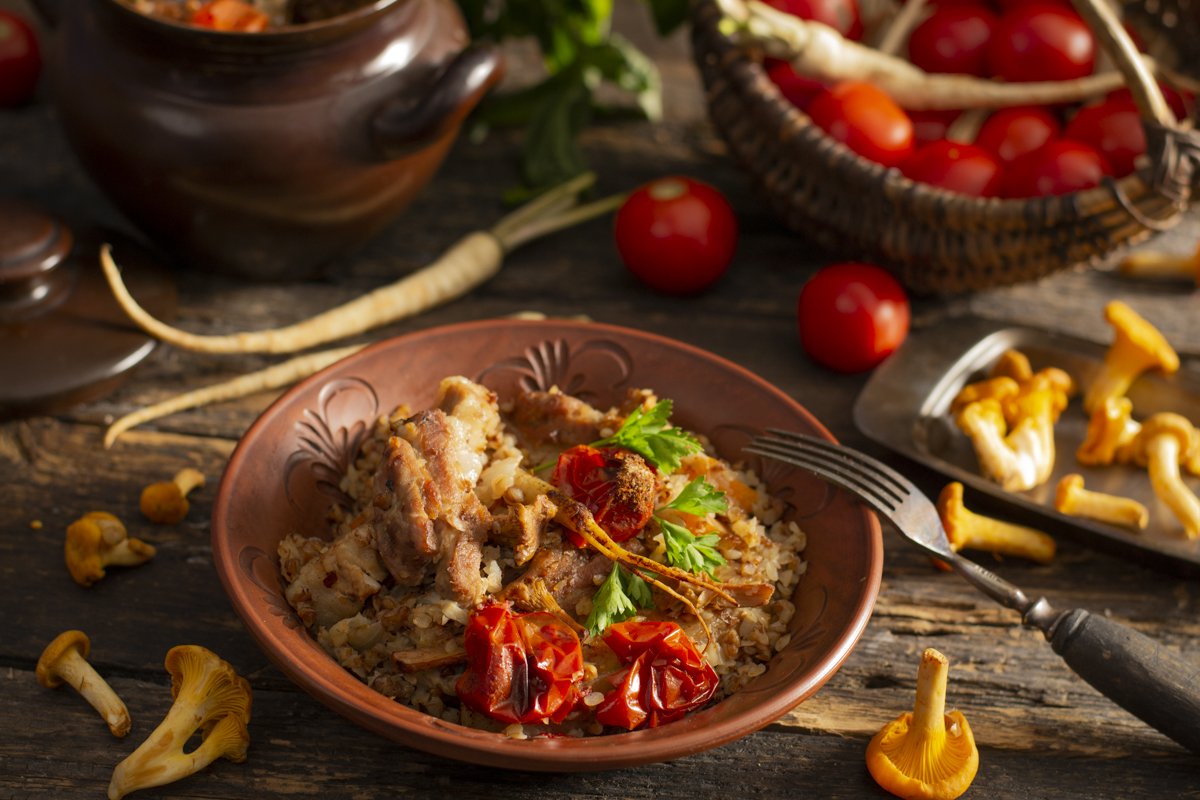
Rustic Pork Belly with Buckwheat in a Pot
Ingredients for Rustic Pork Belly with Buckwheat in a Pot
Rustic Pork Belly with Buckwheat in a Pot features tender meat, fluffy grechka kasha (a porridge made from buckwheat groats, a staple in Eastern European cuisine), and delicious chanterelle mushrooms—what rustic dish would be complete without mushrooms? A few spices, a couple of root vegetables, and some tomatoes are all you need to prepare this simple oven-baked meal. The prep work only involves chopping vegetables and searing the meat—pan-frying the pork belly to a golden-brown crust beforehand gives the entire dish a wonderful aroma. After that, it’s very simple: load the ingredients into heatproof clay pots, cover them with lids, and place them in the oven for about an hour. You can use that hour for yourself, as the dish requires no further attention.
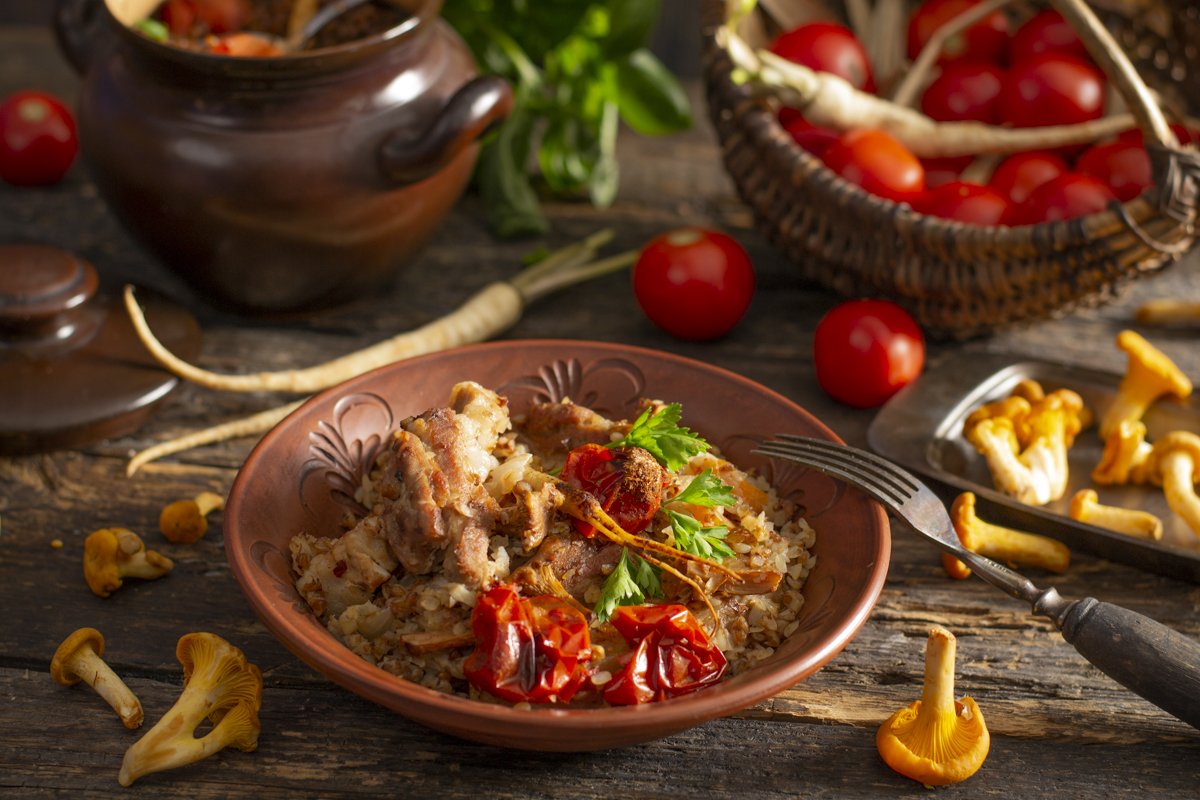
Rustic Pork Belly with Buckwheat in a Pot
- Preparation time: 1 hour
- Servings: 4
- 400 g (14 oz) lean pork belly;
- 200 g (about 1 cup) buckwheat groats;
- 150 g (5 oz) chanterelle mushrooms;
- 2 carrots;
- 2 onions;
- 4 tomatoes;
- 2 parsley roots;
- salt, pepper, spices, vegetable oil.
Method for Cooking Rustic Pork Belly with Buckwheat in a Pot
Slice the pork belly into 1.5 cm (about 0.6 inch) thick pieces. For this recipe, it’s best to choose a less fatty, boneless pork belly with thick layers of meat.
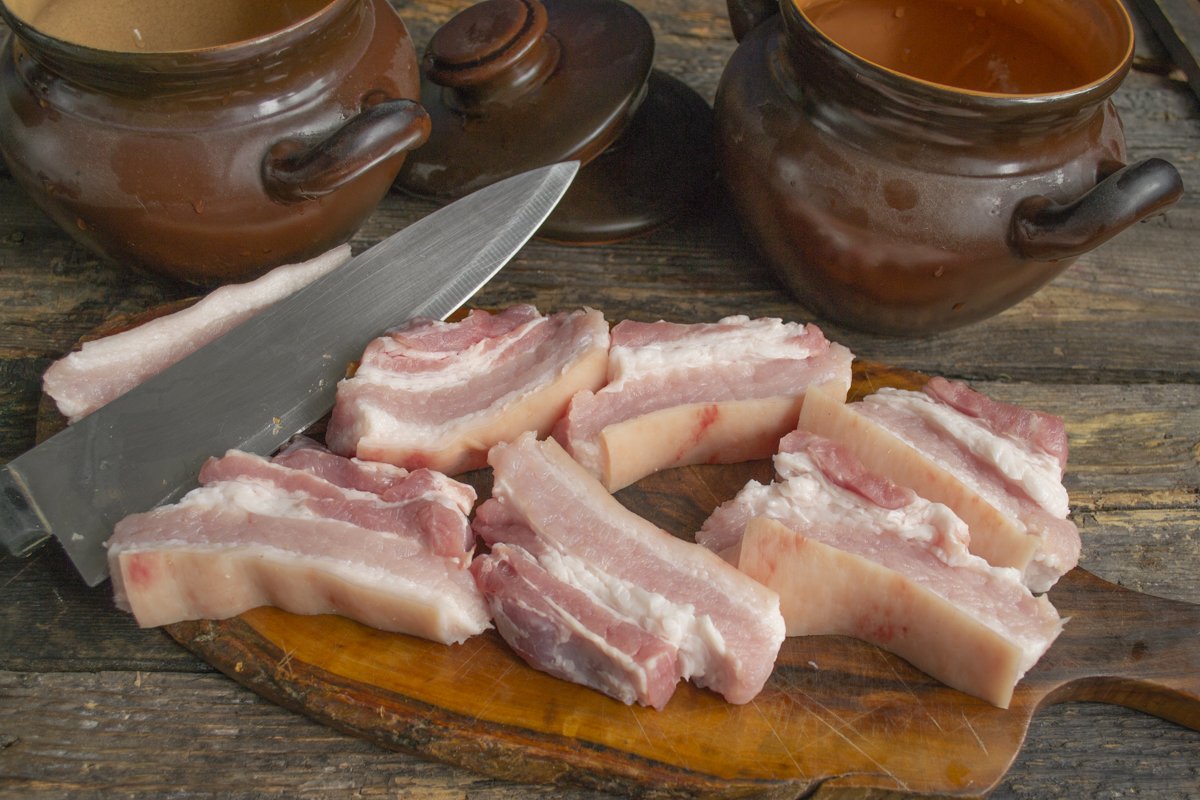
Slicing the pork belly into 1.5 cm (0.6 inch) thick pieces
Grease a frying pan with vegetable oil, heat it up well, and place the meat slices on the hot pan. Quickly sear on both sides until golden brown.
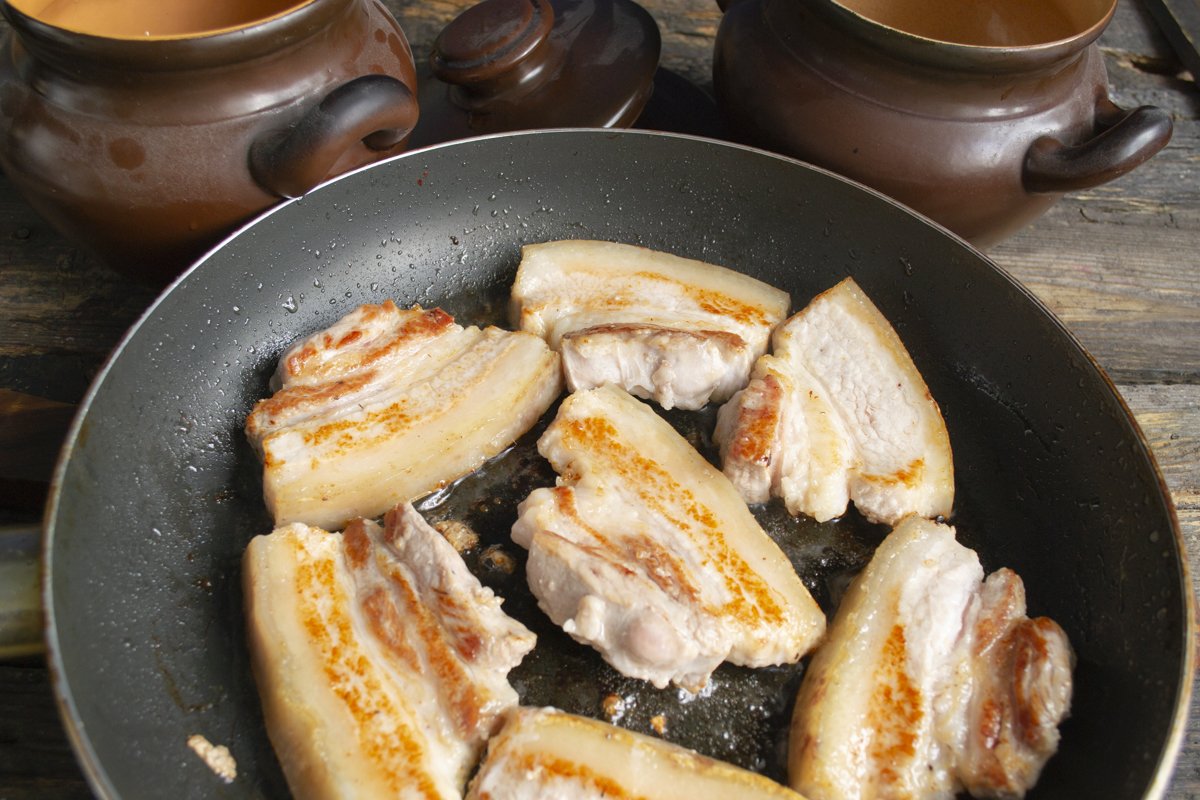
Pan-frying the meat on both sides until golden brown
Peel the onions. Scrape the carrots and wash them thoroughly. Slice the onion into feathers and coarsely dice the carrots.
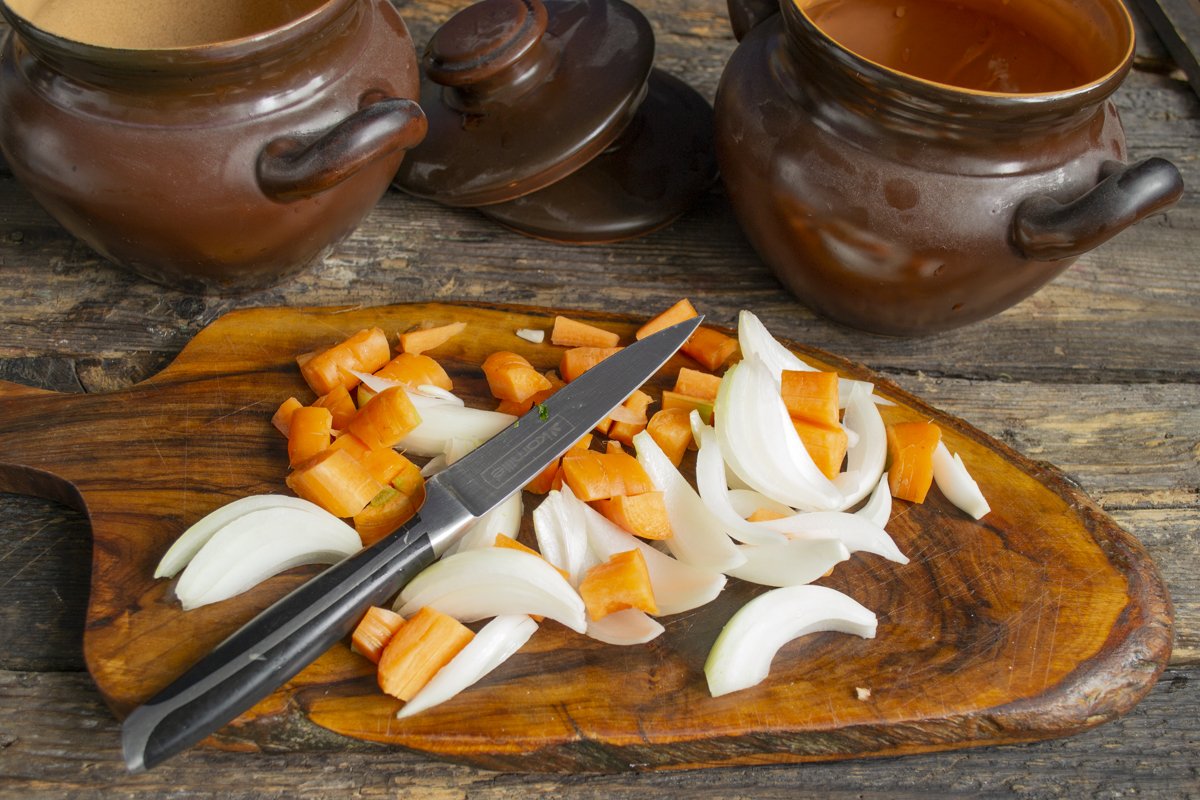
Slicing the onion into feathers and dicing the carrot
Place the onion and carrot at the bottom of a clay pot, and arrange the slices of seared pork belly on top of the vegetables.
Place the fresh chanterelles in a bowl of cold water for a few minutes and wash them thoroughly to remove any sand or forest debris. Transfer the mushrooms to a colander and rinse under running water.
You don’t have to slice the chanterelles—tear the large ones by hand and leave the small ones whole. Place the chanterelles in the pot on top of the seared meat.
Sort through the buckwheat groats and rinse them with cold water. You can also toast the buckwheat in a dry pan for a few minutes to enhance its nutty flavor.
Sprinkle the buckwheat over the mushrooms. This dish can be cooked in one large pot or in individual portions. If you are making several portions, divide the ingredients proportionally among the pots.
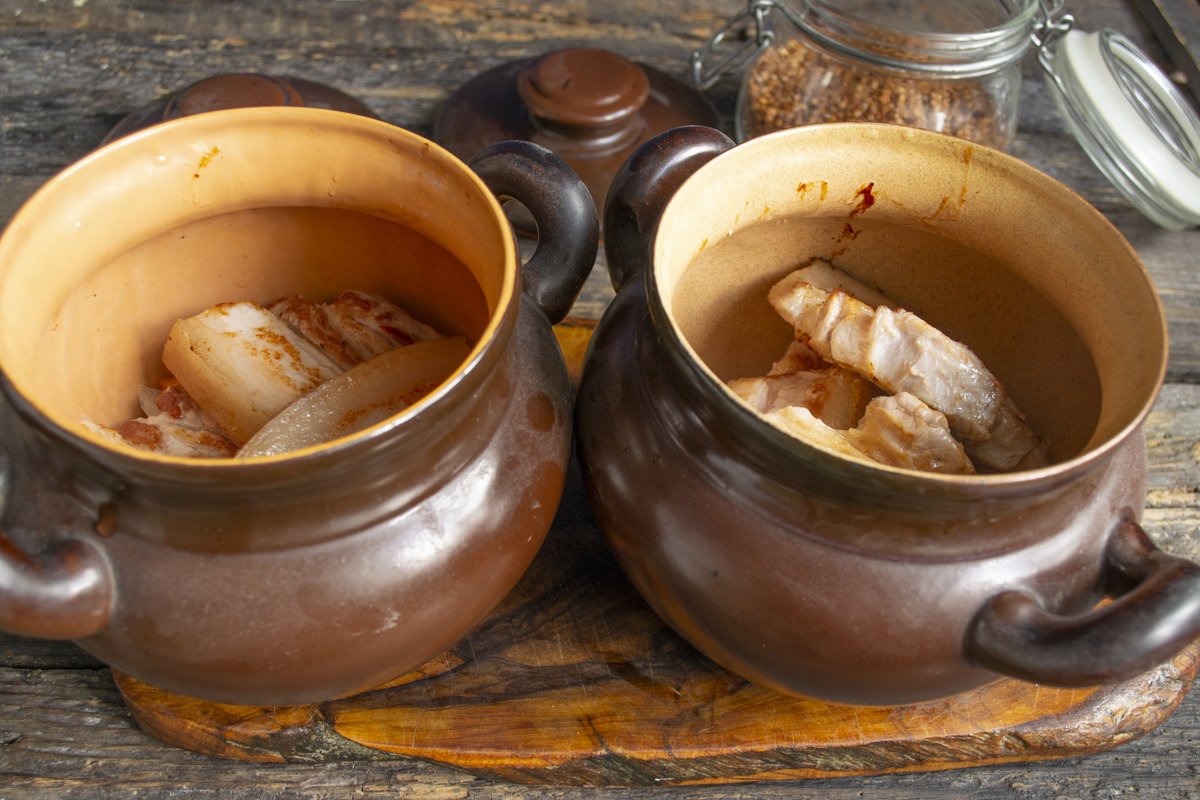
Placing onion, carrot, and seared meat slices at the bottom of the pot
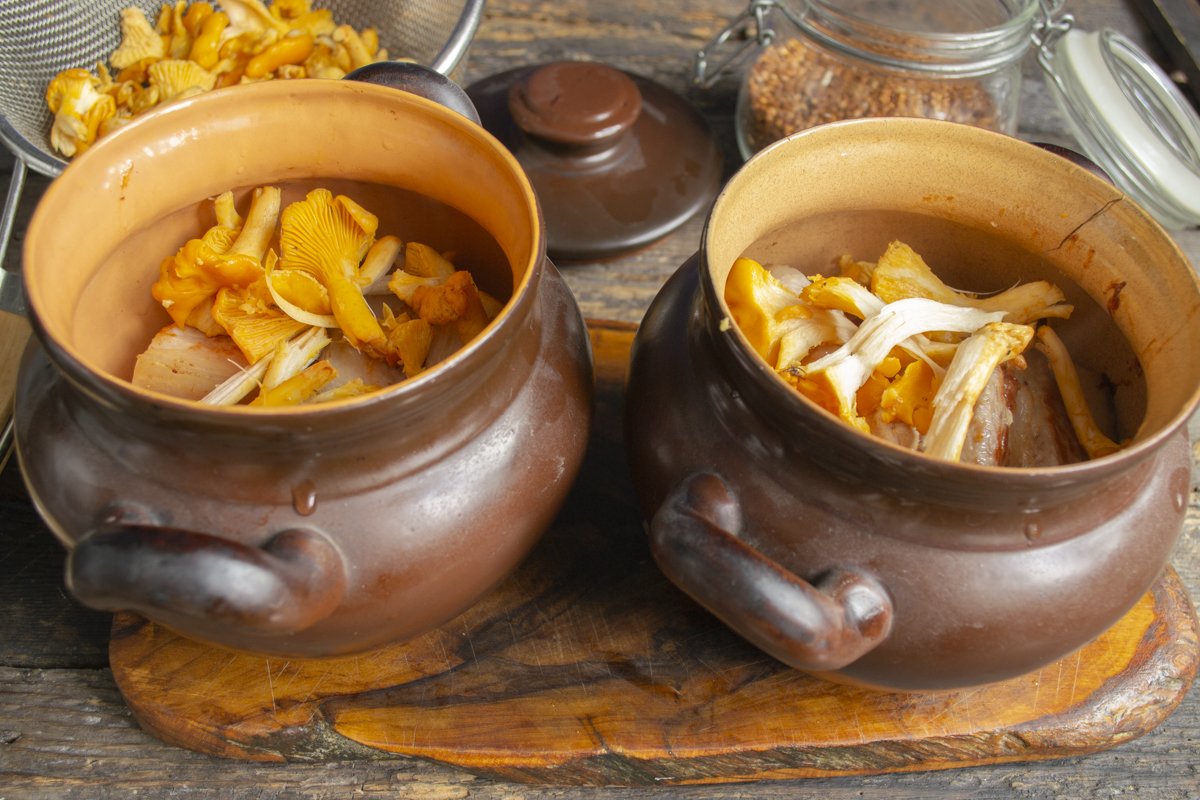
Adding prepared chanterelle mushrooms on top of the seared meat
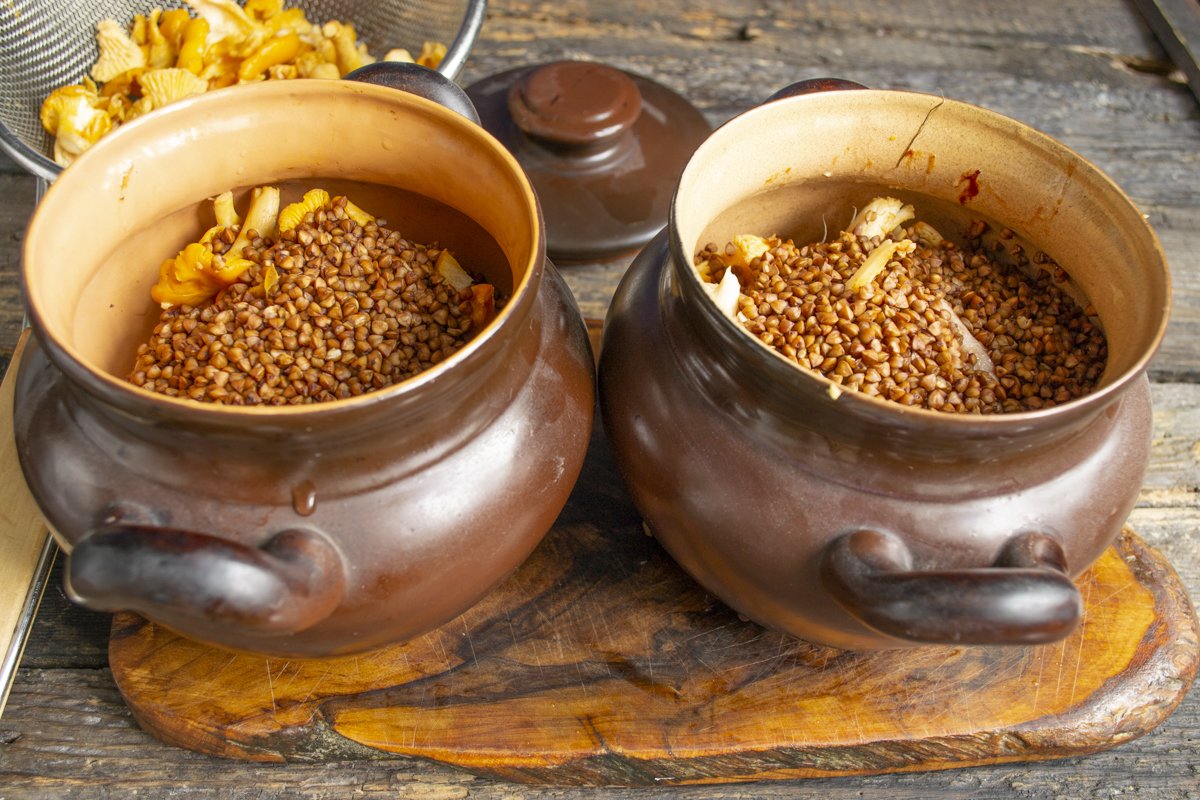
Pouring buckwheat over the mushrooms
Cut small red tomatoes in half, remove the stem and core, and place the tomato halves on the buckwheat, cut side down.
Add a parsley root (a root vegetable similar to a parsnip but with a distinct parsley flavor) to each pot, add salt, pepper, and dried spices to your taste, such as thyme, bay leaf, coriander, or caraway.
Boil some water and pour it into the pots so that it covers the contents. The pot should be filled to about 3/4 full to ensure nothing boils over during cooking.
Place the dish in an oven preheated to 180°C (350°F) and cook for 60 minutes. Turn off the oven and let it rest inside for about 15-20 minutes before taking it out.
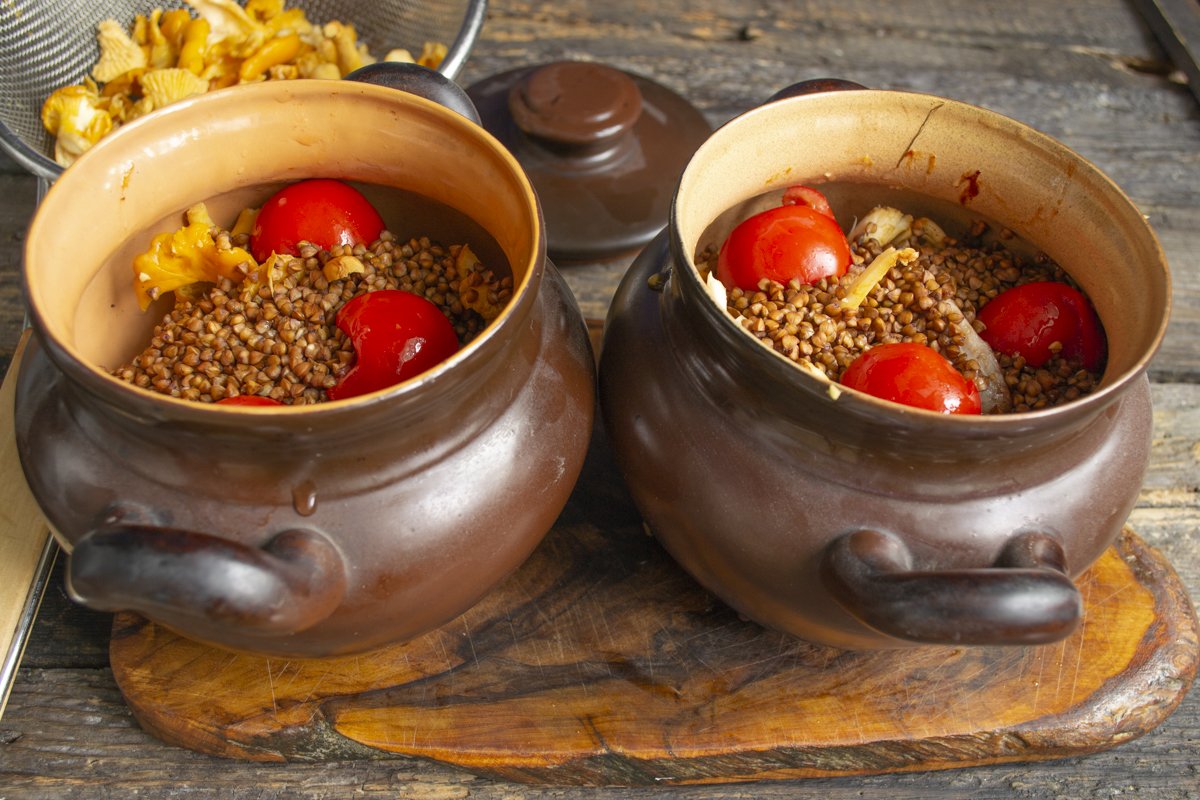
Placing tomato halves on the buckwheat, cut side down
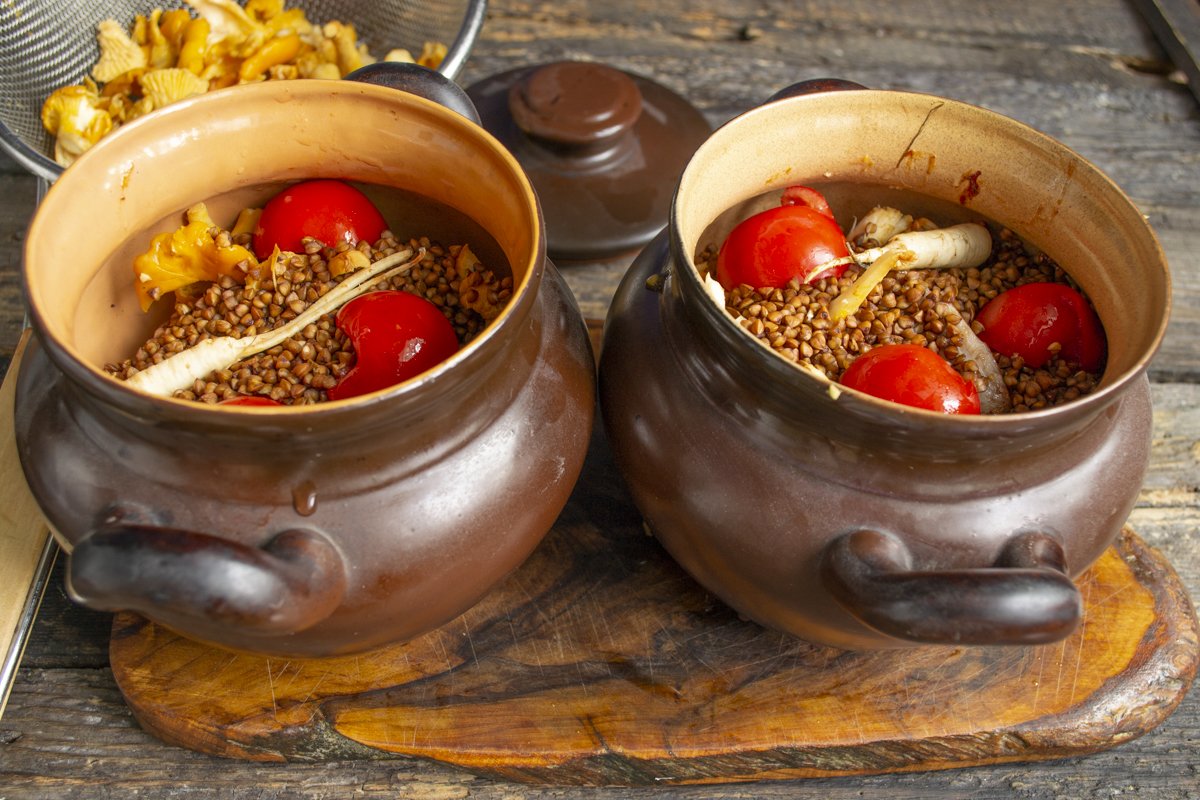
Adding spices and a parsley root to each pot
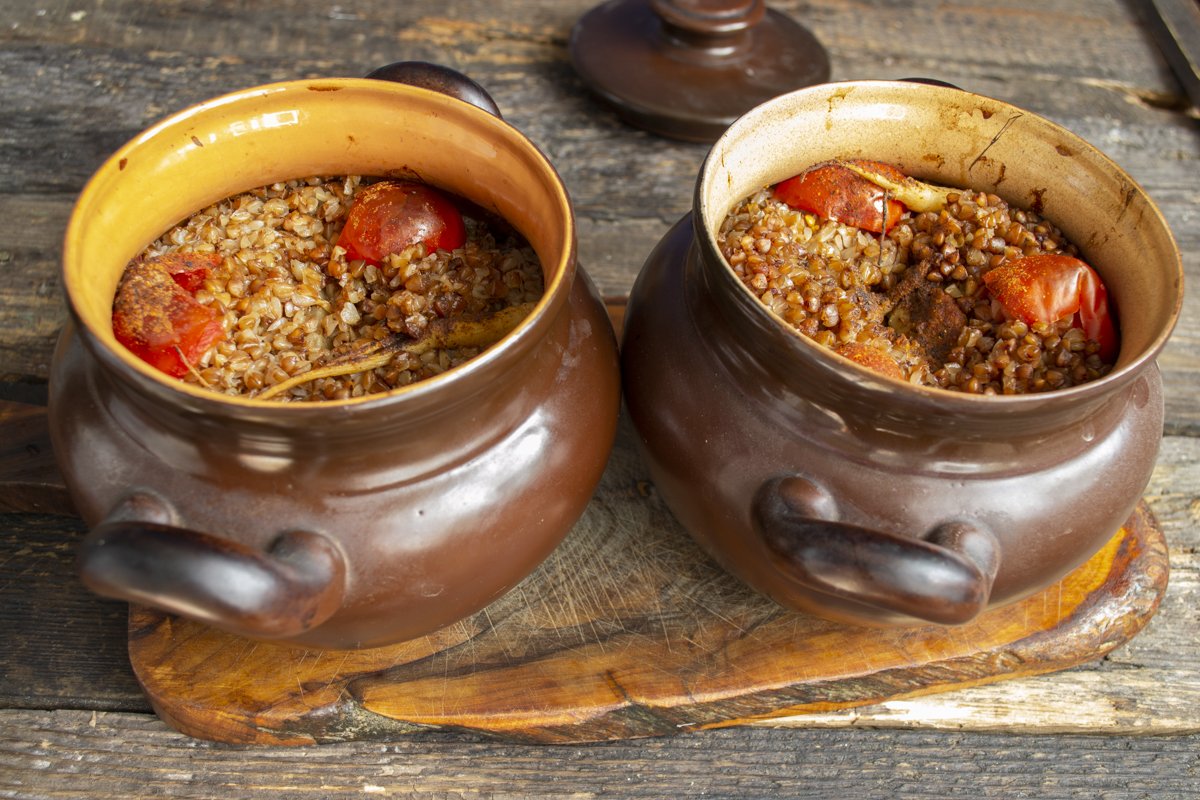
Boiling water and pouring it into the pots. Placing the dish in the oven
Serve the pork belly with buckwheat kasha and chanterelles immediately. This dish pairs wonderfully with pickled vegetables—cucumbers, tomatoes, or kvashenaya kapusta (a type of fermented cabbage, similar to sauerkraut).
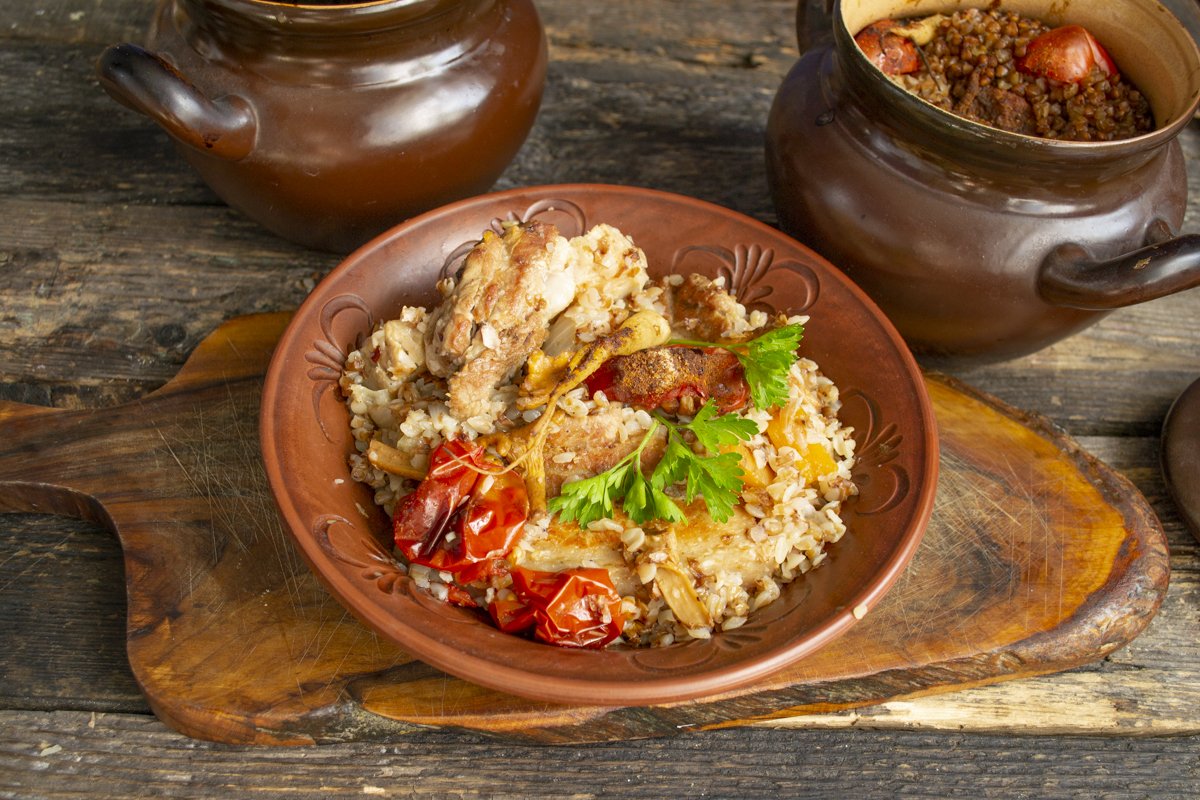
Rustic Pork Belly with Buckwheat in a Pot is ready
Cooking in individual portions is convenient when you have a small gathering of friends—it creates a cozy, homemade, and slightly rustic atmosphere.
And there you have it—a beautiful, rustic meal served straight from the pot! The aroma alone is enough to transport you to a cozy country kitchen. For an even more authentic experience, serve this dish with traditional pickles like cucumbers or tomatoes, or a side of kvashenaya kapusta (fermented cabbage) to cut through the richness. Cooking in individual pots also makes for a charming presentation when hosting guests. We hope you enjoy this taste of home-style comfort. Bon appétit, or as they say in Russia, Priyatnogo appetita!
0 comments