
Fish Solyanka is more than just a thick soup made of white saltwater fish, potatoes, and sweet pickled peppers; it is a true legend of Russian cuisine with countless regional variations. Traditionally, solyanka is prized for its hearty, mixed-ingredient character and its bright, contrasting flavor profile, where the natural sweetness of vegetables meets the signature tang of marinades. In this recipe, we use accessible saltwater fish, such as cod or hake, whose delicate flavor is beautifully highlighted by the aroma of celery and garlic. The golden, rich broth, steeped in tomato juices and spices, makes the dish incredibly satisfying and warming, turning an ordinary lunch into a small gastronomic event.
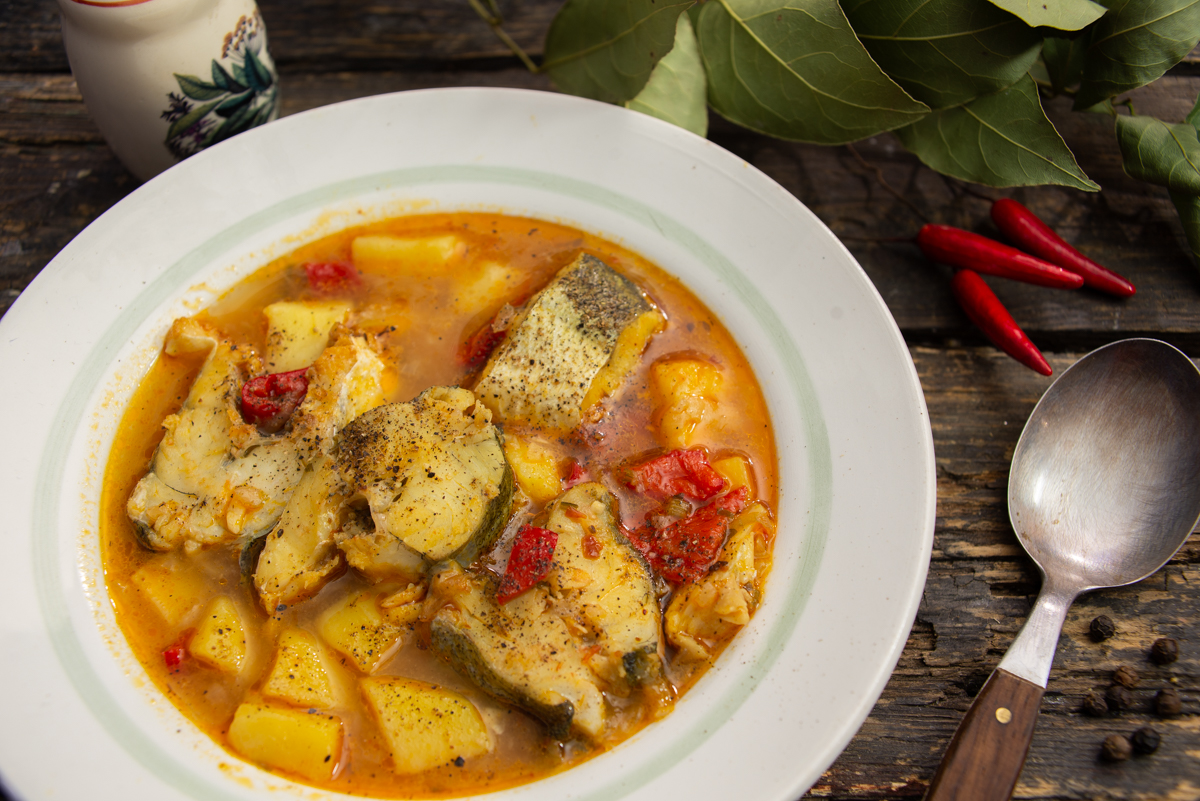
The finished fish solyanka turns out wonderfully vibrant and rich. Serve it piping hot with a slice of fresh bread.
Ingredients
- 500 g (1.1 lb) of any firm white saltwater fish (saffron cod, cod, pollock, hake)
- 1 liter (4 cups) fish broth
- 150 g (5.3 oz) onions
- 2-3 celery stalks
- 250 g (8.8 oz) potatoes
- 100 g (3.5 oz) sweet red bell pepper (canned or pickled is highly recommended)
- 150 g (5.3 oz) canned tomatoes in their own juice
- 2 garlic cloves
- Salt, freshly ground black pepper, neutral vegetable oil, bay leaves
Instructions
Cut the fish into 2 cm (¾-inch) thick pieces. Any saltwater fish with firm white meat works for this dish. Cod, saffron cod, pollock, or hake are perfect choices—delicious and affordable.
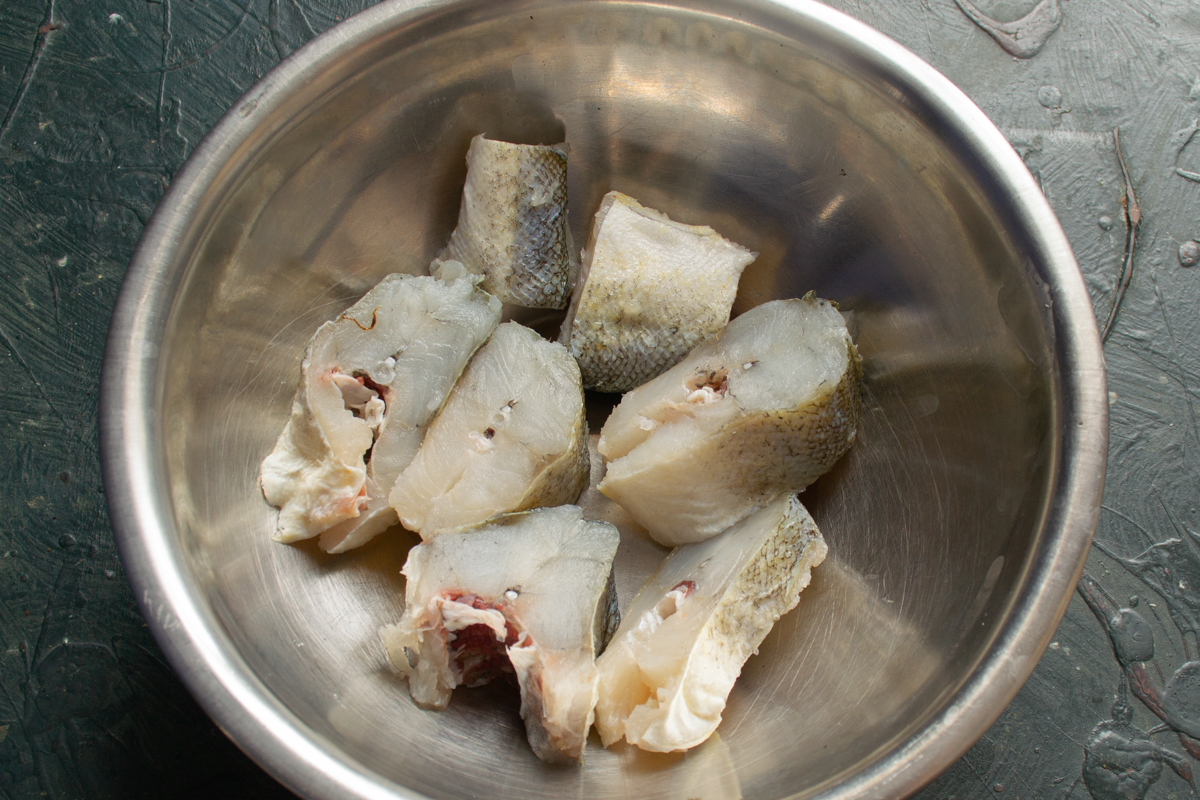
Any saltwater fish with firm white meat, such as cod or hake, is absolutely perfect for this recipe.
I highly recommend making the fish broth from trimmings, bones, and heads. When I fillet fish for patties, I remove the skin, cut the fillets from the spine, and if the fish comes with a head, it naturally goes into the broth—just do not forget to remove the gills. Add a halved unpeeled onion, a few garlic cloves, some bay leaves, and black peppercorns to the trimmings. Season with salt, cover with cold water, and simmer for 1 hour before straining. You will end up with an excellent, aromatic, and rich broth.
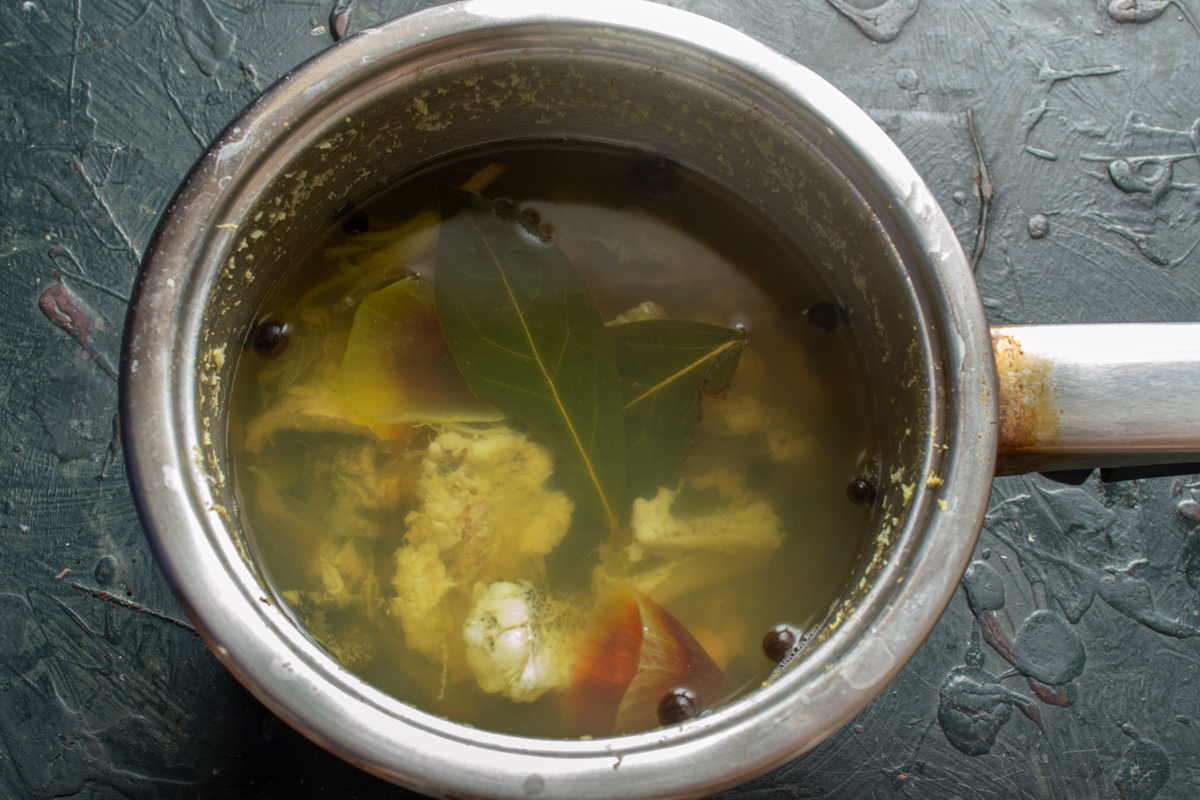
A rich broth made from fish heads and bones is the flavor foundation of our future solyanka.
Pour 2 tablespoons of neutral vegetable oil into a heavy-bottomed pot. Finely chop the onion. Mince the garlic or pass it through a garlic press. Toss the onion and garlic into the heated oil.
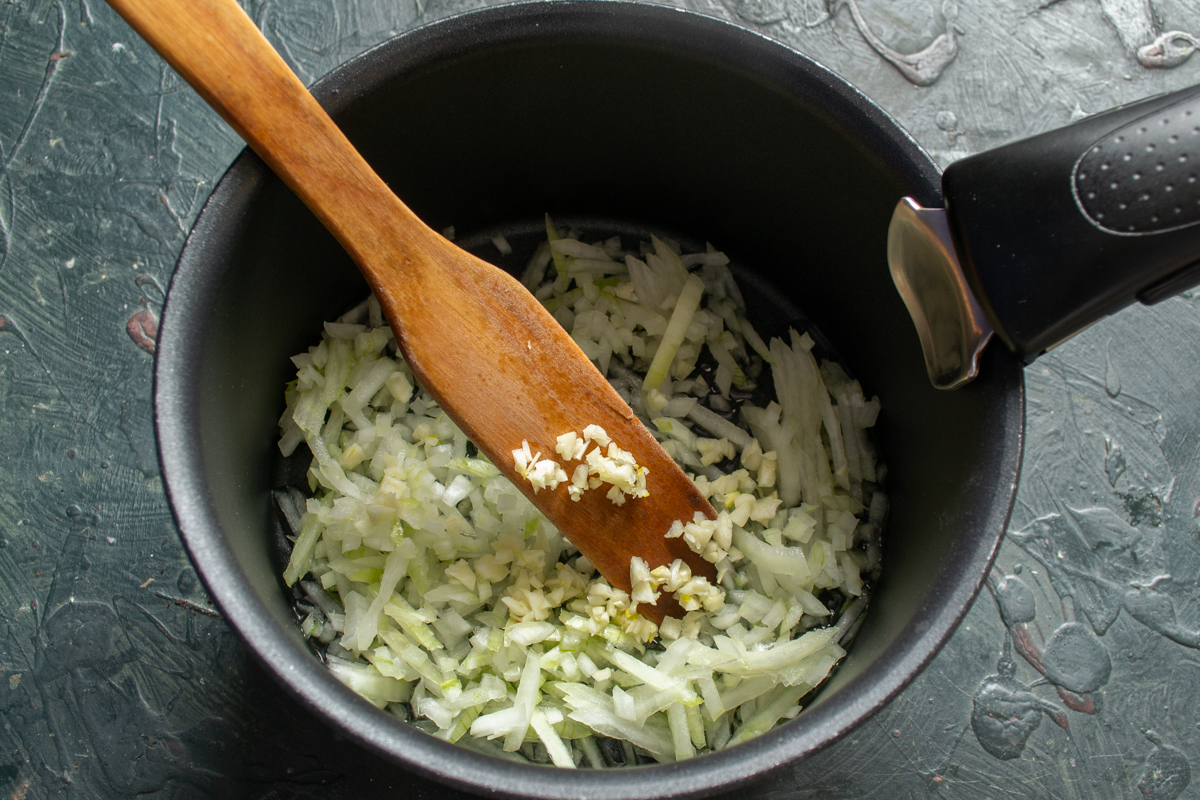
Sauté the onion and garlic until they develop a light golden hue and release their signature aroma.
Finely chop the celery stalks along with the leaves. Add them to the onion and sauté the vegetables together for about 12 minutes, until they become translucent.
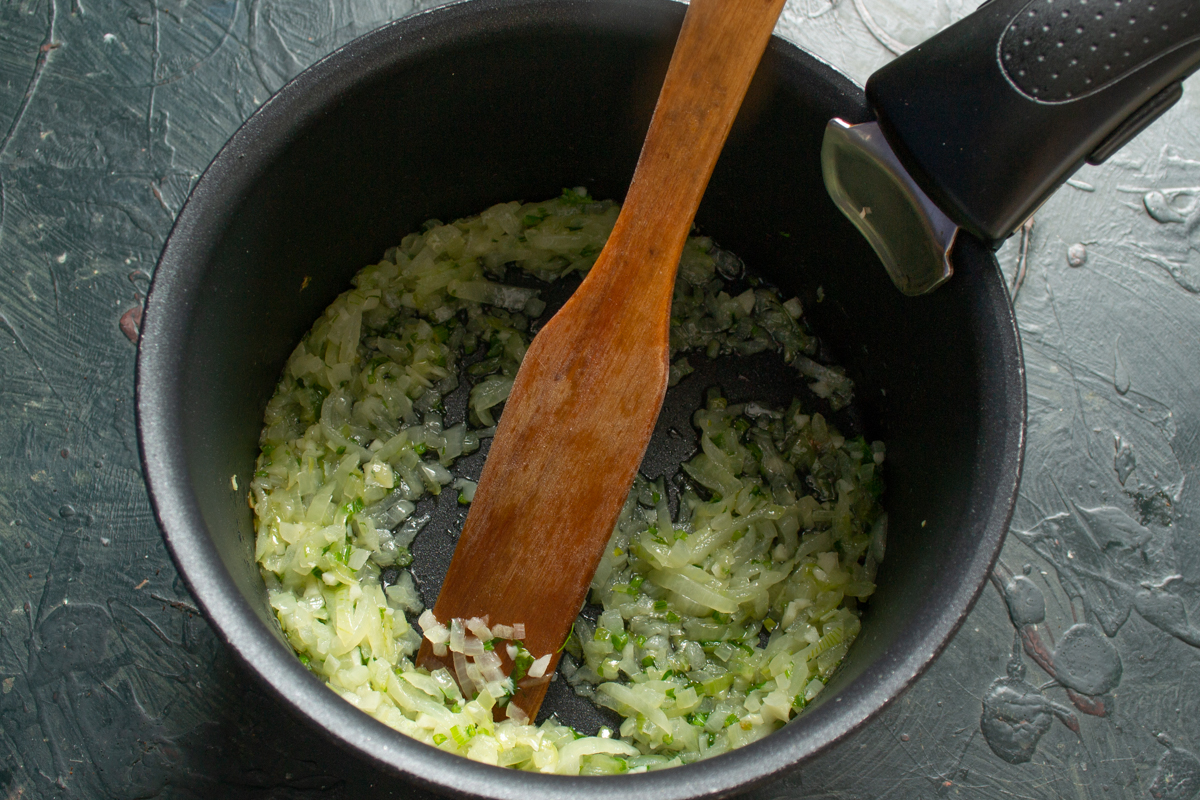
Celery brings a bright freshness to the soup and makes the vegetable base's flavor much more complex and interesting.
Dice the potatoes into small cubes. Add the chopped potatoes to the sautéed vegetables.
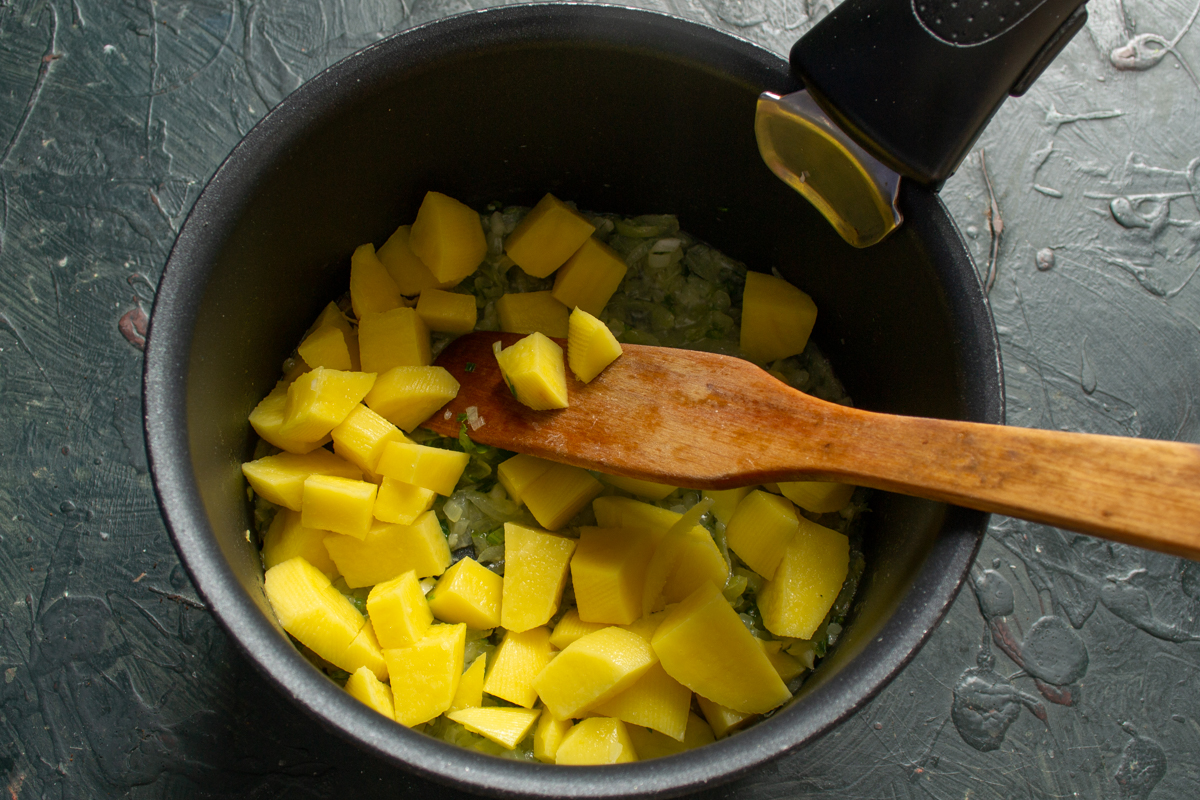
Dice the potatoes into equal, small cubes to ensure they cook evenly and at the same time.
Pour in half of the fish broth. Bring to a boil and cook for about 10 minutes until the potatoes are tender—if the cubes are small, this is plenty of time.
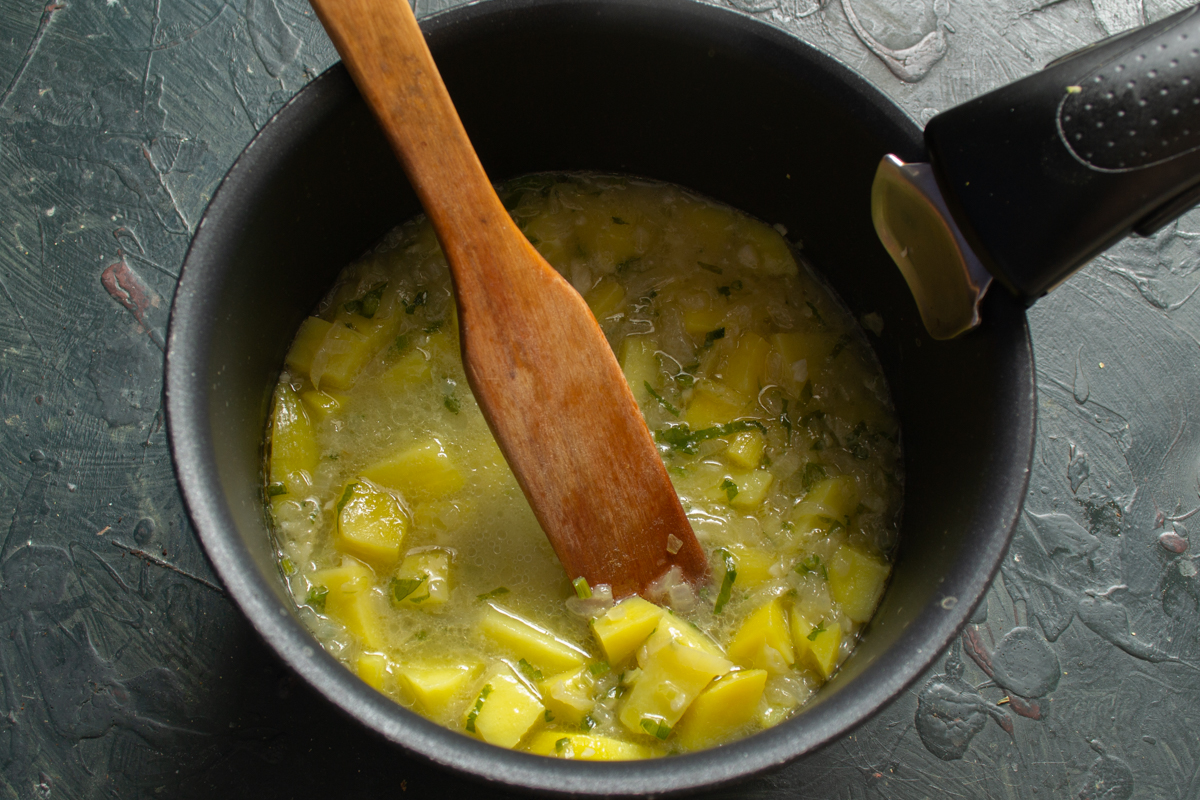
Simmer the potatoes in half of the broth until fully tender—this will take about 10 minutes.
Add the chopped sweet red bell pepper. For this recipe, you can and absolutely should use marinated or pickled peppers; it makes the soup taste so much better.
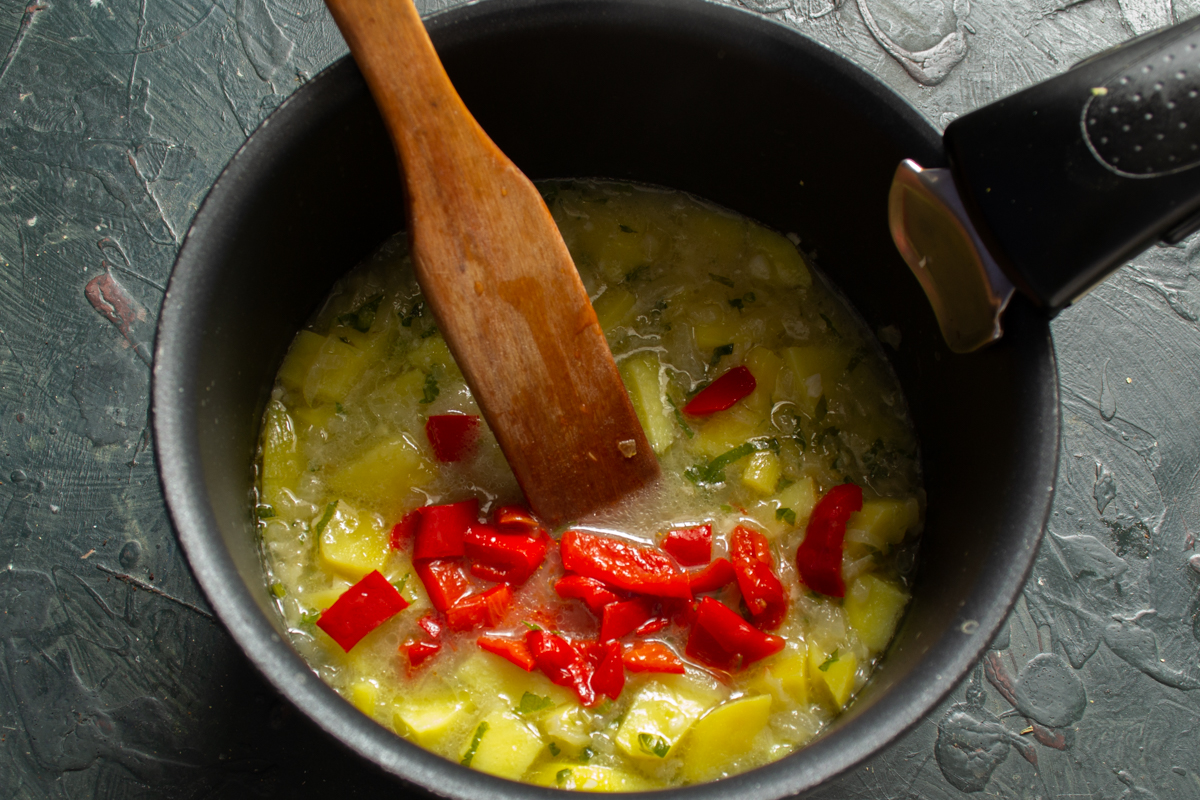
Using marinated bell peppers will give the solyanka a wonderful savory kick and a pleasant tanginess.
Stir in puréed canned tomatoes or fresh tomato purée. If using fresh tomatoes, blanch them, remove the skins, and blend them into a smooth purée.
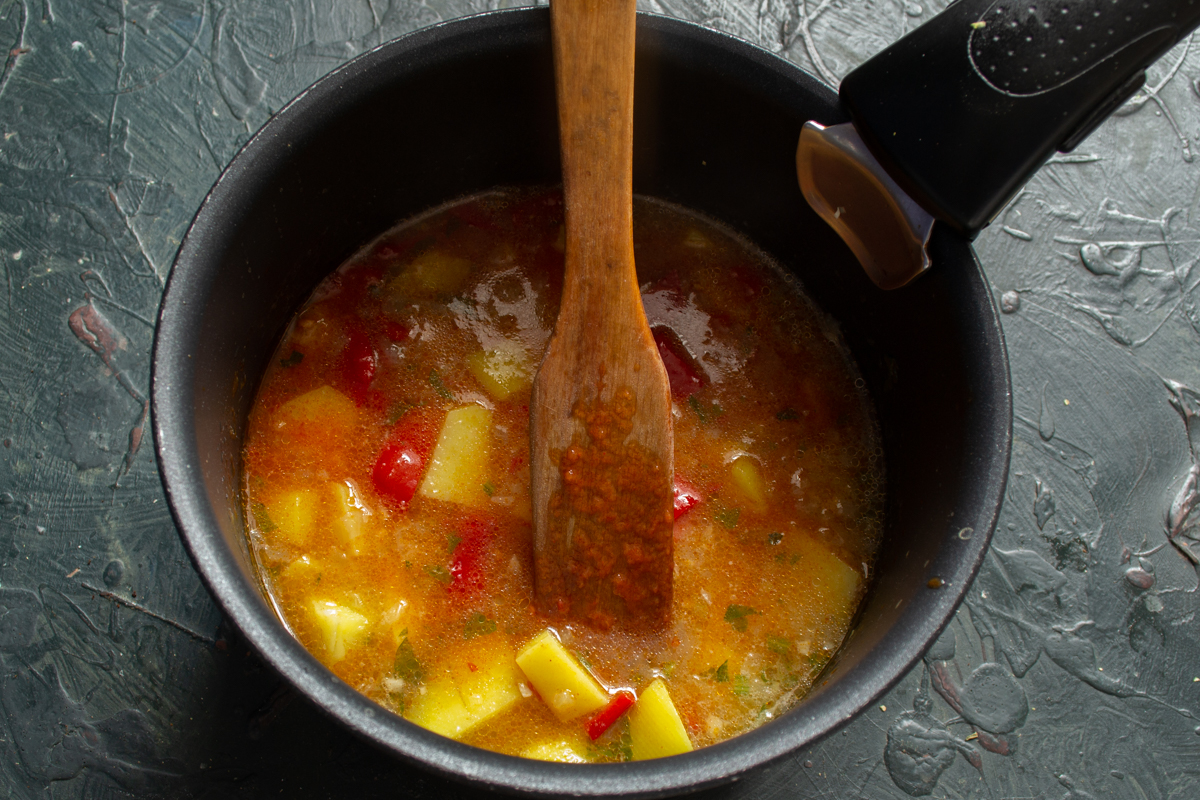
The tomatoes give the solyanka its signature vibrant color and a beautifully rich consistency.
Pour in the remaining fish broth and gently lay the fish pieces into the pot. Season with salt and pepper to taste, then bring everything to a boil.
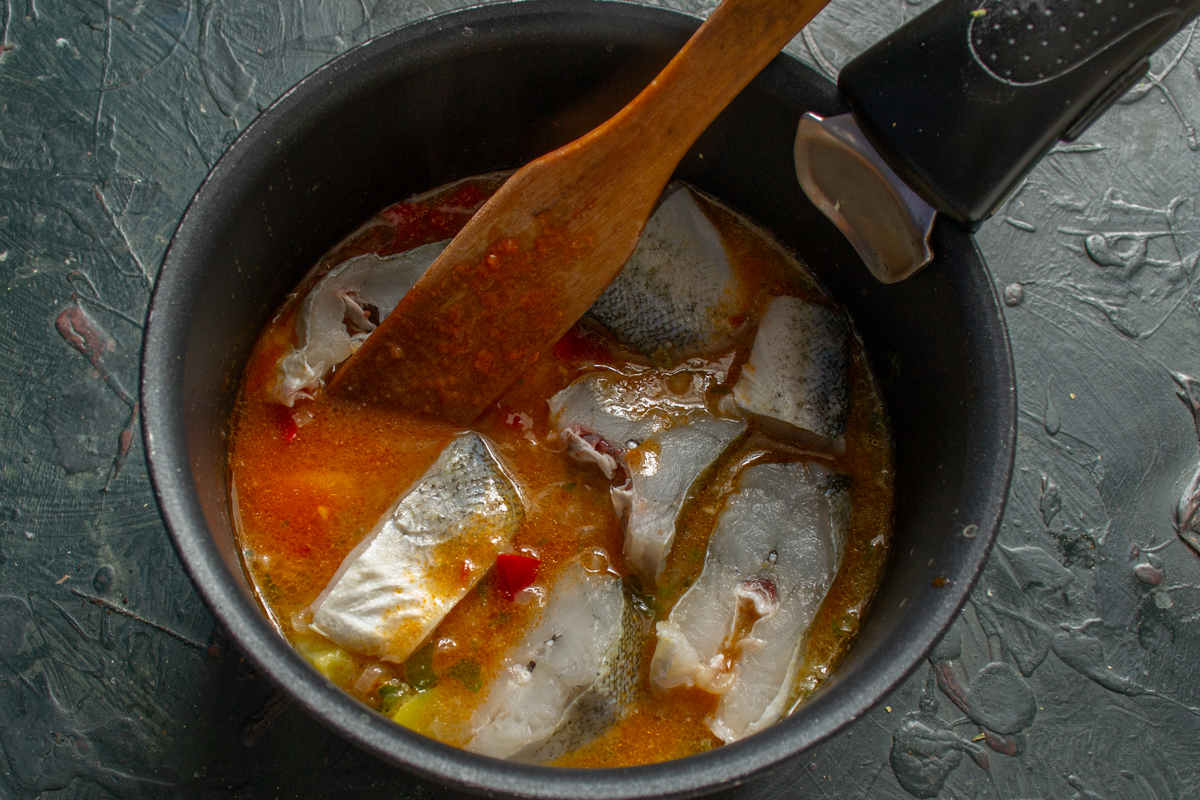
Gently add the fish at the very end of cooking so it remains tender and does not fall apart.
Toss in 2 to 3 bay leaves and simmer over low heat for 20 minutes. Leave the pot uncovered.
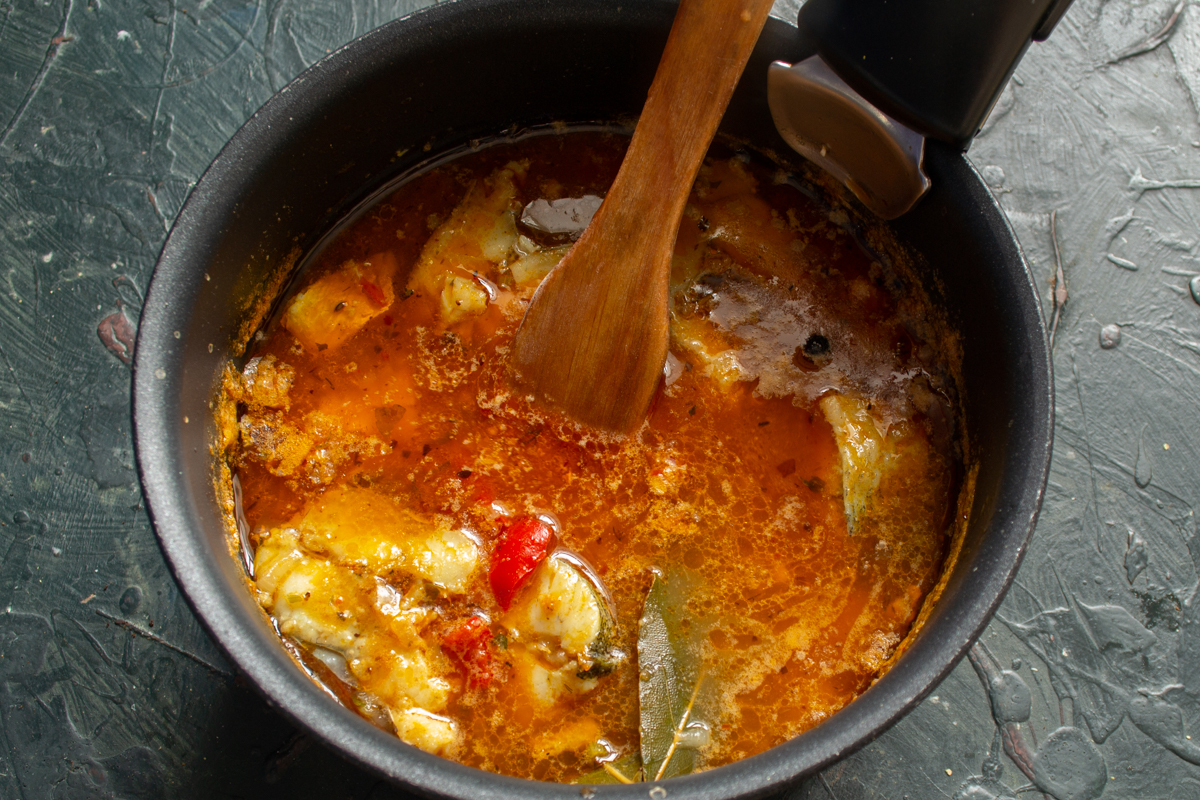
Let the soup simmer for another 20 minutes uncovered so all the ingredients can exchange their rich aromas.
Ladle the vegetables into a bowl first, top with the fish pieces, and pour that rich, hearty broth over everything. Finish the fish solyanka with a pinch of freshly ground black pepper and serve it piping hot alongside fresh white bread or flatbread. Dipping pieces of flatbread into this soup is incredibly delicious—you have to try it.
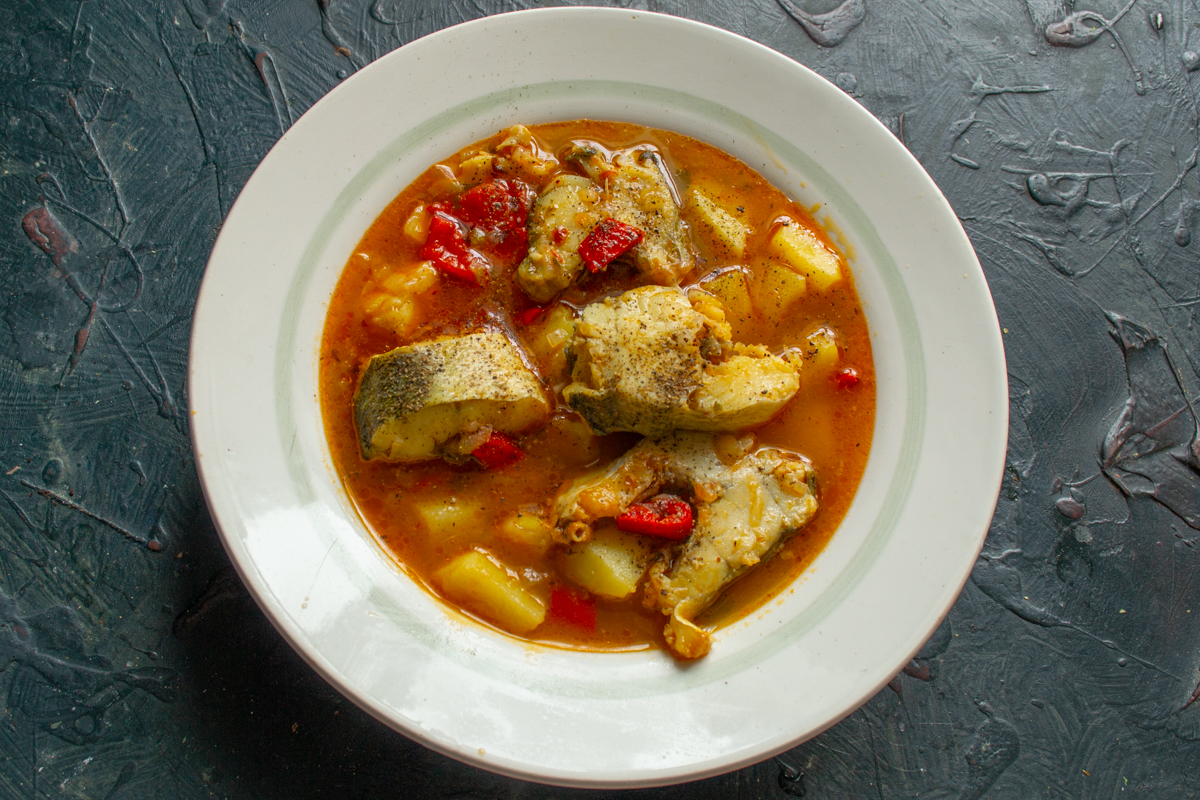
Be sure to add freshly ground black pepper before serving. The rich broth and tender fish are absolutely delicious!
To make your Fish Solyanka even more expressive, try experimenting with the presentation. Add a slice of lemon, a few olives, or capers to each bowl—these classic additions enhance the fish flavor and amplify the savory notes of the pickled peppers. If you want to achieve a deeper aroma, let the soup steep under a lid for 10 to 15 minutes after turning off the heat; this allows all the ingredients to finally meld together. By the way, fish solyanka is perfect for portioned baking in the oven. Divide the sautéed vegetables, potatoes, and fish pieces into clay pots, pour the broth over them, and braise at 180 C (350 F) for about half an hour. This method preserves maximum juiciness and creates the atmosphere of a rustic feast. It is best to store leftover soup in the refrigerator for no more than two days, and when reheating, try not to bring it to a rolling boil so that the tender pieces of fish maintain their shape and texture.
0 comments