
This is the simplest recipe for a spicy homemade hot pepper condiment. This aromatic raw adjika turns out incredibly delicious with sweet paprika and garlic. Choose chili peppers that are not overly scorching so the condiment remains edible. Use thin rubber gloves when handling the peppers; this will protect your hands from the burning juices. The tradition of making this appetizer is deeply rooted in Caucasian cuisine, where the name of the sauce itself is closely tied to salt and spices. During the aging process, the fiery capsaicin gradually mellows, while the aromas of garlic and khmeli-suneli (traditional Georgian dry spice blend) weave into a single spicy bouquet, filling the kitchen with the teasing scents of a southern summer. Adjika is not ready to eat right away—it needs time to mature and infuse, requiring at least a week to age properly. Store raw adjika in the refrigerator or a cold cellar.
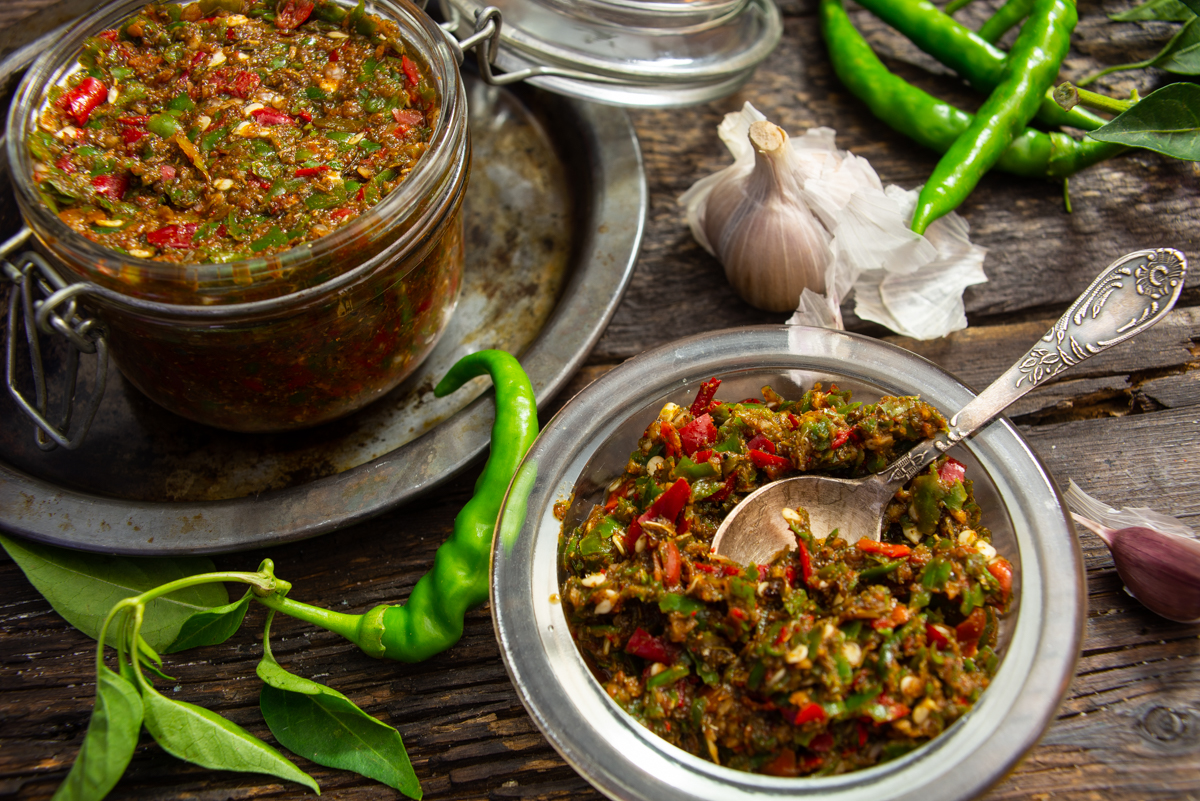
Homemade raw adjika is a true explosion of flavor and vitamins that perfectly complements any meat.
Ingredients
- 500 g (1.1 lbs) spicy chili peppers or hot peppers
- 2 heads of garlic
- 70 g (2.5 oz) table salt
- 2 tablespoons khmeli-suneli (traditional Georgian spice blend)
- 1 tablespoon sweet ground paprika
How to Make Raw Adjika with Paprika, Chili, and Garlic
Before cooking, the peppers need to be slightly withered. Depending on their juiciness and room temperature, this will take 1 to 3 days. Rinse the peppers in cold water and drain in a colander. Pat dry with paper towels and arrange them on a baking sheet or tray. Leave in a warm room for 24 to 72 hours. Once the peppers are slightly shriveled, you can start making the adjika. Technically, you could use freshly picked peppers, but the resulting adjika will be very watery. You would have to drain the excess juice, which feels like a waste to me. You can use red peppers, green ones, or a mix of both.
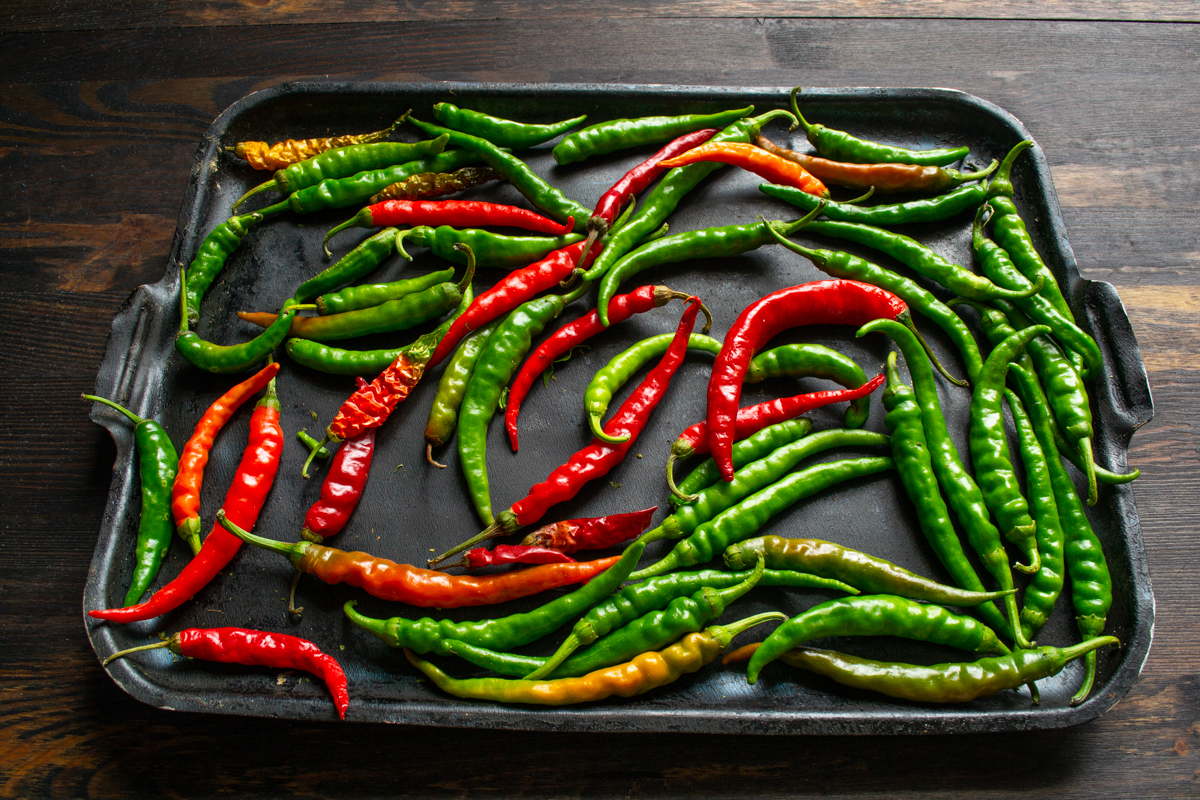
Before cooking, let the peppers rest for a few days to remove excess moisture.
Snip off the stems first. Scissors work great for this: hold the pepper in one hand and cut the stem off with the other. Next, slice the peppers lengthwise and remove the seeds and membranes. A few seeds might remain, but try to get most of them out. Let me remind you again: wearing thin rubber gloves at this stage is a very good idea. Crush the garlic heads with a knife, peel the cloves, and add them to the peppers.
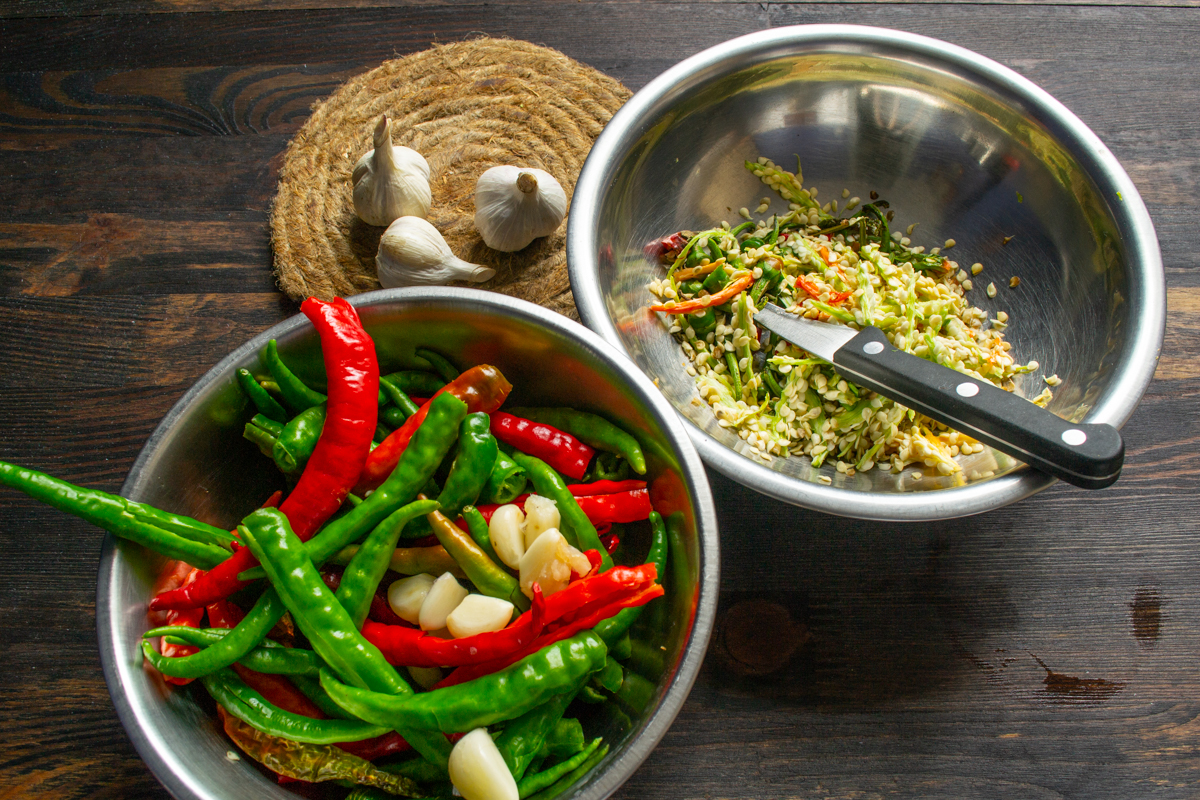
Removing the seeds makes the adjika less fiery and much thicker.
Now it is time to grind the peppers and garlic. Some people use an old-fashioned meat grinder with a fine plate, but I prefer pulsing them in a food processor. Place the peppers and garlic into the processor bowl.
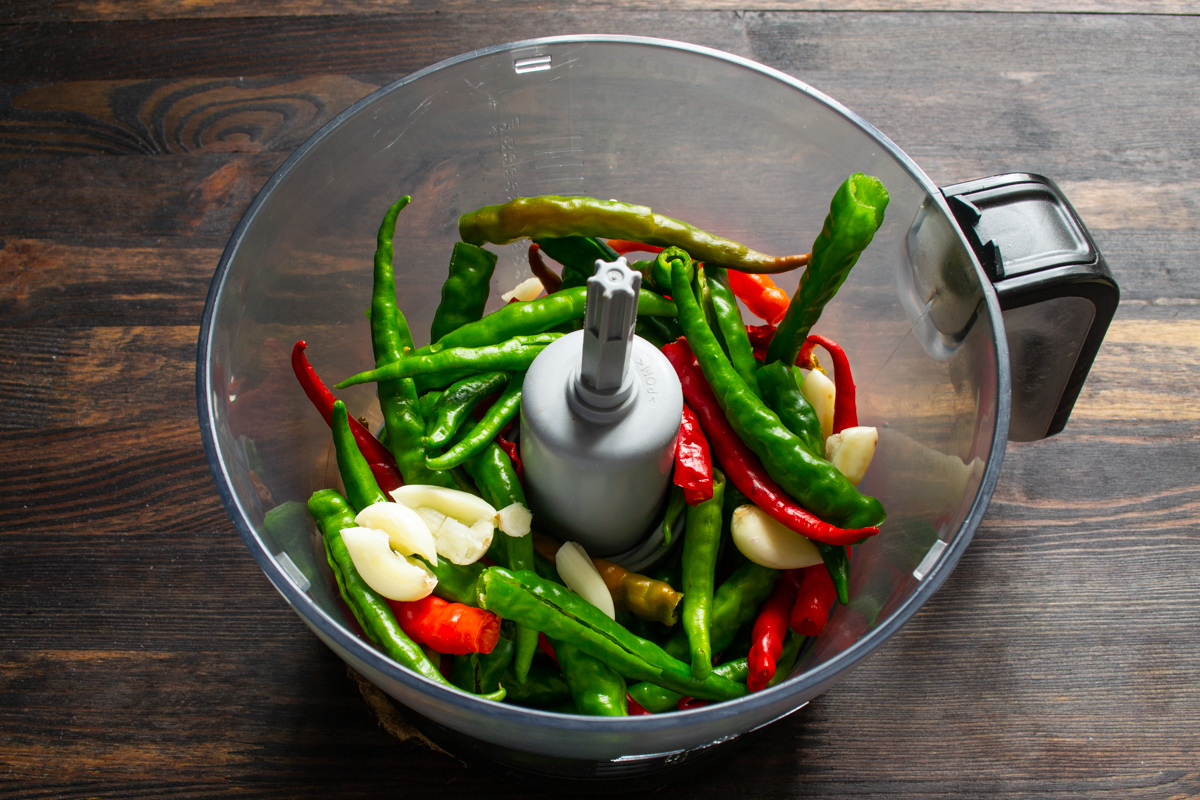
A food processor is the fastest way to mince a large amount of hot peppers.
Secure the lid tightly and pulse the peppers and garlic for a few minutes. I highly advise against leaning over the food processor right now—the pungent pepper fumes literally fill the air and settle on everything around. Sometimes it even makes your face burn.
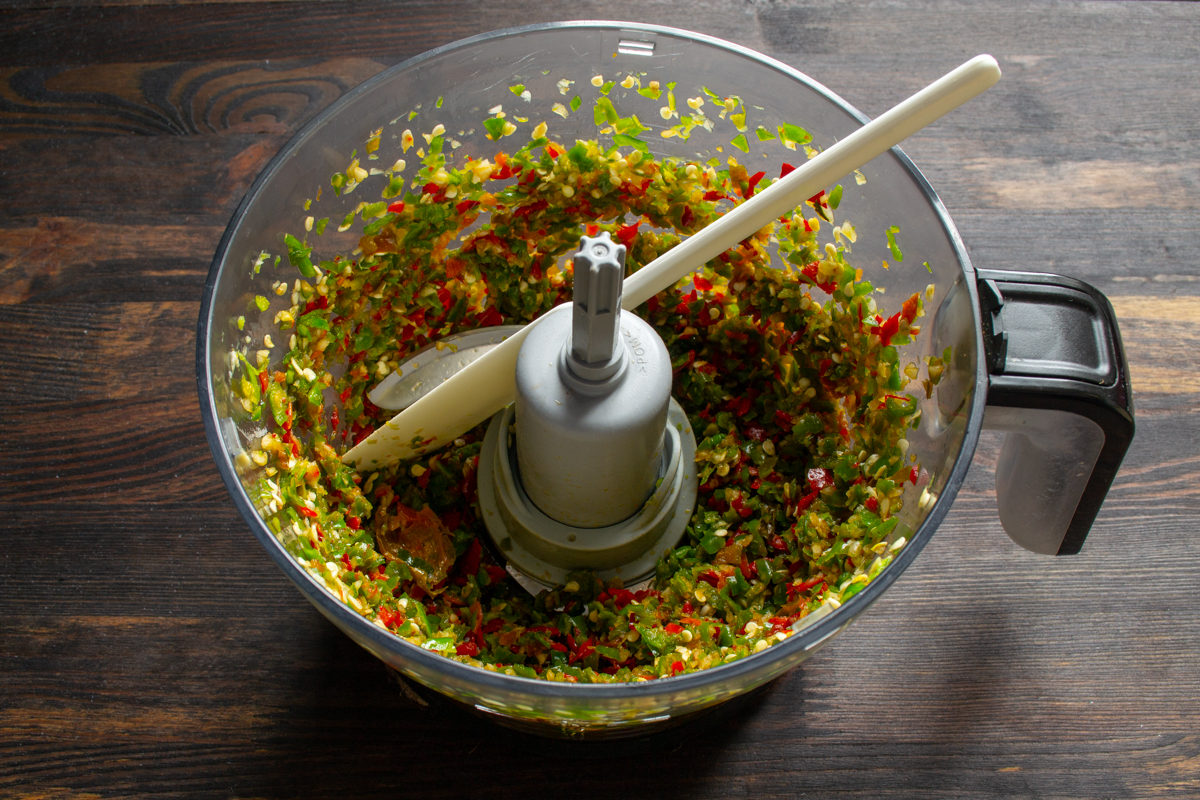
Be careful of the pungent aroma when opening the processor lid.
Scrape down the sides of the bowl with a spatula. Add the table salt, sweet ground paprika, and khmeli-suneli (traditional Georgian dry spice blend). Using dry spices for adjika is crucial, as they help absorb excess moisture.
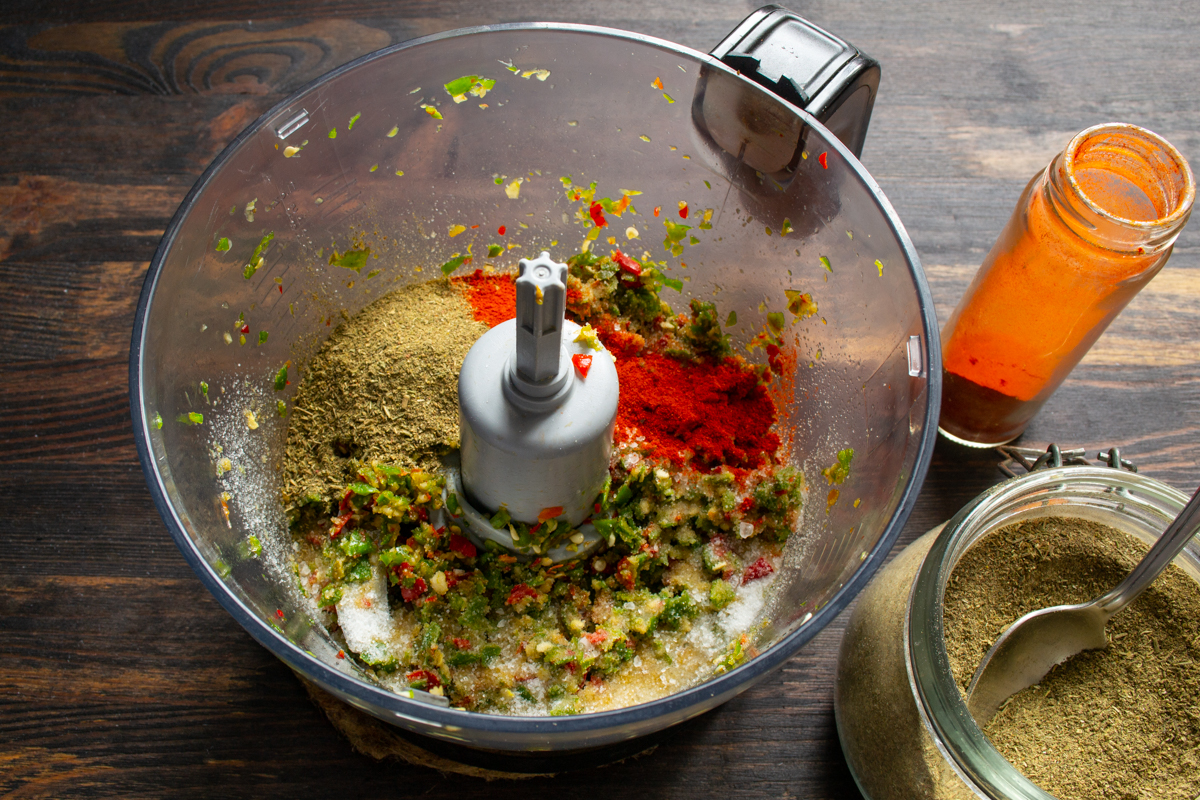
Dry spices absorb the vegetable juice and make the adjika flavor richer.
Pulse all the ingredients again with the salt and spices. Blend for a few minutes until the adjika looks beautifully speckled with fine, appetizing pieces.
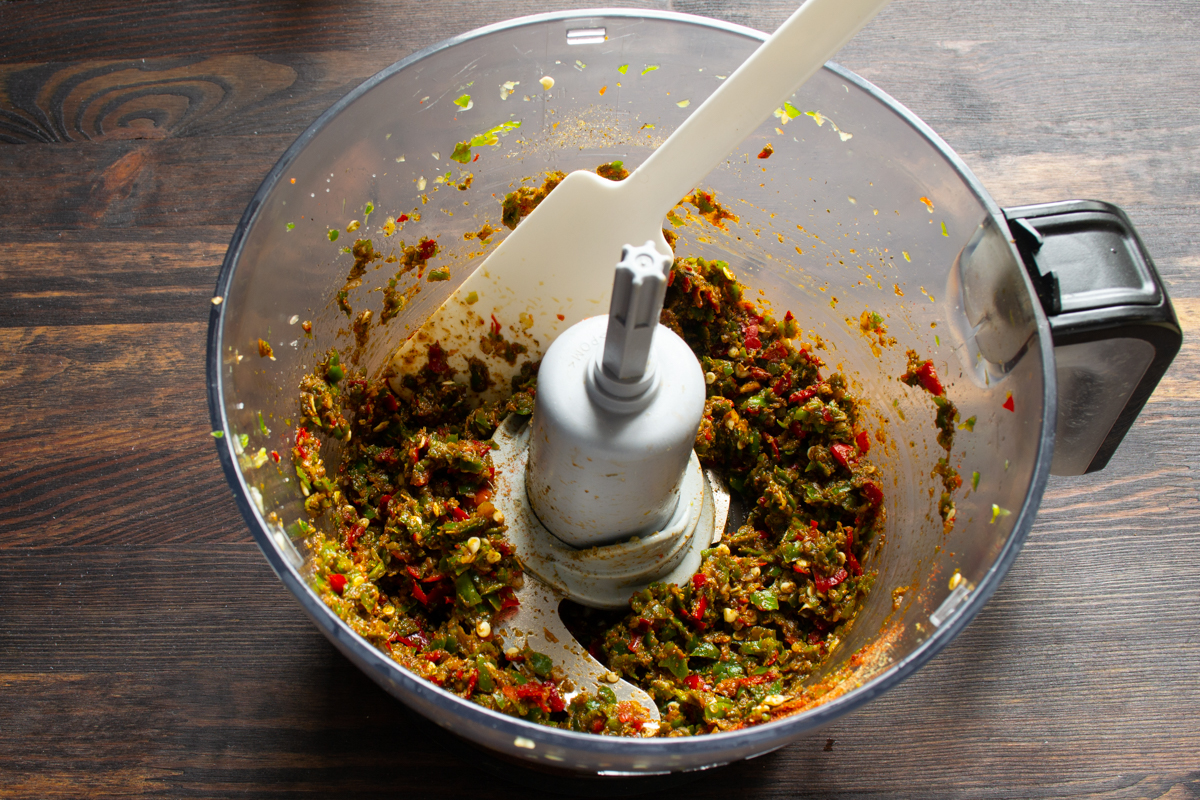
Pulse the mixture until smooth with small, appetizing pieces.
Use jars with airtight lids to store your raw adjika. Wash the jars thoroughly, rinse with boiling water, and dry completely. Pack the adjika into the dry jars, pressing it down firmly to eliminate any air pockets.
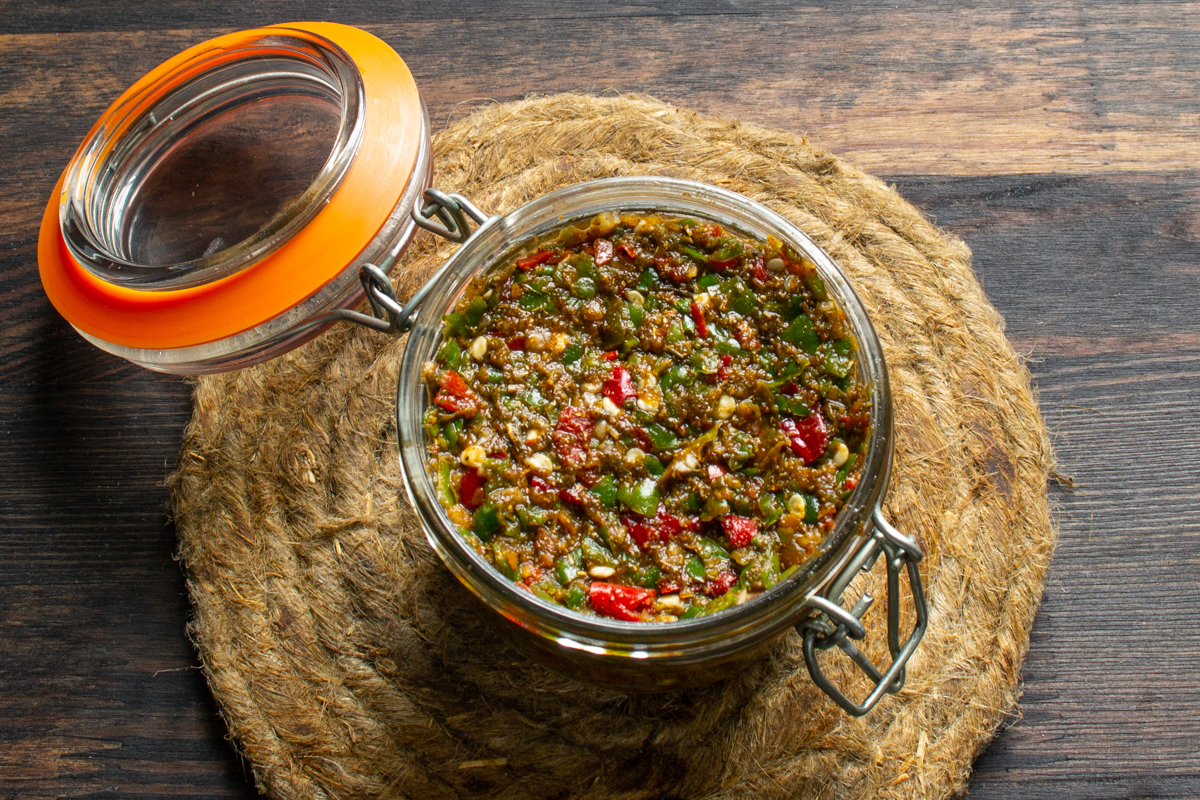
Use sterile, dry jars to ensure the long-term storage of this raw product.
Store the raw adjika with paprika and garlic in the refrigerator and let it age for about a week to fully develop its flavors.
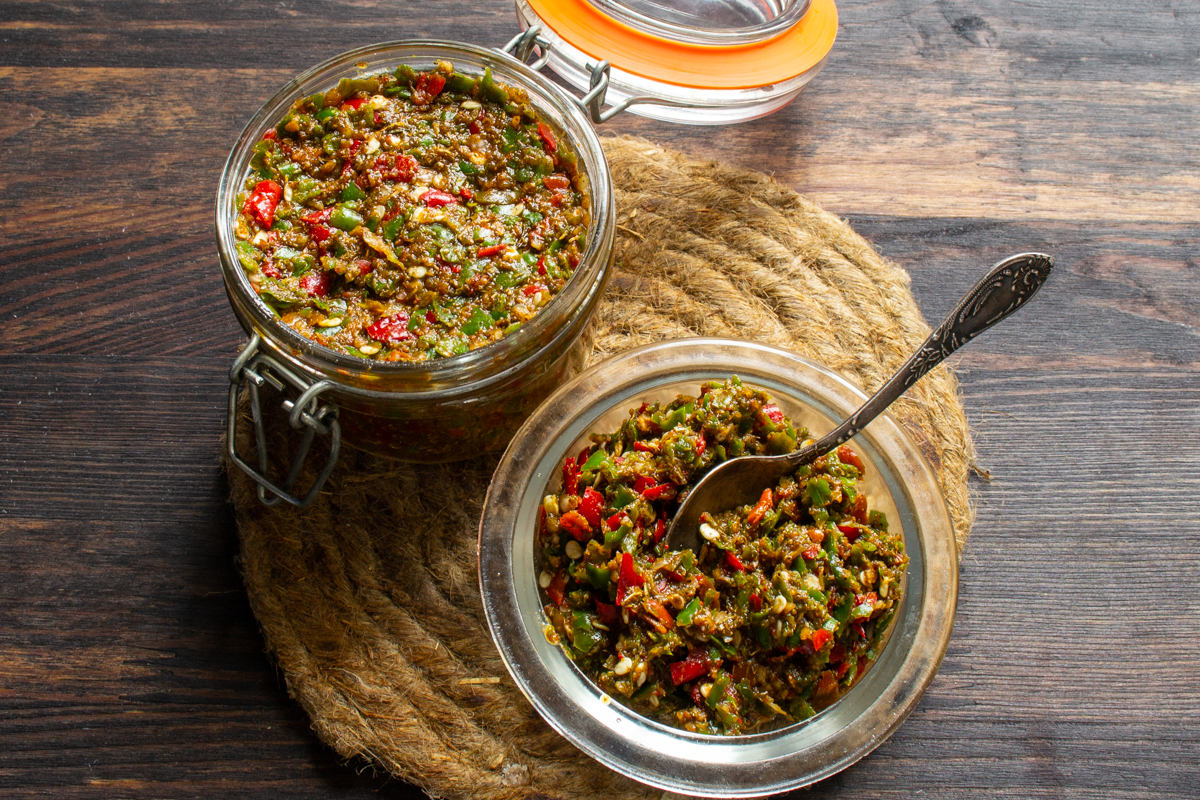
After a week in the refrigerator, the adjika will mature and its flavor will become perfectly balanced.
Raw adjika with paprika, chili, and garlic is a versatile condiment for true heat lovers. It opens up beautifully in hot soups like kharcho (Georgian beef and walnut soup) or bograch (Hungarian-style meat stew), and serves as an ideal marinade base for kebabs or baked steaks. Try adding a spoonful to your homemade burger sauce or simply spread it on a thin slice of Borodinsky bread (traditional Russian dark rye bread) with salo (cured pork fat)—this combination will give you an unforgettable gastronomic experience and warm you up during the cold season. To ensure your raw adjika with paprika, chili, and garlic retains its quality for as long as possible, always use a clean, dry spoon when scooping the sauce from the jar. The capsaicin in hot peppers is a natural antiseptic and an excellent appetite stimulant, while the absence of heat treatment preserves maximum vitamins. If the flavor seems too sharp, try mixing the adjika with a little smetana (sour cream) or thick yogurt when serving for a spicy yet creamy dip.
0 comments