
Welcome to a recipe that's as beautiful as it is delicious! This Quick Pickled Cabbage with Ginger and Beets is a modern twist on traditional Eastern European pickling. Forget bland side dishes; this cabbage is bursting with flavor, a satisfying crunch, and a stunning pink hue from the fresh beets. The zesty kick of ginger and chili perfectly complements the sweetness of the apples, creating a complex and addictive taste. It's not just a side dish; it's a vibrant condiment, a healthy snack, and a fantastic way to brighten up any meal. Let's get pickling!
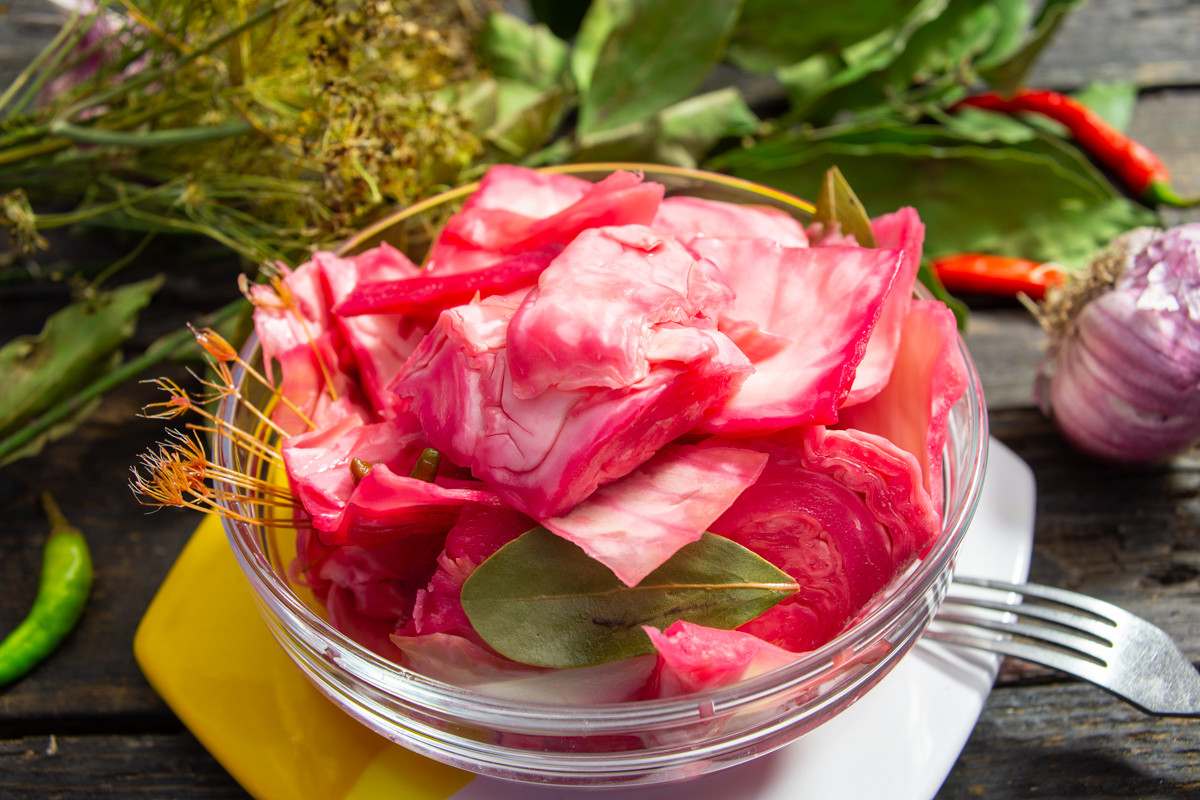
Quick pickled cabbage with ginger and beets.
Ingredients for Quick Pickled Cabbage with Ginger and Beets
- 2 kg (4.4 lbs) white cabbage
- 200 g (7 oz) beets
- 200 g (7 oz) apples
- 1 head of garlic
- 3 cm (1.2 in) ginger root
- 2 chili peppers
- 1 L (4 cups) water
- 20 g (1 tbsp) salt
- 120 g (1/2 cup + 2 tbsp) granulated sugar
- 1 tsp each of coriander, caraway, and mustard seeds
- a few bay leaves, dill umbels (flowering dill heads used for pickling)
How to Make Quick Pickled Cabbage with Ginger and Beets
Remove the outer leaves from a large, dense head of cabbage and cut the head in half. Remove the core.
Chop the cabbage into large pieces; I make chunks about 5 centimeters (2 inches) wide.
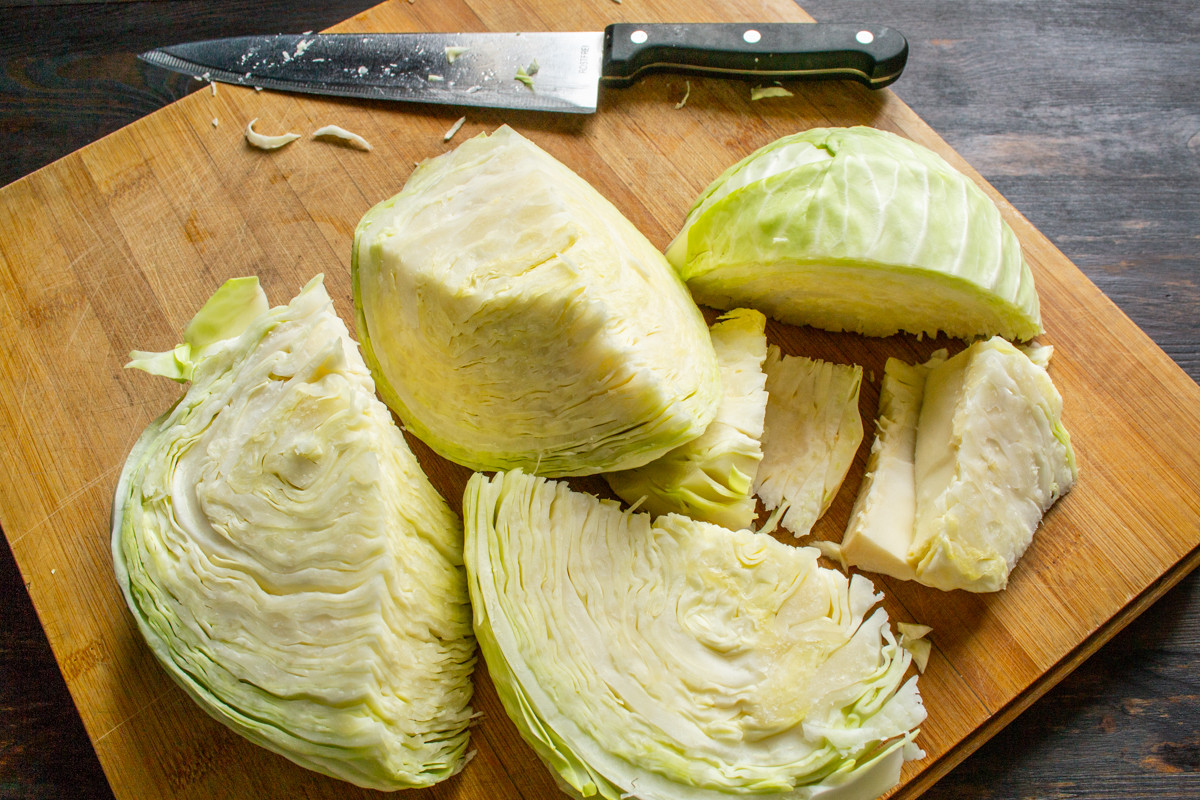
Cutting the head of cabbage in half.
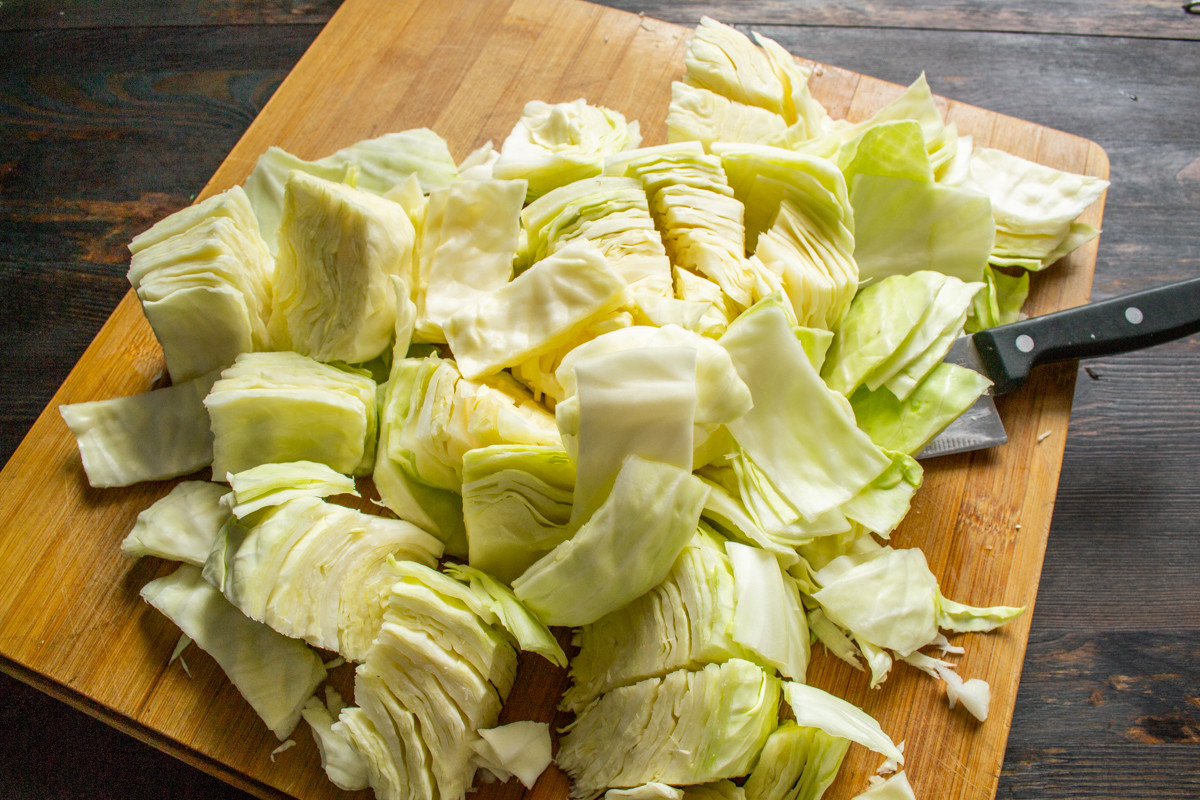
Chopping the cabbage into large pieces.
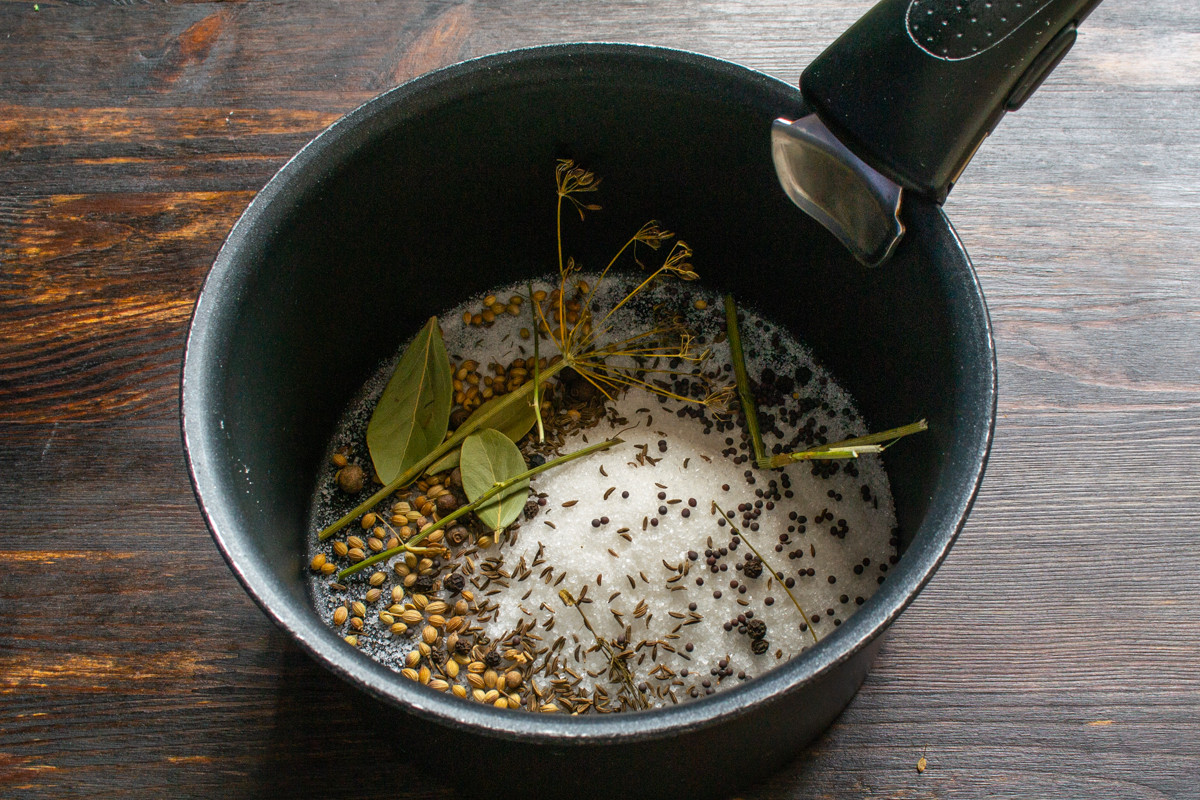
Adding a couple of dill umbels and a few bay leaves.
For the pickling brine, combine granulated sugar, salt, coriander seeds, caraway seeds, and mustard seeds in a saucepan. Add a couple of dill umbels and a few bay leaves. If you like, you can also add black peppercorns, allspice, a few cloves, or a cinnamon stick. Pour in the water, bring to a boil, and simmer for 5 minutes. You can make it without sugar and use honey instead. If using honey, add it to the brine as it cools.
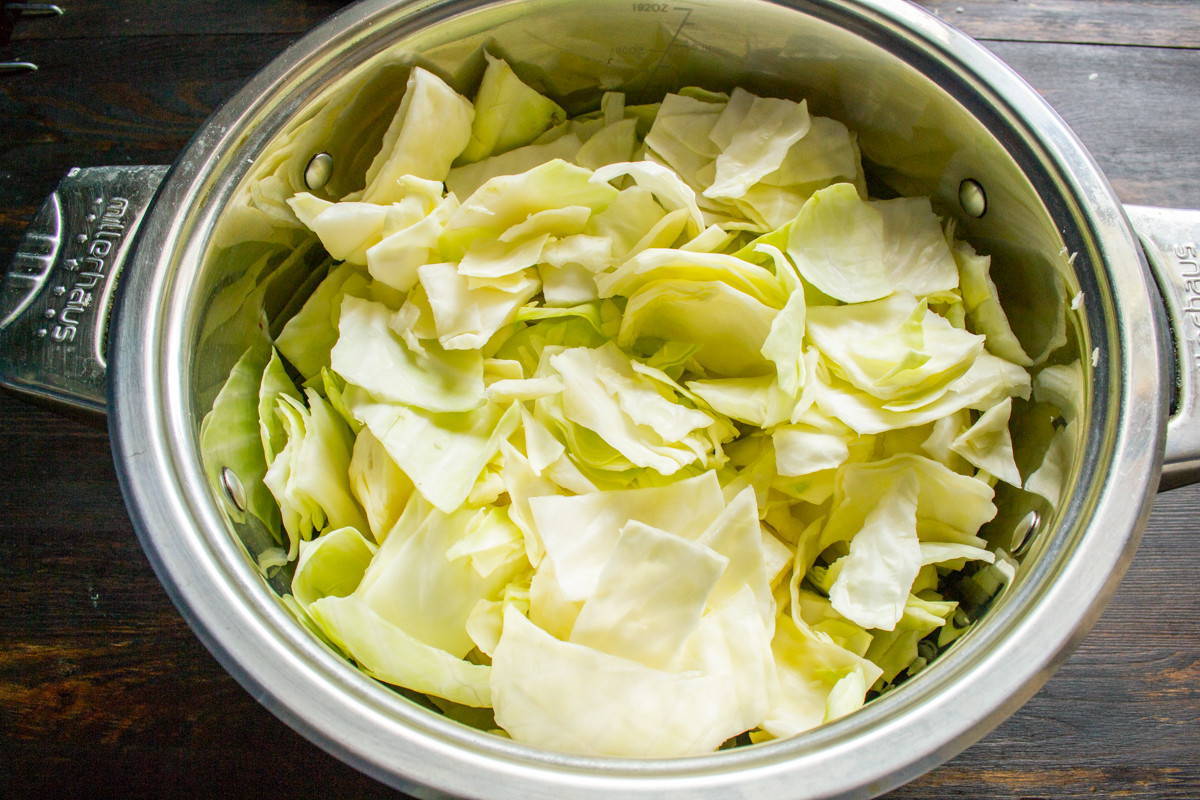
Placing the chopped cabbage into a pot.
I recommend using a large stainless steel, enameled, porcelain, or glass pot for pickling the cabbage. Place the chopped cabbage into the pot.
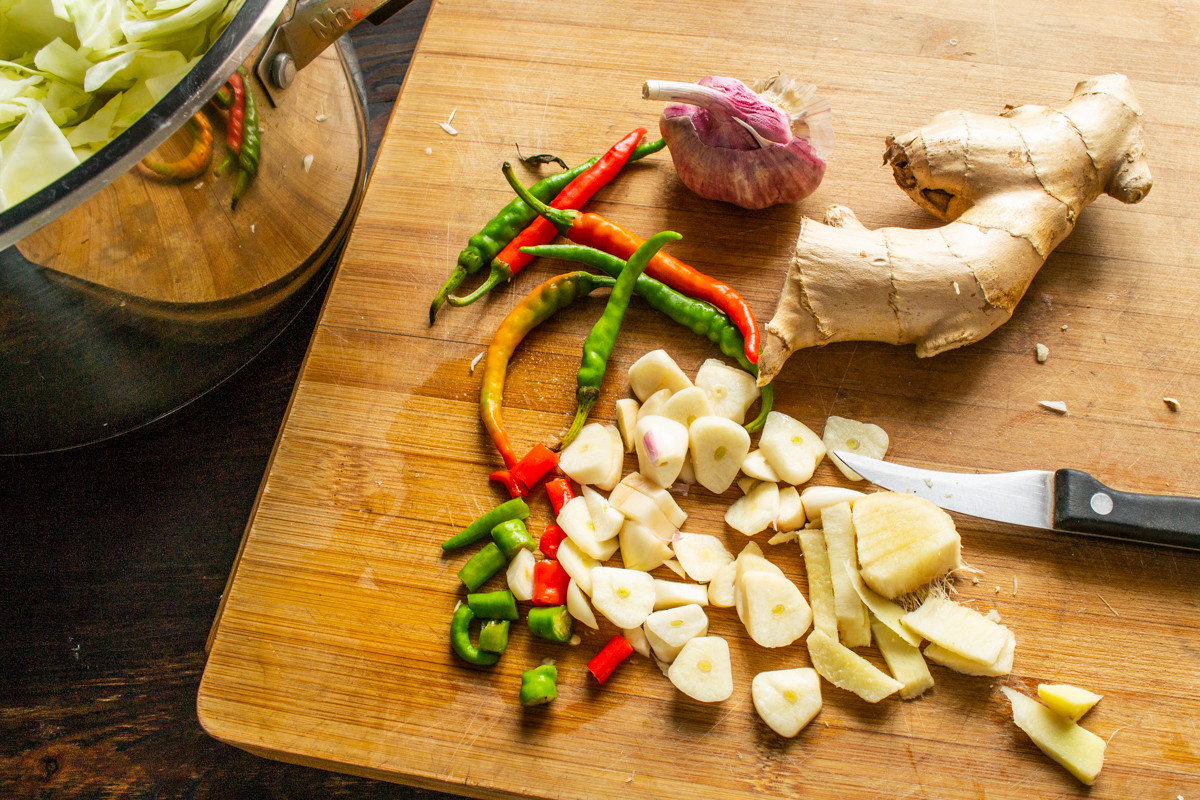
Slicing the garlic and ginger thinly.
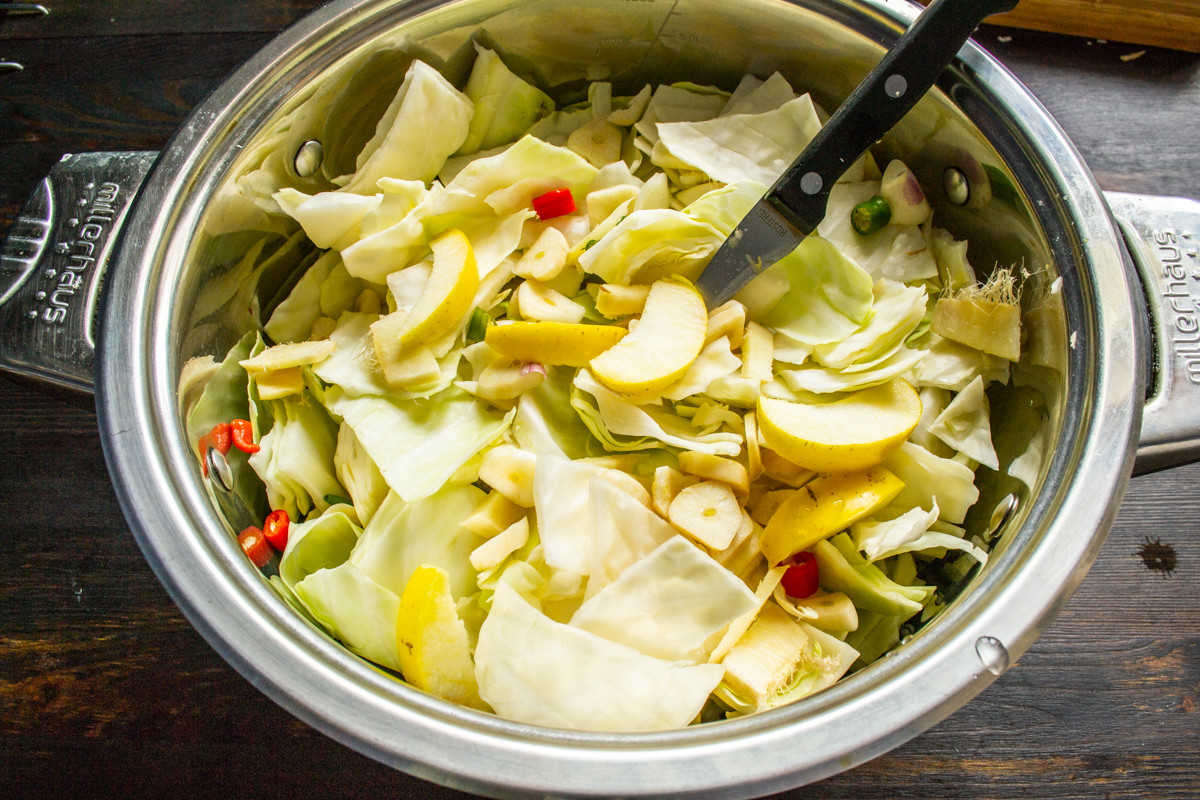
Cutting the apples into large wedges.
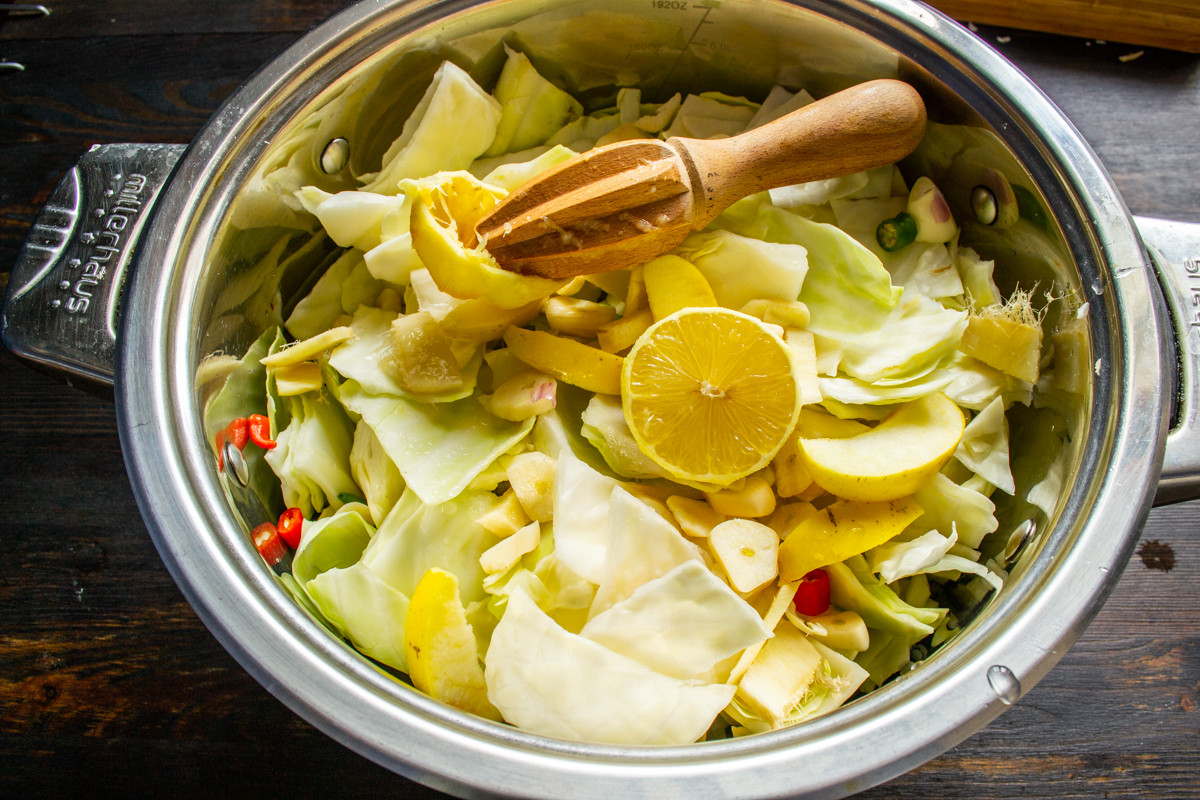
Squeezing lemon juice over the vegetables.
Peel the ginger root. Peel the garlic. Cut the chili pepper, and remove the seeds. Slice the garlic and ginger thinly, and cut the chili into rings.
Add the garlic, chili, and ginger to the cabbage. Cut the apples into large wedges and add them to the pot after the seasonings.
Squeeze the juice from a lemon over the vegetables. To prevent lemon seeds from getting into the salad, it’s best to strain the juice through a sieve.
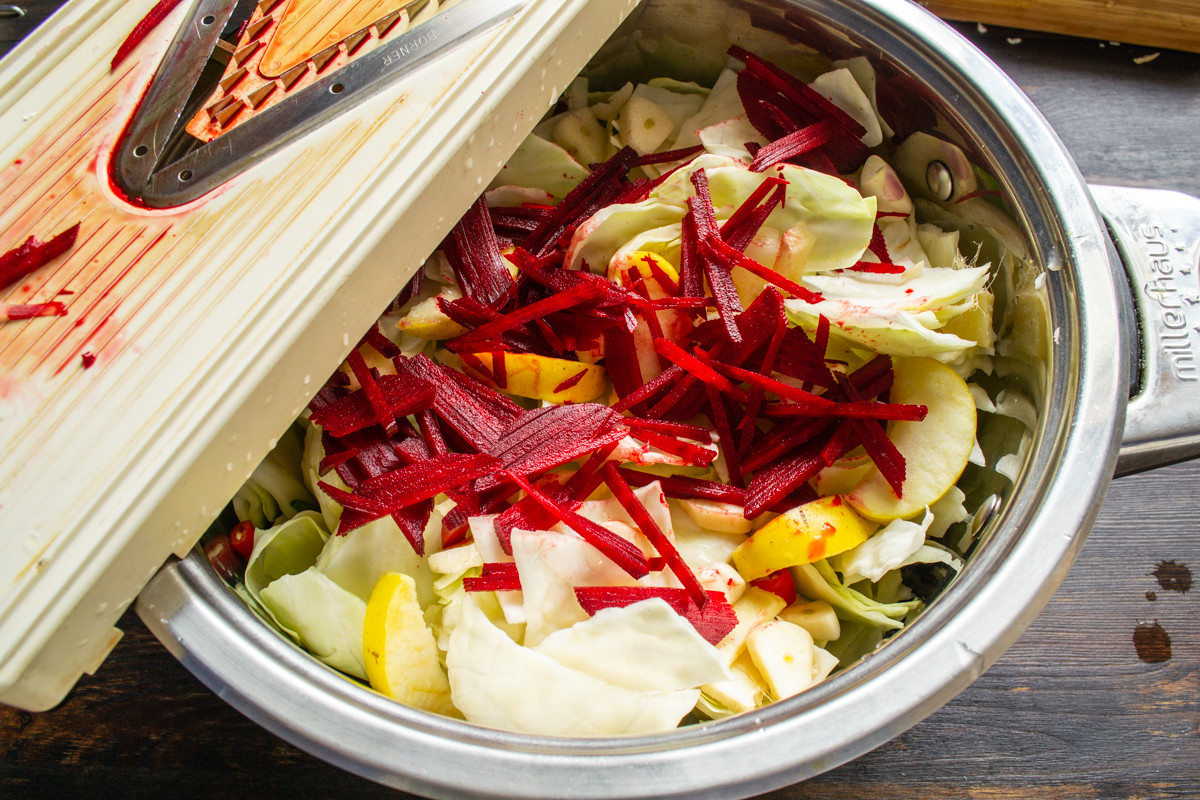
Shredding the beets into thin strips.
Peel the raw beet. Shred the beet into thin strips and add it to the other vegetables.
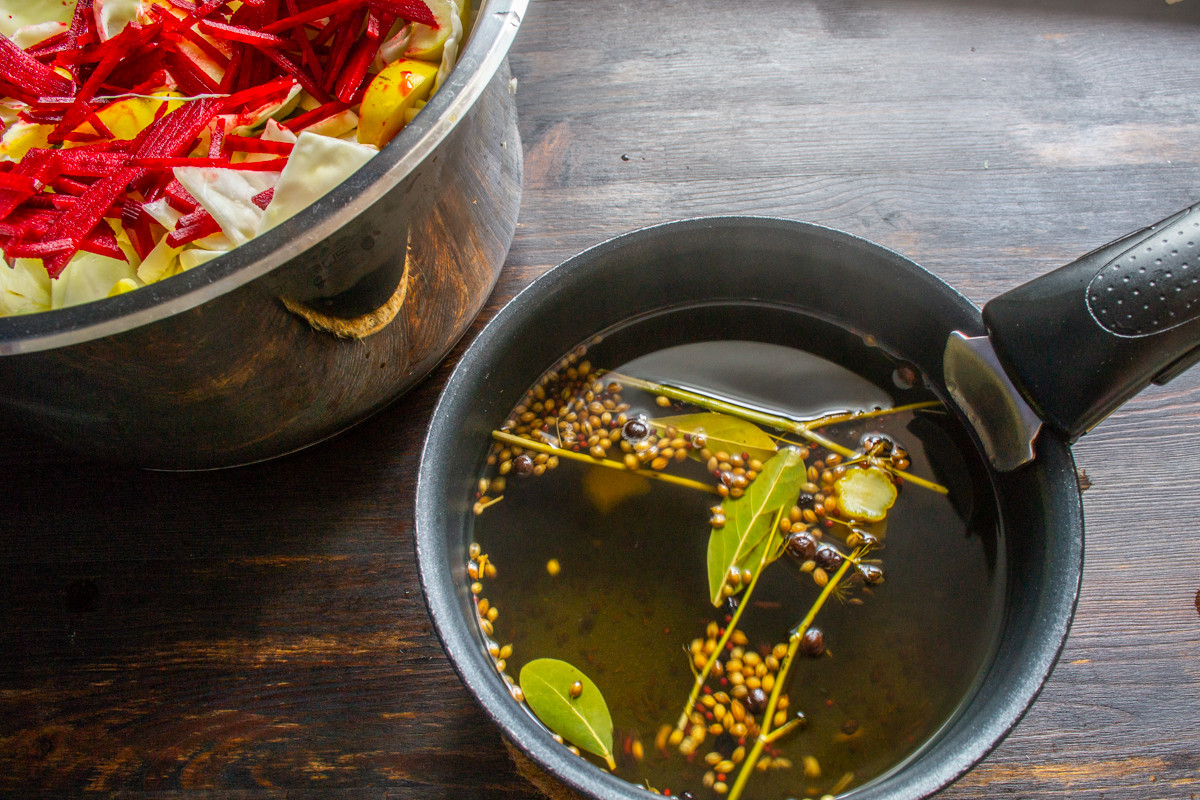
Cooling the pickling brine to almost room temperature.
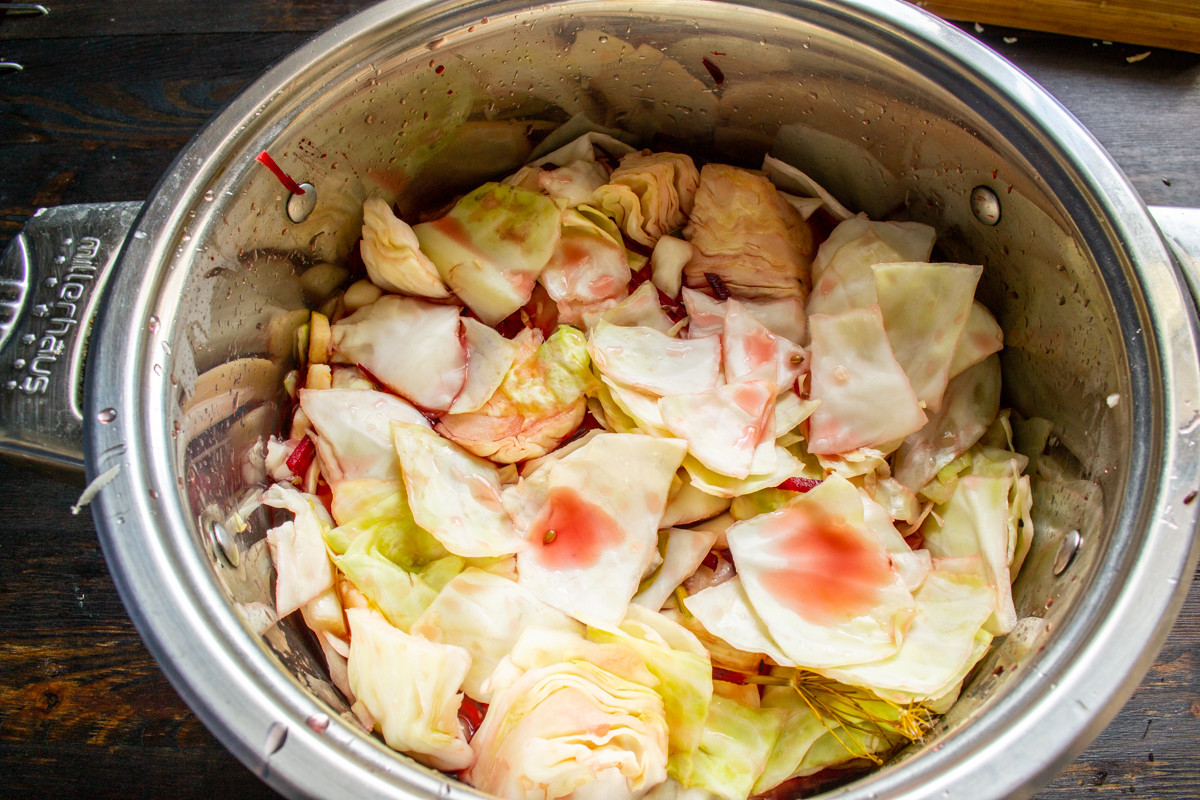
Pouring the brine into the pot with the vegetables.
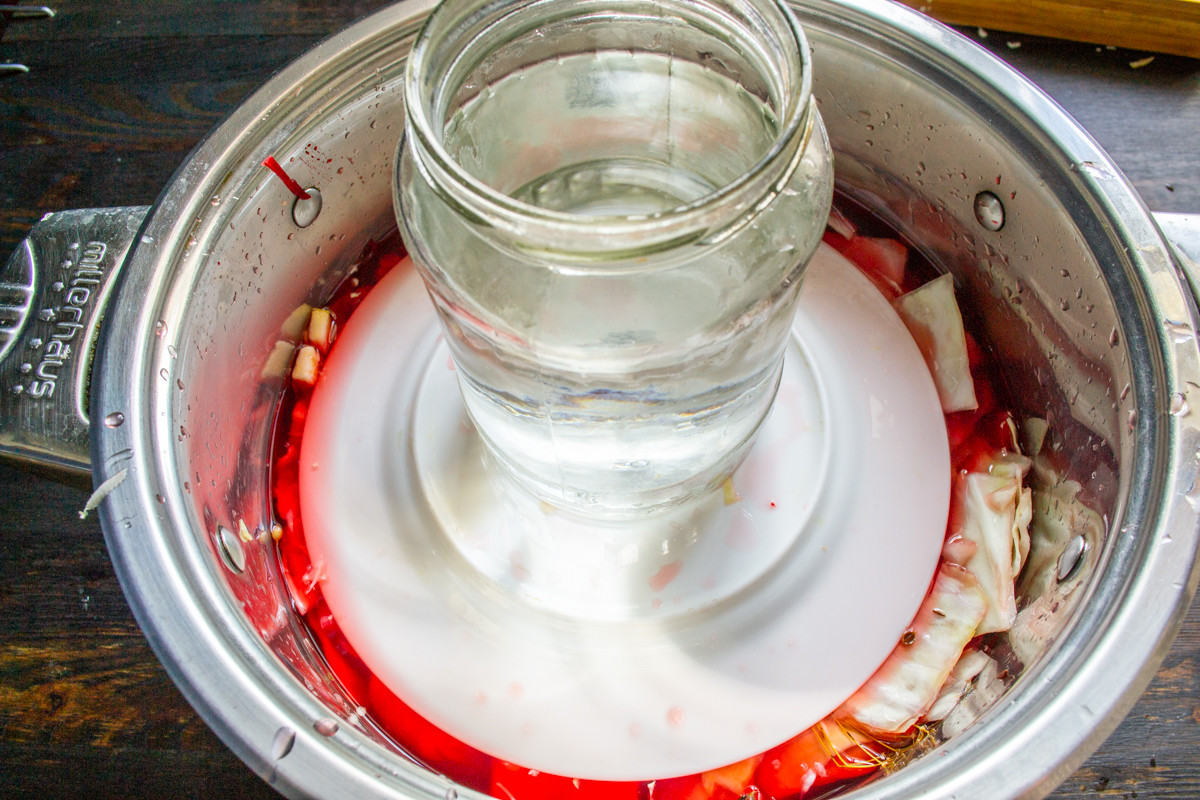
Pressing the vegetables down with a plate or saucer.
Let the pickling brine cool to almost room temperature; it can be slightly warm, but not hot.
Pour the brine into the pot with the vegetables. Mix the ingredients thoroughly, you can use your hands. If there isn’t enough brine, you can add a little cold boiled or filtered water.
Press the vegetables down with a plate or saucer, and place a weight on top, for example, a one-liter jar filled with water.
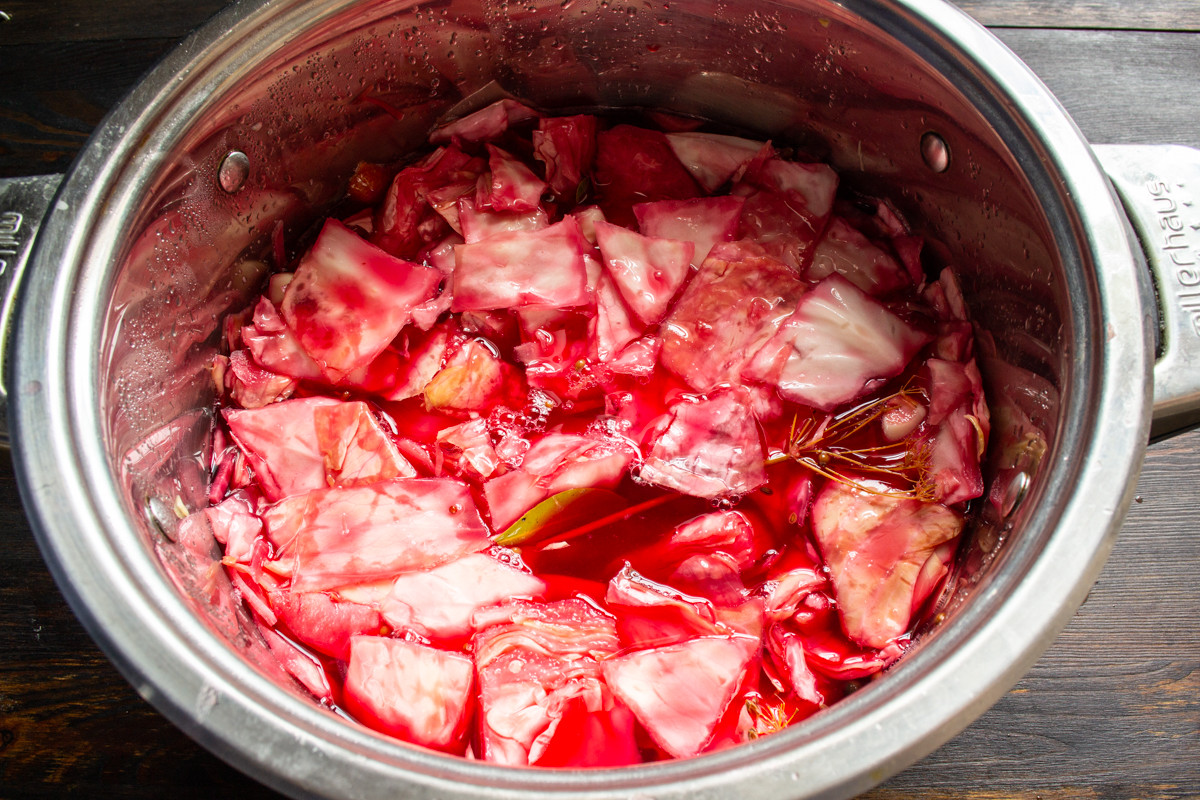
Leaving the cabbage at room temperature for 72 hours.
Cover the pot, including the weight, with a towel. Leave the cabbage at room temperature for 72 hours. You might need a little more or less time, as the process depends on the room temperature.
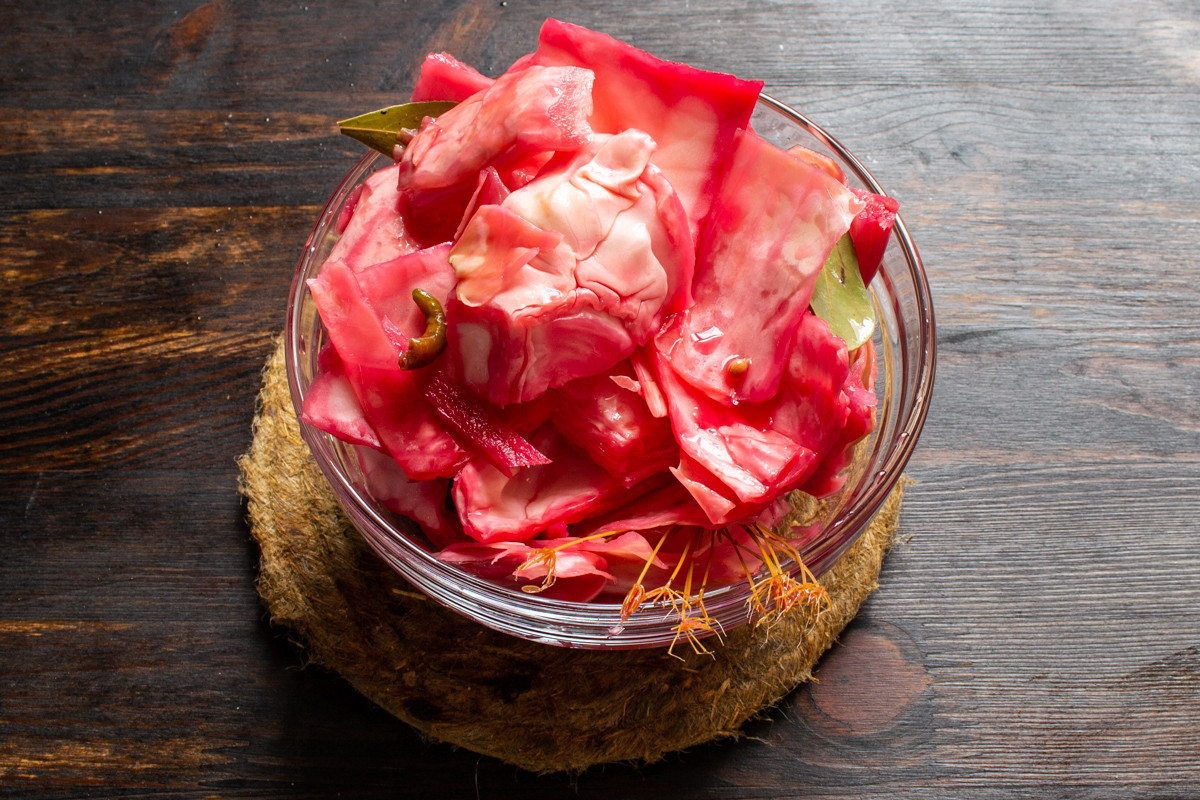
Enjoy your meal, crunch with pleasure!
And there you have it—a jar full of crunchy, tangy, and beautifully pink pickled cabbage! This versatile dish is fantastic served alongside roasted meats, piled onto sandwiches for extra crunch, or as part of a vibrant appetizer platter. Don't be afraid to experiment with the spices; a cinnamon stick or a few star anise pods can add a lovely warmth. Once pickled, store it in an airtight container in the refrigerator, where it will continue to develop its flavor and last for several weeks. Enjoy the delightful crunch and homemade goodness!
0 comments