
Every gardener knows the feeling: you turn your back for a day, and suddenly your perfect pickling cucumbers have transformed into giant, yellowing zeppelins! But don't despair. Those overgrown cucumbers aren't destined for the compost pile. This recipe is a traditional Eastern European secret for turning a garden oversight into a culinary triumph. We'll make a wonderfully crisp and flavorful preserved salad, a 'zagotovka' (a common term for homemade preserves), that captures the essence of summer in a jar. It's a fantastic, no-waste solution that proves even the most imperfect produce can become something truly delicious.
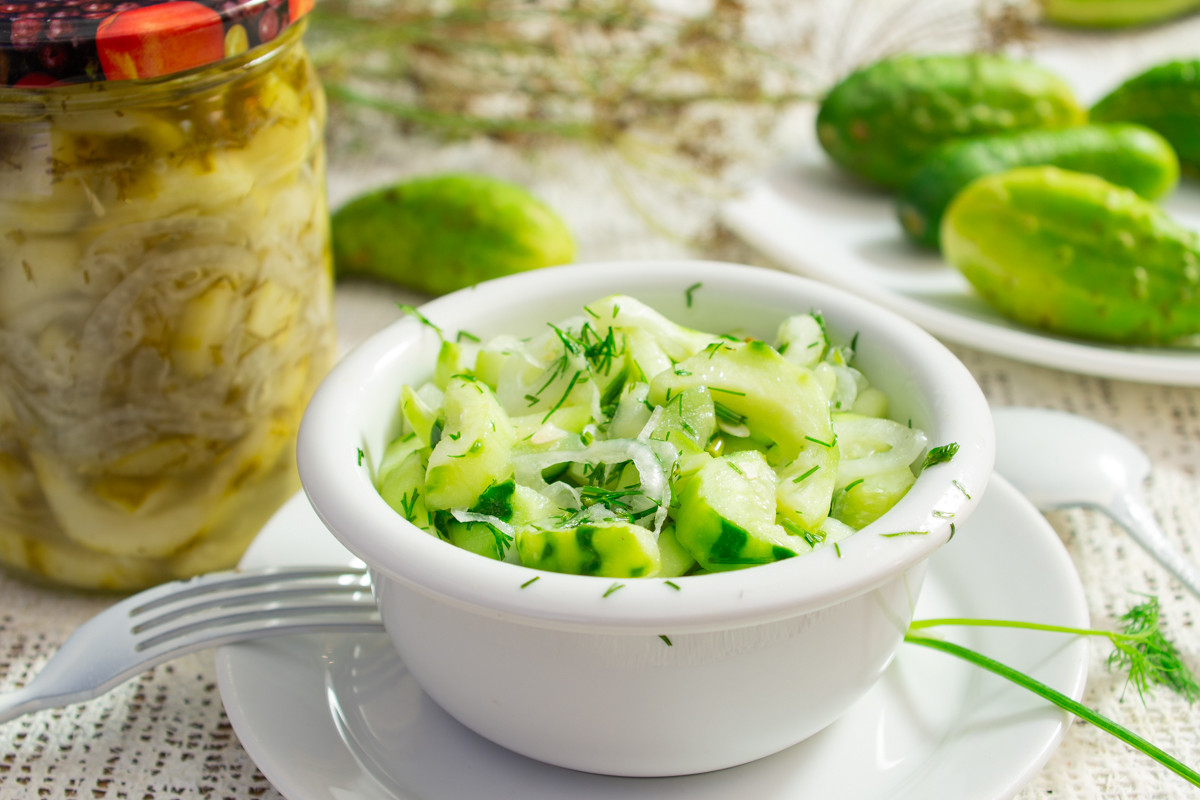
Preserving Overgrown Cucumbers
Ingredients for Preserving Overgrown Cucumbers
- 1 kg cucumbers (peeled and seeded)
- 100 g onion
- 30 g dill
- 10 g salt
- 20 g sugar
- 50 g sunflower oil
- 20 g 9% vinegar
How to Preserve Overgrown Cucumbers
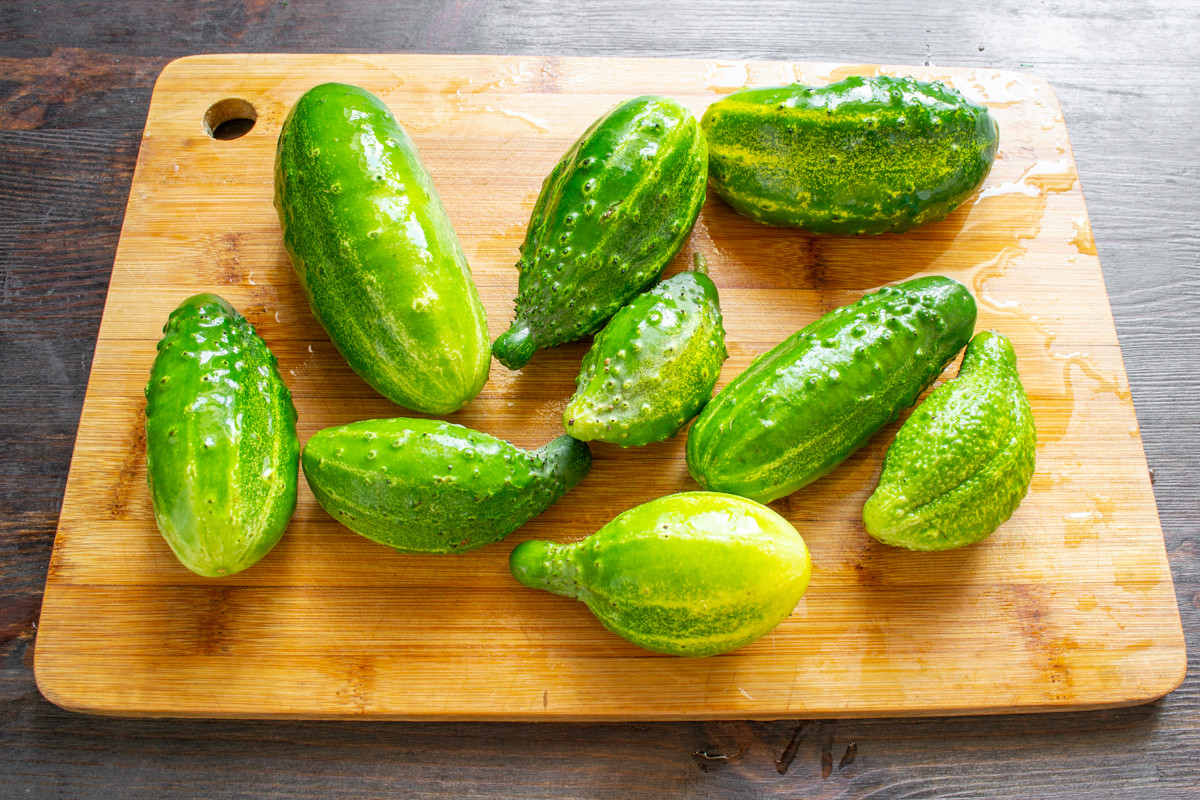
Wash the cucumbers in cold water. You can soak them for a couple of hours, but it's not necessary.
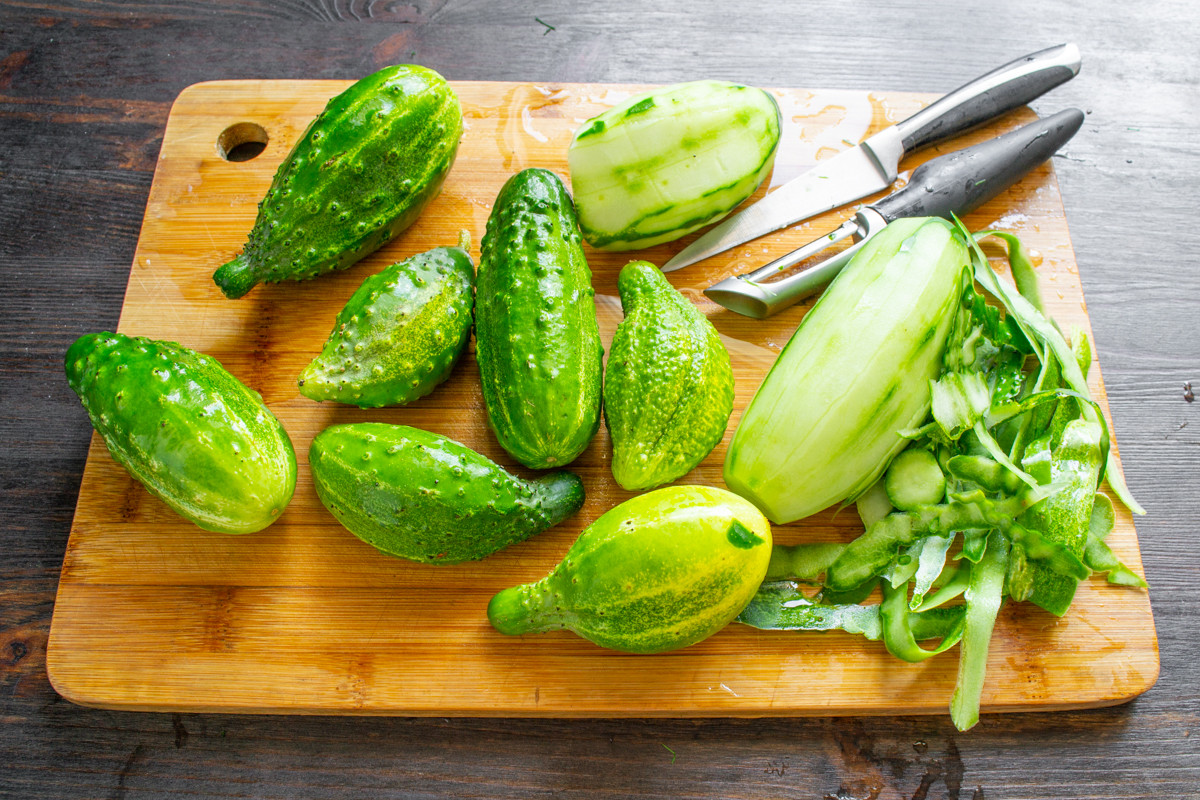
First, peel the cucumbers.
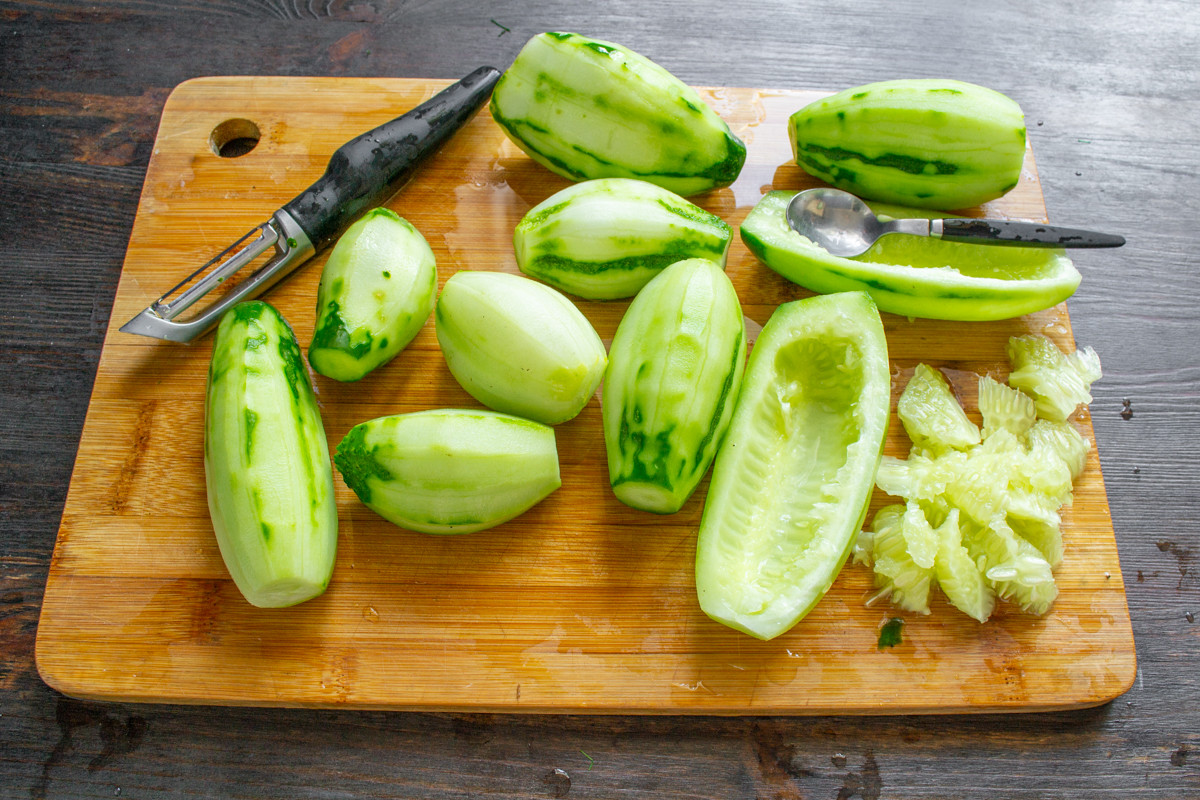
Cut the cucumbers lengthwise and use a teaspoon to scoop out the seeds and watery pulp, leaving only the firm walls of the cucumber.
For this salad, you can use all your non-standard cucumbers – overgrown, crooked, bulging, and others. In the salad, you won’t be able to tell what the cucumber looked like before. Wash the cucumbers in cold water; you can soak them for a couple of hours, but it’s not necessary.
First, peel the cucumbers. Use a vegetable peeler to remove a thin layer of skin. Overgrown cucumbers have tough, yellowish skin. If you try to preserve them unpeeled, the result won’t be tasty.
Another inedible part of overgrown cucumbers is the seeds. At this stage of ripeness, the seeds are large and quite hard. Cut the cucumbers lengthwise and use a teaspoon to scoop out the seeds along with the watery pulp, leaving only the firm cucumber walls.
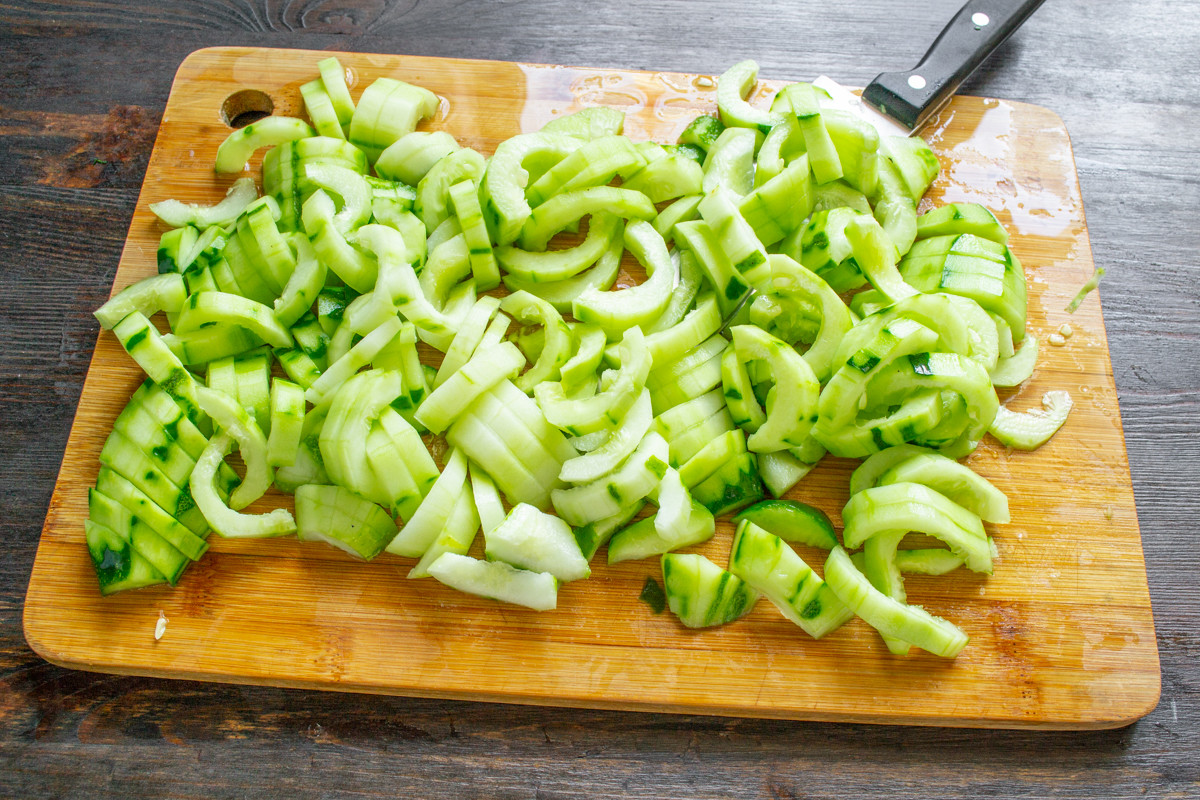
Slice the peeled cucumbers into pieces about half a centimeter thick.
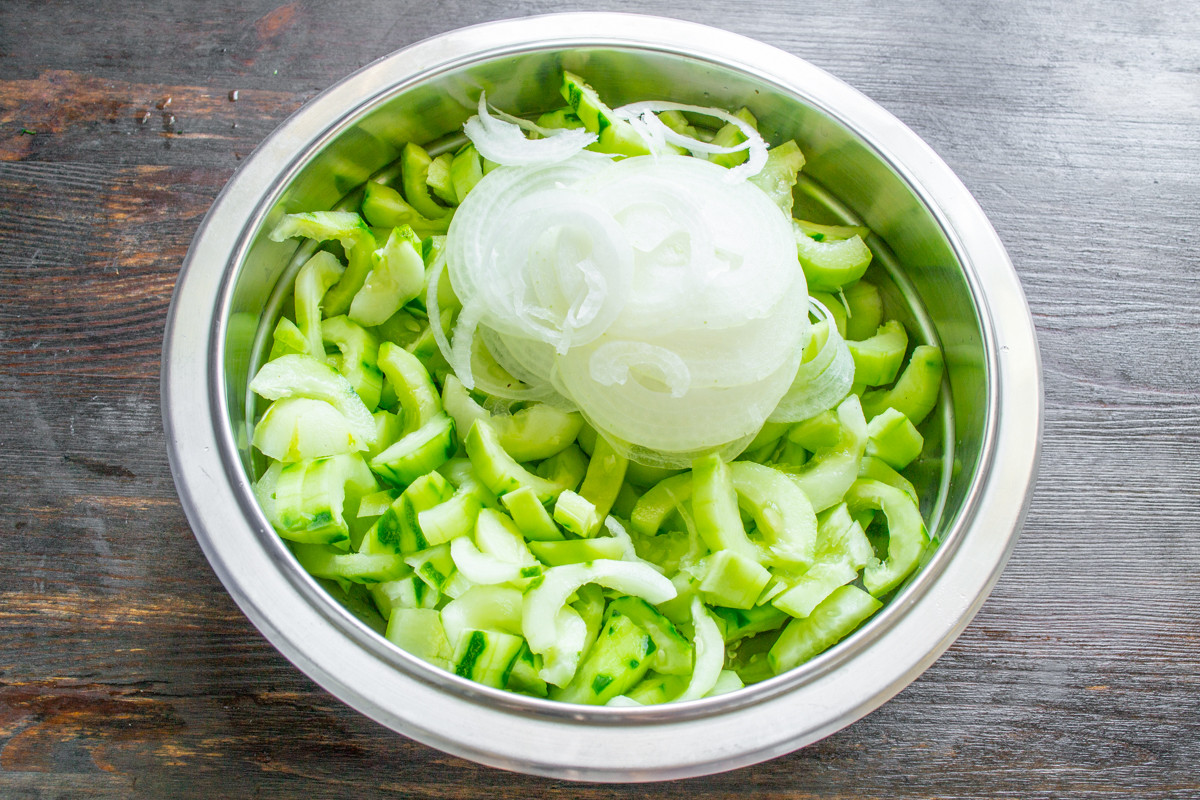
Add the sliced onion to the cucumbers.
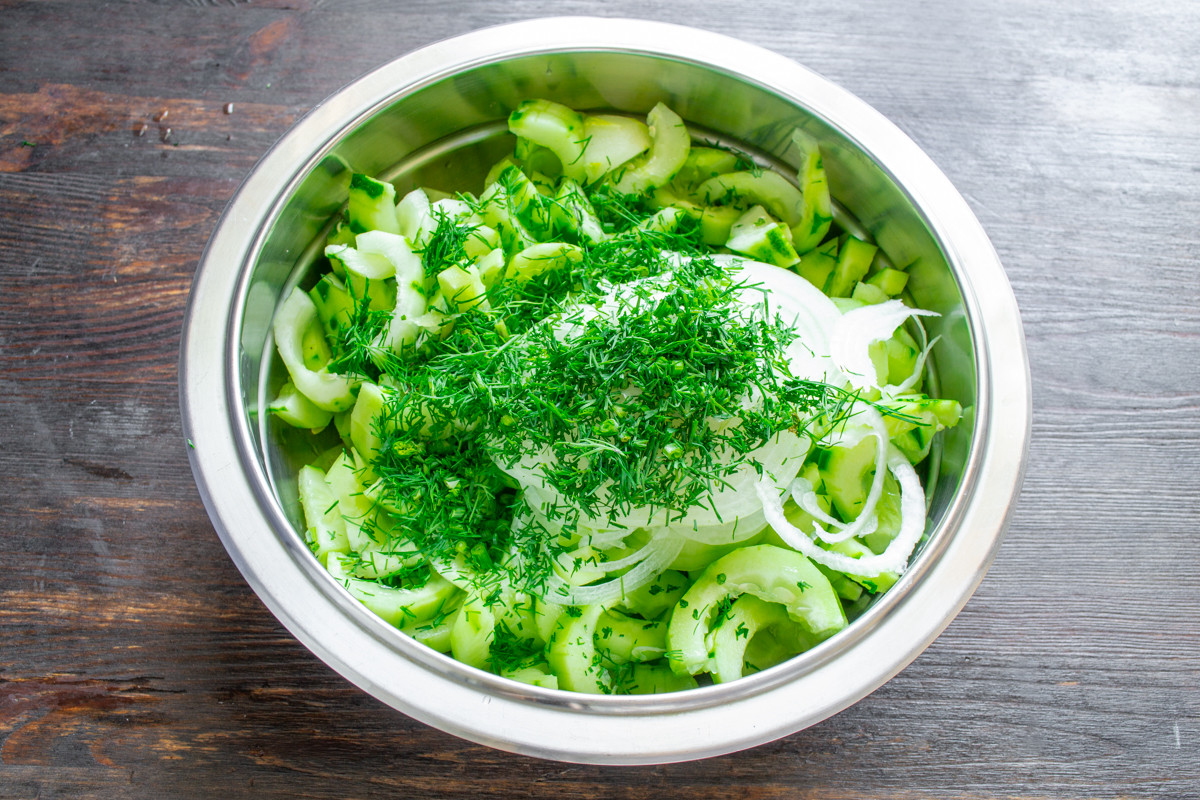
Add the chopped dill to the other vegetables.
Slice the peeled cucumbers into pieces about half a centimeter thick. Weigh them.
Cut the onion into thin rings. If you haven’t mastered virtuoso knife skills, a mandoline slicer will be a great help. Add the sliced onion to the cucumbers.
Rinse a small bunch of dill with boiled water and chop the greens finely. Add the chopped dill to the other vegetables.
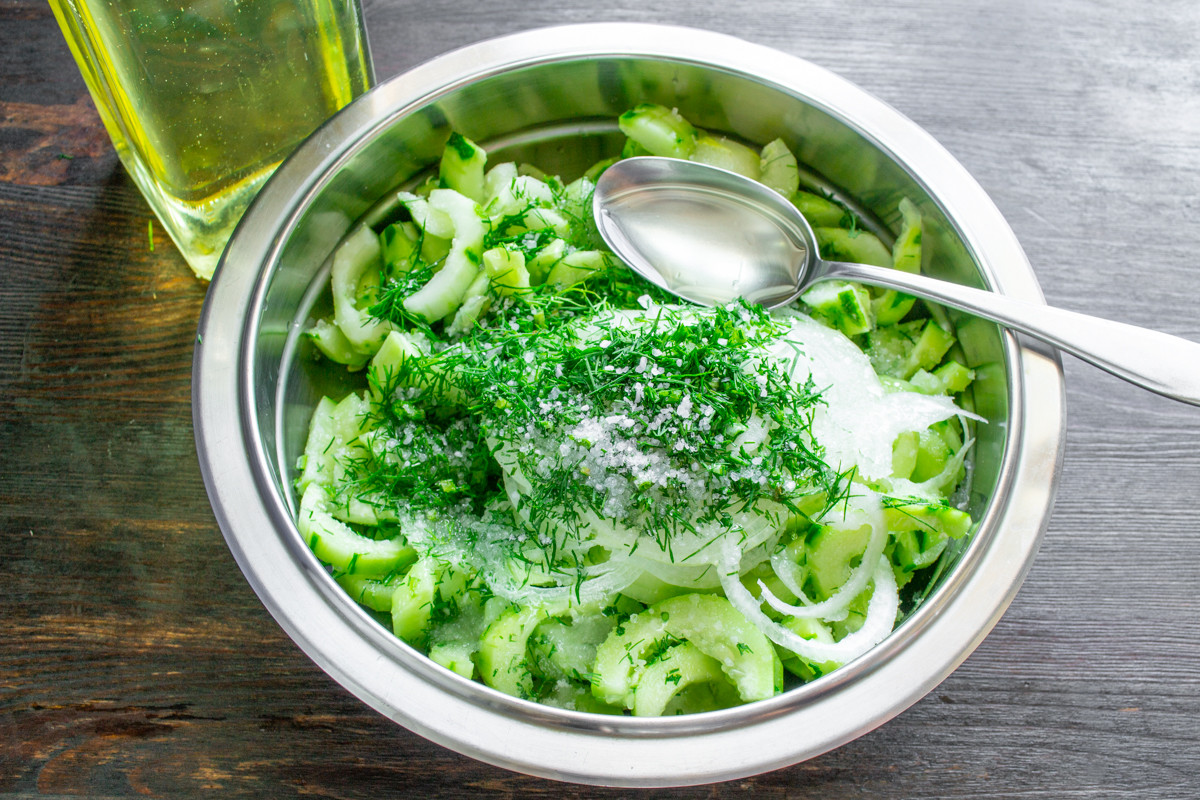
Add the seasonings.
Add the seasonings. Sprinkle in the salt and sugar, pour in the vinegar (apple cider vinegar works well) and the unrefined sunflower oil—the kind that smells like sunflower seeds.
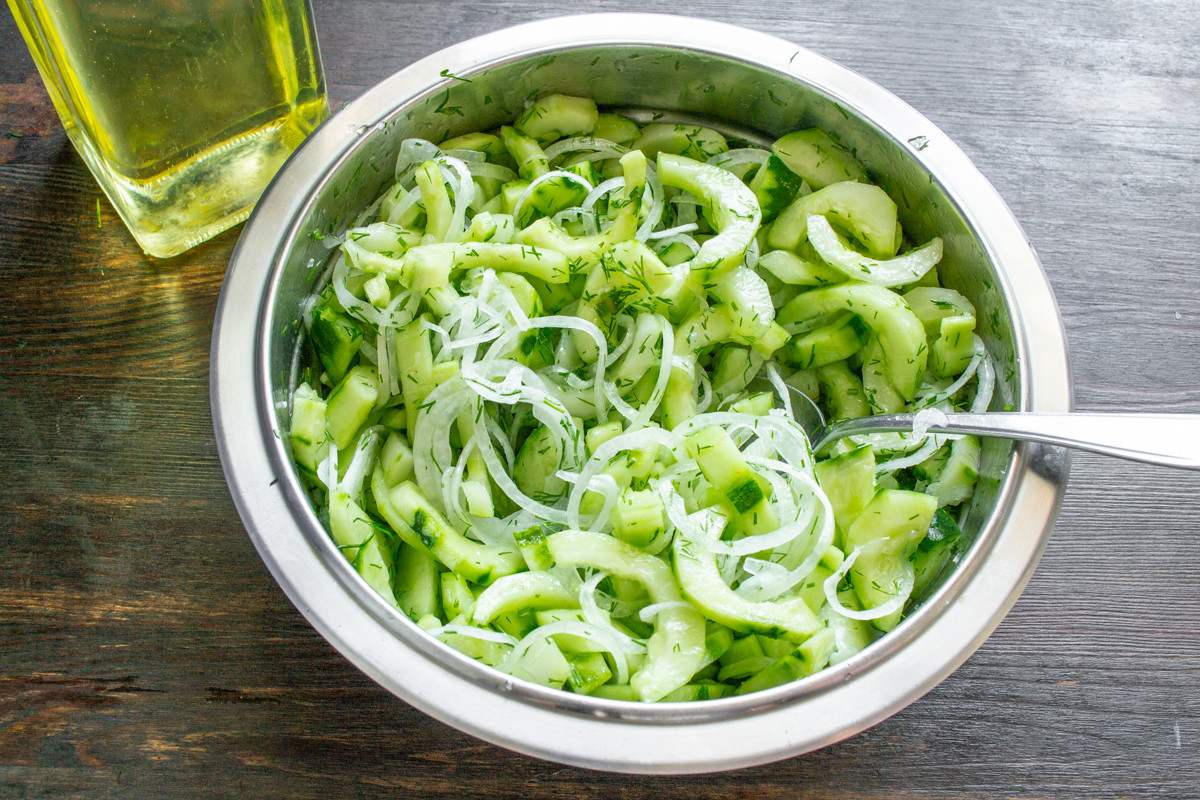
In an hour, the vegetables will soften and release a lot of juice.
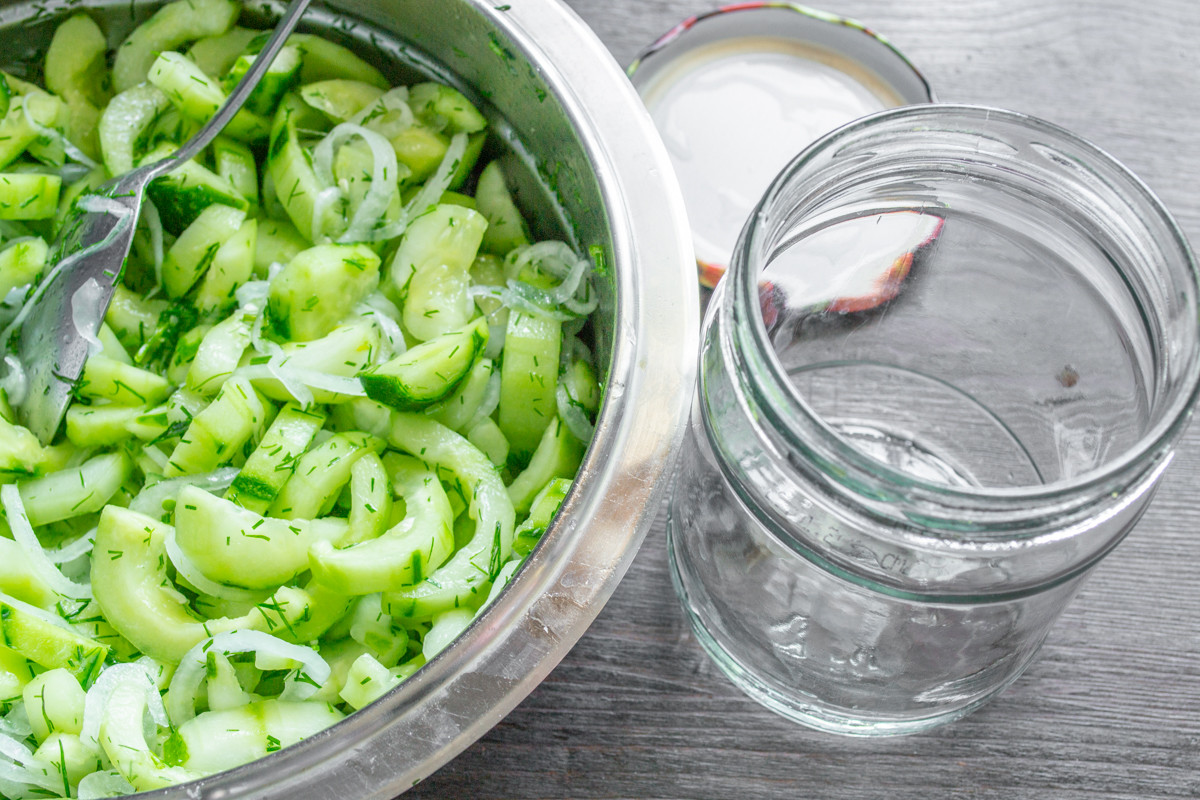
Pack the salad into 500 ml (half-liter) jars.
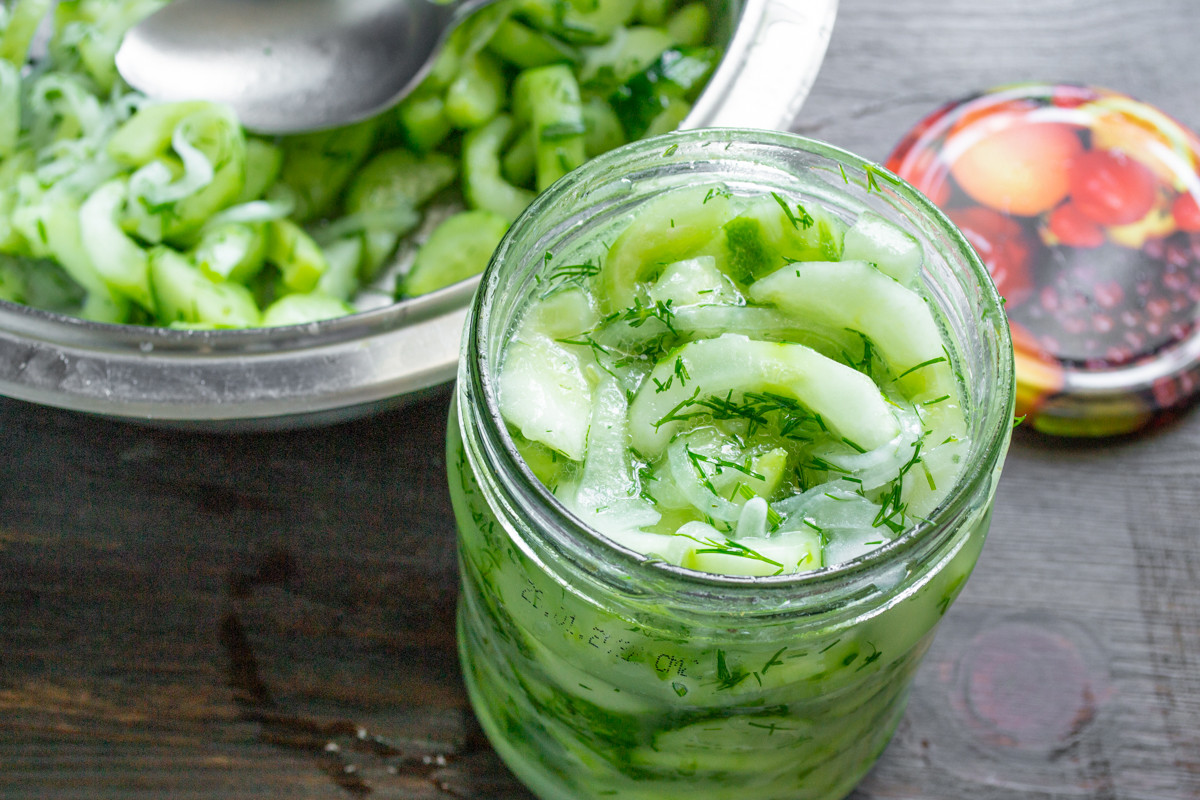
Then, top it off with the released juice.
Thoroughly mix the vegetables with the seasonings. Cover the bowl with plastic wrap or a lid. Let it sit for 1 hour. During this time, the vegetables will soften and release a lot of juice.
Pack the salad into 500 ml (half-liter) jars. Wash the jars thoroughly with warm water and baking soda or mustard powder. Rinse with hot water and sterilize them in a preheated oven. Boil the lids in water for a few minutes.
Pack the salad tightly into the jars, filling them up to the shoulder. Then, top them off with the released juice. Tightly screw on the lids.
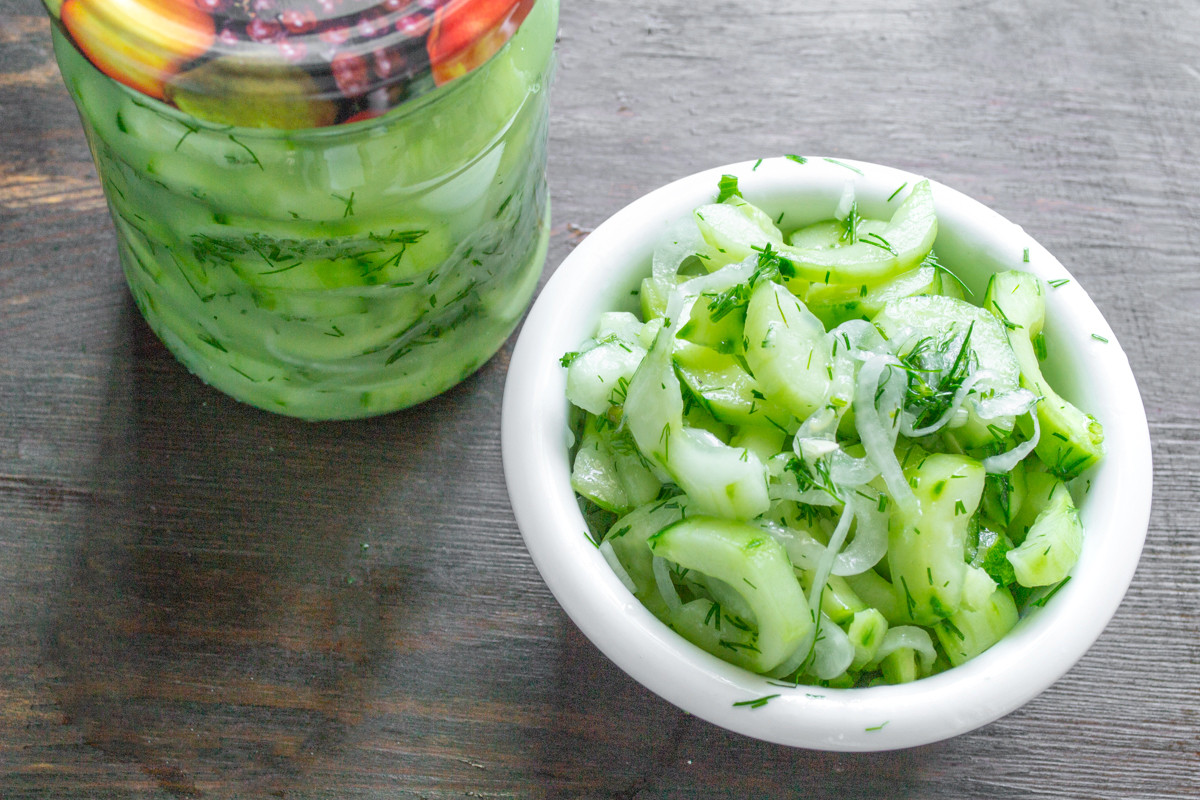
In this photo, the cucumbers in the bowl are green; this is the leftover that didn't fit into the jars. After sterilization, the cucumbers change color from green to a brownish hue.
Place a wooden rack or a cotton cloth at the bottom of a large pot for sterilization. Place the jars in the pot. Pour in hot water so that it completely covers the lids. Bring to a boil. After it starts boiling, sterilize the 500 ml jars for 15 minutes. Carefully remove the jars with tongs and turn them upside down onto their lids. Cover with a towel and leave to cool completely. In this photo, the cucumbers in the bowl are green; this is the leftover that didn’t fit into the jars. After sterilization, the cucumbers change color from green to a brownish hue.
And there you have it! Your jars of delicious overgrown cucumber salad are ready to be stored away for the colder months. Once they've cooled completely, be sure to check that the lids have sealed properly (they should be concave and not 'pop' when pressed). Store them in a cool, dark place like a pantry or cellar. This preserved salad is a wonderful side dish for hearty winter meals, a great addition to potato salads, or simply enjoyed on its own. It's a satisfying feeling to know that nothing from your garden went to waste. Enjoy your homemade treasure!
0 comments