
Let us bake a raspberry cake! This poured semolina cake (mannik) studded with fresh raspberries is a true ode to summer flavors and cozy home baking. At its heart lies the time-tested combination of semolina and kefir (a cultured dairy drink), which creates that unique, slightly granular, and wonderfully moist crumb we all love in traditional rustic pastries. Using buttermilk or high-fat kefir makes the crumb especially tender, while a touch of neutral oil ensures the dessert stays fresh for days. The raspberries are not just a garnish here; they are an essential component, releasing their bright juices and aroma into every bite of the batter as it bakes.
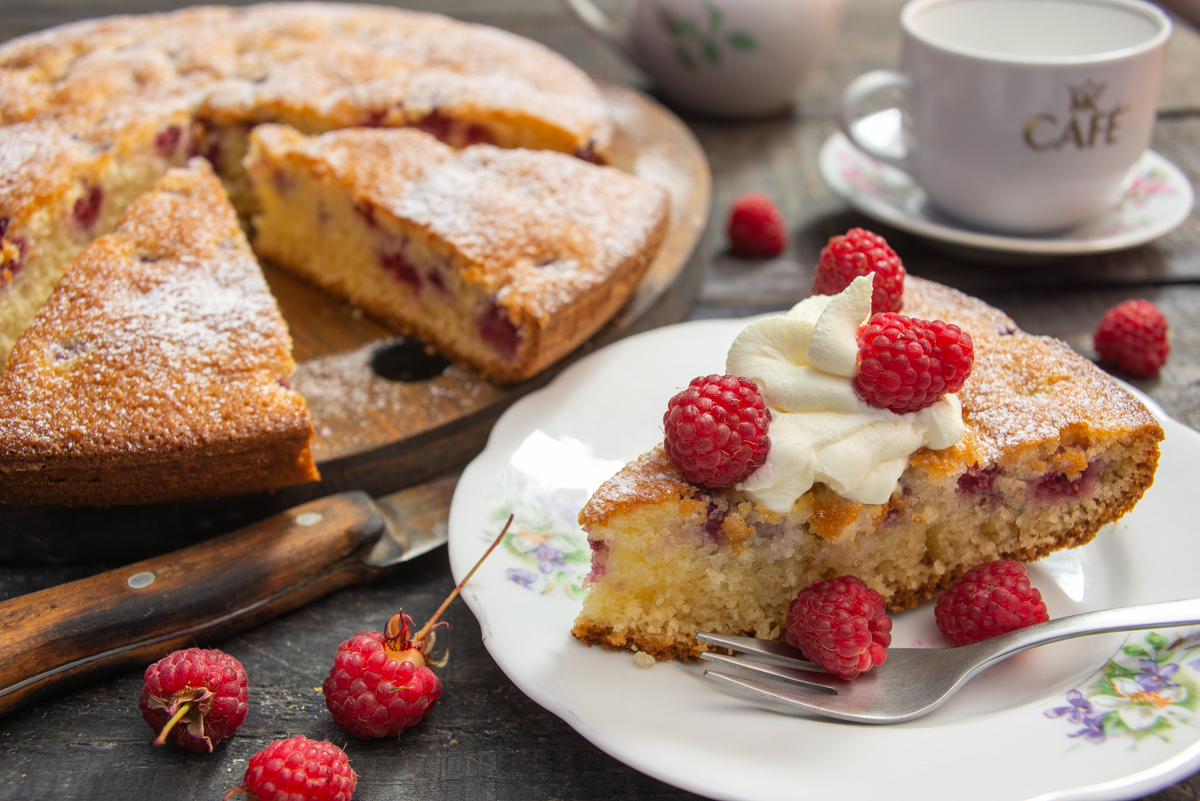
The finished semolina cake turns out incredibly tender, and the fresh raspberries add a pleasant tartness and bright aroma.
Ingredients
- 150 g (about 1 cup) semolina
- 120 g (about 1 cup) all-purpose flour
- 1 teaspoon baking powder
- 200 g (1 cup) granulated sugar
- 1 large egg
- 200 g (about 3/4 cup plus 2 tbsp) buttermilk or kefir (cultured dairy drink)
- 80 g (about 1/3 cup) refined neutral oil
- Pinch of vanilla extract or vanilla sugar, pinch of baking soda, powdered sugar for dusting
- 1 1/2 cups fresh raspberries
- Butter and extra flour for greasing the pan
- Thick smetana (sour cream) and fresh berries for serving
How to Make Raspberry Semolina Cake
In a mixer bowl, combine the semolina and wheat flour. Add the baking powder. If you are using very tart kefir (a cultured dairy drink), add a pinch of baking soda (about 1/4 teaspoon) to the dry ingredients at this stage.
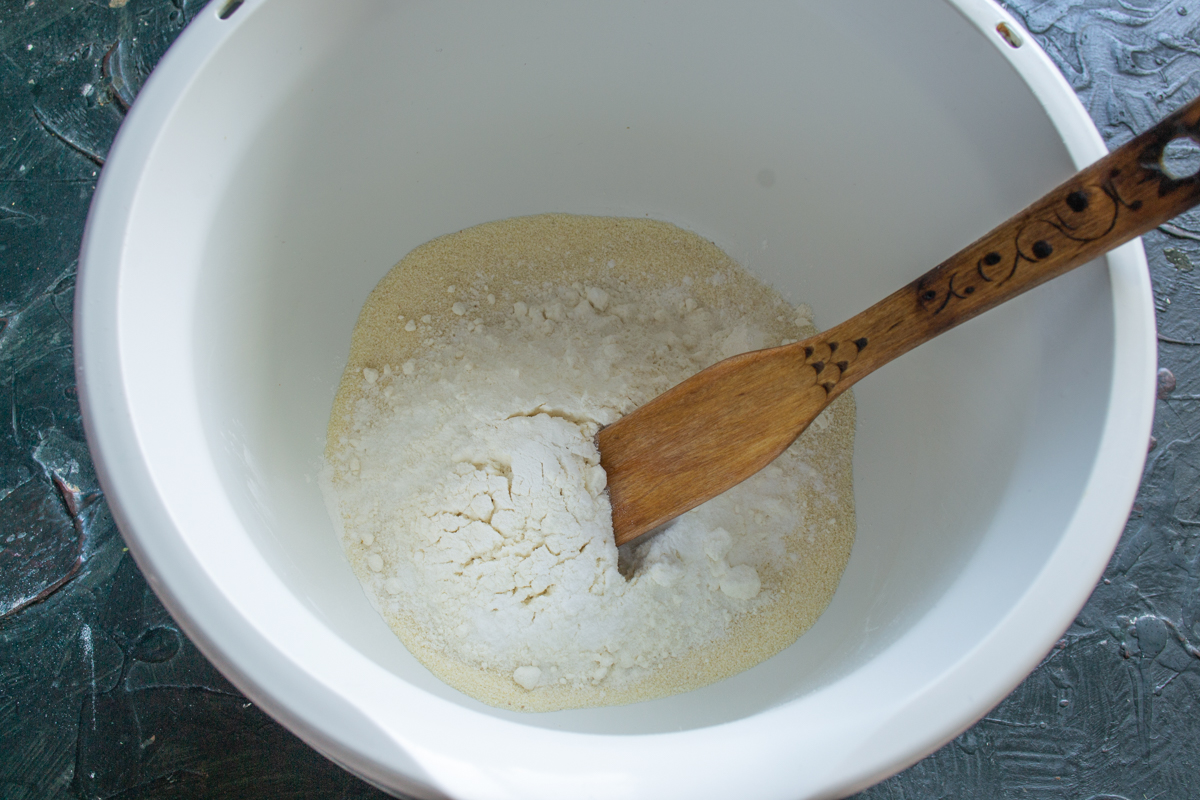
Start the preparation by combining the dry components: semolina, flour, and baking powder.
Stir in the fine white sugar. Add vanilla extract or a packet of vanilla sugar for that classic sweet aroma.
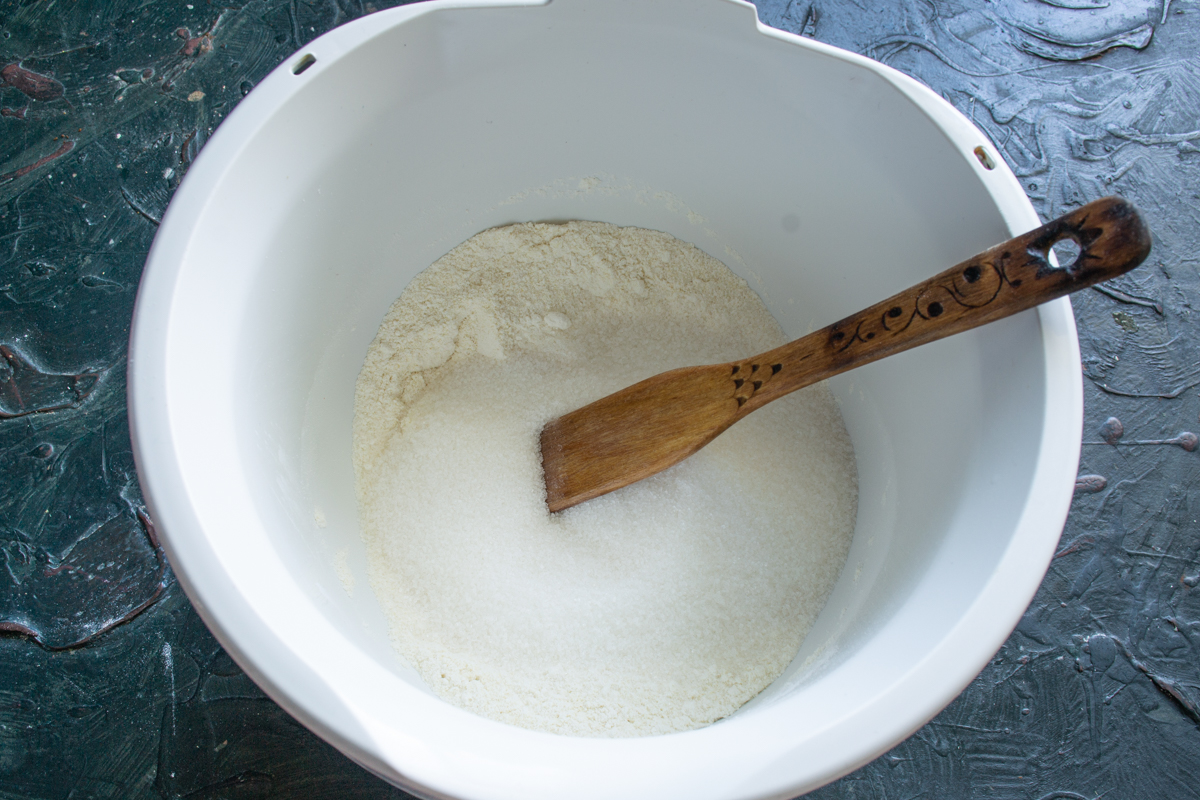
Pour in the sugar and vanilla for flavor. If you prefer less sweet pastries, you can reduce the amount of sugar.
Crack in the egg. Pour in the buttermilk or kefir. Any tangy dairy product works well for this batter, such as liquid smetana (sour cream), yogurt, or ryazhenka (baked cultured milk).
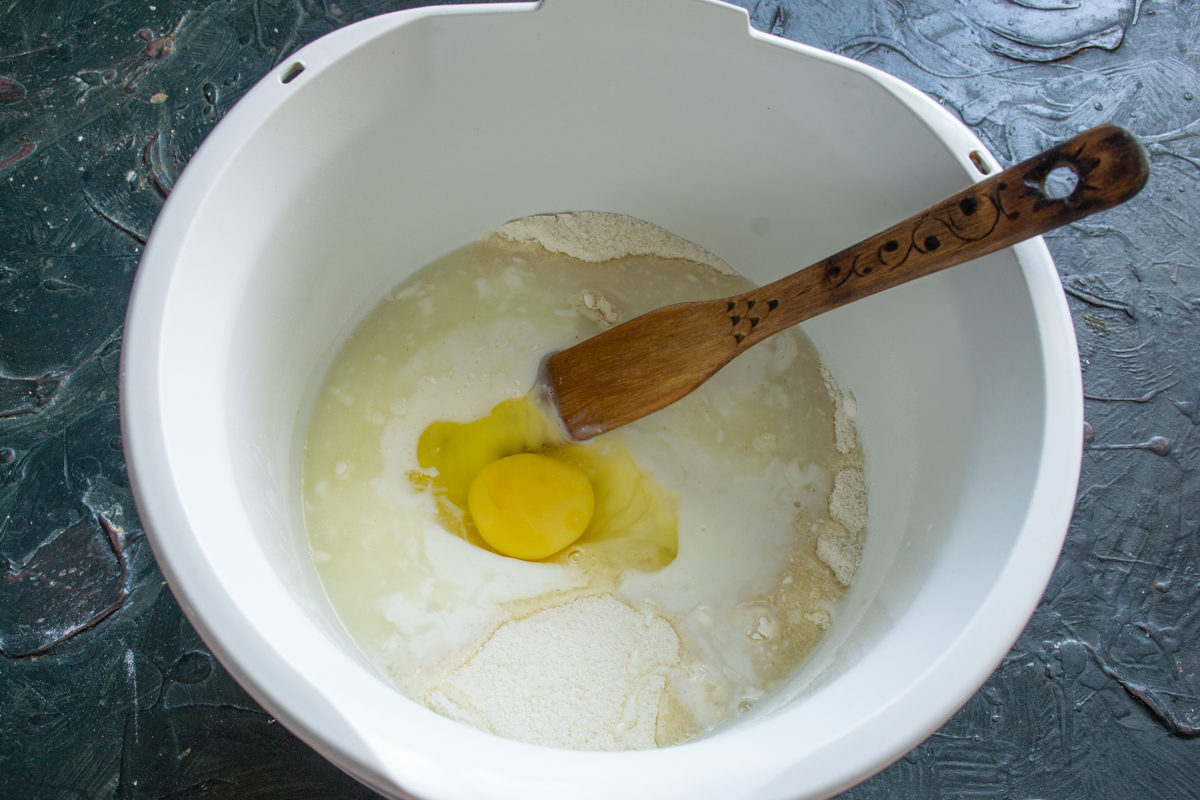
Incorporate the egg and cultured dairy base. Kefir or buttermilk will make the cake's structure more tender and airy.
Pour in the refined neutral oil, or use a blend of oil and melted, cooled butter. The oil gives the cake its signature moisture, while the butter adds an irresistible flavor.
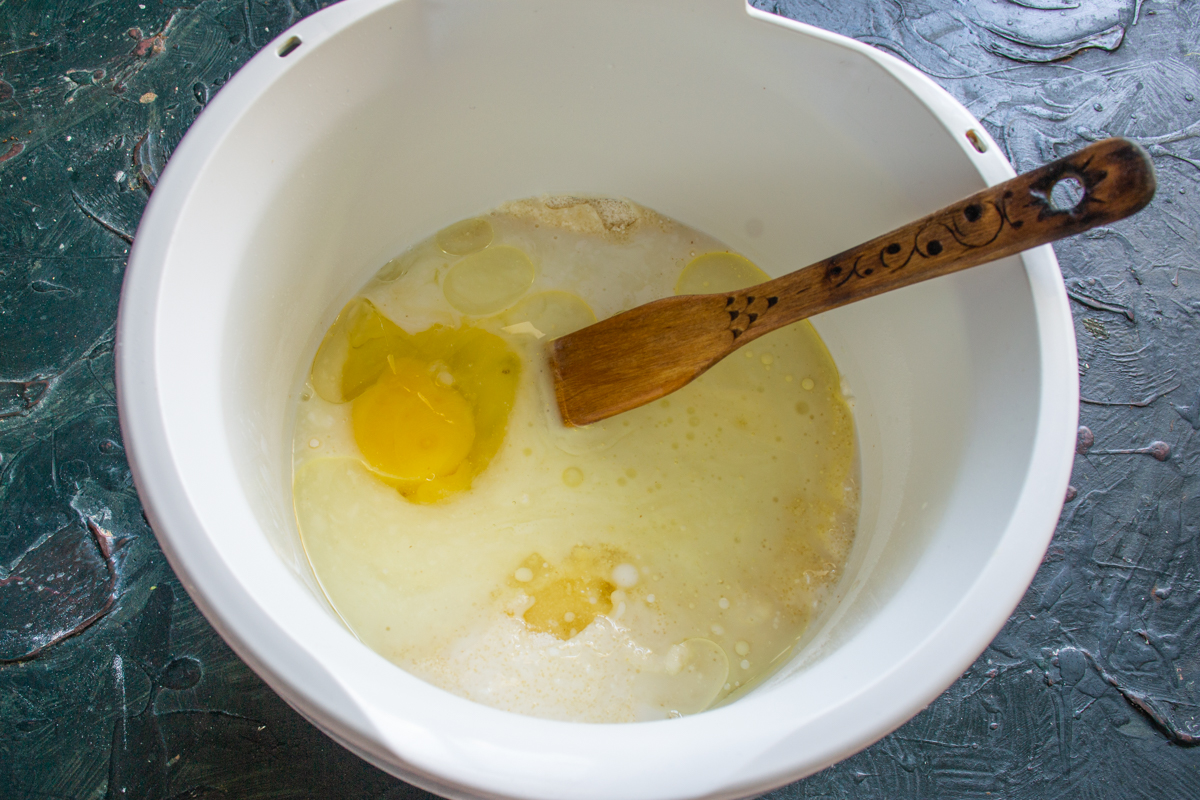
Neutral oil provides the necessary moisture to the batter, ensuring the cake stays fresh and soft for a long time.
Mix the batter for a few minutes using a paddle attachment. Let the finished batter rest for 30 minutes at room temperature so the semolina swells and absorbs the moisture. Alternatively, you can chill the batter in the refrigerator for up to 1 hour.
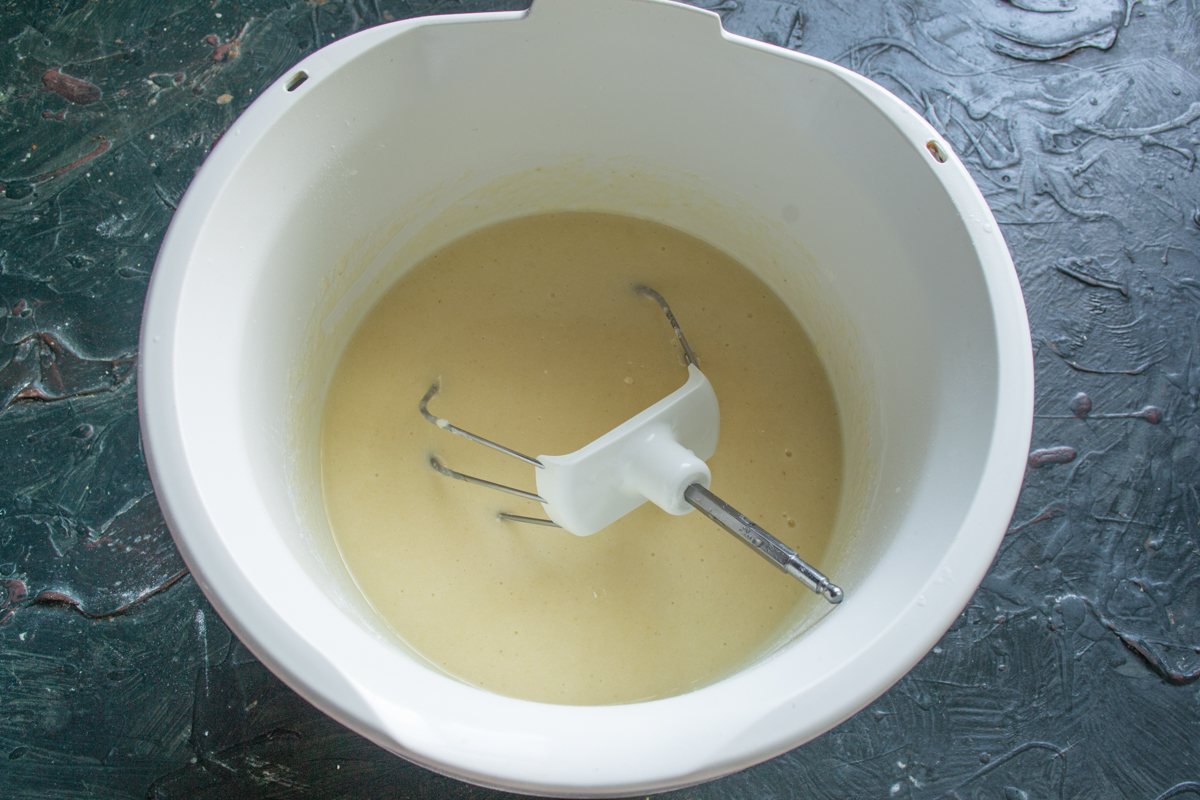
Mix the batter thoroughly and let it rest for 30-60 minutes to allow the semolina to swell.
Prepare a large baking pan, about 28-30 cm (11-12 inches) in diameter. Grease it with softened butter and dust lightly with flour. Pour about 1/3 of the batter into the bottom of the pan. Scatter the fresh raspberries evenly; avoid piling them up! If using homegrown berries, gently wash them in a mild saltwater solution to remove any pests, rinse thoroughly, and pat dry on paper towels.
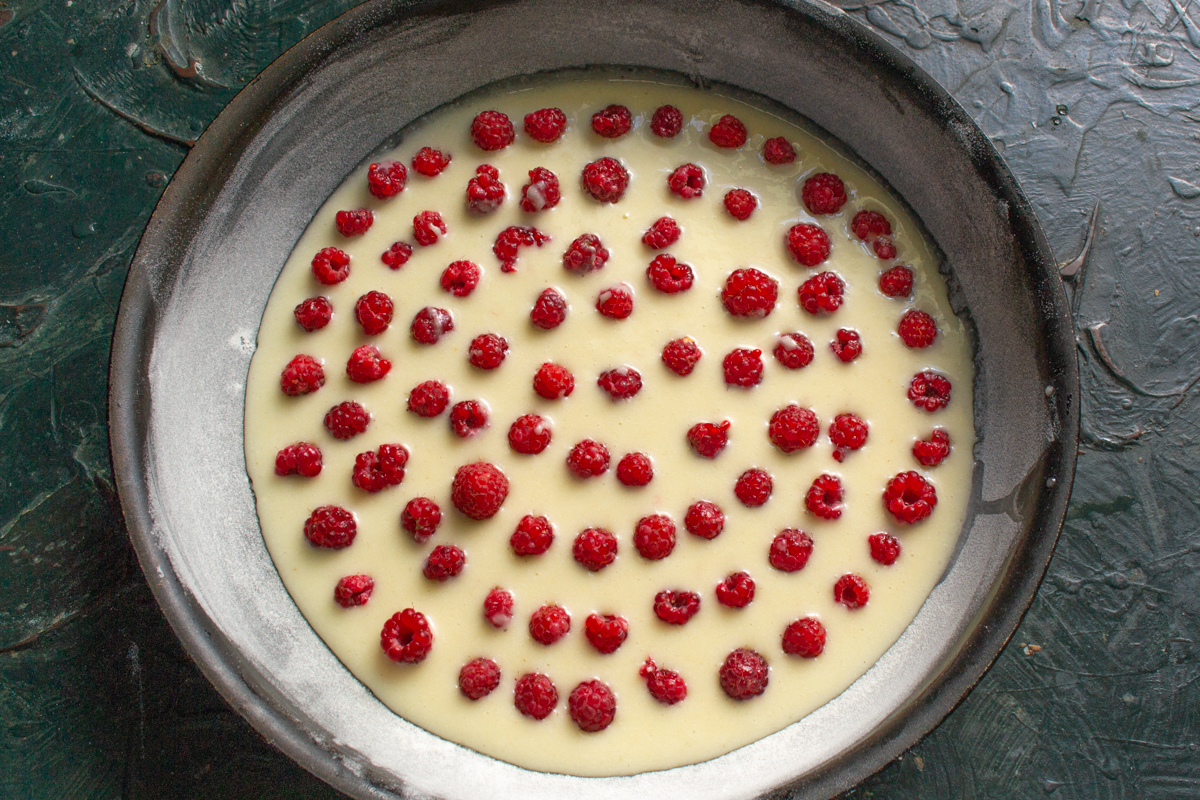
Pour a portion of the batter onto the bottom of the prepared pan and evenly distribute the first layer of berries.
Spoon another 1/3 of the batter carefully over the berries. Follow with a second even layer of raspberries.
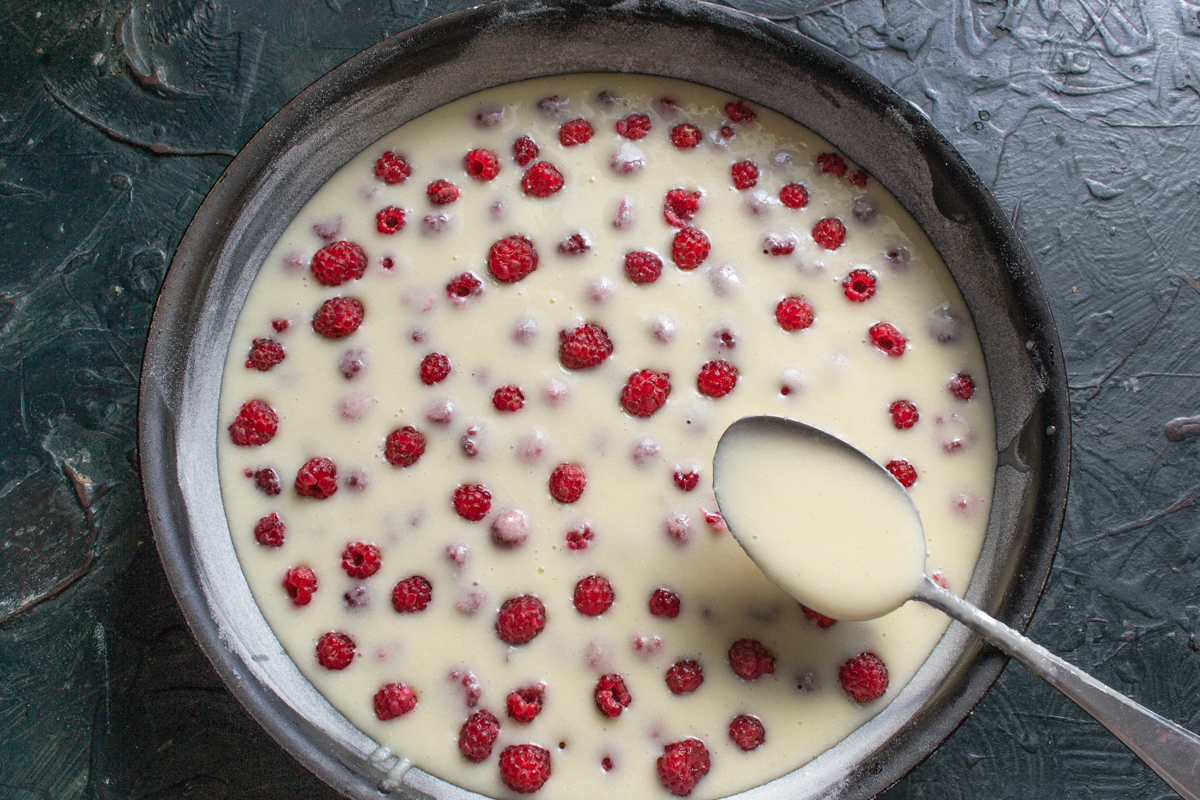
Carefully distribute the next portion of batter with a spoon, trying not to displace the berries.
Pour the remaining batter on top and arrange the rest of the raspberries over the surface. Using a large pan and layering the berries with the thin batter prevents them from sinking to the bottom.
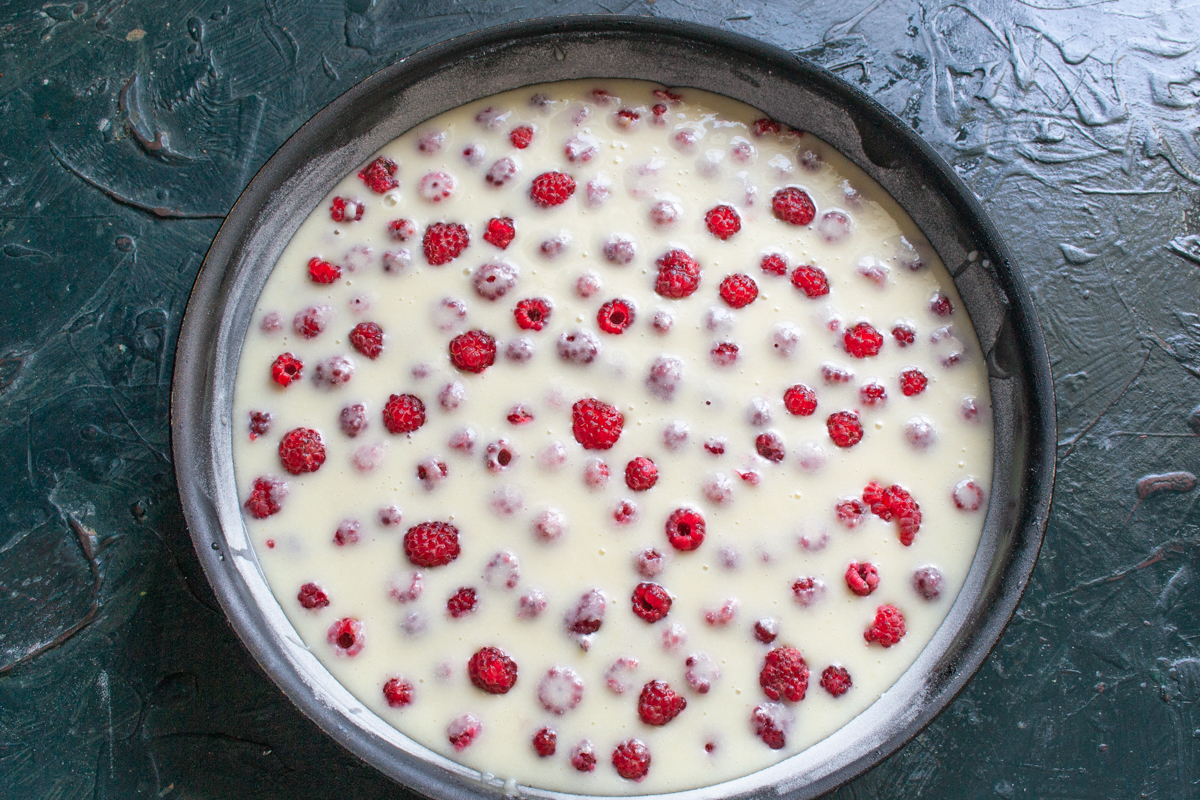
The final layer of batter and berries. Multiple thin layers help the raspberries distribute evenly throughout the cake.
Preheat your oven to 180°C (350°F). Place the baking pan on the middle rack and bake for about 40 minutes, or until the cake develops a beautiful golden crust. Test for doneness by inserting a wooden skewer into the center; if it comes out clean and dry, the cake is ready.
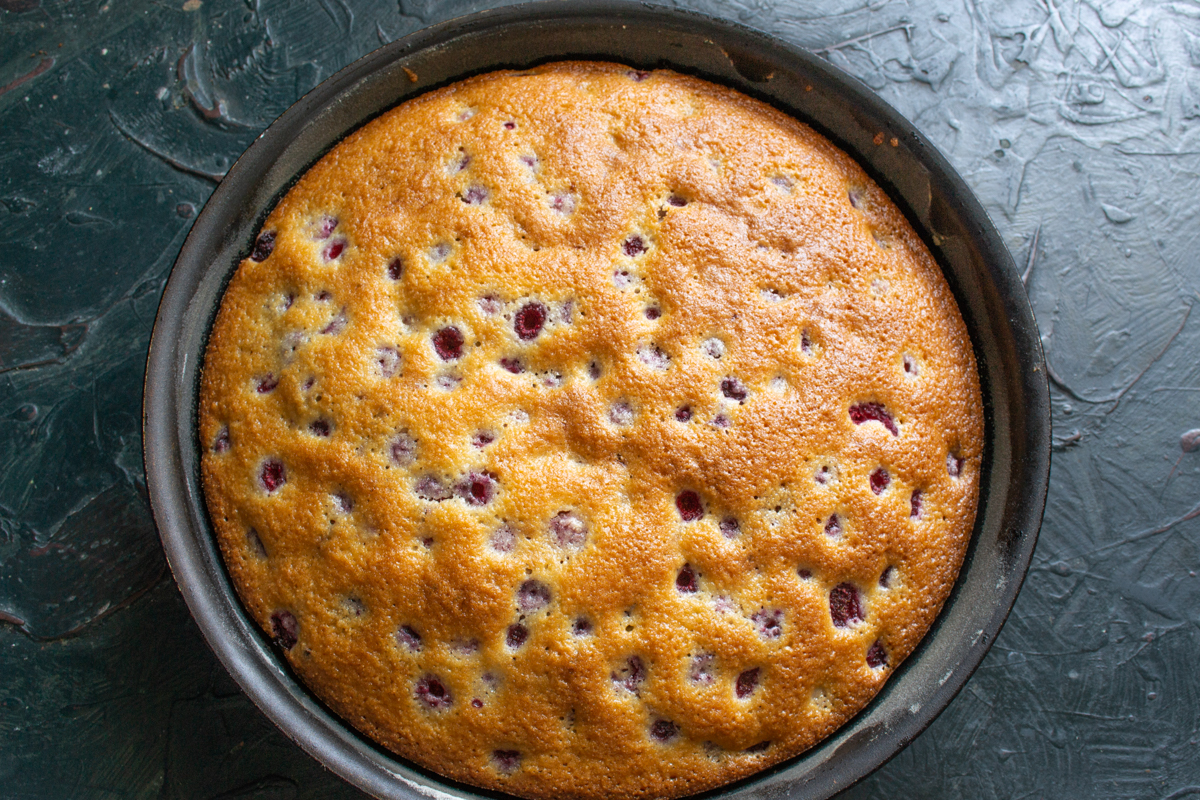
Bake until a rich golden color appears. Always check for doneness using a wooden skewer.
Let the cake rest in the pan for 10 minutes, then carefully turn it out onto a wire rack to cool completely. Dust generously with powdered sugar through a fine sieve before serving.
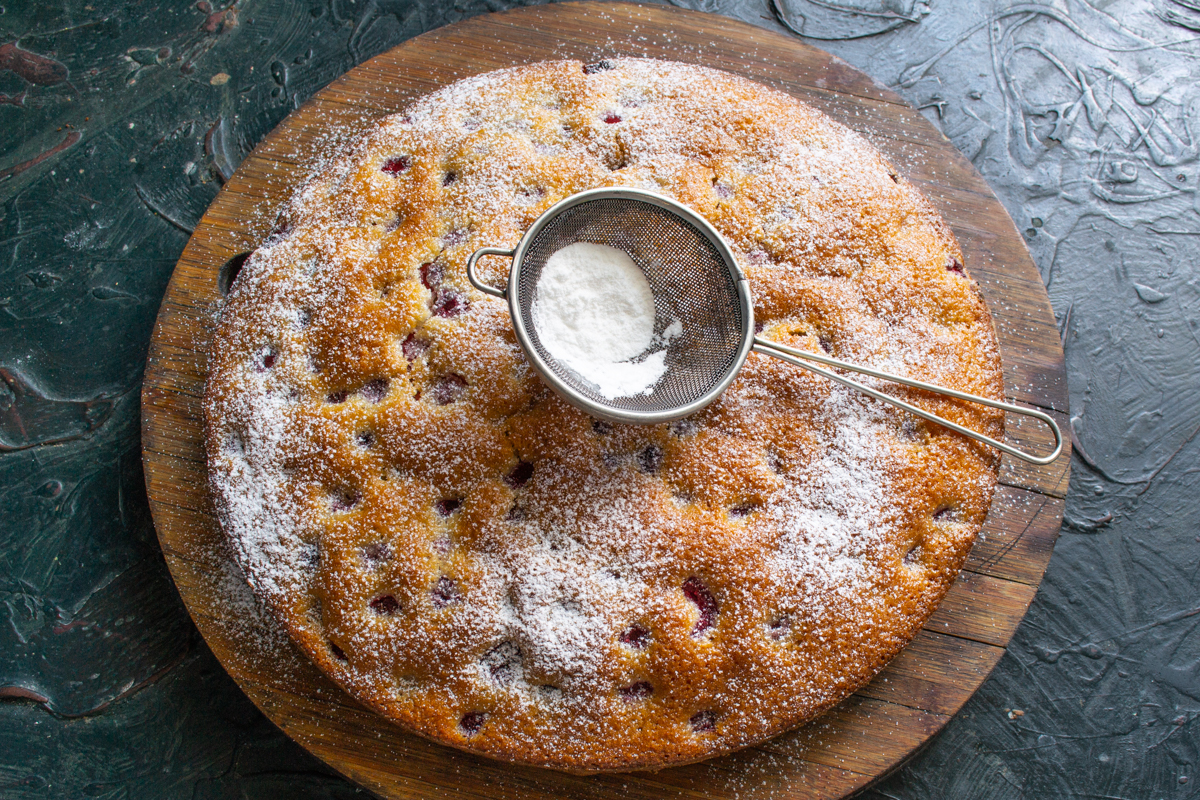
The final touch: a light veil of powdered sugar gives the cake a finished, festive look.
Serve this poured semolina cake with a dollop of thick smetana (sour cream) or a scoop of vanilla ice cream to beautifully contrast the tartness of the berries. If you are feeling experimental, try swapping the raspberries for blackberries or blueberries; the layering technique remains the same, but the flavor profile will take on a whole new dimension. To keep the fruit evenly distributed, remember the golden rule: use a wide baking pan. Thinner layers of batter hold the filling better, stopping it from sinking straight to the bottom. Store any leftovers covered with a kitchen towel or in an airtight container, though, in my experience, this cake rarely survives until the next morning. If you do manage to save a slice or two, you will find the texture becomes even denser and richer on the second day. For an elegant presentation, garnish the plate with fresh mint leaves and a few drops of raspberry syrup, elevating this simple, home-style bake into a restaurant-worthy dessert.
0 comments