
Pork ribs with polba (emmer wheat, or farro) are every bit as delicious as traditional plov (Eastern-style pilaf), because I developed this dish using the same slow-braising technique. The ribs turn out incredibly tender, with meat that falls right off the bone, deeply infused with warm spices. Farro, an ancient grain prized for centuries for its rich, nutty flavor, cooks up wonderfully fluffy here, with every single grain holding its shape. The combination of sweet carrots, garlic, and an aromatic blend of paprika, caraway, and turmeric creates a deep, savory profile. This dish will fill your home with a cozy aroma and is a wonderful excuse to gather the family for Sunday dinner.
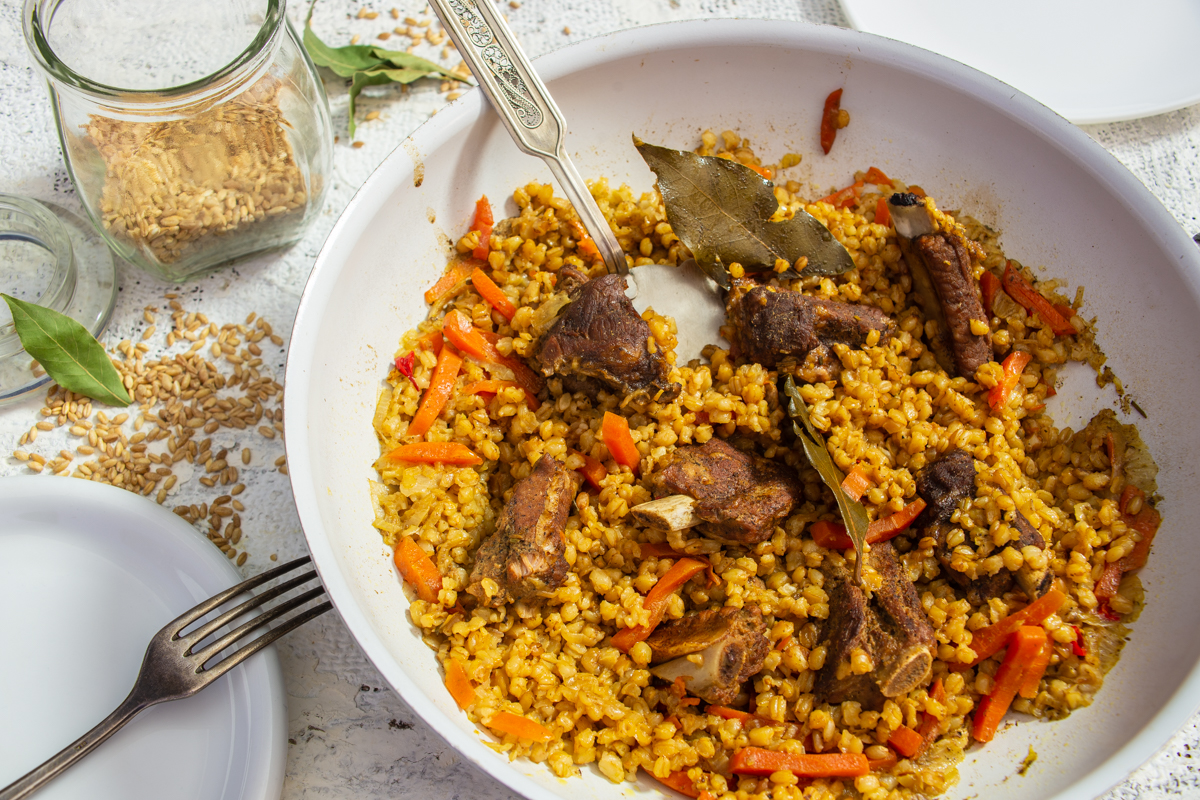
A hearty and wholesome meal is ready! The combination of tender pork ribs and fluffy farro is truly irresistible.
Ingredients
- 200 g (7 oz) polba (emmer wheat / whole farro)
- 800 g (1.75 lbs) pork ribs
- 1 large yellow onion
- 1/2 chili pepper
- 1 garlic clove
- 2 medium carrots
- 2 bay leaves
- Vegetable oil
- Salt, pepper, and water
For the Marinade
- 1 tsp each of paprika, turmeric, and caraway seeds
- 100 g (3.5 oz) full-fat smetana (sour cream)
- Salt and black pepper
How to Make Pork Ribs with Farro
Sort through the polba (emmer wheat, commonly known as farro), rinse it well, and soak it in cold water for 8 hours. Much like pearl barley, giving this grain a thorough soak ensures it cooks up delicious, tender, and fluffy!
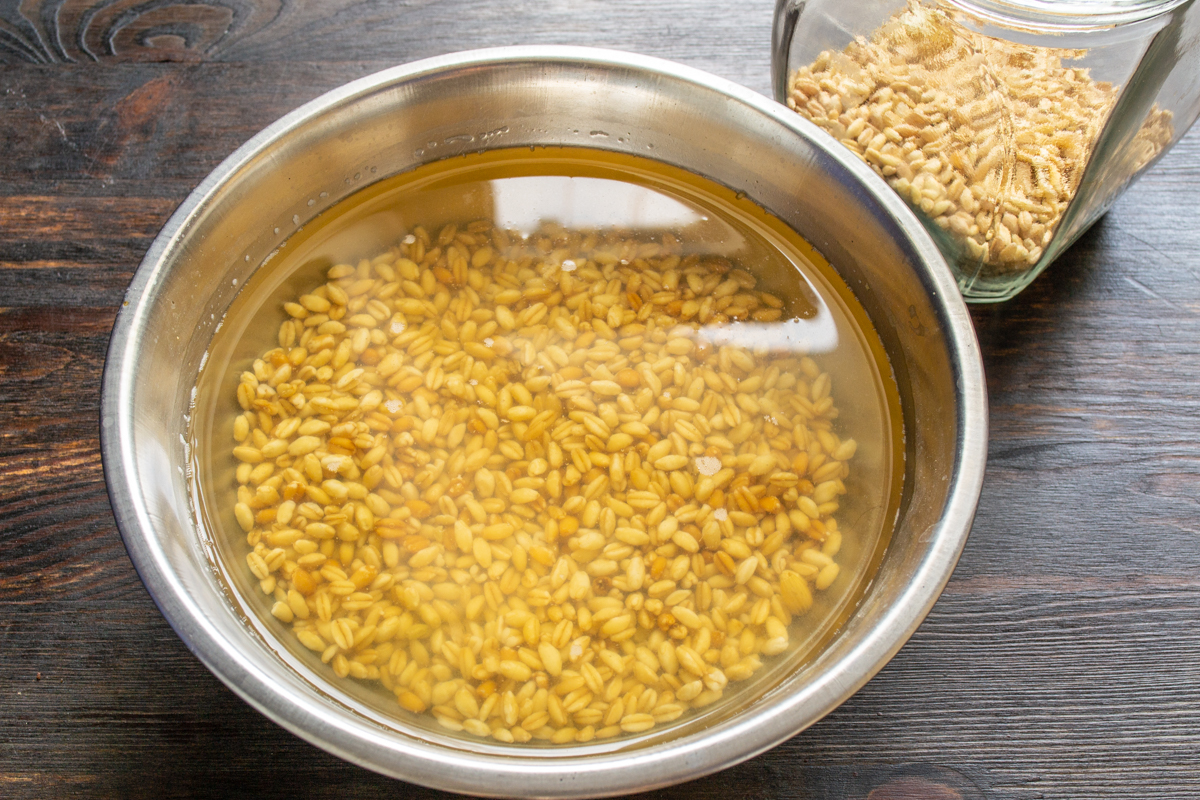
Soaking the grains for 8 hours softens the farro, reduces cooking time, and ensures a fluffy texture.
After 8 hours, drain the farro in a fine-mesh sieve and rinse it once more. Let it sit so the excess water drains completely and the grains dry slightly.
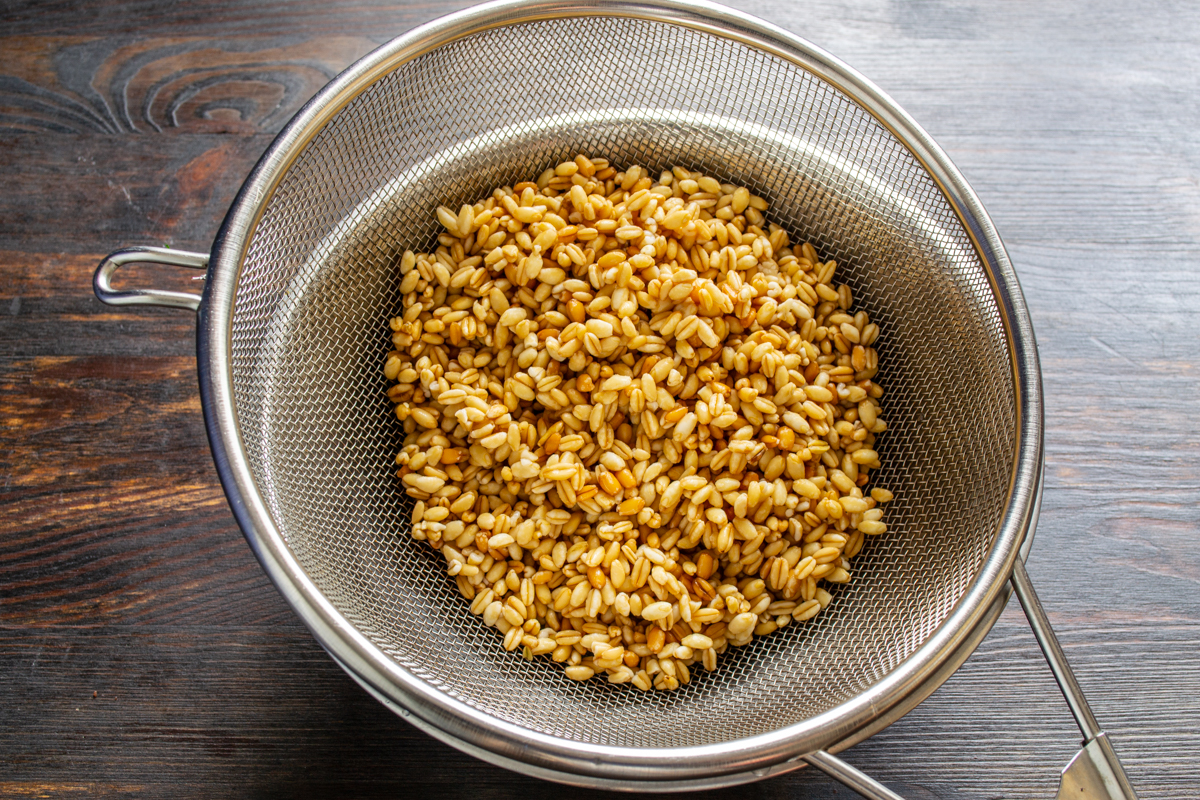
After a long soak, rinse the grains thoroughly once more and let the water drain completely.
Slice the rack of ribs into individual portions. Season the ribs with paprika and ground turmeric. Crush the caraway seeds in a mortar and pestle, then sprinkle them over the meat along with freshly ground black pepper. Massage the spices into the ribs, then add the full-fat smetana (sour cream). Toss to coat evenly, cover the bowl with plastic wrap, and refrigerate overnight. This way, both the ribs and the farro will be ready to cook at the same time.
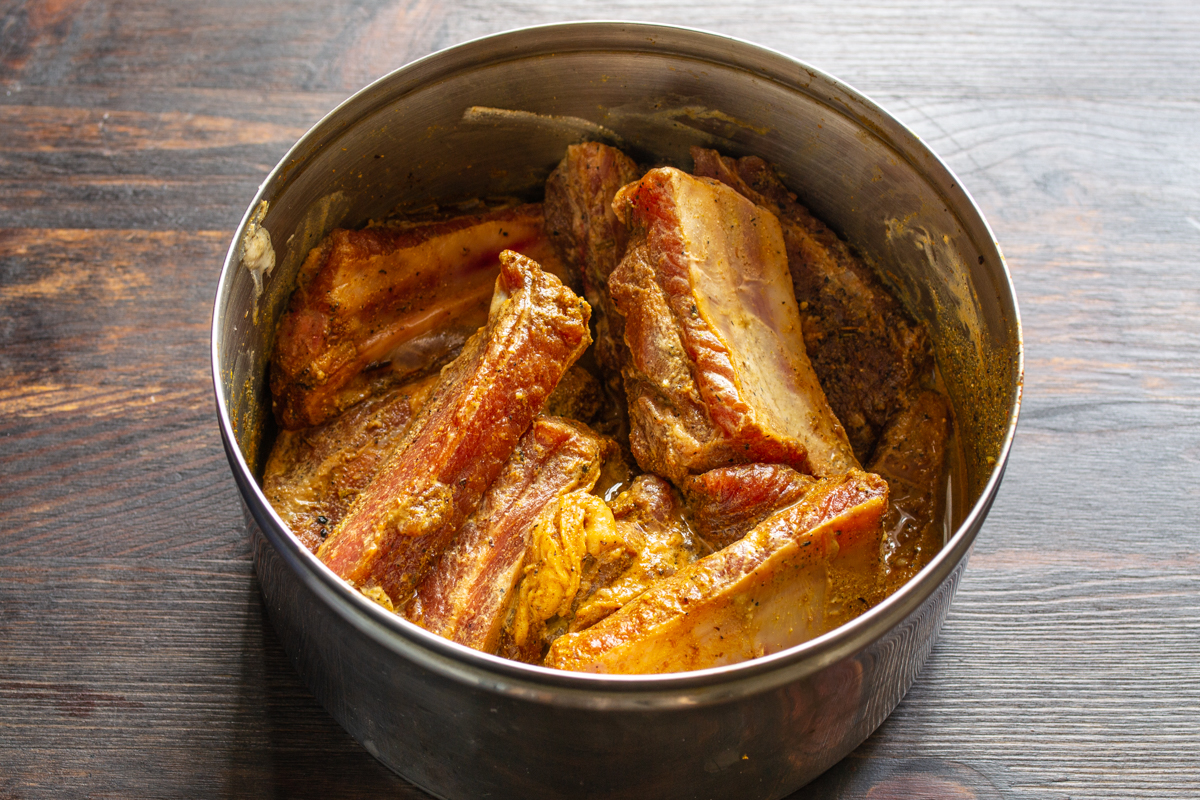
A blend of paprika, turmeric, caraway, and sour cream makes the meat incredibly tender and fragrant after a night in the fridge.
Finely dice a large yellow onion, mince a clove of garlic, and finely chop the chili pepper. Heat 2 tablespoons of neutral vegetable oil in a deep skillet or Dutch oven. Toss the onion, garlic, and chili into the hot oil.
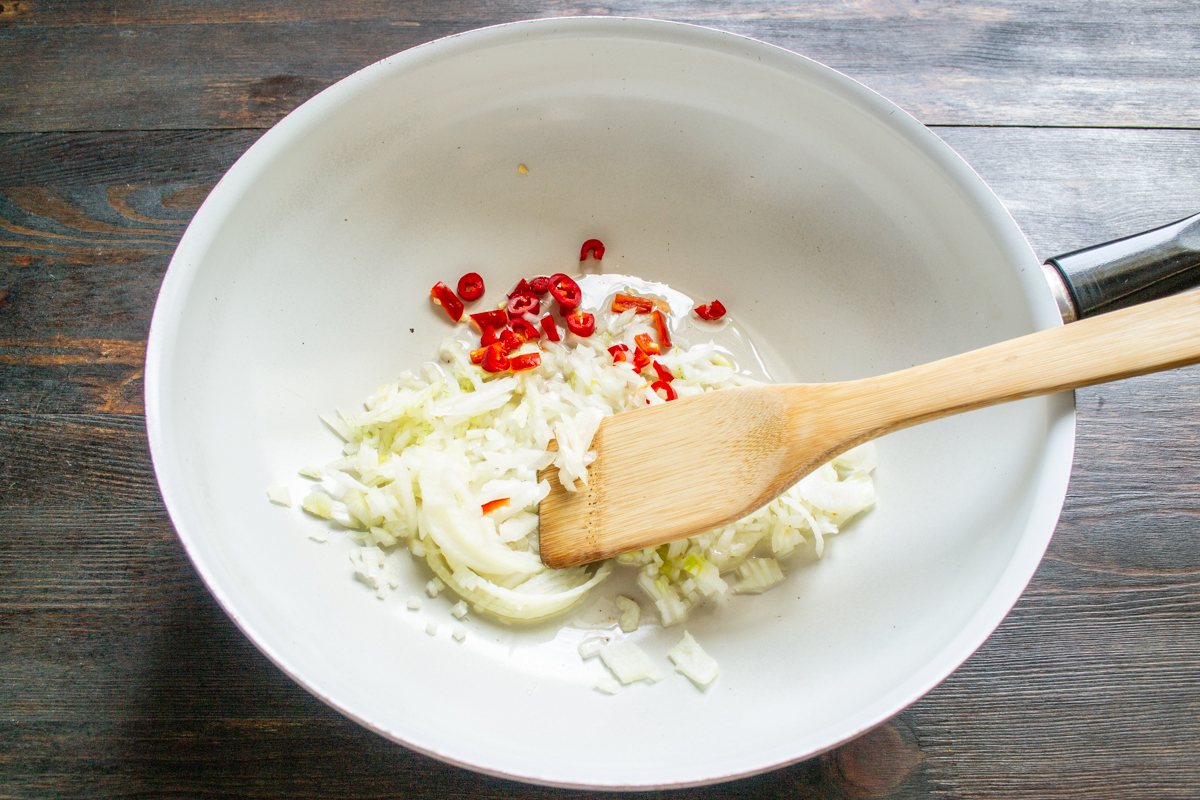
Start by sautéing the vegetables in oil to build a fragrant, spicy base for the farro dish.
Cut the carrots into thin matchsticks (julienne). Add the carrots to the sautéed onions and cook the vegetables over medium heat for 7 minutes.
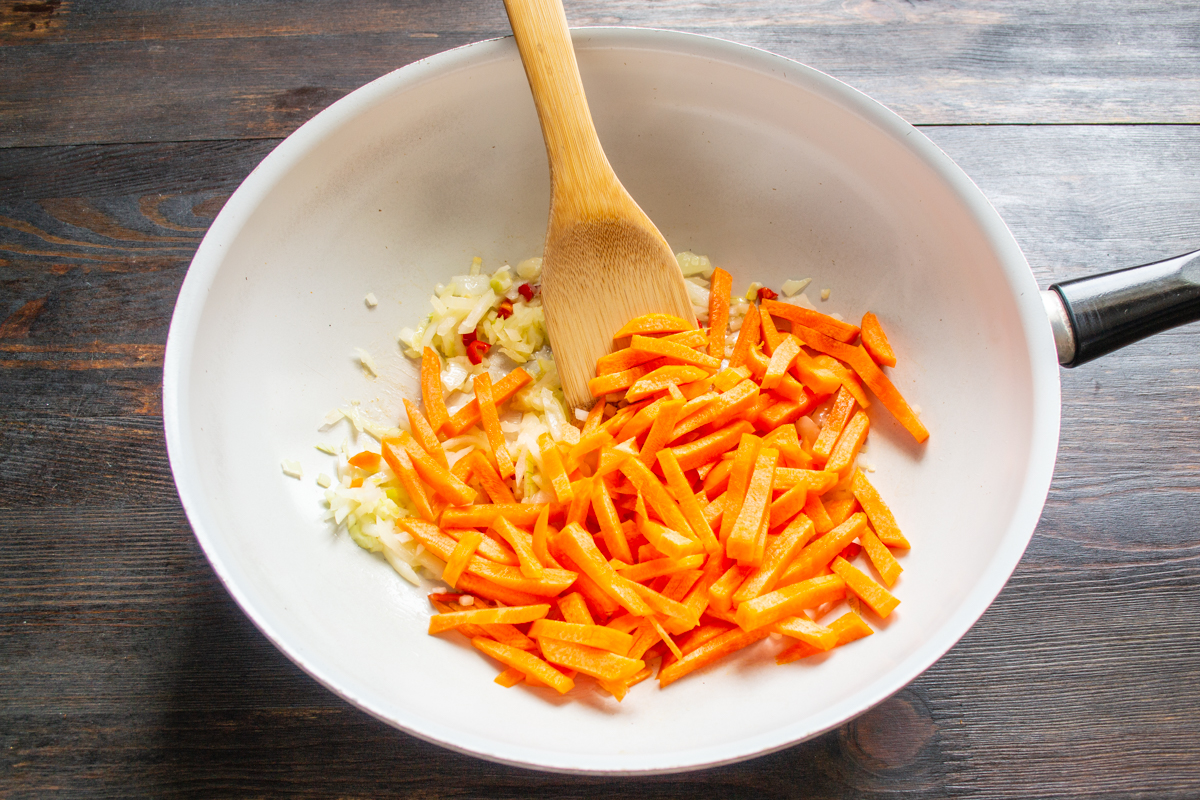
Carrots add natural sweetness and a signature golden hue, just like in authentic plov.
Nestle the ribs into the pan with the sautéed vegetables. Sear the ribs briskly on both sides over medium heat.
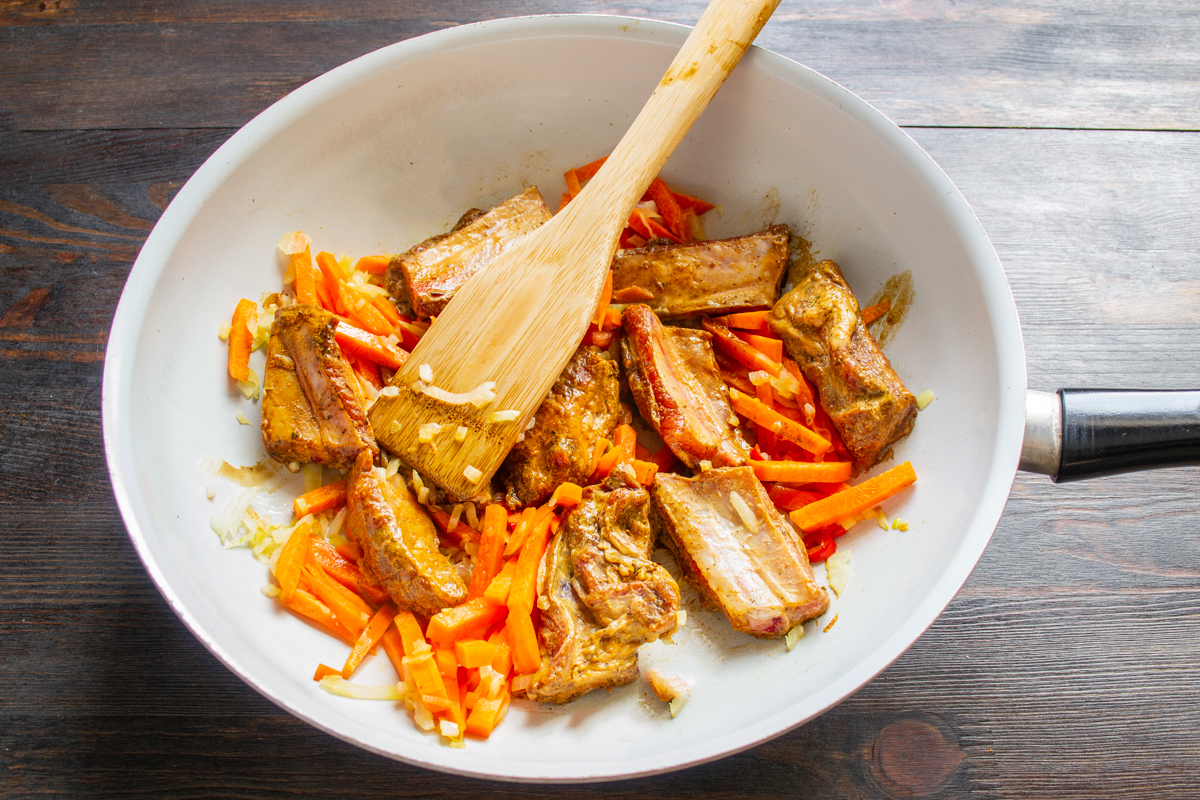
Quickly searing the ribs on both sides locks the juices inside each piece.
Pour the soaked farro into the skillet, spreading the grains in an even layer over the meat and vegetables.
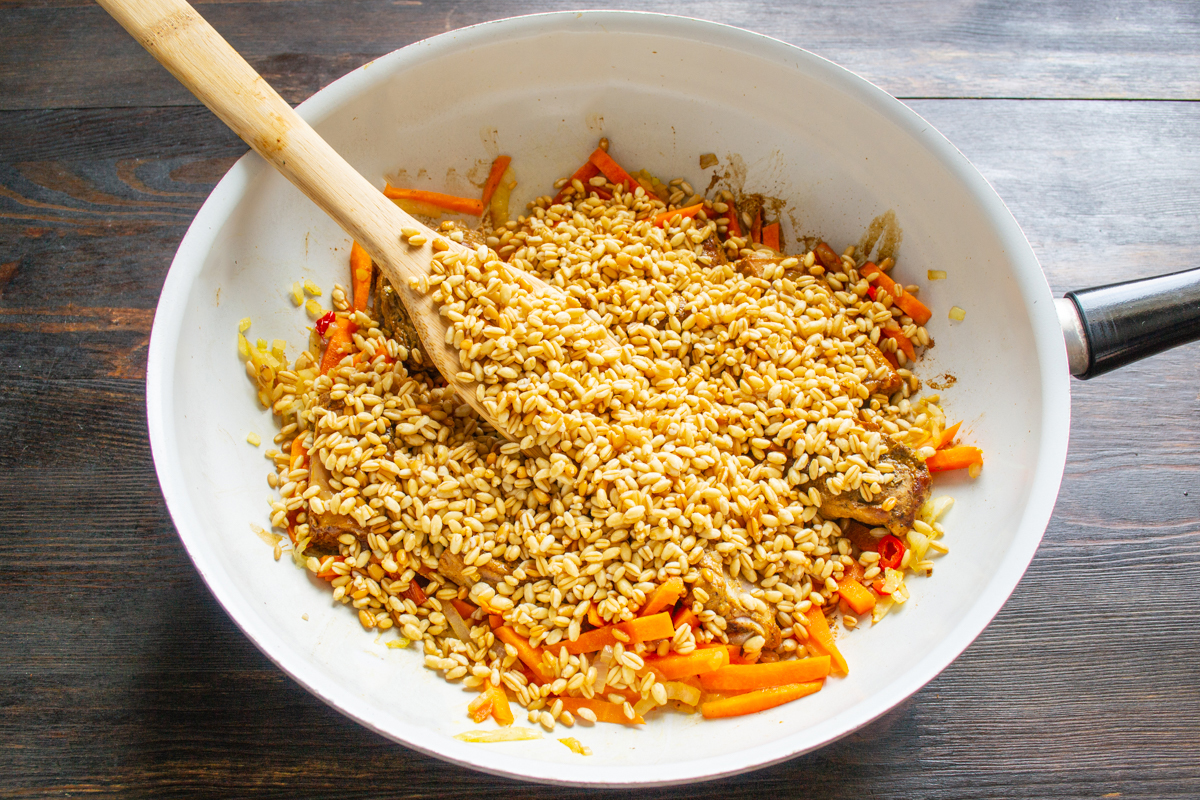
Spread the soaked farro evenly over the meat and vegetables before adding the water.
Pour in enough hot water to rise about 1.5 cm (just over 1/2 inch) above the grains. Tuck in the bay leaves and season with salt to taste.
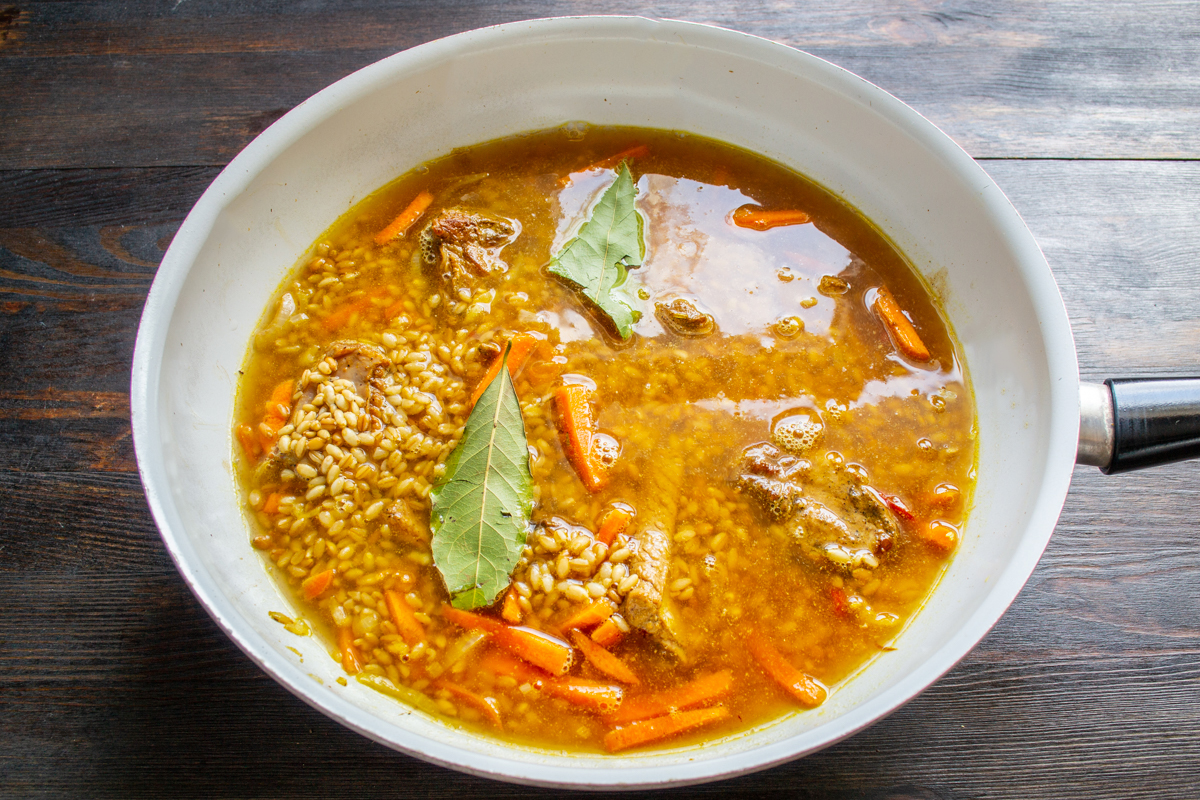
Pour hot water over the grains until just covered, and add bay leaves for aroma.
Bring to a boil over high heat. Cover the pan with a tight-fitting lid, reduce the heat to low, and gently simmer the ribs and farro for about 1.5 hours.
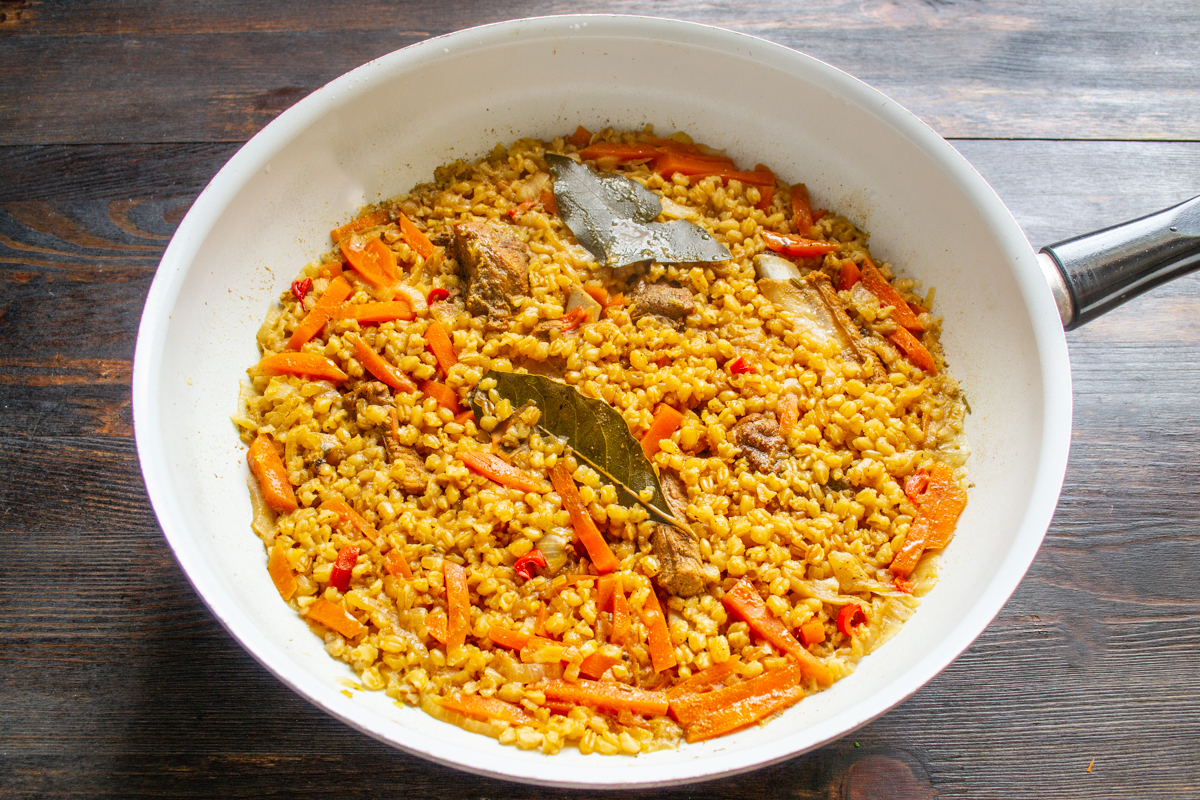
After an hour and a half of slow simmering, the farro absorbs all the rich flavors of the meat and spices.
Turn off the heat after 1.5 hours. Wrap the covered pan in a thick kitchen towel and let it rest for 30 minutes.
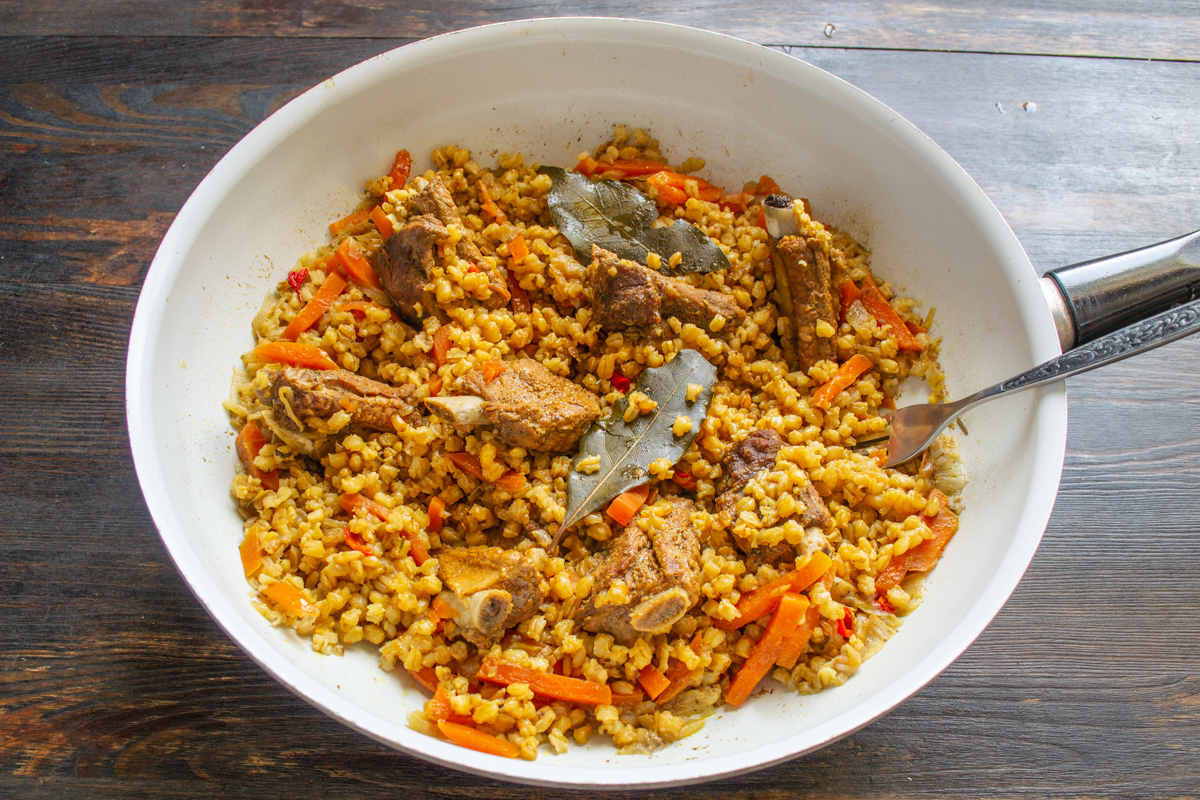
Let the dish rest wrapped in a towel for 30 minutes—this is the secret to the ideal grain texture.
Serve these pork ribs with farro piping hot, right in the pot they braised in, to capture that warm, rustic comfort. Just as you would with classic plov (pilaf), I recommend serving it alongside bright, tangy vegetables: toss thinly sliced red onions with apple cider vinegar, dress fresh tomatoes with olive oil, or make lightly salted smashed cucumbers with dill. The secret to the ultimate texture lies in the final step—once the heat is off, wrap the pot in a towel for 30 minutes so the grains can steam and absorb every last drop of the savory meat juices. Enjoy!
Polba (farro) is an ancient variety of wheat packed with vitamins, minerals, and antioxidants. Like all whole grains, it is an excellent source of fiber and keeps you full for hours. If you want to put a twist on the recipe, try tossing a handful of pitted prunes or dried cranberries into the pot for a subtle, fruity tartness. This dish reheats beautifully, tasting even richer the next day—just top it with a pat of butter when serving.
0 comments