
Pork hock aspic (studen) with gelatin isn't just a meal; it's a true symbol of hospitality and a cornerstone of the winter holiday table. In the old days, this dish was called the 'tsar's appetizer' because creating a perfectly clear broth required incredible patience and skill. The aroma of bay leaves and black peppercorns mingling with the rich, meaty broth instantly creates a cozy, festive atmosphere. Using pork hock guarantees plenty of tender meat, while adding gelatin ensures a flawless, glass-like clarity and a firm texture that holds its shape beautifully when sliced.
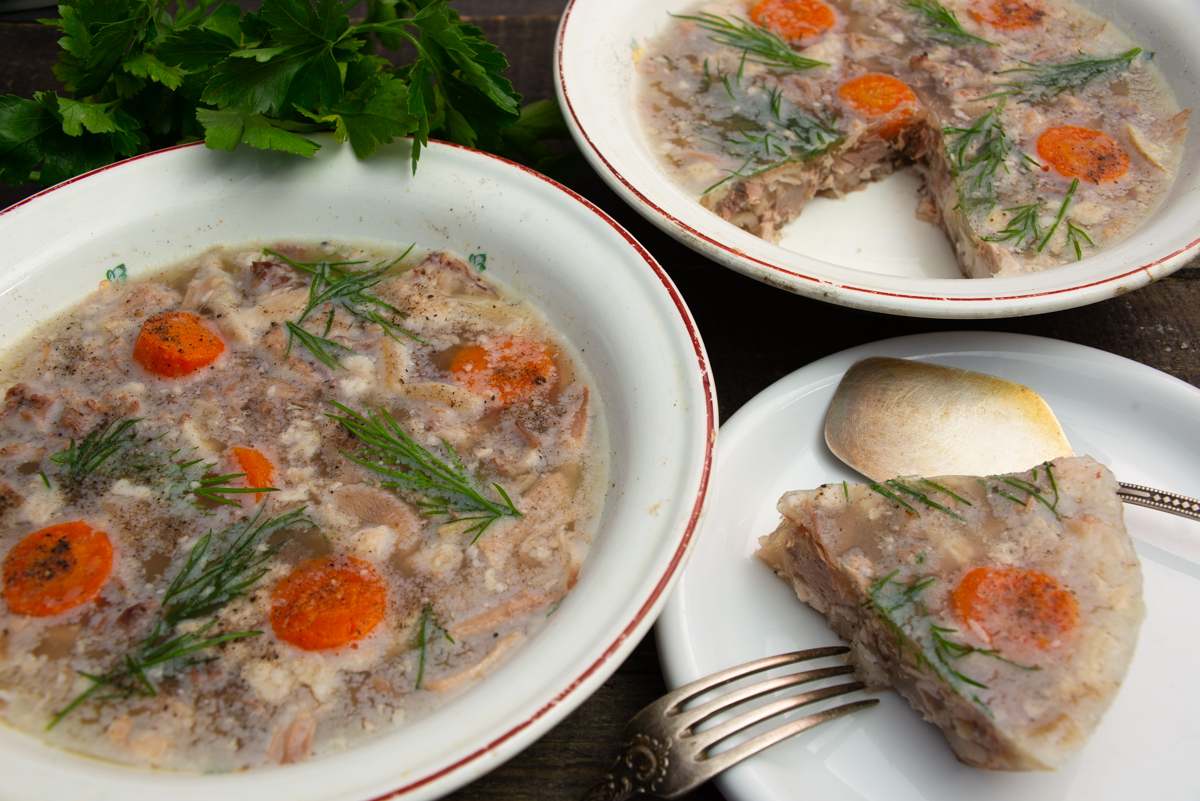
Clear and aromatic pork hock aspic is a home cooking classic that always delivers.
Ingredients
- 1 1/2 kg pork hock
- 1 carrot
- 4 garlic cloves
- 1 onion
- dill and parsley stems
- bay leaves, black peppercorns
- 1 tablespoon gelatin
- water
- salt and freshly ground black pepper, to taste
- fresh dill, for garnish
How to Make Pork Hock Aspic with Gelatin
Scrape the pork hock thoroughly with a sharp knife and rinse under running, slightly warm water. I like to add pork skin that I save up in the freezer—usually trimmed from pork belly or ham. Don’t throw it away; skin is packed with natural gelling agents, which is exactly what an aspic needs.
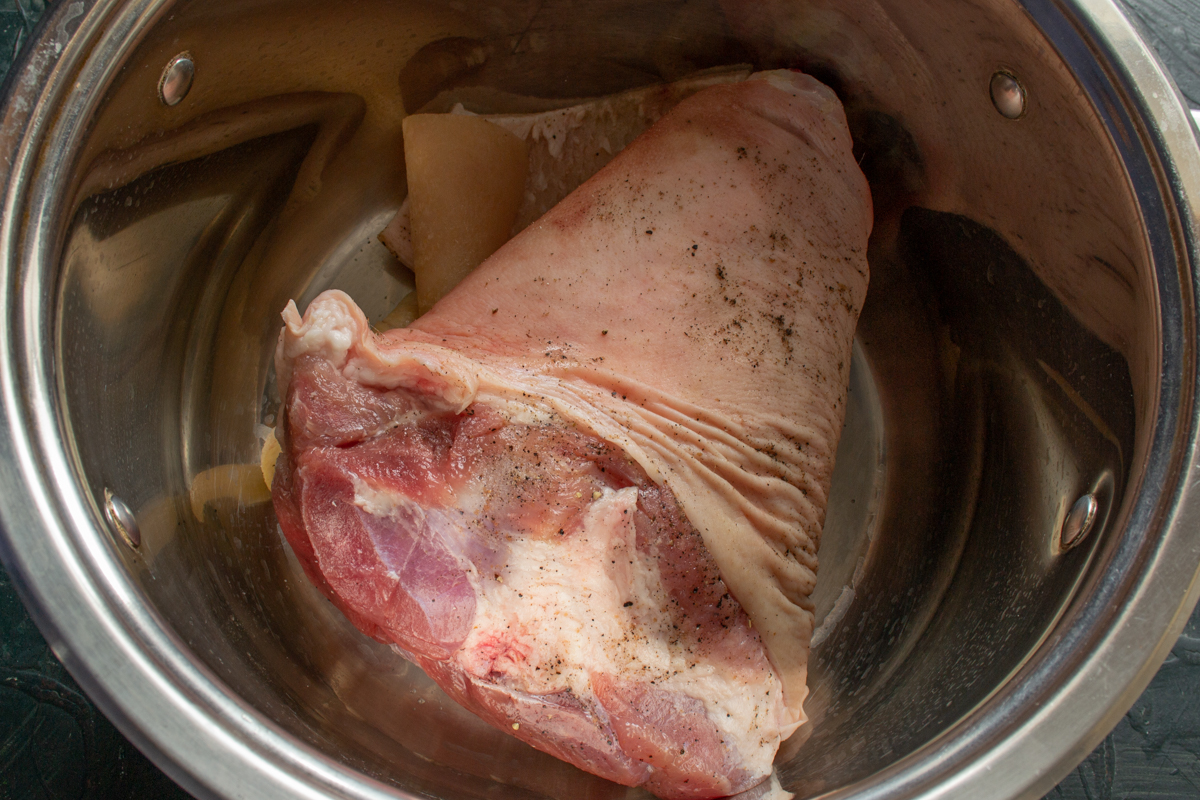
For a great set, you can add pork skin to the hock—it is naturally rich in gelling agents.
Chop the onion and slice the carrot into thick rounds. Peel the garlic cloves. Place the pork hock into a large, heavy-bottomed pot, then add the onion, carrot, a few bay leaves, and black peppercorns.
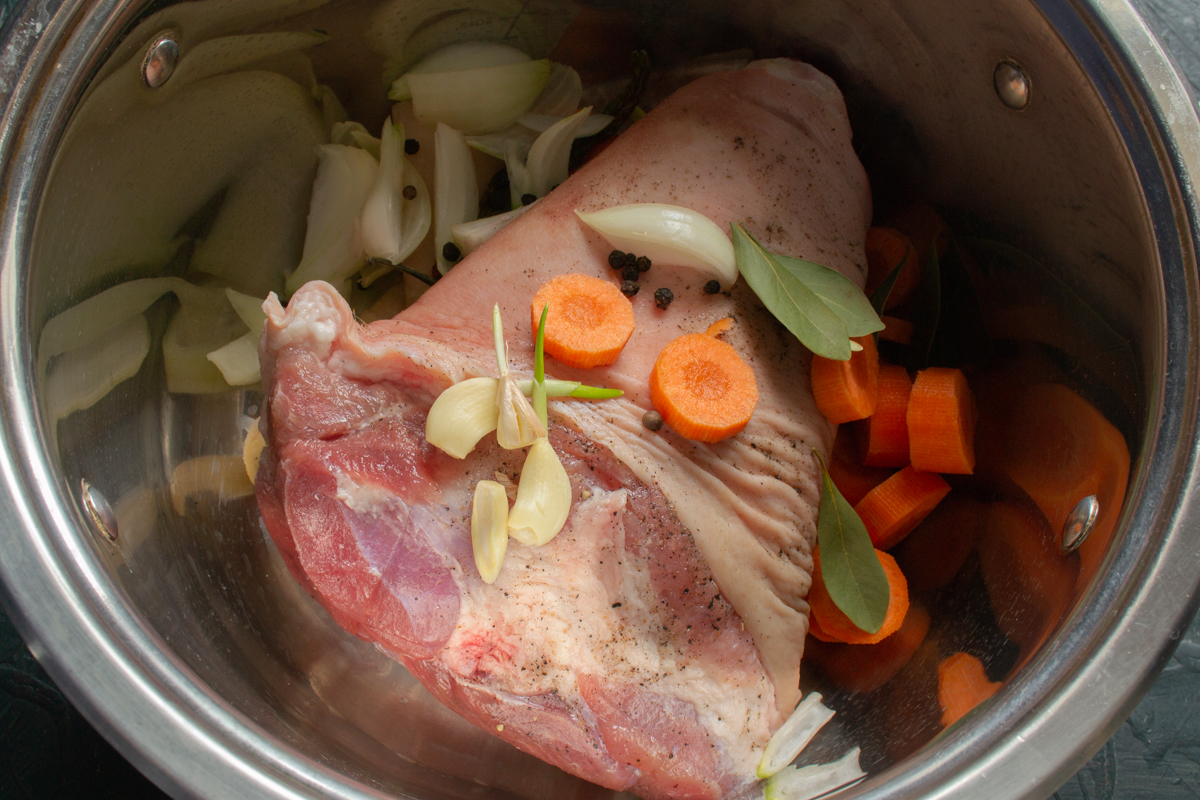
Onions, carrots, and spices make the broth not only flavorful but also give it a beautiful color.
Toss in the dill and parsley stems. Save the leafy greens for salads and garnishes.
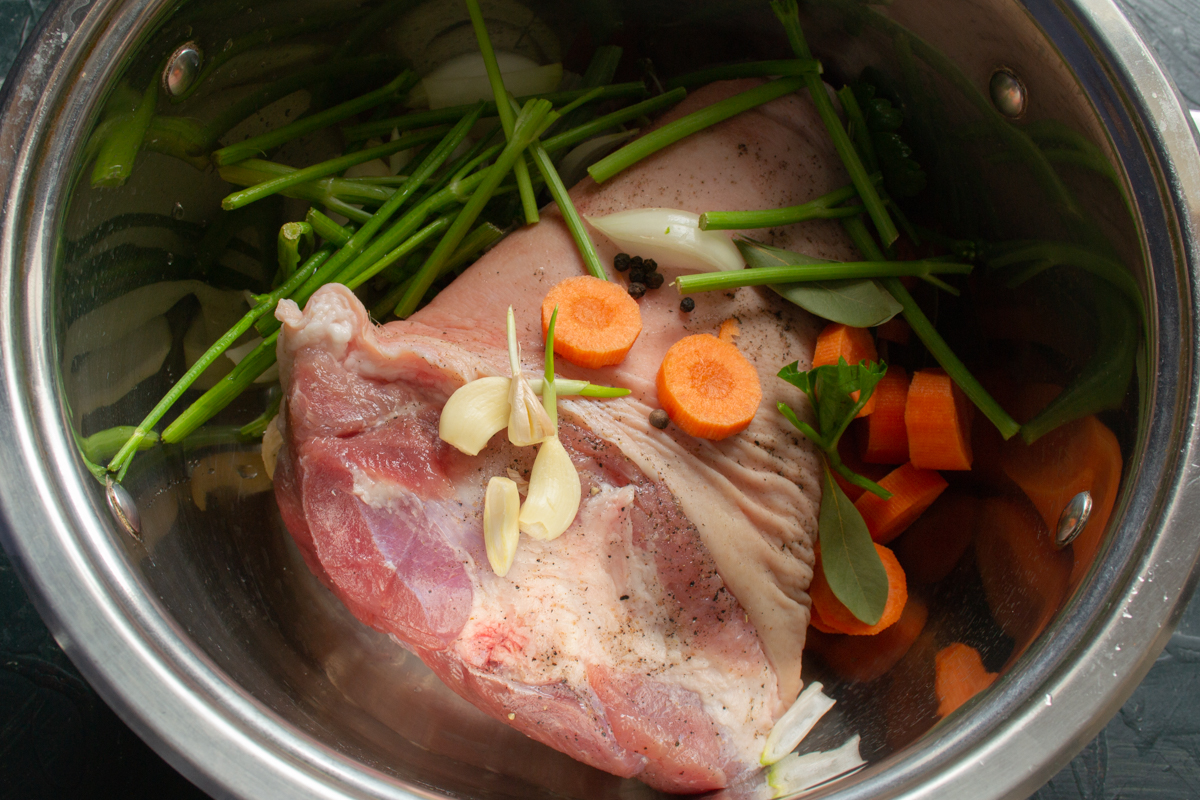
Dill and parsley stems will release all their aroma into the broth during the long simmer.
Pour in 3 liters of cold water and season with salt to taste. The water should just cover the pork hock, so make sure to choose an appropriately sized pot to avoid diluting the broth.
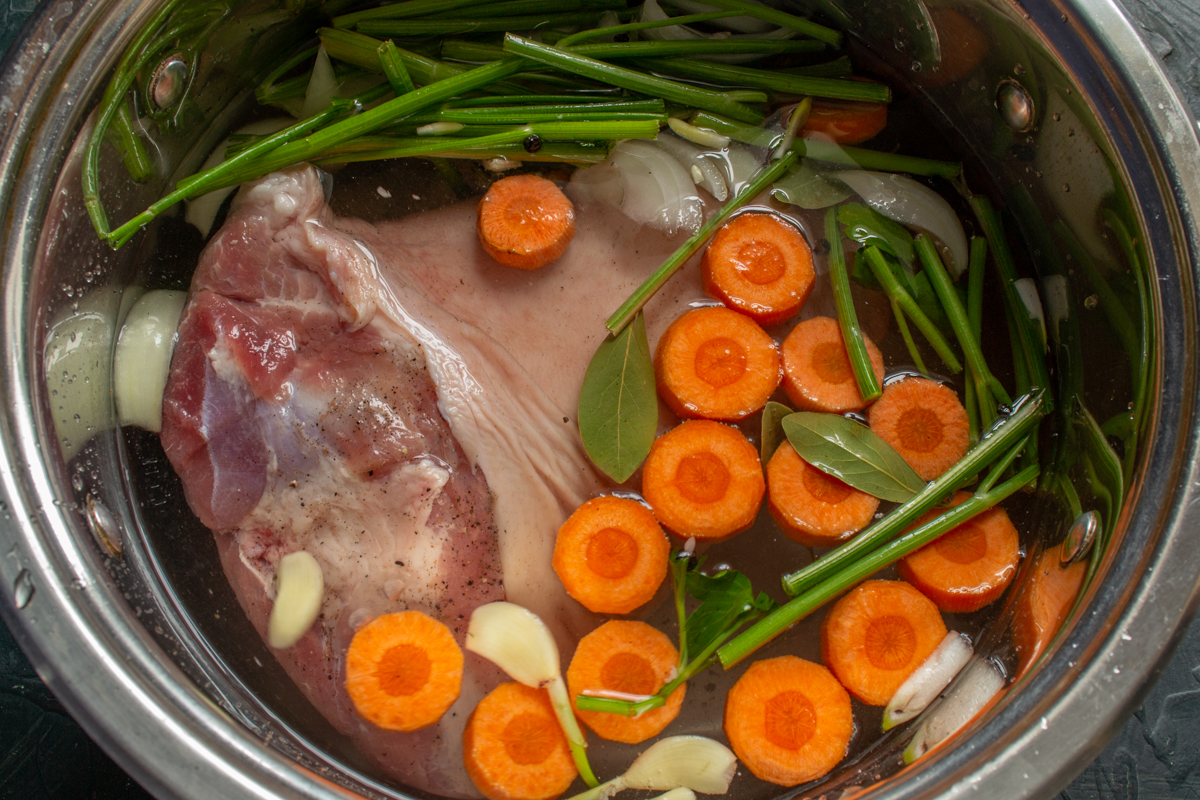
It's important to choose a pot so the water barely covers the meat, ensuring maximum flavor extraction.
Bring everything to a boil. Reduce the heat so the broth is barely simmering, and cook on low for about 3 hours. Once done, let the meat cool slightly right in the broth.
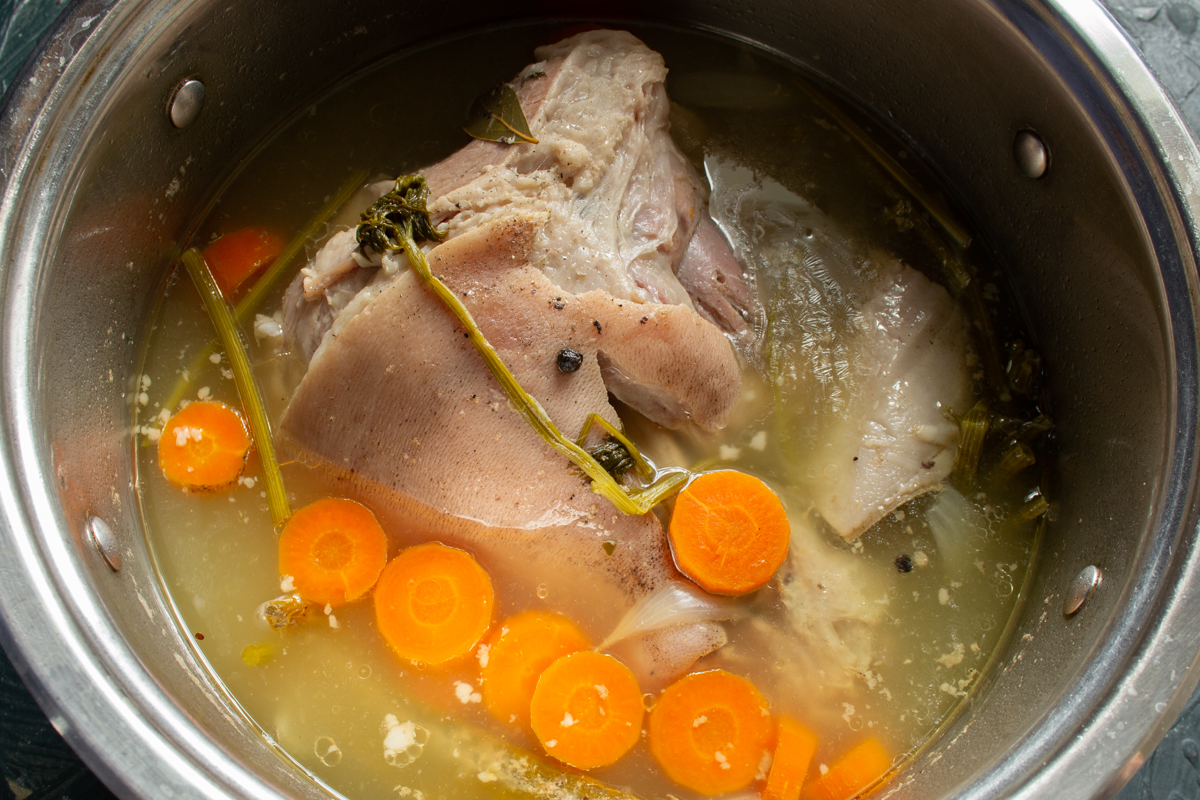
After hours of gentle simmering, the meat becomes incredibly tender and the broth is intensely rich.
Sprinkle the gelatin into a small bowl and pour in 150 ml of cold water. Let the gelatin bloom for 20 minutes at room temperature.
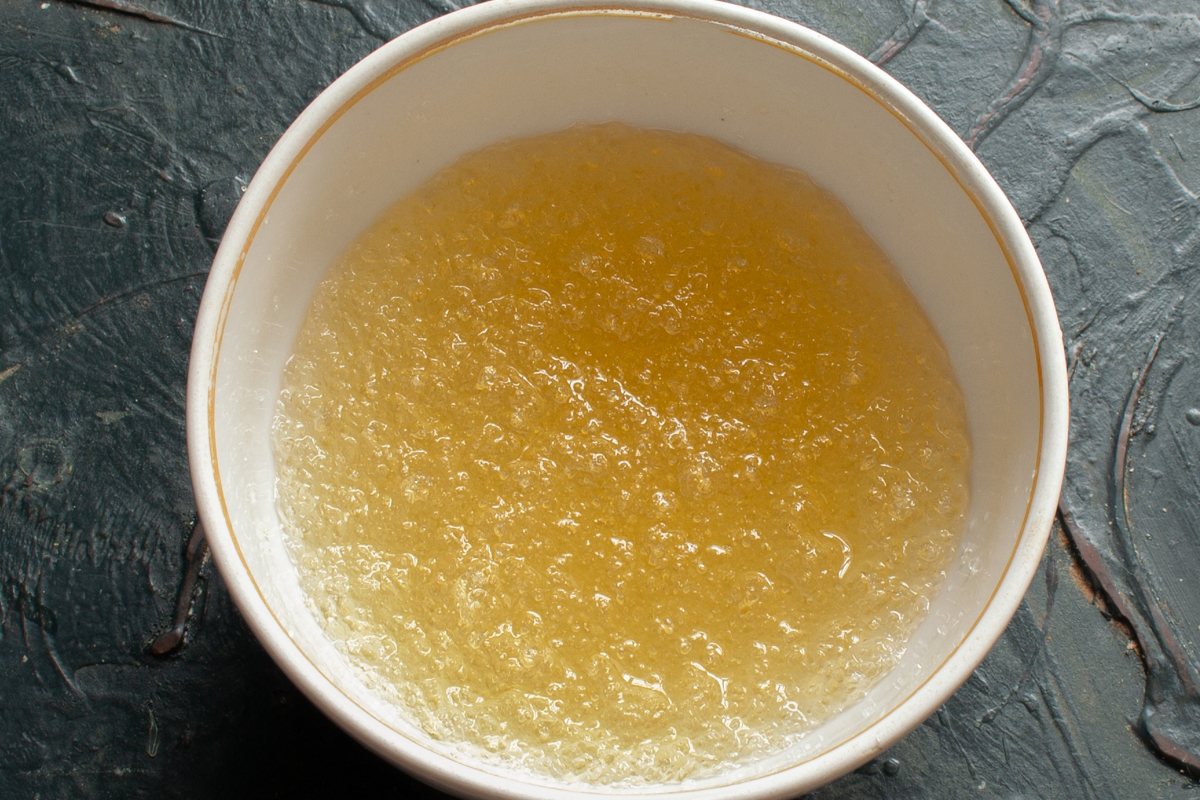
Gelatin ensures the perfect texture. Give it time to bloom properly before using.
Remove the pork hock from the broth and pull the meat from the bones. Chop the meat finely or shred it with forks. If you’re using young pork, you can also finely chop the lean skin and mix it with the meat—it adds wonderful flavor and texture.
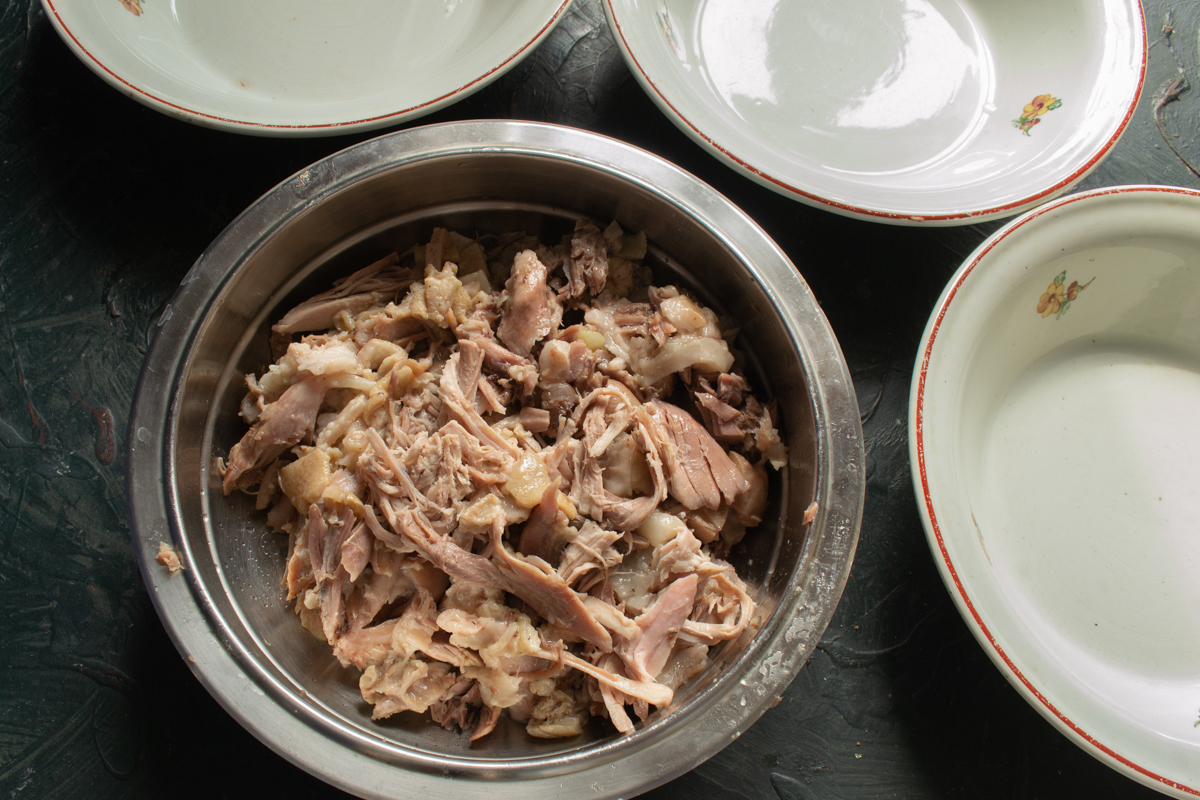
Carefully pull the meat from the bones and chop it into small pieces or shred it into fibers.
Divide the meat among deep plates or soup bowls. I usually add about 300 g of cooked pork per bowl. Top the meat with slices of the cooked carrot.
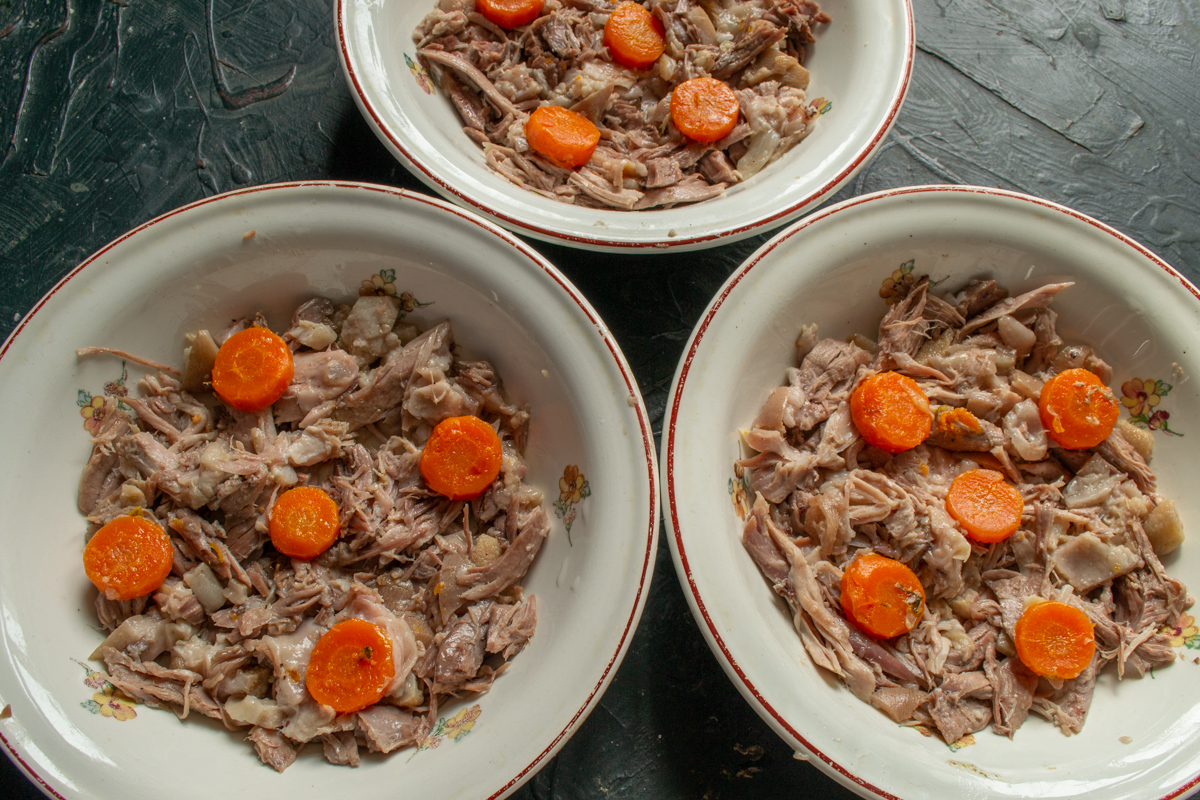
Divide the meat among the plates and arrange sliced cooked carrot on top for garnish.
Strain the broth and measure out about 700 ml. Use a paper towel to skim the fat off the surface—pork hocks render a lot of fat, and removing it makes for a cleaner, healthier dish. Stir the bloomed gelatin into the hot broth and heat the mixture, stirring constantly, until it reaches 80°C (176°F).
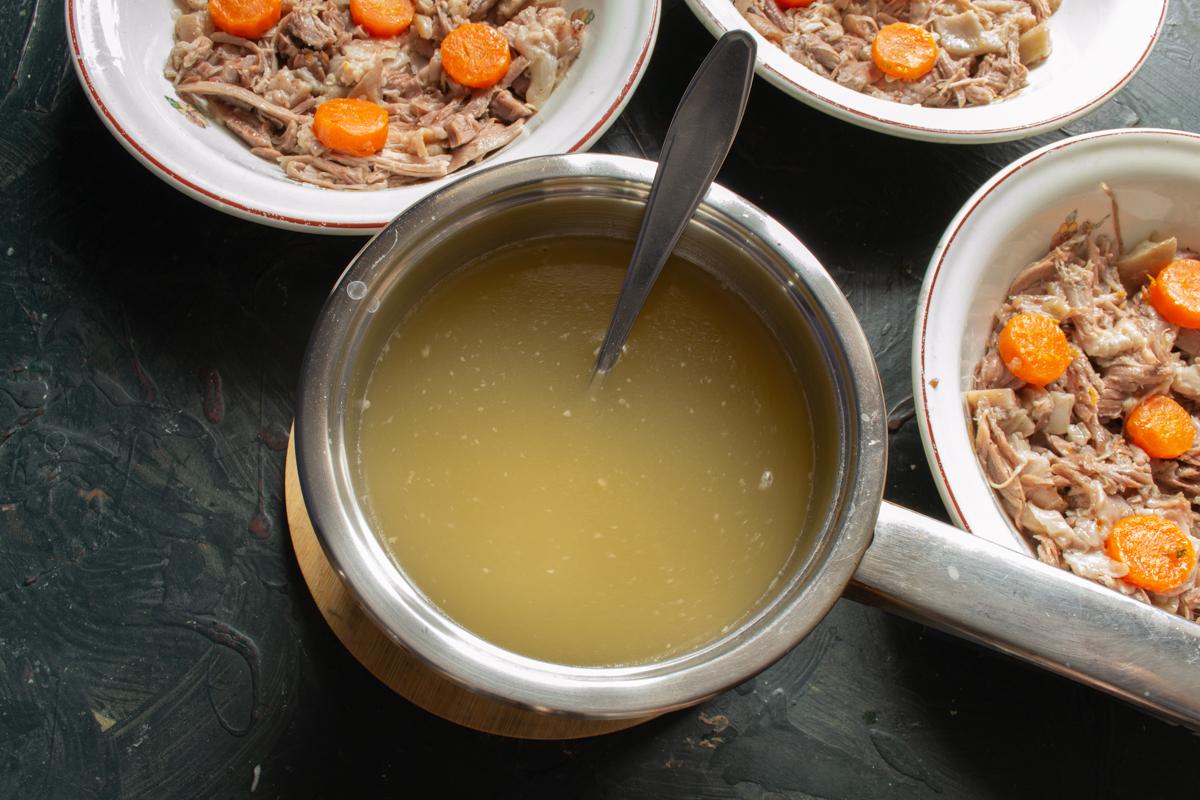
Be sure to strain the broth and skim any excess fat from the surface using a paper towel.
Pour the hot broth over the meat in the plates, aiming for about 300 ml per serving. Garnish with sprigs of fresh dill or parsley leaves.
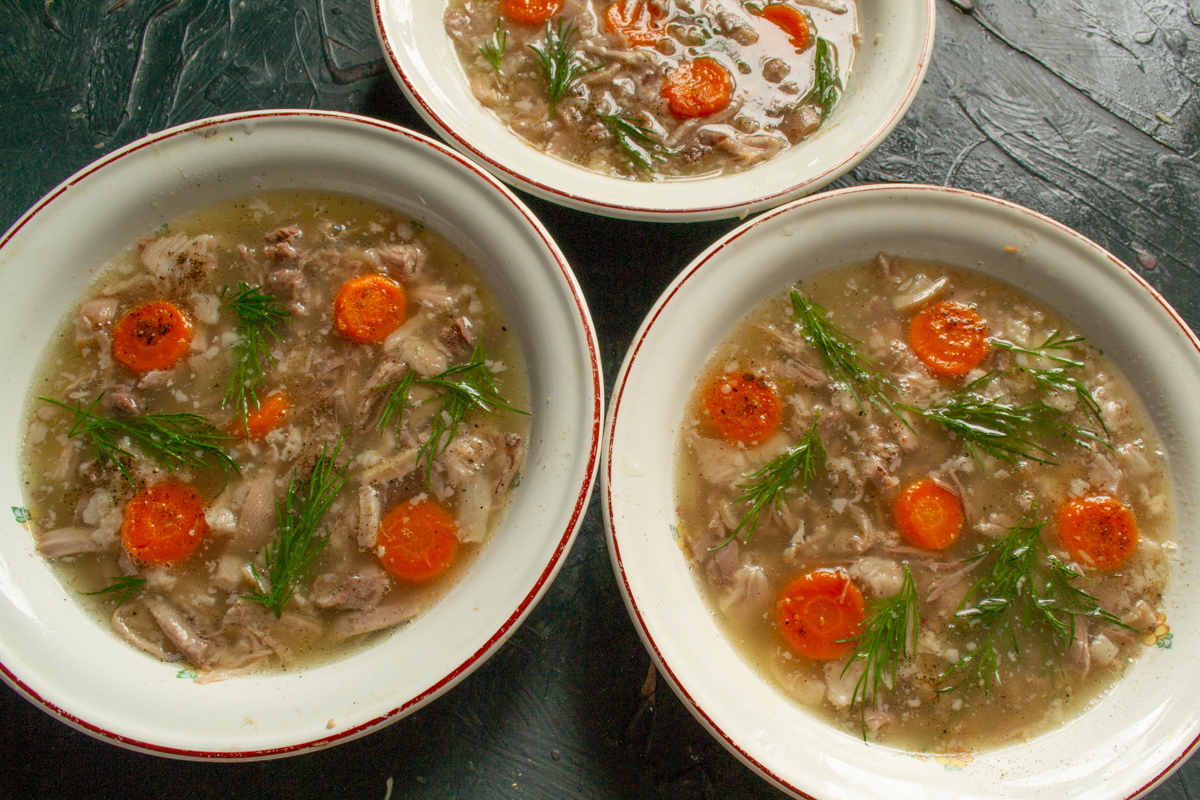
Pour the gelatin-enriched broth over the meat and garnish with fresh herbs for a festive look.
Leave the plates at room temperature until completely cool. Then, transfer them to the refrigerator and chill for 8-10 hours until firmly set.
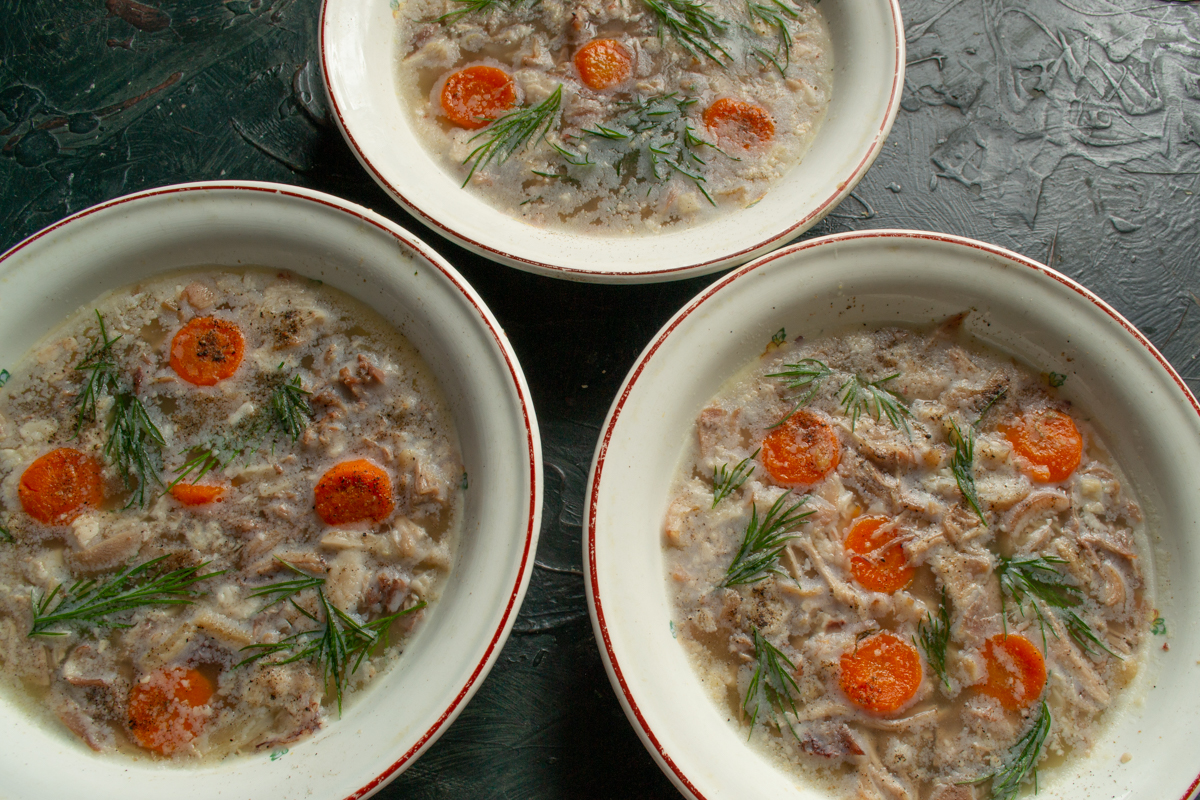
Leave the aspic in a cool place until completely set. Be patient; the result is absolutely worth it!
Pork hock aspic is traditionally served with sharp condiments that perfectly offset its delicate flavor. The classic choice is fiery Russian mustard or freshly grated horseradish, creating a warming contrast to the cool, melt-in-your-mouth jelly. For an impressive presentation, you can garnish the plates with marinated mushrooms or lemon wedges, and offer warm Borodinsky bread alongside.
Beyond its incredible taste, this dish is a fantastic source of collagen. For a flawless result, don't forget to strain the broth carefully and blot away excess fat with a paper towel—this step is crucial for achieving that beautiful, clear jelly. If you prefer a punchier flavor, try adding a little freshly minced garlic to each portion right before pouring over the broth.
0 comments