
Polish Babka is a legendary enriched yeast bread that traditionally takes a place of honor on holiday tables during Easter and Christmas. The dish got its name from its shape, which resembles the wide, ruffled skirts of village women (babka means 'grandmother' or 'old woman' in Slavic languages). Its flavor is a true symphony of tenderness and aroma. Hidden inside is a luscious filling of candied cherries and warming cinnamon, while the dough itself, rich with butter and eggs, bakes up incredibly airy and stays fresh for days. Baking this sweet bread will fill your entire home with the enchanting, cozy aroma of homemade comfort.
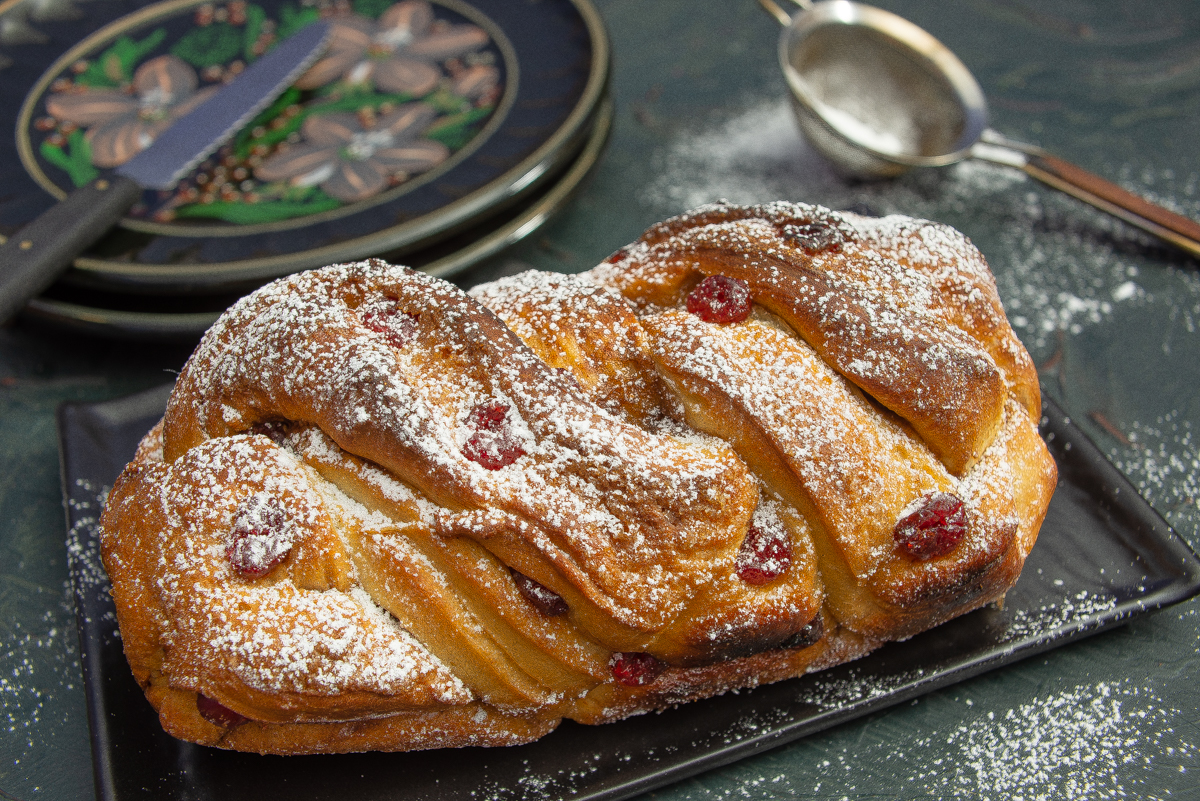
The finished loaf looks absolutely stunning: a golden-brown crust, a dusting of powdered sugar, and bright pops of cherry.
Dough Ingredients
- 250g (2 cups) all-purpose wheat flour
- 1 tsp active dry yeast
- 1 large egg + 1 egg yolk
- 125ml (1/2 cup) whole milk
- 25g (1.8 tbsp) unsalted butter
- 25g (2 tbsp) granulated sugar
- 1/8 tsp salt
- 1 packet (about 2 tsp) vanilla sugar (or substitute with 1 tsp vanilla extract)
Filling Ingredients
- 20g (1.4 tbsp) unsalted butter
- 30g (2.5 tbsp) granulated sugar
- 40g (1.4 oz) candied cherries
- Powdered sugar for dusting
How to Make Polish Babka
Warm the milk and butter to 30°C (86°F), then stir in the salt, sugar, and a packet of vanilla sugar. Sift the all-purpose wheat flour, add the active dry yeast, and whisk to combine. Make a well in the center of the dry ingredients, pour in the warm milk mixture, and add one whole egg plus one egg yolk. Begin by mixing the dough with a spoon. You can also use a stand mixer, adding the dry ingredients to the bowl first, followed by the wet ones.
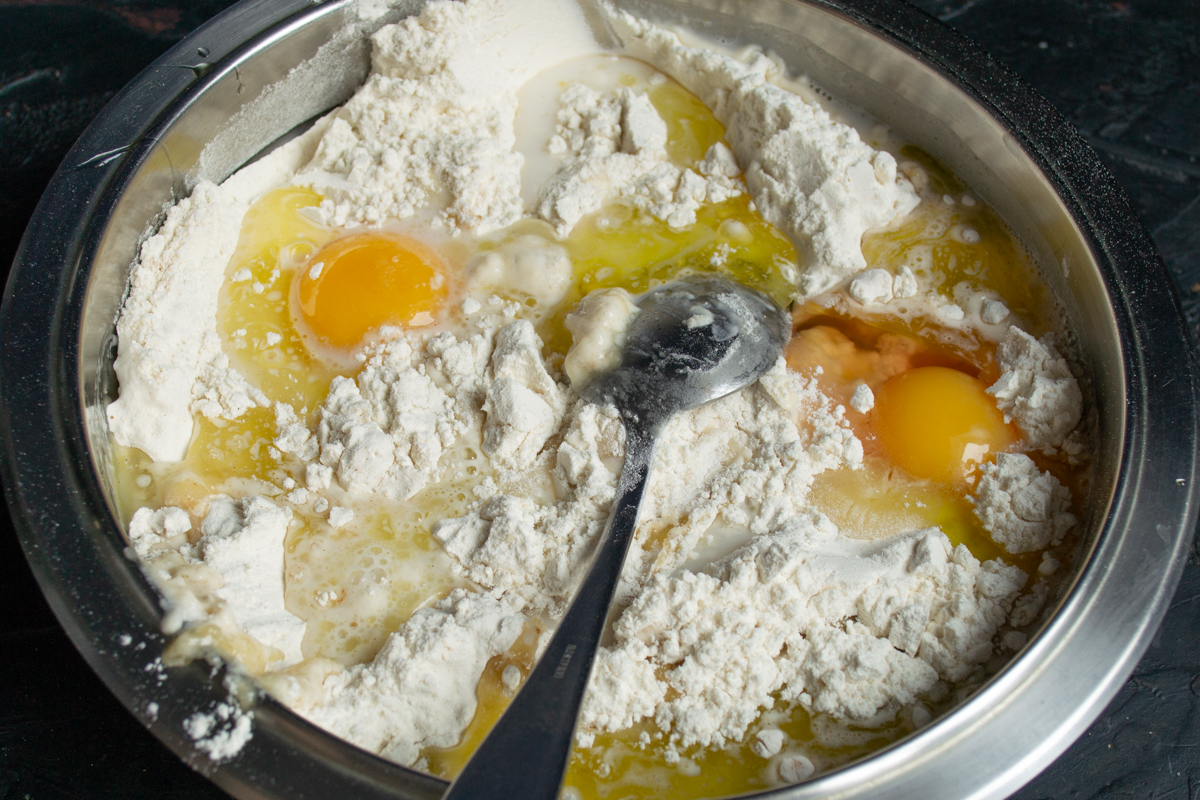
Mix the ingredients together: start with a wooden spoon, then switch to kneading by hand or with a stand mixer.
Turn the dough out onto a lightly floured work surface and knead for 10-12 minutes until it becomes smooth, elastic, and no longer sticks to your hands or the counter. Lightly grease a mixing bowl with vegetable oil, place the dough inside, and cover tightly with plastic wrap or a kitchen towel. Set it in a warm spot to rise for 2 hours. After about an hour, gently punch down the dough, cover it again, and return it to its warm environment.
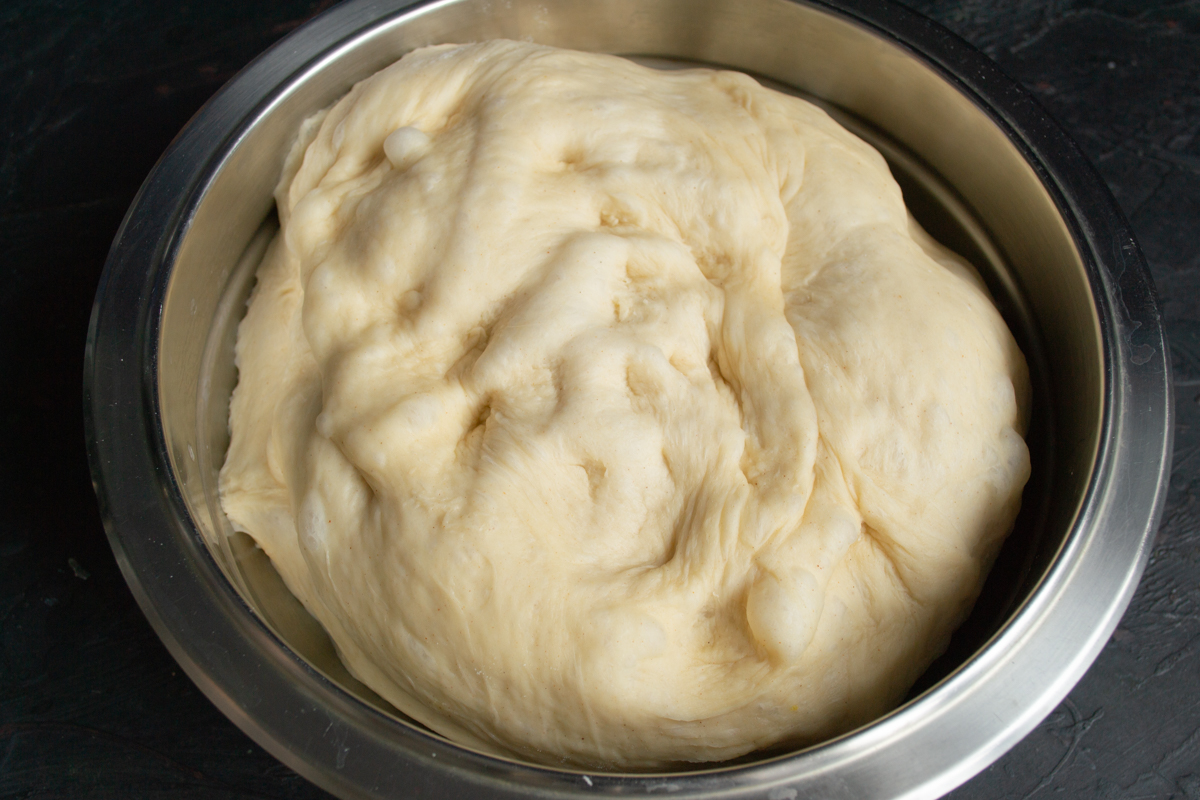
After 10 minutes of active kneading, the dough becomes silky smooth and no longer sticks to your hands.
After two hours, the dough will have beautifully expanded, becoming incredibly light and airy. The ideal temperature for proving this rich yeast dough is between 22-24°C (72-75°F).
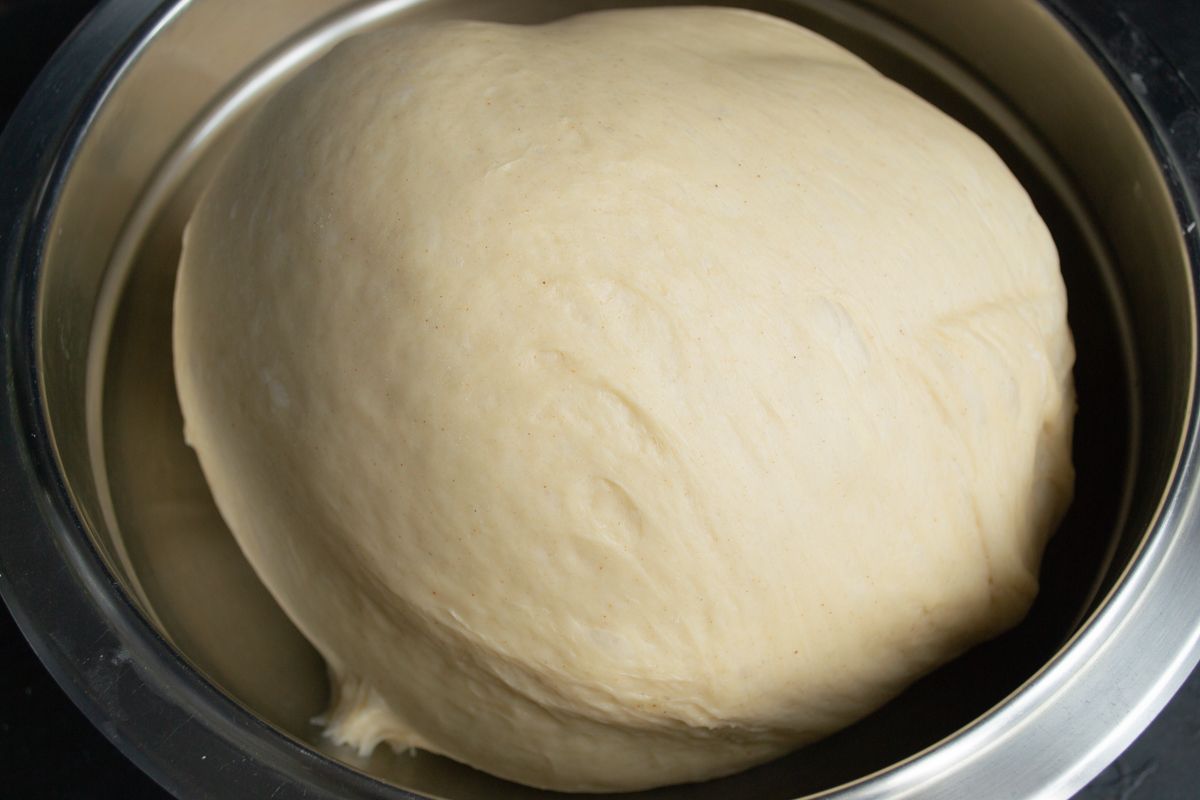
After two hours in a warm, cozy spot, the dough will double in volume and become incredibly airy.
Punch down the dough one more time and dust your board with a little flour. Roll the dough out into a neat rectangle, about half a centimeter (1/4 inch) thick.
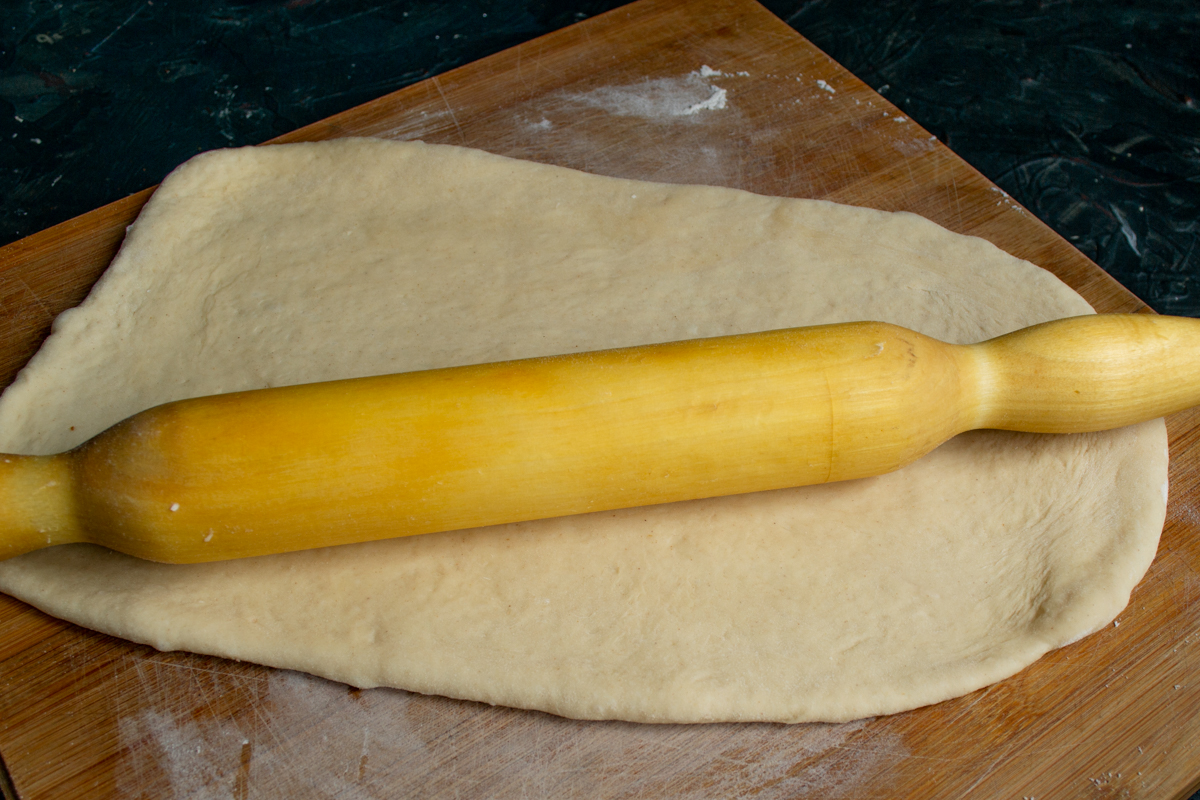
Roll the dough out into a neat, even rectangle about 5 millimeters (1/4 inch) thick.
Time for the filling: generously brush the rolled dough with melted butter. Whisk the sugar and ground cinnamon together, then sprinkle this fragrant mixture evenly over the buttered surface.
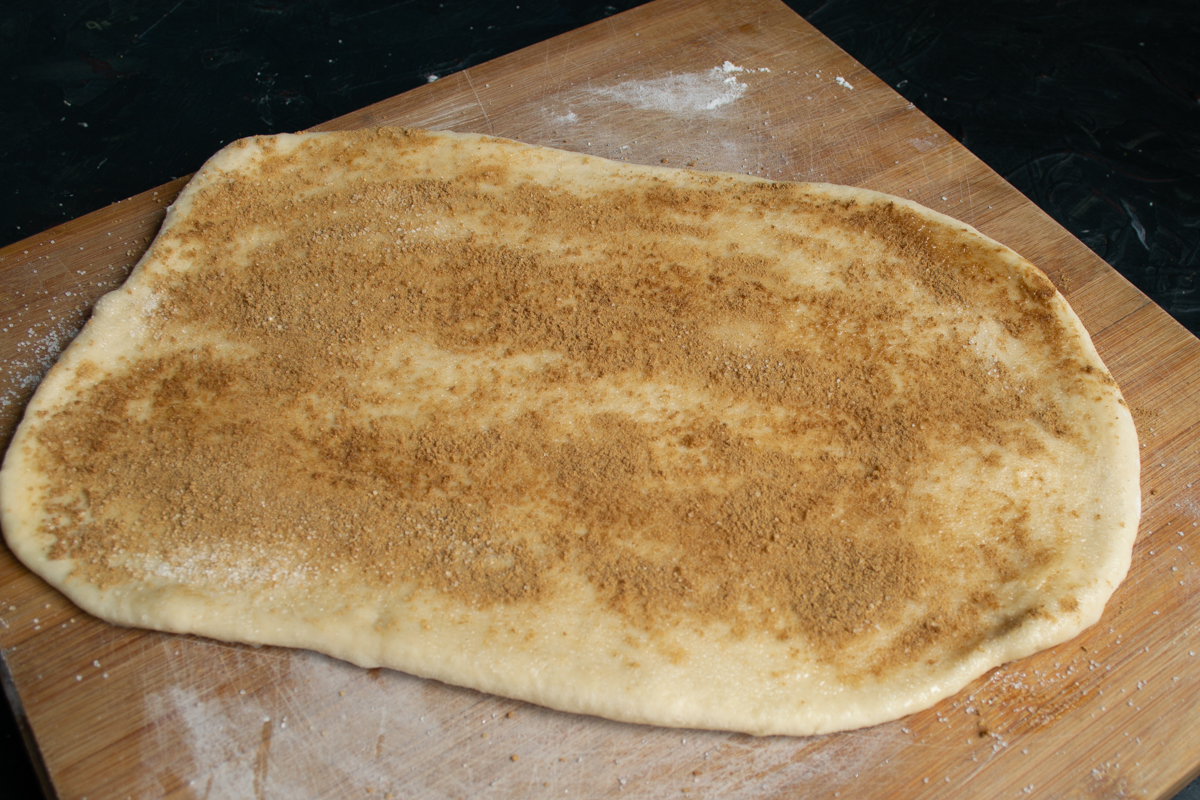
Scatter the fragrant cinnamon-sugar mixture evenly across the entire surface of the buttered dough.
Scatter the candied cherries evenly across the filling. For an extra layer of flavor, you can soak the cherries in cognac or dark rum beforehand; just be sure to pat them dry before using.
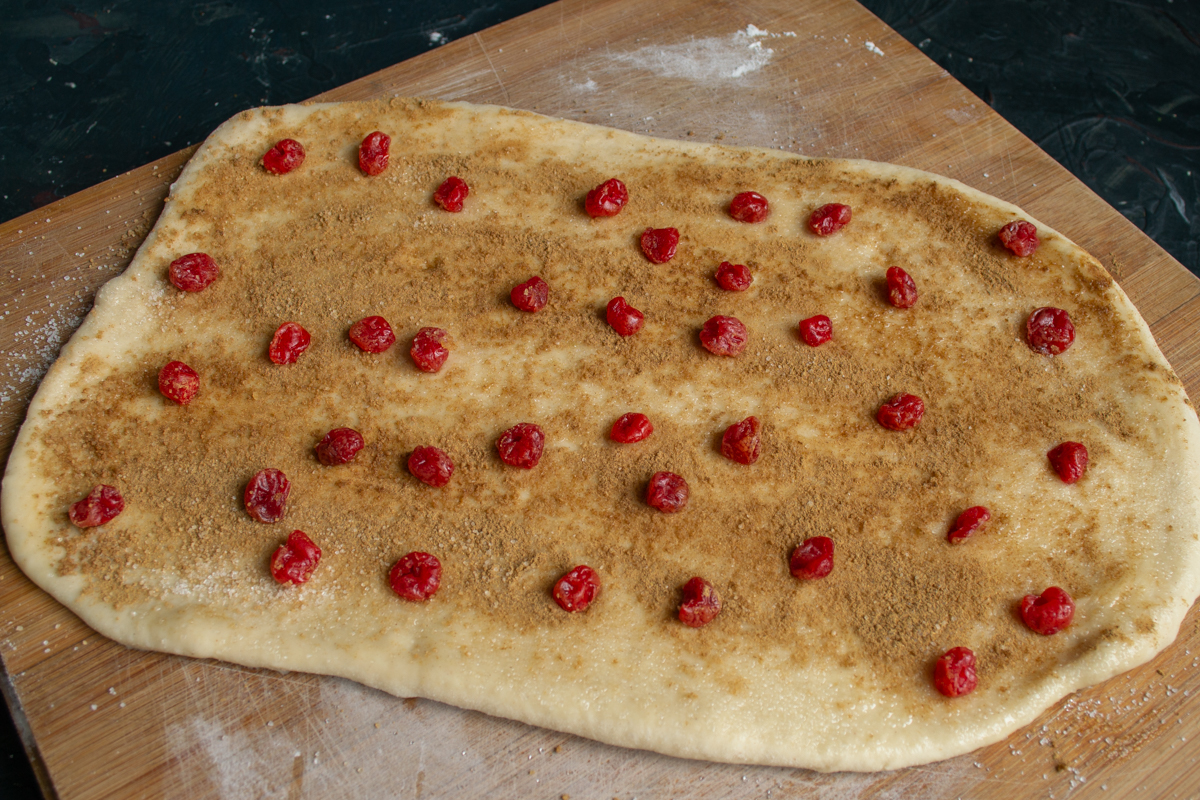
Scatter the candied cherries over the cinnamon layer. They will give the sweet bread a lovely tartness and extra moisture.
Starting from the long edge, tightly roll the dough into a log, keeping the filling enclosed. Pinch the seam and the ends to seal it completely. Gently shape the roll to ensure it has an even thickness from end to end.
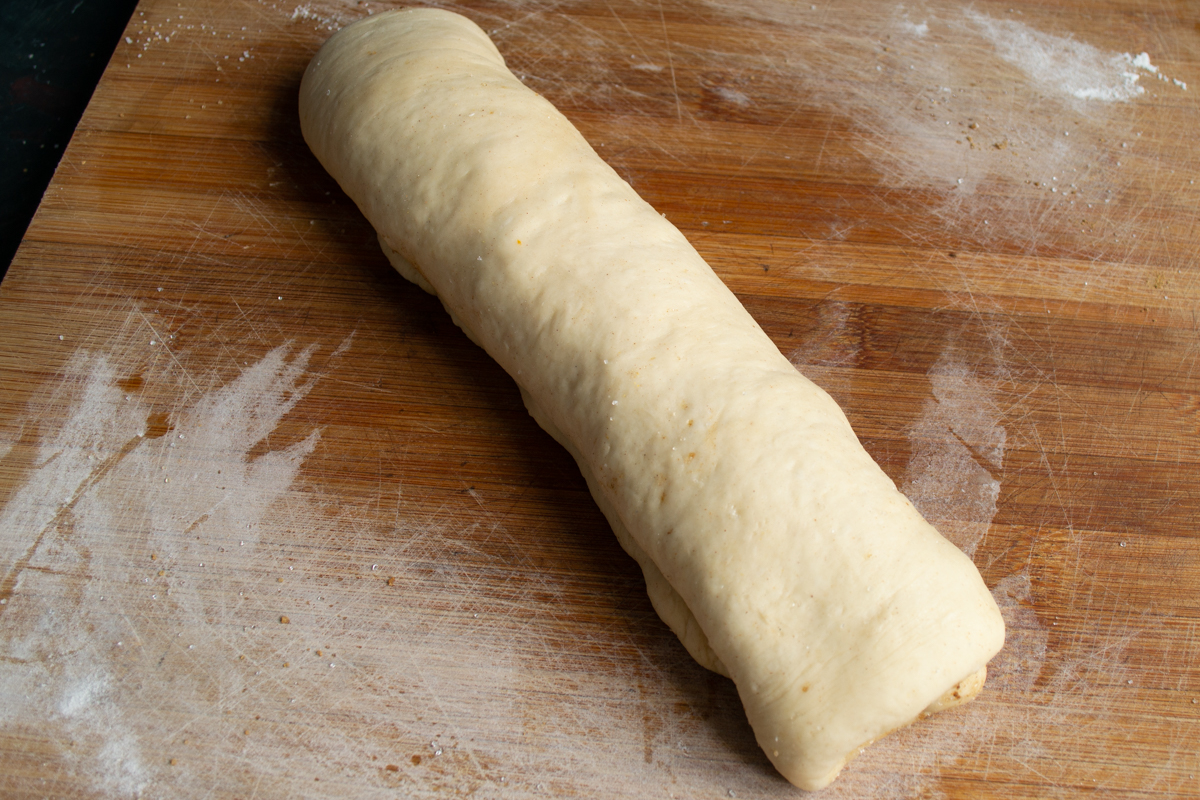
Carefully roll the dough into a tight log and securely pinch the edges to keep the filling locked inside.
Using a sharp knife, slice the roll in half lengthwise, exposing those beautiful layers. Pinch the top ends together, then carefully twist the two halves around each other, keeping the cut sides facing up to show off the filling. Seal the bottom ends securely.
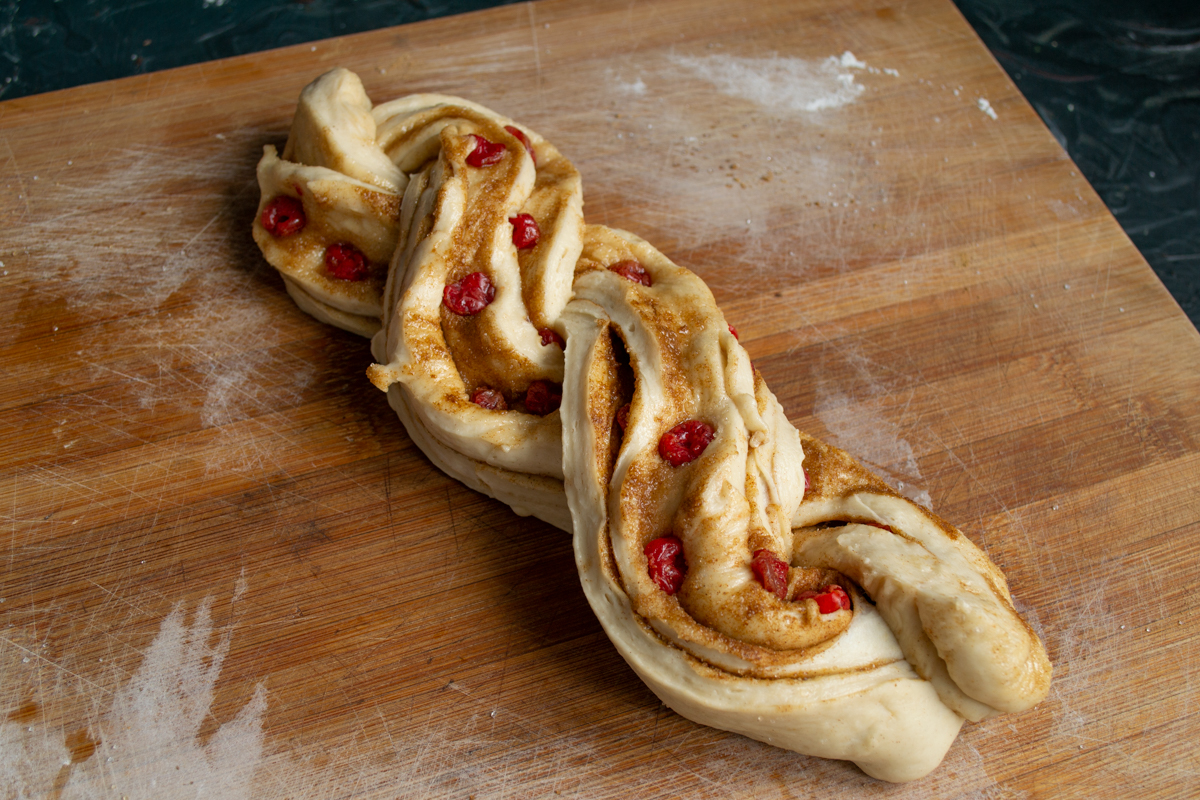
Slice the log cleanly down the middle and twist the two strands together, keeping the beautiful layers facing outward.
Line a 22×11 cm (9×4 inch) loaf pan with parchment paper and carefully transfer your braided loaf into it. Let it rest in a warm place for another 35-40 minutes. This final proof allows the dough to relax and build more air bubbles, guaranteeing a perfectly fluffy babka.
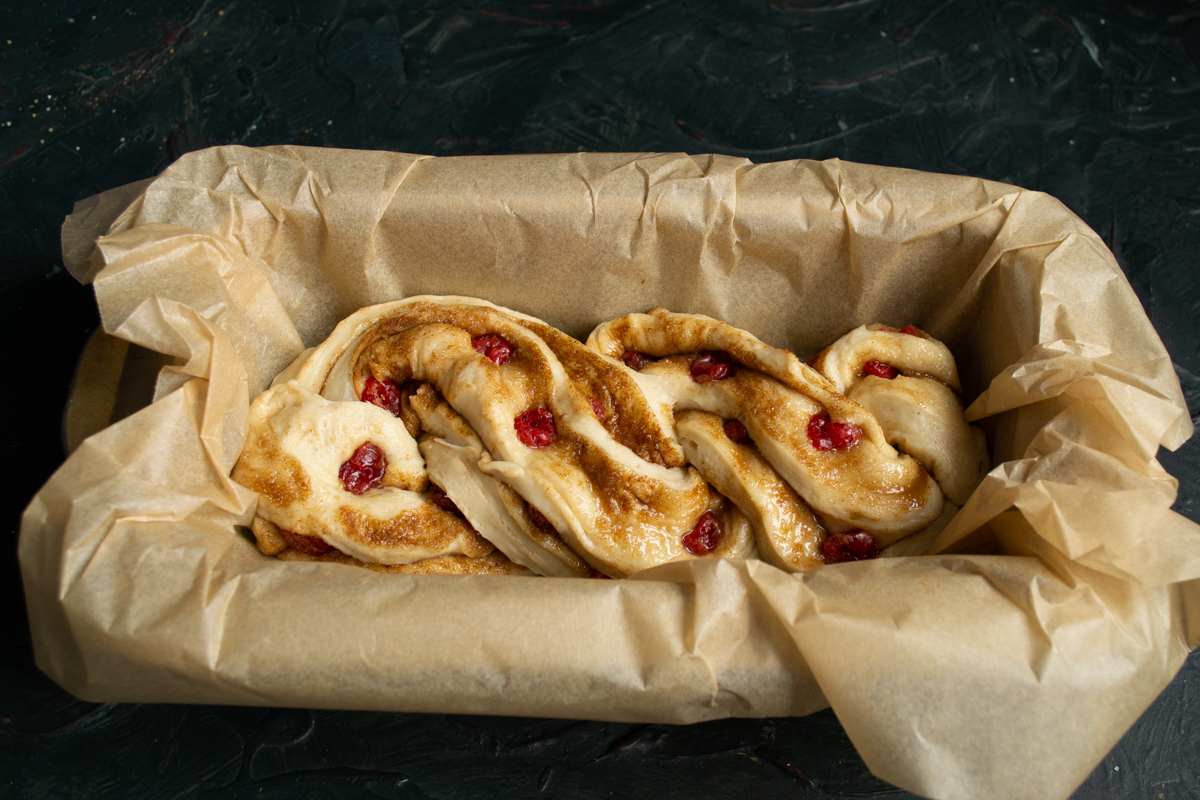
Gently transfer the braided dough into your loaf pan and let it rise one last time before hitting the oven.
Preheat your oven to 200°C (390°F). Bake the babka in the hot oven for 30-35 minutes until it boasts a deep, glorious golden-brown crust. Keep an eye on it, as baking times can vary slightly depending on your oven’s unique personality.
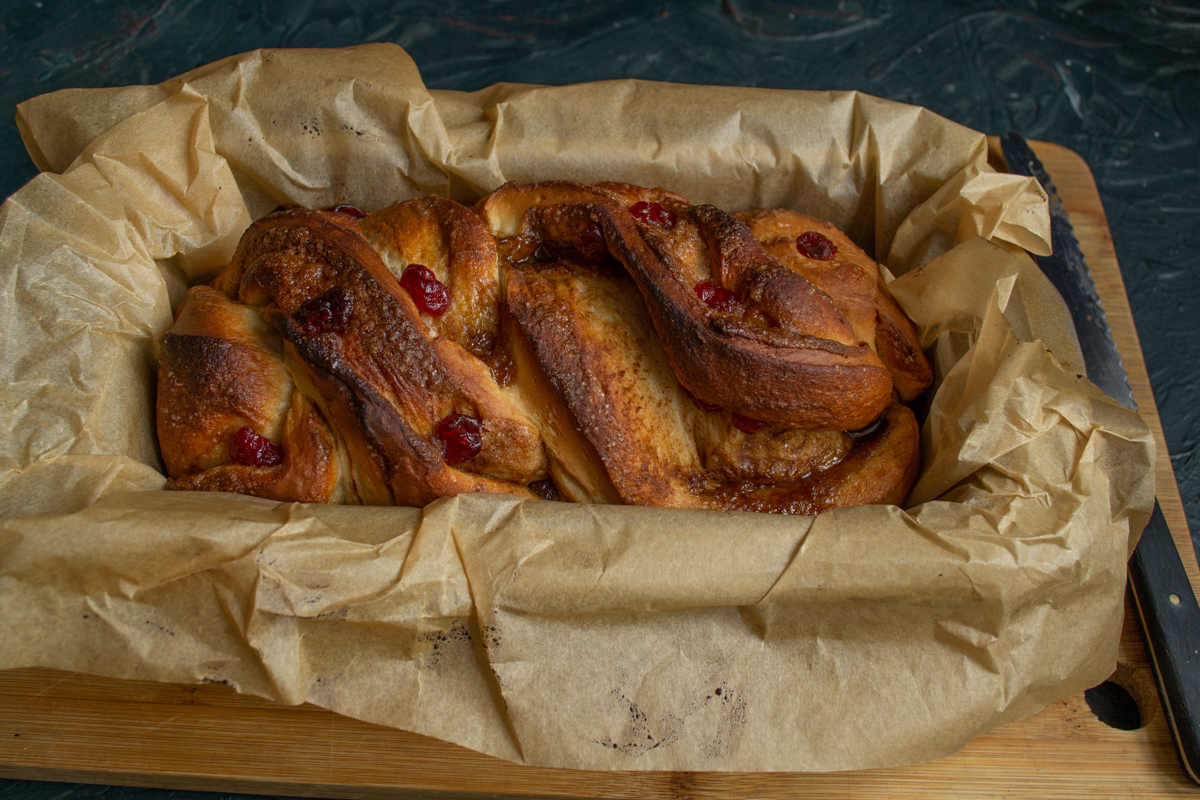
Bake until it develops a deep golden-brown crust. The aroma of toasted cinnamon will fill your whole house!
Transfer the baked babka to a wire rack to cool completely, then finish it with a generous dusting of powdered sugar. Enjoy every delicious bite!
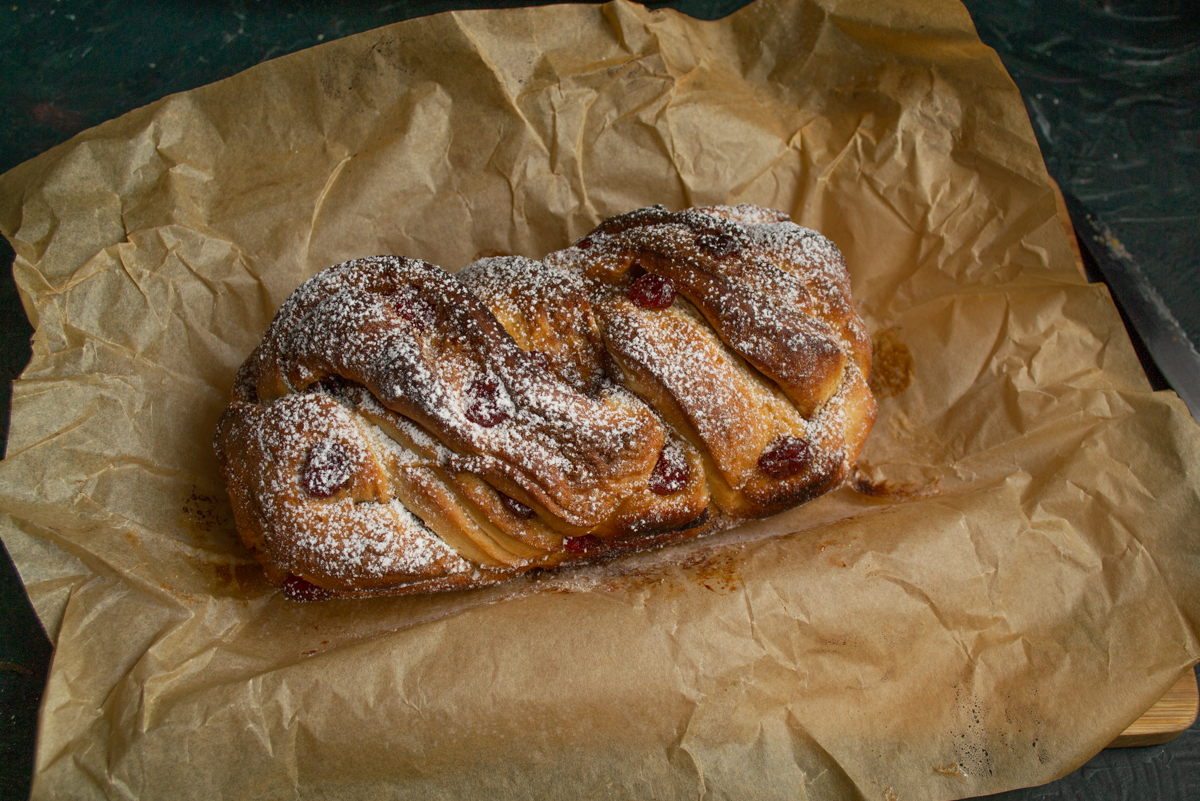
Make sure to let the loaf cool completely before serving, and finish it with a snowy dusting of powdered sugar.
You can shape your Polish Babka any way you like: form the dough into an elegant wreath or bake individual portioned buns. To make the loaf look even more appetizing, try finishing it with a sweet sugar glaze or a drizzle of melted white chocolate. If you want to introduce new flavor notes, soak the cherries in cognac or dark rum beforehand—this gives the dessert a noble touch and makes its flavor profile much deeper and more intense.
Serve the finished babka with a strong cup of coffee or a fragrant tea. It retains its wonderful taste and texture for several days when stored in an airtight container or wrapped snugly in parchment paper. The secret to that perfect crumb lies entirely in your patience: give the dough plenty of time to prove properly, and the results will exceed all your expectations, turning an ordinary tea time into a true celebration.
0 comments