
A simple summer recipe for delicious, light fish. Poaching garlic mackerel wrapped in plastic film right in a pot is not only quick and flavorful, but also wonderfully practical, as it leaves no lingering fishy odor in the kitchen. The secret to its succulence lies in the watertight seal: the fillets gently poach in their own juices, absorbing the aromas of garlic powder and fragrant herbs. Using blanched green garlic leaves as natural kitchen twine adds an elegant touch and a subtle, savory note, transforming humble fish into an impressive roulade that tastes equally good warm or chilled.
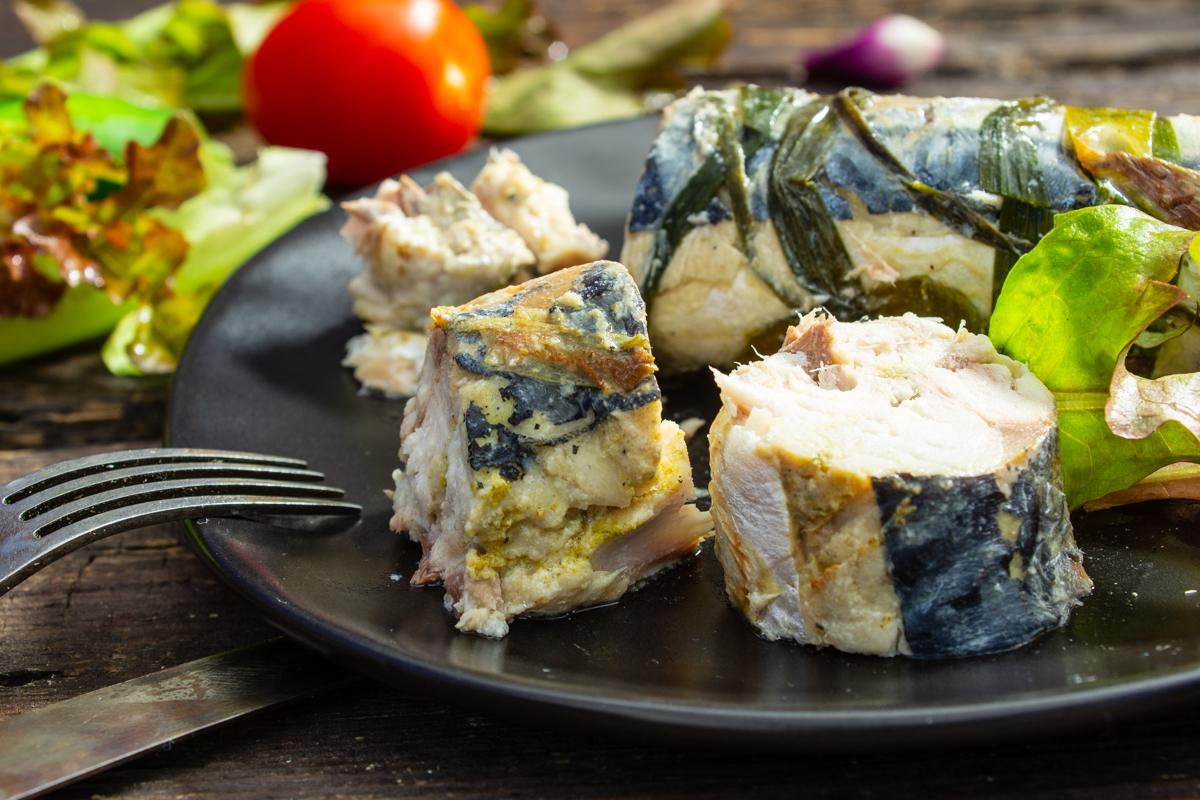
The tender and fragrant mackerel is ready. It is equally suited for a festive table or a simple weeknight dinner.
Ingredients
- 2 medium whole mackerels
- 2 teaspoons coarse sea salt
- 1 teaspoon garlic powder
- 1 teaspoon khmeli suneli (Georgian herb and spice blend)
- fresh green garlic leaves (or scallion greens, for tying)
How to Make Garlic Mackerel
Prepare the mackerel. If using frozen fish, transfer it from the freezer to the refrigerator several hours before cooking. Once thawed, break down the fish: cut off the heads and tails, slit the bellies open, remove the innards, and rinse the cavities thoroughly under cold running water. Score the skin along the backbone and carefully fillet the fish from one side, then the other. You will end up with 4 mackerel fillets. Pluck out any visible pin bones and pat the fillets dry with paper towels.
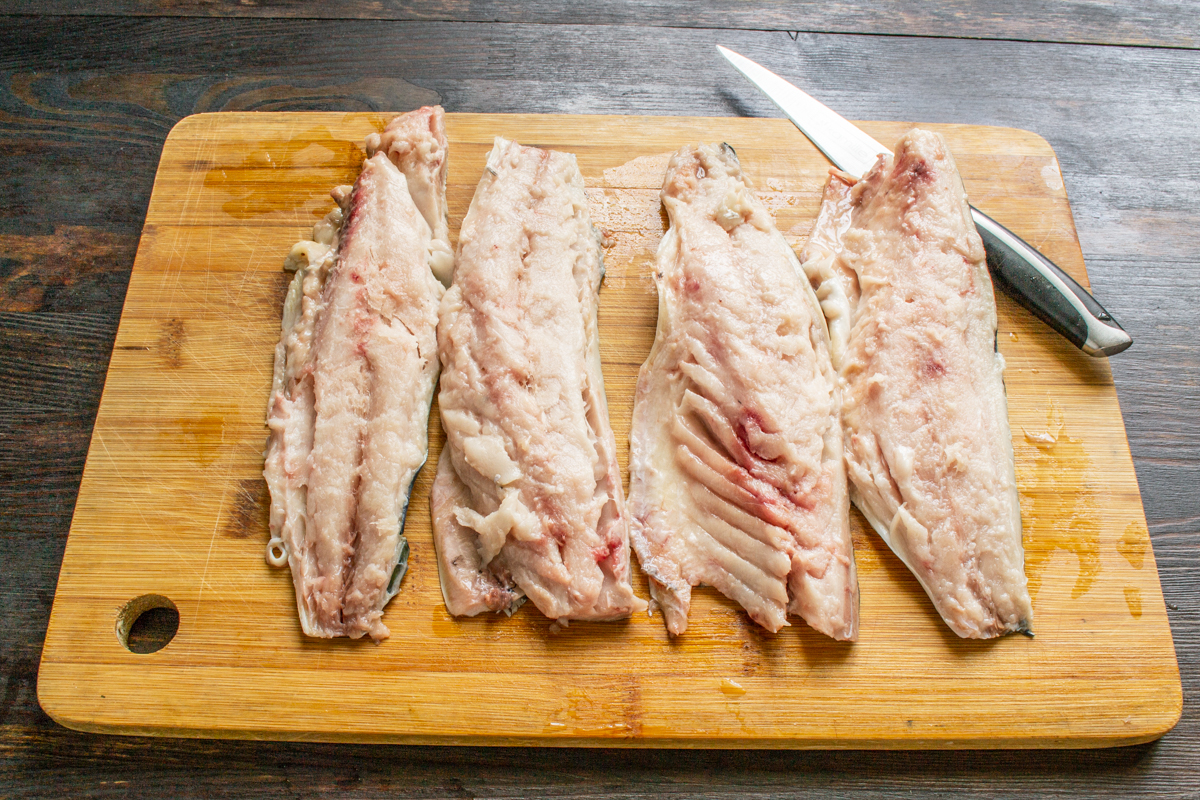
After deboning and rinsing, we have four clean fillets ready for seasoning.
Arrange the fillets skin-side down on a cutting board. Season the mackerel generously with coarse sea salt, garlic powder, and khmeli suneli (a fragrant Georgian herb and spice blend), which I find pairs exceptionally well with this rich fish.
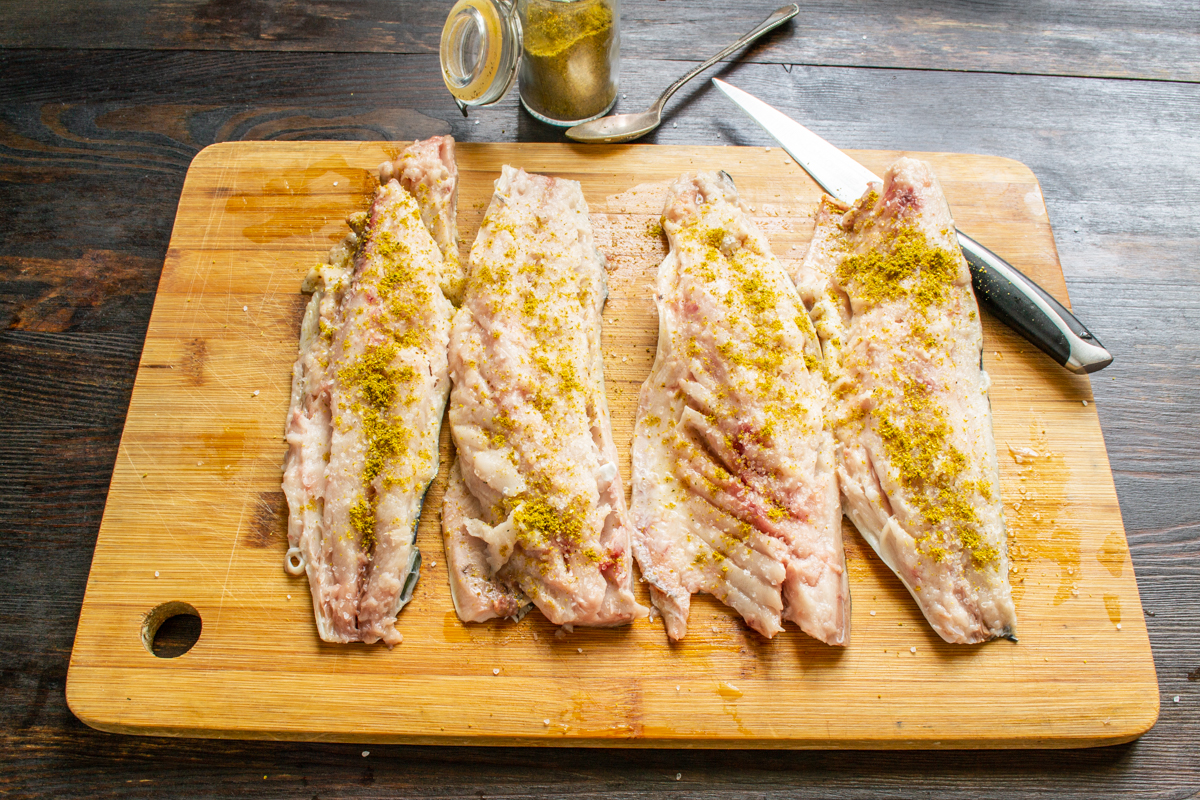
Khmeli suneli spice blend and garlic powder give the fish a deep, savory flavor and an appetizing aroma.
Stack the seasoned fillets in pairs, flesh-side together, placing the thick head end of one fillet over the thinner tail end of the other. This ensures a roulade of uniform thickness.
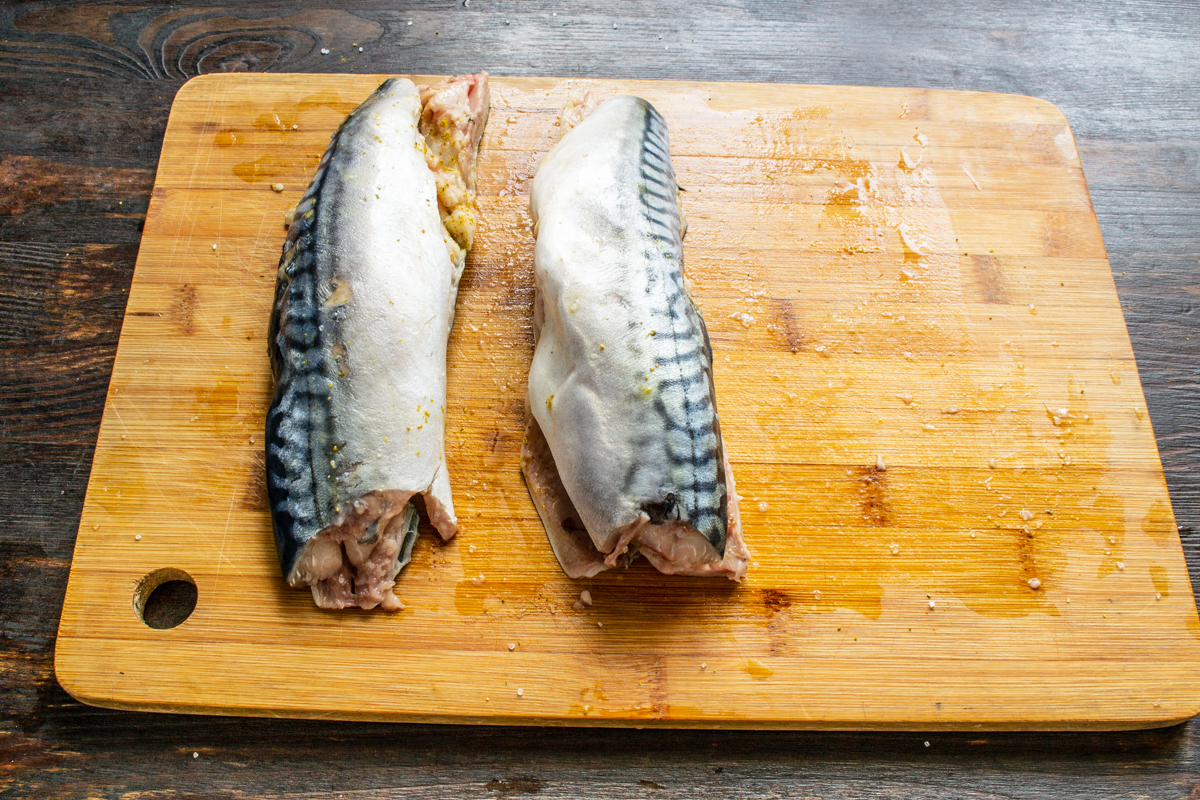
Stack the fillets head-to-tail so the roulade has an even thickness from end to end.
Blanch the green garlic leaves in boiling water for a minute until softened and pliable. Tie the mackerel rolls in several places using the garlic leaves like kitchen twine, securing them with a knot.
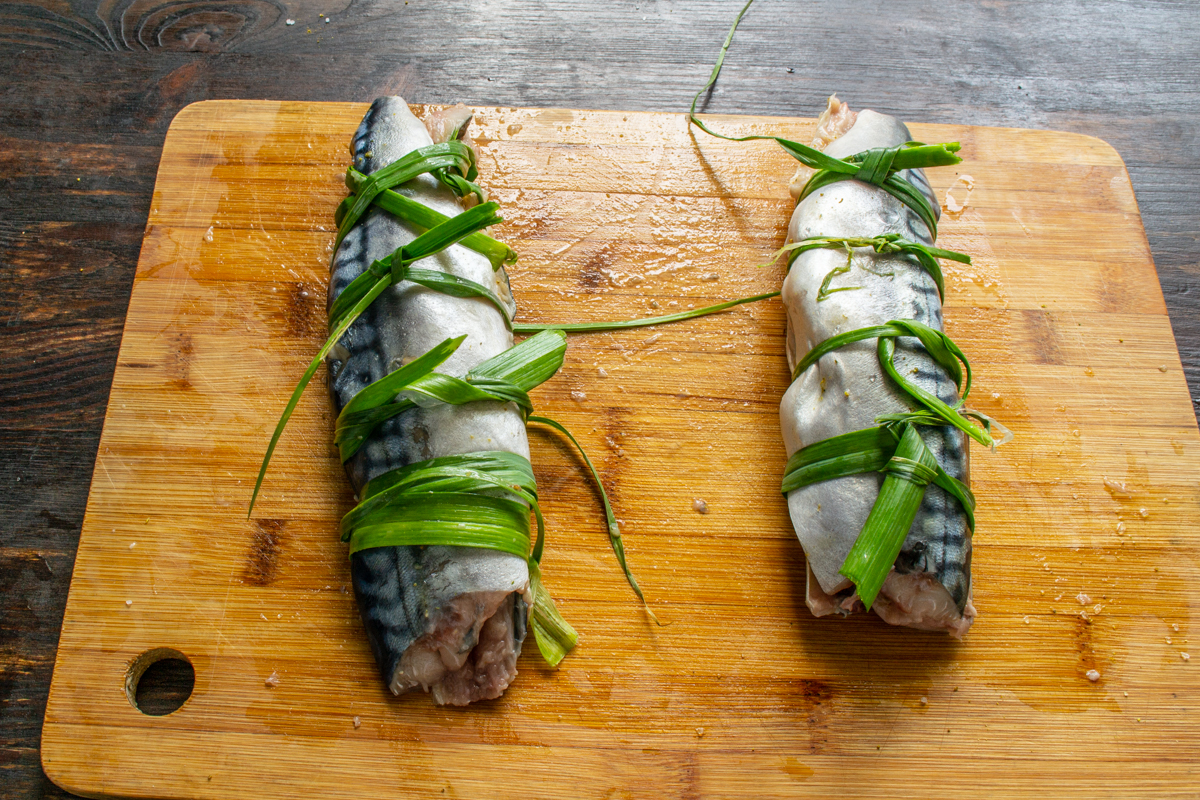
Blanched garlic leaves serve as excellent natural twine and add a subtle garlicky note.
Wrap each fish roll tightly in several layers of food-grade plastic wrap. Twist the ends tightly like a candy wrapper and tie them securely with thick kitchen twine so none of the flavorful juices escape during cooking.
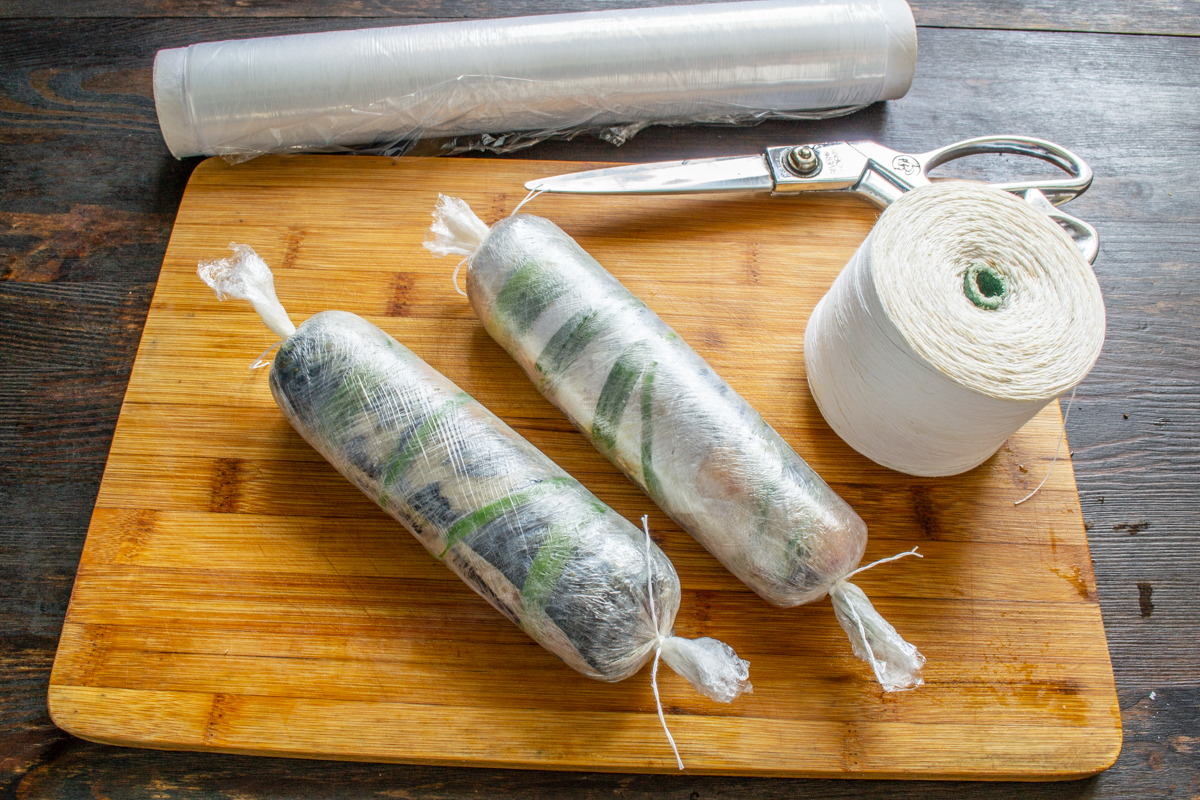
A watertight wrap in several layers of plastic film allows the fish to cook in its own juices, staying moist and tender.
Place the wrapped fish parcels into a pot of a suitable size. Pour in enough cold water to completely submerge the rolls. Bring to a boil, then reduce the heat and simmer gently for 12 minutes. Turn off the heat and let the mackerel sit in the hot water for another 10-15 minutes.
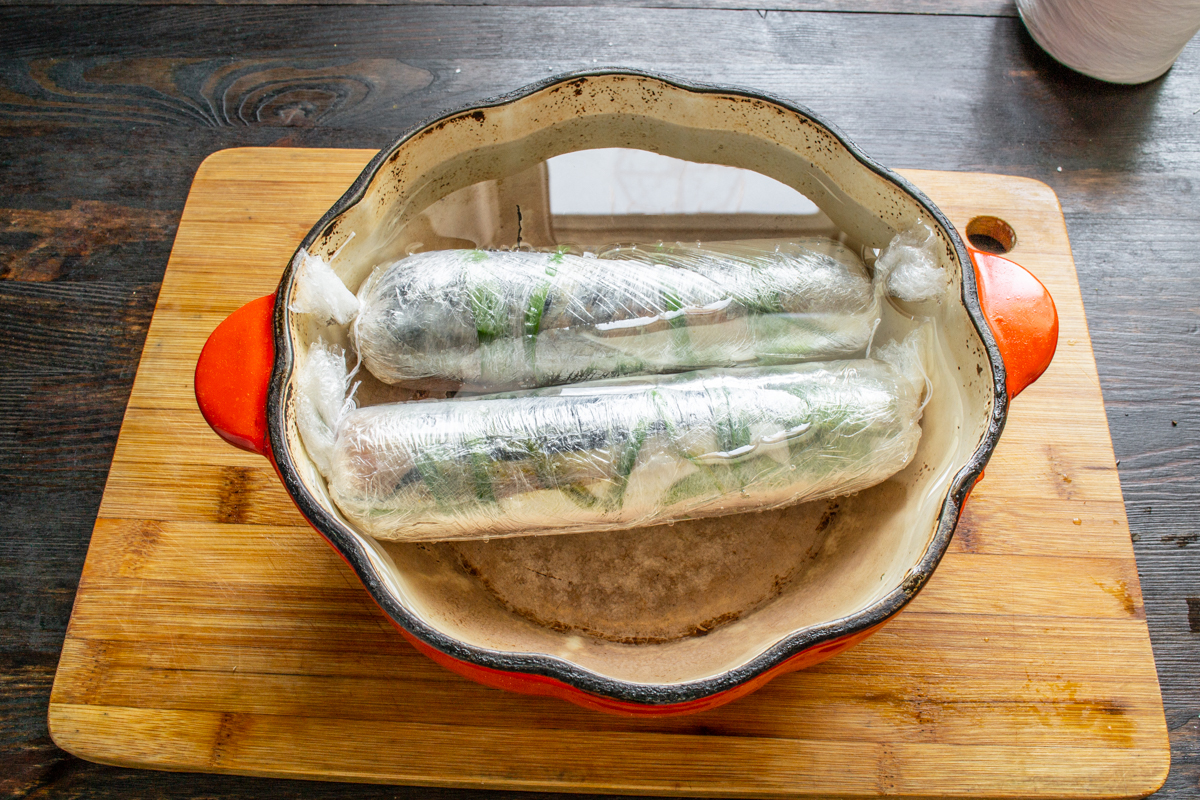
Simmer the rolls gently for about 12 minutes, then let them rest in the hot water a little longer to finish cooking.
Place several ice cubes into a bowl. Remove the mackerel from the hot water and transfer it straight into the bowl with the ice to chill the fish as quickly as possible.
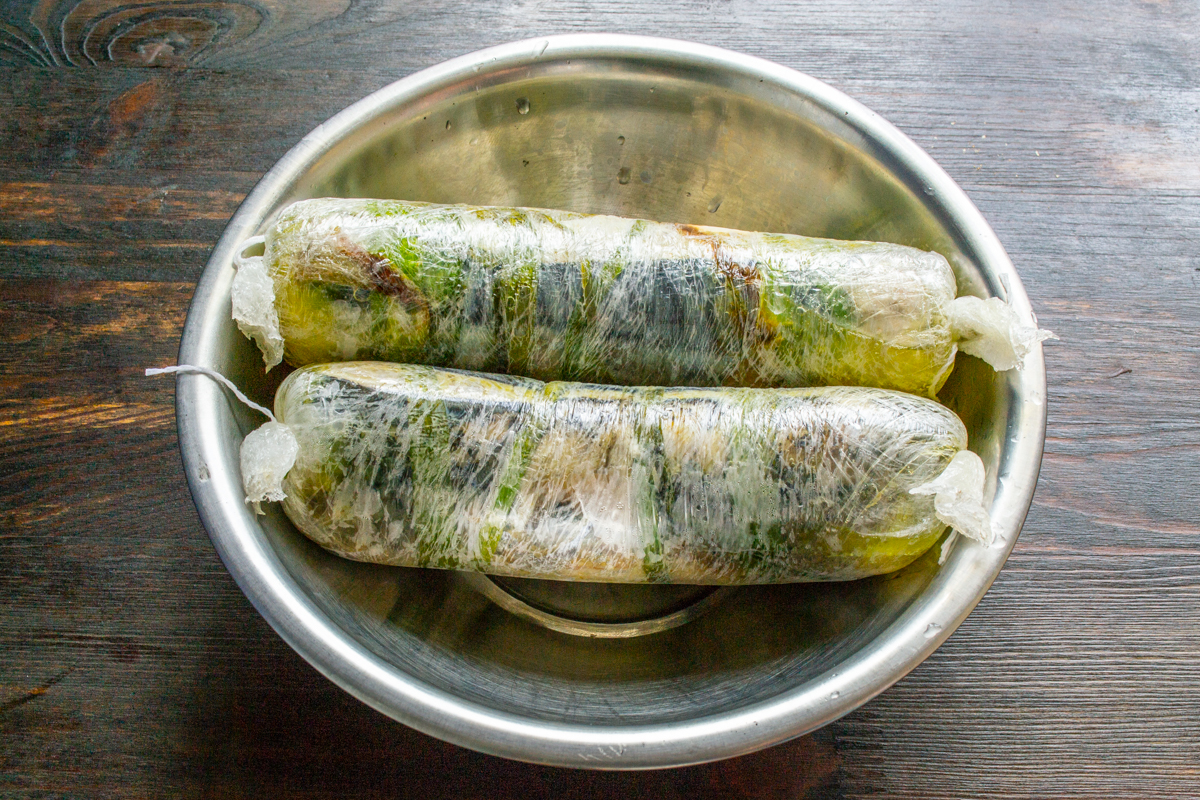
Rapid chilling over ice helps the rolls set faster and hold their shape better.
Transfer the cooled rolls to the refrigerator for several hours to firm up. Afterward, remove the plastic wrap and catch the released juices in a cup. You can use this rich broth to make a sauce or drizzle it over the mackerel just before serving.
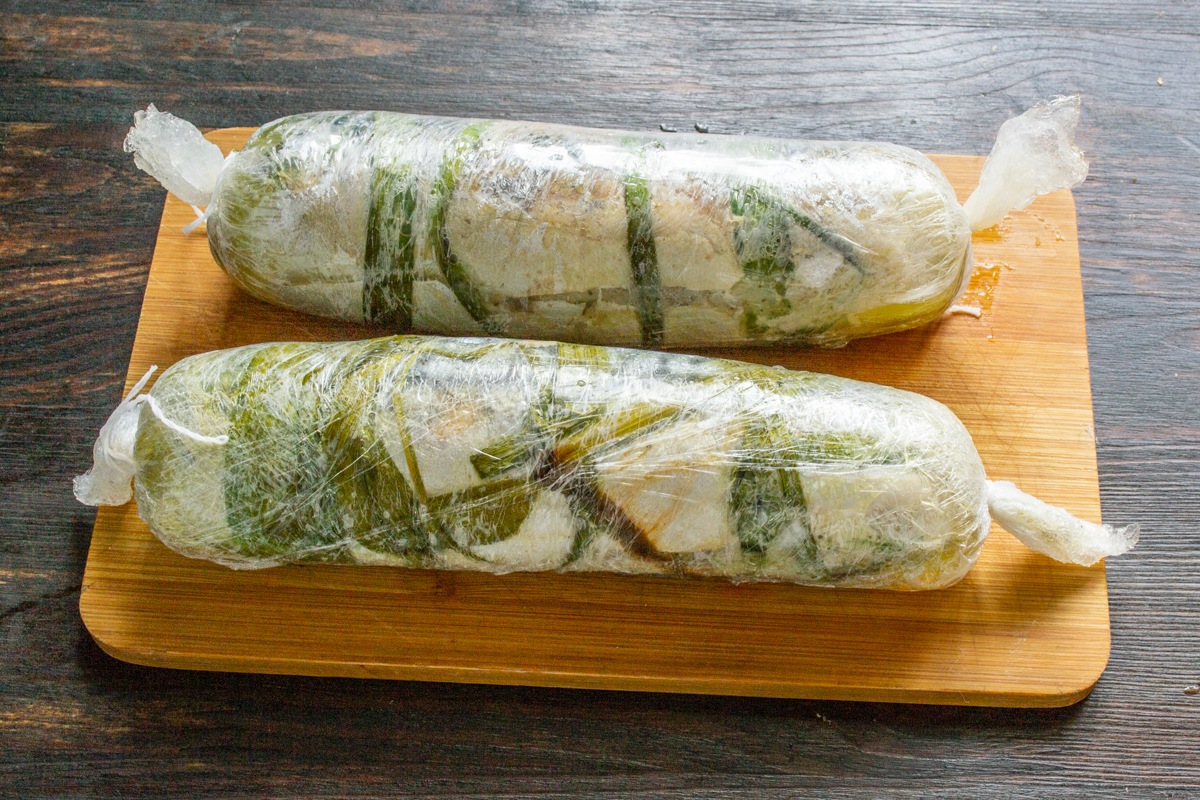
After chilling in the refrigerator, the rolls become firm and the released juices turn into a fragrant jelly.
Slice the chilled, firm mackerel into individual medallions. The fish turns out remarkably tender, with a delicate garlic aroma that isn’t overpowering, merely mellowing the natural richness of the fish. It is delicious layered onto open-faced sandwiches or served alongside boiled potatoes. Enjoy your meal!
By the way, 100 g (3.5 oz) of mackerel contains nearly 90% of the daily recommended value of vitamin D. This fish is a recognized leader among seafood in omega-3 polyunsaturated fatty acids, which help fight inflammation and strengthen blood vessels. Gentle poaching preserves the maximum amount of these valuable nutrients without weighing the dish down with extra fats. Because garlic mackerel remains one of the most affordable and nutritious fish options, it is well worth including in your diet at least a couple of times a week. Serve the finished fish sliced into neat medallions alongside boiled new potatoes tossed with fresh dill, or layer it onto whole-grain bread for wholesome open-faced sandwiches. Upon chilling, the concentrated cooking juices set into a delicate, savory jelly that can be stirred into sauces or used as a base for a light fish aspic. If you are craving variety, try swapping the khmeli suneli (Georgian spice blend) for lemon zest and white pepper for a more classic Mediterranean profile.
0 comments