
Pasta with eggplant and pesto perfectly captures the sunny spirit of the Mediterranean, where fresh, vibrant greens meet hearty vegetables. By drawing out the excess moisture first, the eggplant develops a delicate, almost creamy texture when fried, creating a beautiful contrast with the chewy farfalle pasta. A homemade pesto, blended from bright green basil and pungent garlic, fills the kitchen with a rich, aromatic fragrance that awakens the appetite long before dinner is served. Swapping classic pine nuts for roasted peanuts gives the flavor a wonderfully cozy, earthy profile, turning a familiar pairing into a brilliant signature dish.
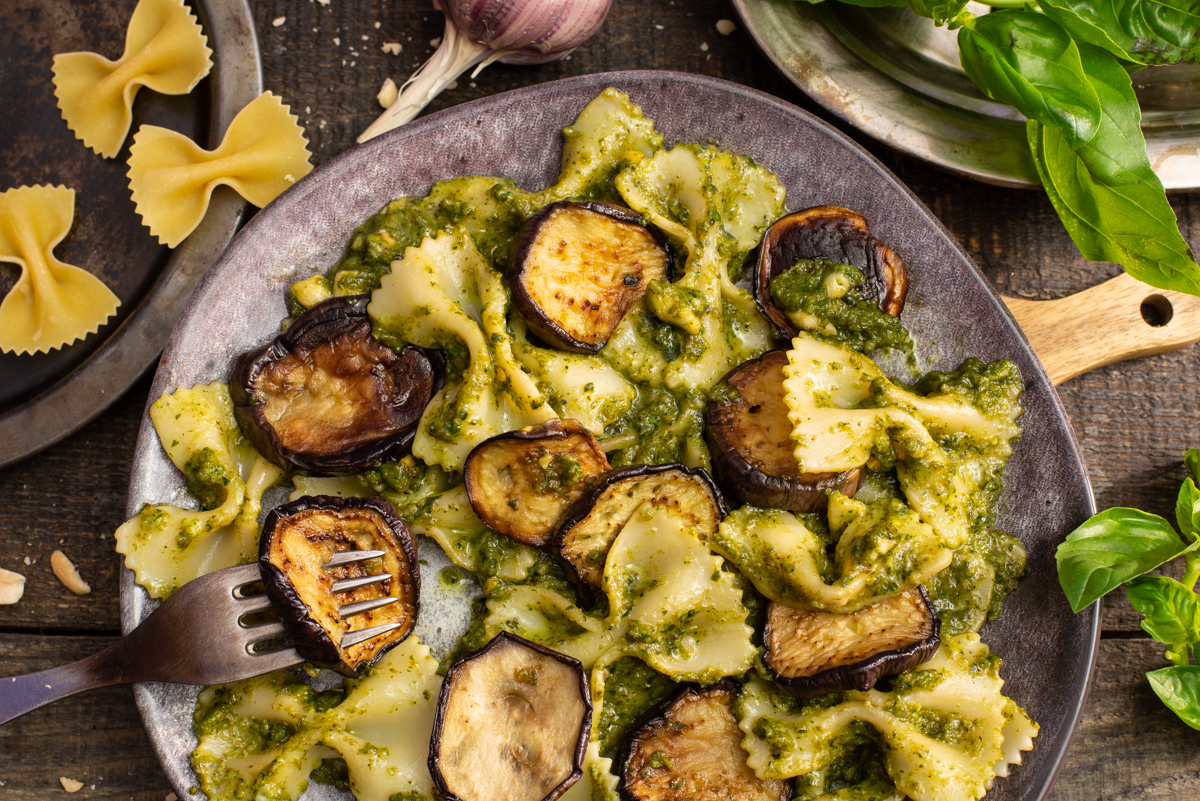
An appetizing pasta with eggplant and aromatic pesto is the perfect choice for a quick, delicious lunch.
Ingredients
- 200 g (7 oz) pasta (farfalle or bowties for this recipe)
- 300 g (10.5 oz) eggplant
- 50 g (1.8 oz) fresh green basil
- 50 g (1.8 oz) roasted peanuts
- 40 ml (1.4 fl oz) extra virgin olive oil
- 40 g (1.4 oz) hard cheese
- 1 garlic clove
- vegetable oil for frying
- salt and freshly ground black pepper to taste
How to Make Pasta With Eggplant and Pesto
Let’s prep the eggplant. Slice the eggplant into rounds about 1/4 inch (0.5 cm) thick, sprinkle them generously with salt, and let them sit for 15 minutes. During this time, the salt will draw out the excess moisture. Rinse the salt off with cold water and pat the eggplant dry with a paper towel. Heat 2-3 tablespoons of refined vegetable oil in a skillet, add the eggplant, and fry on both sides until cooked through. Work in small batches so you don’t crowd the pan.
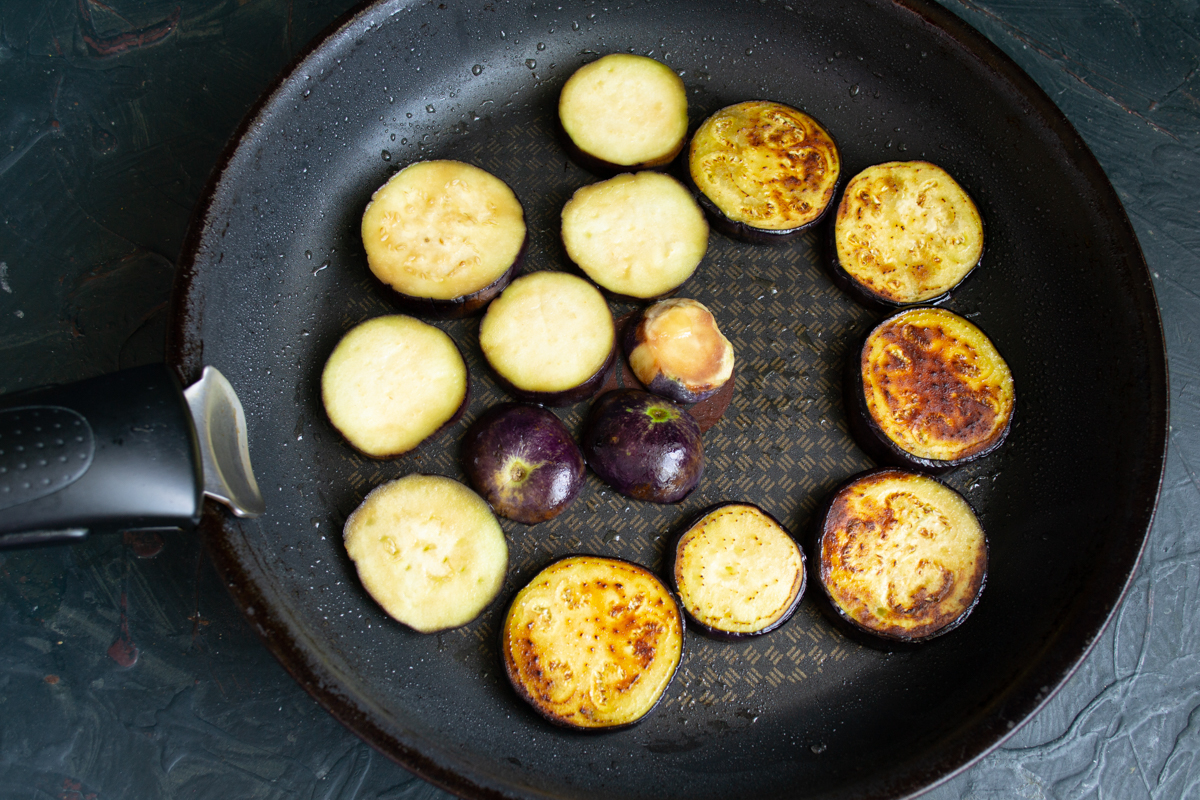
Fry the eggplant rounds in small batches until golden brown to ensure they cook evenly.
Transfer the fried eggplant to paper towels first so they absorb the excess oil, then move them to a plate and cover with a lid to keep them warm.
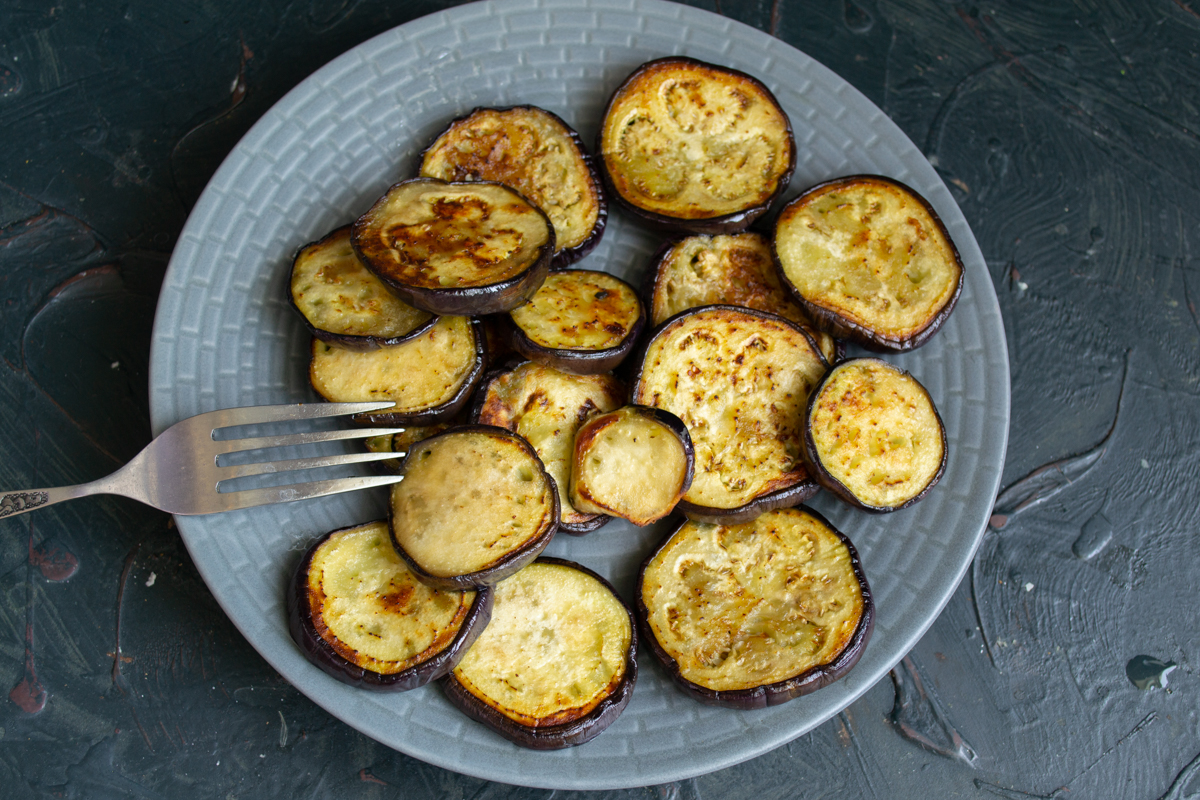
Transfer the cooked vegetables to a paper towel to drain any excess oil.
Now, let’s make the pesto. Pluck the fresh green basil leaves from their stems and add salted roasted peanuts or any other nuts you prefer. A classic Italian pesto calls for green basil, nuts, cheese, olive oil, and garlic, but feel free to play around. You can swap the nuts for seeds, or mix some parsley or arugula into the basil.
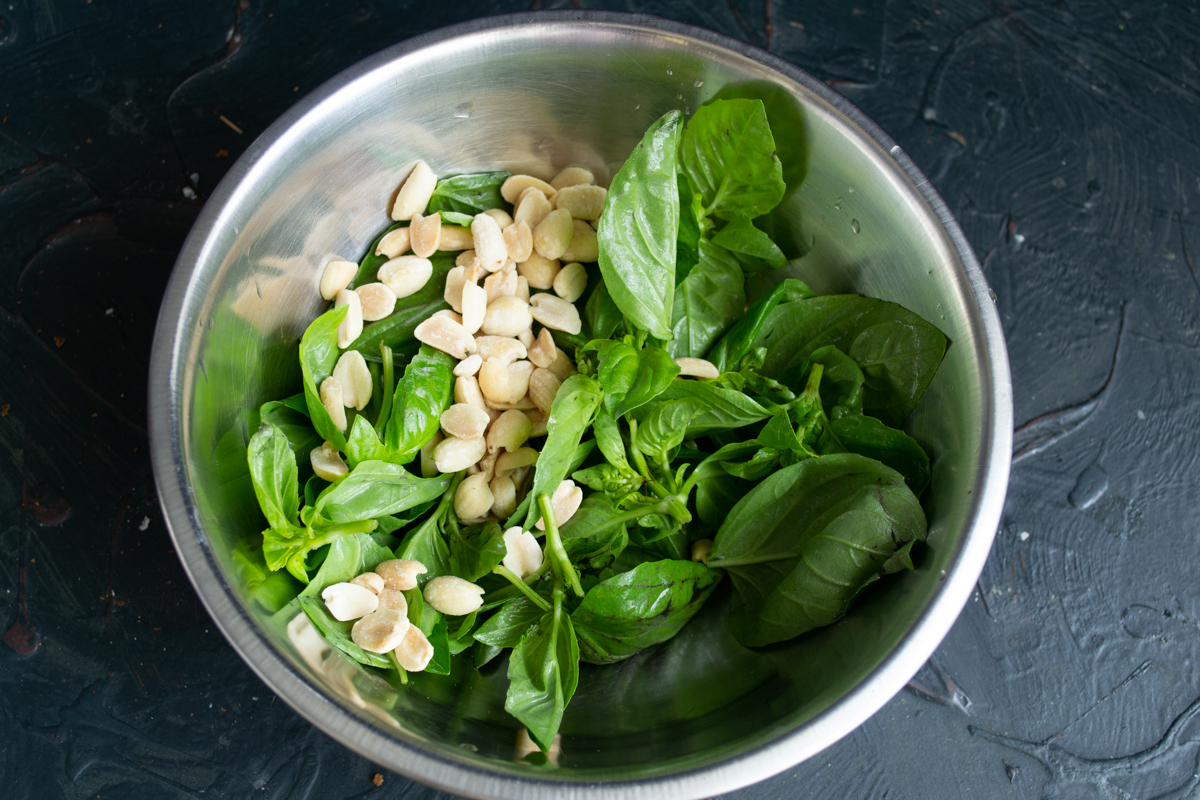
Fresh basil and roasted nuts form the flavorful base of our upcoming sauce.
Add grated hard cheese to your greens and peanuts. While a traditional recipe uses Parmesan, you can grab any sharp, hard cheese you have on hand.
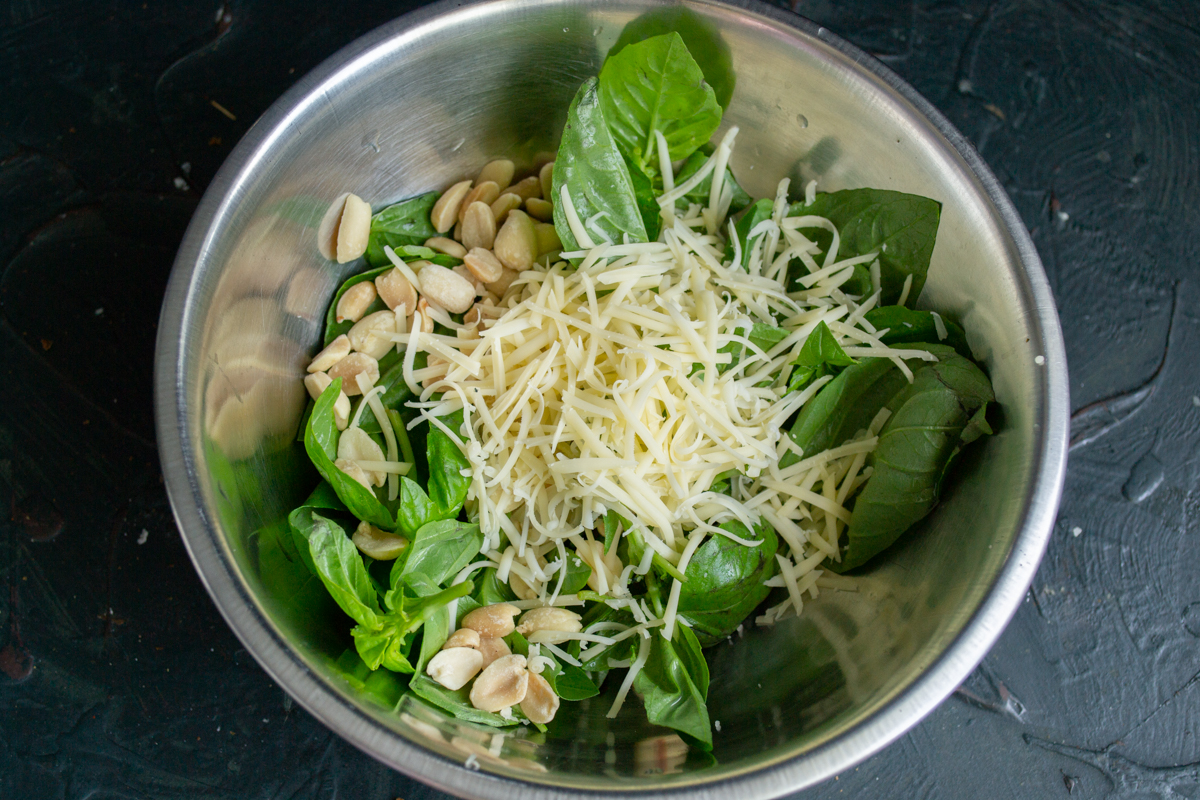
A sharp, hard cheese gives the sauce its necessary punch and rich consistency.
Pour in a generous splash of high-quality extra virgin olive oil.
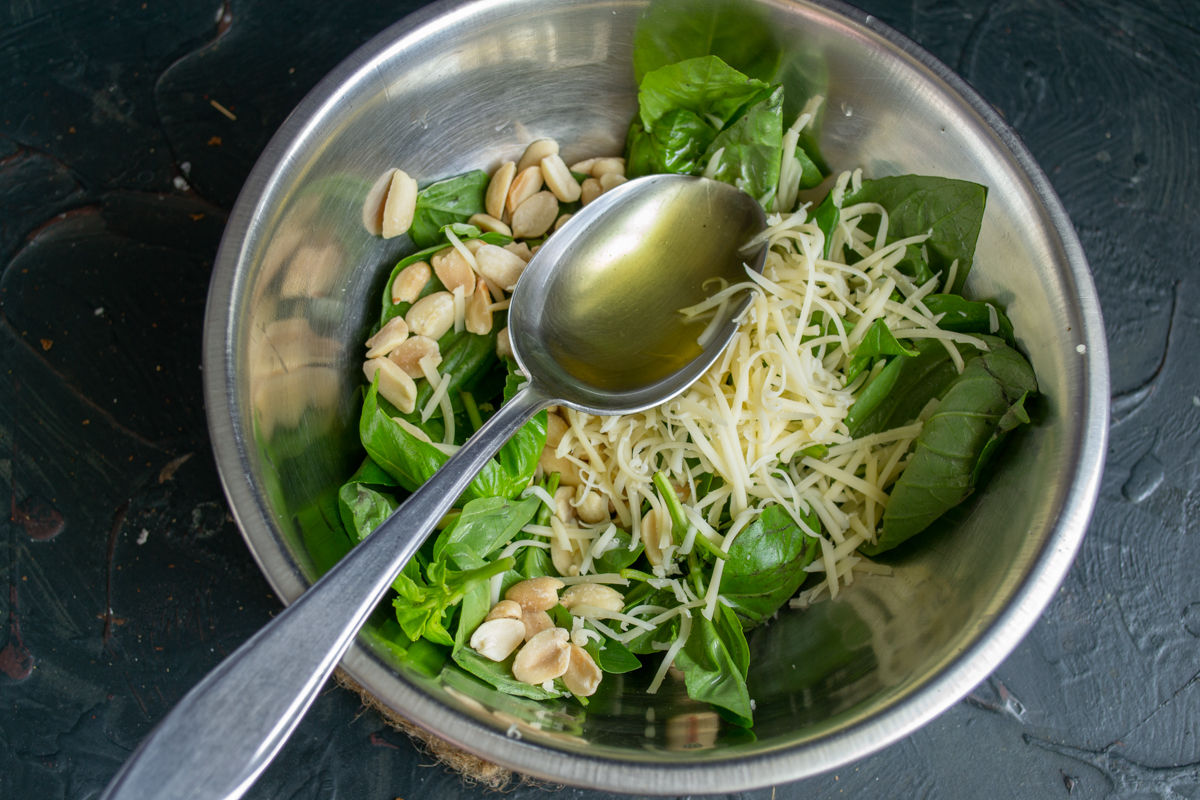
Use a high-quality extra virgin olive oil to bring out the best possible flavor.
Peel a clove of garlic, push it through a garlic press, and add it to the other pesto ingredients along with a pinch of salt. An immersion blender or food processor makes quick work of this sauce, though in the old days, everything was ground by hand in a mortar.
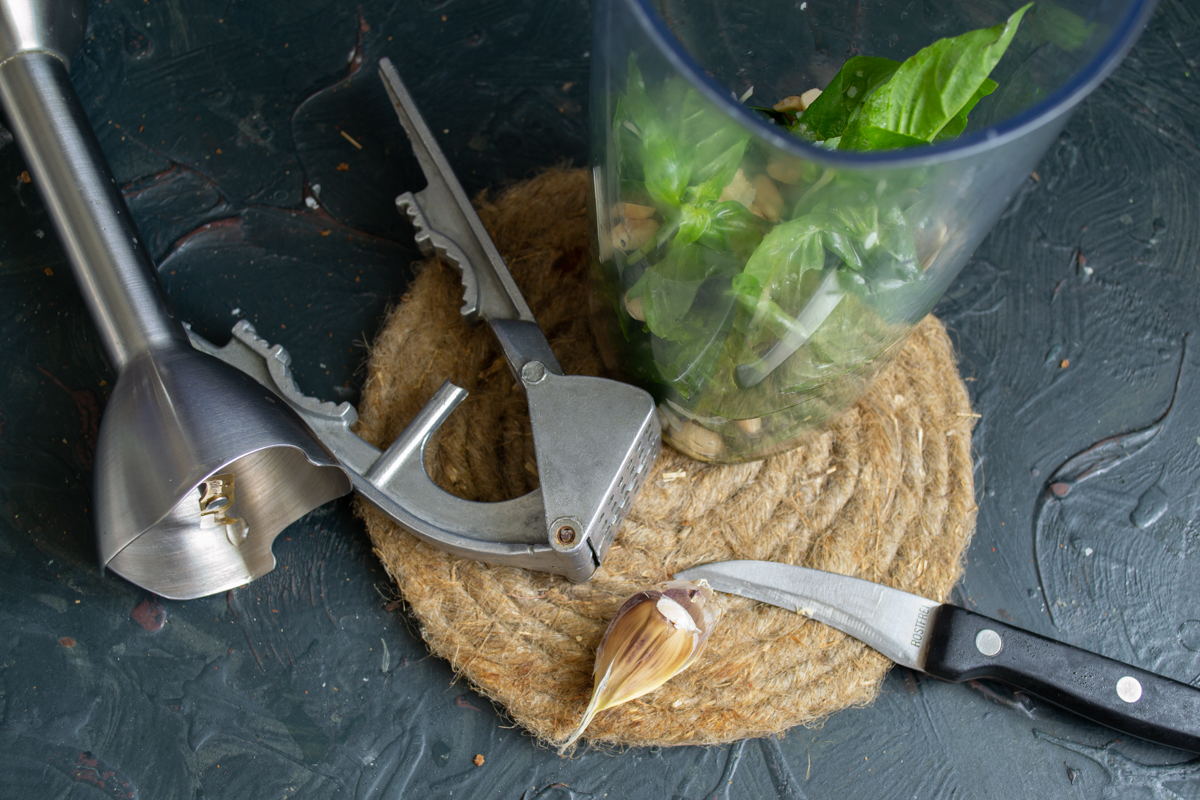
A touch of garlic brings a pleasant sharpness and a signature aroma to the sauce.
Blend the pesto for a few minutes until it forms a thick, rich paste. The texture is entirely up to your preference; if you like a sauce with a bit more rustic bite, blending for 2-3 minutes is plenty.
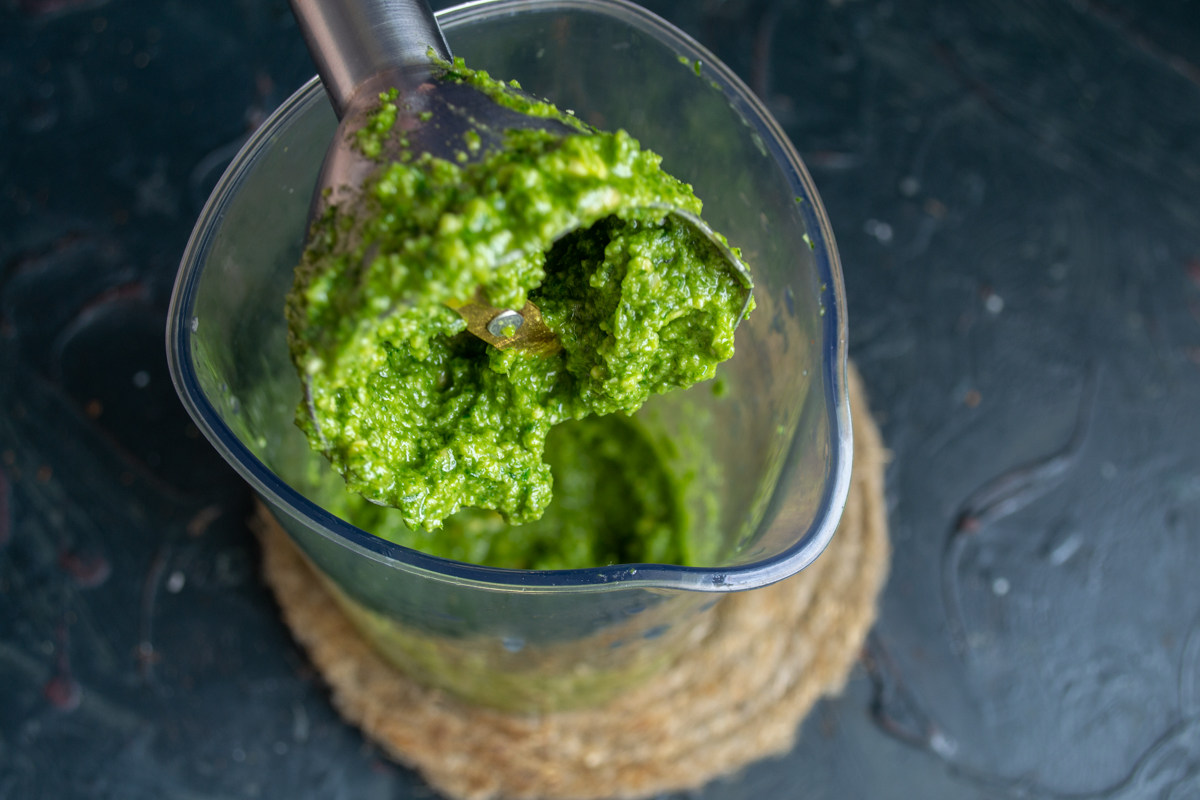
Achieve your perfect consistency by simply adjusting the blending time.
Pour 1.5 liters (about 6 cups) of water into a pot, bring it to a rolling boil, and salt it generously. Drop in the pasta; we are using farfalle (bowties) for this recipe. Boil the pasta until it reaches a perfect al dente texture, then drain it in a colander. Be sure to save a little of that starchy pasta water for the sauce. Toss the cooked bowties with the fresh pesto, pour in a few spoonfuls of the reserved pasta water, and mix well.
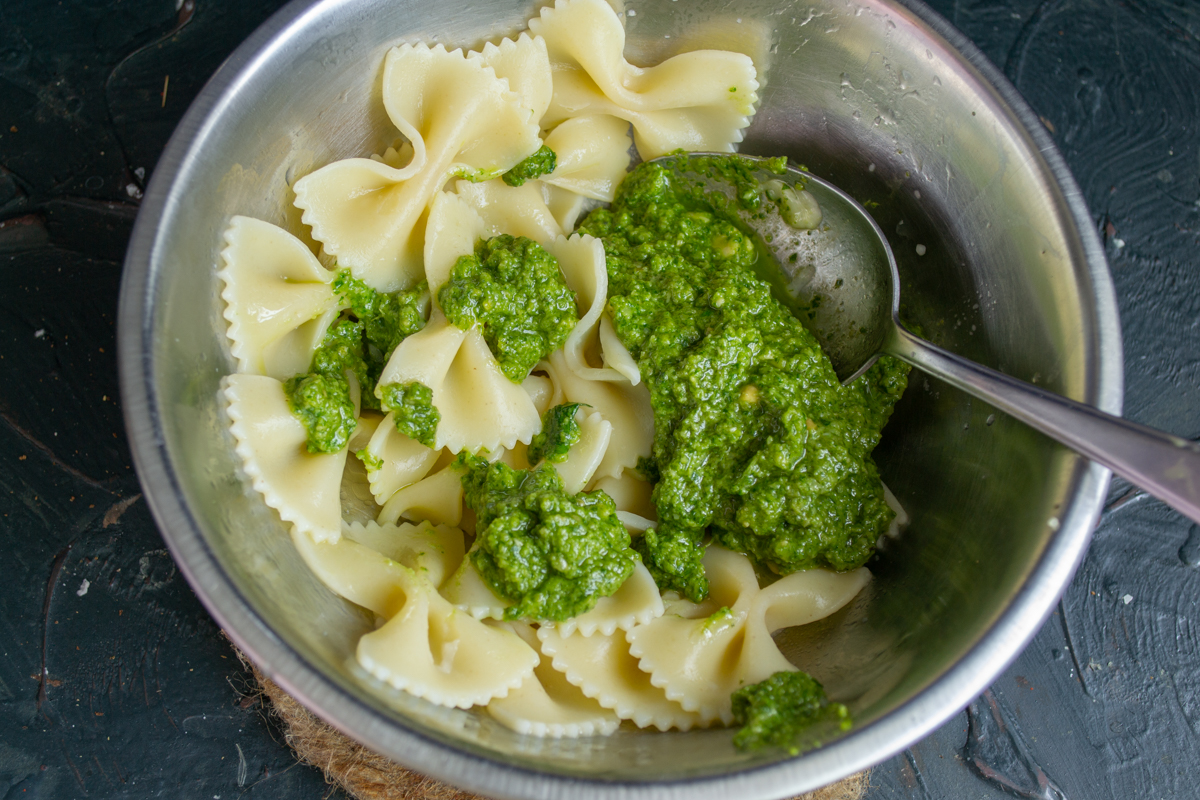
Add a splash of the reserved pasta cooking water to help the sauce distribute evenly.
Gently fold the fried eggplant into the dressed pasta.
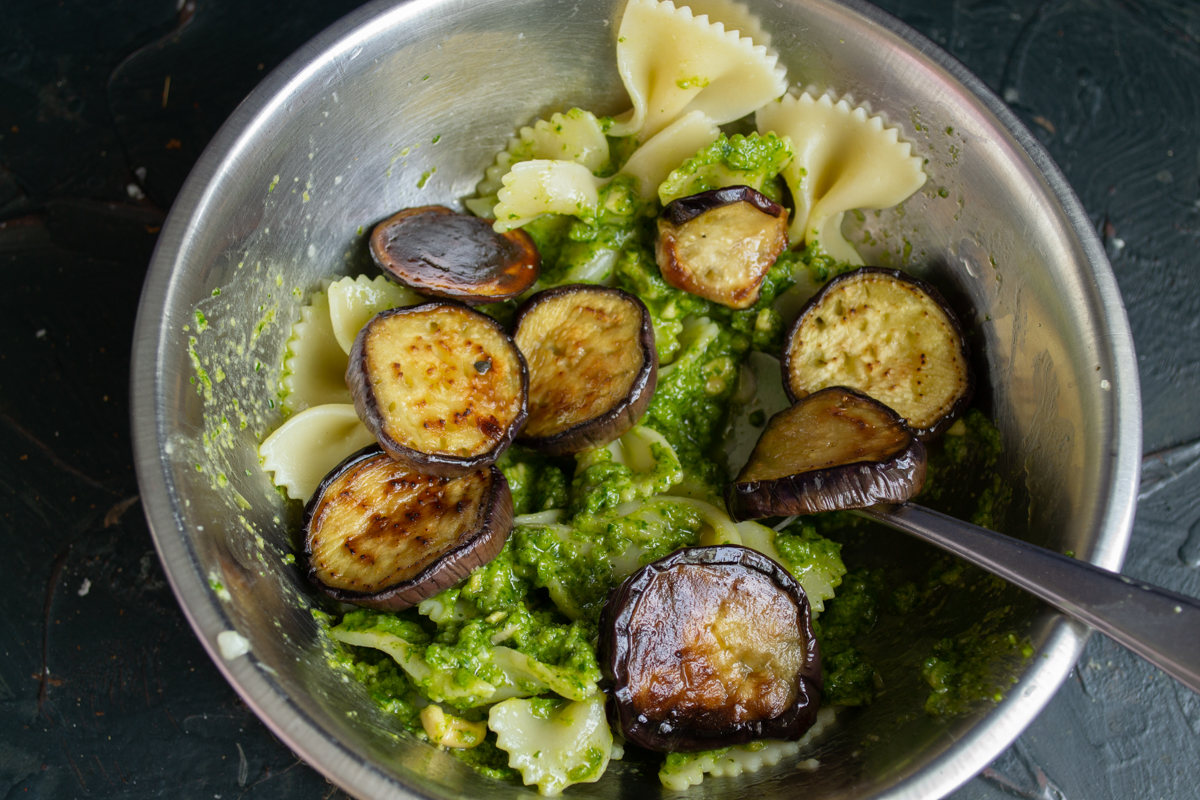
Now, gently fold the fried eggplant into the dressed pasta.
Plate the pasta with eggplant and pesto, sprinkle with a little more grated cheese, season with freshly ground black pepper to taste, and serve immediately.
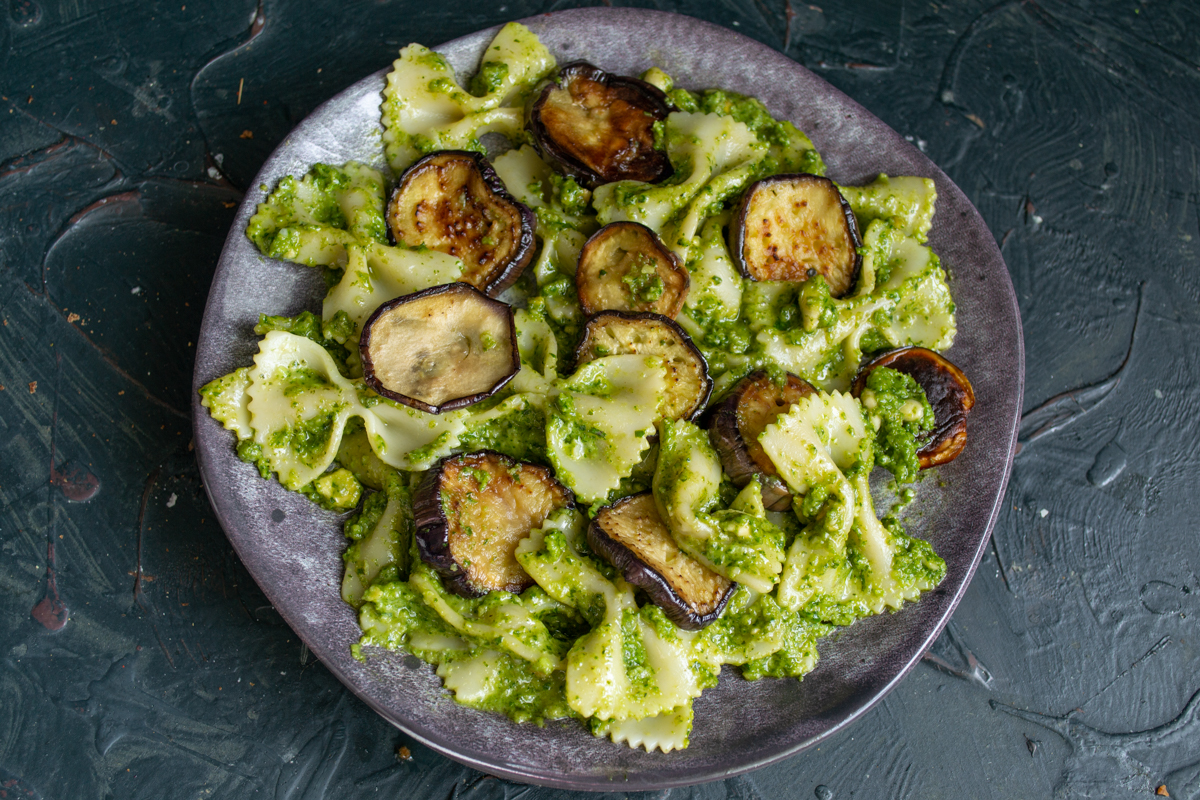
The dish is ready to serve! Just sprinkle with your favorite grated cheese to taste.
To make your pasta with eggplant and pesto look even more irresistible, serve it right after tossing, while the sauce still boasts its brilliant green hue. An extra dusting of Parmesan or any other sharp hard cheese creates a mouthwatering, melt-in-your-mouth texture, while a final drizzle of high-quality extra virgin olive oil highlights the richness of the ingredients. If you want to introduce a new layer of flavor, try finishing the plate with fresh cherry tomatoes or a handful of toasted sunflower seeds for a satisfying crunch. You can store leftovers in an airtight container in the refrigerator until the next day, but keep in mind that pasta absorbs moisture quickly. When reheating, add a splash of hot water or heavy cream to restore the sauce's smooth, silky consistency. Feel free to experiment with the greens in your pesto: tossing in a little parsley or arugula will lend a pleasant, peppery bite and make your dinner truly one-of-a-kind.
0 comments