
Panforte is more than just a dessert; it's the culinary hallmark of Siena, with a history rooted deep in the Middle Ages. The name literally translates to 'strong bread,' hinting at its dense texture and rich, spicy aroma that can captivate any food lover. In this recipe, we build a unique base with ripe banana and mandarin zest, which, when combined with boiling honey and cocoa, turns a simple mix of nuts and dried fruit into an exquisite treat. Traditionally considered a festive cake, it fills your home with the scents of cinnamon, cloves, and star anise, creating an atmosphere of warmth and comfort no matter the season.
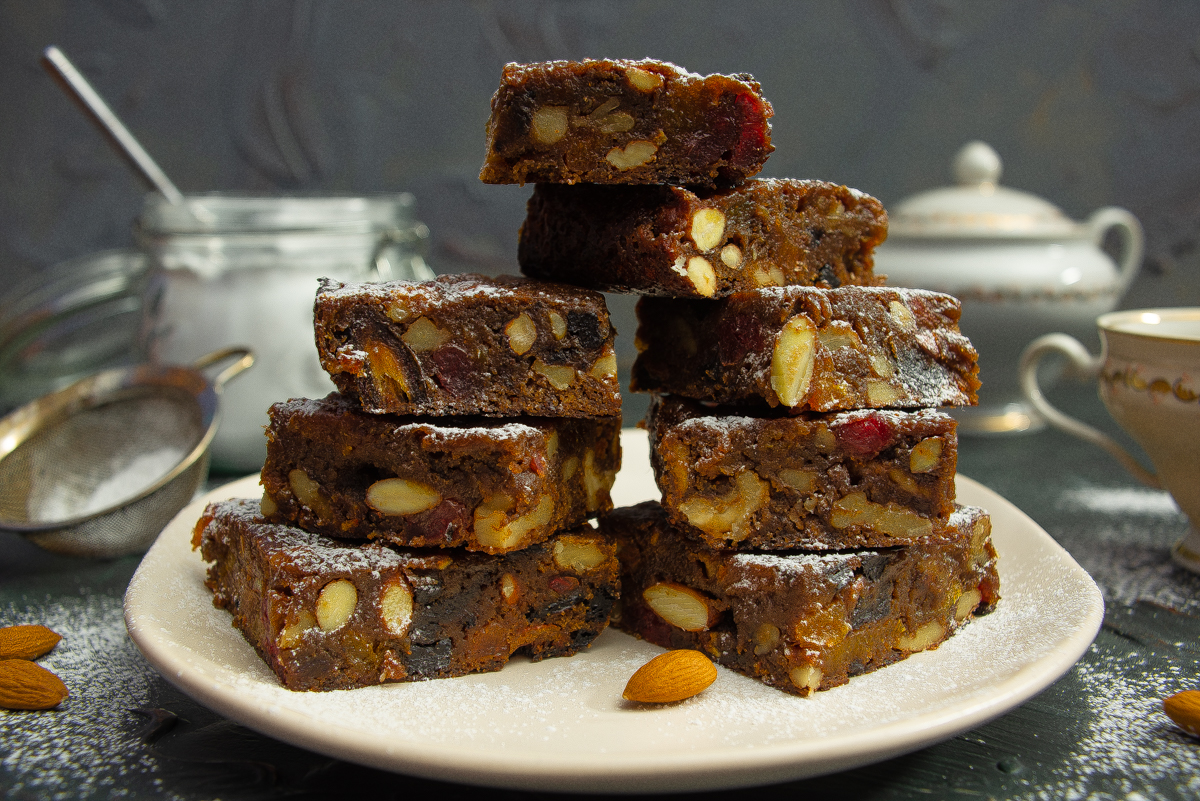
The finished panforte turns out incredibly dense and aromatic. Slice it thinly and serve it alongside coffee or tea.
Ingredients
- 100 g all-purpose flour
- 140 g granulated sugar
- 100 g honey
- 20 g cocoa powder
- 60 g butter
- 1 banana
- 2 tbsp mandarin zest
- 100 g walnuts
- 100 g almonds
- 100 g dried apricots
- 100 g dates
- 50 g prunes
- 50 g candied cherries
- 1/2 tsp ground cinnamon
- cloves, cardamom, and star anise to taste
How to make Panforte
Let’s make the syrup base. Grate a very ripe banana on the coarse side of a box grater. For this step, you’ll need a deep non-stick skillet or a saucepan. Place the grated banana into the saucepan and add the mandarin zest.
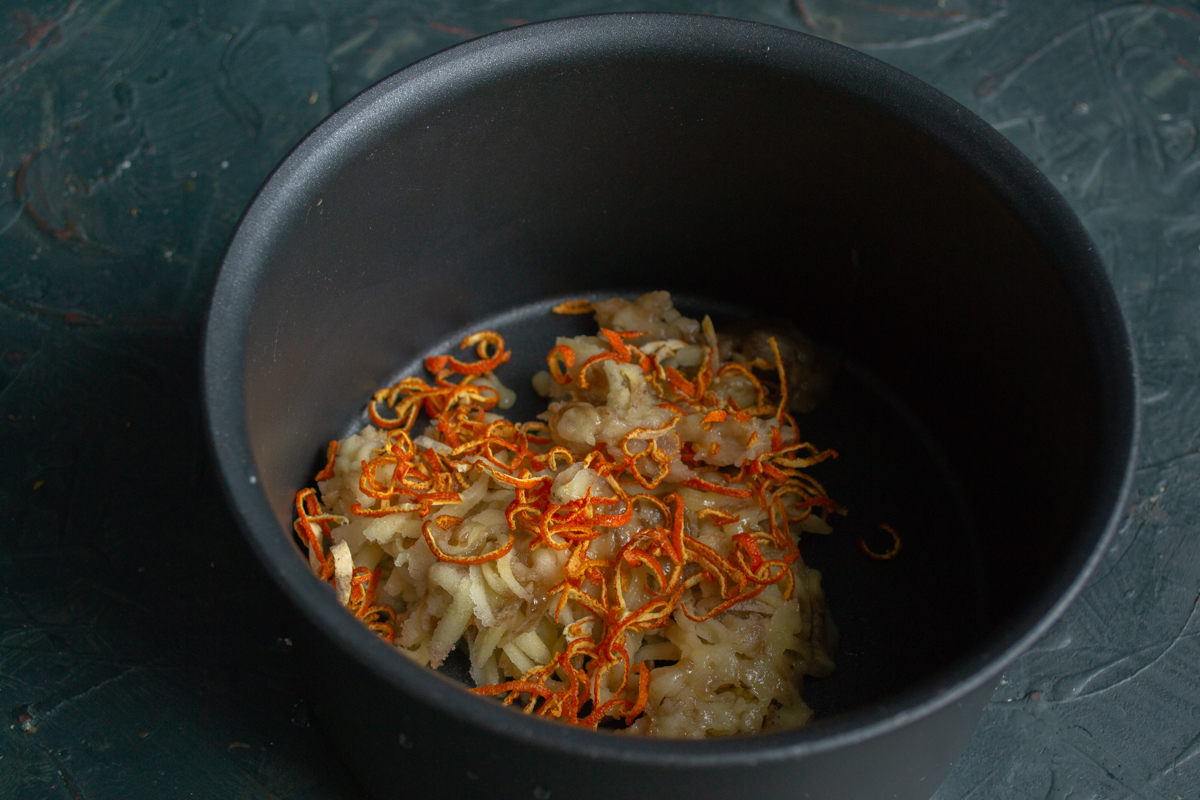
First, let’s prepare the fruit base: grate a ripe banana and mix it with fresh mandarin zest.
Pour in the granulated sugar and add the butter. You can use brown sugar if you prefer; it gives the baked goods a lovely caramel flavor.
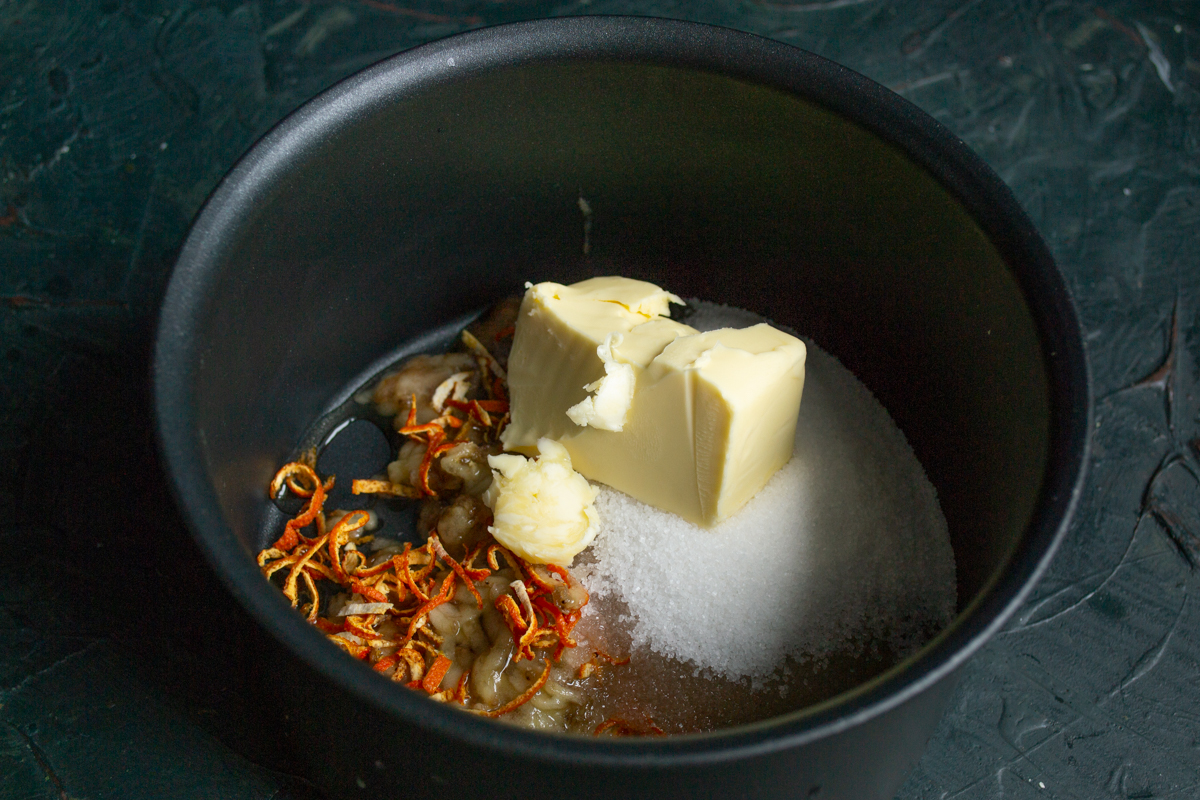
Add the butter and sugar to the saucepan. Using brown sugar will deepen the caramel flavor of the dessert.
Place the saucepan on the stove over low heat. Warm it until the butter and sugar melt, then add the honey. Stirring continuously, bring everything to a boil. I’ll anticipate the debate about boiling honey right now: if you believe honey shouldn’t be heat-treated, this recipe might not be for you. You simply can’t skip the honey—it’s the highlight of this dish, and practically all of Italy agrees.
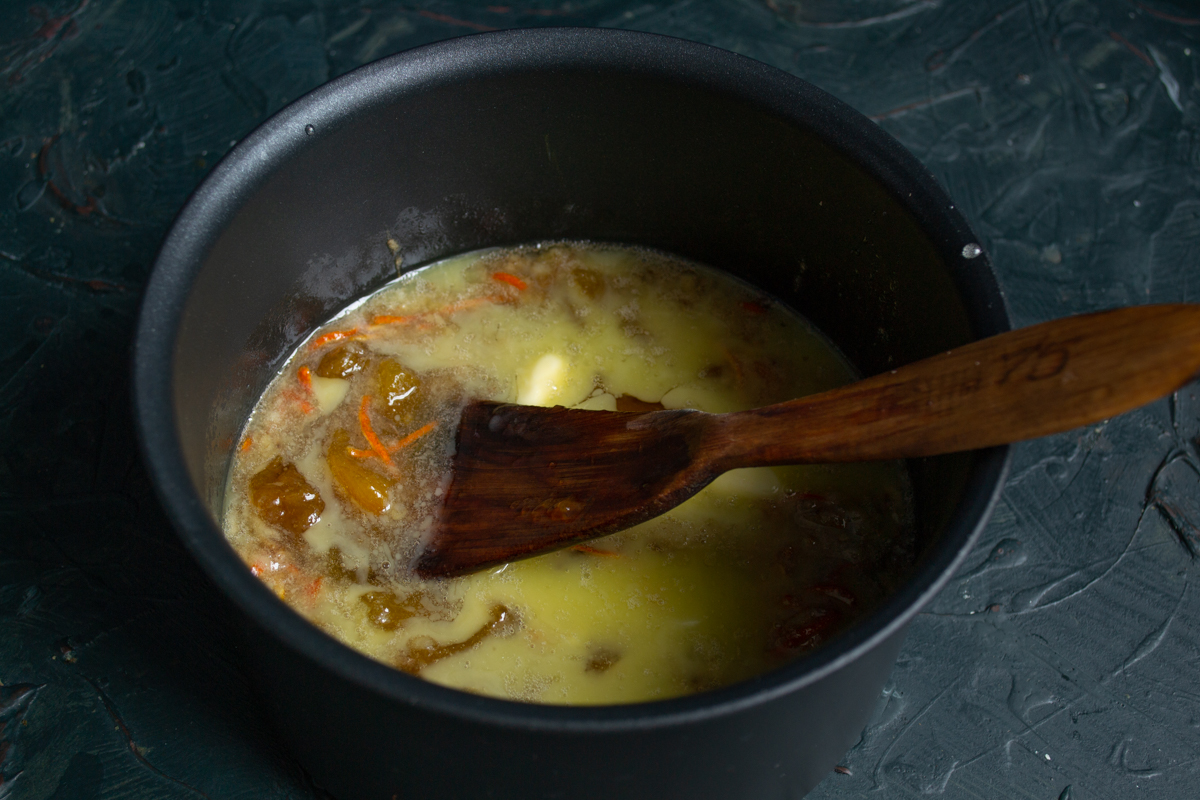
Bring the mixture to a boil while stirring constantly. It’s the honey that gives panforte its unique texture and flavor.
Rinse the walnuts and almonds thoroughly, then toast them in a warm oven or in a dry skillet until completely dry and fragrant.
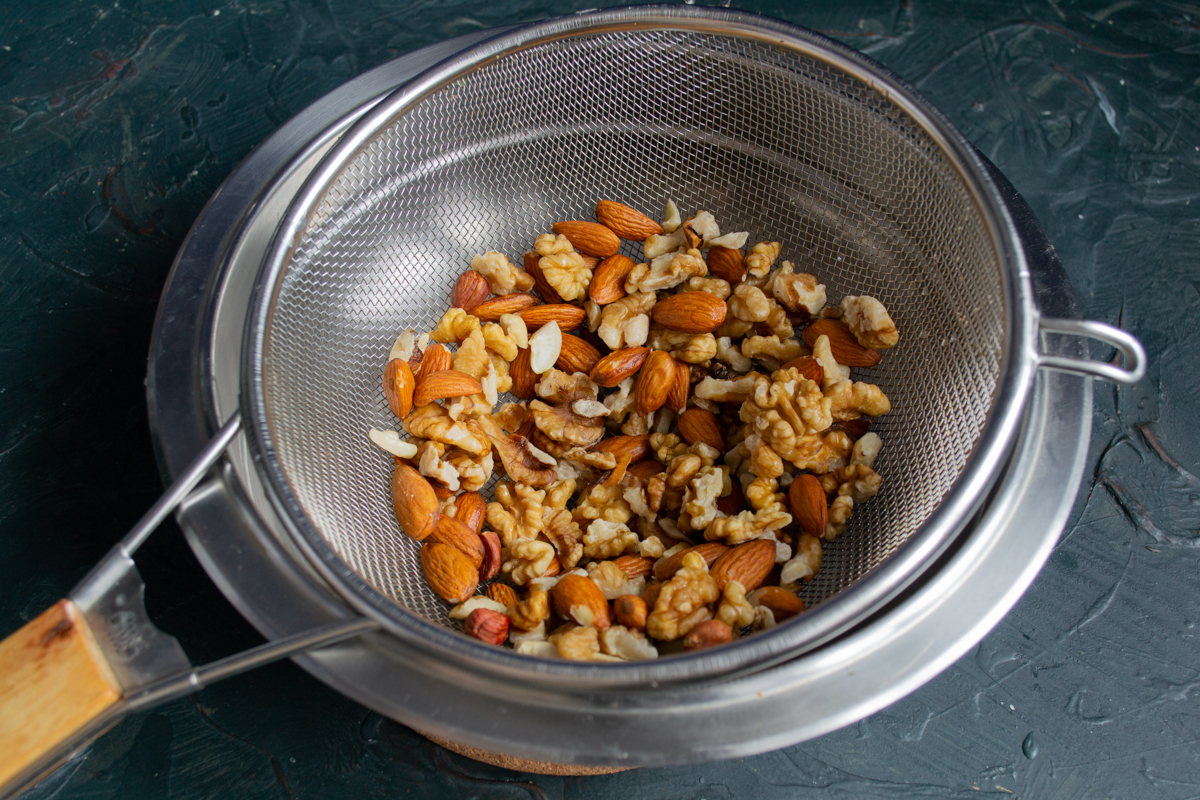
Make sure to rinse and toast the nuts; this unlocks a brighter flavor and creates a much crunchier texture.
Soak the dried apricots, prunes, dates, and candied cherries in boiling water. Rinse them, pat them dry, and chop them finely.
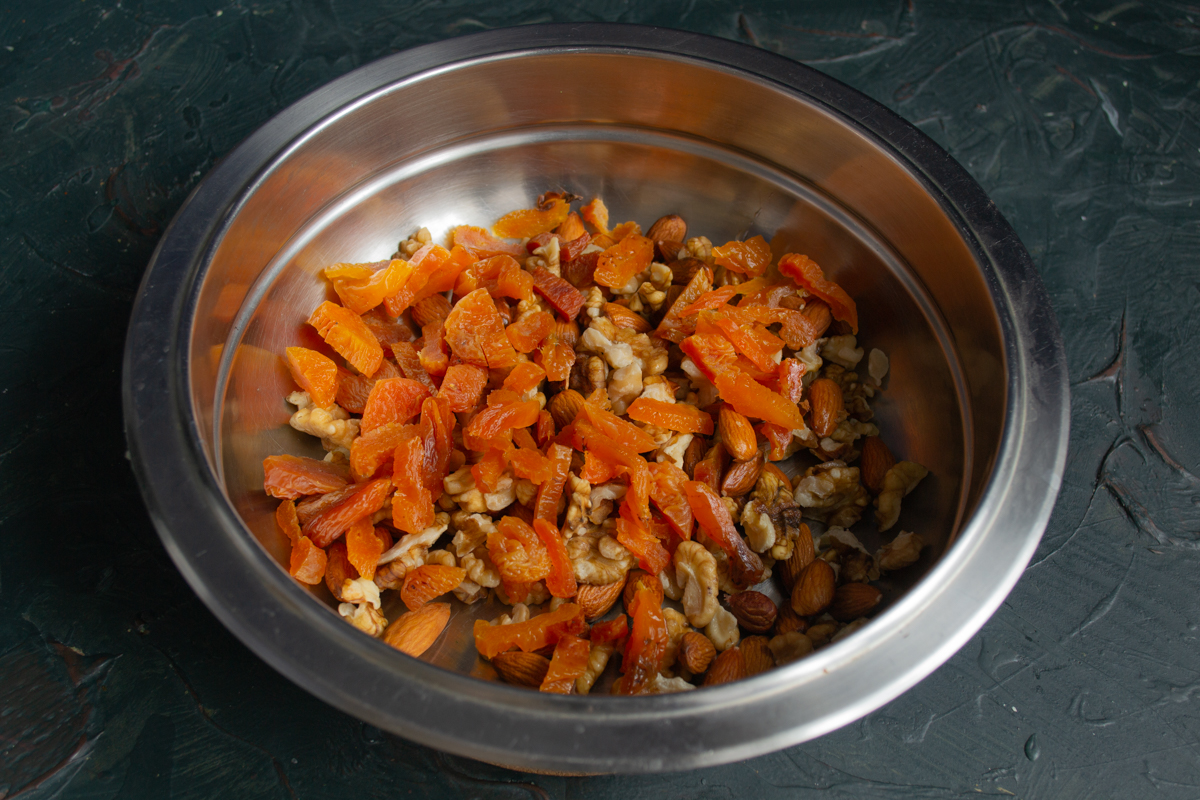
Combine the finely chopped dried apricots, prunes, and dates with the toasted nuts.
Add the chopped dried fruit to the nuts. Stir in the flour and cocoa powder.
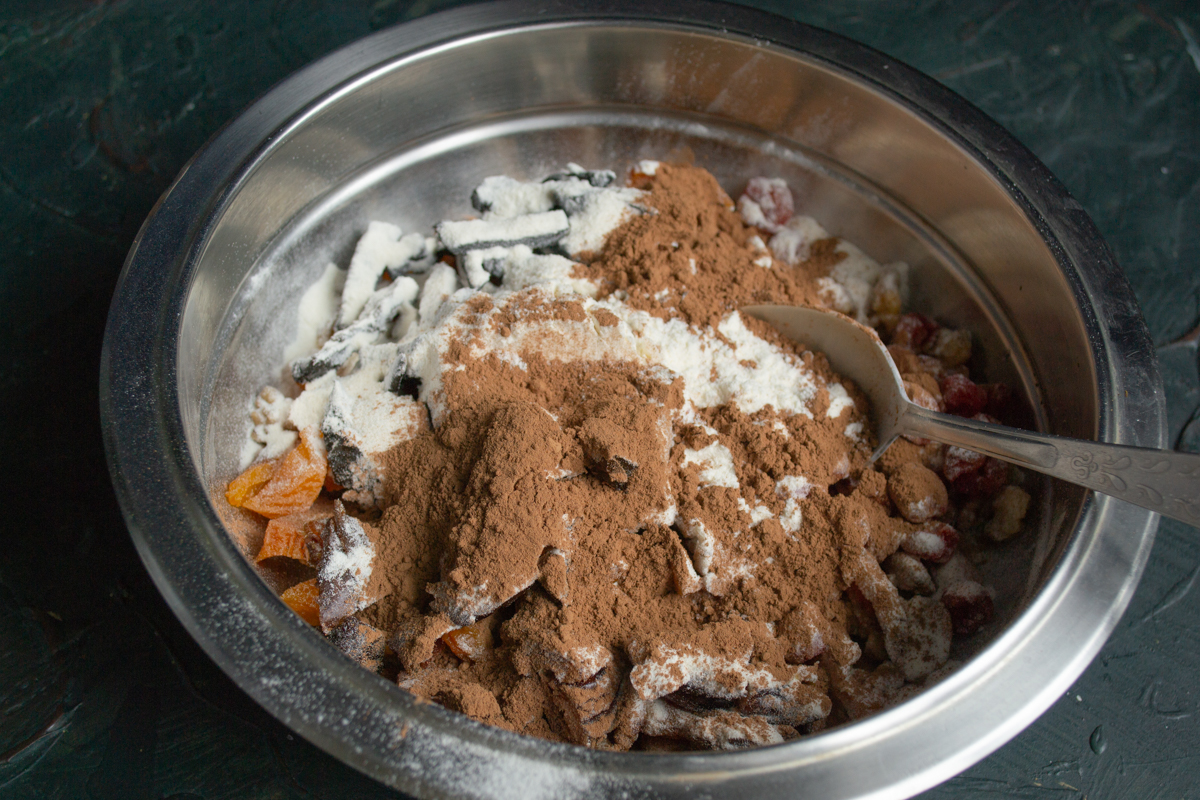
Sprinkle the flour and cocoa powder directly over the nut and fruit mixture to form the base of our dough.
Spices are an integral part of panforte. Add the ground cinnamon, crush a few cloves and a star anise pod in a mortar, and mix these freshly ground spices into the filling.
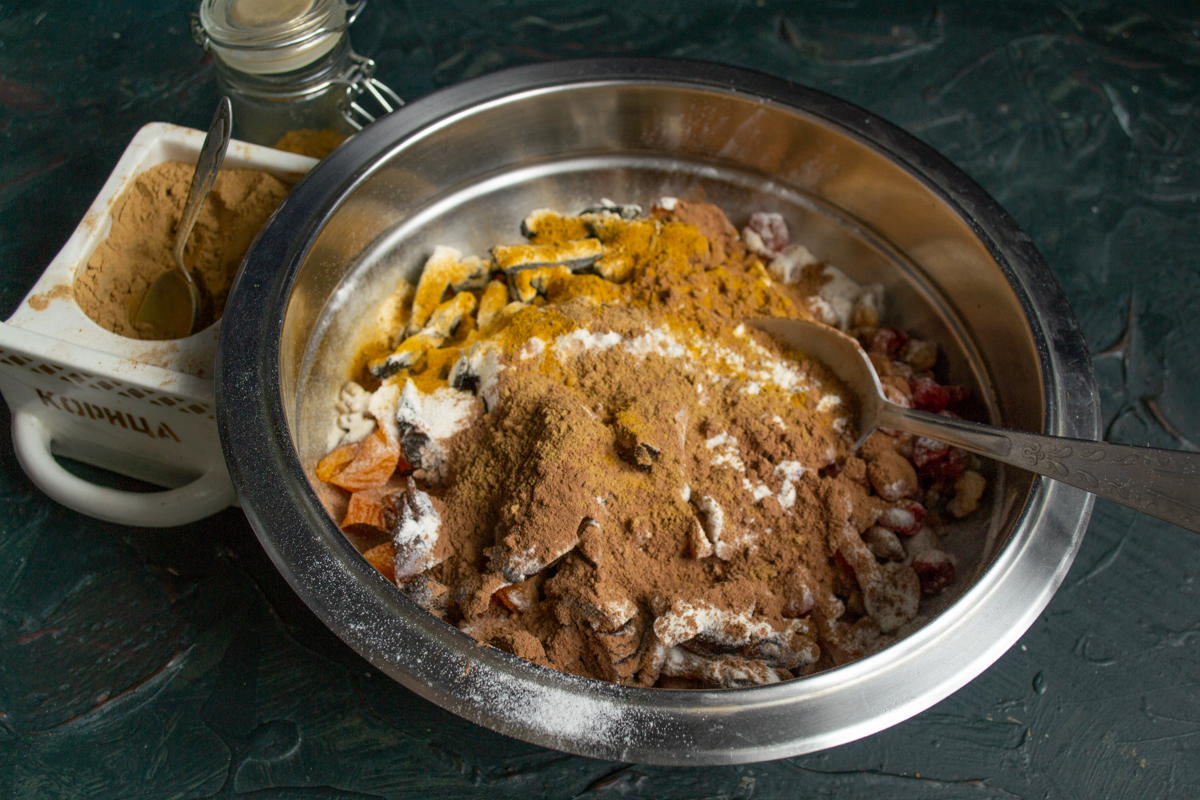
Panforte just isn’t complete without spices. Add cinnamon, cloves, and star anise to build that classic Italian aroma.
Toss the nuts and dried fruit with the dry ingredients, then pour in the boiling honey, butter, and sugar mixture.
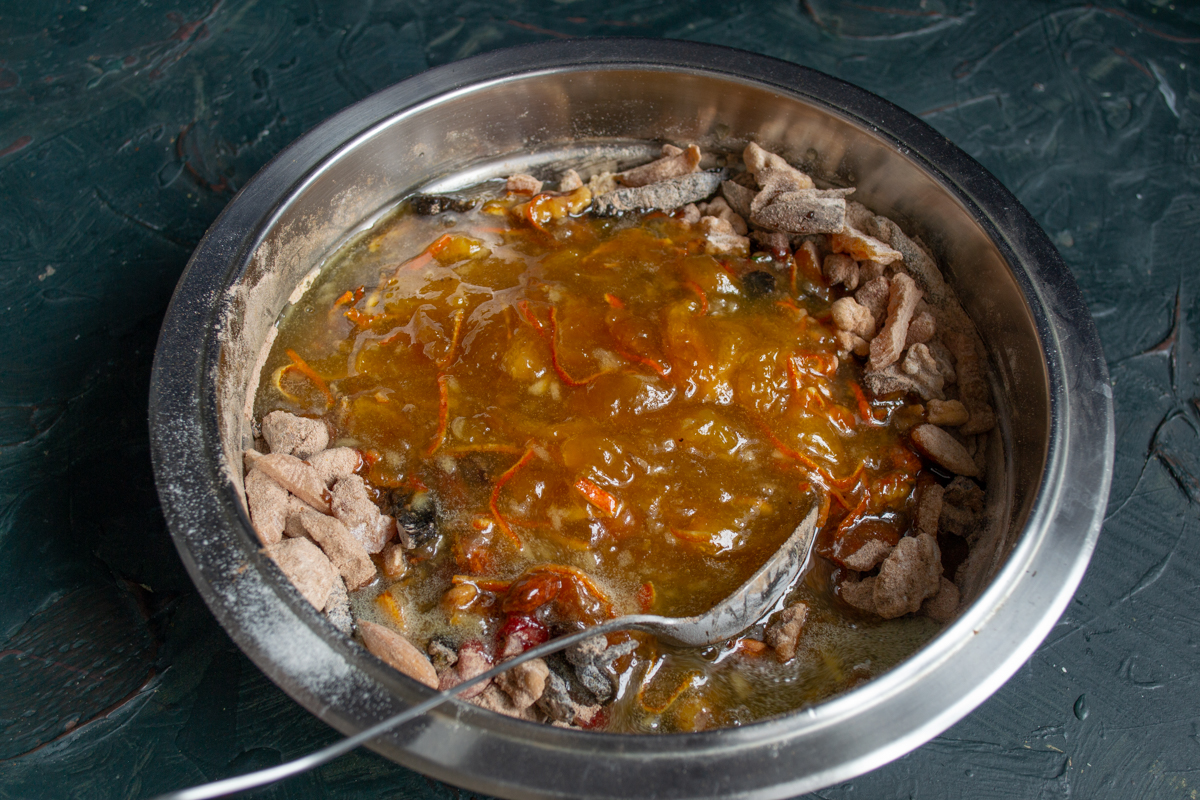
Pour the hot honey syrup into the bowl of nuts and flour. It’s crucial to work quickly before the syrup cools down.
Mix everything thoroughly until well combined. Our dough is ready—as you can see, it’s incredibly simple.
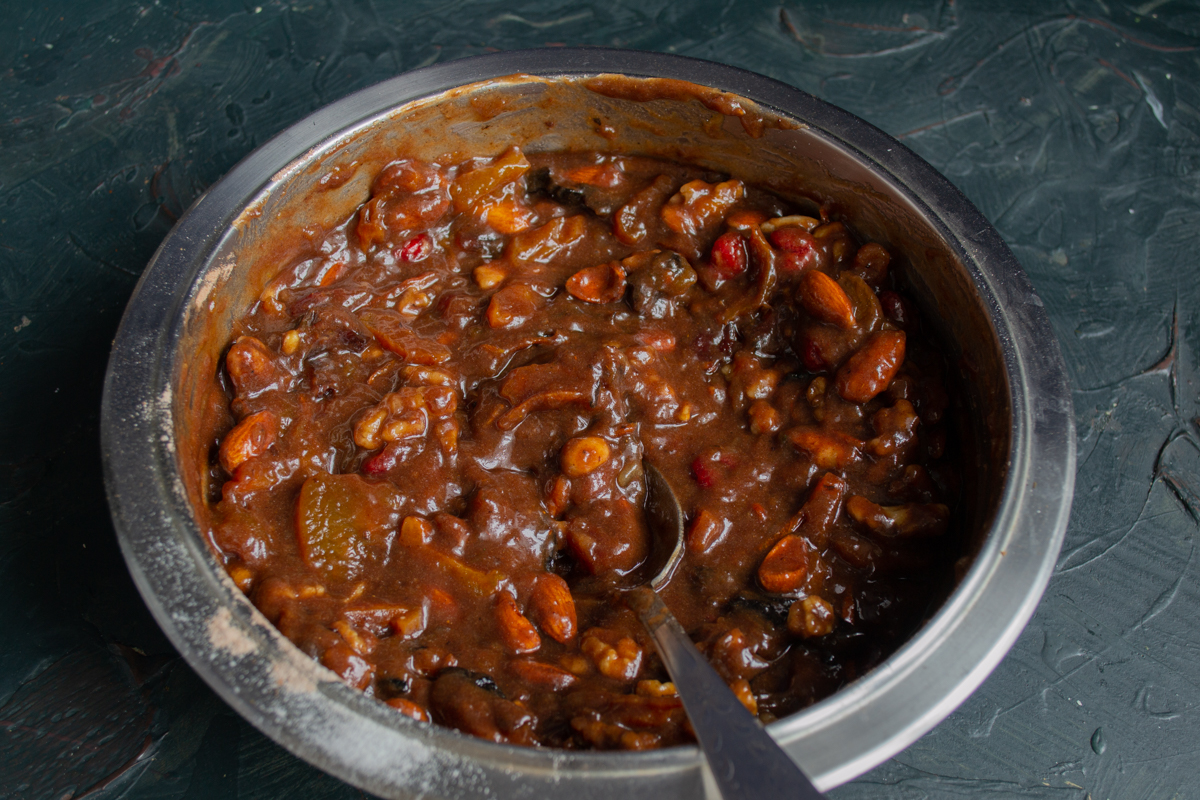
Stir the mixture thoroughly until well incorporated. The dough should turn out exceptionally thick and sticky.
Take a sheet of non-stick parchment paper and crumple it in your hands so it fits into the baking dish more easily. Line a rectangular baking dish with the parchment, transfer the dough into it, and smooth out the top. The dough layer should be about 2 centimeters (3/4 inch) thick. A thinner cake might burn, while a thicker one will take too long to bake and could also scorch. Two centimeters is the sweet spot.
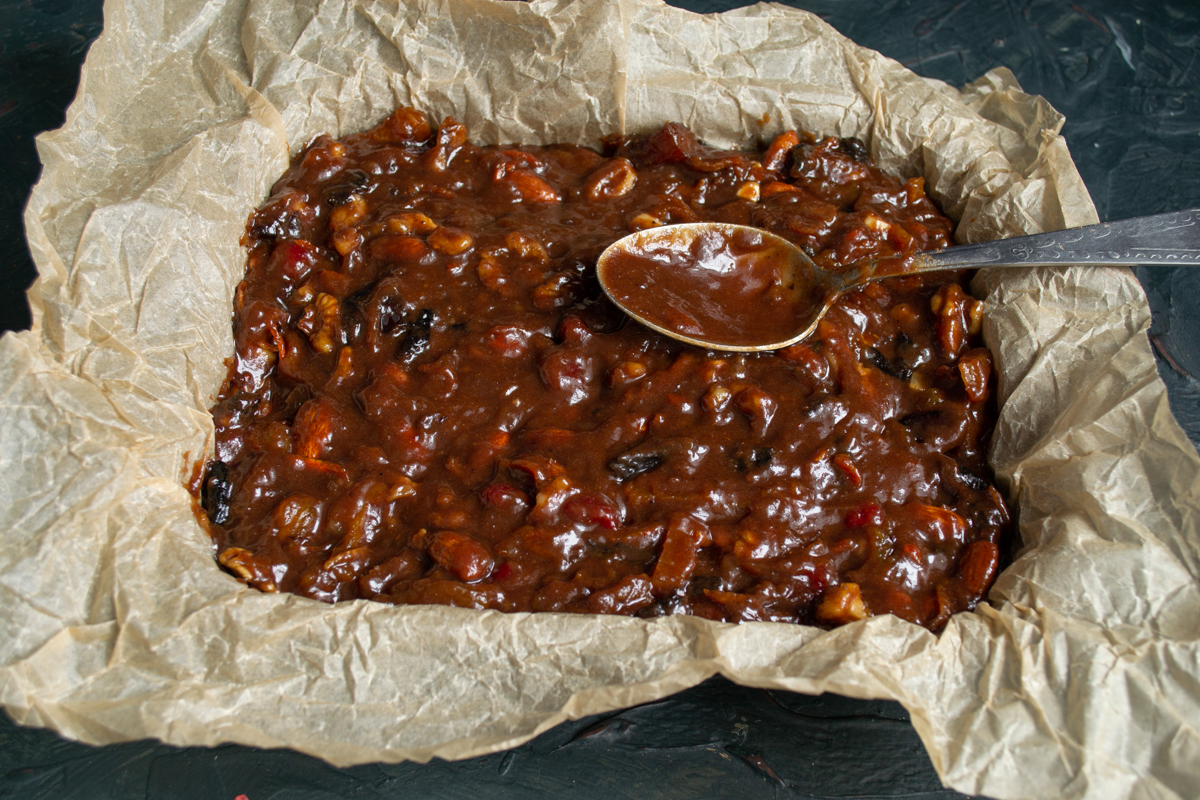
Spread the dough in the dish to an even thickness of about 2 centimeters (3/4 inch). Use crumpled parchment for a tighter fit against the edges.
Preheat your oven to 170°C (340°F). Bake the panforte in the preheated oven for 25 to 30 minutes.
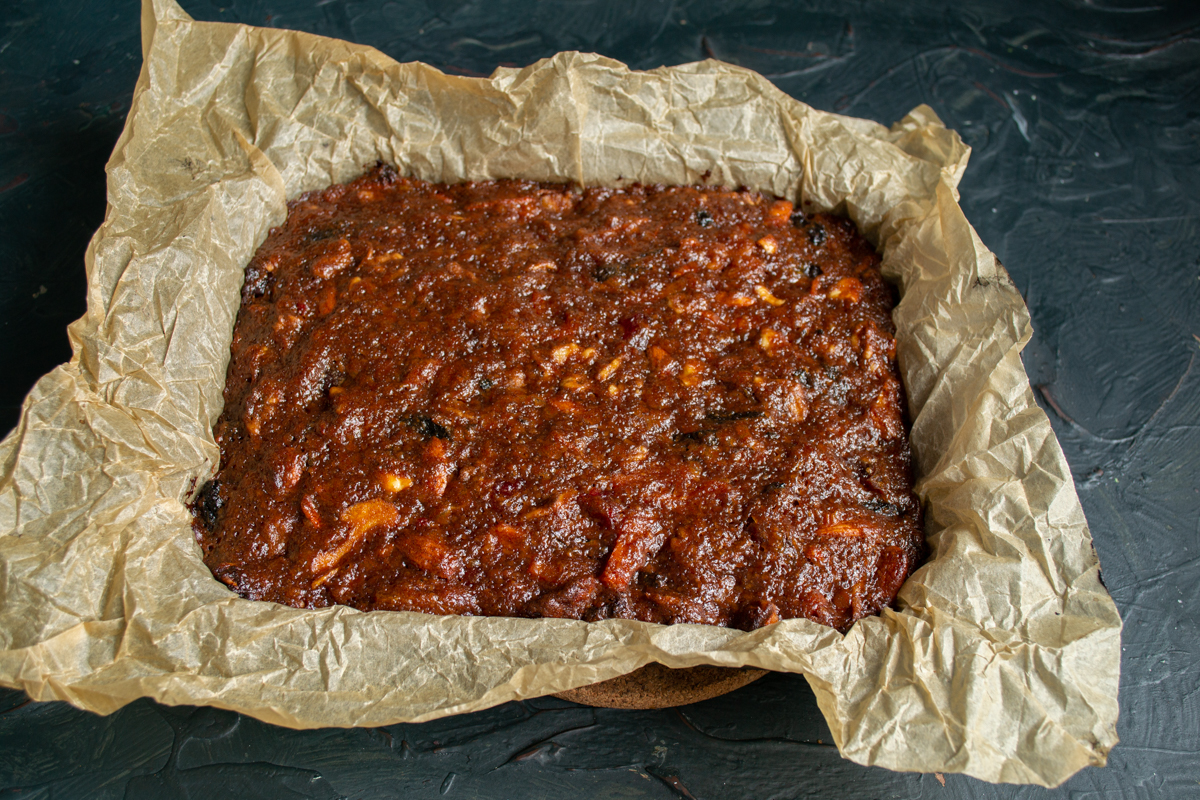
After baking, let the cake cool completely in its dish. It will gradually firm up, making it easy to slice.
Remove the dish from the oven and let the cake cool completely in the pan. At first, the panforte will be quite soft, but as it cools, it will firm up and become very dense. You can wrap the cake in parchment paper and store it in your kitchen cabinet for up to 10 days, or even longer!
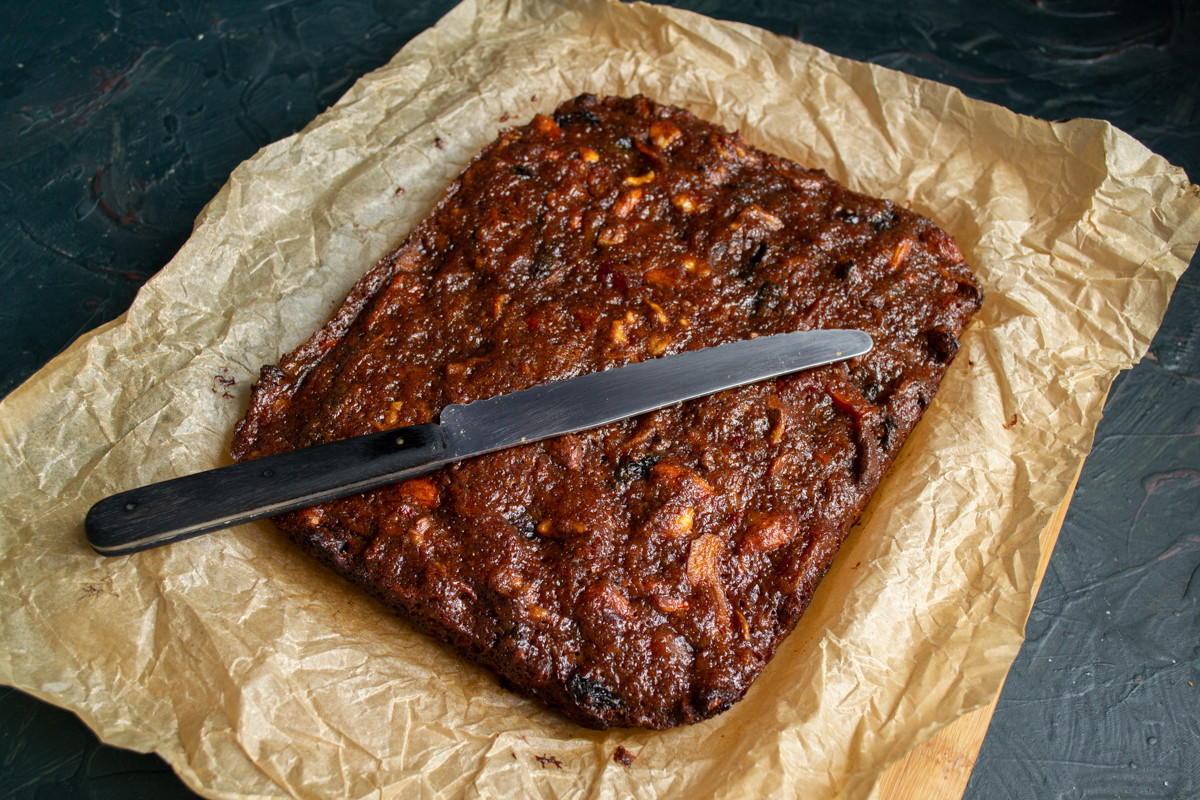
Cooled panforte stores beautifully. Wrap it in parchment paper and enjoy its complex flavors over a long period.
Once cooled, panforte is best sliced into thin, almost transparent pieces so you can fully appreciate the interplay of crunchy almonds and chewy dried fruit. This dessert has an incredibly long shelf life: tightly wrapped in parchment, it can be kept in a dry spot for weeks, becoming even more fragrant and dense over time. If you want to impress your guests, serve it with a strong espresso or a glass of dessert wine to highlight the honeyed notes and lingering spice trail.
You can also experiment endlessly with the ingredients, swapping out walnuts for hazelnuts or folding in dark chocolate chunks instead of cocoa powder. The ultimate secret to success lies in maintaining the correct thickness before baking—exactly 2 centimeters (3/4 inch) ensures an even bake while preserving that legendary chewiness. Don't be afraid to add your favorite candied fruits or even a pinch of hot chili pepper, as they do in some Italian regions, to give this classic flavor a bold, modern twist.
0 comments