
There's nothing quite like a perfectly cooked piece of salmon—crispy skin, flaky flesh, and full of flavor. But the thought of scrubbing a greasy, fishy-smelling pan afterward can be a real turn-off. What if I told you there's a way to get that perfect pan-sear without any of the mess? This recipe unveils a simple yet revolutionary trick using parchment paper that will forever change how you cook fish. Get ready for a delicious, healthy, and incredibly easy salmon dinner, complete with a zesty yogurt-cucumber sauce, that leaves your kitchen sparkling clean.
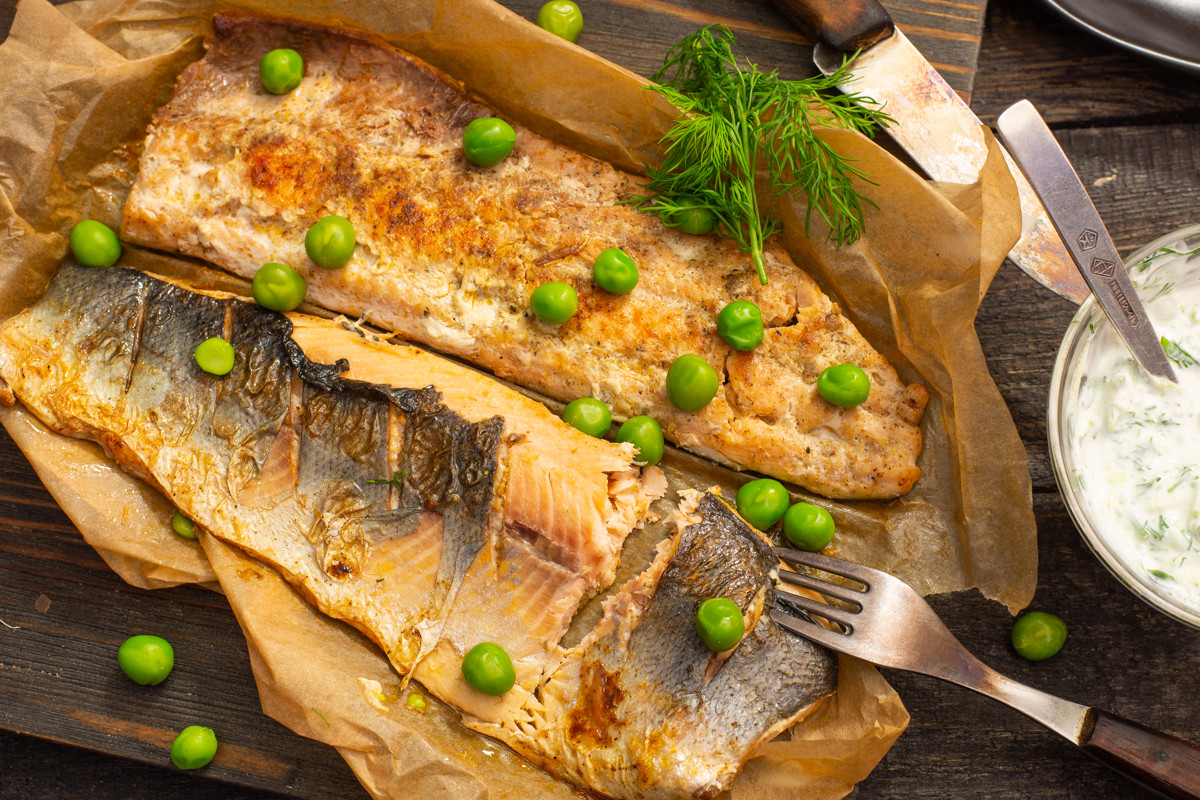
Pan-fried salmon: how to cook fish without dirtying your pan.
Ingredients for Pan-Fried Salmon
- 1 small salmon (1.1-1.3 lbs / 500-600 g)
- sweet ground paprika
- dry fish seasoning blend
- ground black pepper
- extra virgin olive oil
- sea salt
Ingredients for the Sauce
- 100 g (about 1/2 cup) Greek yogurt
- 100 g (about 1 medium) fresh cucumber
- small bunch of dill
- salt to taste
How to Pan-Fry Salmon
If using frozen fish, take it out of the freezer a few hours before cooking. Leave the fish on the bottom shelf of the refrigerator to thaw slowly; this helps retain its natural juices. To descale the fish without making a mess, you can do it inside a plastic bag or under water, which will prevent the scales from flying all over the kitchen. Cut off the head and make an incision along the belly. Gut the salmon and rinse it well under cold running water.
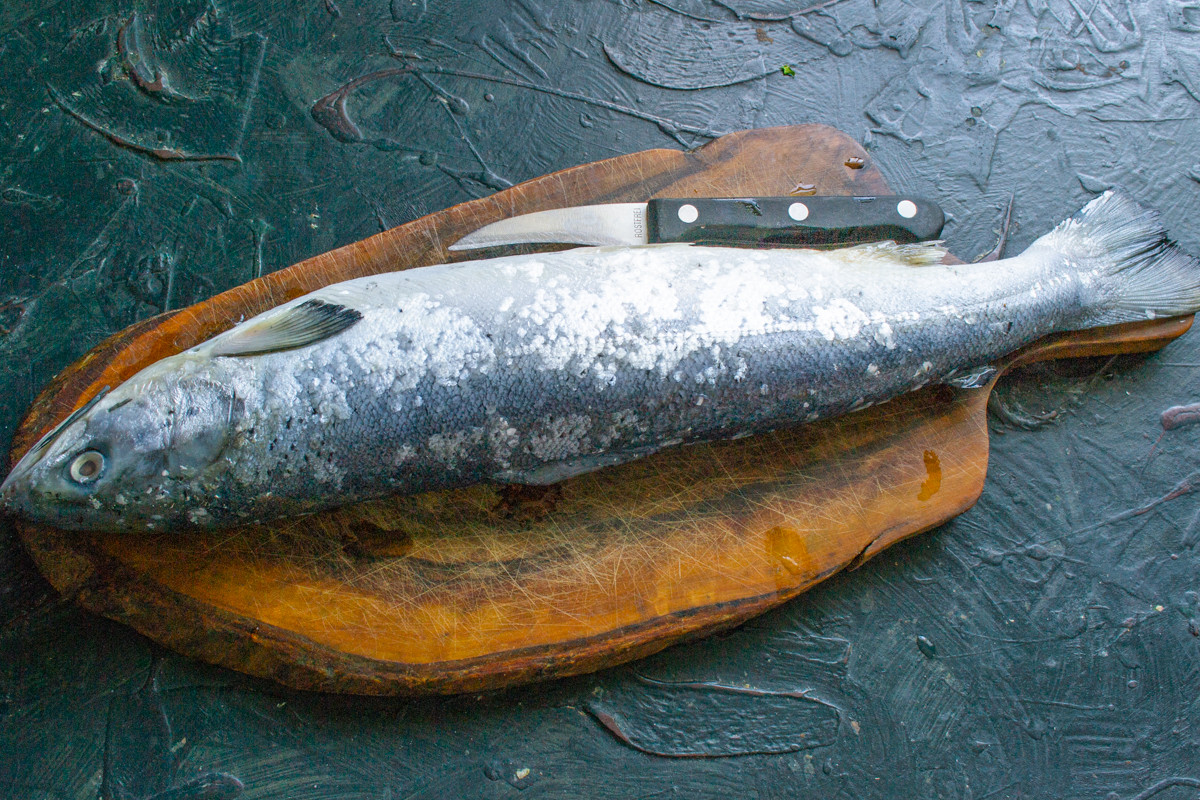
Gutting the salmon and rinsing it thoroughly under cold running water.
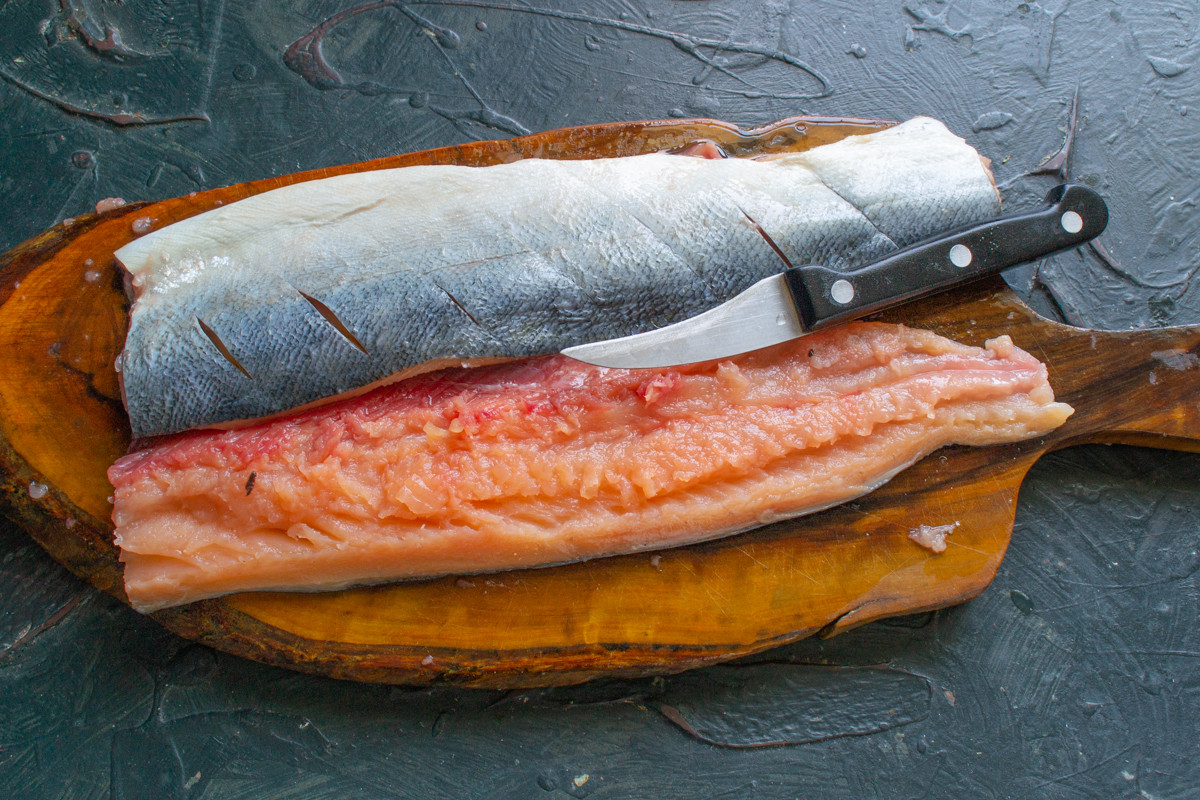
Slicing the fish along the spine, carefully separating the flesh.
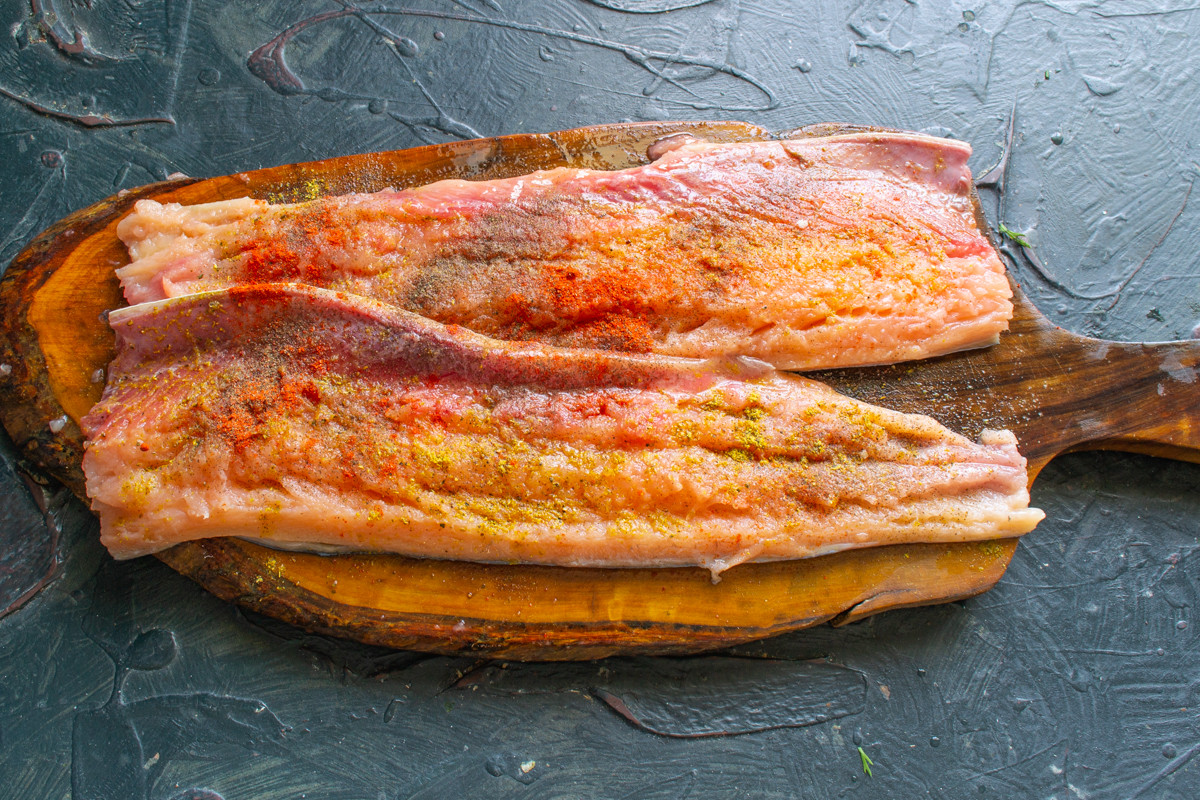
Sprinkling the fillet with sweet ground paprika, black pepper, and a dry fish seasoning blend.
Slice the fish along the spine, carefully separating the flesh. This will give you two fillets from which you should remove any visible bones. With the prepared fillets, make diagonal cuts on the skin side every two centimeters.
Sprinkle the fillets with sweet ground paprika, black pepper, and a dry fish seasoning blend, which typically contains a harmonious mix of spices and herbs suitable for fish.
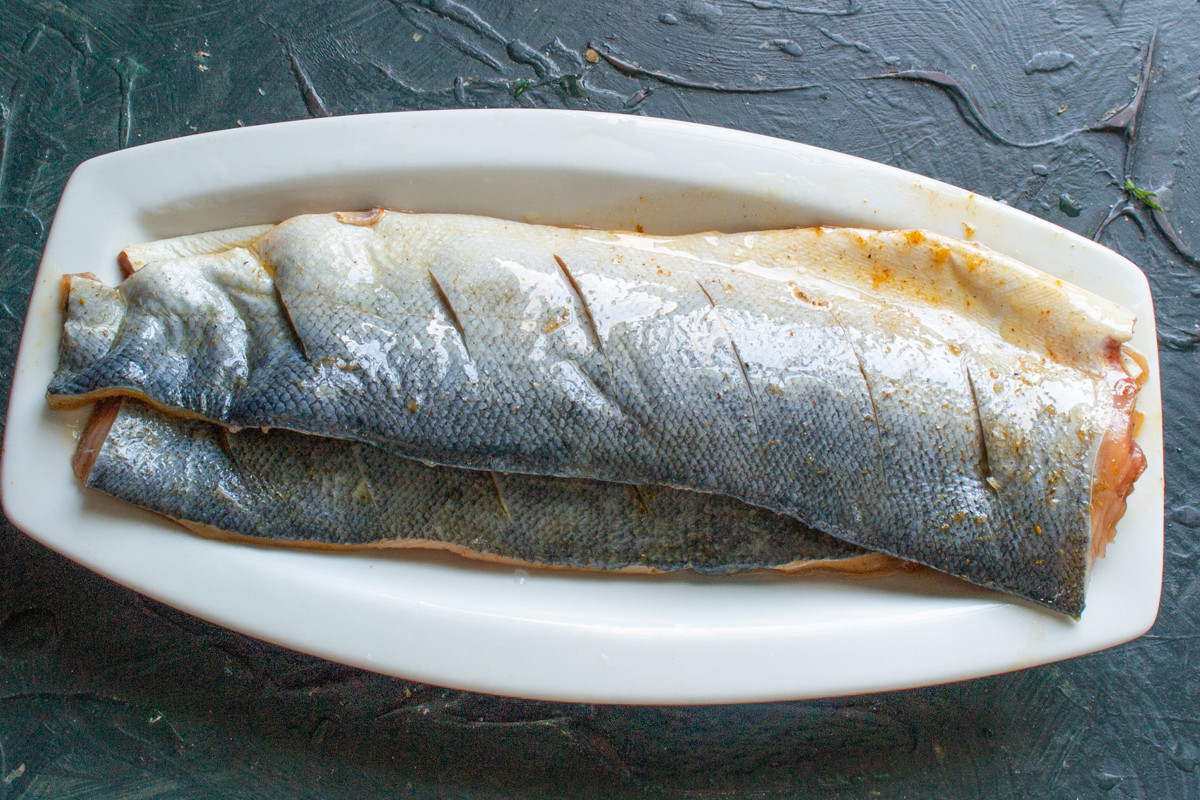
Wrapping the fish in plastic wrap and refrigerating for 10-15 minutes.
Salt the fillets and drizzle with extra virgin olive oil. Wrap the fish in plastic wrap and place it in the refrigerator for 10-15 minutes to marinate.
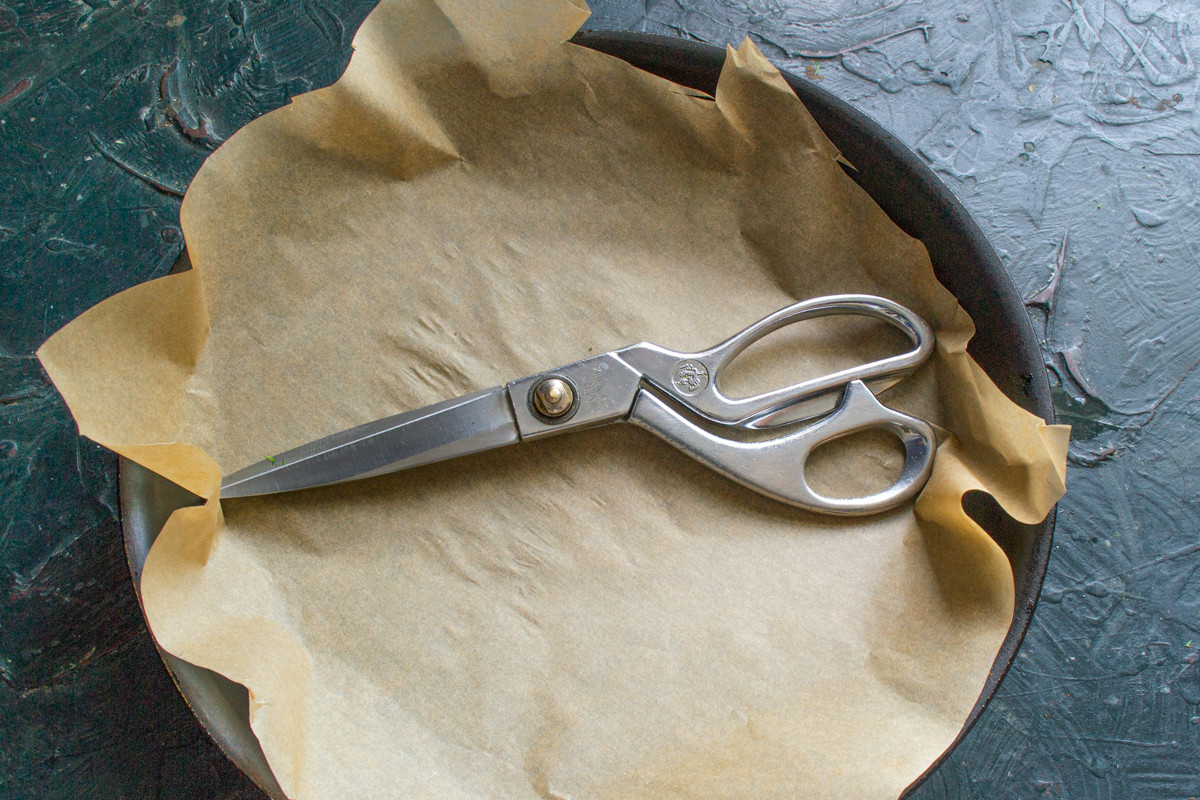
Cutting a sheet of parchment paper so that the edges extend up the sides of the skillet.
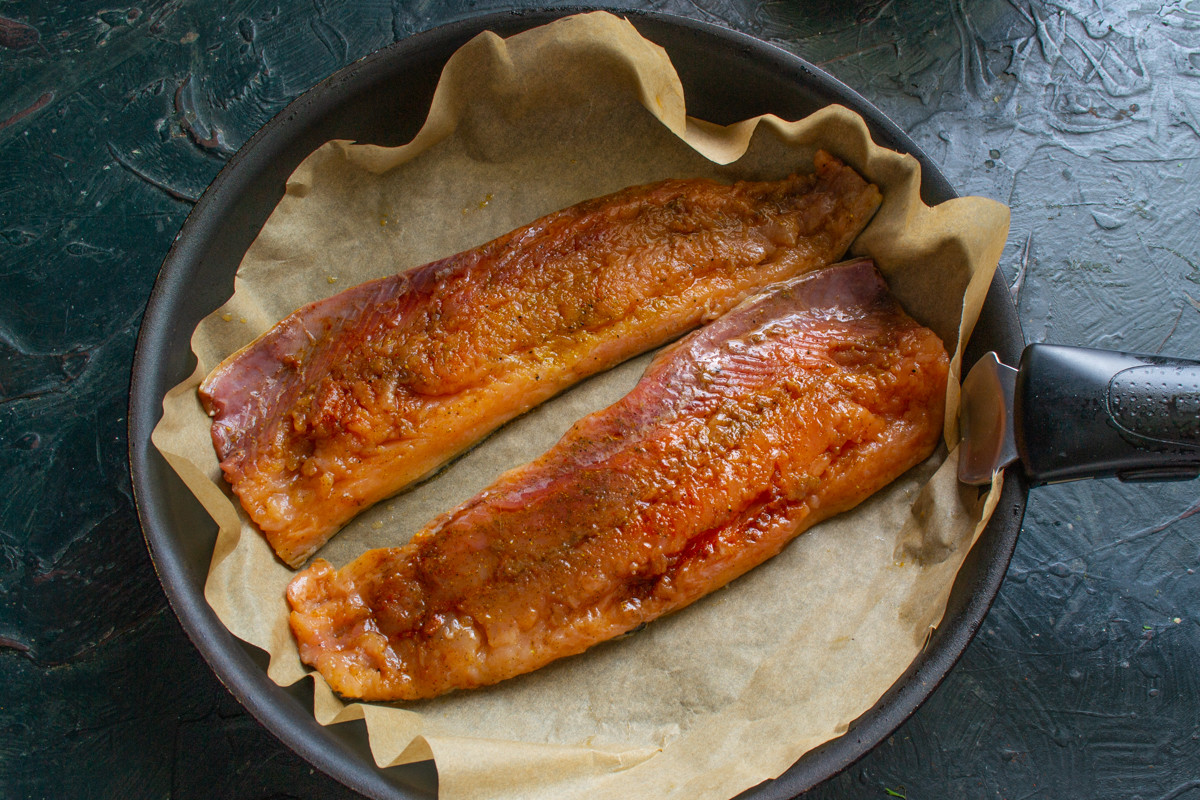
Placing the marinated fish skin-side down on the parchment paper.
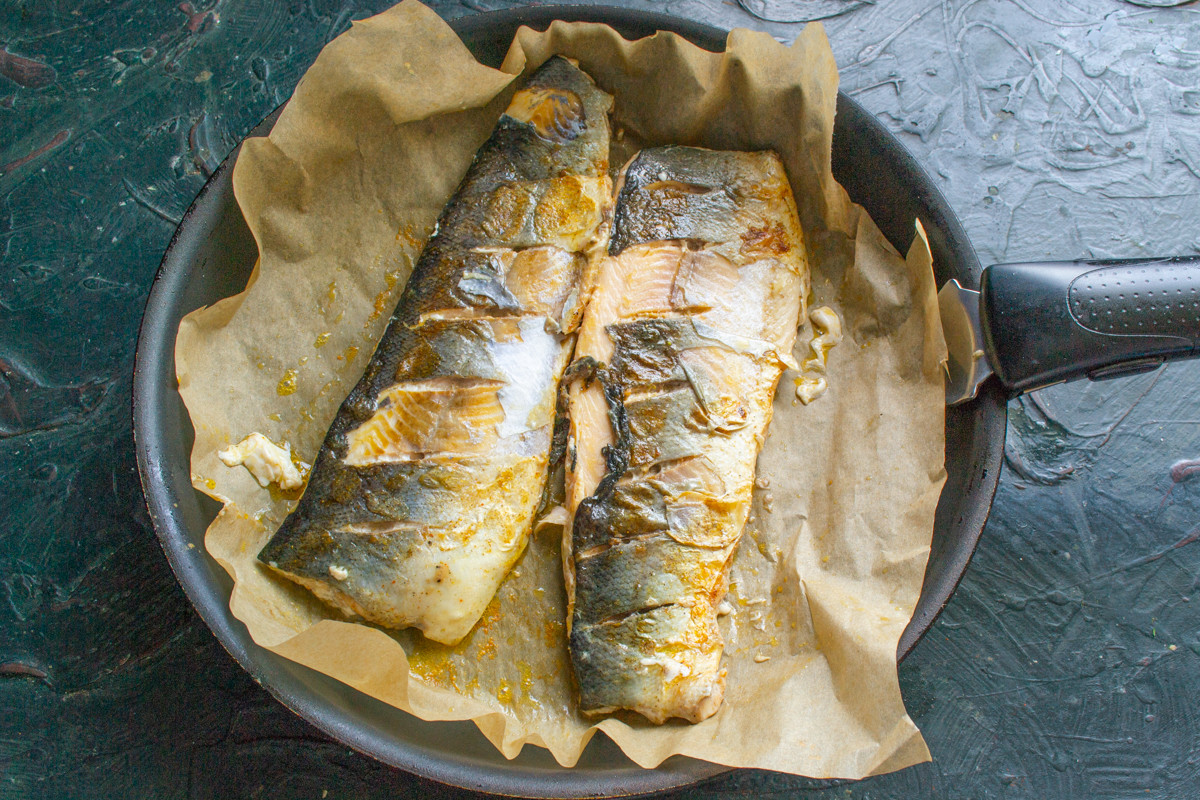
Flipping the fillet and cooking for another 3 minutes.
Take a skillet of a suitable size. For frying, you’ll need a wide, heavy-bottomed skillet. Cut a sheet of parchment paper so that its edges come up the sides of the pan. If you have a gas stove, trim any overhanging pieces of paper. Important! Do not use cheap parchment paper, as it will only cause problems. Inexpensive paper allows moisture and grease to seep through, making things worse.
Heat the skillet for 4 minutes, then place the marinated fish skin-side down on the parchment paper. Cook over medium heat for 3 minutes.
Carefully flip the fillet and cook for another 3 minutes on the other side.
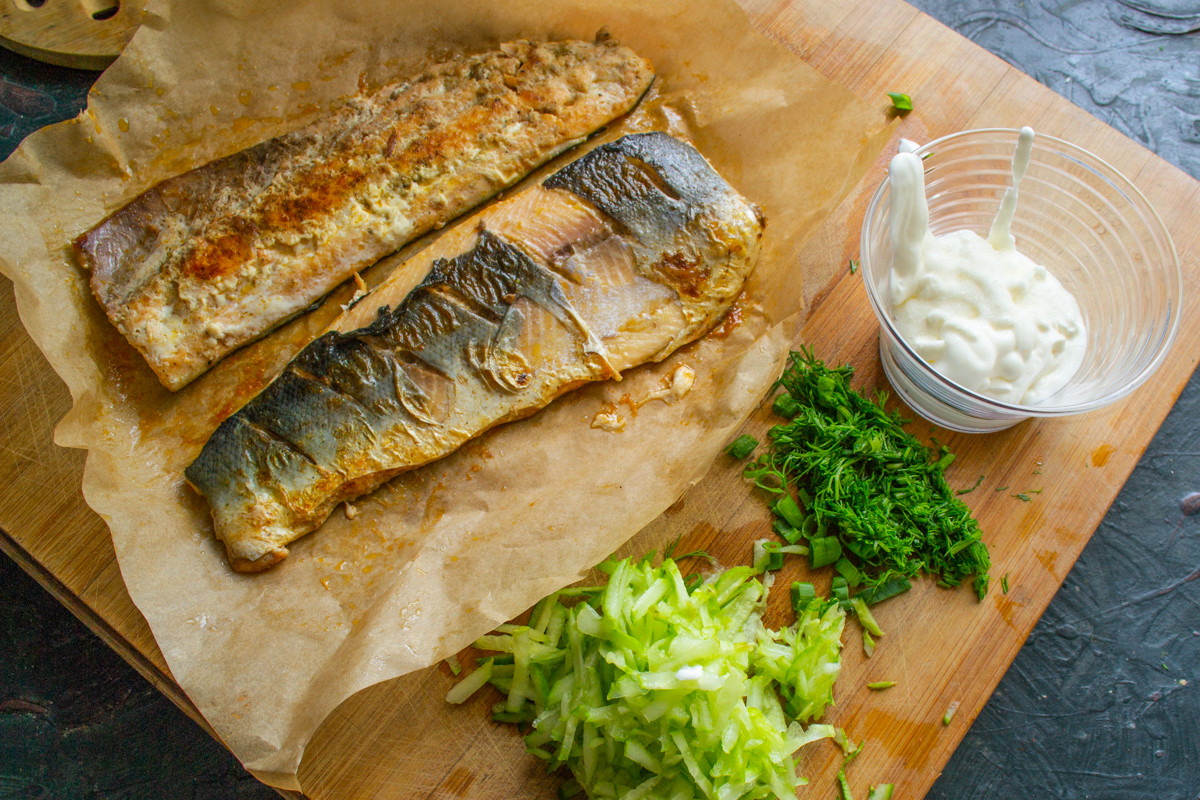
Removing the parchment paper with the fish from the skillet.
Remove the parchment paper with the fish from the skillet, and you’ll see the pan is as clean as it was before you started. Now, let’s make the sauce for the fish. Grate a fresh cucumber on a coarse grater. Finely chop a bunch of dill. Mix the dill, cucumber, and Greek yogurt, and add a pinch of sea salt.
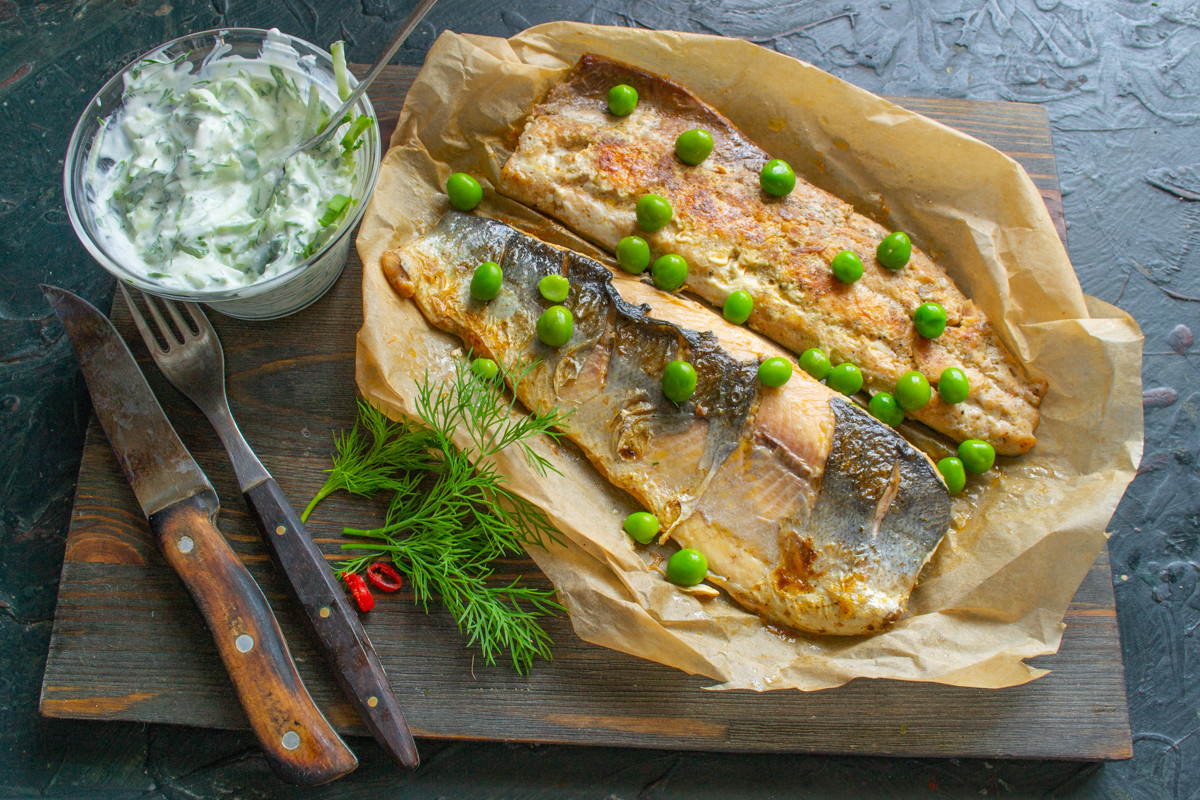
Serving the pan-fried salmon with a yogurt-cucumber sauce.
You can place the fish on the parchment paper directly on a cutting board for a rustic-style dinner. Serve the pan-fried salmon with the yogurt-cucumber sauce, sprinkled with blanched green peas and fresh herbs.
And there you have it—a beautifully cooked salmon fillet with zero mess to worry about! This parchment paper method is a true game-changer for any home cook, making a sophisticated meal feel effortless and enjoyable from start to finish. Feel free to serve this salmon with your favorite sides, like roasted vegetables, quinoa, or a fresh garden salad. We hope this clever kitchen hack inspires you to cook fish more often. Enjoy your delicious and stress-free meal!
0 comments