
Welcome to a delightful twist on a beloved classic! Lecho is a traditional vegetable stew, cherished across Eastern and Central Europe for its rich, hearty flavors. While typically made with bell peppers, tomatoes, and onions, this recipe introduces an exciting and unique ingredient: physalis. Also known as ground cherries or tomatillos, physalis adds a subtle tangy sweetness and, thanks to its natural pectin, helps to create a wonderfully thick, luscious sauce without any extra thickeners. This Red Pepper and Physalis Lecho is not just a delicious side dish but also a fantastic preserve to capture the essence of the harvest season in a jar.
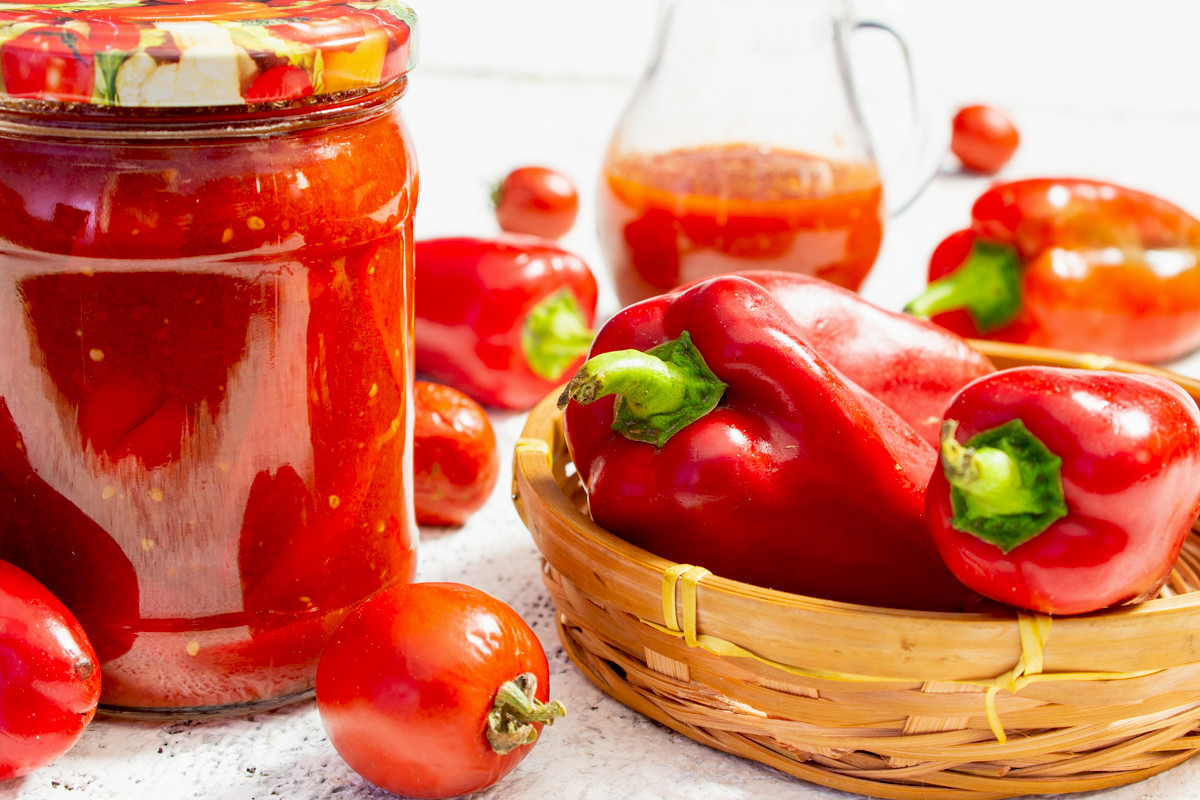
Red Pepper and Physalis Lecho
Ingredients for Red Pepper and Physalis Lecho
- 2 kg of red bell peppers
- 1 kg of red tomatoes
- 500 g of physalis (also known as ground cherries or tomatillos)
- 2 hot peppers or chili peppers
- 25 g of salt
- 40 g of granulated sugar
- paprika to taste
How to Make Red Pepper and Physalis Lecho
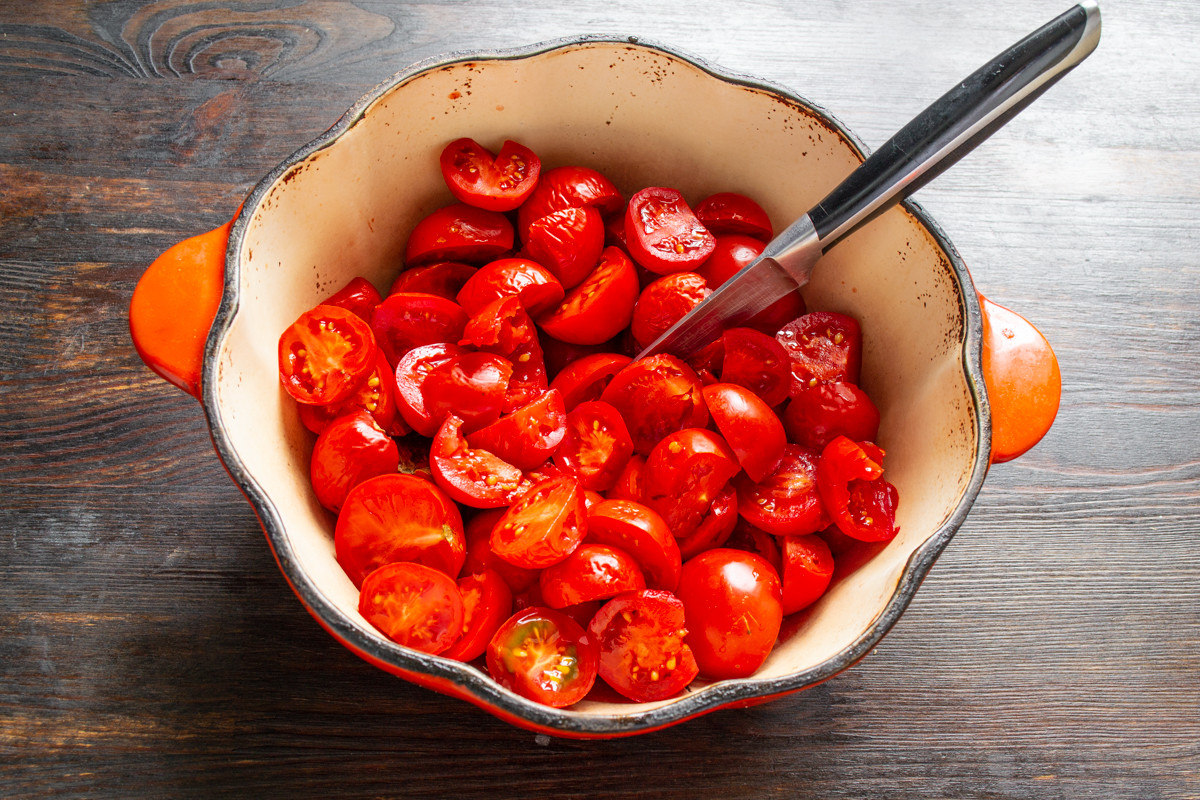
Cut ripe red tomatoes in half or quarters.
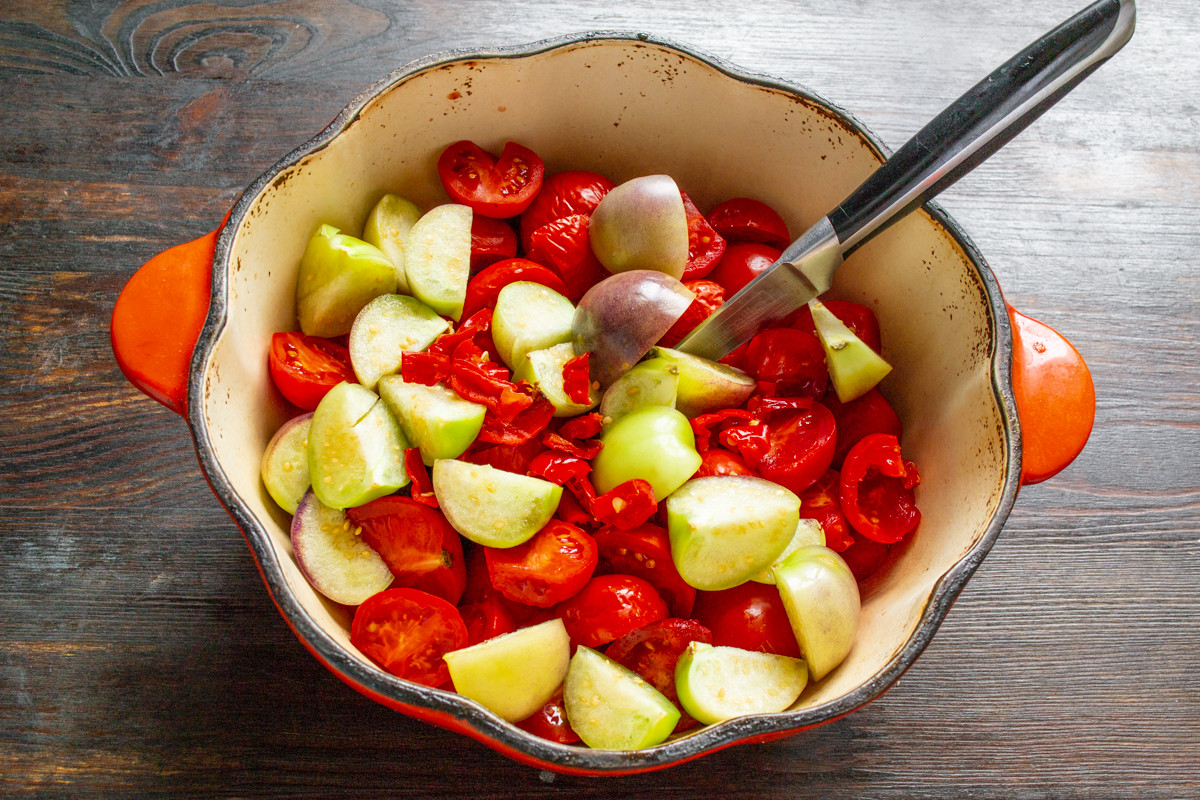
Add the chopped physalis to the pot with the tomatoes.
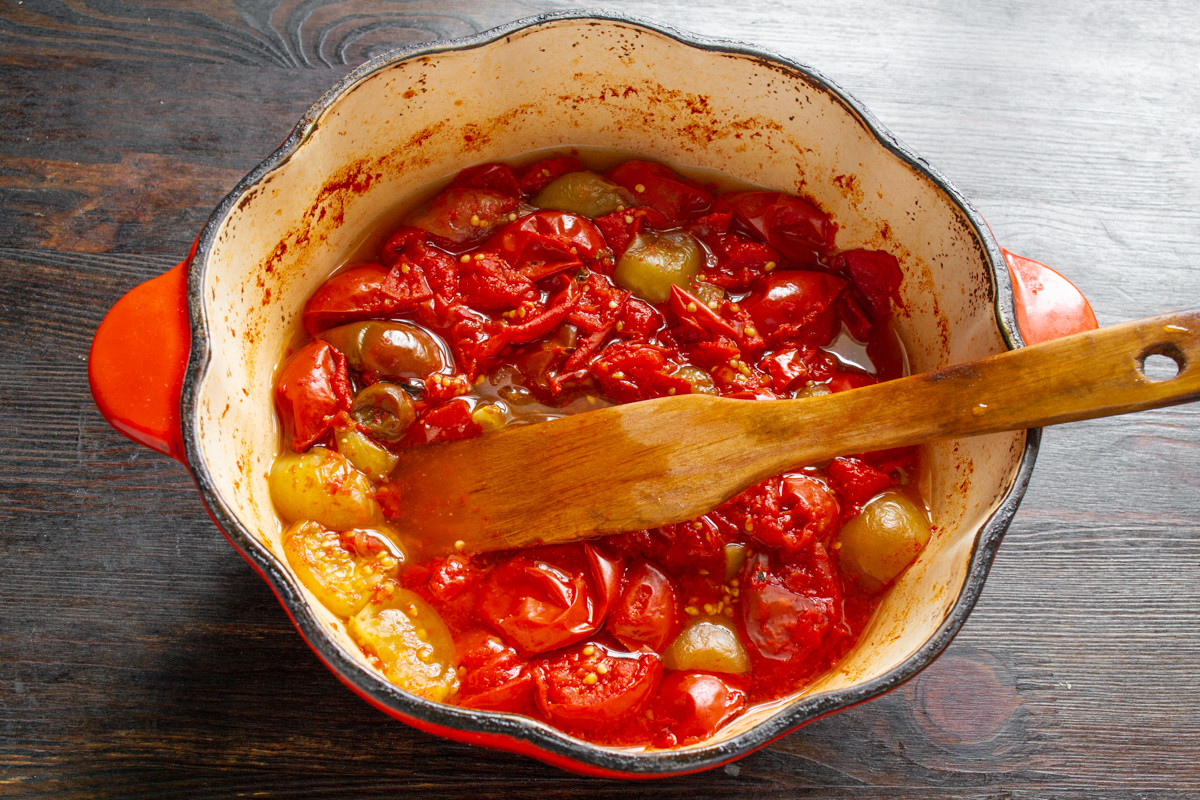
Steam the tomatoes and physalis for about 30 minutes until the vegetables turn into a uniformly simmering sauce.
Cut ripe red tomatoes in half or quarters. To make the lecho (a versatile vegetable stew, popular in Eastern and Central Europe), use a large heavy-bottomed pot or a Dutch oven. Place the chopped tomatoes into the pot.
Remove the protective papery husk from the physalis. Thoroughly wash the physalis with warm water. Cut the physalis into quarters. Add the chopped physalis to the pot with the tomatoes.
If the vegetables are not very juicy, pour half a cup of water into the bottom of the pot. Cover the pot with a lid. Steam the tomatoes and physalis for about 30 minutes, until the vegetables turn into a uniformly simmering sauce. The tomato skins should separate easily.
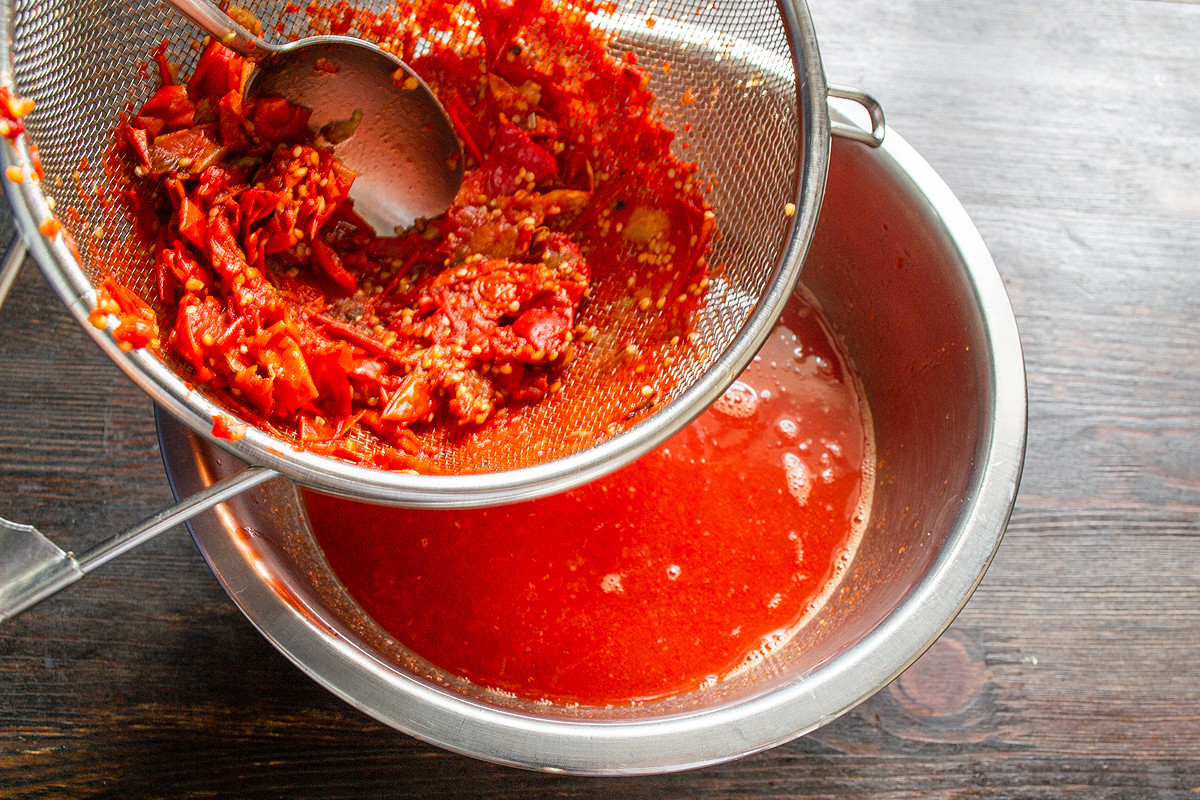
Press the tomatoes and physalis through a sieve with a tablespoon.
Transfer the steamed vegetables to a sieve. Use a tablespoon to press the tomatoes and physalis through the sieve. This will result in a fairly thick tomato juice with pulp.
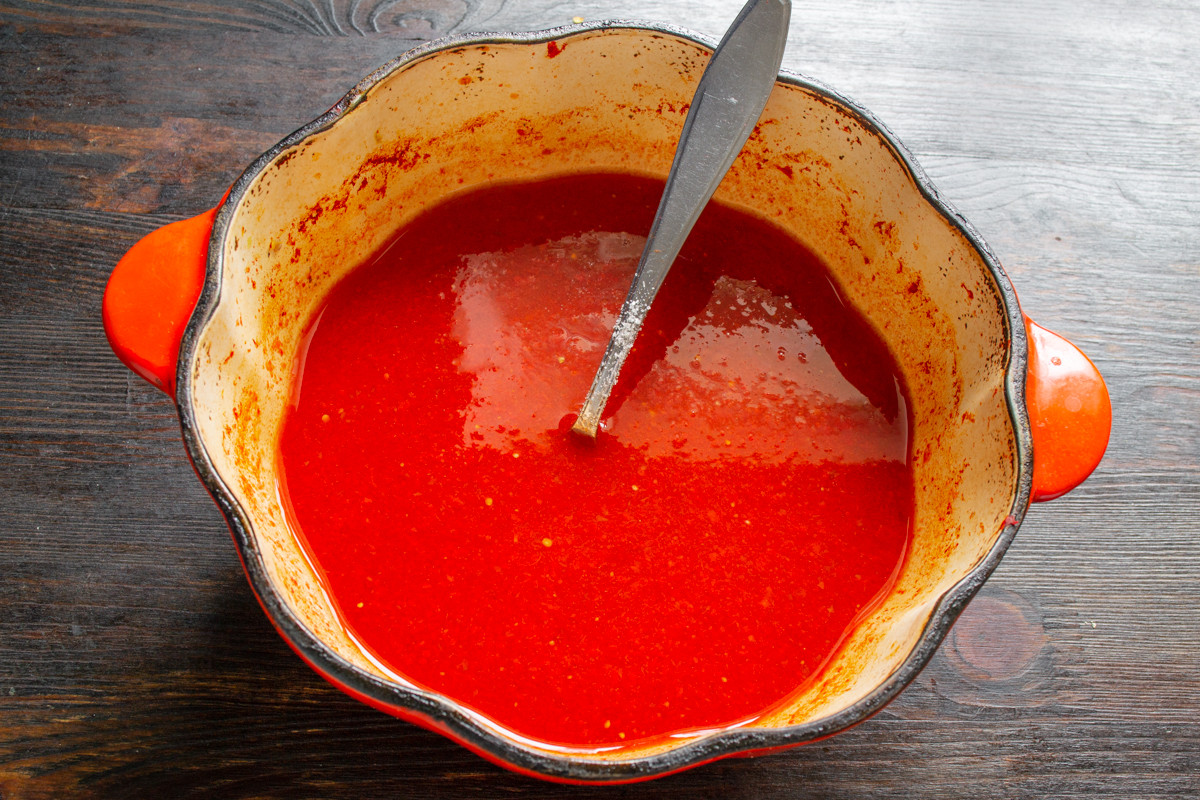
Return the sieved vegetables to the pot.
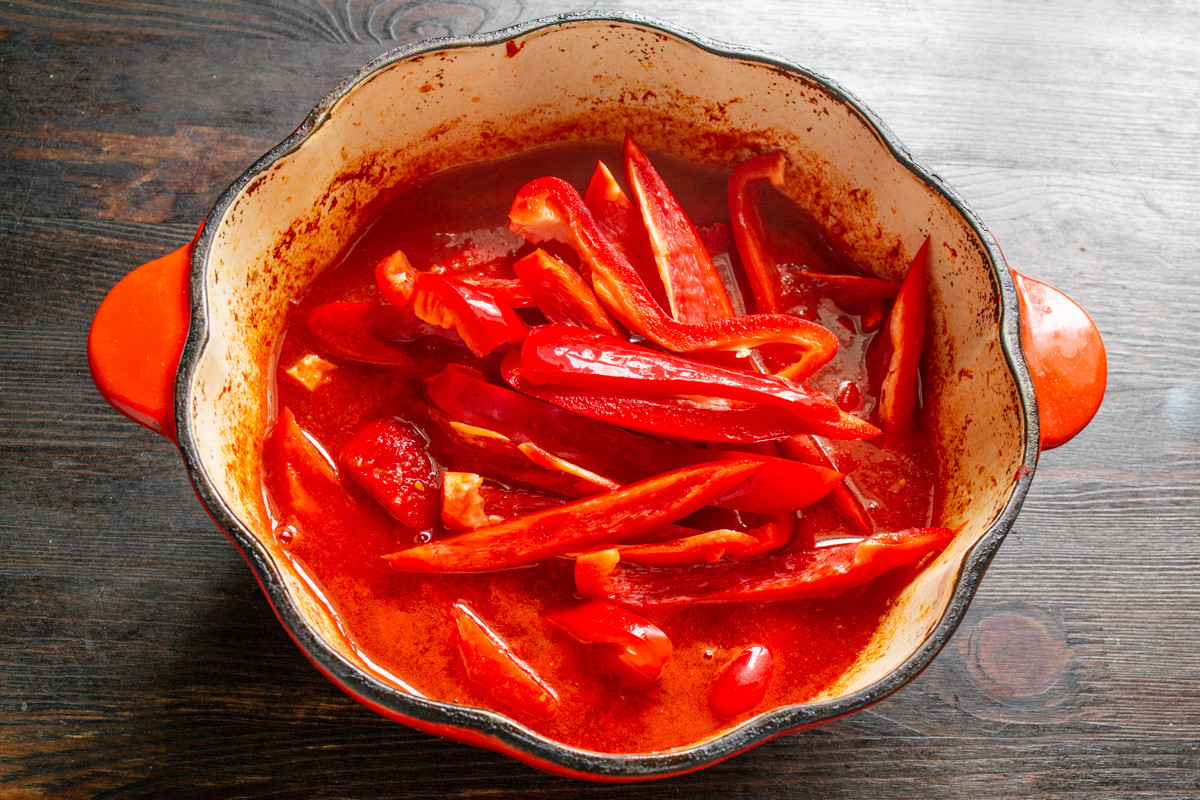
Slice the flesh into strips about a centimeter wide.
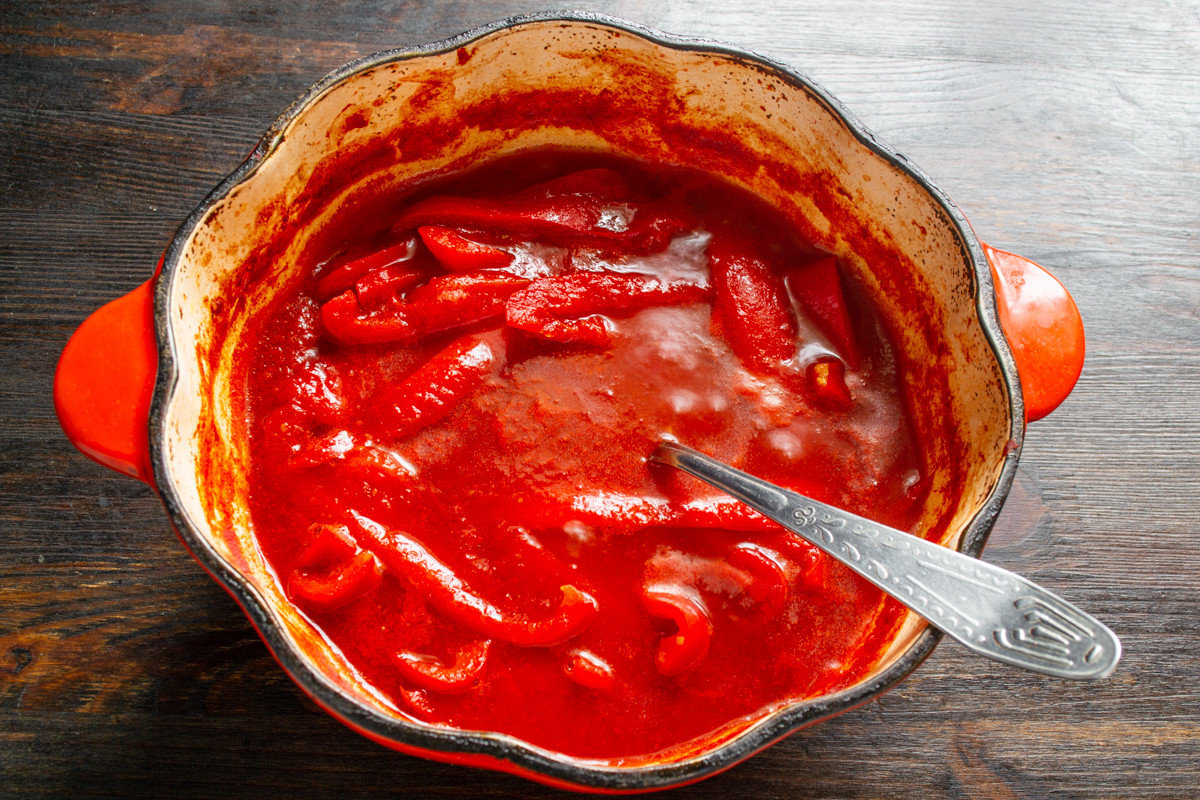
Cook over low heat for 35-40 minutes.
Return the sieved vegetables to the pot. If any vegetable seeds managed to get through the sieve, you can strain the juice through a double layer of cheesecloth or a finer sieve.
Cut the red bell peppers, removing the stem and seeds. Rinse the peppers with water. Slice the flesh into strips about a centimeter wide. Add the sliced peppers to the pot with the tomato juice. If you like your food with a kick, you can add finely chopped hot pepper or chili pepper.
Add salt and granulated sugar. Bring to a boil. Cook over low heat for 35-40 minutes. Do not cover with a lid at this stage; let the moisture evaporate, which will make the lecho tastier. For spices, you can add ground sweet paprika for a piquant aroma. You can add vinegar if desired; 2 tablespoons of apple cider vinegar will be sufficient.
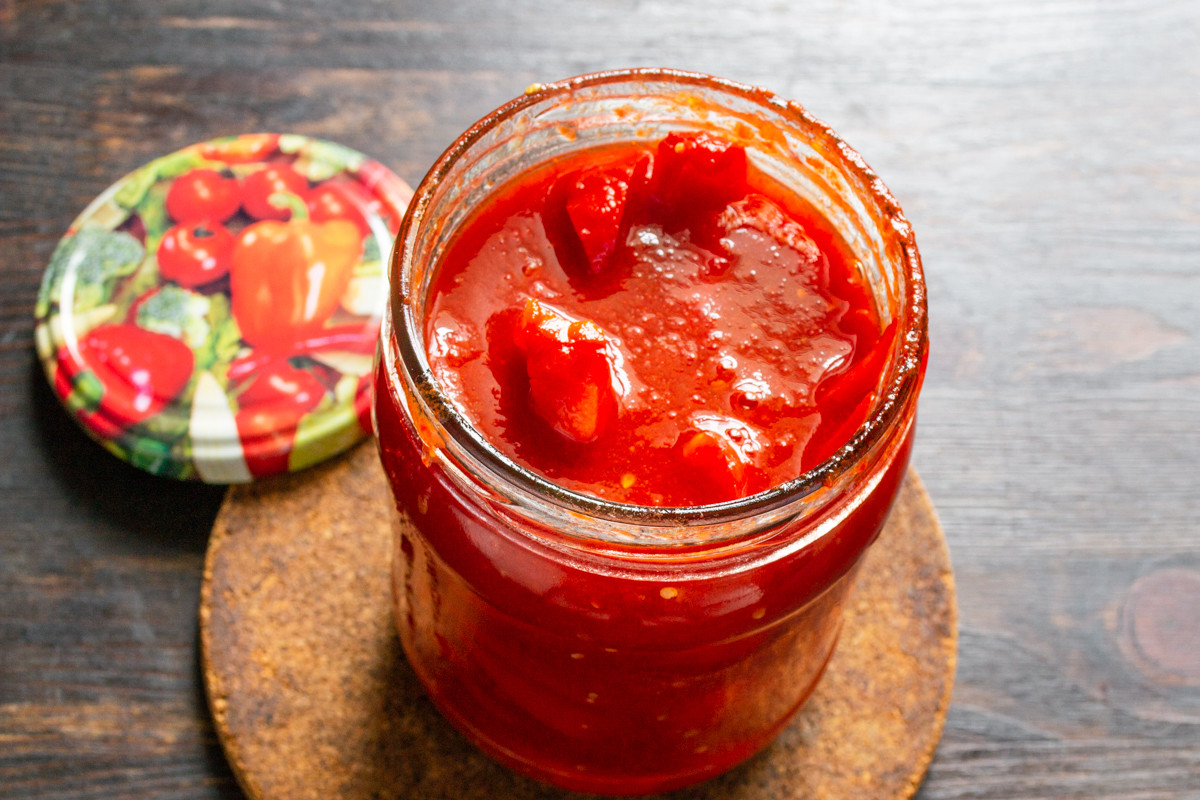
Pack the boiling lecho into hot, dry jars. Seal with sterilized lids.
Thoroughly wash the jars for canning the lecho with warm water and baking soda. Rinse with hot water and place them upside down on an oven rack. Heat the oven to 100°C (212°F) and dry the jars for 10-15 minutes. Pack the boiling lecho into the hot, dry jars. Seal with sterilized lids.
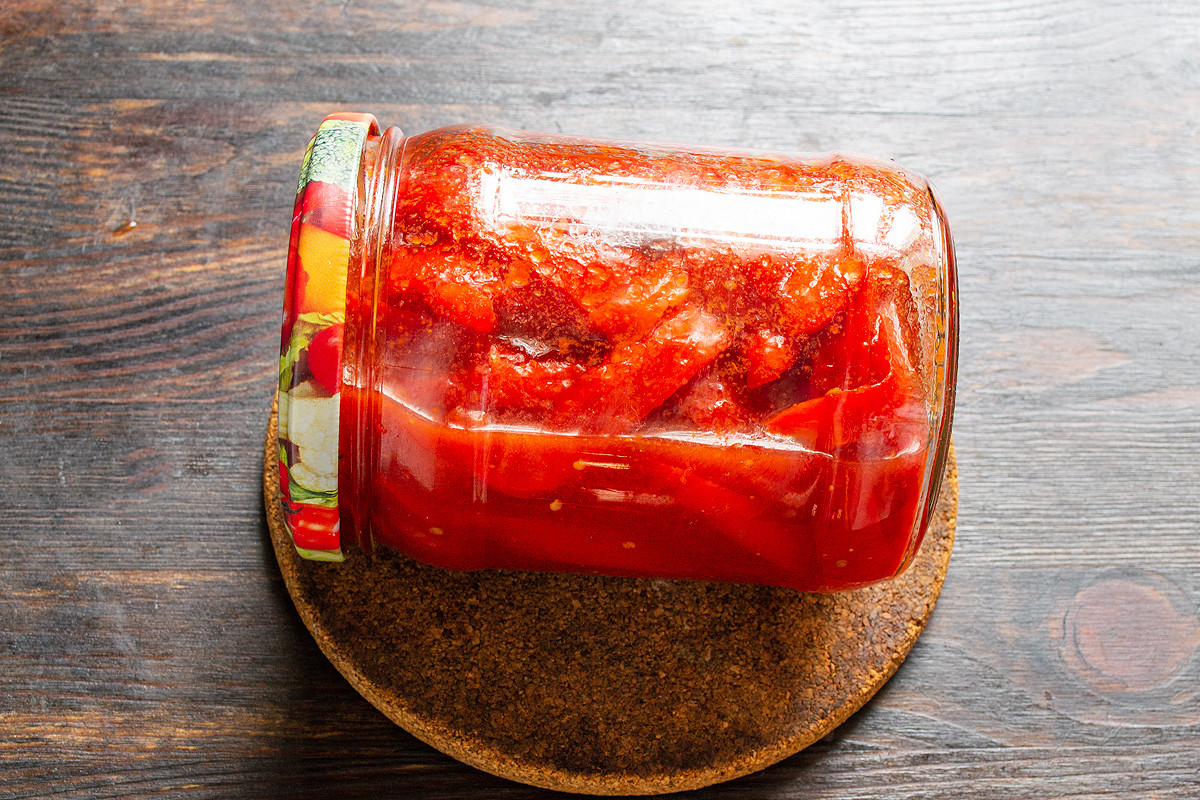
Immediately wrap the hot jars in a terry towel or blanket. Leave in a warm place until completely cool.
Immediately wrap the hot jars in a terry towel or blanket. Leave them in a warm place until they cool completely. This allows for a natural pasteurization process. Once cooled, store the lecho in a dry, dark, and cool place. These preserves will keep well until spring.
And there you have it – jars filled with vibrant, flavorful Red Pepper and Physalis Lecho, ready to brighten up your meals throughout the year! This unique preserve is incredibly versatile. Serve it as a warm side dish for grilled meats or sausages, spoon it over rice or pasta for a quick and satisfying meal, or simply enjoy it on a slice of crusty bread. Stored in a cool, dark place, your homemade lecho will be a wonderful taste of summer on a cold winter day. We hope you enjoy this special recipe and the delightful twist that physalis brings to a timeless classic!
3 comments