
Welcome to a classic of Eastern European cuisine! Kvashenaya Kapusta, or fermented cabbage, is a beloved staple, cherished not only for its tangy, complex flavor but also for its incredible health benefits. This isn't just any sauerkraut; our version is elevated with the fiery kick of fresh horseradish and the earthy sweetness and stunning ruby color of beets. This process of "kvashenie" (fermenting) is a time-honored tradition for preserving the autumn harvest through the winter, creating a dish that's bursting with probiotics, vitamins, and a satisfying crunch. Get ready to create a vibrant, healthy, and delicious condiment that will liven up any dish.
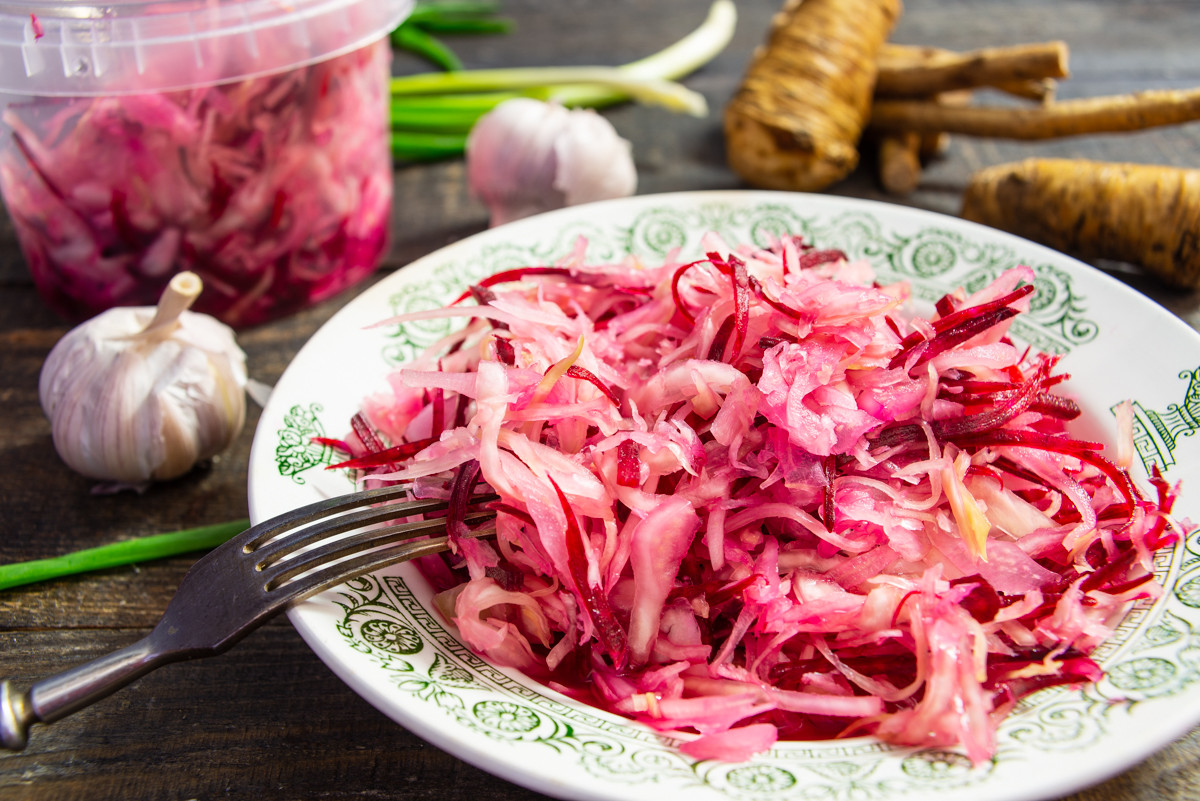
Fermented cabbage with horseradish and beets
Ingredients for Fermented Cabbage with Horseradish and Beets
- 1 kg winter white cabbage
- 150 g beets
- 100 g grated horseradish
- 1 red chili pepper pod
- 12 g sea salt or non-iodized table salt
- filtered water
How to Make Fermented Cabbage with Horseradish and Beets
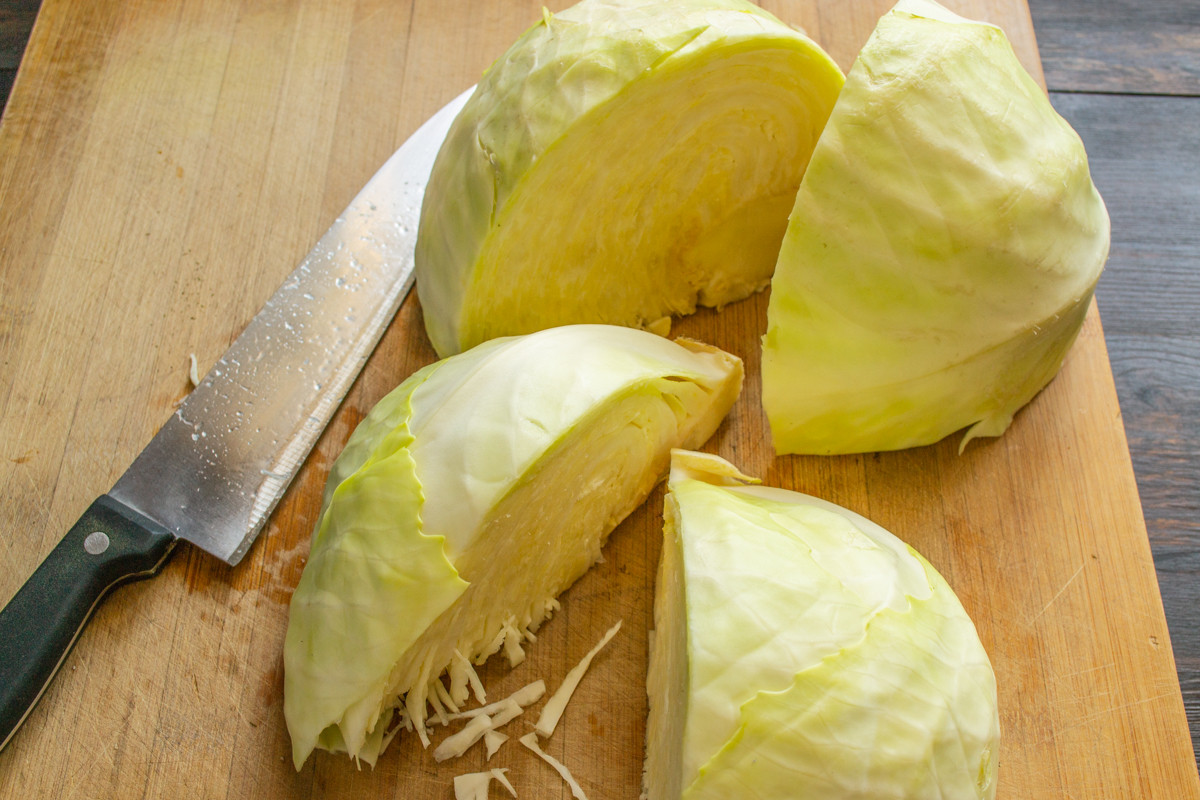
Cut the cabbage head into four parts, removing the core.
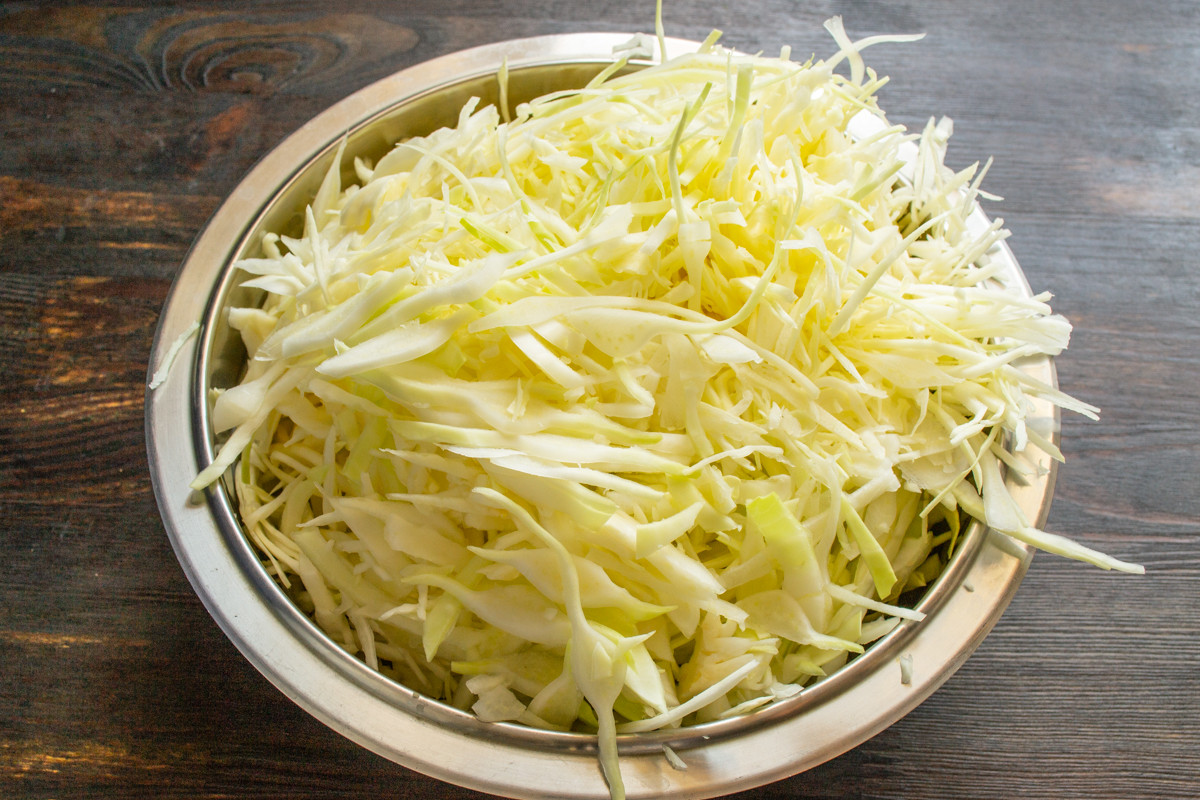
Try to shred the strips no thicker than three millimeters.
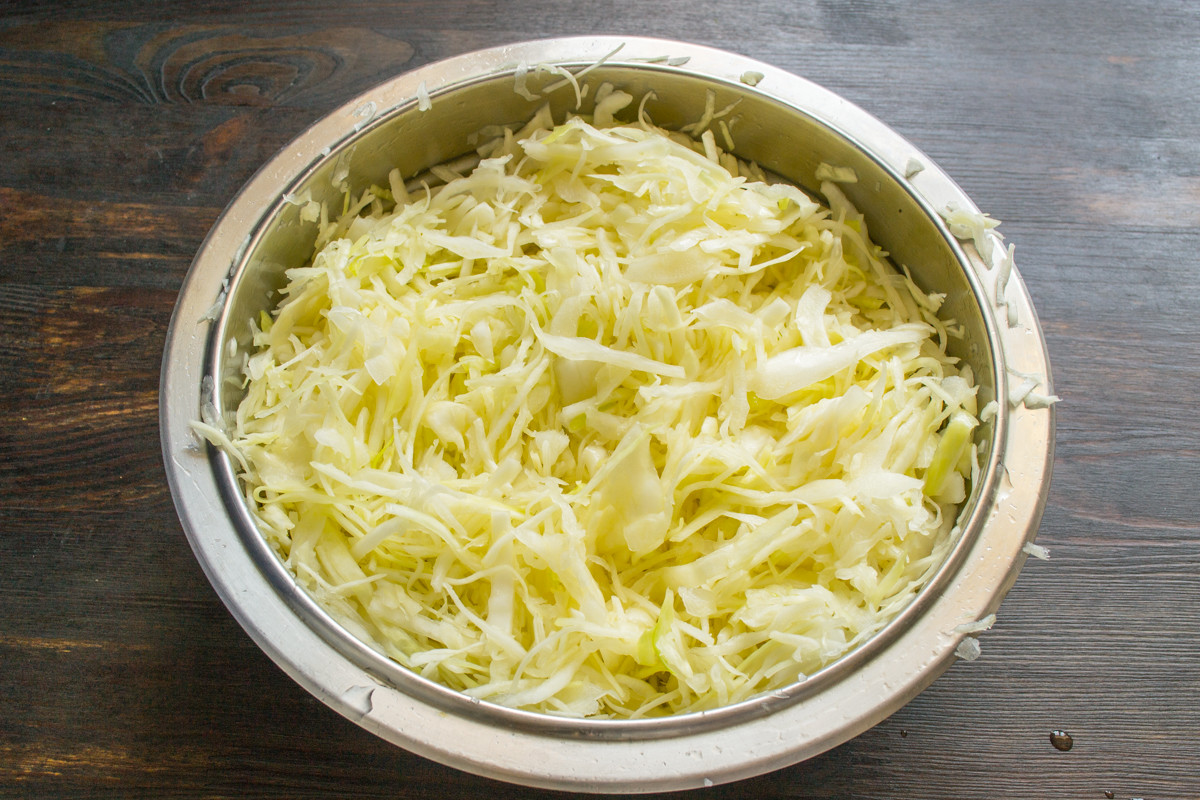
Rub the cabbage with salt until it releases its juice.
Remove the outer leaves from the cabbage head. Cut the head into four parts and remove the core. Choose a dense head with firm, white leaves; this type of cabbage will be crunchy.
Using a mandoline slicer or a wide knife, shred the cabbage into thin strips. The thinner the cut, the better. Try to make the strips no thicker than three millimeters.
Sprinkle with salt—you can use non-iodized sea salt or table salt without additives. Rub the cabbage with the salt until it releases its juice. You need to soften it slightly, which will also reduce the volume of the vegetables.
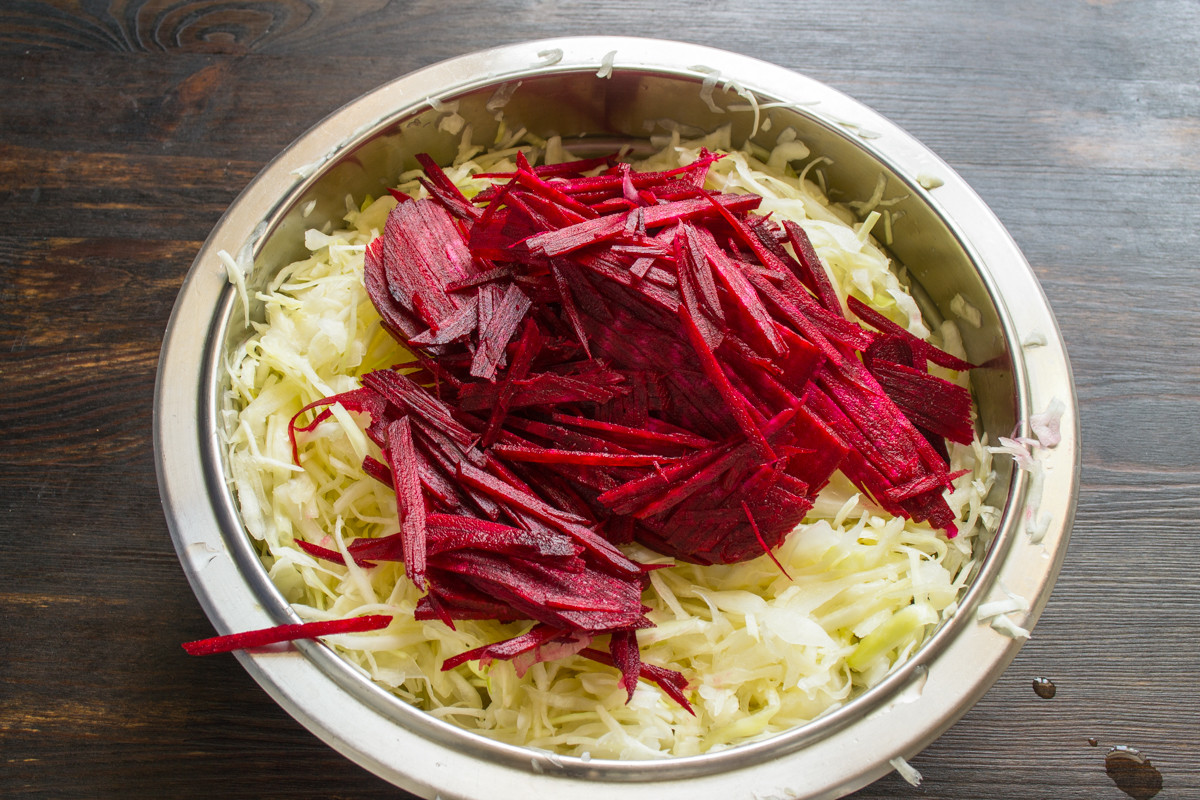
Cut the peeled beets into thin strips.
Wash the beets with a brush and peel them. Cut the peeled beets into thin strips. Add the sliced beets to the cabbage.
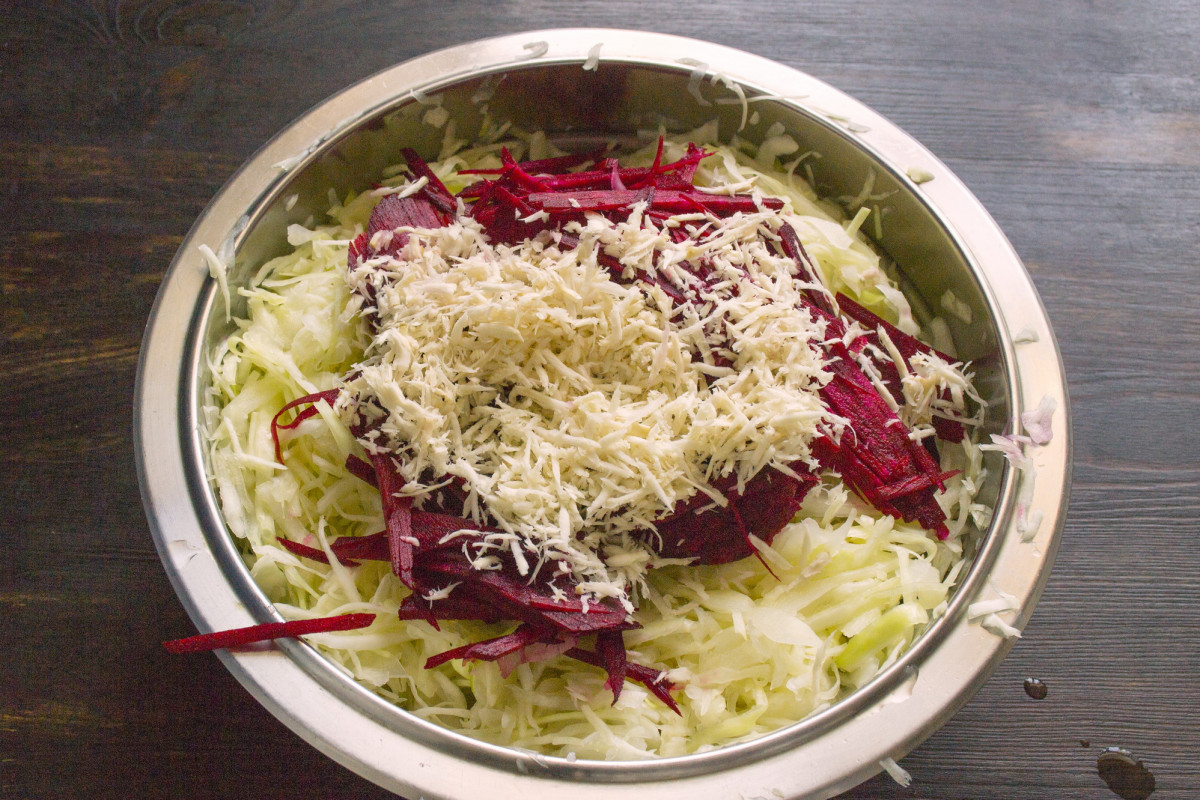
Grate the peeled horseradish on a fine grater or pass it through a meat grinder with a fine plate.
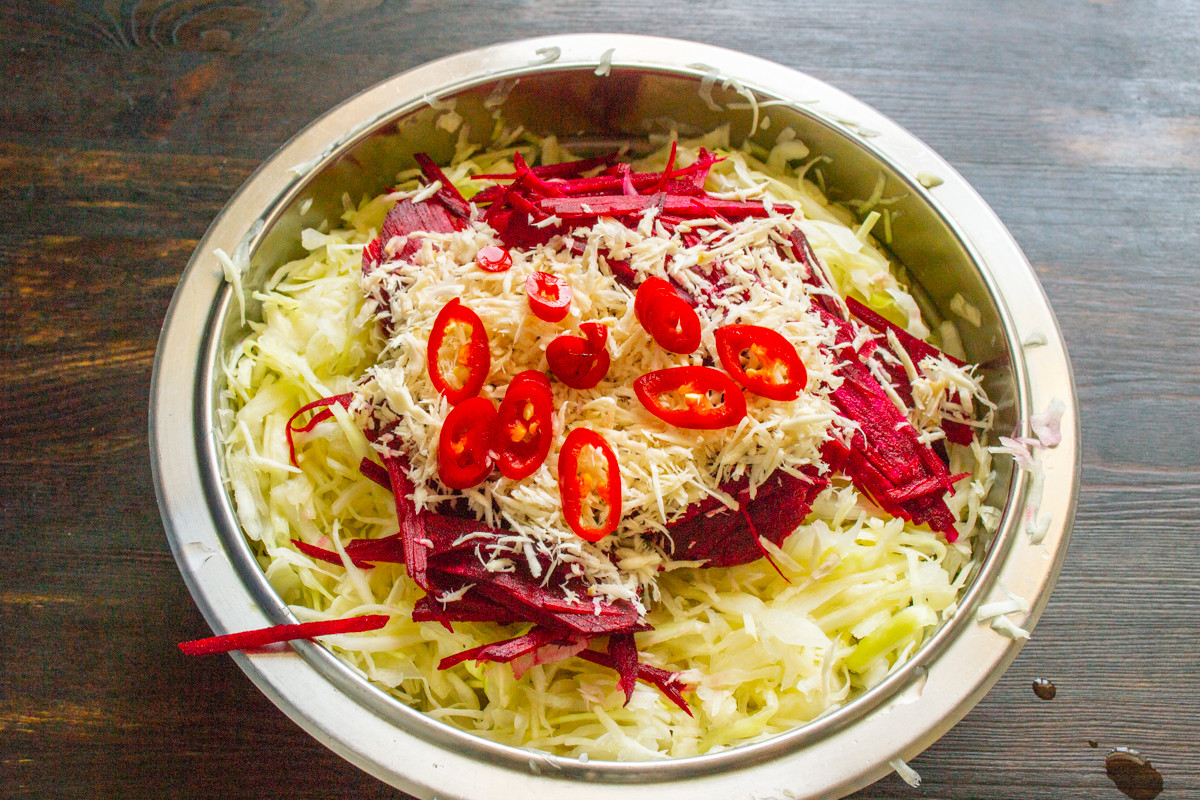
Slice the cleaned chili into rings.
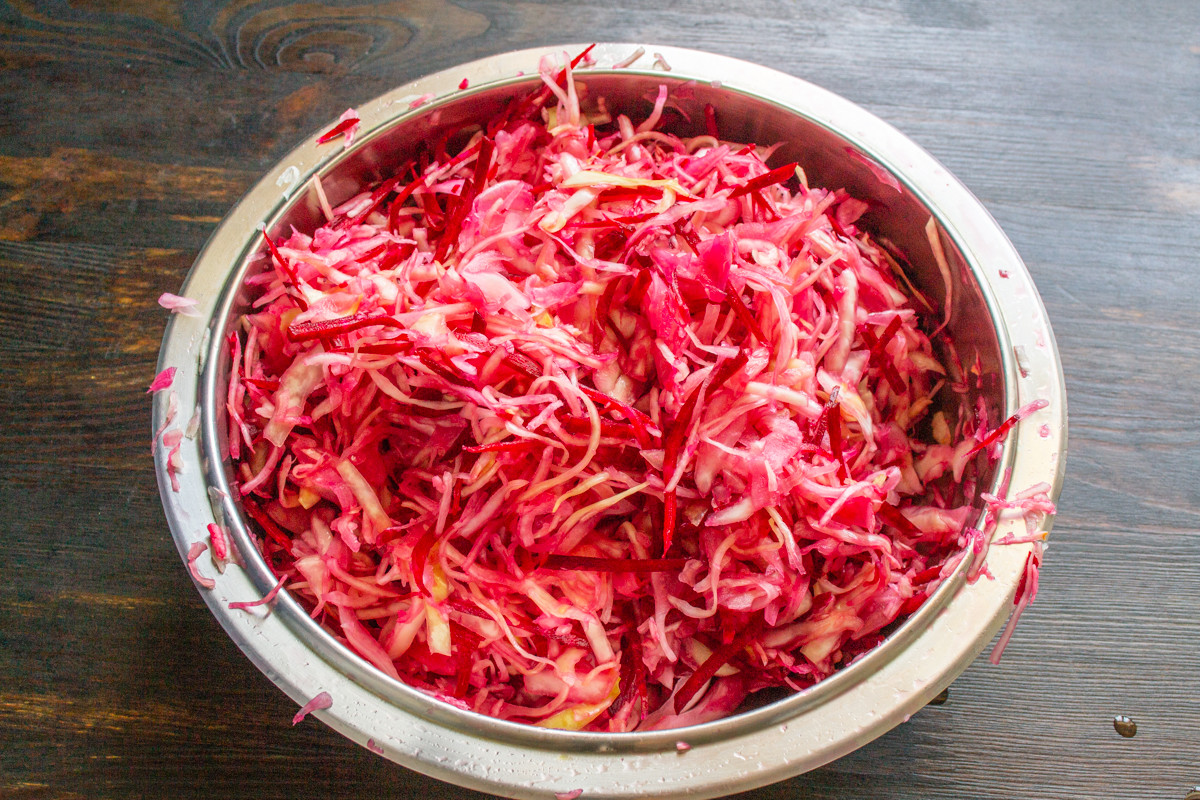
Mix the vegetables thoroughly, mashing them slightly at the same time.
Soak the horseradish roots in cold water, then peel them with a vegetable peeler. Grate the peeled horseradish on a fine grater or pass it through a meat grinder with a fine plate. There are different varieties of horseradish; sometimes you get one that is torture for the eyes and nose to grate. In that case, you can put a plastic bag over the meat grinder’s outlet, secure it with a rubber band, and grind the horseradish directly into the bag. Of course, you’ll still have to wash everything afterward, but the smell won’t be as overwhelming during the process. Add the grated horseradish to the cabbage and beets.
Roll a fresh chili pepper pod between your palms, cut off the tip, and shake out the seeds. Slice the cleaned chili into rings. Add the pepper to the other ingredients.
Put on thin rubber gloves and mix the vegetables thoroughly, gently squeezing them at the same time to help the beets release their juice.
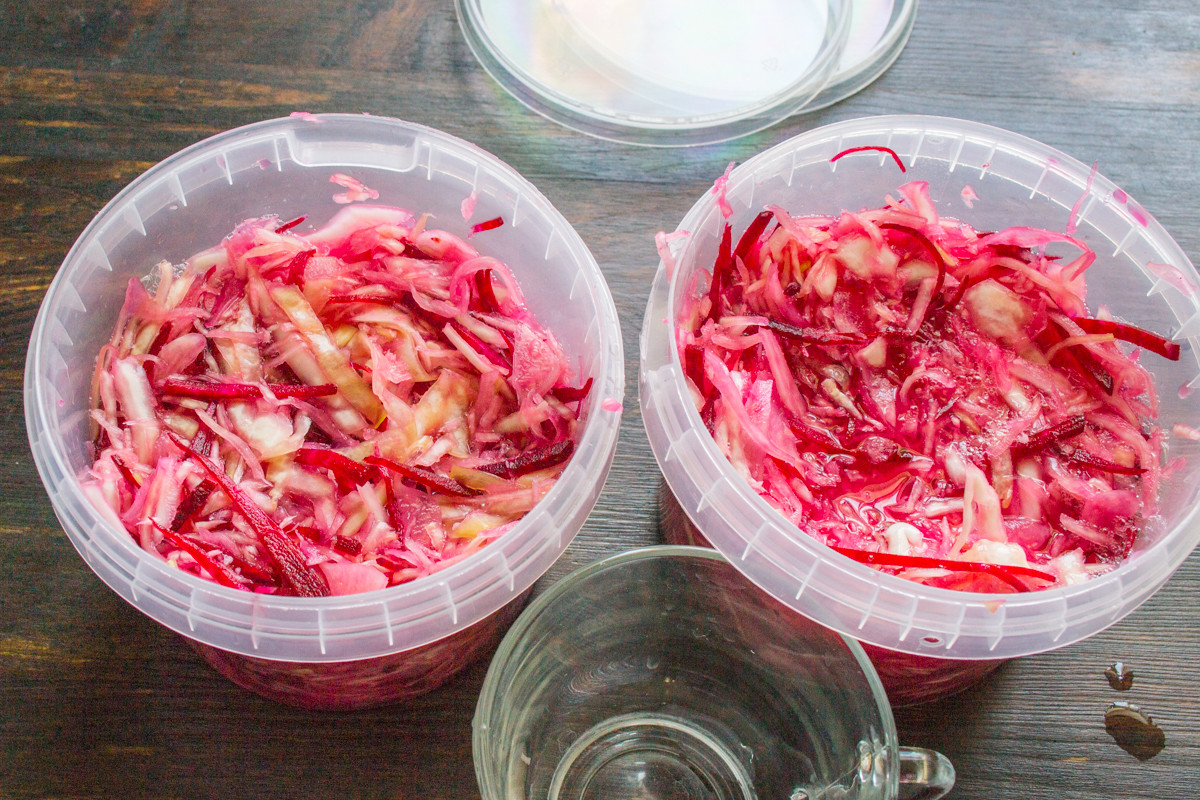
Fill the container to about 2/3 of its volume; no need to pack it down, let it sit loosely.
Place the kvashenaya kapusta (a traditional Slavic dish of fermented cabbage) with horseradish and beets into clean, dry jars or containers. Fill the containers to about 2/3 of their volume; there’s no need to pack it down, let it sit loosely. Pour in cold filtered or boiled water so that the vegetables are submerged. Cover the jars with lids and place them in a dark, warm place. Fermentation will start faster if the room temperature is between 22-24°C (72-75°F). In a cooler room, the process will take longer.
And there you have it—a jar full of beautiful, homemade fermented cabbage, ready to delight your taste buds and nourish your body. Once your Kvashenaya Kapusta has reached the desired level of tanginess, move it to the refrigerator to slow down the fermentation process. It will keep for several months, with its flavor continuing to develop over time. Serve it as a zesty side dish with roasted meats or potatoes, add it to salads for a crunchy, probiotic boost, or enjoy it straight from the jar! We hope you enjoy this journey into the world of traditional fermentation. Happy cooking!
0 comments