
Hungarian-style salo stands out among other curing methods thanks to its vibrant color and signature spicy kick. Traditionally, only the highest quality fatback is chosen for this recipe, which develops an almost creamy texture after a long maturation period. The secret to its unique flavor lies in the combination of sweet paprika and fiery red pepper, which not only preserve the meat but also create its famous 'red mantle'. The aroma of spices mingling with the delicate pork fat builds anticipation during the prep stage, turning a simple preservation method into a true gastronomic ritual.
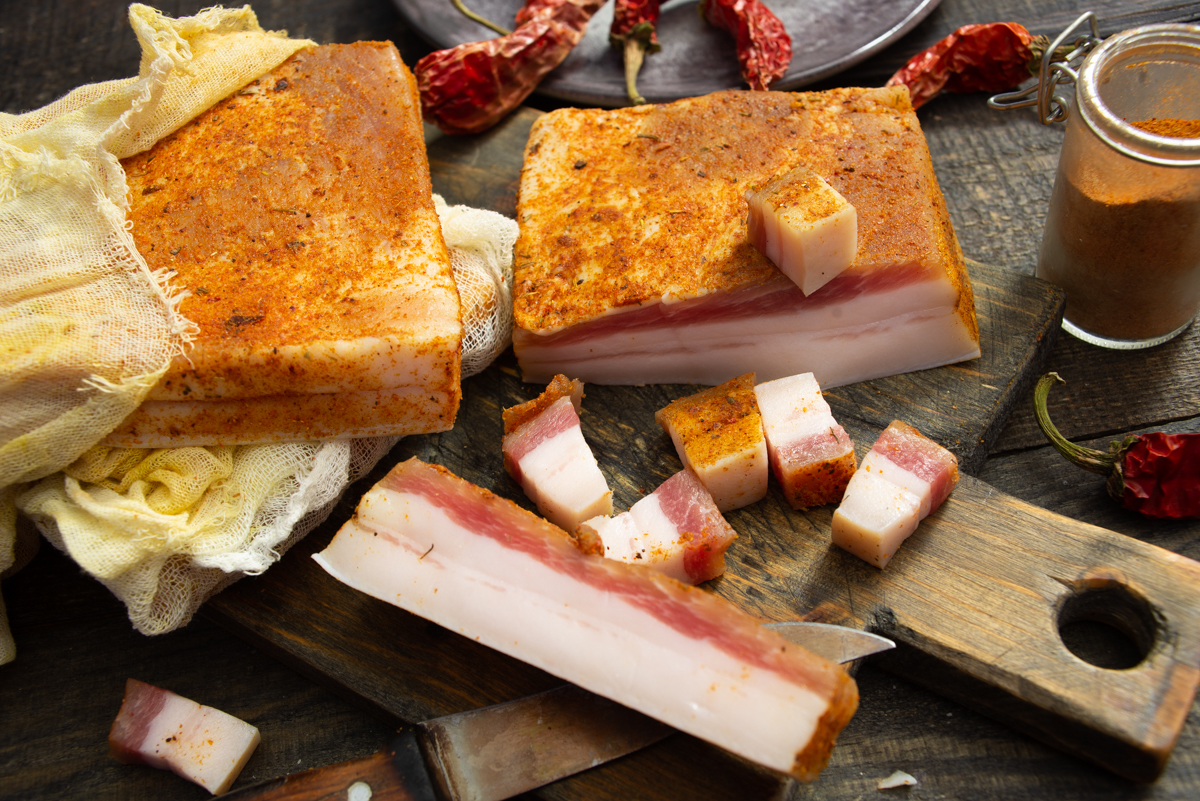
Aromatic Hungarian-style salo with a spicy paprika and red pepper crust is a classic appetizer.
Ingredients
- 1 kg (2.2 lbs) salo (pork fatback or thick pork belly)
- 100 g (3.5 oz) coarse salt
- 20 g (0.7 oz) sugar
- 3 tsp ground red pepper (cayenne or hot chili)
- 2 tsp sweet paprika
How to Make Hungarian-Style Salo
For curing, I bought a piece of pork belly—a thick cut of salo (pork fat) with the skin on and ribs attached. I trimmed off the ribs along with a solid chunk of meat, leaving the pure fat for curing. The salo should be exceptionally fresh, slightly pink on the cross-section, without any dark spots or yellowing.
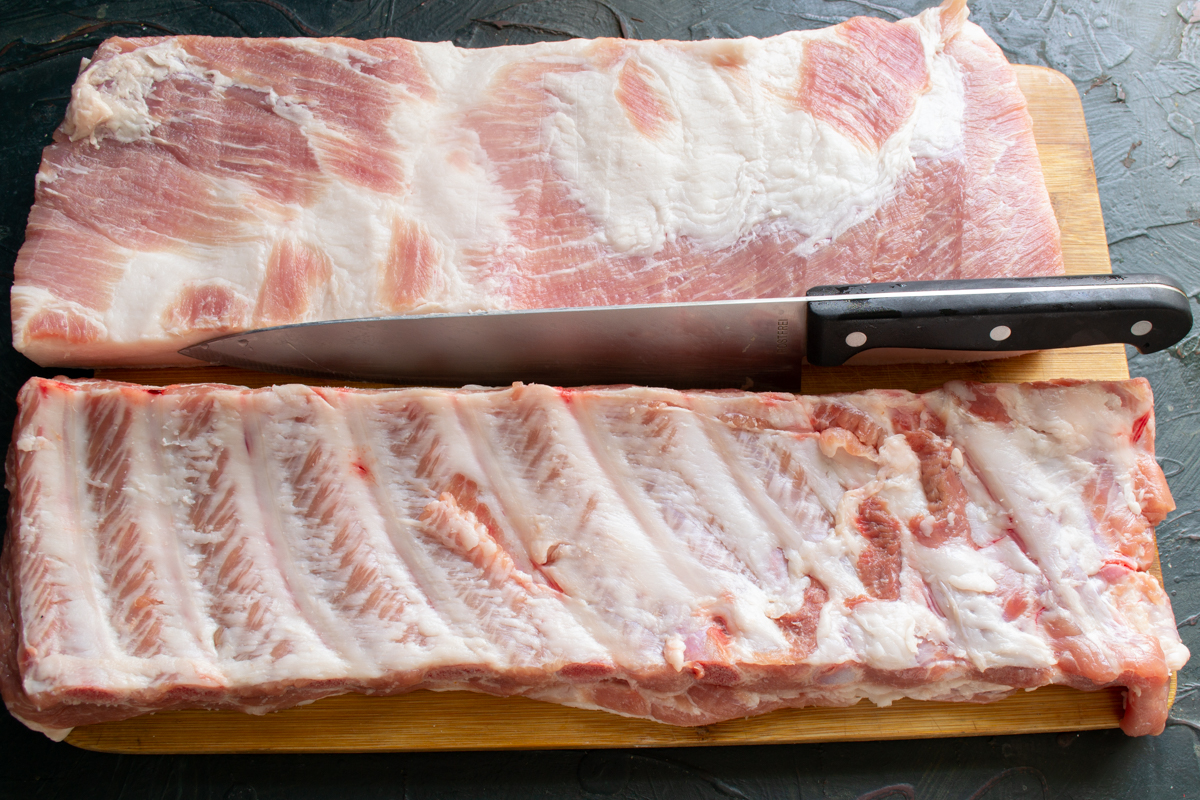
For the best results, select fresh pork belly with a light pink hue and clean, spotless skin.
Rinse the salo in cold water and dry it thoroughly with paper towels.
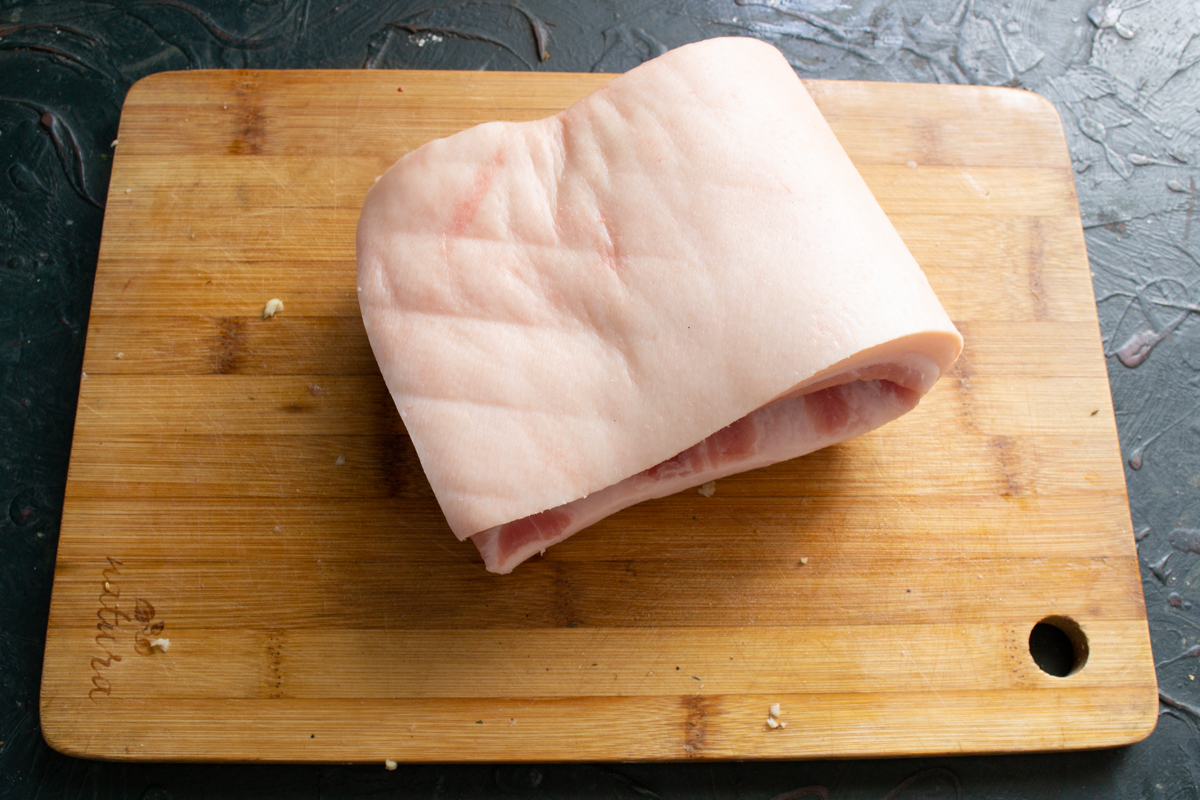
Before you start, thoroughly rinse the pork fat in cold water and pat it completely dry.
Place the salo on a cutting board, skin-side up, and take a wide, sharp knife. Carefully scrape the skin, rinsing the blade periodically. This helps remove any remaining bristles and ingrained dirt from the singed skin.
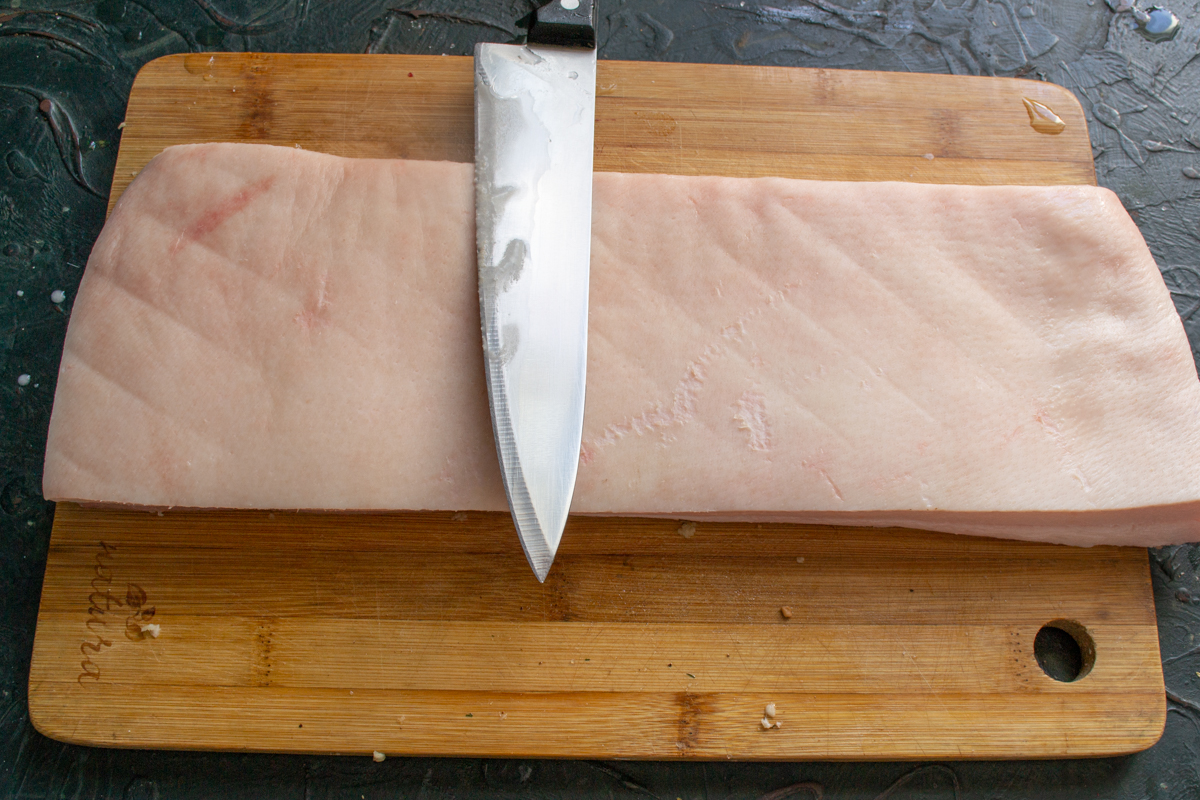
Scrape the skin firmly with a sharp knife to remove any impurities and leftover bristles.
Cut the salo into large chunks. I usually size them to perfectly fit my curing container.
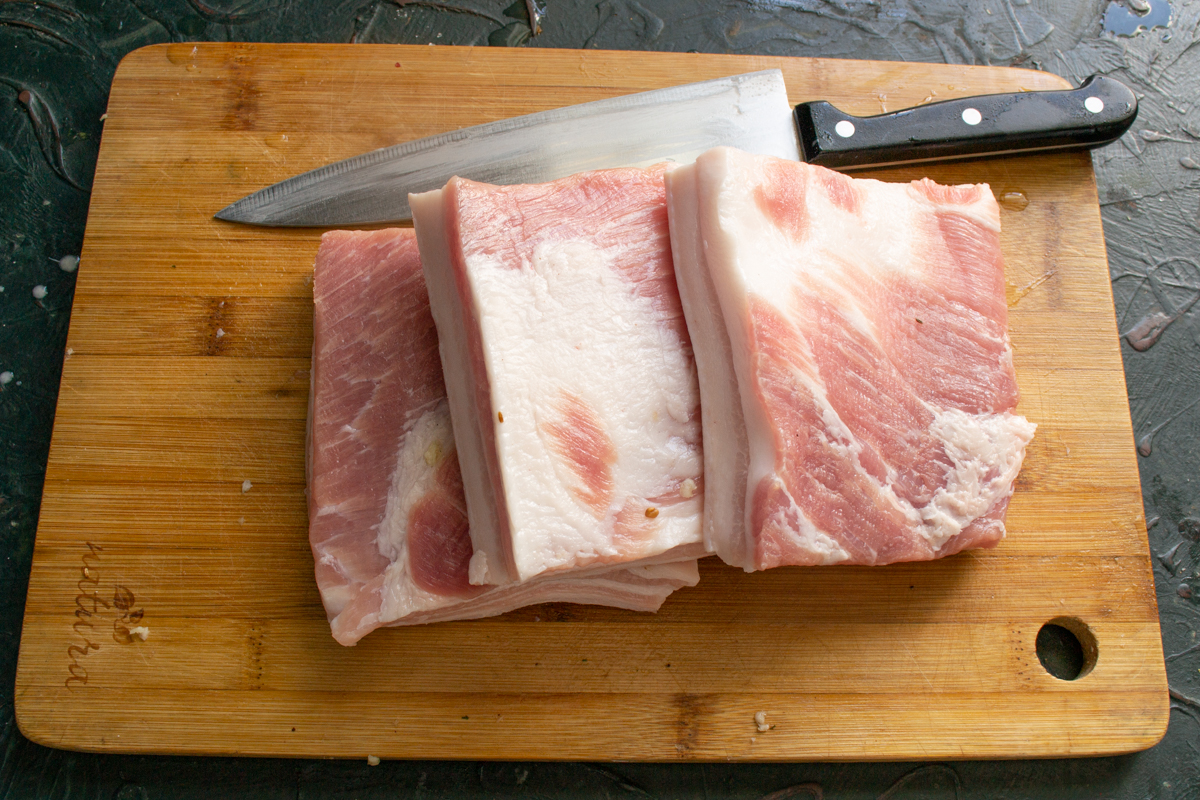
Cut the salo into large chunks, keeping the size of your curing container in mind.
Mix the coarse salt and sugar together.
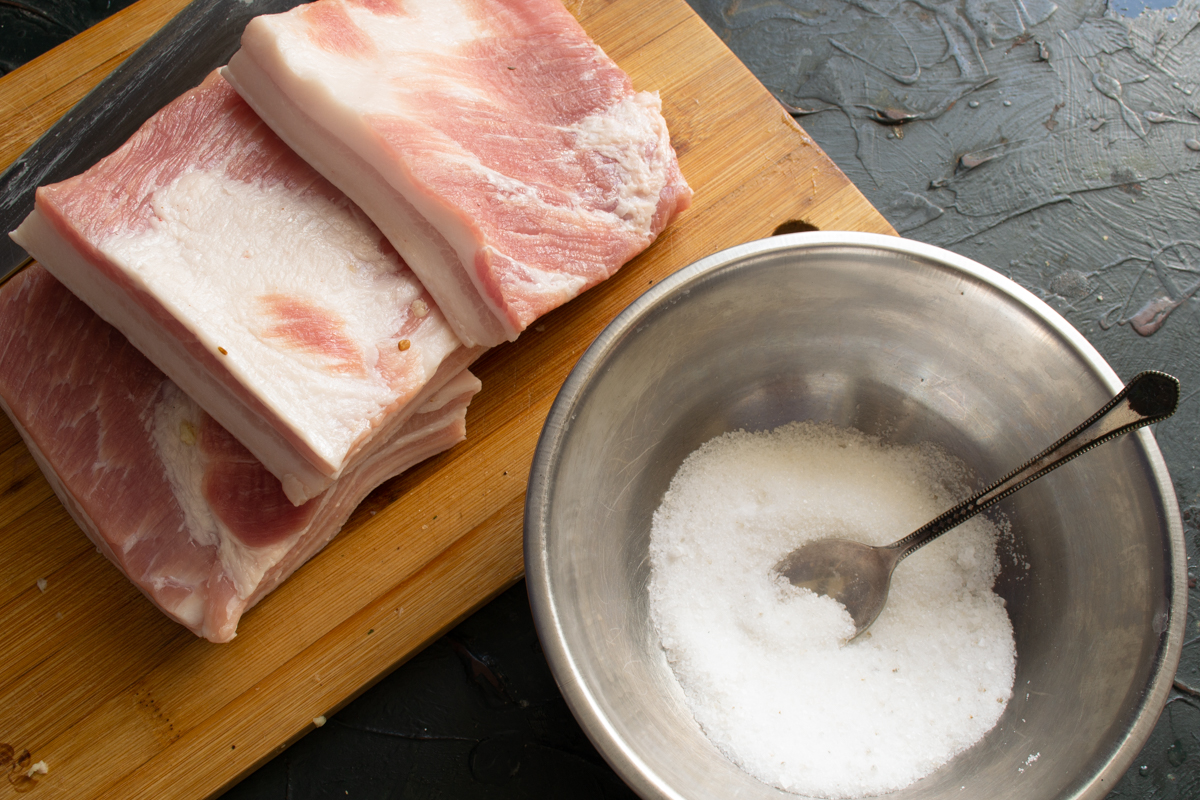
Mix coarse salt and sugar to create the base for the initial dry cure of the pork belly.
Rub the salo generously with the salt and sugar mixture. Place the first piece into the container, skin-side down. Place the next piece skin-side up, sprinkling extra salt between the layers.
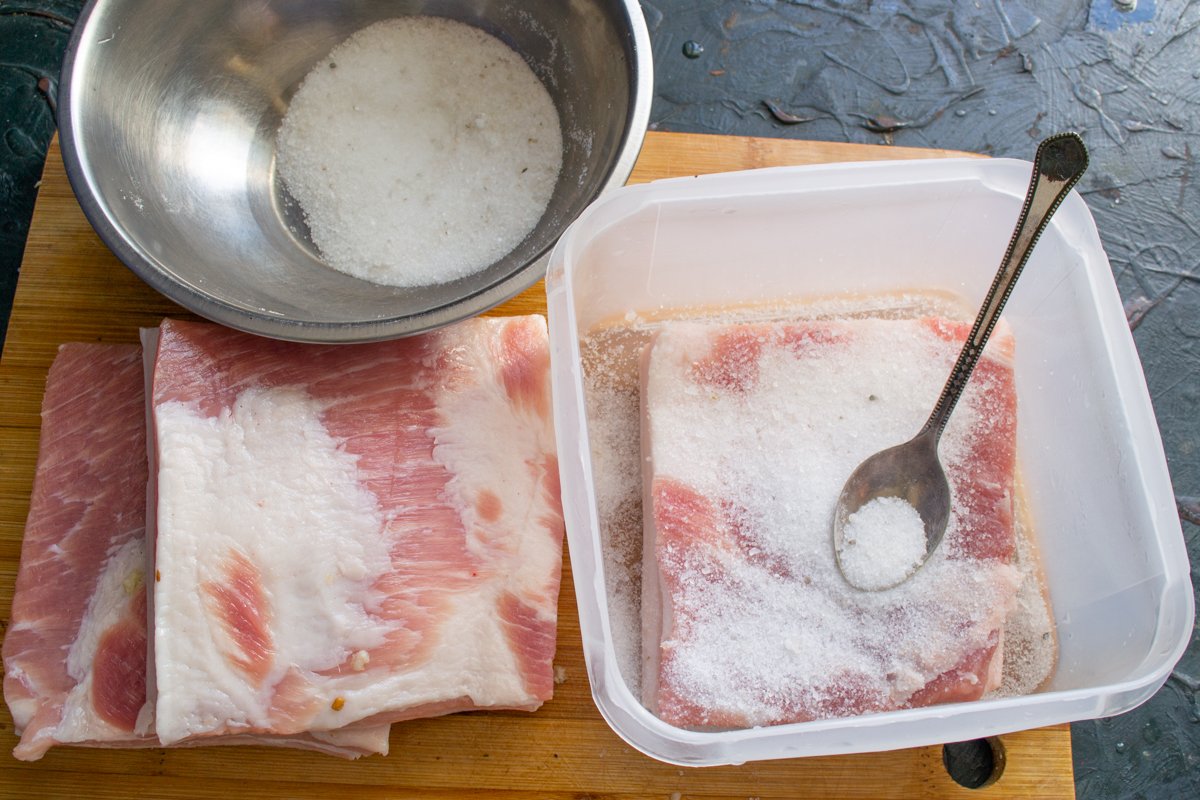
Rub each piece evenly with the salt and sugar mix, packing them tightly into the container alternating skin-side up and down.
Seal the container tightly with a lid. Leave it at room temperature for 8 to 10 hours, then transfer it to the bottom shelf of your refrigerator.
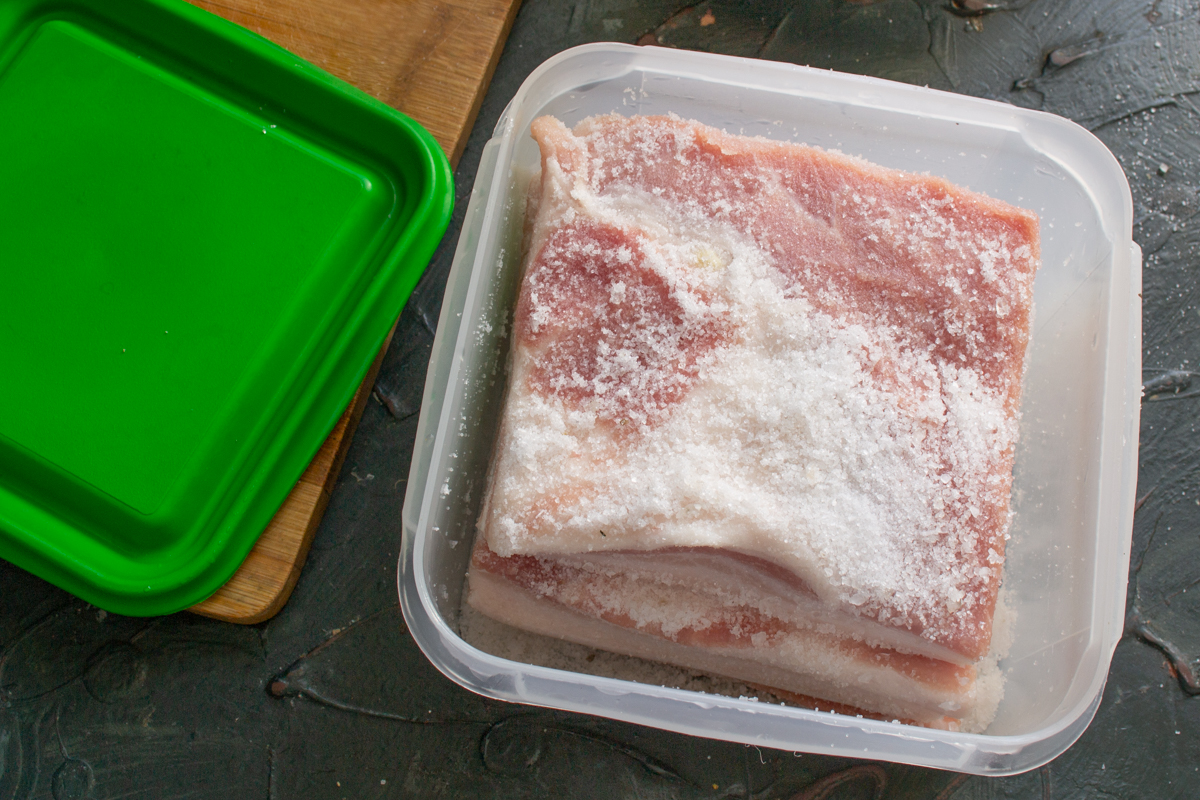
Cover the container and leave it for 8-10 hours at room temperature before moving it to the fridge.
After 4 days, take out the container and flip the salo—move the bottom pieces to the top and the top ones to the bottom. The total curing time is 14 days, or 10 days if your cuts are on the thinner side.
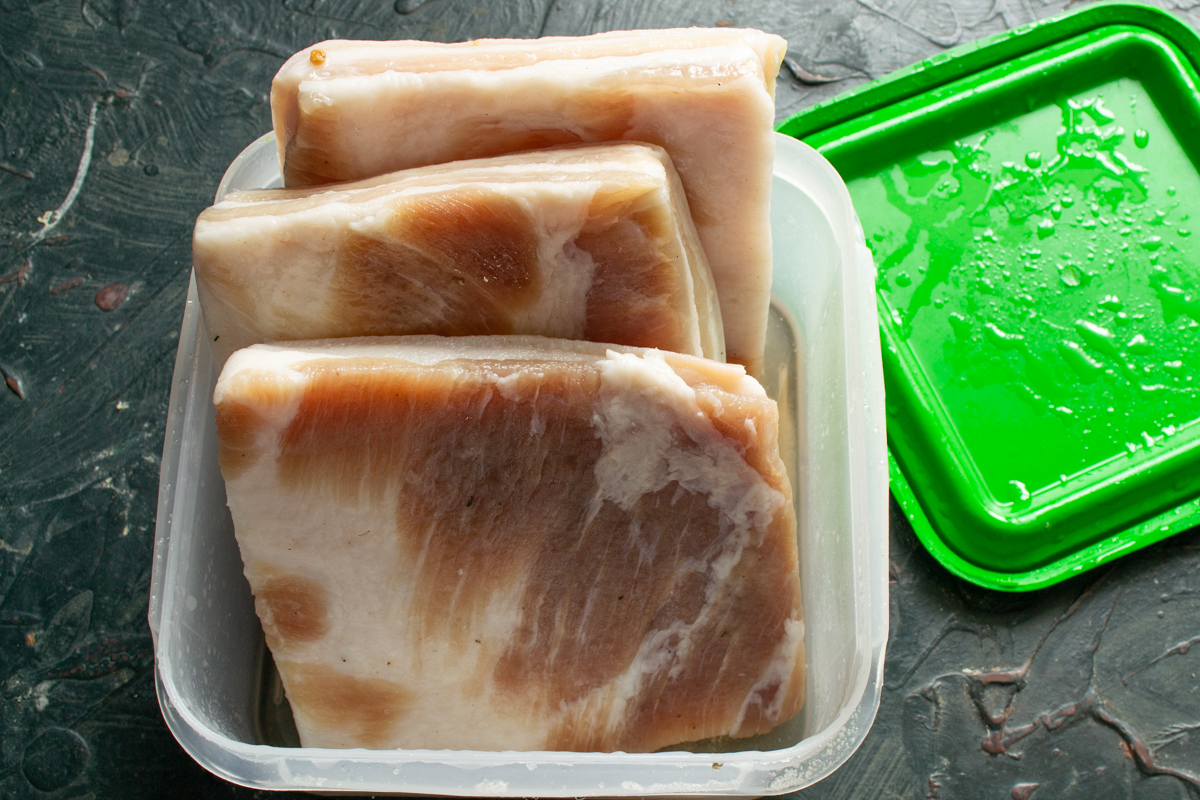
After 4 days, flip the pieces to ensure even salting. The total curing time takes up to 14 days.
Pat the cured salo dry with paper towels, brushing off any undissolved grains of salt.
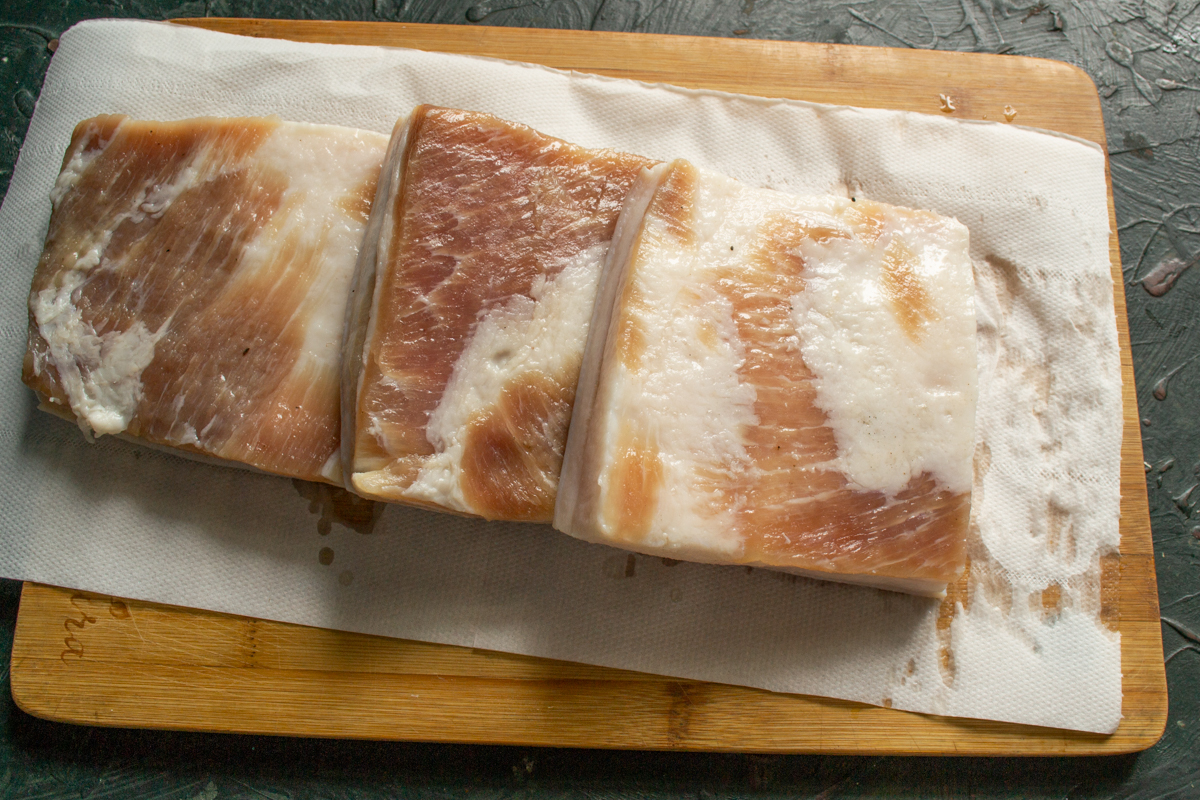
After the initial curing, make sure to dry the salo thoroughly and brush off any undissolved salt grains.
Prepare the pepper rub. Whisk together the sweet ground paprika and ground red pepper (cayenne or similar chili powder). Adjust the heat level of the red pepper to your liking—your local spice merchant can always recommend a good variety.
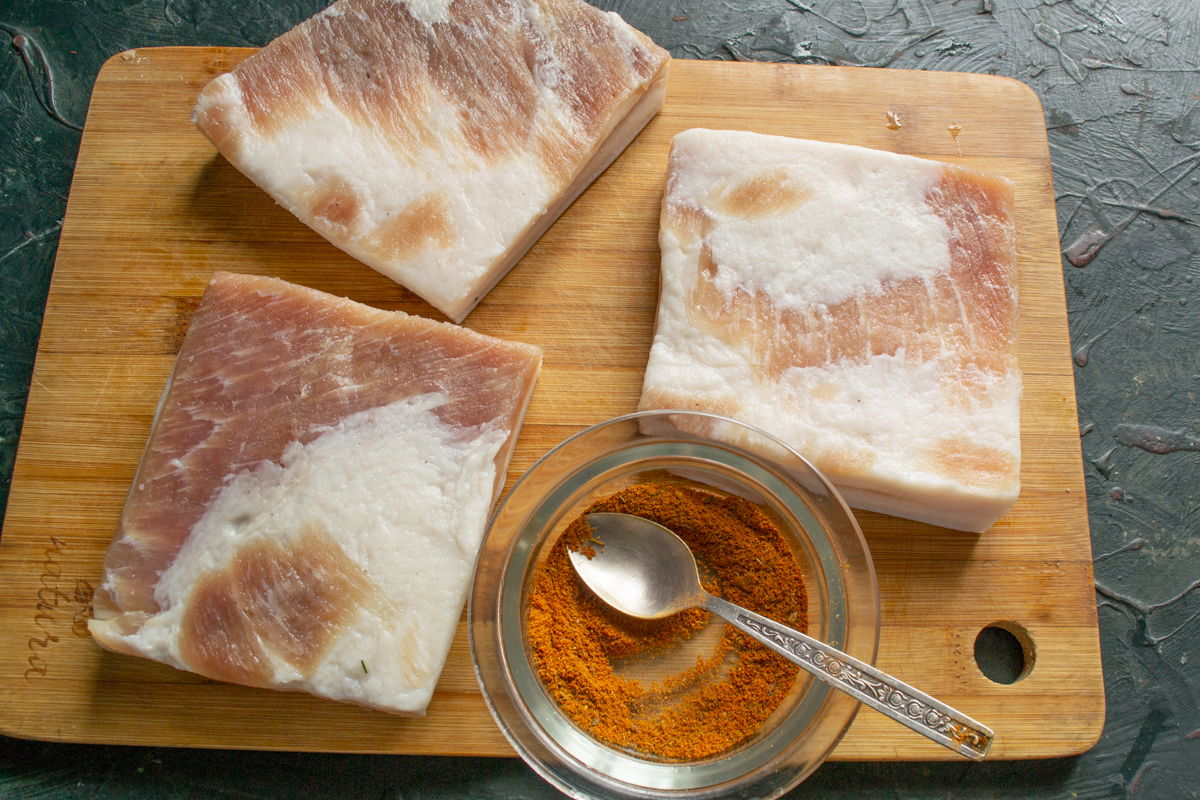
Prepare a vibrant, spicy blend of sweet paprika and red pepper for the final color and aroma.
Rub the dried salo generously with the pepper mixture on all sides. You don’t need much spice on the skin side; just a light dusting will do.
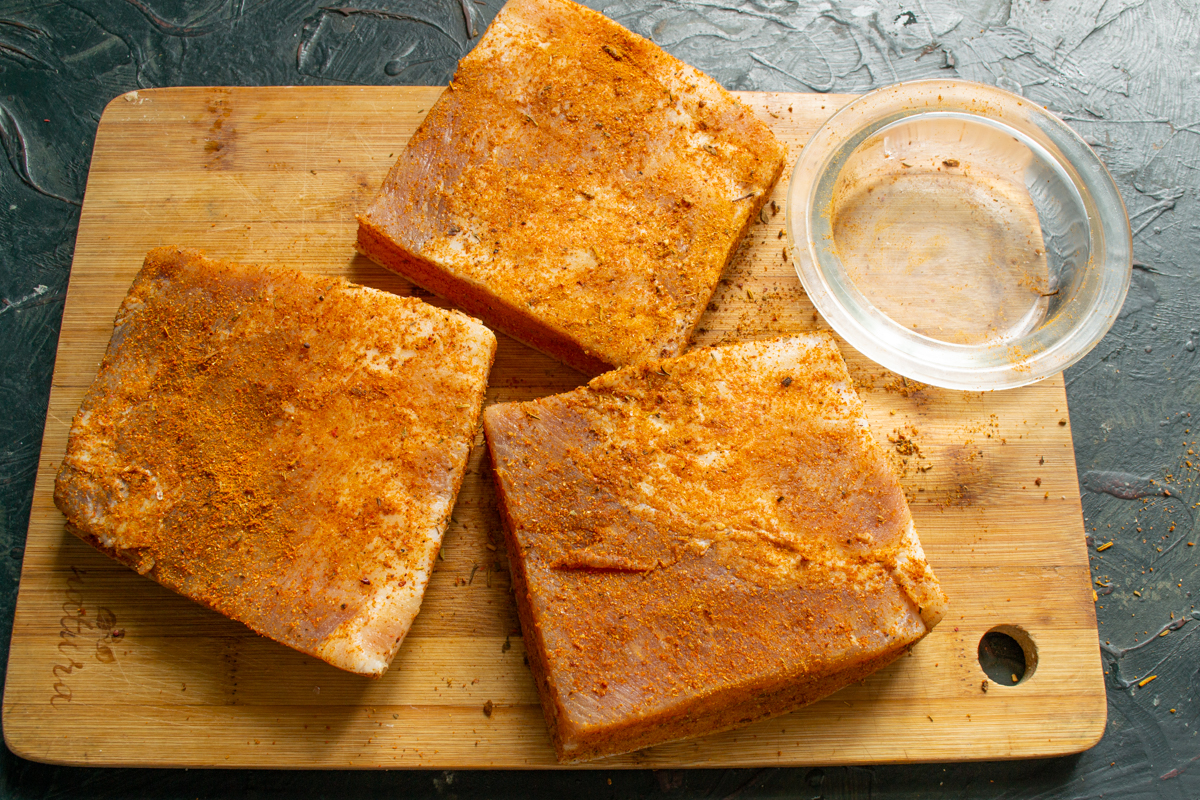
Rub the dried pork fat generously with the pepper blend on all sides to create the famous red crust.
Now it is time to wrap the pork fat. Cheesecloth or a dense cotton fabric works perfectly. I prefer wrapping it in several layers of cheesecloth.
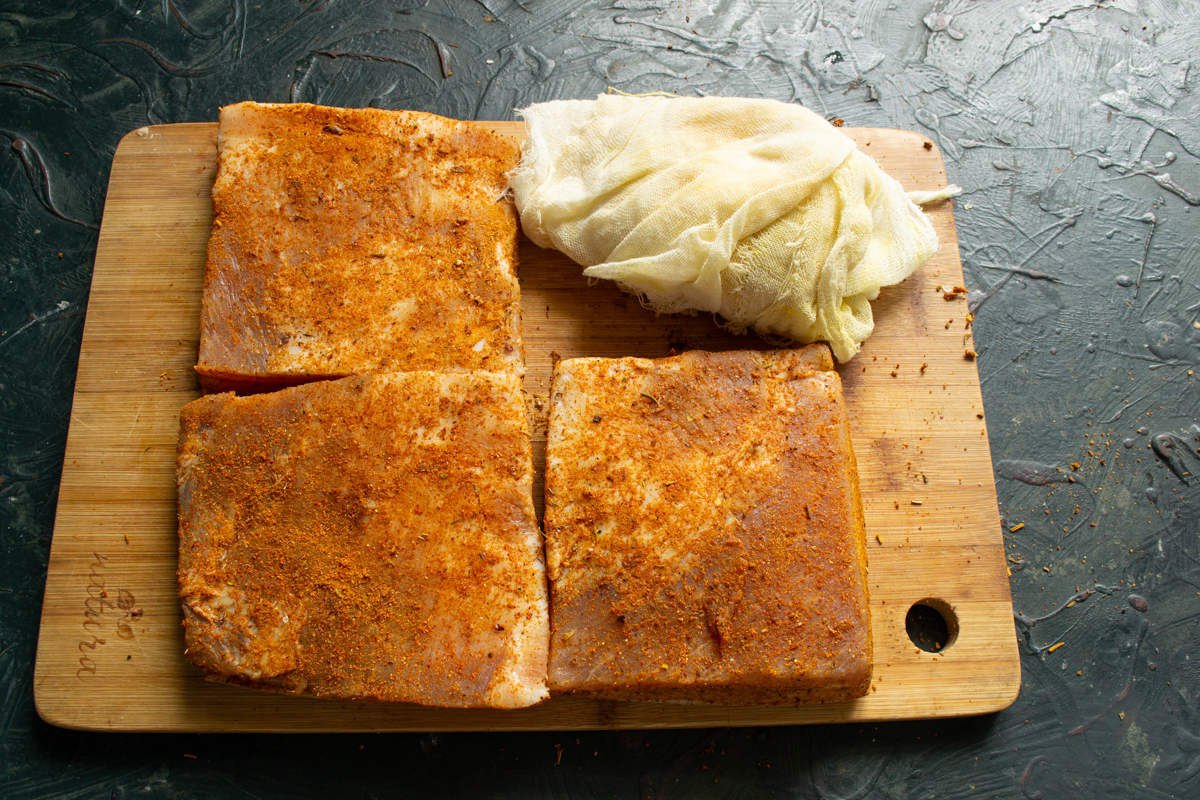
Clean cheesecloth or a dense cotton fabric works best for wrapping the salo during its final maturation stage.
Hang the salo in a cool, well-ventilated room for 7 to 10 days. In a city apartment, you can hang it in the lower part of your fridge or lay it on the bottom wire rack. Flip the pieces every 2 to 3 days if they are resting closely together.
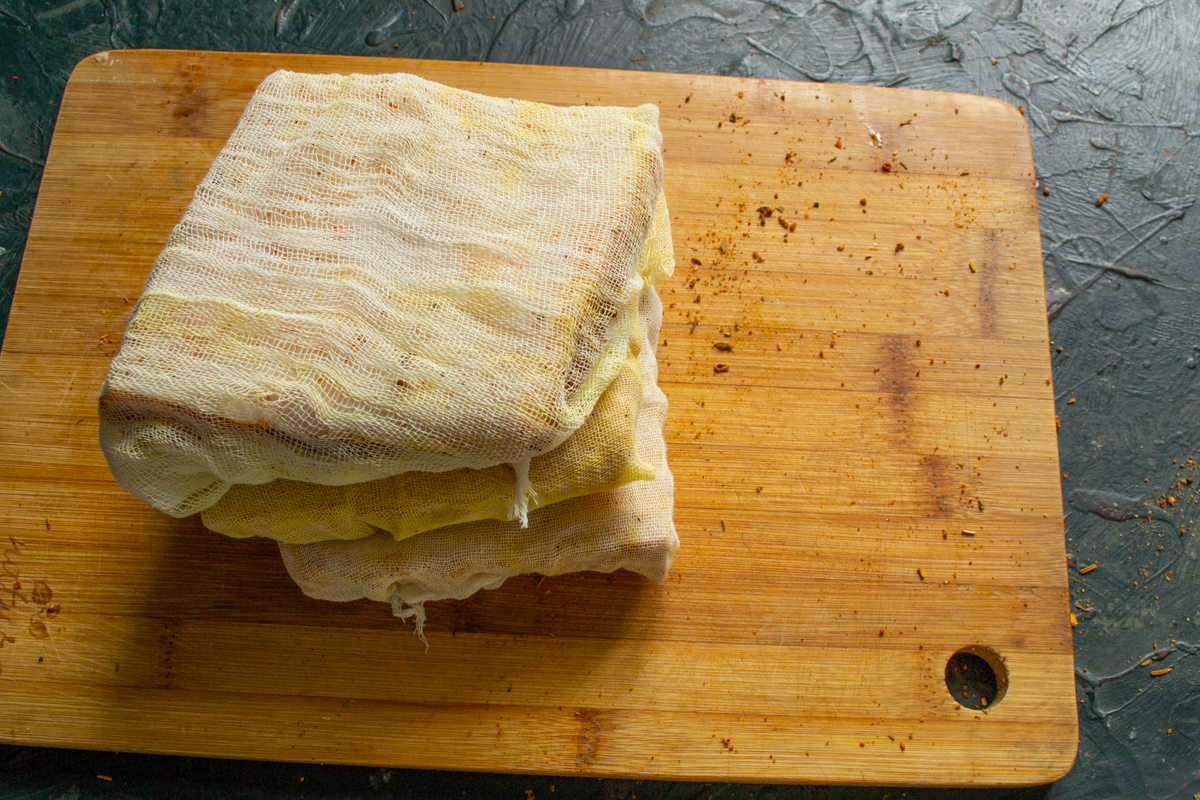
Wrap the pieces tightly in several layers of cheesecloth and hang them in a cool, well-ventilated space.
After about 21 days in total, depending on the thickness of the cuts, your Hungarian-style salo is ready. Store it in the refrigerator or freezer. A slice of spicy salo paired with garlic, a crisp pickle, and a slice of Borodinsky bread (dark sourdough rye) is absolutely delicious. Bon appetit!
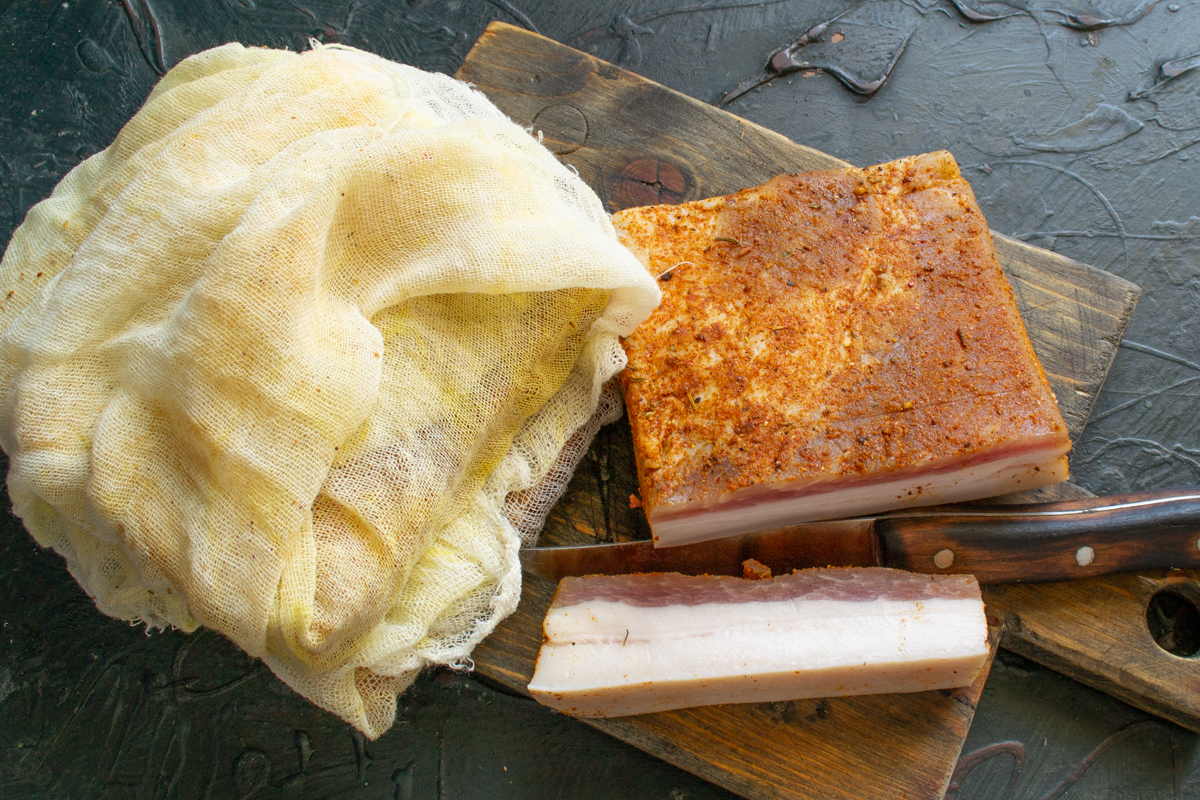
After about 21 days, our Hungarian-style salo is fully cured and ready to be tasted!
It is best to serve the finished Hungarian-style salo in thin, almost translucent slices over a piece of fresh Borodinsky bread (traditional Russian dark rye). It pairs beautifully with fiery horseradish, pungent mustard, or a raw clove of garlic. If you want to switch up the flavor profile, try adding a pinch of smoked paprika to the pepper rub—it lends a subtle smoky aroma, as if the salo had been cured on a traditional Hungarian farm. For long-term storage, wrap the Hungarian-style salo in parchment paper and keep it in the freezer. Freezing does not damage the fat's texture; on the contrary, it makes it firmer and much easier to slice thinly. Remember that you can simply scrape off excess salt with a knife before applying the pepper crust. If the skin feels too tough, try to select pork belly from younger animals with the thinnest, lightest skin possible.
0 comments