
As summer comes to a close, what better way to capture its vibrant essence than by preserving the season's bounty? Freezing bell peppers is an incredibly simple and effective method to ensure you have the sweet, crisp flavor of fresh peppers on hand throughout the cold winter months. Unlike other preservation techniques, freezing perfectly maintains their color, nutrients, and taste. A bag of these colorful gems in your freezer is like a secret weapon for quick and flavorful meals, ready to be tossed into stews, stir-fries, omelets, or soups, bringing a touch of sunshine to any dish.
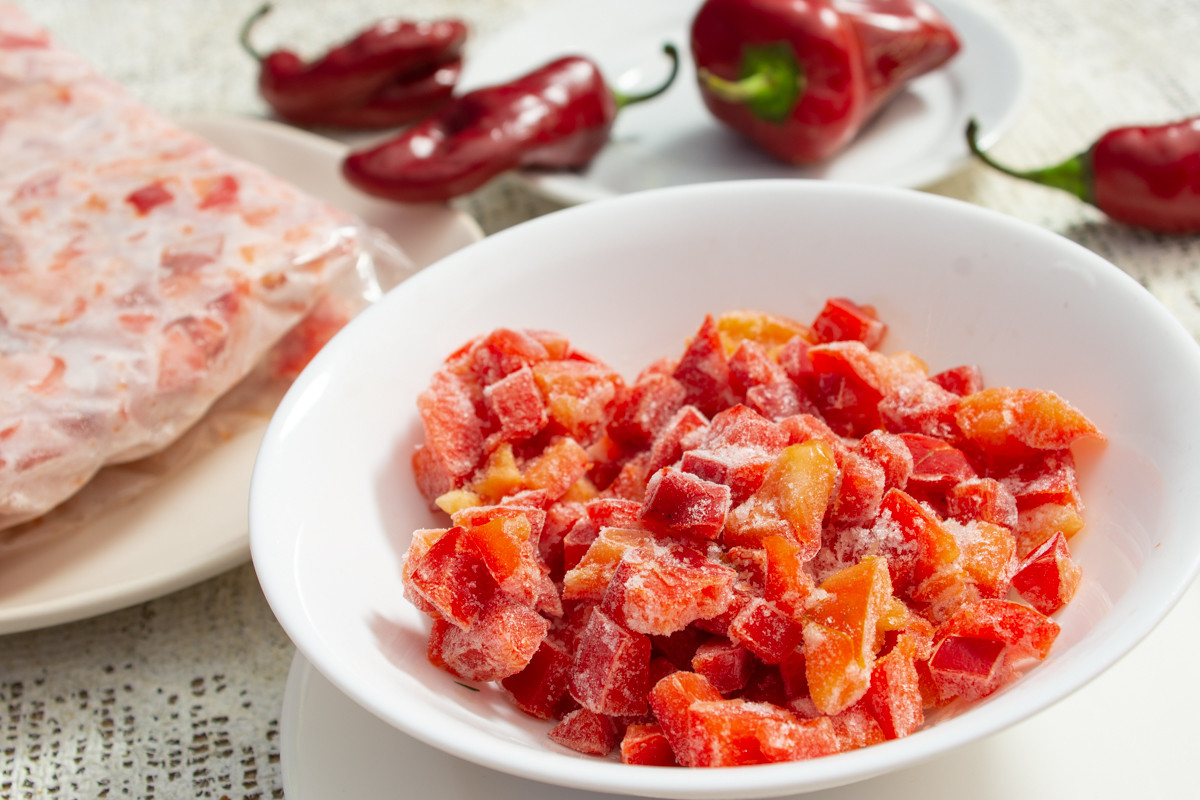
How to properly freeze bell peppers for winter
Ingredients for Freezing Bell Peppers
- 1 kg of red bell peppers
- Freezer-safe zipper bags
How to Freeze Bell Peppers
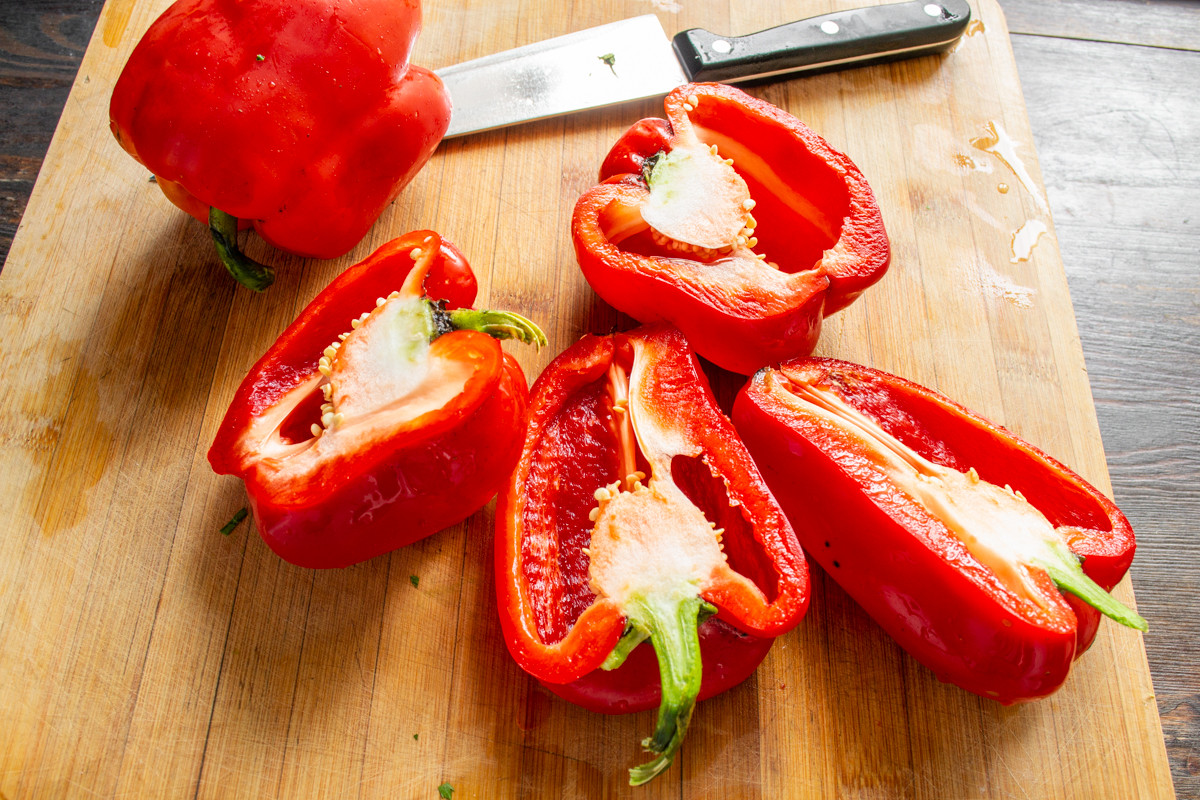
Cut the peppers lengthwise along the stem.
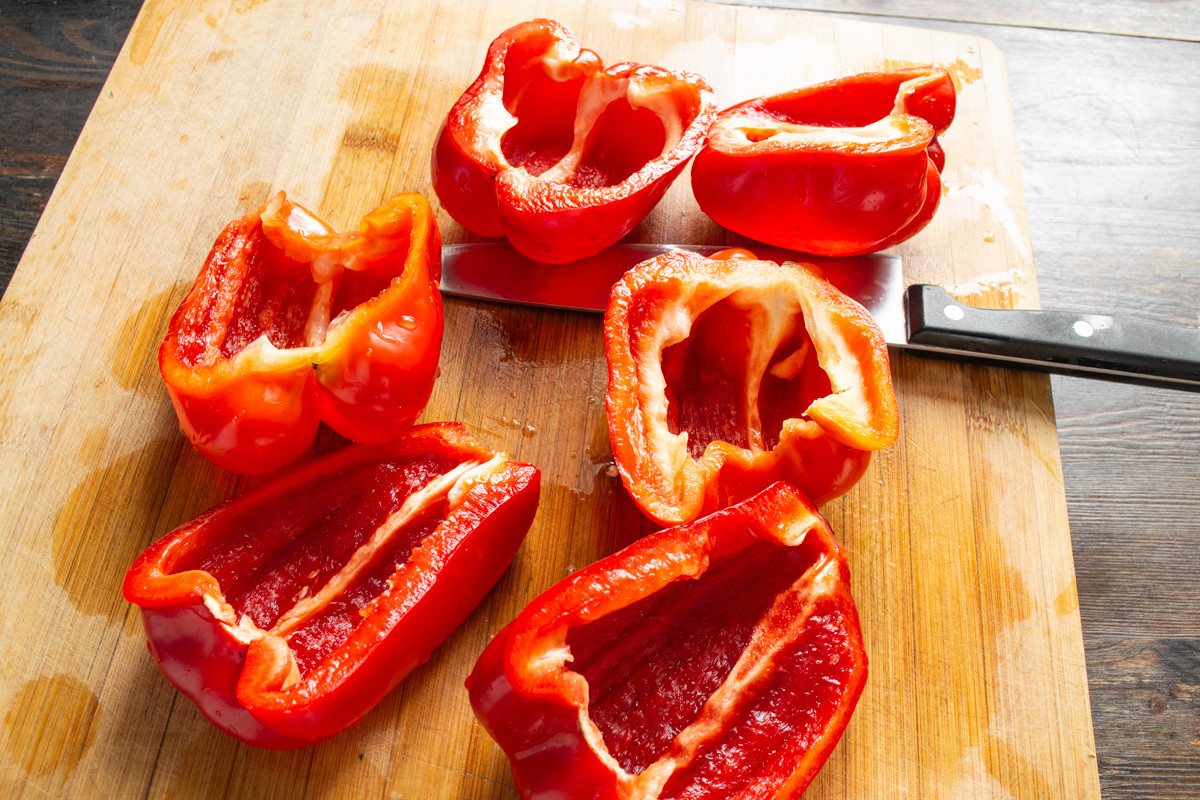
Thoroughly rinse the pepper halves under cold running water, washing away the seeds.
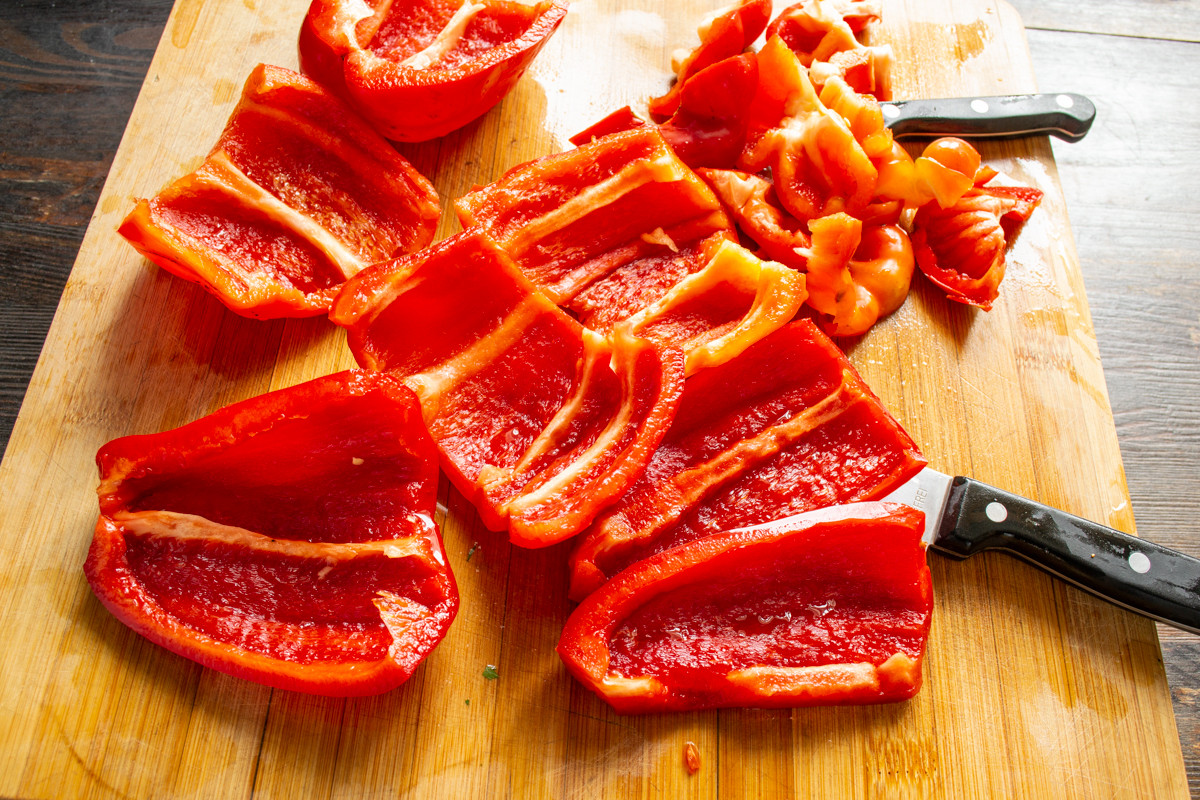
Cut off the tops of the pepper halves. With a sharp knife, slice away the membranes.
For this preparation, choose red bell peppers. Meaty pods are preferred. The peppers should be free of damage, rot, or spots. Cut the pods lengthwise along the stem.
Remove the stem with the seeds. Thoroughly rinse the pepper halves under cold running water, washing away any remaining seeds. Place them on a cutting board to dry, as we don’t want any excess moisture.
Cut off the tops from the pepper halves. With a sharp knife, slice away the white membranes.
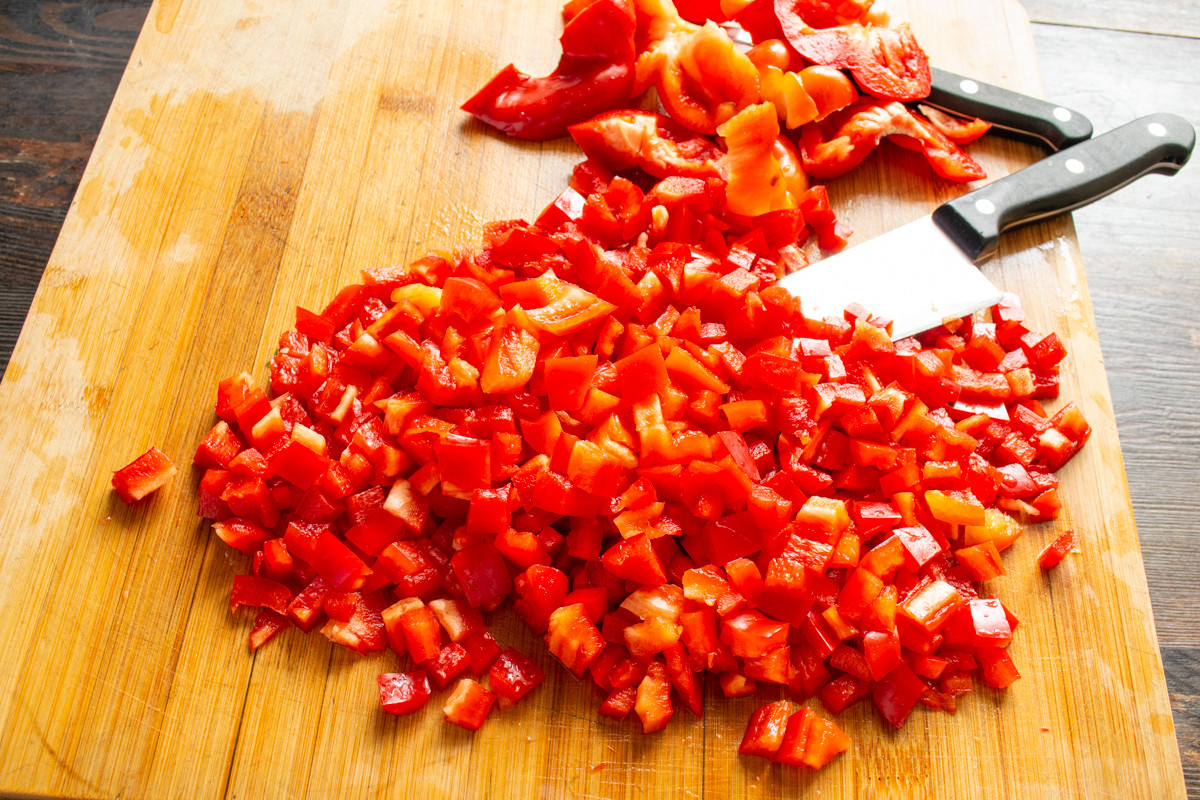
First, slice the pepper into strips, then cut the strips into small cubes.
First, slice the pepper into strips, then cut the strips into small cubes. This method allows you to quickly chop a large number of peppers. Chop the trimmed tops as well. The size of the cubes should be a little over half a centimeter, roughly the size of a large pea.
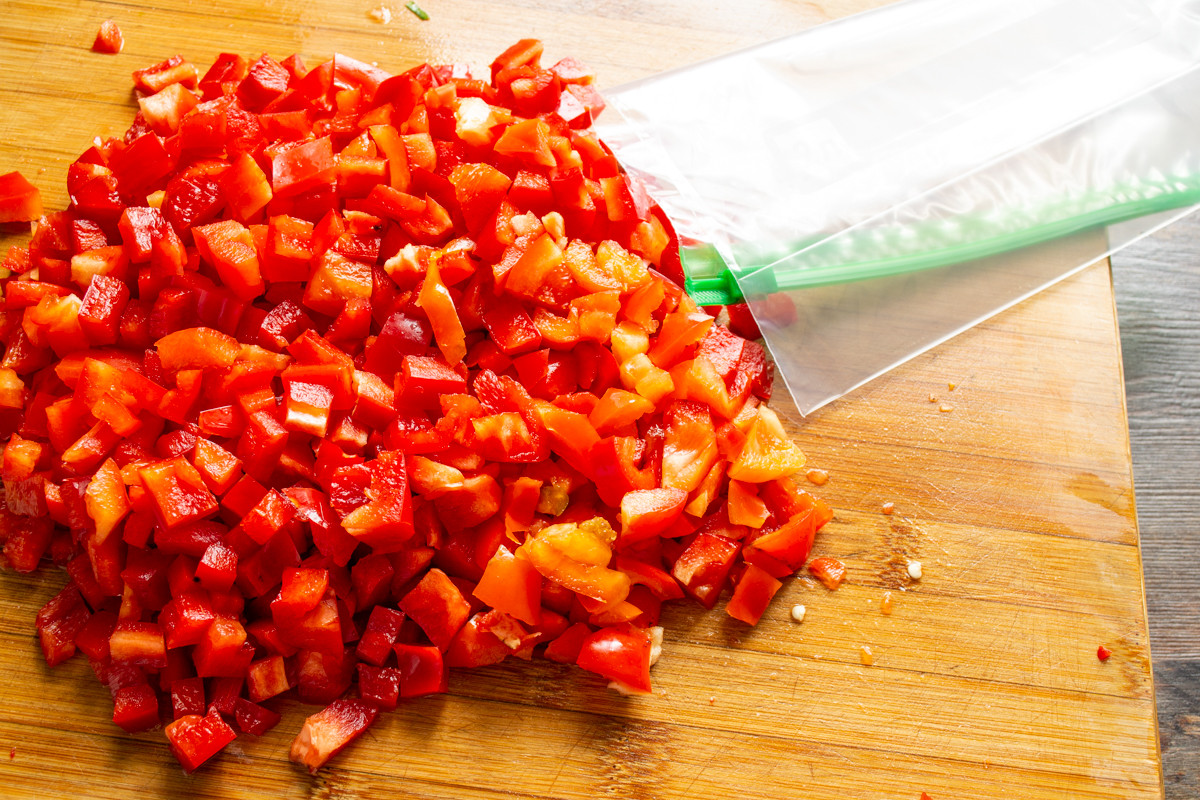
For freezing the peppers, you will need slider bags with a zipper.
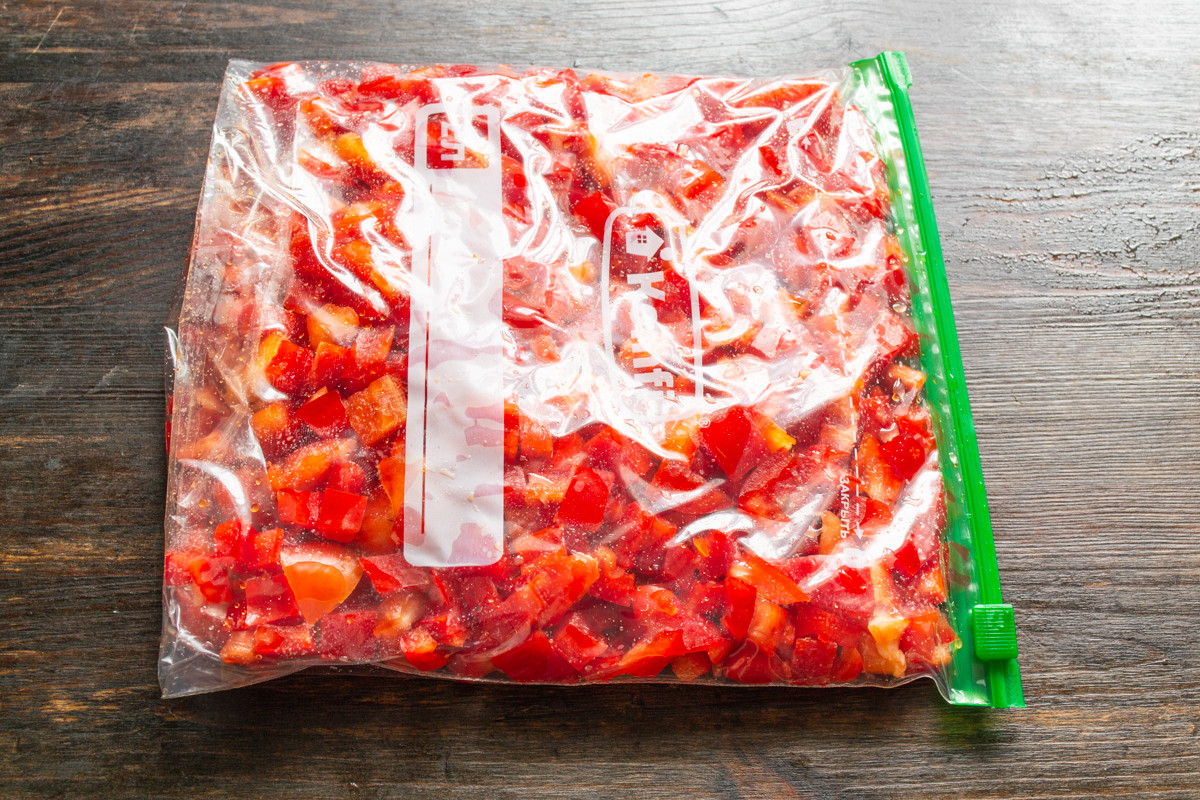
Seal the zipper halfway, then carefully squeeze out the air.
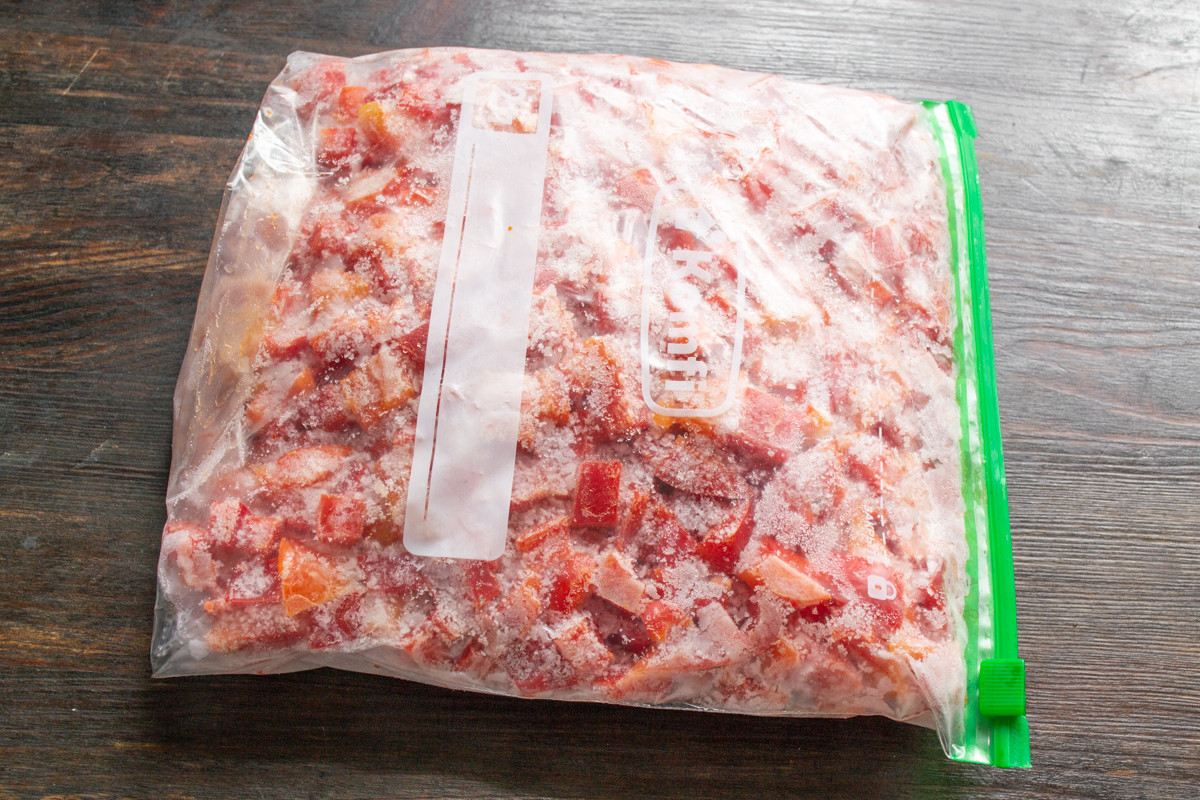
Freeze at a temperature from -18°C to -24°C.
To freeze the peppers, you will need freezer-safe zipper bags. These bags come in various sizes, so choose the volume that is most convenient for you. I pack the peppers in 2-liter bags.
Fill the bag with the chopped peppers. Seal the zipper halfway, then carefully squeeze out the air. The more air you can remove, the better.
Place the bags of peppers in the freezer. Freeze at a temperature from -18°C to -24°C (0°F to -11°F). Once the peppers are frozen, you can turn the bags on their side and stack them tightly together, like books. Don’t forget to label them with the date. It’s best to use frozen vegetables within a few months of the freezing date.
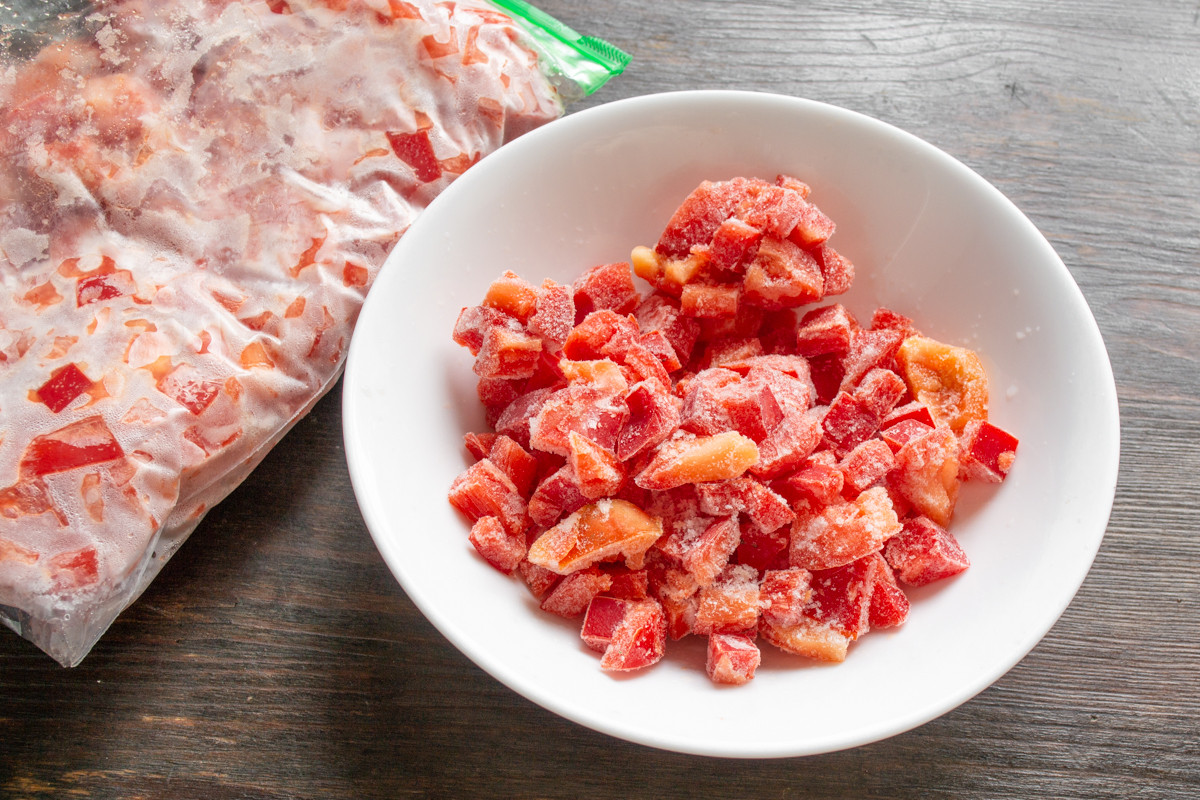
Before cooking, take the bag out of the freezer and shake out the required amount of pepper. Seal the bag again, squeeze out the air, and return it to the freezer.
At a low temperature, the pepper cubes freeze very quickly. Before cooking, take the bag out of the freezer and shake out the required amount of pepper. Seal the bag again, squeeze out the air, and return it to the freezer.
If you want to freeze whole peppers for stuffing, you should remove the seeds, blanch them in boiling water for 2-3 minutes, cool to room temperature, drain the water, and place the peppers in bags. Then, similarly, squeeze out the air and freeze.
Now that you know how to easily freeze bell peppers, you can enjoy their garden-fresh taste any time you wish! This simple act of preparation will reward you tenfold on busy weeknights when you need a quick, healthy addition to your cooking. Imagine the vibrant red brightening up a winter soup or adding a sweet crunch to a pasta sauce. Don't hesitate to mix different colors—red, yellow, and green—in one bag for a beautiful confetti-like mix. Happy preserving, and enjoy the delicious taste of summer all year long!
0 comments