
This hot chili pepper paste with garlic and oil is a true culinary secret weapon for spice lovers, and the active prep takes just 15 minutes. A vibrant blend of fiery chilies, pungent garlic, earthy cumin, and fragrant dried dill creates an incredibly thick, concentrated texture thanks to air-drying the pods beforehand. This preserve keeps beautifully in the refrigerator all winter long, holding onto its bold, punchy aroma. Use it to wake up fresh salad dressings, spread a tiny dab onto sandwiches, or stir it into marinades for juicy chicken and roasted meats.
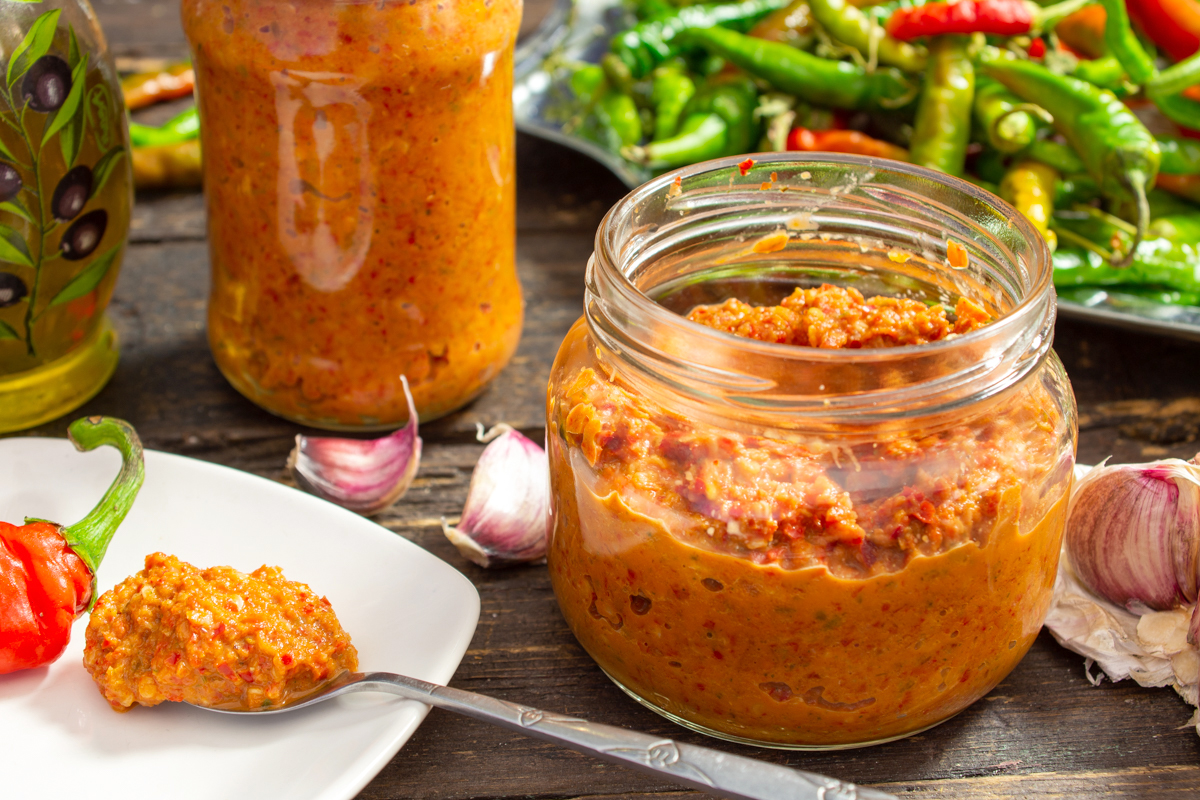
Fragrant homemade red chili paste with garlic and spices, ready to serve.
Ingredients:
- 1 kg (2.2 lbs) hot chili peppers
- 150 g (5.3 oz) garlic
- 120 g (1/2 cup) vegetable or olive oil
- 130 g (4.6 oz) non-iodized salt
- 1 tbsp cumin seeds
- 1 tbsp ground dried dill
Instructions
Before making the paste, be sure to air-dry the hot chili peppers slightly—spread them out in a single layer in the sun or in a warm, dry spot indoors. As the excess moisture evaporates, the peppers will yield a concentrated, thick paste with no watery separation.
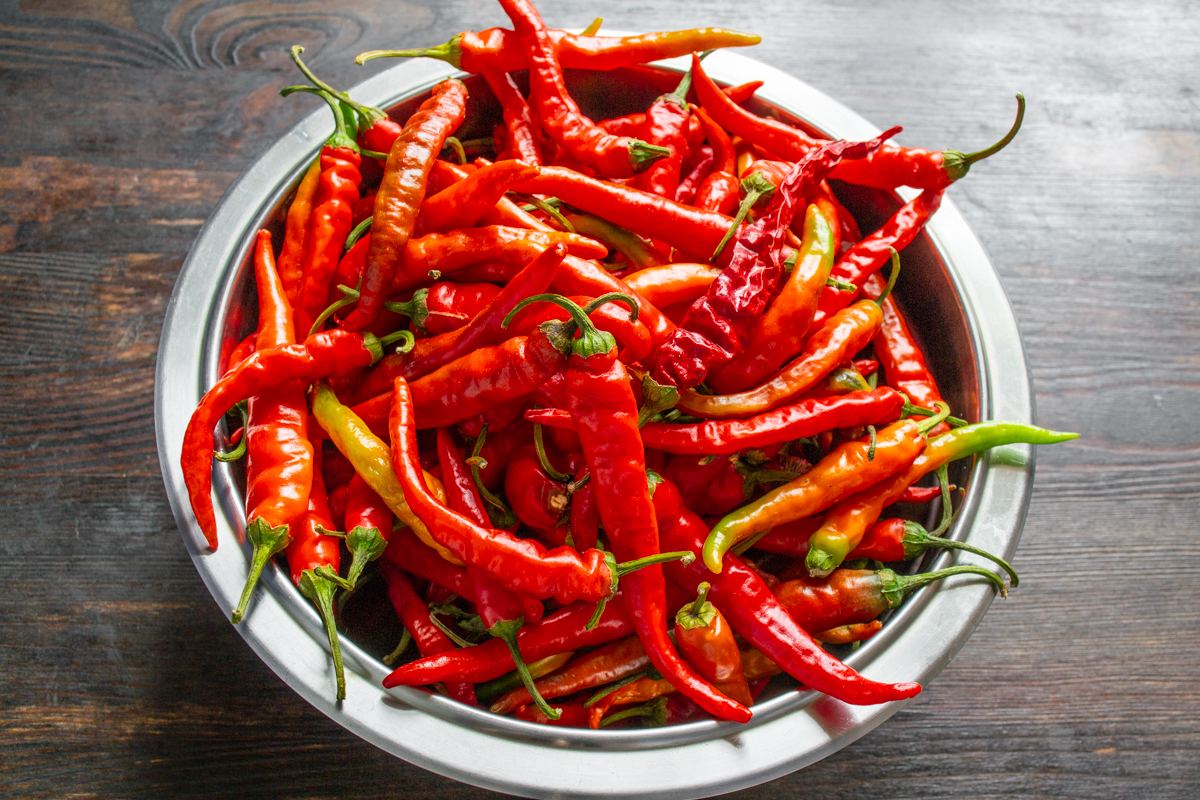
Slightly air-dry the peppers in a warm spot beforehand to remove excess moisture.
Prep the peppers. Use kitchen shears to snip off the stems along with the top section right beneath them, where most of the seeds are clustered. You can also slice the pods open and scrape out all the seeds—just do whatever you prefer. The seeds hold plenty of aromatic oils, though removing them will give the paste a deeper red color. Whenever you handle hot chilies, be sure to wear thin rubber or nitrile gloves to protect your hands from the fiery juice.
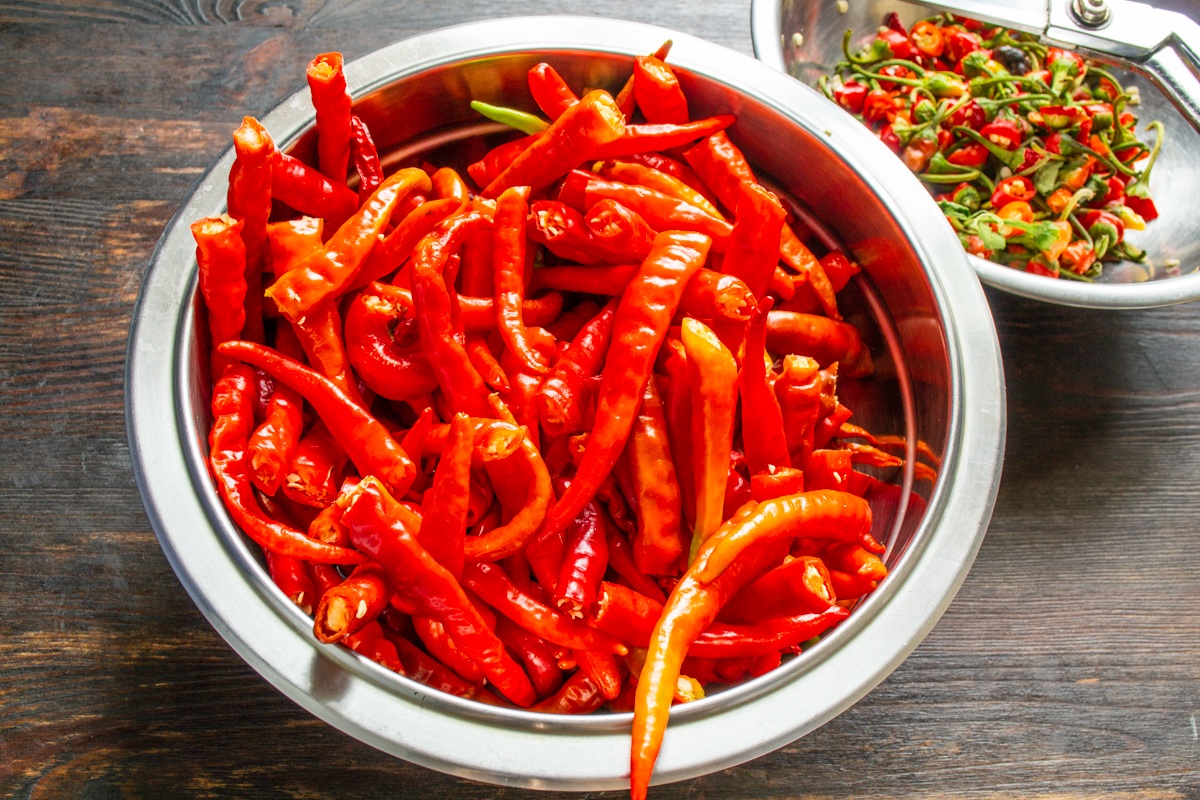
Snip off the pepper stems. Wear gloves to protect your skin from the fiery juice.
Add the peeled garlic to the prepped peppers. To peel garlic quickly, press down on each clove with the flat side of a wide chef’s knife and give it a gentle whack. The clove will crush slightly, and the papery skin will slip right off.
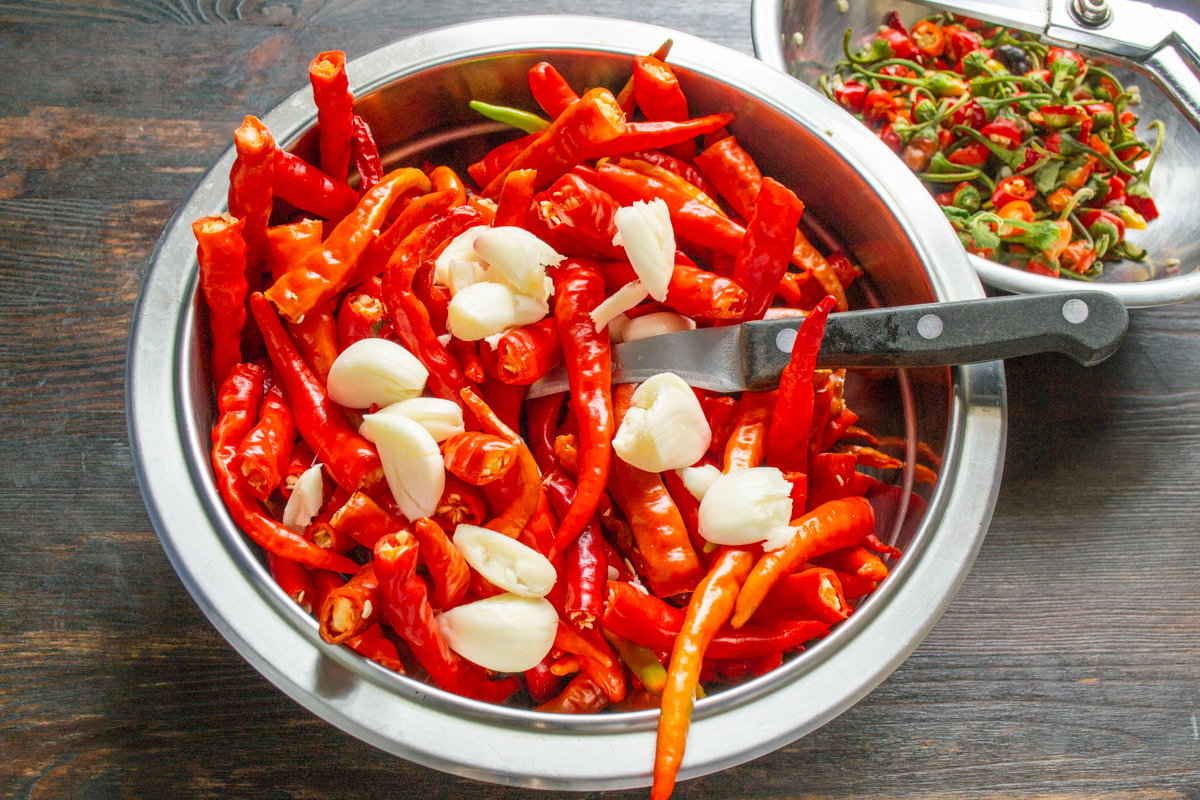
Add the peeled garlic. For quick peeling, gently crush the cloves with the flat side of a knife.
In this recipe, I left the seeds inside the pods, so I processed the paste in two stages. First, pass the peppers and garlic through a meat grinder fitted with a fine grinding plate (or pulse them coarsely in a food processor). You will get a coarse mash with visible seeds. In traditional hot pepper pastes, the chilies were ground on a stone to release the essential oils from the seeds.
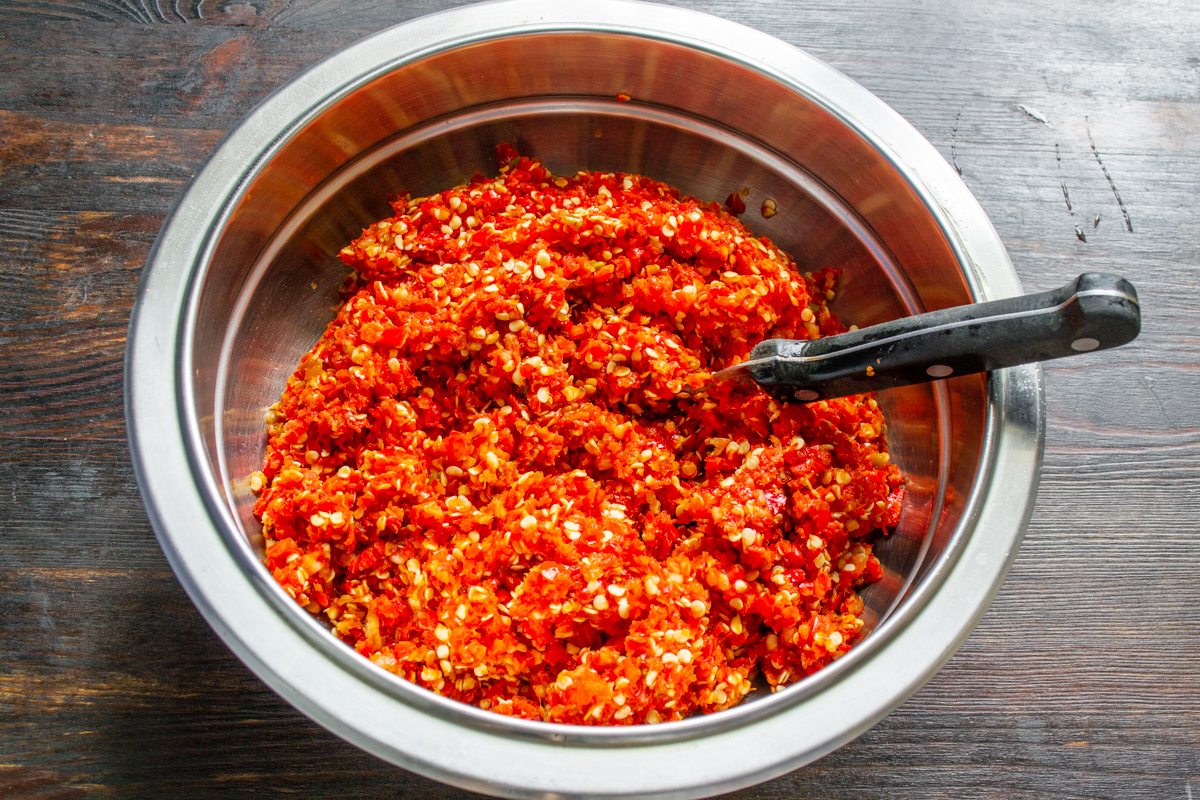
Pass the peppers and garlic through a meat grinder. Leave the seeds in for extra aroma.
Add the salt to the pepper and garlic mixture. You can use any regular rock, sea, or kosher salt—just avoid iodized salt, as it is not recommended for preserves.
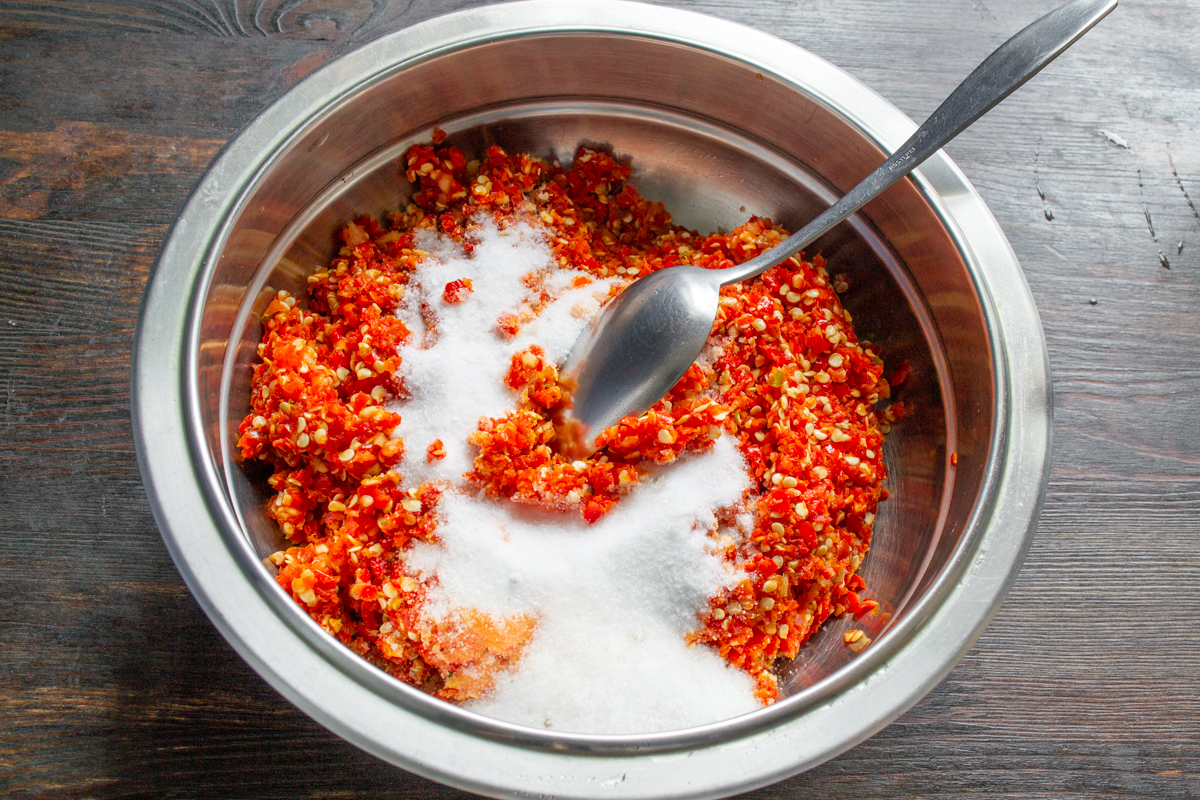
Add the salt. Regular non-iodized rock or sea salt is recommended.
Sprinkle in the ground dried dill. I dry whole dill plants—fronds, stems, and seed heads together—and then grind them into a powder using a spice grinder. It makes an incredibly fragrant seasoning powder that you can add to anything, from soups to kotlety (savory pan-fried meat patties).
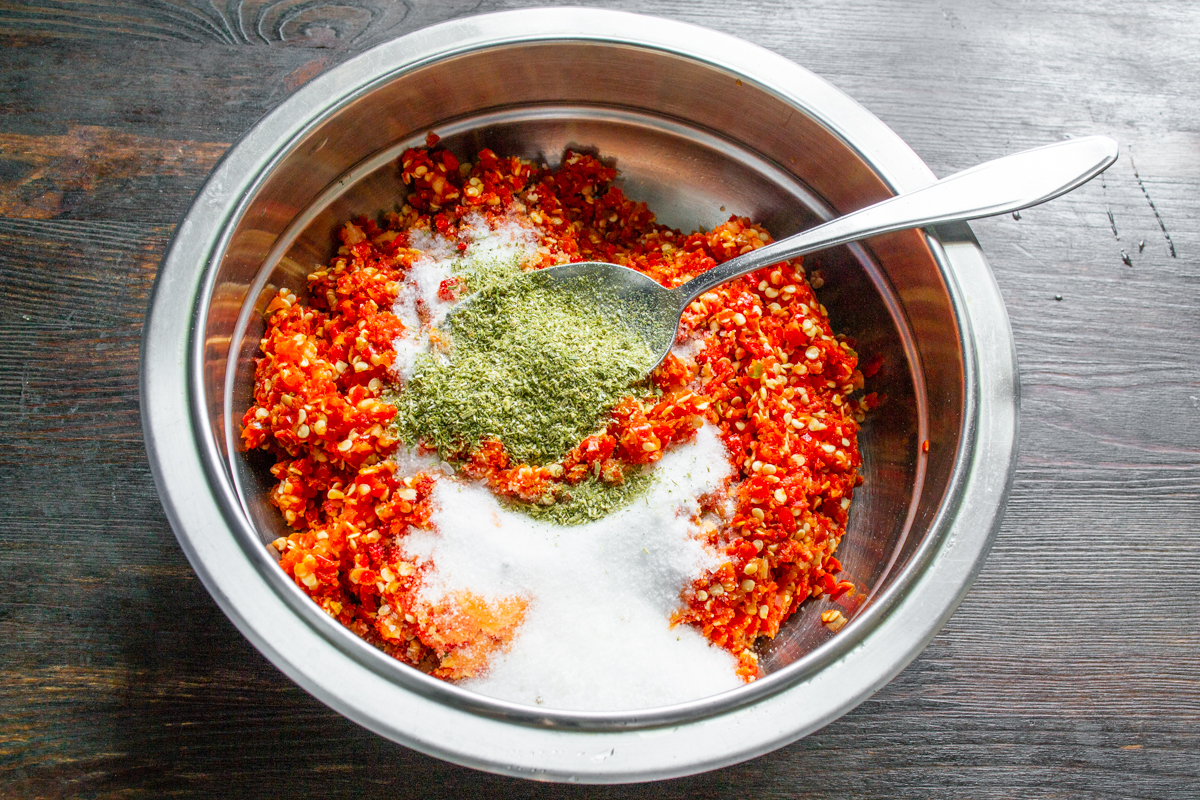
Add fragrant ground dried dill for a savory, herbal note.
Scatter the cumin seeds into a dry cast-iron skillet and toast them until the first wisp of smoke appears. Transfer the toasted seeds to a mortar, crush them with a pestle, and add the freshly ground cumin to the rest of the ingredients.
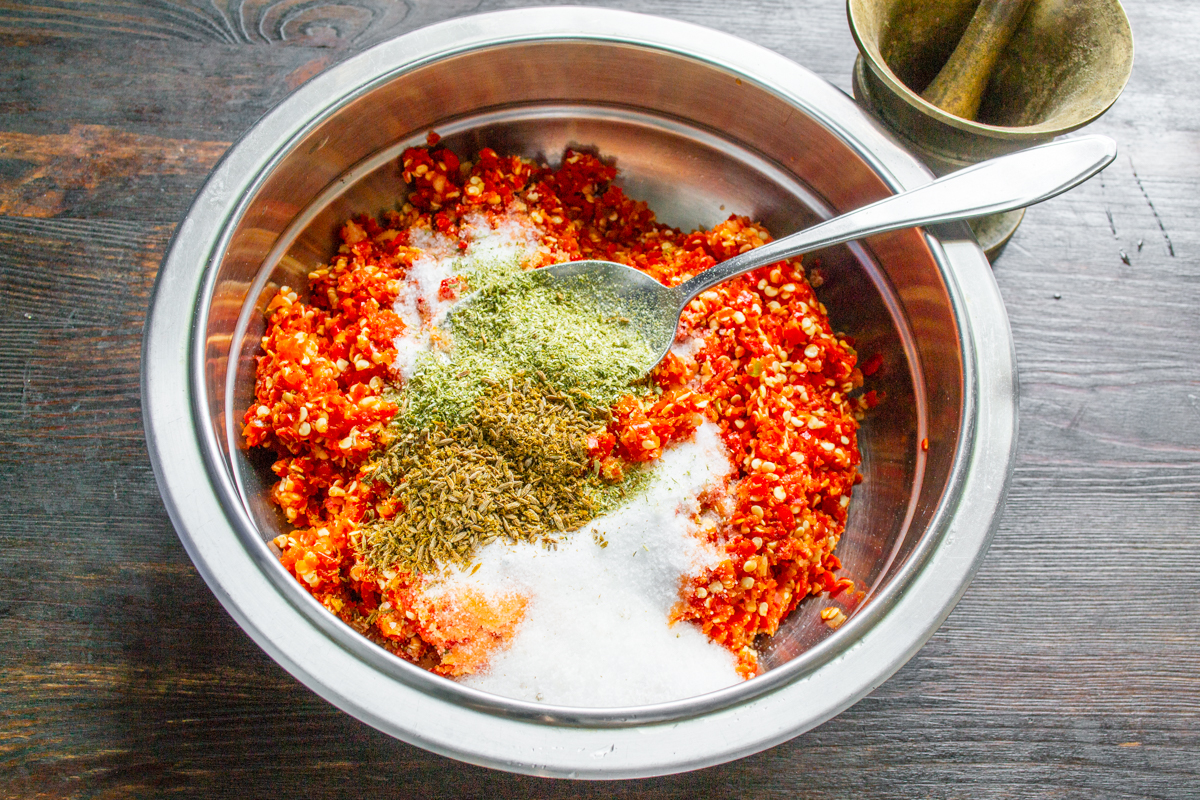
Add toasted and mortar-crushed cumin seeds for a deep, warm aroma.
Pour in the vegetable or olive oil. Choose a good-quality oil; even though the amount is small, it makes a noticeable difference in flavor. Extra-virgin olive oil brings a subtle bitterness that works wonderfully here.
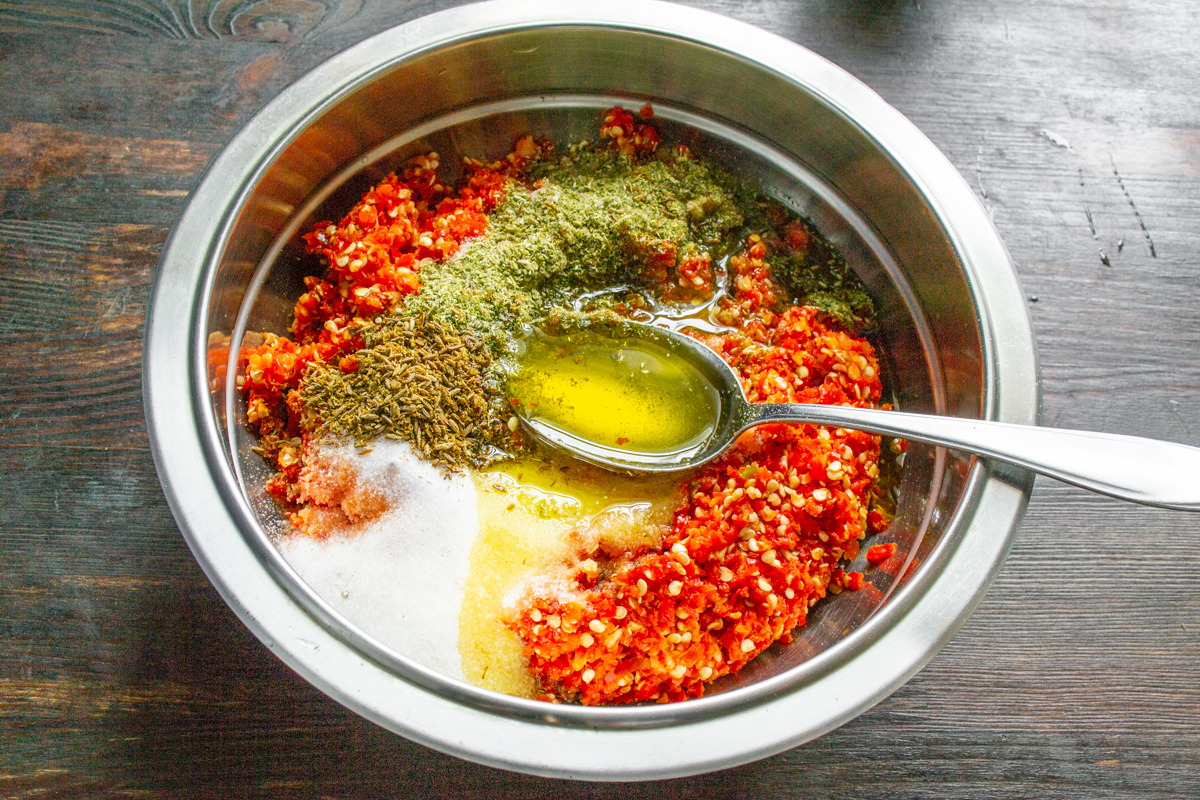
Pour in good-quality vegetable or olive oil to round out the heat.
Grab an immersion blender and puree the paste until smooth and uniform. If your blender isn’t very powerful, blend the mixture in small batches inside a tall, narrow container.
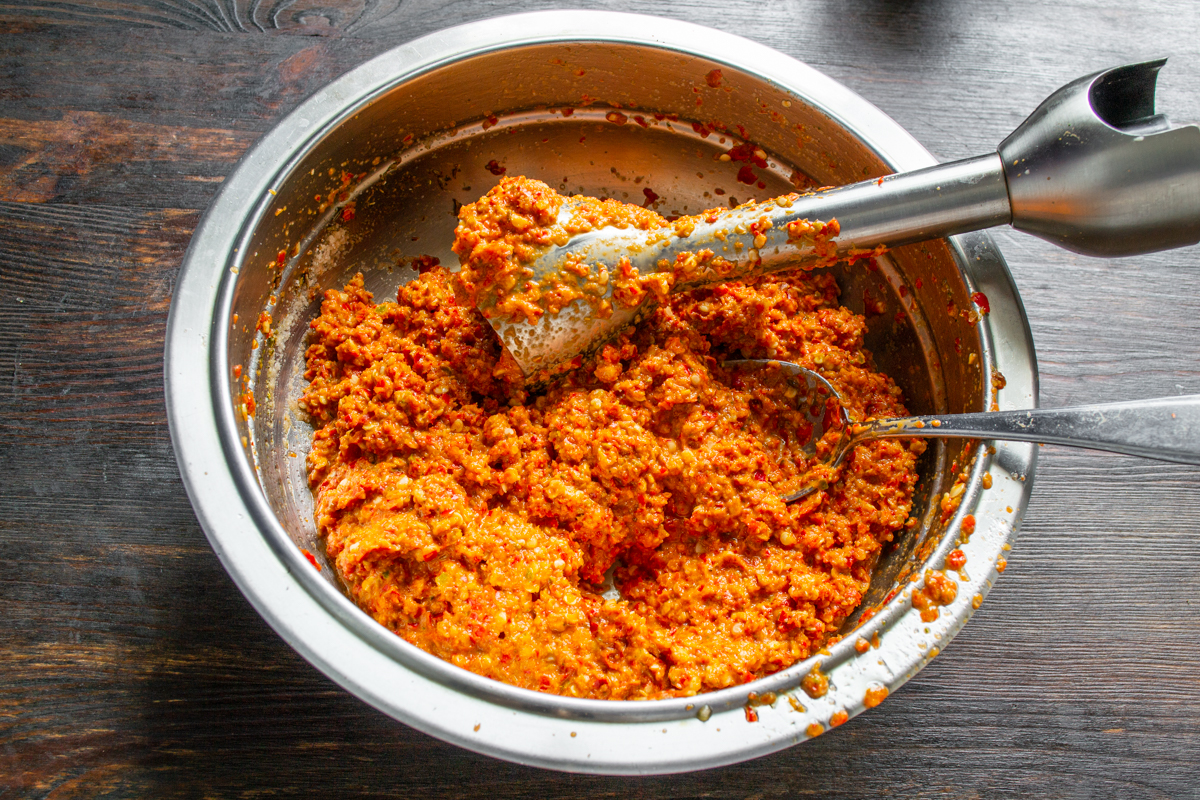
Blend the mixture thoroughly with an immersion blender until smooth and uniform.
Glass jars or airtight plastic containers work best for storage. Pack the finished chili paste into clean, dry glass jars, pressing it down to remove air pockets, seal tightly with lids, and transfer to the refrigerator.
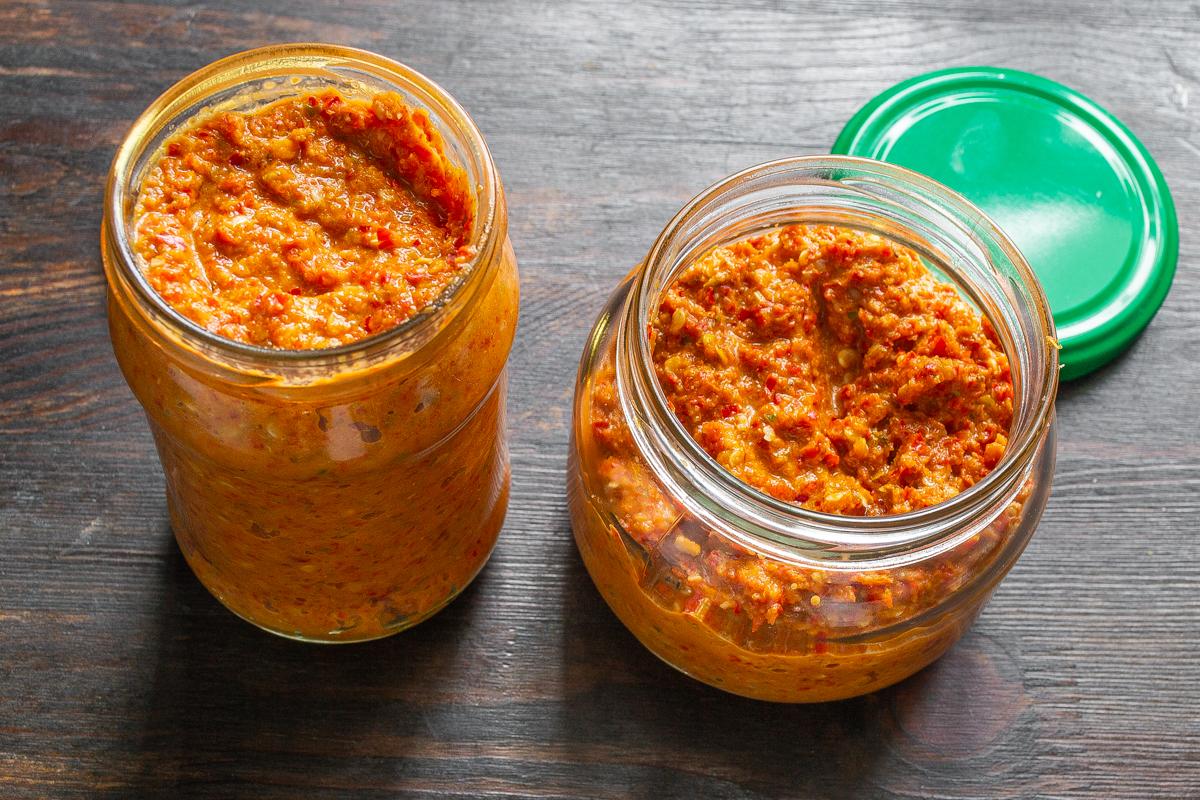
Pack the paste into clean, dry jars, seal with lids, and store in the refrigerator.
Once ready, this garlic-chili paste becomes an indispensable companion for all kinds of culinary experiments. Try serving it alongside a rich bowl of borscht (traditional beet soup), a juicy steak, or roasted vegetables to instantly bring out new depths of flavor. For a milder kick, stir a small spoonful of the paste into smetana (sour cream) or Greek yogurt—it makes an outstanding dip or a creamy dressing for warm salads. Store this fiery condiment in small, airtight glass jars on the top shelf of your refrigerator, where it will easily keep for several months. To extend its shelf life and preserve its vibrant color, always use a clean, dry spoon, and pour a thin layer of good olive oil over the top to act as a natural barrier against the air.
0 comments