
Hot chili pepper adjika (a fiery Abkhazian chili and garlic paste) with walnuts is a traditional condiment whose secret lies in properly drying the hot peppers and blending them with rich, buttery walnuts to mellow the heat and create a velvety texture. Because this no-cook recipe uses raw ingredients, it preserves all their vibrant, fresh flavors and natural nutrients. This bold walnut adjika is a versatile kitchen staple: stir it into pasta, warming soups, or a hearty borscht (traditional beet soup); use it as a zesty base for meat and vegetable marinades; spread it thinly on crusty bread; or whisk it into a bright, spicy salad dressing.
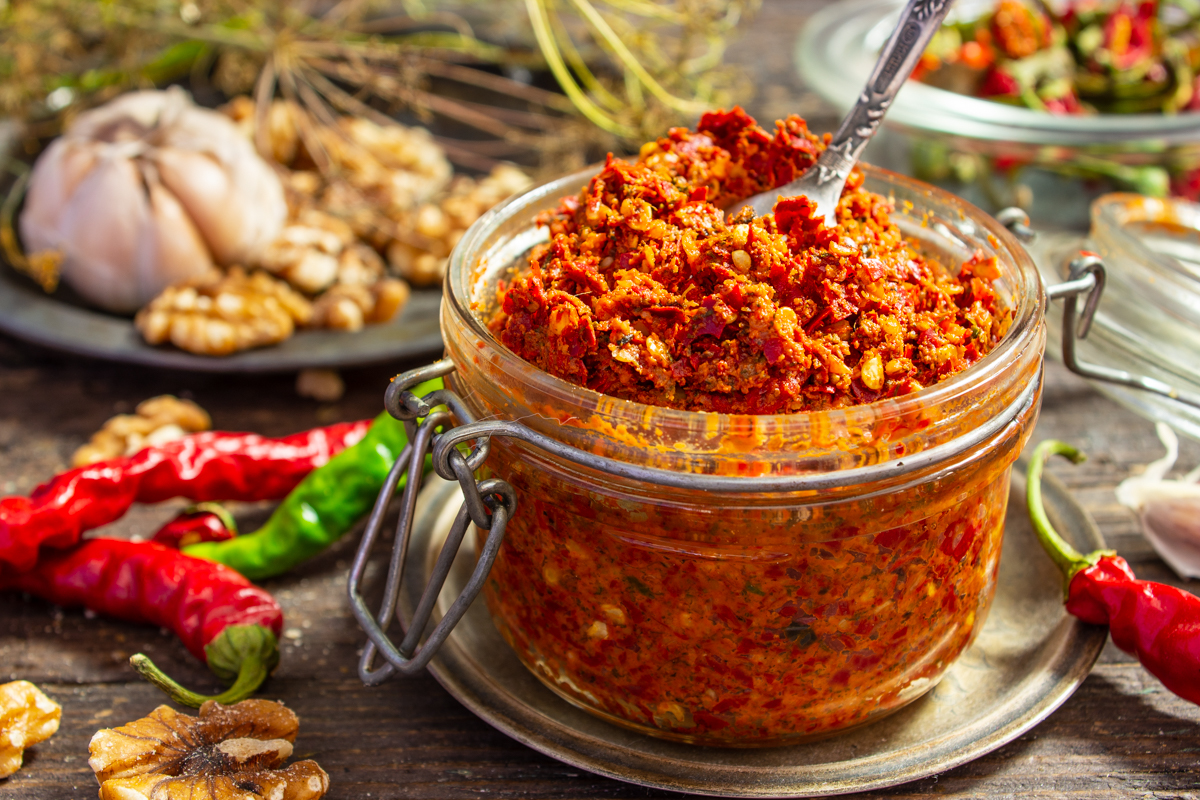
Fragrant Abkhazian adjika made from hot chili peppers, garlic, and walnuts—the ultimate condiment for meat.
Ingredients
- 1 kg (2.2 lbs) hot chili peppers
- 250 g (8.8 oz) shelled walnuts
- 150 g (5.3 oz) coarse salt (preferably sea salt, non-iodized)
- 100 g (3.5 oz) garlic, peeled
- 15 g (0.5 oz) khmeli-suneli (Georgian spice blend)
- 10 g (0.35 oz) dried dill
- 30 g (1 fl oz / 2 tbsp) white wine vinegar
How to Make Hot Chili Pepper Adjika with Walnuts
You can use either red or green hot chili peppers to make adjika (a traditional Caucasian spicy paste). First, let the peppers dry out slightly at room temperature; as they dry, any green pods will continue to ripen and turn red.
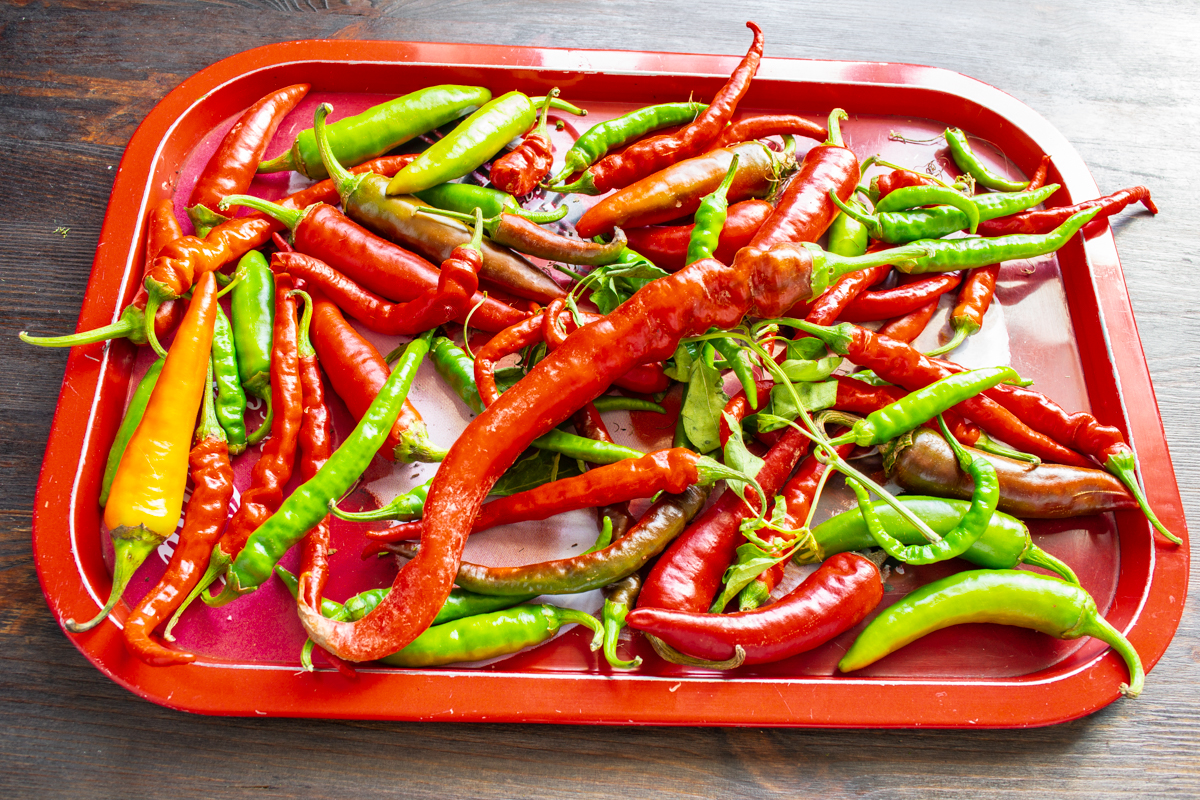
Choose fleshy hot chili peppers for adjika; you can mix red and green varieties.
Spread the peppers in a single layer on a baking sheet and leave them in a warm, dry spot for 72 hours. The chilies will wilt slightly as excess moisture evaporates, ensuring your adjika turns out thick and rich, with no watery liquid pooling in the jar.
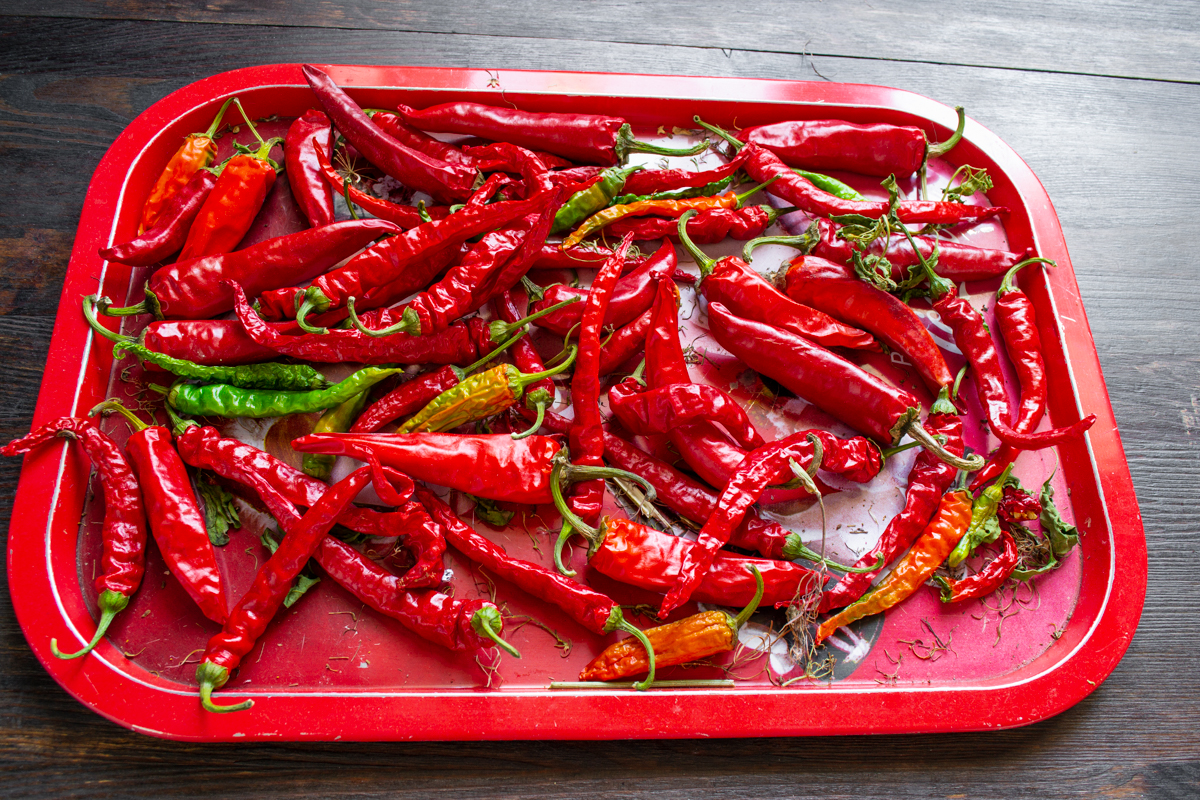
Air-drying the peppers for a few days evaporates excess moisture, ensuring a thick paste.
Next, remove the stems and seeds from the pods. The stems are straightforward—just snip them off with a knife or kitchen shears. Many people leave the seeds in, though if you do, you will need to grind the peppers very thoroughly using a mortar and pestle or a high-powered blender. I prefer to remove most of the seeds. Cut off the stem, make a small lengthwise slit, and shake the seeds out. Be sure to wear thin disposable gloves to protect your skin from the fiery chili oils.
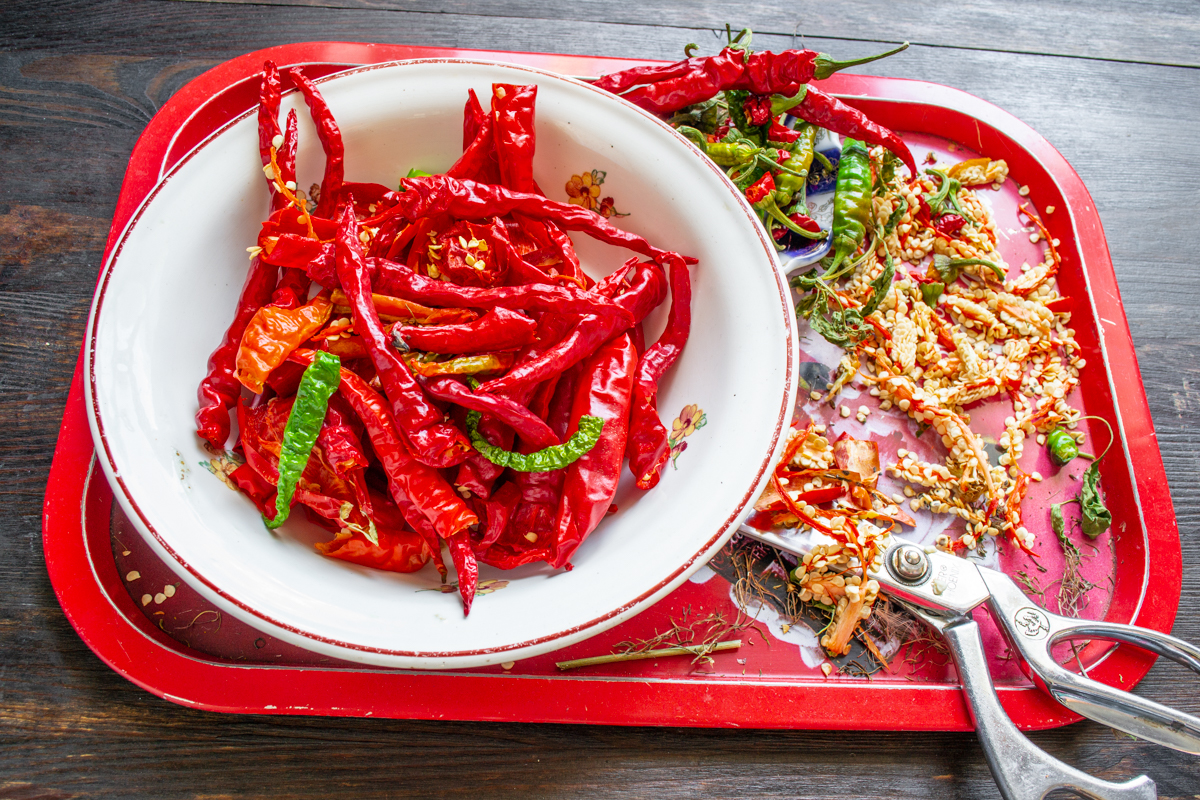
Trim the stems and remove the seeds. Wear gloves to protect your skin from chili burns.
Toast the shelled walnuts in a hot oven or a dry skillet for a few minutes to awaken their natural oils and deepen their nutty aroma.
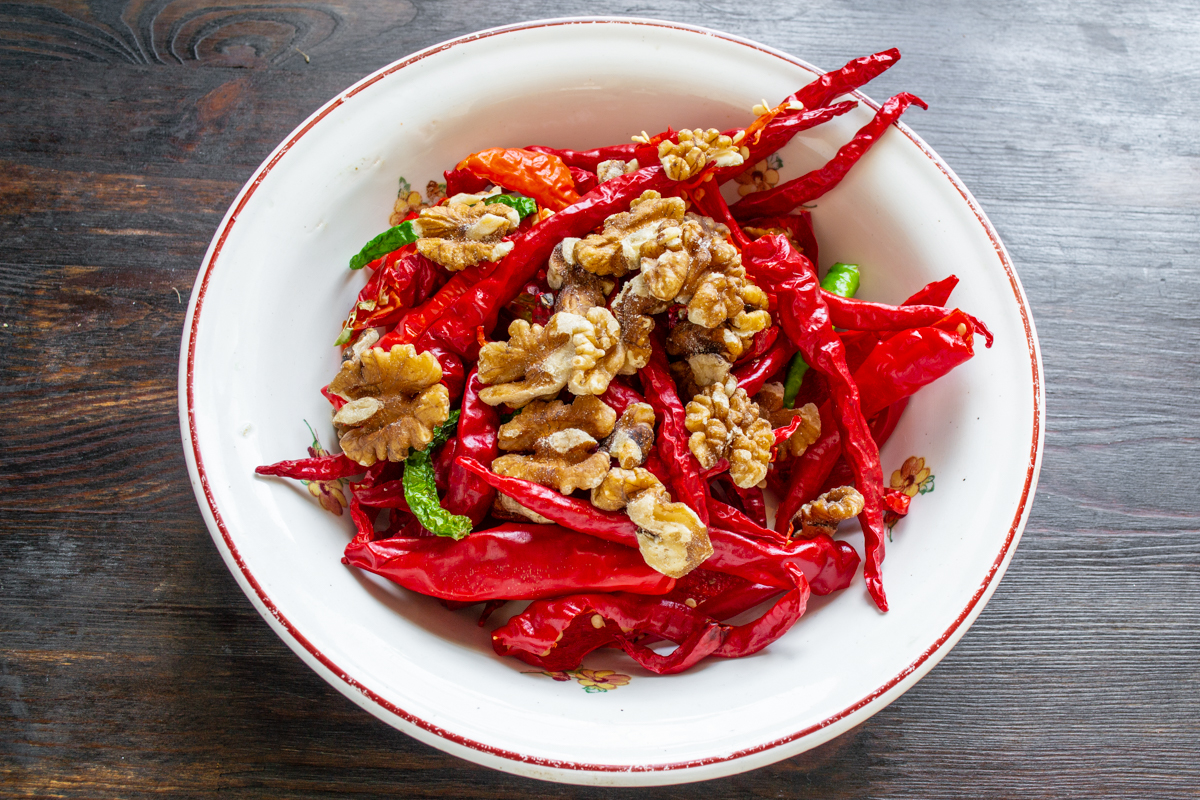
Add toasted walnuts to the prepped chili peppers before grinding.
Smash the garlic head with the flat of your knife and peel away the papery skins. Add the peeled garlic cloves to the bowl with the peppers and walnuts.
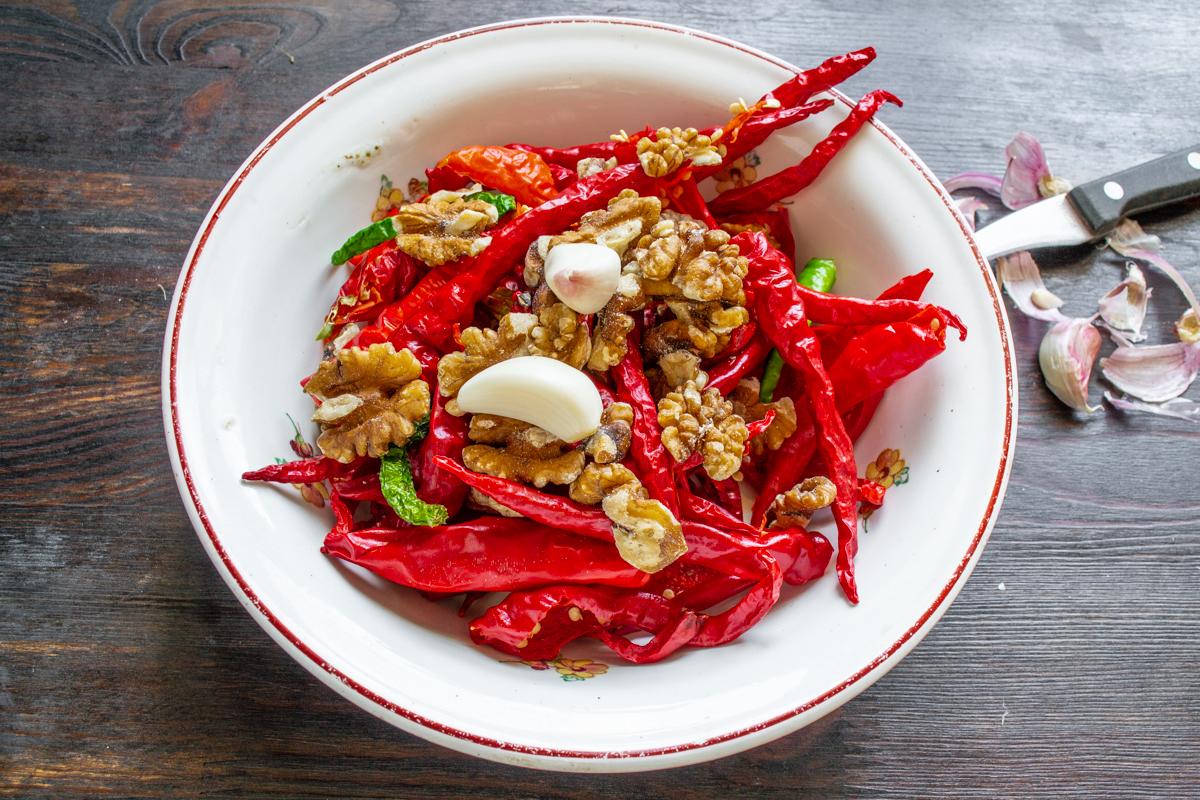
Peeled garlic cloves give adjika its signature punch and savory aroma.
Pass the chili peppers, walnuts, and garlic through a meat grinder fitted with a fine die. You can also blitz them in a food processor or blender, though the resulting adjika will turn out bright orange rather than deep red.
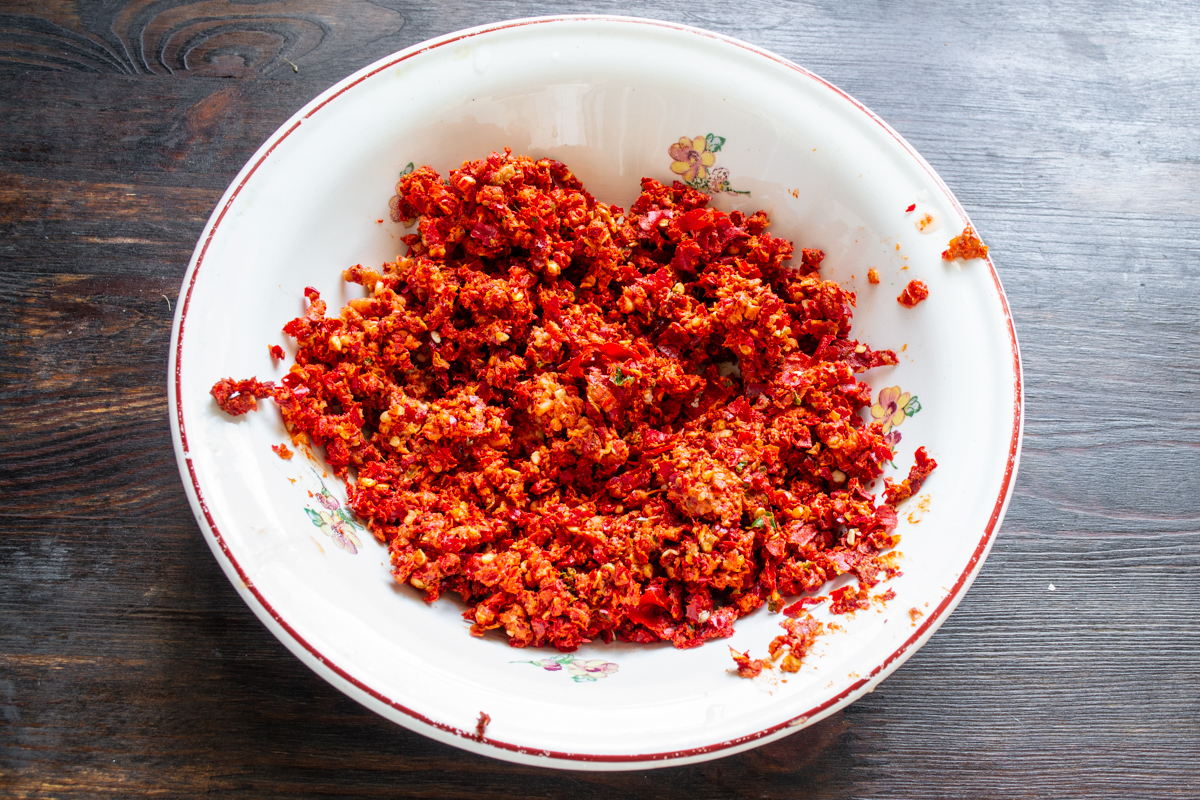
Pass the peppers, garlic, and walnuts through a meat grinder fitted with a fine die for a uniform texture.
Pour in the white wine vinegar or apple cider vinegar.
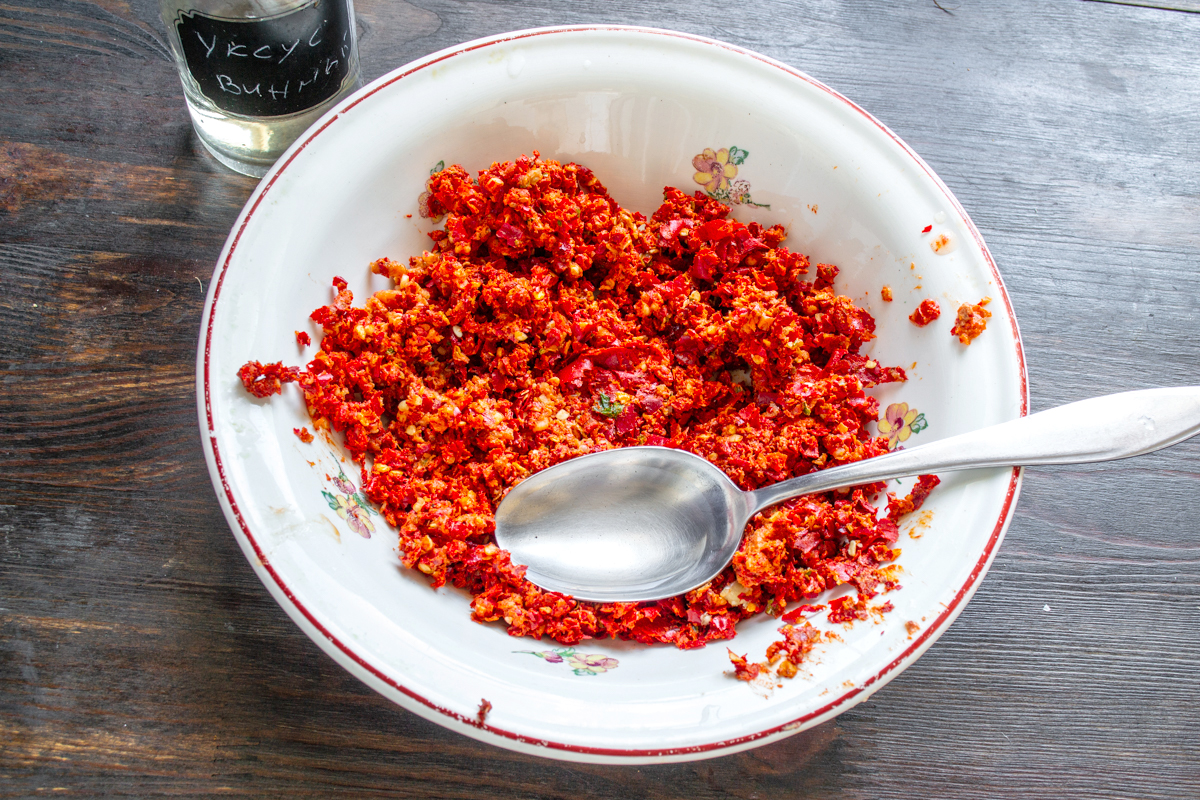
Pour in white wine vinegar or apple cider vinegar, which acts as a natural preservative.
Add the salt. I always make my adjika with sea salt—a few extra trace minerals in a condiment never hurt.
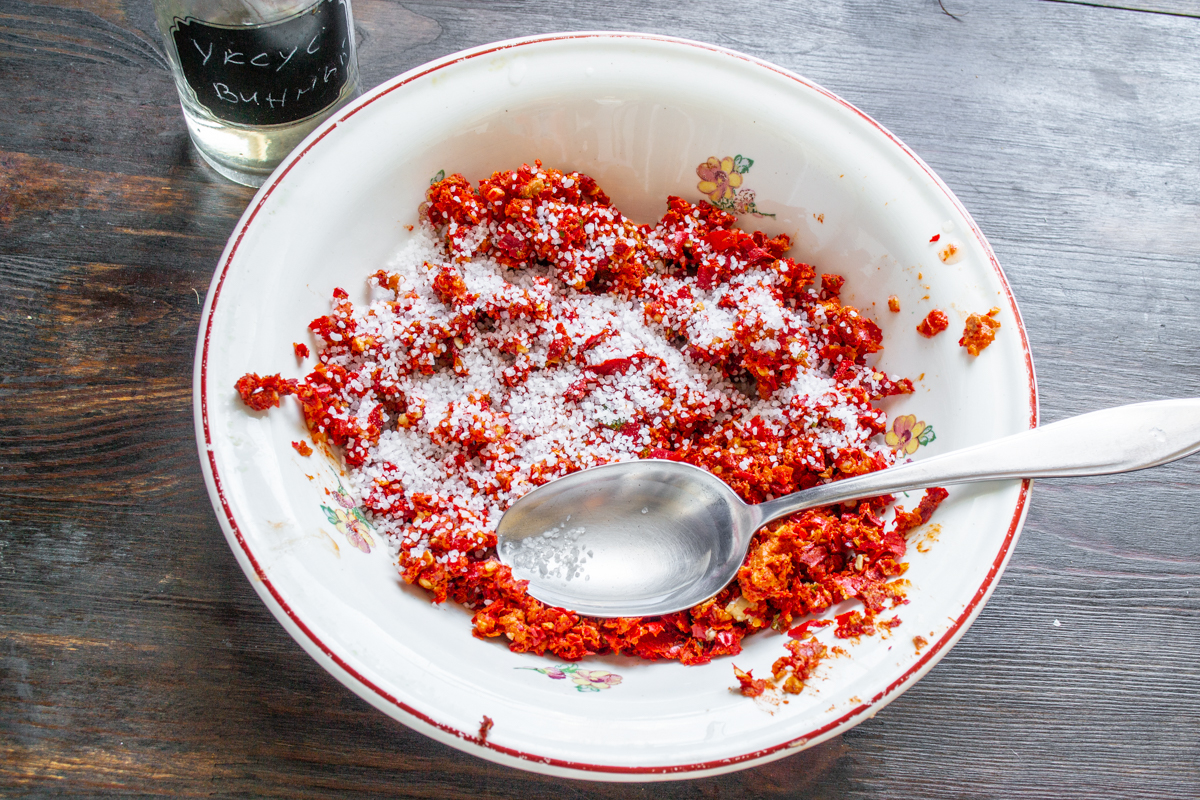
Add coarse salt—sea salt works best and gives the condiment a cleaner, more balanced flavor.
Sprinkle in the khmeli-suneli (a traditional Georgian aromatic herb and spice blend) and dried dill. Classic Abkhazian adjika often features an even broader spice profile; feel free to add blue fenugreek (utskho-suneli), ground Imeretian saffron (dried marigold petals), or crushed black cumin if you have them on hand.
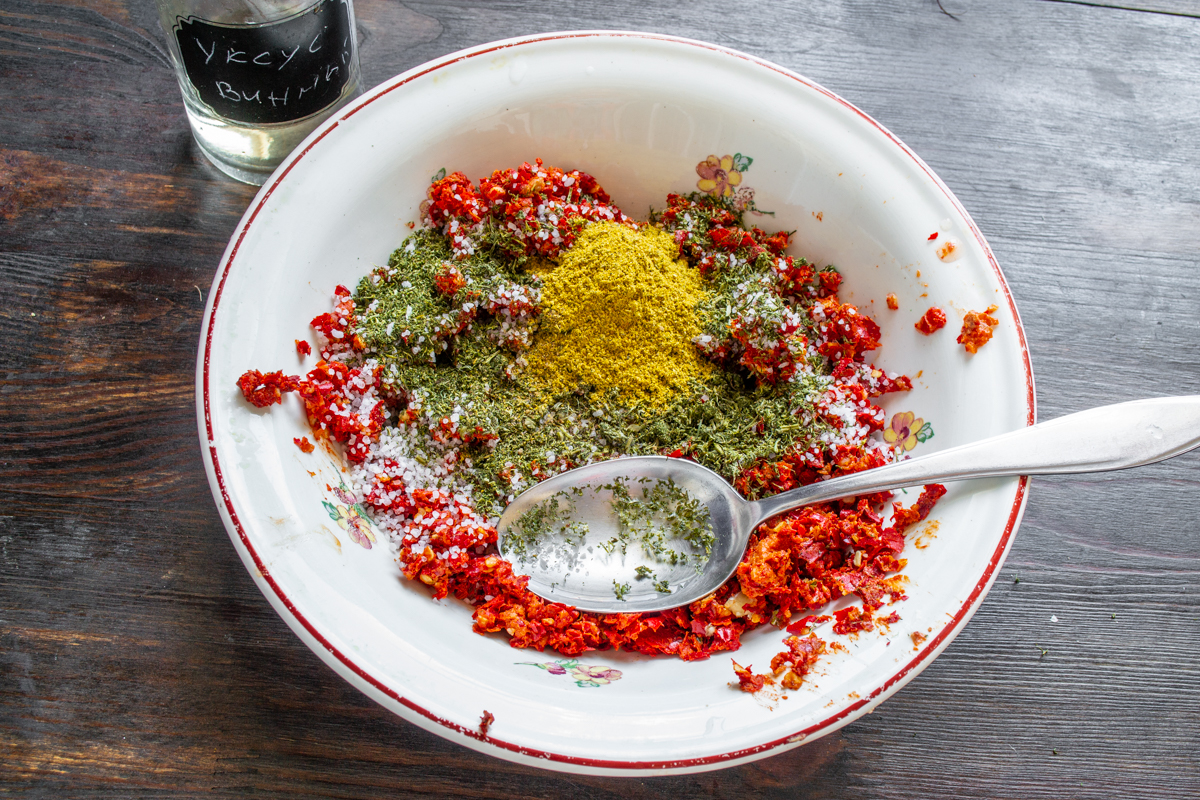
Add khmeli-suneli and dried dill to give the adjika its unmistakable Caucasian aroma.
Stir the mixture thoroughly using a clean, dry spoon until evenly combined. No cooking or further processing is needed—this is true “raw adjika.”
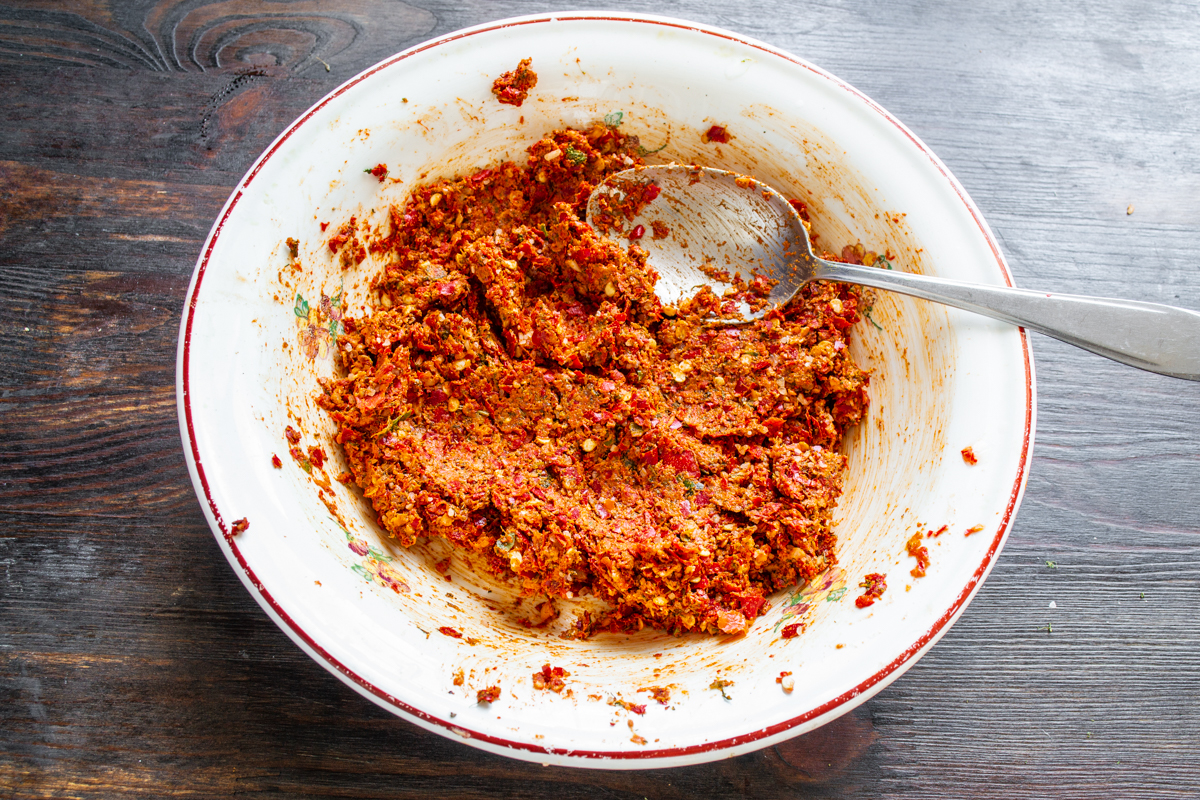
Stir all the ingredients thoroughly with a spoon until evenly combined. Your raw adjika is ready.
Wash your storage jars thoroughly in warm water with baking soda, rinse them with boiling water, and dry them completely in the oven. Pack the adjika into the dry glass jars, using the handle of a spoon to press the paste down and eliminate any trapped air pockets. Seal tightly with lids and store in the refrigerator.
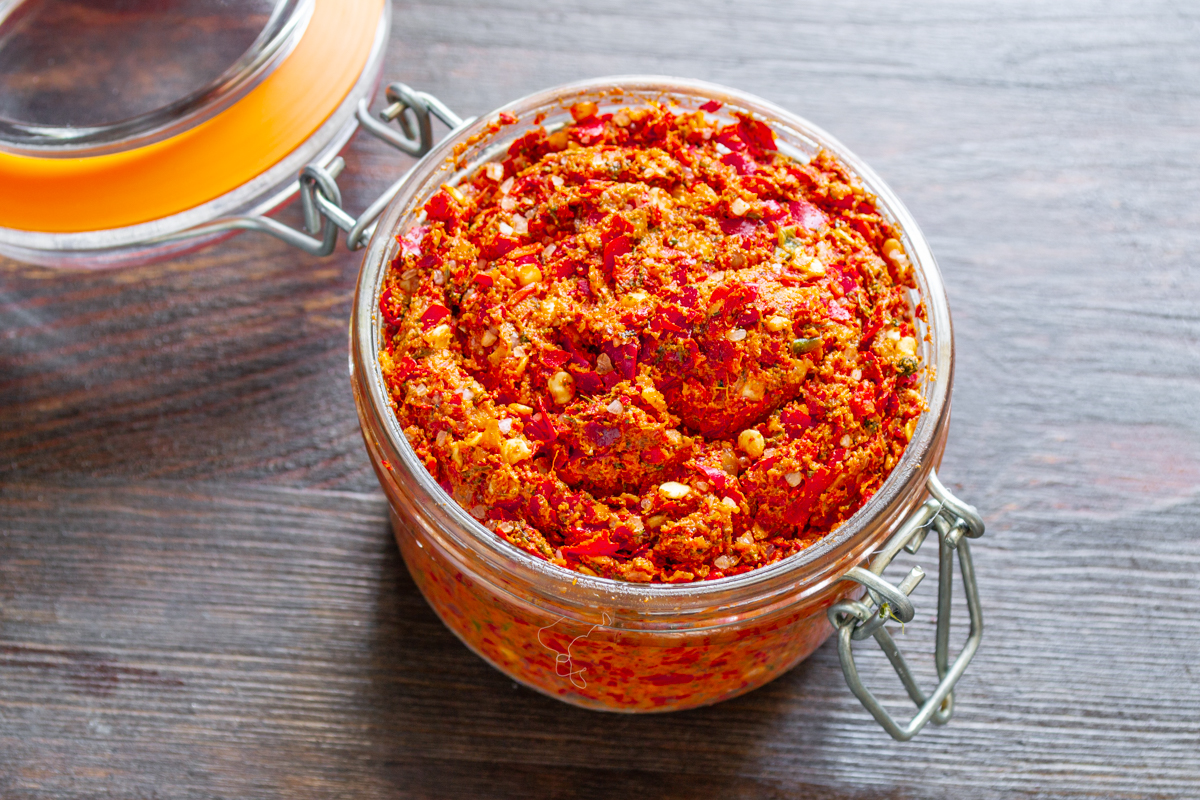
Pack the finished adjika tightly into sterilized, dry jars and store in the refrigerator.
To let your hot chili pepper and walnut adjika reach its full flavor potential, allow it to rest in the refrigerator for at least a couple of days before serving—this gives the spices time to meld and develops a deeper, more rounded heat. Always store this raw condiment in tightly sealed glass jars in the fridge, where the natural preservatives—salt, garlic, and vinegar—will keep it fresh all winter long. It pairs wonderfully with grilled meats, roasted poultry, crispy potatoes, and aged cheeses.
Beyond serving it as a table condiment, this paste makes a phenomenal base for sauces. Try whisking together a vibrant salad dressing: combine 1 teaspoon of adjika, 1 teaspoon of mustard, 1 teaspoon of honey, 1 tablespoon of fresh lemon juice, and 3 tablespoons of extra-virgin olive oil. Whisk until smoothly emulsified, then drizzle over crisp fresh greens or char-grilled root vegetables.
0 comments