
Craft your own homemade charcuterie without any specialized equipment or artificial preservatives! This spiced pork ham is gently poached right in a regular pot on the stove, requiring just a little active prep time and about an hour of cooking. The art of making delis like this is rooted in traditional home curing, where deep flavor is achieved through a long brine and the right balance of aromatics like star anise and smoked paprika. Slowly poaching the meat while tightly wrapped locks in every drop of juice, transforming a humble cut of pork shoulder into an exquisite, tender delicacy with a subtle, enticing aroma.
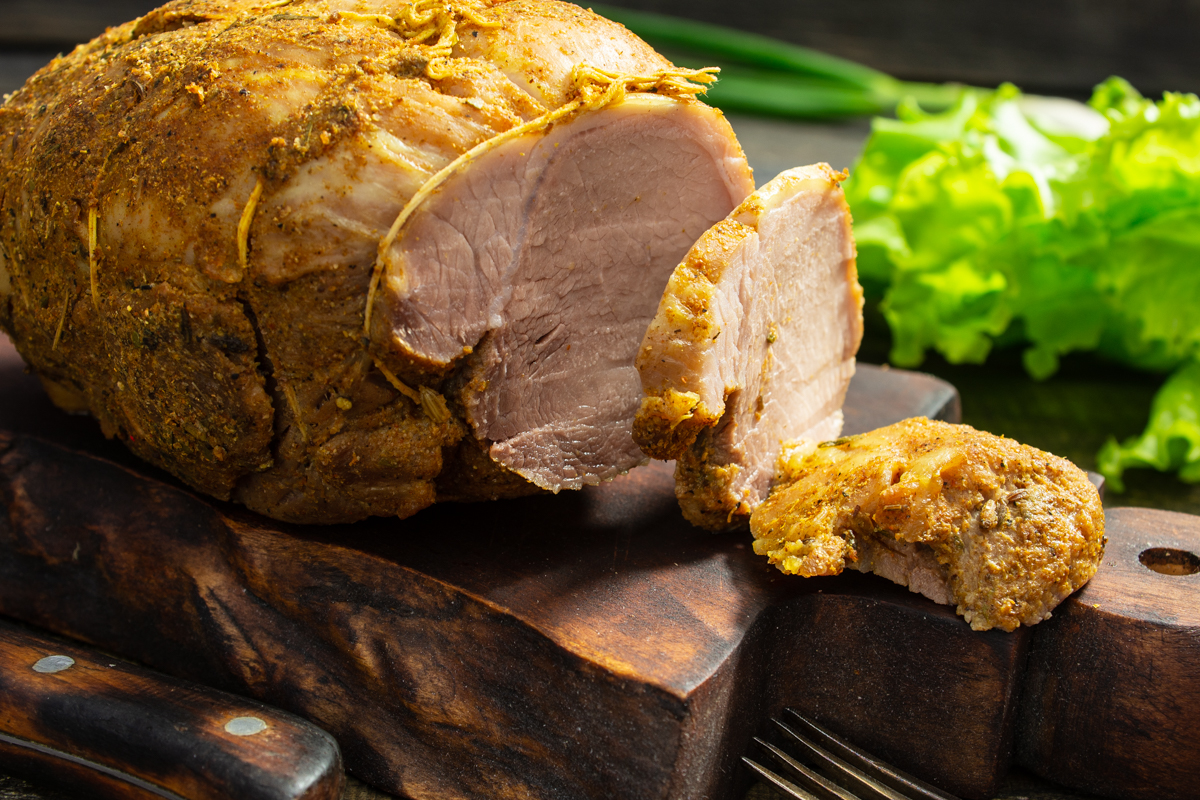
Juicy and aromatic homemade ham cooked in a pot—a fantastic alternative to store-bought cold cuts.
Ingredients
- 1 kg (2.2 lbs) lean pork shoulder
- 350 ml (1 ½ cups) water
- 45 g (about 2 ½ tbsp) sea salt
- 20 g (1 ½ tbsp) sugar
- Sweet smoked paprika
- Garlic powder
- Coriander
- Bay leaves
- Star anise
- Cumin seeds (zira)
- Mustard powder
- Dried herb blend (oregano, thyme)
- Curry powder for meat (optional)_
How to Make Poached Pork Ham
Choose a lean piece of pork shoulder weighing about 1 kg (2.2 lbs). Make sure to use a single, solid cut of meat to get the ideal ham texture. Tie the pork securely in several places with kitchen twine so it holds its shape during cooking.
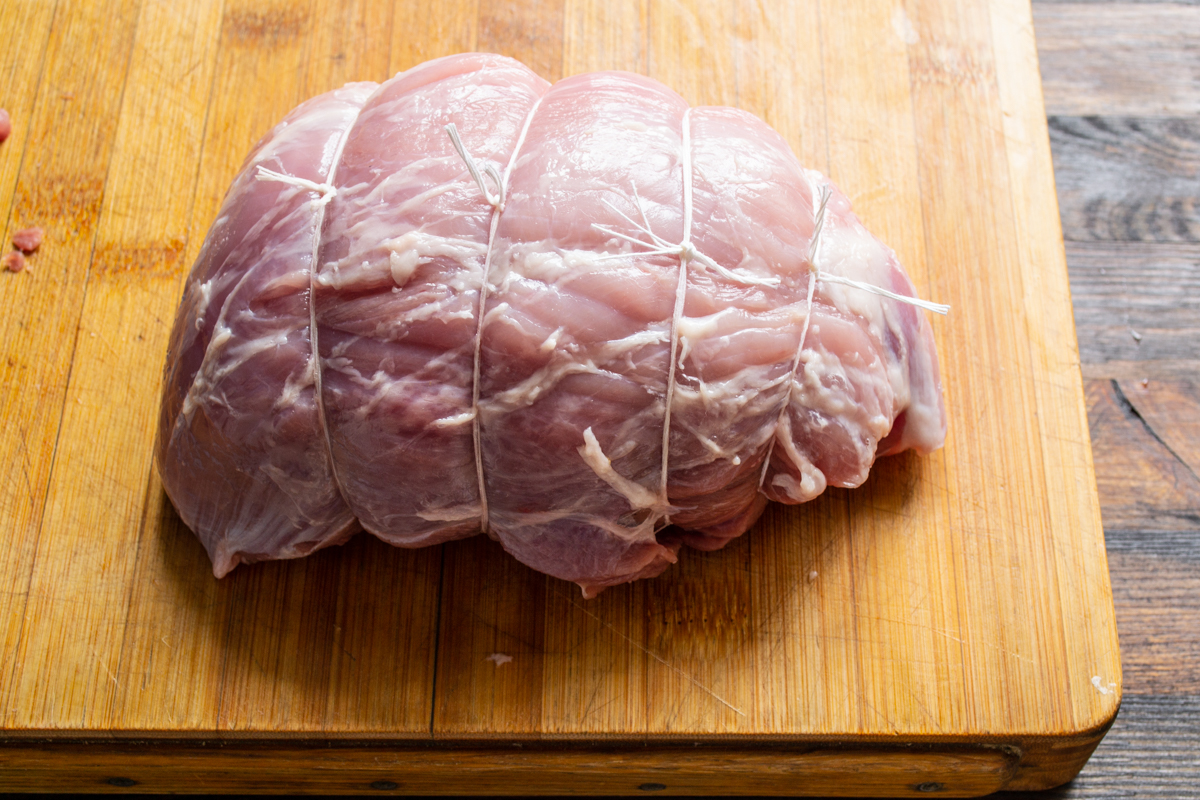
Tie the meat tightly with kitchen twine so it holds a neat shape during cooking.
Pour the sea salt and sugar into a small saucepan, then add a teaspoon each of garlic powder and ground smoked paprika. Toss in 4–5 bay leaves, a teaspoon of cumin seeds (zira), and 2 star anise pods. If you like, add a dried chili pepper and a few black peppercorns.
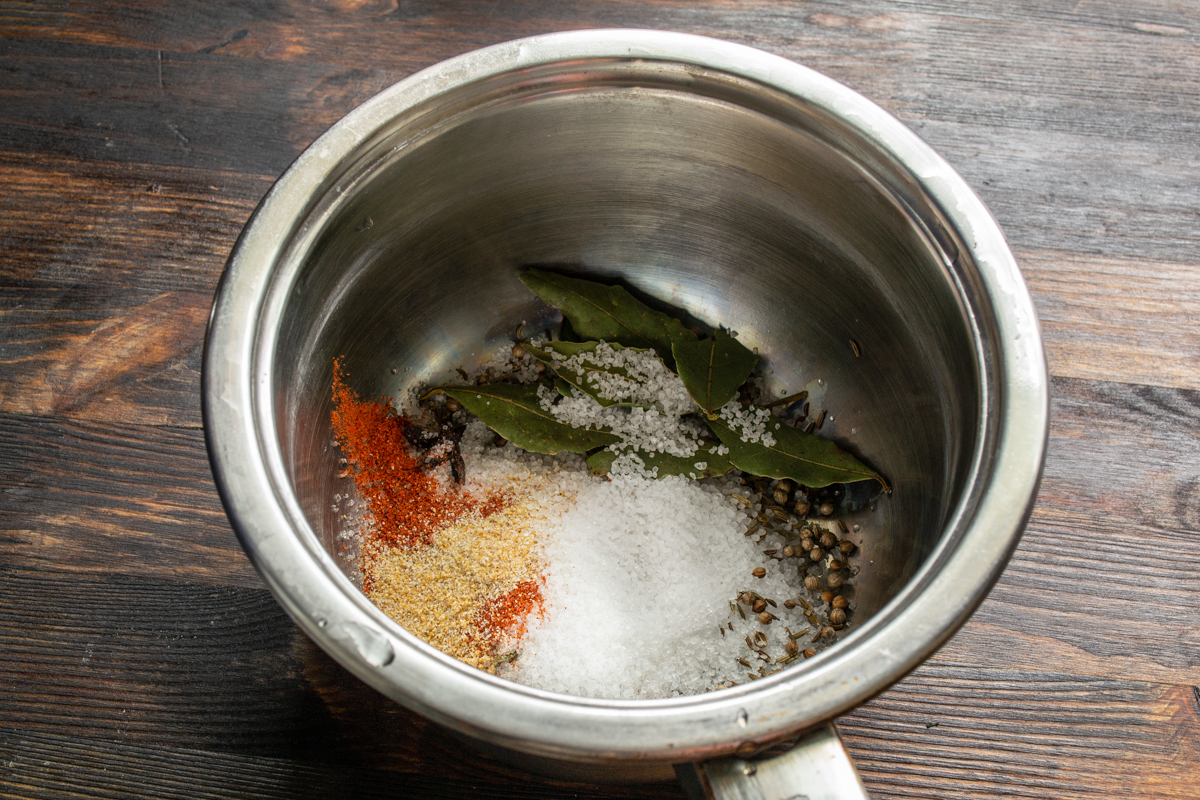
For a rich flavor, we use sea salt, smoked paprika, star anise, and aromatic cumin seeds.
Pour in the water. Bring the brine to a boil and simmer for 3–5 minutes. Never place raw meat into hot brine. To cool it down quickly, set the saucepan in a sink filled with cold water, or drop a few ice cubes directly into the pot.
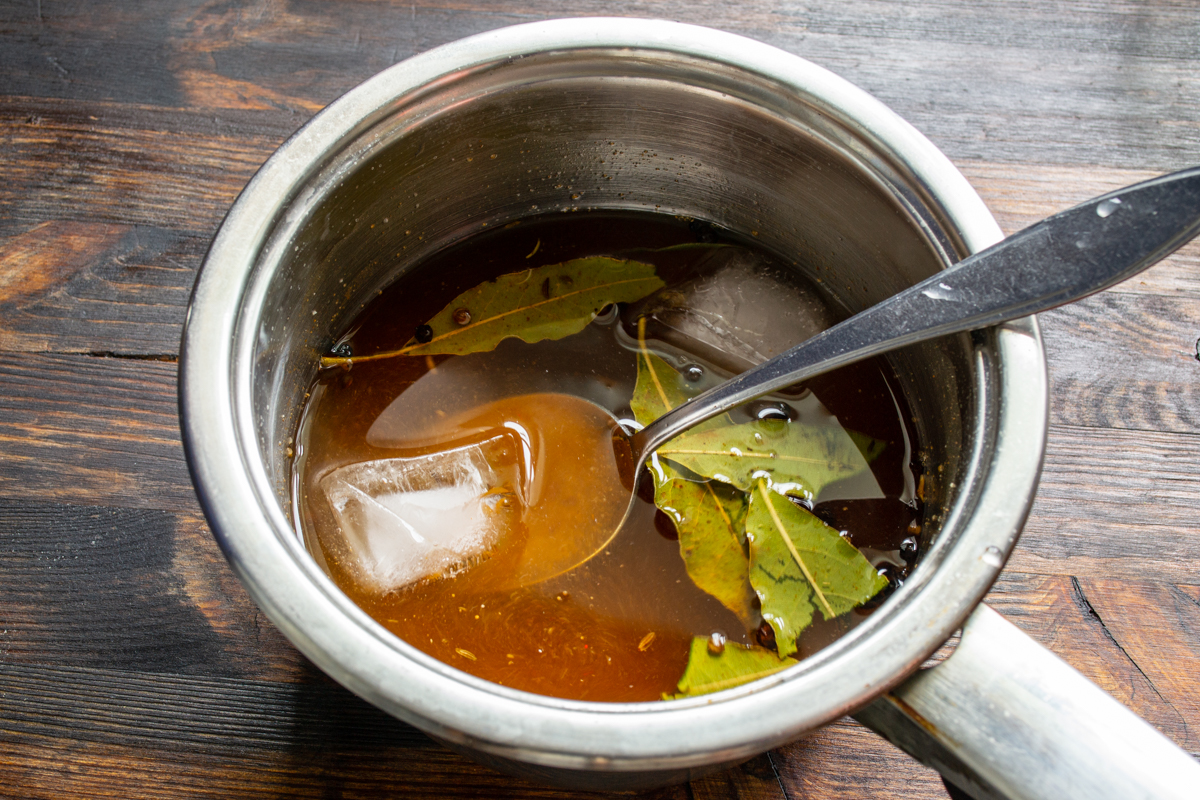
It is important to cool the brine completely before submerging the meat. Ice will help speed up the process.
Submerge the prepared pork into the cooled brine. Leave the meat to cure at room temperature for 2–3 hours, then transfer it to the refrigerator. Let it brine in the fridge for 12 to 24 hours, which is plenty of time for a 1-kilogram cut.
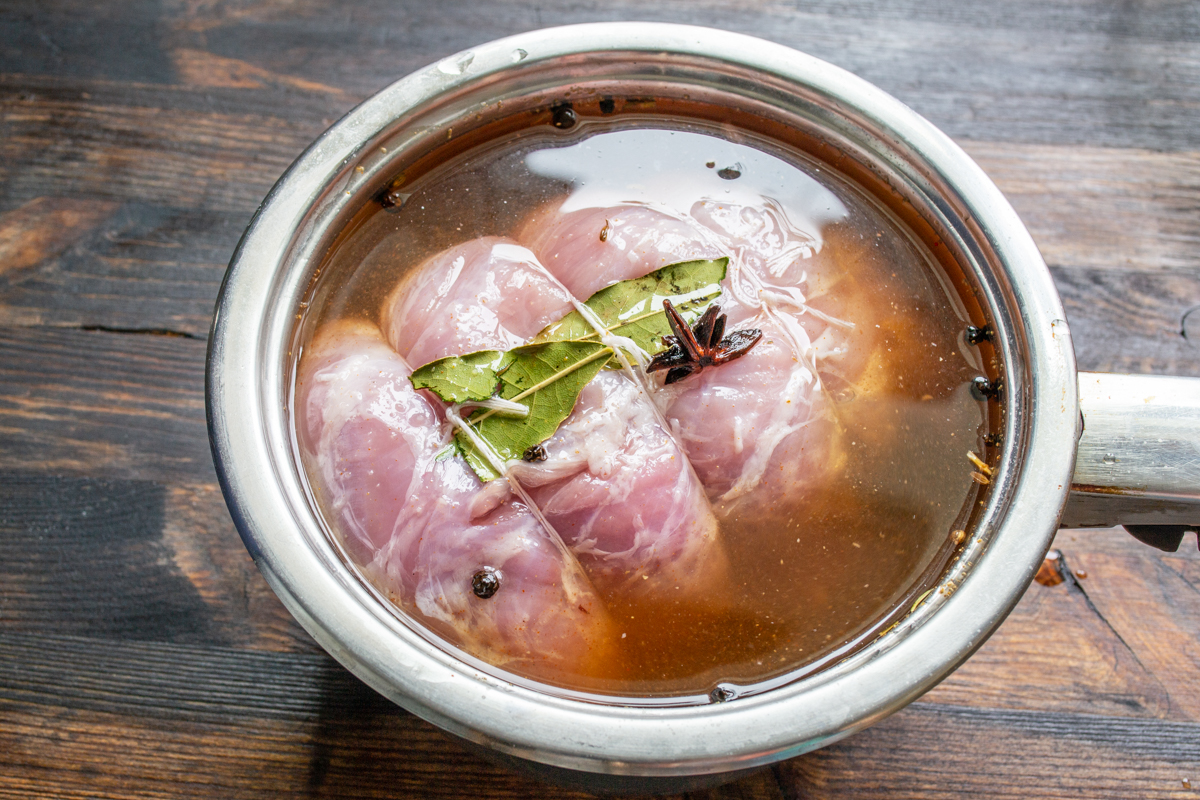
Leave the meat in the refrigerator for at least 12 hours so it thoroughly absorbs the spice aromas.
Remove the meat from the brine, rinse it thoroughly under cold running water, and pat it completely dry with paper towels.
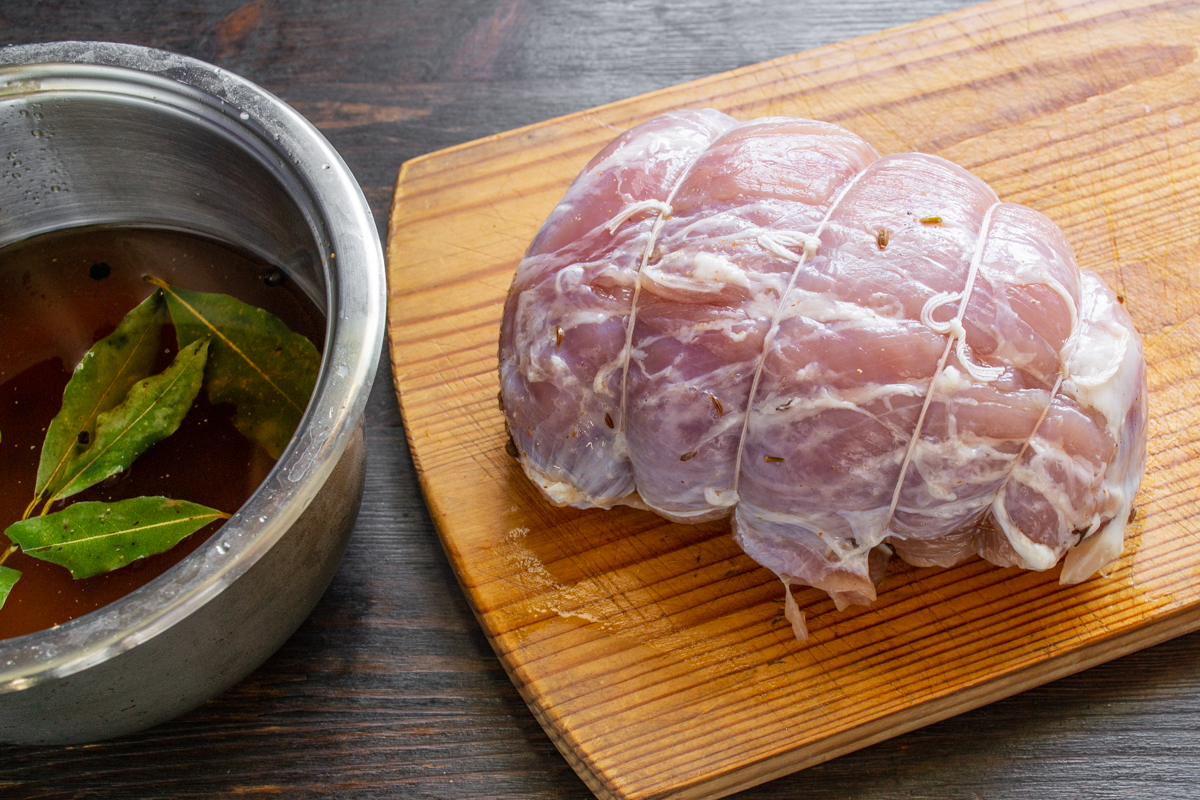
After brining, be sure to rinse the meat and pat it thoroughly dry with paper towels.
Mix together one teaspoon each of mustard powder, smoked paprika, meat curry powder, and a blend of dried aromatic herbs.
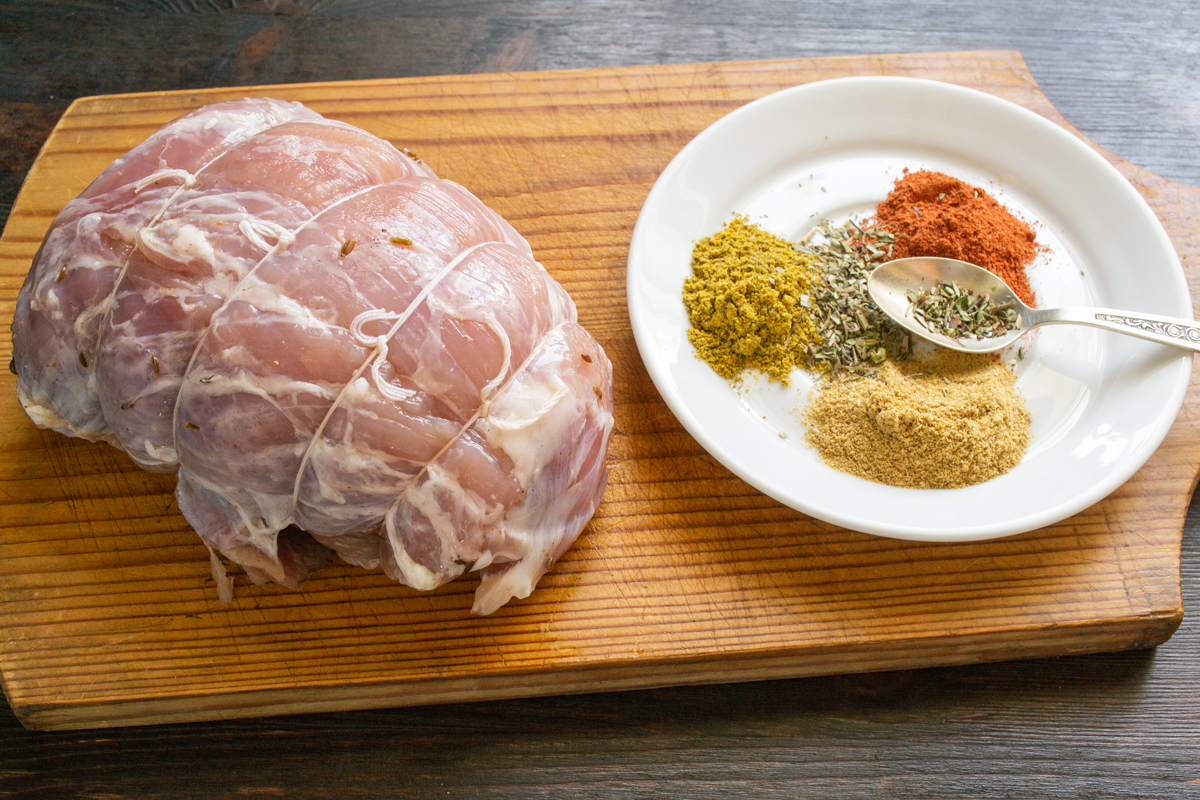
Prepare a dry rub of mustard powder, paprika, curry, and aromatic herbs for the final coating.
Rub the spice mixture generously over all sides of the pork.
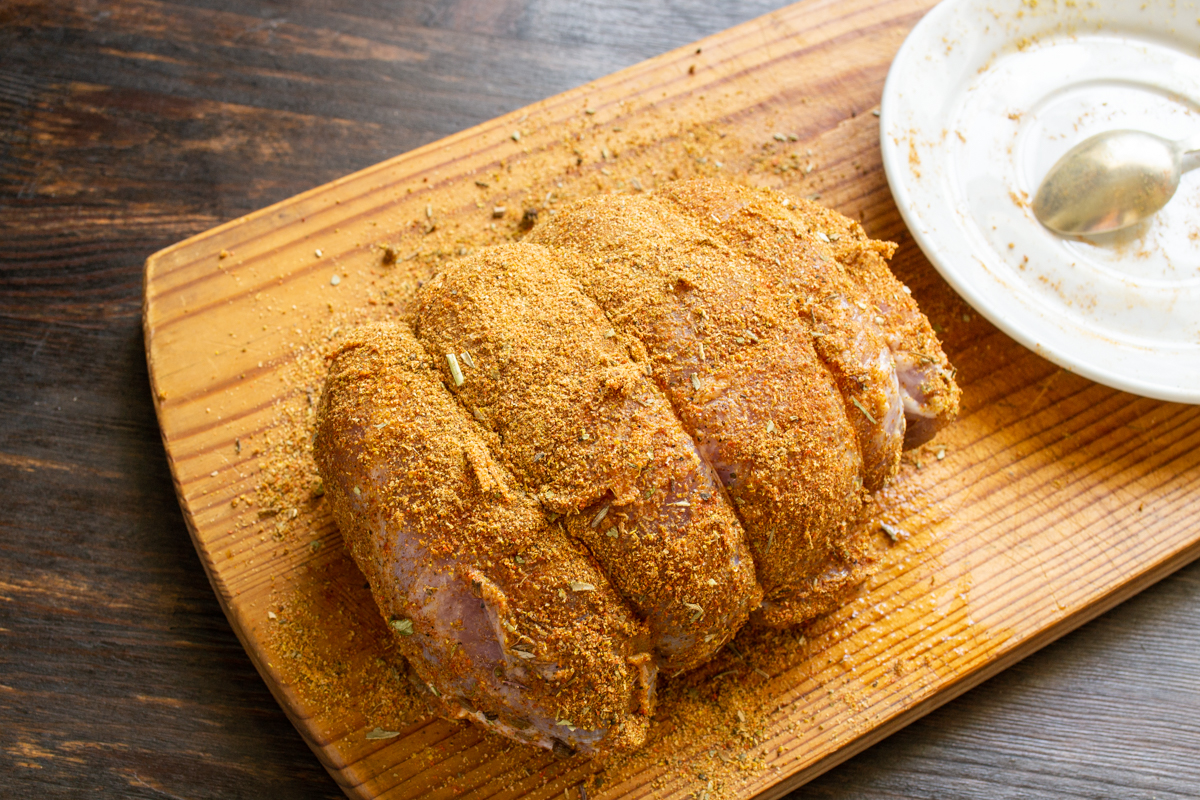
Evenly distribute the spice blend over the entire surface of the meat to create an appetizing crust.
Wrap the meat tightly in several layers of food-grade plastic wrap. Twist the ends firmly and tie them off securely with kitchen twine.
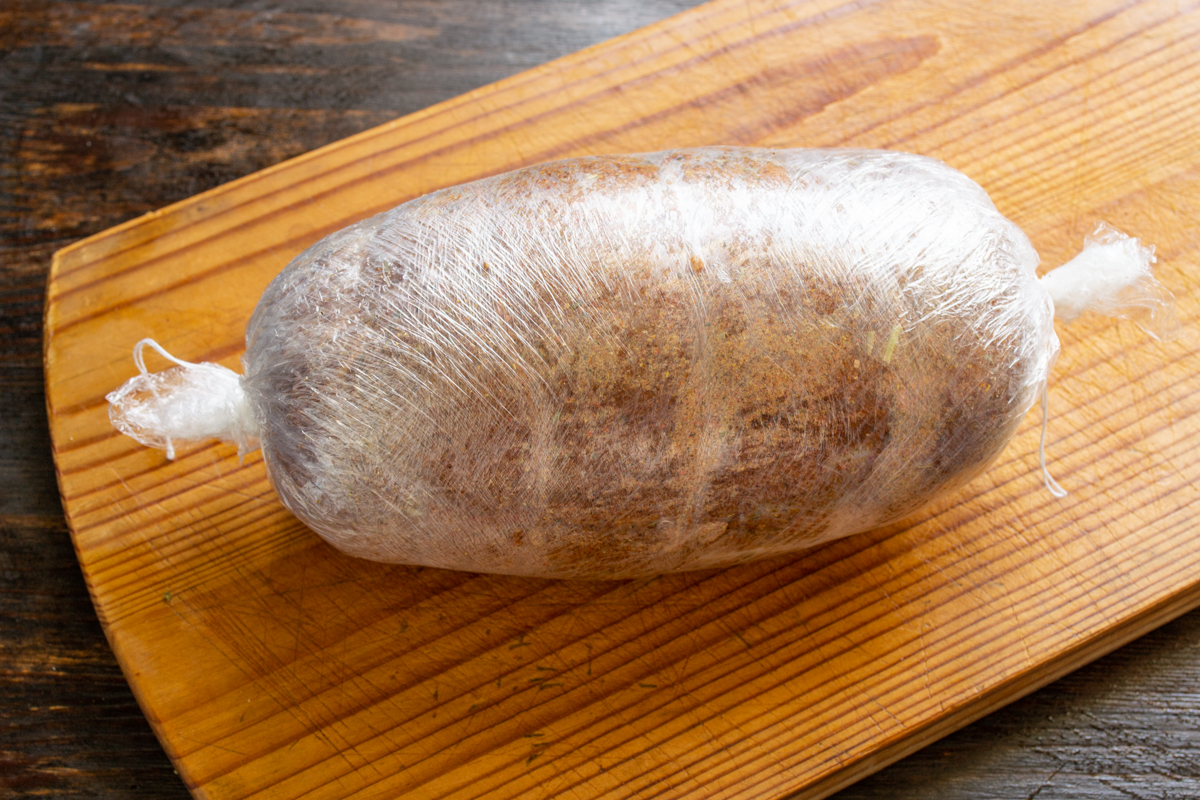
Wrap the pork in several layers of plastic wrap to trap all the juices inside during poaching.
Place the wrapped bundle into a pot and pour in enough cold water to submerge the ham completely. Begin heating it toward a boil. Poaching is the most crucial stage, as the juiciness of the ham depends entirely on temperature control—if you boil it too hard, you will end up with dry, overcooked meat in plastic. The water must not boil, nor should it cool down too much. If you have a kitchen thermometer, maintain a steady water temperature between 85°C and 90°C (185°F–194°F). If you don’t have a thermometer, try this method: heat the water slowly until it just reaches a boil, turn off the heat, wait 5 minutes, and then gently bring it almost back to a boil over the lowest possible heat. Repeat this cycle, never letting the water reach a rolling boil. This method requires your constant attention, but it works beautifully.
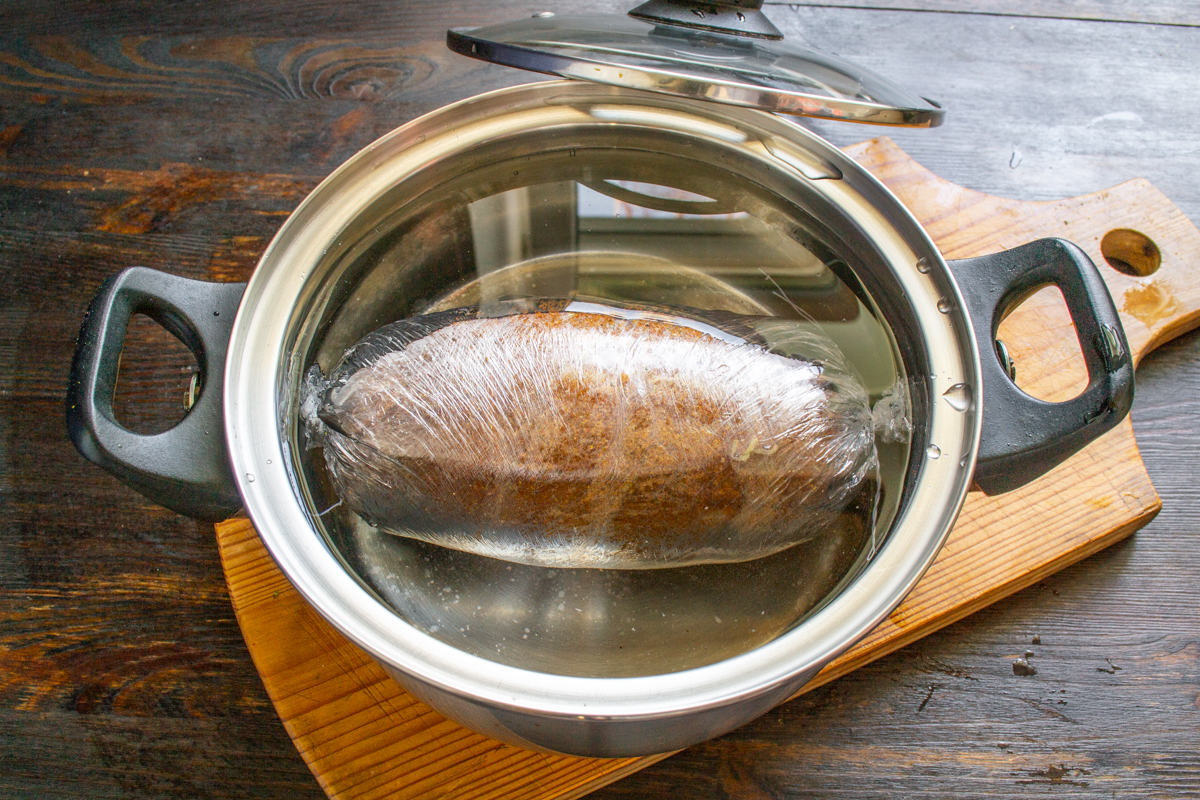
Poach at 85–90°C (185–194°F), avoiding a rolling boil so the meat retains its juiciness.
Remove the cooked ham from the pot and chill it in the refrigerator. Ideally, let it rest and mature in the fridge for 24 hours.
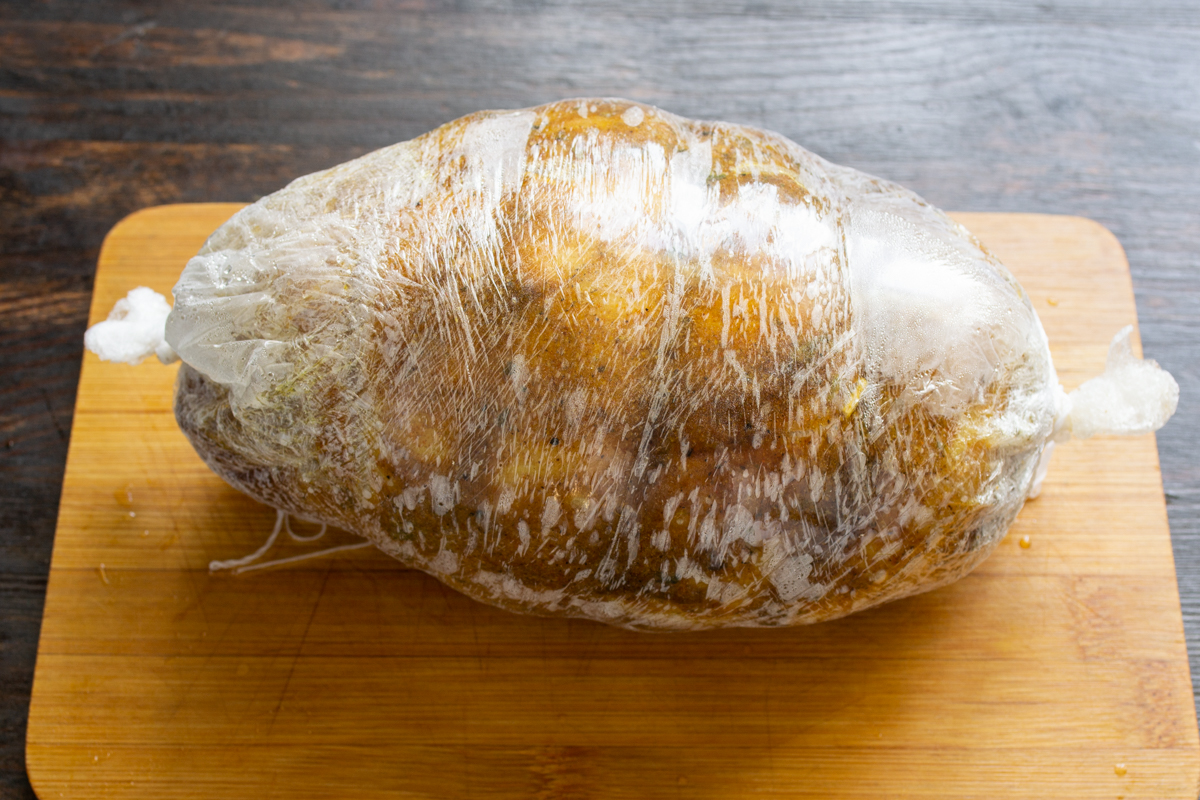
After cooking, let the ham cool completely and mature in the refrigerator for 24 hours.
Snip the end of the plastic wrap and drain the accumulated meat juices—they make a fantastic base for a pan sauce.
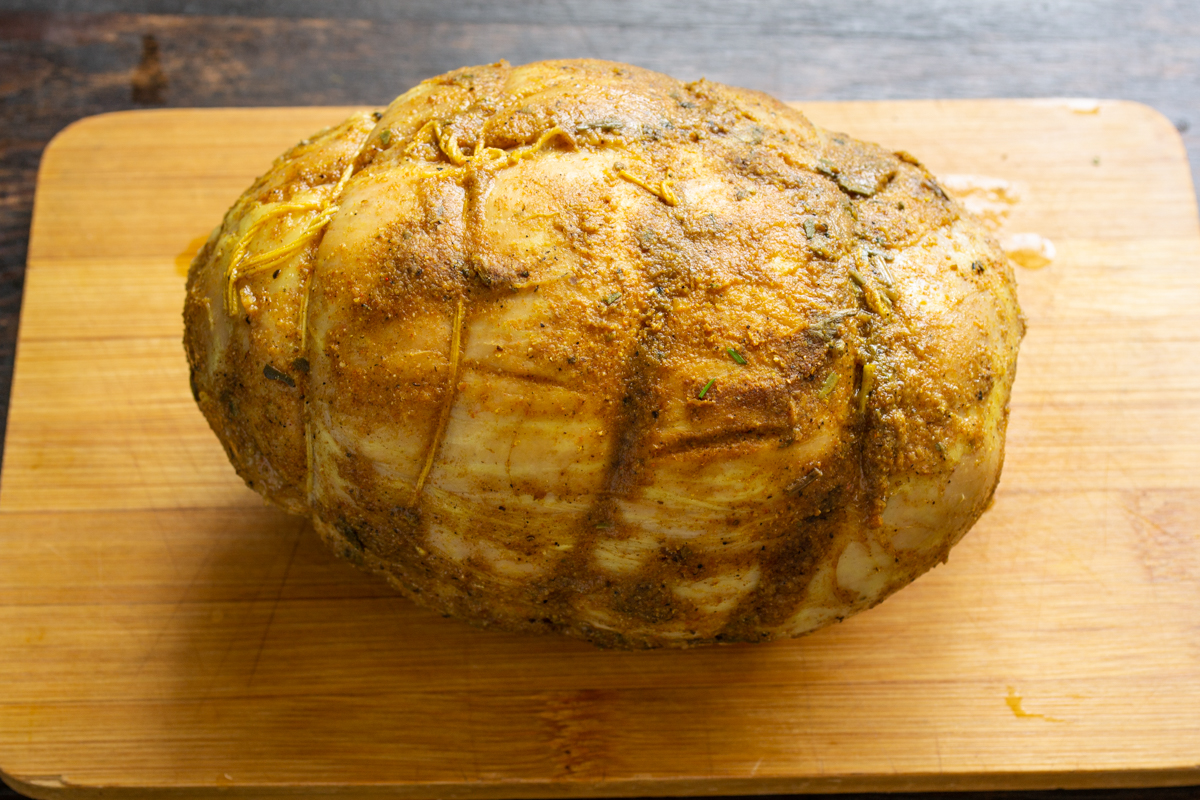
Remove the plastic wrap and drain the meat juices. The ham turns out firm and wonderfully aromatic.
Slice and enjoy your delicious homemade ham—lean, tender, and completely free of artificial additives.
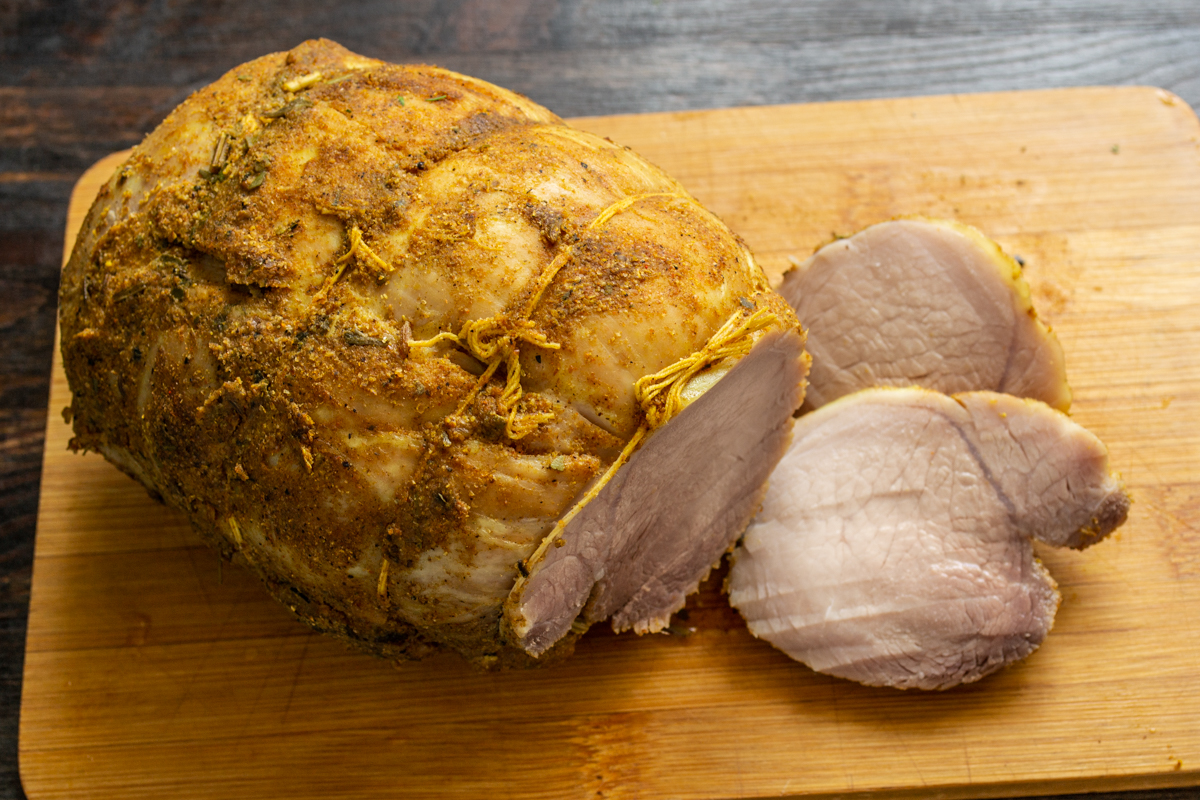
Slice the finished ham thinly. It is ideal for breakfast sandwiches or a festive charcuterie platter.
This stovetop poached pork ham is especially delicious when sliced paper-thin and served with sharp mustard or homemade prepared horseradish. It makes a fantastic foundation for hearty morning sandwiches or a standout centerpiece on a festive charcuterie board. If you want to give the meat a more woodsy, earthy note, try adding a few crushed juniper berries or a pinch of dried rosemary to the dry rub. Store the finished ham in the refrigerator, wrapped tightly in parchment paper to preserve its moisture. Don't be too quick to discard the savory juices trapped inside the plastic wrap after cooking—this concentrated broth serves as a brilliant base for a rich gravy or sauce. This natural alternative to store-bought cold cuts is not only healthier, but also gives you complete control over the quality and ingredients on your family's table.
0 comments