
Poaching homemade sausages in plastic wrap is a remarkably simple and accessible way to prepare a juicy meat dish without a single drop of extra fat or cooking oil. The tradition of boiling seasoned ground meat in casings goes back to ancient times, but modern home cooks have found a safe and convenient alternative to natural casings. Food-grade low-density polyethylene (LDPE) cling film easily withstands moderate heating temperatures up to 103–110°C (217–230°F), reliably locking in all the natural meat juices. Thanks to the addition of rolled oats and gentle poaching over low heat, the texture turns out incredibly tender, while the aroma of fresh herbs makes the dish truly mouthwatering.
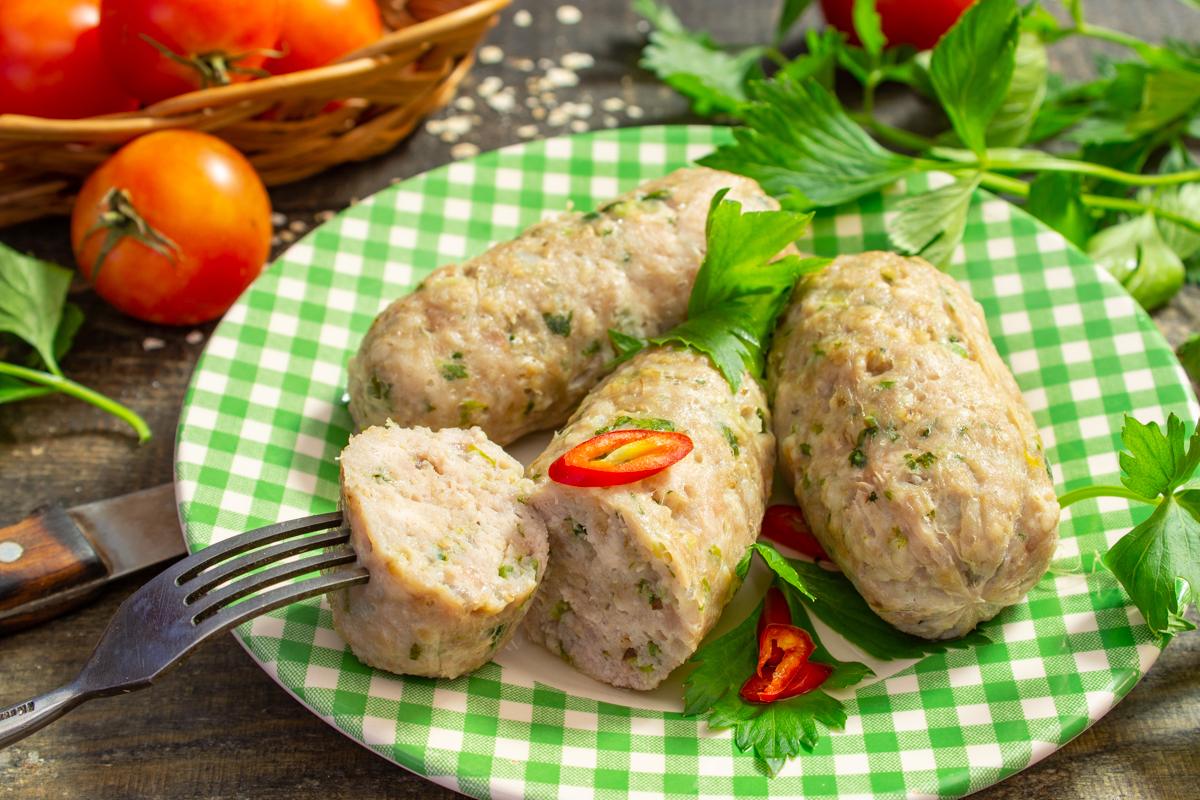
Tender, juicy, and wonderfully lean homemade sausages. Serve hot with your favorite side dish.
Ingredients
- 300 g (10.5 oz) homemade lean ground meat (pork and chicken breast)
- 1 onion
- 2 tablespoons finely chopped fresh parsley
- 2 tablespoons quick-cooking rolled oats
- Water, salt, and spices to taste
Instructions
To make these sausages, I grind my own meat using lean pork and boneless, skinless chicken breast. Because this mixture contains almost no fat, the resulting sausages are wonderfully light and lean.
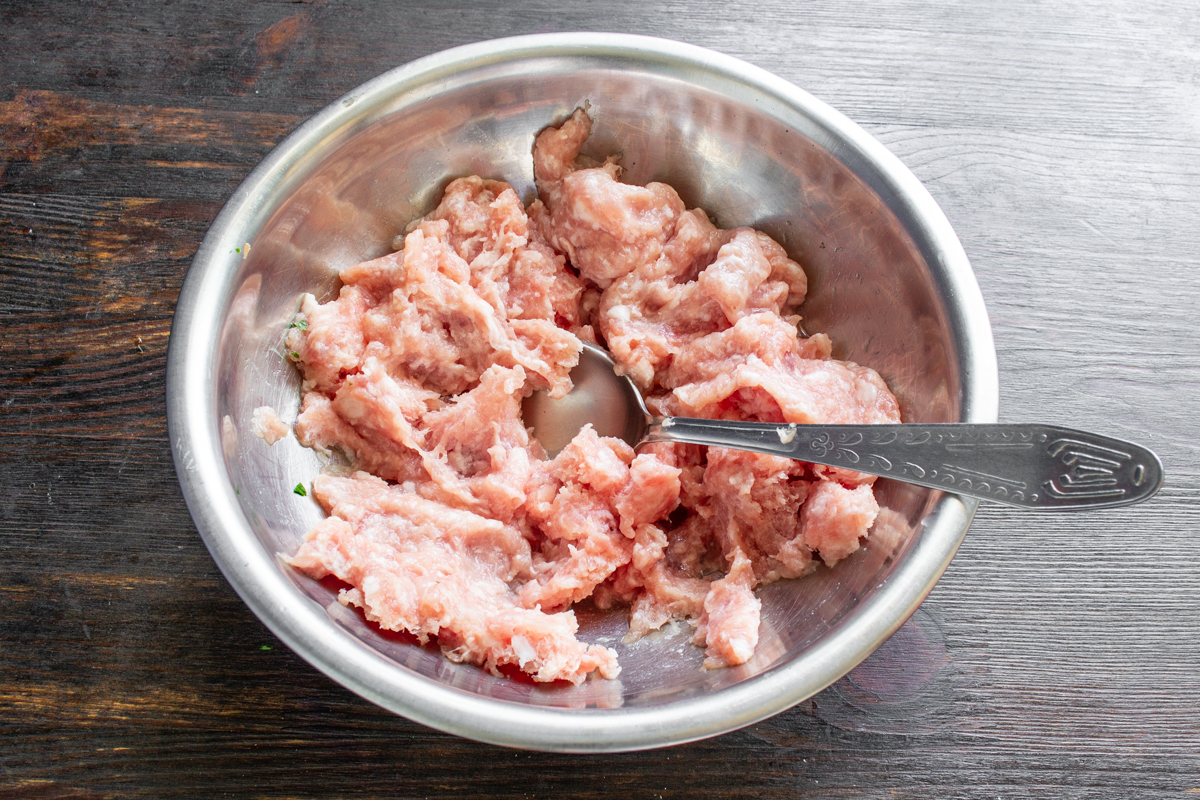
For a light, lean version, use lean pork and boneless chicken breast fillet.
Finely dice the onion and add it to the chilled ground meat.
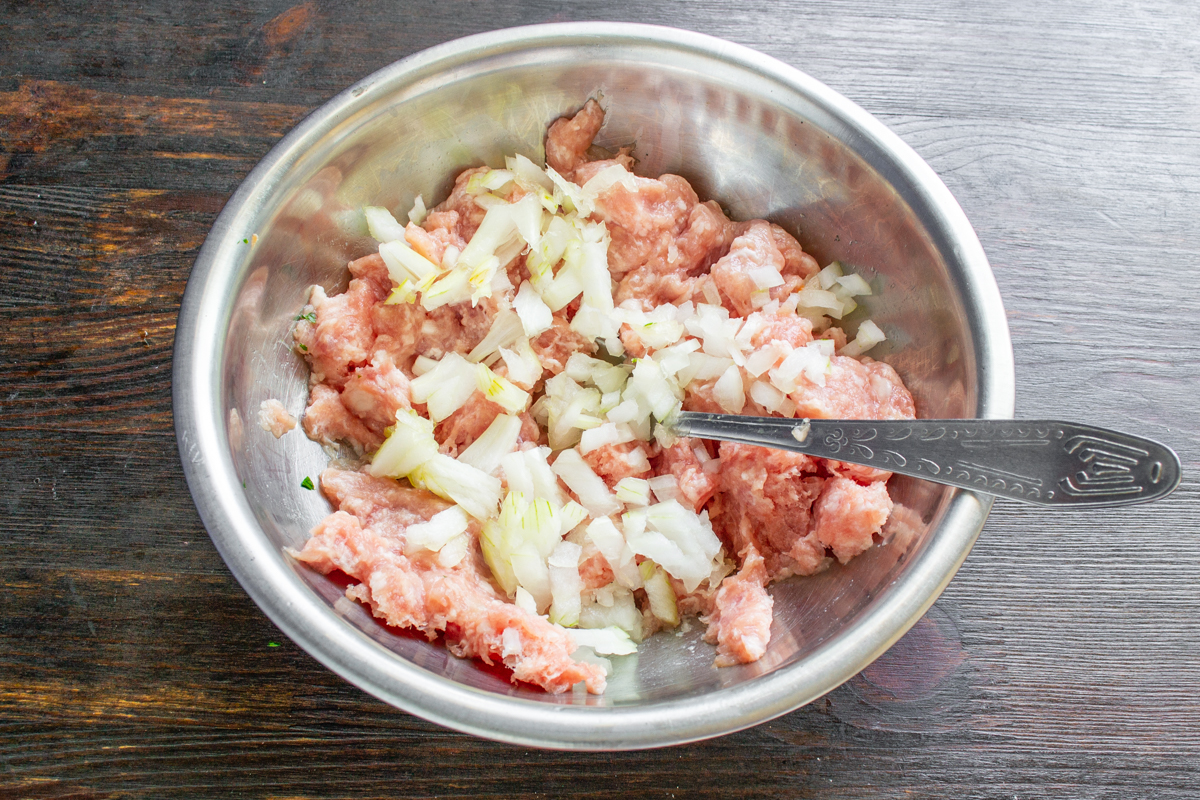
Finely diced onion will give the finished sausages juiciness and a pleasant aroma.
Finely chop a bunch of fresh parsley or cilantro. Add two tablespoons of the chopped herbs to the meat, season with salt to taste, and add your favorite spices—black pepper, garlic powder, khmeli-suneli (a fragrant Georgian herb and spice blend), or sweet paprika all work wonderfully.
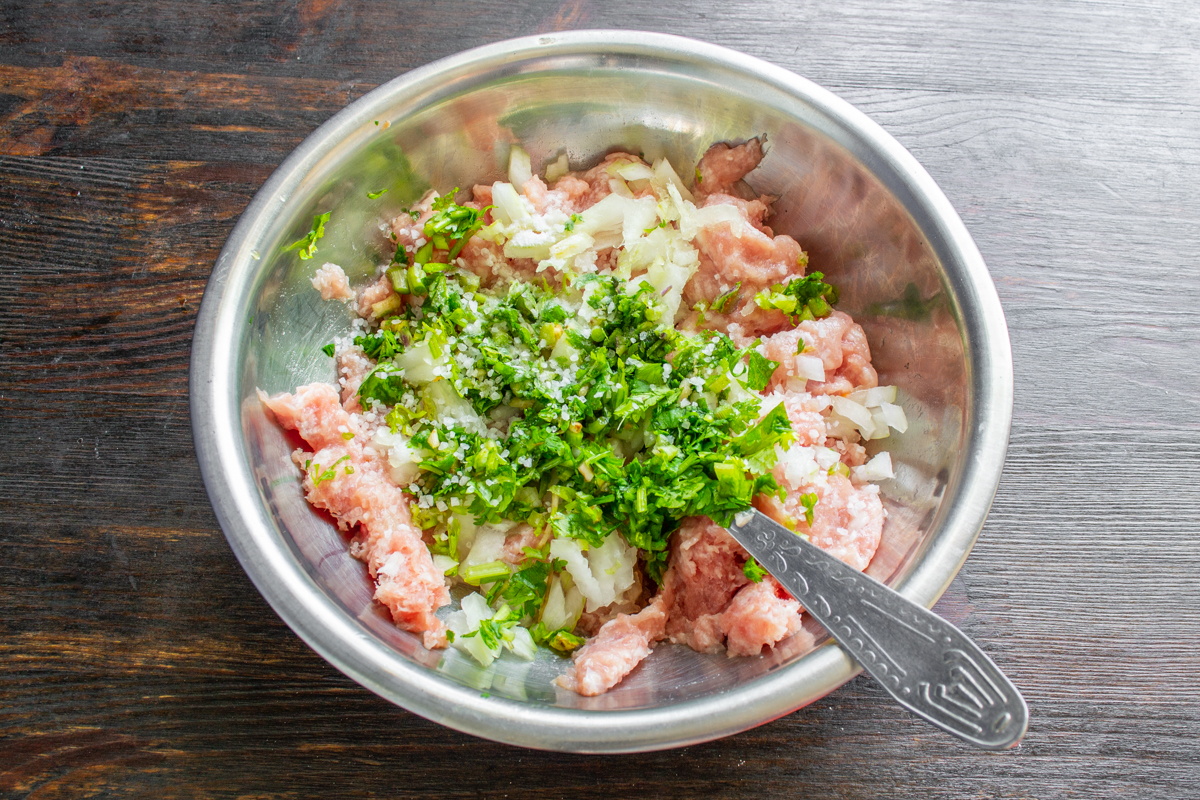
Add fresh parsley or cilantro, salt, and season with spices to taste.
Pour in the quick-cooking rolled oats and add 30–50 ml (2–3 tbsp) of cold water. If you are using store-bought ground meat and it already seems quite moist, skip the water—the producer has likely added moisture already.
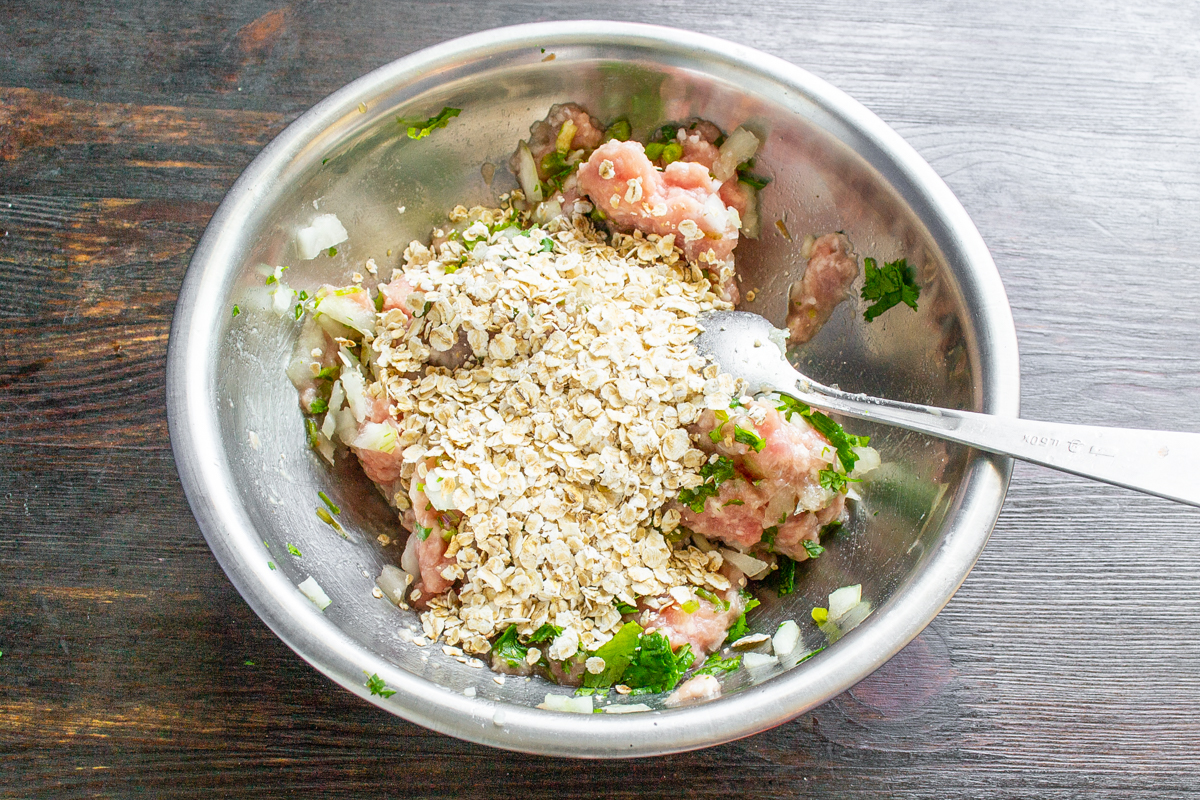
Rolled oats help bind the meat mixture and lock in moisture inside the sausages while poaching.
Mix the sausage meat thoroughly. Let it rest for 5 to 25 minutes so the oats can swell slightly and absorb the moisture. If you need to get dinner on the table quickly, you can skip this resting time.
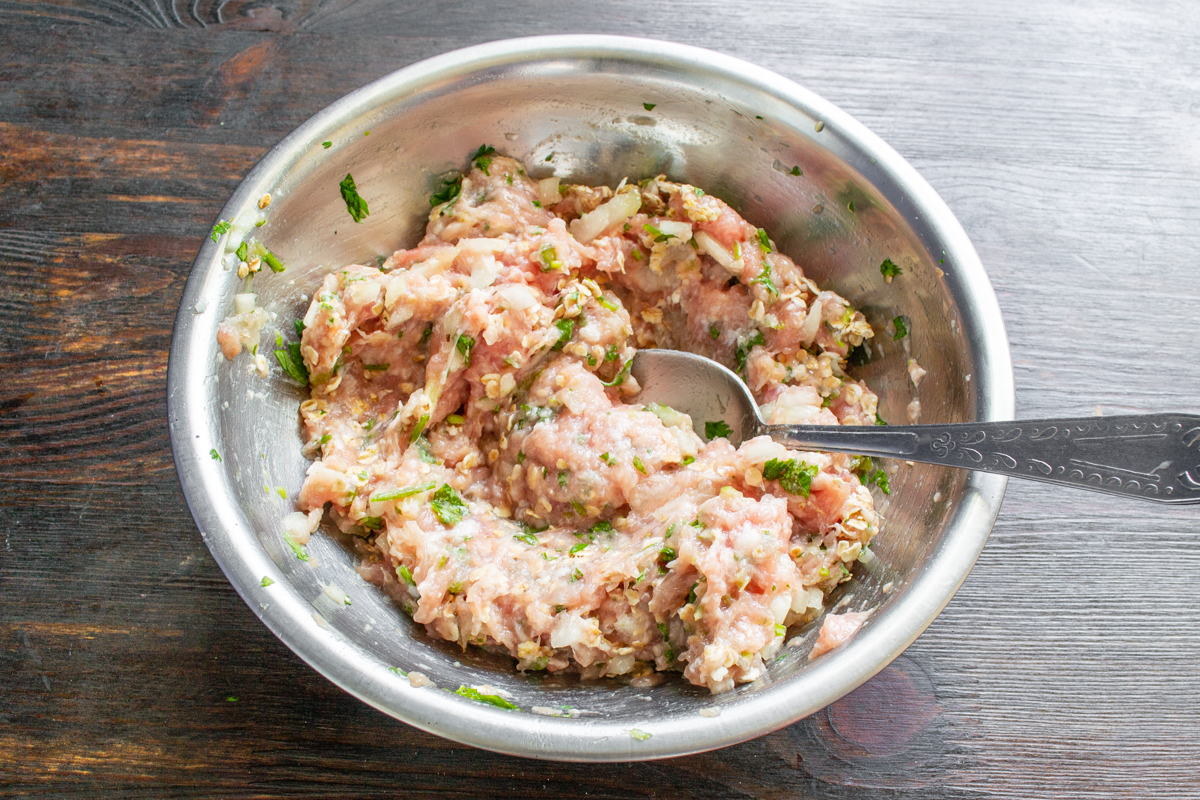
Mix all the ingredients thoroughly. The rolled oats will absorb excess moisture and give the sausages a more tender texture.
Divide the meat mixture into three equal portions. Place one portion onto a sheet of food-grade plastic wrap and roll it up tightly into several layers. Tie the ends of the wrap into knots or secure them tightly with kitchen twine. Repeat to form three sausages.
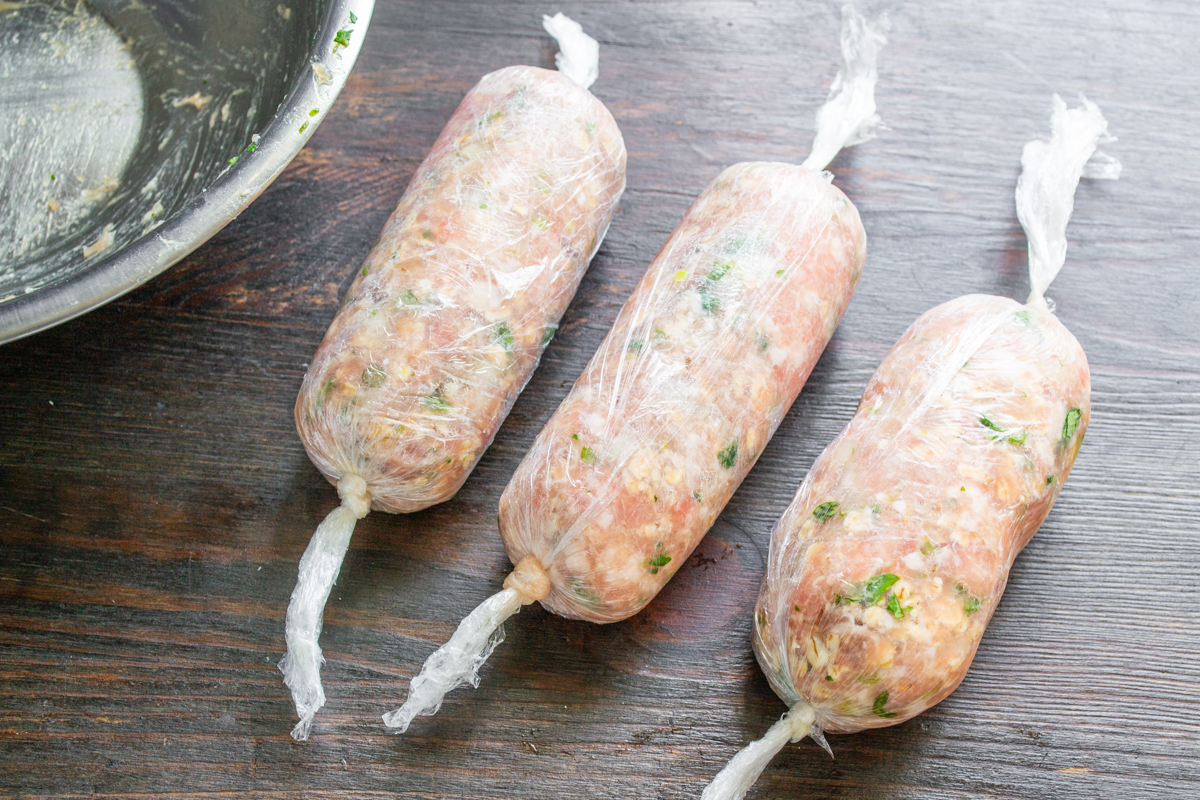
Tightly roll the meat portions in several layers of food-grade plastic wrap and securely tie the ends.
Fill a pot with water and place the sausages inside, making sure they are completely submerged.
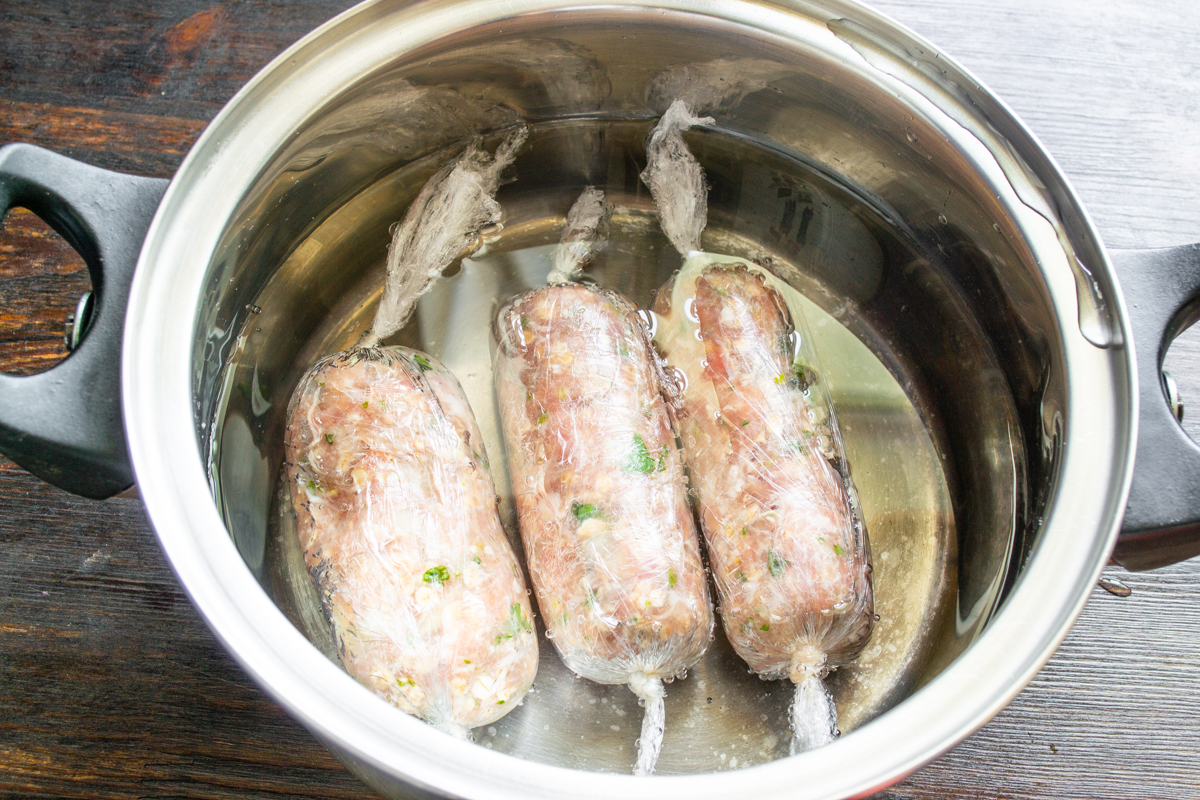
Place the wrapped sausages into a pot so they are completely covered with water.
Cover the pot with a lid and bring just to a boil. Immediately reduce the heat to low and gently poach for 20 minutes. The water in the pot should not actively boil; its temperature must not exceed 90°C (194°F). If the water starts to bubble, turn off the heat for a minute or pour in a splash of cold water to stop the boiling. After 20 minutes, turn off the heat and leave the sausages in the hot water for another 10 minutes.
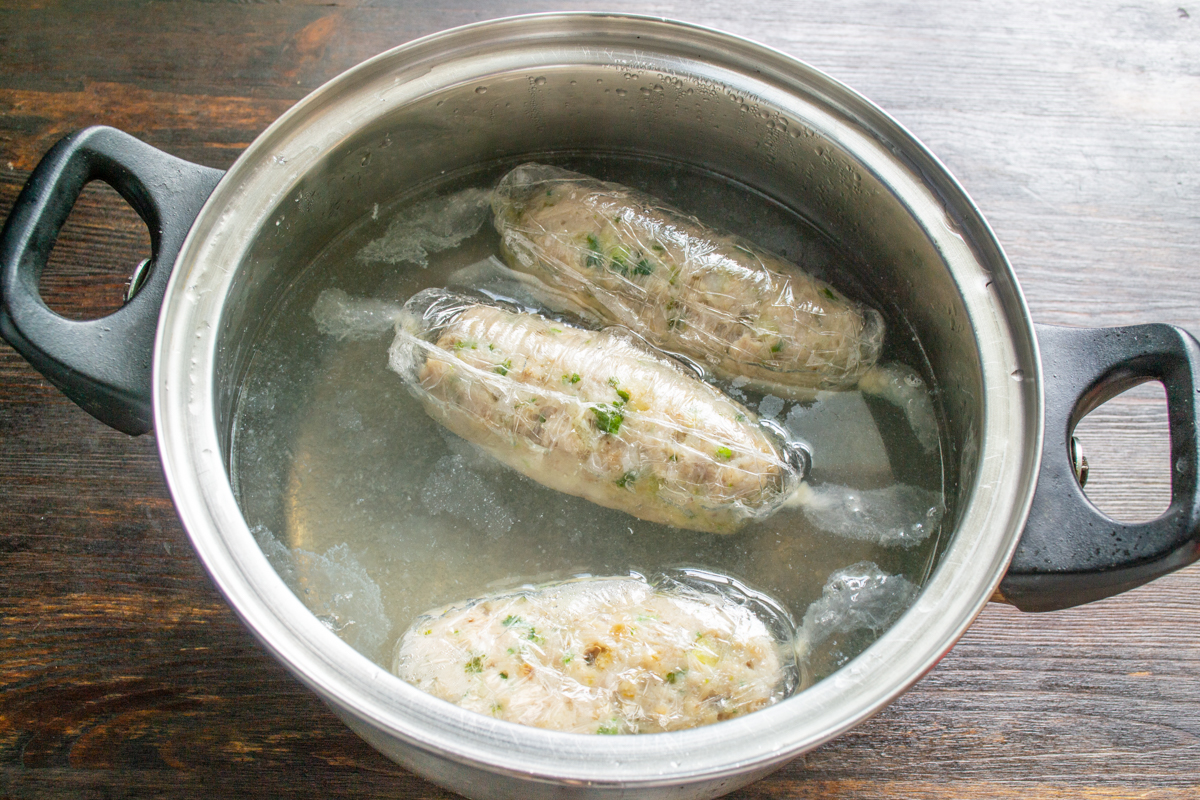
Poach over the lowest heat without active boiling for about 20 minutes to preserve their juiciness.
Remove the sausages from the pot using tongs and transfer them to a plate. Let them cool slightly, then carefully snip and remove the plastic wrap. If there is a lot of savory juice trapped inside the wrap, save it and stir it into a white pan sauce.
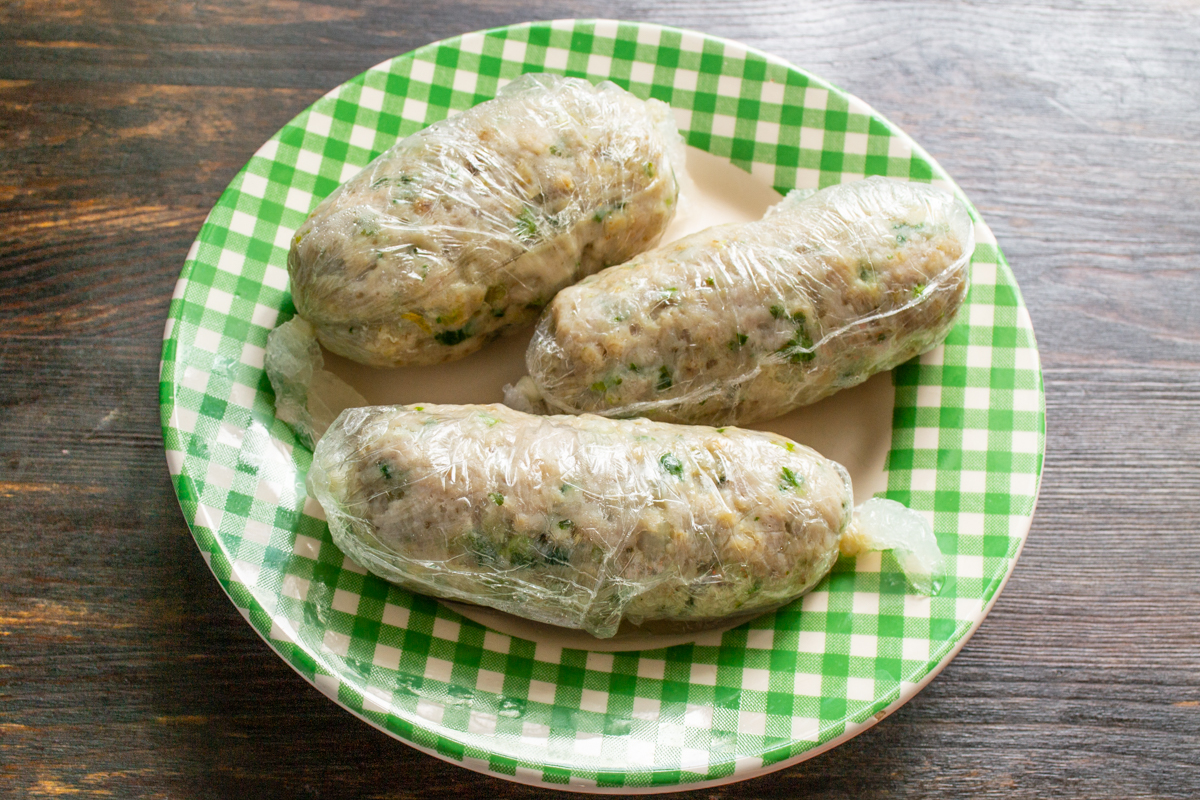
Remove the sausages from the water and let them cool slightly before cutting away the plastic wrap.
Poaching homemade sausages in plastic wrap is a fantastic and safe way to prepare lean, healthy meals. Food-grade cling film is made from specialized materials designed to safely contact food—it is a harmless and very practical kitchen tool. However, if the plastic wrap is not explicitly labeled as food-safe and heat-resistant (microwave-safe), do not use it for this recipe!
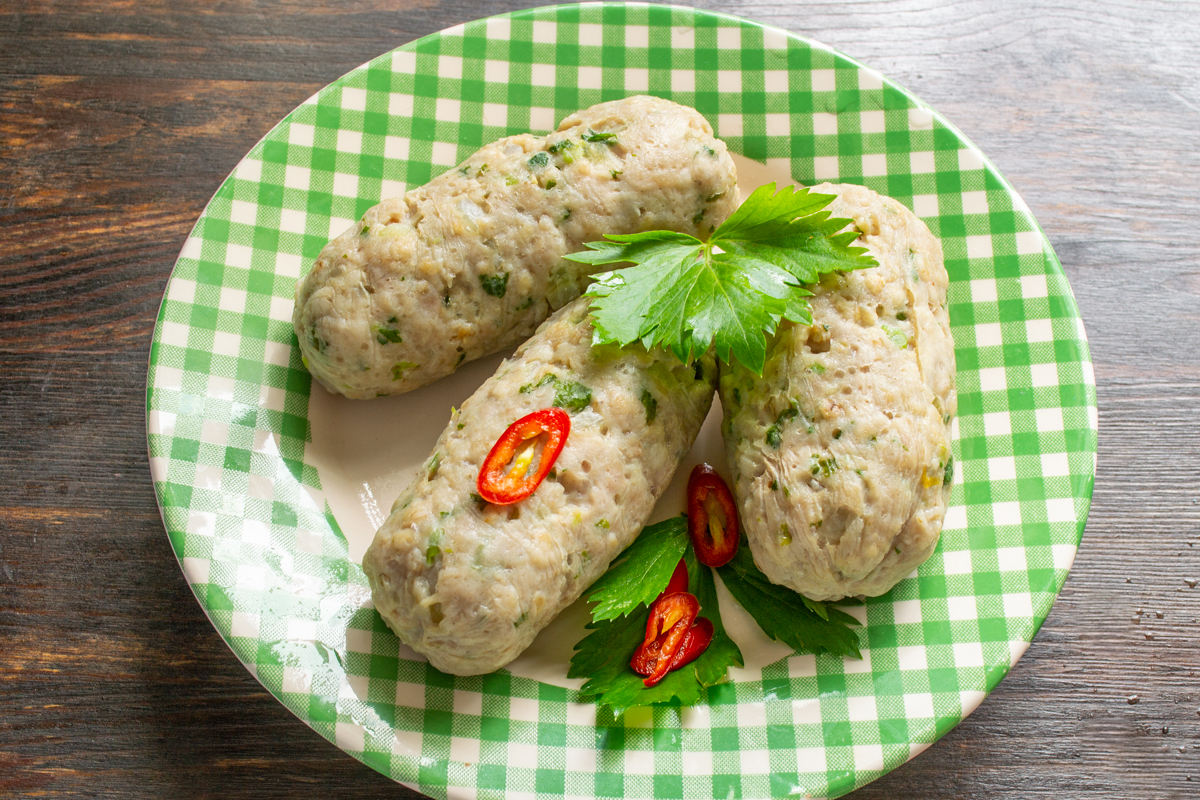
Carefully remove the plastic wrap. The savory meat juices trapped inside can be used to make a pan sauce.
These homemade poached sausages taste wonderful both piping hot and chilled. Fluffy mashed potatoes, roasted baby potatoes, or a light seasonal vegetable salad dressed with fragrant olive oil make ideal side dishes. If you want to give the sausages a more rustic, golden look before serving, simply unwrap them and sear them on a smoking-hot grill pan for just 30 seconds to get appetizing grill marks. These sausages are also very convenient for meal prep: they keep beautifully in the refrigerator for two to three days while staying nice and juicy. Feel free to experiment with the seasonings by adding a pinch of nutmeg, chopped sun-dried tomatoes, or even finely diced bell pepper for a colorful mosaic cross-section. Don't discard the savory meat juices left inside the wrap after cooking—they make an excellent base for a rich homemade cream or tomato sauce.
0 comments