
Tushenka (canned meat stew) with perlovka (pearl barley), often called 'Tourist's Breakfast', is a legendary flavor familiar to generations of hikers and outdoorsmen. In the past, such preserves were indispensable for any camping trip, combining the rich nutrition of meat with the hearty satisfaction of grains without needing complex storage conditions. This homemade version tastes infinitely better than the store-bought kind: the pork becomes incredibly tender and literally melts in your mouth, while the barley absorbs the meat juices and spices, turning into a velvety side dish. The preparation only requires patience during the slow simmering process. In the end, you get a strategic reserve of ready-to-eat meals, deeply infused with the comforting aromas of bay leaf and black pepper.
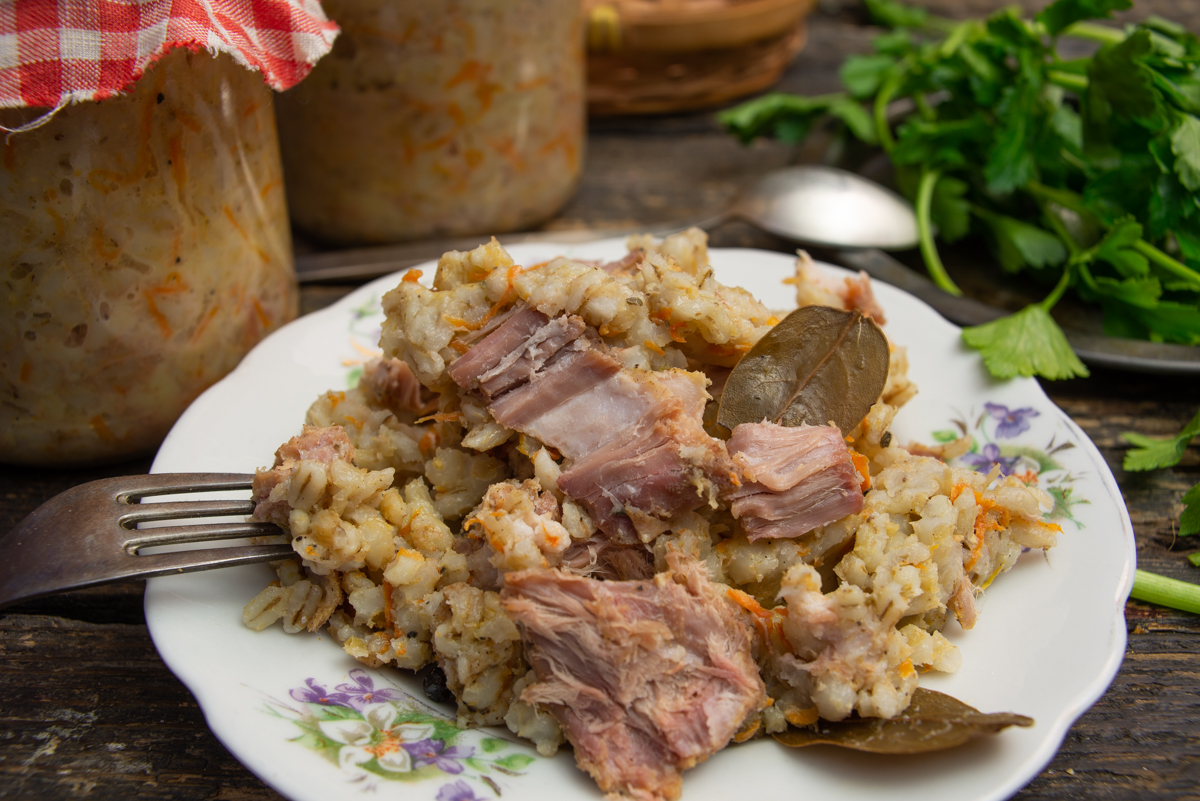
Delicious and hearty homemade pork stew with pearl barley is a perfect staple for a quick dinner.
Ingredients
- 800 g (1.7 lbs) fatty pork
- 400 g (14 oz) perlovka (pearl barley)
- 1 large onion
- 1 large carrot
- ground black pepper
- favorite meat seasonings
- bay leaves
- black peppercorns
- water
How to make homemade pork stew with pearl barley
Rinse the perlovka (pearl barley) thoroughly several times until the water runs clear. Cover with cold water and let it soak overnight.
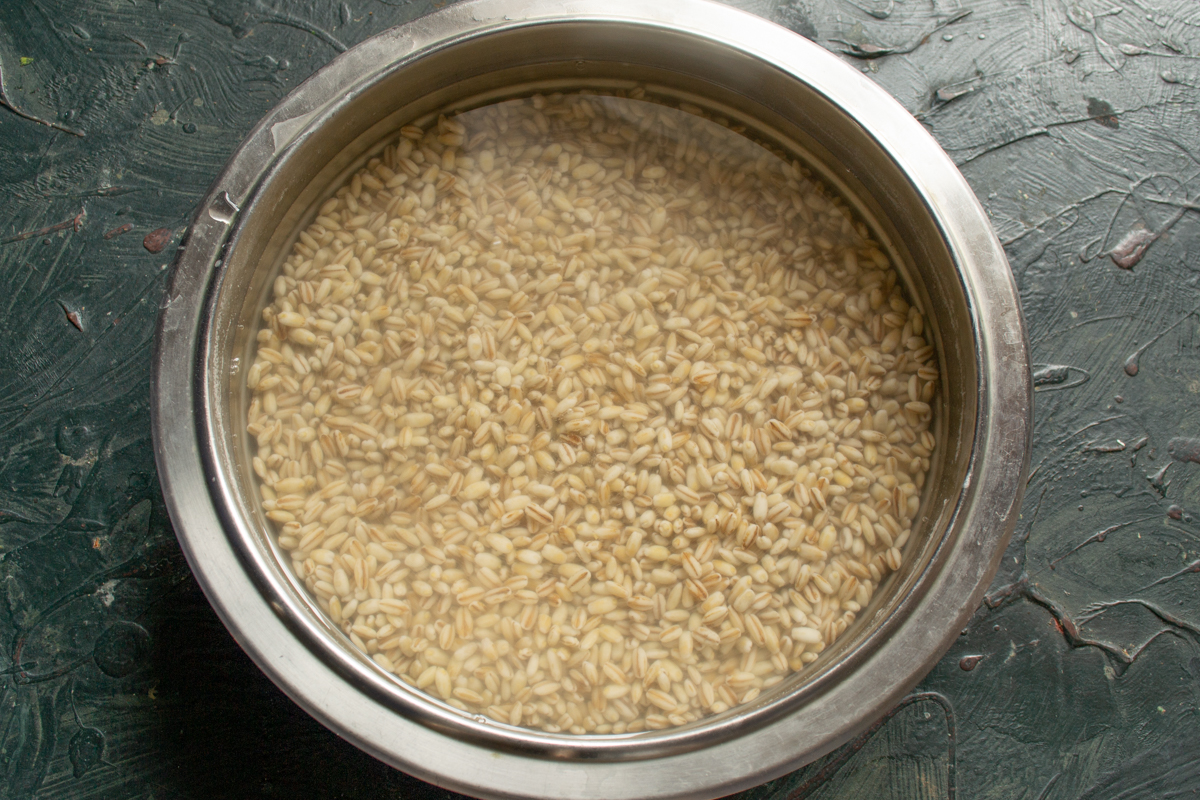
Soaking pearl barley overnight allows the grains to plump up and cook directly in the jar without pre-boiling.
The next day, drain the soaked barley in a fine mesh strainer, rinse again under running water, and leave it to drain completely.
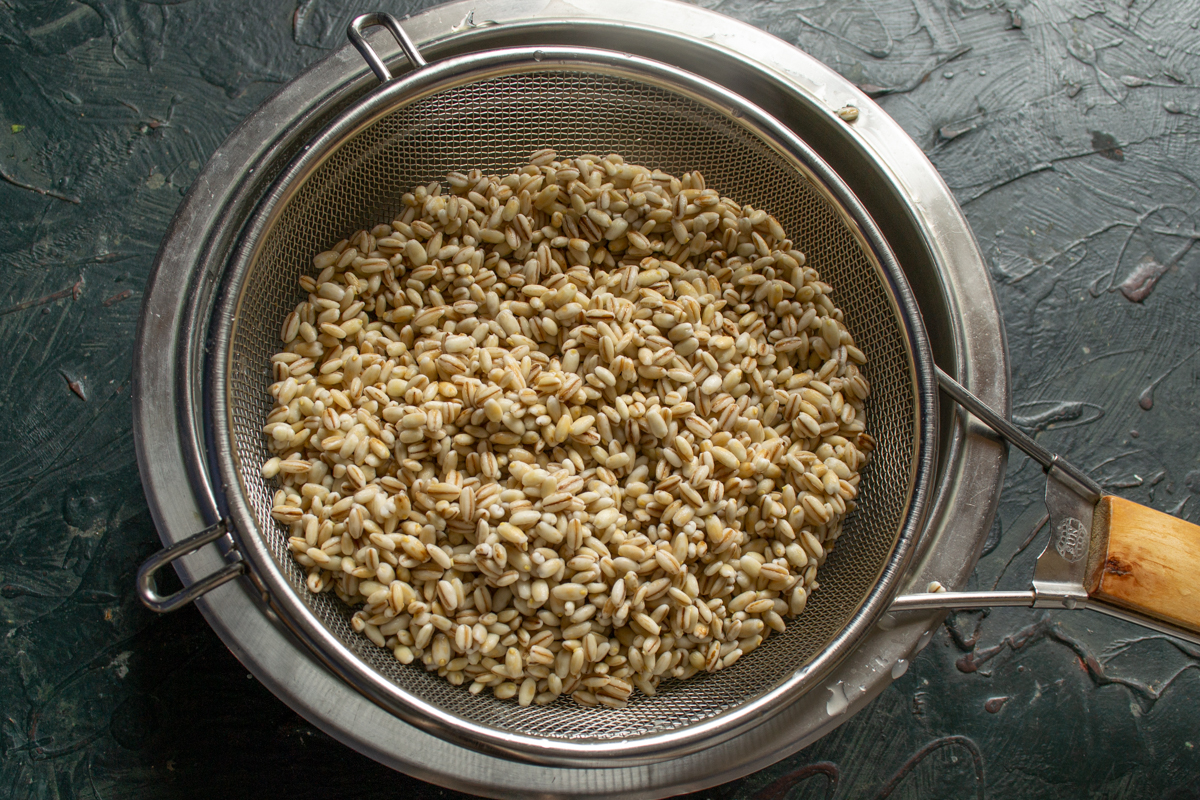
Thoroughly rinse the grains after soaking to remove excess starch.
Cut the fatty pork into 1-inch (2.5 cm) cubes. For this tushenka (canned meat stew), pork neck or shoulder with thick layers of fat works best. Place the diced meat into a large pot or basin.
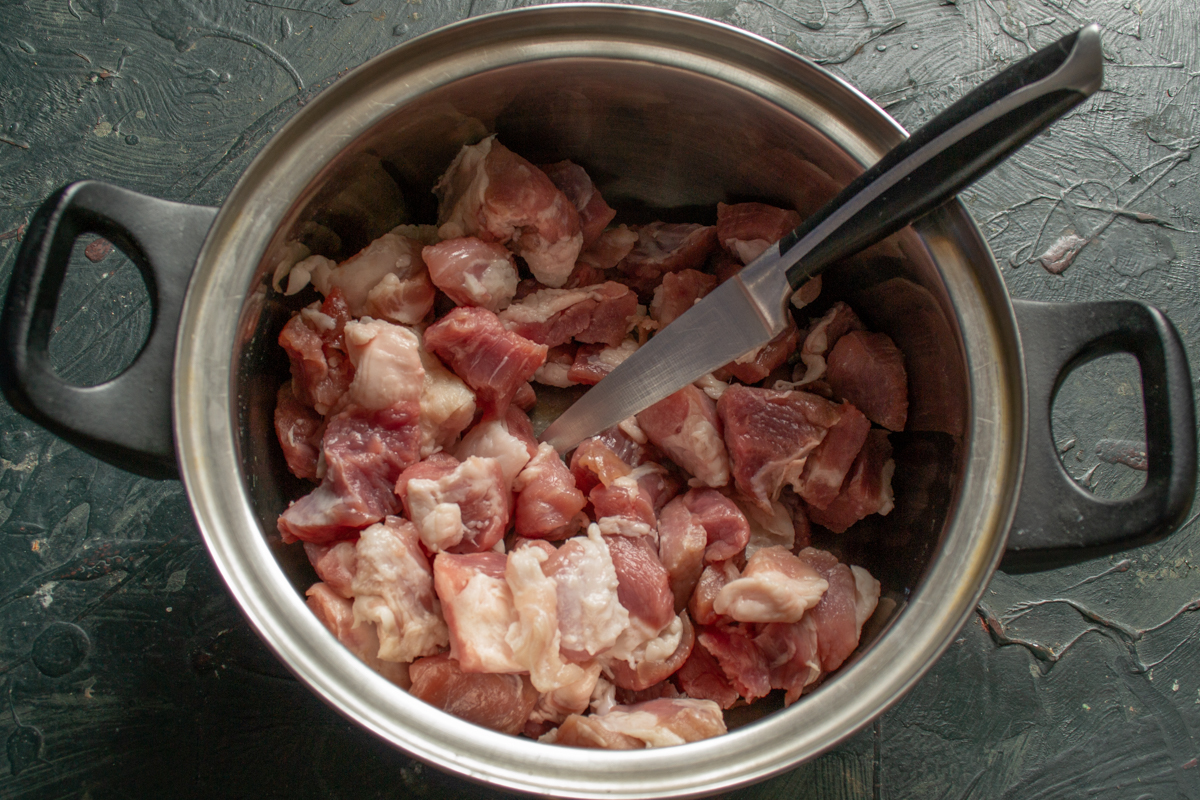
For a juicy stew, choose cuts of pork with visible layers of fat.
Finely chop the onion and mix it thoroughly with the pork.
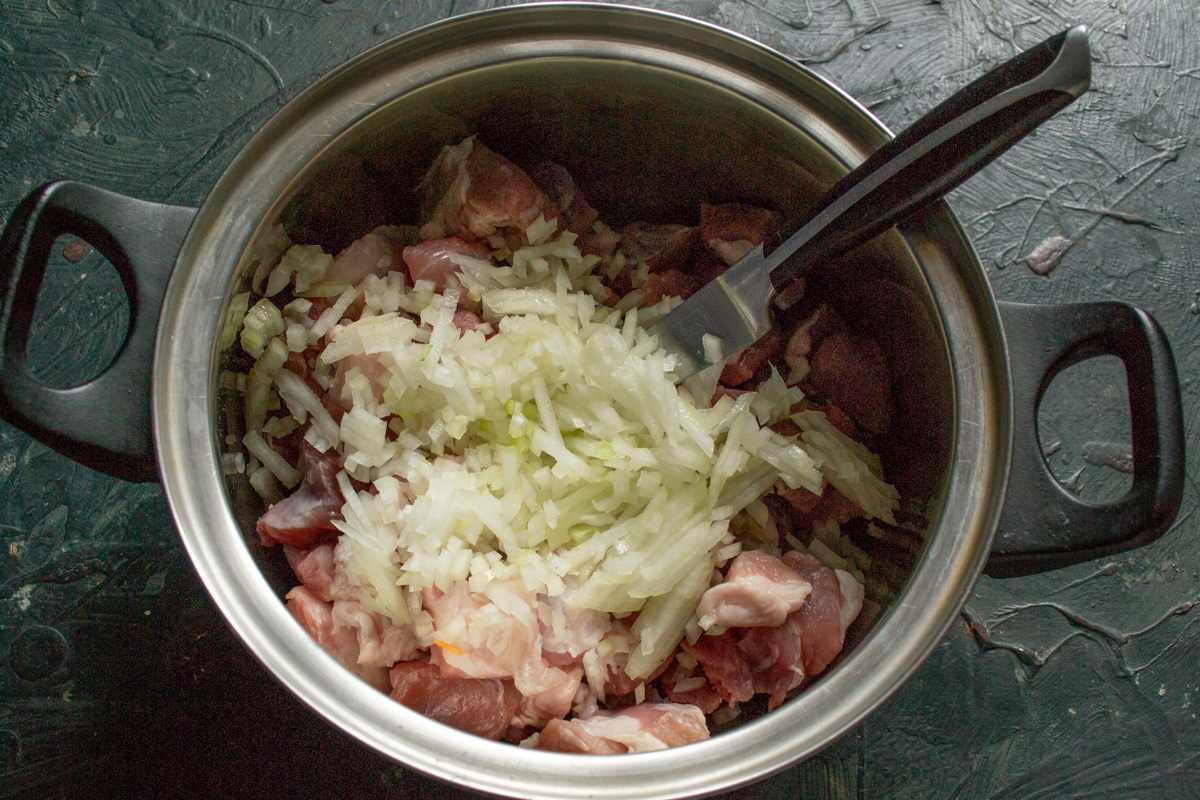
Onion is an essential ingredient that adds juiciness and deep flavor to the meat.
Grate the fresh carrot using a fine grater. Vegetables need to be finely shredded so they do not take up precious space in the jar.
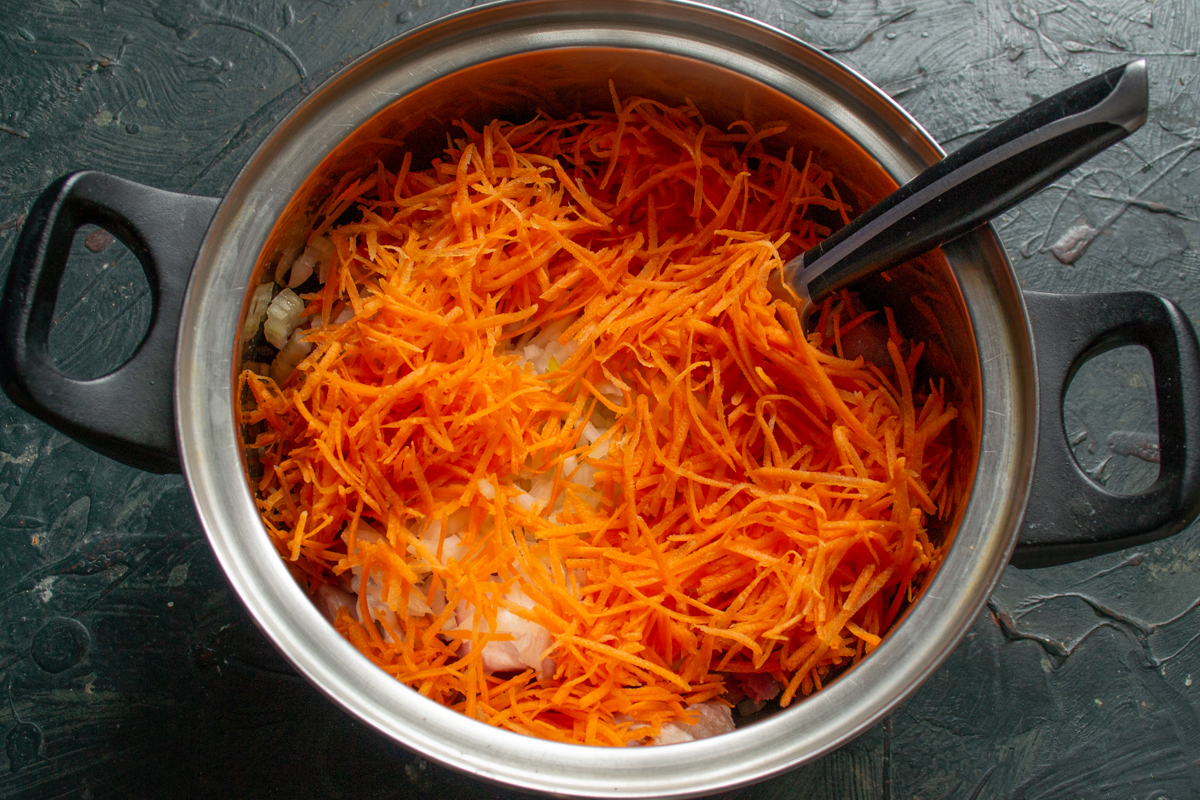
Finely grated carrots complement the dish and give it a brighter, appetizing color.
Add the soaked pearl barley to the mixture. There is no need to pre-cook the grains; soaking is more than enough.
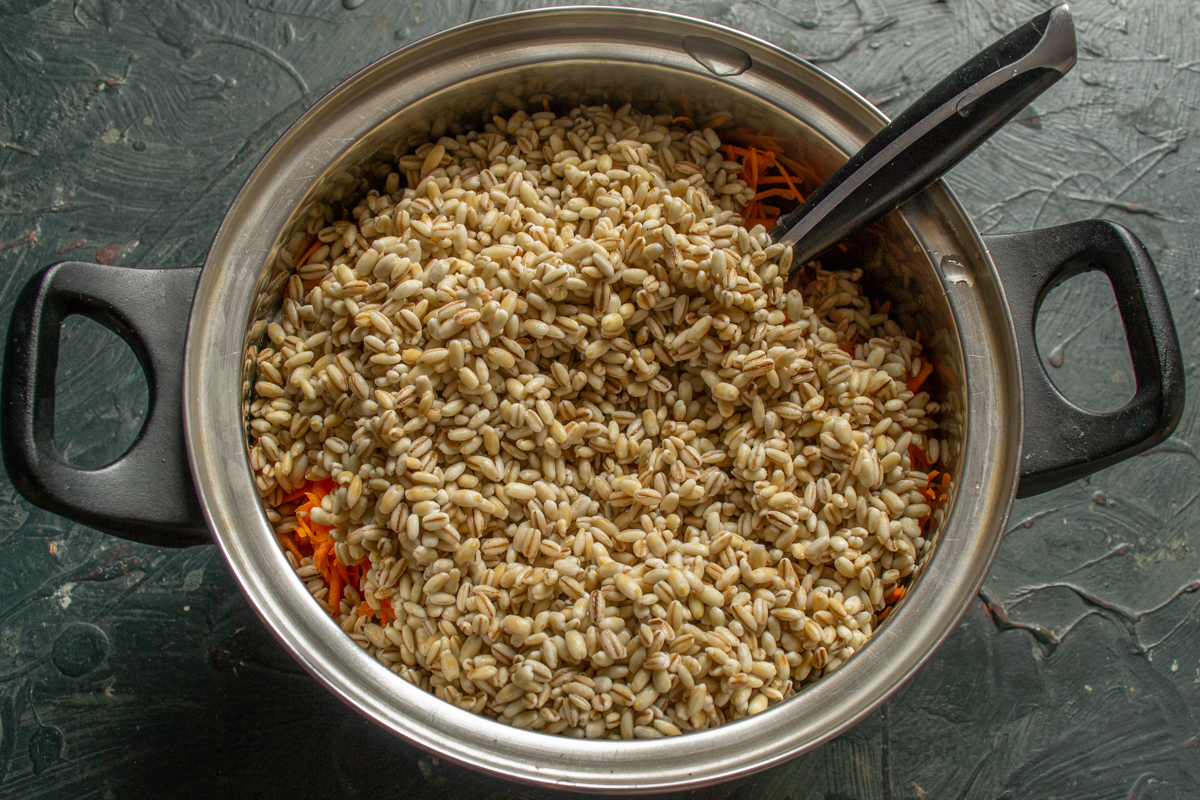
Add the soaked pearl barley to the rest of the ingredients before mixing.
Season with salt to taste. Add half a teaspoon of ground black pepper and a pinch of your favorite meat seasonings, if desired.
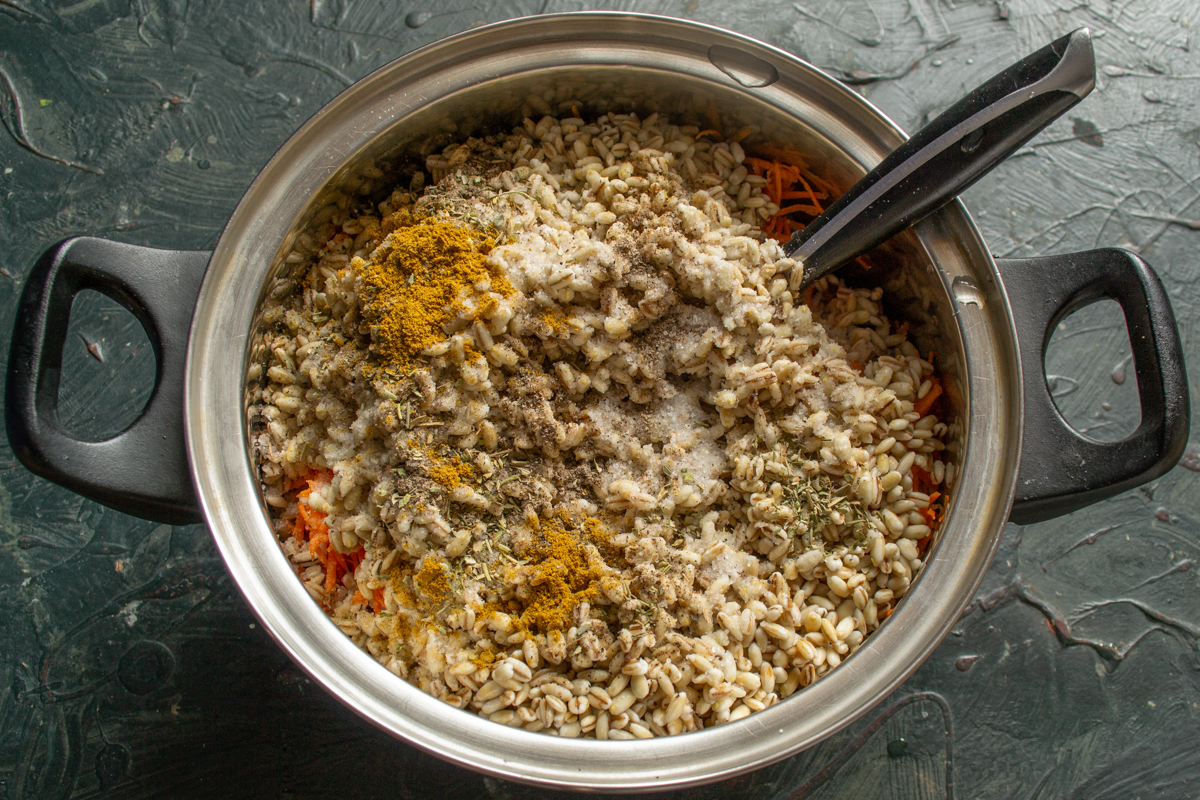
Use salt, black pepper, and your favorite meat spices to build a rich flavor profile.
Use your hands to mix all the ingredients thoroughly, ensuring an even distribution. You want to avoid any isolated pockets of just meat or just barley.
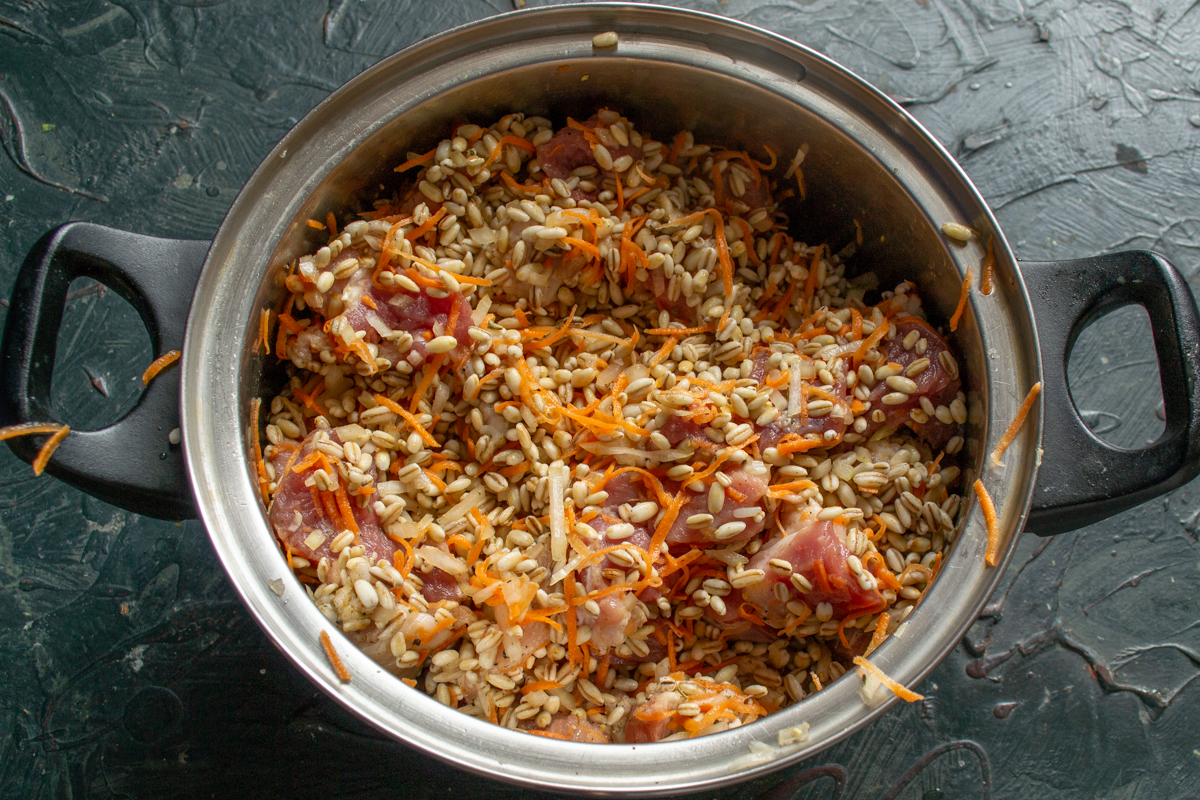
Thoroughly mix everything by hand to ensure the meat and pearl barley are evenly distributed.
Thoroughly wash the jars and lids, then dry them in a preheated oven for 10 minutes. Absolute medical sterility isn’t required here, as the raw ingredients aren’t sterile anyway. Pack the mixture into the jars loosely, leaving about an inch (2 cm) of headspace at the top. Depending on the size of your cuts, you will need 3 to 4 pint (500 ml) jars.
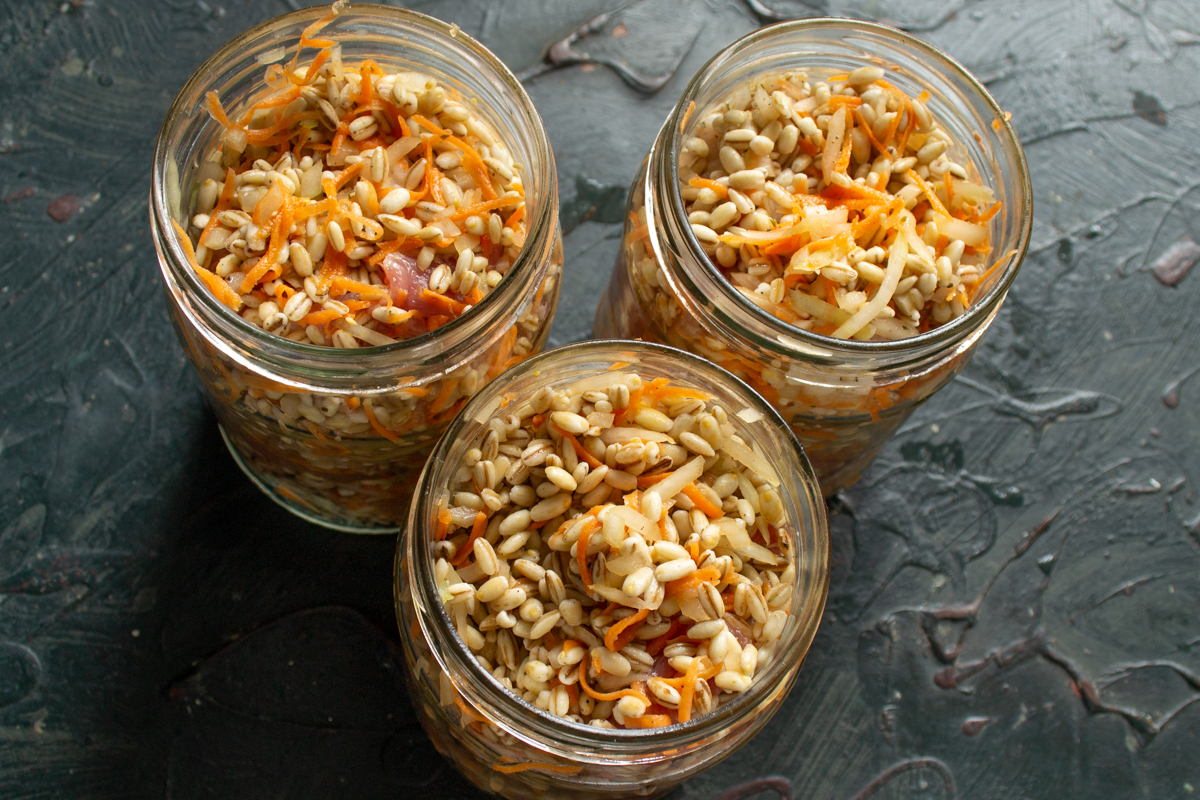
Pack the prepared jars, leaving about an inch of empty space at the top.
Boil water and pour it into the jars almost up to the threads. Slide a clean knife or the handle of a spoon down the sides to release any trapped air bubbles and allow the water to fill all empty spaces.
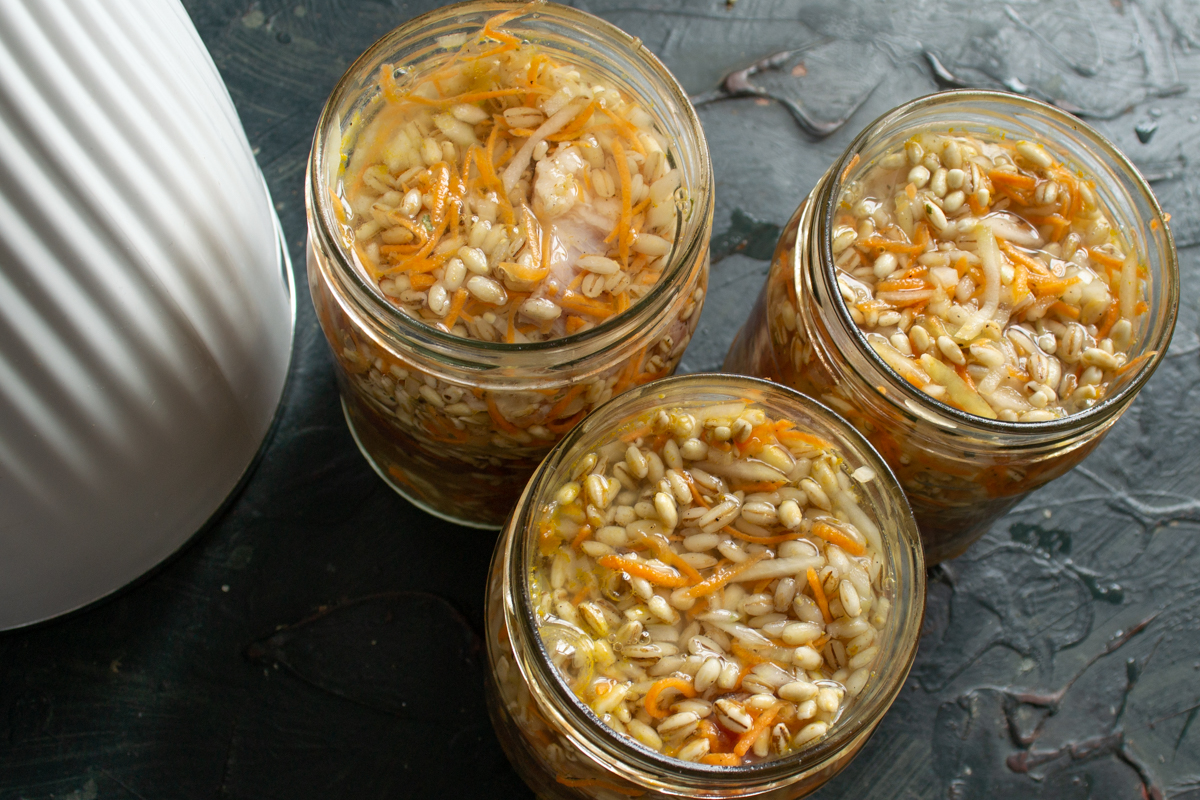
Pour boiling water into the jars and help it reach the bottom to remove any trapped air bubbles.
Place 2 bay leaves and a few black peppercorns on top of the mixture in each jar.
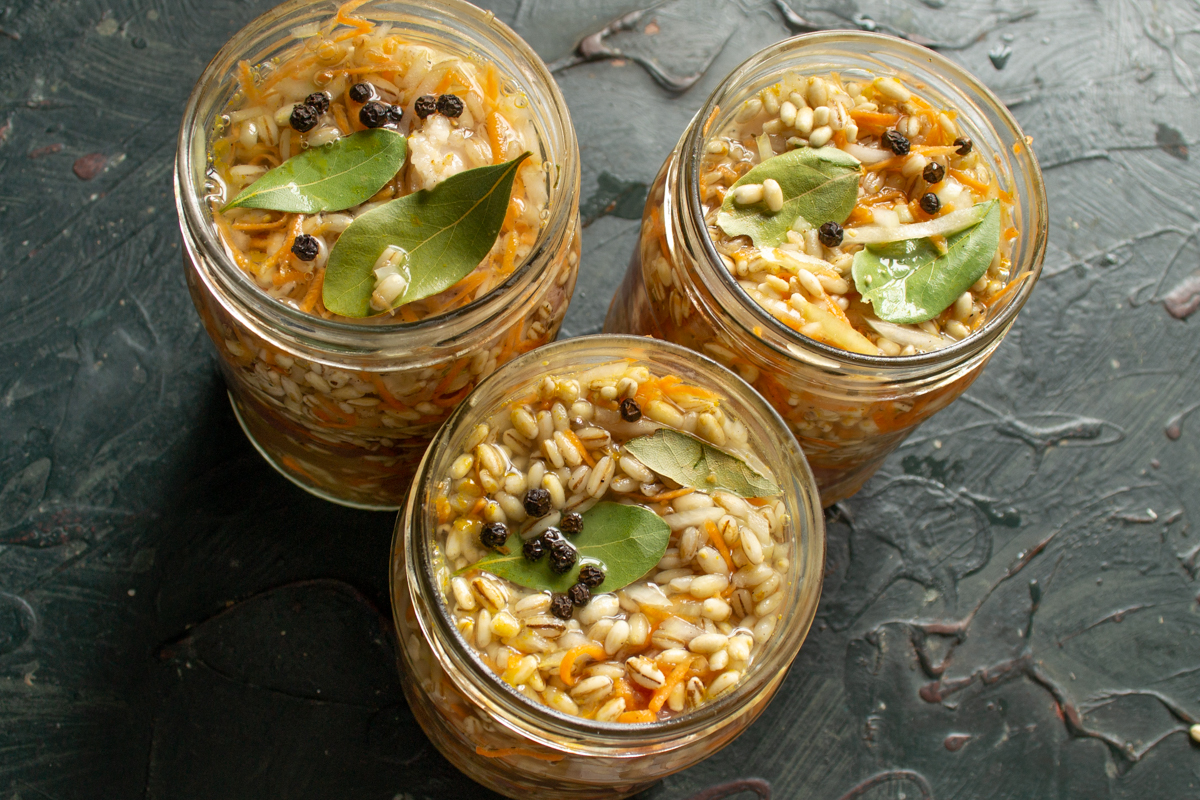
Place bay leaves and whole black peppercorns on top to release their aroma during the slow cooking.
Screw the lids on tightly. If you are using a canning machine for traditional metal lids, seal them hermetically at this stage.
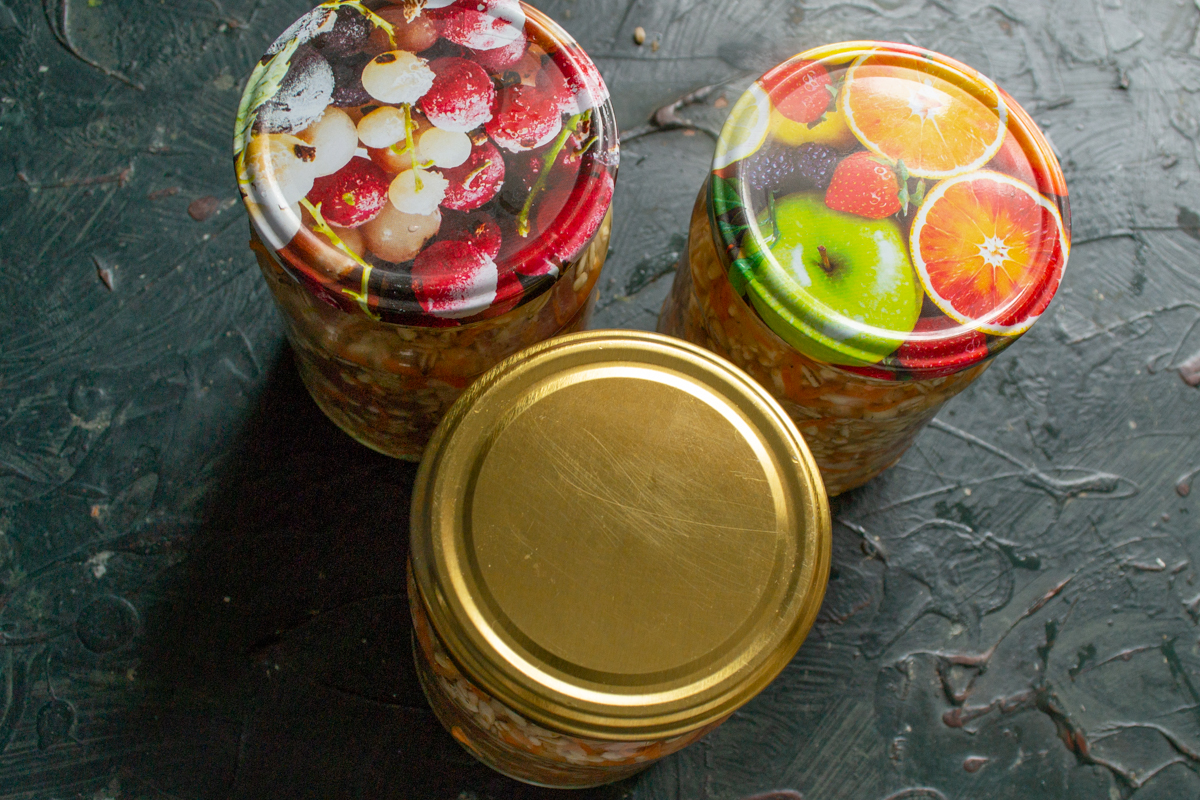
Tightly screw on or seal the lids before beginning the thermal processing.
Place a cloth napkin or a kitchen towel at the bottom of a deep, heavy-bottomed pot. Arrange the jars on the cloth so they do not touch each other.
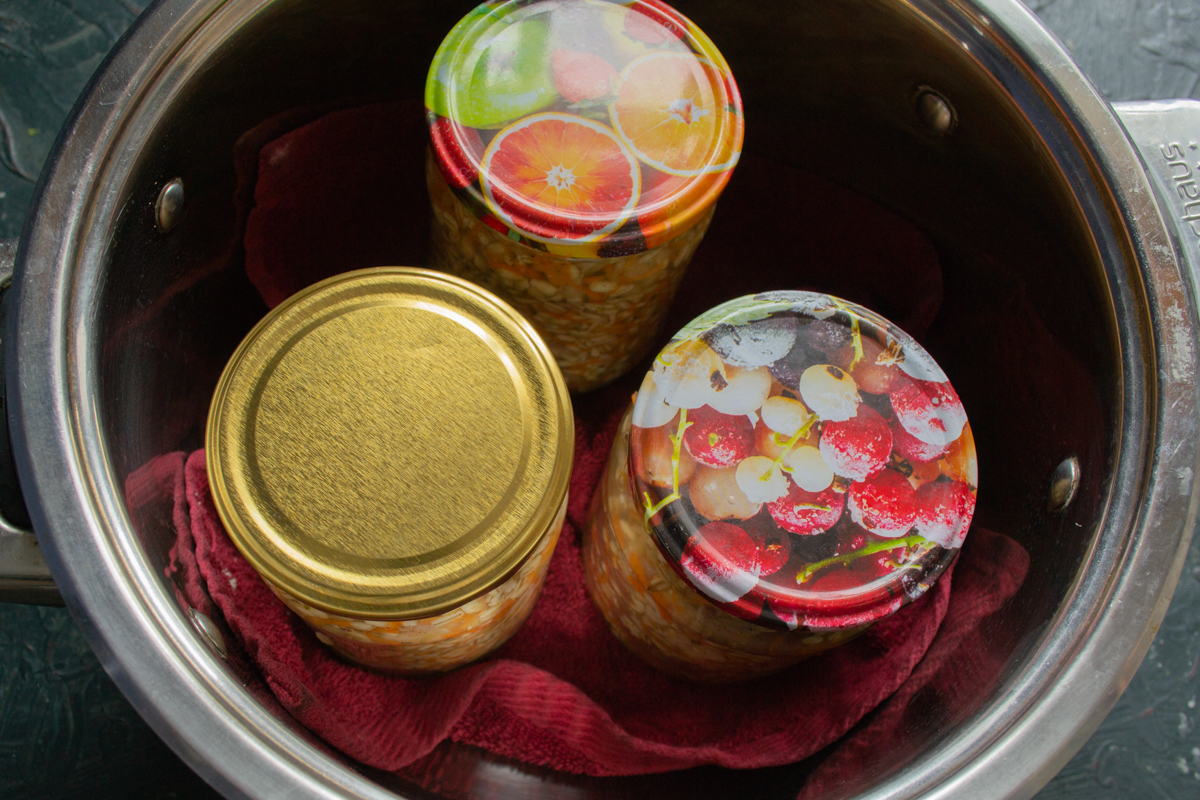
Place the jars in a large pot on a cloth napkin so they do not crack during heating.
Pour in hot water. Fill the pot until the jars, including their lids, are completely submerged.
Heat slowly until it reaches a boil, then cover the pot with a lid that has a steam vent. Once boiling, gently simmer for 4 hours. If the water level drops, top it up with boiling water.
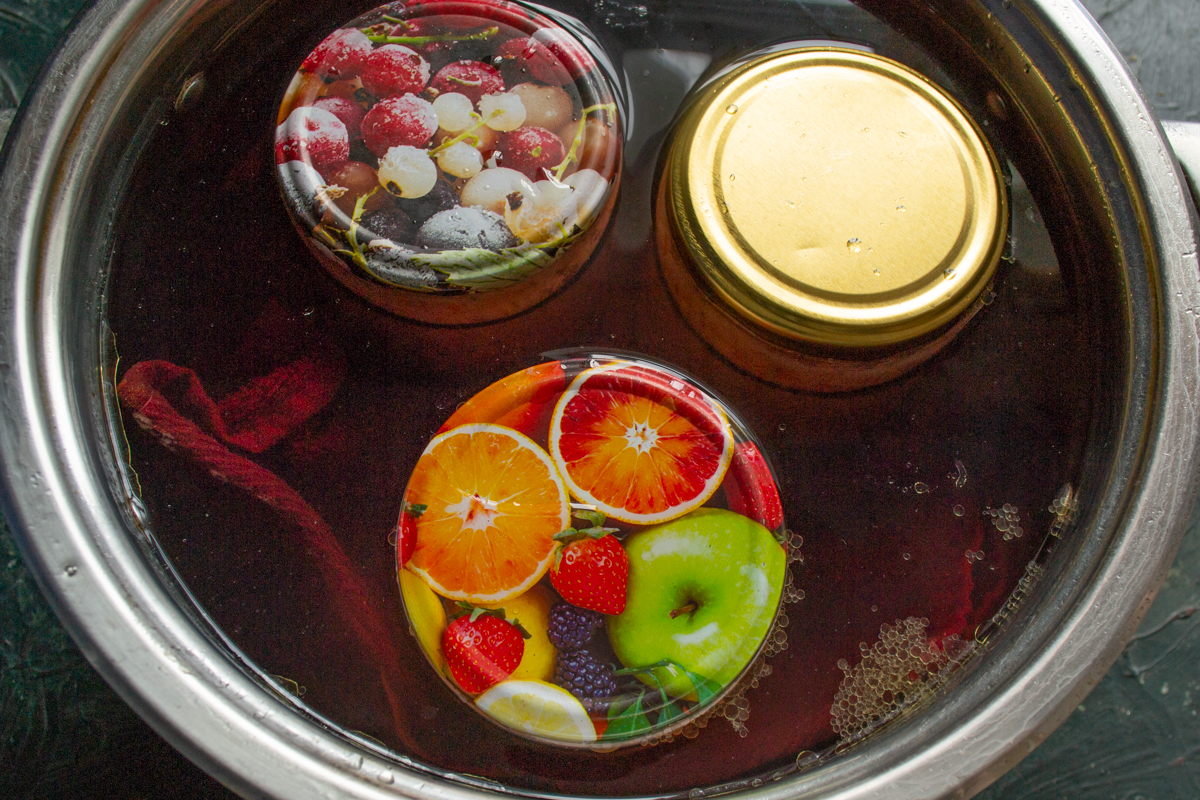
Simmer the jars for 4 hours at a gentle boil, keeping them completely submerged under water.
Allow the finished homemade stew to cool completely in the water until it reaches room temperature. Store the sealed jars in the refrigerator.
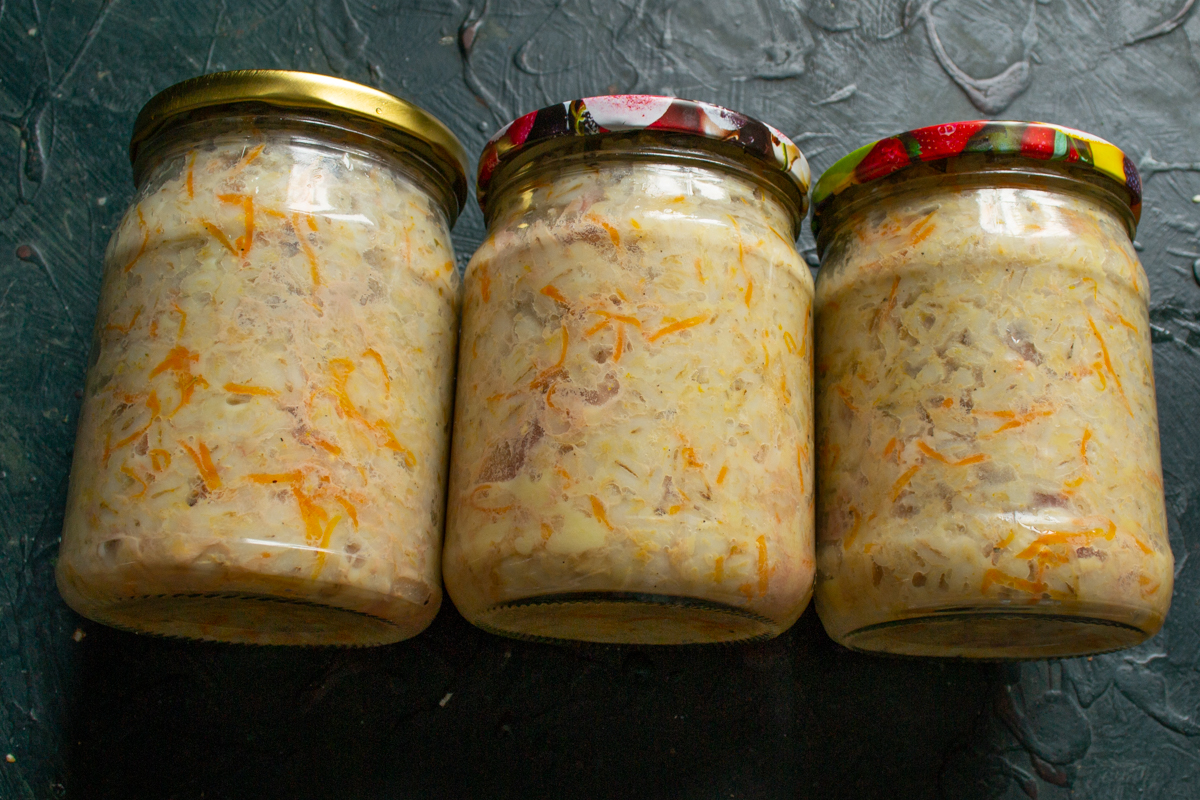
Let the finished stew cool down before storing. It is an excellent meal reserve for any occasion.
Tushenka with pearl barley is a versatile base that can be served cold straight from the jar, but its potential goes much further. To fully unlock the flavors, reheat the contents in a skillet with a small pat of butter, or add some fresh herbs and minced garlic right before serving. If you want to turn these preserves into a more sophisticated dinner, try sauteing some wild mushrooms in a pan and mixing them with the hot porridge — the earthy forest aroma perfectly complements the rich pork. In a refrigerator or a cold root cellar, this 'Tourist's Breakfast' can be stored for up to a year, provided the lids are hermetically sealed. The true secret to long storage lies in properly sanitizing the jars and using meat with enough fat, which rises and hardens to form a protective seal at the top. If you plan to take these jars on a long hike, make sure they cool completely in the water bath after boiling — this ensures the lids shrink properly and create a reliable vacuum inside.
0 comments