
Homemade pork sausages in natural hog casings are the epitome of honest cooking and care for your loved ones. Unlike store-bought alternatives, here you have complete control over the ingredients, choosing the best pork shoulder and quality fatback in the right proportions. The subtle aroma of paprika and garlic, combined with the tender texture of twice-ground meat, makes this dish a welcome guest at any table. The tradition of making handcrafted meats turns ordinary cooking into an exciting process, resulting in a restaurant-quality product. These sausages can be grilled to a golden crust, gently poached, or pan-fried with golden onions, turning an ordinary lunch into a little celebration of flavor.
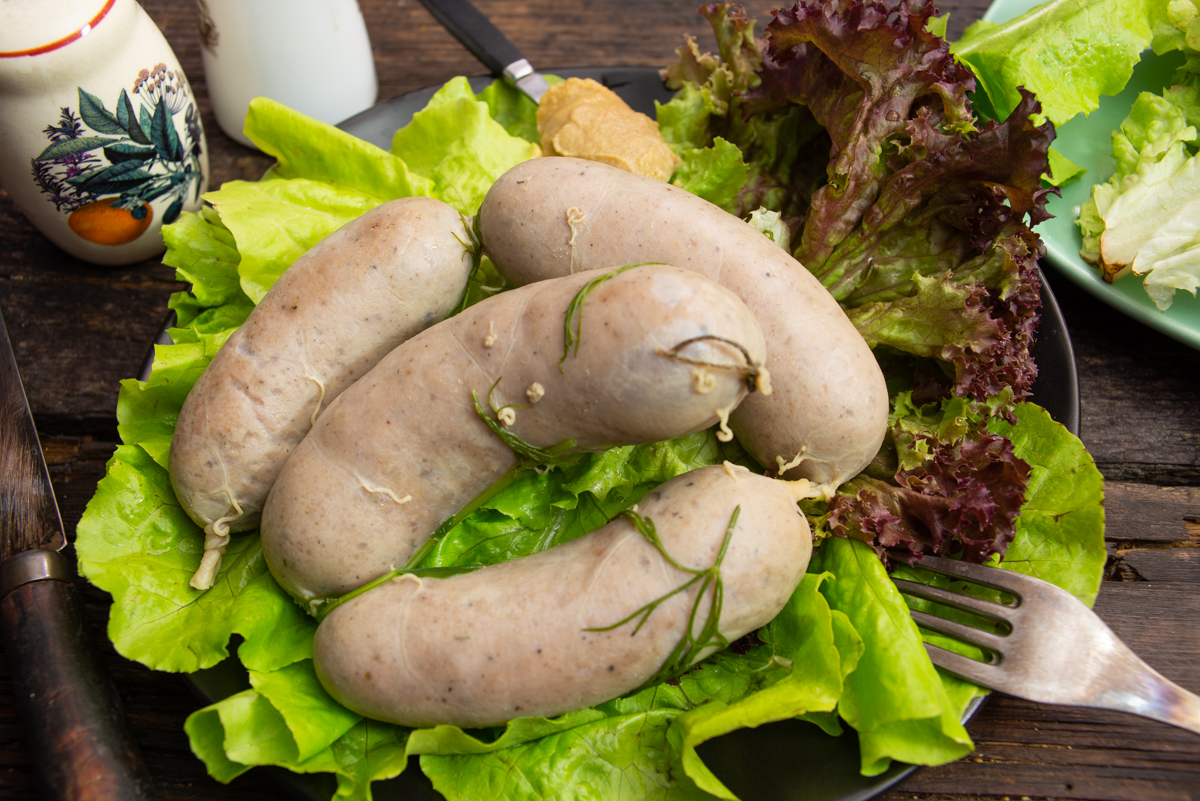
Mouthwatering homemade pork sausages, served with fresh herbs and spicy mustard—a perfect all-natural dinner.
Ingredients
- 1 kg (2.2 lbs) lean pork (shoulder, leg)
- 150 g (5.3 oz) pork fatback (shpik)
- 100 ml (3.5 fl oz) water
- 2 teaspoons paprika
- 2 teaspoons sausage spice blend
- Narrow hog casings
- Salt to taste
- Root vegetables and seasonings for the broth
How to Make Homemade Pork Sausages
The meat products needed for this recipe include lean pork shoulder and pork fatback. You can also use pre-ground pork fatback, which is often sold packaged in a plastic casing.
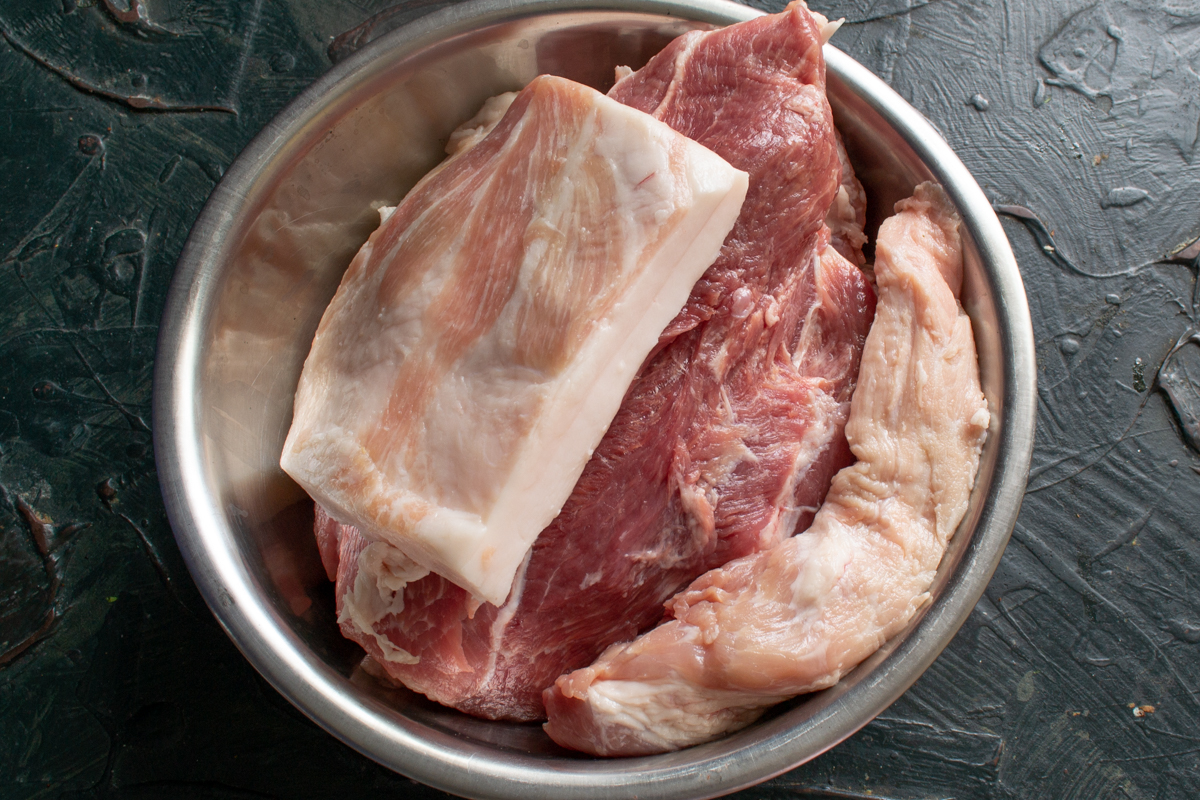
For juicy sausages, choose lean pork shoulder and high-quality fatback in an 80/20 ratio.
Cut the meat and fat into small cubes. Usually, up to 20% fat is added per 1 kilogram (2.2 lbs) of meat. Moderately fatty sausages will turn out juicy and incredibly delicious; it’s the fat that makes them so.
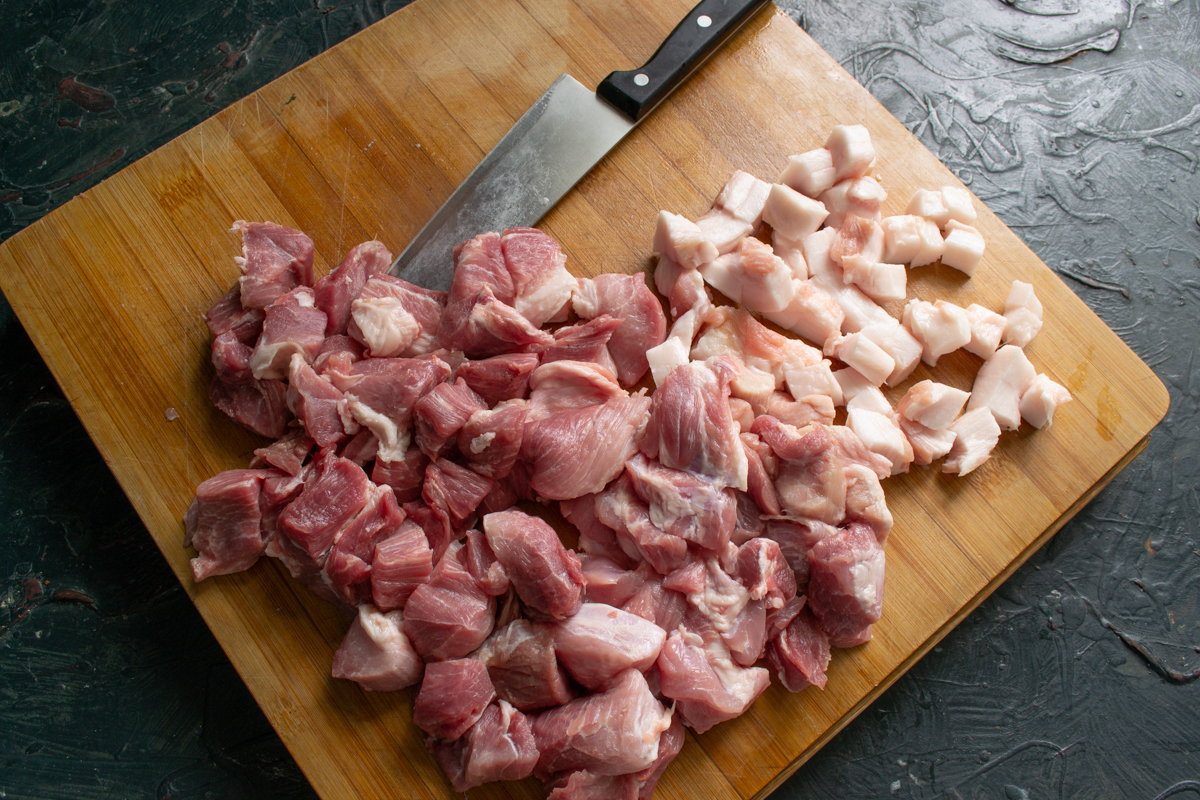
Cut the pork and fatback into small pieces to make it easier for the meat grinder to process them into an even mixture.
Pass the chopped meat and fat through a meat grinder fitted with a fine plate. If you want to make tender sausages, pass the ground meat through the grinder one more time.
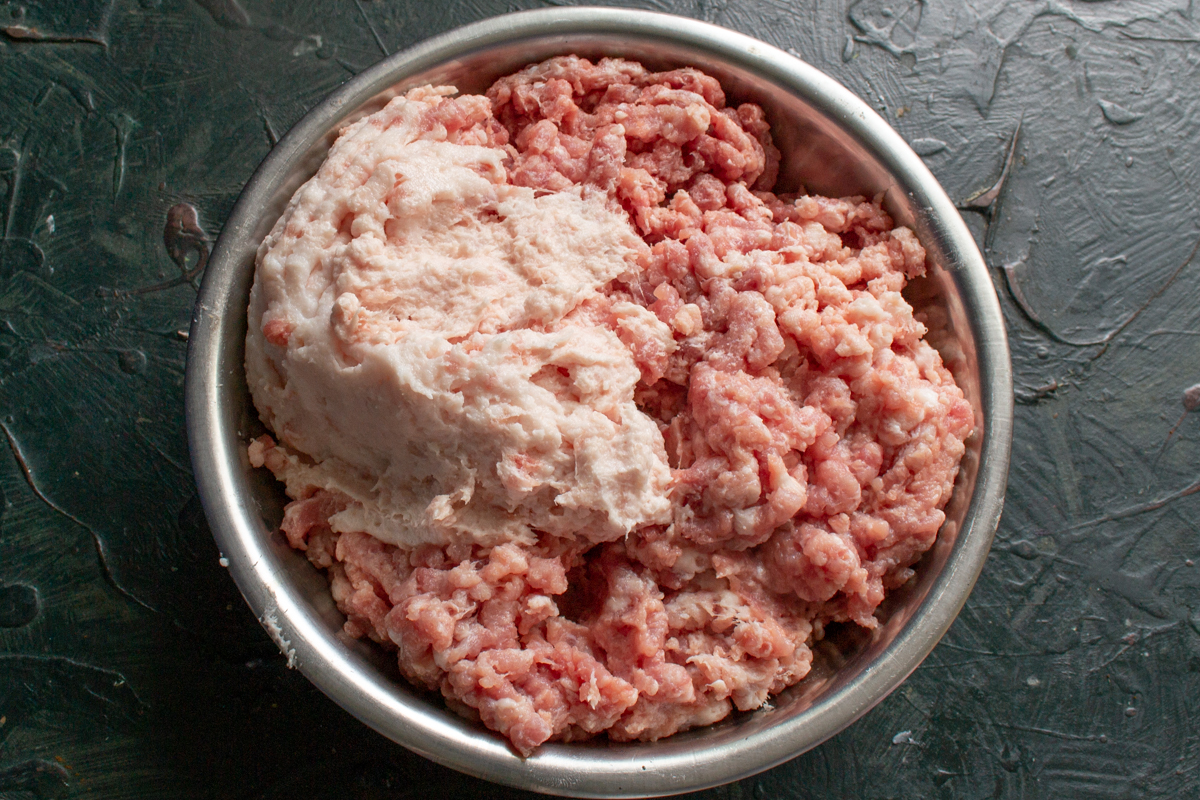
To get a tender sausage texture, pass the meat and fatback through the fine grinder plate once or twice.
Pour in cold water. Water in the ground meat acts just like liquid ingredients in dough. It helps bind the meat fibers together and makes the filling juicy.
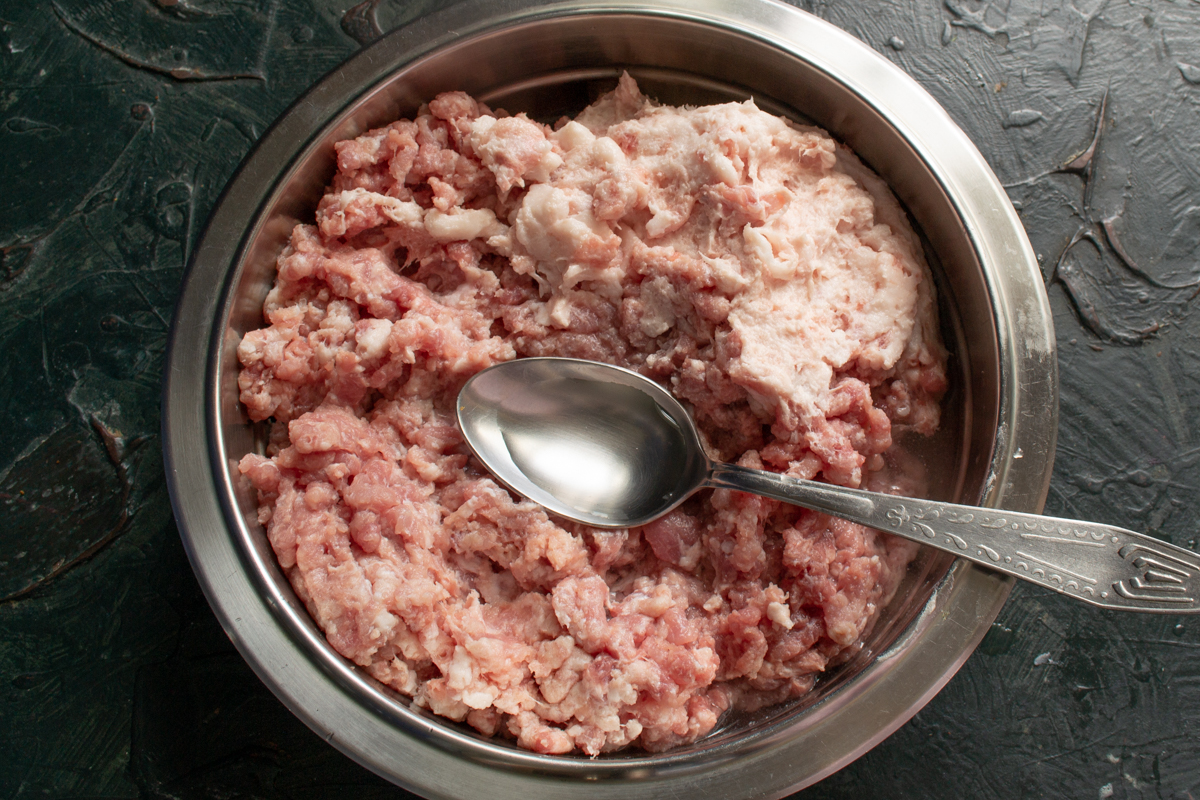
Cold water is essential for the ground meat to retain juiciness and bind the meat fibers, just like liquid in dough.
Season with salt to taste. You can use sea salt in this recipe, or flavored salt, for example, garlic salt.
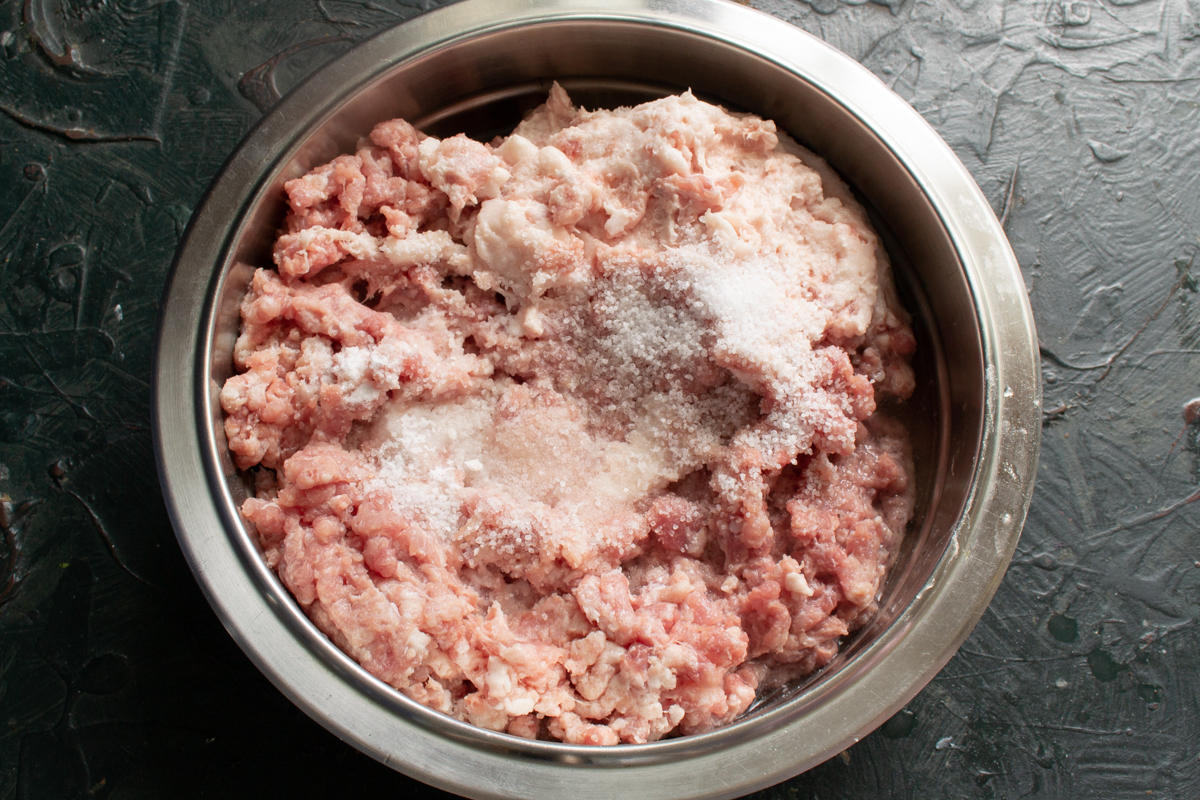
Add salt to taste. You can use classic, sea, or aromatic garlic salt.
Add the spices—ground sweet paprika and a sausage spice blend. I asked the spice vendor to mix the sausage spices for me; they contain dried garlic, ground pepper, and plenty of aromatic herbs.
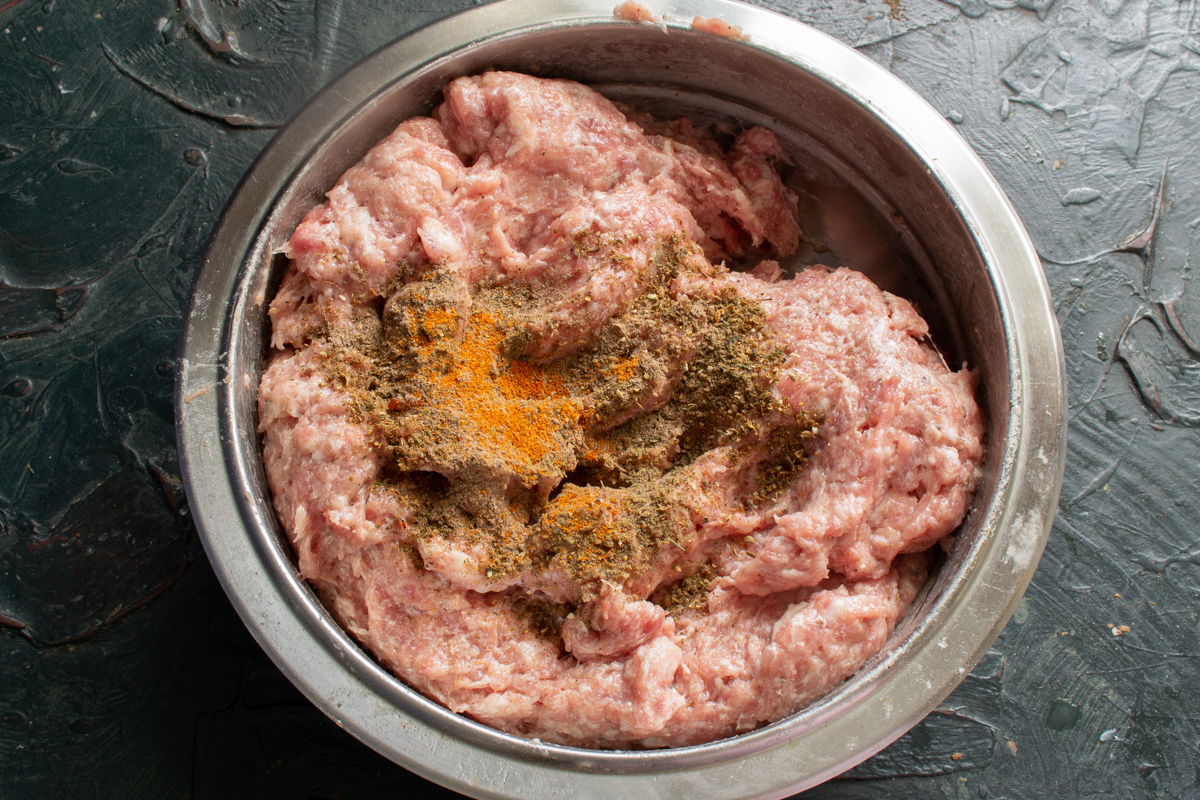
Sweet paprika and a special blend of sausage herbs will give the sausages a rich and professional flavor.
Knead the ground meat thoroughly. You can also beat it—take a handful of the meat mixture and throw it down onto the cutting board from a slight height, repeating this a few times.
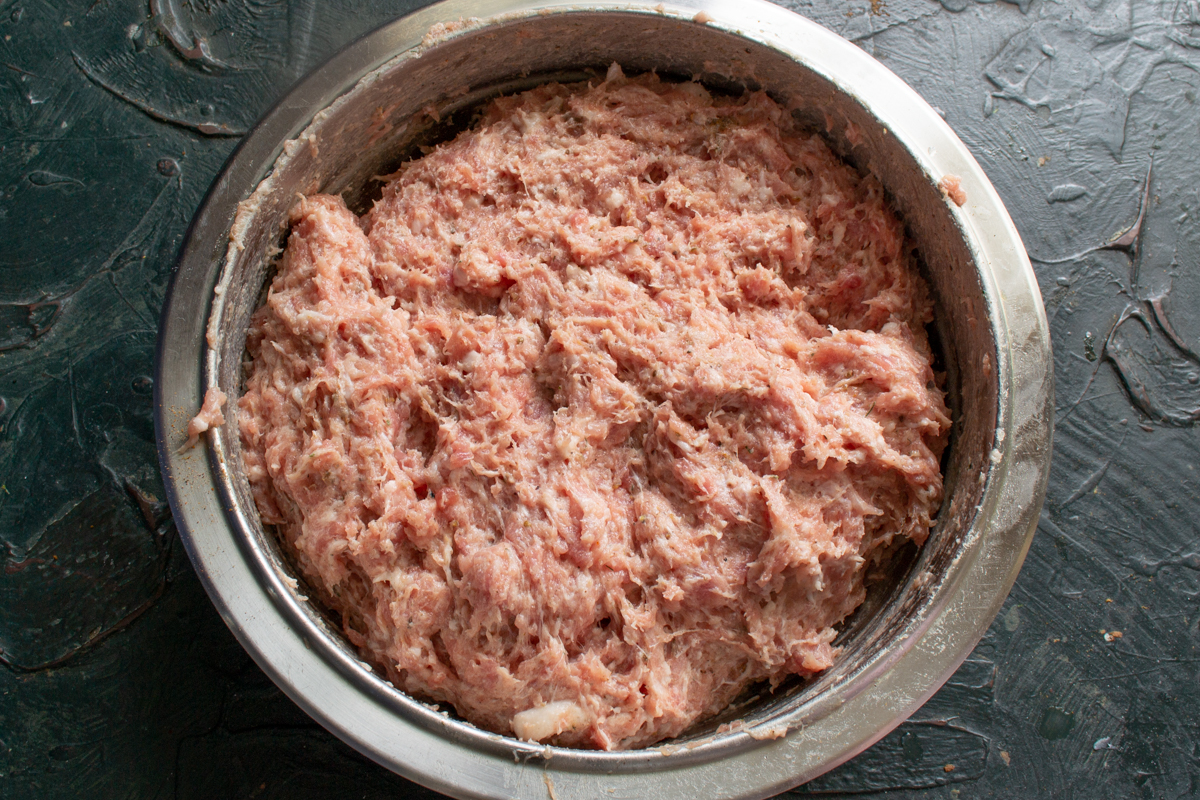
The ground meat needs to be not only kneaded but also lightly beaten against the bowl to make it dense and elastic.
Soak narrow hog casings in cold water, then thread them onto a sausage stuffer attachment. Attach the sausage stuffing plate to your meat grinder. Next, insert the attachment with the threaded casing and secure it with the ring. By the way, natural casings are the best choice for sausages. They are sold already prepped; the only thing you need to do is rinse off the coarse salt grains.
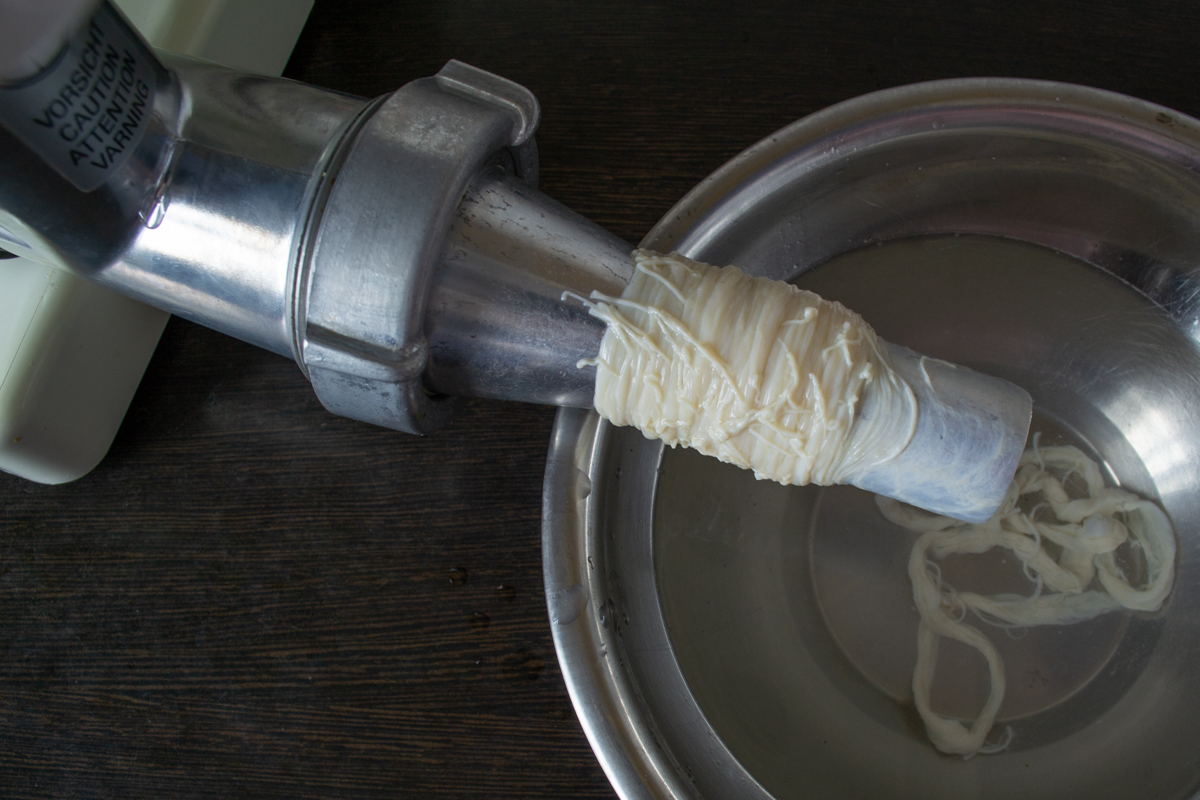
Natural hog casings are the best choice. They are sold already cleaned; you just need to rinse the salt off.
Fill the casing with the ground meat, twisting the sausages every 12-15 centimeters (5-6 inches).
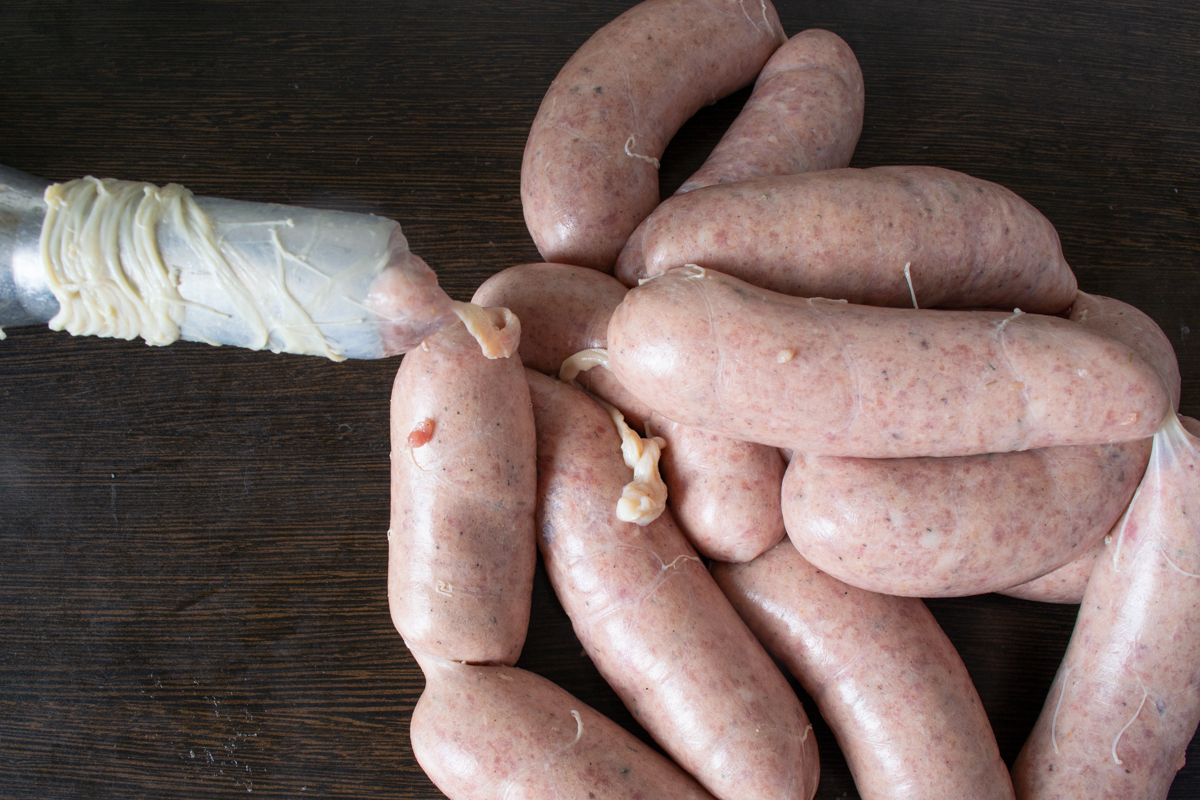
Fill the casing with ground meat and twist the sausages every 12-15 cm (5-6 inches) to form neat links.
The finished sausages can be frozen or stored in the refrigerator for 2-3 days. If keeping them in the fridge, do not put them in a plastic bag; let them rest uncovered!
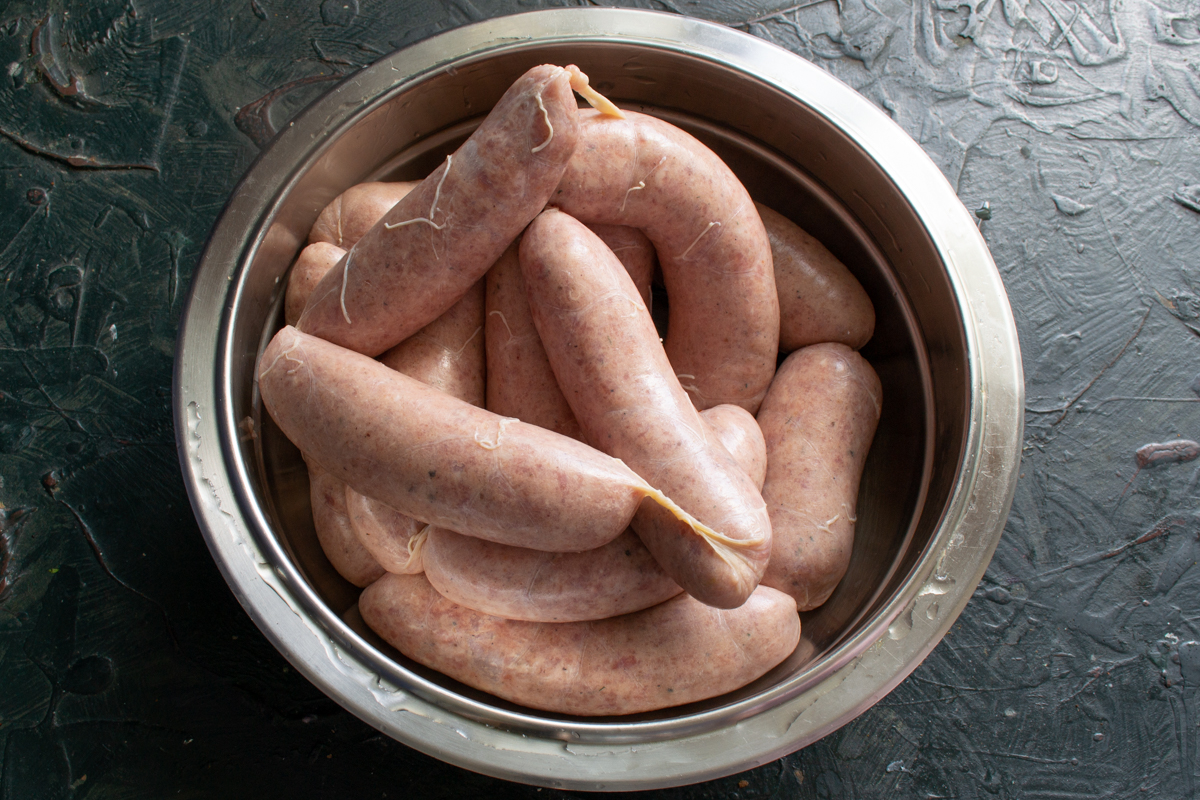
You can store the prepped sausages in the refrigerator for a couple of days or freeze them for later.
Place a bunch of parsley and dill, along with garlic (or garlic scapes in the summer), at the bottom of a pot. Pour in cold water and add the sausages.
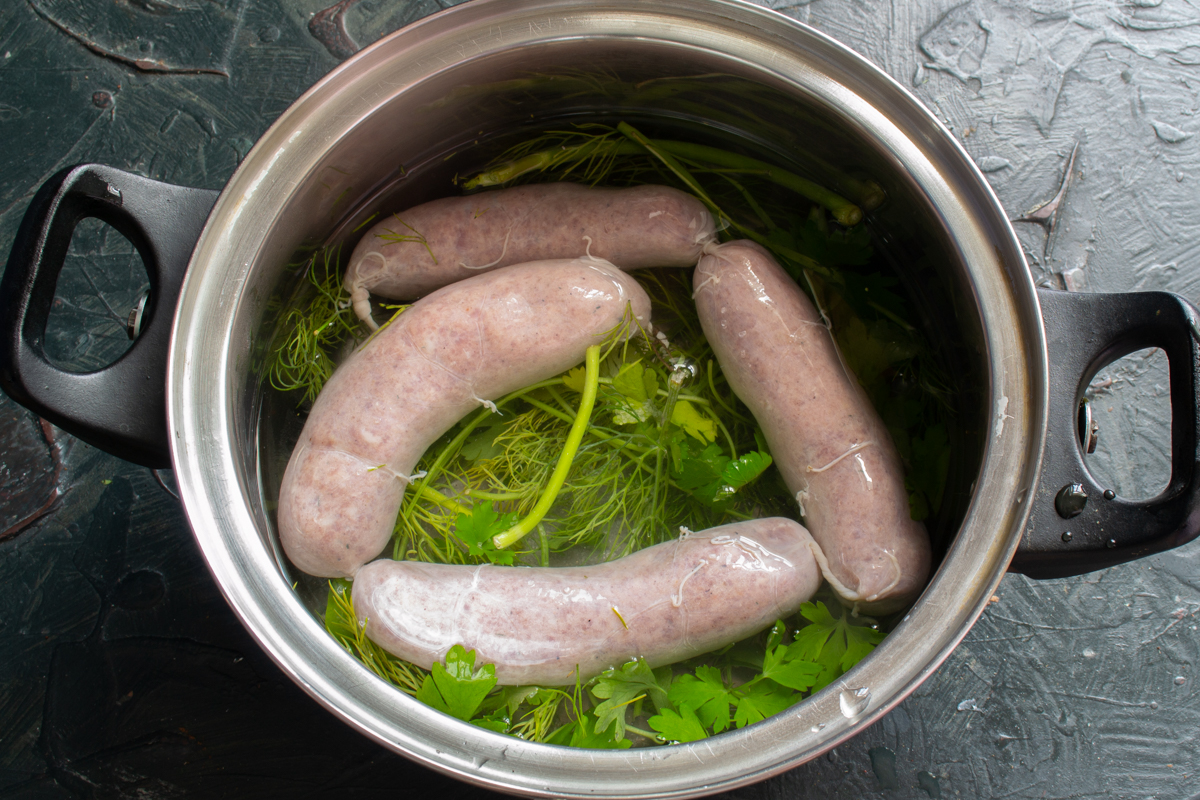
Adding dill, parsley, and garlic to the poaching water will give the sausages an incredible aroma.
Heat slowly until almost boiling; there is no need to cover the pot with a lid. The water temperature should be 85°C (185°F). Cooking time is 30-35 minutes. Sausages cooked this way will remain juicy, and the casing won’t burst. You can then pan-fry the sausages with onions.
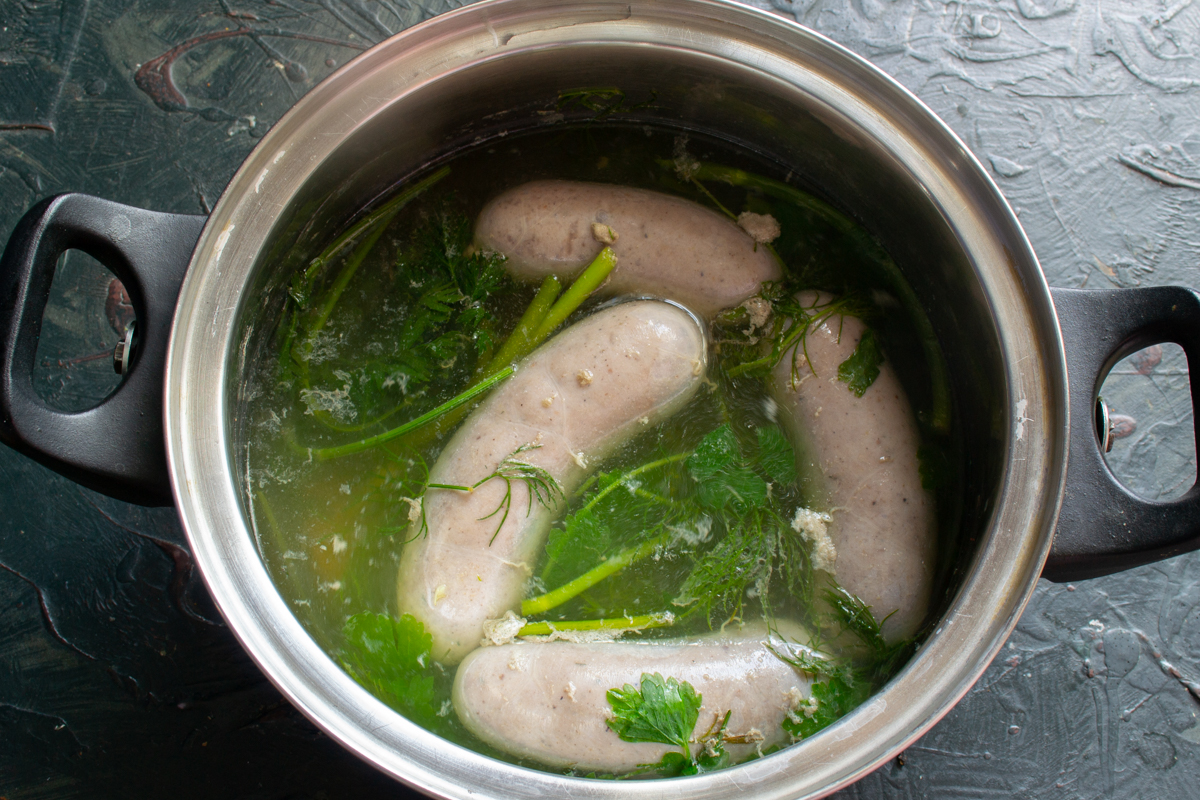
Poach the sausages at 85°C (185°F) without boiling so the casing stays intact and the juices remain inside.
Serve the homemade pork sausages with mustard and fresh herbs.
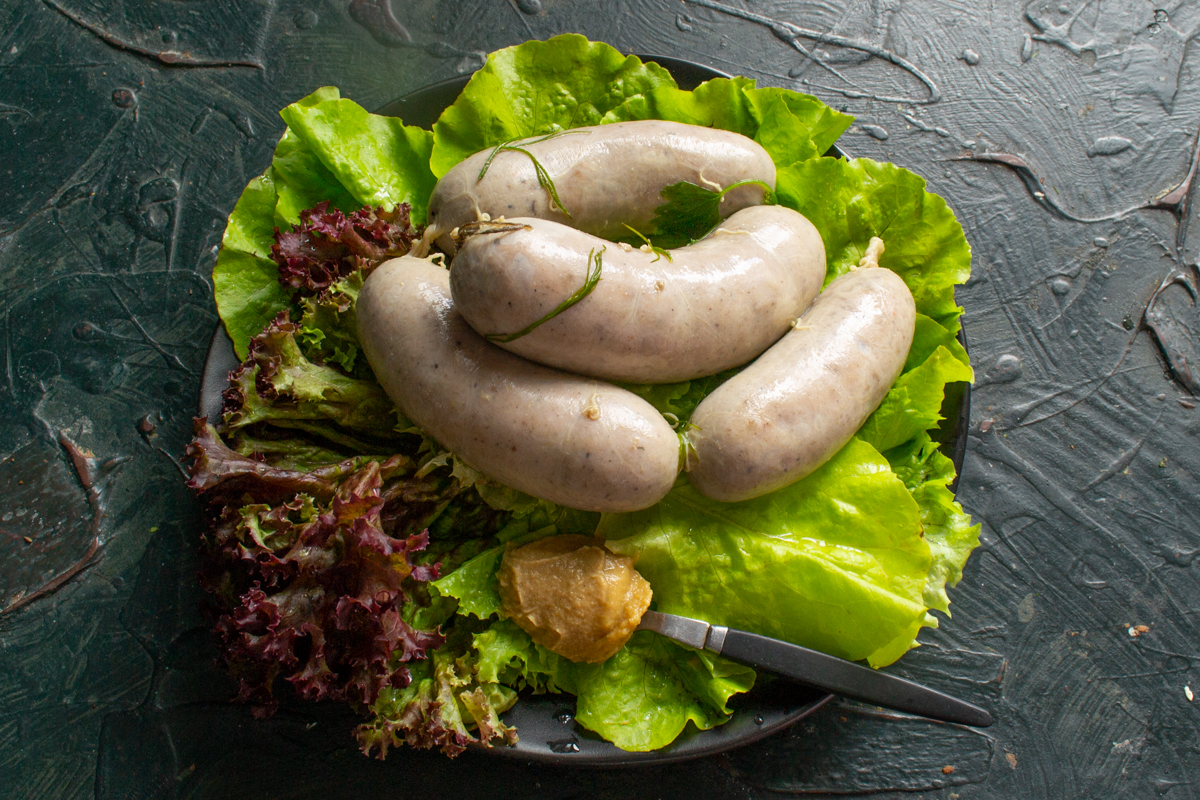
The cooked sausages look appetizing and bright. Serve them with your favorite sauce and fresh vegetables.
Serve the finished homemade pork sausages hot, paired with classic mustard, horseradish, or homemade tomato sauce. Braised cabbage, buttery mashed potatoes, or a fresh vegetable salad make perfect side dishes. If you are planning an outdoor picnic, these sausages are a great alternative to traditional barbecue—on the grill grate, they quickly develop an appetizing smoky aroma and a crispy crust.
For those who love culinary experiments, try adding a little grated hard cheese or finely chopped fresh herbs to the ground meat for new flavor notes. Remember that any surplus raw sausages store perfectly in the freezer, allowing you to always have a quick and high-quality dinner on hand. The main secret to success lies in slow heating: by keeping the water temperature around 85°C (185°F) and preventing a rolling boil, you guarantee that your homemade pork sausages will remain incredibly juicy and hold their perfect shape.
0 comments