
Welcome to a taste of true Eastern European comfort! This homemade horseradish with beets and smetana is more than just a condiment; it's a vibrant, fiery, and creamy experience. Known for its powerful kick, horseradish is a beloved staple, often served during festive gatherings and family meals. In this recipe, we balance its intense heat with the subtle sweetness of beets, which also lend a stunning pink color. A dollop of rich smetana transforms it into a smooth, mellow sauce, making it the perfect companion for a wide array of dishes. Get ready to awaken your taste buds!
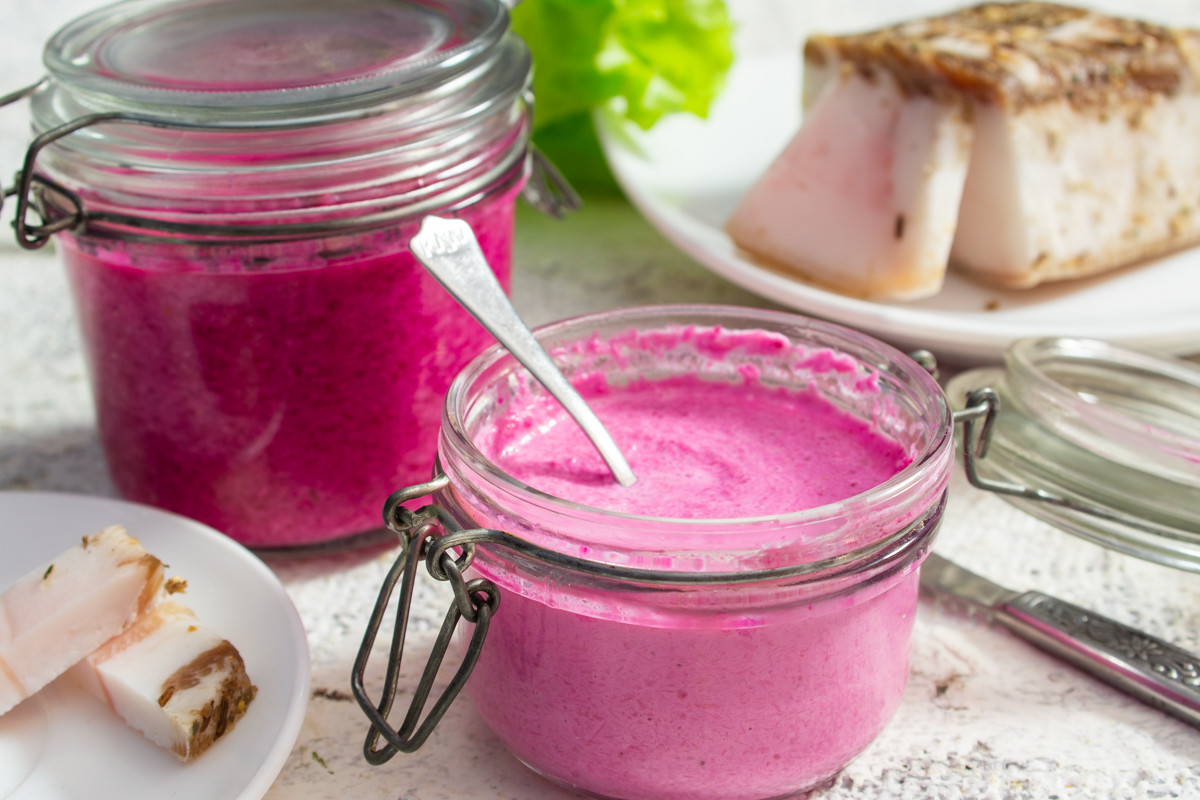
Homemade horseradish with beets and sour cream
Ingredients for Homemade Horseradish with Beets and Sour Cream
- 200 g peeled horseradish
- 50 g raw beet
- 50-70 ml filtered water
- 15 g 9% vinegar
- 1 teaspoon salt
- 2 teaspoons sugar
- 100 g full-fat smetana (or high-fat sour cream)
How to Make Homemade Horseradish with Beets and Sour Cream
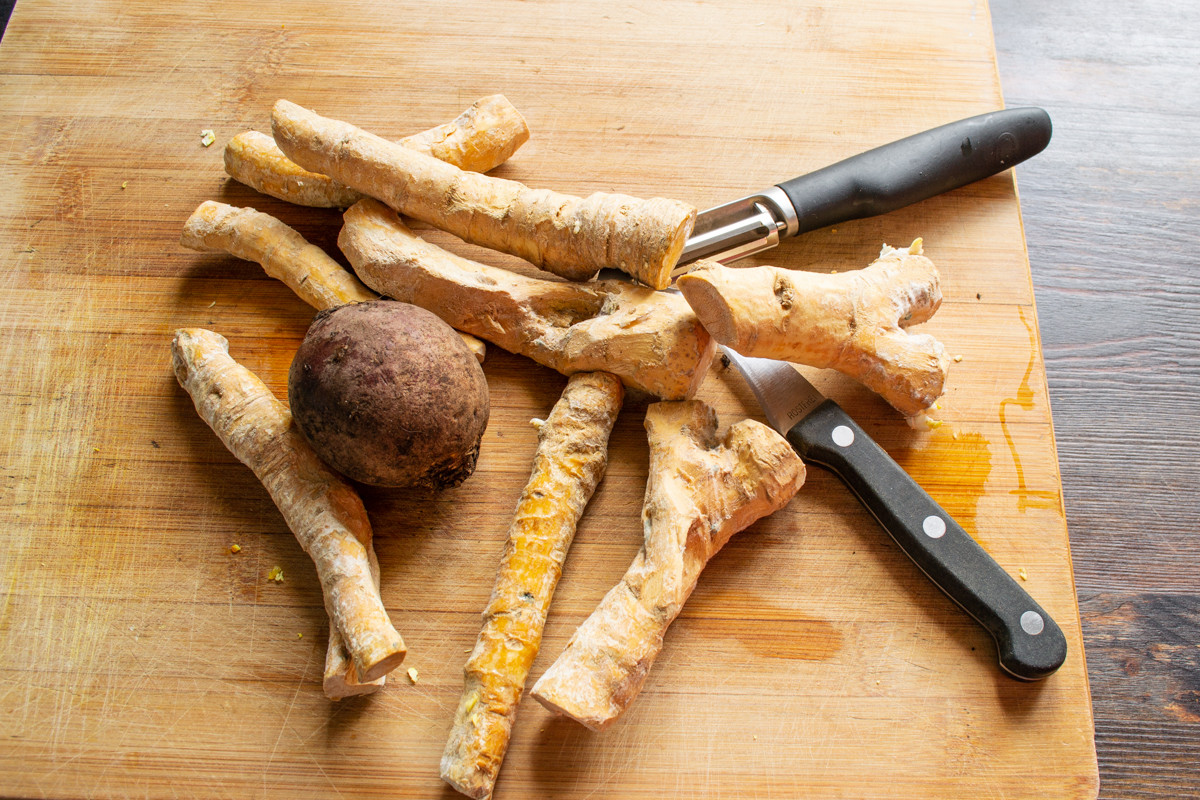
For this recipe, I used autumn horseradish and beets to give the sauce a pink color.
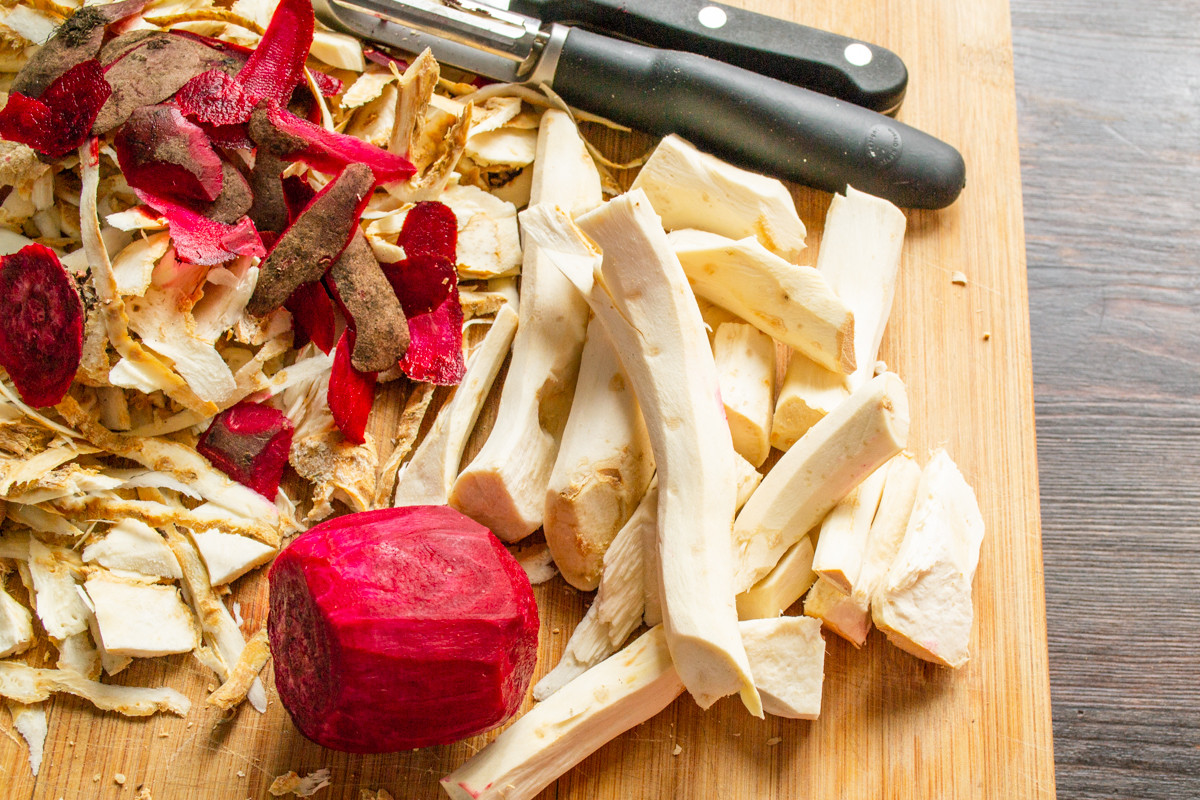
Peel the horseradish roots with a vegetable peeler and peel the beet.
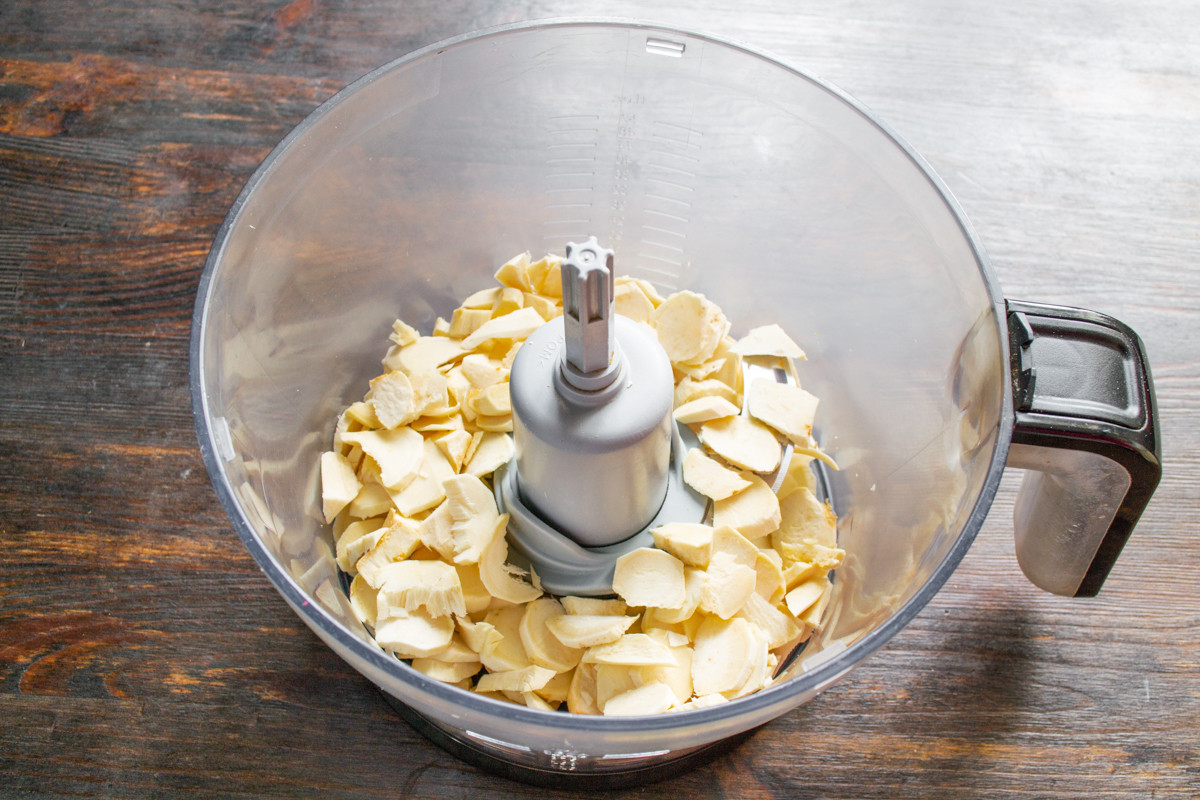
You can grind the horseradish in any way available to you.
You can make this horseradish condiment all year round. If you dig up the roots in the fall, you can scrub them with a brush, trim off any damaged parts, pack them in a bag, and store them in the vegetable drawer. Check them periodically and spritz with water. You can also freeze horseradish roots. For this recipe, I used autumn horseradish and beets to give the sauce a lovely pink color.
Peel the horseradish roots with a vegetable peeler and peel the beet. It’s best to place the peeled roots immediately into cold water with vinegar or lemon juice to prevent them from darkening in the air.
You can chop the horseradish using any method you have available. A meat grinder, grater, or blender will work. I use a blender and do it in two stages. First, slice the peeled roots into thin pieces and place them in the blender bowl with the blade attachment. The roots are tough and fibrous, so if you leave large chunks, the blender will struggle to process them.
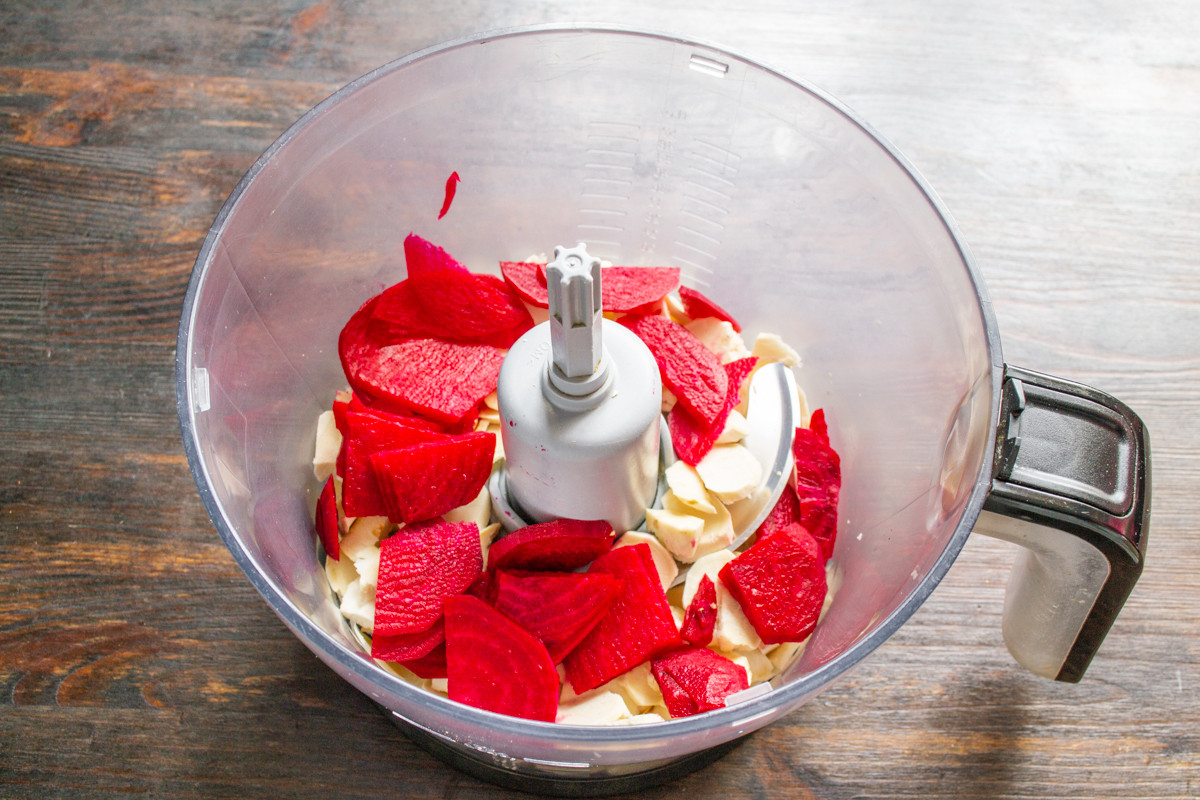
Slice a small, peeled raw beet into thin slices.
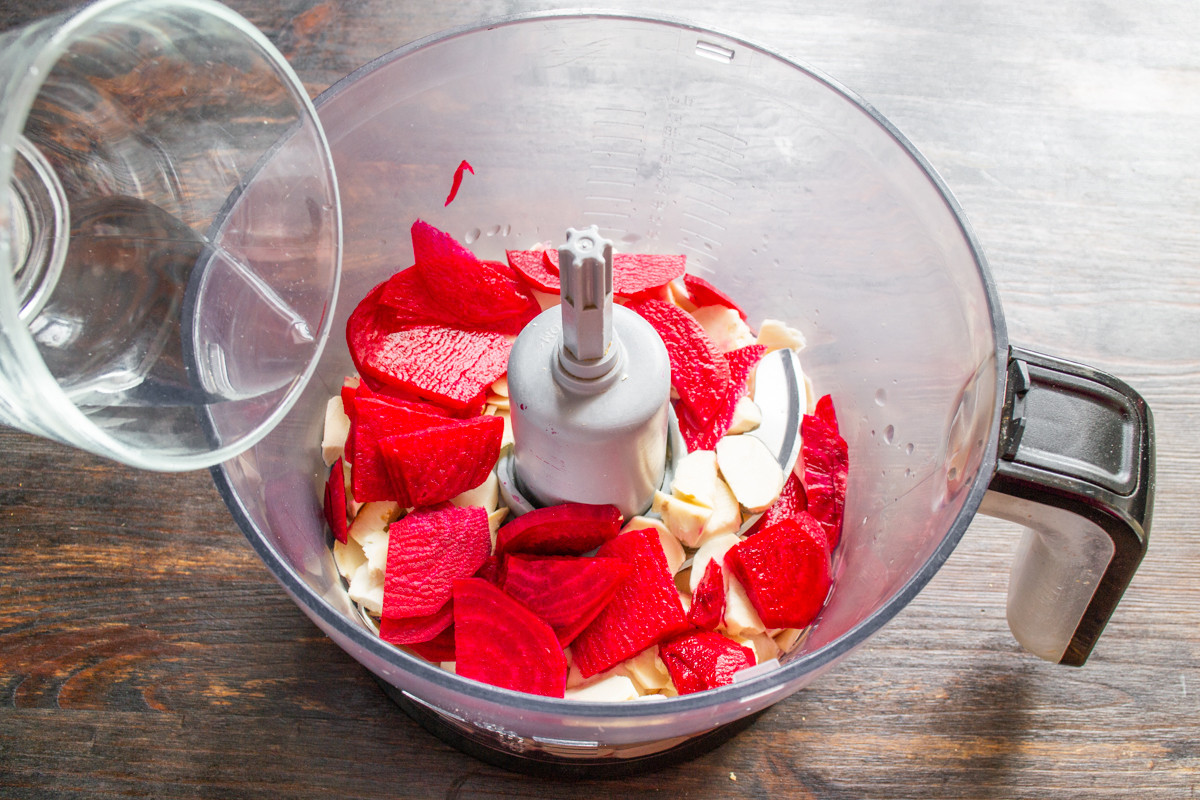
Pour in cold filtered (spring or boiled) water.
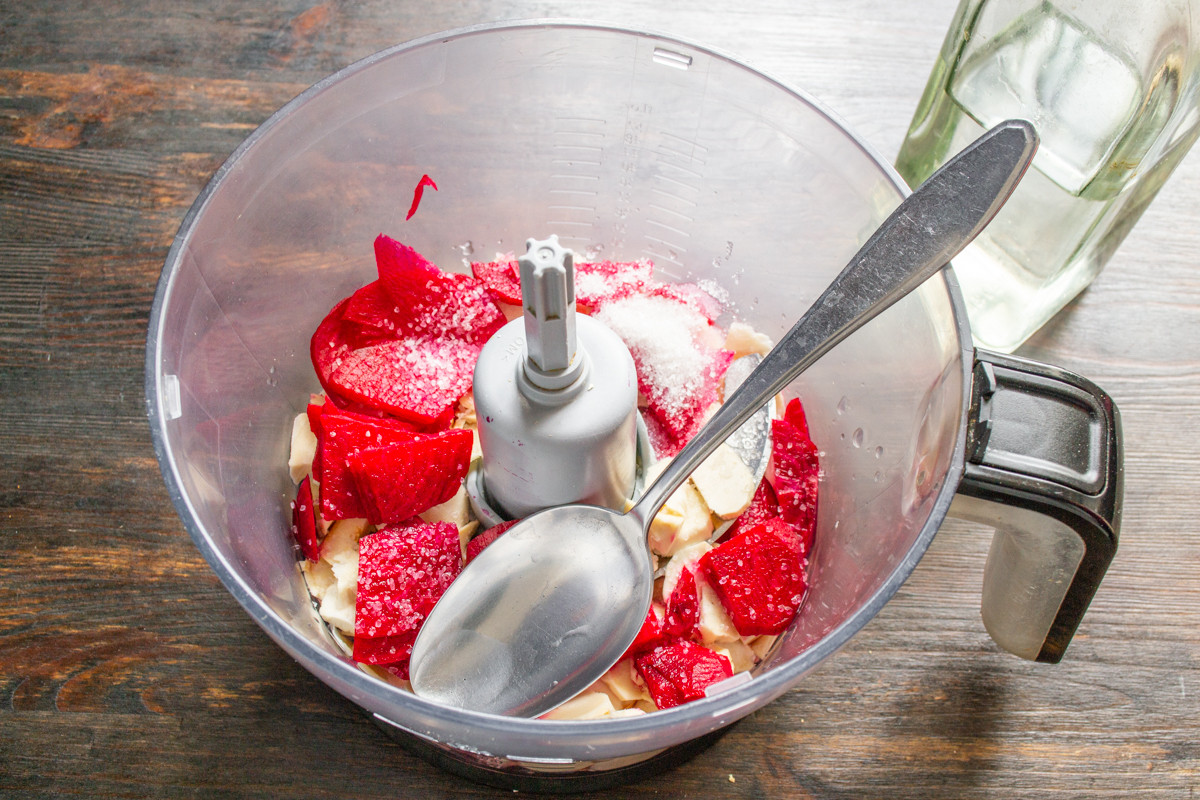
Pour in the vinegar, add salt and sugar.
Slice a small, peeled raw beet into thin slices. Place them in the bowl.
Pour in cold filtered (spring or boiled) water. Water is necessary as the roots can be quite dry, especially if they’ve been stored in the refrigerator for a long time.
Add the vinegar, salt, and sugar. You can substitute table vinegar with lemon juice or citric acid.
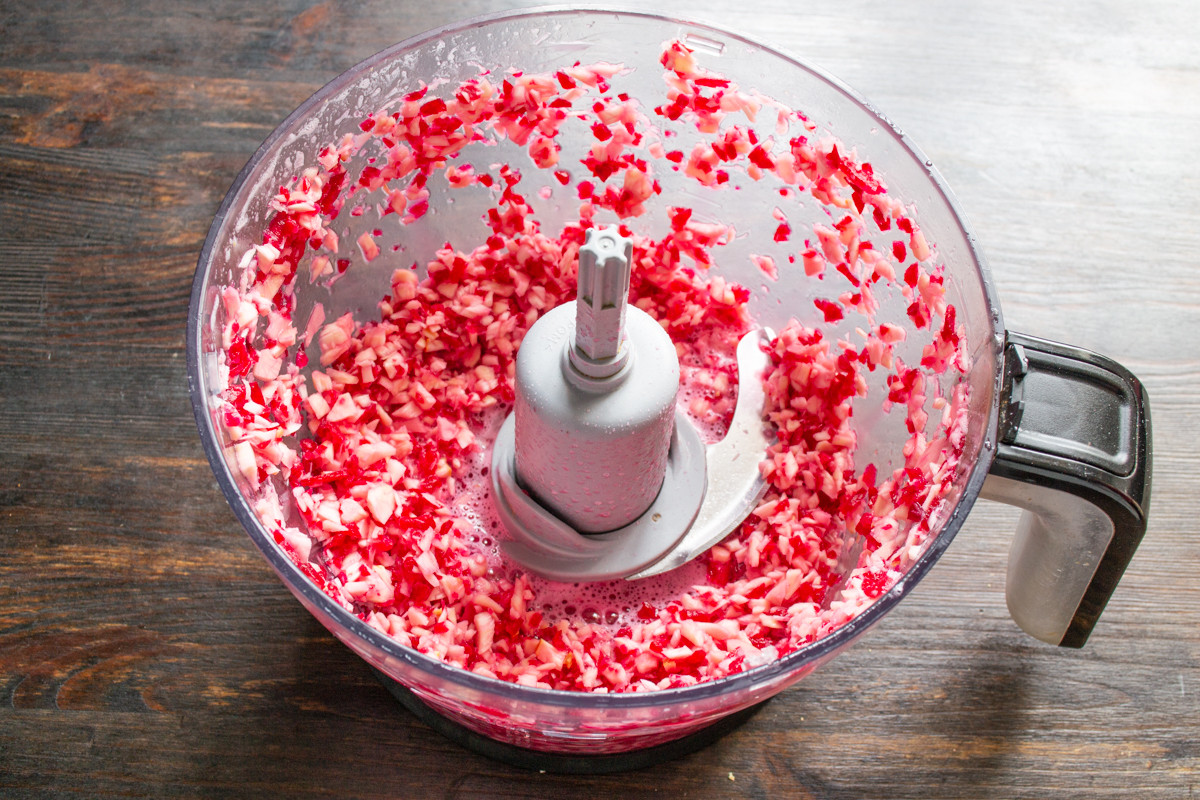
Grind the ingredients using several pulses.
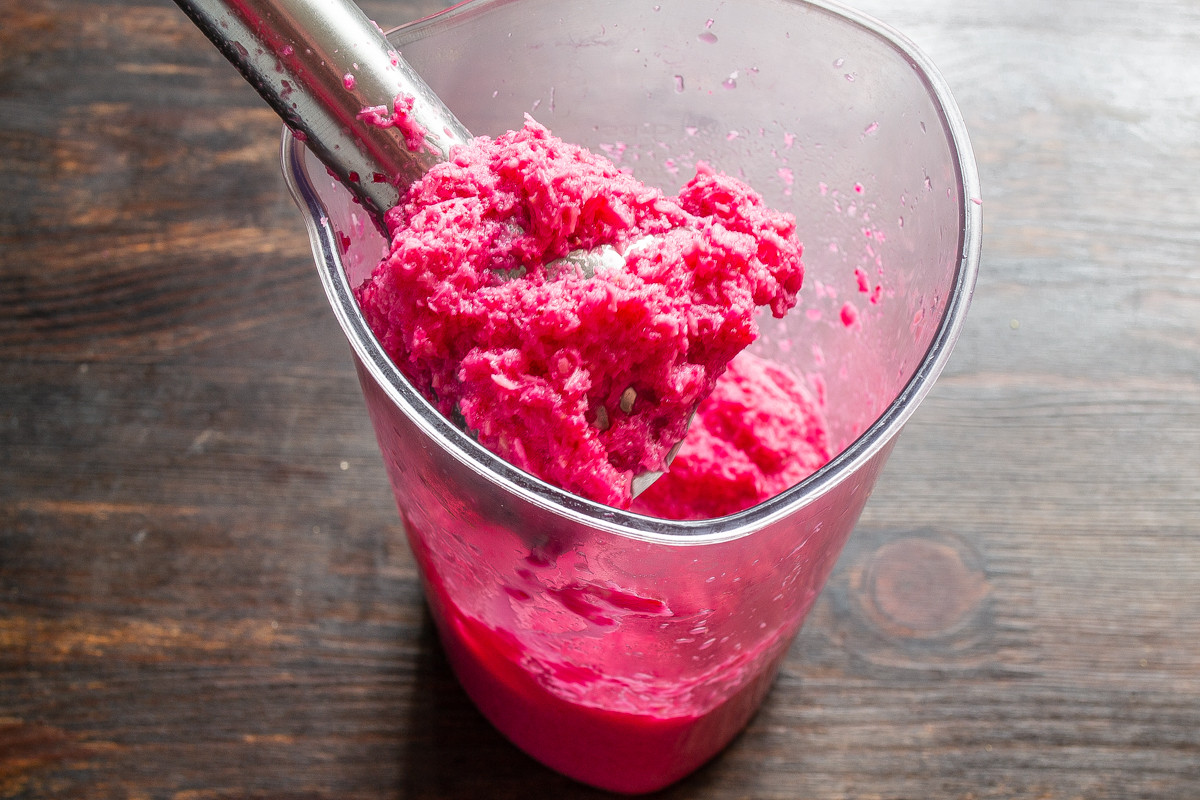
Transfer the mixture to a tall glass and blend with an immersion blender.
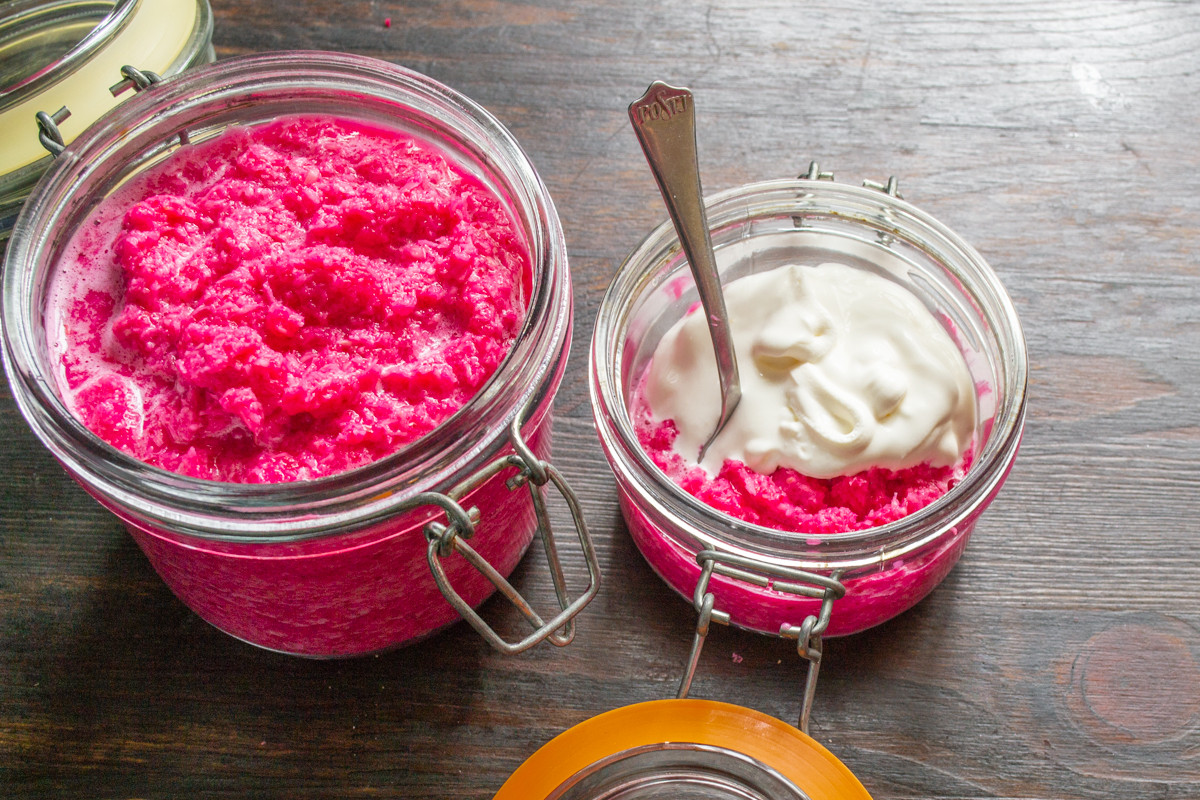
Before serving, measure out the required amount of horseradish and add full-fat sour cream in a ratio of 1 part sour cream to 2 parts horseradish.
Grind the ingredients using several pulses. At this stage, open a window and keep your distance from the bowl. Horseradish is a fiery root and can strongly irritate your mucous membranes, making your eyes water profusely.
If your blender’s blades aren’t powerful enough to grind the vegetables into a smooth consistency, transfer the mixture to a tall container and use an immersion blender. This will help you process the horseradish into an almost paste-like texture. If you’re using a meat grinder, you can attach a plastic bag to the outlet and secure it with a rubber band to prevent the pungent aroma from spreading throughout the kitchen.
All done! Transfer the sauce to dry glass jars and seal them tightly. Store in the refrigerator. Before serving, measure out the desired amount of horseradish and add full-fat smetana (a type of high-fat sour cream) to it, in a ratio of 1 part smetana to 2 parts horseradish. Smetana mellows the sauce, but horseradish mixed with smetana does not keep for long.
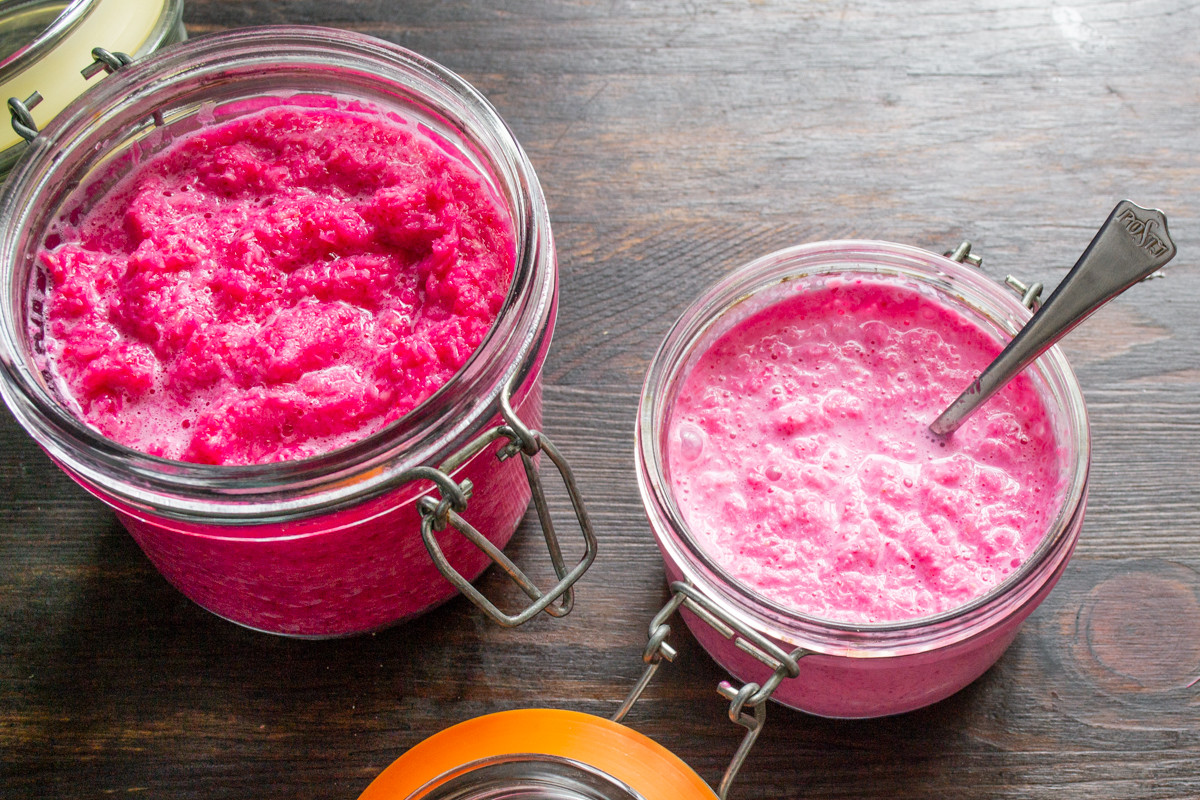
Homemade horseradish with beets and sour cream is the best condiment!
Homemade horseradish with beets and smetana is the best condiment! It’s so easy to make yourself.
And there you have it—a jar of beautiful, pungent homemade horseradish ready to elevate your meals! This versatile sauce is fantastic with roasted pork, beef, rich sausages, or even a simple boiled potato. It's a traditional star on any holiday table, cutting through the richness of festive foods. For the best experience, remember to store the horseradish base separately and mix it with smetana just before serving to preserve that fresh, creamy texture. Enjoy this delightful taste of tradition, made with love in your own kitchen!
0 comments