
Boiled chicken gizzard sausages with fried onions are a modern take on traditional home sausage-making, where every ingredient serves to build a deep, meaty flavor profile. In this recipe, the offal element comes from chicken gizzards, which, after a long slow simmer, become incredibly tender while retaining a pleasant bite. Using giblets not only makes this dish more economical but also packs it with healthy micronutrients, while adding the aromatic broth right into the filling guarantees an exceptionally juicy bite. If you want to experiment, you can add chicken hearts or liver (pre-cooked until done) to the gizzards, adding even more complexity to the flavor.
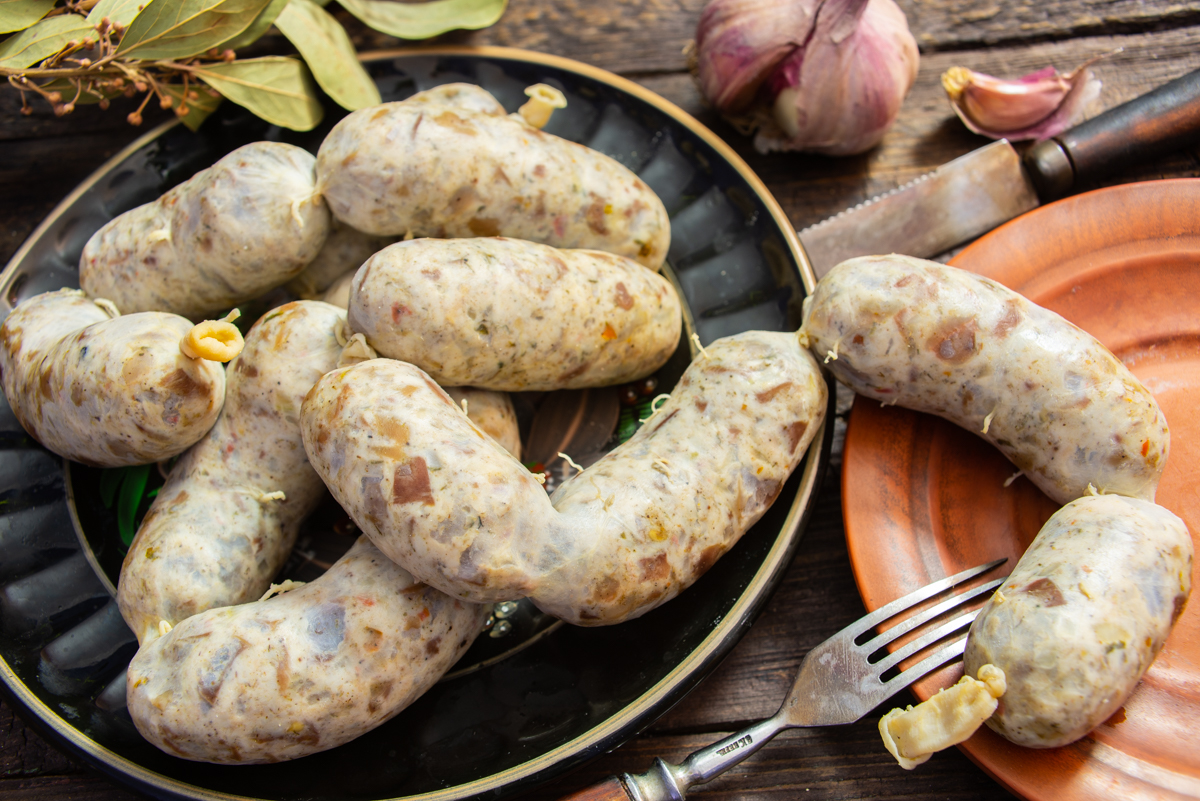
Mouthwatering homemade chicken gizzard sausages crafted from scratch.
Ingredients
- 1 kg (2.2 lbs) chicken gizzards
- 650 g (1.4 lbs) chicken breast
- 130 g (4.5 oz) onion
- 30 g (2 tbsp) vegetable oil
- narrow pork casings
- salt, black pepper
- soup roots and spices for the broth
How to make chicken gizzard sausages
Start with the chicken gizzards. Sort, clean, and trim away any excess fat or membrane. Place the prepped gizzards into a pot and pour in 2 liters (about 8.5 cups) of cold water. Add an onion, a couple of garlic cloves, a bunch of fresh parsley, a bay leaf, and black peppercorns. Season with salt to taste. Bring everything to a boil. Lower the heat and simmer gently for about an hour and a half, until the gizzards are completely tender.
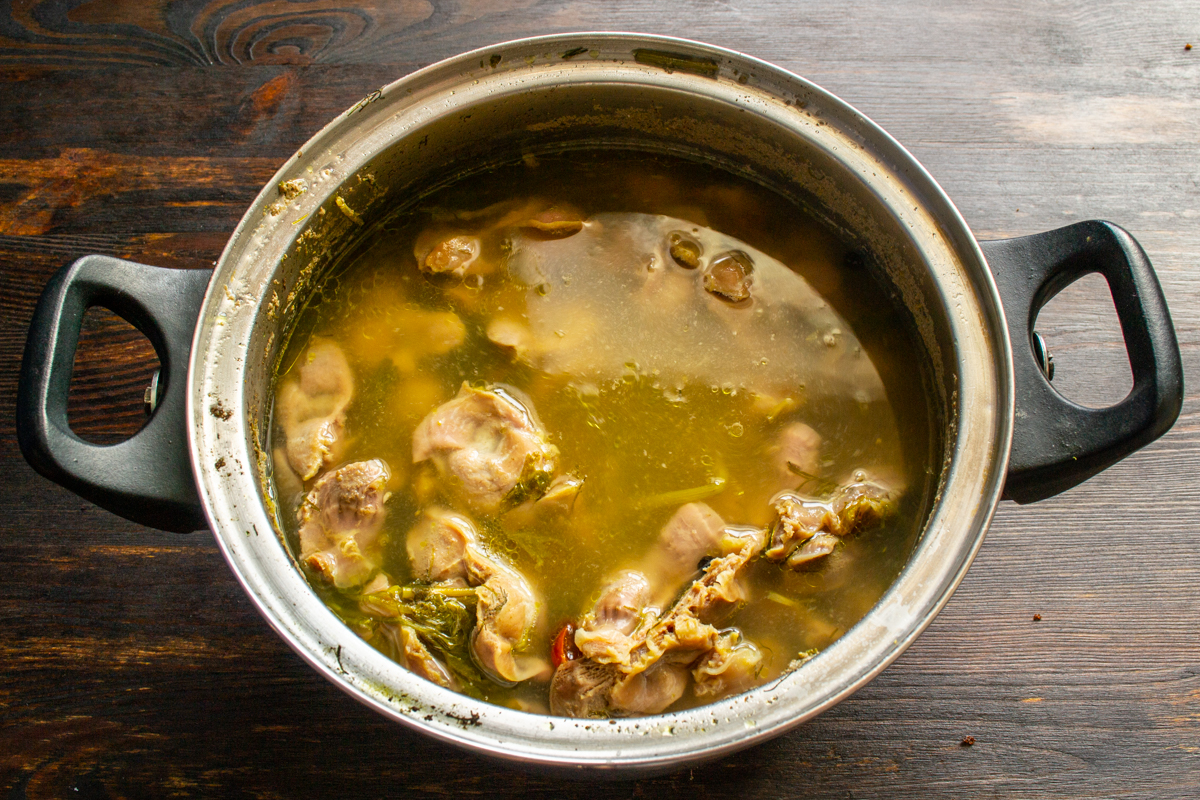
Boil the chicken gizzards with onion, garlic, and parsley until perfectly tender.
Drain the boiled chicken gizzards in a colander. Strain the cooking liquid. You can use this rich broth just like a regular chicken stock, and we will need a portion of it for this sausage recipe.
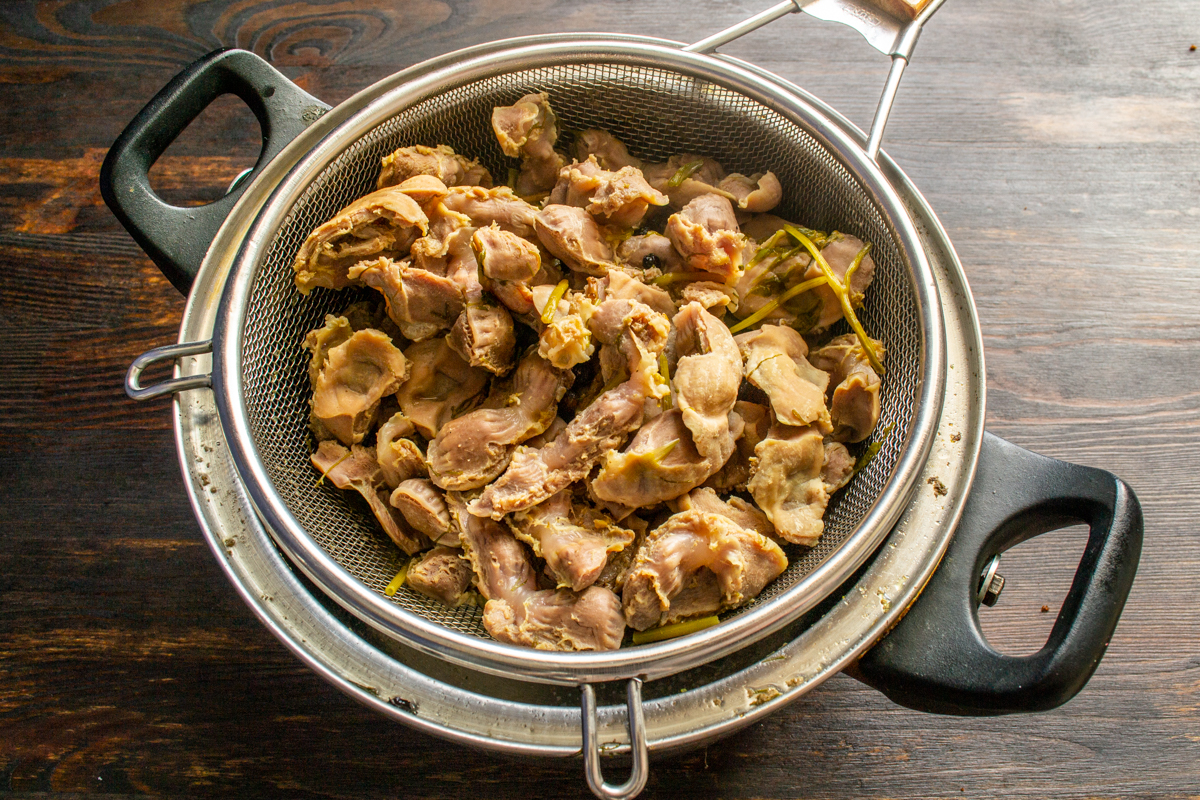
Drain the cooked gizzards in a colander and reserve the aromatic broth.
Transfer the cooked gizzards to a cutting board and chop them finely with a knife. Discard all the boiled vegetables, roots, and spices from the broth.
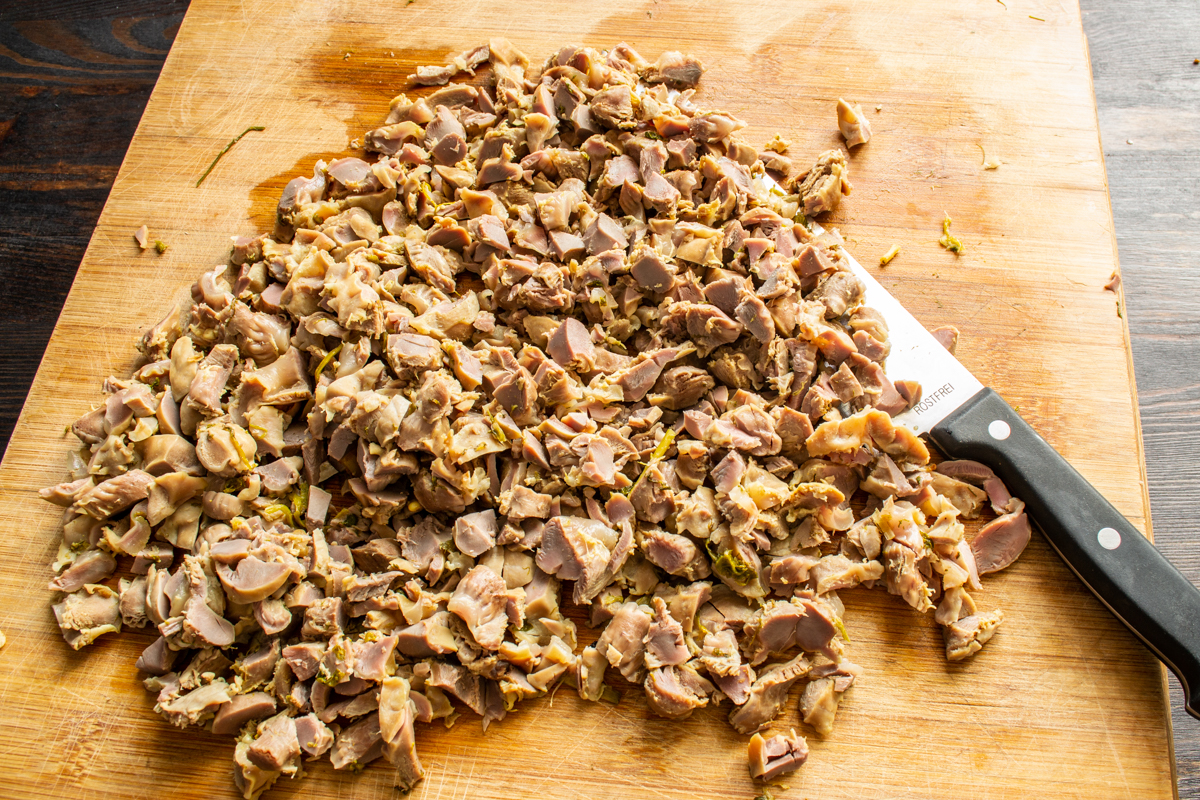
Finely chop the boiled gizzards to create the foundation for our sausage filling.
Remove the skin from the chicken breast. Cut the meat away from the bone. Pass the chicken breast fillets through a meat grinder fitted with a fine plate.
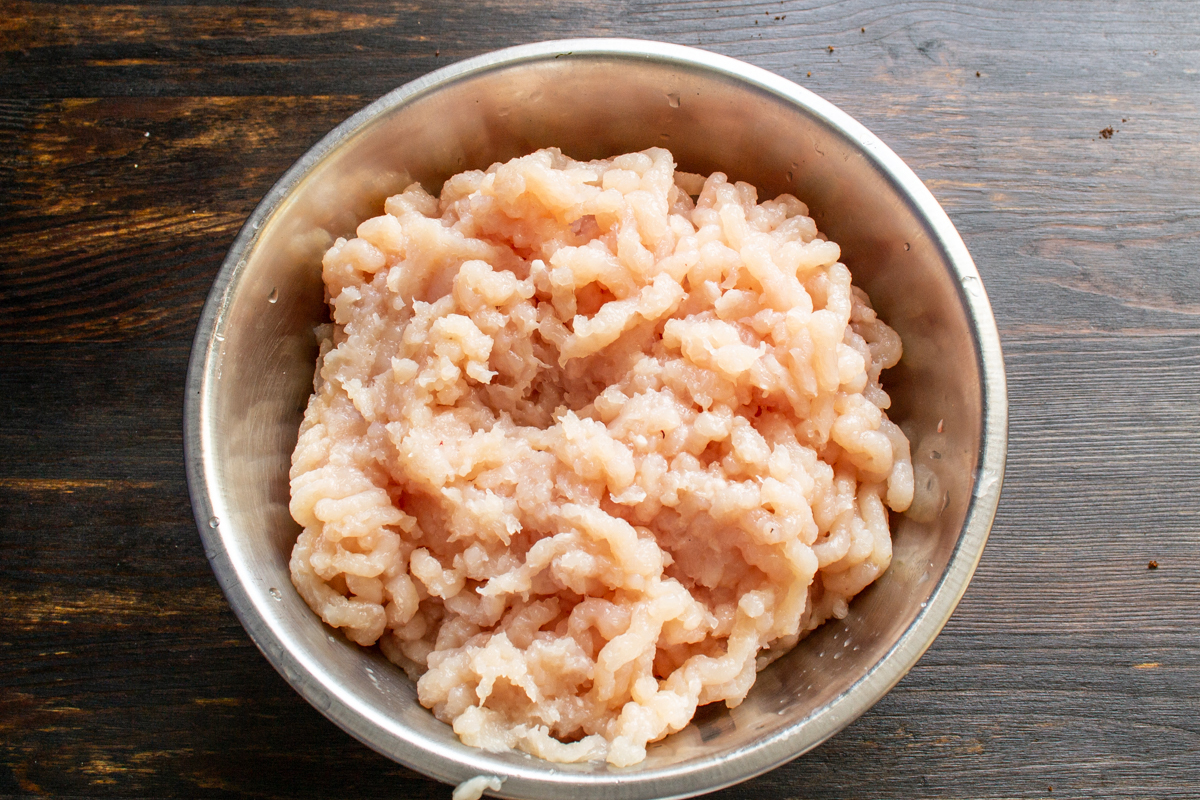
Pass the chicken breast fillets through a meat grinder fitted with a fine plate.
The only thing I take the time to fish out of the strainer after draining the broth is the black peppercorns. They retain their spicy, pungent kick but become wonderfully soft. You can grind these softened peppercorns right along with the chicken fillets. Add the ground chicken to the finely chopped gizzards.
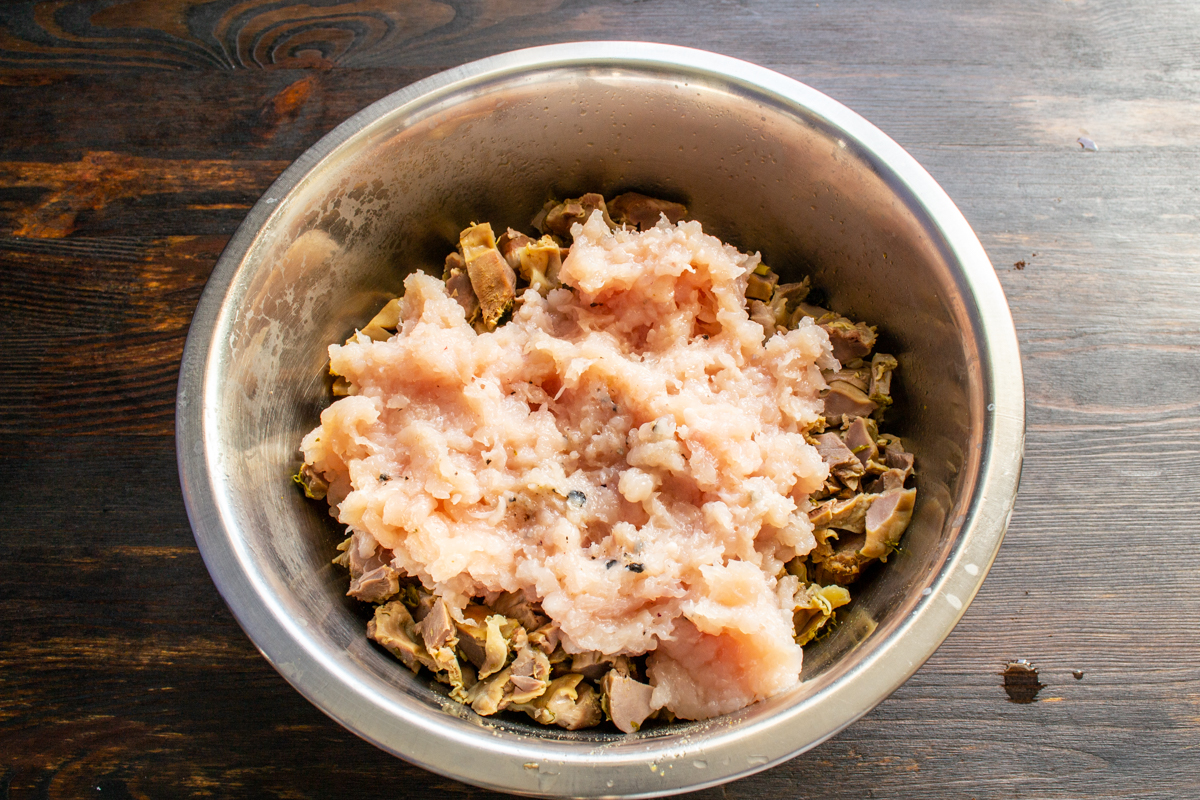
Add the ground chicken breast to the finely chopped gizzards in a large mixing bowl.
Pour in about 150 ml (5 oz) of the cooled, reserved broth.
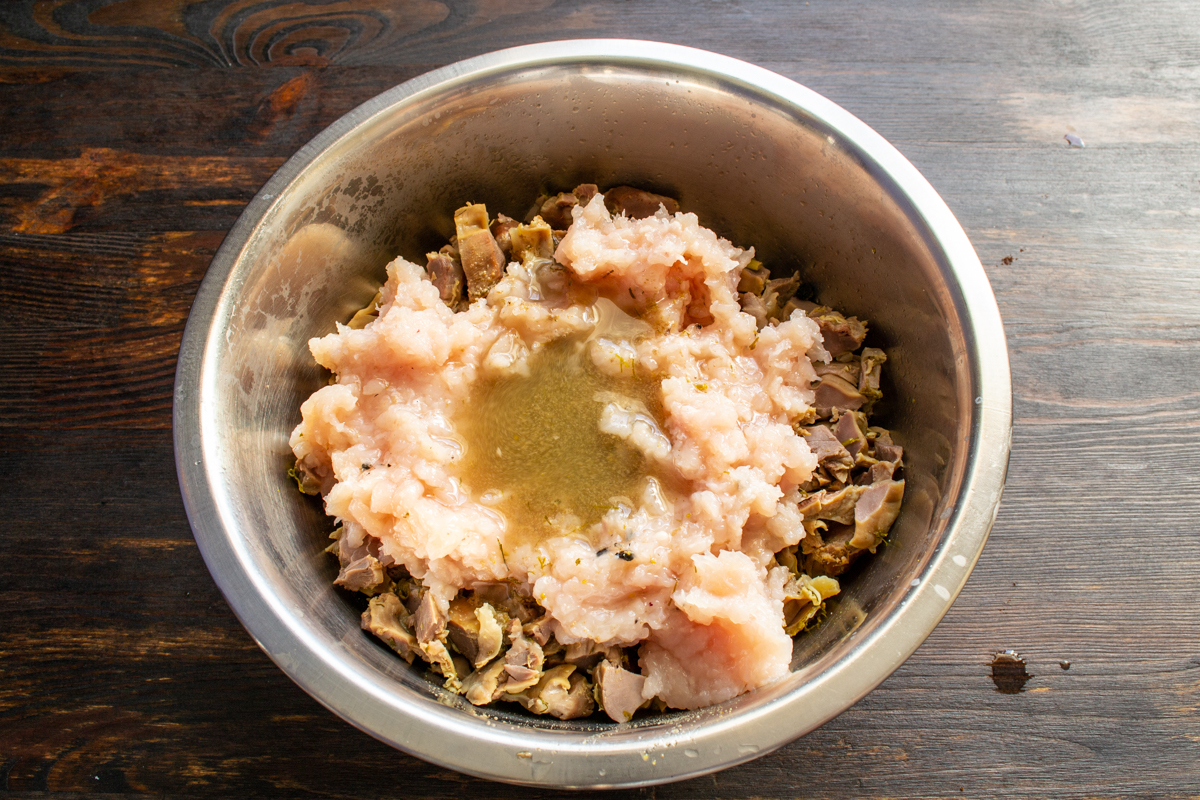
Pour in a splash of the cooled broth to guarantee juicy sausages.
Finely dice the onion. Sauté it in vegetable oil for about 7 minutes until golden. Let the onions cool, then add them to the meat mixture.
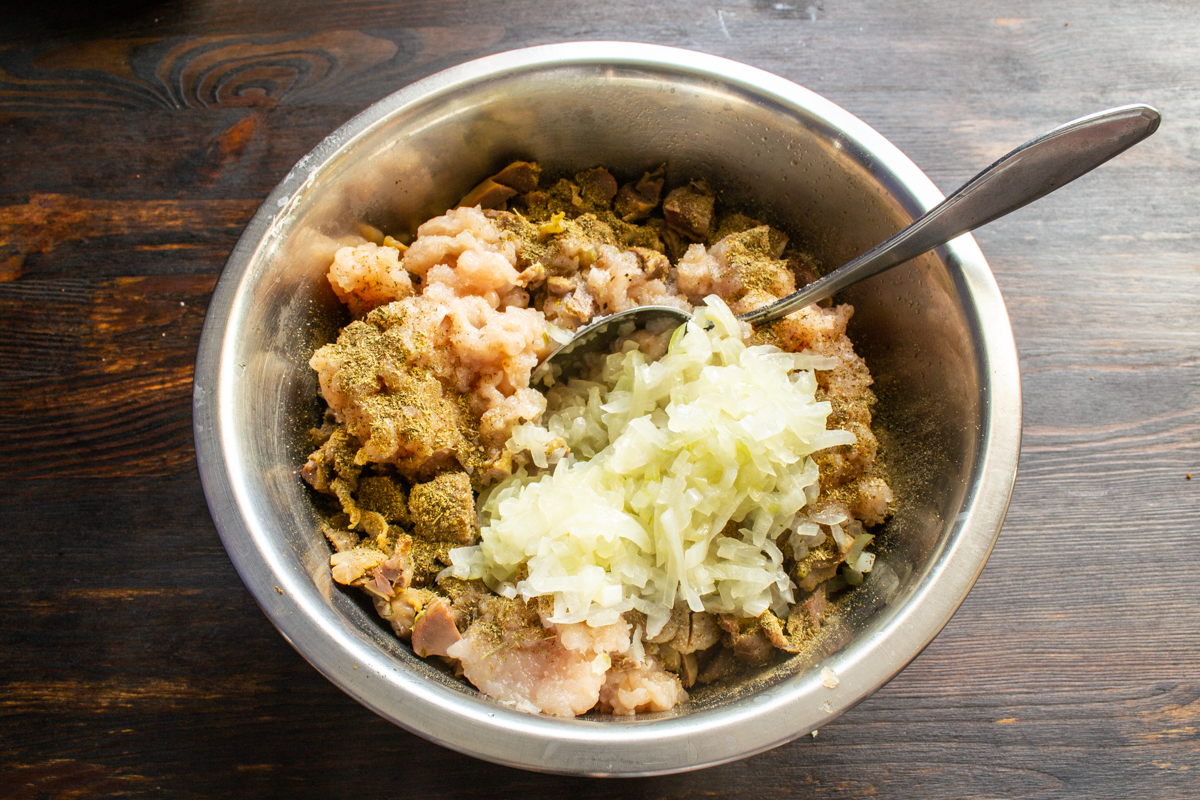
Fold in the sautéed onions and aromatic spices to build a rich flavor profile.
Season with salt and pepper to taste, then mix everything thoroughly for a few minutes. Feel free to add your favorite spices. I love adding a bit of spicy adjika (Caucasian chili paste) and khmeli-suneli (traditional Georgian spice blend).
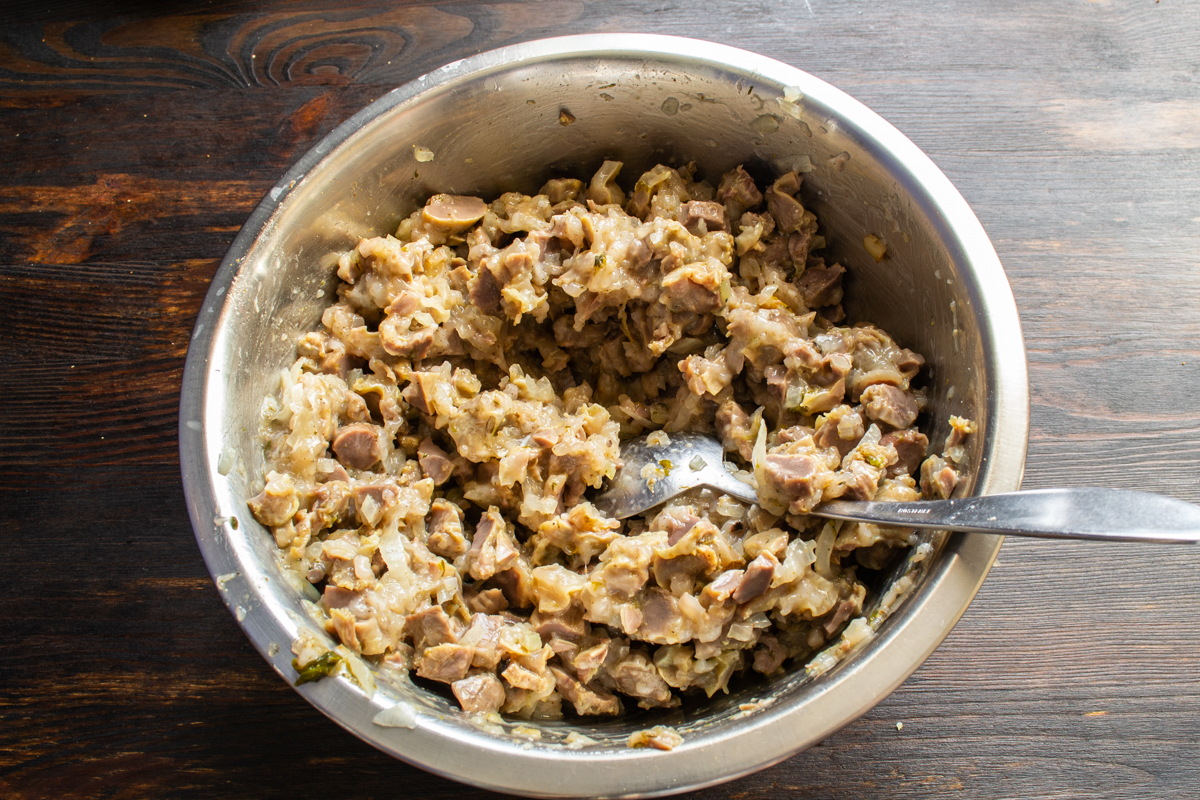
Thoroughly mix and knead the filling for a few minutes until completely homogeneous.
Rinse the prepared pork casings in cold water to wash away any salt granules. Thread the casings onto a sausage stuffer attachment.
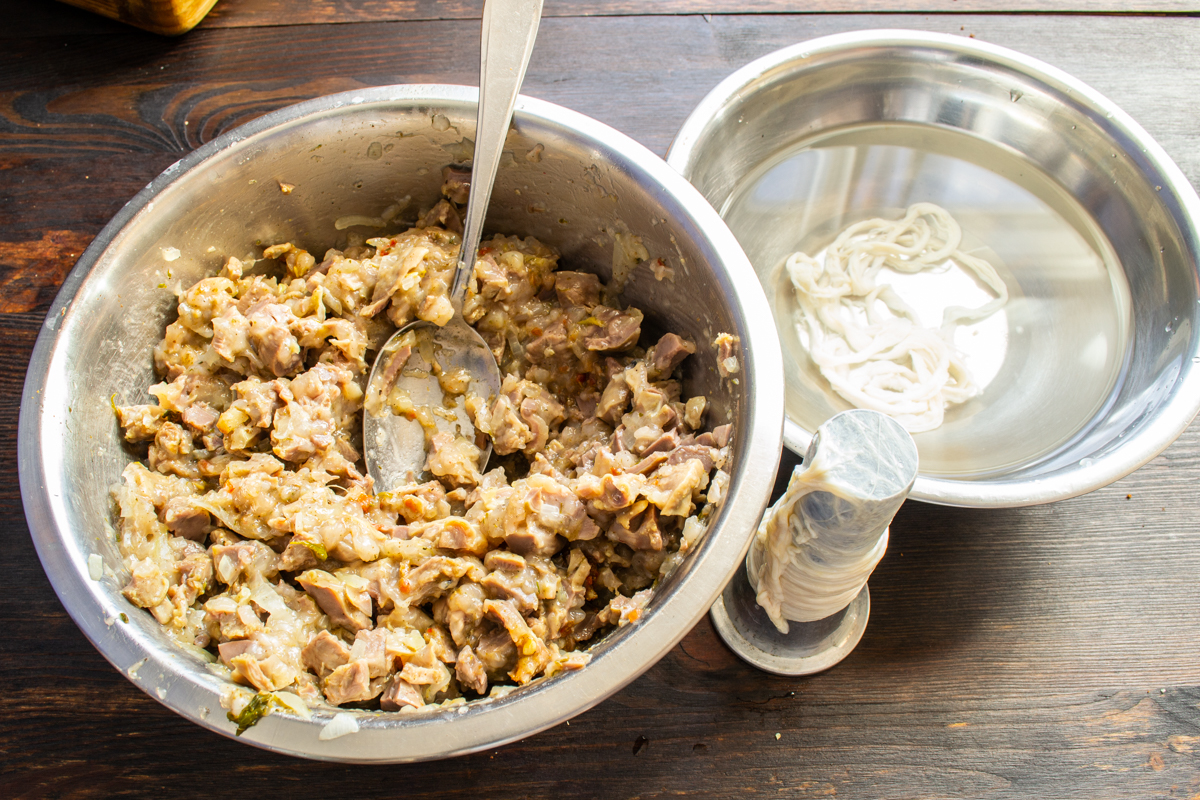
Thread the rinsed pork casings onto a specialized sausage stuffing tube.
Stuff the casing with the meat mixture, twisting it every 12 to 15 centimeters (5-6 inches) to form individual links. Tie the ends securely into knots.
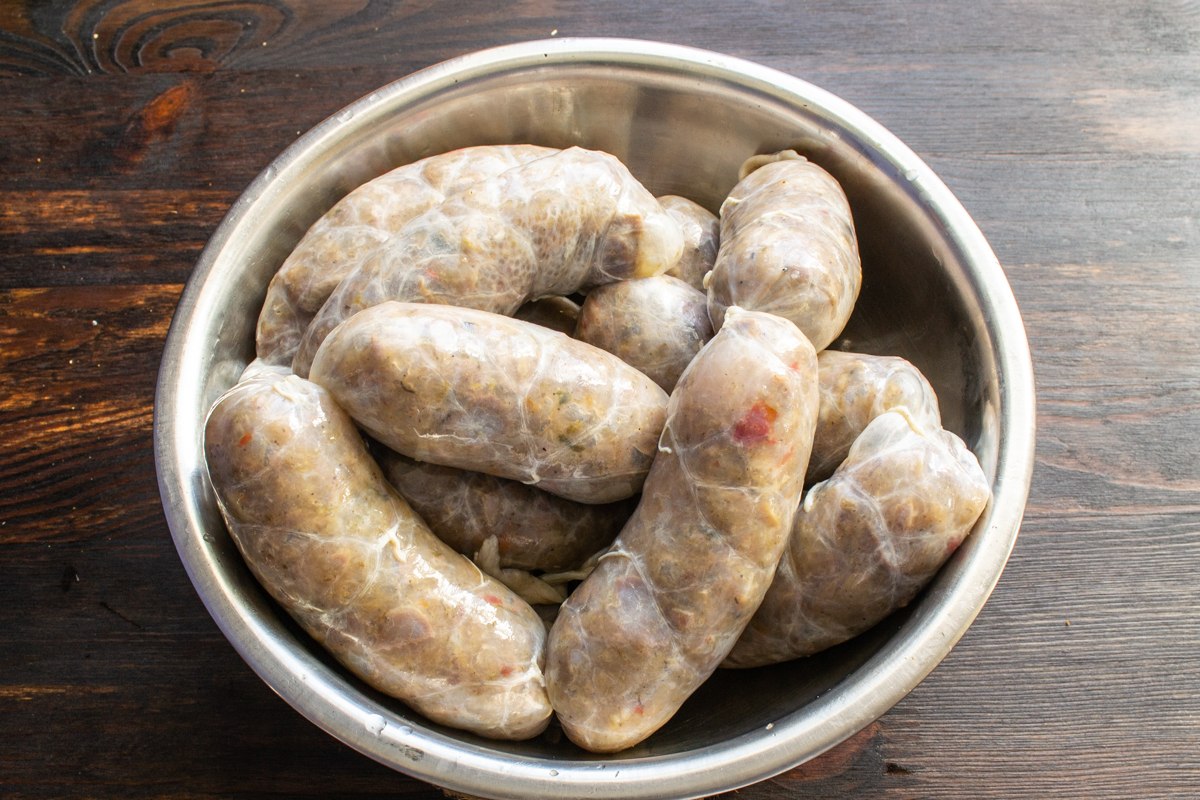
Form the sausages into 12-15 cm (5-6 inch) links by twisting the casing.
You can stuff the casings using a few different methods. First, with a meat grinder: remove the blade, attach a special spacer ring, and fit the sausage nozzle. Second, insert the nozzle into a large piping bag and pipe the mixture by hand. Third, the good old-fashioned method: manually pushing the meat into the casing with the handle of a spoon or knife. This works perfectly for small batches of sausage.
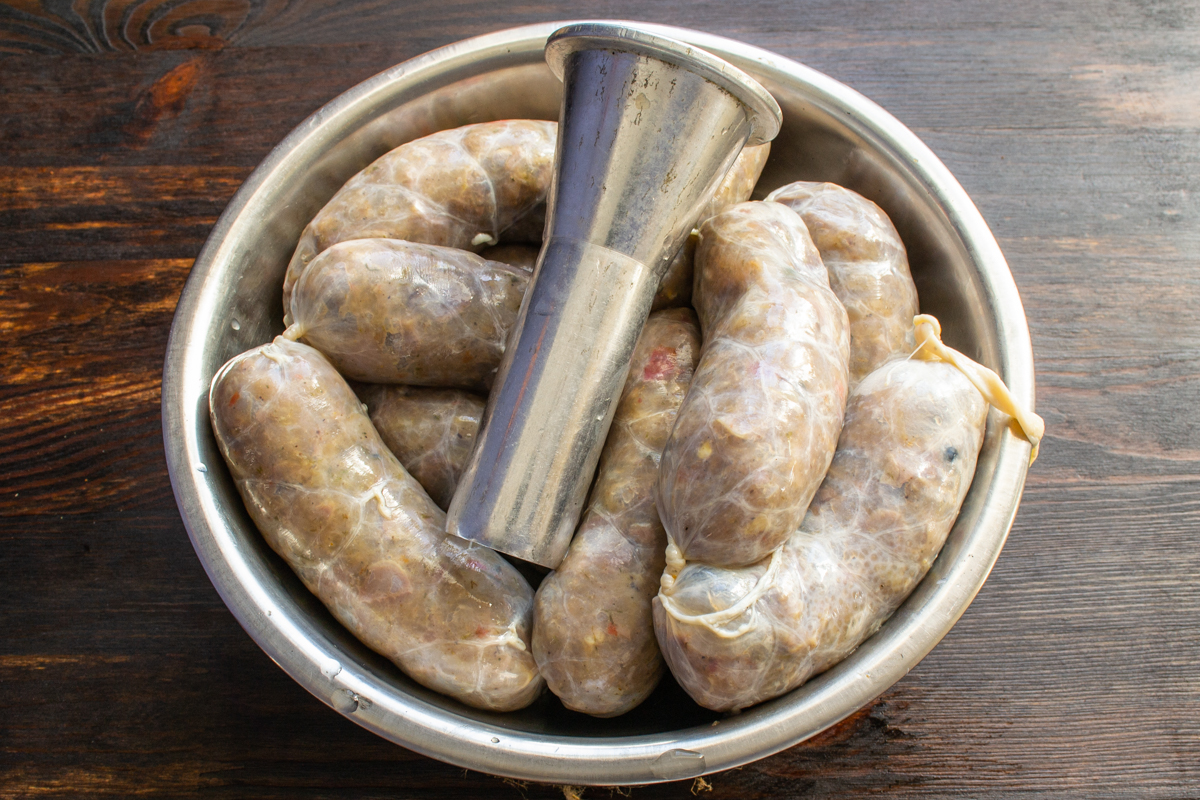
You can stuff the casing using a meat grinder, a piping bag, or simply by hand.
Pour about 3 liters (3 quarts) of water into a wide pot. Heat the water to 80 degrees Celsius (175 F) and salt it. Carefully drop the sausages into the hot water. The water temperature will drop, so heat it back up to 80-85 degrees Celsius (175-185 F). Do not let the sausages boil! A culinary thermometer is your best friend here. Poach for about 30 minutes.
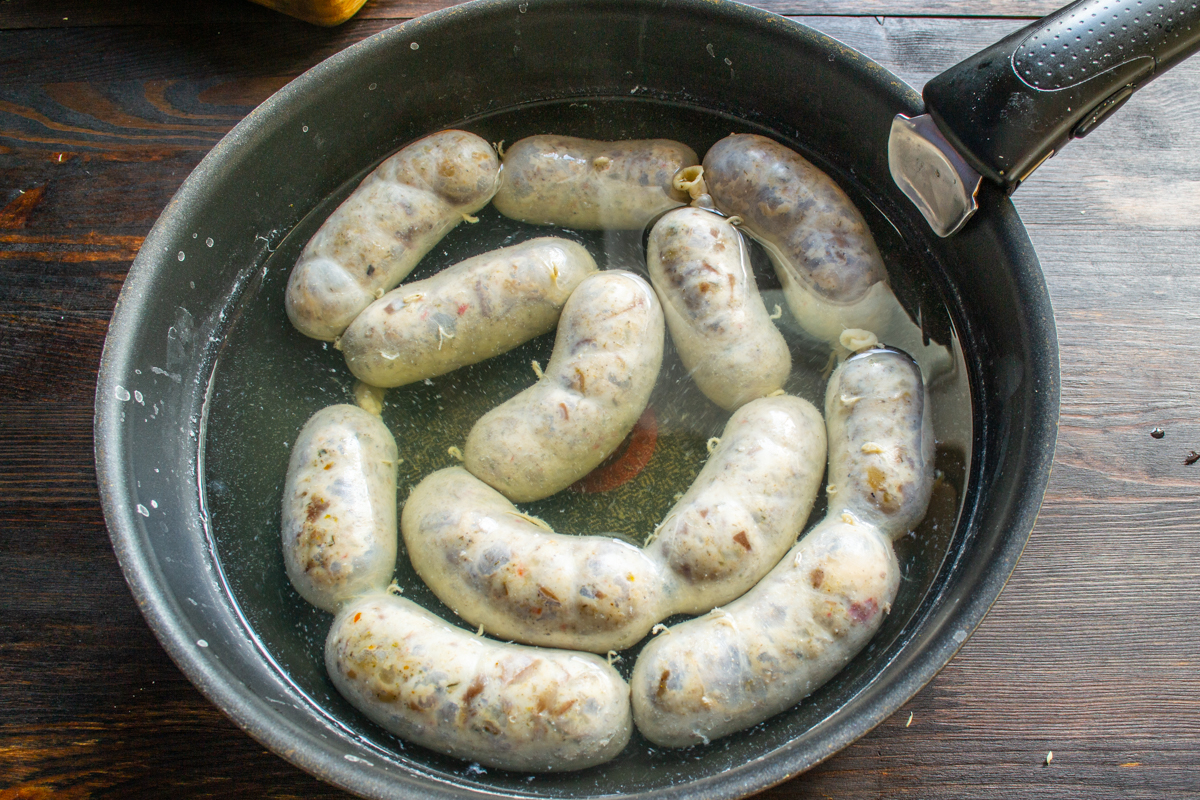
Poach the sausages at 80-85 C (175-185 F) for about 30 minutes, never allowing them to boil.
Carefully remove the cooked sausages from the water and let them cool. Store them in the refrigerator.
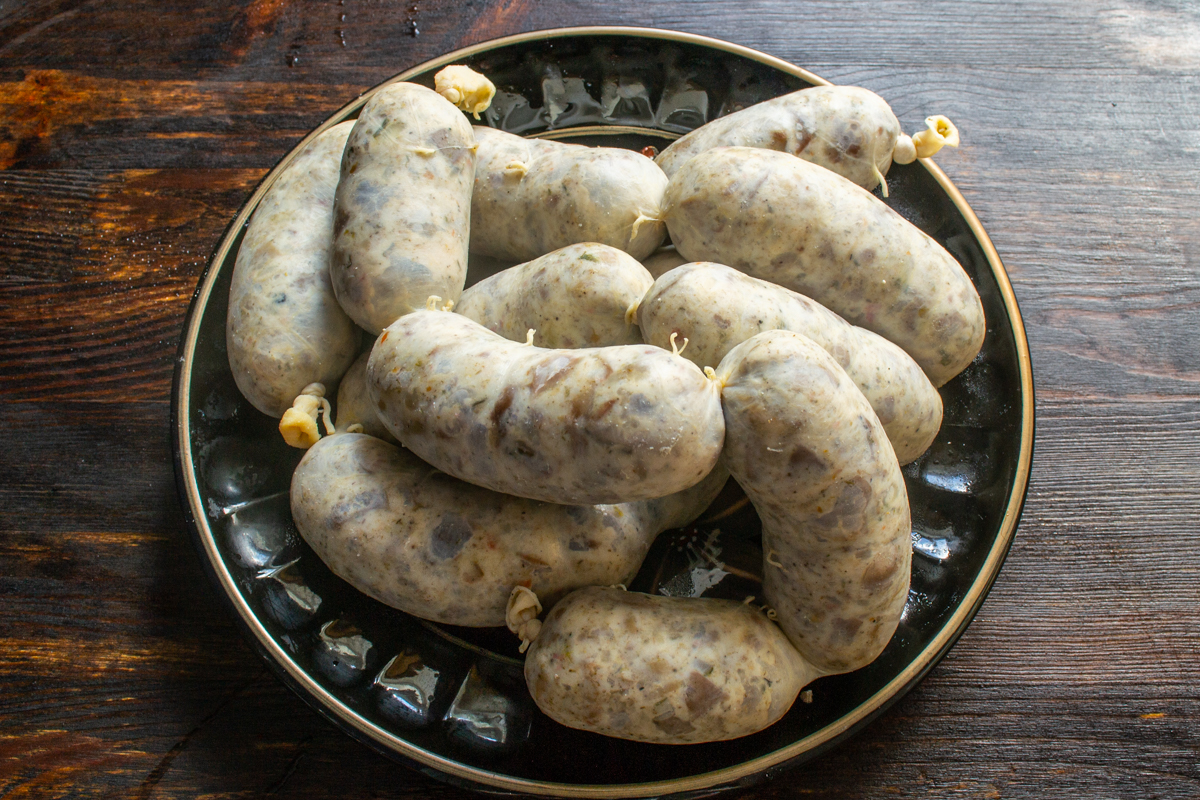
Remove the cooked sausages from the water and let them cool down completely.
These chicken gizzard sausages shine brightest when paired with classic, sharp condiments like potent homemade horseradish or strong mustard. If you prefer them hot, wait until they cool completely, then lightly pan-fry them in a bit of ghee until an appetizing golden crust forms. For a beautiful presentation, slice the sausage thickly on a bias and serve with pickled vegetables or fresh herbs. Store your finished homemade sausages in an airtight container in the refrigerator for no more than three days, as this natural product contains no preservatives. The secret to their perfect texture lies in strict temperature control during cooking: never let the water boil, ensuring the casing stays intact and the juices remain locked inside. High in protein and very low in carbohydrates, this delicacy is an excellent choice for anyone who appreciates natural, hearty meat dishes.
0 comments