
Canned chopped tomatoes in their own juice are more than just a pantry staple; they are a true culinary investment for cozy winter dinners. When it is freezing outside, the aroma of a freshly opened jar of ripe tomatoes instantly brings you back to a hot August day, filling your kitchen with freshness and a sunny mood. The Italians are absolutely right: it is far better to use sun-ripened, open-air tomatoes for sauces and soups than watery greenhouse vegetables. This preserving method locks in all the natural sweetness and dense texture of the flesh, creating the ultimate base for a hearty Bolognese, traditional shchi (cabbage soup), or zesty meat sauces.
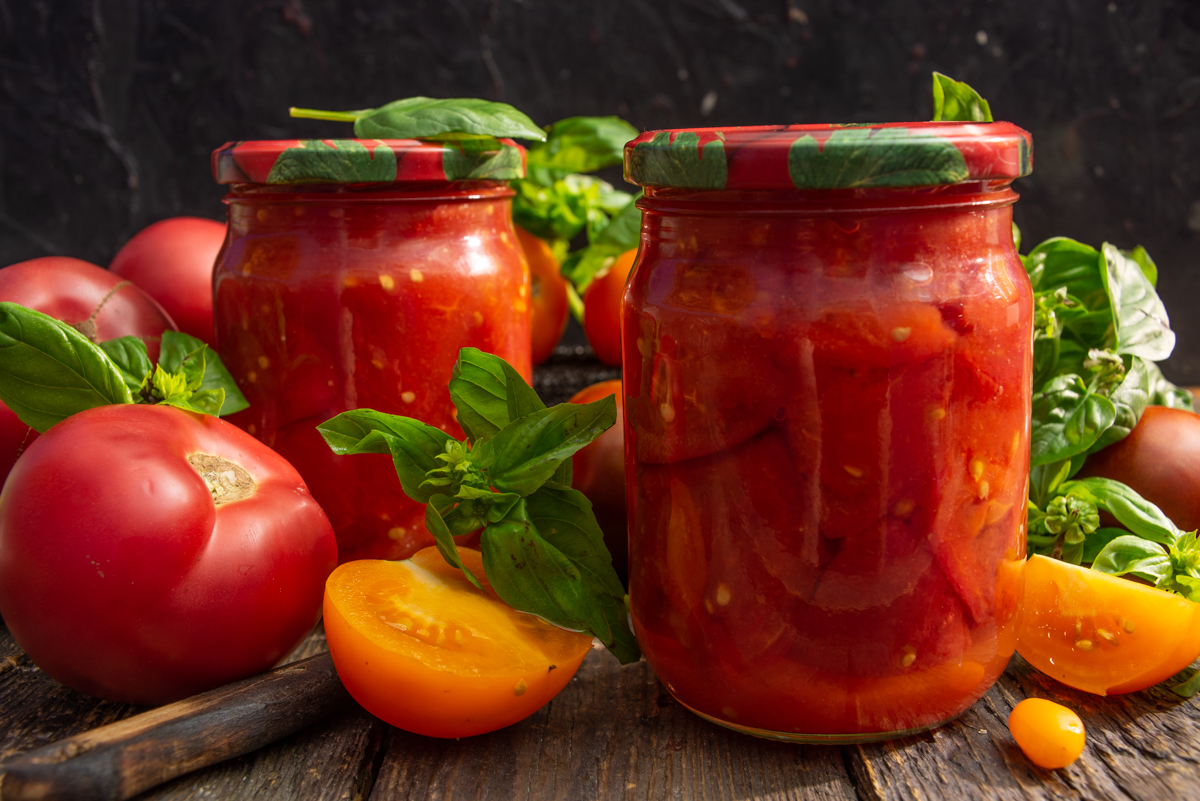
An appetizing preserve of chopped tomatoes in thick, natural juice—the perfect addition to your winter table.
Ingredients
- 1 kg 350 g (3 lbs) ripe red tomatoes
- 20 g (1 tbsp) table salt
- 30 g (2 tbsp) granulated sugar
- 15 ml (1 tbsp) 9% white vinegar
How to Make Canned Chopped Tomatoes in Their Own Juice
Select ripe, red or pink tomatoes without any blemishes or signs of spoilage. Slightly overripe ones are perfectly fine—they will be used for the juice. Wash the tomatoes and carefully drop them into a pot of boiling water. Blanch for 20 seconds to a couple of minutes, depending on the variety, skin thickness, and ripeness. Transfer them immediately from the boiling water into an ice-cold water bath and let them sit for a few minutes.
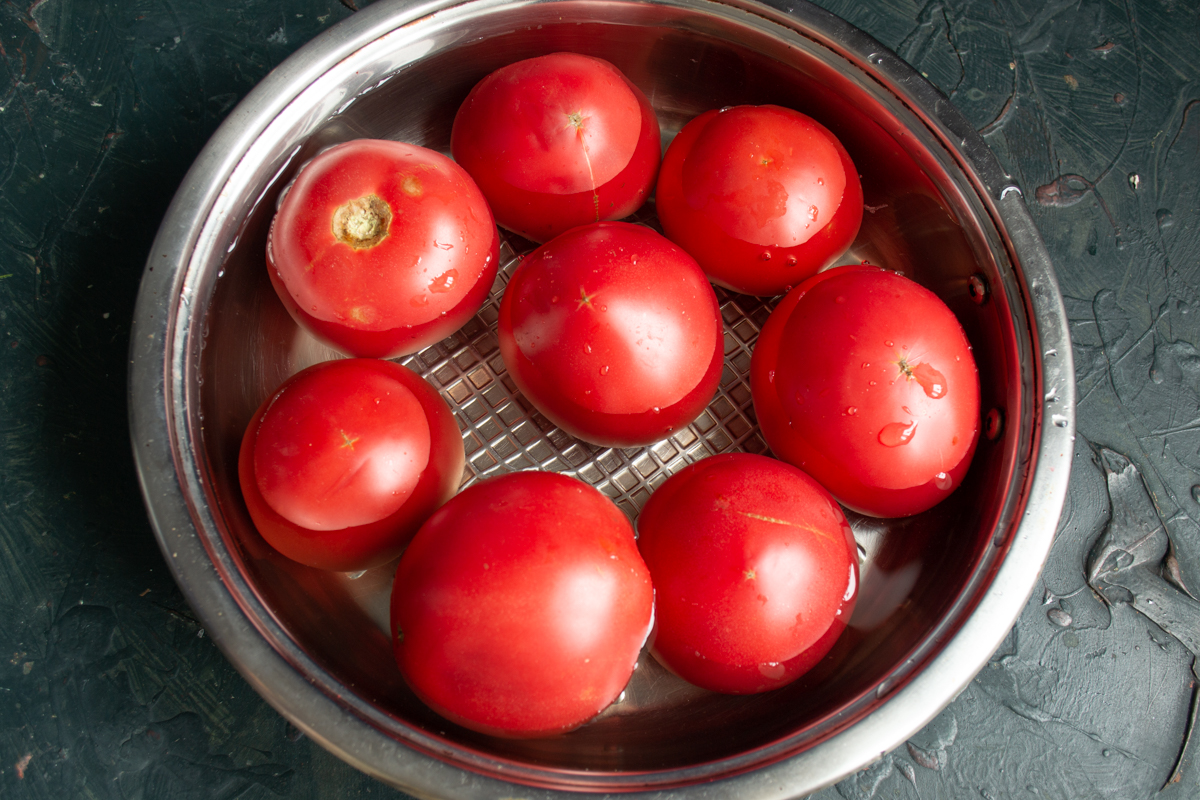
Blanching in boiling water helps remove the skin quickly and effortlessly, preserving the delicate flesh.
Score the bottom of each tomato with a shallow crisscross cut and peel off the skin—it should slip off easily like a shirt. Peel all the tomatoes, including the ones intended for the juice.
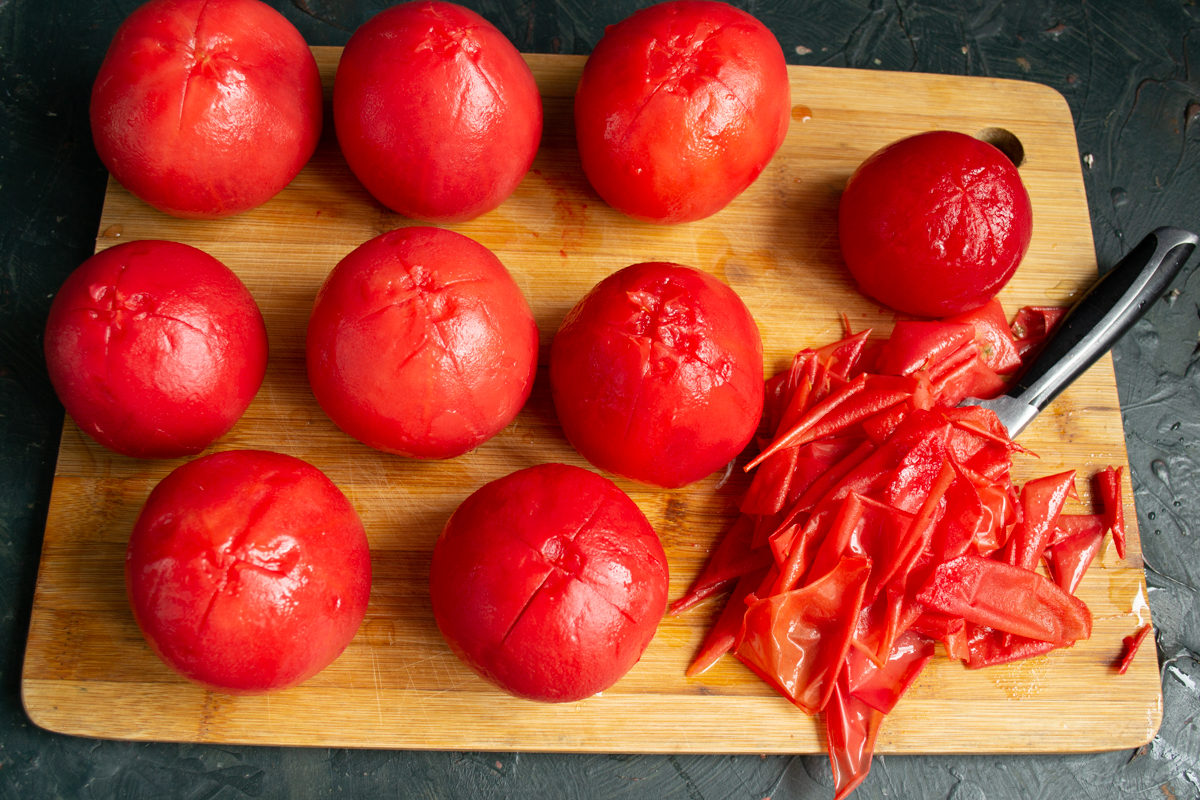
After an ice bath, the skin peels off very easily, leaving only the tender, juicy flesh.
Cut the peeled tomatoes in half and remove the tough core. You can also scoop out the seeds if you prefer, but this is entirely optional.
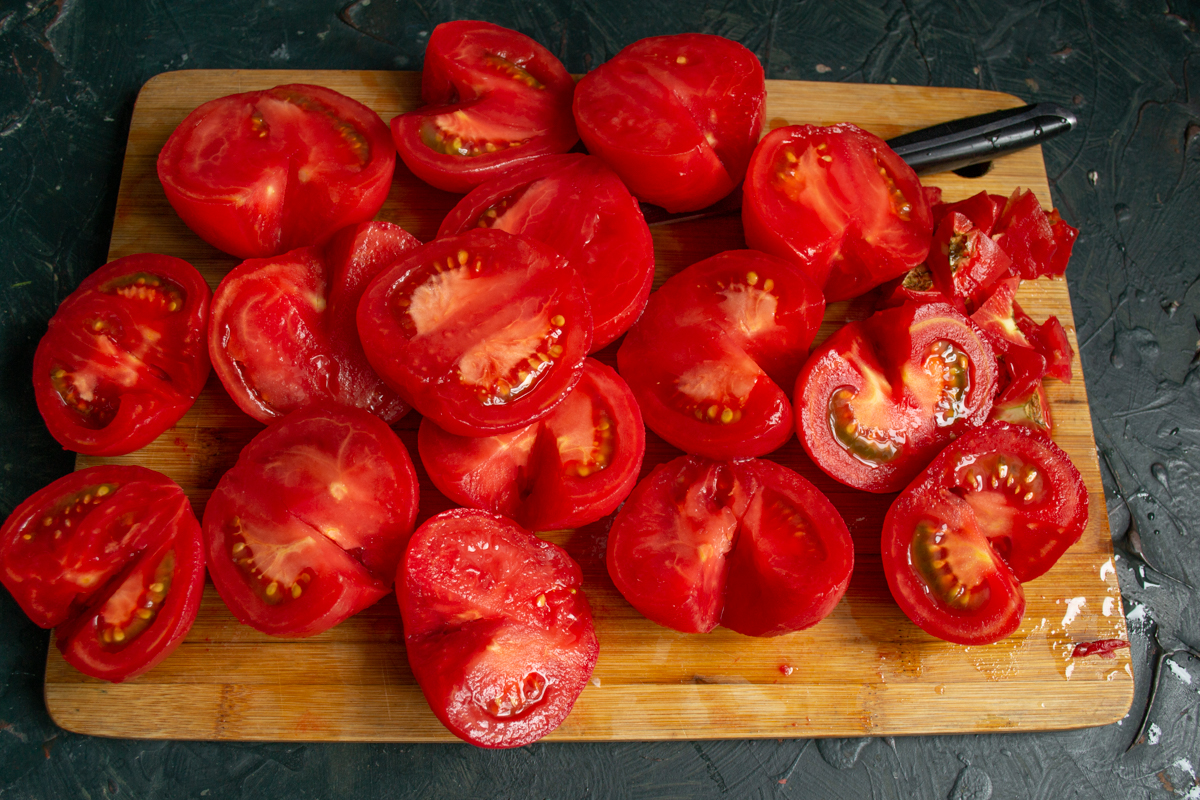
Prepare the vegetables by removing the tough cores and cutting them into bite-sized pieces that fit nicely in the jar.
Prepare the jars. The vegetable quantities listed in the recipe will yield two 500 ml (about 1 pint) jars. Wash them thoroughly and rinse with boiling water. Place the jars on a wire rack and put them into the oven. Heat to 100°C (212°F) and dry for 10 minutes. Boil the lids to sterilize them.
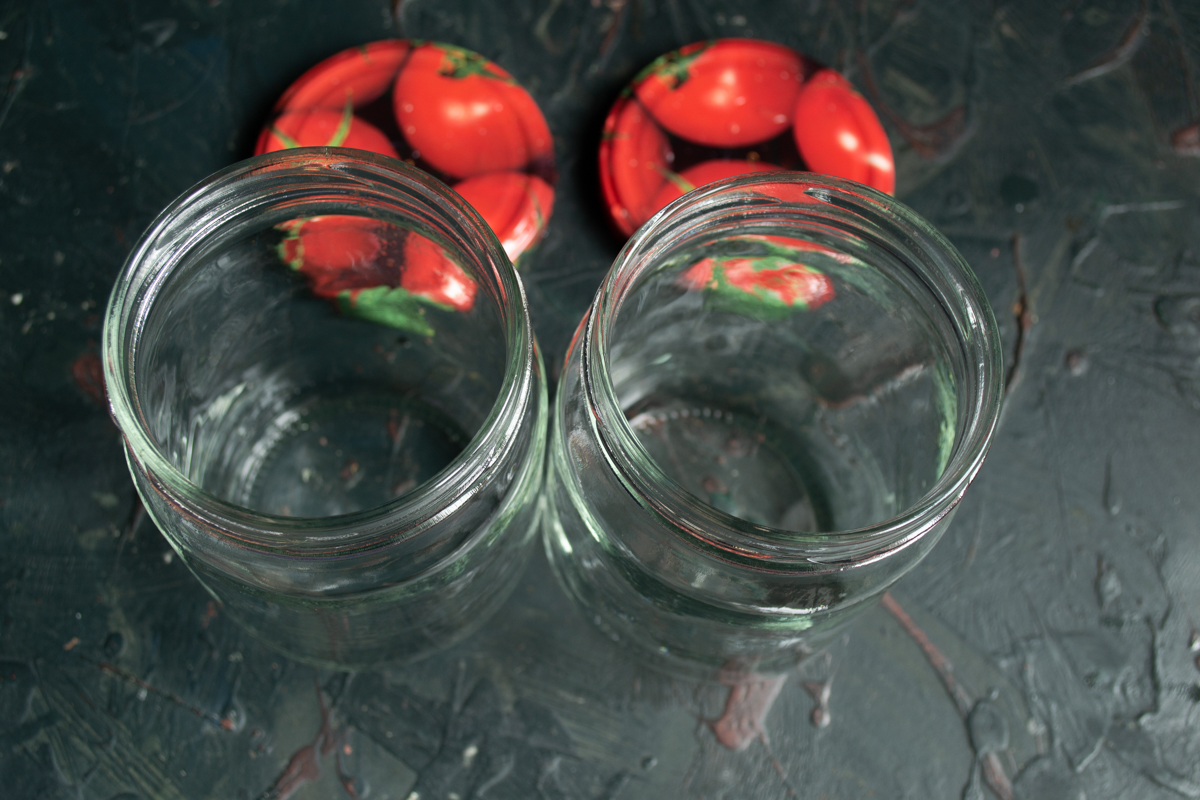
The jars must be thoroughly washed and sterilized in the oven to ensure a long shelf life.
Chop the peeled tomatoes into small, bite-sized pieces and pack them into the sterilized jars, filling them right up to the shoulders.
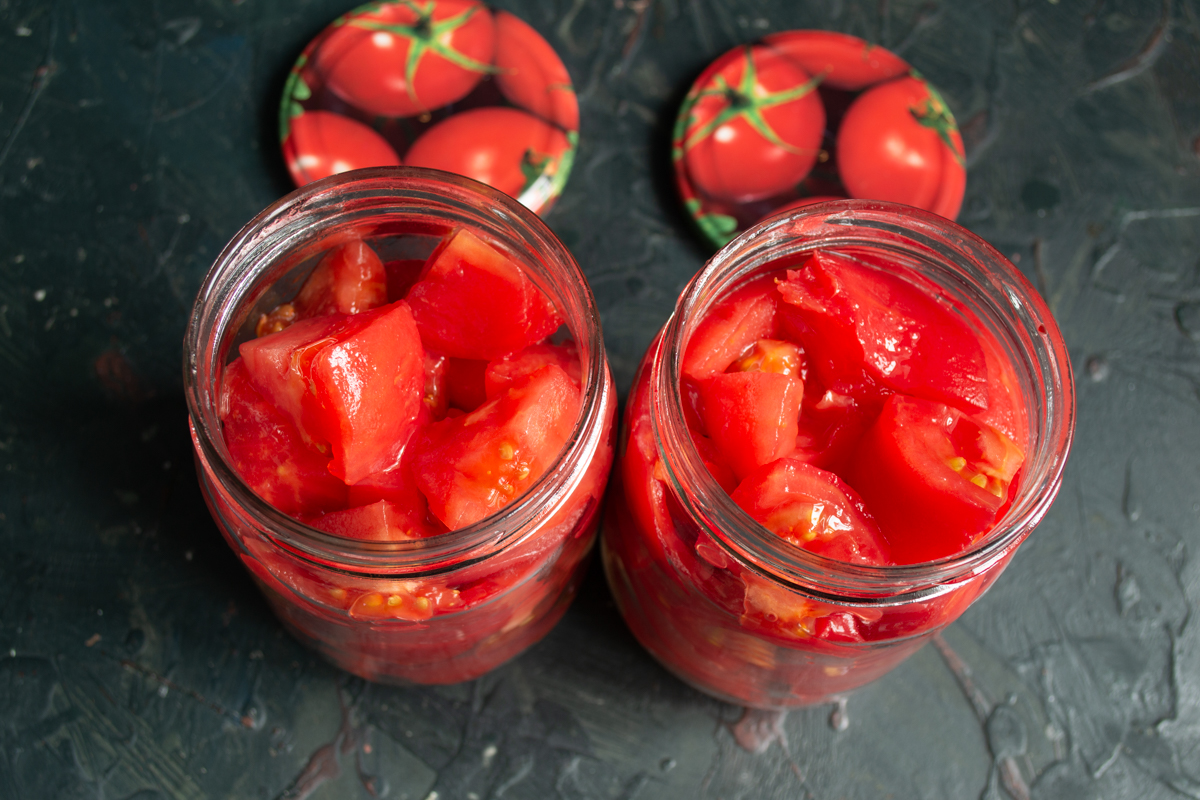
Fill the jars with the prepared tomato slices right up to the shoulders.
Place the remaining overripe tomatoes into a saucepan. Add the granulated sugar and pure table salt (avoid using iodized salt).
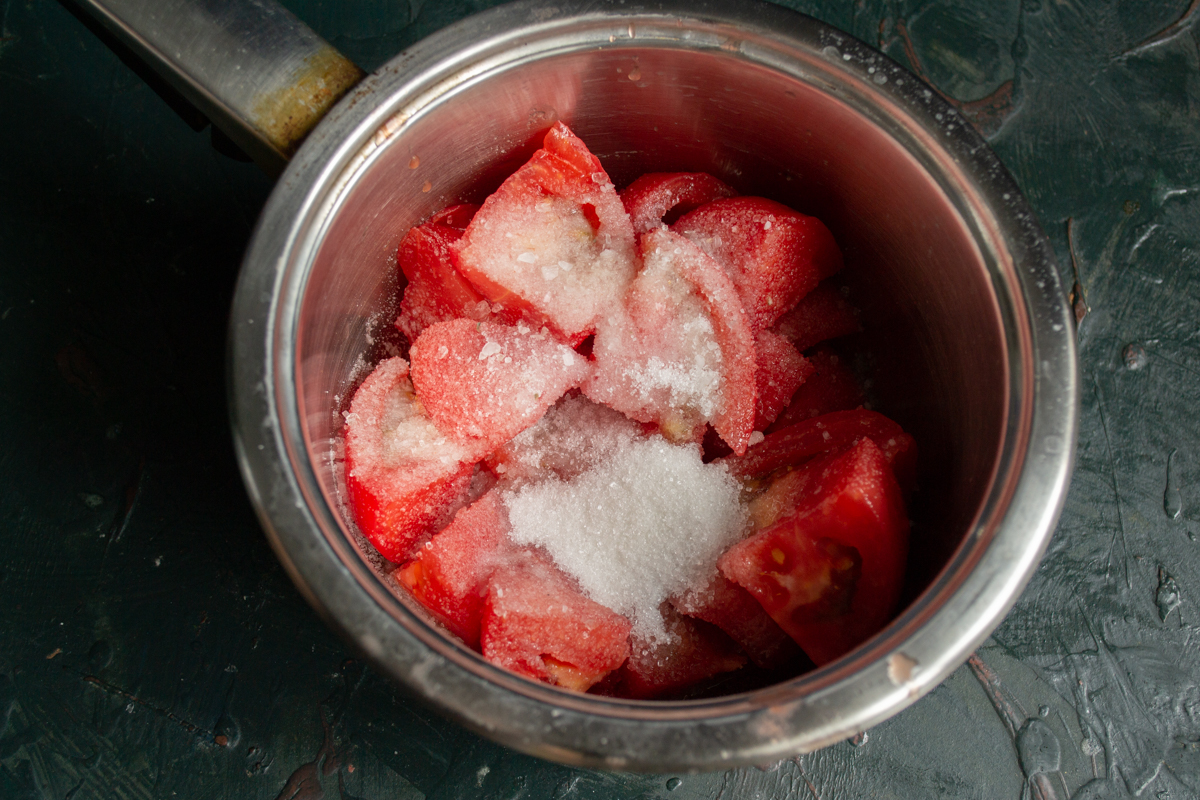
Mix a portion of the tomatoes with salt and sugar to make a fragrant homemade juice.
Blend the vegetables with an immersion blender until completely smooth. You will get a rather liquid, fresh tomato juice.
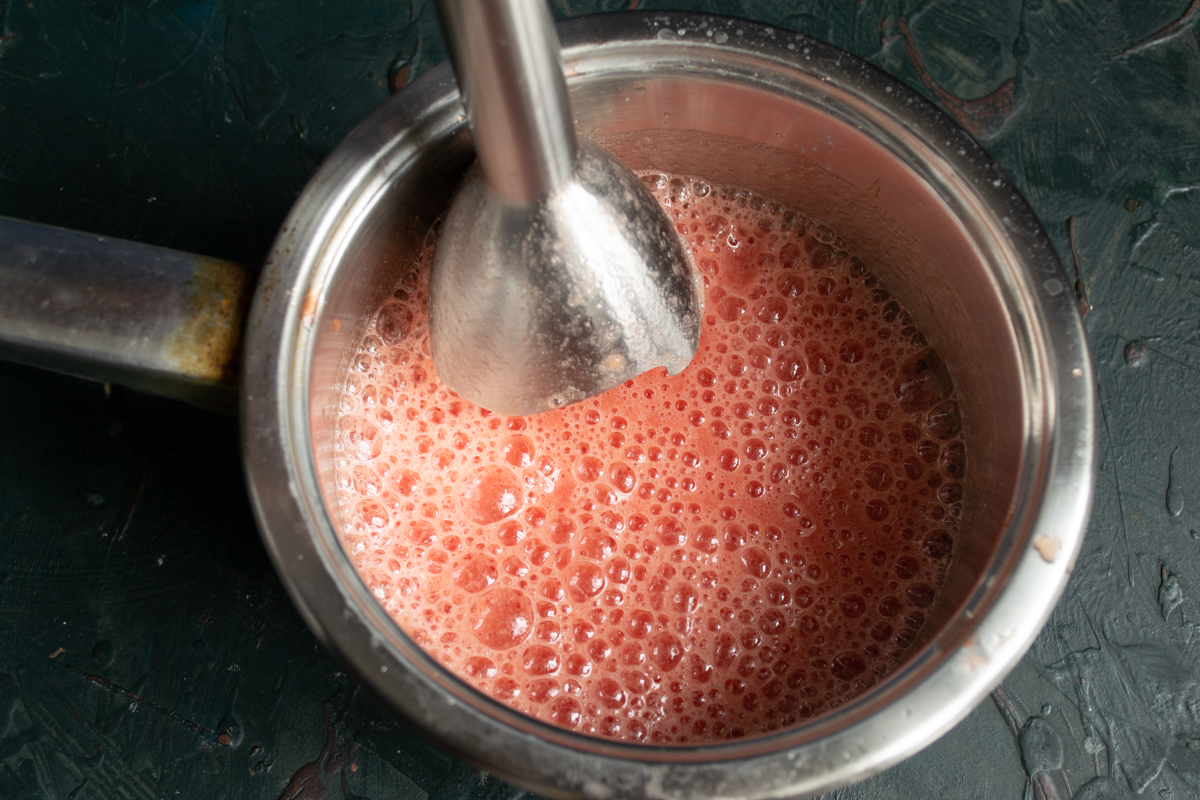
Blend the vegetables until completely smooth to create a thick, delicious base for the juice.
Bring the tomato juice to a boil and simmer until it stops foaming completely (about 4 to 5 minutes), then stir in the 9% white vinegar. When it first boils, a thick foam will form, but it will gradually subside.
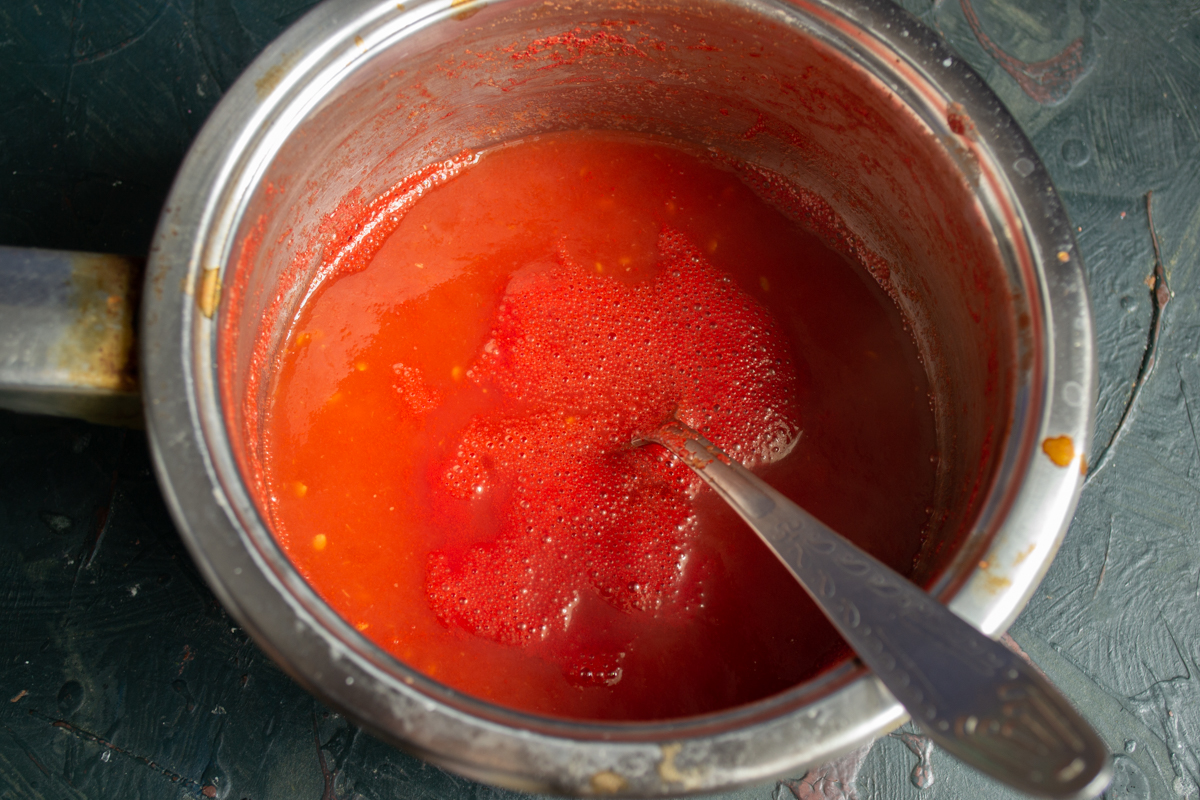
Bring the juice to a boil and simmer for a few minutes until all the foam disappears.
Line the bottom of a large, deep pot with a kitchen towel or a cloth napkin. Place the jars filled with chopped tomatoes inside, making sure they do not touch each other.
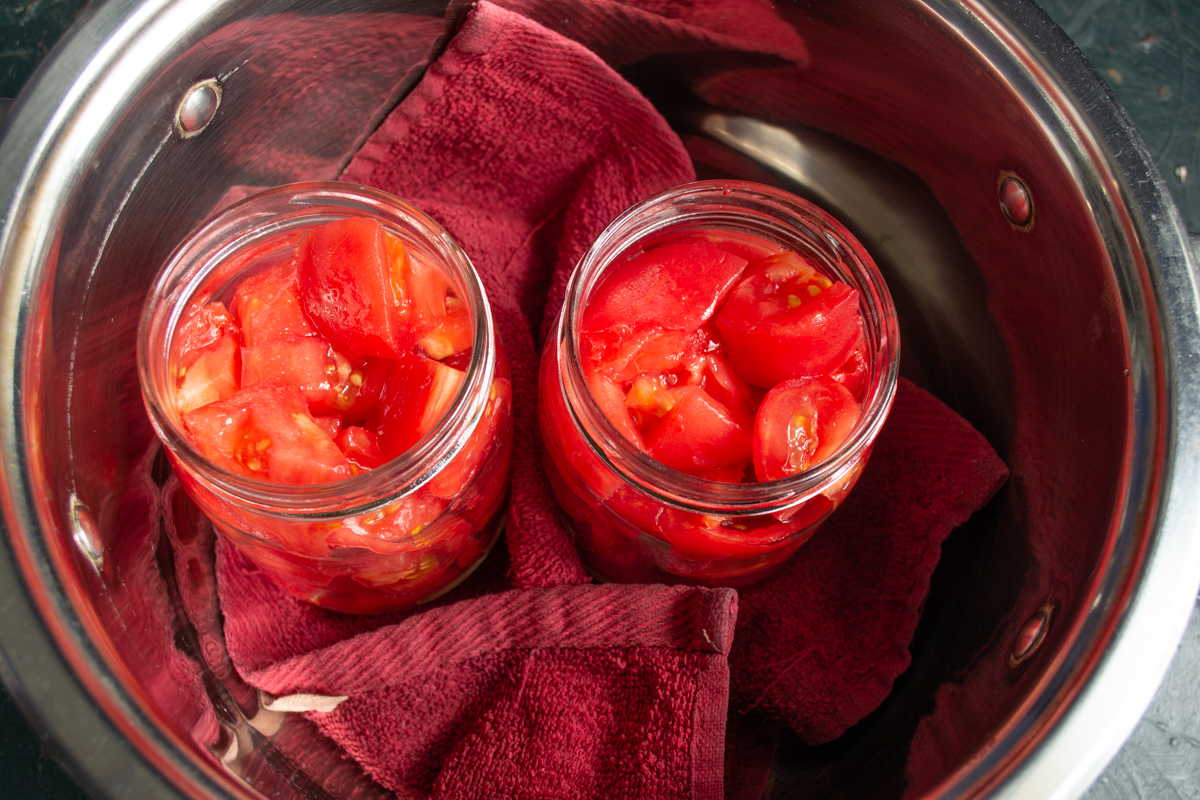
A cloth napkin at the bottom protects the glass from overheating and cracking during boiling.
Pour the hot, freshly made tomato juice into the jars over the chopped vegetables. Fill them, leaving about 1.5 cm (1/2 inch) of headspace at the top.
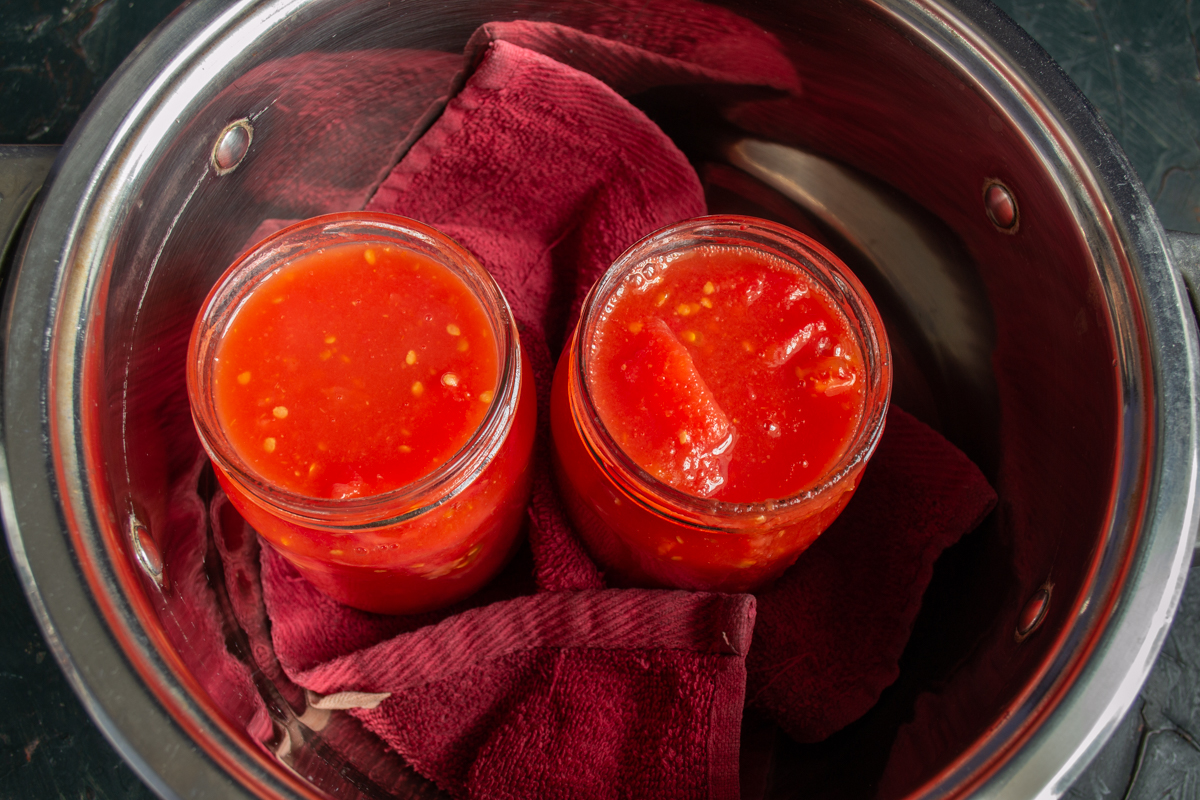
Carefully pour in the hot juice, making sure to fill all the gaps between the tomato pieces.
Cover the jars with the boiled lids and screw them on tightly. Pour hot water into the pot until it reaches the lids. If you are using jar lifter tongs, you can submerge the jars completely, covering the lids. The water temperature should be around 40-50°C (105-120°F) to prevent the glass from cracking.
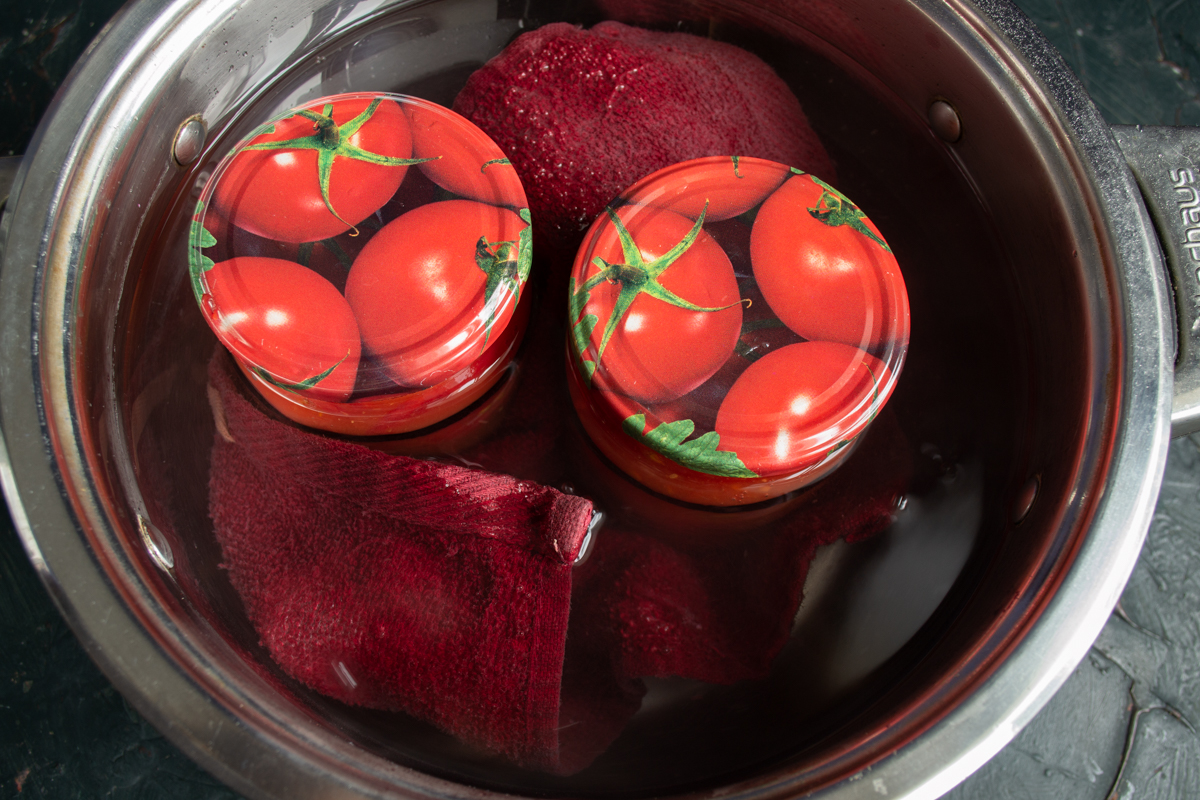
Process the jars in boiling water for 15 minutes—this guarantees the preserve will last all winter.
Once the water comes to a rolling boil, process the canned tomatoes for 15 minutes (for 450-500 ml / 1 pint jars). Carefully remove the sterilized jars, flip them upside down, and wrap them warmly with a blanket. Once completely cool, store them in a dark, dry place for the winter.
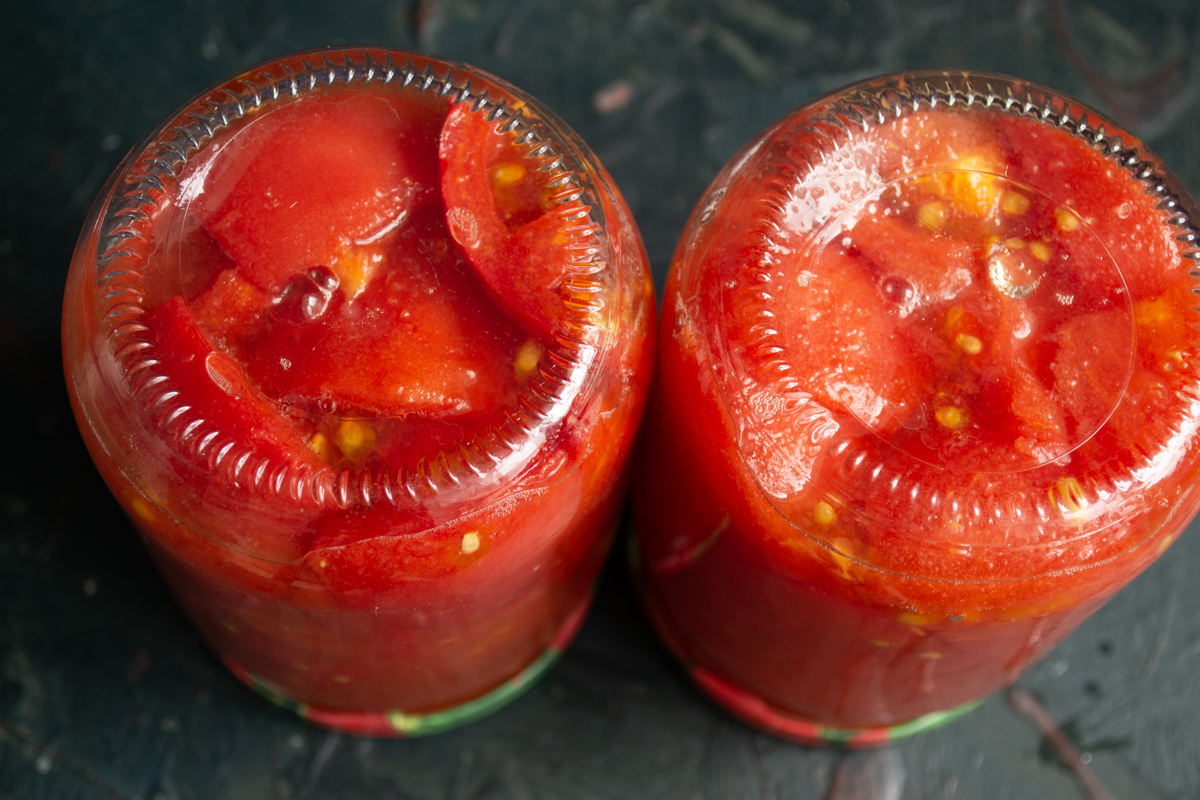
Flip the finished jars upside down and leave them under a warm blanket until completely cooled.
Chopped tomatoes canned in their own juice using this method store beautifully in a city apartment and do not require a special root cellar. While the addition of sugar and vinegar might seem unnecessary to some, they act as the ultimate stabilizers, preventing the product from spoiling at room temperature. If you prefer a completely natural taste, choose the meatiest tomato varieties—they have fewer seeds and more dense flesh, which transforms into a luxurious, thick juice.
When serving, these tomatoes can be turned into an elegant appetizer simply by adding a little finely minced garlic, fresh basil, and a drizzle of unrefined oil. They also make a fantastic secret ingredient for braised meats: the gentle acidity in the juice naturally tenderizes beef or pork fibers, making them melt-in-your-mouth tender. Do not forget to use the leftover juice from the jar—it is a ready-made, vitamin-packed dressing that easily beats any store-bought beverage.
0 comments