
French garlic and herb bread is the epitome of homemade comfort, where the crunch of a thin, golden crust meets the cloud-like tenderness of a porous crumb. The tradition of serving warm baguettes soaked in seasoned butter stems from the culture of leisurely Parisian breakfasts and rustic countryside picnics. As the aroma of roasting garlic intertwines with the scent of freshly baked dough, your kitchen instantly transforms into an artisan bakery. This bread requires no elaborate pairings: it stands completely on its own alongside a glass of dry wine or a wedge of aged cheese, easily outshining the most sophisticated baked goods.
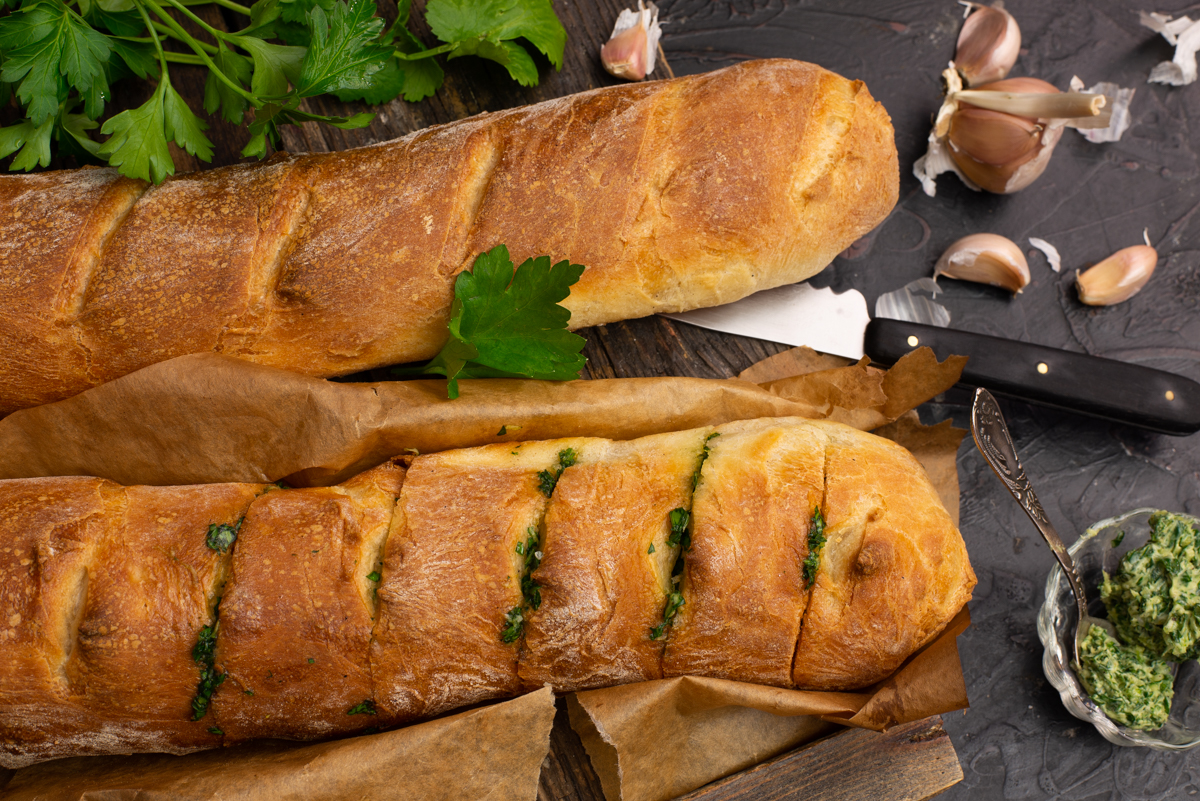
Fragrant French bread with a golden crust and tender garlic-herb filling, ready to serve.
Dough Ingredients
- 400g (3 1/4 cups) wheat bread flour
- 20g (1.4 tbsp) unsalted butter
- 280g (1 cup + 3 tbsp) water
- 1 tsp instant dry yeast
- 0.5 tsp salt
- 1 tsp sugar
Filling Ingredients
- 100g (7 tbsp) unsalted butter
- 1 bunch of fresh parsley
- 3 garlic cloves
- coarse sea salt
Instructions
Sift the wheat flour into a large bowl. Add the instant dry yeast. This recipe uses high-protein bread flour. Unlike standard active dry yeast, this type can be mixed directly into the dough without prior blooming in water.
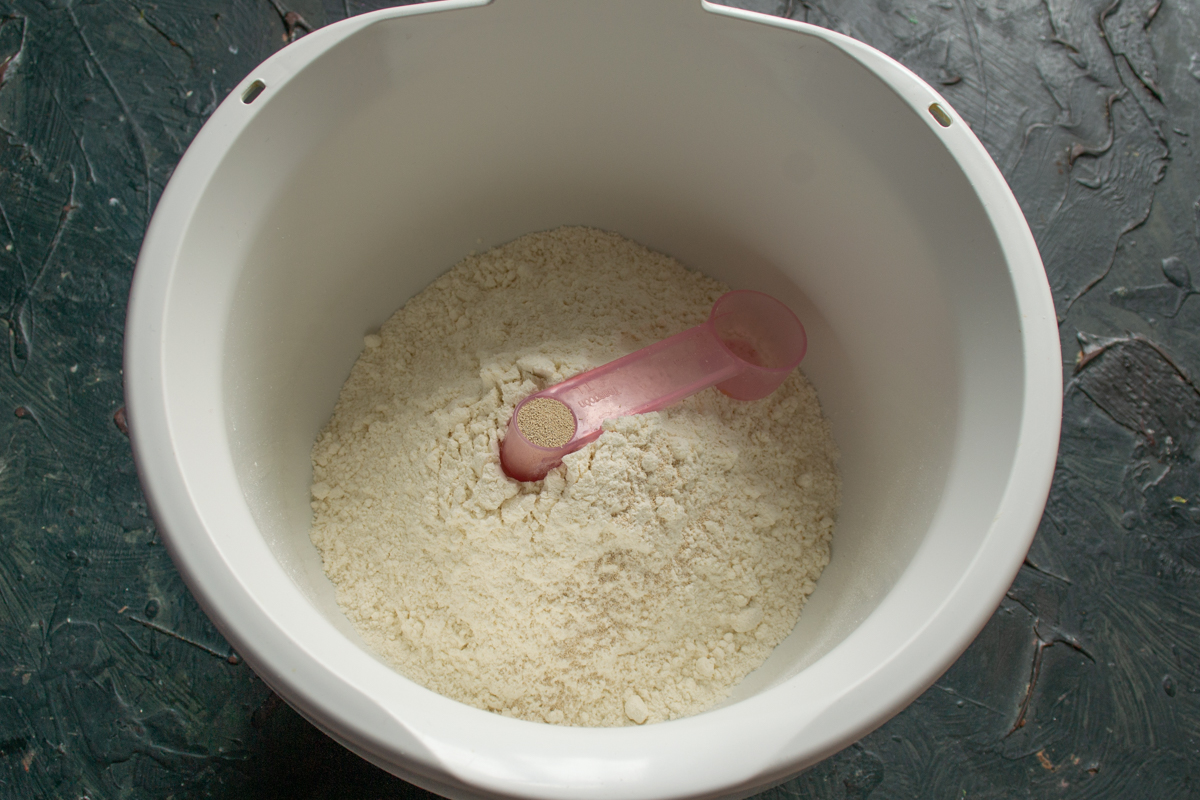
Start the preparation by combining the sifted high-protein flour and instant dry yeast.
Add the salt and sugar. Whisk the dry ingredients together until well combined.
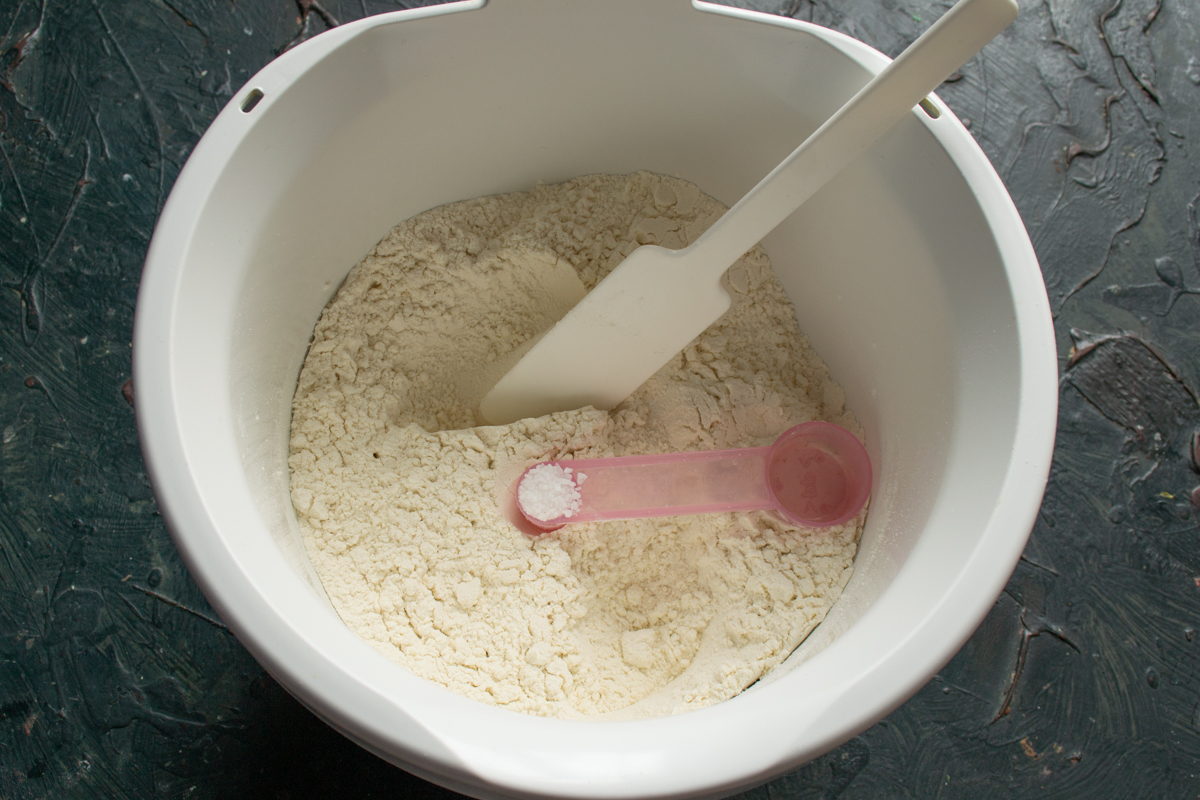
Thoroughly whisk the flour with salt and sugar to ensure an even flavor in the baked bread.
Place the butter into the water and heat gently until the butter melts. Cool the mixture to about 30°C (86°F). Pour the wet ingredients into the dry mixture.
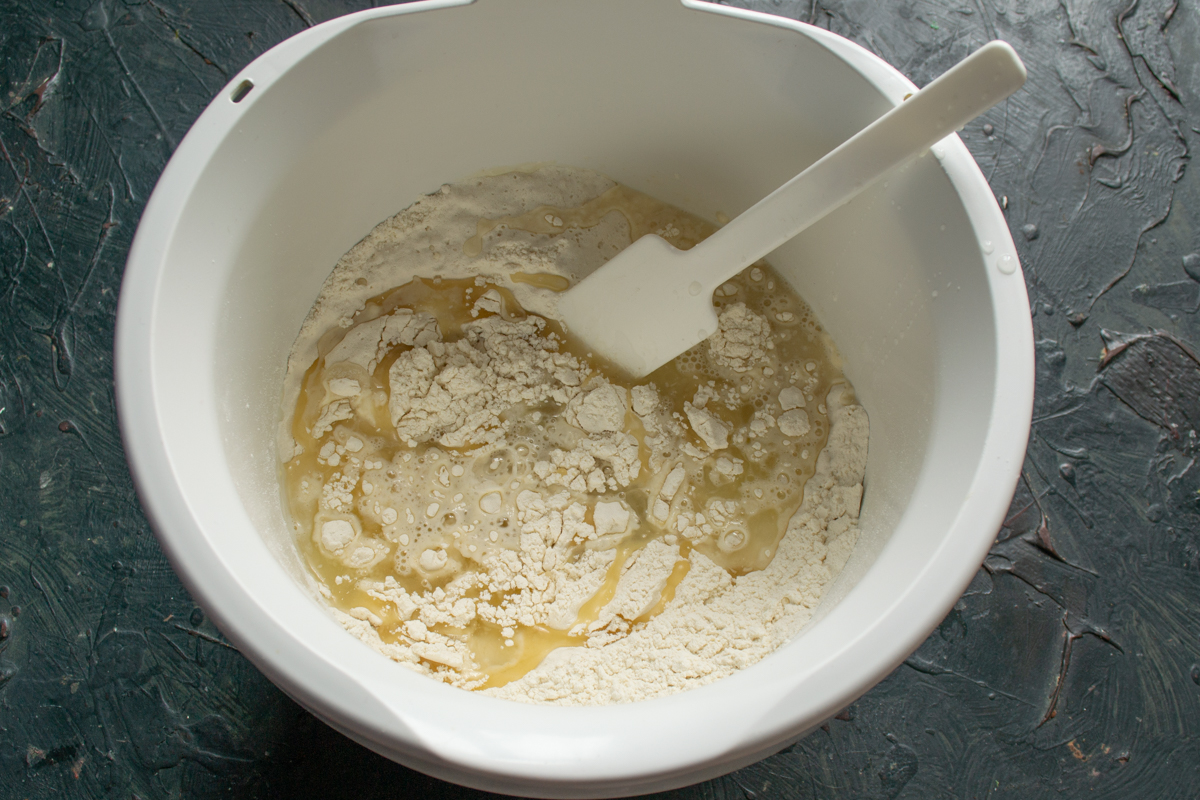
Pour the warm water and melted butter into the dry mixture to begin kneading.
Knead the dough for 10-12 minutes on medium speed using a dough hook attachment. If kneading by hand, turn the dough out onto a lightly floured surface and knead until it becomes smooth, elastic, and no longer sticks to your hands or the table.
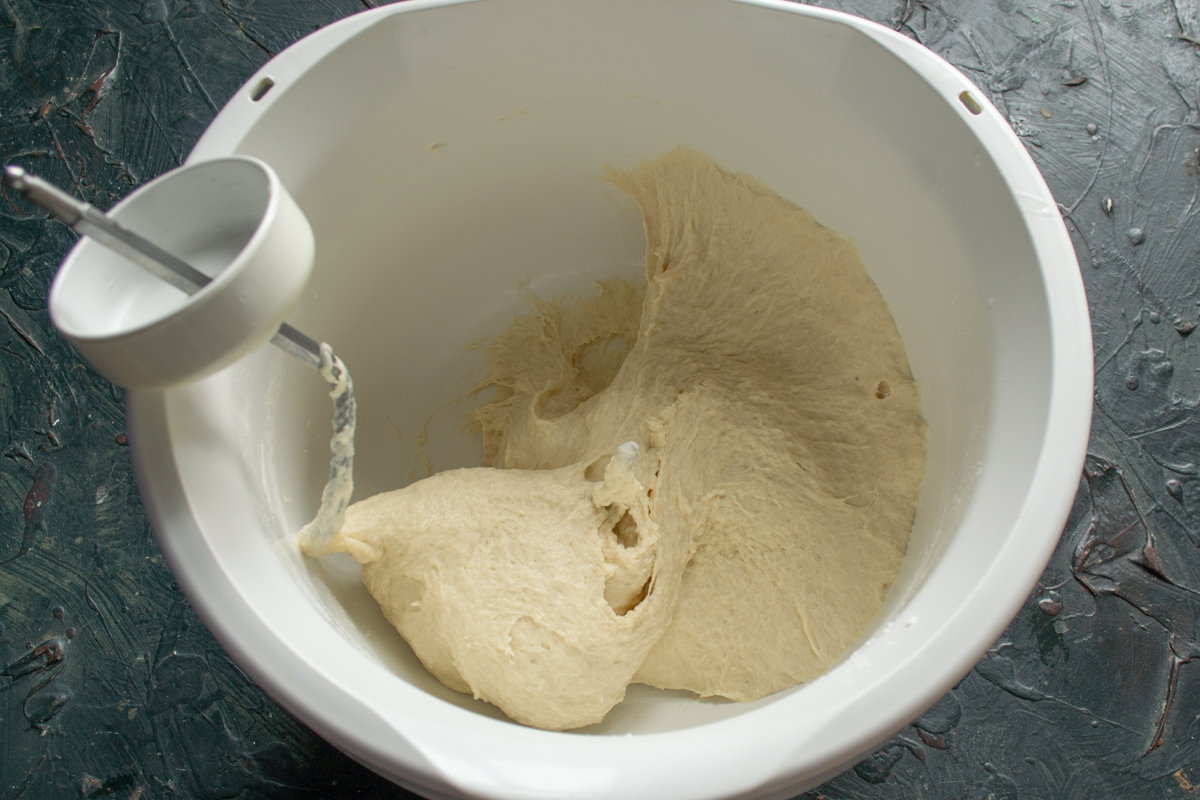
Knead the dough until it becomes smooth, elastic, and no longer sticks to the bowl.
Grease a deep bowl with a little vegetable oil. Place the dough inside, cover with a cloche or place it in a large plastic bag. Let it rest at room temperature for 3 hours. After about 1.5 hours, punch the dough down gently to degas it, then cover it again.
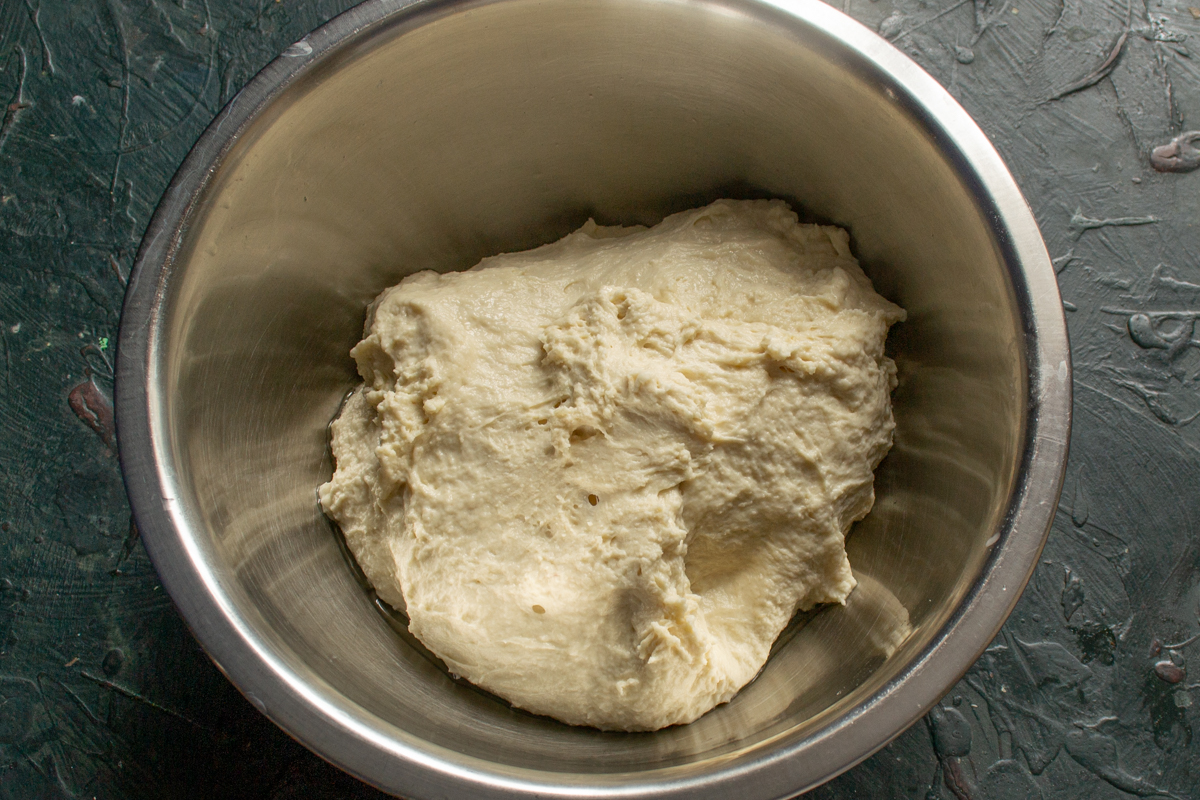
Place the dough in an oiled bowl and let it rest in a warm place for three hours to develop.
Once the dough has tripled in volume for the second time, it is ready to be shaped.
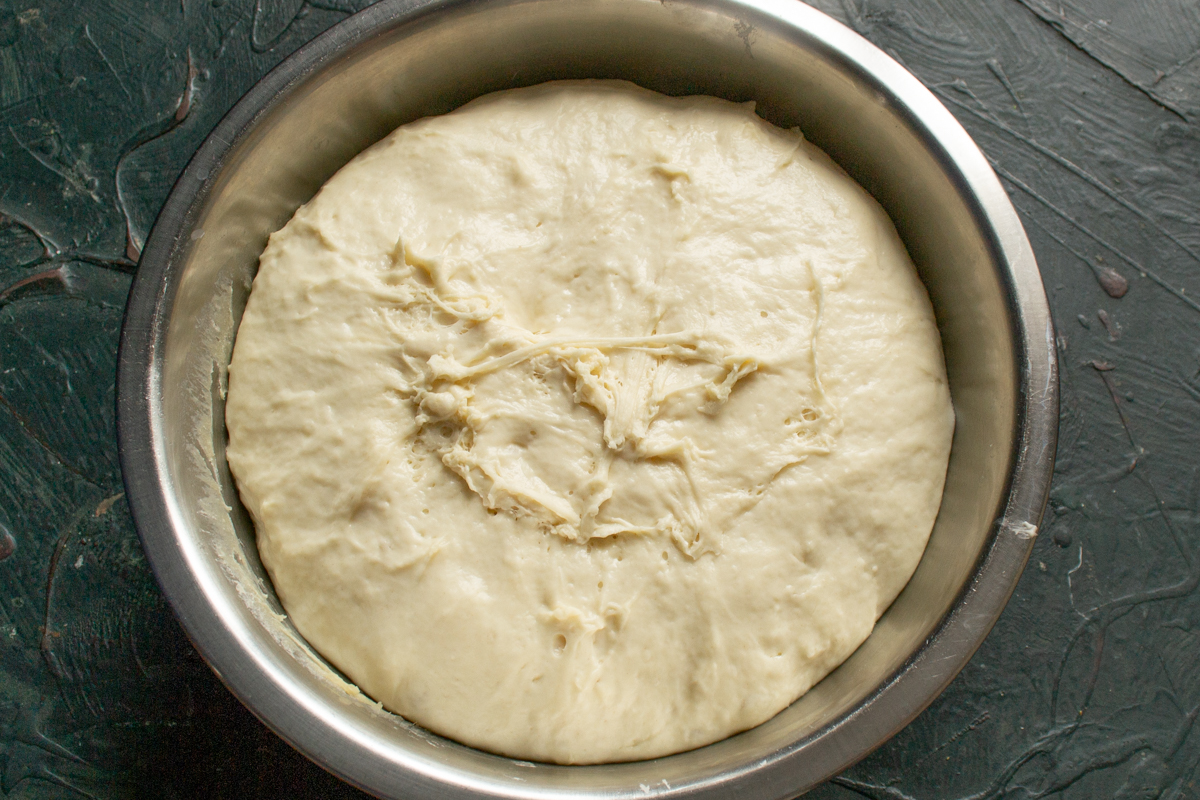
Once the dough triples in volume, it becomes incredibly airy and ready to be shaped.
Divide the dough in half. Lightly flour your work surface. Roll out each half into a rectangle, then fold it in thirds along the long edge. Gently shape the dough into a classic baguette cylinder. Generously flour a heavy linen couche or a cotton cloth. Place the baguettes on the cloth, creating a pleated fold between each loaf to support their shape.
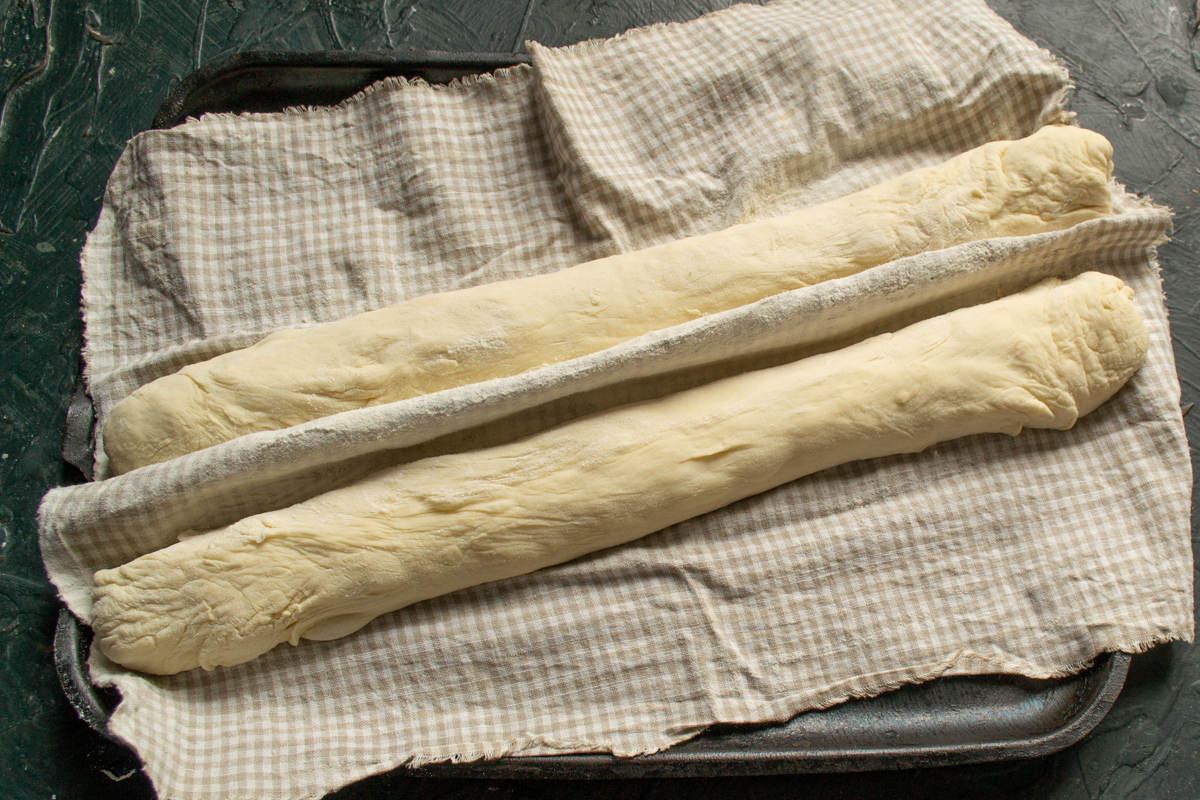
Shape the dough into classic baguettes and place them on a floured couche, creating supportive pleats.
Place the covered loaves in a large plastic bag or cover them loosely. Let them proof in a warm spot for 40 minutes.
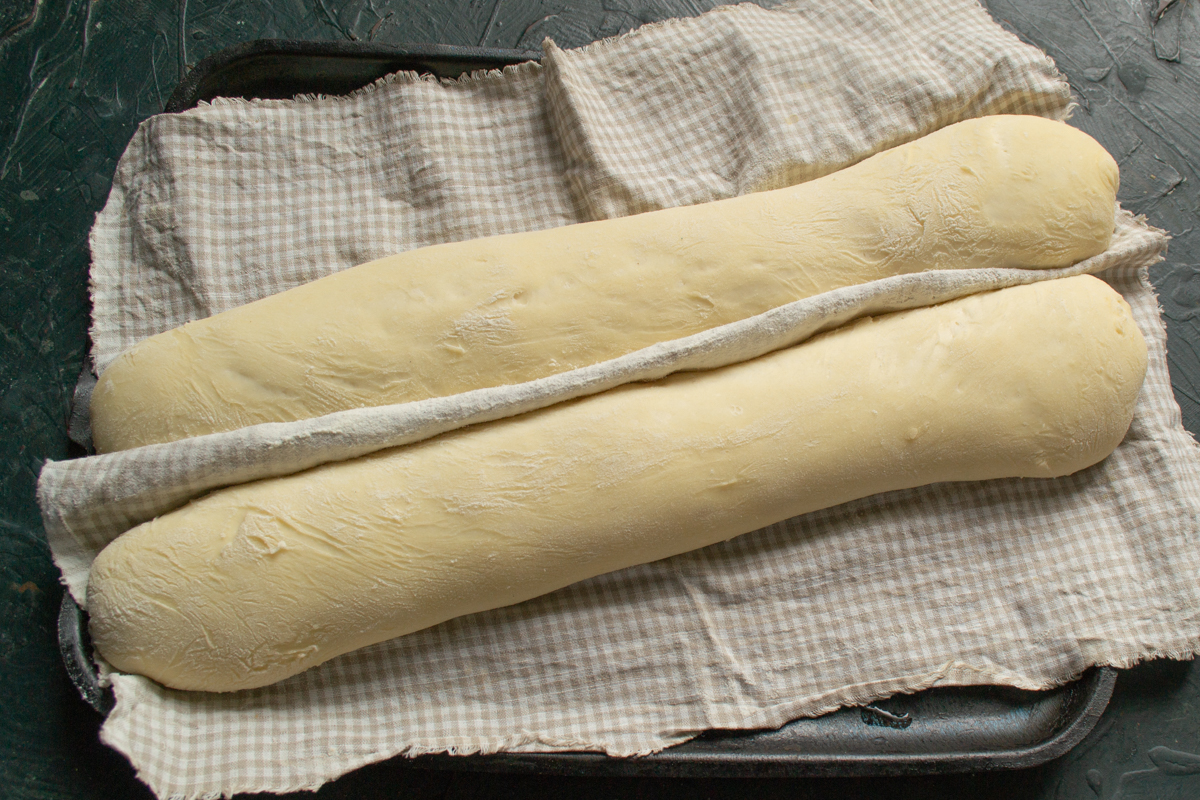
After 40 minutes in a warm spot, the dough loaves have visibly expanded and are ready for the oven.
Carefully transfer the proofed loaves onto a sheet of parchment paper. Using a sharp knife or a baker’s lame, score the top with diagonal slashes. You can also make these cuts using kitchen shears.
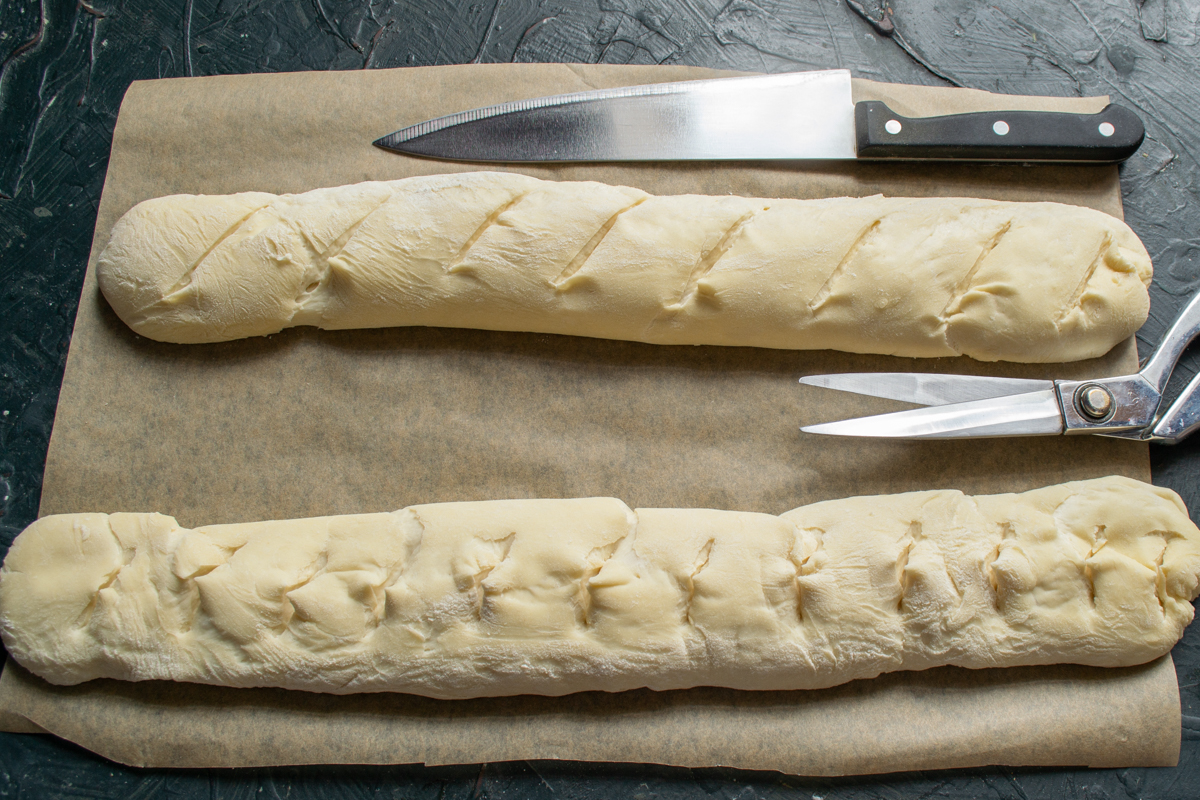
Make characteristic slashes with a sharp knife. This helps the bread open beautifully during baking.
Preheat your oven to 230°C (445°F). Place a baking pan on the bottom rack of the hot oven and pour in boiling water to create steam. For the best results, bake the French bread on a baking stone or ceramic tile. Carefully transfer the bread with the parchment paper onto the hot stone. Using a spray bottle, quickly mist the oven walls with cold water. Bake the bread for 35-40 minutes until deeply golden. Transfer to a wire rack to cool.
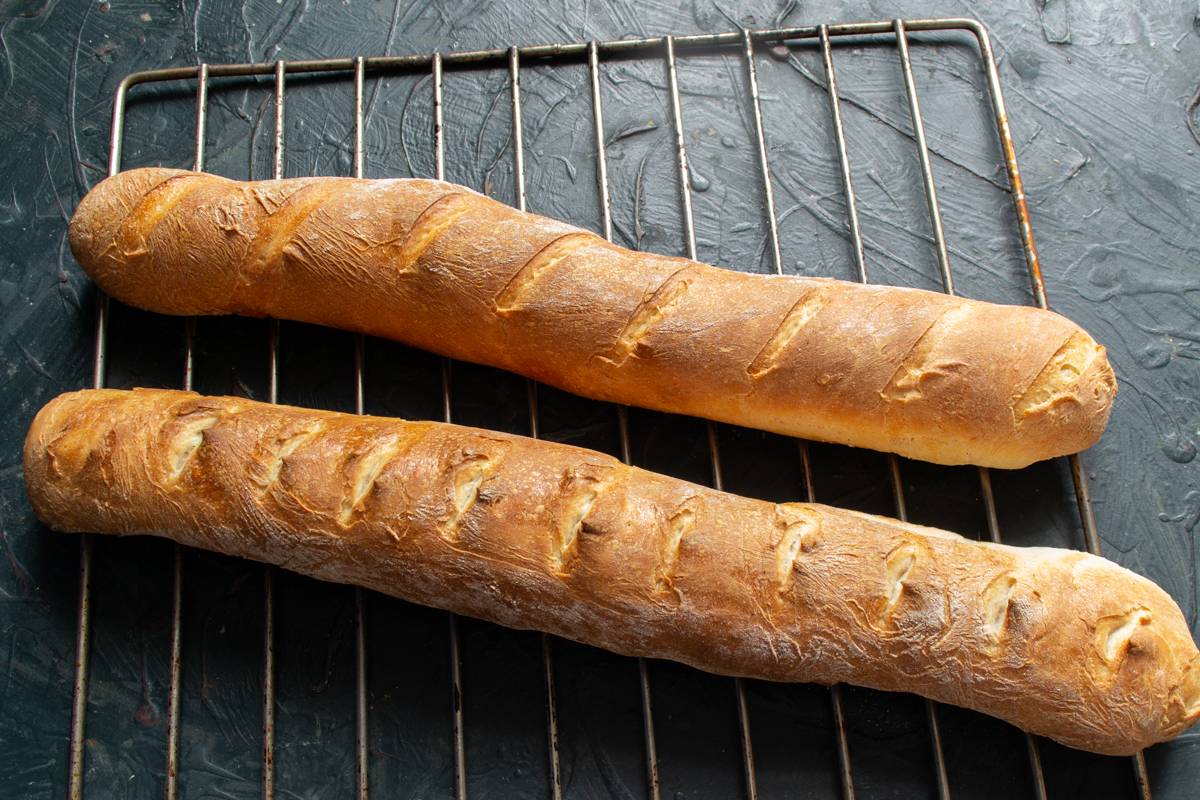
The finished baguettes should have a deep golden color and produce a hollow sound when tapped on the bottom.
Prepare the filling. Finely chop the parsley. Mince the garlic cloves through a press. Ensure the butter is thoroughly softened.
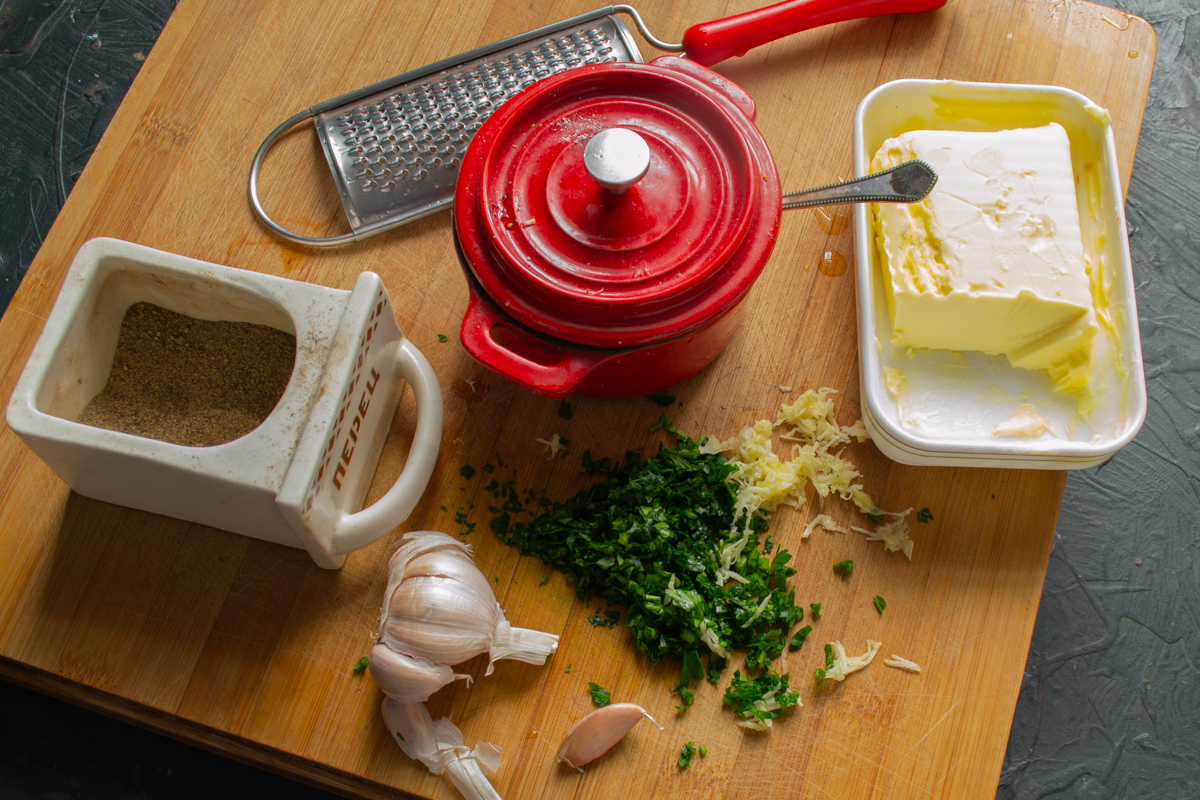
For the aromatic spread, we need softened butter, fresh herbs, and garlic.
Mash the softened butter together with the herbs and garlic. Season to taste with coarse sea salt and freshly ground black pepper.
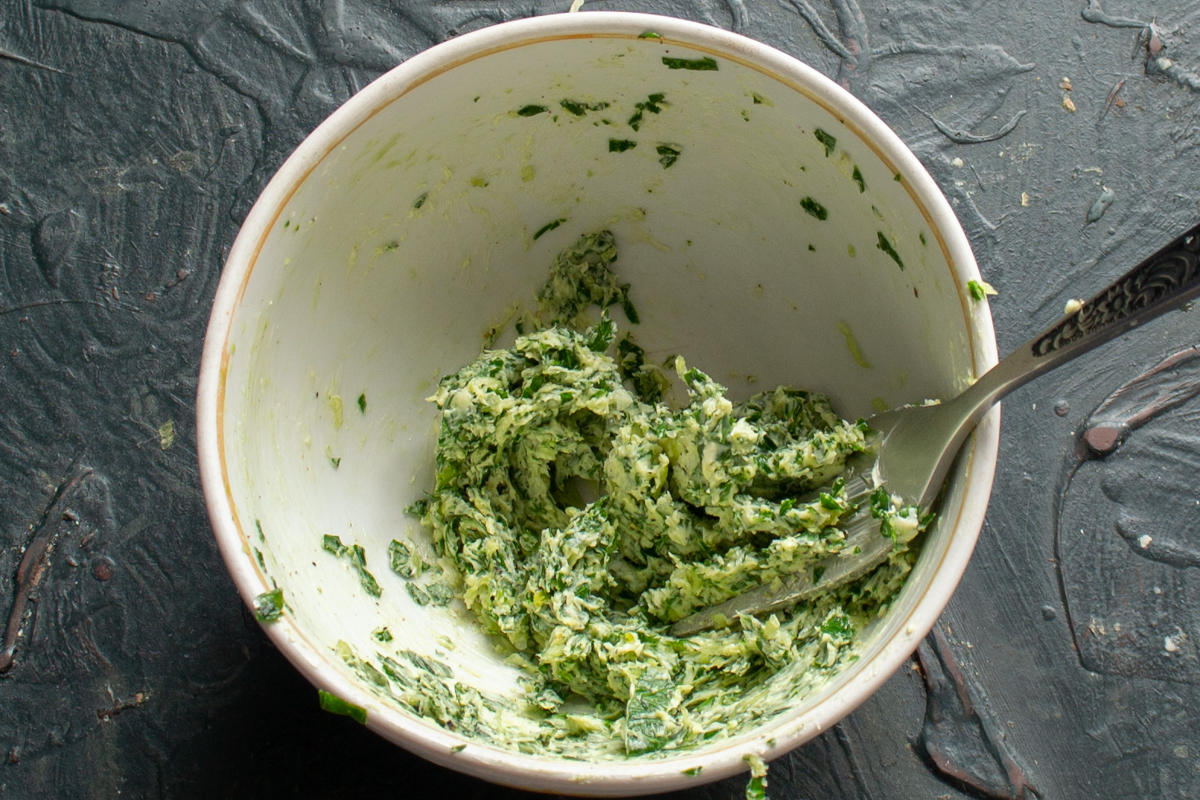
Thoroughly mash the butter with minced garlic and parsley until a smooth paste forms.
Slice the warm bread diagonally, being careful not to cut all the way through. Stuff each slit with a teaspoon of the seasoned butter. If the bread has cooled completely, wrap the stuffed loaf in aluminum foil and warm it in the oven for a few minutes until the butter melts.
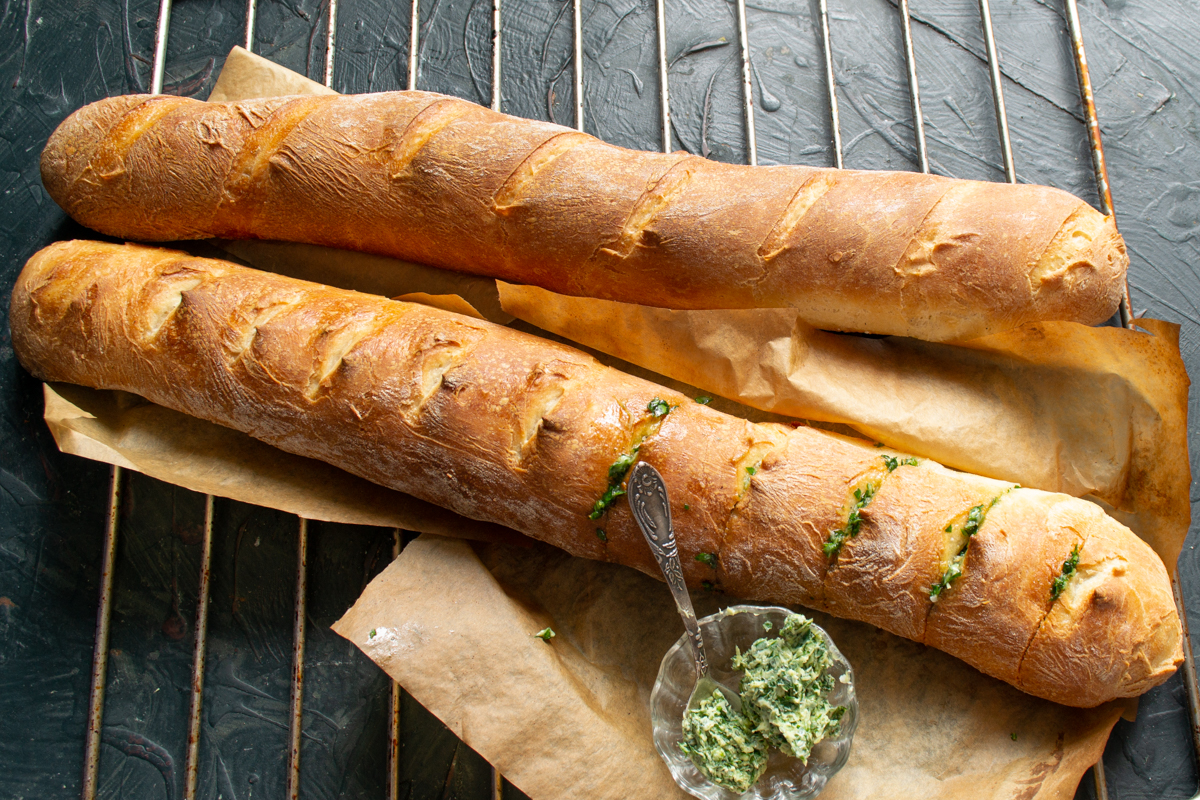
Stuff the garlic butter into the warm bread's cuts so its aroma permeates the crumb.
To experience the absolute peak of its flavor, serve this French garlic and herb bread immediately after stuffing, while the butter is still melting and seeping into the baguette's porous crumb. It makes an exceptional companion for hearty vegetable soups or pasta dishes, and serves brilliantly as an appetizer alongside sun-dried tomatoes and olives. If the baguettes have cooled, simply wrap them in foil and reheat in the oven for 5–7 minutes—this will revive the crust's original crunch and the filling's vibrant aroma.
For those who love to experiment, you can elevate the filling by folding a pinch of grated Parmesan into the butter or swapping the parsley for rosemary to impart a more piney, Mediterranean note. The ultimate secret to maintaining the freshness of your French bread lies in proper storage: if you don't finish it immediately, wrap the baguette in a thick linen towel or a paper bag. Avoid using plastic wrap, as it will cause the crust to become soft and rubbery.
0 comments