
Fish meatballs with vegetables are a true home-cooking classic that, when executed properly, transforms into an elegant dish. The secret to their exceptional juiciness lies in adding sautéed carrots and sweet bell peppers directly into the mix, which not only enriches the texture but also gives the meatballs an appetizing look. Using cod or hake keeps the base light and healthy, while the initial frying with a three-step breading seals all the juices inside. When your kitchen fills with the aroma of creamy sauce and fresh herbs, it becomes clear: this dinner will gather even those who are usually indifferent to seafood around the table.
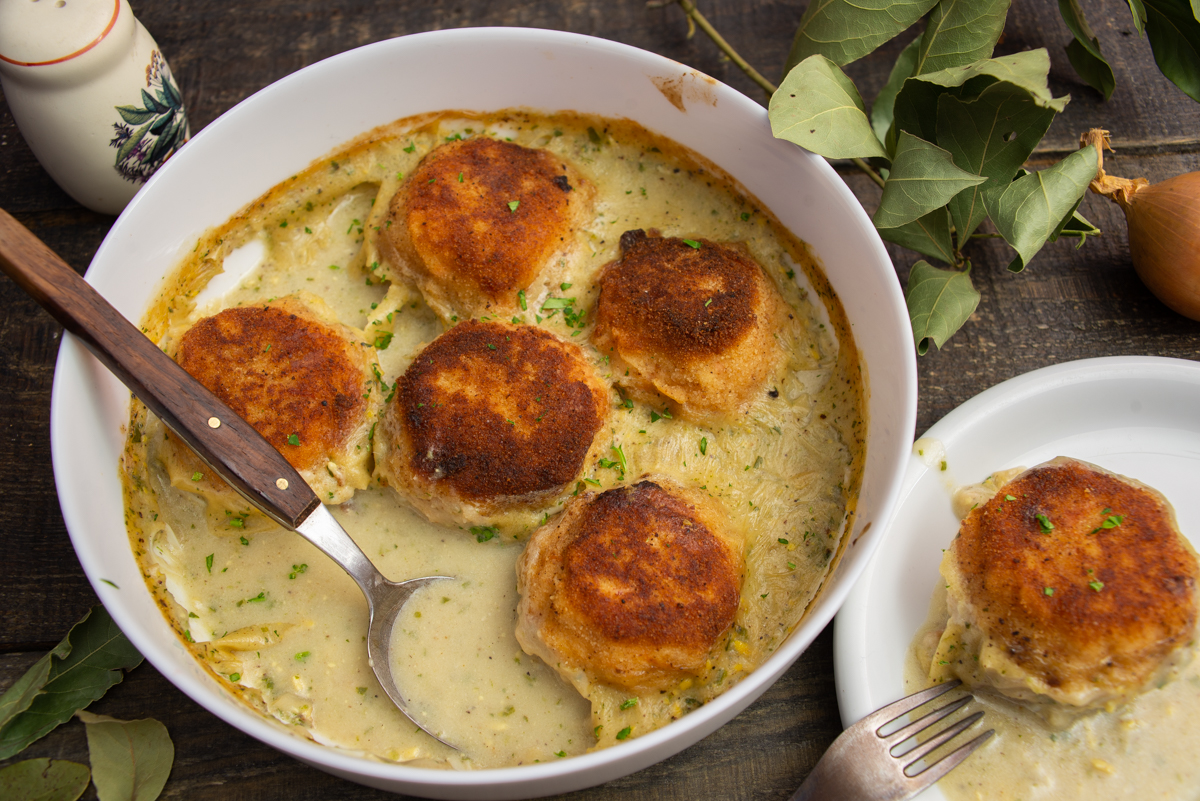
Appetizing fish meatballs with vegetables, baked to perfection in a delicate cream sauce.
Ingredients
- 700 g (1.5 lbs) white sea fish (saffron cod, cod, or hake)
- 80 g (2.8 oz) carrots
- 80 g (2.8 oz) sweet red bell pepper
- 50 g (1.7 oz) onion
- 40 ml (1.3 fl oz) milk
- 1 egg
- Salt, pepper, flour, breadcrumbs, and oil for frying
Sauce Ingredients
- 50 g (1.7 oz) onion
- 30 g (1 oz) butter
- 20 g (0.7 oz) flour
- 200 g (7 fl oz) fish broth
- 100 g (3.5 oz) heavy cream
- Cilantro and parsley
How to Make Fish Meatballs with Vegetables
Clean the fish. Score the skin along the spine. Separate the skin from the fillets, and then separate the fillets from the bone. You can save the fish scraps to make a flavorful broth.
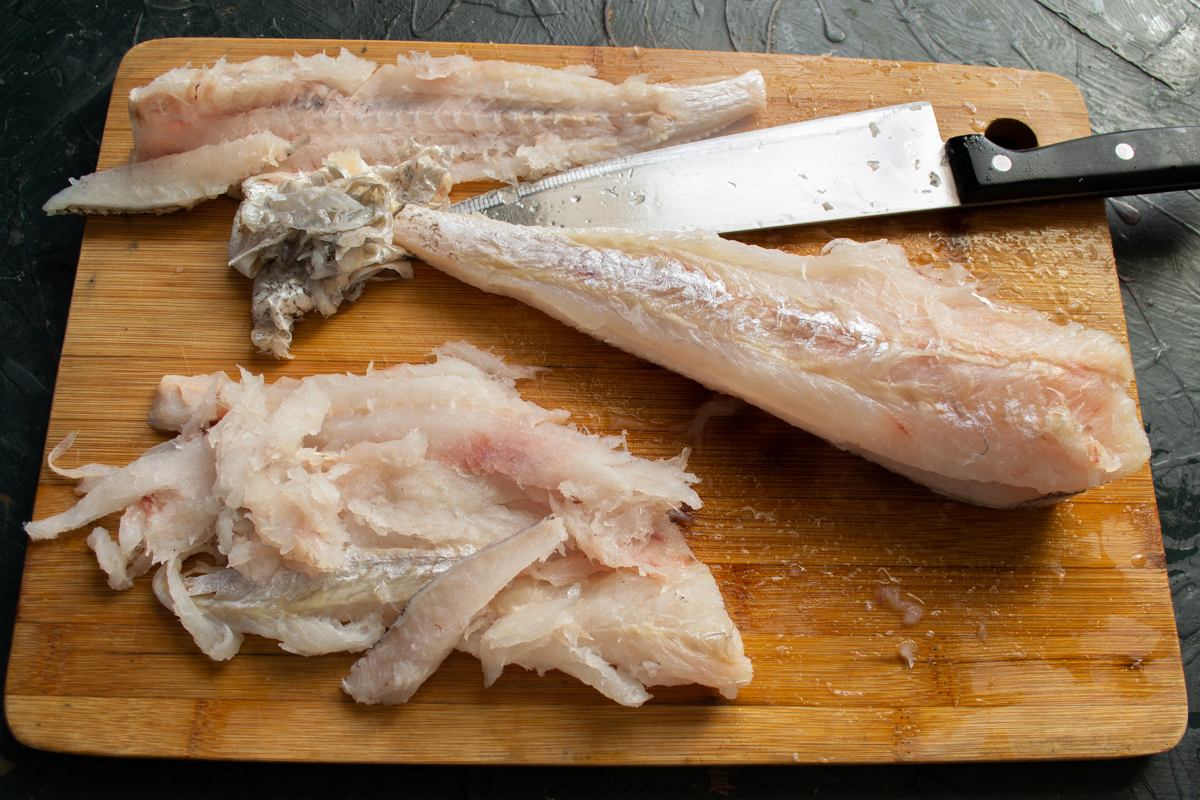
Carefully separate the fillets from the skin and bones to get a clean base for the ground fish.
Expect to get about 500-550 g (1.1-1.2 lbs) of fillets from 700 g (1.5 lbs) of headless cod or hake. Homemade ground fish is vastly superior to store-bought: it is less watery and free of any unwanted bits.
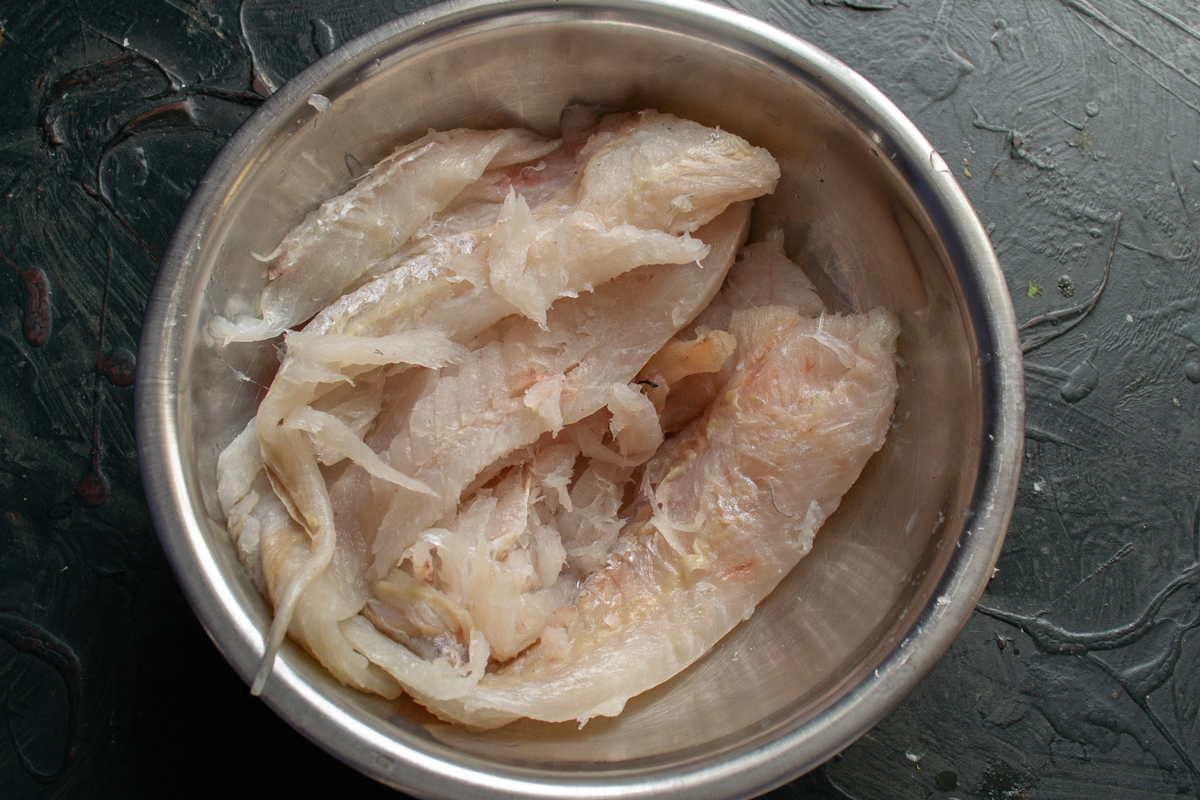
Homemade ground fish from fresh fillets turns out much denser and higher quality than store-bought.
Cut a small onion into several pieces and run it through a meat grinder along with the fish fillets.
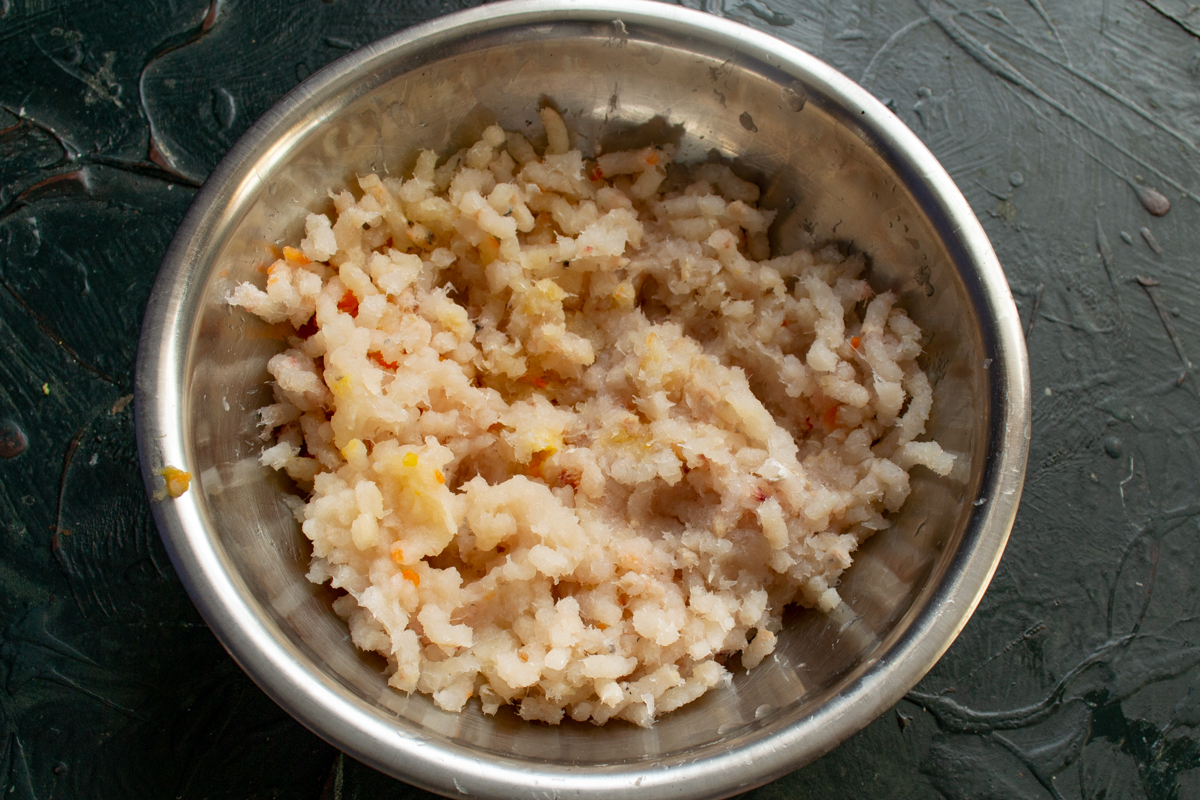
Run the fish through a meat grinder along with onions for the juiciness and aroma of the finished dish.
Grate the carrots coarsely, sauté in vegetable oil for a few minutes, let cool, then grind in the meat grinder or chop finely with a knife and add to the ground fish.
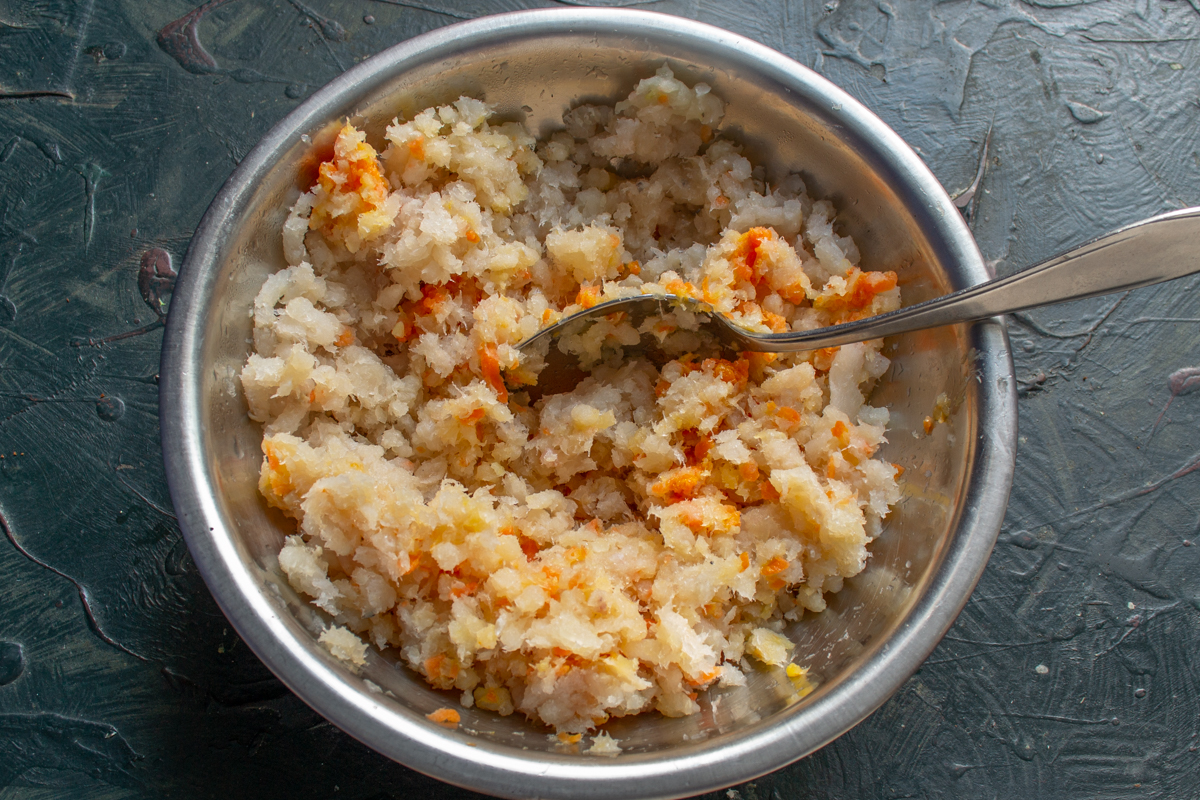
Sautéed carrots give the meatballs a pleasant color and a slight sweetness.
Dice the sweet bell pepper finely and add it to the mixture. Season everything with salt to taste.
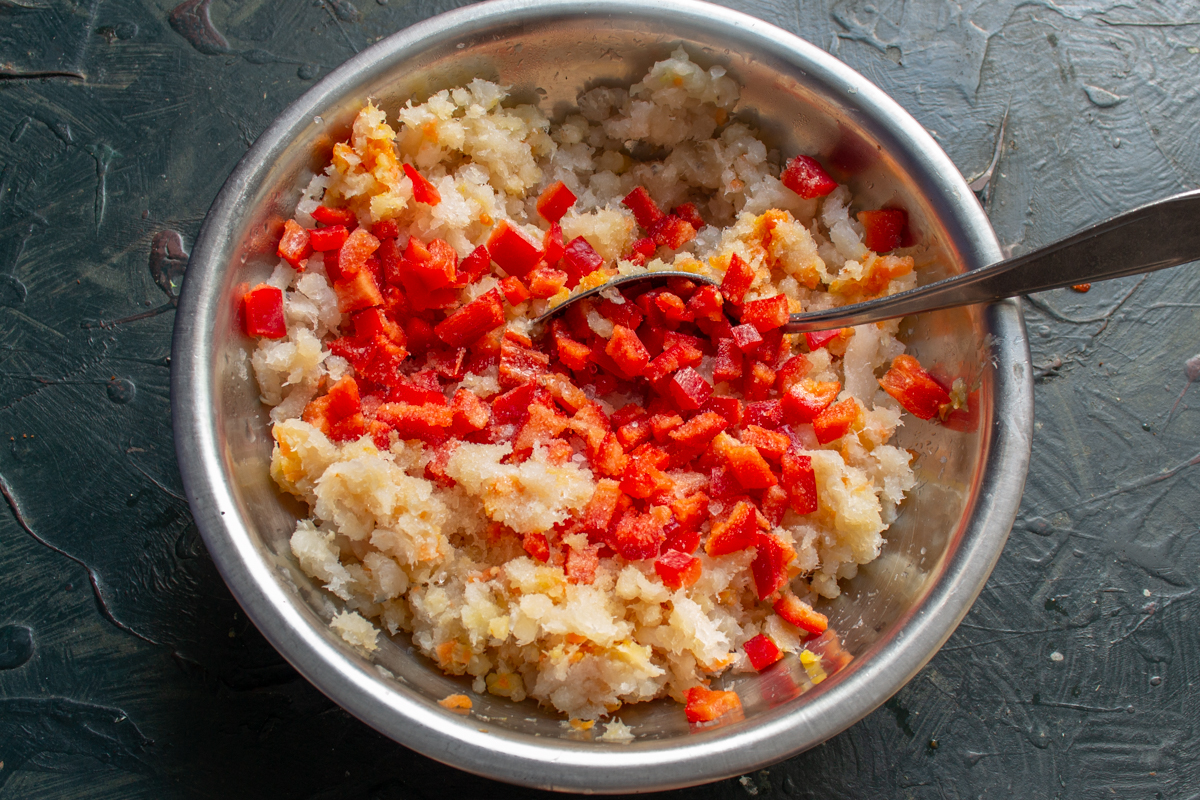
Finely diced sweet bell pepper makes the flavor of the meatballs brighter and richer.
Pour in cold milk. Mix the ground fish thoroughly with a spoon or your hands (wear rubber gloves to keep your hands from smelling like fish).
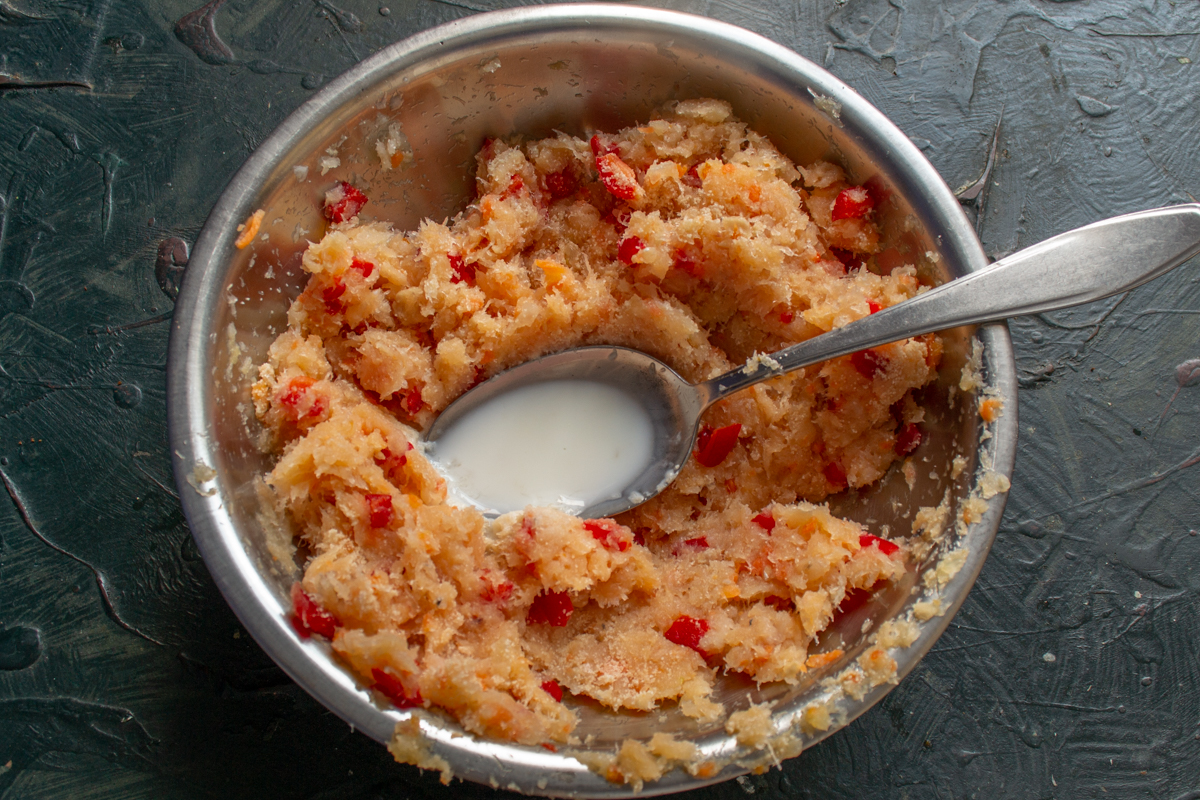
A little cold milk will help make the texture of the meatballs more tender and soft.
Shape the mixture into large, round meatballs weighing about 90-110 g (3-4 oz) each. Place the meatballs on a cutting board greased with vegetable oil.
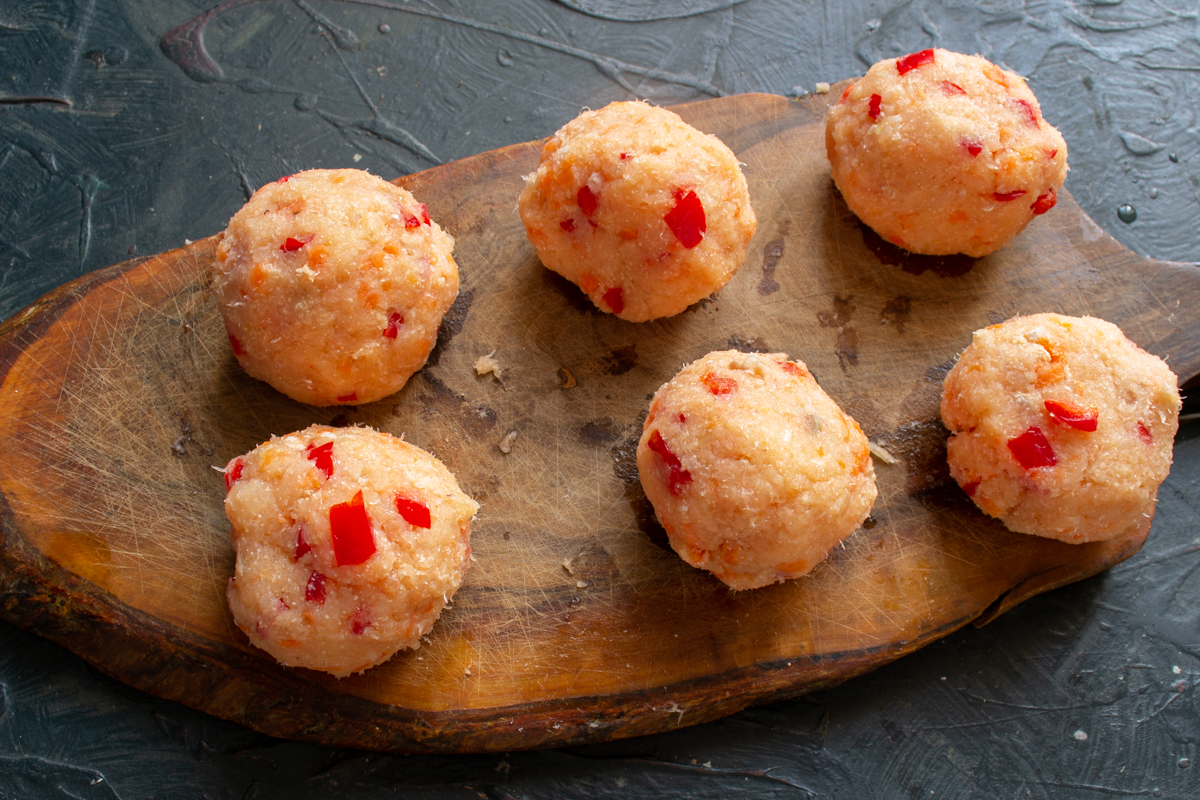
Shape round portions weighing about 100 grams, placing them on an oiled surface.
Pour wheat flour onto a plate. Dredge the meatballs in the flour, shaking off any excess.
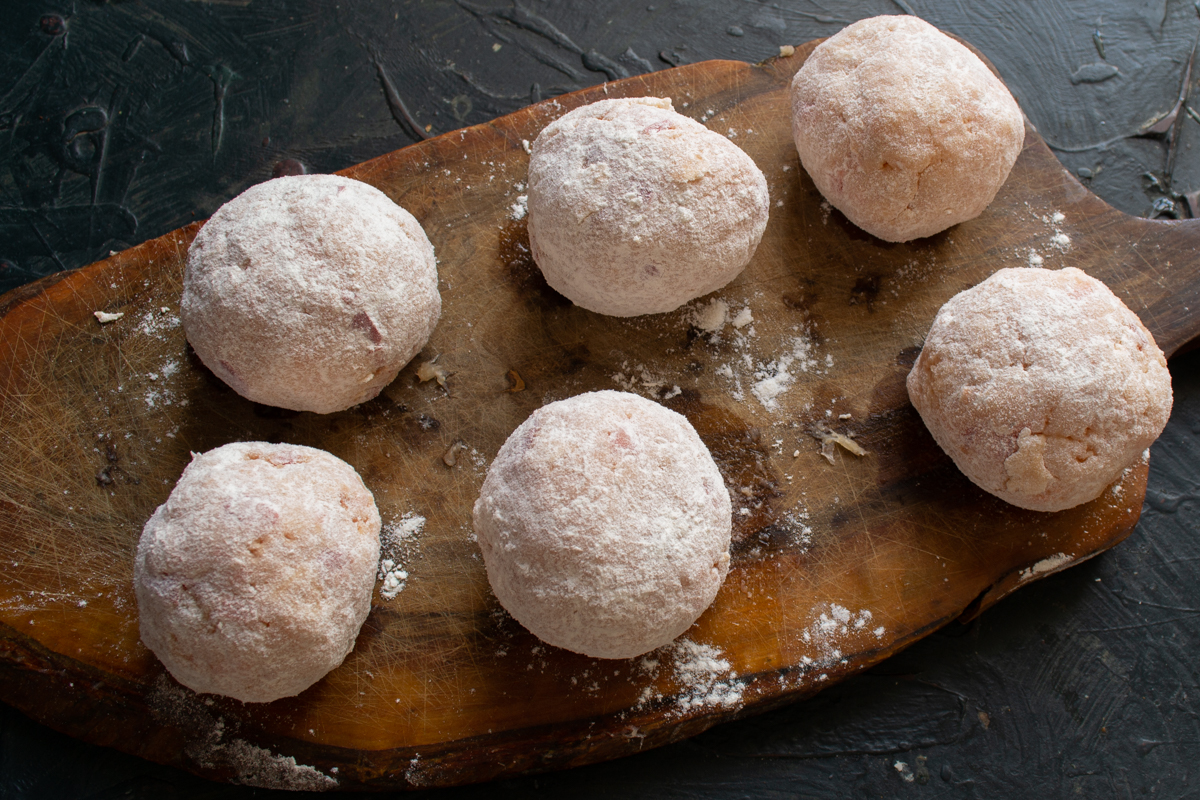
Dredge each meatball in flour to create a protective layer before frying.
Crack an egg into a bowl and lightly beat it with a fork. Dip the floured meatballs into the beaten egg.
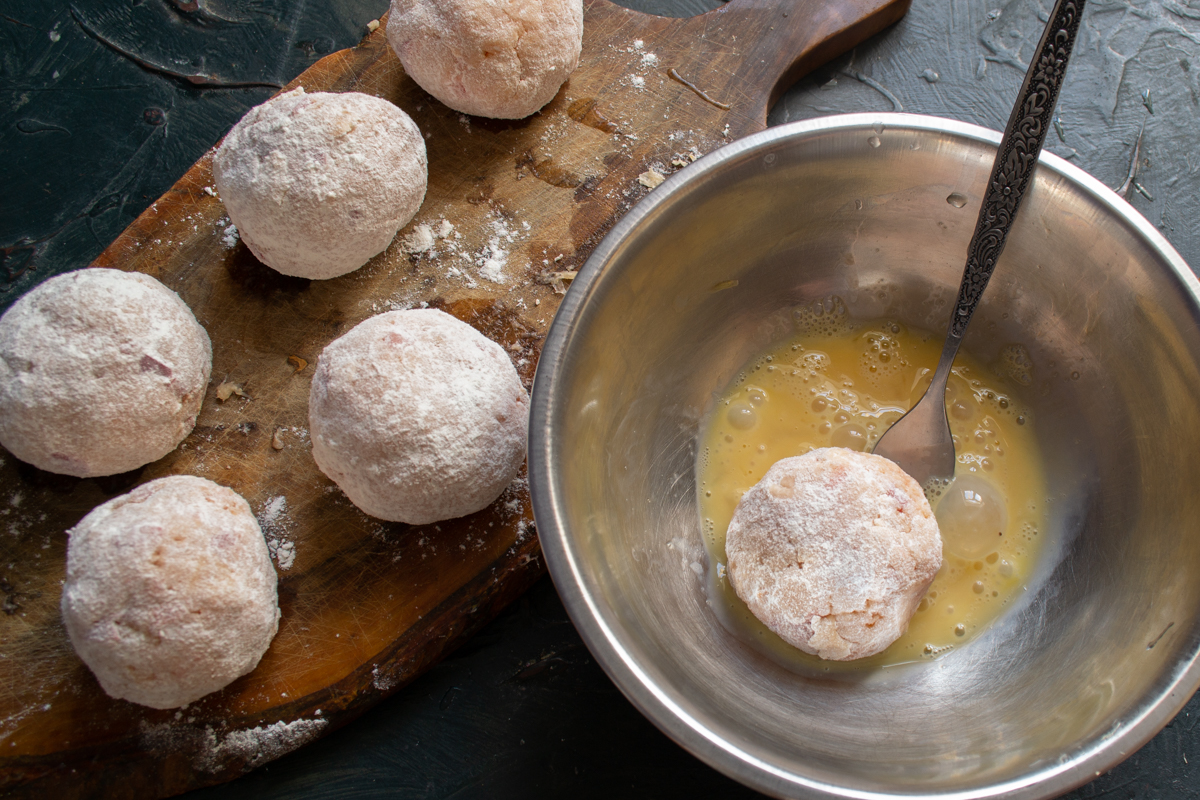
The egg will help the breading stick better and create an appetizing crust.
Heat a neutral, odorless vegetable oil in a skillet. Coat the meatballs in breadcrumbs and immediately place them into the hot oil. Fry over high heat until golden brown, just 1-2 minutes.
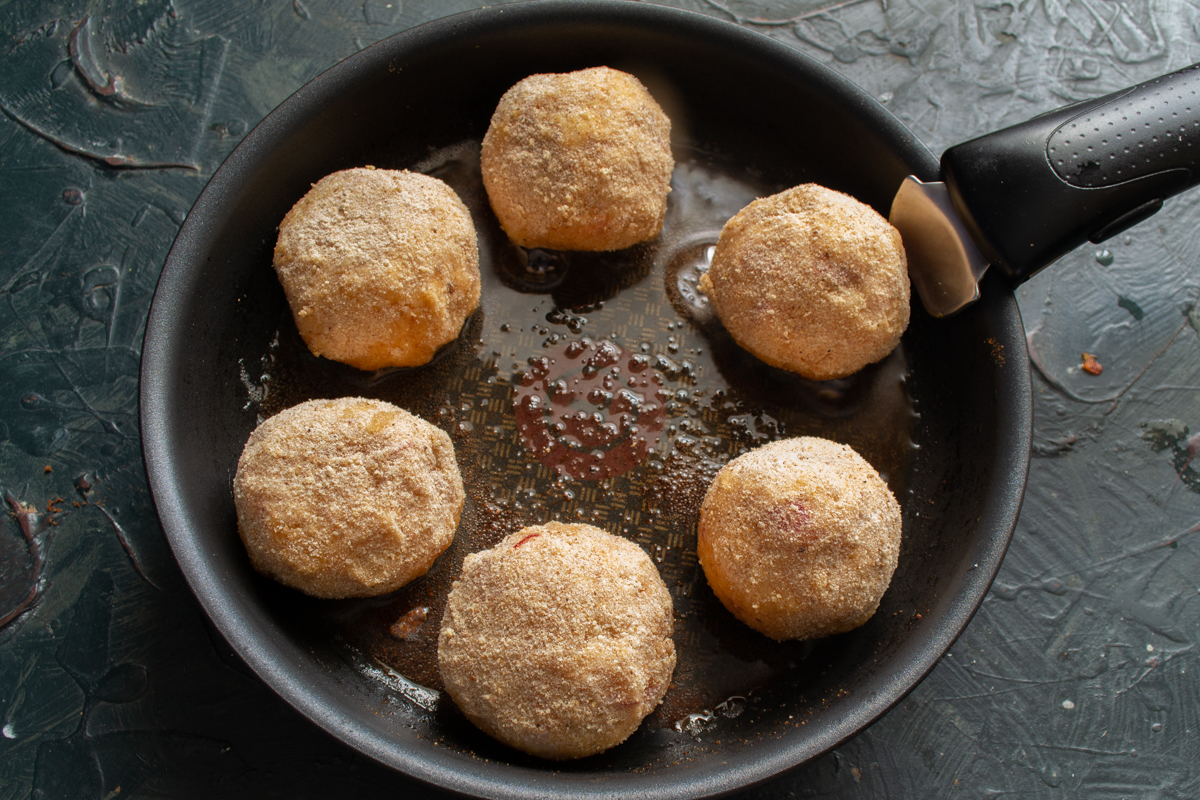
Quickly fry the meatballs over high heat until a golden color appears.
Flip the meatballs and fry until golden brown on the other side. Transfer them from the skillet to a deep baking dish.
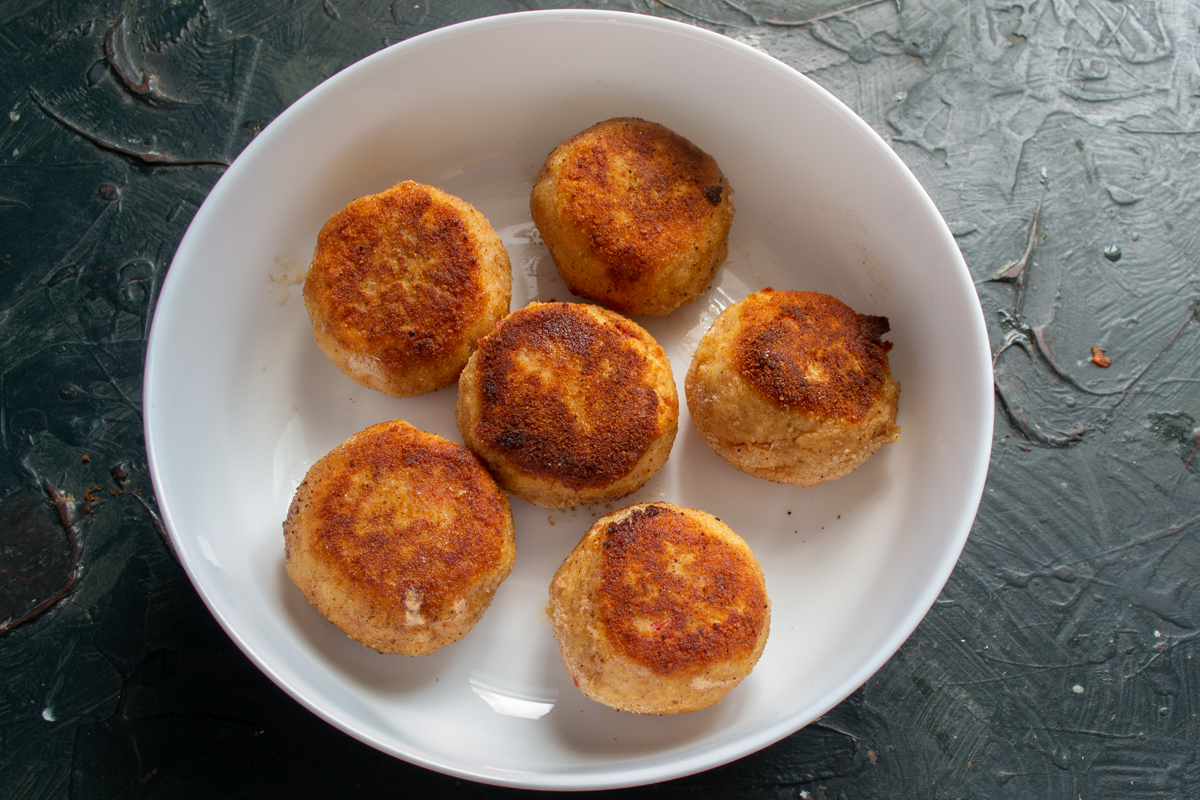
Transfer the browned meatballs to a deep baking dish for subsequent braising in the sauce.
Prepare the sauce. Sauté a finely chopped onion in butter along with chopped parsley. Stir in the flour and cook until light golden. Pour in hot fish broth or water, whisking constantly to prevent lumps. Bring to a boil, then season with salt to taste. Simmer the sauce for a few minutes until thickened, then pour in milk, heavy cream, or a half-and-half mixture. Stir in a tablespoon of finely chopped cilantro and season with ground black pepper.
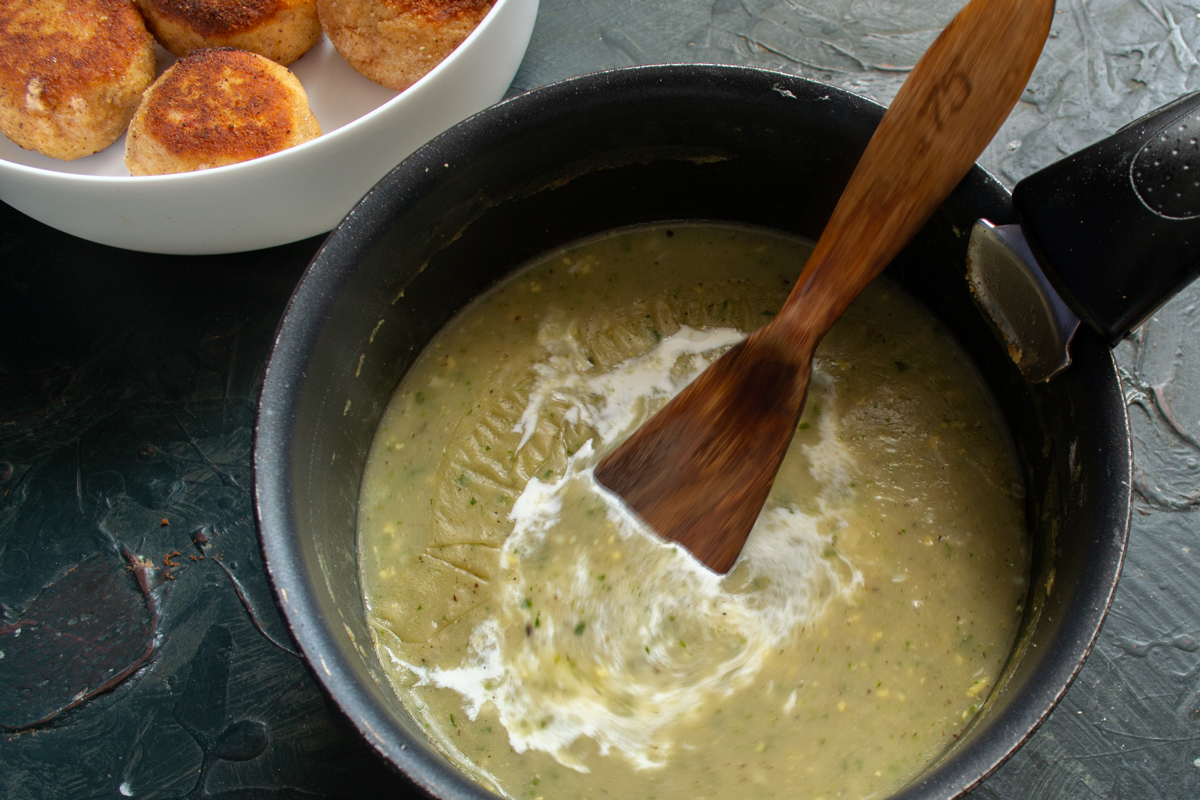
Prepare a thick sauce based on broth, heavy cream, and herbs—it will soak into the meatballs during baking.
Pour the hot sauce over the meatballs.
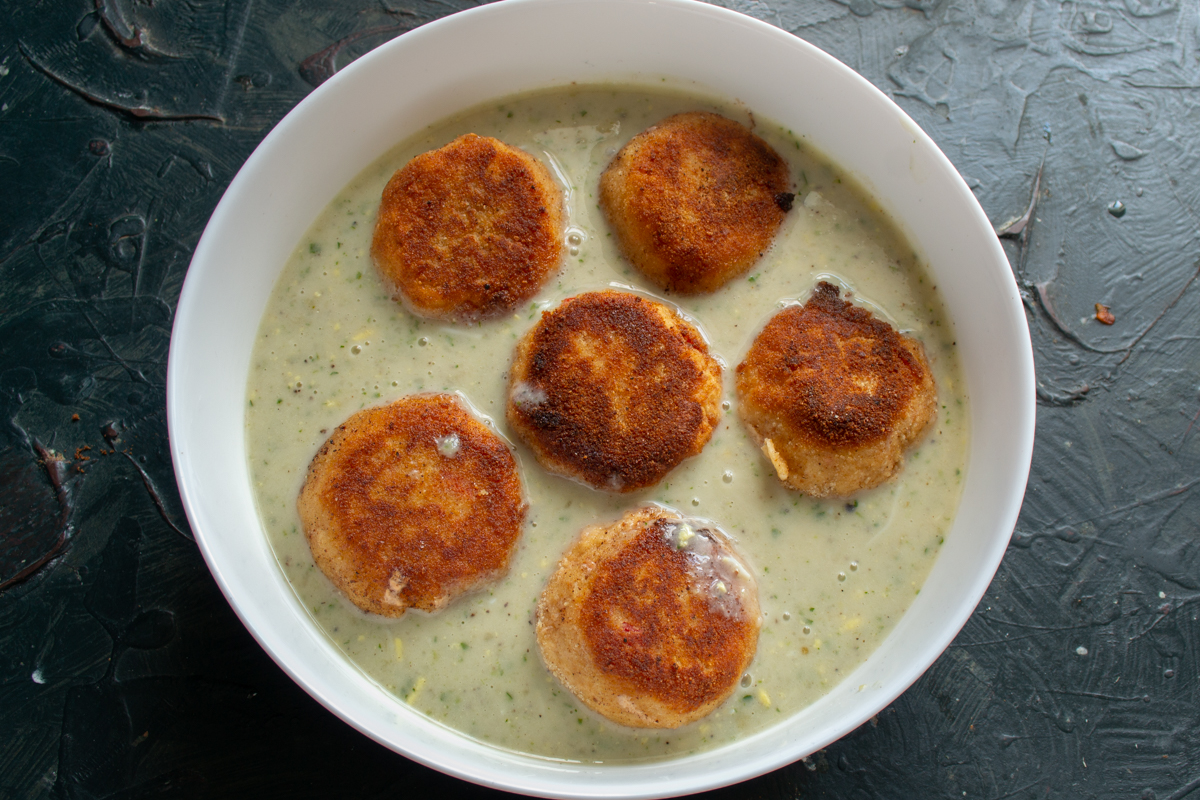
Distribute the hot sauce evenly over the dish so the meatballs are completely covered.
Preheat the oven to 180°C (350°F). Place the meatballs in the preheated oven and bake for 20 minutes.
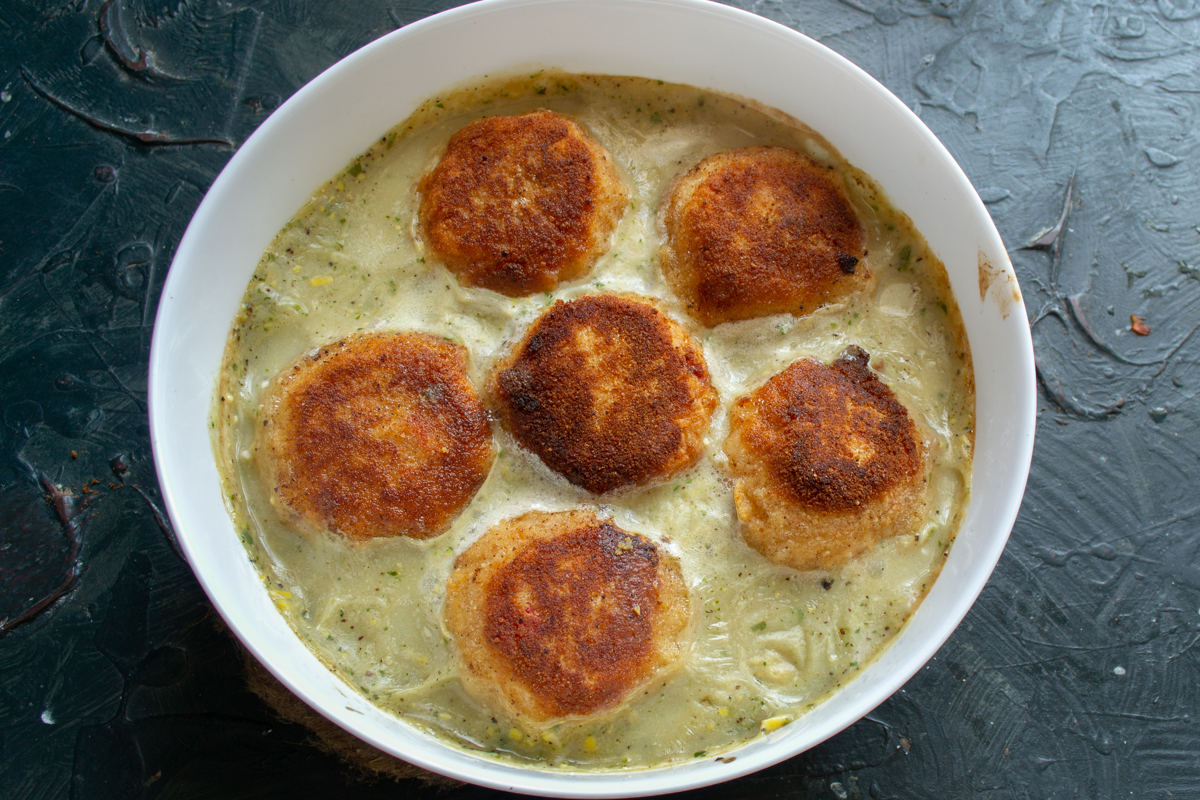
After 20 minutes in the oven, the meatballs become incredibly juicy and aromatic.
It's best to serve these baked fish meatballs with vegetables in deep bowls, generously ladling the rich sauce they simmered in right over the top. Fluffy mashed potatoes, which will soak up the creamy gravy, or loose long-grain rice make the perfect side dish. If you want to add a touch of freshness, serve with a lemon wedge—its juice will highlight the delicate flavor of the white fish and make the herbal notes pop even more.
For those who love culinary experiments, this recipe is easily adaptable to different tastes. For example, you can add a pinch of nutmeg to the sauce for a sophisticated spice, or replace some of the milk with heavy cream for a more velvety texture. If you make these fish meatballs with vegetables ahead of time, keep in mind that they reheat beautifully, becoming even more flavorful and deeply saturated the next day.
0 comments