
Welcome to the wonderful world of home-cured fish! This recipe for dry-cured gorbusha, or pink salmon, is a staple in many Eastern European households for a reason. It's a simple, incredibly rewarding process that transforms an affordable frozen fish into a gourmet delicacy. Curing fish at home allows you to control the saltiness and flavor, resulting in a product far superior to many store-bought options. Whether you're a seasoned pro at home curing or a curious beginner, this step-by-step guide will help you create perfectly tender, flavorful salmon that's perfect for any occasion.

Dry-curing pink salmon
Ingredients for Dry-Cured Pink Salmon
- 1 pink salmon (gorbusha) (700-800 g / 1.5-1.75 lbs)
- 1 tablespoon sea salt
- 1 tablespoon sugar
How to Dry-Cure Pink Salmon
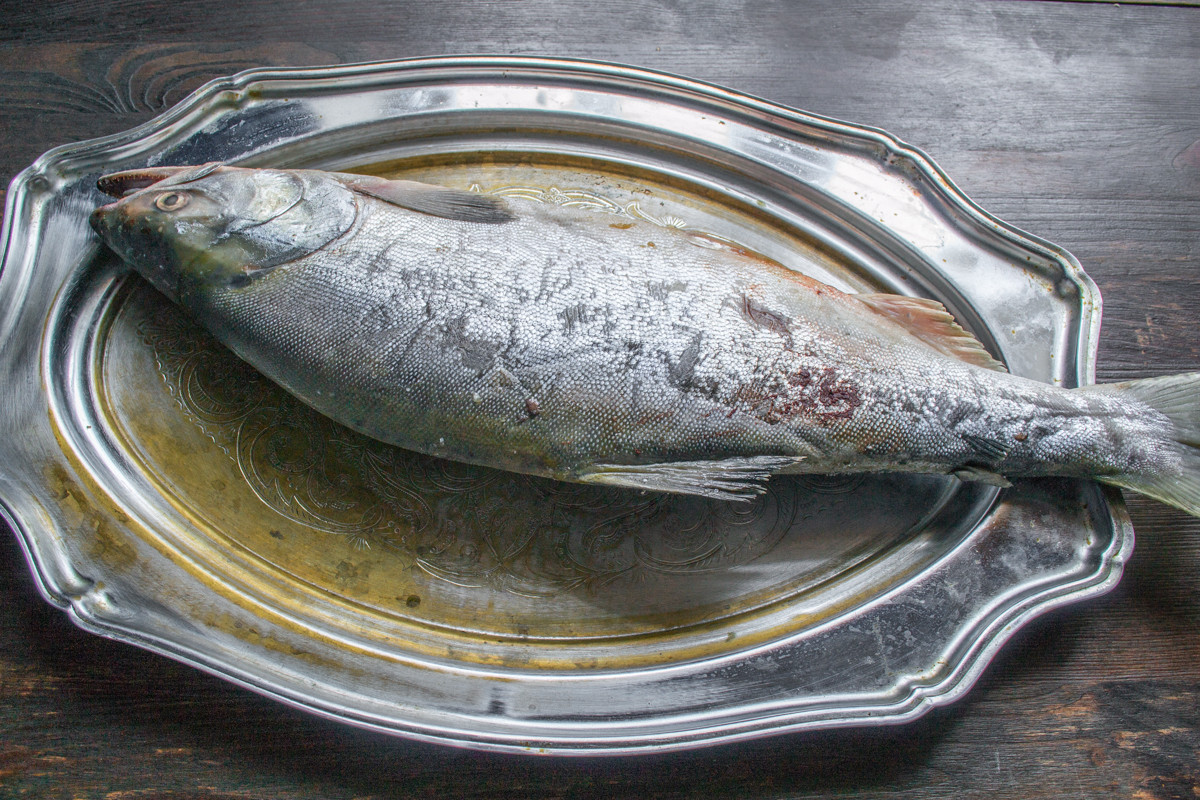
Leave it on the bottom shelf of the refrigerator for several hours to thaw.
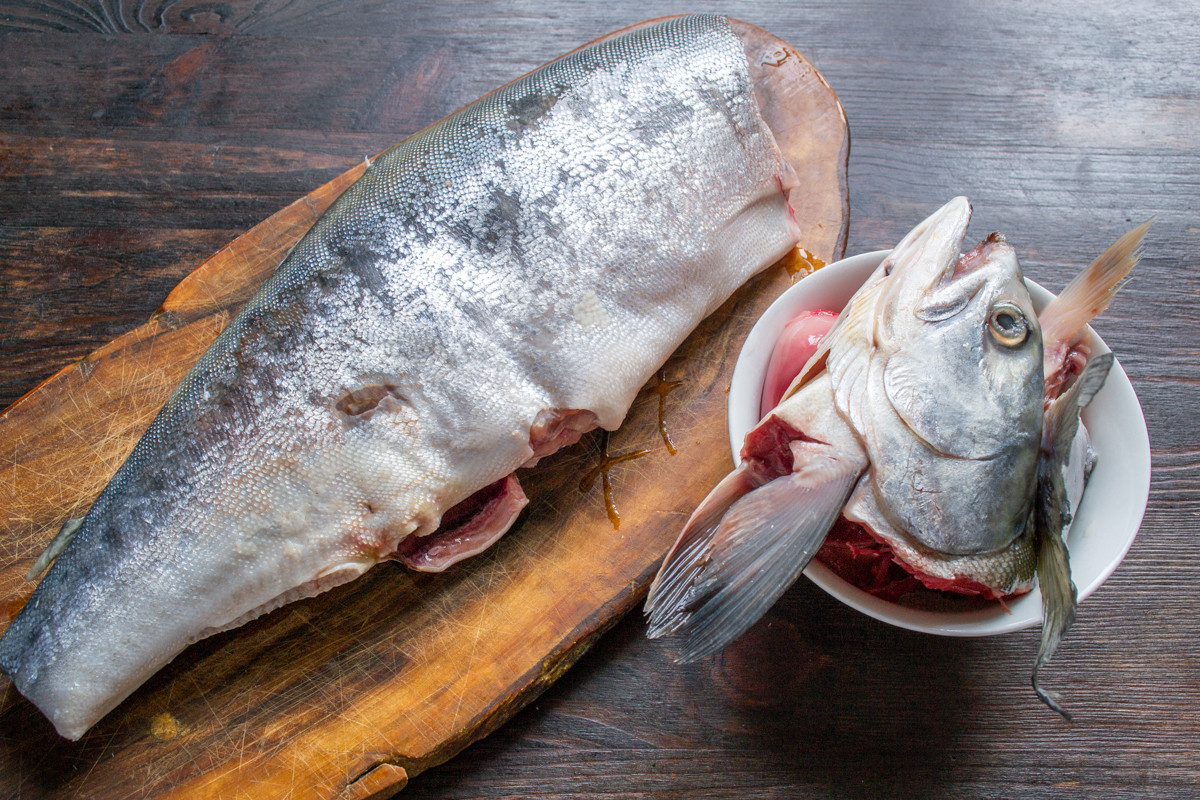
Gut and rinse with cold water.

With a narrow, sharp knife, cut the fillet from the backbone.
Those who have the opportunity to cure fresh fish probably know how to do it better than I do. I’ll explain how to handle frozen fish, as I have plenty of experience with that. Take the gorbusha (a species of pink salmon, popular in Eastern Europe for its affordability and delicate flavor) out of the freezer and place it on a large plate or in a tray. Leave it on the bottom shelf of the refrigerator for several hours. The fish will thaw slowly; it’s okay if it’s still slightly frozen, as it will be easier to clean.
Clean the gorbusha. Cut off the head and fins. Gut it and rinse with cold water. You can leave the scales on, they won’t interfere. The skin is only needed to keep the piece whole. Never wash fresh fish with hot water, only cold!
Remove the backbone and bones. Make an incision along the spine on both sides. With a narrow, sharp knife, cut the fillet away from the backbone. Then, use tweezers to pull out all visible bones. If you notice dark spots (blood) on the fillet, trim them off with a knife. These spots don’t affect the taste, they just spoil the appearance a bit.
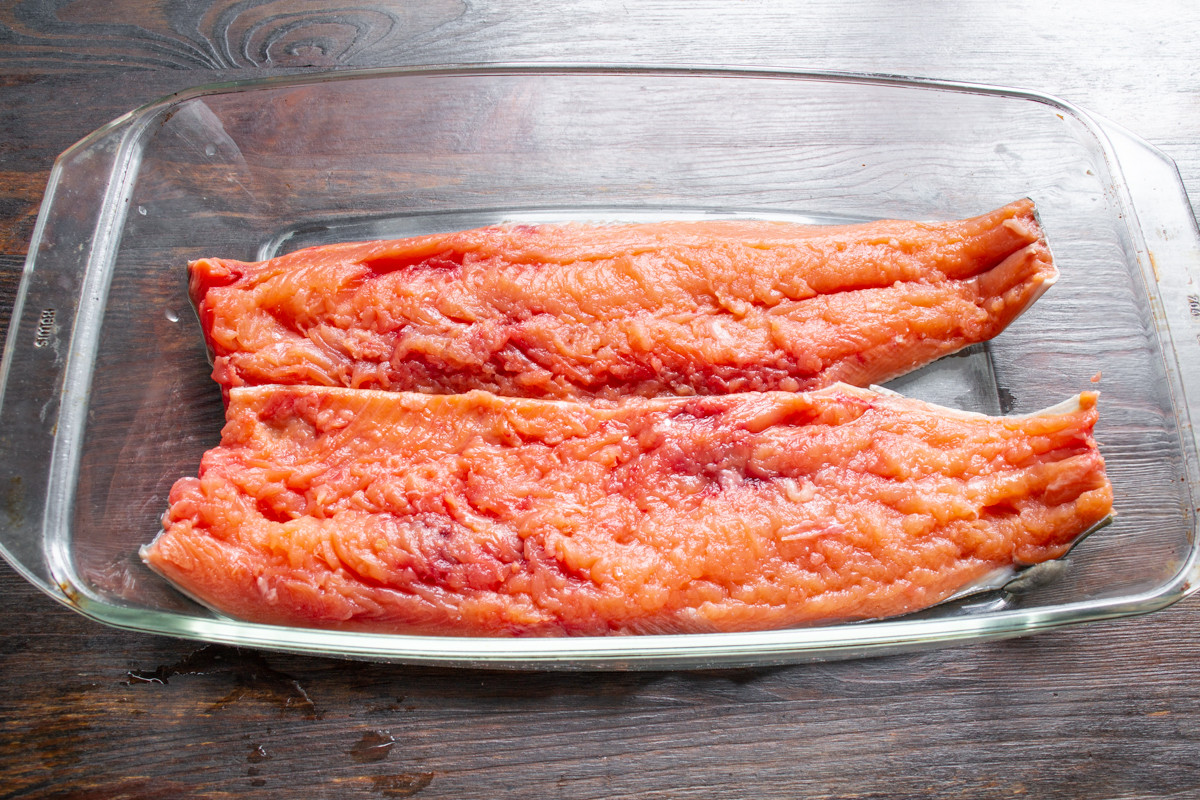
Place the pink salmon fillet skin-side down in a suitably sized glass container.
For dry-curing fish, use glassware, as it’s easy to wash and doesn’t retain odors. Place the gorbusha fillet skin-side down in a glass container of a suitable size.
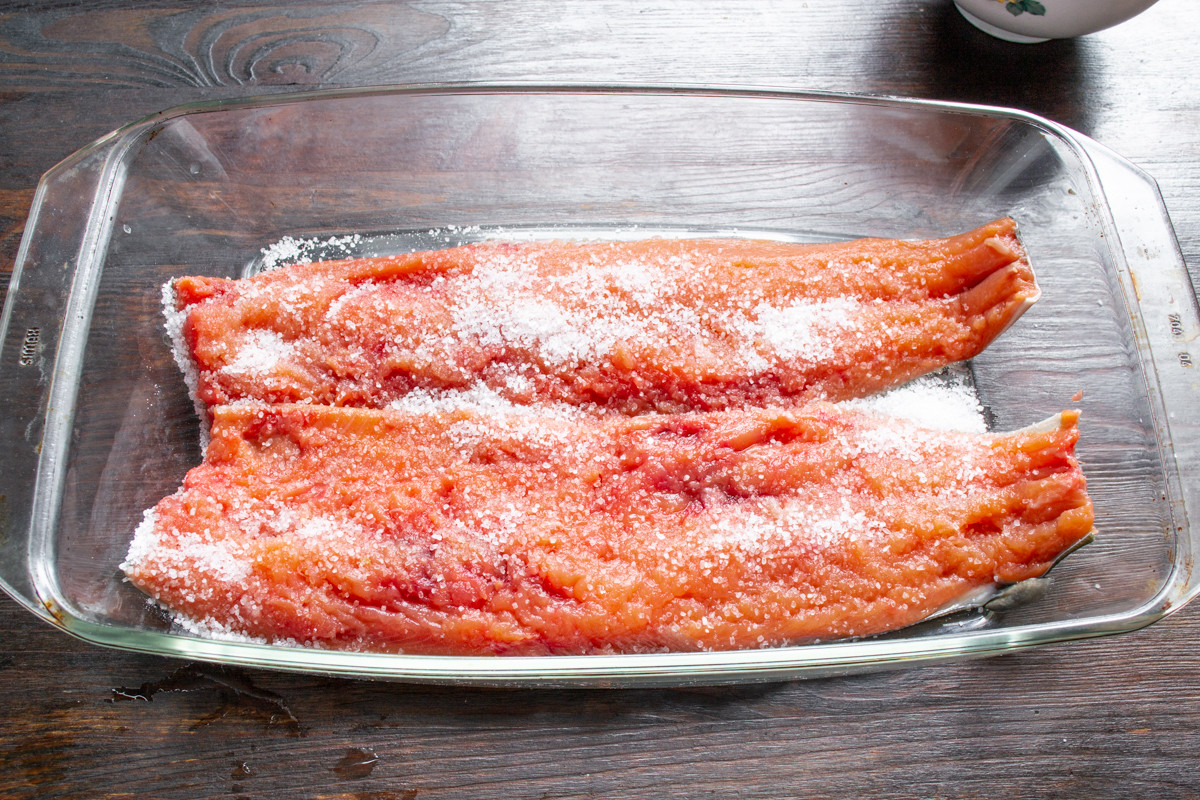
Sprinkle the pink salmon fillet evenly with the salt and sugar mixture.
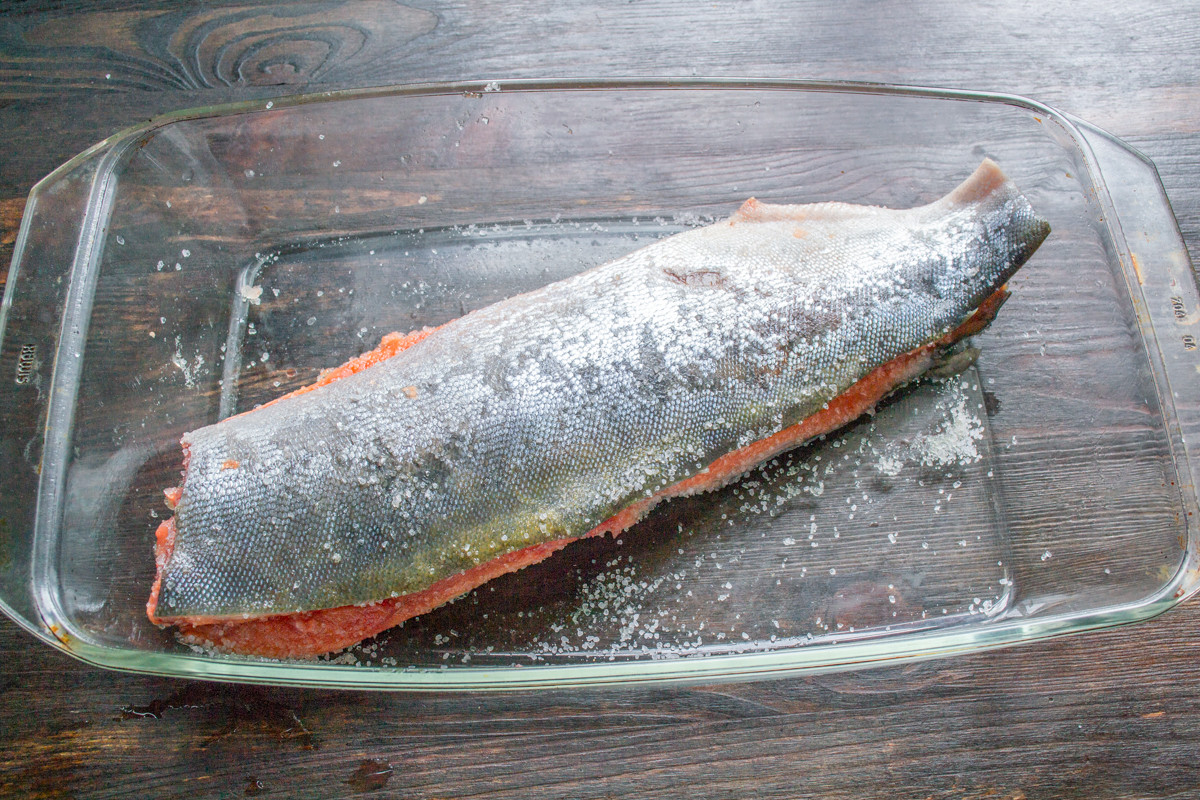
Place one fillet on top of the other, pressing down slightly.
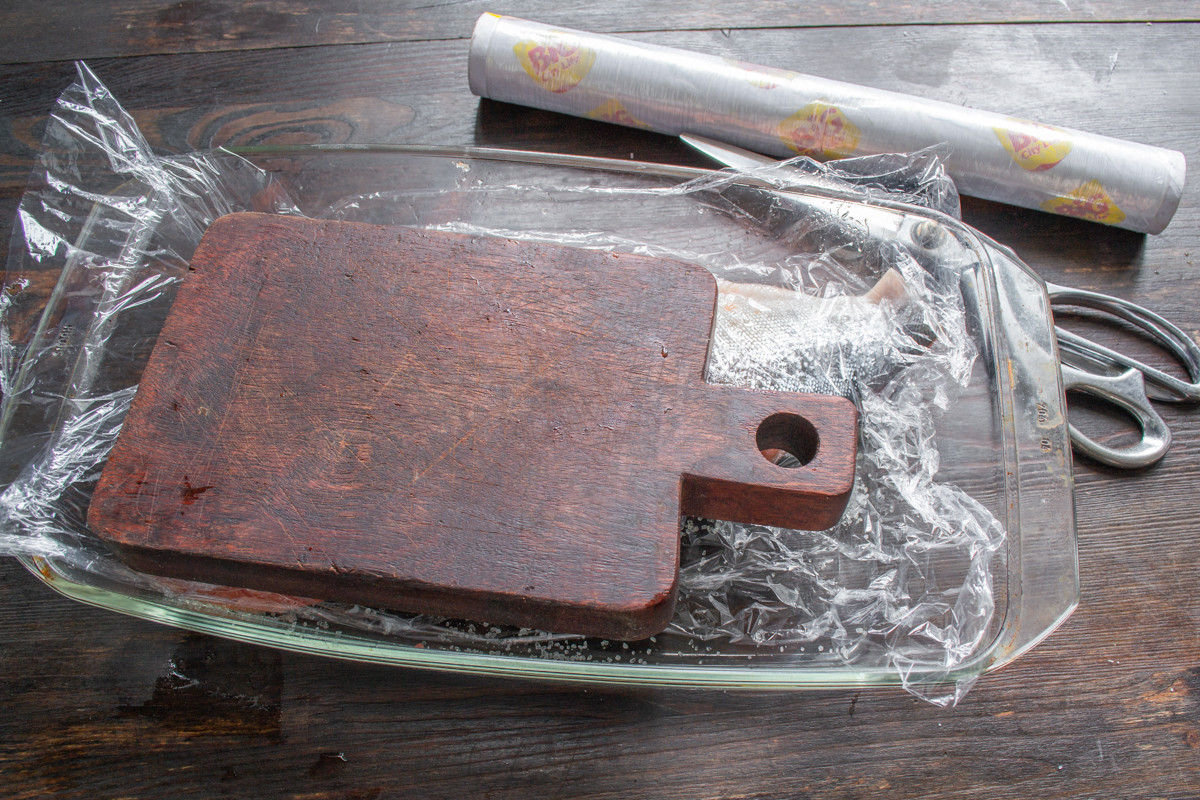
Cover the container with plastic wrap and press the pink salmon down with a weight.
Mix the sea salt and granulated sugar. Sprinkle the gorbusha fillet evenly with the salt and sugar mixture.
Place one fillet on top of the other and press down slightly.
Cover the container with plastic wrap and press the gorbusha down with some kind of weight. You can use a cutting board or a plate with a jar of water on top.
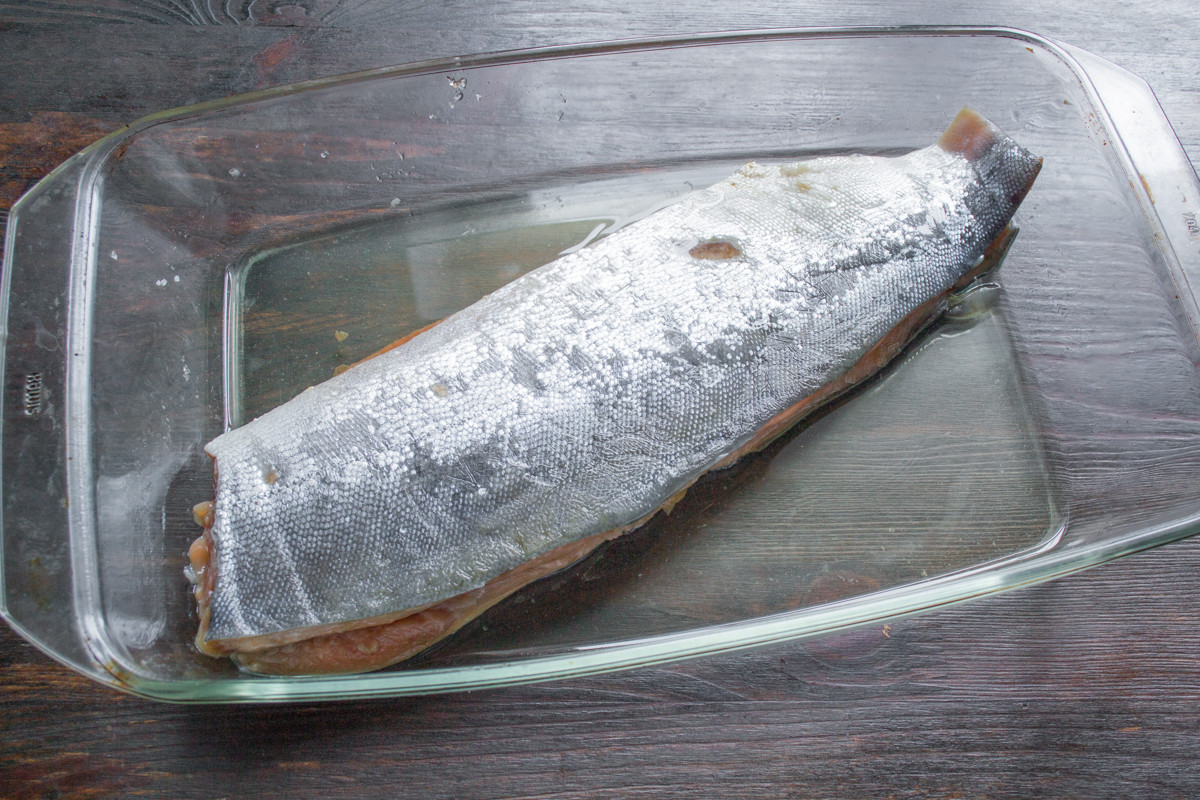
Place the fish on the bottom shelf of the refrigerator for 48 hours.
Place the fish on the bottom shelf of the refrigerator for 48 hours. Then, remove the weight and plastic wrap, and the fish is ready. At this stage, you will see that water has been released from the fish; this is the salt and sugar doing their work of dehydrating the fillet. Drain the water and pat the gorbusha dry with paper towels. If there are any salt granules left on the fillet, rinse the fish with cold boiled water and dry it with towels.

Before slicing the cured pink salmon, place the fillet in the freezer for 15-20 minutes.
Before slicing the cured gorbusha, place the fillet in the freezer for 15-20 minutes. The fish will become firmer, slightly frozen, and easy to slice thinly. Slice the fillet off the skin at a slight angle.
And there you have it—beautifully cured pink salmon, made right in your own kitchen! The firm texture and rich, savory flavor are truly a treat. Enjoy your homemade delicacy sliced thinly on dark rye bread with a dollop of cream cheese and fresh dill, or add it to salads, pasta, or breakfast scrambles.
To store, wrap the cured fillet tightly in plastic wrap or parchment paper and keep it in the refrigerator for up to a week. It can also be frozen for longer storage. We hope you enjoy this taste of a beloved tradition and feel inspired to explore more home-curing projects!
0 comments