
Chicken ojakhuri is more than just a hearty family dinner; it is the true embodiment of Georgian hospitality. The name itself stems from the word ojakhi, meaning family, highlighting its role in large, warm gatherings. Traditionally, this aromatic roast is cooked in a ketsi, a special red clay pan that retains heat for a long time and gives the ingredients a distinct flavor. If you do not have one, do not hesitate to use a wok or a heavy-bottomed cast-iron skillet: they do a fantastic job of creating that golden crust on the potatoes and sealing the juices inside the tender chicken. In just half an hour, you will have a dish with a bold Caucasian character, where the sweetness of ripe tomatoes perfectly balances the warm spices of khmeli suneli (a traditional Georgian spice blend) and the bright freshness of cilantro.
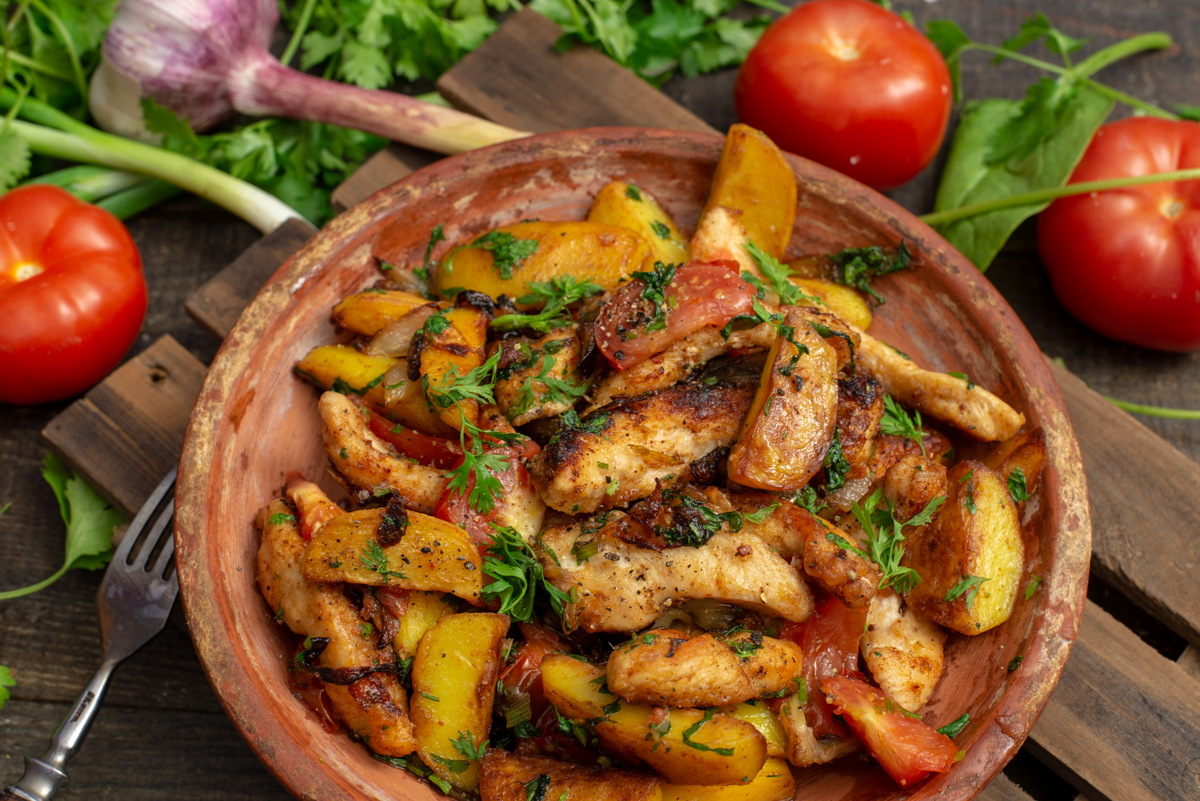
Aromatic chicken ojakhuri is a traditional Georgian dish that will warm up the whole family at dinner.
Ingredients
- 400 g (14 oz) chicken breast fillet
- 650 g (1.4 lbs) potatoes
- 130 g (4.5 oz) onion
- 4 garlic cloves
- 4 medium tomatoes
- 1 bunch of fresh cilantro
- 1 tsp khmeli suneli (Georgian spice blend)
- 1 tsp smoked paprika
- vegetable or olive oil (for frying)
- potato starch (for coating)
- salt and freshly ground black pepper to taste
For the sauce
- plain yogurt (or matsoni)
- finely chopped cilantro
- 1 garlic clove, minced
- salt
- freshly ground black pepper
How to Make Chicken Ojakhuri
Let’s fry the potatoes. Every cook has their own method, but here is my go-to approach. Peel the potatoes and cut them into rustic wedges. Place the wedges into a pot and pour boiling water over them. Boil for 5-7 minutes, depending on the size of the cuts. Drain the parboiled potatoes in a sieve; there is no need to salt them at this stage.
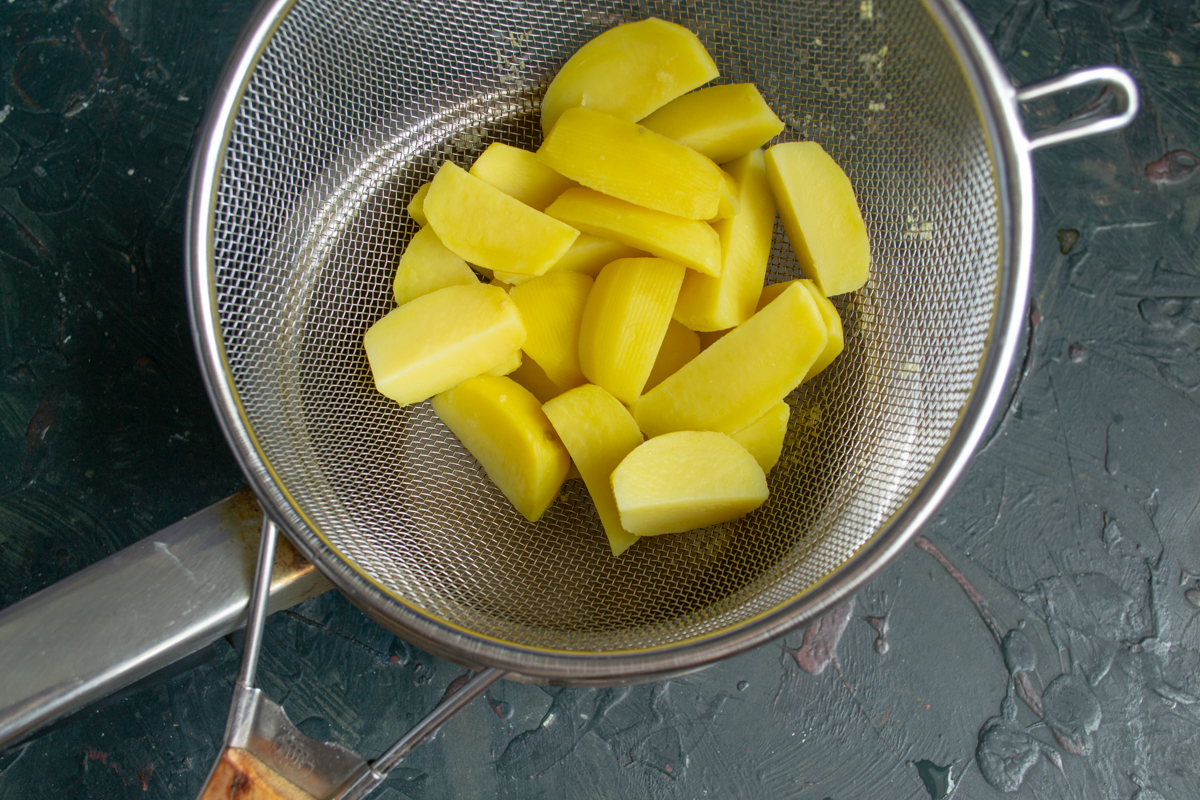
Drain the parboiled potatoes in a sieve to get rid of all excess water before frying.
Pour refined vegetable oil into a wide skillet and heat it well. Carefully drop the potatoes into the hot oil and fry until golden brown. Transfer the crispy potatoes to a paper towel so the paper can absorb any excess oil.
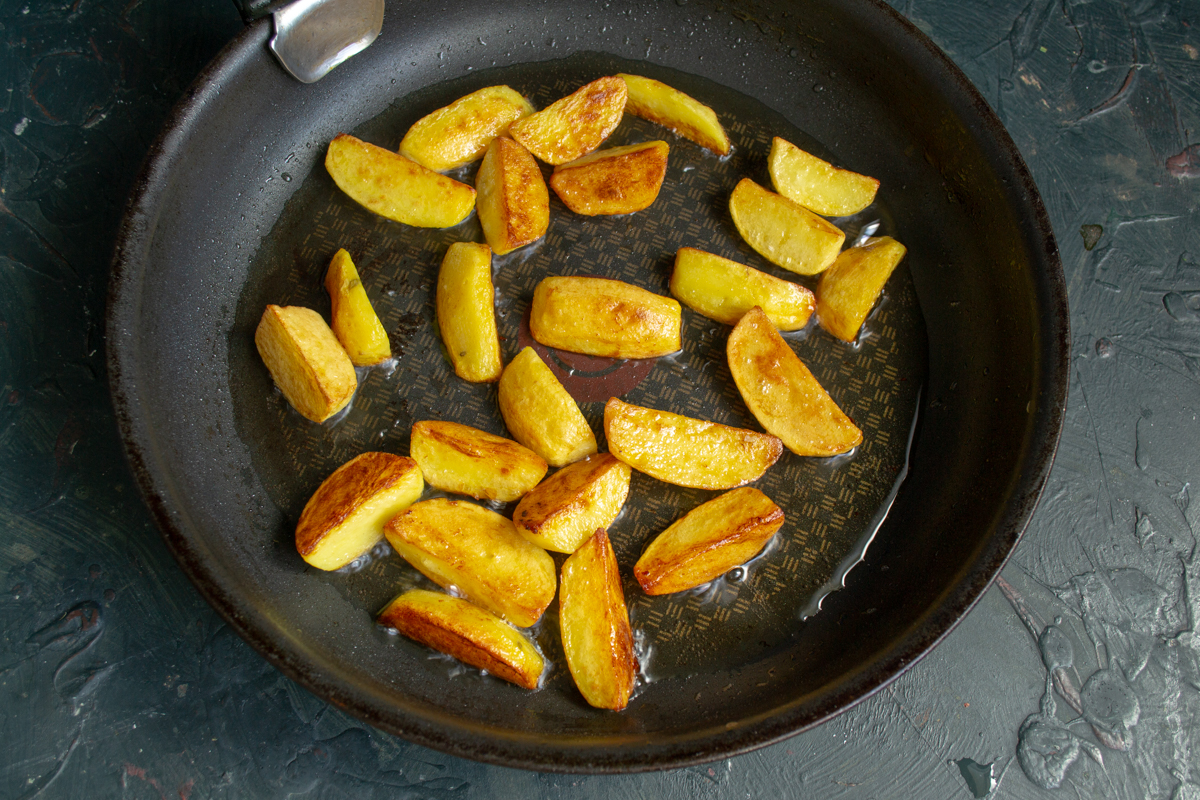
Fry the potatoes in hot oil until they develop a golden color and a crispy crust.
Slice the chicken breast into long, narrow strips across the grain. Place a few tablespoons of potato starch into a plastic bag. Add the patted-dry chicken strips to the bag, tie it into a knot, and shake vigorously. This coats the chicken in a thin layer of starch, which seals in the juices during frying.
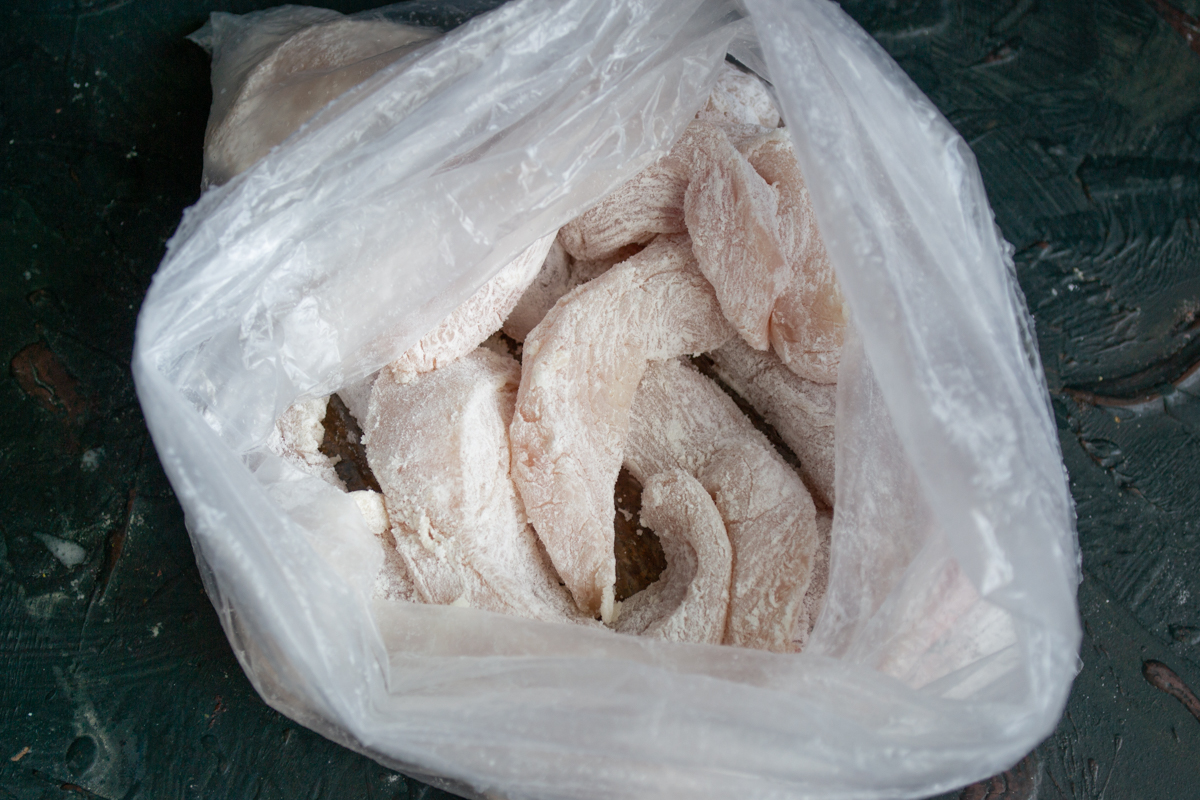
Using a plastic bag for dredging allows you to evenly coat each piece of chicken with a thin layer of starch.
Heat two tablespoons of vegetable or olive oil in a wok. Add the coated chicken pieces to the hot oil. Fry for a few minutes until beautifully golden.
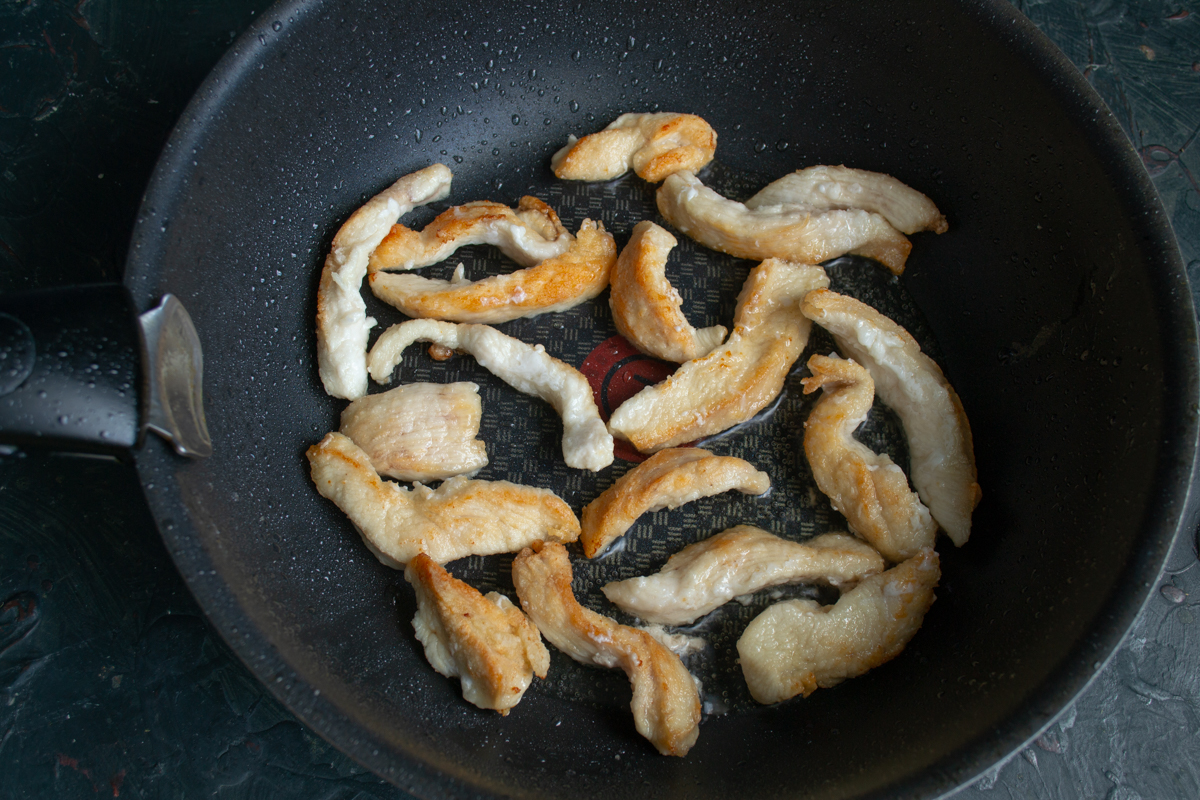
The starch coating seals the juices inside the meat, keeping the chicken tender and juicy when fried.
Toss in the coarsely chopped onion and finely minced garlic with the chicken.
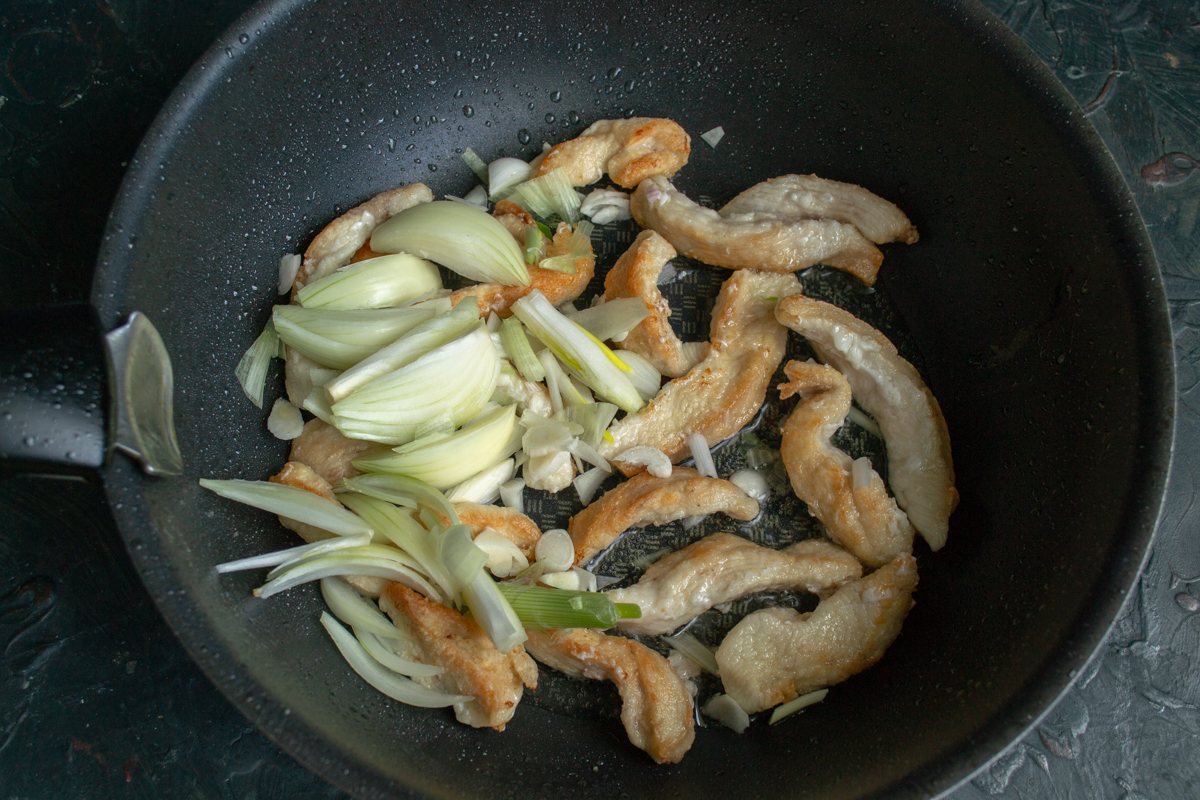
Coarsely chopped onion and garlic are essential flavor components of an authentic ojakhuri.
Sprinkle in the khmeli suneli (a traditional Georgian spice blend) and smoked paprika, then season with salt to taste. Sauté the onion, chicken, and spices for about 5 minutes until the onion is tender.
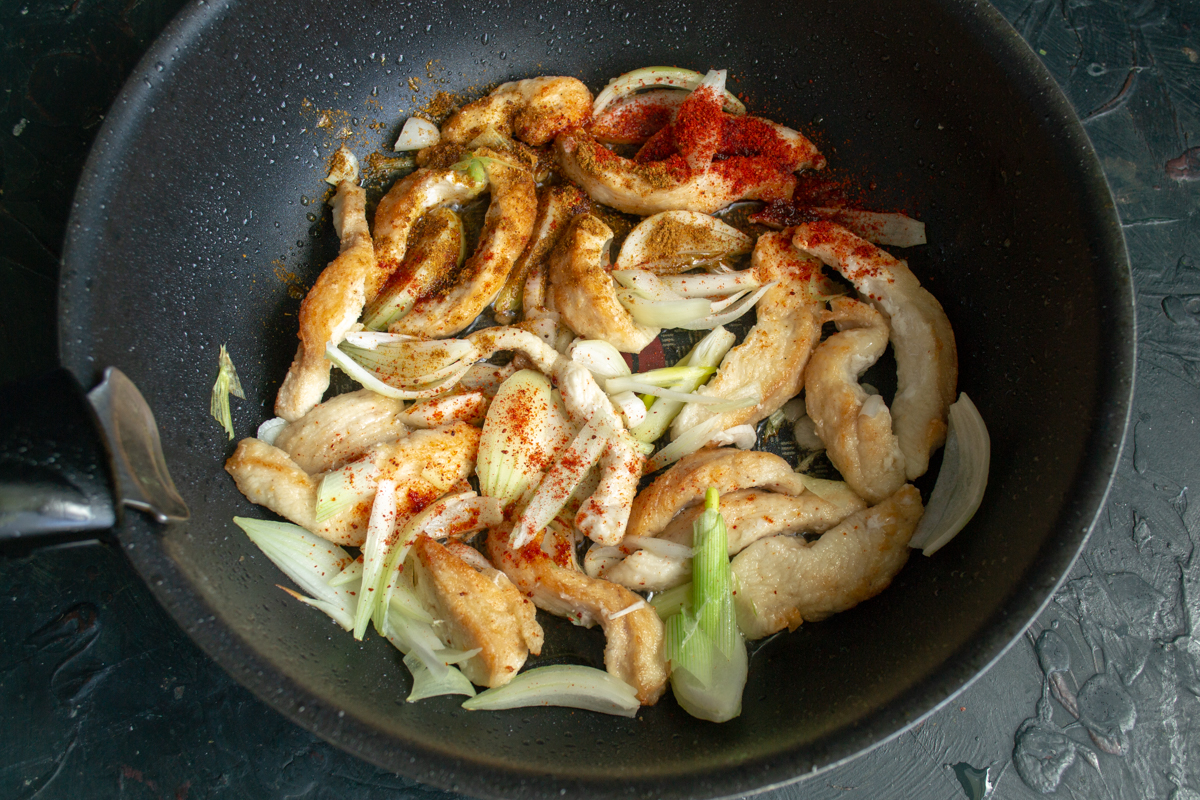
Smoked paprika and khmeli suneli give the dish a unique Caucasian aroma and a rich color.
Fold the fried potatoes back in with the chicken.
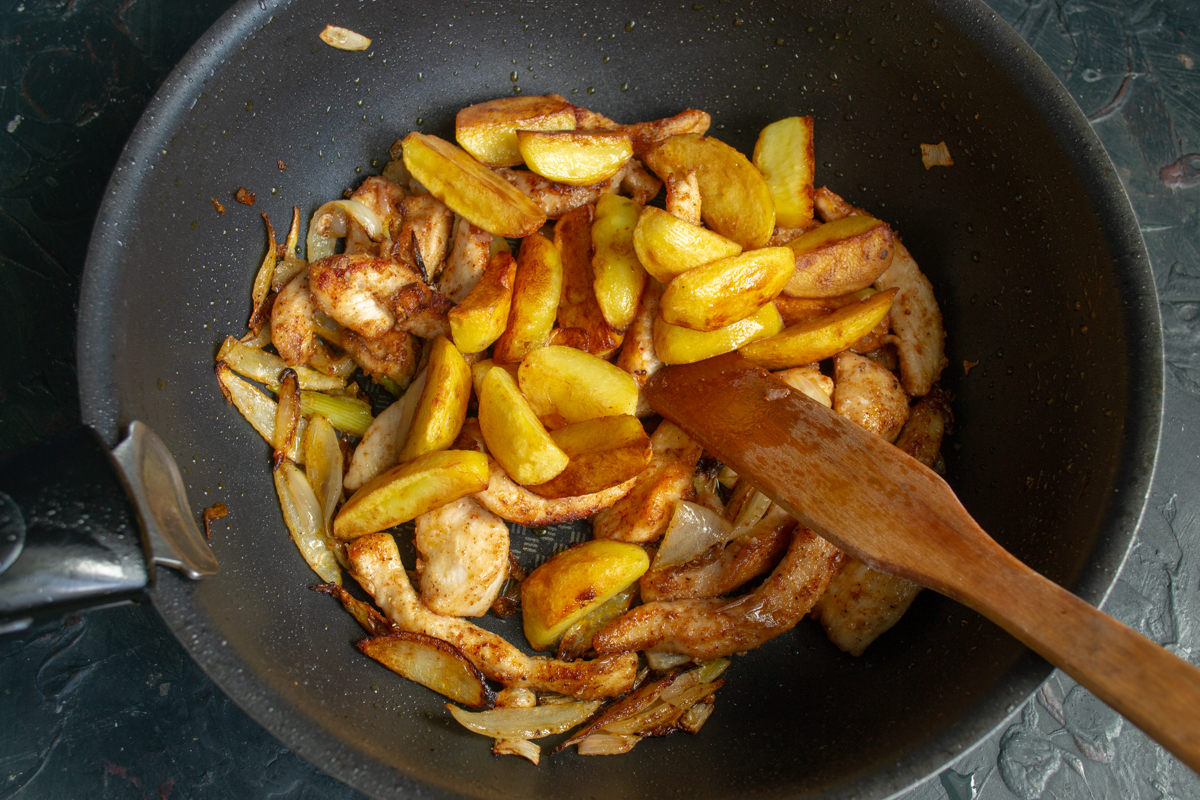
Return the potatoes to the chicken so all the components of the dish heat through together.
Roughly chop the ripe red tomatoes and add them to the rest of the ingredients.
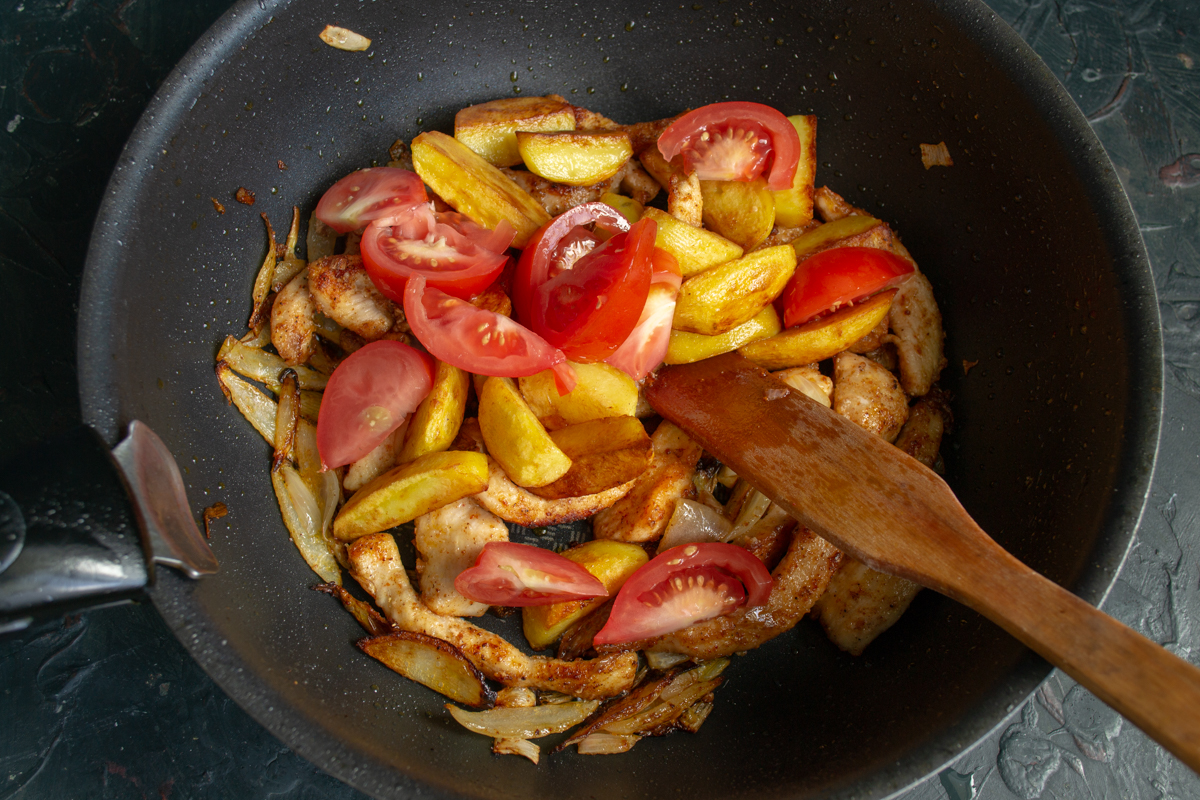
Fresh tomatoes are added at the very end so they hold their shape while releasing their juices into the other ingredients.
Finely chop a bunch of fresh cilantro. Add the greens to the pan, season everything with salt to taste, cover with a lid, and cook on high heat for just a couple of minutes so the tomatoes release their juices but do not turn to mush.
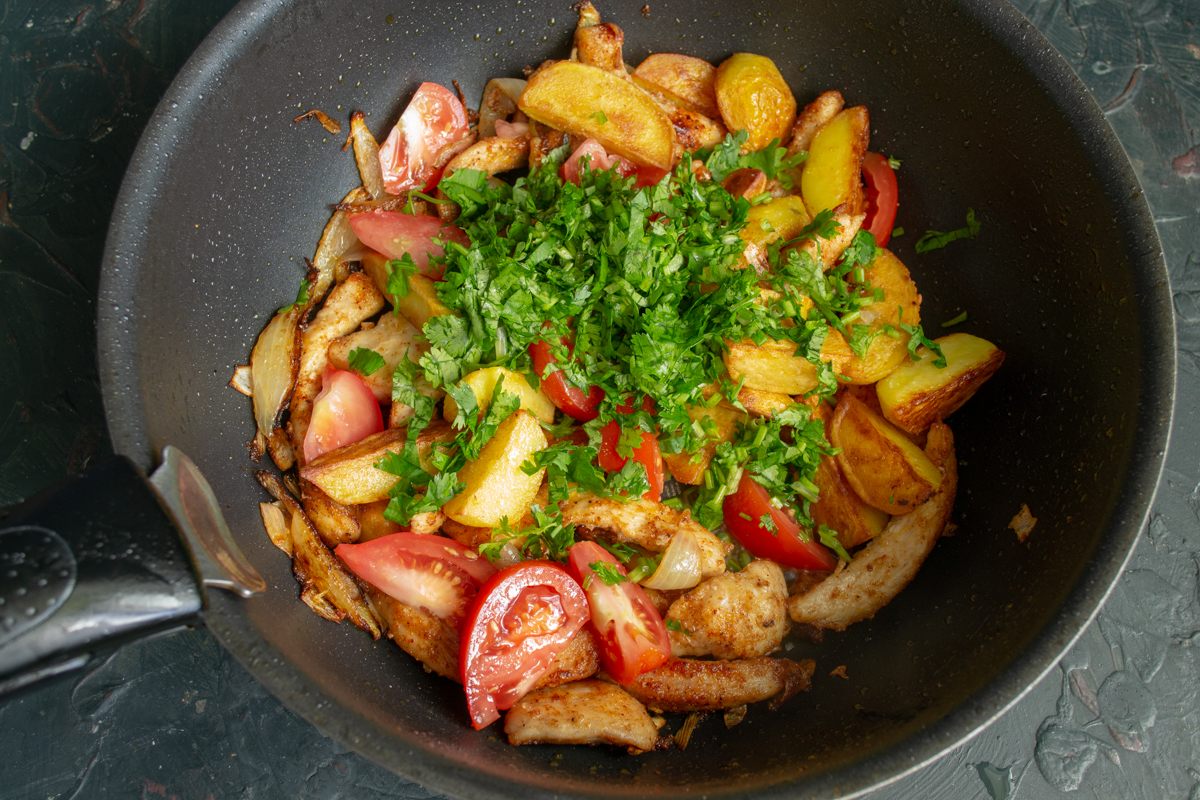
Fresh cilantro is a must-have finishing touch that makes the flavor of ojakhuri complete and vibrant.
Season with freshly ground black pepper, and your chicken ojakhuri is ready!
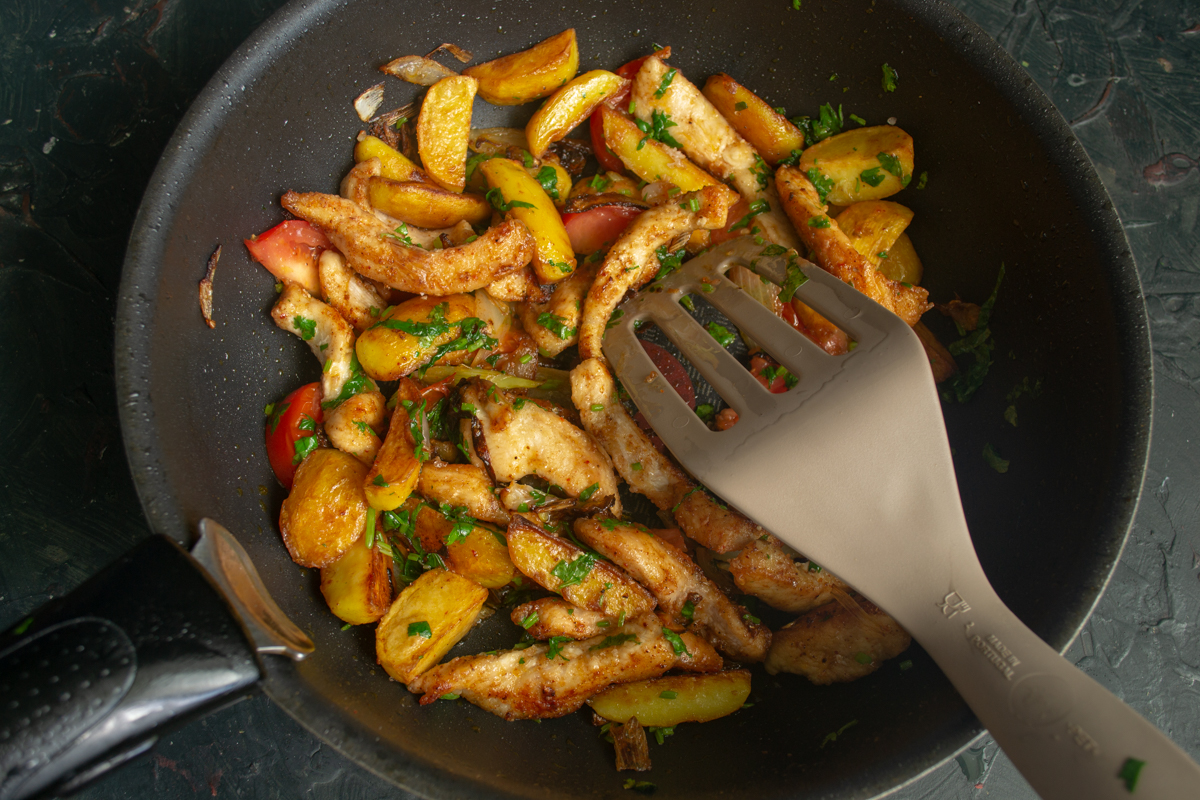
Gently mix the dish, allowing the tomatoes to soften slightly under the lid.
It tastes even better when cooked in a fireproof clay pan over an open flame, making it the ultimate dish for a family picnic. Bon appétit!
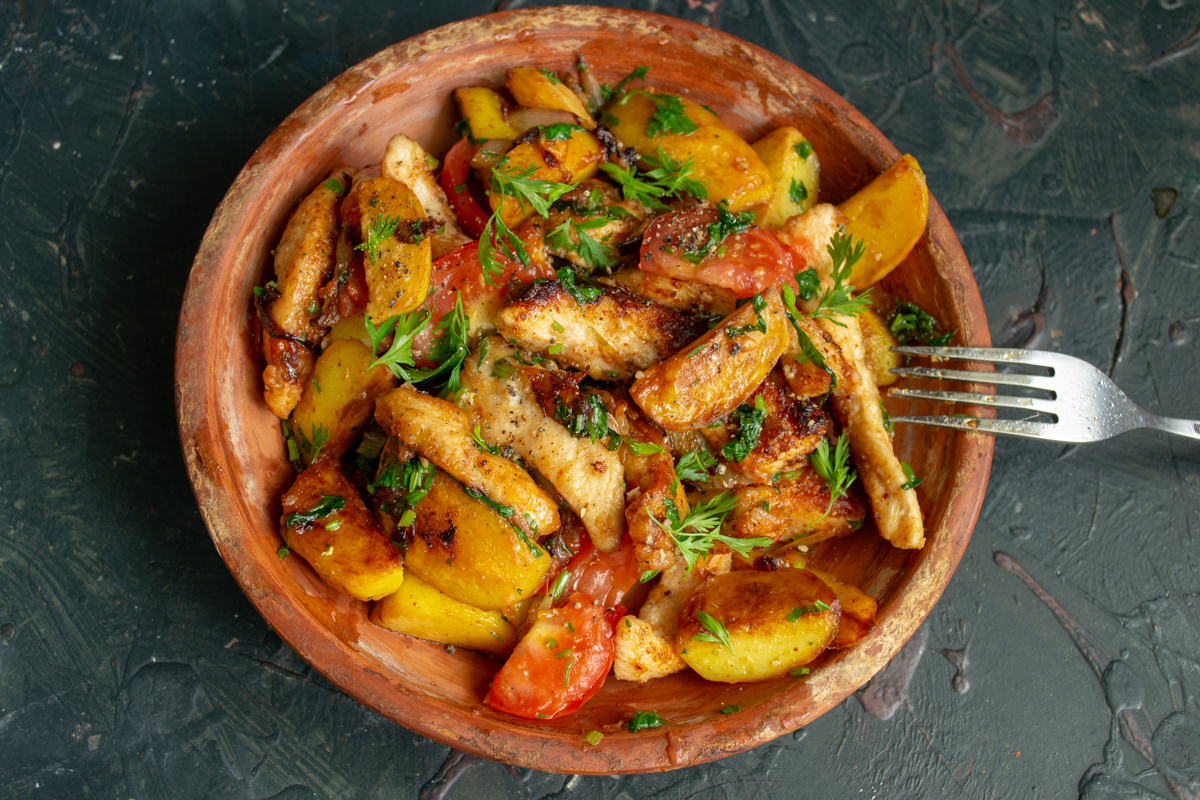
Serve the ojakhuri hot, ideally in a traditional clay pot to preserve the heat and atmosphere.
A light sauce made of plain yogurt or matsoni (a traditional fermented milk product similar to tart yogurt) pairs perfectly with chicken ojakhuri. Mix it with finely chopped cilantro, a minced clove of garlic, salt, and pepper. Serve the sauce on the side in a gravy boat so everyone can spoon it onto their plate to taste, perfectly complementing the spiced meat and fresh vegetables. If you want to add a twist to the classic chicken ojakhuri, try sprinkling some pomegranate seeds or pickled red onions right at the end for an exquisite touch of acidity. Store any leftover roast in an airtight container in the fridge, but keep in mind that the potatoes are at their absolute best right after cooking, while they still have that satisfying crispy crust.
0 comments