
Canned fermented pickles, prepared using a double-processing method, are a brilliant culinary compromise between traditional oak barrel fermentation and convenient apartment storage. The secret to their deep, robust flavor lies in the initial lactic acid fermentation, which lasts for several days. During this time, a unique microflora develops in the brine, giving the vegetables that signature tang and density. Using a traditional 'spice bouquet' of oak, horseradish, and cherry leaves doesn't just enrich the aroma, it also saturates the cucumbers with tannins, ensuring they stay incredibly firm and deliver a resounding crunch with every bite.
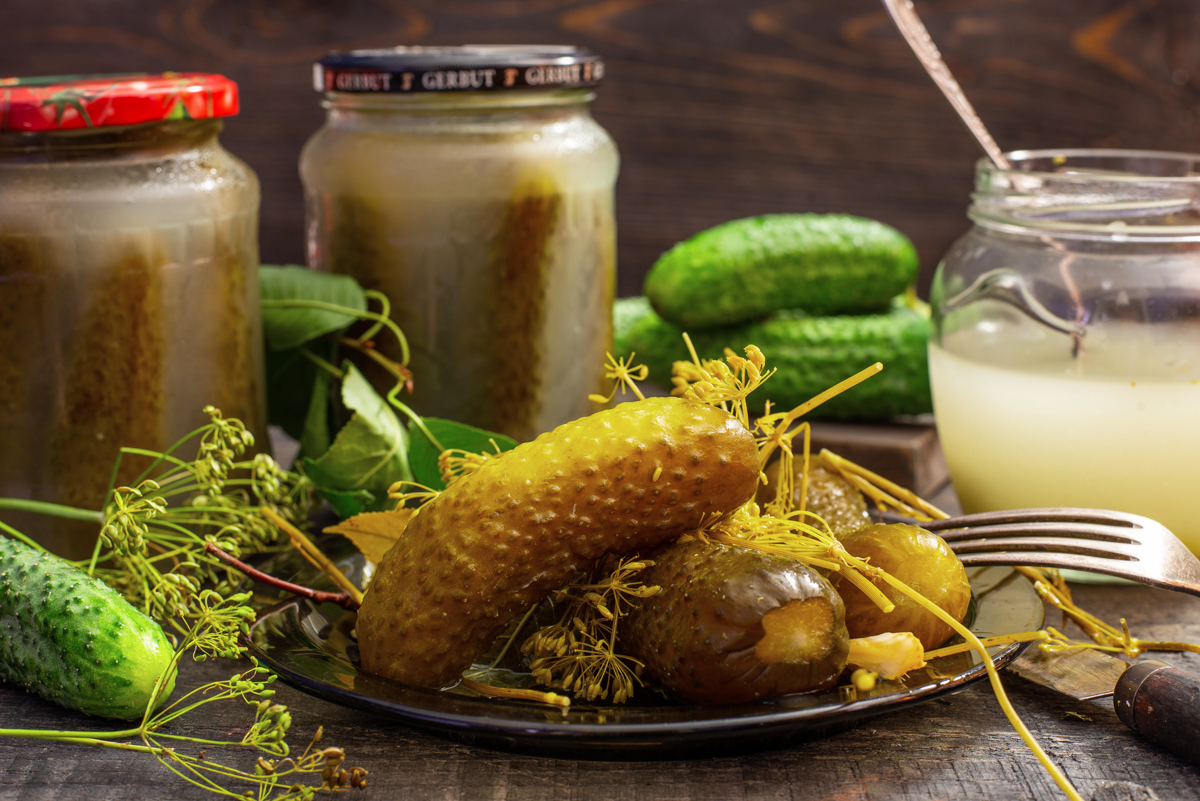
Crisp and aromatic fermented pickles, prepared according to a traditional recipe, ready to be served.
Ingredients
- 5 kg (11 lbs) cucumbers
- 100 g mixed fresh leaves (cherry, horseradish, and dill crowns)
- 2 whole heads of garlic
- Brine: 50-70 g salt per 1 liter (about 4 cups) filtered water
How to Make Canned Fermented Pickles
Ideally, harvest the cucumbers on the day you plan to pickle them. Soak the freshly picked harvest in cold filtered water for 2-3 hours to ensure maximum crispness.
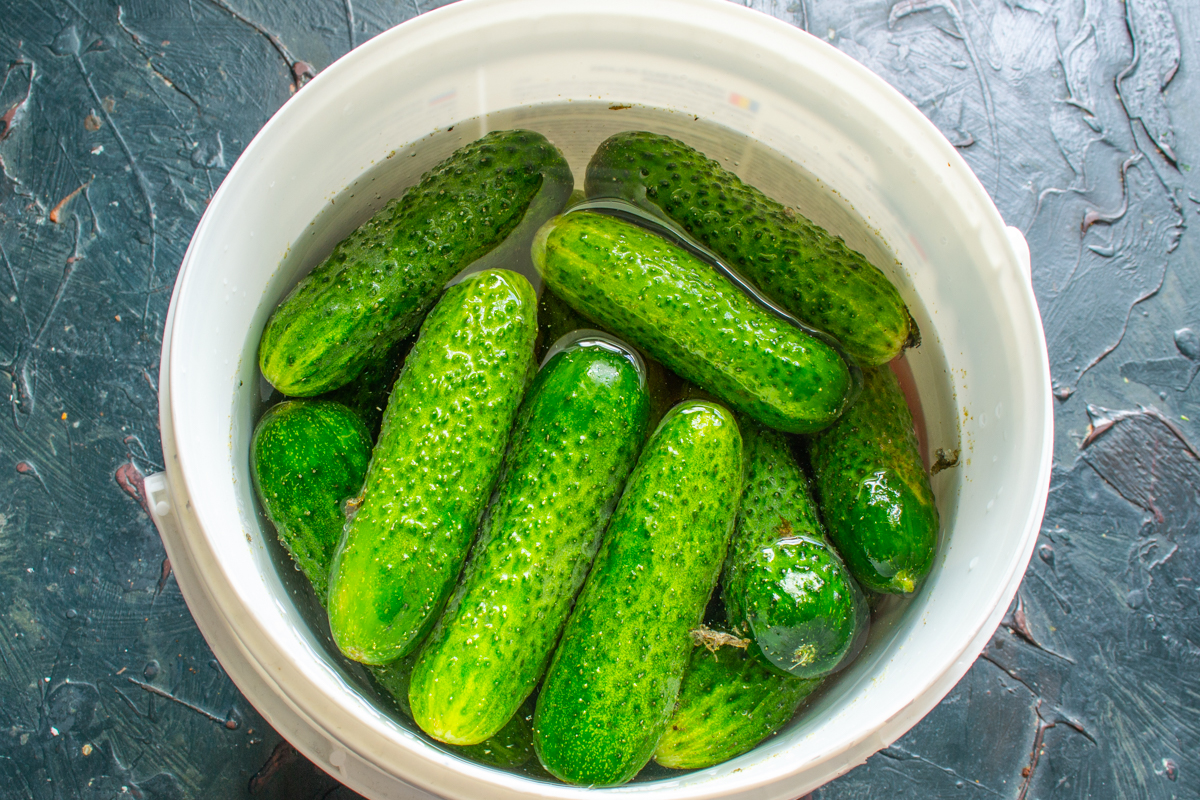
Soaking the cucumbers in cold water helps restore their crispness before pickling.
You will also need a traditional preserving herb bundle: cherry and currant leaves, horseradish leaves, and mature dill crowns with stems. You can also add oak leaves or garlic scapes. In traditional pickling, this aromatic mix is often called a ‘broom’ or ‘bouquet’. Disassemble the bundle, sort through the leaves, and wash everything thoroughly.
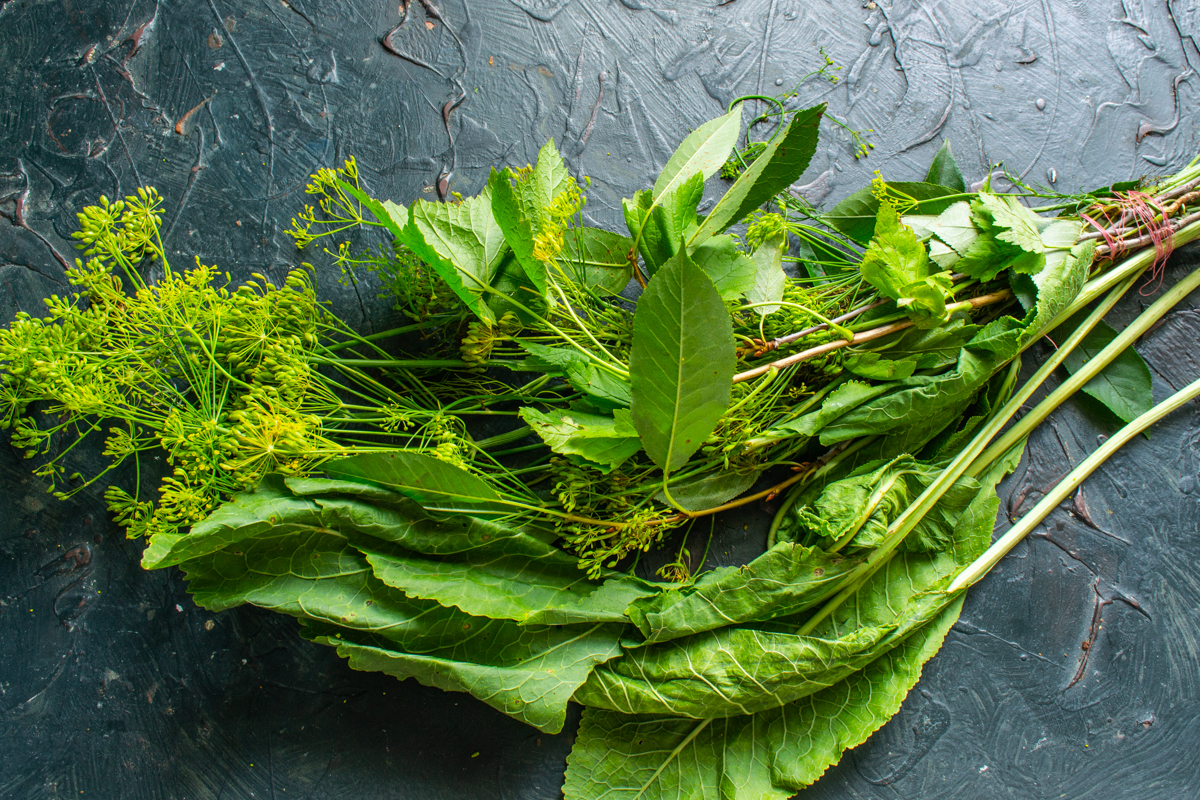
A traditional bundle of aromatic leaves and dill gives the pickles their unique flavor.
Measure out the salt into a large pot, calculating 50-70 g of salt per 1 liter (about 4 cups) of filtered water. For 5 kg (11 lbs) of cucumbers, you will need approximately 4 liters (about 1 gallon) of brine. The exact amount of salt depends on the size of your cucumbers; smaller ones require slightly less salt.
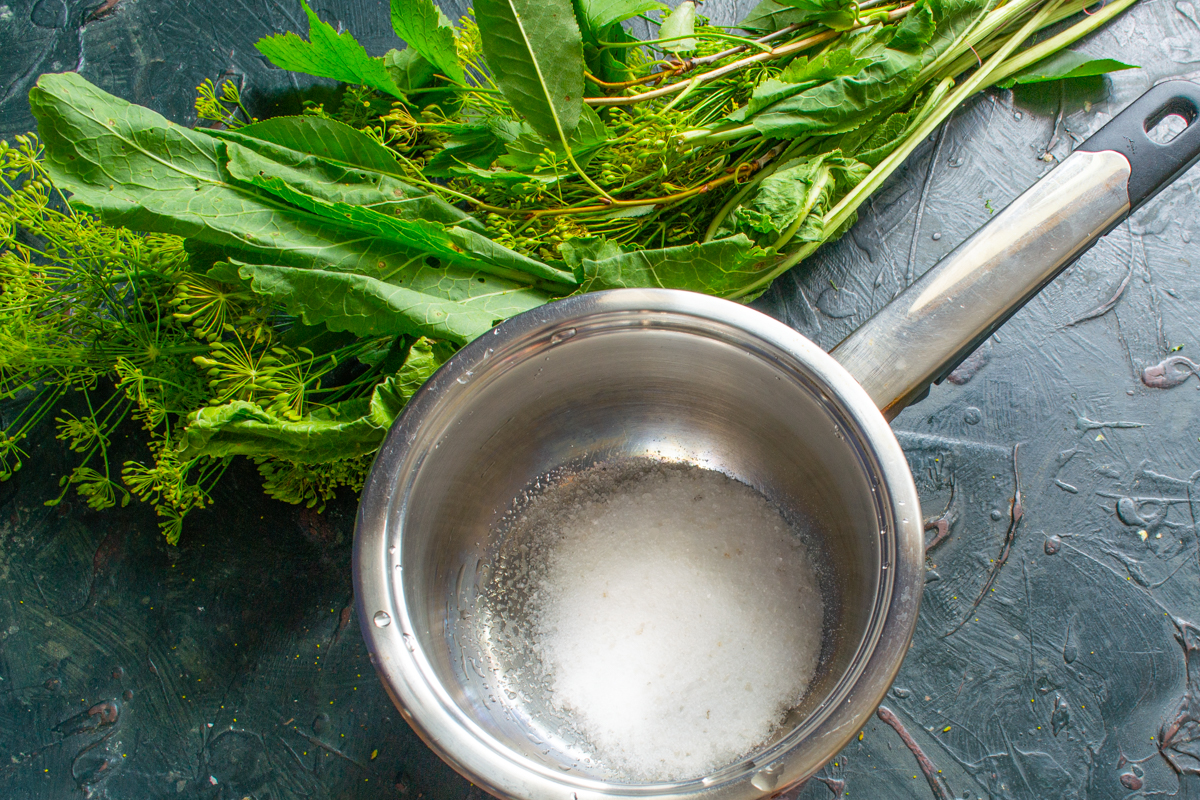
The correct salt concentration is essential for successful fermentation and long-term storage.
Pour warm boiled water over the salt and whisk vigorously until it is completely dissolved.
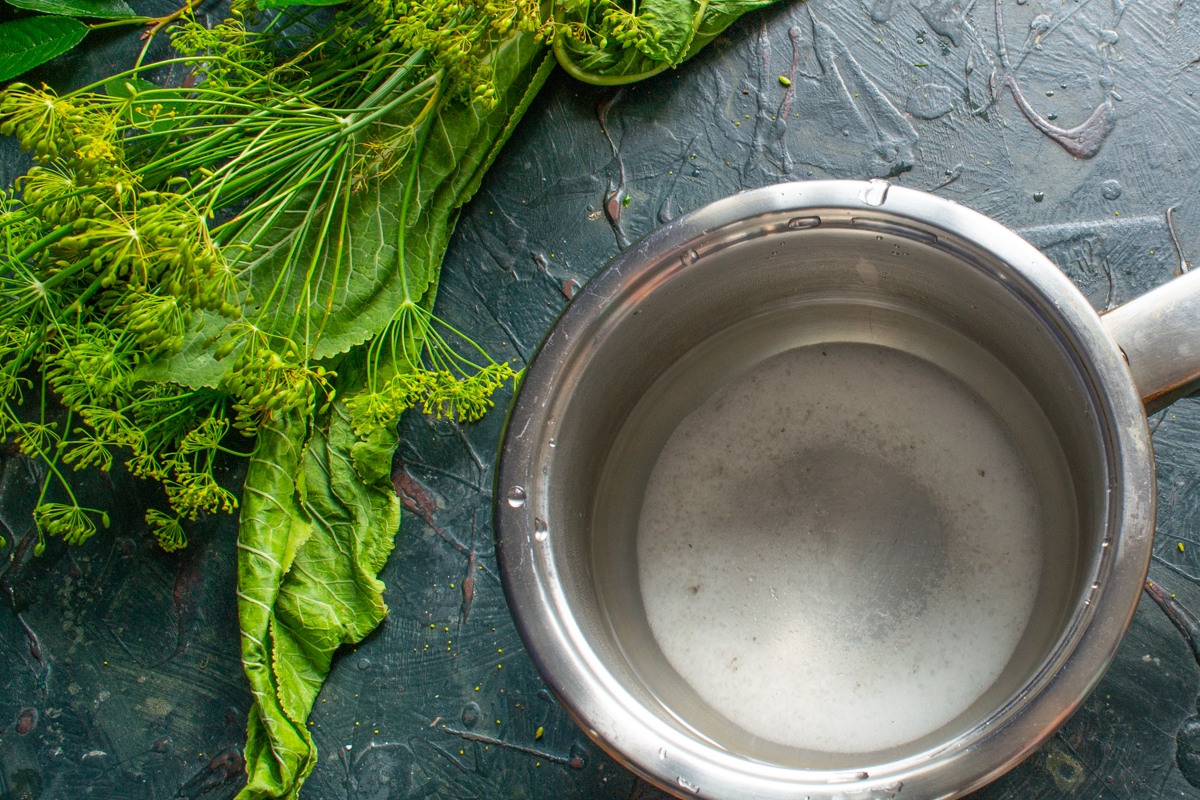
Whisk the salt thoroughly into warm water until completely dissolved to ensure an even brine.
Snip the herb bouquet into smaller pieces using kitchen shears. When fermenting cucumbers, always use glass, enamel, or food-grade plastic containers.
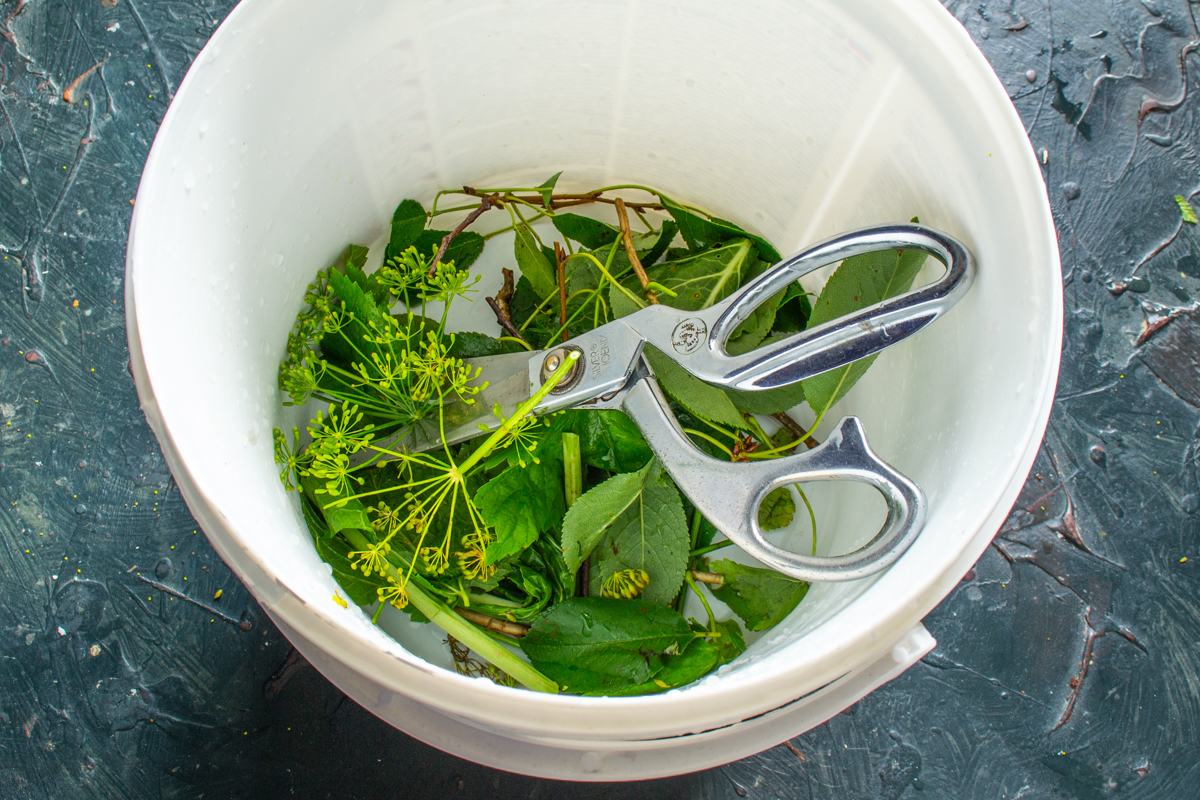
Snip the aromatic leaves and dill stems so they release their flavors into the brine more quickly.
Trim the ends off the thoroughly washed cucumbers. Pack them tightly into a small bucket, alternating layers of cucumbers with the chopped herbs.
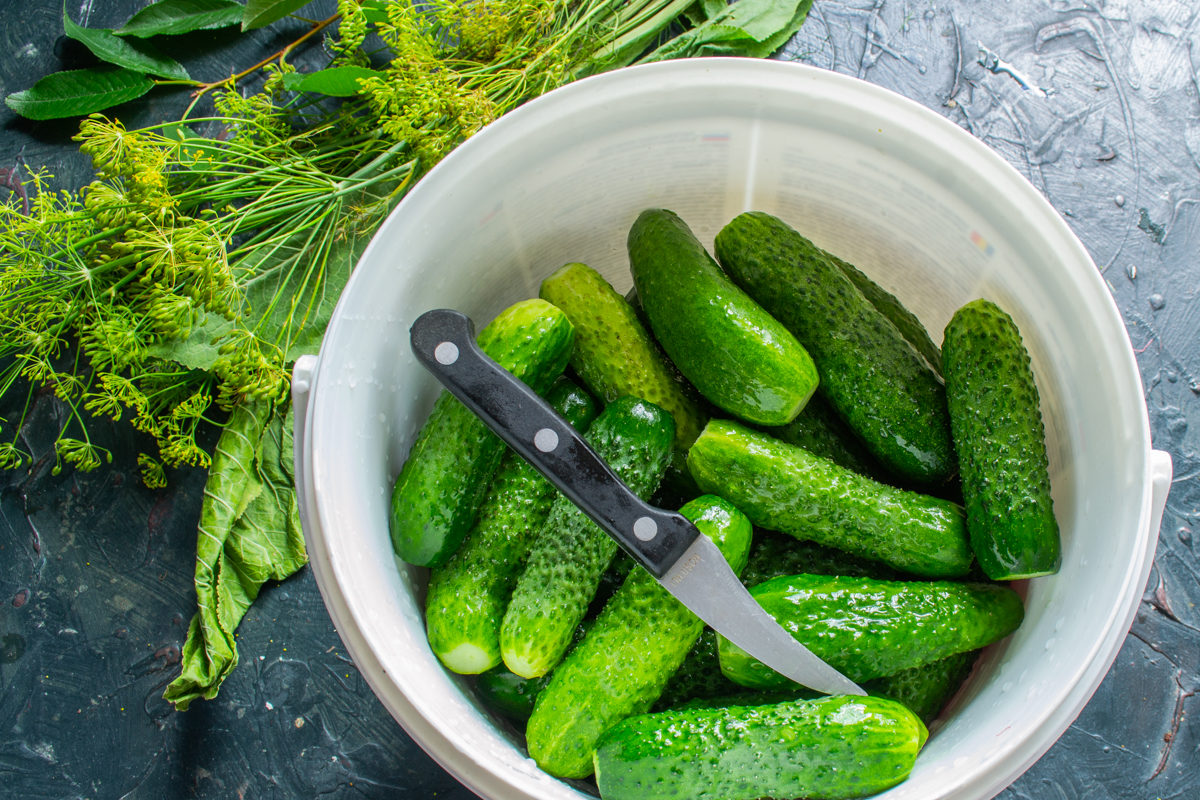
Pack the prepared cucumbers tightly, alternating them with layers of fragrant chopped herbs.
Peel the garlic and slice the cloves into smaller pieces. Scatter the chopped garlic over the cucumbers in the bucket.
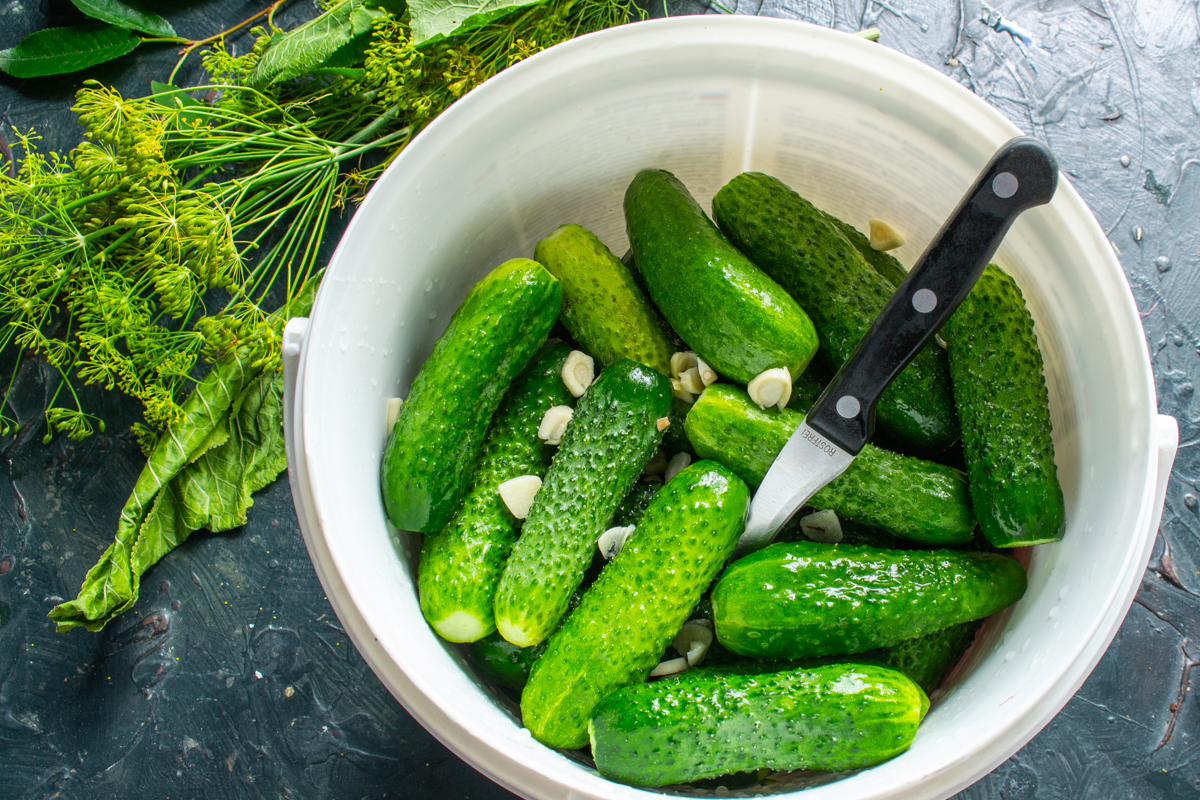
Garlic adds a pleasant sharpness and pungency to the pickles. Slice the cloves to maximize their effect.
Pour the cooled brine over the cucumbers. Top everything with whole horseradish leaves to keep the ingredients submerged and prevent mold.
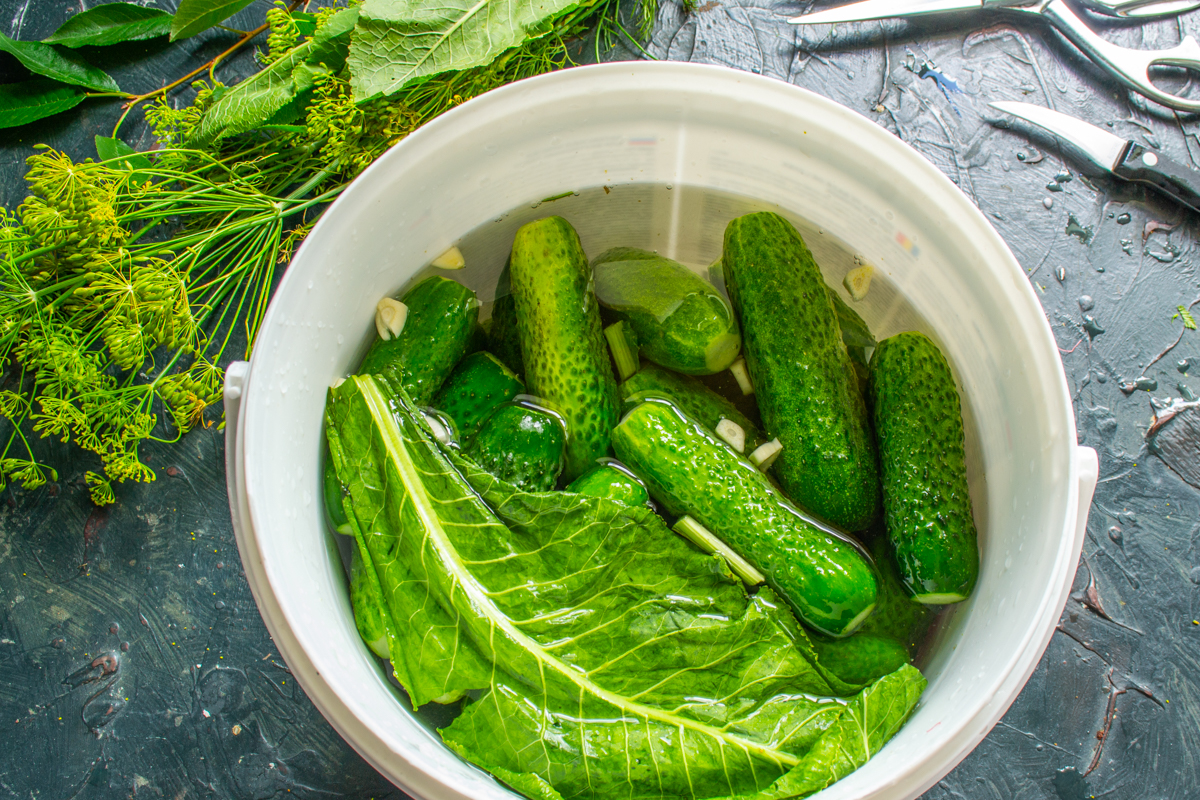
Pour the cooled brine over the cucumbers and cover them with whole horseradish leaves to prevent mold.
Place a plate over the cucumbers and weigh it down with a heavy object. Leave the pickles to ferment at room temperature for 4-7 days.
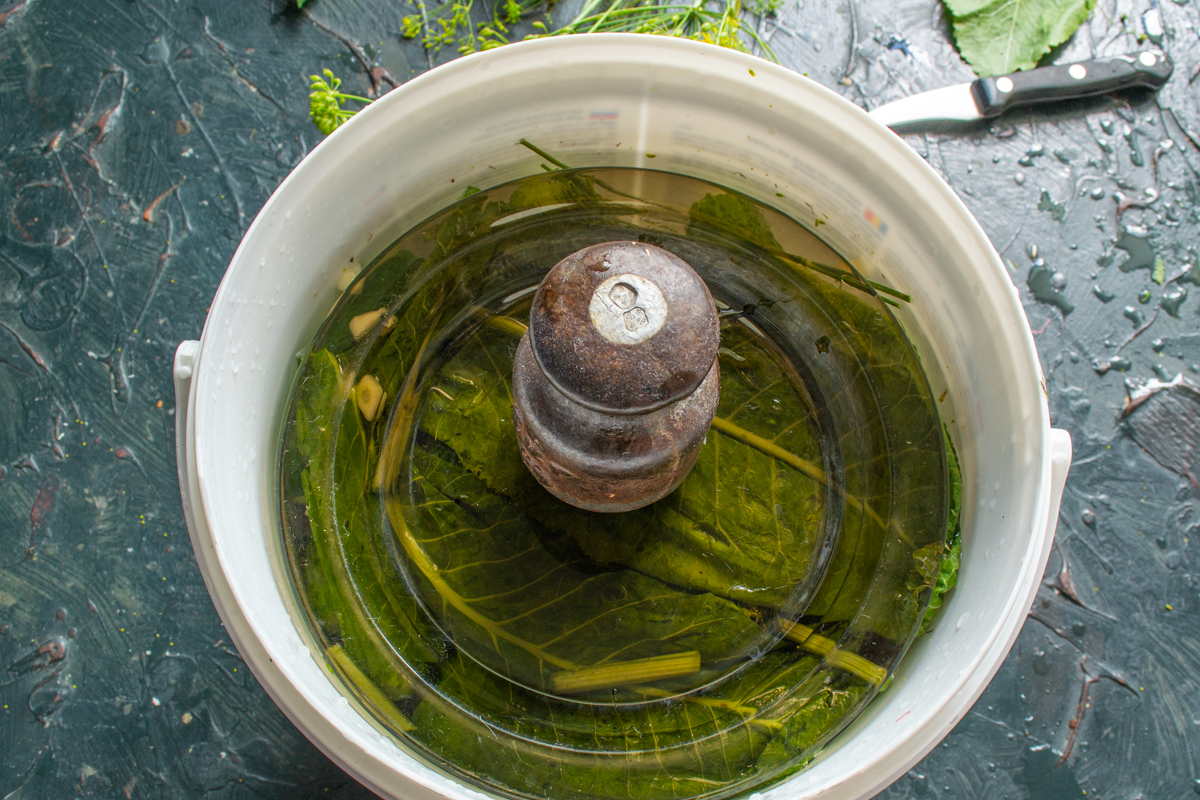
Place a weight over the cucumbers to keep them fully submerged in the brine during fermentation.
The lactic acid fermentation process depends heavily on the room temperature. The warmer it is, the sooner the cucumbers will ferment: the brine will become cloudy, bubbles will appear, and you will notice that signature sour pickle aroma. Keep a close eye on the process; it usually takes no more than a week.
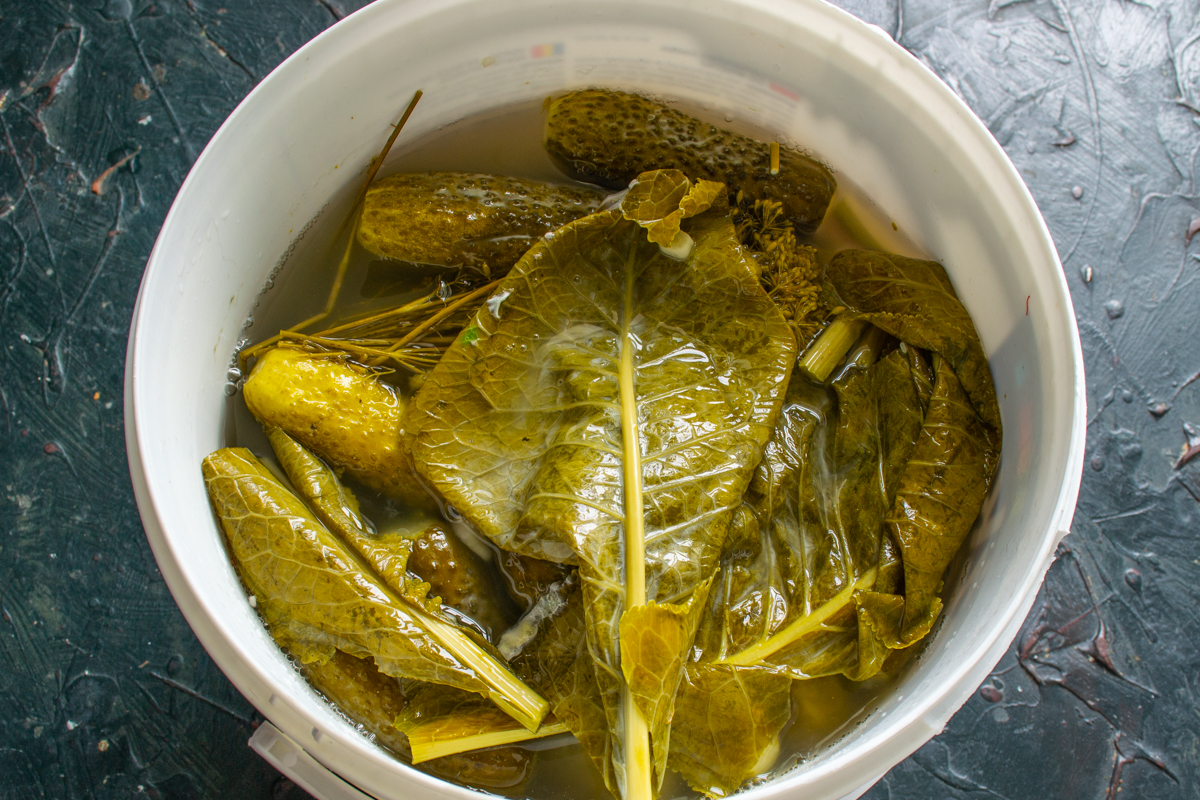
Cloudy brine and the appearance of bubbles indicate that the fermentation process is going perfectly.
Wash your glass jars thoroughly, rinse them with boiling water, and let them air dry completely. Transfer the fermented cucumbers from the bucket into the clean, dry jars.
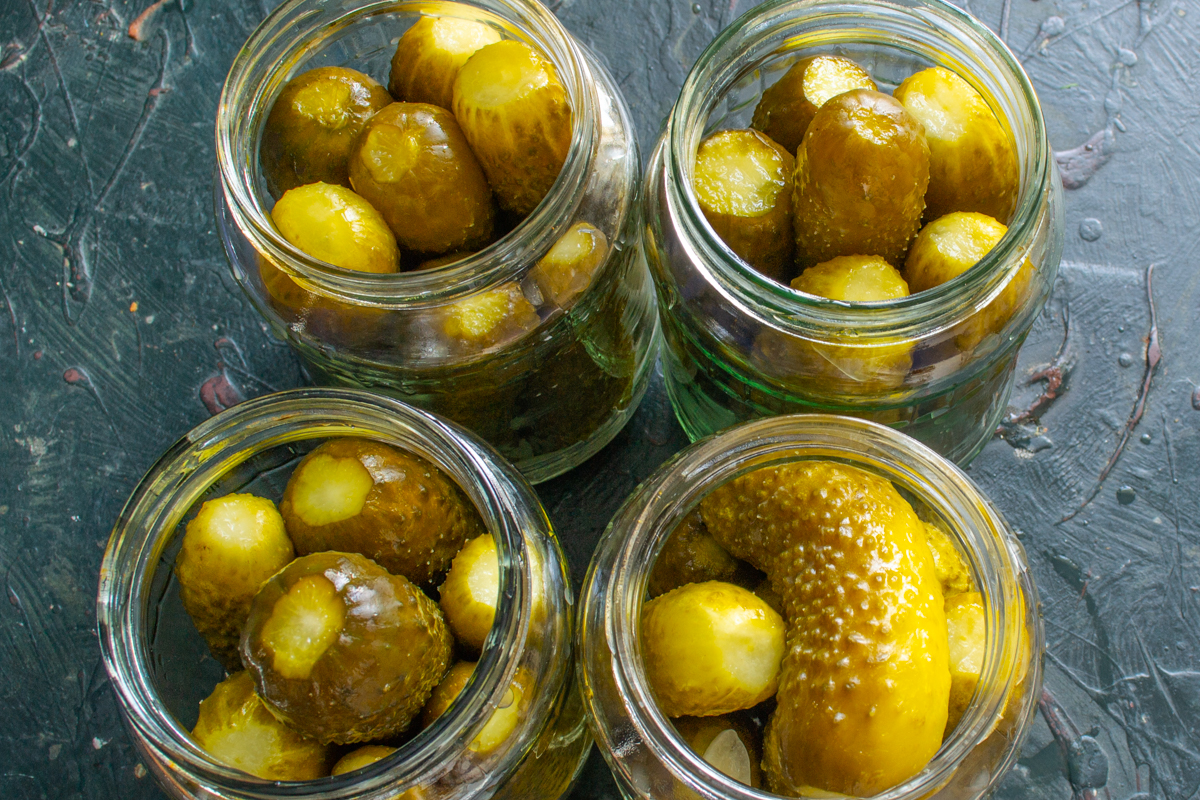
Once fermentation is complete, transfer the finished pickles into clean, sterilized glass jars.
Strain the murky brine through a piece of cheesecloth or a fine-mesh sieve. Pour the strained brine into the jars over the cucumbers, then drain it back into a pot using a perforated lid to accurately measure the required liquid volume.
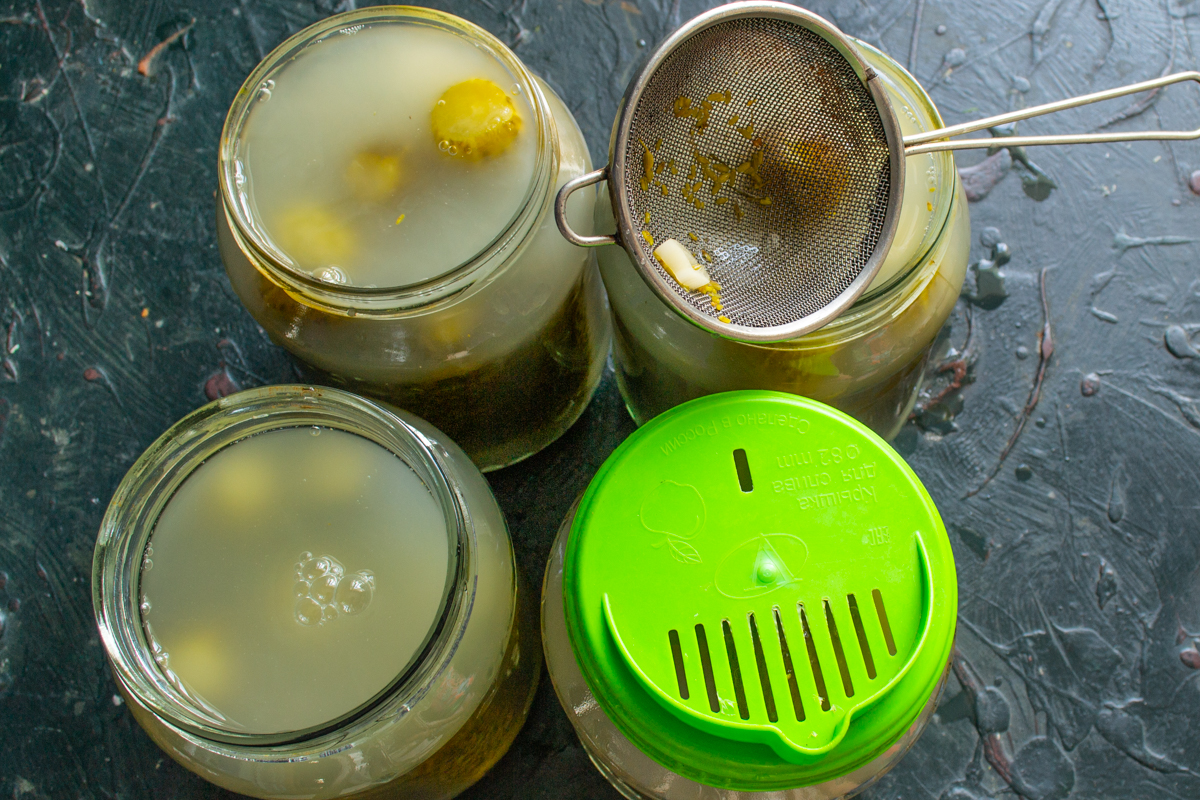
Strain the brine to remove small herb particles before the final boiling stage.
Bring the drained brine to a boil and let it simmer for 5 minutes. Pour the boiling brine over the cucumbers in the jars. Repeat this boiling and pouring process 3 times in total. Seal the jars tightly with sterilized lids. Place them in a wide pot lined with a wooden rack or a folded kitchen towel. Pour hot water into the pot. Pasteurize at 90°C (194°F) for 15 minutes (for 1-liter jars). Turn the sealed jars upside down and, once completely cooled, store them in a cool, dark place.
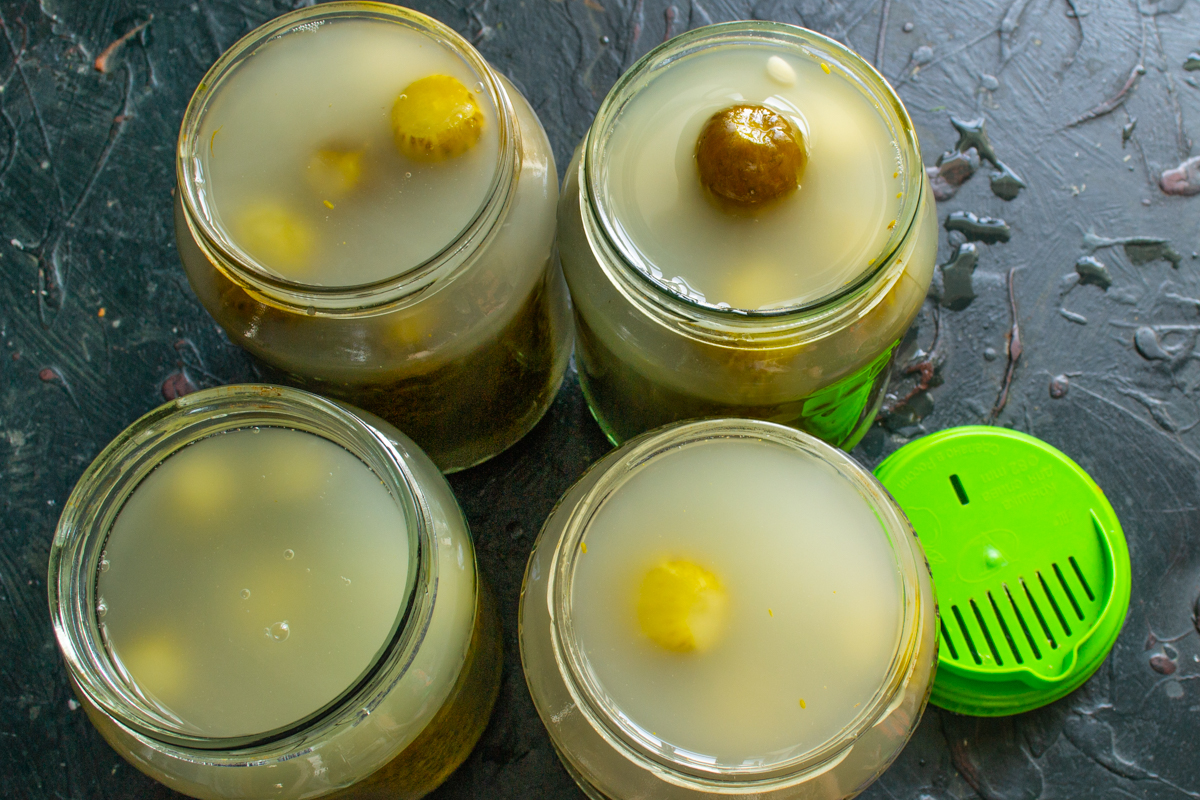
Pour boiling brine over the cucumbers and pasteurize the jars for long-term winter storage.
These preserved fermented pickles are best served chilled. They pair beautifully with roasted meats, baked poultry, or simply shine as a standalone appetizer drizzled with aromatic unrefined sunflower oil. If you want to add an extra kick, drop a small piece of ginger root or a hot chili pepper into the jars during the packing stage. The leftover brine is a fantastic base for classic Slavic soups like rassolnik or solyanka, or even as a flavorful meat marinade. Store your sealed jars in a cool, dark place. Although the active fermentation is stopped by boiling the brine, over time the natural sediment will settle at the bottom, leaving the liquid crystal clear. This is completely normal and a true sign of a natural product. If you plan to use these pickles in salads like vinegret (Russian beet salad) or Olivier (Russian potato salad), make sure to pat them dry with a paper towel after removing them from the jar to maintain the perfect texture of your dish.
0 comments