
So simple, deeply flavorful, and wonderfully budget-friendly! Braised cabbage with salo (traditional salt-cured pork fatback) is a rustic country dish that many grew up eating. Our grandmothers knew how to braise cabbage until it was utterly irresistible, and today we are keeping that culinary tradition alive. This recipe also shares the secret to giving the humble cabbage an extraordinary aroma with a splash of apple cider and fragrant herbs.
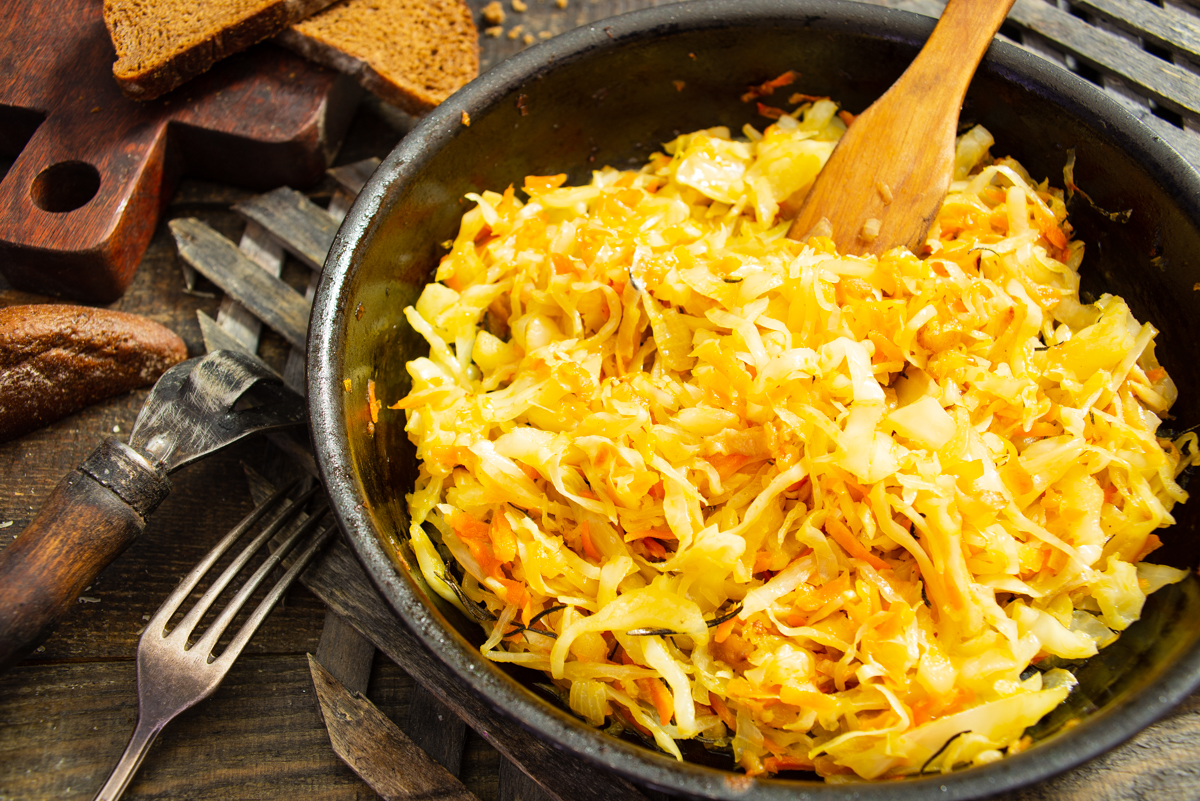
Fragrant and juicy braised cabbage with crispy salo served in a skillet alongside dark rye bread.
Ingredients
- 800 g (1.75 lbs) green (white) cabbage
- 80 g (2.8 oz) salted salo (cured pork fatback, or substitute salt pork)
- 1 large yellow onion
- 1 medium carrot
- 1 cup (240–250 ml) hard apple cider or dry white wine
- 1–2 sprigs fresh rosemary
- Salt and vegetable oil, as needed
Instructions
Slice the salted salo (Eastern European salt-cured pork fatback; salt pork or unsmoked pancetta can be used as a close alternative) into thin, narrow strips. It is fine if the salo has streaks of meat, though the more fat it has, the better. Lightly coat a heavy-bottomed skillet with vegetable oil and add the sliced salo. Heat it slowly so the fat renders out gradually—it will have plenty of time to brown later. Once enough liquid fat has rendered into the pan, increase the heat slightly to crisp the pieces into golden shkvarki (crispy pork cracklings).
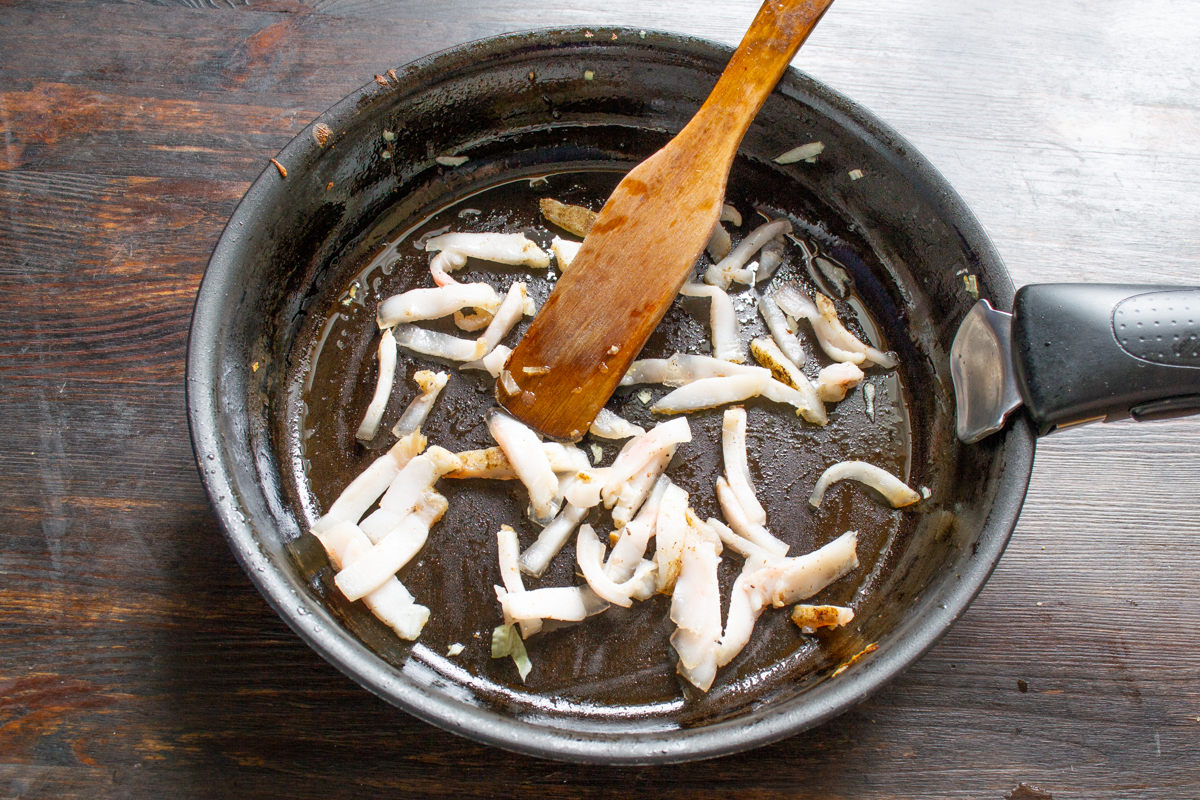
Slice the salted salo thinly and slowly render the fat in a heavy-bottomed skillet.
Finely dice a large yellow onion. Once the salo has browned and rendered plenty of flavorful fat into the skillet, toss in the chopped onion.
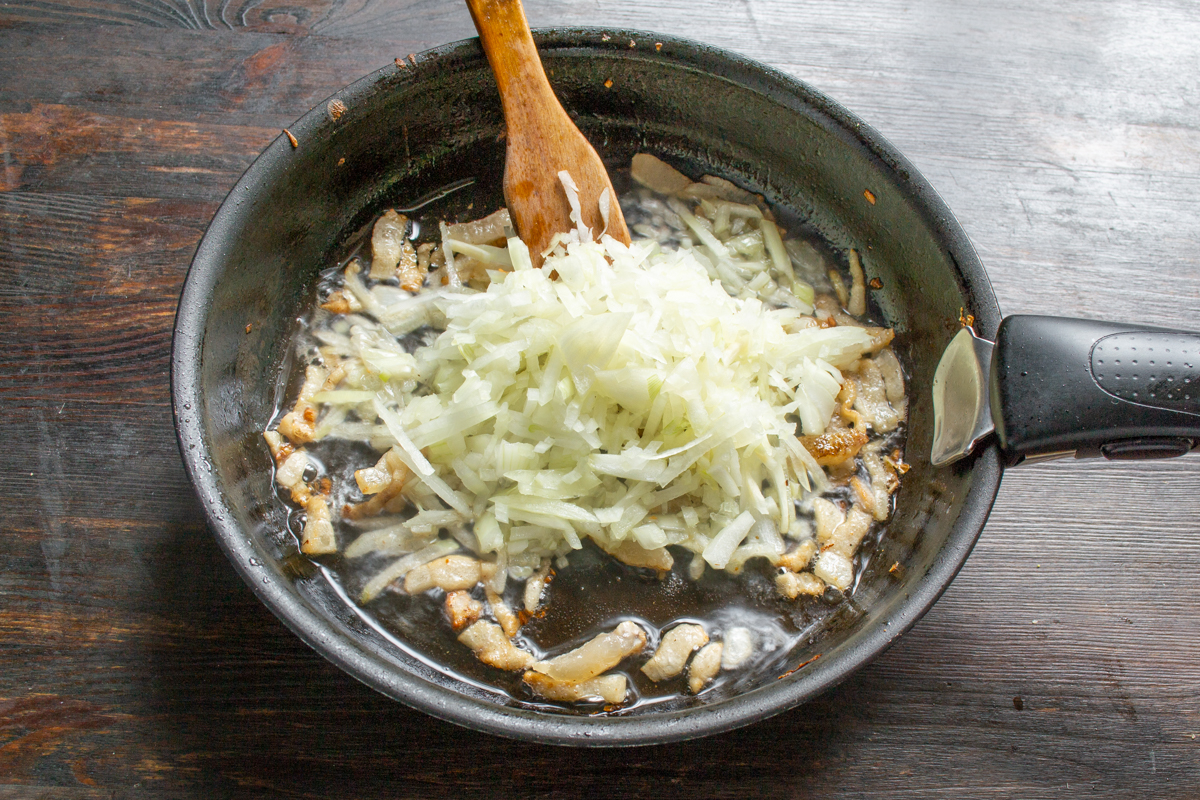
Add the finely diced yellow onion to the skillet with the rendered salo.
Sauté the salo and onion together over medium heat until the onion turns translucent, which takes about 5 to 7 minutes.
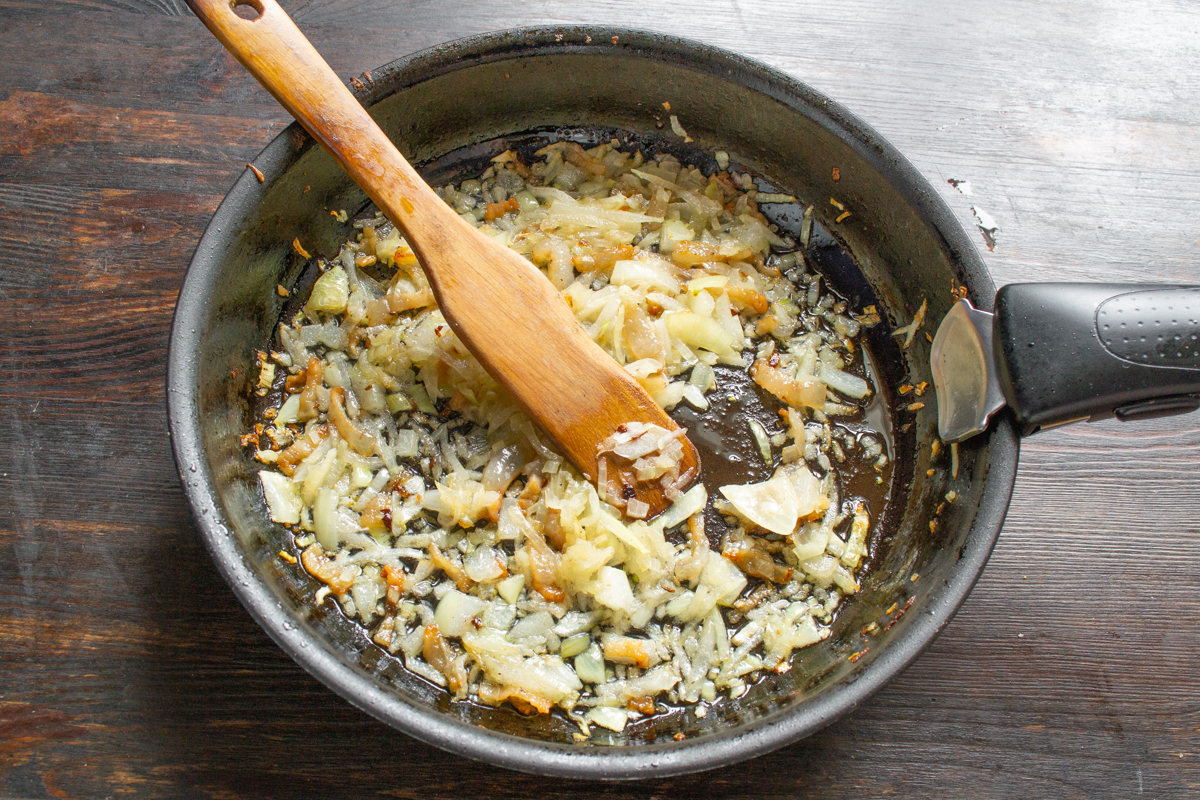
Sauté the onion and salo over medium heat until the onion turns translucent.
Grate the carrot on the large holes of a box grater. Add the grated carrot to the skillet and stir well to combine.
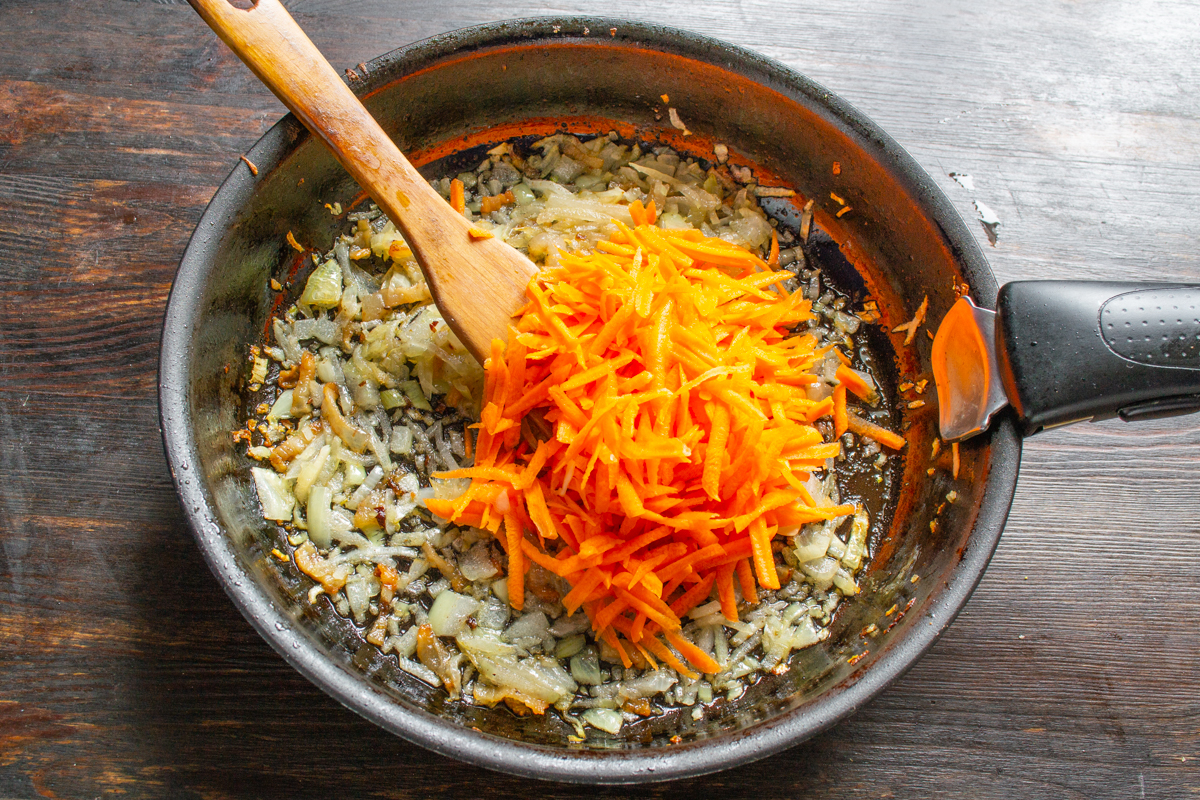
Add the coarsely grated carrot to the sautéed onion and salo.
Cook the carrot with the onion and salo over medium heat for another 5 minutes.
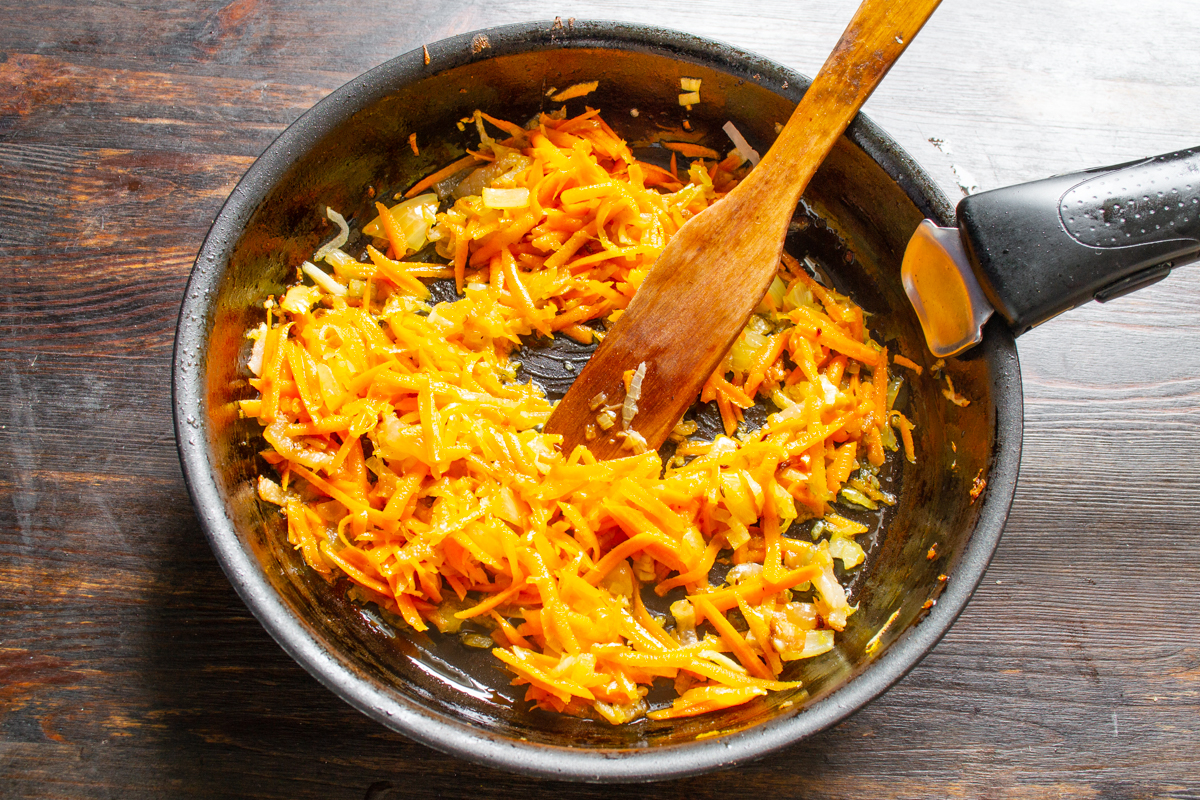
Cook the carrot with the onion and salo over medium heat for another five minutes.
Peel away the tough outer leaves from the head of green cabbage. Cut the head open and remove the dense core, then shred the cabbage into thin ribbons. If your skillet is on the smaller side, sprinkle the shredded cabbage with a pinch of salt and massage it right on the cutting board with your hands so it wilts slightly and takes up less room. Transfer the shredded cabbage to the skillet.
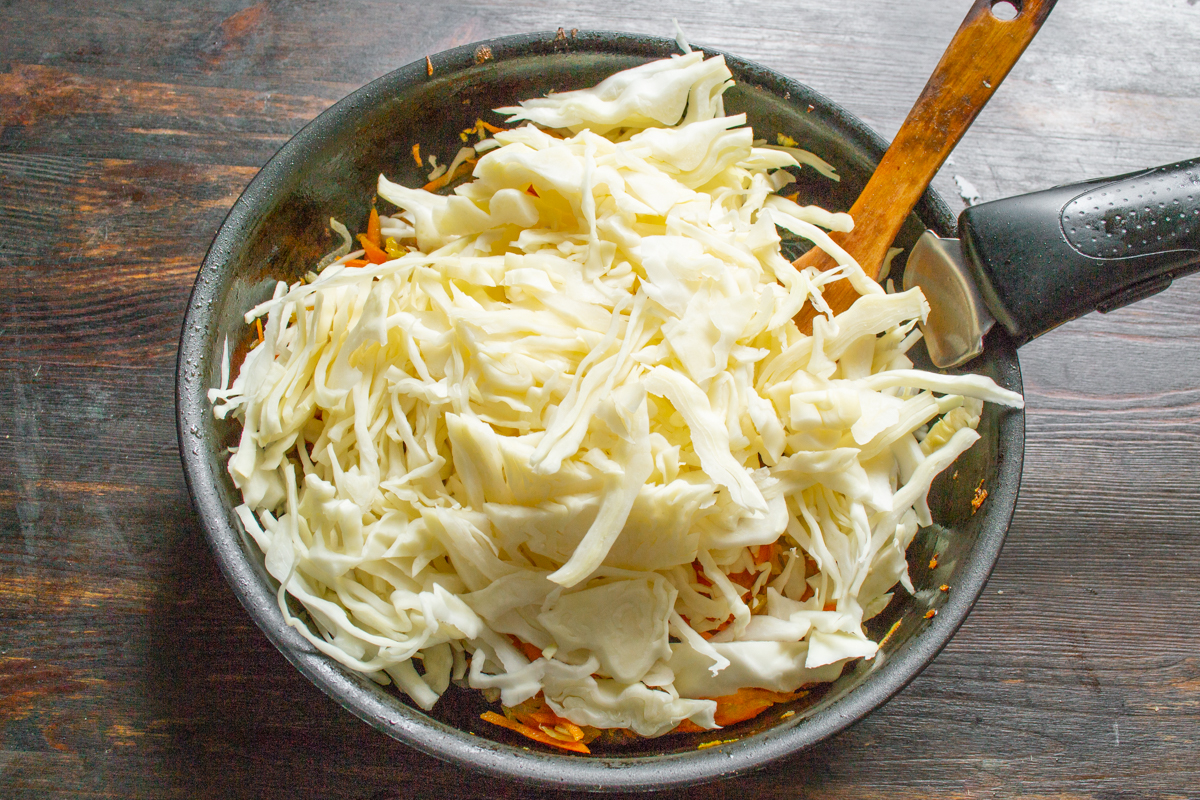
Shred the green cabbage into thin strips and add it to the vegetables in the skillet.
Toss the cabbage thoroughly with the sautéed vegetables and salo. Season with salt to taste and pour in 1 cup (about 250 ml) of hard apple cider. Homemade apple wine or a dry white grape wine also works beautifully here. There is no need to use an expensive bottle for this dish—even leftover Champagne that has lost its bubbles will do the trick.
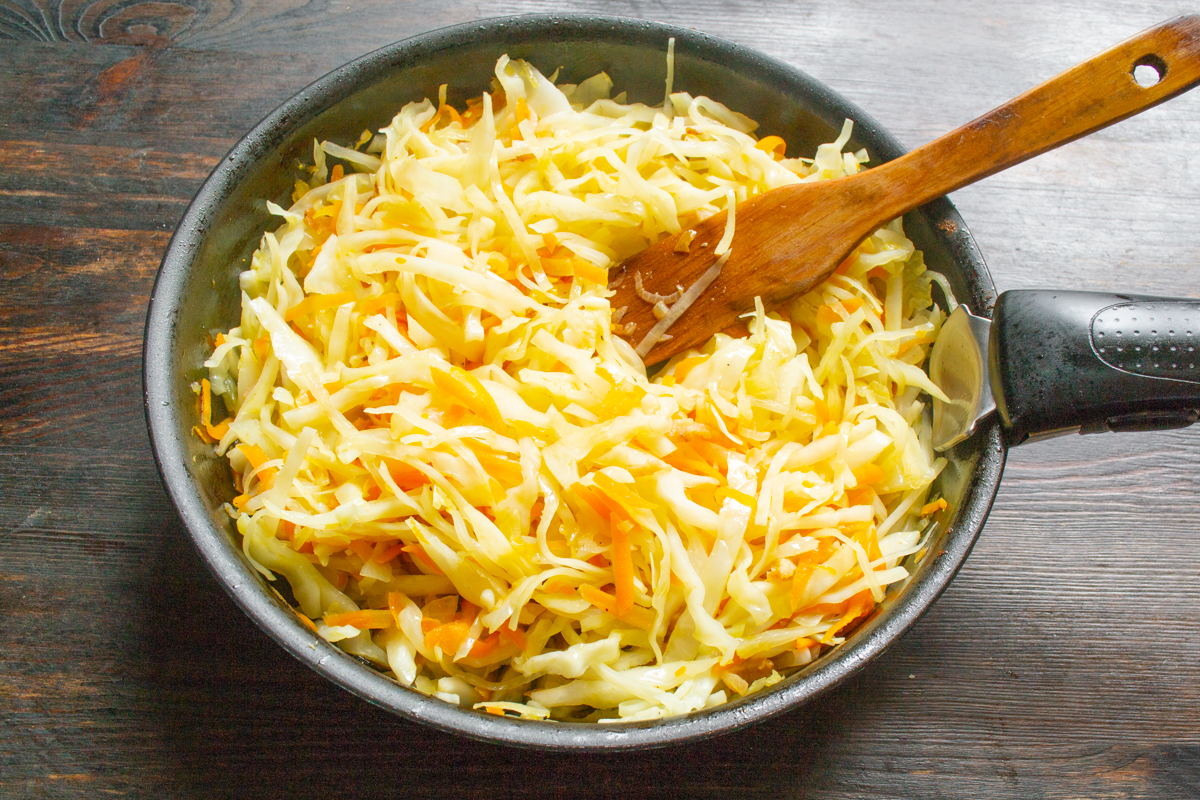
Toss the cabbage thoroughly with the vegetables, season with salt, and pour in a cup of apple cider.
Scatter in the rosemary leaves. Fresh rosemary or thyme is wonderful in this recipe; their bold, woodsy aroma pairs remarkably well with the rich pork and sweet cabbage. Alternatively, you can stir in 1 teaspoon of a dried Mediterranean herb blend.
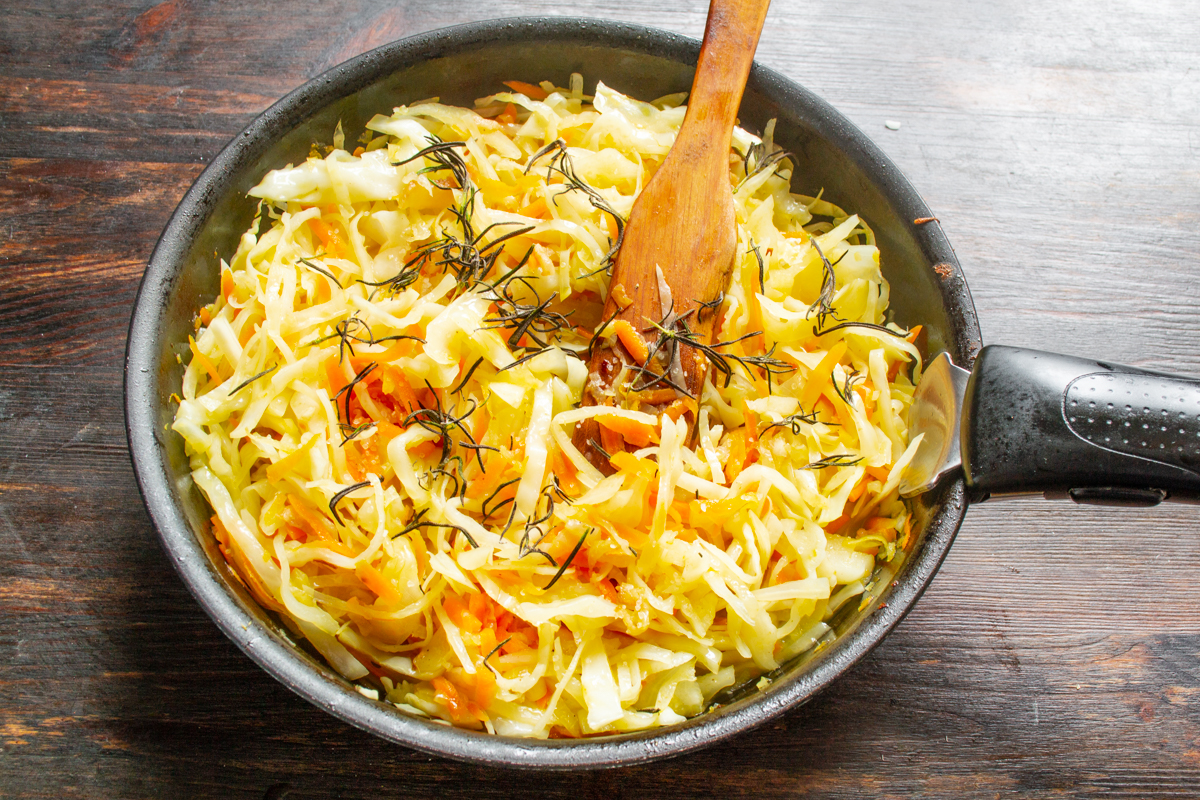
Add rosemary or thyme leaves for a rich aroma and savory herbal flavor.
Cover the skillet with a lid and braise the cabbage over low heat for about 30 minutes. Stir occasionally, making sure the vegetables do not catch on the bottom. About 5 minutes before it is done, remove the lid and raise the heat slightly to let any excess liquid evaporate.
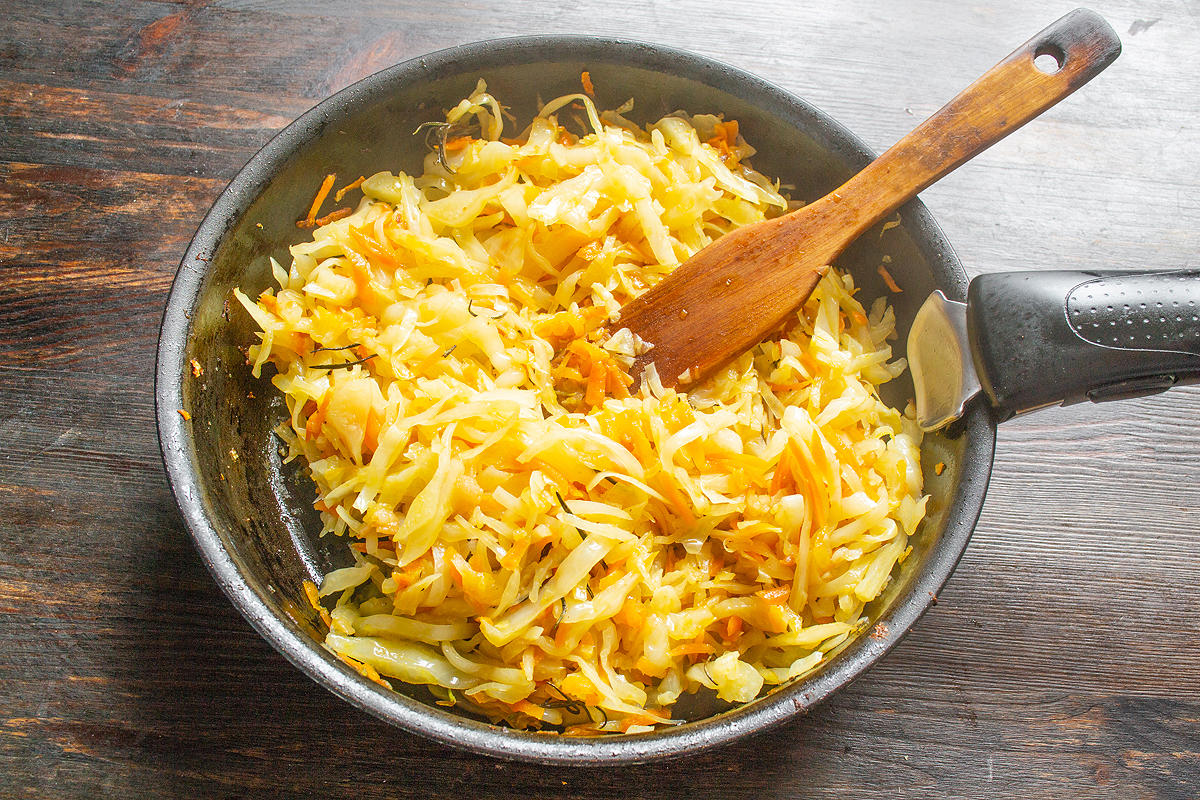
Simmer the cabbage covered until tender, then cook uncovered at the very end to evaporate excess moisture.
Braised cabbage with salo pairs wonderfully with a thick slice of fresh dark rye bread or Borodinsky bread (a traditional dark sourdough rye sweetened with molasses and spiced with coriander). This juicy, savory dish works equally well as a hearty standalone supper or a rich side dish. Serve it alongside buzhenina (garlic-and-spice-rubbed roast pork) or rustic roasted potato wedges for a true traditional feast. If you have leftovers the next day, the flavors only deepen overnight. Store the braised cabbage in an airtight container in the refrigerator for up to three days, and reheat it gently over low heat with a splash of water. If you feel like experimenting, try adding a pinch of caraway seeds or a spoonful of tomato sauce while it braises.
0 comments