
Beet borsch base with onions and garlic scapes is a true culinary secret for those who appreciate home cooking but value their time. In the peak of the summer harvest season, when garlic sends up its famous scapes, many underestimate this ingredient—yet it's precisely these scapes that lend the preserve an unparalleled savory depth and mild pungency. Imagine opening a jar in the dead of winter: you'll catch the aroma of fresh tomatoes and paprika, and your borsch will instantly take on a deep ruby hue with minimal effort. This vegetable base doesn't just save you the hassle of peeling and chopping; it concentrates all the sunshine and goodness of the summer harvest into one convenient jar.
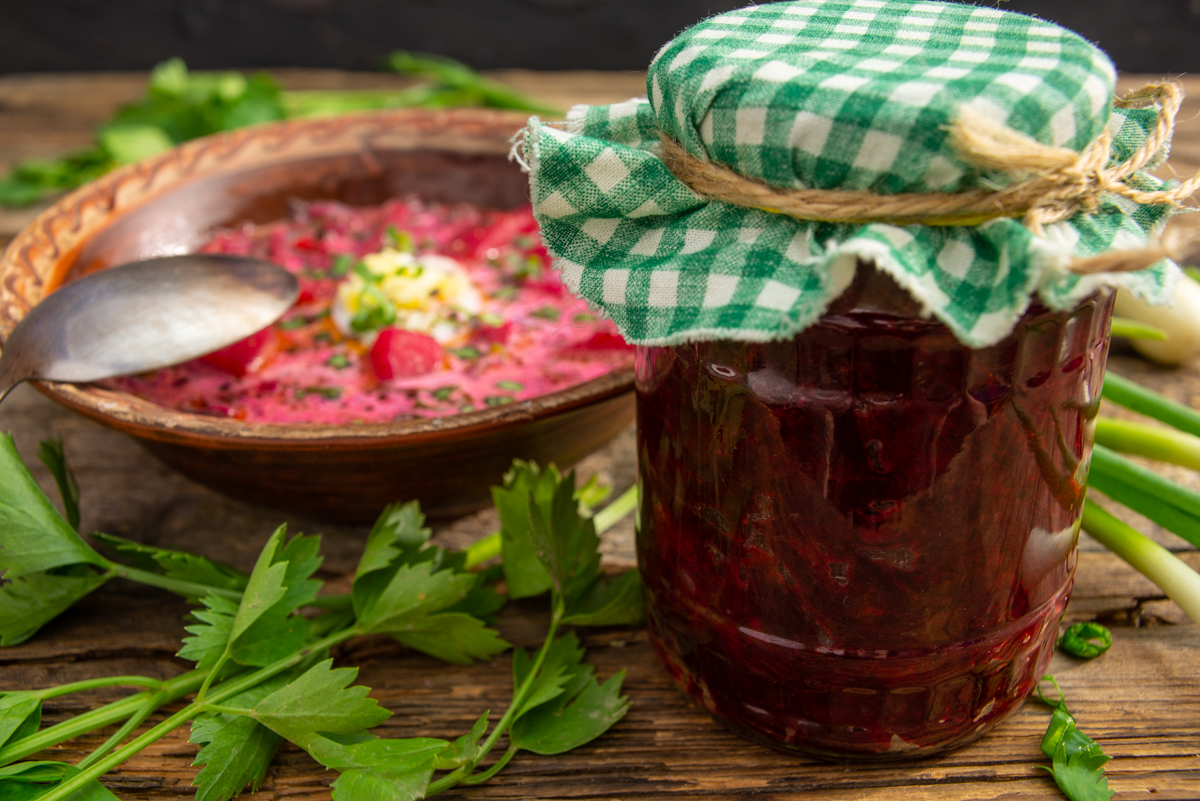
Aromatic homemade borsch base with beets and garlic scapes is an indispensable pantry staple for quick winter meals.
Ingredients for one 400-500 ml (14-17 oz) jar
- 350 g (12 oz) beets
- 100 g (3.5 oz) onions
- 6-7 garlic scapes
- 150 g (5 oz) tomatoes
- 100 g (3.5 oz) carrots
- 3 garlic cloves
- 2 teaspoons salt
- 2 tablespoons sugar
- 1 tablespoon apple cider vinegar
- 2 tablespoons vegetable oil
- Paprika, red and black pepper to taste
How to Make Beet Borsch Base with Onions and Garlic Scapes
Finely chop the onion. Pour vegetable oil into a heavy-bottomed pot and add the chopped onion.
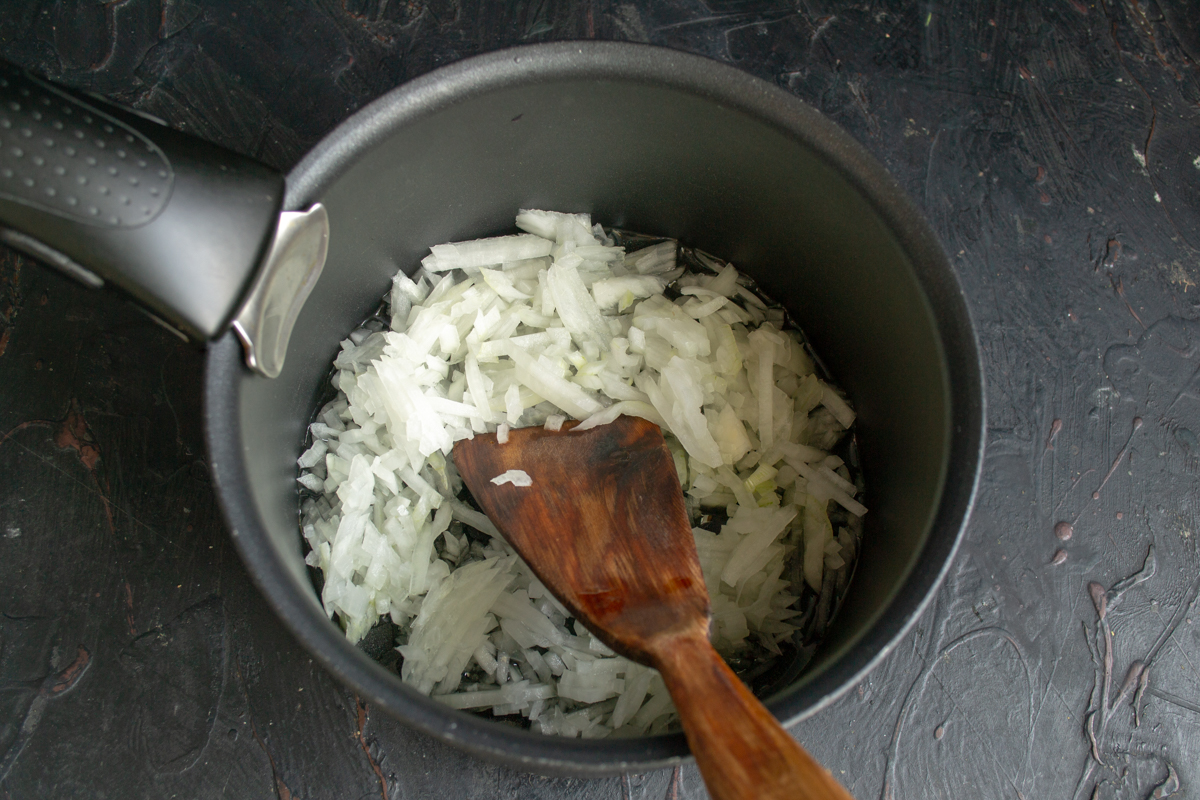
Begin making the borsch base by sautéing finely chopped onions in vegetable oil.
Mince the garlic cloves. Trim the garlic scapes on both ends—discard the flower bulb and the fibrous lower part. Chop the scapes into small pieces. Add the prepared scapes and minced garlic to the onion, and sauté everything together for a few minutes.
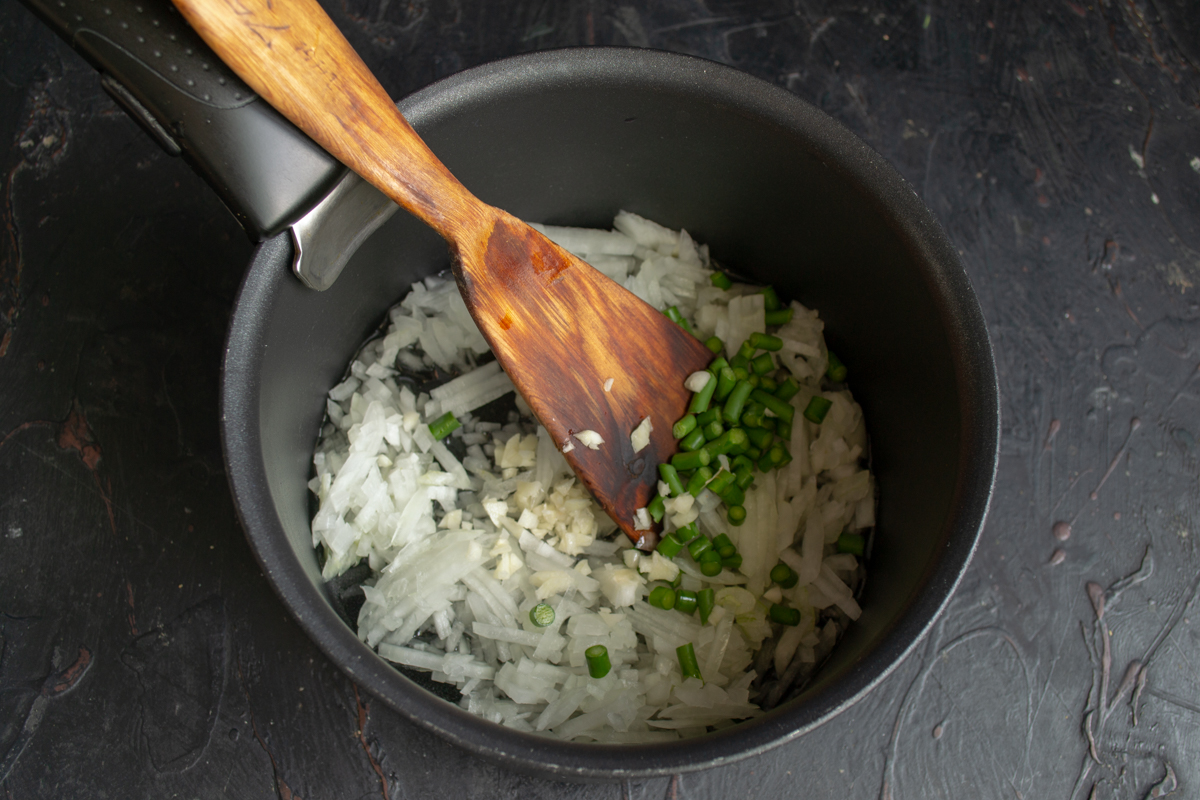
Garlic scapes give the preserve a unique flavor and bright aroma. Sauté them together with the onions for a few minutes.
Julienne the carrots and add them to the pot. Cook the vegetables for 10 minutes until they soften and lightly brown; this step builds a deeper flavor foundation for your future borsch.
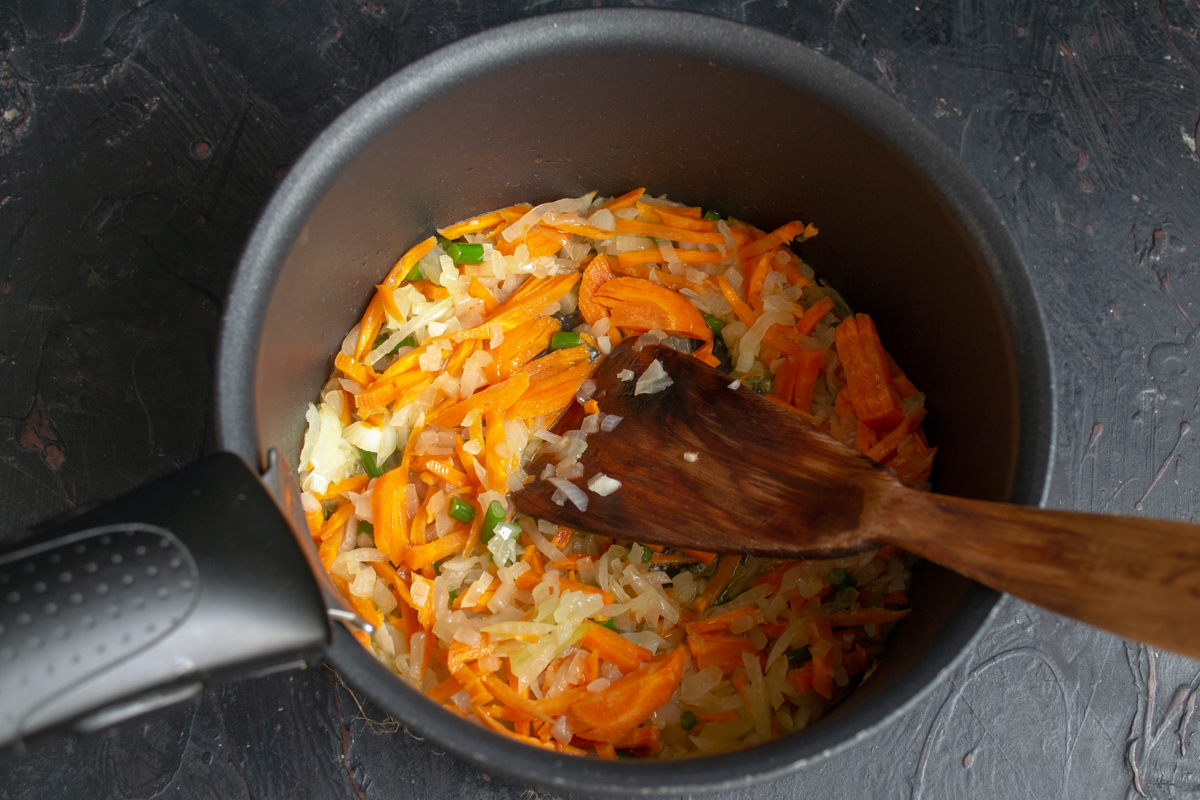
Add the carrots and cook the vegetables until soft. This builds an excellent flavor foundation for your future borsch.
Dice the tomatoes finely and fold them into the sautéed vegetables.
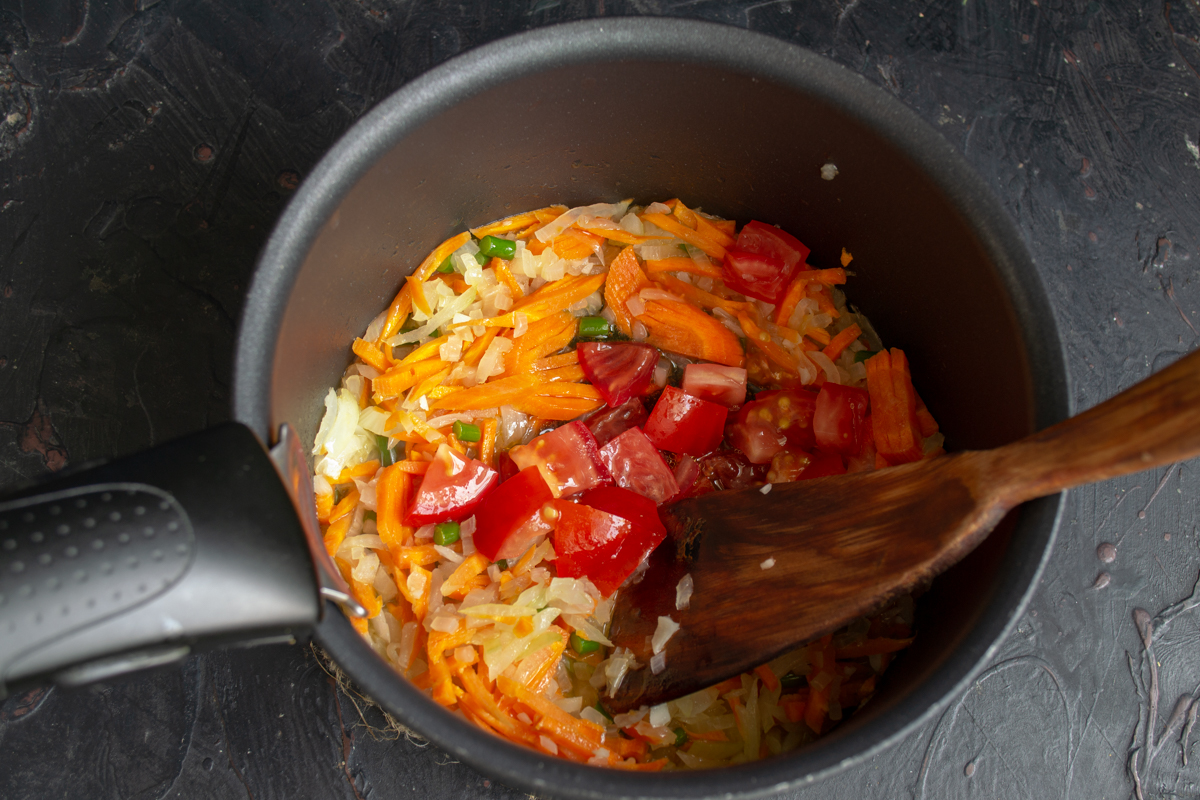
Fresh tomatoes add a pleasant tanginess and make the mixture's consistency much juicier.
Wash and peel the beets thoroughly. Cut the beets into thin julienne strips and add them to the other ingredients.
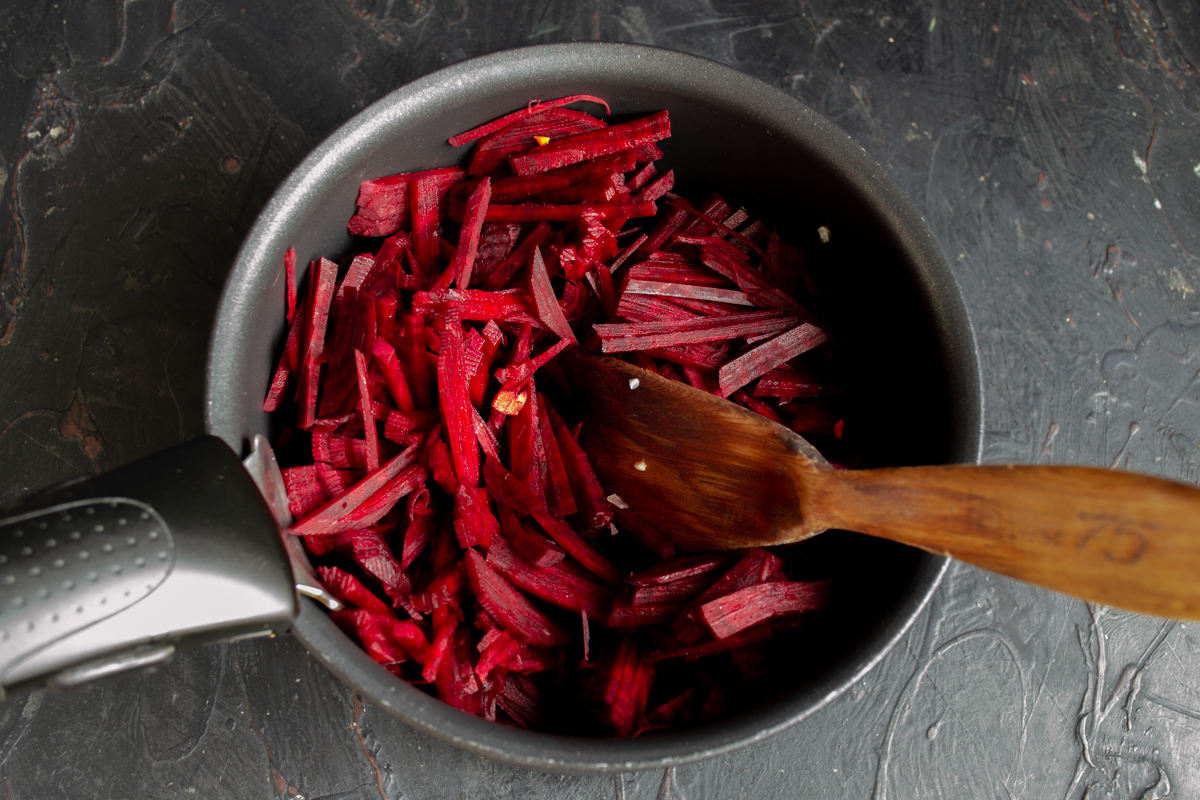
Julienne the beets finely. They are the key component responsible for the rich color of the preserve.
Season the mixture. Pour in the apple cider vinegar, then add salt, sugar, two teaspoons of sweet ground paprika, and black and red pepper to taste. Don’t worry if it tastes a bit too salty—this is a concentrated base, and you will adjust the final seasoning when making the actual soup.
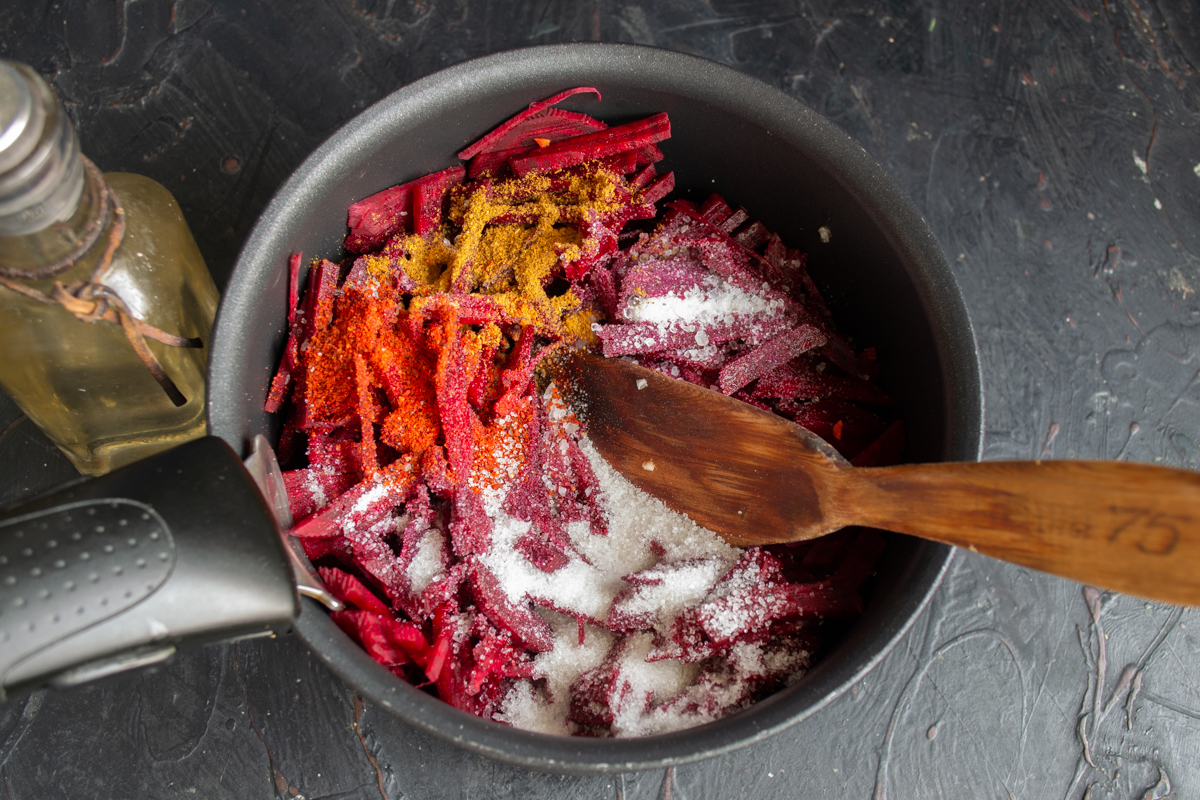
Add salt, sugar, paprika, and vinegar. The vinegar helps retain the vibrant beet color even after long storage.
Cover the pot with a lid and heat it up. The salt and sugar will draw moisture from the vegetables, creating their own juices. Simmer the mixture over low heat for 30 minutes once it begins to bubble.
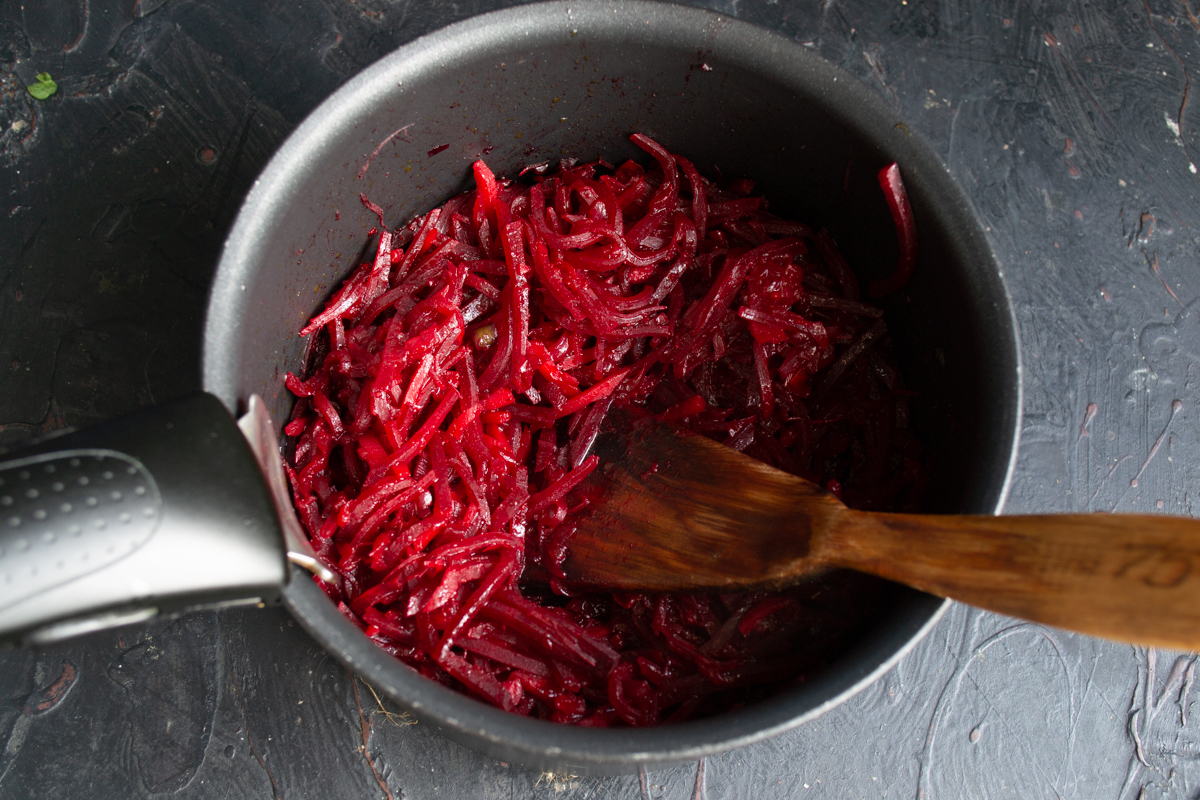
Simmer the vegetables in their own juices over low heat. During this time, they will soften and absorb all the spice flavors.
Wash the canning jar thoroughly with warm soapy water or baking soda. Rinse with clean water and boiling water, then sterilize it over steam. Boil the lid. You can also sterilize the jar in an oven preheated to 100°C (212°F). Pack the warm sterilized jar tightly with the vegetable mixture, filling it almost to the top while leaving about 1-1.5 cm (½ inch) of headspace. Seal with the dry, boiled lid.
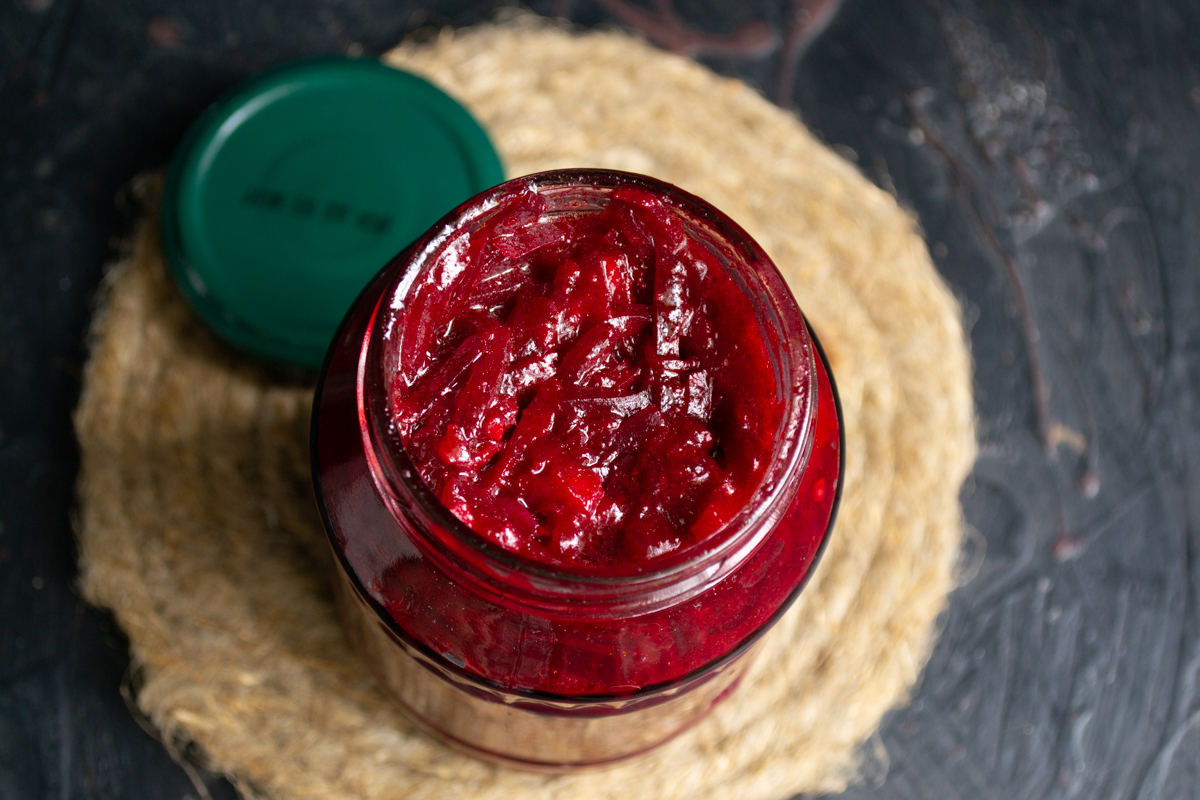
Pack the hot cooked vegetable mixture tightly into sterilized jars, leaving minimal empty space.
Place a folded kitchen towel at the bottom of a large pot, set the filled jar inside, and pour in water heated to 60°C (140°F) so it reaches almost up to the lid. Bring to a boil and sterilize for 20 minutes after the water starts boiling.
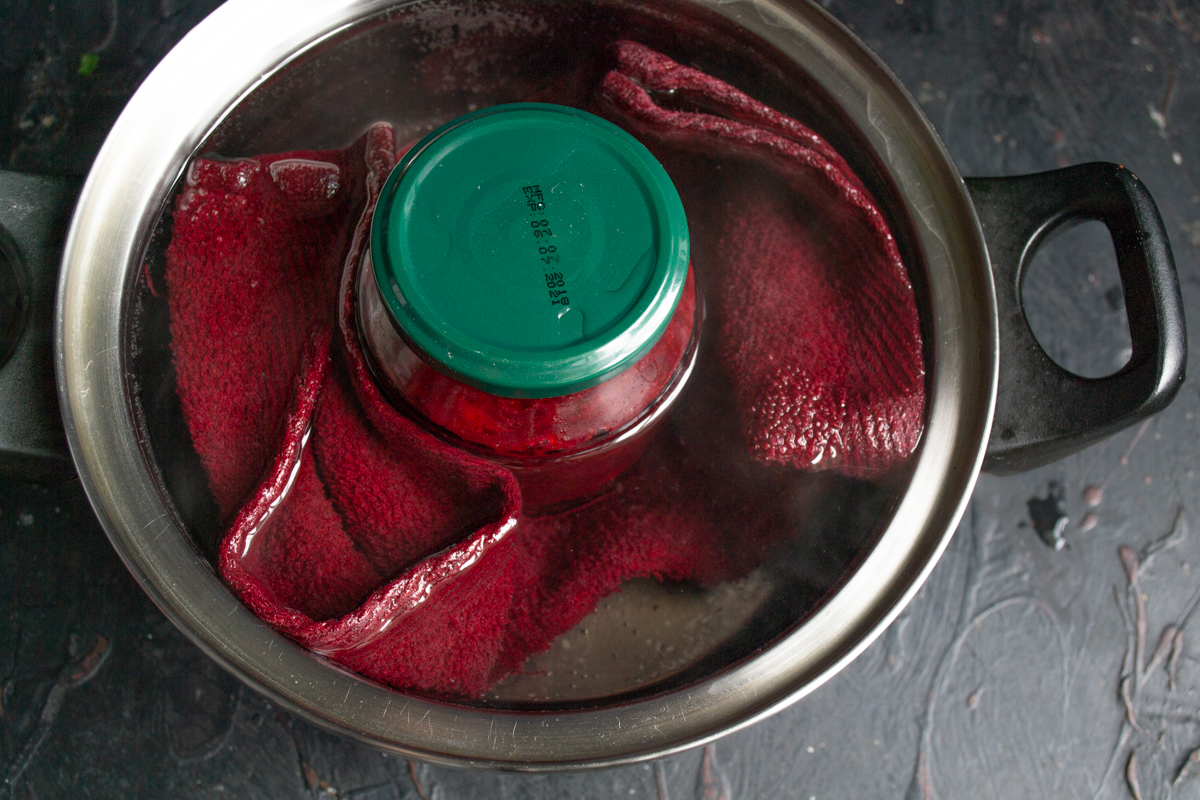
Sterilize the jars in a pot of boiling water. A folded towel at the bottom prevents the glass from cracking.
Carefully remove the jar from the pot using canning tongs and invert it onto its lid. At this stage, you can wrap it in a heavy towel and leave it to cool completely; this extra pasteurization ensures the preserve keeps well.
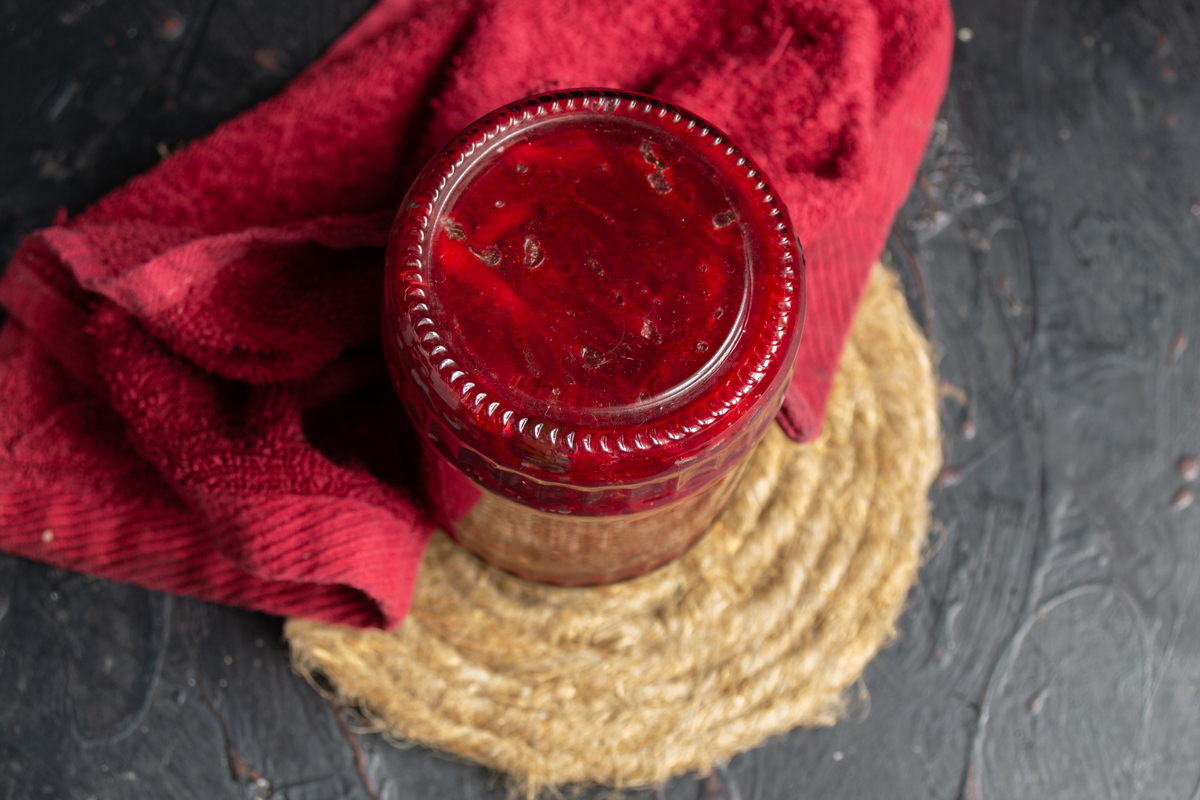
Invert the sealed jars and let them cool completely. This ensures an extra seal and helps preserve the product safely.
When the time comes to open your borsch base with beets, onions, and garlic scapes, remember that its uses go far beyond soup. It shines beautifully as a standalone cold appetizer on a slice of hearty rye bread or as a zesty relish alongside boiled potatoes. If you prefer a sharper tang, toss some fresh cilantro or dill into your bowl when serving the finished borsch—this will enhance the garlic notes and make the dish even more appetizing.
To ensure your preserve lasts, store the jars in a cool, dark place, such as a dry basement or an unheated pantry. If you have leftover vegetable mix after opening a jar, transfer it to a clean glass container and keep it in the refrigerator for up to three days. Feel free to experiment with spice proportions next time you make a batch: adding a pinch of smoked paprika or a few coriander seeds will make your borsch even more vibrant and aromatic.
0 comments