
A wonderfully aromatic condiment for meat, basil adjika is a harmonious blend of ingredients that delivers an absolute explosion of flavor. This variation of the classic Caucasian sauce stands out by featuring purple opal basil, which gives the preserve a deep, noble hue and a unique, spicy aroma with subtle anise undertones. In traditional cooking, this kind of adjika is considered the ultimate companion to rich, fatty meats, cutting through the richness and aiding digestion. Whether spooned over a seared steak or traditional shashlik (skewered meat), this condiment will instantly become the star of any picnic or family feast.
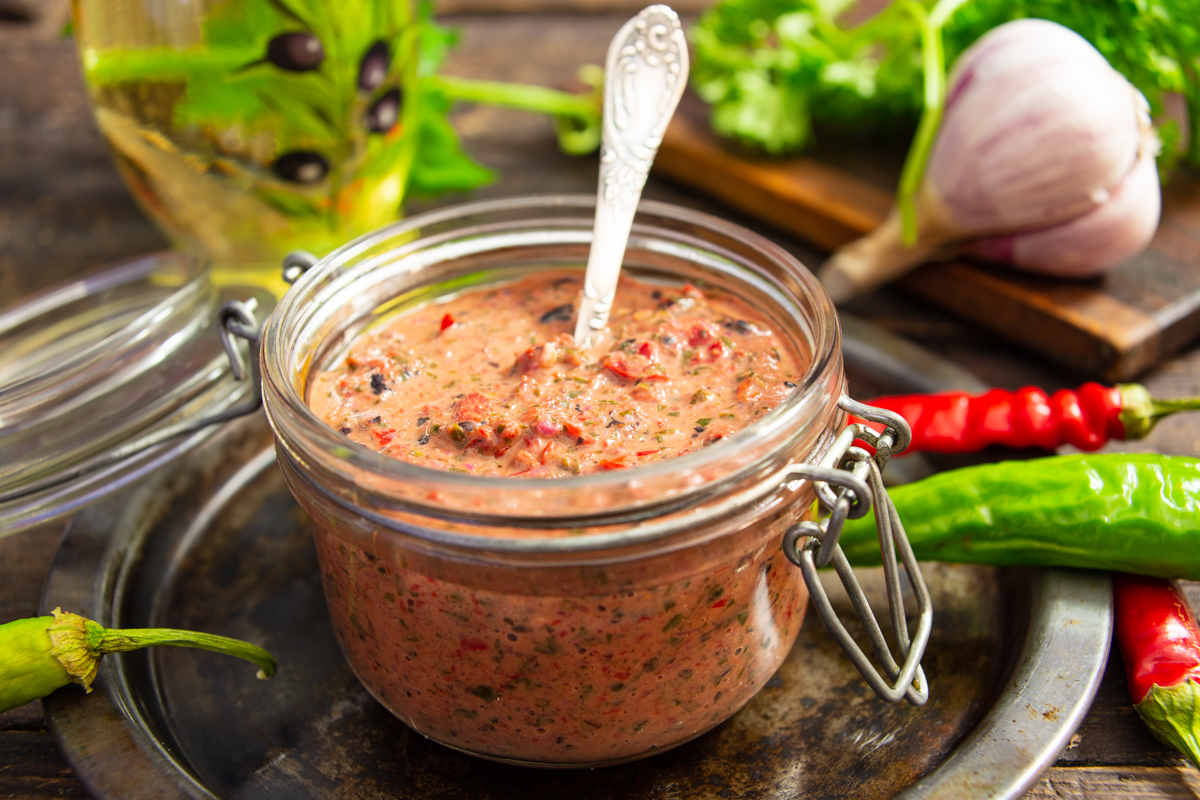
This aromatic and fiery basil adjika is ready! It makes the perfect addition to meat dishes and appetizers.
Ingredients
- 150 g (5.3 oz) red chili peppers
- 150 g (5.3 oz) purple opal basil
- 50 g (1.8 oz) celery stalks and leaves
- 30 g (1 oz) fresh garlic
- 1 whole lemon
- 1 tablespoon khmeli suneli (traditional Georgian spice blend)
- 30 g (1 oz) sea salt
How to Make Basil Adjika
To make this adjika, you will need hot red chili peppers. If you have green chilies, you can leave them at room temperature for a few days to ripen. Peppers vary in heat and bitterness, so choose a variety that suits your palate.
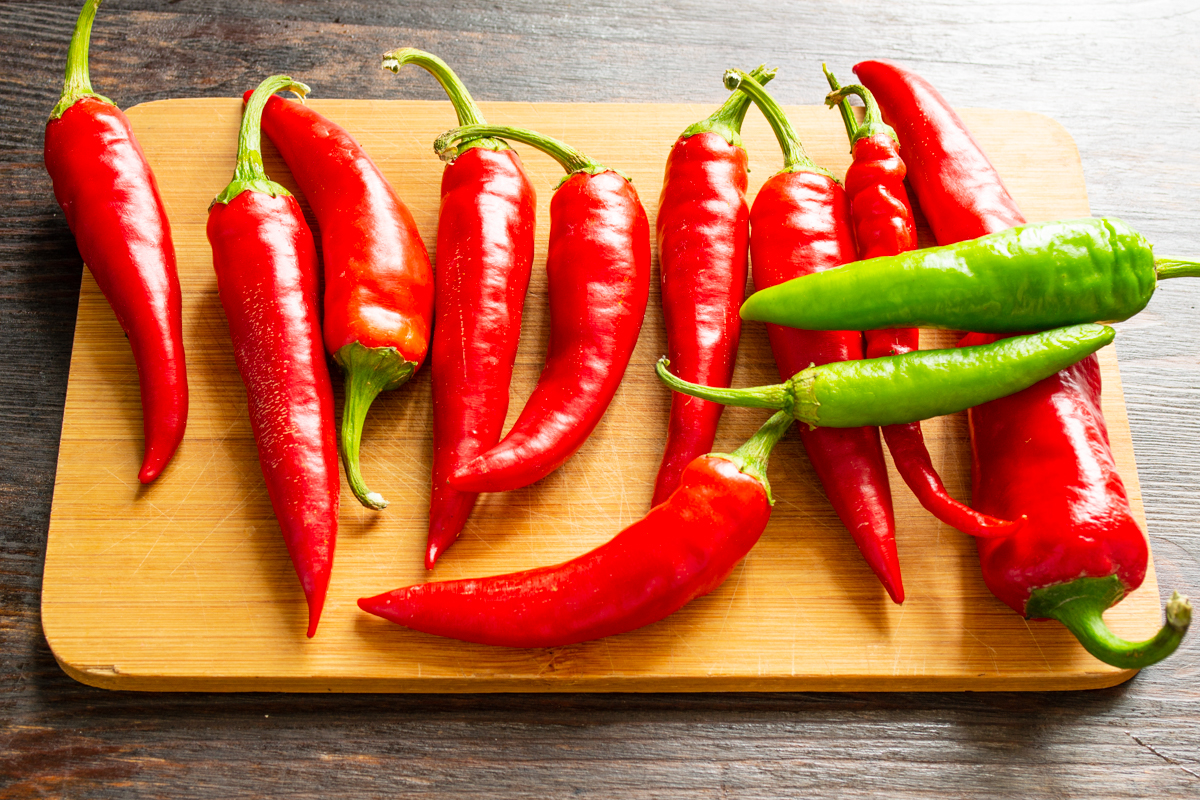
Select high-quality chili peppers for your base. The color of the pods will directly determine the final hue of your adjika.
Snip off the chili stems with scissors, slice the pods lengthwise, and remove the seeds and membranes. For very narrow peppers, removing seeds can be tricky—it is fine to leave them inside. A few stray seeds will not ruin the quality of your adjika. I highly recommend protecting your hands: wear thin rubber gloves! Chili juice will burn your fingers for a long time, and if you accidentally rub your eyes with a “peppered” hand, the tears will flow endlessly.
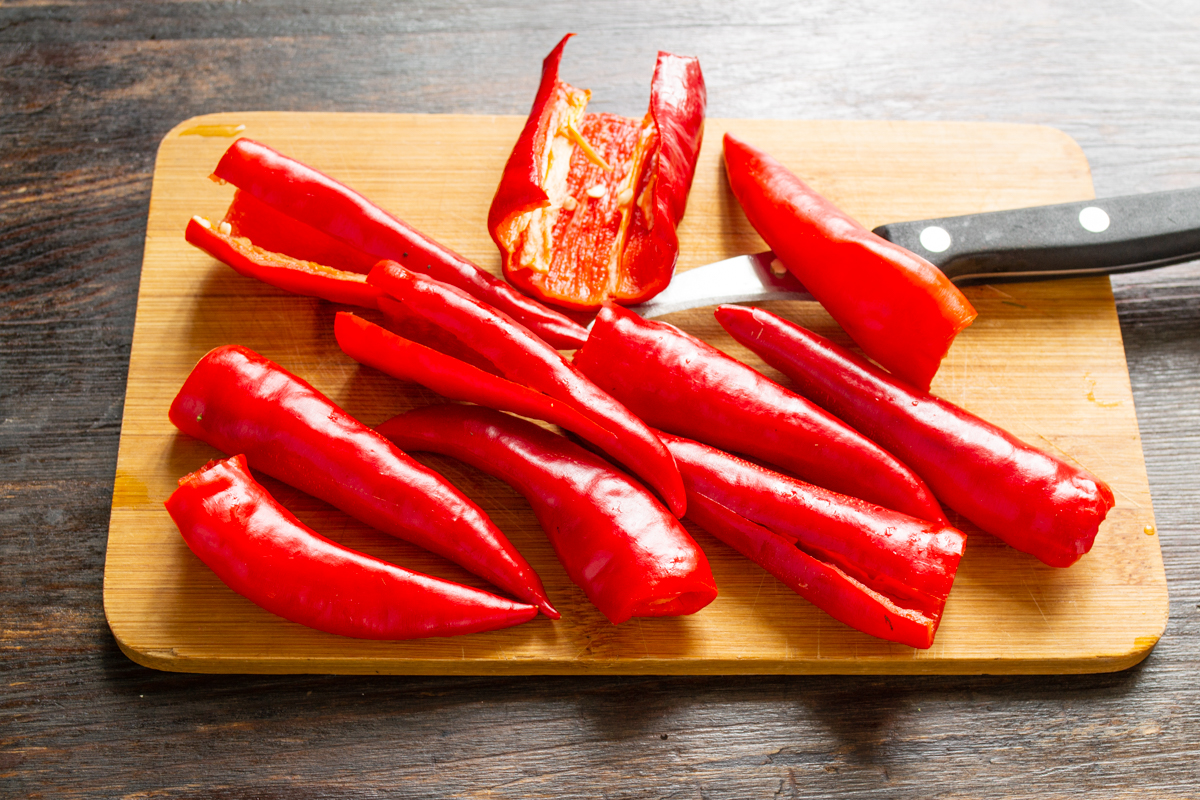
Be sure to remove the seeds and membranes if you want to avoid an overwhelmingly scorching sauce. Always wear gloves!
Peel the garlic cloves and add them to the peppers. For a thicker consistency, you can blend a pinch of dried garlic powder with the fresh garlic.
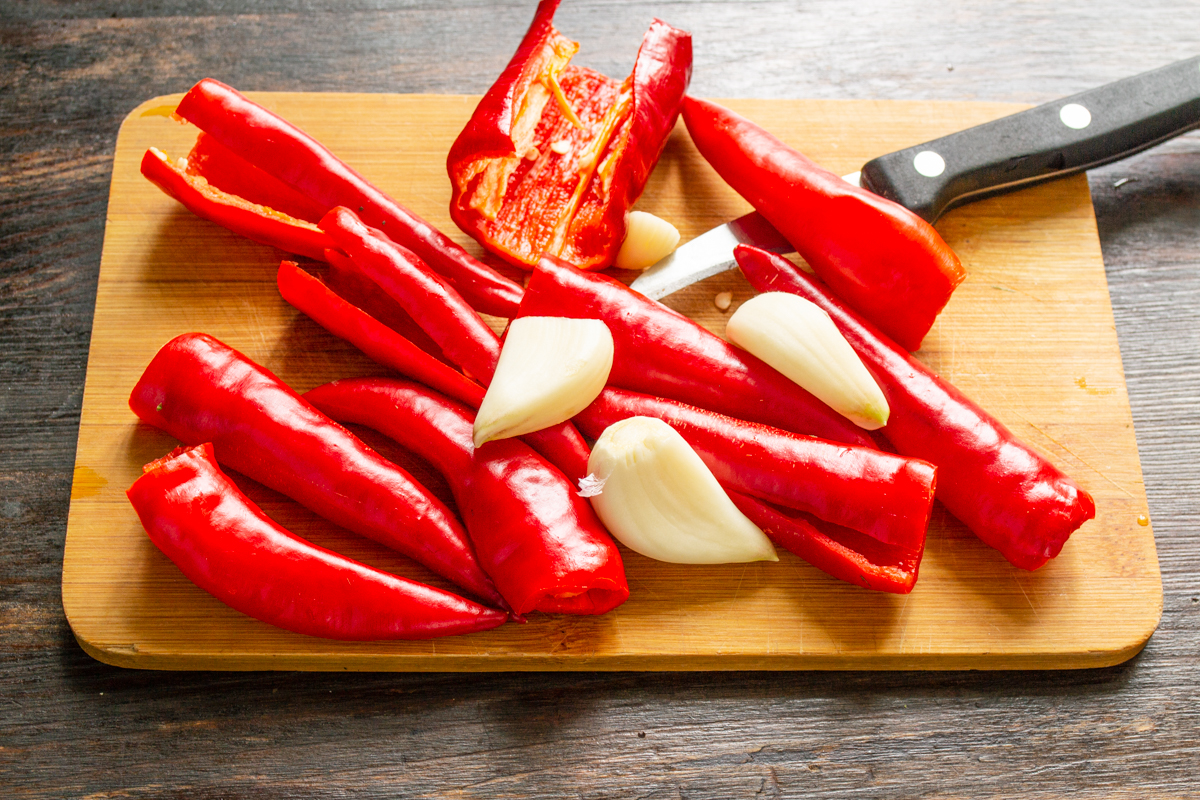
Fresh garlic gives the preserve a signature sharpness and bright aroma that will fully blossom as it rests.
Wash the celery stalks and leaves thoroughly, then dry them on paper towels or in a salad spinner. If you are preserving adjika for the winter, it is best to let the peppers, celery, and basil slightly wilt for a few days. As moisture evaporates, the adjika becomes thicker with a rich, highly concentrated flavor. If you are making the sauce to enjoy right away, go ahead and blend the fresh vegetables and herbs immediately.
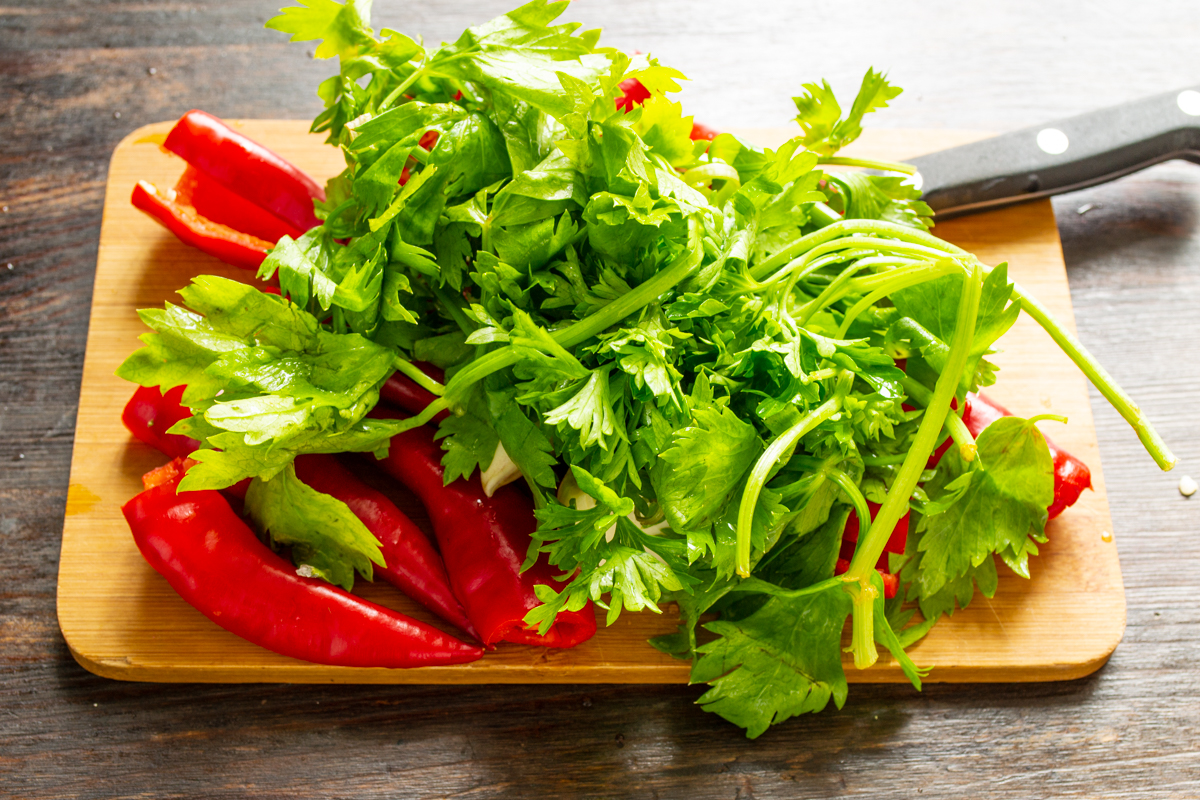
Celery adds a wonderful freshness to the adjika. It is vital to thoroughly dry the herbs before blending so the sauce does not become watery.
Pluck the purple basil leaves from their stems. Basil stems are entirely too tough and fibrous for this adjika, so discard them.
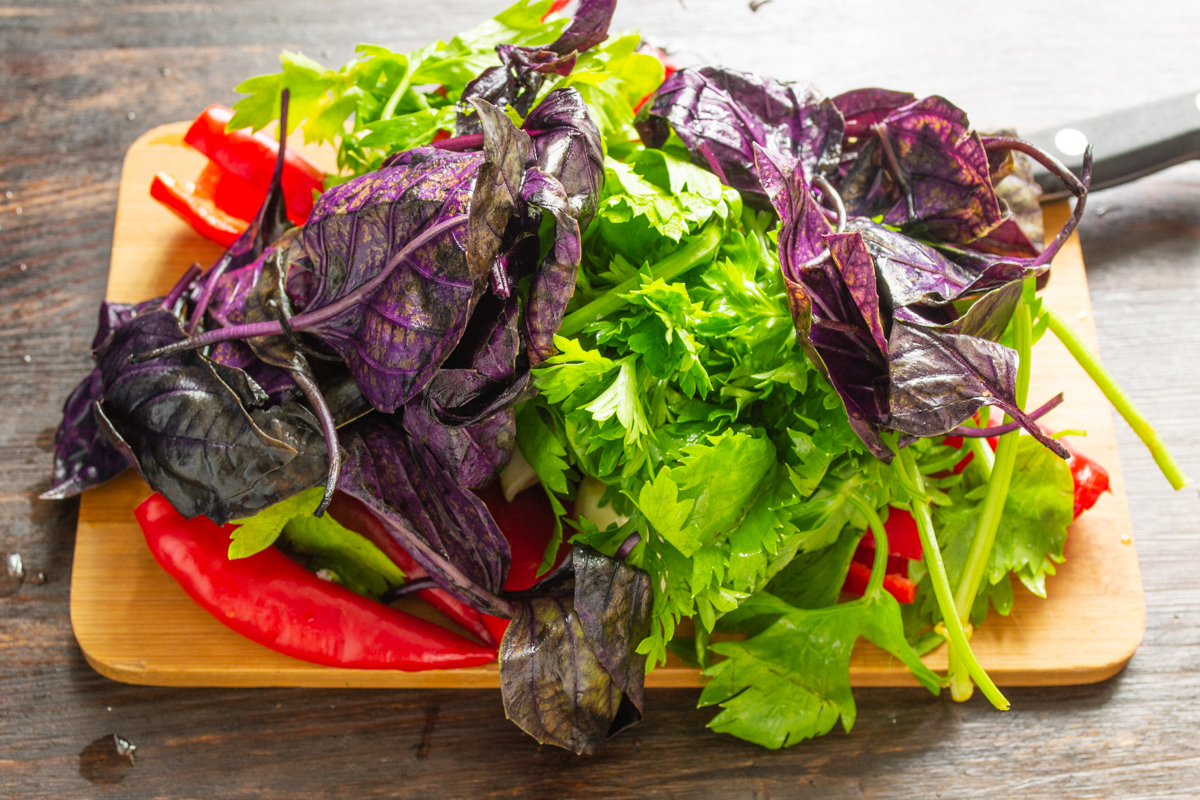
Use only the tender basil leaves. The tough stems can completely ruin the delicate, smooth texture of the finished sauce.
Transfer the prepared herbs and vegetables to a blender bowl. You can also use an immersion blender or pass the ingredients twice through a meat grinder for a traditional texture.
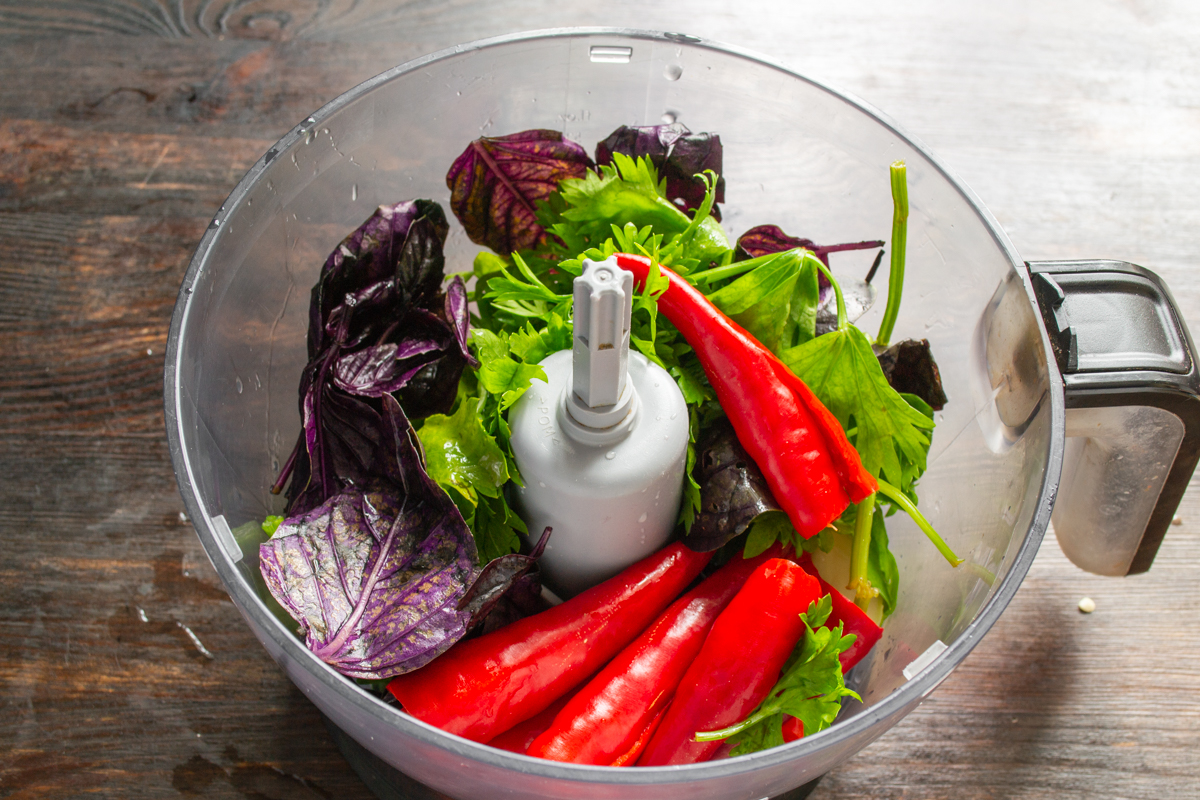
Place all the prepped components into a blender. This is the fastest way to achieve the perfect consistency.
Squeeze the juice from the lemon and strain it to catch any seeds. Add the sea salt. Always opt for high-quality sea salt when possible—it brings a much cleaner flavor!
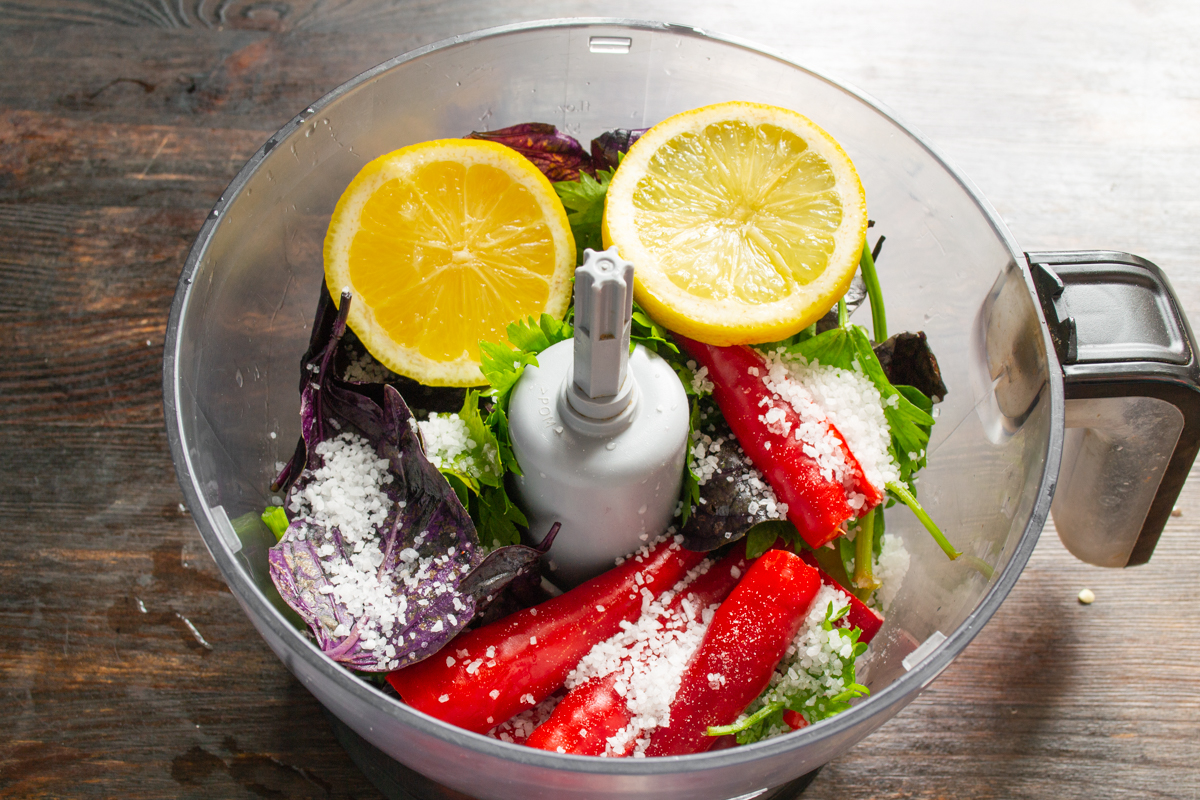
Lemon juice acts as a natural preservative, while sea salt perfectly enhances and highlights all the other flavors.
Add a heaping tablespoon of khmeli suneli (a traditional Georgian spice blend). Pulse the ingredients until you achieve a thick paste with finely minced vegetable bits.
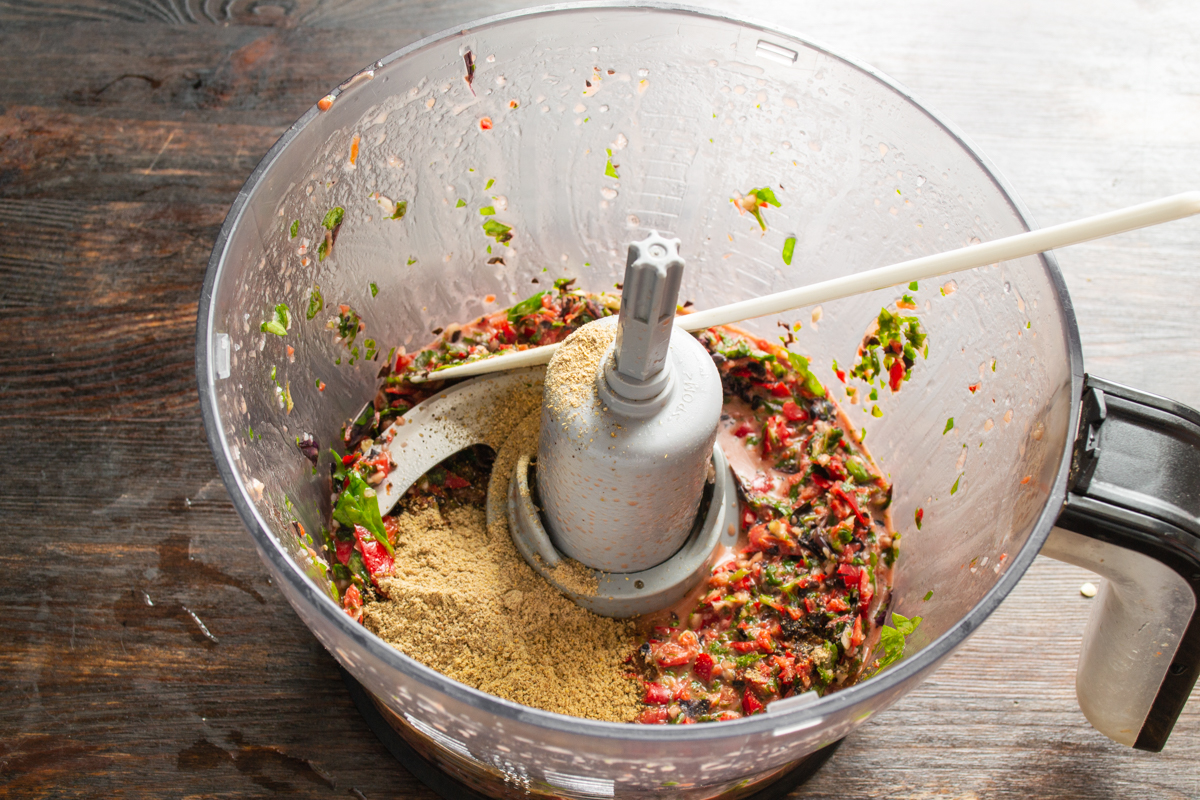
Khmeli suneli provides the adjika with that classic, authentic Caucasian aroma. Blend the mixture thoroughly.
Wash your storage jars thoroughly and scald them with boiling water. Transfer the finished adjika into the clean, perfectly dry jars. I strongly advise storing adjika strictly in glass containers. If you must use plastic, ensure it is single-use, as plastic heavily absorbs these potent aromas.
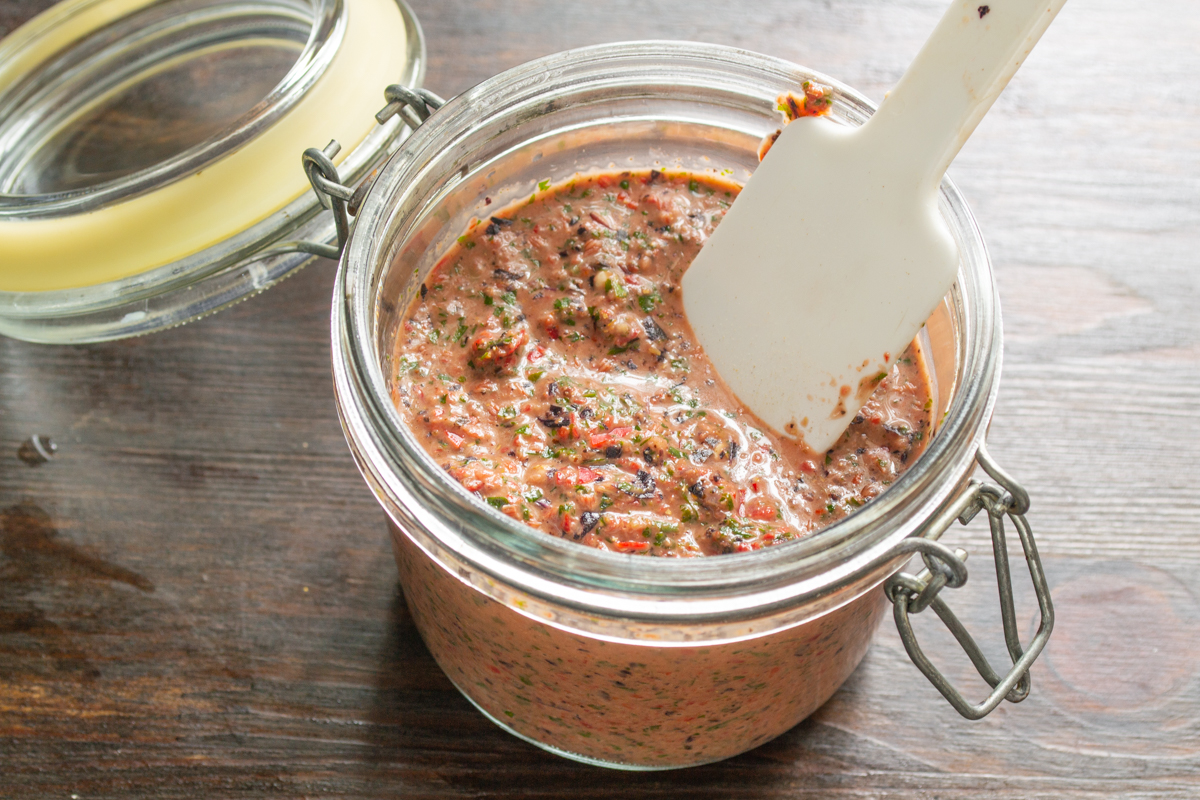
Always use sterilized glass containers. This ensures your condiment will store safely in the refrigerator for a long time.
Seal the jars tightly. I personally love glass jars with clip-top lids—they are incredibly convenient. Transfer the finished adjika to the refrigerator. You can take your first taste after just a few hours, but it is best to wait 2 to 3 days. Always keep basil adjika refrigerated.
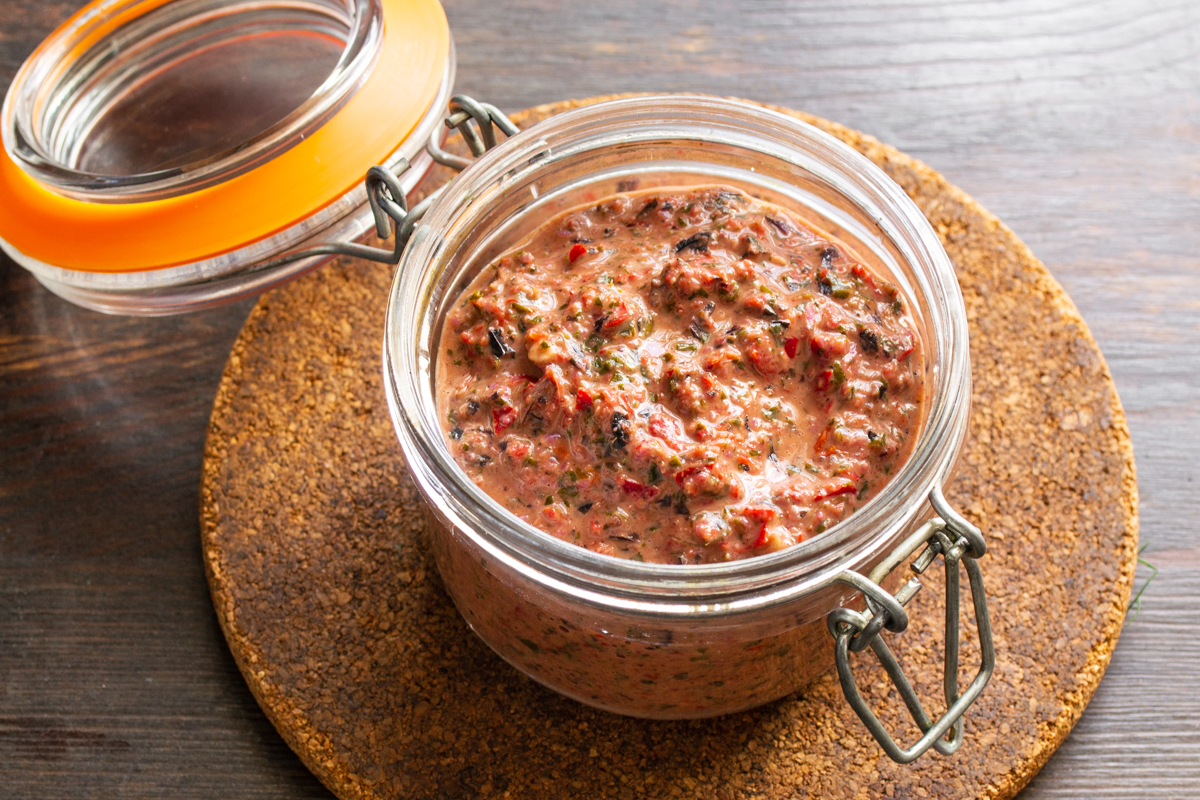
Seal the jar tightly and let the sauce infuse for a couple of days. The flavors will meld together and become much deeper.
In the Abkhaz language, the word "adjika" translates simply to "salt." Originally, it was a potent salt ground with spices and hot peppers, known as apyrpyl-jika. Over time, the recipe evolved into the thick, vibrant paste we know today. Basil adjika preserves perfectly in the refrigerator thanks to its natural preservatives: salt and lemon juice. However, it is crucial to use sterilized glass containers to prevent spoilage and off-odors.
Serve this finished adjika alongside roasted meats, dollop it over roasted vegetables, stir it into soups for an extra kick, or use it as a vibrant marinade for poultry. For a fun experiment, try folding in a handful of finely crushed walnuts—this will lend the paste a richer, oilier texture and a mild, nutty finish. Remember that the sauce needs to rest for at least a couple of days: during this time, the raw heat of the garlic and chili will mellow and marry with the fragrant herbs, creating a single, beautifully balanced bouquet.
0 comments