
This is the easiest way to cook a remarkably juicy chicken fillet! Poached in a food-safe bag or an oven roasting sleeve, the chicken breast turns out so tender that no store-bought deli meat can compare. A small secret to this recipe is using sea salt, which makes the meat even more flavorful. This gentle poaching method mimics the professional French sous-vide technique, where food is cooked in a vacuum-sealed pouch at controlled temperatures. At home, a tightly tied roasting sleeve handles this job beautifully: it locks in all the natural meat juices to keep the fibers from drying out, while the preliminary salt-and-sugar cure gives the meat a firm, ham-like texture.
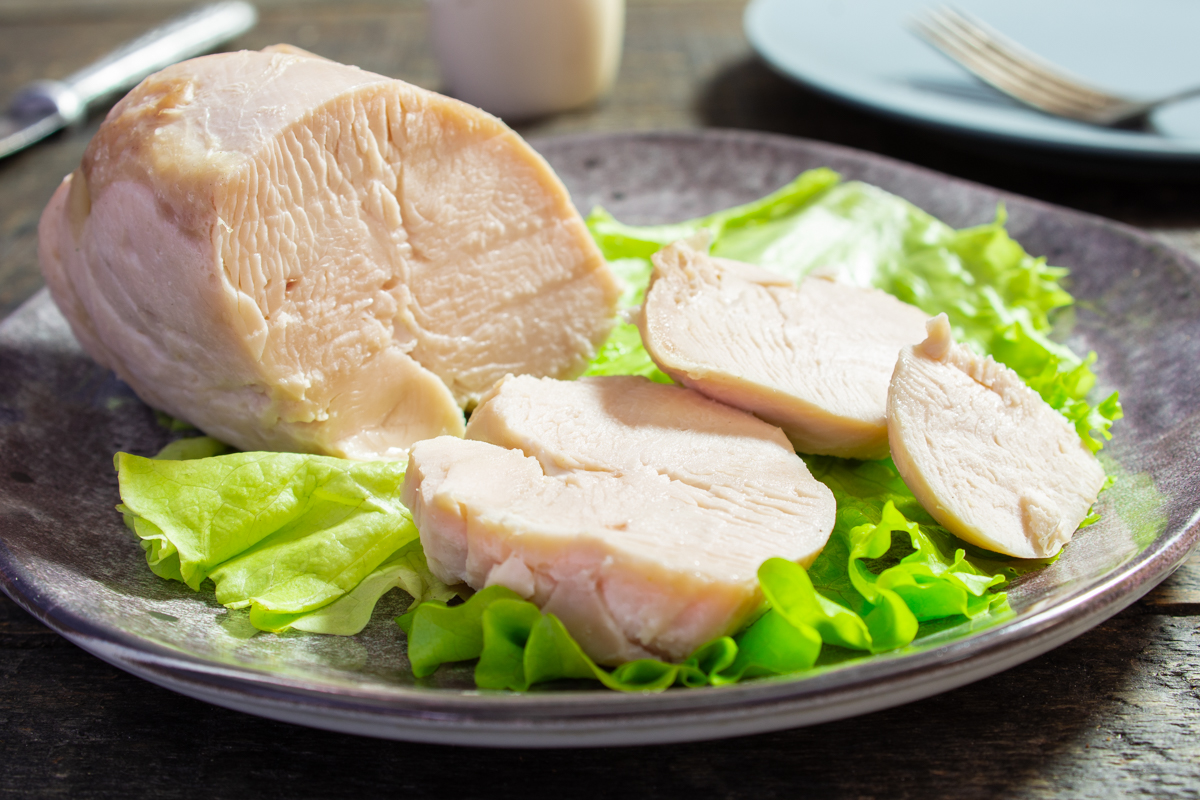
Tender and juicy homemade chicken ham poached in a bag—a fantastic alternative to store-bought deli meat.
Ingredients
- 1 large boneless, skinless chicken breast half (400–450 g / 14–16 oz)
- 6 g (1½ tsp) sugar
- 6 g (1 tsp) sea salt
- Oven roasting sleeve (or heavy-duty heat-safe roasting bag) with ties
How to Make Bag-Poached Chicken Breast
You can buy pre-cut, skinless chicken breasts or break down a whole bird yourself. I prefer starting with a whole broiler chicken. Remove the legs and wings, then pull the skin off the breast. Use a sharp knife to carve the breast meat away from the ribcage. This yields two generous fillets. If the bird is large, each breast half can weigh around 400–450 g (14–16 oz).
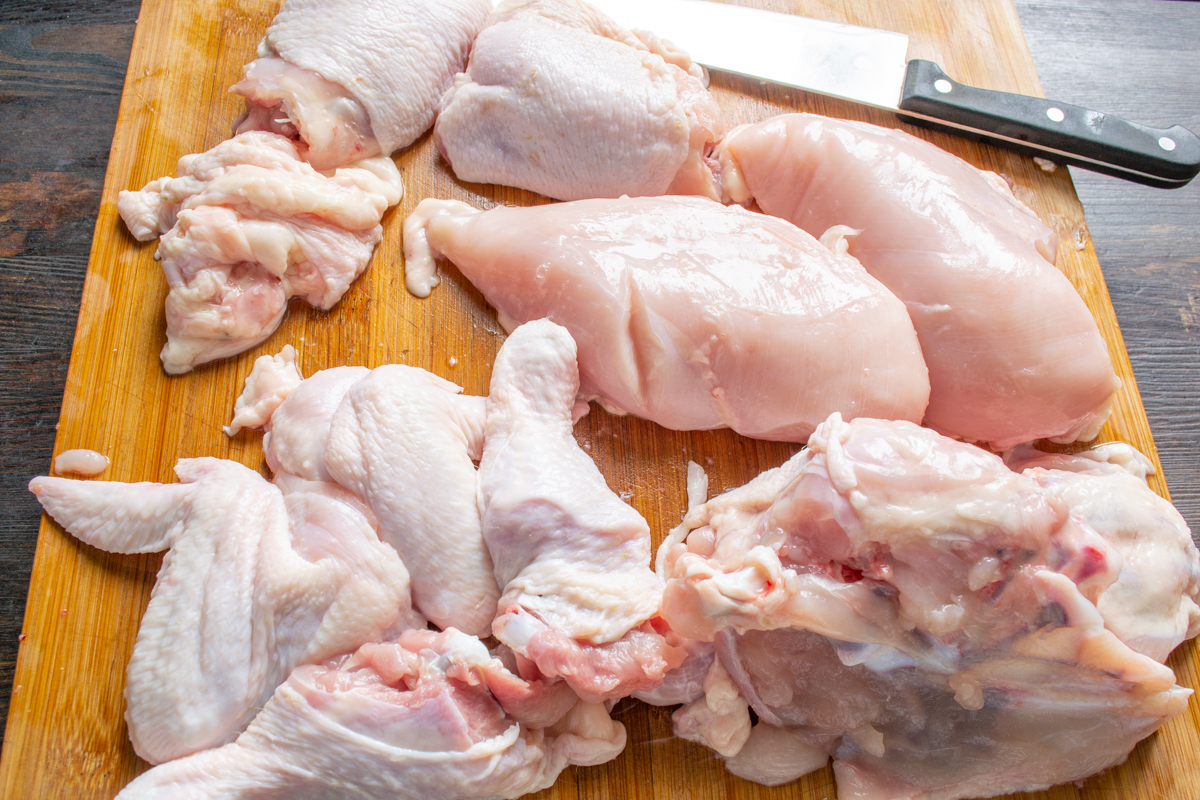
For the best homemade chicken ham, start with a fresh breast fillet from a large broiler chicken.
Rinse the meat under cold water. Place the breast in a stainless steel pot or a food-grade plastic container, then sprinkle it evenly with the sea salt and sugar.
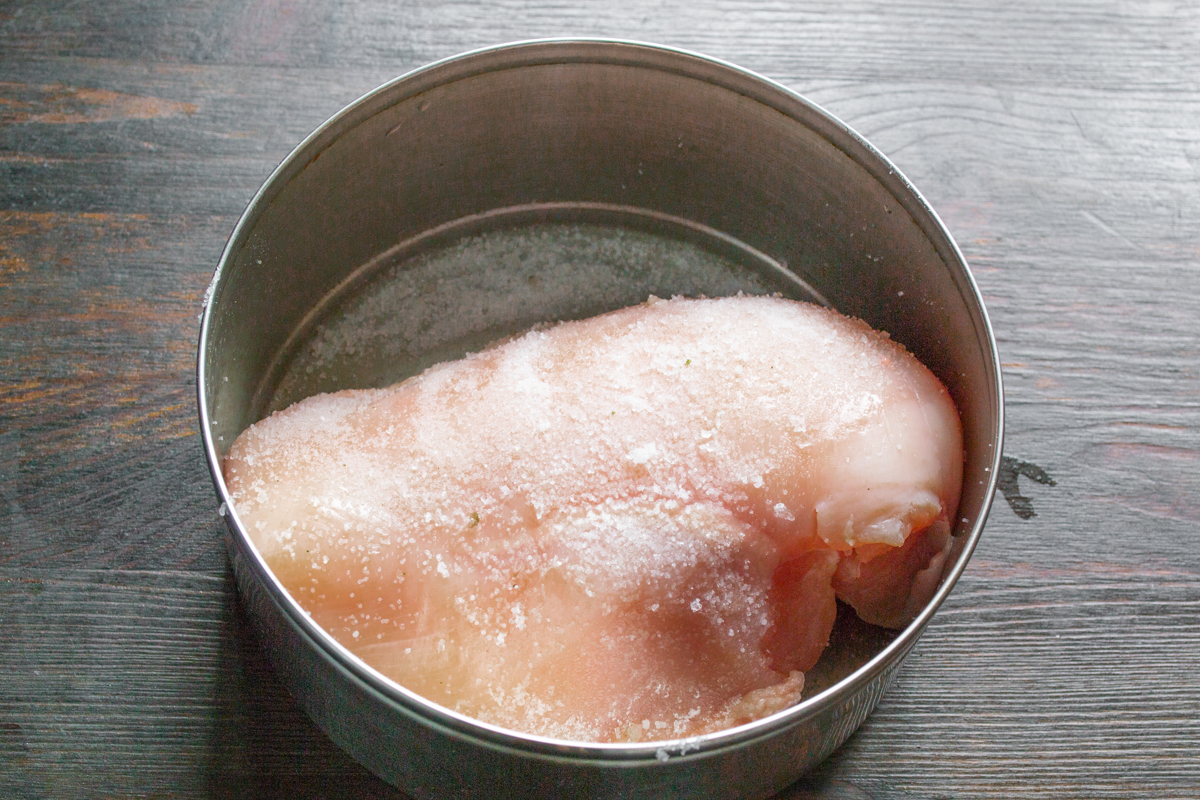
Sprinkle the prepared fillet with coarse sea salt and sugar for the initial dry cure.
Cover the pot with a lid or plastic wrap. Leave it at room temperature for 2–3 hours, then transfer it to the refrigerator to cure for another 10–12 hours. Remove the cured meat from the fridge, rinse it thoroughly under cold water, and pat it completely dry with paper towels.
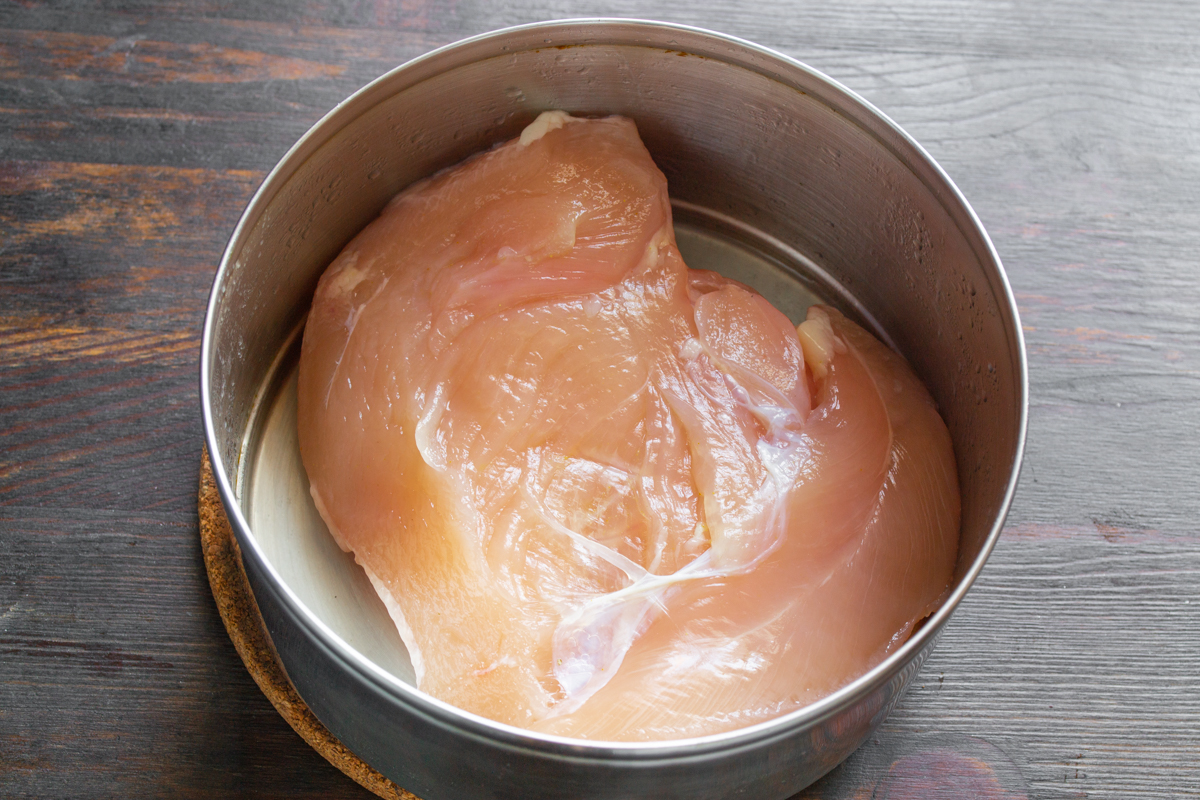
After curing in a cool place, rinse the meat thoroughly under cold running water.
You can poach the breast in a heavy-duty food-safe plastic bag (double-bag it for extra security) or in an oven roasting sleeve. Always make sure the plastic is certified food-safe and heat-resistant—this is crucial! Place the prepped chicken breast inside a 40–45 cm (16–18 inch) section of an oven roasting sleeve. Squeeze out as much air as possible and tie both ends tightly with the provided heat-safe ties.
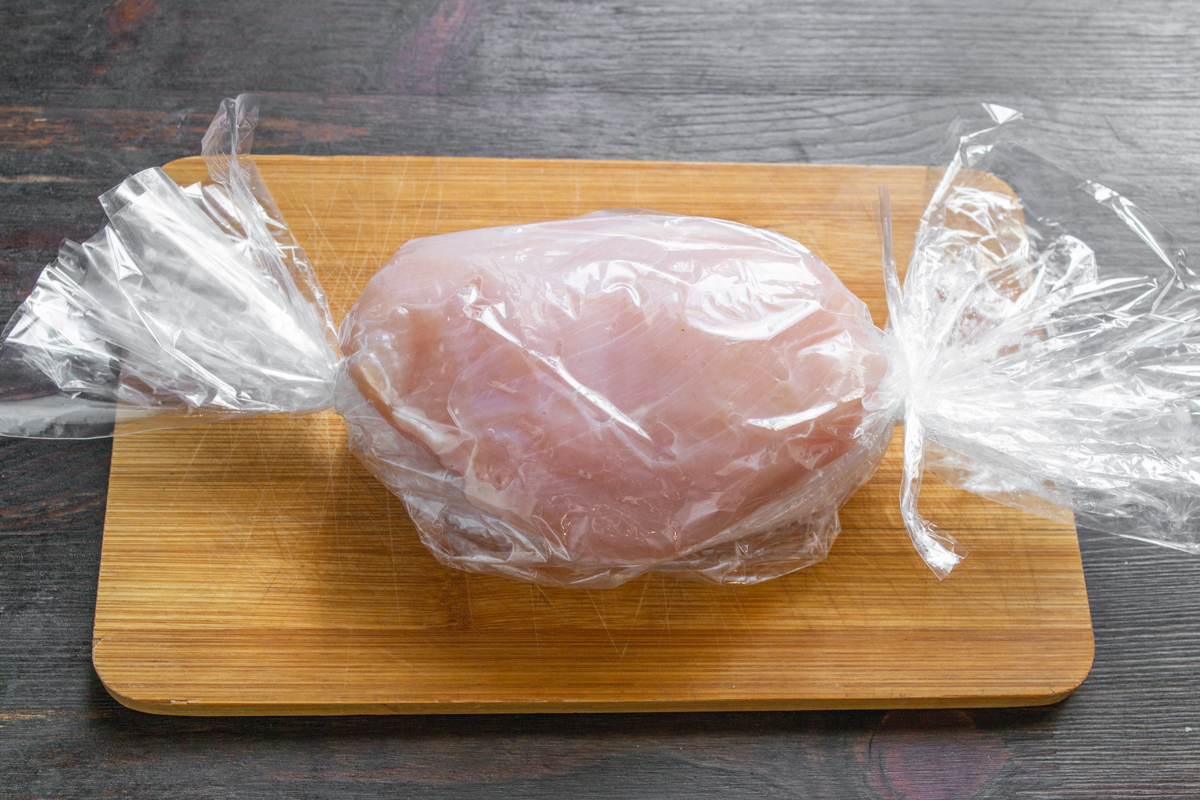
Place the meat inside an oven roasting sleeve, press out the air, and tie both ends tightly.
Take a large, roomy pot and pour in 2–3 liters (2–3 quarts) of water. Bring it to a boil, then gently lower the wrapped chicken breast into the boiling water.
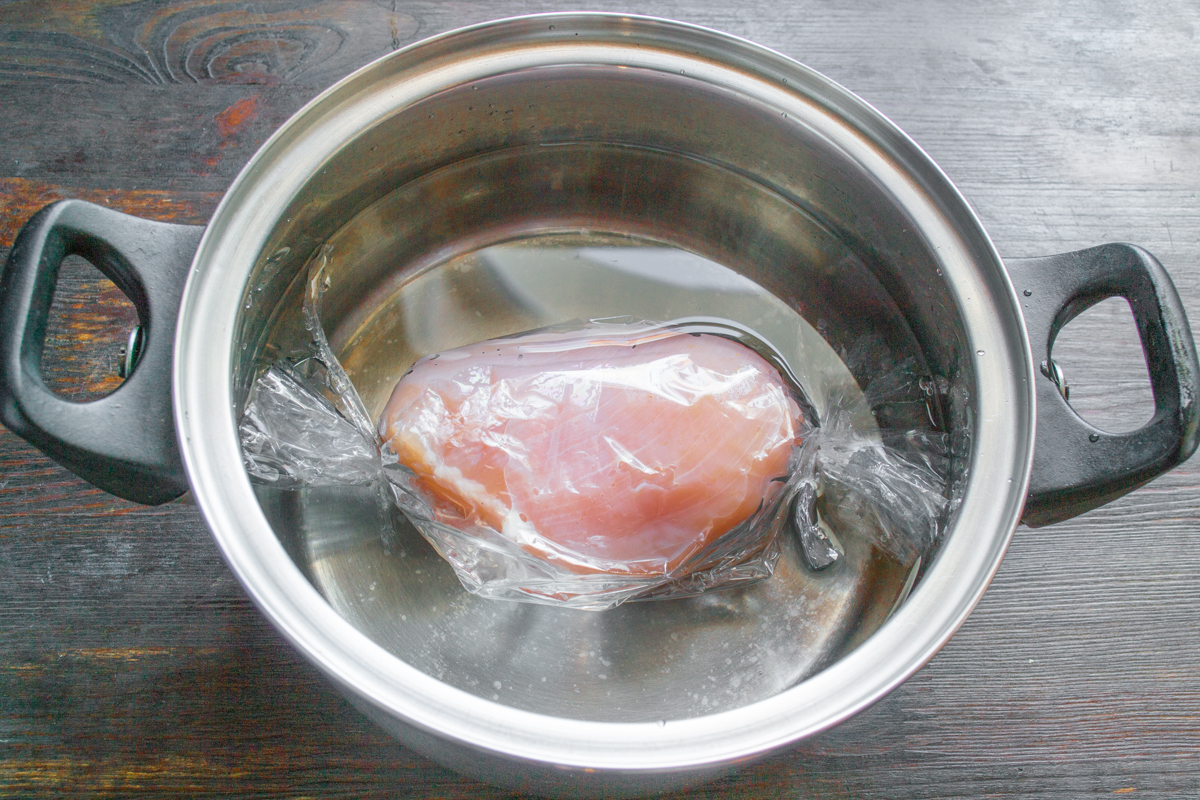
Lower the sealed chicken bundle into a pot of hot water.
Simmer gently over low heat for 20 minutes. The water must not boil vigorously—keep it at a very gentle, barely-there bubble! Turn off the heat and let the chicken rest right in the hot water for another 10 minutes.
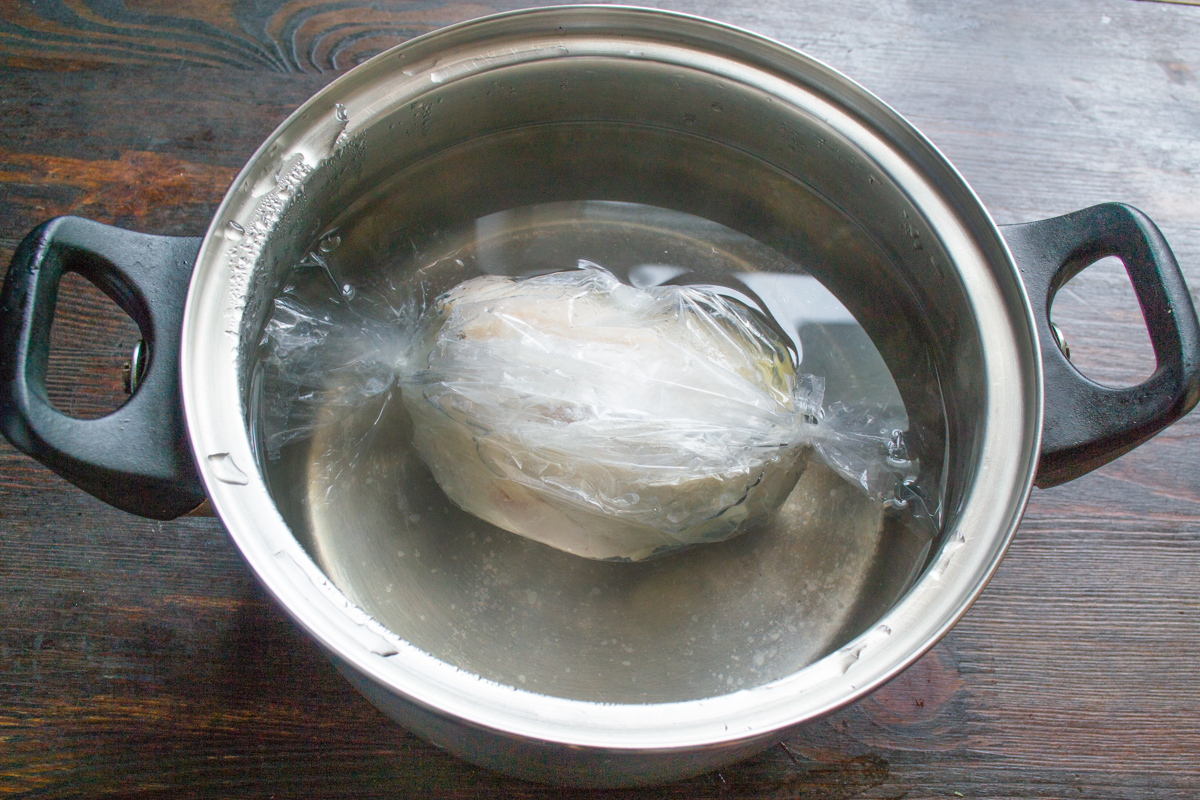
Cook the breast over the lowest possible heat, making sure the water never reaches a rolling boil.
Remove the wrapped breast from the pot and, without opening the bag, transfer it straight to the refrigerator for several hours. The meat must cool down completely inside its sealed pouch.
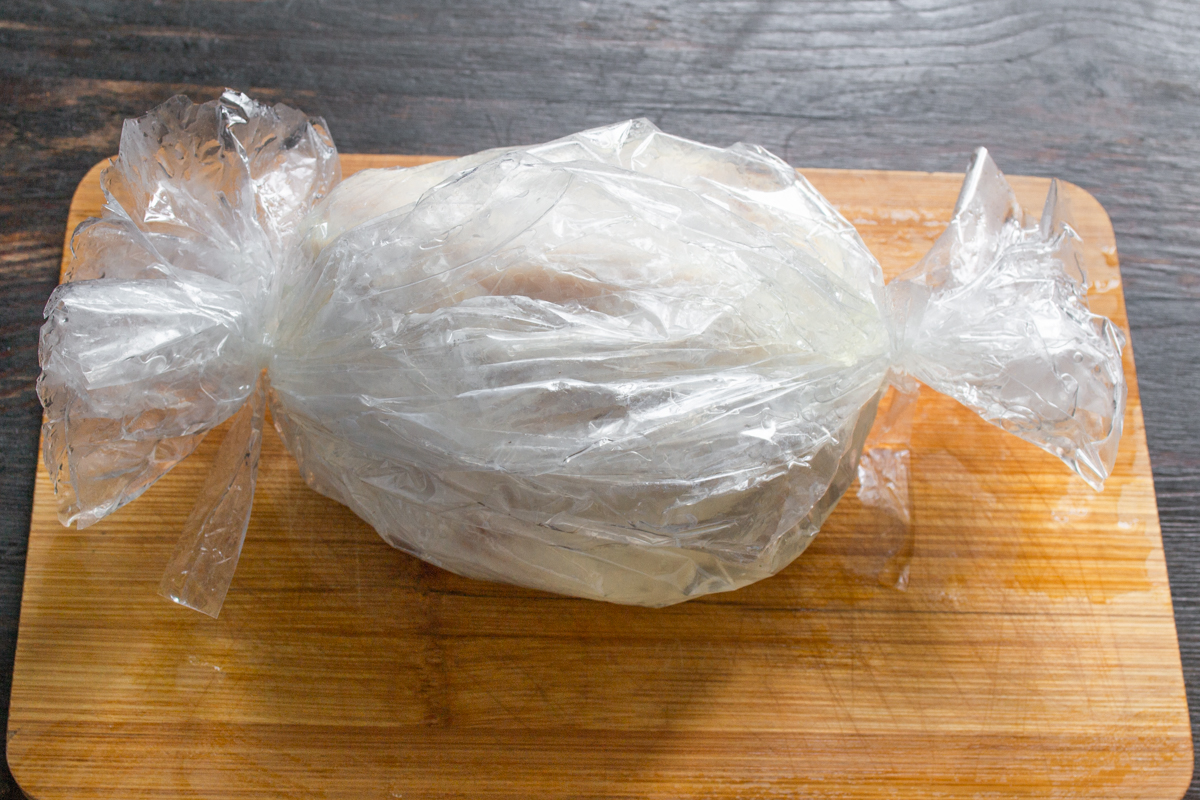
Let the cooked breast cool completely right inside the bag to lock in maximum juiciness.
After a few hours, cut open the sleeve. Save the flavorful meat juices that collected inside during cooking—they make a fantastic, rich base for a sauce! I recommend placing the finished chicken breast on a plate in the refrigerator uncovered for a bit so the exterior can dry slightly.
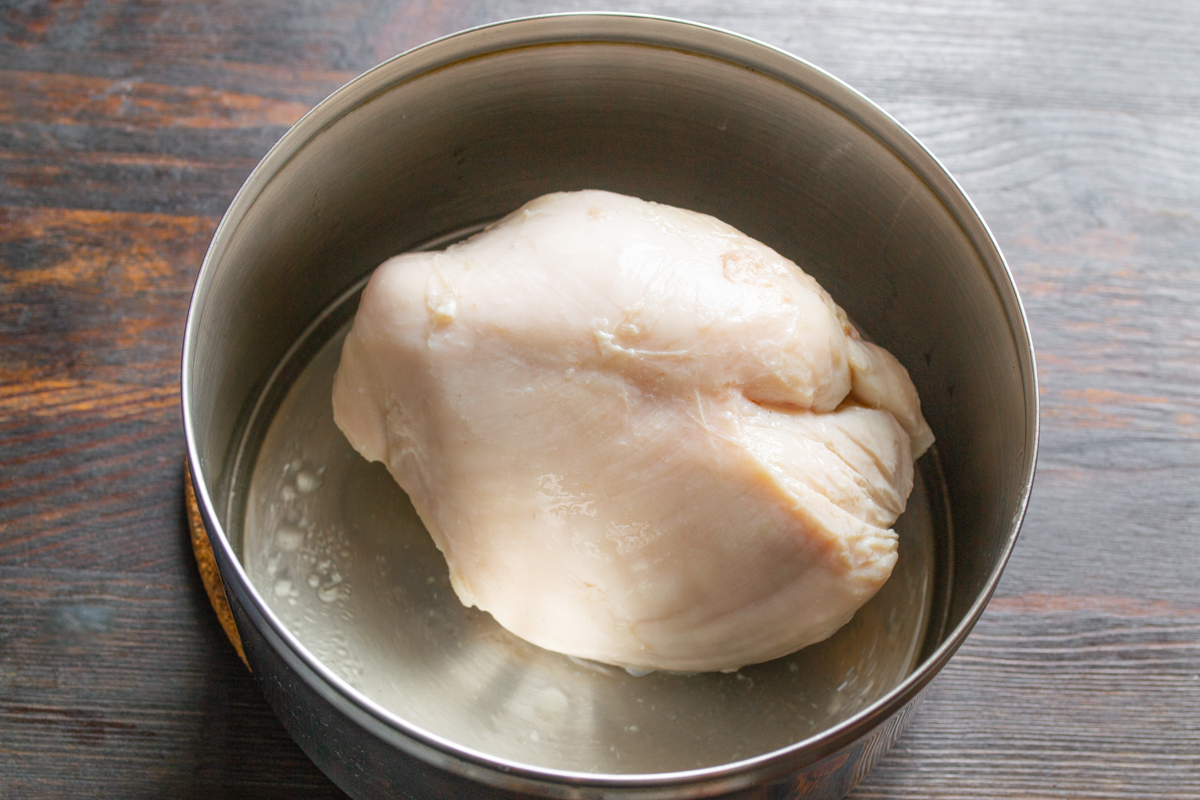
Remove the chilled fillet from the bag and save the rich cooking juices for a sauce.
And there you have it—wonderful homemade poached chicken ham! It slices effortlessly into thin, delicate pieces for sandwiches. Bag-poached chicken breast is truly that simple: delicious, wholesome, and fuss-free. Enjoy!
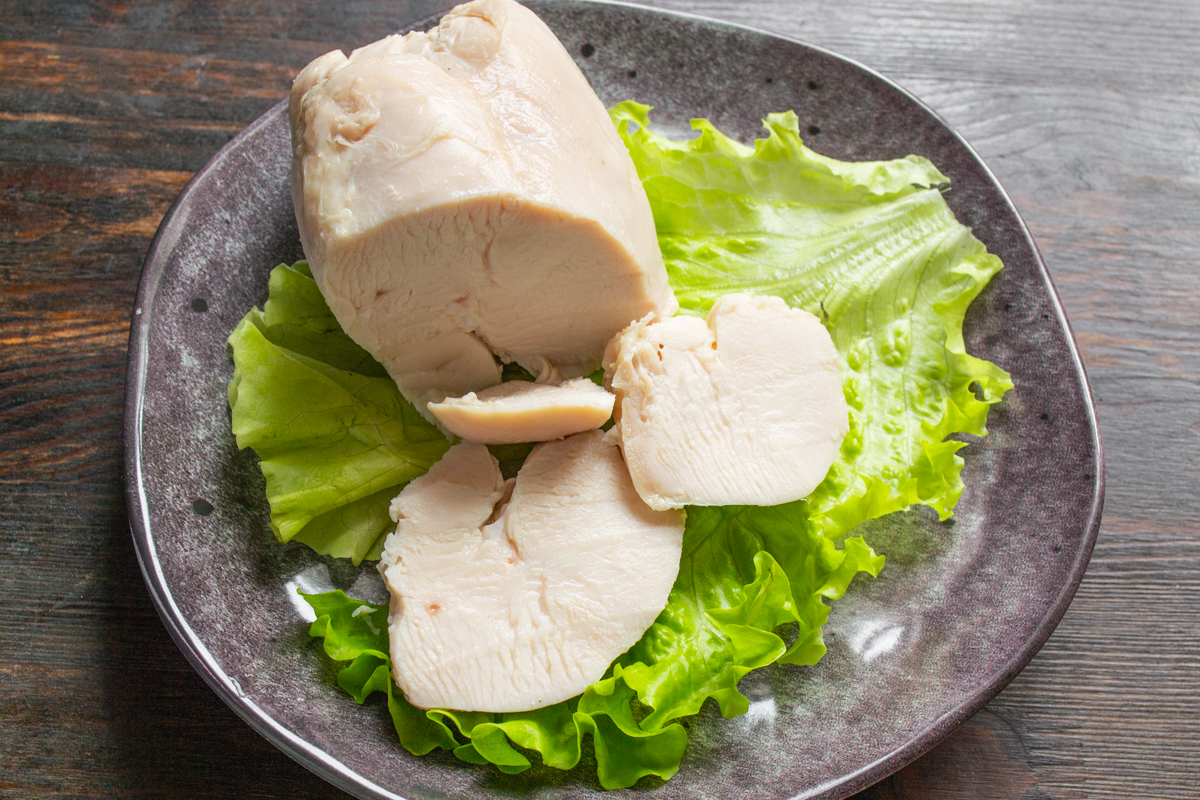
Slice the finished homemade chicken ham thinly for sandwiches or a festive appetizer platter.
Poaching is the healthiest way to cook chicken. Gently boiled poultry is easy to digest, and because it requires no added oil or fat, the dish stays light and low in calories. Normally, traditional boiling leaches much of the meat's flavor and nutrients into the cooking water. That is where the roasting bag comes to the rescue—not a single drop of savory juice is lost; everything stays right with the meat. Give it a try! Once cooked, this bag-poached chicken breast keeps wonderfully in the refrigerator for up to four days. Just leave it sealed in its pouch until you are ready to slice it so it stays as succulent as possible without drying out.
To switch up the flavor profile, try seasoning the fillet with dried garlic, paprika, Herbes de Provence, or a splash of soy sauce right before sealing it in the sleeve. Do not discard the concentrated juices left in the bag after cooking—they make a magnificent base for a light pan sauce or a warm salad dressing. Slice the chilled homemade chicken ham thinly and serve it with fresh herbs, crisp cucumbers, or layered on whole-grain toast with a swipe of mustard.
0 comments